From the Sector

Reset
Artificial turf for golf (c) Photo STC Extrusion GmbH
14.10.2026

New Specialist in Artificial Turf and Technical Monofilaments

With the foundation of STC Extrusion GmbH, headquartered in Chemnitz, Germany, a technical competence and know-how hub for the production of artificial turf and technical monofilaments has been established within the Starlinger Group.

The newly founded machine manufacturing company is part of Austria-based Starlinger Group and has taken over selected assets from the insolvent STC Spinnzwirn GmbH. STC Extrusion GmbH is a legally independent entity and does not act as the legal successor to STC Spinnzwirn GmbH. The company plans to focus on the core areas monofilament production for artificial turf and technical monofilaments made from a wide variety of polymers.

 “With the founding of STC Extrusion GmbH, we are opening a new chapter in STC’s history—with the experience, passion, and dedication to our customers that have always distinguished STC,” said Managing Director Nico Dürrschmidt. “We are convinced that with this solution, we have laid a solid foundation that will enable us to continue delivering value for our customers and partners worldwide in the future.”

With the foundation of STC Extrusion GmbH, headquartered in Chemnitz, Germany, a technical competence and know-how hub for the production of artificial turf and technical monofilaments has been established within the Starlinger Group.

The newly founded machine manufacturing company is part of Austria-based Starlinger Group and has taken over selected assets from the insolvent STC Spinnzwirn GmbH. STC Extrusion GmbH is a legally independent entity and does not act as the legal successor to STC Spinnzwirn GmbH. The company plans to focus on the core areas monofilament production for artificial turf and technical monofilaments made from a wide variety of polymers.

 “With the founding of STC Extrusion GmbH, we are opening a new chapter in STC’s history—with the experience, passion, and dedication to our customers that have always distinguished STC,” said Managing Director Nico Dürrschmidt. “We are convinced that with this solution, we have laid a solid foundation that will enable us to continue delivering value for our customers and partners worldwide in the future.”

In addition to production technology for artificial turf applications and technical monofilaments, STC Extrusion GmbH offers a Customer Experience Center for customer tests, raw material evaluation, research, and product and technology development. Furthermore, the company will take over and continue to provide service and spare parts for installed STC Spinnzwirn extrusion systems. This ensures that existing customers receive the technical support they need.
To leverage the established know-how in the field of winders, synergies with Georg Sahm GmbH & Co. KG—a winding technology specialist that is also part of the Starlinger Group—will be deepened to advance innovative winding technology and offer automation solutions and handling systems for bobbins. The expertise of Starlinger’s recycling division will also be incorporated into the development and implementation of environmentally friendly solutions with higher recycled content.

“With this strategical reorganization we aim to make STC Extrusion GmbH the knowledge and competence hub for artificial turf and technical monofilaments within the Starlinger network and establish it as a technology leader and brand for these specialized areas,” explains Angelika Huemer, CEO and Managing Partner of Starlinger & Co Ges.m.b.H., which holds the shares in the newly founded company. “We intend to make even better use of the synergies that arise among the companies in the Starlinger Group and to further develop and expand their individual areas of expertise.”

Source:

STC Extrusion GmbH

UNIFI, Inc.
09.10.2026

UNIFI combines spun-yarn hand with filament performance and adds fluorine-free water resistance

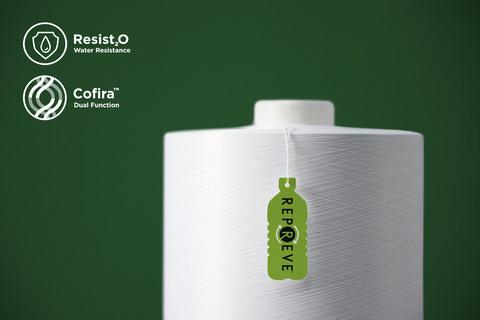
UNIFI has introduced Cofira™, a yarn platform designed to combine the visual and tactile character of spun yarns with filament-yarn functionality. The construction can incorporate other UNIFI technologies and is offered in virgin and REPREVE polyester, including REPREVE Takeback. 

Recycled options can be traced through FiberPrint and are linked to U-TRUST, GRS and SCS certification claims. The company is also expanding its water-resistant portfolio with Resist2O™ Pro. Rather than relying on a conventional topical durable-water-repellent finish, the technology is engineered for different forms of fabric construction and is described as fluorine-free and PFOA-free below 5 ppb.

UNIFI positions the two developments for apparel, furnishings, gear, accessories and industrial applications. Both will be presented in October at Performance Days in Munich and Functional Fabric Fair in Portland, giving the technologies immediate exposure to performance-material developers.


UNIFI has introduced Cofira™, a yarn platform designed to combine the visual and tactile character of spun yarns with filament-yarn functionality. The construction can incorporate other UNIFI technologies and is offered in virgin and REPREVE polyester, including REPREVE Takeback. 

Recycled options can be traced through FiberPrint and are linked to U-TRUST, GRS and SCS certification claims. The company is also expanding its water-resistant portfolio with Resist2O™ Pro. Rather than relying on a conventional topical durable-water-repellent finish, the technology is engineered for different forms of fabric construction and is described as fluorine-free and PFOA-free below 5 ppb.

UNIFI positions the two developments for apparel, furnishings, gear, accessories and industrial applications. Both will be presented in October at Performance Days in Munich and Functional Fabric Fair in Portland, giving the technologies immediate exposure to performance-material developers.


© Recover Textile Systems, S.L.
09.10.2026

Recover™One blends recycled cotton and polyester without downstream overdyeing

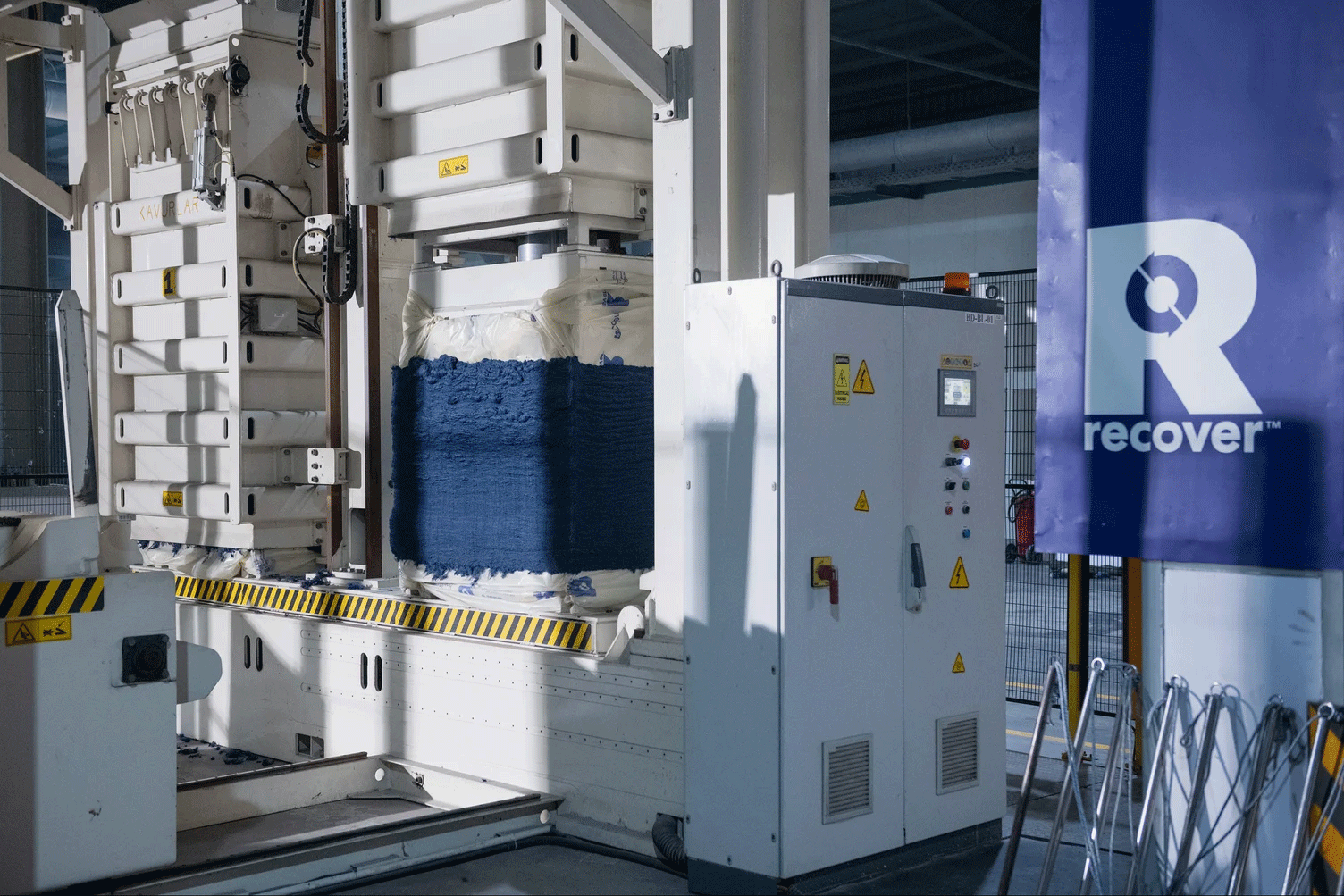
Recover has launched Recover™One, a range of ready-to-spin blends made entirely from recycled cotton and recycled polyester. Cotton-to-polyester ratios can be adjusted for different applications, and the material can be supplied as fiber blends or as fabric through Recover’s supply-chain partners.

The technical point is color management. Recover combines the original colors of textile-waste feedstocks with color-matched, dope-dyed recycled polyester through an intimate blending process.
The company says this creates consistent solid, heather and mélange options without a downstream overdyeing stage, reducing processing time and avoiding an additional wet-finishing step.

Applications cited include single jersey, French terry and fleece. Recover also refers to previously verified life-cycle assessments for its recycled cotton, but the new development is the system-level combination of recycled inputs, predefined color and spinning-ready consistency rather than recycled cotton alone.

Recover has launched Recover™One, a range of ready-to-spin blends made entirely from recycled cotton and recycled polyester. Cotton-to-polyester ratios can be adjusted for different applications, and the material can be supplied as fiber blends or as fabric through Recover’s supply-chain partners.

The technical point is color management. Recover combines the original colors of textile-waste feedstocks with color-matched, dope-dyed recycled polyester through an intimate blending process.
The company says this creates consistent solid, heather and mélange options without a downstream overdyeing stage, reducing processing time and avoiding an additional wet-finishing step.

Applications cited include single jersey, French terry and fleece. Recover also refers to previously verified life-cycle assessments for its recycled cotton, but the new development is the system-level combination of recycled inputs, predefined color and spinning-ready consistency rather than recycled cotton alone.

Source:

 Recover Textile Systems, S.L.

09.10.2026

Circ and Huafon plan 200-tonne-per-day first phase for textile recycling in China

Circ and Huafon are partnering on a multi-phase textile-to-textile recycling site within Huafon’s industrial footprint in China. 
The plant will use Circ’s process for polycotton waste and recover both major material streams: recycled PTA and MEG for polyester production and recycled cellulosic pulp for new textiles.

Phase one is designed to process approximately 200 metric tonnes of textile waste per day, with additional capacity planned. Huafon will invest in the project and contribute engineering, procurement, logistics and commercial capabilities, while Circ brings its recycling technology and a network of brands, manufacturing partners and downstream customers.

Textination has previously covered Circ partnerships in China, including recycled polyester filament production with Shenghong. This project represents a distinct new development.
It concerns construction of recycling capacity itself rather than downstream yarn conversion. Circ is simultaneously developing its first industrial-scale facility in France.

Circ and Huafon are partnering on a multi-phase textile-to-textile recycling site within Huafon’s industrial footprint in China. 
The plant will use Circ’s process for polycotton waste and recover both major material streams: recycled PTA and MEG for polyester production and recycled cellulosic pulp for new textiles.

Phase one is designed to process approximately 200 metric tonnes of textile waste per day, with additional capacity planned. Huafon will invest in the project and contribute engineering, procurement, logistics and commercial capabilities, while Circ brings its recycling technology and a network of brands, manufacturing partners and downstream customers.

Textination has previously covered Circ partnerships in China, including recycled polyester filament production with Shenghong. This project represents a distinct new development.
It concerns construction of recycling capacity itself rather than downstream yarn conversion. Circ is simultaneously developing its first industrial-scale facility in France.

09.10.2026

Textile Exchange puts numbers on textile-to-textile recycling capacity for the first time

Editorial relevance: Very high – establishes a global baseline for available spinnable textile-to-textile recycled fiber and quantifies the gap between waste availability and usable output.

Textile Exchange has published a first global methodology for estimating textile-to-textile recycled fiber availability for apparel and home textiles. Developed with Fashion for Good, Reverse Resources and TEXroad, the framework combines available waste volumes with collection, sorting, processing and technology constraints to estimate how much material can actually become spinnable fiber.

The analysis projects recyclable textile feedstocks to increase from roughly 10 million tonnes in 2025 to around 15 million tonnes by 2030. Yet the quantity of recycled spinnable fiber is estimated at only 1–1.5 million tonnes in 2025, rising to approximately 3–5 million tonnes by 2030.

Editorial relevance: Very high – establishes a global baseline for available spinnable textile-to-textile recycled fiber and quantifies the gap between waste availability and usable output.

Textile Exchange has published a first global methodology for estimating textile-to-textile recycled fiber availability for apparel and home textiles. Developed with Fashion for Good, Reverse Resources and TEXroad, the framework combines available waste volumes with collection, sorting, processing and technology constraints to estimate how much material can actually become spinnable fiber.

The analysis projects recyclable textile feedstocks to increase from roughly 10 million tonnes in 2025 to around 15 million tonnes by 2030. Yet the quantity of recycled spinnable fiber is estimated at only 1–1.5 million tonnes in 2025, rising to approximately 3–5 million tonnes by 2030.

The scope covers post-industrial and post-consumer textiles and both mechanical and chemical recycling of cotton, polyester, nylon, manmade cellulosics, wool and and blends.
Textile Exchange stresses that the figures are directional: data quality remains uneven, and future editions are intended to incorporate more primary data from recyclers and suppliers.


FiltXPO™ Innovation Award Graphic (c) Association of the Nonwoven Fabrics Industry INDA
23.09.2026

Finalists for the FiltXPO™ 2026 Innovation Awards published

INDA, the Association of the Nonwoven Fabrics Industry, in partnership with International Filtration News, has announced the finalists for the FiltXPO™ 2026 Innovation Awards. The awards recognize innovative new products introduced to the filtration industry since the last FiltXPO event in 2025.

The FiltXPO Innovation Awards celebrate advancements in filtration technology for air and gas and water and liquid applications. Entries are evaluated on creativity, novelty of approach, uniqueness and technical sophistication.

The winners will be announced during FiltXPO 2026, the premier global event for the filtration industry, Oct. 28-29 at the Minneapolis Convention Center in Minneapolis.

The FiltXPO 2026 Innovation Award finalists are: 

FiltXPO Innovation in Air/Gas Filtration Award 

  • Hifyber: CombiNano
  • Leanfil Oy: Leanfil®
  • Solberg Manufacturing, Inc.: Fully Automated Liquid Management System

 FiltXPO Innovation in Water/Liquid Filtration Award 

INDA, the Association of the Nonwoven Fabrics Industry, in partnership with International Filtration News, has announced the finalists for the FiltXPO™ 2026 Innovation Awards. The awards recognize innovative new products introduced to the filtration industry since the last FiltXPO event in 2025.

The FiltXPO Innovation Awards celebrate advancements in filtration technology for air and gas and water and liquid applications. Entries are evaluated on creativity, novelty of approach, uniqueness and technical sophistication.

The winners will be announced during FiltXPO 2026, the premier global event for the filtration industry, Oct. 28-29 at the Minneapolis Convention Center in Minneapolis.

The FiltXPO 2026 Innovation Award finalists are: 

FiltXPO Innovation in Air/Gas Filtration Award 

  • Hifyber: CombiNano
  • Leanfil Oy: Leanfil®
  • Solberg Manufacturing, Inc.: Fully Automated Liquid Management System

 FiltXPO Innovation in Water/Liquid Filtration Award 

  • Acuriant Technologies Inc.: CUF Flow - More Water, Same Footprint
  • Ahlstrom: Ahlstrom OptiPad™
  • Gessner, a Mativ Brand: GESSNER PFAS Filter Media

Voting for the winner in each category is open on the International Filtration News website. Winners will be announced Oct. 28 at FiltXPO 2026.

Source:

Association of the Nonwoven Fabrics Industry INDA

Microscopic “rebar” adds strength to a new kind of carbon fiber material that features functionalized single-walled carbon nanotubes. WashU engineers developed the manufacturing process to make use of the waste material lignin and to further strengthen carbon fiber for use in the automotive and energy industries. Photo: Yuan-Labor
Microscopic “rebar” adds strength to a new kind of carbon fiber material that features functionalized single-walled carbon nanotubes. WashU engineers developed the manufacturing process to make use of the waste material lignin and to further strengthen carbon fiber for use in the automotive and energy industries.
22.09.2026

Lignin cuts PAN content in carbon fibre

Researchers at Washington University in St. Louis have developed a route in which lignin replaces a substantial share of the polyacrylonitrile (PAN) normally used in carbon fibre. Lignin is generated in large volumes as a by-product of pulp and biorefinery operations. The university reports that PAN use can be cut by half, with corresponding potential reductions in production cost and emissions.

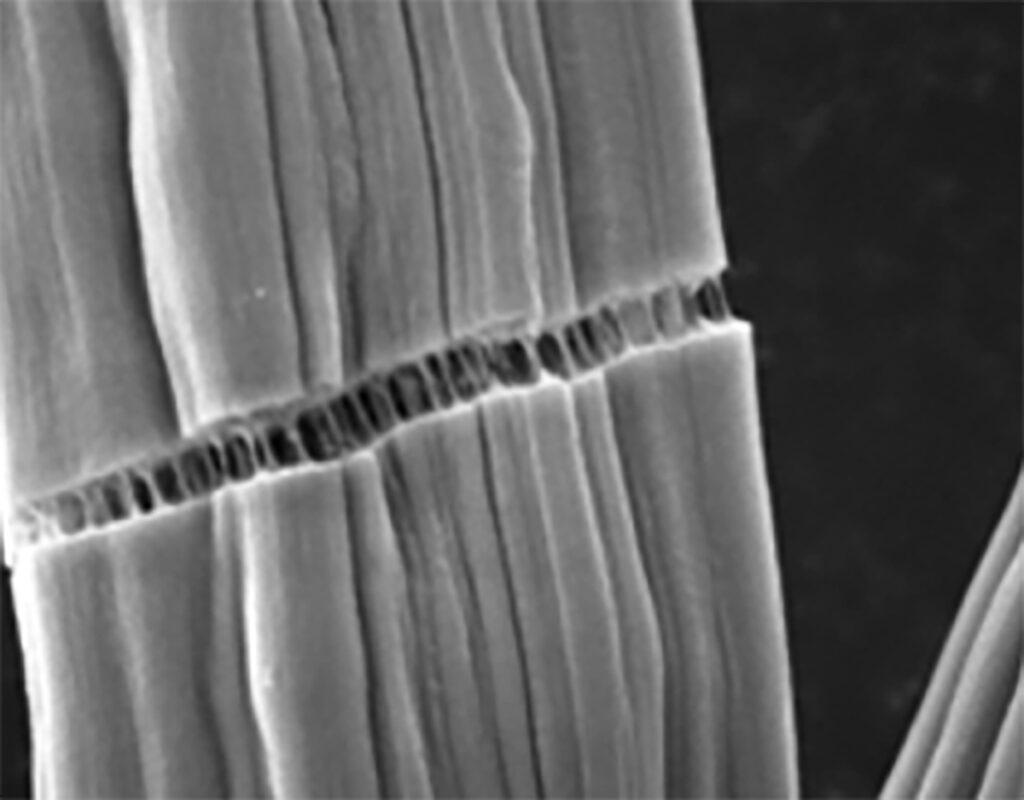
The central technical challenge is mechanical performance. The team functionalises single-walled carbon nanotubes and incorporates them into the lignin-PAN matrix. The nanotubes act as nanoscale reinforcement and promote stronger crystalline alignment during spinning and thermal treatment.

The precursor solution is wet-spun, tension-assisted heat-treated and carbonised. The researchers report that the resulting renewable carbon fibre can reach quality requirements relevant to automotive manufacturing. Aerospace, energy infrastructure, sporting goods and wind energy are cited as additional markets.

Researchers at Washington University in St. Louis have developed a route in which lignin replaces a substantial share of the polyacrylonitrile (PAN) normally used in carbon fibre. Lignin is generated in large volumes as a by-product of pulp and biorefinery operations. The university reports that PAN use can be cut by half, with corresponding potential reductions in production cost and emissions.

The central technical challenge is mechanical performance. The team functionalises single-walled carbon nanotubes and incorporates them into the lignin-PAN matrix. The nanotubes act as nanoscale reinforcement and promote stronger crystalline alignment during spinning and thermal treatment.

The precursor solution is wet-spun, tension-assisted heat-treated and carbonised. The researchers report that the resulting renewable carbon fibre can reach quality requirements relevant to automotive manufacturing. Aerospace, energy infrastructure, sporting goods and wind energy are cited as additional markets.

Source:

Washington University in St. Louis

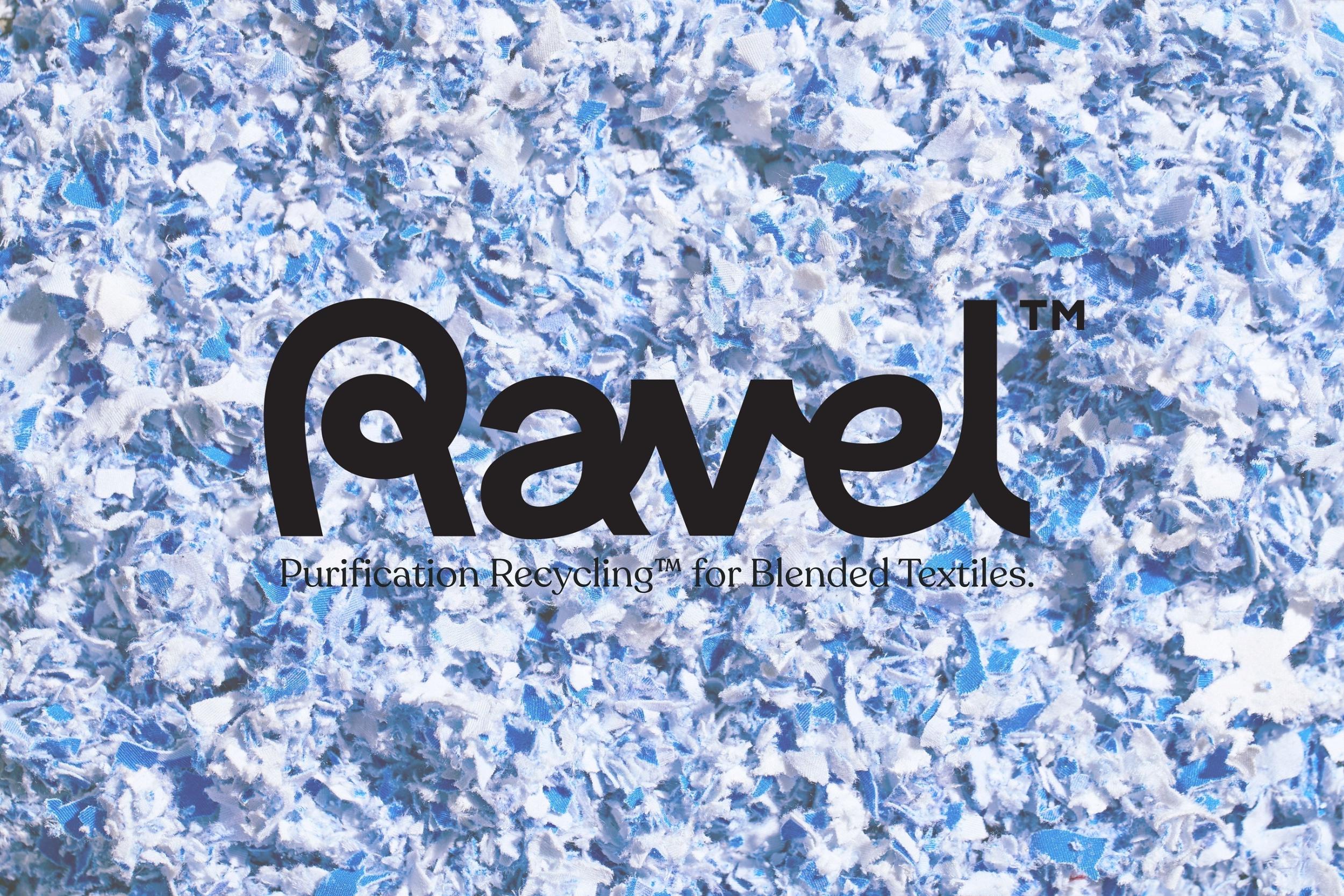
Ravel - shredded polyester/elastane material ready for processing (c) Ravel
18.09.2026

Ravel raises $8.2m to scale blended-textile recycling

Ravel has closed an oversubscribed $8.2 million seed round led by One Small Planet, with participation from AP Ventures, Overlay Capital, Lichen Ventures and existing investors. The funding is intended to move the Seattle-based recycling company from pilot operation towards commercial readiness.

Its Purification Recycling process is aimed at one of apparel recycling's persistent problems: stretch blends. Elastane is widely used in activewear, denim, underwear and other garments, yet even relatively small percentages can interfere with established recycling routes.

Rather than treating the whole textile as a single feedstock, Ravel is developing a separation and purification route for polyester/elastane blends. The company says recovered material can be converted into recycled plastic pellets for renewed use as a raw material.

The next phase will test more than chemistry. Commercial viability depends on throughput, feedstock variability, separation efficiency, energy and chemical inputs, and the quality of the recovered fractions. Ravel plans to validate the process at production scale with textile partners.

Ravel has closed an oversubscribed $8.2 million seed round led by One Small Planet, with participation from AP Ventures, Overlay Capital, Lichen Ventures and existing investors. The funding is intended to move the Seattle-based recycling company from pilot operation towards commercial readiness.

Its Purification Recycling process is aimed at one of apparel recycling's persistent problems: stretch blends. Elastane is widely used in activewear, denim, underwear and other garments, yet even relatively small percentages can interfere with established recycling routes.

Rather than treating the whole textile as a single feedstock, Ravel is developing a separation and purification route for polyester/elastane blends. The company says recovered material can be converted into recycled plastic pellets for renewed use as a raw material.

The next phase will test more than chemistry. Commercial viability depends on throughput, feedstock variability, separation efficiency, energy and chemical inputs, and the quality of the recovered fractions. Ravel plans to validate the process at production scale with textile partners.

The financing adds capacity at a point where recyclers are increasingly trying to tackle blends that mechanical systems cannot readily return to fibre.