From the Sector

Reset
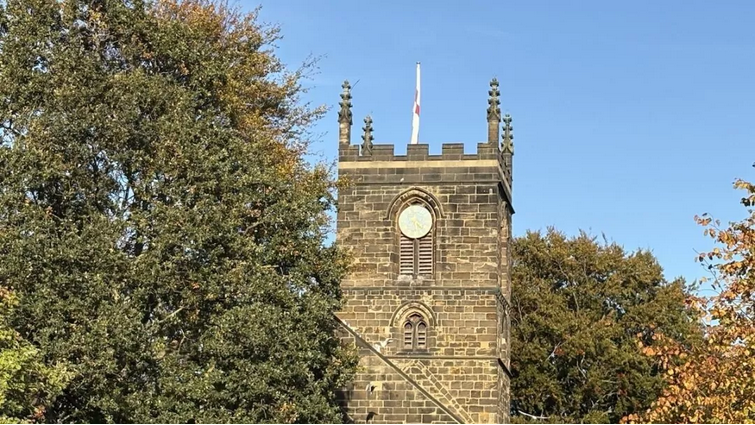
Nonwovens Redefining Historic Monument Roof Restoration Image: INDEX
04.01.2026

Nonwovens Redefining Historic Monument Roof Restoration

A quiet revolution in church restoration
Across Europe’s historic skylines, the silhouettes of medieval towers and Baroque spires have stood for centuries, but the fabric that keeps them watertight has rarely lasted more than a generation or two. Today, architects and conservationists face the delicate task of renewing these protective layers without altering the appearance or breathability of ancient structures. In this context, nonwoven fabrics have quietly become one of the most transformative materials in restoration behind the scenes of heritage roofs.

A quiet revolution in church restoration
Across Europe’s historic skylines, the silhouettes of medieval towers and Baroque spires have stood for centuries, but the fabric that keeps them watertight has rarely lasted more than a generation or two. Today, architects and conservationists face the delicate task of renewing these protective layers without altering the appearance or breathability of ancient structures. In this context, nonwoven fabrics have quietly become one of the most transformative materials in restoration behind the scenes of heritage roofs.

Traditional roofing on churches was never designed as a sealed envelope. Slate, tile and lead coverings were laid over open rafters or timber boards, relying on ventilation and sheer mass to manage moisture. When such buildings are re-roofed under contemporary conservation standards, contractors must reconcile modern performance expectations – airtightness, resistance to driving rain, and compliance with safety regulations – with the need to preserve original construction logic. This is where engineered nonwovens, with their combination of vapour permeability and water resistance, provide an elegant solution.

Invisible defence
A nonwoven underlay acts as a secondary shield beneath the outer covering, shedding any wind-driven rain that penetrates between slates while still allowing moisture from within to diffuse outwards. Its fibrous matrix creates a microscopic labyrinth of pores that block liquid water but remain open to water vapour, so that timber structures can continue to breathe much as they always have. The result is an invisible line of defence that does not interfere with the historic envelope’s ability to regulate humidity naturally.

In practical terms, the benefits are more than theoretical. Many heritage sites must remain open during works or lie exposed for long periods while leadwork and masonry are repaired. A strong, lightweight nonwoven can be laid in a day over newly stripped sections, immediately restoring weather protection and allowing carpenters and masons to proceed without interruption. On complex church roofs – often steeply pitched, ornamented with dormers and difficult to scaffold – this ability to secure a weathertight covering has proved invaluable. It reduces the need for daily tarpaulin handling, cuts labour costs and limits the risk of water ingress that might damage ancient ceilings or murals below.

Microporosity
The conservation world has traditionally been wary of modern membranes, and rightly so. Earlier generations of bituminous or plasticised underlays created sealed cavities that trapped condensation, leading to timber decay and corrosion. Nonwovens differ in that they rely on microporous structures rather than applied coatings for their performance. Because they are made from mechanically bonded fibres rather than laminated films, they remain vapour-open by design. In the language of building physics, they have “low vapour resistance yet high water holdout” – two qualities rarely achieved together in earlier materials.

Their structural behaviour also suits the irregular geometry of historic carpentry. Whereas stiff plastic sheets can tear over uneven boarding or sharp ridges, nonwovens drape naturally around contours and resist puncture. They are also quiet under wind load, which is an overlooked comfort factor when a centuries-old tower stands in a residential quarter, and they age more gracefully than brittle films. In a craft context, this flexibility matters as much as technical data – restorers appreciate a material that behaves predictably under hand tools, that can be cut cleanly and that adheres reliably with standard tapes or battens.

Economy of disturbance
From a sustainability perspective, nonwovens also align with the ethos of minimal intervention. They are light to transport, require little energy to manufacture and can often be installed without altering existing timberwork. Because they extend the lifespan of expensive outer coverings, they reduce the frequency of disruptive roof replacements and in long-term stewardship terms, that economy of disturbance is as important as any embodied carbon metric.

Projects across Europe illustrate how seamlessly nonwovens have entered the conservation vocabulary. In medieval churches where roof spaces are inaccessible, their use has allowed designers to maintain the unventilated build-ups of the original fabric while still meeting moisture-control criteria. In Baroque structures with intricate domes, their thin profile helps maintain sightlines at eaves and cornices without introducing visible ventilation slots. Even in smaller rural chapels, they provide an insurance layer beneath reused or weathered slates, reducing the risk of localised leaks that might otherwise threaten timber vaulting or plaster ceilings.

Another virtue, often underestimated, lies in their role during construction sequencing. Because nonwovens can serve as both temporary and permanent weather protection, they simplify project logistics. Once laid, they remain in place through the entire build, so there is no wasted material or duplicated effort. In many restorations, this flexibility has shortened programme durations and reduced the environmental impact associated with single-use coverings.

Detailing
Nonwovens also lend themselves to hybrid detailing. In some restorations, they are combined with traditional sarking boards and lime-based insulation systems, maintaining a breathable overall assembly. In others, they form part of modern warm-roof solutions under lead or copper sheeting, where their stability under heat and UV exposure becomes a key advantage. Their neutrality makes them compatible with almost any heritage-appropriate finish.

A challenge lies not in proving the performance of nonwovens but in ensuring they are specified sensitively. Every church roof tells a different story – some rely on massive oak frames that demand free airflow, others contain fragile painted timbers or medieval tiles that call for careful moisture control. 

A responsible designer must therefore balance the convenience of modern materials with a deep understanding of how historic buildings breathe and move. 

When chosen wisely, a nonwoven underlay can protect centuries of craftsmanship without ever announcing its presence.

More information:
INDEX Restoration Buildtech roof
Source:

INDEX

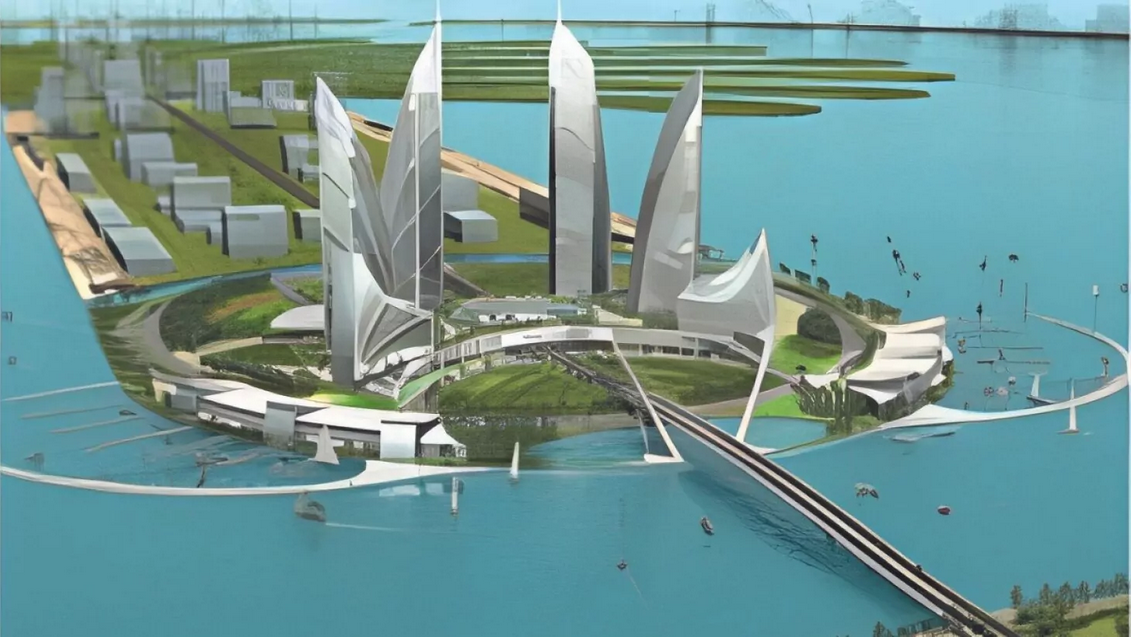
Concept design view of the Palm Jebel Ali trunk development © Dubai Media Office
30.12.2025

Engineered Nonwovens in Palm Jebel Ali Construction

Nonwovens and the 9th Wonder of the World
Palm Jebel Ali – an ambitious artificial archipelago off Dubai’s Jebel Ali coast – is making a high-profile return after years of dormancy, which is good news for the construction industry and for the manufacturers of geotextiles and other engineered nonwovens who will be involved.

Initially launched in 2002, the project was to be a palm-shaped island even larger than its famed sibling, Palm Jumeirah (billed as ‘The 8th Wonder of the World’), but suffered delays and suspension following the global financial crisis of 2008. 

After remaining largely on hold for over a decade, it was formally relaunched in 2023, with construction resuming in 2024 under a revised master plan targeting completion around 2028. 

The renewed vision for Palm Jebel Ali is bolder and more sustainable. At about 13.4 square metres, the island is now designed to be more than twice the size of Palm Jumeirah, adding nearly 100 kilometres of new coastline to Dubai’s map. It includes multiple fronds, interconnected islands, luxury residential units, hotel and resort zones, marinas and extensive waterfront amenities. 

Nonwovens and the 9th Wonder of the World
Palm Jebel Ali – an ambitious artificial archipelago off Dubai’s Jebel Ali coast – is making a high-profile return after years of dormancy, which is good news for the construction industry and for the manufacturers of geotextiles and other engineered nonwovens who will be involved.

Initially launched in 2002, the project was to be a palm-shaped island even larger than its famed sibling, Palm Jumeirah (billed as ‘The 8th Wonder of the World’), but suffered delays and suspension following the global financial crisis of 2008. 

After remaining largely on hold for over a decade, it was formally relaunched in 2023, with construction resuming in 2024 under a revised master plan targeting completion around 2028. 

The renewed vision for Palm Jebel Ali is bolder and more sustainable. At about 13.4 square metres, the island is now designed to be more than twice the size of Palm Jumeirah, adding nearly 100 kilometres of new coastline to Dubai’s map. It includes multiple fronds, interconnected islands, luxury residential units, hotel and resort zones, marinas and extensive waterfront amenities. 

A key aim is to blend high-end living with smarter infrastructure, environmental consciousness and modern urban planning, marking a step beyond the purely spectacle-driven island developments of the past. 

Palm Jumeirah
Completed around 2006/07, Palm Jumeirah required massive engineering works to transform marine seabed into a stable platform for residential, hotel and infrastructure development. Underlying that ambition was a need to manage soil, water and structural stability in a highly demanding environment of waves, tides and fine and sometimes mobile sediments. 

One company heavily involved in this work was INDEX™26 exhibitor Fibertex, as the supplier of engineered fabrics for several of Palm Jumeirah’s containment, separation, drainage and stabilisation functions.

For the breakwater protecting Palm Jumeirah’s outer edge, a specific nonwoven grade was used as a stabilising geotextile. In effect, this fabric was laid between structural rock layers or between rock and sand zones to prevent migration of fine particles, filter subsurface flows, and preserve the intended layering.

In a marine rock-fill breakwater, designers traditionally achieve filtration with graded stone filters alone. That approach is robust but demands precise gradation and thicker sections. A high-strength, puncture-resistant nonwoven delivers the same filter/separator function in a thinner interface, while accommodating differential settlement and allowing free water flow to relieve pore pressures. 

The breakwater itself is substantial – the Palm’s protective seawall runs around 12 kilometres in length and roughly 200 metres wide, forming a barrier that must resist wave and storm action while preventing seabed scour and internal erosion. 

The geotextile layer thus acts as a demarcation/interface between rock armour and the inner sand and gravel fill materials in order to maintain the mechanical integrity of the breakwater and reduce mixing of layers under hydraulic stress. 

The involvement of Fibertex in the project, however, went further various grades of the company’s nonwoven geotextiles were specified for the reclaimed island’s internal infrastructure, including the roads on each frond as well as drainage systems and landscaping.

Landmarks
Nonwoven geotextiles have become one of the most influential yet least recognised technologies shaping the construction of modern landmarks. Through careful control of fibre type, density and bonding method, engineers have created materials that can filter, separate, drain and reinforce in ways once unimaginable. They are now used wherever earth meets infrastructure – between layers of aggregate, behind retaining walls, beneath pavements, along riverbanks and below rail beds. Their dual nature is significant – they are strong enough to withstand immense stresses, yet porous enough to allow water to flow freely.

The idea of using textiles in soil is not new and even the Romans stabilised roads with layers of organic fibre, but nonwoven geotextiles have made it possible to apply the same principle on a scale suited to 21st Century construction. These materials first came to prominence in the 1970s and 1980s when engineers sought reliable separation layers for highways and embankments. Since then, they have quietly found their way into some of the world’s most recognisable civil works.

Runways and tunnels
In the runways of airports, for example, carefully layered structures of base course and treated subgrade lie below the concrete surface. Between these, a nonwoven layer acts as a bond breaker and separator, preventing the upward movement of fine particles and relieving stresses that could cause cracking at the surface. 

This small intervention can extend the runway’s life by decades and reduce the frequency of costly closures. At such sites, the stakes are high – aircraft weighing hundreds of tons depend on uniform support and impeccable drainage and the nonwoven layer ensures both.

In tunnels and underground rail networks, nonwovens perform a different yet equally critical function. Behind the waterproofing membranes that line the excavation, they serve as protective cushions, allowing the flexible membranes to accommodate ground movement without puncture. They channel seepage water into drainage systems, keeping the tunnel interior dry and safe. The great subterranean arteries of modern cities – their metros, deep stations and cut-and-cover highways – are lined with these unseen fabrics. When commuters move effortlessly through stations that might once have dripped with moisture, they are benefitting from the quiet performance of a nonwoven layer only a few millimetres thick.

Erosion control
In dam and reservoir construction, nonwoven geotextiles meanwhile provide filtration and erosion control in zones where fine soils meet coarse drainage aggregates. Their role here is to hold back the soil while allowing water to pass, preventing the formation of internal erosion channels that can threaten stability. Some of the most ambitious water projects in the world have relied on them to safeguard the transition between impervious cores and drainage layers. Decades after installation, many continue to perform flawlessly – illustrating their durability under constant load and hydraulic pressure.

Coastal and river protection projects, too, have embraced nonwovens. Beneath rock armour, breakwaters or sand-filled tubes, they stabilise the subsoil and prevent scour by wave action. When severe storms strike, these layers can be the difference between an intact shoreline and a collapsed embankment. In ports and estuaries where space is limited, nonwovens have enabled the construction of vertical quay walls and reclaimed land by controlling the migration of fines and maintaining hydraulic balance. They are the quiet custodians of modern coastlines, extending the life of structures that face the full force of nature. 

Quiet strength
When Palm Jebel Ali rises from the Gulf, it will stand as a further reminder that the most visionary feats of engineering depend not only on grand designs but also on the quiet strength of the materials beneath them. 

Nonwoven geotextiles, though unseen, remain key tools of such progress and in playing their part in shaping the 9th Wonder of the World, will once again reaffirm their place at the foundation of modern civilisation’s most ambitious landscapes.


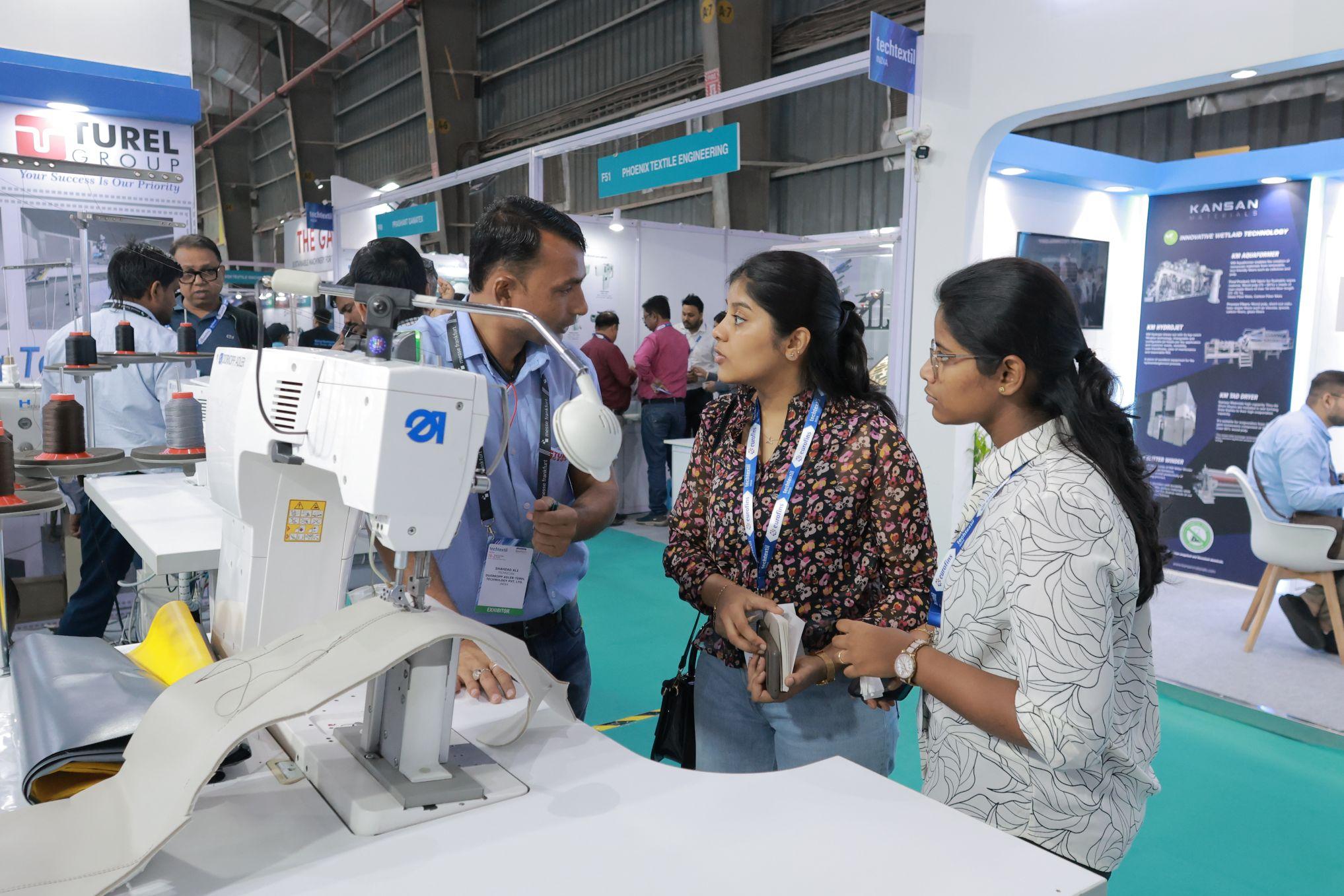
Techtextil India 2025 Photo: Messe Frankfurt Trade Fairs India
30.12.2025

Techtextil India 2025: Sports textile, circular supply chains, bio-based materials and resource-efficient manufacturing under spotlight

The 10th edition of Techtextil India 2025 concluded recently at the Bombay Exhibition Centre, Mumbai, with strong buyer turnout, primarily from Western India, reaching 9144 visitors across 235 Indian cities and 45 countries. Over three days, the trade fair brought together leading domestic and international brands, technology providers, institutional buyers and policymakers, reinforcing India’s ambition to emerge as a global hub for value-added technical textiles. The show hosted 216 exhibitors, featuring over 300 brands and showcased cutting-edge solutions across 12 application areas, keeping the show floor busy throughout the three days. 

As a key knowledge and sourcing platform, the fair drew decision makers from sectors such as mobility, healthcare, construction, filtration, protection and sportswear, helping bridge the gap between fibre producers, converters, brand owners and end users. Strategic support from leading industry associations and state textile departments further amplified the show’s role in driving investment and collaboration in India’s technical textiles ecosystem.

The 10th edition of Techtextil India 2025 concluded recently at the Bombay Exhibition Centre, Mumbai, with strong buyer turnout, primarily from Western India, reaching 9144 visitors across 235 Indian cities and 45 countries. Over three days, the trade fair brought together leading domestic and international brands, technology providers, institutional buyers and policymakers, reinforcing India’s ambition to emerge as a global hub for value-added technical textiles. The show hosted 216 exhibitors, featuring over 300 brands and showcased cutting-edge solutions across 12 application areas, keeping the show floor busy throughout the three days. 

As a key knowledge and sourcing platform, the fair drew decision makers from sectors such as mobility, healthcare, construction, filtration, protection and sportswear, helping bridge the gap between fibre producers, converters, brand owners and end users. Strategic support from leading industry associations and state textile departments further amplified the show’s role in driving investment and collaboration in India’s technical textiles ecosystem.

Guest of Honour, Honourable Smt R Lalitha, IAS, Director of Textiles, Directorate of Textiles, Government of Tamil Nadu, shared: “Techtextil India 2025 weaves together leading innovators, policymakers and companies to frame appropriate policies for the growing industry. I believe that man-made fibres is the sunrise sector of the future. Concepts like sustainability and circularity will give rise to better technology that could help speed up research and development in India.”

Echoing the government’s thrust on sustainability, conference sessions and special features at Techtextil India 2025 spotlighted topics such as circular supply chains, advanced recycling, bio-based materials and resource-efficient manufacturing. These discussions aligned with India’s broader vision to boost textile and apparel exports through high-value, environmentally responsible products and technologies.

For fibre and material innovators, Techtextil India 2025 served as a high-quality business and feedback platform. Mr Shyamlal Patnaik, Joint President – Global Head Speciality Business at Birla Cellulose believed: “Techtextil India is a great platform to interact with our customers. It helps us understand customer requirements, connecting us globally and strengthening our presence domestically. It also helps us to showcase our new products before genuine buyers.” 

On the first day of Techtextil India, Brawntex Industries Pvt Ltd announced its partnership with Kurabo Industries Ltd, a Japanese brand known for its fire-retardant fabrics. Sharing details about the new partnership and the overall expo experience, Mr Nitesh Mittal, Founder & CEO, Brawntex Industries Pvt Ltd said: “We will be representing Kurabo in India for military and industrial workwear such as oil & gas, iron & steel. We have been participating in Techtextil India for the past 7 editions. The show has been amazing as the crowd here is targeting the business needs and the footfall has been great. We could meet our partners, customers and some new ones as well. I can summarise it by saying the expo has been incredible.”

Another exhibitor, part of the Germany Pavilion, Mr Umashankar Mahapatra, Managing Director, Pulcra Chemicals, displayed sustainable chemicals for textile processing, speciality additives for man-made fibre and natural fibre industry. He stated: “This was a really effective show for us as we could connect with customers who are willing to invest in the technical textile industry. We received enquiries from the traditional market of Surat who are looking to venture into the technical textile sector. For any new business to start, the show offers right raw material – fibre, machinery and speciality chemicals. It is a very effective show that is connecting the dots.” 

Product launches and demonstrations spanned high-performance fibres, speciality yarns, functional fabrics, nonwoven solutions, coating and finishing technologies, testing equipment and process automation, reflecting the industry’s rapid move toward value-added, engineered textiles. Many exhibitors used the platform to unveil India-specific solutions tailored to mobility, infrastructure, medical, hygiene and protective applications.

Innovative products such as special fabrics for firefighter suits, crop covers, vehicle seats and airbags, bags, woven sacks/bags, parachute and clothing for special needs like defence and steel industry. Besides these, innovation in knitting technology based on various applications also drew visitor interest. 

The show had a dedicated Sporttech Pavilion in a collaboration with Concepts N Strategies. It delivered three power-packed panel discussions that drew exceptionally high footfall and dynamic participation from global buyers, sourcing leaders, and performance-textile innovators and highlighted India’s accelerating shift toward premium, scalable activewear manufacturing.

Similarly, the Indian Technical Textile Association (ITTA) powered conference surfaced advanced solutions for crop protection, coastal protection wear, the use of natural fibres with smart materials, and reinforcing better utility. Another conference in collaboration with the Society of Plastics Engineers (SPE) also held intriguing discussions on establishing circular supply chains with key topics such as PET waste to yarn, AI-based waste sorting, recycling technologies, automation and traceability of waste value chain. 

The show not only showcased advances across various categories in the world of technical textiles but also served as a platform that displayed technical textiles manufactured utilising waste, upcycling of waste into yarn, post-consumer waste for yarns and fabrics, lifestyle products from waste and more. A visitor, Ms Samidha Mayee, Manager-Brand Marketing & Sales Planning, Archroma, explaining the diverse range of products at Techtextil India said: “Techtextil India is a vast show drawing huge crowd and is an all-inclusive and comprehensive exhibition. I was happy to see everything right from the fibre, yarns, fabrics, manufacturing, processing and even the recycling of the polyester fibres.”

Unveiling the visitor experience, Mr Ashish Arya, Sales and Marketing Leader-Medtech, Thermaissance described: “It was a memorable experience for me. I have learnt how the entire processing, manufacturing and other capabilities are being employed for fabric making, especially the recycling process. The best part was the innovative products being displayed and the rapid pace of new product development. The entire setup of the event was good, including the ambience and footfall.” 

The next edition of Techtextil India will continue to build on this momentum, offering a powerful marketplace and knowledge forum for stakeholders across the value chain.

Source:

Messe Frankfurt Trade Fairs India