From the Sector

Reset
12.02.2026

NCTO: “Block the Secure Revenue Clearance Channel Act”

National Council of Textile Organizations (NCTO) President and CEO Kim Glas sent a letter House leaders urging them to oppose and block the Secure Revenue Clearance Channel Act, a bill that would essentially reopen a dangerous trade loophole and ultimately harm U.S. textile manufacturers.

“Last year through bipartisan action, Congress voted overwhelmingly to end de minimis after identifying the substantial harms it perpetrated,” Glas states in the letter to Speaker of the House Mike Johnson (D-LA) and Minority Leader Hakeem Jeffries (D-NY). “The House China Select Committee determined in 2023 that Chinese e-commerce platforms were flooding the U.S. with billions of dollars’ worth of goods but had paid $0 in import duties, while American companies comparatively spent millions. Additionally, these platforms were found lacking in due diligence mechanisms to verify that products were not tainted by forced labor in China.”

National Council of Textile Organizations (NCTO) President and CEO Kim Glas sent a letter House leaders urging them to oppose and block the Secure Revenue Clearance Channel Act, a bill that would essentially reopen a dangerous trade loophole and ultimately harm U.S. textile manufacturers.

“Last year through bipartisan action, Congress voted overwhelmingly to end de minimis after identifying the substantial harms it perpetrated,” Glas states in the letter to Speaker of the House Mike Johnson (D-LA) and Minority Leader Hakeem Jeffries (D-NY). “The House China Select Committee determined in 2023 that Chinese e-commerce platforms were flooding the U.S. with billions of dollars’ worth of goods but had paid $0 in import duties, while American companies comparatively spent millions. Additionally, these platforms were found lacking in due diligence mechanisms to verify that products were not tainted by forced labor in China.”

Last year, Congress passed bipartisan legislation codifying the end of de minimis, effective July 2027. The Trump administration also took action to close de minimis to all commercial shipments globally through executive order, which took effect at the end of August 2025.

“As a result, the volume of small package deliveries has dramatically decreased, duty collections are up, and American consumers and workers are better off,” the letter states.

“Despite clear action from Congress and the administration on the negative impact of express shipment programs for ‘small value’ packages at U.S. ports, some still want to provide duty relief to foreign importers while requiring less information on packages valued at up to $600 — making enforcement impossible and rewarding offshore producers,” the letter continues. “De minimis was labeled ‘China’s backdoor to the U.S.,’ facilitated by an environment where goods were cleared on manifest, packages were not properly inspected or levied duties, and the risk posed was extremely high. The Secure Revenue Clearance Channel Act would recreate many of these same problems, with China being the biggest winner.”

Source:

NCTO

11.02.2026

U.S. Textile Industry Applauds Legislation Aimed at Ending Harmful Customs Rule

The National Council of Textile Organizations (NCTO), which represents the full U.S. textile supply chain from fiber and yarn to fabrics and finished sewn products, lauds a bill introduced today aimed at ending the U.S. Customs & Border Protection’s (CBP) “first sale” rule.

National Council of Textile Organizations President and CEO Kim Glas
“NCTO and the U.S. textile industry strongly support the Last Sale Valuation Act, a bill that would eliminate a harmful CBP rule that significantly lowers duties paid by importers on textile and apparel goods and disadvantages U.S. textile manufacturers in favor of countries that often employ predatory trade practices and fail to provide reciprocal market access.

“We sincerely thank Sens. Bill Cassidy (R-LA) and Sheldon Whitehouse (D-RI) for their leadership on this bill. Closing this loophole will help level the playing field, bolster the U.S. textile industry, and spur more onshoring and investment here and in our Western Hemisphere.”

The National Council of Textile Organizations (NCTO), which represents the full U.S. textile supply chain from fiber and yarn to fabrics and finished sewn products, lauds a bill introduced today aimed at ending the U.S. Customs & Border Protection’s (CBP) “first sale” rule.

National Council of Textile Organizations President and CEO Kim Glas
“NCTO and the U.S. textile industry strongly support the Last Sale Valuation Act, a bill that would eliminate a harmful CBP rule that significantly lowers duties paid by importers on textile and apparel goods and disadvantages U.S. textile manufacturers in favor of countries that often employ predatory trade practices and fail to provide reciprocal market access.

“We sincerely thank Sens. Bill Cassidy (R-LA) and Sheldon Whitehouse (D-RI) for their leadership on this bill. Closing this loophole will help level the playing field, bolster the U.S. textile industry, and spur more onshoring and investment here and in our Western Hemisphere.”

Source:

National Council of Textile Organizations

European Industry Summit 2026 Photo via Euratex
11.02.2026

"Deliver emergency measures as Europe’s competitiveness crisis deepens"

EURATEX, representing the European textile and fashion industry, joins the Antwerp Declaration Community’s call on EU Heads of State and Government to adopt emergency measures that restore industrial competitiveness and deliver tangible results for Europe’s manufacturing base in 2026.

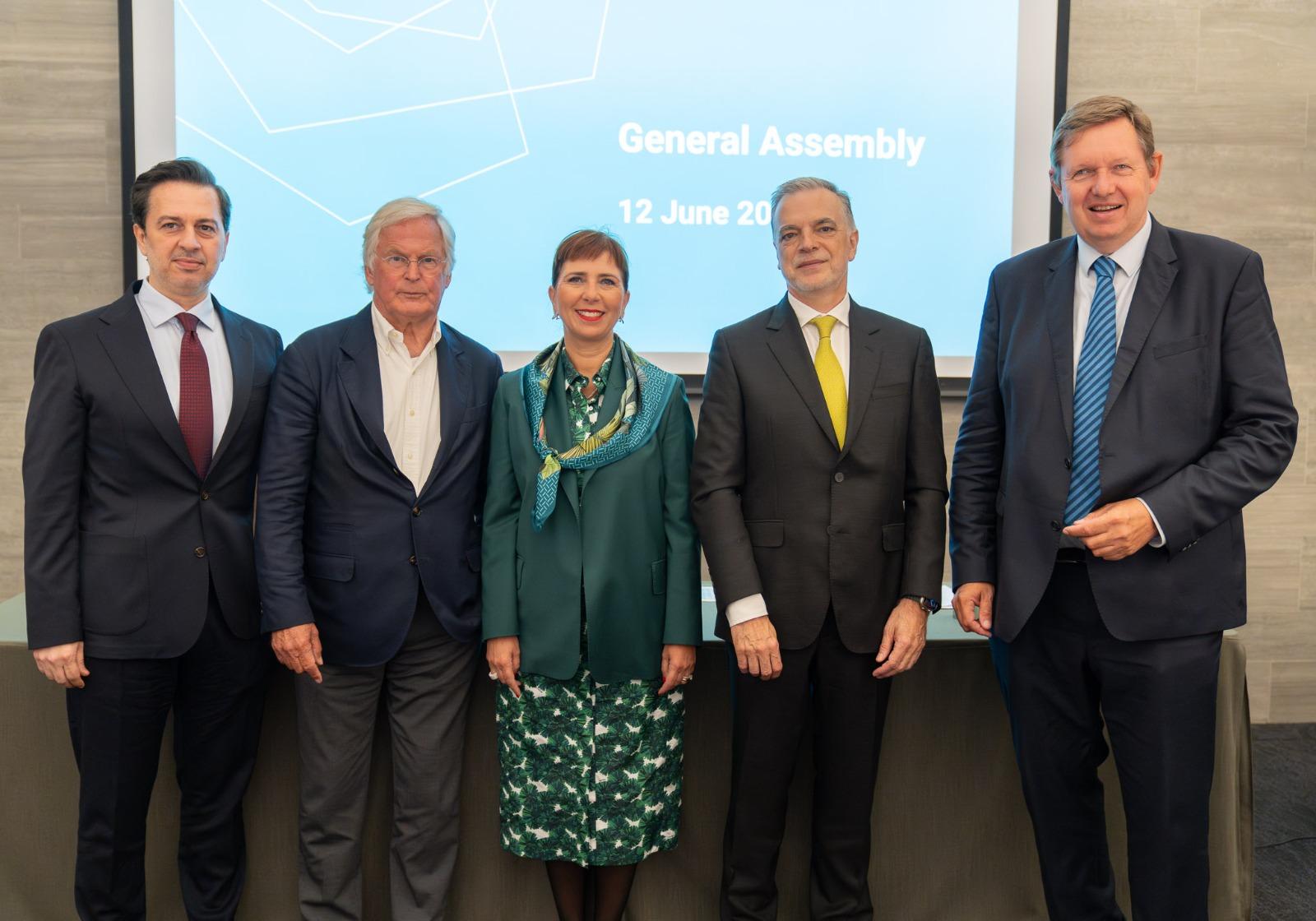
The call was made at the European Industry Summit, which brought together over 500 business leaders, 30 factory workers, and European Commission President Ursula von der Leyen, under the auspices of Belgian Prime Minister Bart De Wever. Senior EU leaders including German Chancellor Friedrich Merz, French President Emmanuel Macron, Dutch Prime Minister Dick Schoof, Austrian Chancellor Christian Stocker, as well as Executive Vice-Presidents Teresa Ribera and Stéphane Séjourné, and Commissioner Wopke Hoekstra, also joined the discussions — underscoring the growing political urgency of Europe’s industrial competitiveness crisis.

The European Industry Summit urged a coordinated package focused on:

EURATEX, representing the European textile and fashion industry, joins the Antwerp Declaration Community’s call on EU Heads of State and Government to adopt emergency measures that restore industrial competitiveness and deliver tangible results for Europe’s manufacturing base in 2026.

The call was made at the European Industry Summit, which brought together over 500 business leaders, 30 factory workers, and European Commission President Ursula von der Leyen, under the auspices of Belgian Prime Minister Bart De Wever. Senior EU leaders including German Chancellor Friedrich Merz, French President Emmanuel Macron, Dutch Prime Minister Dick Schoof, Austrian Chancellor Christian Stocker, as well as Executive Vice-Presidents Teresa Ribera and Stéphane Séjourné, and Commissioner Wopke Hoekstra, also joined the discussions — underscoring the growing political urgency of Europe’s industrial competitiveness crisis.

The European Industry Summit urged a coordinated package focused on:

  • Reducing energy and carbon costs to restore competitiveness; 
  • Ensuring fair competition through strong trade instruments and enforcement; 
  • Boosting demand for EU-made products, including via public procurement and transparency tools that empower buyers. 

With 200,000 companies and 1.3 million workers, Europe’s textile and fashion ecosystem produces not only apparel, but also technical textiles for medical, automotive and defence applications. Yet the sector is facing mounting pressure from high energy costs and millions of non-compliant, low-quality products entering the EU market via online platforms, undermining responsible manufacturers and accelerating closures across Member States. 

During his speech, EURATEX President Mario Jorge Machado underlined that Europe must move from announcements to delivery — with measures that directly strengthen demand for sustainable, high-quality products made in Europe, while ensuring imported products comply with EU rules. 

“Europe must regain confidence and pride in what it produces, and stimulate demand for high-quality and sustainable textiles made in Europe. This requires three concrete actions: public procurement that goes beyond price and reflects origin, sustainability and security for strategic textiles; increased transparency, feasible for SMEs; and effective market surveillance to stop non-compliant imports from dominating the market” affirmed the President.

FITA, ABIT, EURATEX: Monitoring Mercosur-European Union Partnership Agreement Photo EURATEX
05.02.2026

FITA, ABIT, EURATEX: Monitoring Mercosur-European Union Partnership Agreement

The Argentine Textile Industry Federation (FITA), the Brazilian Textile and Apparel Industry Association (ABIT), and the European Apparel and Textile Confederation (EURATEX) continue to monitor the process of internalizing the Mercosur-European Union Partnership Agreement. This agreement is essential for the competitiveness of our industries, on both sides of the Atlantic. 

The entities remain confident that, despite the submission of the agreement to the Court of Justice of the European Union, the vision of the agreement's strategic role for both sides of the Atlantic will prevail.

For the textile industry, the agreement confirms the commitment to economic integration and predictable rules, as well as signalling support for multilateralism in a challenging global scenario. 

FITA, ABIT, and EURATEX reaffirm their commitment to actively contribute to this implementation process of the agreement, as well as to undertake other inter-regional and international projection actions that consolidate both blocs as relevant actors in the global economy.

The Argentine Textile Industry Federation (FITA), the Brazilian Textile and Apparel Industry Association (ABIT), and the European Apparel and Textile Confederation (EURATEX) continue to monitor the process of internalizing the Mercosur-European Union Partnership Agreement. This agreement is essential for the competitiveness of our industries, on both sides of the Atlantic. 

The entities remain confident that, despite the submission of the agreement to the Court of Justice of the European Union, the vision of the agreement's strategic role for both sides of the Atlantic will prevail.

For the textile industry, the agreement confirms the commitment to economic integration and predictable rules, as well as signalling support for multilateralism in a challenging global scenario. 

FITA, ABIT, and EURATEX reaffirm their commitment to actively contribute to this implementation process of the agreement, as well as to undertake other inter-regional and international projection actions that consolidate both blocs as relevant actors in the global economy.

The EU textiles and apparel industry includes ca. 200,000 companies and 1.2 million dedicated workers, generating a turnover of nearly €170 billion. 

The Mercosur countries also have a significant textile and clothing industry. In Brazil, this industry has 25,700 companies with 1.3 million employees and a turnover of USD 40.9 billion. In Argentina, the textile and clothing industry comprises 4,000 companies and employs 540,000 workers along the value chain.

The Mercosur-European Union Partnership Agreement offers the textile and apparel industry opportunities related to market access, technological cooperation, investment, strengthening of environmental standards for countries in both economic blocs.

02.02.2026

Reciprocal trade agreement between the United States and Guatemala

The National Council of Textile Organizations (NCTO), which represents the full U.S. textile supply chain from fiber and yarn to fabrics and finished sewn products, welcomed the announcement of a reciprocal trade agreement between the United States and Guatemala.

National Council of Textile Organizations President and CEO Kim Glas:
“The reciprocal trade agreement with Guatemala marks an important step toward strengthening the U.S. textile supply chain. We commend the administration for taking decisive action to remove reciprocal tariffs and provide preferential treatment to qualifying textile and apparel products from Guatemala under the Dominican Republic-Central America-United States Free Trade Agreement (CAFTA-DR).

“NCTO and the broader U.S. textile industry are grateful to President Trump, U.S. Trade Representative Ambassador Jamieson Greer, and the administration for concluding this agreement with Guatemala, following on the heels of the recently announced agreement with El Salvador.

The National Council of Textile Organizations (NCTO), which represents the full U.S. textile supply chain from fiber and yarn to fabrics and finished sewn products, welcomed the announcement of a reciprocal trade agreement between the United States and Guatemala.

National Council of Textile Organizations President and CEO Kim Glas:
“The reciprocal trade agreement with Guatemala marks an important step toward strengthening the U.S. textile supply chain. We commend the administration for taking decisive action to remove reciprocal tariffs and provide preferential treatment to qualifying textile and apparel products from Guatemala under the Dominican Republic-Central America-United States Free Trade Agreement (CAFTA-DR).

“NCTO and the broader U.S. textile industry are grateful to President Trump, U.S. Trade Representative Ambassador Jamieson Greer, and the administration for concluding this agreement with Guatemala, following on the heels of the recently announced agreement with El Salvador.

“Guatemala is a key partner in the CAFTA-DR region, with $2 billion in two-way textile and apparel trade. Together, the region operates as an integrated co-production platform that is essential to the U.S. textile supply chain. In 2024, this production network generated $11.3 billion in two-way trade and supported more than 470,000 American jobs in the domestic textile industry alone.

“The U.S.–Western Hemisphere textile and apparel supply chain remains a critical strategic alternative to China and other Asian producers. We look forward to continued collaboration with the Trump administration to further solidify this vital regional partnership and appreciate this important announcement.”

Source:

National Council of Textile Organizations 

Alliance for European Flax-Linen & Hemp at JEC World 2026 Photo Alliance for European Flax-Linen & Hemp at JEC World 2026
02.02.2026

Alliance for European Flax-Linen & Hemp at JEC World 2026

The Alliance for European Flax-Linen & Hemp participats at JEC World 2026, featuring a significantly expanded presence and an enhanced offering for the global composites industry.

Building on previous successes, the Alliance members will be at the core of a newly renamed and enlarged Bio-Materials Village in Hall 5. The village has grown by more than 30%, expanding from 250 m² to 333 m², and will feature 14 Alliance members and partners representing the full natural fibre composite value chain from fibre cultivation and processing through to semi-finished materials, resins, and industrial applications.

This year’s village welcomes several new members, including Norafin, which brings advanced technical nonwoven expertise using flax and hemp fibres, and innovative start-up Biofibix developing next-generation bio-based composite solutions. Another new participant is GreenPoxy by Sicomin, a leading supplier of bio-based epoxy resins that complement natural fibre reinforcement systems and enable lower-impact composite structures.

The Alliance for European Flax-Linen & Hemp participats at JEC World 2026, featuring a significantly expanded presence and an enhanced offering for the global composites industry.

Building on previous successes, the Alliance members will be at the core of a newly renamed and enlarged Bio-Materials Village in Hall 5. The village has grown by more than 30%, expanding from 250 m² to 333 m², and will feature 14 Alliance members and partners representing the full natural fibre composite value chain from fibre cultivation and processing through to semi-finished materials, resins, and industrial applications.

This year’s village welcomes several new members, including Norafin, which brings advanced technical nonwoven expertise using flax and hemp fibres, and innovative start-up Biofibix developing next-generation bio-based composite solutions. Another new participant is GreenPoxy by Sicomin, a leading supplier of bio-based epoxy resins that complement natural fibre reinforcement systems and enable lower-impact composite structures.

Innovations Showcase
The Bio-Materials Village will highlight several award-winning and shortlisted developments, including exhibits from JEC Innovation Award winners and finalists.

Bcomp has received the Automotive & Road Transportation Parts Award for its series-production exterior flax composite components developed for BMW, demonstrating the scalability and performance of flax reinforcements in demanding automotive applications. 

Safilin will also present its collaboration with Stratiforme on the Ecotrain project, showcasing the successful integration of natural fibre composites into rail interiors, delivering weight reduction, improved environmental performance, and industrial feasibility.

Biofibix, shortlisted among the 20 finalists of the 2026 JEC Startup Booster, will present its proprietary reinforcement technology designed to overcome one of the key challenges of natural fibre composites : structural consistency. Biofibix develops flax-based reinforcement systems that combine controlled fibre orientation with thermoplastic and thermoset compatibility, enabling improved mechanical performance and process reliability. 

Visitors will also discover the Ssuchy-Next project, an initiative focused on wind energy applications. The project explores the use of hemp-based composite solutions for a 12.6 m wind turbine blade, combining optimized fibre architecture, bio-sourced materials, and industrial manufacturing processes. Ssuchy-Next demonstrates how natural fibres can contribute to reduced carbon footprint, improved vibration damping, and end-of-life advantages, while meeting the mechanical and durability requirements of the wind energy sector.

Additional cutting-edge innovations on display will be showcased by other Alliance members and partners that include BComp, Circular Structures, DEMGY, Depestele, Ecotechnilin, Emanuel Lang Flax Composites, Flaxco, Libeco, Linificio e Canapificio Nazionale, Norafin, Safilin, Terre de Lin Technique, and many more. 


Industry Conference 
As part of the JEC Composite Exchange programme, Alliance experts will organize a round-table discussion on Wednesday 11 March at 2:00 pm Agora 5, titled:

“From Data to Applications: How Environmental and Technical Flax-Linen & Hemp Data Help Build Industrial Solutions.” The discussion will highlight how environmental metrics and technical performance data are essential tools for designers, engineers, and manufacturers in accelerating the adoption of natural fibre composites, while exploring the latest technical advances in flax-linen and hemp composites, their environmental performance, and the strategic pathways supporting the industrial deployment of bio-based composites in Europe.

28.01.2026

Modern Testing Methods for Raw Cotton

The 38th International Cotton Conference Bremen will take place from 25 to 27 March 2026 at the Bremen Parliament. The program will focus on technical innovations, market trends, and regulatory frameworks across the entire value chain – from agriculture to the circular economy. As well on the focus of high-profile speakers: Cotton quality and testing methods 

Raw cotton from different areas of production varies considerably in terms of fibre properties, thus directly influencing how well cotton can be spun into yarn and how textiles behave in further processing. Innovative testing methods enable assessing each bale reliably and reproducibly according to defined quality parameters. The aim is to make cotton qualities comparable, as this is a key prerequisite for global trade, pricing and reliable supply chains. Quality and quality testing are the historical focus of the Bremen conference. 

The 38th International Cotton Conference Bremen will take place from 25 to 27 March 2026 at the Bremen Parliament. The program will focus on technical innovations, market trends, and regulatory frameworks across the entire value chain – from agriculture to the circular economy. As well on the focus of high-profile speakers: Cotton quality and testing methods 

Raw cotton from different areas of production varies considerably in terms of fibre properties, thus directly influencing how well cotton can be spun into yarn and how textiles behave in further processing. Innovative testing methods enable assessing each bale reliably and reproducibly according to defined quality parameters. The aim is to make cotton qualities comparable, as this is a key prerequisite for global trade, pricing and reliable supply chains. Quality and quality testing are the historical focus of the Bremen conference. 

Real comparability on focus 
Various methods for testing cotton include High Volume Instrument Testing (such as Uster HVI) as a common method for instrumental cotton classification for price deter-mination and bale composition; Uster AFIS for testing the length, fineness, neps, etc. of individual fibres and the Mesdan Contest as a thermomechanical method for deter-mining the tendency of cotton to stick together. 

Mourad Krifa from Kent State University (USA) has been conducting research in the characterisation of cotton fibres for decades, focusing on length distribution. In his presentation he will introduce reliable statistical and software-based tools that help cotton growers, biotechnologists and processors to better analyse and utilise fibre distributions. 

Dr Müge Ekizoğlu, İzmir Commodity Exchange (ICE), is going to present the certified storage and classification system for Turkish cotton based on instrumental classification using High Volume Instruments. As one of the leading cotton-growing and producing countries, objective quality assessment for export and international standards is crucial for the Türkiye. 

Deninson Lima, ABRAPA Brazil, will present the results of a study on the measurement uncertainties determined for HVI devices used in Brazil. Based on the GUM standard, significant sources of uncertainty such as instrument design, environmental conditions, sample preparation and operator influence were analysed. The study quantified three repeatability, reproducibility and possible distortions and emphasises the importance of regular calibrations, quality controls and systematic uncertainty budgeting. 

Gabriele Salvinelli, Mesdan, Italy, will present the Contest S series testing equipment. These super automated systems measure the stickiness of raw cotton, which can mess up spinning machines and may lead to higher maintenance effort as well as lower quality. Since standardised environmental conditions are often not fully complied with in practice, the study examines the extended humidity range in which reliable measurement results are possible and provides users with practical recommendations.

19.01.2026

European business associations celebrate the signature of EU-Mercosur FTA

January, 17 marks a historic milestone with the signing of the EU-Mercosur Trade Agreement, creating the biggest trading block in the world. European business – represented by more than 28 associations across a wide range of sectors – warmly welcomes this signature. It sends a strong and timely signal that the EU remains open and is committed to rules-based global trade. In a time of global uncertainty, this agreement is a key growth booster. 

By opening access to over 270 million consumers via the elimination of trade barriers and the removal of tariffs on over 90% of EU exports, the agreement provides the thrust European companies need to export, invest, and grow, as well as to diversify their supply chains, sourcing essential products and raw materials from Mercosur. By 2040, according to DG Trade’s calculations, the agreement is expected to add 77.6 billion euros to the EU GDP, resulting in a 39% increase in EU exports to Mercosur. 

January, 17 marks a historic milestone with the signing of the EU-Mercosur Trade Agreement, creating the biggest trading block in the world. European business – represented by more than 28 associations across a wide range of sectors – warmly welcomes this signature. It sends a strong and timely signal that the EU remains open and is committed to rules-based global trade. In a time of global uncertainty, this agreement is a key growth booster. 

By opening access to over 270 million consumers via the elimination of trade barriers and the removal of tariffs on over 90% of EU exports, the agreement provides the thrust European companies need to export, invest, and grow, as well as to diversify their supply chains, sourcing essential products and raw materials from Mercosur. By 2040, according to DG Trade’s calculations, the agreement is expected to add 77.6 billion euros to the EU GDP, resulting in a 39% increase in EU exports to Mercosur. 

With the agreement now signed, the ball is firmly in the court of the European Parliament in ensuring rapid ratification. We therefore call on Members of the European Parliament to give their consent and allow Europe’s engine of economic growth and prosperity to be switched on and move ahead decisively. After over 25 years of negotiations, we are finally in sight of the finish line. We cannot afford to wait any longer.

Source:

Euratex

ICAC Plenary Meeting to take place right before the International Cotton Conference Photo: Marianne Krohn, Unsplash
19.01.2026

ICAC Plenary Meeting to take place right before the International Cotton Conference

The International Cotton Advisory Committee (ICAC) will hold its 83rd Plenary Meeting on 23–24 March 2026 at the Parliament building in Bremen. The meeting will take place immediately ahead of the 38th International Cotton Conference Bremen (25–27 March 2026) and marks a historic premiere: for the first time, the ICAC Plenary will be hosted in close cooperation with the Bremen Cotton Ex-change and the Faserinstitut Bremen e.V. (FIBRE). 

The ICAC is a government-level association headquartered in Washington, DC. Its member countries produce, process, or trade cotton. The ICAC Plenary Meeting will be held under the motto “Uniting the Cotton and Textiles Value Chain for a Sustainable Future” and highlights the organization’s commitment to supporting its member gov-ernments and advancing sustainability, innovation, and economic prosperity across the entire cotton and textile value chain—from seed to retail.

The International Cotton Advisory Committee (ICAC) will hold its 83rd Plenary Meeting on 23–24 March 2026 at the Parliament building in Bremen. The meeting will take place immediately ahead of the 38th International Cotton Conference Bremen (25–27 March 2026) and marks a historic premiere: for the first time, the ICAC Plenary will be hosted in close cooperation with the Bremen Cotton Ex-change and the Faserinstitut Bremen e.V. (FIBRE). 

The ICAC is a government-level association headquartered in Washington, DC. Its member countries produce, process, or trade cotton. The ICAC Plenary Meeting will be held under the motto “Uniting the Cotton and Textiles Value Chain for a Sustainable Future” and highlights the organization’s commitment to supporting its member gov-ernments and advancing sustainability, innovation, and economic prosperity across the entire cotton and textile value chain—from seed to retail.

“Hosting our 83rd Plenary Meeting at Bremen’s Parliament House marks a first-ever, historic collaboration between ICAC and the Bremen Cotton Exchange,” said Eric Trachtenberg, Executive Director of ICAC. “For decades, our organizations have worked together to benefit the global cotton and textile industry, and this joint week of programming promises to be a can’t-miss event for professionals from every segment of the value chain. We are thrilled to connect high-level government delegates with the technical and commercial expertise that Bremen’s conference delivers so success-fully.”

Fritz Grobien, President of the Bremen Cotton Exchange, said, “We are very pleased to welcome the ICAC to Bremen as a government-level organization. The ICAC, the Bremen Cotton Exchange, and the Fibre Institute Bremen are three institutions in the global cotton industry that represent the topic of cotton in different ways and at the highest level. Therefore, I am even more delighted to have the ICAC Plenary as a valuable contributor at the beginning of our own conference.”

The International Cotton Conference Bremen is known for addressing topics such as cotton cultivation, quality assessment, textile processing, innovative cotton products, and the interconnected textile value chain.

The Bremen Cotton Exchange, FIBRE, and the ICAC are looking forward to welcoming delegates from government, industry, and research to Bremen in March 2026.