

From the Sector

Reset
28.08.2026

NC State joins $160 million initiative for biobased fibre materials

NC State University is a core partner in the BRIDGES Engine initiative backed by the US National Science Foundation, with up to $160 million available over ten years. A central focus is the development of miscanthus and switchgrass as feedstocks for biobased products.

The plant fibres are intended for applications including automotive, construction and packaging. NC State will contribute techno-economic assessment, sustainability analysis and processing expertise to convert agricultural feedstocks into fibre materials suitable for industrial use.

For technical textiles, the initiative is particularly relevant because it goes beyond laboratory-scale material development and aims to build supply chains, processing capacity and regional markets in parallel.

NC State University is a core partner in the BRIDGES Engine initiative backed by the US National Science Foundation, with up to $160 million available over ten years. A central focus is the development of miscanthus and switchgrass as feedstocks for biobased products.
The plant fibres are intended for applications including automotive, construction and packaging. NC State will contribute techno-economic assessment, sustainability analysis and processing expertise to convert agricultural feedstocks into fibre materials suitable for industrial use.

For technical textiles, the initiative is particularly relevant because it goes beyond laboratory-scale material development and aims to build supply chains, processing capacity and regional markets in parallel.

Source:

NC State University

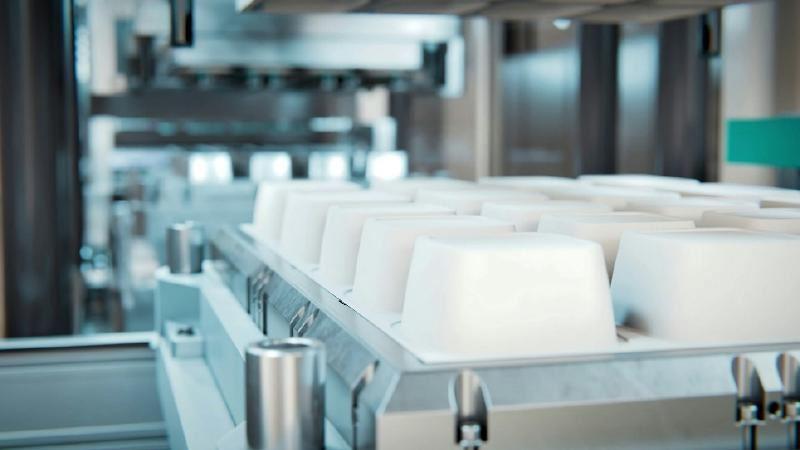
Valmet 3D Fiber technology combines high capacity and speed, automation, and resource efficiency to produce high-quality molded fiber packaging. Photo by VALMET
Valmet 3D Fiber technology combines high capacity and speed, automation, and resource efficiency to produce high-quality molded fiber packaging.
28.08.2026

Valmet and Metsä scale 3D fibre forming to commercial production

Metsä Group has selected Valmet to supply what the companies describe as the world’s first commercial-scale production line for Valmet’s 3D Fiber technology. The line will be installed in Äänekoski and is scheduled to start up in 2028, with a nominal capacity of more than 100 million three-dimensional fibre products per year.

The process converts cellulose fibres directly into lightweight yet rigid end products. Valmet combines fibre processing, forming, automation and final packing in an integrated production chain. The technology has been co-developed with Metsä Spring since 2020 and was initially validated in a demonstration plant.

Although packaging is the primary target market, the development is relevant to the textile and fibre sector because it demonstrates how fibre-based structures and forming technologies are moving into three-dimensional industrial applications.

Metsä Group has selected Valmet to supply what the companies describe as the world’s first commercial-scale production line for Valmet’s 3D Fiber technology. The line will be installed in Äänekoski and is scheduled to start up in 2028, with a nominal capacity of more than 100 million three-dimensional fibre products per year.

The process converts cellulose fibres directly into lightweight yet rigid end products. Valmet combines fibre processing, forming, automation and final packing in an integrated production chain. The technology has been co-developed with Metsä Spring since 2020 and was initially validated in a demonstration plant.

Although packaging is the primary target market, the development is relevant to the textile and fibre sector because it demonstrates how fibre-based structures and forming technologies are moving into three-dimensional industrial applications.

Source:

VALMET

Dyneema SK80 fiber Photo (c) Avient Corporation
Dyneema SK80 fiber
28.08.2026

Dyneema SK80 targets significantly longer service life for mooring lines

Avient is introducing Dyneema SK80, a new HMPE fibre grade for mooring lines and offshore applications. According to the company, the fibre was engineered at polymer level to deliver at least twice the durability and fatigue resistance of Dyneema SK78 in demanding mooring applications.

The technological emphasis is therefore less on headline tensile strength than on service life under cyclic loading. In mooring systems, repeated load cycles, abrasion, bending stress and environmental exposure are major failure drivers. Improved fatigue resistance can therefore have a direct effect on maintenance intervals, operational safety and lifecycle costs.

The new fibre will be presented at SMM in Hamburg in early September. For Textination, the development is relevant because high-performance fibres are increasingly being positioned not only through weight and strength advantages, but through durability, reliability and the total cost of technical textile systems.

Avient is introducing Dyneema SK80, a new HMPE fibre grade for mooring lines and offshore applications. According to the company, the fibre was engineered at polymer level to deliver at least twice the durability and fatigue resistance of Dyneema SK78 in demanding mooring applications.

The technological emphasis is therefore less on headline tensile strength than on service life under cyclic loading. In mooring systems, repeated load cycles, abrasion, bending stress and environmental exposure are major failure drivers. Improved fatigue resistance can therefore have a direct effect on maintenance intervals, operational safety and lifecycle costs.

The new fibre will be presented at SMM in Hamburg in early September. For Textination, the development is relevant because high-performance fibres are increasingly being positioned not only through weight and strength advantages, but through durability, reliability and the total cost of technical textile systems.