
From the Sector

Reset
16.10.2026

SMYTHE names new chief executive


Canadian womenswear label SMYTHE has appointed Ana Mihaljevic as chief executive officer. The company, known for its tailoring, presents the leadership change as part of its next phase of growth.

For specialist apparel brands, management transitions often coincide with decisions on distribution, product positioning and international development. The appointment is therefore relevant beyond the personnel announcement itself, although the release does not by itself establish specific future expansion targets. 

The new chief executive’s strategic priorities and their effect on sourcing, product development and wholesale relationships will become clearer through subsequent company communications.


Canadian womenswear label SMYTHE has appointed Ana Mihaljevic as chief executive officer. The company, known for its tailoring, presents the leadership change as part of its next phase of growth.

For specialist apparel brands, management transitions often coincide with decisions on distribution, product positioning and international development. The appointment is therefore relevant beyond the personnel announcement itself, although the release does not by itself establish specific future expansion targets. 

The new chief executive’s strategic priorities and their effect on sourcing, product development and wholesale relationships will become clearer through subsequent company communications.


Source:

SMYTHE

Duluth Trading x WD-40® Brand Photo Duluth Trading Co.
Duluth Trading x WD-40® Brand
16.10.2026

Duluth Trading launches WD-40 workwear collaboration

Duluth Trading has introduced a limited-edition apparel and gear collaboration with the WD-40 brand.
The partnership brings together a workwear and outdoor-apparel retailer with a well-known industrial maintenance brand.

For the apparel market, the launch is an example of merchandising that draws on a brand’s associations with practical work and repair rather than on conventional fashion licensing. The combination can address both existing workwear customers and consumers attracted by industrial-inspired clothing and accessories. 

Product-level textile composition, performance certifications and sales expectations were not independently established in the material reviewed and should not be assumed.

Duluth Trading has introduced a limited-edition apparel and gear collaboration with the WD-40 brand.
The partnership brings together a workwear and outdoor-apparel retailer with a well-known industrial maintenance brand.

For the apparel market, the launch is an example of merchandising that draws on a brand’s associations with practical work and repair rather than on conventional fashion licensing. The combination can address both existing workwear customers and consumers attracted by industrial-inspired clothing and accessories. 

Product-level textile composition, performance certifications and sales expectations were not independently established in the material reviewed and should not be assumed.

16.10.2026

Bonobos upgrades omnichannel menswear retail

Menswear brand Bonobos has announced a redesigned e-commerce experience powered by Shopify. The launch is positioned as a step toward a more integrated shopping journey across the brand’s digital and physical retail channels.

The change illustrates how apparel companies are revisiting the technology architecture behind customer-facing retail. Product discovery, online purchasing and store interaction increasingly need to operate as connected elements of a single brand experience rather than separate sales channels.

The company’s announcement identifies the platform transition and omnichannel strategy as the central development. Any assessment of commercial success will depend on subsequent evidence such as conversion rates, customer retention, order economics and the integration of inventory and fulfilment. No such outcome should be inferred from the launch announcement alone.

Menswear brand Bonobos has announced a redesigned e-commerce experience powered by Shopify. The launch is positioned as a step toward a more integrated shopping journey across the brand’s digital and physical retail channels.

The change illustrates how apparel companies are revisiting the technology architecture behind customer-facing retail. Product discovery, online purchasing and store interaction increasingly need to operate as connected elements of a single brand experience rather than separate sales channels.

The company’s announcement identifies the platform transition and omnichannel strategy as the central development. Any assessment of commercial success will depend on subsequent evidence such as conversion rates, customer retention, order economics and the integration of inventory and fulfilment. No such outcome should be inferred from the launch announcement alone.

Source:

Bonobos

15.10.2026

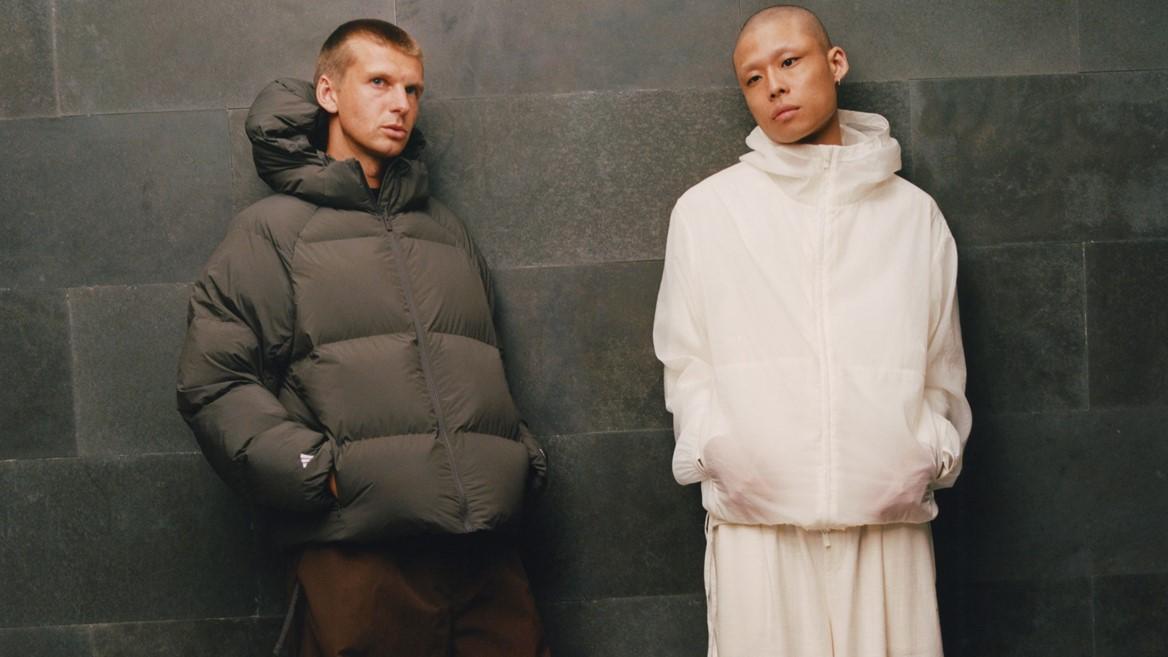
adidas and Arte Antwerp design modular winterwear

adidas and Belgian label Arte Antwerp have completed their FW26 collaboration with a winter outerwear release built around layering and football supporter culture. The collection launches globally on 15 October in stores and online, with apparel priced between US$70 and US$400.

The central garment is a two-in-one puffer jacket with a detachable translucent shell and contrasting insulated inner layer. Both components can be worn together or separately. A second convertible piece reinterprets a long-sleeve football jersey with a removable outer layer, drawing on the South Africa 2002 national-team shirt.

The range also includes winter accessories made from 100% merino wool, among them a beanie, balaclava and scarf referencing Belgian football fanwear. A muted colour palette and adaptable silhouettes aim to connect streetwear styling with cold-weather functionality.

Although the collaboration is primarily a fashion and branding launch, its detachable garment constructions are relevant to designers examining modularity, product versatility and multi-season use. The release does not make a quantified environmental-performance claim for the collection.

adidas and Belgian label Arte Antwerp have completed their FW26 collaboration with a winter outerwear release built around layering and football supporter culture. The collection launches globally on 15 October in stores and online, with apparel priced between US$70 and US$400.

The central garment is a two-in-one puffer jacket with a detachable translucent shell and contrasting insulated inner layer. Both components can be worn together or separately. A second convertible piece reinterprets a long-sleeve football jersey with a removable outer layer, drawing on the South Africa 2002 national-team shirt.

The range also includes winter accessories made from 100% merino wool, among them a beanie, balaclava and scarf referencing Belgian football fanwear. A muted colour palette and adaptable silhouettes aim to connect streetwear styling with cold-weather functionality.

Although the collaboration is primarily a fashion and branding launch, its detachable garment constructions are relevant to designers examining modularity, product versatility and multi-season use. The release does not make a quantified environmental-performance claim for the collection.

Source:

adidas AG / Arte Antwerp

Srushti Patil’s creation featuring Brewed Protein™ fiber and Taroni silk fabrics. Photo credit: S|STYLE
Srushti Patil’s creation featuring Brewed Protein™ fiber and Taroni silk fabrics.
15.10.2026

Brewed Protein moves from fibre to fashion

Spiber’s Brewed Protein fibre appeared in two designer looks presented at S|STYLE 2026 – Wardrobe Edition during Milan Fashion Week. The programme, curated by Giorgia Cantarini and developed with Kering’s Material Innovation Lab, brought together ten designers to explore new approaches to clothing and accessories using innovative non-leather materials.

Srushti Patil worked with sliver made from 100% Brewed Protein staple fibres and combined it with silk fabric supplied by Taroni. Quine Li used a fabric developed by Bower Roebuck that blends Brewed Protein with wool sourced from regenerative practices aligned with Kering’s sustainable-production standards.

The two applications point to distinct material strategies. The first uses a pure-protein staple-fibre input in combination with a conventional luxury textile; the second blends the fibre with wool in a developed fabric. In both cases the technical significance lies in translating an emerging fibre platform into designer-ready forms rather than displaying the polymer only as a laboratory sample.

Spiber’s Brewed Protein fibre appeared in two designer looks presented at S|STYLE 2026 – Wardrobe Edition during Milan Fashion Week. The programme, curated by Giorgia Cantarini and developed with Kering’s Material Innovation Lab, brought together ten designers to explore new approaches to clothing and accessories using innovative non-leather materials.

Srushti Patil worked with sliver made from 100% Brewed Protein staple fibres and combined it with silk fabric supplied by Taroni. Quine Li used a fabric developed by Bower Roebuck that blends Brewed Protein with wool sourced from regenerative practices aligned with Kering’s sustainable-production standards.

The two applications point to distinct material strategies. The first uses a pure-protein staple-fibre input in combination with a conventional luxury textile; the second blends the fibre with wool in a developed fabric. In both cases the technical significance lies in translating an emerging fibre platform into designer-ready forms rather than displaying the polymer only as a laboratory sample.

The designs were shown on 25 and 26 September at Kering Italy’s Milan headquarters. Spiber published its account on 14 October. The company did not disclose production volumes, prices or quantified life-cycle comparisons for the showcased looks.

Source:

Spiber Inc.

(c) Polartec (Milliken & Company)
15.10.2026

Polartec re-engineers Alpha active insulation

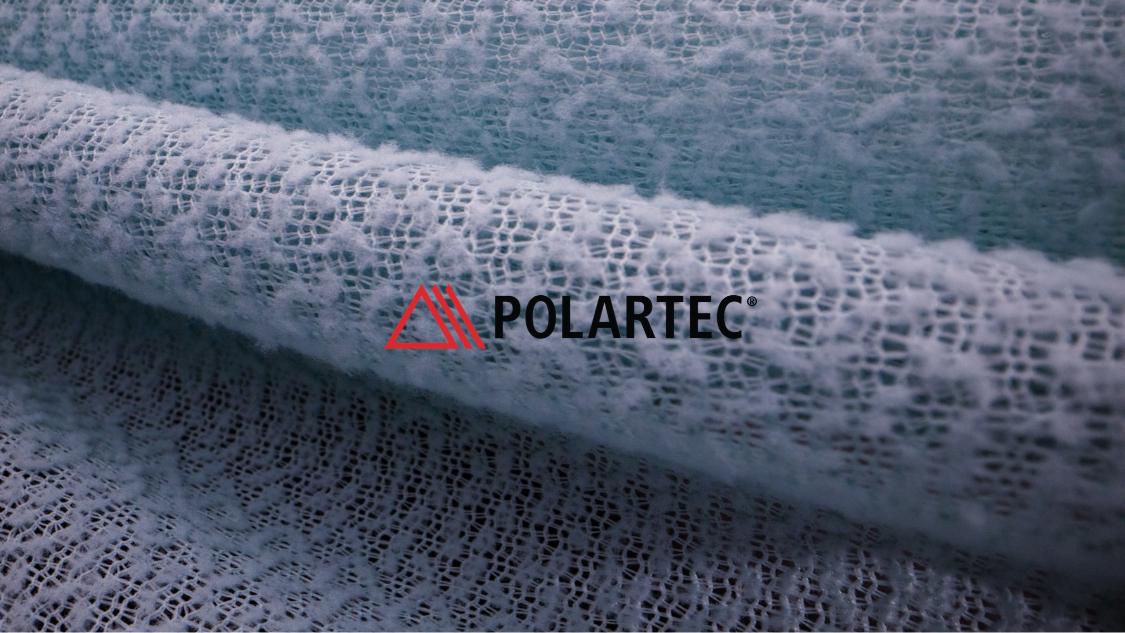
Polartec has introduced a new generation of its Alpha active-insulation textile with a patent-pending construction designed to increase durability and widen its range of apparel applications. The development targets resistance to snagging and fibre shedding while preserving the open structure responsible for airflow, compressibility and moisture management.

Alpha was originally developed for highly active military users who repeatedly move between intense exertion and lower activity in cold conditions. Unlike insulation designed primarily to retain static warmth, its open architecture allows excess heat and moisture to escape during movement. The technology later spread into outdoor, endurance and lifestyle apparel.

The latest construction is intended to support a broader range of weights, textures and garment designs. Polartec says that the material can increasingly be used as a visible or standalone layer rather than only inside a multilayer garment. That places greater demands on structural integrity, appearance and tactile quality.

Polartec has introduced a new generation of its Alpha active-insulation textile with a patent-pending construction designed to increase durability and widen its range of apparel applications. The development targets resistance to snagging and fibre shedding while preserving the open structure responsible for airflow, compressibility and moisture management.

Alpha was originally developed for highly active military users who repeatedly move between intense exertion and lower activity in cold conditions. Unlike insulation designed primarily to retain static warmth, its open architecture allows excess heat and moisture to escape during movement. The technology later spread into outdoor, endurance and lifestyle apparel.

The latest construction is intended to support a broader range of weights, textures and garment designs. Polartec says that the material can increasingly be used as a visible or standalone layer rather than only inside a multilayer garment. That places greater demands on structural integrity, appearance and tactile quality.

According to the company, more than four years of prototyping and testing with performance brands informed the update. More than eleven brands are preparing products using the new Alpha platform. Patagonia is expected to introduce an exclusive style in November, with additional applications planned by Ornot, Purple Mountain Observatory, Senchi Designs, Farpointe and Goldwin.

The announcement does not provide independently comparable laboratory figures for abrasion resistance, snagging or shedding. For garment developers, the central question will be whether the redesigned structure delivers its claimed durability improvement across different weights and constructions without compromising breathability.

12.10.2026

Nike, Patagonia and other brands join new Microfiber Action Alliance

The Nature Conservancy has launched the Microfiber Action Alliance, bringing together Nike, Patagonia, Under Armour, lululemon, Cotopaxi, REI Co-op and other companies to accelerate practical measures against microfiber pollution.

The initiative is designed to complement existing scientific work by The Microfibre Consortium. Participating companies will apply and refine interventions within their own supply chains, generate evidence on what works and share implementation lessons with the wider industry. TNC emphasises prevention because both synthetic and treated natural fibers can contribute to microfiber pollution and released particles are difficult to remove from the environment.

Potential interventions include changes in material selection and textile construction, manufacturing-process improvements and filtration. The Alliance therefore shifts attention from measuring fiber fragmentation alone to integrating low-shedding design and manufacturing decisions into operational practice.

The Nature Conservancy has launched the Microfiber Action Alliance, bringing together Nike, Patagonia, Under Armour, lululemon, Cotopaxi, REI Co-op and other companies to accelerate practical measures against microfiber pollution.

The initiative is designed to complement existing scientific work by The Microfibre Consortium. Participating companies will apply and refine interventions within their own supply chains, generate evidence on what works and share implementation lessons with the wider industry. TNC emphasises prevention because both synthetic and treated natural fibers can contribute to microfiber pollution and released particles are difficult to remove from the environment.

Potential interventions include changes in material selection and textile construction, manufacturing-process improvements and filtration. The Alliance therefore shifts attention from measuring fiber fragmentation alone to integrating low-shedding design and manufacturing decisions into operational practice.

UNIFI, Inc.
09.10.2026

UNIFI combines spun-yarn hand with filament performance and adds fluorine-free water resistance

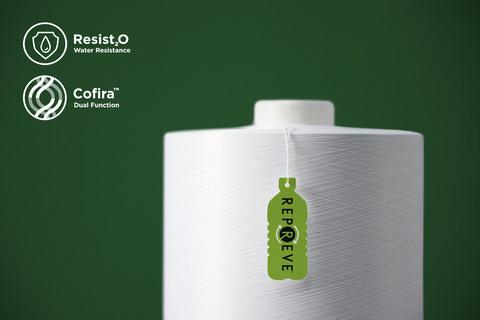
UNIFI has introduced Cofira™, a yarn platform designed to combine the visual and tactile character of spun yarns with filament-yarn functionality. The construction can incorporate other UNIFI technologies and is offered in virgin and REPREVE polyester, including REPREVE Takeback. 

Recycled options can be traced through FiberPrint and are linked to U-TRUST, GRS and SCS certification claims. The company is also expanding its water-resistant portfolio with Resist2O™ Pro. Rather than relying on a conventional topical durable-water-repellent finish, the technology is engineered for different forms of fabric construction and is described as fluorine-free and PFOA-free below 5 ppb.

UNIFI positions the two developments for apparel, furnishings, gear, accessories and industrial applications. Both will be presented in October at Performance Days in Munich and Functional Fabric Fair in Portland, giving the technologies immediate exposure to performance-material developers.


UNIFI has introduced Cofira™, a yarn platform designed to combine the visual and tactile character of spun yarns with filament-yarn functionality. The construction can incorporate other UNIFI technologies and is offered in virgin and REPREVE polyester, including REPREVE Takeback. 

Recycled options can be traced through FiberPrint and are linked to U-TRUST, GRS and SCS certification claims. The company is also expanding its water-resistant portfolio with Resist2O™ Pro. Rather than relying on a conventional topical durable-water-repellent finish, the technology is engineered for different forms of fabric construction and is described as fluorine-free and PFOA-free below 5 ppb.

UNIFI positions the two developments for apparel, furnishings, gear, accessories and industrial applications. Both will be presented in October at Performance Days in Munich and Functional Fabric Fair in Portland, giving the technologies immediate exposure to performance-material developers.


09.10.2026

Textile Exchange puts numbers on textile-to-textile recycling capacity for the first time

Editorial relevance: Very high – establishes a global baseline for available spinnable textile-to-textile recycled fiber and quantifies the gap between waste availability and usable output.

Textile Exchange has published a first global methodology for estimating textile-to-textile recycled fiber availability for apparel and home textiles. Developed with Fashion for Good, Reverse Resources and TEXroad, the framework combines available waste volumes with collection, sorting, processing and technology constraints to estimate how much material can actually become spinnable fiber.

The analysis projects recyclable textile feedstocks to increase from roughly 10 million tonnes in 2025 to around 15 million tonnes by 2030. Yet the quantity of recycled spinnable fiber is estimated at only 1–1.5 million tonnes in 2025, rising to approximately 3–5 million tonnes by 2030.

Editorial relevance: Very high – establishes a global baseline for available spinnable textile-to-textile recycled fiber and quantifies the gap between waste availability and usable output.

Textile Exchange has published a first global methodology for estimating textile-to-textile recycled fiber availability for apparel and home textiles. Developed with Fashion for Good, Reverse Resources and TEXroad, the framework combines available waste volumes with collection, sorting, processing and technology constraints to estimate how much material can actually become spinnable fiber.

The analysis projects recyclable textile feedstocks to increase from roughly 10 million tonnes in 2025 to around 15 million tonnes by 2030. Yet the quantity of recycled spinnable fiber is estimated at only 1–1.5 million tonnes in 2025, rising to approximately 3–5 million tonnes by 2030.

The scope covers post-industrial and post-consumer textiles and both mechanical and chemical recycling of cotton, polyester, nylon, manmade cellulosics, wool and and blends.
Textile Exchange stresses that the figures are directional: data quality remains uneven, and future editions are intended to incorporate more primary data from recyclers and suppliers.