From the Sector

Reset
26.11.2026

Carbios ends partnership with Wankai – progress in financing Longlaville plant

French enzymatic recycling specialist Carbios announced on 26 November 2026 the termination of its partnership with Chinese PET producer Wankai, including the exclusivity agreement for Asia. At the same time, the company reported further progress in securing financing for its planned industrial-scale PET biorecycling plant in Longlaville, France.

Reorientation of activities in Asia
During 2026, the partnership with Wankai enabled Carbios to validate the performance of its enzymatic recycling technology using locally sourced Chinese feedstocks and to secure initial offtake agreements for biorecycled PET.

Against the backdrop of a volatile economic environment, Wankai has decided to refocus on its core business of virgin PET production. The two companies have therefore agreed to discontinue their collaboration.

According to Carbios, no technology transfer took place during the partnership. Its intellectual property rights, technological know-how and trade secrets remain protected.

Carbios is intensifying discussions with recycling companies in Asia with the aim of securing licensing agreements. Alongside the packaging sector, the company identifies growing market interest in enzymatic recycling for textile-to-textile applications.

Longlaville: Financing progresses, but key conditions remain outstanding
The financing process for the planned industrial-scale plant in Longlaville has reached several milestones. The credit committees of the participating banks have approved financing for the project's entire senior debt requirements.

Bpifrance Assurance Export has confirmed its commitment to provide a senior debt guarantee at the anticipated level, while the Danish Export and Investment Fund (EIFO) is preparing to initiate its final guarantee approval process.

However, the overall financing package has yet to be completed. Discussions with equity investors are continuing, as are negotiations with companies in the packaging and textile industries to reach the required pre-sales threshold of 70%, a key condition for restarting the project.

Carbios intends to present an update on its strategic priorities during a webcast in the first quarter of 2027.

Speech by Shigang Li, GM of Barmag Beijing and Richard Wang, GM of Barmag Suzhou Photo Barmag
Speech by Shigang Li, GM of Barmag Beijing and Richard Wang, GM of Barmag Suzhou
26.11.2026

Barmag opens Application Center China to strengthen local R&D

Barmag officially inaugurated its Application Center China (BACC) on 19 November 2026, during ITMA ASIA + CITME 2026, where the company presented its technology portfolio covering the value chain from polymer melt to filaments, fibres and nonwovens.

The new centre provides a development and testing environment linking fundamental research, experimental validation and industrial applications. Its activities include early-stage concept validation, customer trials, process optimisation and the development of new product variants.

Customers can conduct product trials and validate processes under conditions closely aligned with their industrial requirements. The aim is to shorten development cycles, minimise disruption to existing production lines and facilitate the transition from proof of concept to industrial-scale production.

Linking research in Germany with industrial applications in China
BACC is designed to connect Barmag's fundamental research activities in Germany with the application requirements of the Chinese market. Its proximity to customers and suppliers allows production challenges, new materials and emerging process concepts to be incorporated into development and validation projects at an early stage.

The resulting knowledge feeds back into Barmag's global R&D network, positioning China not only as a market for established technologies but also as a source of application-driven innovation.

The centre's infrastructure has been designed to accommodate different materials, technologies and process configurations, allowing development activities to adapt to changing industrial requirements.

Integrating spinning and texturing
A particular technological feature of BACC is the integration of spinning and texturing, including draw textured yarn (DTY) development, within a single platform.

Beyond the shared use of laboratories, personnel and infrastructure, this approach enables R&D teams to investigate the interdependencies between polymer properties, spinning parameters and subsequent texturing conditions more systematically.

For manufacturers, the integrated development environment provides opportunities to evaluate material and process combinations across several production stages and undertake joint, application-specific validation projects.

The centre's future activities will focus on the processing of new polymers, the development of yarns with specific product properties, the investigation of production-related challenges and the validation of new process concepts. By bringing experimental development closer to industrial production, BACC aims to accelerate the introduction of new materials, products and manufacturing processes.

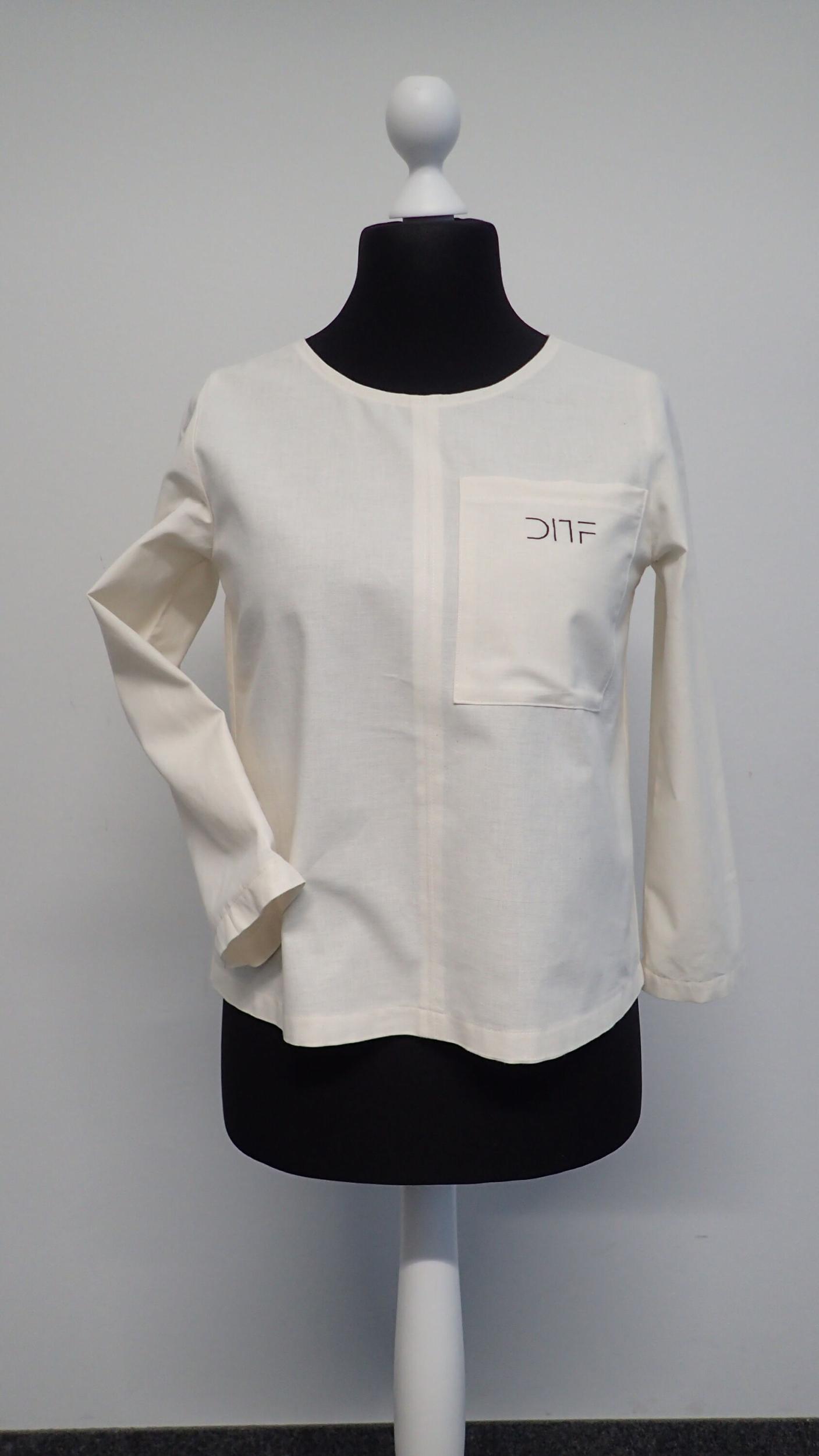
Demonstration blouse made of recycled cotton, recycled yarn count Nm 50, weight 140 g/m² (Module A). Photo Deutsche Institute für Textil- und Faserforschung Denkendorf
Demonstration blouse made of recycled cotton, recycled yarn count Nm 50, weight 140 g/m² (Module A).
25.11.2026

DITF Research Center Cyclotexum promotes the Circular Economy in the Textile Industry

As part of the CYCLOTEXUM research project, the German Institutes of Textile and Fiber Research Denkendorf (DITF) established the CYCLOTEXUM recycling center. There, in collaboration with industry partners, the center develops application-oriented solutions for mechanical and solvent-based recycling processes. The technologies developed make a significant contribution along the textile value chain toward the efficient use of textile resources in the future and the transition of production in the German textile sector to a circular economy. The project was funded by the Ministry for the Environment, Climate and Energy Sector of the State of Baden-Württemberg.

As part of the CYCLOTEXUM research project, the German Institutes of Textile and Fiber Research Denkendorf (DITF) established the CYCLOTEXUM recycling center. There, in collaboration with industry partners, the center develops application-oriented solutions for mechanical and solvent-based recycling processes. The technologies developed make a significant contribution along the textile value chain toward the efficient use of textile resources in the future and the transition of production in the German textile sector to a circular economy. The project was funded by the Ministry for the Environment, Climate and Energy Sector of the State of Baden-Württemberg.

Over the course of seven and a half months, two modules were worked on in parallel as part of the CYCLOTEXUM research project: In Module A (mechanical recycling), fiber data for mechanically torn secondary raw materials were determined, and a processing strategy was developed that enables the estimation of industrial processes based on small laboratory-scale quantities. Using the process chain set up at the DITF, production waste was exemplarily processed into a woven blouse made from 100 percent recycled fibers. The spinning mill models for material flow and cost accounting developed in the project enable a technical, economic, and ecological evaluation of the recycled yarns and textile fabrics.

The studies show that high-quality yarns can be produced from high-quality recycled fibers that have been tested for their properties. The production costs are not higher than when using primary raw materials. The major advantage is that the use of recycled fibers reduces CO₂ emissions.

In contrast, low-quality recycled fibers result in yarns of inadequate quality, high waste rates, frequent process disruptions, and increased staffing requirements in production, making them less efficient. This leads to high costs and a negative carbon footprint.

This work forms the basis for advising the industry on the technical, economic, and environmental evaluation of recycled yarns.

Module B investigated the solvent-based recycling of flame-retardant poly(ethylene terephthalate) (PET). The solvents sulfolane and γ-valerolactone (GVL) proved suitable for primary materials, production waste, and end-consumer waste alike: the flame retardant could be completely separated from the base polymer.

In addition, filtration systems were developed on a laboratory and pilot scale, and it was demonstrated that the systems are also effective for post-consumer waste on the scale of a 5-liter reactor using GVL.

The laboratory and pilot-scale facilities developed in Module B expand the scope of filtration-based recycling processes, for example, for PET-cotton blends or for the separation of elastane. This provides capacity for further research and industrial projects.

The methods, models, and technical facilities developed in the CYCLOTEXUM project are transferable to many applications in the apparel, home textiles, nonwovens, and technical textiles industries. The solvent-based recycling and filtration capacities can also be used for blended textiles, such as PET-cotton blends, as well as for the separation of elastane or other polymers. It is possible to apply these methods to polymer-based waste streams from other sectors, such as the automotive, construction, medical, and plastics industries. The newly established CYCLOTEXUM recycling center at the DITF serves as an interface between research and industry, thereby ensuring the transfer of results.

The CYCLOTEXUM project was funded by state funds approved by the Baden-Württemberg State Parliament.

Source:

Deutsche Institute für Textil- und Faserforschung Denkendorf 

09.11.2026

Indorama Ventures reports 63% rise in nine-month 2026 EBITDA

Indorama Ventures Public Company Limited (IVL), a global sustainable chemical producer, today reported improved earnings for the first nine months of 2026, driven by deliberate management actions to optimize its asset footprint, reduce fixed costs and strengthen working capital, alongside supportive market conditions. 

In the first nine months (9M26), Indorama Ventures’ EBITDA rose 63% year-on-year (YoY) to THB 43.5 billion. EBITDA per ton increased approximately 75% YoY and the EBITDA margin widened to 11% from 8%, on 5% lower sales volumes. Lower volumes partly reflect capacity rationalization under IVL 2.0 and production aligned with sales and inventory targets. Net profit before impairments and exceptional items was THB 9.8 billion, compared with a loss of THB 2.6 billion a year earlier, while reported net profit was THB 5.3 billion. In 3Q26, EBITDA was THB 13.7 billion, up 65% YoY and down 37% from the second quarter, when market conditions were exceptionally strong. 

Through its Sales & Operations Execution (S&OE) discipline, IVL has steadily reduced its inventory exposure, so a future decline in crude prices should affect earnings far less than in past cycles. This also allows the company to gradually raise operating rates, which it deliberately curtailed in 2026, through 2027 and 2028. 

Despite crude prices rising by about one-third, inventory turns improved from 4.7x to 5.2x, and the company is targeting 6.0x. Operating cash flow after maintenance capex rose 47% to THB 34.5 billion, about 80% of EBITDA. Net debt fell by about THB 19 billion year-on-year, and net debt to EBITDA improved to 4.69x from 6.61x. 

Since 2023, Indorama Ventures has exited or restructured 10 uncompetitive sites, removing about 3.5 million tons of capacity. Most of these sites were in Europe and in the CPET and Fibers segments, where the structural reset in aromatics and industry overcapacity hit hardest. By moving production to its most competitive assets, the company kept its customers and market share while reducing total fixed costs by approximately THB 10 billion from 2023 levels, a structural saving that does not depend on market spreads. 

The consolidation of Indovida’s packaging business in India remains on track to complete in the first quarter of 2027 and is expected to nearly double Indovida’s EBITDA. Together with management actions and recovery in key businesses, this is expected to offset the normalization of 2026’s exceptional market conditions. 

Mr. Aloke Lohia, Group CEO of Indorama Ventures, said, “Favorable markets have supported our results this year, but they are not the whole story. Deliberate management actions are making us more competitive, improving the quality of our earnings and generating the cash to reduce debt. Our local-for-local model and access to feedstocks allowed us to serve customers reliably when they needed it most. 

“We enter 2027 from a stronger position, with a leaner cost base and lower debt. We reaffirm our 2028 ambitions to double EBITDA and reduce net debt to EBITDA to 3x or below, and I remain confident we will deliver the midway 2027 milestone we set out at our Capital Markets Day.”

Source:

Indorama Ventures Public Company Limited

09.11.2026

INDA: New Name for International Fiber Journal

The magazine will become Fibers&Nonwovens in January 2027, reflecting its established coverage of fiber innovation and the global nonwovens industry.

INDA, the Association of the Nonwoven Fabrics Industry, and its publishing arm INDA Media announced that International Fiber Journal (IFJ) will become Fibers&Nonwovens with Issue 1, 2027. The new name reflects the magazine’s longstanding focus on fiber innovation and its coverage of the materials, technologies and markets shaping the global nonwovens industry.

Under its new name, the magazine will continue to deliver the industry reporting, market insights and technical perspectives that IFJ readers rely on.

“Fibers, materials science, nonwovens and engineered materials have long been part of the same story for our readers,” said Rachael Davis, publisher and chief content officer, INDA Media. “An advance in fiber technology can change how a nonwoven is made, how it performs and where it can be used. Our job is to follow those connections and help readers understand what new developments mean for their work. The name Fibers&Nonwovens makes that editorial focus clear while carrying forward the technical reporting and industry perspectives readers have come to expect from International Fiber Journal.”

INDA acquired International Fiber Journal and International Filtration News in October 2018. At the time, IFJ covered man-made fibers, technical textiles and nonwovens, connecting producers of engineered materials and machinery with fiber and yarn users in more than 90 countries.

Current subscribers will continue to receive the new magazine without interruption. 

Source:

INDA Association of the Nonwoven Fabrics Industry