
From the Sector

Reset
16.10.2026

SMYTHE names new chief executive


Canadian womenswear label SMYTHE has appointed Ana Mihaljevic as chief executive officer. The company, known for its tailoring, presents the leadership change as part of its next phase of growth.

For specialist apparel brands, management transitions often coincide with decisions on distribution, product positioning and international development. The appointment is therefore relevant beyond the personnel announcement itself, although the release does not by itself establish specific future expansion targets. 

The new chief executive’s strategic priorities and their effect on sourcing, product development and wholesale relationships will become clearer through subsequent company communications.


Canadian womenswear label SMYTHE has appointed Ana Mihaljevic as chief executive officer. The company, known for its tailoring, presents the leadership change as part of its next phase of growth.

For specialist apparel brands, management transitions often coincide with decisions on distribution, product positioning and international development. The appointment is therefore relevant beyond the personnel announcement itself, although the release does not by itself establish specific future expansion targets. 

The new chief executive’s strategic priorities and their effect on sourcing, product development and wholesale relationships will become clearer through subsequent company communications.


Source:

SMYTHE

16.10.2026

Duluth Trading launches WD-40 workwear collaboration

Duluth Trading has introduced a limited-edition apparel and gear collaboration with the WD-40 brand.
The partnership brings together a workwear and outdoor-apparel retailer with a well-known industrial maintenance brand.

For the apparel market, the launch is an example of merchandising that draws on a brand’s associations with practical work and repair rather than on conventional fashion licensing. The combination can address both existing workwear customers and consumers attracted by industrial-inspired clothing and accessories. 

Product-level textile composition, performance certifications and sales expectations were not independently established in the material reviewed and should not be assumed.

Duluth Trading has introduced a limited-edition apparel and gear collaboration with the WD-40 brand.
The partnership brings together a workwear and outdoor-apparel retailer with a well-known industrial maintenance brand.

For the apparel market, the launch is an example of merchandising that draws on a brand’s associations with practical work and repair rather than on conventional fashion licensing. The combination can address both existing workwear customers and consumers attracted by industrial-inspired clothing and accessories. 

Product-level textile composition, performance certifications and sales expectations were not independently established in the material reviewed and should not be assumed.

16.10.2026

Costikyan revives custom carpet business

Costikyan, a US company established in 1886, has announced the launch of Costikyan Custom Carpet. The move is presented as a return to the company’s roots in fine rugs and carpet products.

Custom floor textiles occupy a distinct position between textile manufacturing, interior design and contract furnishing. Bespoke specifications place particular demands on material selection, colour consistency, surface design and project execution. 

The company’s launch announcement confirms the new business direction, but detailed technical specifications, production capacities and project examples should be obtained directly from Costikyan before claims about performance or scale are published.

Costikyan, a US company established in 1886, has announced the launch of Costikyan Custom Carpet. The move is presented as a return to the company’s roots in fine rugs and carpet products.

Custom floor textiles occupy a distinct position between textile manufacturing, interior design and contract furnishing. Bespoke specifications place particular demands on material selection, colour consistency, surface design and project execution. 

The company’s launch announcement confirms the new business direction, but detailed technical specifications, production capacities and project examples should be obtained directly from Costikyan before claims about performance or scale are published.

16.10.2026

Bonobos upgrades omnichannel menswear retail

Menswear brand Bonobos has announced a redesigned e-commerce experience powered by Shopify. The launch is positioned as a step toward a more integrated shopping journey across the brand’s digital and physical retail channels.

The change illustrates how apparel companies are revisiting the technology architecture behind customer-facing retail. Product discovery, online purchasing and store interaction increasingly need to operate as connected elements of a single brand experience rather than separate sales channels.

The company’s announcement identifies the platform transition and omnichannel strategy as the central development. Any assessment of commercial success will depend on subsequent evidence such as conversion rates, customer retention, order economics and the integration of inventory and fulfilment. No such outcome should be inferred from the launch announcement alone.

Menswear brand Bonobos has announced a redesigned e-commerce experience powered by Shopify. The launch is positioned as a step toward a more integrated shopping journey across the brand’s digital and physical retail channels.

The change illustrates how apparel companies are revisiting the technology architecture behind customer-facing retail. Product discovery, online purchasing and store interaction increasingly need to operate as connected elements of a single brand experience rather than separate sales channels.

The company’s announcement identifies the platform transition and omnichannel strategy as the central development. Any assessment of commercial success will depend on subsequent evidence such as conversion rates, customer retention, order economics and the integration of inventory and fulfilment. No such outcome should be inferred from the launch announcement alone.

Source:

Bonobos

16.10.2026

FENC links World Cup fabrics to polyester circularity

Far Eastern New Century (FENC) has presented a broad range of fibre and textile developments at TITAS in Taipei, spanning sportswear, mono-material design, recycling and industrial protective materials. The Taiwanese manufacturer used the October 6–8 event to demonstrate how its vertically integrated polyester business is being applied to both high-performance products and circular material systems.

Among the new sportswear materials is FENC TopCool Petal, a profiled fibre with a petal-shaped cross-section. The company says the geometry supports moisture transport and fast drying while providing a soft handle and increased opacity when fabrics become wet with perspiration. FENC reports that the material has been selected by a major global sportswear brand for 2026 World Cup apparel. The company also supplies textiles used in professional tennis clothing.

Far Eastern New Century (FENC) has presented a broad range of fibre and textile developments at TITAS in Taipei, spanning sportswear, mono-material design, recycling and industrial protective materials. The Taiwanese manufacturer used the October 6–8 event to demonstrate how its vertically integrated polyester business is being applied to both high-performance products and circular material systems.

Among the new sportswear materials is FENC TopCool Petal, a profiled fibre with a petal-shaped cross-section. The company says the geometry supports moisture transport and fast drying while providing a soft handle and increased opacity when fabrics become wet with perspiration. FENC reports that the material has been selected by a major global sportswear brand for 2026 World Cup apparel. The company also supplies textiles used in professional tennis clothing.

On circularity, FENC is extending its recycled-polyester activities beyond post-consumer PET bottles toward textile-to-textile recycling. Its strategy focuses on a polyester-based material ecosystem intended to simplify recovery and reuse. A new all-polyester synthetic leather was recognised with an iF Design Award in 2026. The company also highlighted its AirTek low-carbon polyurethane technology, although the release does not provide comparable lifecycle figures for each product.

Working with the Taiwan Textile Research Institute and other partners, FENC has developed a mono-material polyester footwear concept combining TOPGREEN rTPEE with a one-step separation and decolourisation process. This project received a 2026 R&D 100 Award. For technical markets, the company introduced Telix aramid fibre, designed for strength, puncture resistance and abrasion durability.

The technologies address different industrial challenges. Profiled yarns seek to improve wearer comfort through fibre geometry; mono-material constructions target more practical end-of-life processing; aramid materials serve demanding protection and industrial applications. For buyers, the next step is to assess the material-specific performance and verified environmental claims under actual manufacturing and use conditions.

Source:

Far Eastern New Century Corporation

15.10.2026

adidas and Arte Antwerp design modular winterwear

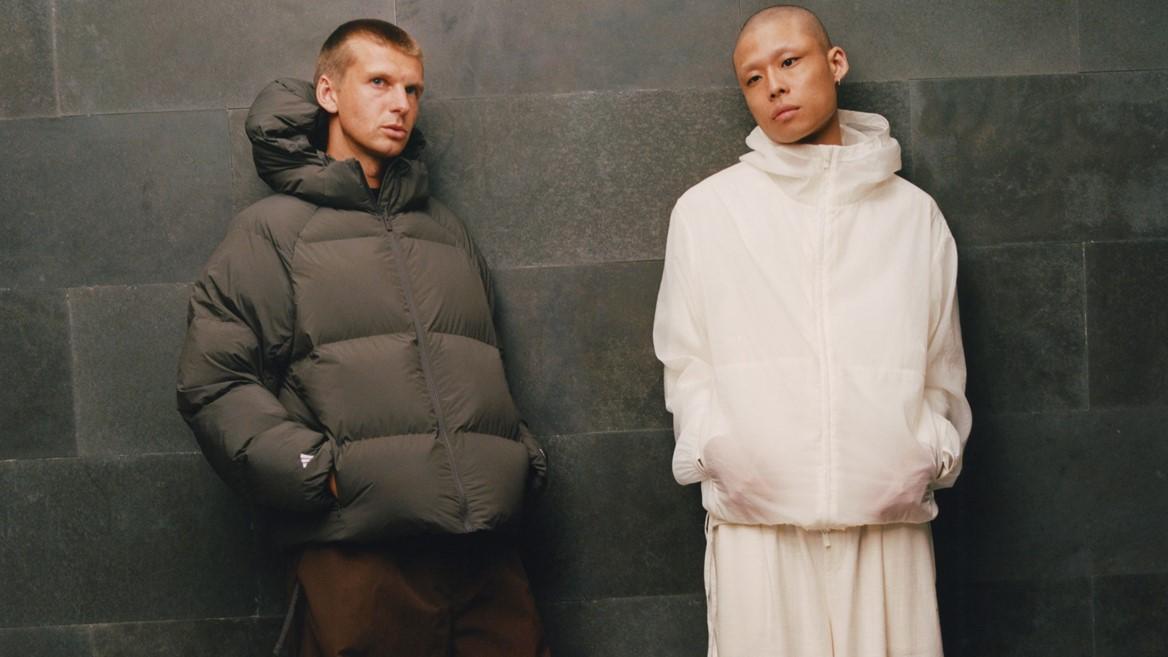
adidas and Belgian label Arte Antwerp have completed their FW26 collaboration with a winter outerwear release built around layering and football supporter culture. The collection launches globally on 15 October in stores and online, with apparel priced between US$70 and US$400.

The central garment is a two-in-one puffer jacket with a detachable translucent shell and contrasting insulated inner layer. Both components can be worn together or separately. A second convertible piece reinterprets a long-sleeve football jersey with a removable outer layer, drawing on the South Africa 2002 national-team shirt.

The range also includes winter accessories made from 100% merino wool, among them a beanie, balaclava and scarf referencing Belgian football fanwear. A muted colour palette and adaptable silhouettes aim to connect streetwear styling with cold-weather functionality.

Although the collaboration is primarily a fashion and branding launch, its detachable garment constructions are relevant to designers examining modularity, product versatility and multi-season use. The release does not make a quantified environmental-performance claim for the collection.

adidas and Belgian label Arte Antwerp have completed their FW26 collaboration with a winter outerwear release built around layering and football supporter culture. The collection launches globally on 15 October in stores and online, with apparel priced between US$70 and US$400.

The central garment is a two-in-one puffer jacket with a detachable translucent shell and contrasting insulated inner layer. Both components can be worn together or separately. A second convertible piece reinterprets a long-sleeve football jersey with a removable outer layer, drawing on the South Africa 2002 national-team shirt.

The range also includes winter accessories made from 100% merino wool, among them a beanie, balaclava and scarf referencing Belgian football fanwear. A muted colour palette and adaptable silhouettes aim to connect streetwear styling with cold-weather functionality.

Although the collaboration is primarily a fashion and branding launch, its detachable garment constructions are relevant to designers examining modularity, product versatility and multi-season use. The release does not make a quantified environmental-performance claim for the collection.

Source:

adidas AG / Arte Antwerp

Srushti Patil’s creation featuring Brewed Protein™ fiber and Taroni silk fabrics. Photo credit: S|STYLE
Srushti Patil’s creation featuring Brewed Protein™ fiber and Taroni silk fabrics.
15.10.2026

Brewed Protein moves from fibre to fashion

Spiber’s Brewed Protein fibre appeared in two designer looks presented at S|STYLE 2026 – Wardrobe Edition during Milan Fashion Week. The programme, curated by Giorgia Cantarini and developed with Kering’s Material Innovation Lab, brought together ten designers to explore new approaches to clothing and accessories using innovative non-leather materials.

Srushti Patil worked with sliver made from 100% Brewed Protein staple fibres and combined it with silk fabric supplied by Taroni. Quine Li used a fabric developed by Bower Roebuck that blends Brewed Protein with wool sourced from regenerative practices aligned with Kering’s sustainable-production standards.

The two applications point to distinct material strategies. The first uses a pure-protein staple-fibre input in combination with a conventional luxury textile; the second blends the fibre with wool in a developed fabric. In both cases the technical significance lies in translating an emerging fibre platform into designer-ready forms rather than displaying the polymer only as a laboratory sample.

Spiber’s Brewed Protein fibre appeared in two designer looks presented at S|STYLE 2026 – Wardrobe Edition during Milan Fashion Week. The programme, curated by Giorgia Cantarini and developed with Kering’s Material Innovation Lab, brought together ten designers to explore new approaches to clothing and accessories using innovative non-leather materials.

Srushti Patil worked with sliver made from 100% Brewed Protein staple fibres and combined it with silk fabric supplied by Taroni. Quine Li used a fabric developed by Bower Roebuck that blends Brewed Protein with wool sourced from regenerative practices aligned with Kering’s sustainable-production standards.

The two applications point to distinct material strategies. The first uses a pure-protein staple-fibre input in combination with a conventional luxury textile; the second blends the fibre with wool in a developed fabric. In both cases the technical significance lies in translating an emerging fibre platform into designer-ready forms rather than displaying the polymer only as a laboratory sample.

The designs were shown on 25 and 26 September at Kering Italy’s Milan headquarters. Spiber published its account on 14 October. The company did not disclose production volumes, prices or quantified life-cycle comparisons for the showcased looks.

Source:

Spiber Inc.

(c) Polartec (Milliken & Company)
15.10.2026

Polartec re-engineers Alpha active insulation

Polartec has introduced a new generation of its Alpha active-insulation textile with a patent-pending construction designed to increase durability and widen its range of apparel applications. The development targets resistance to snagging and fibre shedding while preserving the open structure responsible for airflow, compressibility and moisture management.

Alpha was originally developed for highly active military users who repeatedly move between intense exertion and lower activity in cold conditions. Unlike insulation designed primarily to retain static warmth, its open architecture allows excess heat and moisture to escape during movement. The technology later spread into outdoor, endurance and lifestyle apparel.

The latest construction is intended to support a broader range of weights, textures and garment designs. Polartec says that the material can increasingly be used as a visible or standalone layer rather than only inside a multilayer garment. That places greater demands on structural integrity, appearance and tactile quality.

Polartec has introduced a new generation of its Alpha active-insulation textile with a patent-pending construction designed to increase durability and widen its range of apparel applications. The development targets resistance to snagging and fibre shedding while preserving the open structure responsible for airflow, compressibility and moisture management.

Alpha was originally developed for highly active military users who repeatedly move between intense exertion and lower activity in cold conditions. Unlike insulation designed primarily to retain static warmth, its open architecture allows excess heat and moisture to escape during movement. The technology later spread into outdoor, endurance and lifestyle apparel.

The latest construction is intended to support a broader range of weights, textures and garment designs. Polartec says that the material can increasingly be used as a visible or standalone layer rather than only inside a multilayer garment. That places greater demands on structural integrity, appearance and tactile quality.

According to the company, more than four years of prototyping and testing with performance brands informed the update. More than eleven brands are preparing products using the new Alpha platform. Patagonia is expected to introduce an exclusive style in November, with additional applications planned by Ornot, Purple Mountain Observatory, Senchi Designs, Farpointe and Goldwin.

The announcement does not provide independently comparable laboratory figures for abrasion resistance, snagging or shedding. For garment developers, the central question will be whether the redesigned structure delivers its claimed durability improvement across different weights and constructions without compromising breathability.

YarnProof Photo (C) UNIFI
YarnProof
15.10.2026

YarnProof embeds origin checks in polyester yarn

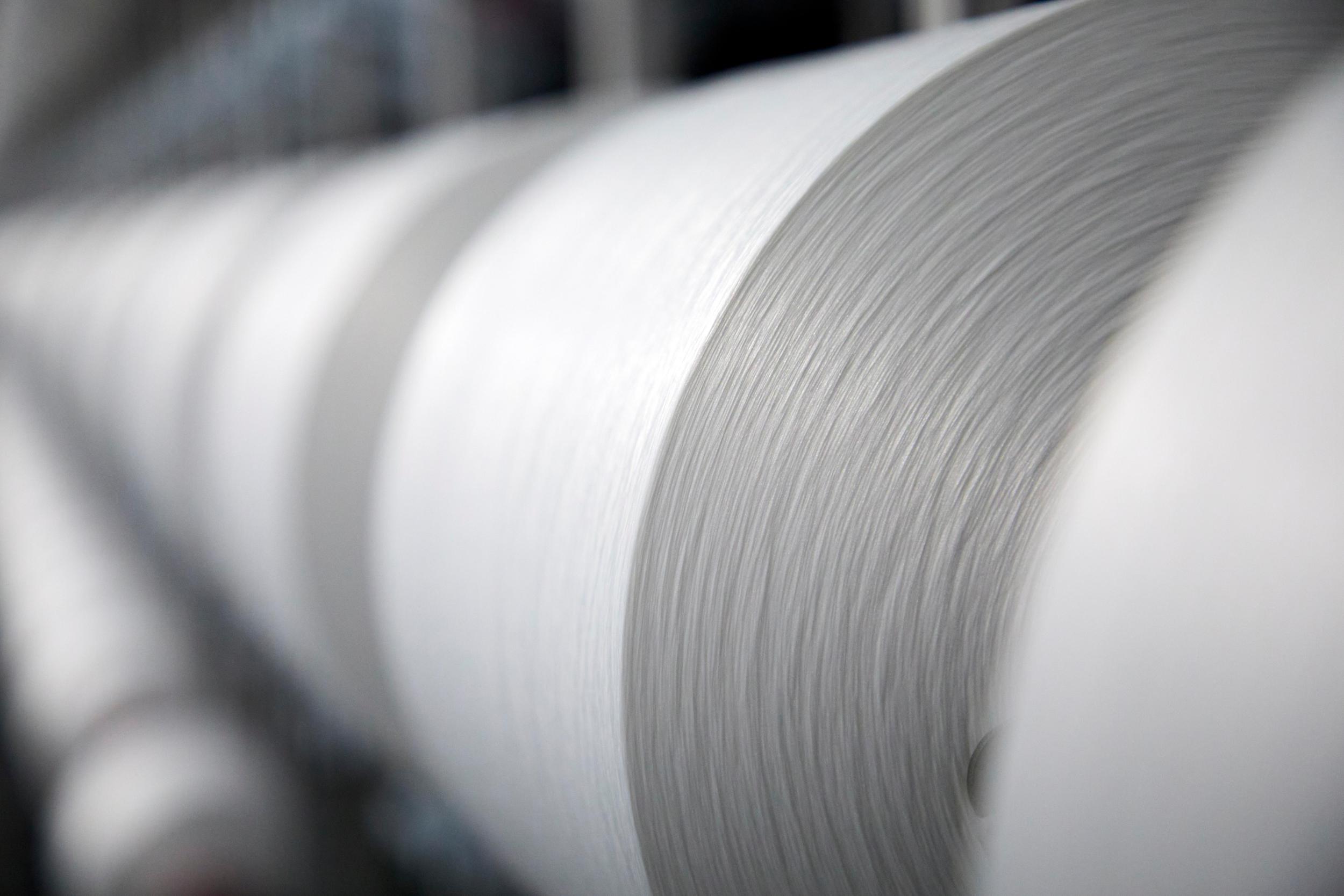
A group of polyester filament manufacturers in North and Central America has launched YarnProof, a system designed to provide physical evidence of yarn origin throughout the textile supply chain. Led by Unifi and using FibreTrace technology, the initiative embeds a persistent, invisible marker in polyester filament during extrusion. A handheld scanner can subsequently detect the marker in yarn, fabric or finished goods.

The system is intended to complement rather than replace commercial documents, audits and certificates. Each verification step can link the marked material to sourcing and production records, creating an additional check on origin claims. The manufacturers are targeting the yarn-forward rules that determine eligibility for preferential treatment under the USMCA and CAFTA-DR trade agreements.

A group of polyester filament manufacturers in North and Central America has launched YarnProof, a system designed to provide physical evidence of yarn origin throughout the textile supply chain. Led by Unifi and using FibreTrace technology, the initiative embeds a persistent, invisible marker in polyester filament during extrusion. A handheld scanner can subsequently detect the marker in yarn, fabric or finished goods.

The system is intended to complement rather than replace commercial documents, audits and certificates. Each verification step can link the marked material to sourcing and production records, creating an additional check on origin claims. The manufacturers are targeting the yarn-forward rules that determine eligibility for preferential treatment under the USMCA and CAFTA-DR trade agreements.

The participating manufacturers named by Unifi include Aquafil O’Mara, CS America, CS Central America, Nan Ya Plastics Corporation America, Premiere Fibers, Sans Americas, Skytex México, Tecnología Textil Avanzada, Textufil, Unifi Manufacturing and United Textiles of America. Under Armour and the National Council of Textile Organizations have publicly supported the initiative.

Physical marking could help brands distinguish verified regional production from materials whose paperwork cannot be substantiated downstream. It does not, by itself, establish that a customs authority has accepted a shipment as meeting all preferential-origin requirements. Those determinations still depend on the applicable legal rules and supporting evidence.

The project illustrates a shift from traceability systems based solely on documentation toward approaches in which material identity can be checked at multiple production stages. Its commercial impact will depend on implementation across mills, brands and independent verification processes.

Artificial turf for golf (c) Photo STC Extrusion GmbH
14.10.2026

New Specialist in Artificial Turf and Technical Monofilaments

With the foundation of STC Extrusion GmbH, headquartered in Chemnitz, Germany, a technical competence and know-how hub for the production of artificial turf and technical monofilaments has been established within the Starlinger Group.

The newly founded machine manufacturing company is part of Austria-based Starlinger Group and has taken over selected assets from the insolvent STC Spinnzwirn GmbH. STC Extrusion GmbH is a legally independent entity and does not act as the legal successor to STC Spinnzwirn GmbH. The company plans to focus on the core areas monofilament production for artificial turf and technical monofilaments made from a wide variety of polymers.

 “With the founding of STC Extrusion GmbH, we are opening a new chapter in STC’s history—with the experience, passion, and dedication to our customers that have always distinguished STC,” said Managing Director Nico Dürrschmidt. “We are convinced that with this solution, we have laid a solid foundation that will enable us to continue delivering value for our customers and partners worldwide in the future.”

With the foundation of STC Extrusion GmbH, headquartered in Chemnitz, Germany, a technical competence and know-how hub for the production of artificial turf and technical monofilaments has been established within the Starlinger Group.

The newly founded machine manufacturing company is part of Austria-based Starlinger Group and has taken over selected assets from the insolvent STC Spinnzwirn GmbH. STC Extrusion GmbH is a legally independent entity and does not act as the legal successor to STC Spinnzwirn GmbH. The company plans to focus on the core areas monofilament production for artificial turf and technical monofilaments made from a wide variety of polymers.

 “With the founding of STC Extrusion GmbH, we are opening a new chapter in STC’s history—with the experience, passion, and dedication to our customers that have always distinguished STC,” said Managing Director Nico Dürrschmidt. “We are convinced that with this solution, we have laid a solid foundation that will enable us to continue delivering value for our customers and partners worldwide in the future.”

In addition to production technology for artificial turf applications and technical monofilaments, STC Extrusion GmbH offers a Customer Experience Center for customer tests, raw material evaluation, research, and product and technology development. Furthermore, the company will take over and continue to provide service and spare parts for installed STC Spinnzwirn extrusion systems. This ensures that existing customers receive the technical support they need.
To leverage the established know-how in the field of winders, synergies with Georg Sahm GmbH & Co. KG—a winding technology specialist that is also part of the Starlinger Group—will be deepened to advance innovative winding technology and offer automation solutions and handling systems for bobbins. The expertise of Starlinger’s recycling division will also be incorporated into the development and implementation of environmentally friendly solutions with higher recycled content.

“With this strategical reorganization we aim to make STC Extrusion GmbH the knowledge and competence hub for artificial turf and technical monofilaments within the Starlinger network and establish it as a technology leader and brand for these specialized areas,” explains Angelika Huemer, CEO and Managing Partner of Starlinger & Co Ges.m.b.H., which holds the shares in the newly founded company. “We intend to make even better use of the synergies that arise among the companies in the Starlinger Group and to further develop and expand their individual areas of expertise.”

Source:

STC Extrusion GmbH

14.10.2026

Brazil: The Italian Textile and Textile-Machinery Sector Takes Centre Stage at Two Workshops

From 19 to 24 October 2026, Brazil will host a mission showcasing Italian excellence in the textile and textile machinery sectors, with two workshops scheduled for 20 October in the state of Santa Catarina and 22 October in São Paulo. The initiative will bring together Italian companies specialising in textile machinery, yarns, fabrics and clothing accessories, with the aim of strengthening commercial and industrial ties between the two countries and opening up new opportunities for collaboration.

Organised by the Italian Trade Agency in collaboration with ACIMIT and Confindustria Moda, the mission will comprise two stages in key areas of Brazil’s textile industry. The programme includes seminars featuring presentations by Italian companies, B2B meetings with local industry representatives and visits to local production facilities. The first stage will take place in the state of Santa Catarina, in the areas of Blumenau, Joinville and Brusque, while the second will take place in the state of São Paulo, with activities also planned in Americana and at Denim City São Paulo, a major centre of innovation and a key hub for the textile and denim industries.

From 19 to 24 October 2026, Brazil will host a mission showcasing Italian excellence in the textile and textile machinery sectors, with two workshops scheduled for 20 October in the state of Santa Catarina and 22 October in São Paulo. The initiative will bring together Italian companies specialising in textile machinery, yarns, fabrics and clothing accessories, with the aim of strengthening commercial and industrial ties between the two countries and opening up new opportunities for collaboration.

Organised by the Italian Trade Agency in collaboration with ACIMIT and Confindustria Moda, the mission will comprise two stages in key areas of Brazil’s textile industry. The programme includes seminars featuring presentations by Italian companies, B2B meetings with local industry representatives and visits to local production facilities. The first stage will take place in the state of Santa Catarina, in the areas of Blumenau, Joinville and Brusque, while the second will take place in the state of São Paulo, with activities also planned in Americana and at Denim City São Paulo, a major centre of innovation and a key hub for the textile and denim industries.

The initiative aims to showcase the expertise and innovative capabilities of the entire Italian supply chain, which is internationally recognised for the high quality of its products and technologies. In particular, the Italian textile machinery industry stands out for its ability to develop advanced, customised solutions that meet the needs of a sector increasingly focused on production efficiency, sustainability and technological innovation.

Brazil is one of the most strategic markets in Latin America for Italian textile machinery manufacturers. In 2025, Italian exports of textile machinery to Brazil reached €48 million, while in the first half of 2026 they amounted to €20 million, placing Brazil tenth among the leading destination markets for Italian textile machinery. The most sought-after technologies are those related to finishing, which accounts for 57% of Italian textile machinery exports to Brazil, followed by accessories and other machinery, each representing 11%, and knitting machinery, at 10%.

“Brazil is a market of great interest to our industry, with which we have well-established commercial relations and significant prospects for collaboration,” said Marco Salvadè, President of ACIMIT. “This mission represents a concrete opportunity to strengthen dialogue between Italian companies and Brazilian operators, fostering new synergies across the entire textile supply chain. Our companies’ ability to offer innovative, flexible and sustainable technologies can make a significant contribution to modernising the local textile industry and enhancing its competitiveness. The decision to organise two workshops in different manufacturing regions of the country also demonstrates our commitment to fostering direct dialogue with Brazil’s various industrial clusters, thereby making the most of the opportunities offered by this important market.” The initiative, organised by the Italian Trade Agency and ACIMIT with the valuable support of Confindustria Moda, will bring together 22 Italian companies in total, 18 of which operate in the textile machinery sector and are listed below: Biancalani, BTSR, Color Service, Corino Macchine, DURST, Reggiani Macchine, Erhardt + Leimer, Ferraro, I.M.A., Itema, Lawer, M.C.S. Officina Meccanica, Mesdan, Monti – Mac, MSJK (MS Printing & JK Group), Pinter Caipo Italia, Salvade’, Savio Macchine Tessili.

More information:
ACIMIT Brazil Italian Trade Agency
Source:

ACIMIT 

Photo Pallas Textiles
12.10.2026

Pallas brings high-performance, lower-impact textiles into healthcare interiors

Pallas Textiles will present its Giverny collection and broader healthcare portfolio at the Healthcare Design Conference + Expo in New Orleans. The collection translates nature-inspired colour and pattern into upholstery, panel and privacy-curtain applications intended for patient, waiting and care environments.

The company highlights performance and material choices alongside design. The Toile pattern is specified for very high abrasion exposure, while Nymphea incorporates SEAQUAL YARN and post-consumer recycled polyester and is designed for bleach cleanability. Pallas also points to material platforms including biodegradable vinyl and bio-attributed or biobased options across its portfolio.

The relevance for contract interiors lies in the combined specification challenge: healthcare fabrics have to support visual and tactile comfort while meeting demanding durability, cleaning and disclosure requirements. Pallas will show the collection from 17 to 20 October.

Pallas Textiles will present its Giverny collection and broader healthcare portfolio at the Healthcare Design Conference + Expo in New Orleans. The collection translates nature-inspired colour and pattern into upholstery, panel and privacy-curtain applications intended for patient, waiting and care environments.

The company highlights performance and material choices alongside design. The Toile pattern is specified for very high abrasion exposure, while Nymphea incorporates SEAQUAL YARN and post-consumer recycled polyester and is designed for bleach cleanability. Pallas also points to material platforms including biodegradable vinyl and bio-attributed or biobased options across its portfolio.

The relevance for contract interiors lies in the combined specification challenge: healthcare fabrics have to support visual and tactile comfort while meeting demanding durability, cleaning and disclosure requirements. Pallas will show the collection from 17 to 20 October.

12.10.2026

Nike, Patagonia and other brands join new Microfiber Action Alliance

The Nature Conservancy has launched the Microfiber Action Alliance, bringing together Nike, Patagonia, Under Armour, lululemon, Cotopaxi, REI Co-op and other companies to accelerate practical measures against microfiber pollution.

The initiative is designed to complement existing scientific work by The Microfibre Consortium. Participating companies will apply and refine interventions within their own supply chains, generate evidence on what works and share implementation lessons with the wider industry. TNC emphasises prevention because both synthetic and treated natural fibers can contribute to microfiber pollution and released particles are difficult to remove from the environment.

Potential interventions include changes in material selection and textile construction, manufacturing-process improvements and filtration. The Alliance therefore shifts attention from measuring fiber fragmentation alone to integrating low-shedding design and manufacturing decisions into operational practice.

The Nature Conservancy has launched the Microfiber Action Alliance, bringing together Nike, Patagonia, Under Armour, lululemon, Cotopaxi, REI Co-op and other companies to accelerate practical measures against microfiber pollution.

The initiative is designed to complement existing scientific work by The Microfibre Consortium. Participating companies will apply and refine interventions within their own supply chains, generate evidence on what works and share implementation lessons with the wider industry. TNC emphasises prevention because both synthetic and treated natural fibers can contribute to microfiber pollution and released particles are difficult to remove from the environment.

Potential interventions include changes in material selection and textile construction, manufacturing-process improvements and filtration. The Alliance therefore shifts attention from measuring fiber fragmentation alone to integrating low-shedding design and manufacturing decisions into operational practice.

© Recover Textile Systems, S.L.
09.10.2026

Recover™One blends recycled cotton and polyester without downstream overdyeing

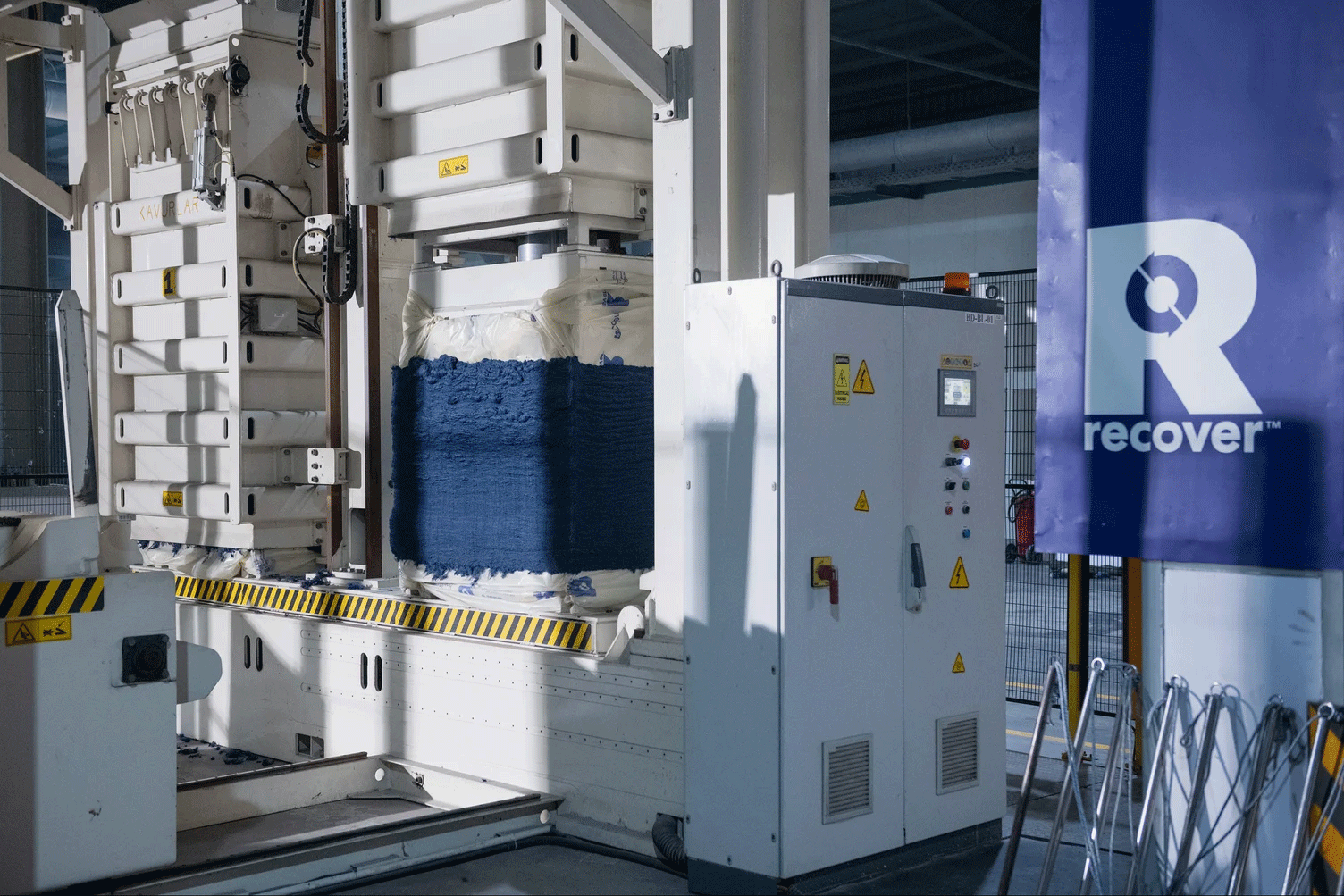
Recover has launched Recover™One, a range of ready-to-spin blends made entirely from recycled cotton and recycled polyester. Cotton-to-polyester ratios can be adjusted for different applications, and the material can be supplied as fiber blends or as fabric through Recover’s supply-chain partners.

The technical point is color management. Recover combines the original colors of textile-waste feedstocks with color-matched, dope-dyed recycled polyester through an intimate blending process.
The company says this creates consistent solid, heather and mélange options without a downstream overdyeing stage, reducing processing time and avoiding an additional wet-finishing step.

Applications cited include single jersey, French terry and fleece. Recover also refers to previously verified life-cycle assessments for its recycled cotton, but the new development is the system-level combination of recycled inputs, predefined color and spinning-ready consistency rather than recycled cotton alone.

Recover has launched Recover™One, a range of ready-to-spin blends made entirely from recycled cotton and recycled polyester. Cotton-to-polyester ratios can be adjusted for different applications, and the material can be supplied as fiber blends or as fabric through Recover’s supply-chain partners.

The technical point is color management. Recover combines the original colors of textile-waste feedstocks with color-matched, dope-dyed recycled polyester through an intimate blending process.
The company says this creates consistent solid, heather and mélange options without a downstream overdyeing stage, reducing processing time and avoiding an additional wet-finishing step.

Applications cited include single jersey, French terry and fleece. Recover also refers to previously verified life-cycle assessments for its recycled cotton, but the new development is the system-level combination of recycled inputs, predefined color and spinning-ready consistency rather than recycled cotton alone.

Source:

 Recover Textile Systems, S.L.

09.10.2026

Circ and Huafon plan 200-tonne-per-day first phase for textile recycling in China

Circ and Huafon are partnering on a multi-phase textile-to-textile recycling site within Huafon’s industrial footprint in China. 
The plant will use Circ’s process for polycotton waste and recover both major material streams: recycled PTA and MEG for polyester production and recycled cellulosic pulp for new textiles.

Phase one is designed to process approximately 200 metric tonnes of textile waste per day, with additional capacity planned. Huafon will invest in the project and contribute engineering, procurement, logistics and commercial capabilities, while Circ brings its recycling technology and a network of brands, manufacturing partners and downstream customers.

Textination has previously covered Circ partnerships in China, including recycled polyester filament production with Shenghong. This project represents a distinct new development.
It concerns construction of recycling capacity itself rather than downstream yarn conversion. Circ is simultaneously developing its first industrial-scale facility in France.

Circ and Huafon are partnering on a multi-phase textile-to-textile recycling site within Huafon’s industrial footprint in China. 
The plant will use Circ’s process for polycotton waste and recover both major material streams: recycled PTA and MEG for polyester production and recycled cellulosic pulp for new textiles.

Phase one is designed to process approximately 200 metric tonnes of textile waste per day, with additional capacity planned. Huafon will invest in the project and contribute engineering, procurement, logistics and commercial capabilities, while Circ brings its recycling technology and a network of brands, manufacturing partners and downstream customers.

Textination has previously covered Circ partnerships in China, including recycled polyester filament production with Shenghong. This project represents a distinct new development.
It concerns construction of recycling capacity itself rather than downstream yarn conversion. Circ is simultaneously developing its first industrial-scale facility in France.

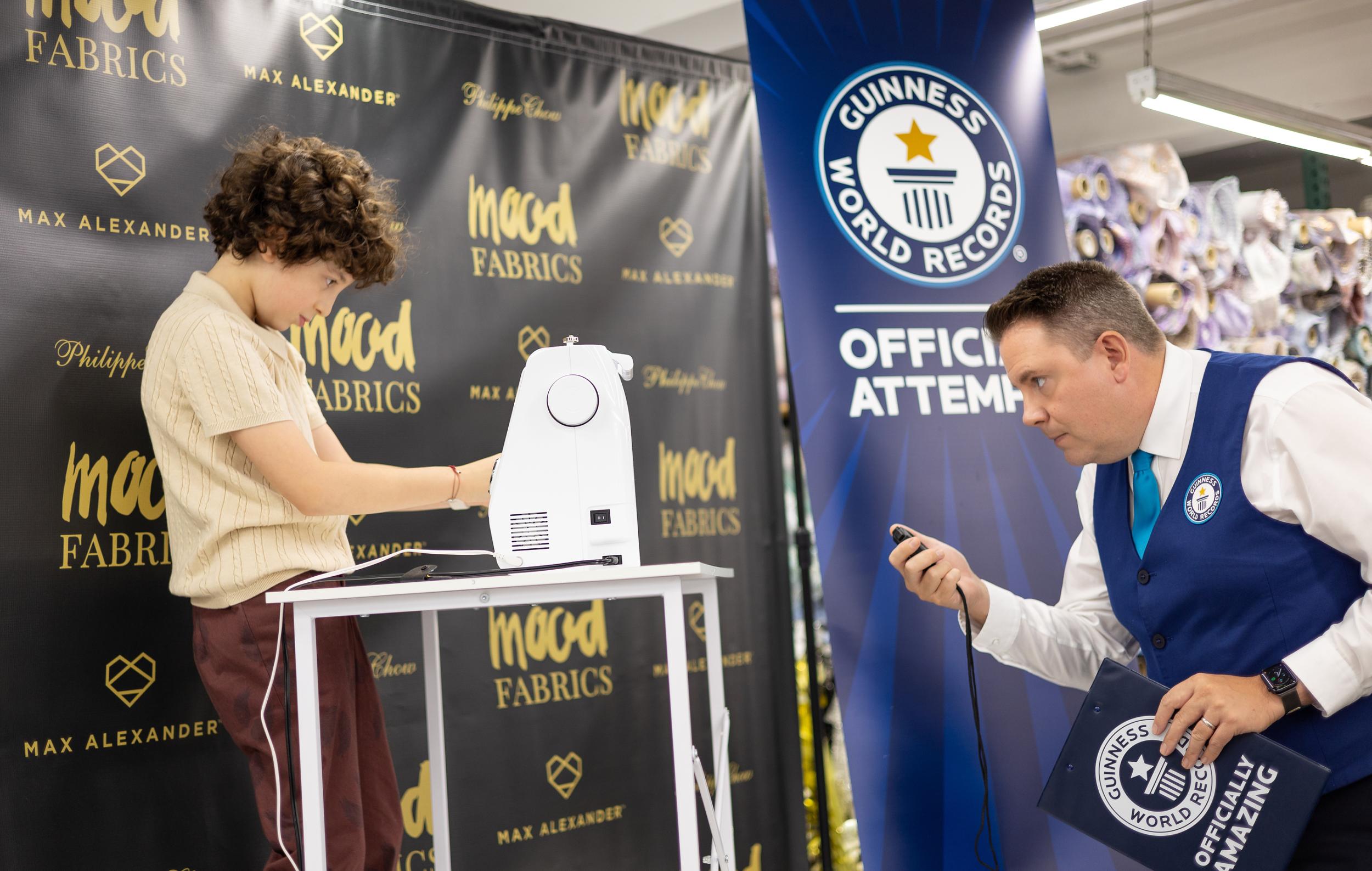
Under the close watch of a Guinness World Records adjudicator, 10-year-old designer Max Alexander competes during his launch event at Mood Fabrics NYC on September 14, 2026. Photo via Mood Fabrics
Under the close watch of a Guinness World Records adjudicator, 10-year-old designer Max Alexander competes during his launch event at Mood Fabrics NYC on September 14, 2026.
18.09.2026

Mood Fabrics launches 15-piece fabric line with Max Alexander

Mood Fabrics has launched a 15-fabric collection with ten-year-old designer Max Alexander. The Mood × Max Alexander line debuted in New York on 14 September and is being sold online and through Mood's U.S. retail locations.

The company lists BCI cotton, EcoVero viscose, European flax linen and recycled-polyester faux fur among the materials. The range combines prints and textured fashion fabrics with several fibre choices already associated with established sourcing or recycling programmes.

Alexander selected and annotated the fabrics. The collaboration therefore starts at material choice, leaving the collection open to further garment design and making rather than presenting a fixed apparel capsule.

Mood Fabrics has launched a 15-fabric collection with ten-year-old designer Max Alexander. The Mood × Max Alexander line debuted in New York on 14 September and is being sold online and through Mood's U.S. retail locations.

The company lists BCI cotton, EcoVero viscose, European flax linen and recycled-polyester faux fur among the materials. The range combines prints and textured fashion fabrics with several fibre choices already associated with established sourcing or recycling programmes.

Alexander selected and annotated the fabrics. The collaboration therefore starts at material choice, leaving the collection open to further garment design and making rather than presenting a fixed apparel capsule.

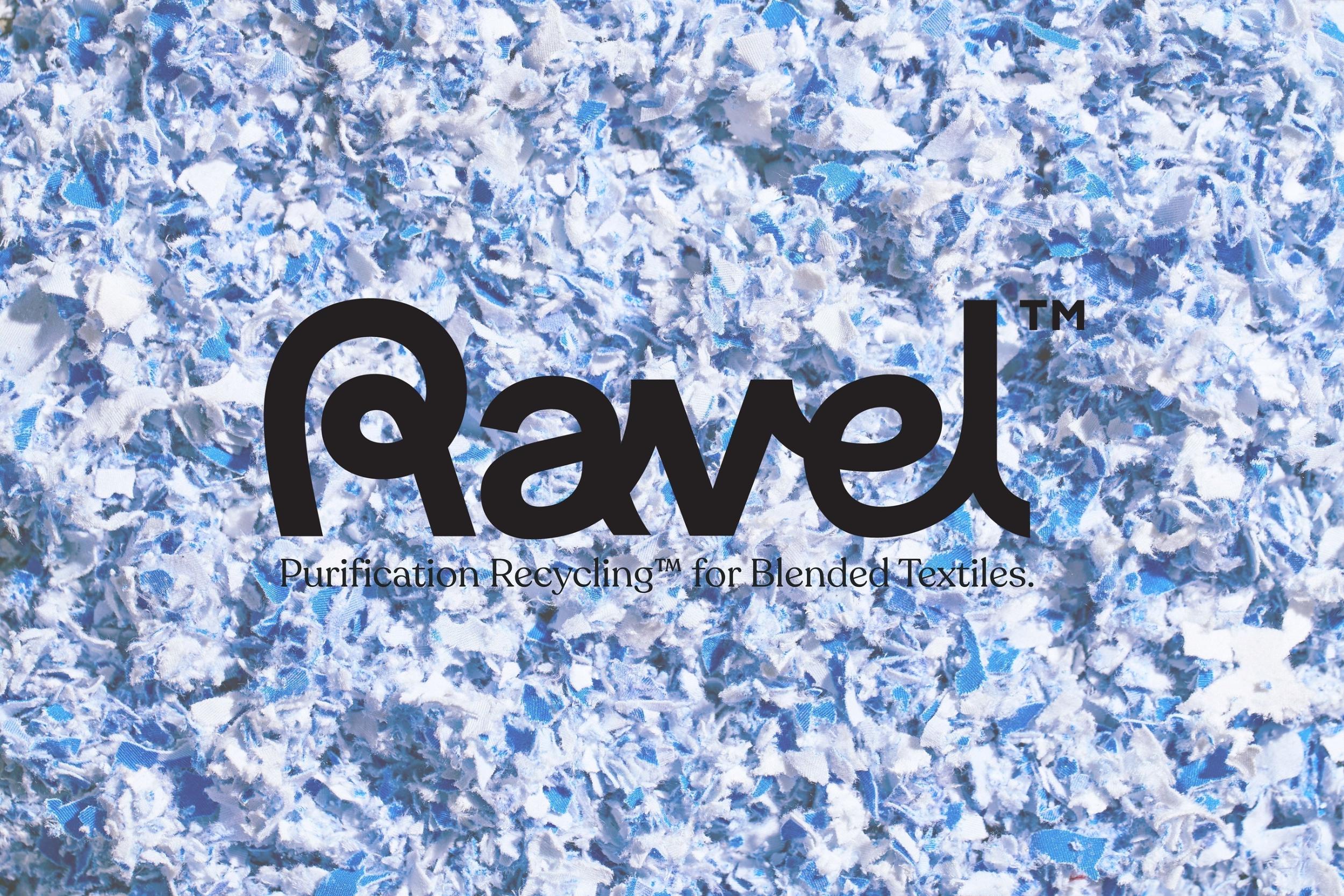
Ravel - shredded polyester/elastane material ready for processing (c) Ravel
18.09.2026

Ravel raises $8.2m to scale blended-textile recycling

Ravel has closed an oversubscribed $8.2 million seed round led by One Small Planet, with participation from AP Ventures, Overlay Capital, Lichen Ventures and existing investors. The funding is intended to move the Seattle-based recycling company from pilot operation towards commercial readiness.

Its Purification Recycling process is aimed at one of apparel recycling's persistent problems: stretch blends. Elastane is widely used in activewear, denim, underwear and other garments, yet even relatively small percentages can interfere with established recycling routes.

Rather than treating the whole textile as a single feedstock, Ravel is developing a separation and purification route for polyester/elastane blends. The company says recovered material can be converted into recycled plastic pellets for renewed use as a raw material.

The next phase will test more than chemistry. Commercial viability depends on throughput, feedstock variability, separation efficiency, energy and chemical inputs, and the quality of the recovered fractions. Ravel plans to validate the process at production scale with textile partners.

Ravel has closed an oversubscribed $8.2 million seed round led by One Small Planet, with participation from AP Ventures, Overlay Capital, Lichen Ventures and existing investors. The funding is intended to move the Seattle-based recycling company from pilot operation towards commercial readiness.

Its Purification Recycling process is aimed at one of apparel recycling's persistent problems: stretch blends. Elastane is widely used in activewear, denim, underwear and other garments, yet even relatively small percentages can interfere with established recycling routes.

Rather than treating the whole textile as a single feedstock, Ravel is developing a separation and purification route for polyester/elastane blends. The company says recovered material can be converted into recycled plastic pellets for renewed use as a raw material.

The next phase will test more than chemistry. Commercial viability depends on throughput, feedstock variability, separation efficiency, energy and chemical inputs, and the quality of the recovered fractions. Ravel plans to validate the process at production scale with textile partners.

The financing adds capacity at a point where recyclers are increasingly trying to tackle blends that mechanical systems cannot readily return to fibre.