From the Sector

Reset
UNIFI, Inc.
09.10.2026

UNIFI combines spun-yarn hand with filament performance and adds fluorine-free water resistance

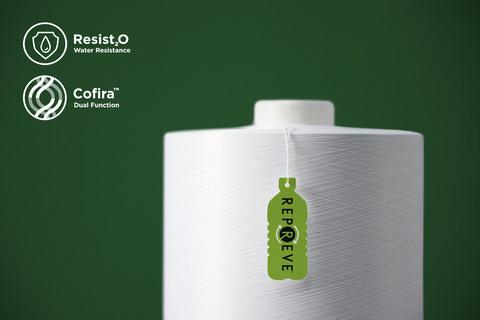
UNIFI has introduced Cofira™, a yarn platform designed to combine the visual and tactile character of spun yarns with filament-yarn functionality. The construction can incorporate other UNIFI technologies and is offered in virgin and REPREVE polyester, including REPREVE Takeback. 

Recycled options can be traced through FiberPrint and are linked to U-TRUST, GRS and SCS certification claims. The company is also expanding its water-resistant portfolio with Resist2O™ Pro. Rather than relying on a conventional topical durable-water-repellent finish, the technology is engineered for different forms of fabric construction and is described as fluorine-free and PFOA-free below 5 ppb.

UNIFI positions the two developments for apparel, furnishings, gear, accessories and industrial applications. Both will be presented in October at Performance Days in Munich and Functional Fabric Fair in Portland, giving the technologies immediate exposure to performance-material developers.


UNIFI has introduced Cofira™, a yarn platform designed to combine the visual and tactile character of spun yarns with filament-yarn functionality. The construction can incorporate other UNIFI technologies and is offered in virgin and REPREVE polyester, including REPREVE Takeback. 

Recycled options can be traced through FiberPrint and are linked to U-TRUST, GRS and SCS certification claims. The company is also expanding its water-resistant portfolio with Resist2O™ Pro. Rather than relying on a conventional topical durable-water-repellent finish, the technology is engineered for different forms of fabric construction and is described as fluorine-free and PFOA-free below 5 ppb.

UNIFI positions the two developments for apparel, furnishings, gear, accessories and industrial applications. Both will be presented in October at Performance Days in Munich and Functional Fabric Fair in Portland, giving the technologies immediate exposure to performance-material developers.


09.10.2026

Textile Exchange puts numbers on textile-to-textile recycling capacity for the first time

Editorial relevance: Very high – establishes a global baseline for available spinnable textile-to-textile recycled fiber and quantifies the gap between waste availability and usable output.

Textile Exchange has published a first global methodology for estimating textile-to-textile recycled fiber availability for apparel and home textiles. Developed with Fashion for Good, Reverse Resources and TEXroad, the framework combines available waste volumes with collection, sorting, processing and technology constraints to estimate how much material can actually become spinnable fiber.

The analysis projects recyclable textile feedstocks to increase from roughly 10 million tonnes in 2025 to around 15 million tonnes by 2030. Yet the quantity of recycled spinnable fiber is estimated at only 1–1.5 million tonnes in 2025, rising to approximately 3–5 million tonnes by 2030.

Editorial relevance: Very high – establishes a global baseline for available spinnable textile-to-textile recycled fiber and quantifies the gap between waste availability and usable output.

Textile Exchange has published a first global methodology for estimating textile-to-textile recycled fiber availability for apparel and home textiles. Developed with Fashion for Good, Reverse Resources and TEXroad, the framework combines available waste volumes with collection, sorting, processing and technology constraints to estimate how much material can actually become spinnable fiber.

The analysis projects recyclable textile feedstocks to increase from roughly 10 million tonnes in 2025 to around 15 million tonnes by 2030. Yet the quantity of recycled spinnable fiber is estimated at only 1–1.5 million tonnes in 2025, rising to approximately 3–5 million tonnes by 2030.

The scope covers post-industrial and post-consumer textiles and both mechanical and chemical recycling of cotton, polyester, nylon, manmade cellulosics, wool and and blends.
Textile Exchange stresses that the figures are directional: data quality remains uneven, and future editions are intended to incorporate more primary data from recyclers and suppliers.


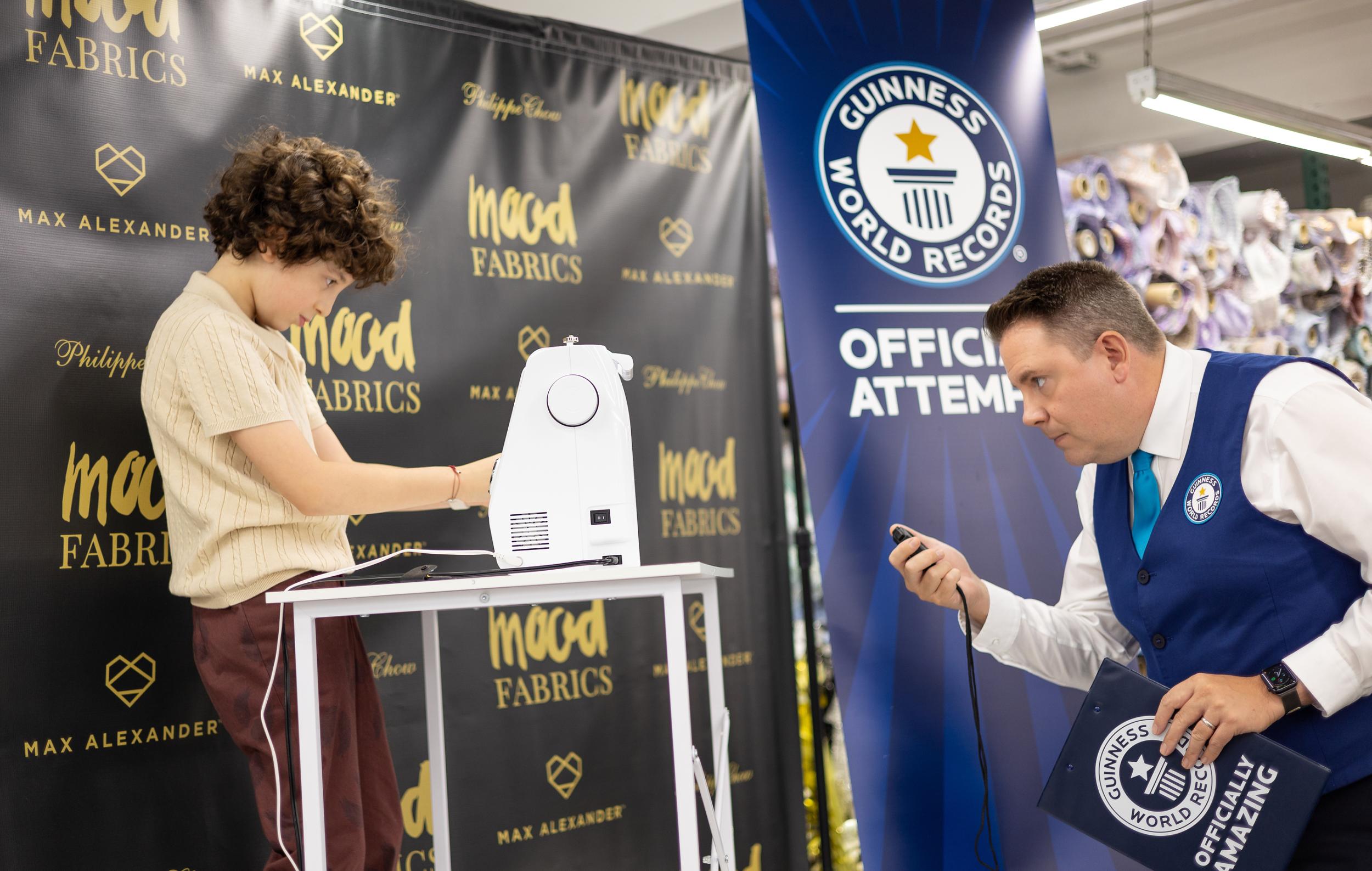
Under the close watch of a Guinness World Records adjudicator, 10-year-old designer Max Alexander competes during his launch event at Mood Fabrics NYC on September 14, 2026. Photo via Mood Fabrics
Under the close watch of a Guinness World Records adjudicator, 10-year-old designer Max Alexander competes during his launch event at Mood Fabrics NYC on September 14, 2026.
18.09.2026

Mood Fabrics launches 15-piece fabric line with Max Alexander

Mood Fabrics has launched a 15-fabric collection with ten-year-old designer Max Alexander. The Mood × Max Alexander line debuted in New York on 14 September and is being sold online and through Mood's U.S. retail locations.

The company lists BCI cotton, EcoVero viscose, European flax linen and recycled-polyester faux fur among the materials. The range combines prints and textured fashion fabrics with several fibre choices already associated with established sourcing or recycling programmes.

Alexander selected and annotated the fabrics. The collaboration therefore starts at material choice, leaving the collection open to further garment design and making rather than presenting a fixed apparel capsule.

Mood Fabrics has launched a 15-fabric collection with ten-year-old designer Max Alexander. The Mood × Max Alexander line debuted in New York on 14 September and is being sold online and through Mood's U.S. retail locations.

The company lists BCI cotton, EcoVero viscose, European flax linen and recycled-polyester faux fur among the materials. The range combines prints and textured fashion fabrics with several fibre choices already associated with established sourcing or recycling programmes.

Alexander selected and annotated the fabrics. The collaboration therefore starts at material choice, leaving the collection open to further garment design and making rather than presenting a fixed apparel capsule.

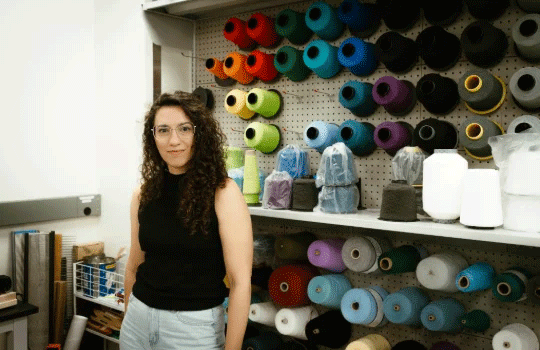
Vanessa Sanchez in ihrem Labor Foto (c) Rice University
18.09.2026

When the knit becomes the robot

Rice University mechanical engineer Vanessa Sanchez is developing knitted structures in which sensing, movement and mechanical behaviour are programmed into the textile rather than attached as separate components. Her project, “Programmable 3D-Knitted Soft Robotic Textiles for Human-Centered Mobility,” has received a Toyota Programmable System Innovation Fellowship.

Rice points to applications including vehicle seats that reshape around occupants, garments that assist walking and soft safety systems capable of responding to impending impacts.

The work uses knitting as a manufacturing architecture. By varying yarns, stitch geometry and local structural behaviour, the textile can be designed to produce functions that conventional soft-robotic systems may achieve with separate sensors, actuators or rigid elements.

Three-dimensional knitting is particularly important because form can be created during manufacture rather than assembled from multiple flat components. That approach could reduce seams and interfaces while retaining the softness and conformity expected from textiles.

Rice University mechanical engineer Vanessa Sanchez is developing knitted structures in which sensing, movement and mechanical behaviour are programmed into the textile rather than attached as separate components. Her project, “Programmable 3D-Knitted Soft Robotic Textiles for Human-Centered Mobility,” has received a Toyota Programmable System Innovation Fellowship.

Rice points to applications including vehicle seats that reshape around occupants, garments that assist walking and soft safety systems capable of responding to impending impacts.

The work uses knitting as a manufacturing architecture. By varying yarns, stitch geometry and local structural behaviour, the textile can be designed to produce functions that conventional soft-robotic systems may achieve with separate sensors, actuators or rigid elements.

Three-dimensional knitting is particularly important because form can be created during manufacture rather than assembled from multiple flat components. That approach could reduce seams and interfaces while retaining the softness and conformity expected from textiles.

Sanchez will use the fellowship to develop the programmable structures further and explore mobility-oriented applications.

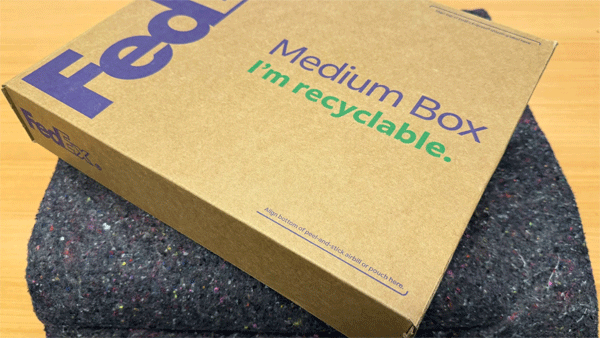
Photo FedEx
16.09.2026

Old uniforms become 6,250 blankets

FedEx has allocated 4,230 kilograms of retired uniforms to the 11th edition of its Brazilian uniform-recycling programme. The material has been converted into about 5,000 blankets for people and 1,250 smaller blankets for animals cared for by NGOs.

Since 2015, the programme has redirected 93,000 uniform items, equivalent to around 30 tonnes of textile material, into more than 37,000 blankets.

The long operating history is the notable part of the project. Corporate-wear take-back only becomes a credible circular model when collection, sorting and processing remain organised over multiple replacement cycles. Here, a controlled internal textile stream is converted into a defined second product rather than sent into an unspecified disposal route.

FedEx has allocated 4,230 kilograms of retired uniforms to the 11th edition of its Brazilian uniform-recycling programme. The material has been converted into about 5,000 blankets for people and 1,250 smaller blankets for animals cared for by NGOs.

Since 2015, the programme has redirected 93,000 uniform items, equivalent to around 30 tonnes of textile material, into more than 37,000 blankets.

The long operating history is the notable part of the project. Corporate-wear take-back only becomes a credible circular model when collection, sorting and processing remain organised over multiple replacement cycles. Here, a controlled internal textile stream is converted into a defined second product rather than sent into an unspecified disposal route.

Source:

Federal Express Corporation

Photo (c) Kappahl Group
15.09.2026

Kappahl backs a longer-lasting wardrobe

Kappahl is launching its Autumn 2026 campaign across all markets on 16 September. Built around the existing “We Are Family” platform, the campaign presents a wardrobe of pieces intended to be easy to combine and relevant beyond short trend cycles.

The assortment spans womenswear, XLNT and menswear, with knitwear, denim, tailoring, lace and outerwear. The coat has a specific heritage role, linking the current collection to the company’s origins in Gothenburg in 1953, when founder Per-Olof Ahl opened a store focused on coats.

Kappahl is launching its Autumn 2026 campaign across all markets on 16 September. Built around the existing “We Are Family” platform, the campaign presents a wardrobe of pieces intended to be easy to combine and relevant beyond short trend cycles.

The assortment spans womenswear, XLNT and menswear, with knitwear, denim, tailoring, lace and outerwear. The coat has a specific heritage role, linking the current collection to the company’s origins in Gothenburg in 1953, when founder Per-Olof Ahl opened a store focused on coats.

Source:

Kappahl Group

Heidi O’Neill (c) lululemon athletica inc.
14.09.2026

Heidi O’Neill starts lululemon reset

Heidi O’Neill has taken over as chief executive of lululemon. In her first employee message, published in the company newsroom, she places product, brand clarity and operational execution at the centre of the next phase.

O’Neill says her initial weeks will focus on listening to teams, partners, guests and communities before translating ideas into changes. She identifies a need to re-establish the brand’s core and to create more innovative and distinctive product that gives consumers a stronger reason to choose lululemon. She also points to improving operations and how the company connects with its communities.

The appointment matters beyond corporate governance. O’Neill spent more than 25 years at Nike, including leadership across product, design, merchandising, brand and global marketplace operations. At lululemon, that experience meets a business whose differentiation depends heavily on fabric development, fit, functional apparel and a tightly integrated direct-retail model.

Heidi O’Neill has taken over as chief executive of lululemon. In her first employee message, published in the company newsroom, she places product, brand clarity and operational execution at the centre of the next phase.

O’Neill says her initial weeks will focus on listening to teams, partners, guests and communities before translating ideas into changes. She identifies a need to re-establish the brand’s core and to create more innovative and distinctive product that gives consumers a stronger reason to choose lululemon. She also points to improving operations and how the company connects with its communities.

The appointment matters beyond corporate governance. O’Neill spent more than 25 years at Nike, including leadership across product, design, merchandising, brand and global marketplace operations. At lululemon, that experience meets a business whose differentiation depends heavily on fabric development, fit, functional apparel and a tightly integrated direct-retail model.

Source:

lululemon athletica inc.