
From the Sector

Reset
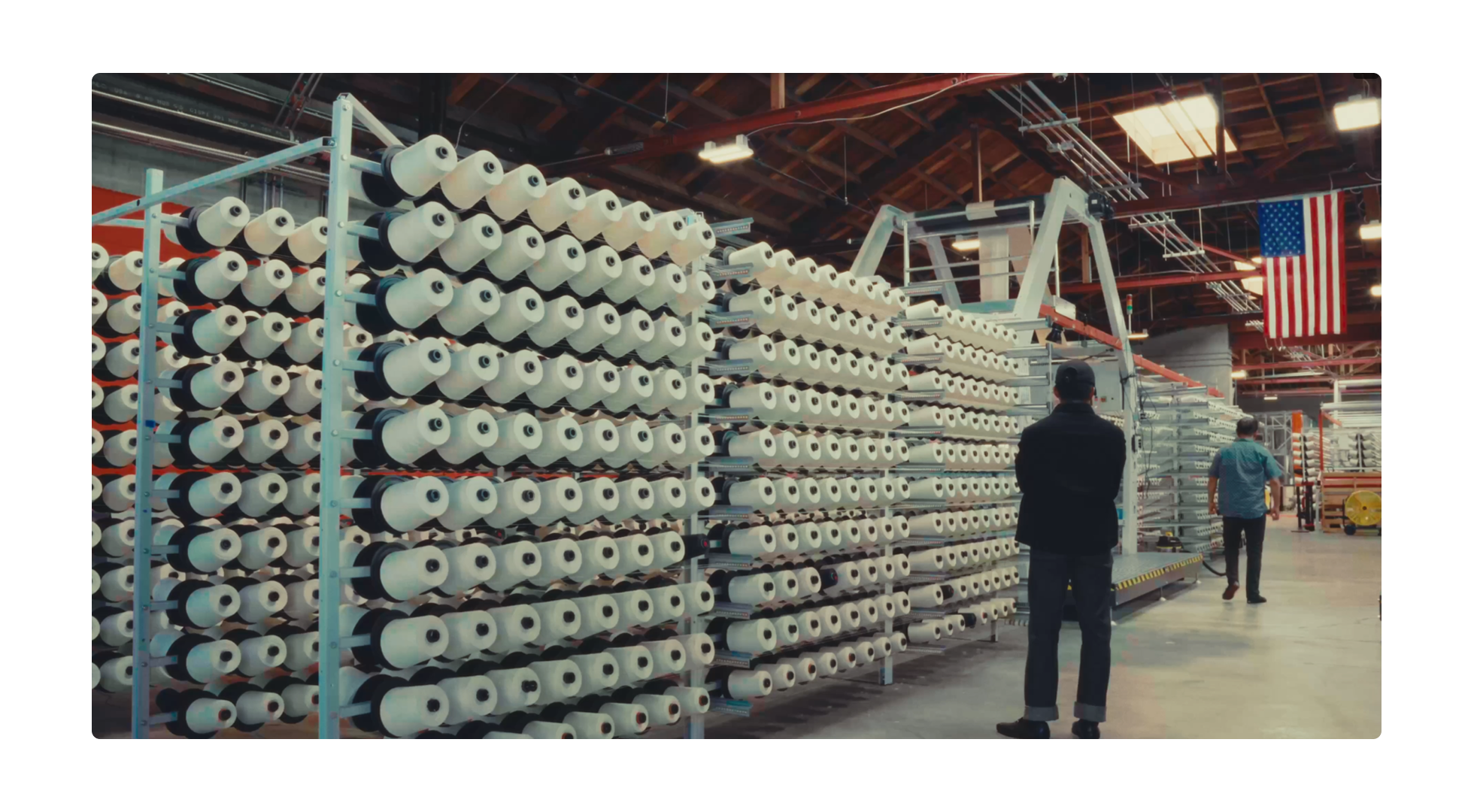
OneWeave machines at unspun’s headquarters in Emeryville, California Photo: (c) unspun
OneWeave machines at unspun’s headquarters in Emeryville, California
18.11.2026

unspun and Arvind take 3D weaving into industrial apparel production

unspun and Arvind Limited are bringing OneWeave 3D weaving into Arvind’s apparel manufacturing operations in Ahmedabad, India. Two machines are expected to be operating by December 2026. The agreement provides a route to more than 30 additional machines in India and/or North America during 2027 and 2028, with expansion linked to demand from apparel brands.

Arvind is purchasing the equipment and will contract directly with brands for garment production. unspun will handle installation, commissioning, training, software and continuing technical support. For the US technology company, the deployment takes its weaving platform beyond its own microfactory and into a large textile manufacturer’s production environment.

OneWeave produces three-dimensional garment forms directly from yarn. This removes the conventional step of first weaving flat fabric and reduces the subsequent cutting and sewing required. According to unspun, a trouser leg can be woven in around ten minutes.

The partners intend to use the technology for shorter production cycles and more flexible replenishment. Rather than committing an entire season’s requirements well in advance, brands could place smaller orders and respond to sales during the season. The companies also see opportunities to reduce fabric offcuts and the financial exposure associated with excess stock.

The rollout will begin with limited capacity on the first two machines. unspun says several global apparel brands are preparing programmes, with initial production slots to be allocated on a first-come, first-served basis.

23.10.2026

Italian Textile Machinery Orders in Q3 2026

Order intake for Italian textile machinery manufacturers increased by 7% in the third quarter of 2026, compared with the same period of 2025. Growth was driven by demand from international markets, where orders rose by 8%, while the domestic market remained weak, posting a 4% decline.

Compared with the previous quarter, overall order intake decreased by 4%, reflecting the uncertainty that continues to affect investment decisions across the global textile sector. The textile machinery orders index for the July-September period reached 44.6 points (base year 2021 = 100).

Italian manufacturers reported an average order backlog equivalent to 3.5 months of production, while capacity utilisation stood at 72.4%.

Sector-by-sector data show that order trends were generally stable or declining during the quarter, both in the domestic and export markets. Expectations for the final quarter of 2026 remain cautious, with most companies anticipating either stable or lower levels of order intake.

Marco Salvadè, President of ACIMIT, commented:
“Despite the widespread caution among manufacturers, fuelled by international uncertainty and rising energy costs, foreign markets continue to provide positive signals. This is particularly encouraging, as exports account for around 80% of the order intake of Italian textile machinery manufacturers.”

“The domestic market, however, remains subdued. The industry is looking for stronger investment momentum from Italian companies, supported by the incentives available under the Transition 5.0 scheme, which offers improved planning opportunities for industrial investments.”

More information:
order intake Italy quarter
Source:

ACIMIT