From the Sector

from to
Reset
1439 results
19.08.2025

Loop Industries launches traceable circular polyester resin made entirely from textile waste

  • A branded, circular polyester resin made entirely from textile waste and completely traceable from feedstock to final product.
  • Virgin-quality resin for high-performance applications including fashion, sportswear, and home textiles.
  • Low environmental footprint with significant reduction of CO₂ emissions.

Loop Industries, Inc. a clean technology company accelerating circularity in plastic and fiber markets, announced the launch of Twist™, a branded circular polyester resin made entirely from textile waste. Loop is currently advancing its discussions with apparel brands for offtake from its planned India JV and will supply Twist™ as its branded product offering. Originally developed as Loop’s fiber-grade PET resin, the product has now been rebranded to reflect its role in helping the textile industry transition from linear to circular systems, shifting away from virgin materials and from bottle-to-textile recycling, to give global brands a high-performance solution that embodies both sustainability and next-gen material innovation.

  • A branded, circular polyester resin made entirely from textile waste and completely traceable from feedstock to final product.
  • Virgin-quality resin for high-performance applications including fashion, sportswear, and home textiles.
  • Low environmental footprint with significant reduction of CO₂ emissions.

Loop Industries, Inc. a clean technology company accelerating circularity in plastic and fiber markets, announced the launch of Twist™, a branded circular polyester resin made entirely from textile waste. Loop is currently advancing its discussions with apparel brands for offtake from its planned India JV and will supply Twist™ as its branded product offering. Originally developed as Loop’s fiber-grade PET resin, the product has now been rebranded to reflect its role in helping the textile industry transition from linear to circular systems, shifting away from virgin materials and from bottle-to-textile recycling, to give global brands a high-performance solution that embodies both sustainability and next-gen material innovation.

Utilizing Loop’s globally patented depolymerization technology, Twist™ is produced by breaking down polyester textile waste into its base monomers, DMT and MEG, which are then purified back to their initial purity, before being polymerized into Twist™ resin. This process removes all dyes, colorants, contaminants, and blends, delivering a resin that is chemically identical to virgin polyester. Textile-to-textile recycling allows apparel companies to mitigate the increasing environment impact of textile waste.  

Twist™ achieves the highest purity, color and dyability consistency and increases production efficiency, making it fully compatible with existing spinning and manufacturing infrastructure. 

The production of Twist™ saves up to 418,600 tonnes of CO₂ emissions annually1 and reduces greenhouse gas (GHG) emissions by up to 81%2 when compared to fossil fuel-based resin. This has been independently validated by Franklin Associates, a division of ERG who completed an LCA study of Loop’s technology. 418,600 tonnes of CO₂ emissions are the equivalent of more than 1 billion miles driven by an average gasoline-powered passenger vehicle.

Twist™ is set to transform textile recycling as the first textile-to-textile polyester resin offering complete traceability. Embedded chemical tracers allow customers to track finished products directly back to their original waste textile inputs. This transparency meticulously verifies every step of the recycling and manufacturing process, building crucial trust in the circular economy and setting a new standard for accountability in sustainable textile production. With full traceability from waste input to finished product, Twist™ empowers brands to confidently meet growing regulatory, and consumer demands for transparency and circularity.

Twist™ will be expanded from Loop’s Terrebonne facility and produced at the Infinite Loop™ India facility, a strategically located manufacturing platform designed to serve global textile and apparel brands. The facility will provide Twist™ at competitive pricing levels. This combination of performance, price, traceability and sustainability positions Twist™ as a key material for brands seeking to lead on circularity and meet evolving sustainability targets.

Source:

Loop Industries

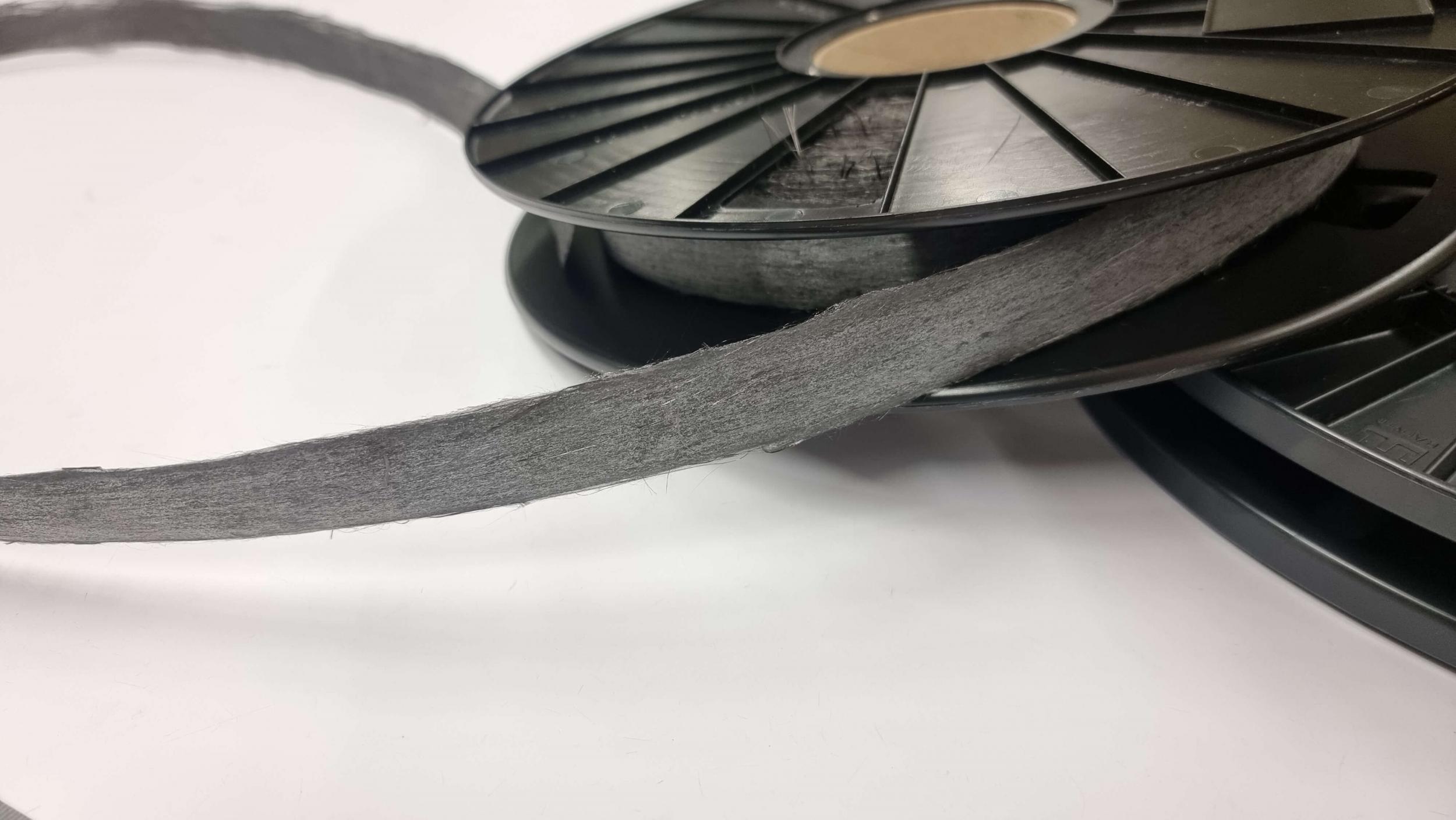
Tapes for high-performance applications made from recycled carbon fibers Photo DITF
Tapes for high-performance applications made from recycled carbon fibers
19.08.2025

4.2 million euros for research into textile recycling

Around the world, used textiles are still rarely recycled and pile up into huge mountains of waste. A recent study by the Boston Consulting Group (BCG) drew attention to this problem. However, the low recycling rate is also due to the fact that only a small percentage of used textiles are actually suitable for recycling into high-quality materials and for demanding applications. The German Institutes of Textile and Fiber Research Denkendorf (DITF) are addressing this problem with their research. Europe's largest textile research center has launched two research projects with a total project volume of over 4.2 million euros.

Around the world, used textiles are still rarely recycled and pile up into huge mountains of waste. A recent study by the Boston Consulting Group (BCG) drew attention to this problem. However, the low recycling rate is also due to the fact that only a small percentage of used textiles are actually suitable for recycling into high-quality materials and for demanding applications. The German Institutes of Textile and Fiber Research Denkendorf (DITF) are addressing this problem with their research. Europe's largest textile research center has launched two research projects with a total project volume of over 4.2 million euros.

To promote the recycling of high-performance fibers such as carbon and glass fibers, the DITF will establish a center for the development of high-performance fiber composite structures based on recycled high-performance fibers (HiPerReF) over the next two years. There, scientists are developing a complete process chain for the industrial-scale production of highly oriented semi-finished products from recycled carbon and glass fibers. In order to achieve maximum performance in the component, the interaction of all machines and equipment is being optimized to produce commercially available semi-finished products such as prepreg and non-porous composite plastics with a fiber volume fraction of over 45 percent.

The CYCLOTEXUM project focuses on recycling classic textile waste into high-quality yarns. The aim is to intelligently combine existing mechanical, physical, and chemical process steps so that fine, uniform yarns can be produced from secondary raw materials. The Material Flow and Cost Accounting (MFCA) developed at the DITF makes it possible to review all technological developments for economic efficiency and sustainability.

The research work of the two centers provides the national and global textile industry with effective tools and solutions for an effective textile circular economy.

Source:

Deutsche Institute für Textil- und Faserforschung Denkendorf

Deakin University & Samsara Eco: World-first enzyme-powered textile recycling Photo Deakin & Samsara Eco
Deakin University & Samsara Eco: World-first enzyme-powered textile recycling
14.08.2025

Deakin University & Samsara Eco: World-first enzyme-powered textile recycling

Australia’s war on waste has a powerful new ally, Deakin University’s Recycling and Clean Energy Commercialisation Hub (REACH). 

REACH has joined forces with Samsara Eco to fast-track world-first technology that could recycle plastics and textiles, previously considered unrecyclable, that would take centuries to eliminate from the environment.   

Textile waste is one of the world’s most persistent environmental issues, driven by fast fashion, high consumption and poor disposal practices. In Australia, synthetic fibres like nylon and polyester make up almost 60 per cent of the materials used in clothing, yet with less than one per cent of discarded garments recycled into new clothes, most end up in landfill or are incinerated, adding to pollution and harmful emissions. 

Samsara Eco’s AI-designed enzymes break down fossil-fuel derived materials like synthetic fibres, including nylon 6,6 and polyethylene terephthalate (PET) into their original building blocks or monomers – allowing them to be rebuilt into new products with virgin-quality performance.  

Australia’s war on waste has a powerful new ally, Deakin University’s Recycling and Clean Energy Commercialisation Hub (REACH). 

REACH has joined forces with Samsara Eco to fast-track world-first technology that could recycle plastics and textiles, previously considered unrecyclable, that would take centuries to eliminate from the environment.   

Textile waste is one of the world’s most persistent environmental issues, driven by fast fashion, high consumption and poor disposal practices. In Australia, synthetic fibres like nylon and polyester make up almost 60 per cent of the materials used in clothing, yet with less than one per cent of discarded garments recycled into new clothes, most end up in landfill or are incinerated, adding to pollution and harmful emissions. 

Samsara Eco’s AI-designed enzymes break down fossil-fuel derived materials like synthetic fibres, including nylon 6,6 and polyethylene terephthalate (PET) into their original building blocks or monomers – allowing them to be rebuilt into new products with virgin-quality performance.  

The collaboration will see Samsara Eco lean into Deakin’s advanced chemical analysis and polymer processing expertise to better understand and find recycling solutions for specific additives like dyes, finishes and coatings present in textile waste. 

‘We are laser-focused on creating true circularity and that means finding a solve for all plastics,’ said Founder and CEO at Samsara Eco Paul Riley. ‘This research supports our efforts to make this a reality. We’ve already come a long way with our enzymatic recycling technology, which can infinitely recycle PET and nylon 6,6 plastics used for clothing and other textiles, including mixed fibres and plastics. Our research collaboration with Deakin will support our efforts to recycle more waste at speed, scale and with precision.’  

Unlike mechanical recycling, which degrades the quality of materials and limits recyclability, Samsara Eco’s enzymatic depolymerisation technology is making it possible to rebuild worn or contaminated textiles into virgin-equivalent materials.  

Distinguished Professor Colin Barrow, Chair in Biotechnology at Deakin’s School of Life and Environmental Sciences said:  

‘Our research tackles a critical challenge in textile recycling – understanding how dyes, textile finishes, coatings and other chemical treatments affect the breakdown and rebuilding of synthetic fibres, including other types of polyester and nylon to repurpose into new products.  

‘We are exploring solutions by analysing these contaminants and determining their impact on textile recycling processes, to make it possible to produce high-performance recycled materials from all types of waste feedstock.’  

Associate Professor Chris Hurren from Deakin’s Institute for Frontier Materials is also collaborating on the project and said:  

‘By testing how these materials perform in real-world polymerisation and processing, we’re helping to refine the recycling pipeline and bring closed-loop textile recycling closer to commercial reality.’  

With growing global pressure on the textile industry to cut emissions and reduce waste, Associate Professor Hurren says this technology could revolutionise the sector – delivering both environmental and economic benefits.  

‘We’re working to unlock a scalable, circular future for fashion – one that reduces reliance on harmful inputs and keeps textiles out of landfill.’  

Samsara Eco has a 10-year agreement with global activewear brand lululemon to support approximately 20 per cent of its overall fibre portfolio with its recycled materials. This builds on previous collaborations between the two, launching the world’s first enzymatically recycled nylon 6,6 garment, recreating their iconic Swiftly top, and a limited-edition Packable Anorak jacket – the first retail garment made from enzymatically recycled polyester.  

With their first commercial facility set to open in Jerrabomberra later this year, Samsara Eco’s 2030 vision is to recycle half a billion clothing items and 10 billion plastic bottles annually, avoiding hundreds of thousands of tonnes of carbon emissions. 

‘We’re uniquely positioned to recycle mixed plastics and fibres,’ said Mr Riley. ‘We’re taking post-industrial and post-consumer waste to create new products and are already working with helping brands to swap virgin inputs for our low carbon, enzymatically recycled materials, which plug directly into existing supply chains. 

‘Together with Deakin’s researchers, we can find further recycling solves to keep more out of landfill and in circulation.’ 

Source:

Deakin University

DeLin Fashion Photo DeLin
14.08.2025

INSPECTED QUALITY: New quality label for regionally produced fashion

OETI is partnering with Austrian designer Julia Deiger, founder of the sustainable label DeLin. INSPECTED QUALITY is a quality label from OETI for textile and leather businesses. Based on OETI’s 60 years of market experience and current standards, the label is supported by a transparent labelling guideline and independent verification processes.

The initiative is part of TEX-DAN, an EU-funded project led by the Salzburg University of Applied Sciences, which aims to develop innovative, market-ready concepts promoting circular economy models for small and medium-sized enterprises in the textile sector across the Danube region.

As an accredited and independent testing institute, OETI – Institute for Ecology, Technology and Innovation GmbH brings its extensive expertise to this project partnership. Together with designer Julia Deiger, OETI has developed the new INSPECTED QUALITY "Regionally Produced" label.

OETI is partnering with Austrian designer Julia Deiger, founder of the sustainable label DeLin. INSPECTED QUALITY is a quality label from OETI for textile and leather businesses. Based on OETI’s 60 years of market experience and current standards, the label is supported by a transparent labelling guideline and independent verification processes.

The initiative is part of TEX-DAN, an EU-funded project led by the Salzburg University of Applied Sciences, which aims to develop innovative, market-ready concepts promoting circular economy models for small and medium-sized enterprises in the textile sector across the Danube region.

As an accredited and independent testing institute, OETI – Institute for Ecology, Technology and Innovation GmbH brings its extensive expertise to this project partnership. Together with designer Julia Deiger, OETI has developed the new INSPECTED QUALITY "Regionally Produced" label.

This label confirms the strong regional focus and sustainable philosophy of the DeLin brand: the entire value chain is based exclusively in Austria, using only natural, durable materials. The label enhances transparency for consumers and highlights the brand’s commitment to resource-efficient textile production.

Through this project, OETI and Julia Deiger are making a valuable contribution to promoting future-oriented, locally rooted production models within the European textile industry.

A Model for Market Transformation
“The TEX-DAN project generates new, marketable ideas for advancing circular economy models across the Danube region. Our collaboration with Julia Deiger demonstrates how natural materials, short supply chains, and regional production – supported by a structured quality assurance system and visible label – can collectively drive transformation in the textile sector,” concludes Helene Melnitzky, Head of Department Ecology / OEKO-TEX® Products, at OETI, who is responsible for developing the INSPECTED QUALITY “Regionally Produced” label.

More information:
quality label OETI Austria regional
Source:

OETI - Institut fuer Oekologie, Technik und Innovation GmbH

Mumbai Photo: Simon, Pixabay
11.08.2025

ReCycle Zone at Techtextil India

In a major push to advance circularity and environmental accountability in the technical textiles sector, Techtextil India 2025 will launch the dedicated ‘ReCycle Zone’ in collaboration with the Society of Plastics Engineers India (SPE India). Reclaim, Reuse and Reimagine are among the key features of the zone at the upcoming edition of Techtextil India scheduled from 19th – 21st November 2025 at the Bombay Exhibition Centre, Mumbai.
 
As industries across the globe adopt circular economy models and sustainable production practices, the ReCycle Zone will serve as a vital platform for stakeholders working to transform textile and plastic waste into value-added materials. The initiative reflects Technical India’s ongoing commitment to driving responsible innovation by converging recyclers, solution providers, machinery manufacturers startups and policy enablers under one roof. This new industry focused zone will spotlight sustainable innovation and next-gen recycling technologies.
 
Spotlighting on Textile Waste Management and circularity, this ReCycle Zone will host companies specialising in: 

In a major push to advance circularity and environmental accountability in the technical textiles sector, Techtextil India 2025 will launch the dedicated ‘ReCycle Zone’ in collaboration with the Society of Plastics Engineers India (SPE India). Reclaim, Reuse and Reimagine are among the key features of the zone at the upcoming edition of Techtextil India scheduled from 19th – 21st November 2025 at the Bombay Exhibition Centre, Mumbai.
 
As industries across the globe adopt circular economy models and sustainable production practices, the ReCycle Zone will serve as a vital platform for stakeholders working to transform textile and plastic waste into value-added materials. The initiative reflects Technical India’s ongoing commitment to driving responsible innovation by converging recyclers, solution providers, machinery manufacturers startups and policy enablers under one roof. This new industry focused zone will spotlight sustainable innovation and next-gen recycling technologies.
 
Spotlighting on Textile Waste Management and circularity, this ReCycle Zone will host companies specialising in: 

  • Garment, agro-textiles and medical textiles waste recycling
  • Plastic and PET waste recycling for textile applications
  • Fibre to fibre and yarn regeneration 
  • Sorting, shredding and advanced recycling machinery 
  • EPR compliance, traceability and green certifications 
  • AI and automation in waste management systems 

This initiative aims to bridge the gap between innovation and implementation by connecting buyers, suppliers, R&D specialists and sustainability officers.
 
To deepen the technical engagement, SPE India will curate a series of focused knowledge sessions and panel discussions within the ReCycle Zone. Experts from academia, policy think tanks and leading corporates will weigh in on topics such as circular product design, industry compliance and mandates, advances in waste recovery, and investment outlook in green tech.
 
The launch of ReCycle Zone aligns with India’s national efforts towards sustainable manufacturing, driven by programs like LiFE (Lifestyle for Environment) and PM MITRA Parks (Pradhan Mantri Mega Integrated Textile Regions and Apparel). As technical textiles play an increasingly important role across sectors such as defence, healthcare, automotive and agriculture, integrating recycling and circular design into their production processes has become essential.
 
The zone further reinforces Messe Frankfurt India’s role in nurturing a sustainable business ecosystem through its leading industry platforms. Techtextil India will mark the 10th edition of India’s most comprehensive exhibition for technical textiles, nonwovens, and composites. Organised by Messe Frankfurt Trade Fairs India, the show will cover 12 diverse application areas from protective wear and functional fabrics to smart textiles, filtration and mobility solutions.
 
Scheduled from 19th – 21st November 2025 at Bombay Exhibition Centre, Mumbai, the show will bring together global and domestic exhibitors, solutions providers, institutional buyers, research organisations and key industry bodies for three days of business, innovation and networking.
 
Adding momentum to the industry dialogue the India edition of the Dornbirn Global Fibre Conference one of the most prestigious global conferences for fibre and material innovations, will take place on 18th November 2025 also at NESCO, Mumbai – one day prior to Techtextil India show.

Source:

Messe Frankfurt Trade Fairs India

11.08.2025

17th Colloquium on Recycling for Textiles with accompanying trade exhibition in Chemnitz

On 3 and 4 December 2025, the 17th colloquium on recycling for textiles will take place at the Hotel Chemnitzer Hof. The event brings together experts from industry, science and research to present and discuss current developments, technologies and business models for a sustainable circular economy in the textile industry.  
 
Closing cycles  
The thematic focus is on technologies for textile recycling, circular and sustainable textile products, and the implementation of circular economy principles. Other topics include the collection, sorting and management of textile waste, as well as successful cooperation models for a circular textile industry. A concluding pitch session offers start-ups and universities the opportunity to present innovative ideas and solutions as forward-looking alternatives to conventional processes.  
 
Trade exhibition celebrates its premiere 

On 3 and 4 December 2025, the 17th colloquium on recycling for textiles will take place at the Hotel Chemnitzer Hof. The event brings together experts from industry, science and research to present and discuss current developments, technologies and business models for a sustainable circular economy in the textile industry.  
 
Closing cycles  
The thematic focus is on technologies for textile recycling, circular and sustainable textile products, and the implementation of circular economy principles. Other topics include the collection, sorting and management of textile waste, as well as successful cooperation models for a circular textile industry. A concluding pitch session offers start-ups and universities the opportunity to present innovative ideas and solutions as forward-looking alternatives to conventional processes.  
 
Trade exhibition celebrates its premiere 
For the first time, the colloquium will be accompanied by a trade exhibition. Companies, research institutions and service providers will present their products, services and latest research and development results. The trade exhibition offers participants numerous opportunities for direct exchange and the initiation of new collaborations – supported by networking opportunities during conference breaks, at the business lunch and the evening event. 
 
‘The colloquium has established itself as an important platform for professional exchange in the textile industry. With the new trade exhibition, we are expanding the concept to include a valuable component for direct knowledge transfer and the presentation of innovative solutions,’ explains Johannes Leis, STFI expert for textile recycling and circular economy. 

Source:

Sächsisches Textilforschungsinstitut e.V. (STFI)

11.08.2025

DNFI Innovation in Natural Fibres Award 2025: Ready to inspire?

The Discover Natural Fibres Initiative (DNFI) was created in January 2010 as an outgrowth of the International Year of Natural Fibres 2009, declared by the United Nations General Assembly. DNFI is an organization that works to further the interests of natural fibres by serving as a platform for information exchange and by raising awareness of the benefits of natural fibre industries to the world economy, environment and consumers. 

Celebrating Breakthroughs in Natural Fibre Innovation – DNFI Award 2025 
The DNFI Innovation in Natural Fibres Award 2025 shines spotlight on groundbreaking developments in the world of natural fibres. Its mission: to highlight innovative achievements, amplify the work of leading researchers, innovators and producers, to create new pathways for commercial impact. From sustainability to smart materials, the award honors those pushing the boundaries of what’s possible with nature’s finest resources. 

The Discover Natural Fibres Initiative (DNFI) was created in January 2010 as an outgrowth of the International Year of Natural Fibres 2009, declared by the United Nations General Assembly. DNFI is an organization that works to further the interests of natural fibres by serving as a platform for information exchange and by raising awareness of the benefits of natural fibre industries to the world economy, environment and consumers. 

Celebrating Breakthroughs in Natural Fibre Innovation – DNFI Award 2025 
The DNFI Innovation in Natural Fibres Award 2025 shines spotlight on groundbreaking developments in the world of natural fibres. Its mission: to highlight innovative achievements, amplify the work of leading researchers, innovators and producers, to create new pathways for commercial impact. From sustainability to smart materials, the award honors those pushing the boundaries of what’s possible with nature’s finest resources. 

The DNFI Award 2025 will be judged across three categories: Innovative products, components or applications; innovative processes or procedures; and research and science projects. Entries will be evaluated based on outstanding scientific work and technical feasibility, the extent to which the innovation improves or increases the effectiveness of existing products or processes, and its potential to open up new markets or sectors for products made from natural fibres.

Candidates for the DNFI Innovation in Natural Fibres Award 2025 are requested to send the application with the appropriate submission form by email to: Secretariat[at]dnfi.org.
 
Entries will be accepted until 30th September 2025. The winner will be announced in a press release in October 2025 and invited to attend the DNFI plenary session on 14 January 2026. The award ceremony will take place the following day, 15 January 2026, at the Heimtextil trade fair in Frankfurt am Main, Germany. The 2025 award will once again be sponsored by the DNFI member organisation The International Textile Manufacturers Federation (ITMF).

T-REX blueprint Graphic (c) T-Rex
T-REX blueprint
05.08.2025

EU-Project T-REX: Final reflections and roadmap for textile-to-textile recycling

The EU funded T REX Project , which ran from June 2022 to May 2025, has wrapped up with a detailed blueprint for scaling textile to textile recycling. The roadmap brings together the work of 13 industry partners across Europe and captures what they’ve learnt through real world trials in recycling polyester, polyamide 6 and cellulosic materials.

The blueprint highlights what’s needed to scale textile-to-textile recycling. It points to key technical challenges like inefficient manual sorting and lack of high-quality waste textiles. Better automation, more efficient pre-processing, and a stable feedstock supply are seen as crucial next steps. Environmental impacts and business feasibility have also been considered throughout.

Policy support will be key to taking this forward. The project calls for consistent end-of-waste criteria, targets for recycled content, and shared definitions of recyclability. It also stresses the need for stronger financial and regulatory backing. Together with efforts in design, reuse and repair, this work aims to move the textile industry closer to a circular model.

The EU funded T REX Project , which ran from June 2022 to May 2025, has wrapped up with a detailed blueprint for scaling textile to textile recycling. The roadmap brings together the work of 13 industry partners across Europe and captures what they’ve learnt through real world trials in recycling polyester, polyamide 6 and cellulosic materials.

The blueprint highlights what’s needed to scale textile-to-textile recycling. It points to key technical challenges like inefficient manual sorting and lack of high-quality waste textiles. Better automation, more efficient pre-processing, and a stable feedstock supply are seen as crucial next steps. Environmental impacts and business feasibility have also been considered throughout.

Policy support will be key to taking this forward. The project calls for consistent end-of-waste criteria, targets for recycled content, and shared definitions of recyclability. It also stresses the need for stronger financial and regulatory backing. Together with efforts in design, reuse and repair, this work aims to move the textile industry closer to a circular model.

(c) Indorama Ventures Public Company Limited
05.08.2025

Indorama Ventures reaches 150 billion PET bottles recycling milestone

Indorama Ventures Public Company Limited, an international sustainable chemical company, announced it has recycled more than 150 billion post-consumer PET bottles since 2011. This significant milestone underscores the company’s long-term commitment to circular economy practices and its sustained investment in global recycling infrastructure. 

With more than 20 recycling facilities across 11 countries, supported by strong business partnerships and optimized operations, Indorama Ventures collectively recycles 789 bottles every second — transforming used PET into high-quality recycled PET (rPET) resins and other circular materials. These are used across various industries globally, supporting Indorama Ventures and its customers in achieving their sustainability goals. 

Indorama Ventures Public Company Limited, an international sustainable chemical company, announced it has recycled more than 150 billion post-consumer PET bottles since 2011. This significant milestone underscores the company’s long-term commitment to circular economy practices and its sustained investment in global recycling infrastructure. 

With more than 20 recycling facilities across 11 countries, supported by strong business partnerships and optimized operations, Indorama Ventures collectively recycles 789 bottles every second — transforming used PET into high-quality recycled PET (rPET) resins and other circular materials. These are used across various industries globally, supporting Indorama Ventures and its customers in achieving their sustainability goals. 

Since beginning its recycling journey in 2011, Indorama Ventures has accelerated its impact. The company reached its first major milestone of 50 billion bottles recycled in March 2020 and doubled that figure to 100 billion bottles in 2023, just three and a half years later. Now the company has reached the 150 billion mark which reflects both growing global demand for recycled content and the company’s strategic investments in infrastructure, partnerships, and innovation to scale up recycling at speed. 

By recycling 150 billion PET bottles, Indorama Ventures has helped avoid an estimated 3.8 million tons of CO₂ emissions over the product lifecycle and diverted 2.8 million tons of plastic waste from landfills and the environment.  

By partnering with a wide network of collection organizations, Indorama Ventures ensures a consistent supply of high-quality post-consumer PET, supporting the integrity of circular supply chains. In parallel, the company works with leading technology providers to deploy advanced recycling solutions that improve processing efficiency and reduce environmental impact. 

As global demand for recycled materials grows, Indorama Ventures reaffirms its commitment to expanding recycling capacity, investing in innovation, and working with stakeholders across the value chain to accelerate the shift toward a circular economy. 


Source:

Indorama Ventures Public Company Limited

04.08.2025

Livinguard Technologies: New odor control solution significantly reducing microfiber shedding in textiles

The Swiss material science company Livinguard Technologies AG developed Livinguard Better Fresh - a textile finishing solution that combines leading odor control functionality with an innovative mechanism which reduces the shedding of microfibers over the entire lifetime of textiles. This technology marks a bold step towards a more sustainable future of apparel and provides a tangible solution to tackle the mounting challenge of chemical and microplastic pollution stemming from clothes. 

The environmental impact of textiles arising from microfiber shedding has increased over the past years as the use of synthetic fibers in the apparel industry continues to grow and fast fashion business models continue to gain share. Fiber fragmentation and resulting microplastic and chemical pollution affects waterways, the air and soil.

The Swiss material science company Livinguard Technologies AG developed Livinguard Better Fresh - a textile finishing solution that combines leading odor control functionality with an innovative mechanism which reduces the shedding of microfibers over the entire lifetime of textiles. This technology marks a bold step towards a more sustainable future of apparel and provides a tangible solution to tackle the mounting challenge of chemical and microplastic pollution stemming from clothes. 

The environmental impact of textiles arising from microfiber shedding has increased over the past years as the use of synthetic fibers in the apparel industry continues to grow and fast fashion business models continue to gain share. Fiber fragmentation and resulting microplastic and chemical pollution affects waterways, the air and soil.

Livinguard Better Fresh combines a functional and an environmental benefit in a single solution. On the one hand, the technology provides leading odor control which is a valuable functional benefit for consumers. On the other hand, the solution reduces fiber fragmentation by up to 80% and extends the product’s useful life - resulting in a superior safety, environmental, and cost profile for apparel brands. Both claims have been extensively validated in the course of several in-house trials and testing conducted with independent laboratories.

This new product is the result of a long development journey with deep global collaboration. Livinguard leveraged extensive R&D investments over the past 15 years to develop a proprietary blend of chemistry that has then been thoroughly tested for performance, safety, environmental impact, and compliance with the highest industry standards in mind (e.g. bluesign). Furthermore, Livinguard Technologies used the company’s extensive knowhow in textile finishing to optimize and streamline the application of the technology in a real-world environment, ensuring the innovation can be deployed seamlessly on existing equipment and in established processes. 

Recognizing that awareness for the environmental impact of textile microfiber shedding is still emerging among consumers and that demand for solutions addressing this issue alone may be consequently limited, Livinguard Technologies have chosen to integrate odor control functionality, a well-understood and valued benefit, with this innovative fiber protection technology. This two-in-one solution allows brands and manufacturers alike to fund most costs for the chemical solution itself and for managing the complexity associated with its implementation by substituting their existing odor control technologies with Livinguard Better Fresh. Many established odor control solutions are prone to leach out over time and consequently increase chemical pollution arising from textiles. Livinguard’s new technology binds permanently to the treated fibers and strongly holds them together to ensure the least possible chemical and microfiber discharge. 
The Livinguard Better Fresh technology is officially launched during the Functional Fabric Fair in NYC and Functional Textiles in Shanghai while further validation activities are carried out with partners from academia, external laboratories as well as pilot customers (apparel brands & textile mills) worldwide.

This new technology can substantially contribute to various established solution pathways for microfiber pollution as it allows for the development or further improvement of low-shedding fabrics with minimal impact on established production equipment and supply chains. Furthermore, due to its built-in odor control functionality, it enables consumers to use their clothes longer and adopt more sustainable laundry practices (e.g. washing at lower temperatures). Finally, it enhances product longevity without any negative impact on recycling / circularity of the treated clothes. Overall, Livinguard Better Fresh provides a cost-effective solution to make tangible and substantial progress in the fight against plastic pollution quickly. 

LITAC PhD candidate Kate Baker presented the research. (c) University of Leeds Institute of Textiles and Colour
LITAC PhD candidate Kate Baker presented the research.
04.08.2025

New Study: Price not a reliable guide to t-shirt durability

A new study led by the University of Leeds Institute of Textiles and Colour (LITAC) has found that the price of a t-shirt is no reliable guide to how well it will wear over time.

LITAC PhD candidate Kate Baker presented the research, which was conducted in partnership with climate action NGO WRAP, at the Product Lifetimes and the Environment (PLATE) Conference in Aalborg, Denmark. It forms part of a clothing durability project through the UK Textiles Pact - WRAP’s ten-year industry initiative to bring greater circularity into the UK clothing market.

The LITAC team tested the durability of 47 t-shirts (24 male, 23 female designs) from UK clothing brands, including luxury items. Testing included physical properties and washing using a standard mixed 30°C wash cycle followed by a tumble dry 50 times. The t-shirts were graded for pilling (or bobbling - when small balls form on the surface of an item and the number one reason people dispose of t-shirts), as well as colour fading, shrinkage and general appearance.

A new study led by the University of Leeds Institute of Textiles and Colour (LITAC) has found that the price of a t-shirt is no reliable guide to how well it will wear over time.

LITAC PhD candidate Kate Baker presented the research, which was conducted in partnership with climate action NGO WRAP, at the Product Lifetimes and the Environment (PLATE) Conference in Aalborg, Denmark. It forms part of a clothing durability project through the UK Textiles Pact - WRAP’s ten-year industry initiative to bring greater circularity into the UK clothing market.

The LITAC team tested the durability of 47 t-shirts (24 male, 23 female designs) from UK clothing brands, including luxury items. Testing included physical properties and washing using a standard mixed 30°C wash cycle followed by a tumble dry 50 times. The t-shirts were graded for pilling (or bobbling - when small balls form on the surface of an item and the number one reason people dispose of t-shirts), as well as colour fading, shrinkage and general appearance.

A key finding was that there is no correlation between price and durability. Of the top ten best performing t-shirts, six cost less than £15, outperforming many more expensive tees including the most expensive costing £395.

LITAC’s Dr Eleanor Scott, a Lecturer in Fashion Design: Creative Knit & Innovation at the School of Design, said:
“If circularity in fashion is to be truly effective, durability must come first. Durability underpins the reuse and resale market, as well as keeping our loved items in use longer. Crucially, these findings show that durability is not a luxury reserved for the few - it’s achievable at any price point.”

LITAC PhD candidate Kate Baker added:
“This research is another step forward on the road to developing a way of measuring how durable the clothes we wear are. Improved clothing durability is critical for the future of circularity and providing the opportunity for people to wear the clothes they love for longer. It was an honour to present our work on garment durability at the renowned P.L.A.T.E conference in Aalborg this year.”

The research found more hard-wearing t-shirts tend to have a percentage of synthetic fibres in the composition including polyester, polyamide, and elastane. Cotton t-shirts tended to have higher shrinkage than synthetic ones, which can be exacerbated with tumble drying. However, the research suggests well designed 100% cotton t-shirts can be hard-wearing and good value for money – 4 of the 10 top garments were 100% cotton.

The study identified several common characteristics among the most durable garments tested:

  • Heavier weight cotton t-shirts tend to perform better than lightweight ones
  • T-shirts with a blend of cotton and synthetic fibres, such as polyester or elastane, generally offer greater durability
  • Price is not a reliable indicator of how hard-wearing a t-shirt will be.

By 2030, global apparel consumption is projected to rise by 63% to 102 million tonnes. In the UK, 711,000 tonnes of textile waste were sent to landfill or incineration in 2021, with 72% through the kerbside residual waste stream. WRAP believes designing for durability is critical to moving the industry to a more sustainable model and can be done while still offering value for money for consumers.

WRAP also found that the average person buys around 28 new items of clothing every year. That’s typically 8kg each, or 586,000 tonnes in total, and typically one quarter of every UK wardrobe is unworn for more than a year.

Mark Sumner, WRAP’s Programme Lead on Textiles and a former researcher at the University of Leeds, said:
“Most shoppers use price as an indicator of how hard-wearing clothes are ‘the more I spend, the more I’m bound to get out of my purchase’. But our study shows this is totally misleading. The most expensive t-shirt we tested cost £395 and ranked 28th out of 47, while a £4 t-shirt was placed 15th. The most durable t-shirt cost £28, but the one ranked second worst was £29! So, if you’re judging on price alone – buyer beware.”

The study’s testing methodology for durability is ready to be adapted for other regions and WRAP is now exploring partnerships with EU and US brands to co-create durability and performance standards tailored to their national needs.

Source:

University of Leeds Institute of Textiles and Colour

01.08.2025

CARBIOS enters r-PET market for tire textile filaments

CARBIOS has signed a multi-year commercial agreement with Indorama Ventures, a global leader in PET production. This agreement covers the supply of biorecycled monomers from its Longlaville plant, which will be transformed into r-PET filaments by Indorama Ventures and then integrated by Michelin into the manufacturing of its tires.
 
A strategic commitment to turn complex PET waste into high-performance materials. 
Thanks to its enzymatic PET recycling technology, CARBIOS will produce monomers from complex PET waste at its future industrial site in Longlaville. Indorama Ventures will handle the repolymerization and production of technical filaments. Michelin will use these innovative materials in its tire reinforcements. 
 
A new milestone in the pre-commercialization of the Longlaville plant. 
This commercial agreement is part of the pre-commercialization momentum of CARBIOS’ future industrial site, just weeks after signing the first sales contracts for biorecycled PET with two global cosmetics leaders.
 

CARBIOS has signed a multi-year commercial agreement with Indorama Ventures, a global leader in PET production. This agreement covers the supply of biorecycled monomers from its Longlaville plant, which will be transformed into r-PET filaments by Indorama Ventures and then integrated by Michelin into the manufacturing of its tires.
 
A strategic commitment to turn complex PET waste into high-performance materials. 
Thanks to its enzymatic PET recycling technology, CARBIOS will produce monomers from complex PET waste at its future industrial site in Longlaville. Indorama Ventures will handle the repolymerization and production of technical filaments. Michelin will use these innovative materials in its tire reinforcements. 
 
A new milestone in the pre-commercialization of the Longlaville plant. 
This commercial agreement is part of the pre-commercialization momentum of CARBIOS’ future industrial site, just weeks after signing the first sales contracts for biorecycled PET with two global cosmetics leaders.
 
Vincent Kamel, CEO of CARBIOS: “This commercial agreement with Indorama Ventures marks a new step in the realization of our industrial project. It confirms the trust of Indorama Ventures and Michelin in our PET biorecycling technology. Alongside the commercial successes already achieved in cosmetic packaging applications, this agreement illustrates our ability to deliver innovative solutions to the most demanding industries, particularly industrial filaments for tire applications and, more broadly, textile.”

Source:

Carbios

air lock system of low pressure oven Photo (c) DITF
air lock system of low pressure oven
01.08.2025

Carbowave: Energy Efficiency in Carbon Fiber Production

A new technology uses microwaves and plasma heating to produce carbon fibers in an energy-efficient manner. This means high-strength composite materials can be produced more cheaply and efficiently. The German Institutes of Textile and Fiber Research (DITF) are part of the Carbowave research consortium, which aims to improve and commercialize microwave and plasma-induced carbonization.

The combination of high strength and low weight makes carbon fibers almost indispensable in manufacturing modern lightweight products. Major industries, such as automotive, aerospace, and renewable energy, are increasingly relying on high-strength carbon fiber composites.

Despite their advantages, these materials are complex and energy-intensive to produce. Stabilization and carbonization of the fibers, which are often made from petroleum-based polyacrylonitrile (PAN), requires slow process control in high-temperature furnaces. Despite the considerable energy input, a low material yield is achieved due to the long dwell time in the ovens.

A new technology uses microwaves and plasma heating to produce carbon fibers in an energy-efficient manner. This means high-strength composite materials can be produced more cheaply and efficiently. The German Institutes of Textile and Fiber Research (DITF) are part of the Carbowave research consortium, which aims to improve and commercialize microwave and plasma-induced carbonization.

The combination of high strength and low weight makes carbon fibers almost indispensable in manufacturing modern lightweight products. Major industries, such as automotive, aerospace, and renewable energy, are increasingly relying on high-strength carbon fiber composites.

Despite their advantages, these materials are complex and energy-intensive to produce. Stabilization and carbonization of the fibers, which are often made from petroleum-based polyacrylonitrile (PAN), requires slow process control in high-temperature furnaces. Despite the considerable energy input, a low material yield is achieved due to the long dwell time in the ovens.

A new process uses microwave and plasma heating to replace the traditional stabilization and carbonization process with energy-saving technology. With this technology, energy is only induced into the fibers locally, thereby minimizing energy loss. This process shortens the production time of carbon fibers, enabling higher production volumes with lower energy consumption.

A European research consortium has joined forces under the name "Carbowave" to optimize and market the process. Their specific research objectives are to develop an optimal coating for PAN fibers that improves microwave adsorption, to develop a plasma heating system for the oxidative stabilization of PAN fibers, and to advance microwave and plasma technology for continuous processes.

The DITF are responsible for implementing these processes in continuous production and on pilot lines in a pilot plant. In the joint project, the central task of the DITF is the stabilization of the precursor fibers with plasma technology. This involves combining plasma and low-pressure technology to reduce energy consumption in the stabilization process.

In terms of the circular economy, the Carbowave project includes recycling of carbon fibers. The new process technologies will allow for the microwave-assisted decomposition of carbon fiber composites (CFRP).

Thus, the Carbowave research consortium provides a holistic approach that includes the production and recycling of modern lightweight materials.

29.07.2025

Intertextile Shanghai Home Textiles – Autumn Edition 2025 fringe programme

Going beyond the comprehensive showcase of the home furnishing sector, Asia’s leading home textile fair’s fringe programme will continue to be an integral part of the three-day event, but featuring a distinct and more sector-driven redesign. Ranging from forums and seminars to panel discussions and product launches, the focus will centre on four key themes: NextGen, Palette, Connector, and Go-Green. From 20 – 22 August 2025 at the National Exhibition and Convention Center in Shanghai, the fair is set to promote collaboration and innovation among diverse industry experts, drive sustainable development, and engage attendees through interactive sessions for practical application.

The refreshed fringe programme’s four focal themes will explore various aspects of the industry, highlighting new perspectives and insights that will shape the future of home textiles. 

Going beyond the comprehensive showcase of the home furnishing sector, Asia’s leading home textile fair’s fringe programme will continue to be an integral part of the three-day event, but featuring a distinct and more sector-driven redesign. Ranging from forums and seminars to panel discussions and product launches, the focus will centre on four key themes: NextGen, Palette, Connector, and Go-Green. From 20 – 22 August 2025 at the National Exhibition and Convention Center in Shanghai, the fair is set to promote collaboration and innovation among diverse industry experts, drive sustainable development, and engage attendees through interactive sessions for practical application.

The refreshed fringe programme’s four focal themes will explore various aspects of the industry, highlighting new perspectives and insights that will shape the future of home textiles. 

NextGen: the future of interior textiles
Circular textile advocate Ms Anja Bisgaard Gaede will lead discussions in the Future & Textile Zone, where participants can discover future-focused materials, AI-powered design tools, and engaging interactions. Four attractions within this zone include:

  • Future of Textiles: curated selection of 20+ sustainable, regenerative, circular, or bio-based textiles – spanning from bioengineering to waste-derived materials for interiors.
  • Try It Yourself: attendees can enjoy hands-on previews of home textile products brought by Ms Anja Bisgaard Gaede. 
  • AI Demos: AI innovators will share how to boost efficiency by auto-generating patterns, optimising fabric production, and cutting time and costs.
  • Textile Hunt: participants can join the Textile Hunt game to uncover the future of textiles in the zone and win prizes.

Palette: emphasising creativity and trendsetting in home textiles
Through seminars and guided tours, both Western and Eastern designers will share their extensive industry experience. Attendees can engage closely with international design masters, gaining insights into textile applications and effective selection of home textile products. Notable professionals include Ms Camilla Rudnicki, a renowned Danish interior designer focused on creating joy and warmth in homes through unique interior solutions, and Mr Akiyuki Sasaki, a Japanese designer known for simple yet meaningful designs that enhance daily life, incorporating cultural elements from Japan and beyond.

Connector: fostering business growth and closer cooperation across the industry
This theme aims to strengthen global partnerships through strategic insights from industry leaders in Colombia, Uzbekistan, and Vietnam. Key speakers include Mr Juan Fernando Loaiza (Economic & Business Model Researcher in Fashion of Inexmoda, Colombia), Mr Shokhrukh Kayumov (Founder & CEO of TextileFinds.com, Uzbekistan) and Ms Vivie Wei (Country Director of Dezan Shira & Associates, Vietnam) respectively, who will equip investors, manufacturers and business partners with critical market knowledge and practical guidance for successfully engaging with the home textiles sector. 

Additionally, the Home Textiles x Interior Decoration: Summit on Industry Reshaping and Advancement will unite leaders from home textile brands, interior design experts, and institutions to discuss industry upgrade prospects, offering visitors insights into category innovation, opportunities in aging-adaptation renovations and Gen Z consumer demands, while guest speakers will also share practical expertise to help industry players gain a competitive edge in the evolving market.

Go-Green: the sector’s latest sustainability trends
A panel discussion featuring sustainability experts will explore diverse aspects of sustainability in home textiles. Professor Yuen from the Hong Kong Polytechnic University will lead the discussion on business models, industry trends and branding. Forums will also be held to provide in-depth presentations by key exhibitors, including Patternsfrom Agency (Finland), who will present Greening the Home Textile Industry: Drivers and Manufacturer Strategies, and Fu-tex (Hong Kong) Co Limited will discuss Physical Weaving: Leading the Total Blackout Innovation.

Other events include Designer's Style: the 31st Intertextile Home Textile Design Carnival and Designer’s Pick Award Ceremony, and From Cross-Boundary to Boundless: The 11th Home Furniture & Textile Top Business Matching, and 2026 / 27 China Home Textile Trend Area. 

Intertextile Shanghai Home Textiles – Autumn Edition is organised by Messe Frankfurt (HK) Ltd; the Sub-Council of Textile Industry, CCPIT; and the China Home Textile Association (CHTA).

24.07.2025

Bluesign: 25 Years as a Global Leader in Sustainable Textile Innovation

2025 marks a pivotal milestone for bluesign, the global authority in sustainable chemical and environmental management for the textile and fashion industry, as it celebrates 25 years of advancing cleaner, safer, and more responsible manufacturing practices across the global supply chain.

Since 2000, the Swiss-founded company has led the global charge towards a more sustainable future, developing a science-based, input stream management system to eliminate harmful substances at the source of textile production. Now spanning 900+ system partners across the globe, bluesign continues to deliver measurable reduction in environmental impact at an unprecedented scale. The company sets the global benchmark for responsible production with stringent criteria for chemical use, environmental performance, and resource efficiency, and  serves as a one-stop resource for navigating ESG and upcoming legislation  (CSDDD, CSR, ESPR, DPP etc), helping partners stay ahead of global compliance standards while embedding verified sustainability into every stage of production.

2025 marks a pivotal milestone for bluesign, the global authority in sustainable chemical and environmental management for the textile and fashion industry, as it celebrates 25 years of advancing cleaner, safer, and more responsible manufacturing practices across the global supply chain.

Since 2000, the Swiss-founded company has led the global charge towards a more sustainable future, developing a science-based, input stream management system to eliminate harmful substances at the source of textile production. Now spanning 900+ system partners across the globe, bluesign continues to deliver measurable reduction in environmental impact at an unprecedented scale. The company sets the global benchmark for responsible production with stringent criteria for chemical use, environmental performance, and resource efficiency, and  serves as a one-stop resource for navigating ESG and upcoming legislation  (CSDDD, CSR, ESPR, DPP etc), helping partners stay ahead of global compliance standards while embedding verified sustainability into every stage of production.

From its inception, bluesign’s mission has remained clear: remove harmful chemicals from textile production from the beginning, and hence ensure safer working conditions, reduced harm on the environment, and deliver safer products for consumers. Over 25 years, this mission has only strengthened, evolving to meet global challenges like PFAS elimination, decarbonization, and circularity, while driving continuous improvement across the industry.

Measurable Impact at Scale
The bluesign System enables its partners to make verified, measurable progress toward sustainability goals:

  • Safer chemistry and materials: Over 28,000 chemical products and 70,000 textile materials carry the bluesign APPROVED status, signaling compliance with the strictest industry criteria and elimination of hazardous substances including CMRs and PFAS.
  • Environmental Performance: Since 2019, bluesign System Partner manufacturers have collectively achieved the following improvements in environmental footprint:
  • Global Reach: The bluesign network now includes over 900 System Partners across the world, including chemical suppliers, textile mills, manufacturers, and brands.
  • Worker & Consumer Safety: The bluesign System ensures safe conditions for workers and non-toxic products for consumers, built on a foundation of transparency and accountability.

bluesign’s unique value lies in its holistic system, which tracks and verifies impact at every stage—from chemical inputs to final product. The independent, science-based verification process goes beyond traditional certification to ensure ongoing compliance and continuous sustainability improvements, building trust with stakeholders and empowering the industry to move forward responsibly.

Looking Ahead: The Next 25 Years
As the industry faces new challenges, including circularity and legislative shifts, bluesign continues advancing solutions that protect workers, consumers, and the environment, and remains committed to innovation and global impact.

As the industry faces new challenges, including due diligence, extended producer responsibility, and digital product passports, legislative shifts under the EU Green Deal, and rising expectations around circularity, bluesign remains committed to innovation and impact.

“bluesign was born out of a bold idea, that sustainability could be embedded into the DNA of product creation,” said Daniel Rüfenacht, CEO of bluesign technologies. “Twenty-five years later, we’re proud to be a beacon of trust, innovation, and responsibility, and to partner with industry leaders worldwide in building a more sustainable future together.”

More information:
bluesign bluesign® Anniversary
Source:

bluesign technologies ag 

© INNATEX Scope Marketing
23.07.2025

Green Fashion in the midst of a fundamental transformation

Sustainability requires more than good intentions – as the 56th INNATEX in Hofheim-Wallau, near Frankfurt am Main, illustrated. Between 19 and 21 July 2025, over 200 Green Fashion brands gathered at the international trade fair for sustainable textiles to present collections for Spring/Summer 2026. On the Sunday in particular the atmosphere surrounding ordering was satisfyingly positive, especially in view of the general challenges in the market. 

“While fast fashion is growing, public interest in sustainable fashion has fallen. This is affecting not only retailers like us but the entire supply chain,” says Laura Ott, Buyer at Marlowe green fashion and marketing committee member of the International Association of the Natural Textile Industry (IVN). “We are all entrepreneurs facing similar challenges but our areas of focus and experience vary. Not least, this is a resource that is commercially valuable.” 

Sustainability requires more than good intentions – as the 56th INNATEX in Hofheim-Wallau, near Frankfurt am Main, illustrated. Between 19 and 21 July 2025, over 200 Green Fashion brands gathered at the international trade fair for sustainable textiles to present collections for Spring/Summer 2026. On the Sunday in particular the atmosphere surrounding ordering was satisfyingly positive, especially in view of the general challenges in the market. 

“While fast fashion is growing, public interest in sustainable fashion has fallen. This is affecting not only retailers like us but the entire supply chain,” says Laura Ott, Buyer at Marlowe green fashion and marketing committee member of the International Association of the Natural Textile Industry (IVN). “We are all entrepreneurs facing similar challenges but our areas of focus and experience vary. Not least, this is a resource that is commercially valuable.” 

Reframing long-familiar concepts 
Many fashion brands rely on alternative materials that combine a number of benefits. Sloppy Tunas, for example, has collaborated in the development of its own high-tech textile, made in part from collected ocean plastic. The label from Barcelona uses it to make lightweight, quick-drying swim shorts and closes the cycle itself: Worn shorts are taken back and recycled together with offcuts from production to make new yarn and fabric. 

The call for innovation and functionality is so loud that well-established textiles which are by their very nature sustainable could slip into the background. Businesses are responding by reintroducing the classic fabrics. Clothing from Berlin-based label Moefe consists of 100% organic cotton. A special knitting technique helps the material keep its shape and makes it stable in shape and stretchy – even without elastic. Mor Khadi, on the other hand, is turning traditional Indian handcraft into modern streetwear. The special qualities of the Khadi fabric give the clothing breathable and thermo-regulating properties. 
 
Legal changes call for adaptability 
“The sector is in the midst of a fundamental transformation, caught between Sheinification, the shift to the political right, generation change, digitalisation and increasing pricesensitivity,” says Nina Lorenzen, co-founder of Fashion Changers and a member of the Expert Council Sustainability of the trade journal ‘Textilwirtschaft’. “Companies will remain relevant by being prepared to rethink their business – by turning shopping into an experience, for instance, or reshaping fashion into a statement and a form of protest.” 

Dealing with both the latest and pre-existing statutory requirements represents another challenge. By September 2026, the EU member states must transpose the EmpCo Directive (Empowering Consumers for the Green Transition), which came into force in 2024, into national law. Among other things, it regulates how companies may communicate sustainability. Another example affects the processing of leather. The EU is now imposing restrictions on a substance also used for ecological tanning. This will compel manufacturers to change their processes. 

“We see a huge need for discussion,” concludes Alexander Hitzel, Project Manager of INNATEX. “Demands on Green Fashion are getting more complex and more dynamic. There is no one simple solution for everyone involved and for all sets of problems. What matters now is that businesses can find precise answers to their specific questions. Platforms that generate ideas and promote cooperation are more important than ever.” 

On August 17 and 18, the INNATEX showroom in Bern (Switzerland) will be hosting some 40 brands at the end of the order season. 

Source:

INNATEX

Liste Stanford University © www.TopResearchersList.com
22.07.2025

Stanford University: Roshan Paul included in the list of the world's top 2 percent of scientists

Dr Roshan Paul, Platform Leader of the Smart Finishing Group at Institut für Textiltechnik (ITA) of RWTH Aachen University, is one of the world's top 2 percent of scientists. Stanford University has therefore included him in its rankings for 2021, 2022 and 2024. 

"The Smart Finishing Group is driving the sustainable biotransformation of the textile processing industry, and the development of technical textiles through multifunctional finishing based on green chemistry. The Group has already established itself as a reliable partner for the industry. Our technologies can enhance the competitiveness of SMEs and the start-ups focusing on niche markets," says Roshan Paul.

Professor Dr Gries states: "The ranking recognizes Dr Paul's global influence on the progress of science and technology. He is doing a great job at ITA. We are proud to have him in our ranks and congratulate him on his outstanding achievements!"

Dr Roshan Paul, Platform Leader of the Smart Finishing Group at Institut für Textiltechnik (ITA) of RWTH Aachen University, is one of the world's top 2 percent of scientists. Stanford University has therefore included him in its rankings for 2021, 2022 and 2024. 

"The Smart Finishing Group is driving the sustainable biotransformation of the textile processing industry, and the development of technical textiles through multifunctional finishing based on green chemistry. The Group has already established itself as a reliable partner for the industry. Our technologies can enhance the competitiveness of SMEs and the start-ups focusing on niche markets," says Roshan Paul.

Professor Dr Gries states: "The ranking recognizes Dr Paul's global influence on the progress of science and technology. He is doing a great job at ITA. We are proud to have him in our ranks and congratulate him on his outstanding achievements!"

Source:

ITA – Institut für Textiltechnik of RWTH Aachen University

22.07.2025

Functional Fabric Fair: New winter edition 2026 alongside PGA Show in Orlando

Starting in 2026, Functional Fabric Fair powered by PERFORMANCE DAYS® will expand its portfolio with a fourth edition: the new Winter Edition in Orlando, Florida. The event will take place on January 21–22, 2026, at the Orange County Convention Center (OCCC) in the Tangerine Ballroom – co-located with the renowned PGA Show, the world's largest and longest-running golf industry trade event, organized by Reed Exhibitions (RX) and the PGA of America. 

The new Winter Edition will host 75 curated exhibitors and spotlight key content formats including the Trend Forum and popular Expert Talks. Registration opens in September 2025, is free of charge for verified industry professionals, and separate from PGA Show registration. 

The roots of the Functional Fabric Fair can be traced back to the PGA Show, where in 2016 a dedicated raw materials area was introduced for the first time. It quickly became a hotspot for performance innovations – growing in size and industry relevance. 

Starting in 2026, Functional Fabric Fair powered by PERFORMANCE DAYS® will expand its portfolio with a fourth edition: the new Winter Edition in Orlando, Florida. The event will take place on January 21–22, 2026, at the Orange County Convention Center (OCCC) in the Tangerine Ballroom – co-located with the renowned PGA Show, the world's largest and longest-running golf industry trade event, organized by Reed Exhibitions (RX) and the PGA of America. 

The new Winter Edition will host 75 curated exhibitors and spotlight key content formats including the Trend Forum and popular Expert Talks. Registration opens in September 2025, is free of charge for verified industry professionals, and separate from PGA Show registration. 

The roots of the Functional Fabric Fair can be traced back to the PGA Show, where in 2016 a dedicated raw materials area was introduced for the first time. It quickly became a hotspot for performance innovations – growing in size and industry relevance. 

By 2018, the success of this initiative led to the launch of Functional Fabric Fair as an independent platform. Today, the fair brings together more than 1,000 international exhibitors and over 8,000 visitors annually – all centered around performance, sustainability, and innovation. 

Momentum for growth: PERFORMANCE DAYS as a global success story 
Functional Fabric Fair is the North American sister show of PERFORMANCE DAYS, Europe’s leading sourcing platform for high-performance textiles and sustainable innovations. All editions – from Portland to New York City, and now Orlando – follow a clear concept: certified sustainability standards, future-oriented materials, and a strong educational program with expert speakers and industry insights. 

This international expansion highlights the continued demand for responsible product development and innovative sourcing formats – a mission PERFORMANCE DAYS has championed from the very beginning. 
 
Exhibition space sold out: PERFORMANCE DAYS Munich fully booked for October 
The organizers announced that the upcoming PERFORMANCE DAYS in Munich, taking place on October 29–30, 2025, is completely sold out – even after expanding the original floor plan. 

Now, the countdown begins for the event: 

  • DAY 0 Conference focused on waste (“In nature there is no waste”) 
  • Special themed areas covering key industry topics 
  • Expert Talks featuring top-level speakers 
  • Hands-on workshops for practical exchange 
  • And of course – the Trend Forum with a brand-new Focus Topic (Textile to Textile – the role of recyclers”) 
Source:

PERFORMANCE DAYS functional fabric fair

HSV T-Shirt Foto via Hohenstein
HSV T-Shirt
22.07.2025

HSV Relies on OEKO-TEX® Certified T-Shirts

For the past ten years, the OEKO-TEX® MADE IN GREEN label has been answering questions like: Where does my clothing come from and how was it made? It stands for transparency, responsibility, and traceability along the textile supply chain. As a founding member of OEKO-TEX®, Hohenstein played a key role in developing the label.

On the tenth anniversary of OEKO-TEX® MADE IN GREEN, German football club Hamburger SV (HSV) is also celebrating a major milestone: both the men’s and women’s teams have earned promotion to the Bundesliga. To mark the occasion, the traditional club, in collaboration with its long-standing supplier MBA Solutions GmbH, has launched special edition promotion T-shirts certified with the OEKO-TEX® MADE IN GREEN label.

For the past ten years, the OEKO-TEX® MADE IN GREEN label has been answering questions like: Where does my clothing come from and how was it made? It stands for transparency, responsibility, and traceability along the textile supply chain. As a founding member of OEKO-TEX®, Hohenstein played a key role in developing the label.

On the tenth anniversary of OEKO-TEX® MADE IN GREEN, German football club Hamburger SV (HSV) is also celebrating a major milestone: both the men’s and women’s teams have earned promotion to the Bundesliga. To mark the occasion, the traditional club, in collaboration with its long-standing supplier MBA Solutions GmbH, has launched special edition promotion T-shirts certified with the OEKO-TEX® MADE IN GREEN label.

“Rapidly produced success items like the promotion T-shirt should ideally meet the same standards as any other product,” says Sascha Steinbrück, Head of Merchandising at HSV. “What matters to me is that a product is manufactured with ecological and social sustainability in mind and has been tested for harmful substances.” With this promotion T-shirt, HSV once again sets a strong example for certified fan merchandise as a promise for the future. 

Evolon® sustainable protective packaging © Freudenberg Performance Materials
Evolon® sustainable protective packaging
17.07.2025

Freudenberg: Protective packaging solutions for automotive OEMs at Fachpack 2025

Freudenberg Performance Materials (Freudenberg) will showcase packaging materials combining high performance protection, CO2 emission reduction and waste prevention at Fachpack 2025 in Nuremberg, Germany, from September 23-25. Evolon® packaging solutions offered by Freudenberg are particularly suited for packaging automotive components with sensitive surfaces. 

Evolon® packaging materials provide superior surface protection for a wide range of automotive parts, including molded plastics and painted elements. The high-end textiles make an important contribution to the quality goals of OEMs and tier suppliers by preventing damage to transported parts and lowering rejection rates.

Freudenberg Performance Materials (Freudenberg) will showcase packaging materials combining high performance protection, CO2 emission reduction and waste prevention at Fachpack 2025 in Nuremberg, Germany, from September 23-25. Evolon® packaging solutions offered by Freudenberg are particularly suited for packaging automotive components with sensitive surfaces. 

Evolon® packaging materials provide superior surface protection for a wide range of automotive parts, including molded plastics and painted elements. The high-end textiles make an important contribution to the quality goals of OEMs and tier suppliers by preventing damage to transported parts and lowering rejection rates.

Recycled content and low CO2 footprint
Evolon® textiles have a small carbon footprint because their manufacturing process uses low-CO2 energy, and the fabrics are lightweight and reusable. Furthermore, Evolon® packaging materials are made of up to 85% recycled content. “By replacing virgin raw materials with recycled content, we’ve been able to cut the carbon footprint of our fabric production by 35%. We are actively exploring the possibility of manufacturing Evolon® using 100% recycled content to drive CO₂ emissions down even further,” explains Jean-François Kerhault, Director Global Sales & Marketing General Industry at Freudenberg Performance Materials. 

Although Evolon® fabrics are lightweight – from 80gsm to 300gsm – they nevertheless still provide the high mechanical strength properties required for automotive packaging applications. This conserves raw materials and reduces the weight of transported loads. In particular, the new Evolon® Ultra Force is approximately 50% lighter than PVC-based materials with similar high mechanical strength, while containing a minimum 50% recycled content and no PVC.

Waste prevention
Evolon® materials play an important role in decreasing waste when it comes to transporting automotive parts. Above all, the high-end materials provide superior surface performance which directly reduces scrap of transported parts. 
In addition, packaging waste is also prevented because Evolon® technical packaging textiles are designed for reusable packaging containers. Single-use packaging is avoided. Moreover, Evolon® packaging material lasts for the entire production cycle of a car model.

Source:

Freudenberg Performance Materials