
From the Sector

from to
Reset
1439 results
STFI Shopper (c) Sächsisches Textilforschungsinstitut
STFI Shopper
19.09.2025

Thermoplastic elastomer coatings for use as artificial leather

Currently, PVC-based and polyurethane-based artificial leathers dominate the market. The manufacturing processes are energy- and cost-intensive. In addition, plasticizers and solvents that are harmful to health are used. Coatings with thermoplastic elastomers (TPE) offer an alternative. The TPE group combines the advantage of thermoplastic processability with elasticity and dynamic behaviour that is almost as high as that of cross-linked, thermosetting elastomers. The polymers should be applied using energyefficient and environmentally friendly hot melt roller application and slot die technology. In order to achieve specific properties, such as colour, appearance, or flame retardancy, the incorporation of appropriate additives was part of the investigations. 

Currently, PVC-based and polyurethane-based artificial leathers dominate the market. The manufacturing processes are energy- and cost-intensive. In addition, plasticizers and solvents that are harmful to health are used. Coatings with thermoplastic elastomers (TPE) offer an alternative. The TPE group combines the advantage of thermoplastic processability with elasticity and dynamic behaviour that is almost as high as that of cross-linked, thermosetting elastomers. The polymers should be applied using energyefficient and environmentally friendly hot melt roller application and slot die technology. In order to achieve specific properties, such as colour, appearance, or flame retardancy, the incorporation of appropriate additives was part of the investigations. 

The research project focused on applying the polymers using energy-efficient and environmentally friendly hot melt roller coating and wide slot die technology. In addition, appropriate additives were incorporated into the TPEs for supplementary investigations in order to obtain specific properties such as colour, appearance or flame retardancy. 
 
In this research project, various thermoplastic polyurethanes were successfully applied to different textiles using direct and transfer coating processes involving roller application and slot die. Transfer coating using roller application was found to be the most suitable method for use as artificial leather. Various additives were successfully incorporated into the TPUs to achieve a range of colours and optical effects. Fabrics (PES, CO/PES), knitted fabrics (PES), spacer fabrics (PES), nonwovens (PES multiknit and needle punched) and TPU meltblown were used as textile carrier materials. This made it possible to achieve different thicknesses in the range between 0.6 mm and 4.7 mm in combination with application weights of 100 g/m² to 200 g/m². The more voluminous textiles were used to produce pressure-elastic artificial leather (soft-touch effect). Soft, flexible, stretchable TPU-based artificial leathers were developed, which are characterized by high abrasion resistance (> 100.000 abrasion cycles) and permanent bend resistance (> 50.000 bends). The coloured TPU synthetic leathers showed high colour fastness to rubbing with a rating of 4-5. From today's perspective, potential areas of application for the manufactured materials include synthetic leather for bag goods, home textiles, and the automotive sector. 
 
Dr. Ralf Lungwitz, Manager Functionalisation, who led the INNO-KOM project is convinced: “Thermoplastic elastomer coatings as artificial leather are a good alternative material because they have excellent properties for use in demanding applications. We were impressed by their high mechanical strength.” 

Source:

Sächsisches Textilforschungsinstitut

16.09.2025

Third expansion of ECHA’s new chemicals database: Including regulatory data

The third expansion of ECHA’s new chemicals database, ECHA CHEM, incorporates overviews of different regulatory activities by authorities and the resulting outcomes.

ECHA maintains the largest chemicals database in the European Union (EU), combining industry-submitted data with information generated in the EU’s regulatory processes. 

The regulatory data includes information from various pieces of legislation under ECHA’s remit. Visibility of authorities’ regulatory activities on specific chemicals and resulting actions help stakeholders to effectively participate in the decision-making process via consultations, and comply with the laws concerning the chemicals they use.

Peter van der Zandt, Director of Risk Management, said:
“Transparency and predictability of the EU’s regulatory activities are a cornerstone of well-functioning chemicals regulation. We have now made this regulatory information available in a consistent manner and in a more user-friendly format, allowing all impacted and interested parties to follow the authorities’ ongoing work.”

The third expansion of ECHA’s new chemicals database, ECHA CHEM, incorporates overviews of different regulatory activities by authorities and the resulting outcomes.

ECHA maintains the largest chemicals database in the European Union (EU), combining industry-submitted data with information generated in the EU’s regulatory processes. 

The regulatory data includes information from various pieces of legislation under ECHA’s remit. Visibility of authorities’ regulatory activities on specific chemicals and resulting actions help stakeholders to effectively participate in the decision-making process via consultations, and comply with the laws concerning the chemicals they use.

Peter van der Zandt, Director of Risk Management, said:
“Transparency and predictability of the EU’s regulatory activities are a cornerstone of well-functioning chemicals regulation. We have now made this regulatory information available in a consistent manner and in a more user-friendly format, allowing all impacted and interested parties to follow the authorities’ ongoing work.”

In this release, ECHA CHEM incorporates regulatory processes and lists from four chemicals regulations and directives:

REACH Regulation

  • The list of substances restricted under REACH and the restriction process;
  • The Authorisation List and ECHA’s recommendations for including substances in the Authorisation List;
  • Substances of very high concern (SVHC) and the Candidate List;
  • Dossier and substance evaluation;

Drinking Water Directive (DWD)

  • European positive lists (EUPL);

Classification, Labelling and Packaging Regulation (CLP)

  • Annex VI - the list of substances with EU harmonised classification and labelling (CLH) and the CLH process;

Persistent Organic Pollutants (POPs) Regulation:

  • The lists of substances subject to POPs Regulation and substances proposed as POPs.

These lists will, except for the new DWD European positive lists, also continue to be available under the Search for chemicals section on ECHA’s website. However, as ECHA CHEM continues to expand with more data sets, the old Search for chemicals pages will be gradually decommissioned. 

Source:

European Chemicals Agency

Textile-to-textile recycling (c) RE&UP
16.09.2025

RE&UP at Première Vision Paris

Having rapidly evolved from promising start-up to industry spotlight, RE&UP showcases solutions ready for mainstream adoption. 

Textile-to-textile circulartech RE&UP strengthens its presence at Première Vision, one of the fashion industry’s most influential trade fairs. The company demonstrates how its next-generation textile-to-textile recycling technology enables fashion brands to transform end-of-life textiles into high-quality fibers ready for large-scale adoption. Its two flagship products – Next-Gen Cotton and Next-Gen Polyester – are engineered to match the performance of virgin fibers and designed to integrate seamlessly into mainstream collections. 

In addition to its booth presence, RE&UP takes part in the official Première Vision program. General Manager Andreas Dorner joined industry peers in the panel discussion “Tech, Feedstock and Flows: Inside the Recycling Value Chain.” The session, moderated by Elsa May, explored the complexities of textile recycling – from feedstock realities and logistical challenges to the potential of truly “100% recycled” fibers. 

Having rapidly evolved from promising start-up to industry spotlight, RE&UP showcases solutions ready for mainstream adoption. 

Textile-to-textile circulartech RE&UP strengthens its presence at Première Vision, one of the fashion industry’s most influential trade fairs. The company demonstrates how its next-generation textile-to-textile recycling technology enables fashion brands to transform end-of-life textiles into high-quality fibers ready for large-scale adoption. Its two flagship products – Next-Gen Cotton and Next-Gen Polyester – are engineered to match the performance of virgin fibers and designed to integrate seamlessly into mainstream collections. 

In addition to its booth presence, RE&UP takes part in the official Première Vision program. General Manager Andreas Dorner joined industry peers in the panel discussion “Tech, Feedstock and Flows: Inside the Recycling Value Chain.” The session, moderated by Elsa May, explored the complexities of textile recycling – from feedstock realities and logistical challenges to the potential of truly “100% recycled” fibers. 

“Première Vision is where the industry looks for what’s next,” says Andreas Dorner, General Manager at RE&UP. “Last year, we introduced our vision. This year, we’re back with full proof – proven technology, growing partnerships, and solutions that are already integrated into the market. Circular textiles are not a distant goal, they are happening now, at scale.” 

15.09.2025

ECHA to consult on PFAS draft opinion in spring 2026

The European Chemicals Agency plans to launch a consultation on the draft opinion of its Committee for Socio-Economic Analysis (SEAC) on the proposed EU-wide restriction of per- and polyfluoroalkyl substances (PFAS) following the Committee’s meeting in March 2026.

The SEAC draft opinion on the PFAS restriction proposal will cover the evaluation of the socio-economic aspects, including the availability of alternative substances and technologies. SEAC intends to agree its draft opinion at its meeting, which is provisionally scheduled for the first half of March 2026. The consultation will begin shortly after this meeting and remain open for 60 days, during which stakeholders can provide feedback.

The European Chemicals Agency plans to launch a consultation on the draft opinion of its Committee for Socio-Economic Analysis (SEAC) on the proposed EU-wide restriction of per- and polyfluoroalkyl substances (PFAS) following the Committee’s meeting in March 2026.

The SEAC draft opinion on the PFAS restriction proposal will cover the evaluation of the socio-economic aspects, including the availability of alternative substances and technologies. SEAC intends to agree its draft opinion at its meeting, which is provisionally scheduled for the first half of March 2026. The consultation will begin shortly after this meeting and remain open for 60 days, during which stakeholders can provide feedback.

Survey structure
The consultation will use a structured survey format, inviting participants to respond to questions on the potential impacts of restricting the use of PFAS across various sectors. Participants will also be asked to provide specific information about the availability and feasibility of alternatives to these widely used chemicals. Any information marked as confidential will be treated appropriately. Information on the risks associated with PFAS will not be considered, as these are evaluated in a separate opinion by the Committee for Risk Assessment (RAC).

All feedback will be entered directly into the question fields for each survey topic to streamline the processing of information. Attachments cannot be submitted as part of the consultation.

The consultation is open to all interested parties, including industry representatives, non-governmental organisations, researchers and members of the public. Stakeholders are encouraged to prepare in advance and to participate in this consultation to ensure that SEAC’s final opinion on the restriction proposal is scientifically robust and fit for purpose.

To support interested parties in preparing for the consultation, ECHA will hold an online information session on 30 October 2025. More details about this event will be provided on ECHA’s website. Consultation guidelines will also be published to help stakeholders submit relevant information that can be considered by the Committee when finalising its opinion.

ECHA will confirm the exact starting date of the consultation in March 2026.

Next steps
After reviewing the consultation feedback, SEAC is expected to adopt its final opinion by the end of 2026. This adoption will conclude ECHA’s committees’ scientific evaluation of the proposed restriction as announced on 27 August 2025.

Background
The proposal to restrict PFAS in the EU/EEA was prepared by authorities in Denmark, Germany, the Netherlands, Norway and Sweden. It was submitted to ECHA on 13 January 2023. It aims to reduce PFAS emissions into the environment and make products and processes safer for people. The six-month consultation ran from 22 March to 25 September 2023.

Currently, ECHA’s scientific committees, comprised of independent experts from EU Member States, are evaluating the proposal.

The European Commission will decide on the restriction in consultation with the EU Member States.

Source:

European Chemicals Agency

10.09.2025

ERCA S.p.A. got ISCC PLUS Certification

ERCA S.p.A., a leader in chemical innovation, exclusive manufacturer of REVECOL®, specialized in supplying chemical solutions for the textile industry announced its transition to ISCC PLUS certification (International Sustainability and Carbon Certification), confirming its ongoing commitment to bioeconomy and circular economy practices and certified innovation. 

This strategic decision comes in response to recent discussions within industry, including the potential shift by Textile Exchange toward certifying only fiber content — a move that no longer aligns with ERCA TCS’s integrated sustainability approach. The company has therefore moved to ISCC PLUS: a globally recognized certification system that ensures the traceability and transparency of bio-circular, bio-based, and recycled feedstocks across the value chain. The process began with REVECOL® by ERCA TCS at the production site of ERCA SPA. With the new ISCC PLUS certification, which now represents another milestone in the industry, the company wants to strengthen ERCA TCS’s position in the field of certified bio-circular chemistry.

ERCA S.p.A., a leader in chemical innovation, exclusive manufacturer of REVECOL®, specialized in supplying chemical solutions for the textile industry announced its transition to ISCC PLUS certification (International Sustainability and Carbon Certification), confirming its ongoing commitment to bioeconomy and circular economy practices and certified innovation. 

This strategic decision comes in response to recent discussions within industry, including the potential shift by Textile Exchange toward certifying only fiber content — a move that no longer aligns with ERCA TCS’s integrated sustainability approach. The company has therefore moved to ISCC PLUS: a globally recognized certification system that ensures the traceability and transparency of bio-circular, bio-based, and recycled feedstocks across the value chain. The process began with REVECOL® by ERCA TCS at the production site of ERCA SPA. With the new ISCC PLUS certification, which now represents another milestone in the industry, the company wants to strengthen ERCA TCS’s position in the field of certified bio-circular chemistry.

Certified auxiliaries for the textile industry
ERCA is proud to be the first and only company worldwide to certify under ISCC PLUS the output category: “Auxiliaries for the textile industry – Vegetable Oil Ethoxylates, Alkylamide–Bio-Circular”. These products, especially developed for the REVECOL® brand are linked to upcycled raw materials such as biocircular Vegetable Cooking Oil (UCO), under the mass balance approach, represent decisive achievement in green chemistry.

RE&UP and ONLY - jersey program Photo: RE&UP and ONLY
RE&UP and ONLY - jersey program
10.09.2025

RE&UP and ONLY partner up to scale circular fashion

Circular textile technology specialist RE&UP supports BESTSELLER’s women’s brand ONLY in launching a new jersey program of basic tops made from next-generation recycled polyester. The first styles are already in stores. 

Using its modular recycling technology, RE&UP transforms post-consumer and factory textile waste into fibers that meet the same performance standards as virgin materials. In ONLY’s initial production run, over 11 styles were converted to RE&UP’s Next-Gen Polyester, equating to more than 100,000 t-shirts – demonstrating that recycled fibers can be cost-competitive and ready for large-scale adoption. 

Turning end-of-life textiles into fibers ready for mainstream fashion, proving circular solutions can scale today. By integrating recycled fibers into mainstream collections, ONLY sets a benchmark for other brands seeking circular solutions. 

Circular textile technology specialist RE&UP supports BESTSELLER’s women’s brand ONLY in launching a new jersey program of basic tops made from next-generation recycled polyester. The first styles are already in stores. 

Using its modular recycling technology, RE&UP transforms post-consumer and factory textile waste into fibers that meet the same performance standards as virgin materials. In ONLY’s initial production run, over 11 styles were converted to RE&UP’s Next-Gen Polyester, equating to more than 100,000 t-shirts – demonstrating that recycled fibers can be cost-competitive and ready for large-scale adoption. 

Turning end-of-life textiles into fibers ready for mainstream fashion, proving circular solutions can scale today. By integrating recycled fibers into mainstream collections, ONLY sets a benchmark for other brands seeking circular solutions. 

“This project proves that scaling the production of recycled polyester from textile waste is achievable. Transforming the industry is undoubtedly a complex and lengthy process, but initiatives like this demonstrate we are making progress,” says Ozgur Atsan, Chief Commercial Officer at RE&UP. 

"RE&UP shares our dedication to innovation and quality, and their Next-Gen textile-to-textile recycled polyester meets the high standards we set for our products," says Pernille Tøttrup, Sourcing Process Manager at ONLY. 

RE&UP’s technology separates polyester and cotton in end-of-life garments and regenerates them into fibers that maintain durability and performance – all while keeping materials in a true textile-to-textile loop. By reducing reliance on virgin polyester, RE&UP is supporting the industry lower its environmental footprint and showing that scalable, circular solutions are already achievable.

(c) CHT Gruppe
10.09.2025

CHT innovative dyeing processes and functional finishes at PERFORMANCE DAYS AUTUMN

The CHT Group, a global specialist in textile chemistry and dyes, is looking forward to participating in the PERFORMANCE DAYS Functional Fabric Fair in Munich on October 29 and 30, 2025. The focus will be on innovative dyeing processes and functional finishes that specifically improve textile properties.

PIGMENTURA by CHT – The innovative, pigment-based dyeing process uses no water for soaping and rinsing and does not require energy-intensive heating of the process water. As a result, water consumption in the dyeing process can be reduced by up to 96 %. This technology was awarded the German Federal Ecodesign Award in the Product category in 2024 - a result of the successful collaboration between Inditex and CHT.

ECOPRINT by CHT – The water-based textile printing system with reactive and pigment inks meets the highest sustainability standards and has been awarded the C2C Certified Material Health Certificate™. It actively contributes to converting linear production processes into circular systems and promoting the textile circular economy.

The CHT Group, a global specialist in textile chemistry and dyes, is looking forward to participating in the PERFORMANCE DAYS Functional Fabric Fair in Munich on October 29 and 30, 2025. The focus will be on innovative dyeing processes and functional finishes that specifically improve textile properties.

PIGMENTURA by CHT – The innovative, pigment-based dyeing process uses no water for soaping and rinsing and does not require energy-intensive heating of the process water. As a result, water consumption in the dyeing process can be reduced by up to 96 %. This technology was awarded the German Federal Ecodesign Award in the Product category in 2024 - a result of the successful collaboration between Inditex and CHT.

ECOPRINT by CHT – The water-based textile printing system with reactive and pigment inks meets the highest sustainability standards and has been awarded the C2C Certified Material Health Certificate™. It actively contributes to converting linear production processes into circular systems and promoting the textile circular economy.

TUBINGAL® RISE – The softener is made from recycled end-of-life silicones and consists of over 60 % recycled silicone waste and emulsifiers from renewable raw materials. 

ARRISTAN rAIR – The sustainable hydrophilic finish is made from recycled PET flakes and ensures optimum moisture regulation, fast drying and excellent dirt repellency. ARRISTAN rAIR is ideal for finishing recycled yarns and fabrics, which can then be recycled again - an important contribution to the textile circular economy.

As a foundation-owned company, CHT is committed to a comprehensive sustainability agenda. Our products are designed and manufactured according to strict standards, with a focus on using bio-based, biodegradable and recycled materials to support a circular economy.

Europe Photo Pixabay, Gordon Johnson
10.09.2025

Parliament adopts new EU rules to reduce textile and food waste

  • Each European generates 132 kg of food waste and 12 kg of clothing and footwear waste per year 
  • 2030 targets to reduce food waste 
  • Producers to cover costs of collecting, sorting and recycling waste textiles  

September, 9 the European Parliament gave its final green light to new measures to prevent and reduce waste from food and textiles across the EU.

Cutting down food waste
The updated legislation will introduce binding food waste reduction targets, to be met at national level by 31 December 2030: 10% from food processing and manufacturing and 30% per capita from retail, restaurants, food services and households. These targets will be calculated in comparison to the amount generated as an annual average between 2021 and 2023. Following Parliament’s request, EU countries will have to take measures to ensure that economic operators having a significant role in the prevention and generation of food waste (to be identified in each country) facilitate the donation of unsold food that is safe for human consumption.

  • Each European generates 132 kg of food waste and 12 kg of clothing and footwear waste per year 
  • 2030 targets to reduce food waste 
  • Producers to cover costs of collecting, sorting and recycling waste textiles  

September, 9 the European Parliament gave its final green light to new measures to prevent and reduce waste from food and textiles across the EU.

Cutting down food waste
The updated legislation will introduce binding food waste reduction targets, to be met at national level by 31 December 2030: 10% from food processing and manufacturing and 30% per capita from retail, restaurants, food services and households. These targets will be calculated in comparison to the amount generated as an annual average between 2021 and 2023. Following Parliament’s request, EU countries will have to take measures to ensure that economic operators having a significant role in the prevention and generation of food waste (to be identified in each country) facilitate the donation of unsold food that is safe for human consumption.

Producers to cover costs of collecting, sorting and recycling waste textiles
Producers that make textiles available in the EU will have to cover the costs of their collection, sorting and recycling, through new producer responsibility (EPR) schemes to be set up by each member state, within 30 months of the directive’s entry into force. These provisions will apply to all producers, including those using e-commerce tools and irrespective of whether they are established in an EU country or outside the Union. Micro-enterprises will have an extra year to comply with the EPR requirements.

The new rules will cover products such as clothing and accessories, hats, footwear, blankets, bed and kitchen linen, and curtains. On Parliament’s initiative, EU countries may also set up EPR schemes for mattress producers.
Member states should also address ultra-fast fashion and fast fashion practices when deciding on financial contributions to the EPR schemes.

According to the second reading rules, the President announced in plenary that the proposed act was deemed adopted (the position was already agreed by Council earlier this summer).

Next steps
The law will now be signed by both co-legislators, ahead of its publication in the EU Official Journal. EU countries will have 20 months following its entry into force to transpose the rules into national legislation.

Background
In July 2023, the Commission proposed a revision of the EU rules on waste, targeted at food and textile waste. Every year, almost 60 million tonnes of food waste (132 kg per person) and 12.6 million tonnes of textile waste are generated in the EU. Clothing and footwear alone account for 5.2 million tonnes of waste, equivalent to 12 kg of waste per person every year. It is estimated that less than 1% of all textiles worldwide are recycled into new products.

Source:

European Parliament, Press Office

Teijin Carbon Published First Sustainability Report Foto: (c) Teijin Carbon Europe GmbH
Teijin Carbon Published First Sustainability Report
09.09.2025

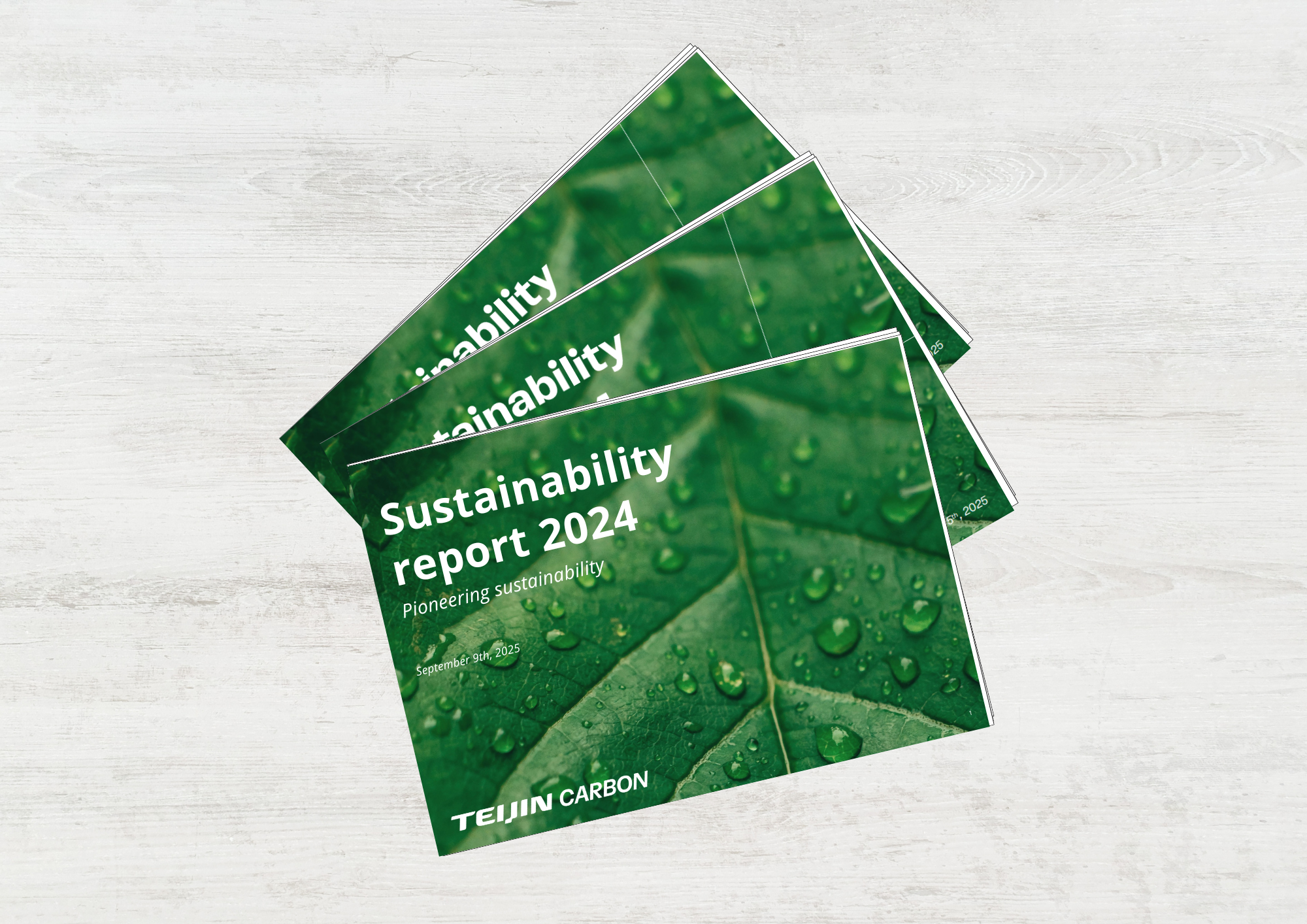
Teijin Carbon Published First Sustainability Report

Teijin Carbon has published Sustainability Report 2024, sending a strong signal for climate-friendly innovation. From CO2-reduced high-performance fibers to digital product passports, the company’s advanced materials help transform entire industries. 

Teijin Carbon, a global leader in high-performance carbon fiber materials, announced the release of its first sustainability report. Guided by the purpose “Pioneering solutions together for a healthy planet” the report outlines the company’s strategic actions to advance climate protection, the circular economy and social responsibility across its global operations.

The report highlights Teijin Carbon’s role in enabling sustainable transformation in key industries such as aerospace, industry, civil engineering, marine, defense, energy and sports. Among the most notable achievements are the launch of Tenax Next™, a new product line offering up to 35 percent CO2 reduction compared to conventional carbon fibers, and the introduction of a digital product passport (DPP) to ensure full transparency and traceability throughout the product lifecycle.

Teijin Carbon has published Sustainability Report 2024, sending a strong signal for climate-friendly innovation. From CO2-reduced high-performance fibers to digital product passports, the company’s advanced materials help transform entire industries. 

Teijin Carbon, a global leader in high-performance carbon fiber materials, announced the release of its first sustainability report. Guided by the purpose “Pioneering solutions together for a healthy planet” the report outlines the company’s strategic actions to advance climate protection, the circular economy and social responsibility across its global operations.

The report highlights Teijin Carbon’s role in enabling sustainable transformation in key industries such as aerospace, industry, civil engineering, marine, defense, energy and sports. Among the most notable achievements are the launch of Tenax Next™, a new product line offering up to 35 percent CO2 reduction compared to conventional carbon fibers, and the introduction of a digital product passport (DPP) to ensure full transparency and traceability throughout the product lifecycle.

“Our carbon fibers empower lighter, more-durable, and energy-efficient designs – making a direct contribution to decarbonization,” says Tetsuya Ito, General Manager of the Teijin Carbon Business Group. “Together with our partners, we are setting new standards for responsible high-performance materials.”

Sustainability is deeply embedded at the group level. Akimoto Uchikawa, President and CEO of the Teijin Group, emphasizes: “Through our work at Teijin, we strive to ensure that every innovation meets the needs of today and respects the world of tomorrow. Working towards a circular, sustainable economy is key to doing both.”

The report follows the European Sustainability Reporting Standards (ESRS) and includes validated key performance indicators (KPIs) on CO2 emissions, water and energy usage, waste management, and social and ethical standards. Teijin Carbon is certified under ISCC PLUS, ISO 14001, ISO 50001 and ISO 45001, underscoring its commitment to transparency and continuous improvement.


Source:

Teijin Carbon Europe GmbH

05.09.2025

Indorama Ventures: Ready for low-carbon PET fibers - certified supply chain enables bio-based textiles at scale

Indorama Ventures Public Company Limited, a global sustainable chemical company, is accelerating the textile industry’s transition to lower-carbon materials with its scalable, high-performance bio-based PET fibers and yarns under the deja™ Bio portfolio. 

At the upcoming Dornbirn Global Fiber Congress later in September, Claire Mattelet, Global Sustainability Program Head for Indorama Ventures’ Fibers Business, will share the company’s experience in developing a fully certified, low-carbon supply chain at scale. 

Her presentation will explore several challenges, such as 

  • securing reliable sources of renewable feedstocks to produce bio-based PTA and MEG inhouse or sourcing bio-based chemicals such as bio-based MEG from trusted partners 
  • converting feedstock into PET chips, yarns, and fibers 
  • and navigating complex certification requirements 

As a result, Indorama Ventures is now able to offer customers and brand owners an integrated, fully certified supply chain through mass balance at scale. 

Indorama Ventures Public Company Limited, a global sustainable chemical company, is accelerating the textile industry’s transition to lower-carbon materials with its scalable, high-performance bio-based PET fibers and yarns under the deja™ Bio portfolio. 

At the upcoming Dornbirn Global Fiber Congress later in September, Claire Mattelet, Global Sustainability Program Head for Indorama Ventures’ Fibers Business, will share the company’s experience in developing a fully certified, low-carbon supply chain at scale. 

Her presentation will explore several challenges, such as 

  • securing reliable sources of renewable feedstocks to produce bio-based PTA and MEG inhouse or sourcing bio-based chemicals such as bio-based MEG from trusted partners 
  • converting feedstock into PET chips, yarns, and fibers 
  • and navigating complex certification requirements 

As a result, Indorama Ventures is now able to offer customers and brand owners an integrated, fully certified supply chain through mass balance at scale. 

Using a mass-balance approach means that renewable feedstocks, such as used cooking oil, are blended with fossil-based raw materials in existing production systems. 
The renewable content is then allocated to final products using certified methods like ISCC+, ensuring traceability throughout the value chain and compliance with chain-of-custody requirements. 

By leveraging existing infrastructure, coupled with R&D capabilities and proven technologies, Indorama Ventures enables rapid market deployment of bio-based PET fibers and yarns 
that are chemically identical to their fossil counterparts. This ensures customer processes remain the same, performance metrics such as durability, dyeability, and strength are equal to virgin solutions, 
and brand owners and converters can speed up qualification lead times and immediately reduce scope 3 emissions to seamlessly upgrade their existing product lines. 

Indorama Ventures invites brand owners, manufacturers, and industry partners to explore the deja™ Bio portfolio and join the movement toward a lower-carbon textile industry. 
The technology is proven, the supply chain is built. 

Source:

Indorama Ventures

Eastman Naia™: New cellulose acetate filament yarn Photo Eastman Naia™
Eastman Naia™: New cellulose acetate filament yarn
04.09.2025

Eastman Naia™: New cellulose acetate filament yarn at Intertextile Shanghai 2025

A result of Eastman’s recently announced strategic partnership with Huafon Chemical, the new filament yarn features even higher tenacity, making it the perfect solution for premium lightweight fabrics. 

On August 13, Eastman and Huafon Chemical jointly announced a formal strategic partnership to establish a joint facility to produce cellulose acetate yarn. The facility will be dedicated to localized production and product innovation of Eastman Naia™ cellulose acetate filament yarns in China. This collaboration demonstrates Eastman’s long-term commitment to the Chinese market and further deepens its market presence in China by enabling a more agile supply chain response to meet the market demand for high-quality, innovative, and sustainable textile materials in the region.

With the vision to make sustainable textiles accessible to all, the Eastman Naia™ portfolio offers responsibly sourced, biobased cellulosic fibers and yarns. These eco-friendly options empower mills, designers, and brands to create textiles that do not compromise on comfort, quality, or appearance. 

A result of Eastman’s recently announced strategic partnership with Huafon Chemical, the new filament yarn features even higher tenacity, making it the perfect solution for premium lightweight fabrics. 

On August 13, Eastman and Huafon Chemical jointly announced a formal strategic partnership to establish a joint facility to produce cellulose acetate yarn. The facility will be dedicated to localized production and product innovation of Eastman Naia™ cellulose acetate filament yarns in China. This collaboration demonstrates Eastman’s long-term commitment to the Chinese market and further deepens its market presence in China by enabling a more agile supply chain response to meet the market demand for high-quality, innovative, and sustainable textile materials in the region.

With the vision to make sustainable textiles accessible to all, the Eastman Naia™ portfolio offers responsibly sourced, biobased cellulosic fibers and yarns. These eco-friendly options empower mills, designers, and brands to create textiles that do not compromise on comfort, quality, or appearance. 

Naia™ acetate filament yarn is widely recognized and used by both high-end luxury and high-street fashion brands in China and around the world. It is favored for ready-to-wear fashion and linings because of its luxurious silky hand feel, beautiful drape, and rich luster. Beyond aesthetics, Naia™ delivers superior comfort, durability, and ease of care. 

Eastman has developed a robust network of mills and fabric trading partners in China, collaboratively driving innovation to develop some of the most advanced acetate-based fabrics in the global textile market today.

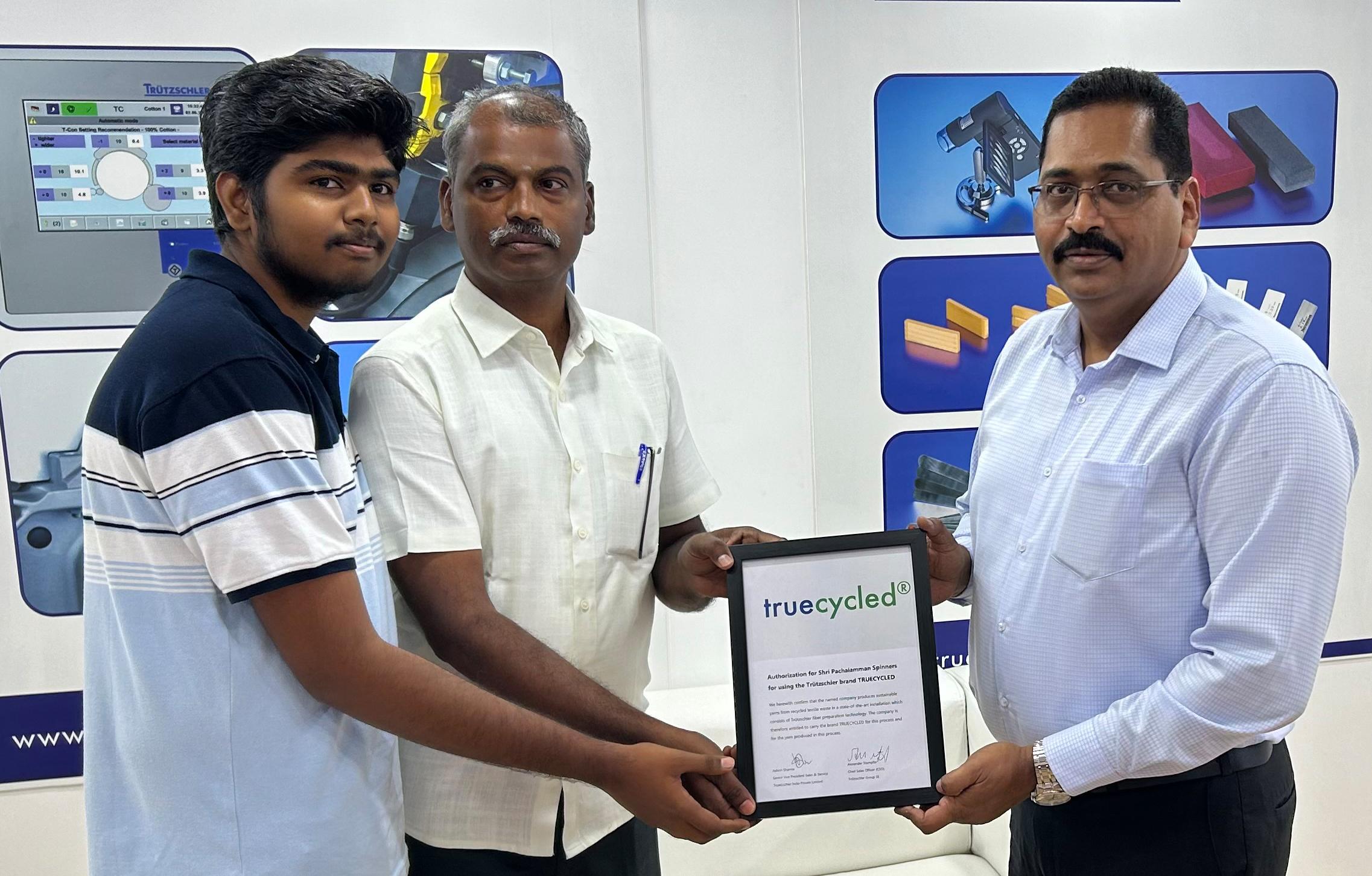
Shri Pachaiamman Spinners (based in Coimbatore): Turns more than 50 percent pre-consumer waste into hosiery yarn (Ne 10 to 30), producing 13 tons per day and using 100 percent recycled materials. (c) Trützschler
Shri Pachaiamman Spinners (based in Coimbatore): Turns more than 50 percent pre-consumer waste into hosiery yarn (Ne 10 to 30), producing 13 tons per day and using 100 percent recycled materials.
04.09.2025

Trützschler: State-of-the-art TRUECYCLED installations in India

Demand for recycled yarn is growing. And the number of TRUECYCLED installations in India is growing too! More and more future-facing companies are driving progress toward a more sustainable textiles industry by producing high-quality yarn from waste through specialized equipment and process know-how from Trützschler. The TRUECYCLED installations in India join a growing group of companies around the globe. This includes Trützschler customers in Türkiye as well as across Europe. 

Demand for recycled yarn is growing. And the number of TRUECYCLED installations in India is growing too! More and more future-facing companies are driving progress toward a more sustainable textiles industry by producing high-quality yarn from waste through specialized equipment and process know-how from Trützschler. The TRUECYCLED installations in India join a growing group of companies around the globe. This includes Trützschler customers in Türkiye as well as across Europe. 

TRUECYCLED is Trützschler’s complete solution for state-of-the-art recycling of pre-consumer and postconsumer textile waste. It encompasses all process steps – from cutting and tearing textile waste through to carding and drawing secondary fibers. Trützschler’s technological expertise enables partner companies to produce recycled yarns with the best possible quality from hard textile waste. In India, USHA YARN was awarded as the first TRUECYCLED reference customer in 2023. Now ten more reference customers are celebrated. TRUECYCLED is gaining traction in India, where demand for recycled yarn is growing rapidly. 
 
The TRUECYCLED pioneers in India are taking action to promote more sustainable, circular value chains in the textile industry. Their yarns contain a substantial amount of textile hard waste, manufactured in a line of Trützschler machinery configured specifically for recycling. All use the T-BLEND blow room line and Trützschler carding machines. 
 

  • Anangoor Textile Mills (based in Kangayam): Produces 30 tons of blended open-end yarn (Ne 20 to Ne 40) per day, using more than 50 percent raw materials from pre-consumer waste. 
  • Eco spin yarn (based in Derabassi): Specialized in 100 percent cotton and poly-cotton blended yarn. This company produces 18 tons of recycled yarn (Ne 10 to Ne 40) per day. It mainly uses 100 percent pre-consumer waste for cotton and up to 20 percent rPET fibers for poly-cotton blends. 
  • Fabtech International Hosieries (based in Tirupur): Manufactures 8 tons of blended open-end yarn (Ne 20 to Ne 40) per day, using more than 50 percent raw materials from pre-consumer waste. 
  • KS Spinning Mills (based in Panipat): Specializing in cotton and poly-cotton blended yarns with a capacity of 36 tons per day, this company produces a wide range of recycled open-end yarns from Ne 1 to Ne 40. For cotton yarn, the company uses 100 percent raw materials from preconsumer waste. Poly-cotton blended yarns are produced with a blend of up to 20 percent recycled polyester and up to 80 percent pre-consumer waste. 
  • Maatrishakti Cotspin (based in Panipat): An open-end yarn expert, manufacturing 18 tons of cotton and poly-cotton blends per day (Ne 10 to Ne 40), using 70 to 80 percent raw materials from pre-consumer waste. 
  • Oasis Textiles (based in Derabassi): Each day, this producer makes 36 tons of recycled yarn – using more than 70 percent raw material from pre-consumer waste (Ne 10 to Ne 40). 
  • Shreeji Cotfab (based in Neemarana): Produces 18 tons per day of open-end yarn made from cotton and poly-cotton blends (Ne 10 to Ne 30), primarily using more than 70 percent of recycled materials. 
  • Shri Pachaiamman Spinners (based in Coimbatore): Turns more than 50 percent preconsumer waste into hosiery yarn (Ne 10 to 30), producing 13 tons per day and using 100 percent recycled materials. 
  • Sri Velayudhaswamy Spinning Mills (based in Dindigul): This customer produces 14 tons of recycled yarn (Ne 20 to Ne 40) per day from a blend of recycled cotton and polyester, using more than 50 percent pre-consumer waste. 
  • Tirumalai Textiles (based in Coimbatore): Using more than 50 percent of pre-consumer waste, this manufacturer produces 17.5 tons of open-end yarn (Ne 10 to Ne 30) per day for weaving and hosiery applications. 
Source:

Trützschler

Sustainability Report Freudenberg Performance Materials (c) Freudenberg Performance Materials
04.09.2025

Freudenberg Performance Materials publishes publishes its first sustainability report

With the publication of its first sustainability report, Freudenberg Performance Materials has reached a major milestone on its path toward greater environmental responsibility and corporate transparency. Until now, information about the company’s sustainability performance was only included in the sustainability report of its parent company, the Freudenberg Group. The newly released report, however, focuses specifically on the business of technical textiles.

Sustainability at Freudenberg is deeply rooted in the company’s 175-year history. Freudenberg Performance Materials also aligns with the UN Brundtland definition and aims to minimize waste and emissions while reducing the use of energy, materials, and water. By 2045, the goal is to achieve CO₂ neutrality at all sites (Scope 1 and 2).

In 2024, Freudenberg Performance Materials made significant progress: 

With the publication of its first sustainability report, Freudenberg Performance Materials has reached a major milestone on its path toward greater environmental responsibility and corporate transparency. Until now, information about the company’s sustainability performance was only included in the sustainability report of its parent company, the Freudenberg Group. The newly released report, however, focuses specifically on the business of technical textiles.

Sustainability at Freudenberg is deeply rooted in the company’s 175-year history. Freudenberg Performance Materials also aligns with the UN Brundtland definition and aims to minimize waste and emissions while reducing the use of energy, materials, and water. By 2045, the goal is to achieve CO₂ neutrality at all sites (Scope 1 and 2).

In 2024, Freudenberg Performance Materials made significant progress: 

  • CO₂ emissions (Scope 1 & 2) were reduced by another 3% – 29% less than in the base year 2020.
  • Despite higher production levels, energy efficiency improved by 10%.
  • 30% of all purchased electricity came from renewable sources, powering 25 production lines with green energy.
  • The share of green energy in the total energy consumption rose by 26% to 13.5%.
  • The company’s biggest gas-powered asset was replaced with wet-scrubber technology, resulting in a reduction of approximately 4,000 tons of CO₂.

In addition, Freudenberg Performance Materials has defined medium- and long-term sustainability goals that serve as guidelines for short-term planning and decision-making. In preparation for the upcoming EU regulation “Ecodesign for Sustainable Products Regulation” (ESPR), the company has begun implementing software to calculate the Product Carbon Footprint (PCF).

Source:

Freudenberg Performance Materials

ALLIED Feather + Down Photo ALLIED Feather + Down
03.09.2025

ALLIED Feather + Down Expands Supply Chain Transparency

ALLIED Feather + Down, global leaders in high performance, responsibly sourced, and sustainably processed down, is preparing for a more transparent textiles future by expanding their supply chain transparency initiatives and sharing initial insights with the market at Permière Vision Paris this September.  

As the Ecodesign for Sustainable Products Regulation (ESPR) prepares to set sustainability and transparency requirements on most products sold in the European Union, ALLIED is working with the supply chain specialists at Green Threads DPP on a comprehensive audit of their down processing facilities. This initiative, when combined with ALLIED’s previous transparency successes with the Responsible Down Standard and their Track My Down education tool, will create the gold standard for transparency in the down industry.

ALLIED Feather + Down, global leaders in high performance, responsibly sourced, and sustainably processed down, is preparing for a more transparent textiles future by expanding their supply chain transparency initiatives and sharing initial insights with the market at Permière Vision Paris this September.  

As the Ecodesign for Sustainable Products Regulation (ESPR) prepares to set sustainability and transparency requirements on most products sold in the European Union, ALLIED is working with the supply chain specialists at Green Threads DPP on a comprehensive audit of their down processing facilities. This initiative, when combined with ALLIED’s previous transparency successes with the Responsible Down Standard and their Track My Down education tool, will create the gold standard for transparency in the down industry.

“As a renewable and biodegradable byproduct of the food industry, down is one of the most sustainable insulation options currently on the market,” said Daniel Uretsky, President with ALLIED Feather + Down. “Now, with the work we are doing with Green Threads, we will have additional data to support these claims, allowing us to help futureproof our partner brands and their customers as new transparency regulations and requirements are implemented.”

By the end of 2025, the EU will release final standards for Ecodesign for Sustainable Products Regulation and Digital Product Passport compliance. ALLIED will be well positioned to provide partner brands with all the information needed to meet pending regulations and showcase sustainability achievements.  

“ALLIED are leaders in supply chain transparency and therefore understand how important this transparency has become in the modern materials marketplace,” said Ross Alexander, CEO with Green Threads DPP. “The audits we are conducting will help ALLIED and their brand partners more easily navigate future compliance requirements and create a point of differentiation at retail, where customers are increasingly interested in making informed buying decisions.”

03.09.2025

Autoneum develops specialized components for battery-powered mobility

The automotive industry is facing a profound transformation that goes far beyond electrification. Key future trends include software-defined vehicles, autonomous driving, connected mobility and the ongoing decarbonization of supply chains.

Autoneum is responding to these developments with a clear focus on innovation and sustainability. The company's products are not only suitable for all types of drive systems, but also for the requirements of software-based vehicle architecture. With NVH solutions for quiet interiors, thermal shielding for battery modules, and fully recyclable materials, Autoneum is helping to make the mobility of tomorrow safer, more comfortable and more resource efficient and is now also developing specialized components for battery-powered mobility – with a focus on occupant protection and battery safety.

The automotive industry is facing a profound transformation that goes far beyond electrification. Key future trends include software-defined vehicles, autonomous driving, connected mobility and the ongoing decarbonization of supply chains.

Autoneum is responding to these developments with a clear focus on innovation and sustainability. The company's products are not only suitable for all types of drive systems, but also for the requirements of software-based vehicle architecture. With NVH solutions for quiet interiors, thermal shielding for battery modules, and fully recyclable materials, Autoneum is helping to make the mobility of tomorrow safer, more comfortable and more resource efficient and is now also developing specialized components for battery-powered mobility – with a focus on occupant protection and battery safety.

Sustainability – circular economy in action
Sustainability is a key focus. Autoneum processes over 30,000 tons of recycled PET annually – equivalent to around three billion 0.25-liter bottles. Products such as Flexi-Light PET, Di-Light, and the fully recyclable N-Join1 carpet consist of over 90% recycled material and thus make a measurable contribution to decarbonization and resource conservation.

Flexi-Light PET, a particularly malleable and durable polyester-based acoustic material, provides effective sound insulation in the vehicle interior and is fully recyclable. Thanks to its thermal formability and structural properties, Di-Light not only offers good noise insulation for vehicle carpets, but also a high degree of design freedom – ideal for large-area applications. With N-Join1, Autoneum has also developed a mono-material system that does not require any latex or adhesives. It is made entirely from recycled materials and can be easily recycled at the end of its product life cycle.

"Sustainability is an integral part of our strategy," says Eelco Spoelder, CEO of Autoneum Management AG. "With innovative materials and resource-saving processes, we are actively contributing to the transformation of the automotive industry – and demonstrating that economic success and ecological responsibility go hand in hand." 

New mobility needs new materials
According to forecasts, global sales of electric vehicles will rise to around 20 million units in 2025 – an increase of 35 percent over the previous year. The industry’s transition is also reflected in Autoneum's product strategy. By 2024, more than 115 electric models worldwide were equipped with Autoneum components – and this figure is expected to rise to almost 150 in 2025. Sixty percent of all new orders last year were for purely electric vehicles; a significant increase compared to 35 percent in 2023. 

The company develops highly specialized components for the next generation of vehicles – especially for electric vehicles with new battery architectures. With components such as the Impact Protection Plate, the mica-free E-Fiber Shield, and the acoustically efficient Ultra-Silent, Autoneum demonstrates how safety, lightweight construction and sustainability can be combined in forward-looking materials that meet the requirements of modern electric vehicles. 

The Impact Protection Plate is a newly developed protective plate made of composite materials that combines mechanical strength with thermal insulation. It protects battery systems from impact and contributes to the safety and efficiency of electric vehicles. The E-Fiber Shield is a mica-free flame-retardant material that increases the safety of vehicle occupants in the event of thermal runaway of the battery. It offers high heat resistance (up to 1400°C), electrical insulation, and geometric flexibility. And Ultra-Silent is a robust, lightweight material for frunks and underbodies that consists of up to 70 percent recycled fibers. It combines high acoustic performance with sustainability. 

Local production for global resilience
In an increasingly challenging market environment, Autoneum relies on proximity to customers as a strategic success factor. With its "local-for-local" strategy, the company manufactures at around 70 locations worldwide, right where the vehicles are produced – efficiently, sustainably and independently of global supply chains. "Our local production strategy makes us resilient – even in an environment characterized by trade barriers," emphasizes Spoelder. "Manufacturing directly in the market significantly minimizes cross-border risk and strengthens our operational stability."

Source:

Autoneum Management AG

01.09.2025

New webpages on ECHA’s scientific work

The new science web section https://echa.europa.eu/science serves as a one stop shop for ECHA’s science related work, improving its visibility and facilitating access to discussions on scientific topics. The new pages enhance the transparency of the scientific work supporting ECHA’s core tasks.

Mike Rasenberg, Director of Hazard Assessment, said:
“Science is at the heart of ECHA’s vision; chemical safety through science, collaboration and knowledge. It is a key driver helping us to reach our goals, and scientific evidence is the basis of all our regulatory decisions, opinions and advice. Our scientific knowledge base is built on close collaboration with researchers, industry and other regulatory bodies.”

The pages describe the work of ECHA’s scientific committees and expert groups and provide details on the scientific partnerships and collaborations, and highlight the Agency’s regulatory research needs. 

A new section focuses on the knowledge hub where ECHA shares the latest scientific and technical updates in the field of chemical safety. The section compiles the science seminars, conference presentations and scientific publications.

The new science web section https://echa.europa.eu/science serves as a one stop shop for ECHA’s science related work, improving its visibility and facilitating access to discussions on scientific topics. The new pages enhance the transparency of the scientific work supporting ECHA’s core tasks.

Mike Rasenberg, Director of Hazard Assessment, said:
“Science is at the heart of ECHA’s vision; chemical safety through science, collaboration and knowledge. It is a key driver helping us to reach our goals, and scientific evidence is the basis of all our regulatory decisions, opinions and advice. Our scientific knowledge base is built on close collaboration with researchers, industry and other regulatory bodies.”

The pages describe the work of ECHA’s scientific committees and expert groups and provide details on the scientific partnerships and collaborations, and highlight the Agency’s regulatory research needs. 

A new section focuses on the knowledge hub where ECHA shares the latest scientific and technical updates in the field of chemical safety. The section compiles the science seminars, conference presentations and scientific publications.

Background
ECHA is a science-based EU Agency aiming to protect health and the environment through its work on chemical safety. As a public body, it operates with transparency and integrity, prioritising the interests and well-being of EU citizens. ECHA’s funding comes from both the European Union and administrative fees from companies.

More information:
ECHA science Website
Source:

European Chemicals Agency

Remix collection Photo (c) Allbirds
Remix collection
27.08.2025

Transforming blended textile waste and foam scraps into brand new shoes

Allbirds presents the latest addition to its leading-edge lineup of footwear: Remix. Born from a pioneering partnership with Blumaka, a leader in converting recycled foam into footwear products, and Circ®, a leading innovator in textile-to-textile recycling, Remix styles give second life to manufacturing waste by transforming blended textile waste and foam scraps into brand new shoes.

With billions of shoes produced annually, the footwear industry generates a staggering amount of manufacturing waste–trimmings, shavings, and dust from the cutting and shaping processes. In midsole foam alone, the industry produces 344,000 tons of waste annually—enough material to craft 2.5 billion midsoles—yet much of this high-quality foam goes unused and discarded. The materials, which are often non-biodegradable and notoriously difficult to recycle, are then routed to landfills where they take decades to decompose and emit harmful chemicals like methane. In an industry-first, Allbirds, Blumaka and Circ are intervening in the process by taking the landfill-bound waste and refashioning it into two Remix styles: the Runner NZ Remix and Cruiser Remix.

Allbirds presents the latest addition to its leading-edge lineup of footwear: Remix. Born from a pioneering partnership with Blumaka, a leader in converting recycled foam into footwear products, and Circ®, a leading innovator in textile-to-textile recycling, Remix styles give second life to manufacturing waste by transforming blended textile waste and foam scraps into brand new shoes.

With billions of shoes produced annually, the footwear industry generates a staggering amount of manufacturing waste–trimmings, shavings, and dust from the cutting and shaping processes. In midsole foam alone, the industry produces 344,000 tons of waste annually—enough material to craft 2.5 billion midsoles—yet much of this high-quality foam goes unused and discarded. The materials, which are often non-biodegradable and notoriously difficult to recycle, are then routed to landfills where they take decades to decompose and emit harmful chemicals like methane. In an industry-first, Allbirds, Blumaka and Circ are intervening in the process by taking the landfill-bound waste and refashioning it into two Remix styles: the Runner NZ Remix and Cruiser Remix.

The Remix styles incorporate Blumaka midsoles, crafted from reclaimed foam scraps from athletic footwear manufacturing that are ground and molded into a high-performance, recycled foam blend. Not only does this process use 99 percent less water and emit 65 percent fewer carbon emissions than traditional foam production, but it also creates a product that exceeds the expectations of durability, comfort and performance. Blumaka’s approach challenges assumptions about sustainability: these reclaimed materials are not just recycled; they are revitalized into elite, performance-ready components that deliver all-day comfort and cushioning.

Additionally, Remix styles are the world’s first-ever footwear to utilize textile-to-textile recycled materials derived from polycotton waste, using Circ’s proprietary hydrothermal recycling process that separates and recovers cotton and polyester fibers from blended garments. The resulting textile lends a luxurious look and feel, with like-new quality that meets and exceeds virgin synthetics.

The materials combine to create two artful, visually distinct silhouettes that require no compromise on comfort, sustainability or style–offering consumers a fresh look that they can feel good in, and feel good about.

“To us, ‘better things in a better way’ means that we’re not tied to one technology or one method of making–we have a limitless curiosity that inspires us to explore unexpected approaches,” said Adrian Nyman, Chief Design Officer, Allbirds. “Remix is the next step in our innovation journey, delivering on sustainable design that enhances both look and feel.”

The launch of Remix follows a decade of sustainable innovations from Allbirds, including the likes of: Futurecraft.Footprint, an ultra-low carbon running shoe created in collaboration with Adidas; and most recently, M0.0NSHOT Zero, the world’s first net zero carbon shoe made with carbon-negative regenerative wool.

“Allbirds is demonstrating that the world doesn’t need more foam — it needs smarter use of existing resources,” said Stuart Jenkins, CEO of Blumaka. “We don’t recycle trash — we reclaim the most advanced foam ever made and improve upon it. Our process produces elite-level products with proven durability and comfort. Allbirds Remix shows that waste foam isn’t a problem — it’s an opportunity. Better for people. Better for the planet.”

“This collaboration with Allbirds marks a major milestone in proving that textile-to-textile recycling can scale beyond apparel and into high-performance footwear,” said Peter Majeranowski, CEO of Circ. ““By using Circ® Filament Lyocell from recycled textile waste as part of the upper for the Remix, we’re showing that circular materials don’t require compromise, they can look better, feel better, and do better for the planet. This is the future of fashion, and we re proud to help lead the way.”

Source:

Allbirds

Textile Institute World Conference 2025 in Porto Graphic AWOL
27.08.2025

Textile Institute World Conference 2025 in Porto

The full programme for the 93rd Textile Institute World Conference (TIWC 2025) has been announced, with over 100 presentations to be delivered in parellel sessions at the event, which takes place from October 7-10 at the Porto Palácio Hotel and Spa in Porto, Portugal.

In a comprehensive and international programme, the close collaboration between researchers on separate continents will be highlighted, with a major focus on the further development of technologies and practices assisting in the need for advanced fibre-to-fibre recycling as a means of accelerating a circular textiles economy.

Research teams working continents apart are arriving at strikingly similar solutions – circularity, digital integration, cleaner chemistry and human-centred reform are all critical. These interlocking themes will define this year’s conference.

Circularity will be one of the most prominent concepts underpinning the programme and researchers from Manchester in the UK, for example, will share their evaluation of end-of-life garments and show how almost half of those currently sent to waste could be channelled into advanced recycling. 

The full programme for the 93rd Textile Institute World Conference (TIWC 2025) has been announced, with over 100 presentations to be delivered in parellel sessions at the event, which takes place from October 7-10 at the Porto Palácio Hotel and Spa in Porto, Portugal.

In a comprehensive and international programme, the close collaboration between researchers on separate continents will be highlighted, with a major focus on the further development of technologies and practices assisting in the need for advanced fibre-to-fibre recycling as a means of accelerating a circular textiles economy.

Research teams working continents apart are arriving at strikingly similar solutions – circularity, digital integration, cleaner chemistry and human-centred reform are all critical. These interlocking themes will define this year’s conference.

Circularity will be one of the most prominent concepts underpinning the programme and researchers from Manchester in the UK, for example, will share their evaluation of end-of-life garments and show how almost half of those currently sent to waste could be channelled into advanced recycling. 

From Chemnitz in Germany, new knitting technology will be presented that allows higher proportions of recycled content in cotton fabrics while retaining softness and durability. 

Case studies from Bangladesh and Pakistan will meanwhile explore how local enterprises are already adopting closed-loop systems and circular business innovations, with recycled yarns reaching the supply chains of major global brands. 

Taken together, the many presentations addressing circularity will demonstrate how waste is beginning to shift from a burden to a new raw material, while also pointing to the infrastructure and policies that will be needed to make such systems commercially viable.

Alongside this, the conference will also highlight the revolution now taking place in digitalisation. 

Far from being a niche domain of design software, digital tools are becoming the backbone of sustainability itself. Work will be presented on blockchain, digital product passports and RFID systems that trace garments throughout their lifecycle, strengthening consumer trust and helping businesses meet new regulatory requirements. 

New methods of digital textile printing and open-source knitting software will also be discussed, offering designers the ability to localise production and work with greater creative agency.  

The message of these projects is clear – digitalisation is not an add-on to sustainability but one of its primary enablers.

Perhaps most significant at TWIC 2025 will be the attention given to the human dimension of sustainability. 

In Sri Lanka, small and medium-sized apparel manufacturers will be shown to face critical health and safety risks as climate change brings rising temperatures, air pollution and extreme weather. A new assessment tool will be introduced which is helping firms build resilience and protect workers. 

The Sustainable Fibre Alliance will also demonstrate how cashmere herders, traders and processors in Mongolia are being engaged in a collective effort to reduce rangeland degradation and safeguard livelihoods. 

UK fashion educators will further share approaches to preparing the next generation to embrace circular models and ethical consumerism, equipping future designers to balance profit with responsibility. At the consumer end, new research will reveal misalignments between brand recommendations for garment care and the behaviour actually adopted by wearers, showing that communication must evolve. 

“These examples will remind delegates that technology and recycling alone cannot deliver sustainability without parallel shifts in culture, education and policy,” says Textile Institute CEO Stephanie Dick. “The global nature of the challenges facing textiles is already widely acknowledged and climate change, waste, toxic chemicals, unsafe labour practices and consumer overconsumption have combined to make fashion and textiles one of the world’s most scrutinised industries. What will emerge from this conference, however, is an unmistakable sense of convergence and solid progress.”

27.08.2025

ECHA announces timeline for PFAS restriction evaluation

The European Chemicals Agency (ECHA) aims to complete its scientific evaluation of the proposed EU-wide restriction on per- and polyfluoroalkyl substances (PFAS) by the end of 2026. 

In a note, published today, ECHA provides an update on its assessment of the proposal and clarifies the expected timeline. This follows the publication of the updated restriction proposal, which took place on 20 August 2025.

The European Chemicals Agency’s (ECHA) scientific committees for Risk Assessment (RAC) and for Socio-Economic Analysis (SEAC) have been evaluating the proposal to restrict PFAS in the EU/EEA since March 20231. This restriction proposal covers more than 10 000 substances and many sectors of application. Following its submission to ECHA, the subsequent six-month consultation has resulted in more than 5 600 responses from allstakeholder groups (Industry, NGOs, institutions, academia, national authorities, agencies, civil society actors, citizens etc.).

The European Chemicals Agency (ECHA) aims to complete its scientific evaluation of the proposed EU-wide restriction on per- and polyfluoroalkyl substances (PFAS) by the end of 2026. 

In a note, published today, ECHA provides an update on its assessment of the proposal and clarifies the expected timeline. This follows the publication of the updated restriction proposal, which took place on 20 August 2025.

The European Chemicals Agency’s (ECHA) scientific committees for Risk Assessment (RAC) and for Socio-Economic Analysis (SEAC) have been evaluating the proposal to restrict PFAS in the EU/EEA since March 20231. This restriction proposal covers more than 10 000 substances and many sectors of application. Following its submission to ECHA, the subsequent six-month consultation has resulted in more than 5 600 responses from allstakeholder groups (Industry, NGOs, institutions, academia, national authorities, agencies, civil society actors, citizens etc.).

The Committees’ evaluation is being carried out in batches, focusing on the 14 different sectors2 analysed in the originally submitted restriction proposal, as well as PFAS manufacturing and horizontal issues. In parallel, the national authorities of Denmark, Germany, the Netherlands, Norway and Sweden, who prepared the proposal (the Dossier Submitter), have progressively updated their initial report to address the significant number of responses received during the consultation, sector by sector. This updated report, called the Background Document, forms the basis for the Committees’ opinions.

The information from the consultation has also led to the identification of a further eight sectors3. These sectors have been assessed by the Dossier Submitter and incorporated into the now completed Background Document, which has been received by ECHA on 24 June 2025 and made available to RAC and SEAC and to the public on ECHA’s website4.

It is the collective goal of ECHA, the Dossier Submitter and the European Commission to allow for appropriate action to be taken to protect human health and the environment, as soon as is practicably possible. The European Commission, in the Chemicals Industry Action Plan adopted on 8 July 2025, has also communicated that ‘The scientific assessment of the Universal PFAS restriction by the ECHA’s committees is ongoing and scheduled to conclude in 2026. The Commission is committed to presenting a proposal as soon as possible after receiving ECHA’s opinion, with the overall objective of minimising PFAS emissions’.

Considering the sheer scale of this complex restriction proposal, RAC and SEAC have already made good progress in their opinion making on the 14 sectors covered by the original restriction proposal, plus PFAS manufacturing and horizontal issues. However, including a further 8 sectors into the Committees’ evaluations now would require significant time beyond 2026 to finalise the opinion with these sectors. Therefore, in the ongoing procedure, the Committees will not carry out a sector specific evaluation of these further eight sectors. However, the evaluation of horizontal issues will cover, amongst others, the hazard assessment and risk management measures of general applicability that are able to monitor and limit emissions of PFAS to the environment (e.g. reporting requirements, PFAS management plan).

Source:

European Chemicals Agency

25.08.2025

Lenzing: Accelerated energy transition through expansion of renewable energies

The Lenzing Group, a provider of regenerated cellulose fibers for the textile and nonwoven industries, expands its photovoltaic capacities at its Lenzing site. Together with VERBUND, a new PV plant with a capacity of 1.3 megawatts peak (MWp) has been commissioned, increasing the total capacity of the PV plant park to 8.3 MWp. Lenzing is thereby investing in a stable and diversified energy supply and is also making an active contribution to the energy transition. VERBUND is accompanying Lenzing on its path to energy independence and, as a partner, is providing significant support for the expansion of renewable energies. 
 

The Lenzing Group, a provider of regenerated cellulose fibers for the textile and nonwoven industries, expands its photovoltaic capacities at its Lenzing site. Together with VERBUND, a new PV plant with a capacity of 1.3 megawatts peak (MWp) has been commissioned, increasing the total capacity of the PV plant park to 8.3 MWp. Lenzing is thereby investing in a stable and diversified energy supply and is also making an active contribution to the energy transition. VERBUND is accompanying Lenzing on its path to energy independence and, as a partner, is providing significant support for the expansion of renewable energies. 
 
In recent years, Lenzing has continuously invested in the expansion of renewable electricity and energy sources. In addition to its PV plant park, the company operates numerous other sustainable energy projects, including three small hydropower plants with a total output of 2.3 MW. In addition, several supply contracts have been concluded in recent years, for example with WLK energy for the purchase of around 13 MW of wind energy, and with green electricity producers Enery and Energie Steiermark to finance a photovoltaic plant with a capacity of 5.5 MWp in the district of Deutschlandsberg. 
 
“To ensure our long-term competitiveness, we are focusing on a sustainable energy mix of biomass, photovoltaics, wind energy, and hydropower. Investments in renewable energies and production that is as energy autonomous as possible are central components of our strategy. Political support – for example, through electricity price subsidies – is equally essential in order to achieve our ambitious sustainability and climate goals,” explains Christian Skilich, member of the Lenzing Group Executive Management. 
 
Martin Wagner, Managing Director of VERBUND Energy4Business, emphasizes the importance of this strategic cooperation: “The partnership with Lenzing is an important step for us toward a sustainable energy future. Together, we are not only shaping energy independence of companies, but also actively contributing to the energy transition. The new photovoltaic system is further proof that we are driving forward the transformation of the energy market through cooperation. VERBUND remains a reliable partner in supporting companies such as Lenzing on their path to a more sustainable future.” 
 
Lenzing is thus also steadily moving closer to its net-zero target. The group updated their climate targets for 2024 to align its commitment to climate protection with the goals of the Paris Agreement to limit global temperature rise to 1.5 degrees Celsius. The Science Based Targets Initiative (SBTi), the leading authority on climate-related target setting, reviewed and confirmed the target increase. Lenzing is the only producer of regenerated cellulose fibers with a scientifically confirmed net-zero target.

Source:

Lenzing AG