
From the Sector

from to
Reset
3459 results
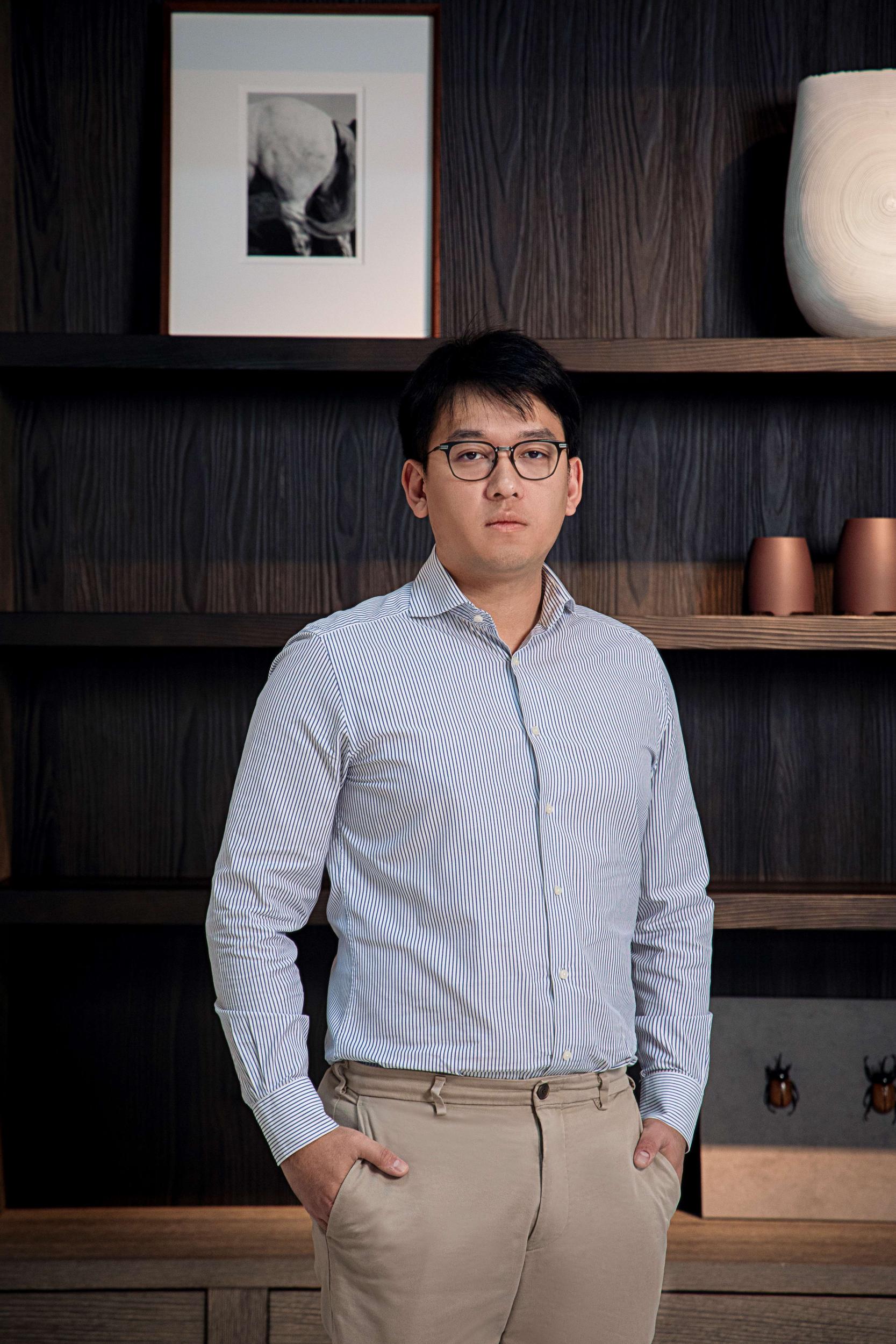
Fabian Köster Copyright-Dominik Fröls, DF-Fotografie
Fabian Köster
11.09.2025

Composite Rotor Sleeves Project Completed – Exclusive Web Meeting

OEMs and Tier-1 suppliers in the field of electric powertrains are under increasing pressure to improve performance, efficiency, and scalability of their drive systems. One key enabler now reaching industrial mass-production: composite-based rotor sleeves. These lightweight, high-performance components offer significant advantages in terms of mechanical containment of rotor components to achieve more efficient designs for high-speed rotation – especially in demanding automotive, aerospace and industrial applications. 

OEMs and Tier-1 suppliers in the field of electric powertrains are under increasing pressure to improve performance, efficiency, and scalability of their drive systems. One key enabler now reaching industrial mass-production: composite-based rotor sleeves. These lightweight, high-performance components offer significant advantages in terms of mechanical containment of rotor components to achieve more efficient designs for high-speed rotation – especially in demanding automotive, aerospace and industrial applications. 

Following nine months of collaborative research, a consortium of 15 leading companies – Arkema Group, Covenstro Deutschland AG, DOMO Engineering Plastics Europe S.p.A., Hexcel Composites SASU, Huntsman Advanced Materials, Hutchinson SA CRI, Kümpers GmbH, LG Electronics Deutschland GmbH, Maru Hachi Corporation, Rassini Supensiones S.A. de C.V., Schunk Kohlenstofftechnik GmbH, Swancore Netherlands B.V., Syensqo, Toray Carbon Fibres Europe S.A., Toyota Motor Europe N.V./S.A.  – has completed a comprehensive analysis and benchmarking project led by AZL Aachen GmbH. The project systematically analysed the state of the art, compared materials, design strategies, and processing methods for rotor sleeves made from thermoset and thermoplastic carbon fibre composites. The result is a comprehensive market and technology analysis, documented in a 384-page final report – and ready to be implemented into cooperations.  

To support OEMs and motor developers in leveraging these findings, AZL is now hosting a dedicated web meeting – designed specifically to demonstrate the practical relevance, supply chain maturity, and technology details of composite rotor sleeves for electric drives. Participation is free of charge. 

The event will provide a strategic overview of the technology’s capabilities and will highlight the concrete potential for integration into series production. It starts with an introduction to the current state of the technology and its role in enabling the next generation of electric motors. AZL will then present the consolidated results from the project’s work packages. Key insights include comparisons of rotor sleeve designs (press-fit vs. direct-wound), material classes (thermoplastic and thermoset carbon composites), mechanical and thermal performance benchmarks and production KPIs.  

In the second part of the meeting, participants will get the opportunity to meet the consortium behind the recently finished project – from composite material suppliers and machine manufacturers to rotor sleeve producers. Each partner will briefly pitch their unique expertise and offerings, helping OEMs identify reliable contacts for implementation projects.  

Fabian Köster, Development Engineer Composites at Schunk Kohlenstofftechnik GmbH, explains: “As a technology leader and high-volume manufacturer in the field of rotor sleeves, Schunk considers it essential to actively shape innovation. Our participation in the AZL project reflects our strong belief that future viability and competitiveness can only be secured through early involvement in technological developments. The AZL info event offers OEMs and partners across the entire value chain a valuable opportunity to exchange insights on the current state of rotor sleeve technologies, explore emerging trends, and collaboratively develop solutions for tomorrow’s challenges.”  

For OEMs, this event provides not only an update on emerging technology, it also offers direct access to a ready-to-engage partner network. It also marks the official launch of a follow-up experimental project. 

This follow-up initiative will shift from theoretical analysis to experimental validation. Its goal is to benchmark the performance of different material and process combinations under real-world production and operating conditions. 

The follow project includes four work packages. The first work package will define the production concepts and materials to be tested experimentally, including the design of test methods and auxiliary equipment for press fit operations. The second work package is targeting a production process consisting of separate winding and press fitting on the rotor. It includes manufacturing of sleeves using wet winding, towpreg winding and thermoplastic tape winding. Strength testing of the sleeves will consider different prestress levels, while also the quality of the laminate will be evaluated. The third work package will do the same, but in this case for a process, directly winding on the rotor. Evaluation will also include high temperature testing and long-term durability. Finally in the fourth work package all process and strength test results will be evaluated on cost, quality, and performance, leading to benchmarking of various materials, and clear recommendations for cost efficient rotor sleeves. 

The web meeting, hosted on September 25th, is open to OEMs, motor developers, innovation managers, and system integrators seeking to accelerate their next electric powertrain generation. A registration link will be provided for all interested participants. Contact Philipp Fröhlig (philipp.froehlig@azl-aachen-gmbh.de) for a registration link.

Source:

AZL Aachen GmbH

10.09.2025

ERCA S.p.A. got ISCC PLUS Certification

ERCA S.p.A., a leader in chemical innovation, exclusive manufacturer of REVECOL®, specialized in supplying chemical solutions for the textile industry announced its transition to ISCC PLUS certification (International Sustainability and Carbon Certification), confirming its ongoing commitment to bioeconomy and circular economy practices and certified innovation. 

This strategic decision comes in response to recent discussions within industry, including the potential shift by Textile Exchange toward certifying only fiber content — a move that no longer aligns with ERCA TCS’s integrated sustainability approach. The company has therefore moved to ISCC PLUS: a globally recognized certification system that ensures the traceability and transparency of bio-circular, bio-based, and recycled feedstocks across the value chain. The process began with REVECOL® by ERCA TCS at the production site of ERCA SPA. With the new ISCC PLUS certification, which now represents another milestone in the industry, the company wants to strengthen ERCA TCS’s position in the field of certified bio-circular chemistry.

ERCA S.p.A., a leader in chemical innovation, exclusive manufacturer of REVECOL®, specialized in supplying chemical solutions for the textile industry announced its transition to ISCC PLUS certification (International Sustainability and Carbon Certification), confirming its ongoing commitment to bioeconomy and circular economy practices and certified innovation. 

This strategic decision comes in response to recent discussions within industry, including the potential shift by Textile Exchange toward certifying only fiber content — a move that no longer aligns with ERCA TCS’s integrated sustainability approach. The company has therefore moved to ISCC PLUS: a globally recognized certification system that ensures the traceability and transparency of bio-circular, bio-based, and recycled feedstocks across the value chain. The process began with REVECOL® by ERCA TCS at the production site of ERCA SPA. With the new ISCC PLUS certification, which now represents another milestone in the industry, the company wants to strengthen ERCA TCS’s position in the field of certified bio-circular chemistry.

Certified auxiliaries for the textile industry
ERCA is proud to be the first and only company worldwide to certify under ISCC PLUS the output category: “Auxiliaries for the textile industry – Vegetable Oil Ethoxylates, Alkylamide–Bio-Circular”. These products, especially developed for the REVECOL® brand are linked to upcycled raw materials such as biocircular Vegetable Cooking Oil (UCO), under the mass balance approach, represent decisive achievement in green chemistry.

RE&UP and ONLY - jersey program Photo: RE&UP and ONLY
RE&UP and ONLY - jersey program
10.09.2025

RE&UP and ONLY partner up to scale circular fashion

Circular textile technology specialist RE&UP supports BESTSELLER’s women’s brand ONLY in launching a new jersey program of basic tops made from next-generation recycled polyester. The first styles are already in stores. 

Using its modular recycling technology, RE&UP transforms post-consumer and factory textile waste into fibers that meet the same performance standards as virgin materials. In ONLY’s initial production run, over 11 styles were converted to RE&UP’s Next-Gen Polyester, equating to more than 100,000 t-shirts – demonstrating that recycled fibers can be cost-competitive and ready for large-scale adoption. 

Turning end-of-life textiles into fibers ready for mainstream fashion, proving circular solutions can scale today. By integrating recycled fibers into mainstream collections, ONLY sets a benchmark for other brands seeking circular solutions. 

Circular textile technology specialist RE&UP supports BESTSELLER’s women’s brand ONLY in launching a new jersey program of basic tops made from next-generation recycled polyester. The first styles are already in stores. 

Using its modular recycling technology, RE&UP transforms post-consumer and factory textile waste into fibers that meet the same performance standards as virgin materials. In ONLY’s initial production run, over 11 styles were converted to RE&UP’s Next-Gen Polyester, equating to more than 100,000 t-shirts – demonstrating that recycled fibers can be cost-competitive and ready for large-scale adoption. 

Turning end-of-life textiles into fibers ready for mainstream fashion, proving circular solutions can scale today. By integrating recycled fibers into mainstream collections, ONLY sets a benchmark for other brands seeking circular solutions. 

“This project proves that scaling the production of recycled polyester from textile waste is achievable. Transforming the industry is undoubtedly a complex and lengthy process, but initiatives like this demonstrate we are making progress,” says Ozgur Atsan, Chief Commercial Officer at RE&UP. 

"RE&UP shares our dedication to innovation and quality, and their Next-Gen textile-to-textile recycled polyester meets the high standards we set for our products," says Pernille Tøttrup, Sourcing Process Manager at ONLY. 

RE&UP’s technology separates polyester and cotton in end-of-life garments and regenerates them into fibers that maintain durability and performance – all while keeping materials in a true textile-to-textile loop. By reducing reliance on virgin polyester, RE&UP is supporting the industry lower its environmental footprint and showing that scalable, circular solutions are already achievable.

(c) CHT Gruppe
10.09.2025

CHT innovative dyeing processes and functional finishes at PERFORMANCE DAYS AUTUMN

The CHT Group, a global specialist in textile chemistry and dyes, is looking forward to participating in the PERFORMANCE DAYS Functional Fabric Fair in Munich on October 29 and 30, 2025. The focus will be on innovative dyeing processes and functional finishes that specifically improve textile properties.

PIGMENTURA by CHT – The innovative, pigment-based dyeing process uses no water for soaping and rinsing and does not require energy-intensive heating of the process water. As a result, water consumption in the dyeing process can be reduced by up to 96 %. This technology was awarded the German Federal Ecodesign Award in the Product category in 2024 - a result of the successful collaboration between Inditex and CHT.

ECOPRINT by CHT – The water-based textile printing system with reactive and pigment inks meets the highest sustainability standards and has been awarded the C2C Certified Material Health Certificate™. It actively contributes to converting linear production processes into circular systems and promoting the textile circular economy.

The CHT Group, a global specialist in textile chemistry and dyes, is looking forward to participating in the PERFORMANCE DAYS Functional Fabric Fair in Munich on October 29 and 30, 2025. The focus will be on innovative dyeing processes and functional finishes that specifically improve textile properties.

PIGMENTURA by CHT – The innovative, pigment-based dyeing process uses no water for soaping and rinsing and does not require energy-intensive heating of the process water. As a result, water consumption in the dyeing process can be reduced by up to 96 %. This technology was awarded the German Federal Ecodesign Award in the Product category in 2024 - a result of the successful collaboration between Inditex and CHT.

ECOPRINT by CHT – The water-based textile printing system with reactive and pigment inks meets the highest sustainability standards and has been awarded the C2C Certified Material Health Certificate™. It actively contributes to converting linear production processes into circular systems and promoting the textile circular economy.

TUBINGAL® RISE – The softener is made from recycled end-of-life silicones and consists of over 60 % recycled silicone waste and emulsifiers from renewable raw materials. 

ARRISTAN rAIR – The sustainable hydrophilic finish is made from recycled PET flakes and ensures optimum moisture regulation, fast drying and excellent dirt repellency. ARRISTAN rAIR is ideal for finishing recycled yarns and fabrics, which can then be recycled again - an important contribution to the textile circular economy.

As a foundation-owned company, CHT is committed to a comprehensive sustainability agenda. Our products are designed and manufactured according to strict standards, with a focus on using bio-based, biodegradable and recycled materials to support a circular economy.

Uwe Brinkmann, General Manager of Teijin Automotive Technologies Europe Photo: Teijin Automotive Technologies Europe
Uwe Brinkmann, General Manager of Teijin Automotive Technologies Europe
10.09.2025

Teijin Automotive Technologies & Aeronautical Service S.r.l.: Next generation of fireproof composite materials

Teijin Automotive Technologies, a European subsidiary of Teijin Ltd., a Japanese global leader in advanced composite solutions, and Aeronautical Service S.r.l., an Italian technology company specialized in innovative ceramic composite materials, have entered into a strategic alliance aimed at accelerating the industrialization of high-temperature resistant components based on proprietary ceramic matrix composite (CMC) technologies.

Under the agreement, Teijin Automotive Technologies has acquired, for its European facilities exclusive production rights in the automotive sector and extended production rights in the marine, aerospace, and industrial sectors. Aeronautical Service (AS), licensing its proprietary technology “FireAlt”, will provide high-temperature resistant, fireproof, and lightweight material formulation.

This collaboration represents a strategic milestone for both companies and aims to:

Teijin Automotive Technologies, a European subsidiary of Teijin Ltd., a Japanese global leader in advanced composite solutions, and Aeronautical Service S.r.l., an Italian technology company specialized in innovative ceramic composite materials, have entered into a strategic alliance aimed at accelerating the industrialization of high-temperature resistant components based on proprietary ceramic matrix composite (CMC) technologies.

Under the agreement, Teijin Automotive Technologies has acquired, for its European facilities exclusive production rights in the automotive sector and extended production rights in the marine, aerospace, and industrial sectors. Aeronautical Service (AS), licensing its proprietary technology “FireAlt”, will provide high-temperature resistant, fireproof, and lightweight material formulation.

This collaboration represents a strategic milestone for both companies and aims to:

  • Industrialize and standardize the production processes for ceramic matrix composites;
  • Scale production to meet international demand from European facilities;
  • Jointly develop functional applications;
  • Jointly promote the resulting solutions to global institutional and industrial customers.

The use of FireAlt makes a major step forward in enabling energy-efficient, corrosion-free and structurally robust solutions across a wide range of industries. Traditional composite materials, while offering significant weight and performance advantages, have been limited by their fire resistance. With this new generation of high-temperature ceramic matrix composites, it is now possible to design and manufacture structural components, that combine the benefits of lightweight composites with full fire-protection. It opens the door to new applications in transportation, infrastructure and beyond.

The materials at the center of the agreement meet the most stringent international standards (including ISO 2685, EN45545 HL3, A60, and IMO non combustibility certifications), offering exceptional resistance to temperatures up to 2000°C with no smoke or toxic emissions. Combining the innovative ceramic formulations with Teijin Automotive Technologies wide range of industrial production solutions for composite parts, allows the cost effective, high volume production of fireproof components.

“We are proud to partner with Aeronautical Service to bring their groundbreaking technology into serial production,” said Uwe Brinkmann, General Manager of Teijin Automotive Technologies Europe. “This alliance reinforces our commitment to innovation and sustainability in the materials science space, while expanding our capacity to serve all industries.”

“This agreement validates years of research and development,” said Kris Bordignon, CEO of Aeronautical Service. “Teijin's industrial strength and global reach are the ideal match for our licensing model and deep technological expertise. Together, we will reshape the future of fireproof composite applications.”

Teijin Carbon Published First Sustainability Report Foto: (c) Teijin Carbon Europe GmbH
Teijin Carbon Published First Sustainability Report
09.09.2025

Teijin Carbon Published First Sustainability Report

Teijin Carbon has published Sustainability Report 2024, sending a strong signal for climate-friendly innovation. From CO2-reduced high-performance fibers to digital product passports, the company’s advanced materials help transform entire industries. 

Teijin Carbon, a global leader in high-performance carbon fiber materials, announced the release of its first sustainability report. Guided by the purpose “Pioneering solutions together for a healthy planet” the report outlines the company’s strategic actions to advance climate protection, the circular economy and social responsibility across its global operations.

The report highlights Teijin Carbon’s role in enabling sustainable transformation in key industries such as aerospace, industry, civil engineering, marine, defense, energy and sports. Among the most notable achievements are the launch of Tenax Next™, a new product line offering up to 35 percent CO2 reduction compared to conventional carbon fibers, and the introduction of a digital product passport (DPP) to ensure full transparency and traceability throughout the product lifecycle.

Teijin Carbon has published Sustainability Report 2024, sending a strong signal for climate-friendly innovation. From CO2-reduced high-performance fibers to digital product passports, the company’s advanced materials help transform entire industries. 

Teijin Carbon, a global leader in high-performance carbon fiber materials, announced the release of its first sustainability report. Guided by the purpose “Pioneering solutions together for a healthy planet” the report outlines the company’s strategic actions to advance climate protection, the circular economy and social responsibility across its global operations.

The report highlights Teijin Carbon’s role in enabling sustainable transformation in key industries such as aerospace, industry, civil engineering, marine, defense, energy and sports. Among the most notable achievements are the launch of Tenax Next™, a new product line offering up to 35 percent CO2 reduction compared to conventional carbon fibers, and the introduction of a digital product passport (DPP) to ensure full transparency and traceability throughout the product lifecycle.

“Our carbon fibers empower lighter, more-durable, and energy-efficient designs – making a direct contribution to decarbonization,” says Tetsuya Ito, General Manager of the Teijin Carbon Business Group. “Together with our partners, we are setting new standards for responsible high-performance materials.”

Sustainability is deeply embedded at the group level. Akimoto Uchikawa, President and CEO of the Teijin Group, emphasizes: “Through our work at Teijin, we strive to ensure that every innovation meets the needs of today and respects the world of tomorrow. Working towards a circular, sustainable economy is key to doing both.”

The report follows the European Sustainability Reporting Standards (ESRS) and includes validated key performance indicators (KPIs) on CO2 emissions, water and energy usage, waste management, and social and ethical standards. Teijin Carbon is certified under ISCC PLUS, ISO 14001, ISO 50001 and ISO 45001, underscoring its commitment to transparency and continuous improvement.


Source:

Teijin Carbon Europe GmbH

Rhythm of Blues™ (c) AkzoNobel
Rhythm of Blues™
09.09.2025

AkzoNobel’s 2026 Colors of the Year

It’s time to dance to the Rhythm of Blues™ and celebrate AkzoNobel’s Colors of the Year 2026 – an upbeat and versatile color family that’s calming, connecting and creative.

There’s a trio of shades for next year – the light blue Mellow Flow™, the dark blue Slow Swing™ and the vibrant Free Groove™ – so everyone can find a style that works for them. The harmonious collection of signature indigos is just what we need in our homes, according to the results of the company’s extensive annual trend research.

“With everything that’s happening in the world, we see that people are reacting in various ways,” explains Heleen van Gent, Creative Director of AkzoNobel’s Global Aesthetic Center. “They’re either slowing down and recharging their batteries, wanting to feel in tune with others and celebrate kinship. Or they’re choosing to be bold, have fun and feel carefree.”

It’s time to dance to the Rhythm of Blues™ and celebrate AkzoNobel’s Colors of the Year 2026 – an upbeat and versatile color family that’s calming, connecting and creative.

There’s a trio of shades for next year – the light blue Mellow Flow™, the dark blue Slow Swing™ and the vibrant Free Groove™ – so everyone can find a style that works for them. The harmonious collection of signature indigos is just what we need in our homes, according to the results of the company’s extensive annual trend research.

“With everything that’s happening in the world, we see that people are reacting in various ways,” explains Heleen van Gent, Creative Director of AkzoNobel’s Global Aesthetic Center. “They’re either slowing down and recharging their batteries, wanting to feel in tune with others and celebrate kinship. Or they’re choosing to be bold, have fun and feel carefree.”

She adds that the three color palettes will help create living environments that fit everyone’s individual decorative needs. “To reflect these various moods – and because we understand that color is emotion and therefore personal – we’ve chosen a family of colors for 2026. They’re centered around three different rhythms that offer endless scope for changing the pace of your space.”

The colors, textures and special effects that take center stage in the Rhythm of Blues collection have been designed to strike a chord in a wide range of markets. Along with decorative paints, inspirational palettes have also been created for the aerospace, automotive, consumer electronics, metal furniture, lighting, cabinetry, flooring, building products and architecture markets.

“We pride ourselves on setting the tone together with architects, interior designers, trend specialists and product developers – who all make important contributions to our in-depth research,” says Daniel Geiger Campos, Global Director of AkzoNobel’s Decorative Paints business and member of the Executive Committee. “Our Rhythm of Blues family is perfectly in tune with evolving trends in various industries and will help us deliver market-specific solutions to customers so they can more confidently apply their own style to their projects.” AkzoNobel’s Global Aesthetic Center has been translating trends into desirable colors for more than 30 years. Its annual ColourFutures trend forecast meeting brings together in-house experts, international architects, designers and journalists to share insights into how our reactions to the world around us impact our color choices.

Source:

AkzoNobel

At MAVIG, the Outlast® temperature-regulating technology is used in protective head coverings and vests. Photo: MAVIG & Outlast
At MAVIG, the Outlast® temperature-regulating technology is used in protective head coverings and vests.
09.09.2025

MAVIG & Outlast: NASA Technology radiation protection gear

In operating rooms, during examinations, and in emergency situations, medical profession-als work under extreme pressure - concentration and precision are required, often for hours on end. In radiology, where heavy radiation protection gear is part of everyday life, heat stress is a well-known challenge. While protective clothing ensures essential radiation shielding, it also traps heat and moisture, which can lead to fatigue, discomfort, and re-duced efficiency over time. 

This is where the partnership between MAVIG, the Munich-based specialist in radiation protection, and Outlast Technologies, the pioneer of adaptive temperature regulation, takes clinical protective gear to a new level.

Originally developed for NASA, the Outlast® technology is based on a principle: it absorbs excess body heat, stores it within the fabric, and releases it when needed. The result is a balanced microclimate directly on the skin - even under heavy protective gear and during extended wear. This means less overheating, less moisture, and greater comfort.

In operating rooms, during examinations, and in emergency situations, medical profession-als work under extreme pressure - concentration and precision are required, often for hours on end. In radiology, where heavy radiation protection gear is part of everyday life, heat stress is a well-known challenge. While protective clothing ensures essential radiation shielding, it also traps heat and moisture, which can lead to fatigue, discomfort, and re-duced efficiency over time. 

This is where the partnership between MAVIG, the Munich-based specialist in radiation protection, and Outlast Technologies, the pioneer of adaptive temperature regulation, takes clinical protective gear to a new level.

Originally developed for NASA, the Outlast® technology is based on a principle: it absorbs excess body heat, stores it within the fabric, and releases it when needed. The result is a balanced microclimate directly on the skin - even under heavy protective gear and during extended wear. This means less overheating, less moisture, and greater comfort.

MAVIG integrates these high-tech materials into its protective clothing and head wear, designed specifically for radiology. For doctors and medical staff, the difference is tangible: more comfort, better concentration, and improved performance during long and demanding procedures.

“Our products are designed not only to provide protection but to support medical professionals in their demanding work as effectively as possible,” says Anna-Luisa Uhlitz, Head of Product and Project Management for Personal Protective Equipment at MAVIG. “By collaborating with Outlast, we’ve significantly enhanced comfort for our users.”

Outlast Technologies also sees the collaboration as a perfect match:
“The demands on healthcare professionals are enormous,” says Ingo Horger, Senior Business Development Manager at Outlast. “We’re proud that a technology originally developed for astronauts is now helping everyday heroes in medicine and patient care stay comfortable under pressure.”

Source FET
08.09.2025

BTMA at ITMA Asia + CITME: From microsurgery to aircraft wings

At the forthcoming ITMA Asia + CITME exhibition in Singapore, specialists from a 20-strong delegation of British Textile Machinery Association (BTMA) companies will be on hand to discuss some of the highly advanced industries they are now actively supporting.

The manufacture of medical sutures, for example, is a very specialised process and because these items are implanted directly into the human body, every stage of production is tightly controlled to ensure safety, sterility and reliable performance.

Absorbable sutures are usually made from polymers that degrade safely within the body, such as polyglycolic acid, polylactic acid or polydioxanone, while non-absorbable sutures use durable materials like nylon, polypropylene, polyester, silk or even stainless steel. All of these must be of medical grade and fully biocompatible.

At the forthcoming ITMA Asia + CITME exhibition in Singapore, specialists from a 20-strong delegation of British Textile Machinery Association (BTMA) companies will be on hand to discuss some of the highly advanced industries they are now actively supporting.

The manufacture of medical sutures, for example, is a very specialised process and because these items are implanted directly into the human body, every stage of production is tightly controlled to ensure safety, sterility and reliable performance.

Absorbable sutures are usually made from polymers that degrade safely within the body, such as polyglycolic acid, polylactic acid or polydioxanone, while non-absorbable sutures use durable materials like nylon, polypropylene, polyester, silk or even stainless steel. All of these must be of medical grade and fully biocompatible.

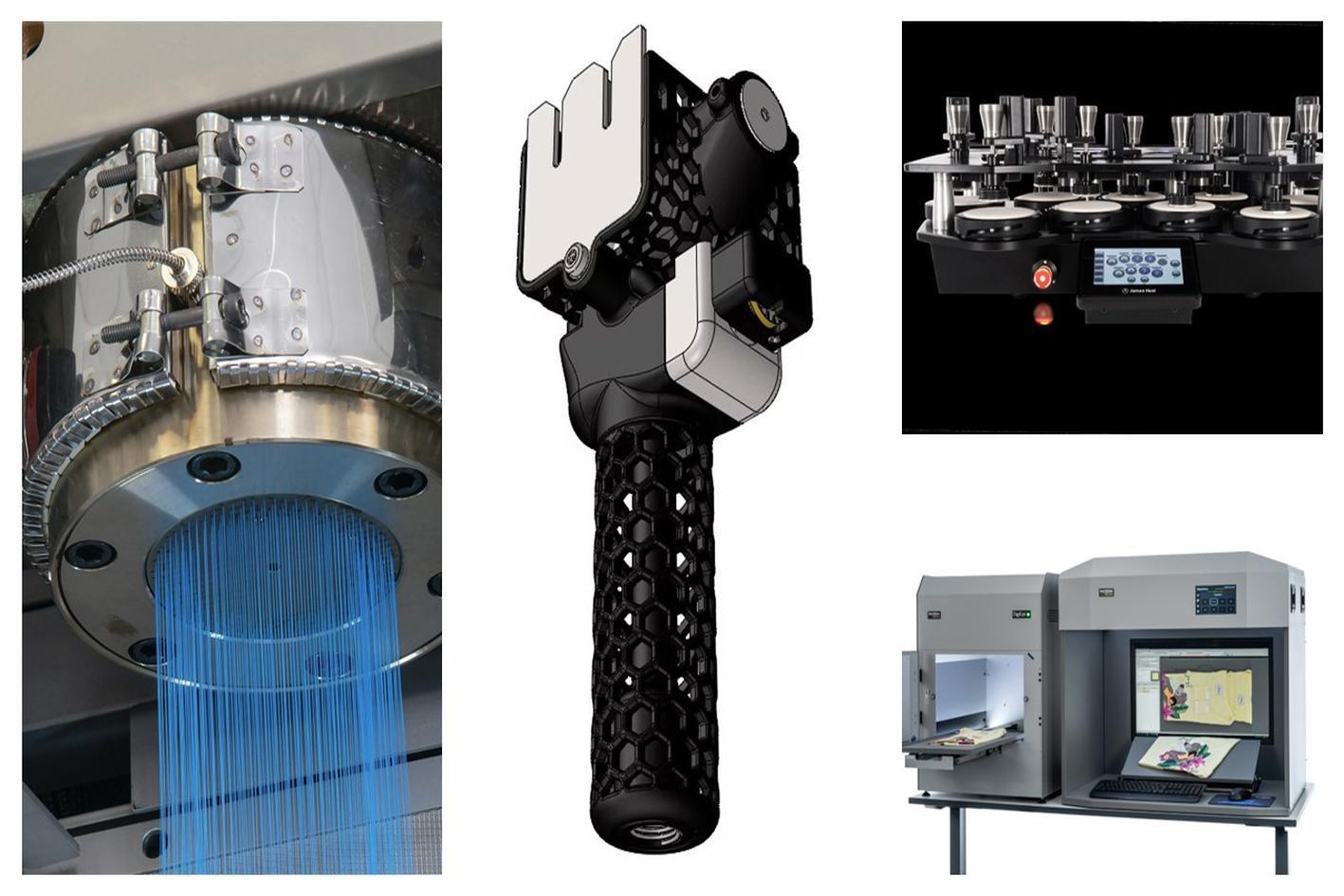
The UK’s Fibre Extrusion Technology (FET) is a world leader in both the fibre selection and production technologies behind this industry and in Singapore will highlight a groundbreaking new parallel technology for the medical sector based on supercritical CO2. Further developments in the field of automation and control in advanced fibre production will be highlighted by BTMA members including Autofoam, James Heal, Roaches, Strayfield, Verivide and Wira Instrumentation.

AFP and ATL
From the micro to the macro, sophisticated aerospace technologies such as automated fibre placement (AFP) and automated tape laying (ATL) meanwhile involve the precise placement of carbon fibre tapes or tows on a mould surface, which are then cured to form lightweight yet strong components. 
AFP allows for complex geometries by steering individual tows, making it ideal for fuselage sections, wing skins and other curved structures. ATL, on the other hand, is more efficient for larger, flatter surfaces such as wing covers or stabilisers, where wider tapes can be laid down at high speed with minimal gaps or overlaps. Together, these technologies significantly reduce material waste, improve repeatability and deliver structural performance beyond what traditional hand lay-up methods can achieve.

The UK’s Cygnet Texkimp has developed a new technology to greatly assist this industry which will be unveiled in Singapore.

Collaboration
“High value industries such as aerospace, defence, renewable energy, automotive and the medical sector are areas of high growth and opportunity and an important factor underpinning the success of our companies here is the strong collaboration between industry and the many universities and institutes in the UK,” says BTMA CEO Jason Kent. “Machine builders can also be important in driving material developments as well as technologies.”

UHMWPE
A good example of this is the flexible new process for manufacturing ultra high molecular weight polyethylene (UHMWPE) that will be introduced in Singapore by FET.

UHMWPE is prized in many industries due to its extraordinary properties, being for example, ten times stronger than steel by weight. It is increasingly used in medical implants, but the current systems for manufacturing it are on a huge scale, with very complex processing routes.

This restricts the opportunity for new product development – a disadvantage that is fully addressed with FET’s series lab and small scale gel spinning system, which is already industrialised.

“We have supplied many extrusion systems to the biomedical market and in exploring what else we could do for the same customers it became clear that there was a need for smaller quantities of UHMWPE fibres in bespoke sizes.” explains FET Managing Director Richard Slack. “We believe our introduction of a patented batch system for solvent extraction exploiting supercritical CO2 is a game changer.”

Early stage development
Cygnet Texkimp has meanwhile just introduced a next-generation, production-scale prepreg tape slitting machine at its UK Innovation Centre in Northwich.

This enables organisations to trial the slitting of continuous thermoset, thermoplastic and ceramic prepreg tapes for AFP and AFL processes in real-world conditions using their own materials or those produced on Cygnet Texkimp’s in-house R&D prepreg machines on the machine. The technology can slit tapes at speeds of up to 60 metres per minute, subject to the input material.

“We’re pleased to be able to offer partners the opportunity to engage with us at an early stage in process development, to test out their concepts, explore machine parameters, assess output quality and validate performance with support from our expert team,” says Graeme Jones, wide web product director at Cygnet Texkimp.

Splicing portfolio
Also providing back up services to the aerospace industry is Airbond, with splicing technologies which ensure resource efficiency in the processing of extremely expensive carbon and aramid fibres. Pneumatic yarn splicing is a process established in the textile industry for joining yarns and works by intermingling individual filaments closely together, to make joint which are stronger and flatter than knots.

“We are continuing to find new partners in the wind turbine, hydrogen and aerospace industries and are doing a lot of developmental work with research institutes and universities,” says technical director Carwyn Webb. “This is leading to us expanding our portfolio and we are currently working on systems for carbon tape splicing, for example, as well as an automated system for full weaving beams.”

Further developments for the technical textiles and composites sectors will be showcased by BTMA members including Garnett Controls, Roaches International, Slack & Parr and Tatham.

Spirit of openness
“Many BTMA members are currently developing new technologies, either in-house or increasingly through joint projects, and we have much to reveal in Singapore,” says Jason Kent in conclusion. “There’s a new spirit of openness and adventurous interaction in the UK right now – especially in the fields of advanced fibres and technical textiles – which is very encouraging for the future.”

(c) Kraig Biocraft Laboratories
08.09.2025

Kraig Biocraft Laboratories Appoints Kenneth Le as Managing Director of Prodigy Silk

Kraig Biocraft Laboratories, Inc., a leader in spider silk technology, is appointed Kenneth Le as Managing Director of its wholly owned recombinant spider silk production subsidiary, Prodigy Silk Ltd.
 
Le has been an integral leader in The Company’s Southeast Asian operations for many years, overseeing the expansion of its specialized spider silk rearing and production systems. Under his guidance, Kraig Labs and Prodigy Silk have grown from pilot-scale operations to full-scale commercial rearing centers that continue to set records for spider silk production.
 
Le brings extensive management experience, operational oversight, and team development expertise. His leadership has been instrumental in creating the foundation for Prodigy Silk’s current production successes, ensuring that the Company's advanced biotechnology is translated into reliable and sustainable silk output.
 

Kraig Biocraft Laboratories, Inc., a leader in spider silk technology, is appointed Kenneth Le as Managing Director of its wholly owned recombinant spider silk production subsidiary, Prodigy Silk Ltd.
 
Le has been an integral leader in The Company’s Southeast Asian operations for many years, overseeing the expansion of its specialized spider silk rearing and production systems. Under his guidance, Kraig Labs and Prodigy Silk have grown from pilot-scale operations to full-scale commercial rearing centers that continue to set records for spider silk production.
 
Le brings extensive management experience, operational oversight, and team development expertise. His leadership has been instrumental in creating the foundation for Prodigy Silk’s current production successes, ensuring that the Company's advanced biotechnology is translated into reliable and sustainable silk output.
 
"Ken has been at the center of our growth story in Southeast Asia. His ability to combine operational expertise with a deep understanding of our recombinant spider silk technology makes him the ideal choice to lead Prodigy Silk," said Kim Thompson, Founder and CEO of Kraig Labs. "With Ken at the helm, we expect Prodigy Silk to accelerate production, expand capacity, and deliver on the tremendous promise of our technology."
 
As Managing Director, Le will continue to strengthen Prodigy Silk's production capabilities, optimize rearing operations, strengthen our integration with production partners, and drive forward the Company's mission of bringing recombinant spider silk to global markets.
 
"I am honored to take on this new role and to continue building on the successes we've achieved," said Le. "We have an extraordinary team, a proven technology, and the momentum to make spider silk a scalable and commercially viable super material. I look forward to leading Prodigy Silk into this next phase of growth."
 
Kraig Labs' believes Le's leadership will continue to accelerate the pace of innovation and production, positioning Prodigy Silk as the cornerstone of its commercial spider silk operations in Southeast Asia.

Source:

Kraig Biocraft Laboratories, Inc

eVent Fabrics & Alé Cycling (c) eVent® Fabrics
eVent Fabrics & Alé Cycling
08.09.2025

eVent Fabrics: First-to-Market Partnership with Italian Alé Cycling

eVent® Fabrics, a leader in breathable waterproof, weatherproof, and windproof laminate technologies, announced that their super light, fast, and highly breathable stormburstLT laminate is now available to cyclists through a partnership with Italy’s Alé Cycling.

eVent introduced the PFAS-free stormburstLT laminate in early 2025. While other brands have adopted the new laminate, the partnership with Alé represents the first time this high-performance laminate will be available to cyclists.   

Purpose made for fast and light adventures, eVent’s stormburstLT is lightweight, highly breathable, has stretch, and repels light rain and snow. Designed with high-output activities and adventure travel in mind, the PFAS-free laminate technology allows heat and moisture to escape ensuring comfortable protection, especially when conditions suddenly change.

eVent® Fabrics, a leader in breathable waterproof, weatherproof, and windproof laminate technologies, announced that their super light, fast, and highly breathable stormburstLT laminate is now available to cyclists through a partnership with Italy’s Alé Cycling.

eVent introduced the PFAS-free stormburstLT laminate in early 2025. While other brands have adopted the new laminate, the partnership with Alé represents the first time this high-performance laminate will be available to cyclists.   

Purpose made for fast and light adventures, eVent’s stormburstLT is lightweight, highly breathable, has stretch, and repels light rain and snow. Designed with high-output activities and adventure travel in mind, the PFAS-free laminate technology allows heat and moisture to escape ensuring comfortable protection, especially when conditions suddenly change.

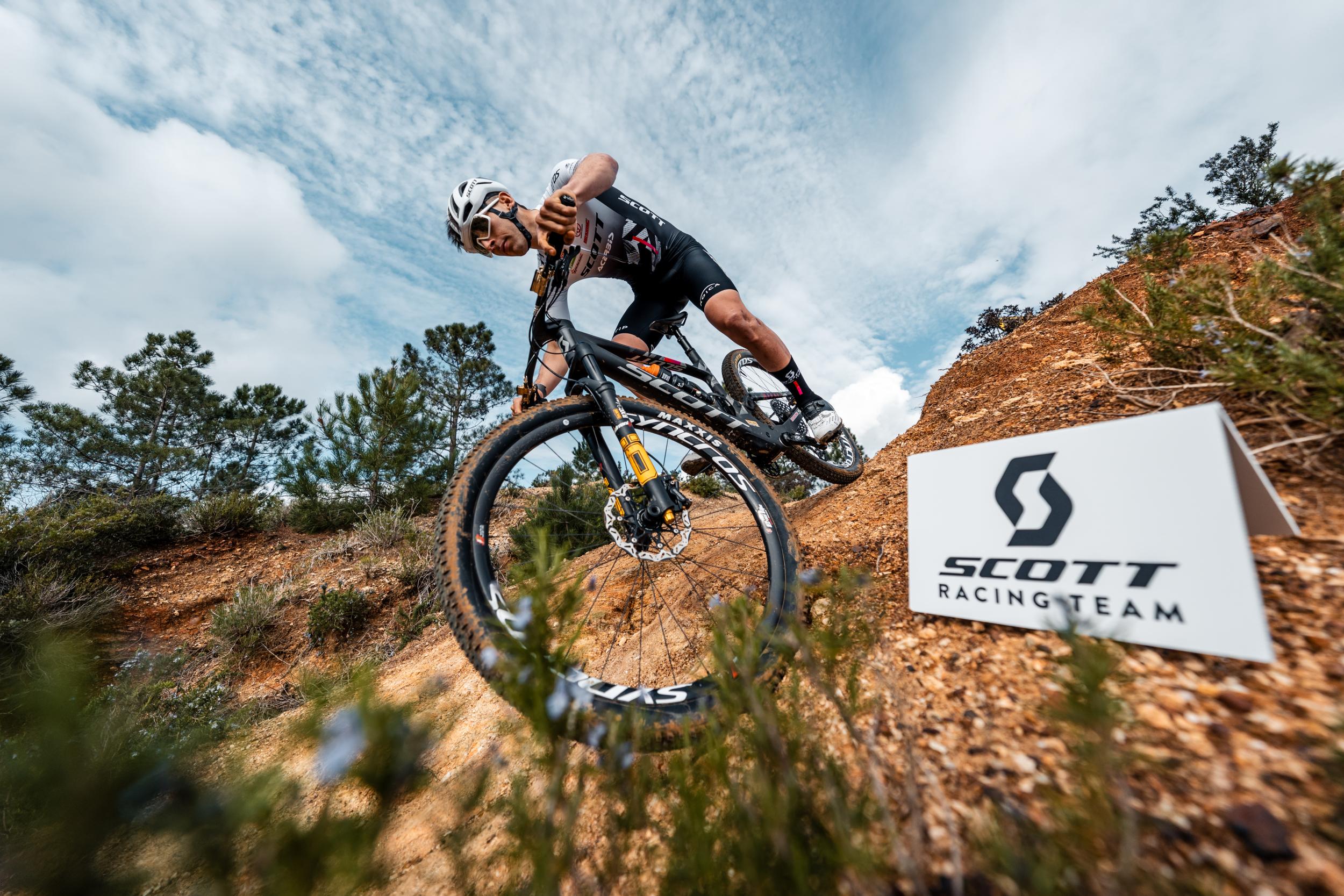
eVent partners with apparel manufacturer ITTTAI, an Italian company specializing in premium manufacturing and technical fabrics, dedicated to providing maximum comfort to athletes. ITTTAI provides European-based clients with a variety of services and materials, including eVent’s stormburstLT laminate, to create high-performance, ultra-modern apparel such as Alé’s new FAN and TRACCIA jackets.

“Our stormburstLT laminate is ideal for high intensity activities and our partnership with Alé will give cyclists an incredible option for high performance weather protection,” said Chad Kelly, President of eVent Fabrics. “stormburstLT is a perfect laminate for cycling apparel, providing the right blend of breathability, dynamic movement, and weather protection to keep cyclists comfortable and performing at their best in challenging weather conditions.”

Alé’s FAN jacket for men and women offers warmth, breathability, and water repellency. With a temperature range of -3 to 6℃ and designed using Alé’s Body Mapping system, this light, high performance jacket is engineered to actively protect cyclists from the elements. Ideal for winter use, eVent’s 3-layer laminate fabric is combined with a highly breathable, quick-drying fleece liner, featuring a three-dimensional hexagonal structure. A DWR (Durable Water Repellent) treatment across the entire surface provides protection against light rain.

Alé’s TRACCIA jacket for men is a slimmed down version of the FAN jacket, made for warmer weather and more intense rides. The TRACCIA’s lighter weight fabrics and specialized body mapping to create a high-performance top that better dissipates excess heat, making it ideal for fall and spring riding when temperatures are between 0 and 12℃.

With sleek styling and a unique color palette, the sophistication of these jackets is matched by a range of technical features, including raw-cut cuffs with an aerodynamic profile that seal in warmth and fit comfortably under gloves, a rear hem designed for better grip and to keep the jacket in place, and reflective branding for increased visibility.

(c) Teijin Carbon Europe GmbH
05.09.2025

NCAMP Qualification for Teijin

Teijin Carbon announced the NCAMP (National Center for Advanced Materials Performance) qualification of its Tenax™ IMS65 E23 24K non-crimp fabrics (NCF) and woven unidirectional (UD) materials, in conjunction with the Syensqo PRISM® EP2400 epoxy resin system. This milestone marks the first NCAMP qualification of dry carbon reinforcements using vacuum assisted resin transfer molding (VARTM) as a standalone and process-separable infusion route.

The Teijin Carbon materials are formally qualified under material specification NMS 241 and process specification NPS 82401 and are accompanied by a publicly available NCAMP material property data report. The NCAMP program is sponsored by the U.S. Federal Aviation Administration.

The NCAMP database supports proof of equivalence across various types of infusion equipment and techniques, opening the door for broader aerospace adoption of out-of-autoclave (OoA) composite manufacturing.

Teijin Carbon announced the NCAMP (National Center for Advanced Materials Performance) qualification of its Tenax™ IMS65 E23 24K non-crimp fabrics (NCF) and woven unidirectional (UD) materials, in conjunction with the Syensqo PRISM® EP2400 epoxy resin system. This milestone marks the first NCAMP qualification of dry carbon reinforcements using vacuum assisted resin transfer molding (VARTM) as a standalone and process-separable infusion route.

The Teijin Carbon materials are formally qualified under material specification NMS 241 and process specification NPS 82401 and are accompanied by a publicly available NCAMP material property data report. The NCAMP program is sponsored by the U.S. Federal Aviation Administration.

The NCAMP database supports proof of equivalence across various types of infusion equipment and techniques, opening the door for broader aerospace adoption of out-of-autoclave (OoA) composite manufacturing.

Partnership with Mississippi State University Enhances Implementation
To support practical implementation of the qualified system and part development, Teijin Carbon and Syensqo have partnered with Mississippi State University’s Advanced Composites Institute (MSU-ACI) in Starkville. With its advanced VARTM capabilities and scalable tooling strategies, MSU-ACI plays a key role in validating process robustness and material consistency. The institute helps give manufacturers confidence that they can achieve aerospace-grade quality with accessible, cost-effective production methods.

This collaboration reflects Teijin Carbons’s commitment to facilitating the adoption of infusion technologies by reducing learning curves and enabling faster design-to-certification pathways through NCAMP-qualified data.

Material Benefits for Structural Aerospace Applications
The newly qualified Tenax™ non-crimp facric based on IMS65 E23 24K combined with the Syensqo PRISM® EP2400 epoxy resin system deliver:

  • Out-of-autoclave processing with autoclave-comparable mechanical performance
  • High fiber volume with near-zero void content
  • Long out-life dry preforms — ideal for large, complex components
  • Global availability of all components by sea, land, or air
  • Accelerated FAA certification with publicly available B-basis allowables

This qualification offers aerospace OEMs and tier suppliers a scalable and robust alternative to traditional prepreg processing. It is suitable for small to extra-large primary or secondary structures as well as integrated parts such as control surfaces, access panels, fairings, in commercial and defense platforms. This processing method can contribute to efficient and resource-conscious manufacturing aligned with the aerospace industry's sustainability goals.

Teijin Carbon and Syensqo will continue to collaborate under the partnership with Mississippi State University to provide the world with advanced composite material solutions that can shape a more efficient, resilient, and sustainable future for aerospace.

Source:

Teijin Carbon Europe GmbH

05.09.2025

Indorama Ventures: Ready for low-carbon PET fibers - certified supply chain enables bio-based textiles at scale

Indorama Ventures Public Company Limited, a global sustainable chemical company, is accelerating the textile industry’s transition to lower-carbon materials with its scalable, high-performance bio-based PET fibers and yarns under the deja™ Bio portfolio. 

At the upcoming Dornbirn Global Fiber Congress later in September, Claire Mattelet, Global Sustainability Program Head for Indorama Ventures’ Fibers Business, will share the company’s experience in developing a fully certified, low-carbon supply chain at scale. 

Her presentation will explore several challenges, such as 

  • securing reliable sources of renewable feedstocks to produce bio-based PTA and MEG inhouse or sourcing bio-based chemicals such as bio-based MEG from trusted partners 
  • converting feedstock into PET chips, yarns, and fibers 
  • and navigating complex certification requirements 

As a result, Indorama Ventures is now able to offer customers and brand owners an integrated, fully certified supply chain through mass balance at scale. 

Indorama Ventures Public Company Limited, a global sustainable chemical company, is accelerating the textile industry’s transition to lower-carbon materials with its scalable, high-performance bio-based PET fibers and yarns under the deja™ Bio portfolio. 

At the upcoming Dornbirn Global Fiber Congress later in September, Claire Mattelet, Global Sustainability Program Head for Indorama Ventures’ Fibers Business, will share the company’s experience in developing a fully certified, low-carbon supply chain at scale. 

Her presentation will explore several challenges, such as 

  • securing reliable sources of renewable feedstocks to produce bio-based PTA and MEG inhouse or sourcing bio-based chemicals such as bio-based MEG from trusted partners 
  • converting feedstock into PET chips, yarns, and fibers 
  • and navigating complex certification requirements 

As a result, Indorama Ventures is now able to offer customers and brand owners an integrated, fully certified supply chain through mass balance at scale. 

Using a mass-balance approach means that renewable feedstocks, such as used cooking oil, are blended with fossil-based raw materials in existing production systems. 
The renewable content is then allocated to final products using certified methods like ISCC+, ensuring traceability throughout the value chain and compliance with chain-of-custody requirements. 

By leveraging existing infrastructure, coupled with R&D capabilities and proven technologies, Indorama Ventures enables rapid market deployment of bio-based PET fibers and yarns 
that are chemically identical to their fossil counterparts. This ensures customer processes remain the same, performance metrics such as durability, dyeability, and strength are equal to virgin solutions, 
and brand owners and converters can speed up qualification lead times and immediately reduce scope 3 emissions to seamlessly upgrade their existing product lines. 

Indorama Ventures invites brand owners, manufacturers, and industry partners to explore the deja™ Bio portfolio and join the movement toward a lower-carbon textile industry. 
The technology is proven, the supply chain is built. 

Source:

Indorama Ventures

Eastman Naia™: New cellulose acetate filament yarn Photo Eastman Naia™
Eastman Naia™: New cellulose acetate filament yarn
04.09.2025

Eastman Naia™: New cellulose acetate filament yarn at Intertextile Shanghai 2025

A result of Eastman’s recently announced strategic partnership with Huafon Chemical, the new filament yarn features even higher tenacity, making it the perfect solution for premium lightweight fabrics. 

On August 13, Eastman and Huafon Chemical jointly announced a formal strategic partnership to establish a joint facility to produce cellulose acetate yarn. The facility will be dedicated to localized production and product innovation of Eastman Naia™ cellulose acetate filament yarns in China. This collaboration demonstrates Eastman’s long-term commitment to the Chinese market and further deepens its market presence in China by enabling a more agile supply chain response to meet the market demand for high-quality, innovative, and sustainable textile materials in the region.

With the vision to make sustainable textiles accessible to all, the Eastman Naia™ portfolio offers responsibly sourced, biobased cellulosic fibers and yarns. These eco-friendly options empower mills, designers, and brands to create textiles that do not compromise on comfort, quality, or appearance. 

A result of Eastman’s recently announced strategic partnership with Huafon Chemical, the new filament yarn features even higher tenacity, making it the perfect solution for premium lightweight fabrics. 

On August 13, Eastman and Huafon Chemical jointly announced a formal strategic partnership to establish a joint facility to produce cellulose acetate yarn. The facility will be dedicated to localized production and product innovation of Eastman Naia™ cellulose acetate filament yarns in China. This collaboration demonstrates Eastman’s long-term commitment to the Chinese market and further deepens its market presence in China by enabling a more agile supply chain response to meet the market demand for high-quality, innovative, and sustainable textile materials in the region.

With the vision to make sustainable textiles accessible to all, the Eastman Naia™ portfolio offers responsibly sourced, biobased cellulosic fibers and yarns. These eco-friendly options empower mills, designers, and brands to create textiles that do not compromise on comfort, quality, or appearance. 

Naia™ acetate filament yarn is widely recognized and used by both high-end luxury and high-street fashion brands in China and around the world. It is favored for ready-to-wear fashion and linings because of its luxurious silky hand feel, beautiful drape, and rich luster. Beyond aesthetics, Naia™ delivers superior comfort, durability, and ease of care. 

Eastman has developed a robust network of mills and fabric trading partners in China, collaboratively driving innovation to develop some of the most advanced acetate-based fabrics in the global textile market today.

Combing preparation – OMEGAlap E 40 Photo (c) Rieter
Combing preparation – OMEGAlap E 40
04.09.2025

Rieter: On the way to fully automated spinning mill

Rieter at ITMA Asia 2025: The Fully Automated Spinning MillPrecision, speed and cost efficiency are all indispensable, especially in challenging times. Rieter has put together a powerful portfolio for ITMA ASIA + CITME 2025 that gives spinning mills the chance to actively shape the future through intelligent automation. By applying smart machine networking, process optimization and increased production efficiency, the portfolio facilitates the comprehensive transformation of spinning mills while reinforcing their competitiveness. This, in turn, enables customers to further consolidate their leading market positions. At the same time, the portfolio is a key milestone on the way to achieving Rieter’s vision 2027 – the fully automated spinning mill.

Rieter at ITMA Asia 2025: The Fully Automated Spinning MillPrecision, speed and cost efficiency are all indispensable, especially in challenging times. Rieter has put together a powerful portfolio for ITMA ASIA + CITME 2025 that gives spinning mills the chance to actively shape the future through intelligent automation. By applying smart machine networking, process optimization and increased production efficiency, the portfolio facilitates the comprehensive transformation of spinning mills while reinforcing their competitiveness. This, in turn, enables customers to further consolidate their leading market positions. At the same time, the portfolio is a key milestone on the way to achieving Rieter’s vision 2027 – the fully automated spinning mill.

Automation and digitization – the smart gateway to the future 
Rieter will be presenting solutions that enable the step-by-step implementation of the fully automatic spinning mill for the production of ring and compact yarn. Highlights include efficient bale transport, automated can transport and fully automatic packaging solutions, such as steaming, palletizing and labeling. In the field of digitization, Rieter offers various ESSENTIAL modules to meet different requirements. This gives spinning mill employees – from management to machine operators – a solid basis for making decisions on how to optimize yarn production. 

Combing preparation – the OMEGAlap E 40 
The new combing preparation machine OMEGAlap E 40 produces 800 kg/h, 33% more than its predecessor – thanks to the rapid lap changing. At the same time, it boasts 30% lower energy consumption and 63% lower compressed air consumption. Maintenance and cleaning are especially easy, representing a clear advantage for operating personnel. 

The precision winding machine NEO-BD – faster and better 
The new precision winding machine NEO-BD produces packages twice as fast as the previous model – and to a higher quality. Absolute precision is guaranteed: from the optimally adjustable package density and the yarn length that can be defined and reproduced with maximum accuracy to the exact weight of each individual package.

Efficient air-jet spinning of carded cotton 
The air-jet spinning machine J 70 is designed for cost-effective carded fiber spinning – a unique feature made possible thanks to a newly developed twist element: it takes the production speed to a new level and ensures maximum return when it comes to raw material utilization. Spinning mills also benefit from the use of this innovation in other raw material applications. 

The spindle that saves energy – eNASA 
The new Novibra spindle eNASA reduces a spinning machine’s power consumption by 2% to 4% compared to conventional spindles. The high-precision technology is particularly effective at high speeds. The new spindle is compatible with all Novibra clamping crowns. 

Technological expertise in recycled yarn 
Rieter works closely with partners and fiber manufacturers on the topic of recycled yarn. As part of this, different projects and end products will be presented. One new way to significantly increase the recycled content of ring yarn involves the use of sustainable, synthetic cellulosic fibers – described in detail in a new technology publication. 

New Rieter Webshop – the smarter, faster way to source spare parts 
The state-of-the-art platform is a smart solution enabling customers to procure spare parts for spinning and winding machines, upgrades and retrofit solutions. The one-stop shop experience simplifies and optimizes ordering for every spinning mill.

Shri Pachaiamman Spinners (based in Coimbatore): Turns more than 50 percent pre-consumer waste into hosiery yarn (Ne 10 to 30), producing 13 tons per day and using 100 percent recycled materials. (c) Trützschler
Shri Pachaiamman Spinners (based in Coimbatore): Turns more than 50 percent pre-consumer waste into hosiery yarn (Ne 10 to 30), producing 13 tons per day and using 100 percent recycled materials.
04.09.2025

Trützschler: State-of-the-art TRUECYCLED installations in India

Demand for recycled yarn is growing. And the number of TRUECYCLED installations in India is growing too! More and more future-facing companies are driving progress toward a more sustainable textiles industry by producing high-quality yarn from waste through specialized equipment and process know-how from Trützschler. The TRUECYCLED installations in India join a growing group of companies around the globe. This includes Trützschler customers in Türkiye as well as across Europe. 

Demand for recycled yarn is growing. And the number of TRUECYCLED installations in India is growing too! More and more future-facing companies are driving progress toward a more sustainable textiles industry by producing high-quality yarn from waste through specialized equipment and process know-how from Trützschler. The TRUECYCLED installations in India join a growing group of companies around the globe. This includes Trützschler customers in Türkiye as well as across Europe. 

TRUECYCLED is Trützschler’s complete solution for state-of-the-art recycling of pre-consumer and postconsumer textile waste. It encompasses all process steps – from cutting and tearing textile waste through to carding and drawing secondary fibers. Trützschler’s technological expertise enables partner companies to produce recycled yarns with the best possible quality from hard textile waste. In India, USHA YARN was awarded as the first TRUECYCLED reference customer in 2023. Now ten more reference customers are celebrated. TRUECYCLED is gaining traction in India, where demand for recycled yarn is growing rapidly. 
 
The TRUECYCLED pioneers in India are taking action to promote more sustainable, circular value chains in the textile industry. Their yarns contain a substantial amount of textile hard waste, manufactured in a line of Trützschler machinery configured specifically for recycling. All use the T-BLEND blow room line and Trützschler carding machines. 
 

  • Anangoor Textile Mills (based in Kangayam): Produces 30 tons of blended open-end yarn (Ne 20 to Ne 40) per day, using more than 50 percent raw materials from pre-consumer waste. 
  • Eco spin yarn (based in Derabassi): Specialized in 100 percent cotton and poly-cotton blended yarn. This company produces 18 tons of recycled yarn (Ne 10 to Ne 40) per day. It mainly uses 100 percent pre-consumer waste for cotton and up to 20 percent rPET fibers for poly-cotton blends. 
  • Fabtech International Hosieries (based in Tirupur): Manufactures 8 tons of blended open-end yarn (Ne 20 to Ne 40) per day, using more than 50 percent raw materials from pre-consumer waste. 
  • KS Spinning Mills (based in Panipat): Specializing in cotton and poly-cotton blended yarns with a capacity of 36 tons per day, this company produces a wide range of recycled open-end yarns from Ne 1 to Ne 40. For cotton yarn, the company uses 100 percent raw materials from preconsumer waste. Poly-cotton blended yarns are produced with a blend of up to 20 percent recycled polyester and up to 80 percent pre-consumer waste. 
  • Maatrishakti Cotspin (based in Panipat): An open-end yarn expert, manufacturing 18 tons of cotton and poly-cotton blends per day (Ne 10 to Ne 40), using 70 to 80 percent raw materials from pre-consumer waste. 
  • Oasis Textiles (based in Derabassi): Each day, this producer makes 36 tons of recycled yarn – using more than 70 percent raw material from pre-consumer waste (Ne 10 to Ne 40). 
  • Shreeji Cotfab (based in Neemarana): Produces 18 tons per day of open-end yarn made from cotton and poly-cotton blends (Ne 10 to Ne 30), primarily using more than 70 percent of recycled materials. 
  • Shri Pachaiamman Spinners (based in Coimbatore): Turns more than 50 percent preconsumer waste into hosiery yarn (Ne 10 to 30), producing 13 tons per day and using 100 percent recycled materials. 
  • Sri Velayudhaswamy Spinning Mills (based in Dindigul): This customer produces 14 tons of recycled yarn (Ne 20 to Ne 40) per day from a blend of recycled cotton and polyester, using more than 50 percent pre-consumer waste. 
  • Tirumalai Textiles (based in Coimbatore): Using more than 50 percent of pre-consumer waste, this manufacturer produces 17.5 tons of open-end yarn (Ne 10 to Ne 30) per day for weaving and hosiery applications. 
Source:

Trützschler

Sustainability Report Freudenberg Performance Materials (c) Freudenberg Performance Materials
04.09.2025

Freudenberg Performance Materials publishes publishes its first sustainability report

With the publication of its first sustainability report, Freudenberg Performance Materials has reached a major milestone on its path toward greater environmental responsibility and corporate transparency. Until now, information about the company’s sustainability performance was only included in the sustainability report of its parent company, the Freudenberg Group. The newly released report, however, focuses specifically on the business of technical textiles.

Sustainability at Freudenberg is deeply rooted in the company’s 175-year history. Freudenberg Performance Materials also aligns with the UN Brundtland definition and aims to minimize waste and emissions while reducing the use of energy, materials, and water. By 2045, the goal is to achieve CO₂ neutrality at all sites (Scope 1 and 2).

In 2024, Freudenberg Performance Materials made significant progress: 

With the publication of its first sustainability report, Freudenberg Performance Materials has reached a major milestone on its path toward greater environmental responsibility and corporate transparency. Until now, information about the company’s sustainability performance was only included in the sustainability report of its parent company, the Freudenberg Group. The newly released report, however, focuses specifically on the business of technical textiles.

Sustainability at Freudenberg is deeply rooted in the company’s 175-year history. Freudenberg Performance Materials also aligns with the UN Brundtland definition and aims to minimize waste and emissions while reducing the use of energy, materials, and water. By 2045, the goal is to achieve CO₂ neutrality at all sites (Scope 1 and 2).

In 2024, Freudenberg Performance Materials made significant progress: 

  • CO₂ emissions (Scope 1 & 2) were reduced by another 3% – 29% less than in the base year 2020.
  • Despite higher production levels, energy efficiency improved by 10%.
  • 30% of all purchased electricity came from renewable sources, powering 25 production lines with green energy.
  • The share of green energy in the total energy consumption rose by 26% to 13.5%.
  • The company’s biggest gas-powered asset was replaced with wet-scrubber technology, resulting in a reduction of approximately 4,000 tons of CO₂.

In addition, Freudenberg Performance Materials has defined medium- and long-term sustainability goals that serve as guidelines for short-term planning and decision-making. In preparation for the upcoming EU regulation “Ecodesign for Sustainable Products Regulation” (ESPR), the company has begun implementing software to calculate the Product Carbon Footprint (PCF).

Source:

Freudenberg Performance Materials

Shima Seiki booth (c) Shima Seiki
Shima Seiki booth
04.09.2025

SHIMA SEIKI at ITMA Asia + CITME 2025

Leading flat knitting solutions company SHIMA SEIKI MFG., LTD. of Wakayama, Japan, will be participating in the ITMA Asia + CITME 2025 exhibition in Singapore in October. SHIMA SEIKI continues with its concept of “SHIMA SEIKI Reborn” for this year’s exhibition.

The concept signifies the renewal of our passion and commitment to innovation, manifesting in physical form as the R-generation machines. At ITMA Asia + CITME 2025 visitors to the SHIMA SEIKI booth will be presented with the latest flat knitting solutions, including the long-awaited production version of the SES®-R computerized knitting machine based on the highly acclaimed prototype at ITMA 2023 in Milan.

Leading flat knitting solutions company SHIMA SEIKI MFG., LTD. of Wakayama, Japan, will be participating in the ITMA Asia + CITME 2025 exhibition in Singapore in October. SHIMA SEIKI continues with its concept of “SHIMA SEIKI Reborn” for this year’s exhibition.

The concept signifies the renewal of our passion and commitment to innovation, manifesting in physical form as the R-generation machines. At ITMA Asia + CITME 2025 visitors to the SHIMA SEIKI booth will be presented with the latest flat knitting solutions, including the long-awaited production version of the SES®-R computerized knitting machine based on the highly acclaimed prototype at ITMA 2023 in Milan.

SES®-R pays homage to the legendary SES® series that revolutionized the industry through modern shaped knitting. A new sinker system expands its product range even further with unprecedented 3D shaping capability. Combined with loop pressers and auto yarn carriers, it can freely manipulate intarsia, i-Plating® inverse plating and inlay knitting for efficient knitting of diverse patterns that support various industries besides apparel, such as sports, interior, and industrial materials. SES®-R will be shown in 14 gauge at ITMA Asia.

As WHOLEGARMENT® knitting technology—first introduced at ITMA 1995 in Milan—celebrates its 30th Anniversary, the latest SWG-XR® WHOLEGARMENT® knitting machine will be shown as the spiritual successor and ‘Reborn’ version of the original SWG®-X machine. Featuring 4 needle beds and SHIMA SEIKI’s original SlideNeedle™, SWG-XR® is capable of producing high-quality fine gauge WHOLEGARMENT® products in all needles, with 25 percent higher productivity and wider range of patterning compared with the previous-generation MACH2®XS flagship. In Singapore, SWG-XR® will be shown in 18L featuring 15-gauge needles mounted at 18-gauge pitch.

In addition to machine technology, presentations will be made for SHIMA SEIKI's APEXFiz® subscriptionbased design software. Various web services as part of the SHIMA SEIKI Online Services web platform will also be presented as comprehensive digital solutions that enhance the APEXFiz® user experience by streamlining and promoting sustainable production. Also on display will be new SDS® KnitPaint-Online knit programming software that makes available proven KnitPaint software used by knitting companies across the globe as standalone software.

With comprehensive proposals to meet current and future needs of the industry, SHIMA SEIKI technology at ITMA Asia + CITME 2025 will demonstrate smart, speedy and sustainable production that further secures its leading role as flat knitting solutions provider.

03.09.2025

Autoneum develops specialized components for battery-powered mobility

The automotive industry is facing a profound transformation that goes far beyond electrification. Key future trends include software-defined vehicles, autonomous driving, connected mobility and the ongoing decarbonization of supply chains.

Autoneum is responding to these developments with a clear focus on innovation and sustainability. The company's products are not only suitable for all types of drive systems, but also for the requirements of software-based vehicle architecture. With NVH solutions for quiet interiors, thermal shielding for battery modules, and fully recyclable materials, Autoneum is helping to make the mobility of tomorrow safer, more comfortable and more resource efficient and is now also developing specialized components for battery-powered mobility – with a focus on occupant protection and battery safety.

The automotive industry is facing a profound transformation that goes far beyond electrification. Key future trends include software-defined vehicles, autonomous driving, connected mobility and the ongoing decarbonization of supply chains.

Autoneum is responding to these developments with a clear focus on innovation and sustainability. The company's products are not only suitable for all types of drive systems, but also for the requirements of software-based vehicle architecture. With NVH solutions for quiet interiors, thermal shielding for battery modules, and fully recyclable materials, Autoneum is helping to make the mobility of tomorrow safer, more comfortable and more resource efficient and is now also developing specialized components for battery-powered mobility – with a focus on occupant protection and battery safety.

Sustainability – circular economy in action
Sustainability is a key focus. Autoneum processes over 30,000 tons of recycled PET annually – equivalent to around three billion 0.25-liter bottles. Products such as Flexi-Light PET, Di-Light, and the fully recyclable N-Join1 carpet consist of over 90% recycled material and thus make a measurable contribution to decarbonization and resource conservation.

Flexi-Light PET, a particularly malleable and durable polyester-based acoustic material, provides effective sound insulation in the vehicle interior and is fully recyclable. Thanks to its thermal formability and structural properties, Di-Light not only offers good noise insulation for vehicle carpets, but also a high degree of design freedom – ideal for large-area applications. With N-Join1, Autoneum has also developed a mono-material system that does not require any latex or adhesives. It is made entirely from recycled materials and can be easily recycled at the end of its product life cycle.

"Sustainability is an integral part of our strategy," says Eelco Spoelder, CEO of Autoneum Management AG. "With innovative materials and resource-saving processes, we are actively contributing to the transformation of the automotive industry – and demonstrating that economic success and ecological responsibility go hand in hand." 

New mobility needs new materials
According to forecasts, global sales of electric vehicles will rise to around 20 million units in 2025 – an increase of 35 percent over the previous year. The industry’s transition is also reflected in Autoneum's product strategy. By 2024, more than 115 electric models worldwide were equipped with Autoneum components – and this figure is expected to rise to almost 150 in 2025. Sixty percent of all new orders last year were for purely electric vehicles; a significant increase compared to 35 percent in 2023. 

The company develops highly specialized components for the next generation of vehicles – especially for electric vehicles with new battery architectures. With components such as the Impact Protection Plate, the mica-free E-Fiber Shield, and the acoustically efficient Ultra-Silent, Autoneum demonstrates how safety, lightweight construction and sustainability can be combined in forward-looking materials that meet the requirements of modern electric vehicles. 

The Impact Protection Plate is a newly developed protective plate made of composite materials that combines mechanical strength with thermal insulation. It protects battery systems from impact and contributes to the safety and efficiency of electric vehicles. The E-Fiber Shield is a mica-free flame-retardant material that increases the safety of vehicle occupants in the event of thermal runaway of the battery. It offers high heat resistance (up to 1400°C), electrical insulation, and geometric flexibility. And Ultra-Silent is a robust, lightweight material for frunks and underbodies that consists of up to 70 percent recycled fibers. It combines high acoustic performance with sustainability. 

Local production for global resilience
In an increasingly challenging market environment, Autoneum relies on proximity to customers as a strategic success factor. With its "local-for-local" strategy, the company manufactures at around 70 locations worldwide, right where the vehicles are produced – efficiently, sustainably and independently of global supply chains. "Our local production strategy makes us resilient – even in an environment characterized by trade barriers," emphasizes Spoelder. "Manufacturing directly in the market significantly minimizes cross-border risk and strengthens our operational stability."

Source:

Autoneum Management AG

DyStar Reception Library (c) DyStar
DyStar Reception Library
01.09.2025

DyStar reorganizes Global Sales Structure

DyStar, a leading specialty chemical company with a heritage of more than a century in product development and innovation, announced a strategic reorganization of its global sales structure. This is aimed at driving accelerated growth, deepening customer engagement, and capturing emerging market opportunities in a highly dynamic, innovation-driven landscape. 

This transformation reflects the company’s commitment to agility, fosters customer-centricity, and drives long-term value for both customers and stakeholders. The new structure is designed to empower regional teams, streamline operations, and strengthen alignment with evolving market demands. 

DyStar, a leading specialty chemical company with a heritage of more than a century in product development and innovation, announced a strategic reorganization of its global sales structure. This is aimed at driving accelerated growth, deepening customer engagement, and capturing emerging market opportunities in a highly dynamic, innovation-driven landscape. 

This transformation reflects the company’s commitment to agility, fosters customer-centricity, and drives long-term value for both customers and stakeholders. The new structure is designed to empower regional teams, streamline operations, and strengthen alignment with evolving market demands. 

Mr. Xu Yalin, Managing Director and President of DyStar Group stated, “DyStar is entering a pivotal phase of growth, driven by the need to evolve with our customers and lead in a rapidly shifting global landscape. This strategic decision injects revitalized energy into our innovation efforts, guided by a new cohort of sales-focused leadership. By sharpening our engagement across three key geographies and industries, we aim to deliver deeper collaboration, faster responsiveness, and long-term value creation for brands, retailers, and partners.” 

Yalin Xu will be responsible for North Asia, Klaus Kadletz for SE Asia, South Asia and TAME, Eric Hopmann will take care about Americas and Europe.

More information:
DyStar sales
Source:

DyStar