From the Sector

from to
Reset
3533 results
14.03.2025

Lenzing Group continued recovery course in 2024

The Lenzing Group, a provider of regenerated cellulose fibers for the textile and nonwoven industries, continued to improve its business performance in 2024 despite the expected slow market recovery. While Lenzing was able to significantly increase its sales volumes, the price level remained below that of the previous year. Logistics costs have risen significantly, and raw material and energy costs also remained high.

Revenue grew by 5.7 percent year-on-year to EUR 2.66 bn in 2024, mainly reflecting a higher level of revenue generated from fibers (+10 percent). The positive effects of the holistic performance program were the main factor driving the operating earnings trend. Earnings before interest, tax, depreciation and amortization (EBITDA) rose by 30.4 percent year-on-year to EUR 395.4 mn in 2024. The EBITDA margin increased from 12.0 percent to 14.8 percent. The operating result (EBIT) amounted to EUR 88.5 mn (compared with minus EUR 476.4 mn in 2023) and the EBIT margin stood at 3.3 percent (compared with minus 18.9 percent in 2023). The result before tax (EBT) amounted to minus EUR 42.0 mn (compared with minus EUR 585.6 mn in 2023).

The Lenzing Group, a provider of regenerated cellulose fibers for the textile and nonwoven industries, continued to improve its business performance in 2024 despite the expected slow market recovery. While Lenzing was able to significantly increase its sales volumes, the price level remained below that of the previous year. Logistics costs have risen significantly, and raw material and energy costs also remained high.

Revenue grew by 5.7 percent year-on-year to EUR 2.66 bn in 2024, mainly reflecting a higher level of revenue generated from fibers (+10 percent). The positive effects of the holistic performance program were the main factor driving the operating earnings trend. Earnings before interest, tax, depreciation and amortization (EBITDA) rose by 30.4 percent year-on-year to EUR 395.4 mn in 2024. The EBITDA margin increased from 12.0 percent to 14.8 percent. The operating result (EBIT) amounted to EUR 88.5 mn (compared with minus EUR 476.4 mn in 2023) and the EBIT margin stood at 3.3 percent (compared with minus 18.9 percent in 2023). The result before tax (EBT) amounted to minus EUR 42.0 mn (compared with minus EUR 585.6 mn in 2023).

Outlook
The IMF recently slightly upgraded its growth forecast for 2025 to 3.3 percent, but emphasizes the continued high extent of variation between regions as well as the high level of uncertainty. The latter is mainly due to geopolitical tensions, increasing protectionist tendencies, and a potential return of inflation.

In times of uncertainty, consumers are remaining cautious and thrifty, which is exerting a negative impact on consumer sentiment and on their propensity to spend.

The currency environment is expected to remain volatile in the regions relevant to Lenzing.

In the trend-setting market for cotton, analysts anticipate a slight increase of stock levels to around 18.7 mn tonnes in the current 2024/2025 harvest season, following a reduction of 0.9 mn tonnes in the previous season, according to preliminary estimates.
Earnings visibility remains limited overall.

Lenzing is still ahead of schedule with the implementation of the performance program. The company expects that the measures will also contribute to further earnings improvement in the coming quarters.

Taking the aforementioned factors into consideration, the Lenzing Group expects EBITDA to be higher in 2025 than in the previous year.
In structural terms, Lenzing continues to expect growth in demand for environmentally responsible fibers for the textile and apparel industry, as well as for the hygiene and medical sectors. As a consequence, Lenzing is very well positioned with its strategy and is driving ahead with not only profitable growth in specialty fibers but also the further expansion of its market leadership in the sustainability area.

More information:
Lenzing AG financial year 2024
Source:

Lenzing AG

Building insulation panels made by Buitex from post-consumer waste Photo (c) ANDRITZ
Building insulation panels made by Buitex from post-consumer waste
14.03.2025

Sustainable insulation: ANDRITZ enhances recycling capabilities at Buitex

International technology group ANDRITZ has supplied and commissioned a reXline tearing system for Buitex, Semin Group, located in Cours, France. The new production line enables the company to expand textile waste recycling for sustainable insulation production.

Founded in 1895, Buitex is a French manufacturer of high-performance recycled products. As a pioneer in circular economy practices, Buitex transforms textile waste into high-performance insulation and comfort products. Since joining the Semin Group in 2023, the company has operated a 20,000 m² production site equipped with six production lines and has become one of Europe’s major players in the circular economy.

This second ANDRITZ tearing line at Buitex increases the company’s recycling capacity while maintaining high fiber purity, thanks to an advanced hard-point removal system. The latest-generation cyclone technology further improves disruptor sorting, enhancing overall efficiency. The system can process up to an additional 2.5 tons of fiber per hour, enabling the production of recycled fibers for applications such as bedding, construction, and automotive insulation.

International technology group ANDRITZ has supplied and commissioned a reXline tearing system for Buitex, Semin Group, located in Cours, France. The new production line enables the company to expand textile waste recycling for sustainable insulation production.

Founded in 1895, Buitex is a French manufacturer of high-performance recycled products. As a pioneer in circular economy practices, Buitex transforms textile waste into high-performance insulation and comfort products. Since joining the Semin Group in 2023, the company has operated a 20,000 m² production site equipped with six production lines and has become one of Europe’s major players in the circular economy.

This second ANDRITZ tearing line at Buitex increases the company’s recycling capacity while maintaining high fiber purity, thanks to an advanced hard-point removal system. The latest-generation cyclone technology further improves disruptor sorting, enhancing overall efficiency. The system can process up to an additional 2.5 tons of fiber per hour, enabling the production of recycled fibers for applications such as bedding, construction, and automotive insulation.

"It is crucial for us to make the building insulation industry more sustainable by giving new life to post-consumer clothes that would otherwise be incinerated or end up in landfills. The European market has abundant raw materials and a strong demand for sustainable insulation products. With this new line, ANDRITZ enables us to significantly enhance our recycling capabilities,” says Adam Adamowicz, CEO of Buitex.

VACUREMA Basic (c) EREMA
VACUREMA Basic
13.03.2025

EREMA: Growing demand for large-scale PET recycling systems

Demand for high performance solutions for bottle-to-bottle recycling is increasing worldwide. In view of this trend, the specifications for PET recycling machines to handle higher capacities are also growing. With VACUREMA® technology, EREMA offers a system that enables throughputs of up to six tonnes per hour.

"While the bottle-to-bottle market initially tended towards 3-tonne machines, over the past three years we have been seeing increasing demand for PET recycling solutions with throughputs in excess of three tonnes per hour," says Christoph Wöss, Business Development Manager for the Bottle segment at EREMA. In total, a dozen VACUREMA® machines with throughput capacities of four to six tonnes have been installed and commissioned worldwide since 2020. "Together, these large recycling machines produce almost 350,000 tonnes of rPET per year, which is a clear sign that this order of magnitude is now commonplace in the industry," adds Christoph Wöss.

Demand for high performance solutions for bottle-to-bottle recycling is increasing worldwide. In view of this trend, the specifications for PET recycling machines to handle higher capacities are also growing. With VACUREMA® technology, EREMA offers a system that enables throughputs of up to six tonnes per hour.

"While the bottle-to-bottle market initially tended towards 3-tonne machines, over the past three years we have been seeing increasing demand for PET recycling solutions with throughputs in excess of three tonnes per hour," says Christoph Wöss, Business Development Manager for the Bottle segment at EREMA. In total, a dozen VACUREMA® machines with throughput capacities of four to six tonnes have been installed and commissioned worldwide since 2020. "Together, these large recycling machines produce almost 350,000 tonnes of rPET per year, which is a clear sign that this order of magnitude is now commonplace in the industry," adds Christoph Wöss.

With VACUREMA® technology, EREMA offers a proven system for throughputs between 600 and 6000 kilograms per hour. This technology achieves impressively efficient decontamination and gentle IV treatment and fulfils the strict requirements of the European and North American food safety authorities. Even the basic version produces food-grade rPET, providing the basis for a wide range of end applications. Whether the pellets are then used with SSP for IV adjustment for bottle-to-bottle or high IV applications, an additional upstream vacuum treatment enables direct connection to preform production, or the material is processed inline into sheets or fibres, the VACUREMA® is a versatile all-rounder with food-grade certification.

Advanced VACUNITE® technology for the highest rPET quality
Applications with especially high material quality requirements are covered by advanced VACUNITE® technology. It combines the proven VACUREMA® system with integrated vacuum-assisted SSP in a nitrogen atmosphere. This combination further optimises the material properties and significantly reduces the yellowing of the pellets, which is an important quality factor in bottle-to-bottle recycling. What is more, the closed nitrogen cycle and optimised process control ensure even lower nitrogen consumption, and ultimately, a particularly efficient and environmentally friendly process. VACUNITE® technology is available on machines for throughputs of up to 2500 kilograms per hour that feature particularly low energy consumption and a compact design.

Source:

EREMA Group

13.03.2025

Rieter: Order intake increased 2024 by 34 %

Order intake was significantly higher than in the previous year at CHF 725.5 million (2023: CHF 541.8 million), representing an increase of 34%. This was the fourth consecutive quarter of year-on-year growth. An initial market recovery was visible compared with the previous year. As expected, the Rieter Group closed financial year 2024 with lower sales of CHF 859.1 million (2023: CHF 1 418.6 million) and thus remained 39% below the prior year. Despite significantly lower sales, an operating result (EBIT) of CHF 28.0 million (2023: CHF 104.8 million) and thus a solid EBIT margin of 3.3% (2023: 7.4%) was achieved.

Sales by division
The Machines & Systems Division posted sales of CHF 424.9 million, a decrease of 56% compared with the previous year (2023: CHF 965.0 million). In the Components Division, sales declined to CHF 247.6 million, down 7% from the same period of the previous year (2023: CHF 266.2 million). The After Sales Division reported sales of CHF 186.6 million, comparable to the previous year (2023: CHF 187.4 million).

Order intake was significantly higher than in the previous year at CHF 725.5 million (2023: CHF 541.8 million), representing an increase of 34%. This was the fourth consecutive quarter of year-on-year growth. An initial market recovery was visible compared with the previous year. As expected, the Rieter Group closed financial year 2024 with lower sales of CHF 859.1 million (2023: CHF 1 418.6 million) and thus remained 39% below the prior year. Despite significantly lower sales, an operating result (EBIT) of CHF 28.0 million (2023: CHF 104.8 million) and thus a solid EBIT margin of 3.3% (2023: 7.4%) was achieved.

Sales by division
The Machines & Systems Division posted sales of CHF 424.9 million, a decrease of 56% compared with the previous year (2023: CHF 965.0 million). In the Components Division, sales declined to CHF 247.6 million, down 7% from the same period of the previous year (2023: CHF 266.2 million). The After Sales Division reported sales of CHF 186.6 million, comparable to the previous year (2023: CHF 187.4 million).

Order backlog
At the end of 2024, the company had an order backlog of about CHF 530 million (December 31, 2023: CHF 650 million).

EBIT, net profit and free cash flow
Profit at the EBIT level in the year under review was CHF 28.0 million (2023: CHF 104.8 million), which represents an EBIT margin of 3.3% (2023: 7.4%). Despite significantly lower sales, a solid EBIT margin was achieved. This is mainly due to the consistent implementation of the measures set out in the “Next Level” performance program. Rieter closed the 2024 financial year with a net profit of CHF 10.4 million (2023: CHF 74.0 million).

Free cash flow amounted to CHF 14.1 million (2023: CHF 118.7 million). Net debt increased due to new lease liabilities in connection with the Campus in Winterthur to CHF 230.3 million (2023: CHF 191.2 million).

The equity ratio as of December 31, 2024, rose to 33.7%, mainly due to positive currency effects and lower net working capital (previous year’s reporting date 28.8%).

Dividend
The Board of Directors proposes to shareholders the distribution of a dividend of CHF 2.00 per share for 2024 based on the positive free cash flow of CHF 14.1 million and the improved equity ratio of 33.7%. This corresponds to a payout ratio of 85.8%.

Sustainability
Rieter has a clearly defined sustainability strategy that is closely linked to the Group strategy. Through the Science Based Targets initiative, Rieter made a commitment in 2024 to define company-wide emission reduction targets for the year 2040, which are consistent with scientifically-based net-zero goals.In the 2024 Annual Report, the report on non-financial matters shows the progress Rieter has made in the areas of environmental, social and corporate governance.

Outlook 2025
Rieter expects a challenging first half in 2025 with regard to sales volume and a stronger second half-year depending on the further market recovery. As a consequence, Rieter anticipates a sales volume at the previous year’s level for the full year 2025. Despite this exceptionally low sales level, Rieter anticipates a positive EBIT margin between 0% to 4% for the year 2025.

Source:

Rieter AG

From Left to Right: Katherine Corrigan, Investor, Taranis Carbon Ventures; Luke Henning, Chief Business Officer, Circ; David Sorin, Managing Director, Taranis Carbon Ventures; Peter Majeranowski, Chief Executive Officer, Circ. Photo (c) Circ
From Left to Right: Katherine Corrigan, Investor, Taranis Carbon Ventures; Luke Henning, Chief Business Officer, Circ; David Sorin, Managing Director, Taranis Carbon Ventures; Peter Majeranowski, Chief Executive Officer, Circ.
12.03.2025

Circ Closes Oversubscribed $25M Funding Round

Circ, the US-based pioneer in textile-to-textile recycling, has closed its latest investment round led by Taranis through its Carbon Ventures fund, with continued support from existing strategic investors, including Inditex, one of the world’s largest fashion retailers, and Avery Dennison, a global materials science and digital identification solutions company. This latest funding builds on Circ’s major technical and commercial progress over the past 18 months and helps fuel the company’s push to scale its revolutionary recycling technology, advancing its mission to transform the fashion industry’s waste problem into a circular solution.

Circ is uniquely positioned to transform the industry as the only company with the demonstrated ability to recycle polycotton blends and recover both fractions for textiles, having successful public collaborations with Zara, Mara Hoffman, United Arrows, Chrisitan Siriano, and more.

Circ, the US-based pioneer in textile-to-textile recycling, has closed its latest investment round led by Taranis through its Carbon Ventures fund, with continued support from existing strategic investors, including Inditex, one of the world’s largest fashion retailers, and Avery Dennison, a global materials science and digital identification solutions company. This latest funding builds on Circ’s major technical and commercial progress over the past 18 months and helps fuel the company’s push to scale its revolutionary recycling technology, advancing its mission to transform the fashion industry’s waste problem into a circular solution.

Circ is uniquely positioned to transform the industry as the only company with the demonstrated ability to recycle polycotton blends and recover both fractions for textiles, having successful public collaborations with Zara, Mara Hoffman, United Arrows, Chrisitan Siriano, and more.

As Circ moves toward launching its first industrial-scale blended textile recycling plant, this partnership brings more than capital—Taranis, owned by the Perenco Group, will contribute deep expertise in developing and operating large industrial projects. Taranis’s experience engineering complex, high-volume processes will be invaluable in commercializing Circ’s technology globally.

Taranis, an investment and asset management company dedicated to sustainable industrial solutions, sees Circ’s model as a key step in reducing the environmental impact of global supply chains. Beyond financial investment, Taranis is providing direct technical validation of Circ’s processes to accelerate the transition from demonstration-scale to industrial-scale production.

“Circ has developed and demonstrated a breakthrough solution for circularity in fashion, and we believe our industrial expertise can help take it to the next level,” said Emmanuel Colombel, CEO of Taranis. “Our goal is to support scalable, pragmatic technologies that reduce waste and emissions. Circ’s vision aligns perfectly with that mission, and we’re excited to support Circ in its journey toward a more circular and responsible fashion industry.”

Source:

Circ

needle-punched fabrics Photo (c) Beaulieu International Group
12.03.2025

Beaulieu Fibres International at IDEA25: High in performance and sustainability

Beaulieu Fibres International is exhibiting its next-generation sustainable fibre solutions for high performance nonwovens in various industries at IDEA25 in Miami Beach end of April.

“IDEA25 is at the intersection of nonwoven materials and sustainability, with a focus on innovation and research to address environmental challenges and new opportunities. With our Sustainable Fibres Program, we offer low carbon, recyclable and circular solutions where performance and sustainability go hand in hand, bringing value in co-design and TCO performance,” said Maria Teresa Tomaselli, General Manager, Beaulieu Fibres International.

Self-reinforced PP fibres for fully recyclable automotive composites
The company will be presenting its comprehensive range of polypropylene (PP) bonding fibres designed for thermoplastic lightweight composites and automotive interior fabrics. These fibres assist car manufacturers and OEMs in meeting stringent performance, cost-efficiency, and sustainability standards. Beaulieu’s PP fibres are engineered to enhance the mechanical, thermal, and functional properties of composites while reducing vehicle weight.

Beaulieu Fibres International is exhibiting its next-generation sustainable fibre solutions for high performance nonwovens in various industries at IDEA25 in Miami Beach end of April.

“IDEA25 is at the intersection of nonwoven materials and sustainability, with a focus on innovation and research to address environmental challenges and new opportunities. With our Sustainable Fibres Program, we offer low carbon, recyclable and circular solutions where performance and sustainability go hand in hand, bringing value in co-design and TCO performance,” said Maria Teresa Tomaselli, General Manager, Beaulieu Fibres International.

Self-reinforced PP fibres for fully recyclable automotive composites
The company will be presenting its comprehensive range of polypropylene (PP) bonding fibres designed for thermoplastic lightweight composites and automotive interior fabrics. These fibres assist car manufacturers and OEMs in meeting stringent performance, cost-efficiency, and sustainability standards. Beaulieu’s PP fibres are engineered to enhance the mechanical, thermal, and functional properties of composites while reducing vehicle weight.

Fibres for high performance liquid and air filtration
Beaulieu has set new performance standards for the fast-growing air and liquid filtration industry rolling out its full range of MONO and BICO fine-medium count fibres, as an outcome of its investment into R&D efforts to promote staple fibres in the field of high efficiency filtration.

In addition to its existing portfolio of PP fibres for liquid filtration, compliant with FDA and European food contact regulations, Beaulieu is launching a new bicomponent fibre range in PET/PE, PP/PE for high loft filtration media and fine count mono PP fibres for tribo-electric charged air filter media.

The fine count mono fibres are customized according to the line specifics of the nonwoven producer and guarantee up to 20% higher filtration efficiencies for nonwovens in combination with state-of-the-art acrylic counter fibre compared to standard PP fibres used in this application. Typical applications are air handling units in larger buildings and residential furnaces.

Premium outdoor PP fibres for resilient, weather-resistant crop protection solutions
Engineered for superior mechanical strength and resistance to environmental stress factors, these fibres enhance durability in needle-punched fabrics, ensuring long-lasting protection in the field. Their advanced UV stabilization prevents degradation from prolonged sun exposure, extending the lifespan of crop covers, while their hydrophobic properties repel water, reducing moisture-related damage and maintaining breathability.

Ultrabond, design for recycling
Discover UltraBond innovative bonding staple fibres that replace the need for chemical binders. They open a path to create 100% polypropylene (PP) needlepunched fabrics which meet the same performance requirements as traditional constructions, while reducing end-of-life environmental impact.

The 100% polyolefin-based needlepunched fabrics are fully recyclable, reducing waste generation and creating high value PP recycled products as new materials. Furthermore, the sustainable fabrics are produced with an improved Total Cost of Ownership and with a significant ecological footprint reduction.

Beaulieu strengthening its position in the hygiene market
With a full portfolio already serving the hygiene sector, Beaulieu is focusing on next-generation speciality bicomponent solutions designed to enhance softness, processability, and sustainability in absorbent hygiene products.

Hypersoft fibres are specifically engineered for topsheet applications in direct contact with the skin: 25% improvement in softness compared to standard reference fibres while maintaining optimal processability has been achieved.

Meralux is a bicomponent trilobal fibre that improves nonwoven materials by providing better opacity, comfort, and absorption. It also promotes sustainability by saving raw materials and reducing carbon emissions by up to 60%.

Source:

Beaulieu International Group

12.03.2025

AkzoNobel: Hans-Joachim Müller nominated to Supervisory Board

AkzoNobel has announced the nomination of Dr. Hans-Joachim Müller to the company's Supervisory Board. The appointment will be put to shareholders for approval at the Annual General Meeting on April 25, 2025.
 
Dr. Müller is currently Chair of the Supervisory Board of TIB Chemicals AG and a member of the Supervisory Board of Lanxess AG.
 
At the AGM, three Supervisory Board members will retire having completed their tenures: Patrick Thomas, who first joined in 2017 and was member of the Audit Committee; Dick Sluimers who was first appointed in 2015 and served as Chair of the Remuneration Committee; and Byron Grote, Deputy Chair of the Supervisory Board and Chair of the Audit Committee, who has been a Supervisory Board member since 2014.
 
Added Noteboom: “We'd like to sincerely thank Patrick, Dick and Byron for their outstanding contribution and many years of invaluable service. They all played an important role during a period of great change for the company, helping to shape the way forward. We wish them all the best for the future.”
Commenting on the nomination, Ben Noteboom, Chair of AkzoNobel's Supervisory Board, said:

AkzoNobel has announced the nomination of Dr. Hans-Joachim Müller to the company's Supervisory Board. The appointment will be put to shareholders for approval at the Annual General Meeting on April 25, 2025.
 
Dr. Müller is currently Chair of the Supervisory Board of TIB Chemicals AG and a member of the Supervisory Board of Lanxess AG.
 
At the AGM, three Supervisory Board members will retire having completed their tenures: Patrick Thomas, who first joined in 2017 and was member of the Audit Committee; Dick Sluimers who was first appointed in 2015 and served as Chair of the Remuneration Committee; and Byron Grote, Deputy Chair of the Supervisory Board and Chair of the Audit Committee, who has been a Supervisory Board member since 2014.
 
Added Noteboom: “We'd like to sincerely thank Patrick, Dick and Byron for their outstanding contribution and many years of invaluable service. They all played an important role during a period of great change for the company, helping to shape the way forward. We wish them all the best for the future.”
Commenting on the nomination, Ben Noteboom, Chair of AkzoNobel's Supervisory Board, said:
“With Hans-Joachim joining, we look forward to continuing to create long-term value for all our stakeholders. He brings a wealth of knowledge in science and experience in the chemicals industry. We wish him every success in his new role.”

More information:
AkzoNobel Supervisory Board
Source:

AkzoNobel

11.03.2025

Lenzing AG: Changes to the Supervisory Board - Lackenbucher succeeds Prinzhorn

Ahead of the Annual Geneal Meeting of listed company Lenzing AG to be held on April 17, 2025, the Nomination Committee has revised the future composition of the Supervisory Board. Cord Prinzhorn, the current Supervisory Board Chairman is stepping down from the Supervisory Board with the end of his mandate, to focus on his existing and new engagements within B&C Group going forward.

Patrick Lackenbucher, Managing Director of B&C Group, has been nominated for election as a new member of the Supervisory Board, and is designated to take over the role of Chairman of the Supervisory Board on an interim basis. Mr. Lackenbucher has supported the company throughout various key strategic and financial projects over the past 15 years.

Ahead of the Annual Geneal Meeting of listed company Lenzing AG to be held on April 17, 2025, the Nomination Committee has revised the future composition of the Supervisory Board. Cord Prinzhorn, the current Supervisory Board Chairman is stepping down from the Supervisory Board with the end of his mandate, to focus on his existing and new engagements within B&C Group going forward.

Patrick Lackenbucher, Managing Director of B&C Group, has been nominated for election as a new member of the Supervisory Board, and is designated to take over the role of Chairman of the Supervisory Board on an interim basis. Mr. Lackenbucher has supported the company throughout various key strategic and financial projects over the past 15 years.

Designated Supervisory Board Chairman Patrick Lackenbucher sees the company well positioned for the future: “Both long-term core shareholders, B&C and Suzano, have a strong commitment to the enhancement of Lenzing’s competitiveness as a global market leader in sustainable cellulosic fibers. The company is addressing the continued competitive market environment with a holistic set of measures, that are already yielding positive results and will be pursued further consequently. Profitability is vital for Lenzing to sustain in the face of global competition over the long-term and to further invest in new products and markets. I am looking forward to working together collaboratively with the entire Lenzing Managing Board and Supervisory Board.”

Rohit Aggarwal, CEO of Lenzing AG comments: “Cord Prinzhorn has accompanied Lenzing with great confidence through the difficult environment over the past years and has played a key role in initiating revenue and cost initiatives, which have shown first positive effects in recent quarters leading to revenue, margin and cash flow enhancement for the company. On behalf of the entire Managing Board, I would like to thank him for the excellent collaboration, and I look forward to our future collaboration with the designated Chairman Patrick Lackenbucher, who brings many years of experience and extensive knowledge with Lenzing to the table.”

Besides Patrick Lackenbucher, Leonardo Grimaldi is proposed to be newly elected to the Supervisory Board. Mr. Grimaldi is Executive Vice President and Management Board member of Lenzing’s core shareholder Suzano S/A and will assume the Supervisory Bord mandate from Marcelo Bacci, who has left Suzano. He is an expert in the global pulp market and, among others, also acts as Supervisory Board Chairman at Brazilian port operator Portocel as well as a Supervisory Board member at Veracel Celulose S/A.

Cord Prinzhorn comments: “After four years on the Supervisory Board of Lenzing AG, my current mandate is coming to an end, and I will now concentrate on other existing and new engagements going forward. During my time as Supervisory Board Chairman we have managed to successfully complete important strategic investment projects in Brazil, Thailand and China, to reduce costs as well as financial debt, and at the same time to expand Lenzing’s position in this challenging market environment. I would like to thank not only the members of the Supervisory Board and the Managing Board but also, and above all, the employees of Lenzing, who have made a significant contribution to the success of these strategic projects.”

Cord Prinzhorn will remain Supervisory Board Chairman until the conclusion of the 81st Annual General Meeting on April 17, 2025. The election of Patrick Lackenbucher as Supervisory Board Chairman is planned for the constituting Supervisory Board meeting on the same day directly after the Annual General Meeting.

Source:

Lenzing AG

Best of Bangladesh in Europe Graphic by Bangladesh Apparel Exchange
10.03.2025

2nd edition of “Best of Bangladesh in Europe”

The 2nd edition of Best of Bangladesh in Europe is set to take place on April 17-18, 2025, at Beurs van Berlage in Amsterdam. Organized by Bangladesh Apparel Exchange (BAE) and powered by PDS Limited, the event is held in association with The City Bank PLC, Bangladesh, and KDS Group, with the support of the Ministry of Foreign Affairs (MoFA) and Bangladesh Investment Development Authority (BIDA).

Visitors will have the chance to discover 50 leading companies across 8 industries, each presenting innovative solutions in sustainability, circularity, and transparency. Across the two days, the event will feature a grand opening ceremony, insightful panel discussions, dynamic exhibitions, and inspiring fashion shows, offering a comprehensive glimpse into Bangladesh’s evolving business landscape.

The event will also feature 40+ global speakers and expects to welcome over 1,500 participants, making it a landmark platform for meaningful dialogue, collaboration, and partnership building.

The 2nd edition of Best of Bangladesh in Europe is set to take place on April 17-18, 2025, at Beurs van Berlage in Amsterdam. Organized by Bangladesh Apparel Exchange (BAE) and powered by PDS Limited, the event is held in association with The City Bank PLC, Bangladesh, and KDS Group, with the support of the Ministry of Foreign Affairs (MoFA) and Bangladesh Investment Development Authority (BIDA).

Visitors will have the chance to discover 50 leading companies across 8 industries, each presenting innovative solutions in sustainability, circularity, and transparency. Across the two days, the event will feature a grand opening ceremony, insightful panel discussions, dynamic exhibitions, and inspiring fashion shows, offering a comprehensive glimpse into Bangladesh’s evolving business landscape.

The event will also feature 40+ global speakers and expects to welcome over 1,500 participants, making it a landmark platform for meaningful dialogue, collaboration, and partnership building.

Exhibitors: 4A Yarn Dyeing Ltd, Brain Station 23, BJIT Group, Bondstein Technologies Ltd, City Bank PLC, Bangladesh, Centrotex Ltd, Cyclo, Delmas Apparels Pvt Ltd. Designer Fashion Ltd. Fakir Group, KDS Group, Knit Asia Ltd, Leatherina Pvt Ltd, Mapped In Bangladesh (MiB), Nourish Feeds Limited, Noize Jeans, Paddock's Jeans, Pacific Jeans Ltd, PDS Limited, Pacific Knitex Ltd. Paragon Group, Reverse Resource, Rising Group, Shin Shin Apparels Ltd, Shangu Tex Ltd. Turjo Tex Ltd, Tarango.

More information:
Bangladesh investment
Source:

Bangladesh Apparel Exchange

Nina Marenzi Photo Haelixa
Nina Marenzi
10.03.2025

Haelixa appoints Nina Marenzi to Advisory Board

Haelixa, a pioneer in traceability with DNA markers, appoints Nina Marenzi to its Advisory Board. With her experience leading the Future Fabrics Expo and connecting brands with innovators throughout the textile supply chain, Marenzi will offer strategic guidance to further Haelixa’s mission of building brand trust across the textile industry.

Nina Marenzi established The Sustainable Angle, a non-profit organisation, 2010 to minimise the fashion industry's environmental footprint. In 2011, she established the Future Fabrics Expo, a global platform showcasing innovative, lower-impact materials to drive sustainability in fashion. With her Master’s in Sustainable Agriculture and Rural Development from Imperial College, London, and the 15 years heading The Sustainable Angle and its Future Fabrics Expo, Marenzi has been instrumental in connecting brands with responsibly produced materials, advocating for transparency, and educating the industry on sustainable sourcing.

Haelixa, a pioneer in traceability with DNA markers, appoints Nina Marenzi to its Advisory Board. With her experience leading the Future Fabrics Expo and connecting brands with innovators throughout the textile supply chain, Marenzi will offer strategic guidance to further Haelixa’s mission of building brand trust across the textile industry.

Nina Marenzi established The Sustainable Angle, a non-profit organisation, 2010 to minimise the fashion industry's environmental footprint. In 2011, she established the Future Fabrics Expo, a global platform showcasing innovative, lower-impact materials to drive sustainability in fashion. With her Master’s in Sustainable Agriculture and Rural Development from Imperial College, London, and the 15 years heading The Sustainable Angle and its Future Fabrics Expo, Marenzi has been instrumental in connecting brands with responsibly produced materials, advocating for transparency, and educating the industry on sustainable sourcing.

"We are pleased to welcome Nina to Haelixa’s Advisory Board,” stated Haelixa’s CEO, Patrick Strumpf. “As supply chain due diligence becomes a bigger concern, her insights will support our efforts to empower brands with reliable solutions, ensuring brand trust."

Source:

Haelixa

NextGen Summit Phtoto Jeanologia
07.03.2025

NextGen Summit: The world’s leading denim manufacturers under one roof

At this global gathering, major industry challenges such as digitalization, automation, new regulations, and the circular economy were addressed.

In 2025, Jeanologia celebrates its 30th anniversary, marking three decades of innovation in transforming the textile industry. The Spanish company commemorates this milestone with a pioneering event, the NextGen Summit, bringing together for the first time the world’s leading denim manufacturers under one roof. With a significant representation of global production, the summit has served as a platform to inspire, motivate, and empower the next generation of leaders from family-owned businesses in the denim industry, equipping them with the necessary tools to tackle future challenges with a sustainable, technological, and collaborative vision.

At this global gathering, major industry challenges such as digitalization, automation, new regulations, and the circular economy were addressed.

In 2025, Jeanologia celebrates its 30th anniversary, marking three decades of innovation in transforming the textile industry. The Spanish company commemorates this milestone with a pioneering event, the NextGen Summit, bringing together for the first time the world’s leading denim manufacturers under one roof. With a significant representation of global production, the summit has served as a platform to inspire, motivate, and empower the next generation of leaders from family-owned businesses in the denim industry, equipping them with the necessary tools to tackle future challenges with a sustainable, technological, and collaborative vision.

Held at Jeanologia’s headquarters in Valencia and other key textile industry locations in Spain, the event has been a pivotal meeting point where future leaders exchanged ideas and knowledge with brands and industry experts. For the first time, the sector’s leading companies gathered to discuss the industry's future, addressing key challenges such as sustainability, digitalization, and automation.

The NextGen Summit program included diverse formats designed to maximize learning and interaction, featuring inspirational talks where industry leaders shared their experience and vision, with a special focus on generational transition; interactive workshops exploring innovative solutions for industry challenges; and open debates fostering dialogue among key players in the sector.

One of the standout moments of the event was the keynote by Bart Sights, Head of Innovation at Levi’s, who inspired attendees with his disruptive vision and industry trajectory. From his early days working alongside his father as a supplier to his current role leading innovation at one of the most influential denim brands, Sights emphasized the importance of bringing bold ideas to the table. His message encouraged participants to embrace change and leverage new technologies to accelerate transformation.

Additionally, a visit to Mango’s headquarters was one of the most emotional and inspiring moments of the program, as it paid tribute to the memory of its founder, Isak Andic. During the visit, Andrés Fernández, Head of Sustainability & Sourcing, shared Mango’s vision, objectives, and action plans for sustainability, sparking a highly enriching discussion for both parties.

An inspiring session was also held at another major Spanish retailer, where participants not only gained insight into its strategic approach and vision for the future of the industry but also engaged in an open debate on the challenges and opportunities facing the sector.

A collaborative and digital future
Beyond learning, the NextGen Summit has been a catalyst for collaboration, creating a space where the industry can learn, share, and evolve together.
Through this event, young leaders have established lasting relationships and made concrete commitments to advance toward a more responsible and efficient model. The community formed at this summit will continue to stay connected and exchange ideas beyond the event itself, reinforcing Jeanologia’s mission to build a more collaborative and transparent textile ecosystem.

More information:
Jeanologia Denim Anniversary
Source:

Jeanologia

tape winder model twinTAPE+ Foto (c) Starlinger & Co Ges.m.b.H.
tape winder model twinTAPE+
06.03.2025

Starlinger: With highly efficient PP tape production at Chinaplas 2025

Starlinger & Co GmbH puts the focus on its technologies for sustainable and efficient polypropylene tape production as well as food-safe recycled PET and polyolefins at Chinaplas this year.

With a maximum melting capacity of 1000 kg per hour and production speeds of up to 550 meters per minute, Starlinger’s starEX 1600 tape extrusion line unites high efficiency with resource-saving state-of-the-art design. It produces top-quality PP or HDPE/LLDPE tapes for high-performance packaging applications for dry bulk goods such as woven PP sacks or big bags. Specially developed and worldwide unique machine components such as the eqoSTRETCH stretching and annealing system ensure energy-saving production and uniform tape characteristics, while the eqoCLEAN filter system enables the processing of high shares of recycled polypropylene for producing more sustainable woven PP packaging.

Starlinger & Co GmbH puts the focus on its technologies for sustainable and efficient polypropylene tape production as well as food-safe recycled PET and polyolefins at Chinaplas this year.

With a maximum melting capacity of 1000 kg per hour and production speeds of up to 550 meters per minute, Starlinger’s starEX 1600 tape extrusion line unites high efficiency with resource-saving state-of-the-art design. It produces top-quality PP or HDPE/LLDPE tapes for high-performance packaging applications for dry bulk goods such as woven PP sacks or big bags. Specially developed and worldwide unique machine components such as the eqoSTRETCH stretching and annealing system ensure energy-saving production and uniform tape characteristics, while the eqoCLEAN filter system enables the processing of high shares of recycled polypropylene for producing more sustainable woven PP packaging.

“We have gathered decades of expertise both in woven plastic packaging production as well as in plastics recycling,” said Harald Neumüller, Chief Sales Officer at Starlinger. “By combining this know-how, we have developed technology that helps packaging manufacturers to establish closed packaging loops and make plastic packaging circular.” Starlinger has already realised lighthouse projects with customers in the FIBC sector, proposing a closed-loop economy for big bags made from rPP and rPET. “We consider used plastics as a resource, not waste,” Neumüller continued. “This is the only way to get a grip on the increasing amount of plastic waste worldwide. By collecting used plastics and reprocessing it we protect our environment, conserve natural resources, and at the same time save money that would need to be spent for waste treatment facilities and environment clean-ups.”

Precision to the core
With its high-speed winding technology, the twinTAPE+ automatic precision winder is Starlinger’s top-scale tape winder model. It ensures that the produced PP tapes from the starEX tape extrusion line are wound into perfect packages that improve productivity and fabric quality on the looms. The bevelled bobbin edges avoid that tapes come off during doffing, transport and handling and increase loom efficiency during weaving. The automatic bobbin change procedure of twinTAPE winders reduces operator work significantly, and the patented linear traverse system features an infinitely variable stroke, allowing a wide variety of bobbin designs. As the winder does not need lubrication, maintenance work is reduced to cleaning, which saves significant amounts of operator time.

Source:

Starlinger & Co Ges.m.b.H.

05.03.2025

Suominen has published Sustainability Agenda for 2025–2030

Suominen has published Sustainability Agenda for the period 2025–2030. The agenda crystallizes Suominen’s sustainability themes and targets.

Suominen’s Sustainability Agenda is built around four key themes that reflect the most important topics for the company and its stakeholders: People and safety, Sustainable nonwovens, Low impact manufacturing and Corporate citizenship. These themes are based on Suominen’s double materiality assessment, completed in 2024, which reaffirmed their relevance from the previous Sustainability Agenda period (2020–2025).

Themes and KPI’s
The four themes create basis for actions and targets. Through the sustainability themes Suominen evaluated its performance and reports on its achievements on an annual basis.

People and safety

  • Zero lost time accidents (LTA)
  • Diversity, equity & inclusion (DEI) index 80%

Sustainable nonwovens

Suominen has published Sustainability Agenda for the period 2025–2030. The agenda crystallizes Suominen’s sustainability themes and targets.

Suominen’s Sustainability Agenda is built around four key themes that reflect the most important topics for the company and its stakeholders: People and safety, Sustainable nonwovens, Low impact manufacturing and Corporate citizenship. These themes are based on Suominen’s double materiality assessment, completed in 2024, which reaffirmed their relevance from the previous Sustainability Agenda period (2020–2025).

Themes and KPI’s
The four themes create basis for actions and targets. Through the sustainability themes Suominen evaluated its performance and reports on its achievements on an annual basis.

People and safety

  • Zero lost time accidents (LTA)
  • Diversity, equity & inclusion (DEI) index 80%

Sustainable nonwovens

  • More than two thirds of consumed raw materials are from plant-based resources
  • More than half of our new R&D initiatives focus on advancing the development of sustainable products

Low impact manufacturing

  • Reducing scope 1, 2 and 3 greenhouse gas emissions with limiting global warming to 1.5°C in line with the Paris Agreement
  • Zero manufacturing waste to landfill

Corporate citizenship

  • All qualified raw material suppliers assessed against Suominen’s sustainability criteria
  • All employees have completed Suominen’s sustainability training program

"These KPI’s reflect our commitment to sustainability and help us measure our impact as well as drive meaningful change. By setting clear targets, we ensure continuous progress toward a safer workplace, a more sustainable product portfolio and responsible operations," says Noora Lindberg, Director, Sustainability & Marketing.

“Sustainability is embedded in everything we do – it is a key driver of success for both us and our customers. Suominen is committed to being the frontrunner in sustainable nonwovens and our innovation work is strongly focused on developing more sustainable nonwoven solutions that meet our customers' needs,” says Tommi Björnman, President & CEO of Suominen.

More information:
Suominen Sustainability Agenda
Source:

Suominen

Capital Markets Day Photo Indorama Ventures
Capital Markets Day
05.03.2025

Indorama Ventures optimizes its business under IVL 2.0

Indorama Ventures Public Company Limited (IVL), a global sustainable chemical producer, is preparing for a new era of growth under its IVL 2.0 strategy as it outlined a new approach to partnering with major industry peers, positioning the company to capitalize on significant expansion and consolidation opportunities unlocked by fundamental shifts in global chemical markets.

At the company’s annual Capital Markets Day in Bangkok, Mr. Aloke Lohia, Group CEO of Indorama Ventures, outlined the significant potential for Indorama Ventures—now revitalizing itself under its 3-year IVL 2.0 optimization plan—to resume its growth journey as it pivots towards a future that is being re-shaped by macroeconomic forces such as China’s push for self-sufficiency in manufacturing, the uneven impact of Peak Oil across East and West, and India’s rapid economic expansion. A few days ago, on 26 February, the company posted improved full-year 2024 EBITDA as its focused management executed their plan to transform the business through decisive ‘self-help’ actions amid one of the most severe industry downturns in recent years.

Indorama Ventures Public Company Limited (IVL), a global sustainable chemical producer, is preparing for a new era of growth under its IVL 2.0 strategy as it outlined a new approach to partnering with major industry peers, positioning the company to capitalize on significant expansion and consolidation opportunities unlocked by fundamental shifts in global chemical markets.

At the company’s annual Capital Markets Day in Bangkok, Mr. Aloke Lohia, Group CEO of Indorama Ventures, outlined the significant potential for Indorama Ventures—now revitalizing itself under its 3-year IVL 2.0 optimization plan—to resume its growth journey as it pivots towards a future that is being re-shaped by macroeconomic forces such as China’s push for self-sufficiency in manufacturing, the uneven impact of Peak Oil across East and West, and India’s rapid economic expansion. A few days ago, on 26 February, the company posted improved full-year 2024 EBITDA as its focused management executed their plan to transform the business through decisive ‘self-help’ actions amid one of the most severe industry downturns in recent years.

Mr. Lohia told an audience of analysts and investors, “Today, Indorama Ventures is a fitter company than we were when we announced our IVL 2.0 strategy a year ago, and we are now able to compete with the best. Our plan is designed not only to help us re-tool and re-skill to navigate the current downturn—which is expected to persist—but also to restore our historical growth trajectory. As an innately entrepreneurial family business with global scale and deep expertise, we have always been able to take advantage of change to grow our unmatched model and generate increasing shareholder returns. I am excited by new opportunities to substantially expand our business as our industry undergoes seismic, generational shifts and consequently unlocks fresh growth potential.”

IVL 2.0 Progress
At the event, senior executives provided updates on their measures under IVL 2.0 to fortify the business against prevailing market headwinds and set a new course for enhanced, sustainable earnings growth. In a year of alignment, mobilization and launch, all segments recorded improved performances in 2024 as they took concerted management steps to refine their organizations, optimize assets, and transform their business processes through modern data-led toolsets and digital enterprise systems.

Still, in light of continued industry pressures, the company fell short on its deleveraging and cash conversion targets in 2024 and has determined that further management actions are necessary to sustain progress toward the company's objectives, building on the significant measures already taken.

Strategic Growth Plan
Indorama Ventures, as a mature company with more than three decades of successful growth, is fundamentally changing its approach to generating increasing returns as it prepares a next generation of leaders to operate in a vastly different environment. In a departure from the company’s previous M&A-led model, Mr. Lohia outlined several expansion projects currently in the pipeline, all involving complementary strategic partnerships with major industry peers. This new growth approach aims to leverage Indorama Ventures’ unmatched organization, platform, processes, and systems—revitalized under IVL 2.0 and the company’s “indispensable chemistry” brand—to consolidate dominant positions and grow scale in attractive growth markets, including India.

In February, the company bought a minority stake of ~24.9% of EPL Limited, an Indian specialty packaging company and the largest global manufacturer of laminated tubes. The transformation that Indorama Ventures is undertaking under IVL 2.0 provides a critical springboard enabling the new partnerships-led growth model, Mr. Lohia explained.

In addition, Indorama Ventures is planning spin-offs of its Indovinya downstream chemicals segment and its Indovida packaging unit—as flagged a year ago—to enable them to achieve their potential as independent high-growth businesses.

Source:

Indorama Ventures

Ontex Segovia Plant Photo (c) Ontex
Ontex Segovia Plant
05.03.2025

Ontex: New R&D center and increased manufacturing capabilities in Spain

Ontex Group NV, a leading international developer and producer of personal care solutions, has opened its new R&D center in Segovia, marking the highlight of a series of investments to expand the site’s innovation and manufacturing capabilities.

On March 5, the Segovia R&D center was officially inaugurated in the presence of D. Alfonso Fernández Mañueco (President of the Junta of Castile and León), D. José Mazarías Pérez (Mayor of Segovia), Dña. Olga Llorente Tabanera (Mayor of Valverde), D. Miguel Ángel de Vicente Martín (President of the Provincial Council of Segovia), along with other distinguished guests, industry leaders, and local officials.

Ontex’s 6th R&D center, situated within the manufacturing facility, is designed to scale innovations effectively, supporting the company’s commitment to make high-quality solutions accessible for everyone.

This state-of-the-art facility focuses on:

Ontex Group NV, a leading international developer and producer of personal care solutions, has opened its new R&D center in Segovia, marking the highlight of a series of investments to expand the site’s innovation and manufacturing capabilities.

On March 5, the Segovia R&D center was officially inaugurated in the presence of D. Alfonso Fernández Mañueco (President of the Junta of Castile and León), D. José Mazarías Pérez (Mayor of Segovia), Dña. Olga Llorente Tabanera (Mayor of Valverde), D. Miguel Ángel de Vicente Martín (President of the Provincial Council of Segovia), along with other distinguished guests, industry leaders, and local officials.

Ontex’s 6th R&D center, situated within the manufacturing facility, is designed to scale innovations effectively, supporting the company’s commitment to make high-quality solutions accessible for everyone.

This state-of-the-art facility focuses on:

  • Enhancing production efficiency to reduce time-to-market for new products.
  • Developing sustainable manufacturing processes, including the use of eco-friendly materials and lower-carbon techniques.
  • Driving smart, cost-effective and reliable product innovations to meet evolving customer needs.

As part of Ontex’s global network of innovation hubs, the Segovia R&D center joins facilities in Mayen, Germany, and Buggenhout, Belgium. This interconnected ecosystem shall allow Ontex to leverage global expertise while addressing local needs, reinforcing its position as a trusted agile partner in the personal hygiene industry.

Source:

Ontex Group NV

JMG’s Group Management Team (from left to right): Fabian Voser (COO), Hanspeter Weilenmann (CFO), Andreas Conzelmann (CEO), Stephan Bühler (Owner), Bertram Wendisch (CTO); Benedikt Rentsch (CCO) will assume his new position as of March 1, 2025 Photo Jakob Müller Group
JMG’s Group Management Team (from left to right): Fabian Voser (COO), Hanspeter Weilenmann (CFO), Andreas Conzelmann (CEO), Stephan Bühler (Owner), Bertram Wendisch (CTO); Benedikt Rentsch (CCO) will assume his new position as of March 1, 2025
04.03.2025

Jakob Müller Group: Production in Germany and the Czech Republic will be reduced

The Jakob Müller Group (JMG), a global leader in narrow fabric machinery, is pushing forward with the implementation of its JMG 2030 strategy. This strategy aims to solidify the company's market leadership, respond more agilely to the dynamic industry landscape, and align even more closely with customer needs. The current measures focus specifically on the company's core competencies and include, among other things, simplified corporate structures, adjustments and expansions of the product portfolio, a new acquisition, and targeted customer initiatives. With this, JMG strengthens its position in the market and lays the foundation for sustainable growth for the long-standing Swiss company.

The Swiss industrial landscape is changing – as is the global textile machinery industry, for which JMG manufactures machines and system solutions. As part of its JMG 2030 strategy, the world's leading machine manufacturer has now presented a series of measures designed to secure its market leadership and enable long-term growth.

The Jakob Müller Group (JMG), a global leader in narrow fabric machinery, is pushing forward with the implementation of its JMG 2030 strategy. This strategy aims to solidify the company's market leadership, respond more agilely to the dynamic industry landscape, and align even more closely with customer needs. The current measures focus specifically on the company's core competencies and include, among other things, simplified corporate structures, adjustments and expansions of the product portfolio, a new acquisition, and targeted customer initiatives. With this, JMG strengthens its position in the market and lays the foundation for sustainable growth for the long-standing Swiss company.

The Swiss industrial landscape is changing – as is the global textile machinery industry, for which JMG manufactures machines and system solutions. As part of its JMG 2030 strategy, the world's leading machine manufacturer has now presented a series of measures designed to secure its market leadership and enable long-term growth.

JMG is investing specifically in strengthening customer focus and modernizing both its product portfolio and global internal processes. This includes the creation of innovative customer collaboration platforms, the expansion of the product portfolio in the volume segment, the optimization of the service offering, as well as the simplification of corporate and management structures.

Focus on core competencies and operational excellence
As part of its strategic realignment, JMG will increasingly focus on its core segments of Weaving, Label Production Systems, Warp Crochet Knitting, as well as Dyeing and Finishing. At the same time, the Winding & Making-up and Warping Systems segments at the JMG site in Schwelm, Germany, will be discontinued, with essential technologies and products being transferred to other areas. In addition, the Finishing segment will be relocated from Kadan, Czech Republic, to JMG’s sister company Benninger in Pune, India. These measures will lead to structural adjustments at the locations in Germany and the Czech Republic, where production will be gradually reduced.

"Even though these decisions were not easy for us, they are necessary to secure the future viability of the Jakob Müller Group. Our resources must be specifically directed where we see the greatest growth potential," says owner Stephan Bühler. Andreas Conzelmann, CEO of JMG, adds: "By focusing on our core segments, we are strengthening our innovative power and competitiveness – and ensuring that we can continue to offer our customers the best solutions in the future."

Unifying JMG’s brand identity and strengthening the global market position
COMEZ, the leading manufacturer of crochet and warp knitting machines in Italy, will be fully integrated into JMG and will operate under the name Jakob Müller Italy in the future. With investments in research and development – including the acquisition of MEI International, a renowned Italian manufacturer of label weaving machines – JMG will drive next-generation solutions and expand its product portfolio to include innovative air-jet technology. Further information regarding the acquisition of MEI will be provided in a separate announcement.

New Customer Center and Lab1887
Creating outstanding customer experiences is at the heart of the JMG 2030 strategy. The strategic investments in innovation and operational excellence enable JMG to offer state-of-the-art solutions, faster turnaround times, and an enhanced customer experience. A key element of this customer-centric approach is the opening of the new Customer Center and of the LAB1887 in Frick, Switzerland, in late summer 2025. This innovation factory serves as a development center where customers, together with JMG, can explore new technologies and develop novel applications for narrow fabrics.

Source:

Jakob Müller Group

Photo by Jumpei (via Canva)
04.03.2025

Fashion for Good launches fibre fragmentation project

Fashion for Good and The Microfibre Consortium launch 'Behind the Break: Exploring Fibre Fragmentation,' a study investigating the key drivers of fibre fragmentation. The research aims to challenge root causes and assumptions, address data gaps, and validate test methods. Tackling the issue at the source, this project is c reated to advance the industry knowledge needed to mitigate fibre fragment pollution.  
 
The project brings together major fashion brands and manufacturers including adidas, Bestseller, C&A, Inditex, Kering, Levi Strauss & Co., Norrona, ON, Paradise Textiles, and Positive Materials, with Under Armour joining as a project partner. Testing will be conducted across three laboratories - Paradise Textiles, Under Armour, and IMPACT+ Network from Northumbria University - to analyse fibre fragmentation in cotton knit, cotton woven, and polyester knit fabrics.  

Fashion for Good and The Microfibre Consortium launch 'Behind the Break: Exploring Fibre Fragmentation,' a study investigating the key drivers of fibre fragmentation. The research aims to challenge root causes and assumptions, address data gaps, and validate test methods. Tackling the issue at the source, this project is c reated to advance the industry knowledge needed to mitigate fibre fragment pollution.  
 
The project brings together major fashion brands and manufacturers including adidas, Bestseller, C&A, Inditex, Kering, Levi Strauss & Co., Norrona, ON, Paradise Textiles, and Positive Materials, with Under Armour joining as a project partner. Testing will be conducted across three laboratories - Paradise Textiles, Under Armour, and IMPACT+ Network from Northumbria University - to analyse fibre fragmentation in cotton knit, cotton woven, and polyester knit fabrics.  

BEHIND THE BREAK: Data required to understand root causes of fragmentation  
Fibre fragmentation is a significant topic of concern across the industry, with studies highlighting the potential threat to ecosystems and human health. This underscores the urgent need for the development of effective strategies aimed at mitigating the negative impact of fibre fragments.  
 
In recent years, several domestic and industrial mitigation efforts have been developed to capture fibre fragments before they enter air, water, and soil. However, the focus lies in reducing fibre fragments from entering the environment downstream, rather than tackling the problem at the source.

It is pivotal for the industry to better understand the root causes and mechanisms of fibre fragmentation. Therefore, under this initiative, Fashion for Good and The Microfibre Consortium are launching:  

  • A new report, which aims to offer a snapshot of the issue of fibre fragmentation through the lens of the textile and fashion industry, unpacking various aspects of this complex issue (definition, sources and pathways, root causes, analytical test methods, solution portfolio, biodegradation, toxicity and regulation).  
  • “Behind the Break: Exploring Fibre Fragmentation” project, identifying root causes of fibre fragmentation within manufacturing processes (such as different dye methods) and how these influence fibre fragmentation. It will focus on three different fabric types - cotton knit, cotton woven and polyester knit. The project includes various testing methods, leveraging the expertise of project partners Under Armour, Impact+ and Paradise Textiles. You can learn more about the testing details here.

"Fibre pollution is a challenge that the industry faces as a whole, so we are partnering with The Microfibre Consortium to contribute to the foundation of data that will help us better understand the root causes of fibre fragmentation. The focus on different testing methods will allow us to reduce uncertainty, take a common direction and set priorities for future research and initiatives within the industry.” Katrin Ley, Managing Director at Fashion for Good.  

This initiative aims to identify the most effective approaches to tackling fibre fragmentation at the source through the following insights:  

  • Enhancing Test Methods: Validate and refine testing techniques to ensure accuracy, reliability, and alignment with industry standards.
  • Strengthening Data Correlation: Compare results across methods to identify variations, uncover discrepancies, and establish clearer data connections.
  • Driving Improvements: Address limitations in current methods, expand databases, and support better design and supply chain practices.
  • Supporting Stakeholders: Equip partners and industry players with practical strategies to reduce fragmentation through improved design and manufacturing.
  • Informing Policy: Provide valuable insights into contamination and fibre structures to shape effective regulations and policies.

To read the report and learn more about the project click here.
“Partnering with Fashion For Good has helped to unite the project partners behind the ongoing need for alignment on closing fibre fragmentation knowledge gaps. With this rallied support, we can build on the existing state of knowledge and make great strides in addressing urgent topic challenges for a future of informed, science-led and integrated mitigation action.” Kelly Sheridan, CEO at The Microfibre Consortium.
 
“By conducting this study, we are taking a proactive approach to addressing microfibre release. Our goal is to leverage data-driven insights to improve our processes, product design, and sourcing practices, thereby contributing to a less polluting industry. Collaboration across stakeholders is crucial to accelerating our progress toward a more sustainable future.” Lucie Anne Martinol, Textile Innovation Lead at ON.  
 
“At Paradise Textiles, we recognise that the future of the fashion and textile industry hinges on our ability to address challenges like fibre fragmentation head-on. By partnering with Fashion for Good and The Microfibre Consortium, we're bringing collective insights together to validate theories on the root causes of fibre fragmentation. Our objective is to identify processes and strategies that mitigate fibre pollution through informed textile design and manufacturing processes. We're excited about continuing this critical work and pioneering innovative technologies that can reshape the industry for the better.” Lewis Shuler, Head of Innovation at Alpine Group/Paradise Textiles
 
“Positive Materials believes that reducing fibre fragmentation requires innovation at every stage. Our partnership with Fashion for Good and The Microfibre Consortium on Behind the Break is critical because we're not just aiming to reduce shedding; we're making sure our materials maintain the high standards our customers depend on. It’s about finding that balance where environmental responsibility drives innovation, not compromises it.” Elsa Parente, Co-CEO & CTO of Positive Materials

Source:

Fashion for Good

03.03.2025

Filo & C.L.A.S.S.: Focus on “green chemistry” and the role of “advanced” natural fibers

The partnership between Filo and C.L.A.S.S., the international eco-hub founded by Giusy Bettoni, is renewed once again .
 
At the 63rd edition of Filo, “Sustainability from A to Z” — the service created by Filo in collaboration with C.L.A.S.S. and aimed at companies that want to navigate the complex world of sustainability — chooses to focus its showcase on the concept of responsible innovation and the means to expand its knowledge through technical insights, case histories, and direct testimonies. The ultimate goal, shared by Filo and C.L.A.S.S., is to support the industry and the market in making conscious choices that align with the evolving market landscape. In this regard, the proposals that C.L.A.S.S. brings to Filo as part of “Sustainability from A to Z” are closely linked to the debates and discussions taking place in the “Dialoghi di Confronto”, since they provide an additional opportunity for further insight.
 

The partnership between Filo and C.L.A.S.S., the international eco-hub founded by Giusy Bettoni, is renewed once again .
 
At the 63rd edition of Filo, “Sustainability from A to Z” — the service created by Filo in collaboration with C.L.A.S.S. and aimed at companies that want to navigate the complex world of sustainability — chooses to focus its showcase on the concept of responsible innovation and the means to expand its knowledge through technical insights, case histories, and direct testimonies. The ultimate goal, shared by Filo and C.L.A.S.S., is to support the industry and the market in making conscious choices that align with the evolving market landscape. In this regard, the proposals that C.L.A.S.S. brings to Filo as part of “Sustainability from A to Z” are closely linked to the debates and discussions taking place in the “Dialoghi di Confronto”, since they provide an additional opportunity for further insight.
 
In the space dedicated to C.L.A.S.S. at the 63rd edition of Filo, projects and solutions implemented by organizations and companies selected by C.L.A.S.S. will be showcased. This season, the focus will be on “green chemistry” and the role of “advanced” natural fibers, particularly in relation to cotton and linen. For the two fibers, companies have often adopted comprehensive innovation strategies, leading to what we define as “advanced” productions, where traceability processes have become an essential requirement.
 
In the C.L.A.S.S. space at Filo63, Cotton is represented by Supima®, a high-quality cotton grown in the United States, accounting for less than 1% of global cotton production. What makes it special compared to other types of cotton is its extra-long staple, which provides superior strength, softness, and long-lasting colour retention. To ensure the authenticity and traceability of its cotton, Supima® has introduced the AQRe™ Project (Authenticated Quality and Responsible Engagement). This cutting-edge system replaces the previous licensing program, offering a blockchain-based digital platform in collaboration with TextileGenesis™, allowing real-time monitoring of the entire supply chain. Additionally, Supima® partners with Oritain™ to conduct forensic testing, verifying the cotton’s origin at every stage of production. This advanced combination of technologies guarantees that every product bearing the SUPIMA® brand is made from high-quality American-grown cotton, meeting the market’s increasing demand for transparency and sustainability.
 
Regarding Linen, the Alliance for European Flax-Linen & Hemp will be present, the European agro-industrial organization that brings together all actors in the European Flax and Hemp supply chain starting from its fields origin.  2025 is the year of acceleration its sustainable transformation trajectory from the field to the finished product. New developments to be seen:  

  • Evolution of its Flax- Linen certifications  
  • Launch of a new digital Flax-Linen traceability platform: Flax-Linen traceability platform. European Certified fibres to Retaildeveloped in cooperation with   TextileGenesis - Lectra and set to launch in May 2025. This innovative blockchain-based digital tool enables tracking at every stage of production, ensuring authenticity and full transparency throughout the entire supply chain
  • Publication of datasets and development of a specific B2B tool for calculating environmental footprint
  • Scientific validation of the functional properties of Flax-Linen
  • New Flax-Linen & Hemp sourcing platform for innovative materials and textile & technical solutions

At the C.L.A.S.S. space an Italian story about “green chemistry” will showcase featuring REVECOL® by ERCA Textile Chemical Solutions. REVECOL ® is a revolutionary 100% Made in Italy innovation that utilizes critical waste materials, such as exhausted vegetable cooking oil, transforming it into a next-generation line of safe, certified, high-performance, and competitive chemical auxiliaries designed for the entire textile industry. This unique approach allows for a CO₂ emissions reduction of up to 72% compared to traditional chemistry, setting a new industry standard. The range includes 18 auxiliaries certified according to GRS, RCS, ZDHC, bluesign®, and GOTS, ensuring high performance with a reduced environmental impact. REVECOL® is the missing certified end-to-end element that can drive sustainability, circularity, and performance in the fashion creation process, meeting the needs of a market increasingly focused on traceability and environmental responsibility.
 
Throughout Filo63, the C.L.A.S.S. team will be available to explore these innovations in depth with companies and professionals eager to gain insight into the three pioneering realities redefining sustainability, traceability, and innovation in the textile sector.


03.03.2025

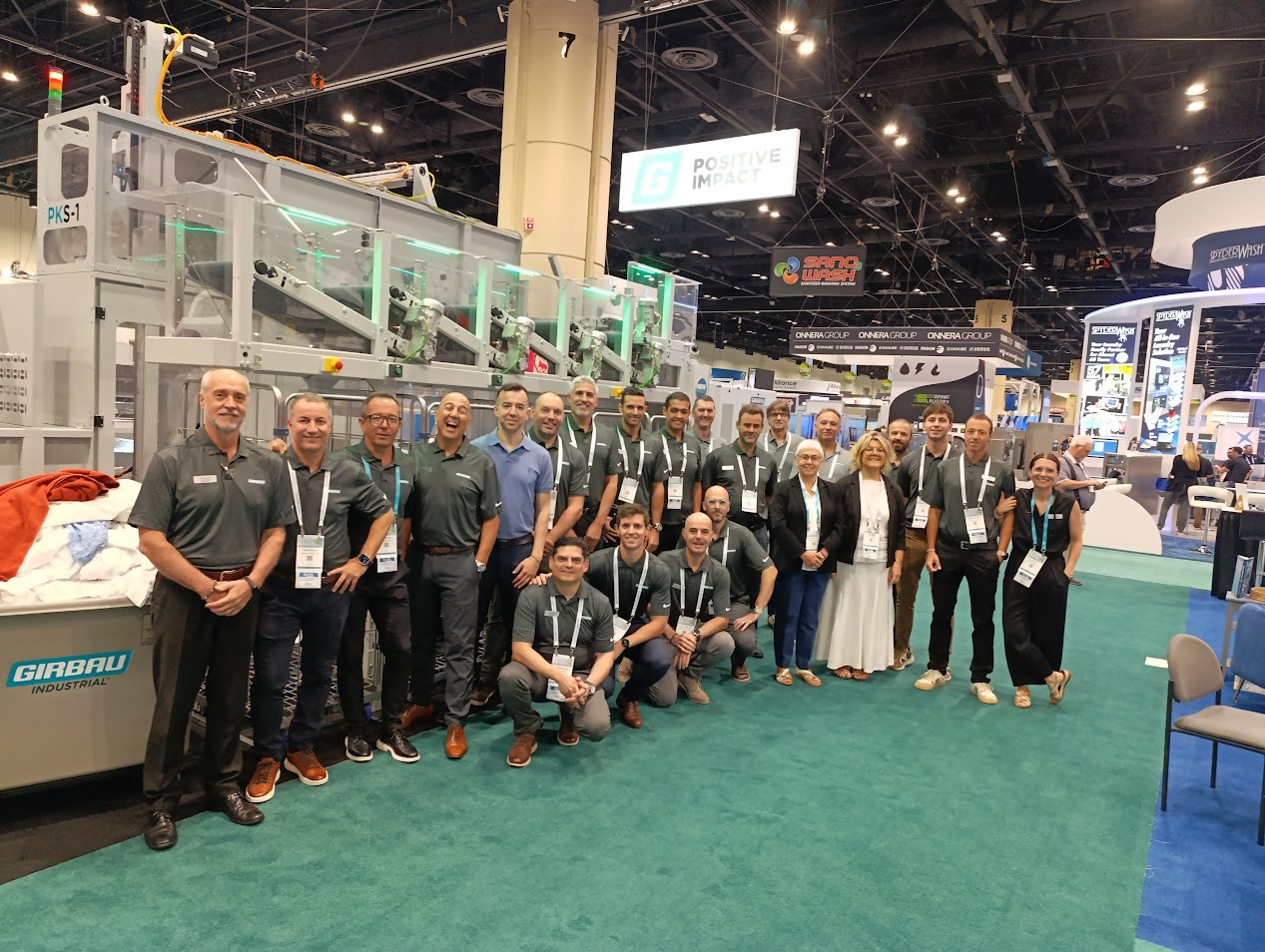
Girbau & EVI Industries strengthen presence in North America

Girbau, a global leader in industrial and commercial laundry solutions, and EVI Industries, one of the largest distribution networks in the sector in the United States, have formalized a strategic alliance to reinforce their presence in the North American market.

This alliance shall solidify the presence of Girbau and EVI in the sector, securing strategic investments and strengthening their competitiveness in an ever-evolving market. Both companies share a vision of delivering high-performance, sustainable solutions that enhance their customers' operational efficiency.

As part of this agreement, EVI integrates Girbau North America (GNA), Girbau’s former subsidiary, into its distribution network, ensuring continuity for the entire team, product offering and customer service. As an EVI company, GNA will conduct business as usual moving forward without changes to leadership, staff, services or support.

Girbau, a global leader in industrial and commercial laundry solutions, and EVI Industries, one of the largest distribution networks in the sector in the United States, have formalized a strategic alliance to reinforce their presence in the North American market.

This alliance shall solidify the presence of Girbau and EVI in the sector, securing strategic investments and strengthening their competitiveness in an ever-evolving market. Both companies share a vision of delivering high-performance, sustainable solutions that enhance their customers' operational efficiency.

As part of this agreement, EVI integrates Girbau North America (GNA), Girbau’s former subsidiary, into its distribution network, ensuring continuity for the entire team, product offering and customer service. As an EVI company, GNA will conduct business as usual moving forward without changes to leadership, staff, services or support.

Simultaneously, Girbau will maintain a key role in the development and expansion of its solutions in the region, reinforcing its commitment to the U.S. market. Girbau, EVI and GNA will collaborate to enhance distribution and develop innovative products that will drive their growth in the commercial and industrial laundry industry.

A key element of this strategic collaboration will be the expansion of Girbau’s production capacity with the launch of a manufacturing facility in North America, which will strengthen competitiveness and bring the company closer to customers in the region.

Source:

Girbaud

BLANCHE and ISKO join forces in a new timeless collection: KOKORO Photo BLANCHE
02.03.2025

BLANCHE and ISKO join forces in a new timeless collection: KOKORO

A celebration of timeless design powered by ISKO’s SS26 denim fabrics made from recycled materials.

ISKO is proud to collaborate with BLANCHE for the launch of KOKORO, the brand’s Spring/Summer 2025 collection. Rooted in sustainability, KOKORO embodies BLANCHE’s commitment to timeless design and conscious fashion, with ISKO’s innovative denim at its core.

As a leading denim producer, ISKO is dedicated to redefining the future of fashion through innovative and responsible textile solutions with its fashion-first approach that complements sustainability, emphasising that sustainability need not compromise style. The KOKORO collection – where all denim is crafted using ISKO fabrics – exemplifies this commitment. Thanks to ISKO’s premium recycled denim, the collection maintains high-end quality while significantly reducing its environmental footprint, resulting in beautifully crafted fashion pieces.

A celebration of timeless design powered by ISKO’s SS26 denim fabrics made from recycled materials.

ISKO is proud to collaborate with BLANCHE for the launch of KOKORO, the brand’s Spring/Summer 2025 collection. Rooted in sustainability, KOKORO embodies BLANCHE’s commitment to timeless design and conscious fashion, with ISKO’s innovative denim at its core.

As a leading denim producer, ISKO is dedicated to redefining the future of fashion through innovative and responsible textile solutions with its fashion-first approach that complements sustainability, emphasising that sustainability need not compromise style. The KOKORO collection – where all denim is crafted using ISKO fabrics – exemplifies this commitment. Thanks to ISKO’s premium recycled denim, the collection maintains high-end quality while significantly reducing its environmental footprint, resulting in beautifully crafted fashion pieces.

“Real change in fashion happens when innovation meets integrity and purpose. Our collaboration
with BLANCHE shows that responsibility and great design are not opposing forces – they
strengthen each other. This is the future of denim: responsible, resilient, and ready to inspire.”
– Keith O’Brien, Senior Global Marketing & PR Manager at ISKO.

The KOKORO collection will be available online and in stores from February 2025.

More information:
Denim Isko Blanche recycled cotton
Source:

Menabo for ISKO