From the Sector

from to
Reset
4422 results
Mimaki: 100 Percent Success in a Post Pandemic World (c) Mimaki
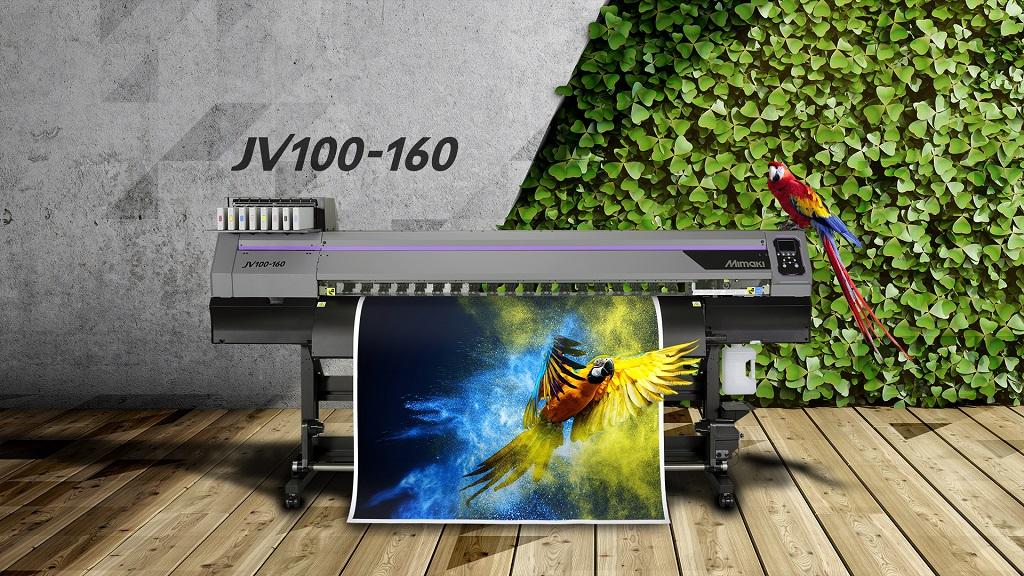
Mimaki UJV100-160
08.04.2021

Mimaki: 100 Percent Success in a Post Pandemic World

After a turbulent year, it seems strange to be thinking about ‘after the pandemic’, but with millions of vaccinations underway, the light at the end of the tunnel is visible. As we turn the corner, choosing technology partners that understand how to proactively respond to changing market needs and support the evolving requirements of print businesses and end customers will be vital. The printers in Mimaki’s ‘100 series’ portfolio, which consists of the high quality, high productivity entry level roll-to-roll inkjet printers the UJV100-160 UV and the JV100-160 solvent, and the high performance textile printer, the TS100-1600, are a perfect reflection of the way technology requirements are adapting in line with the industry as we look to the future. To demonstrate this, we have identified three post-pandemic technology touchpoints that will help print businesses target success amid uncertainty.

After a turbulent year, it seems strange to be thinking about ‘after the pandemic’, but with millions of vaccinations underway, the light at the end of the tunnel is visible. As we turn the corner, choosing technology partners that understand how to proactively respond to changing market needs and support the evolving requirements of print businesses and end customers will be vital. The printers in Mimaki’s ‘100 series’ portfolio, which consists of the high quality, high productivity entry level roll-to-roll inkjet printers the UJV100-160 UV and the JV100-160 solvent, and the high performance textile printer, the TS100-1600, are a perfect reflection of the way technology requirements are adapting in line with the industry as we look to the future. To demonstrate this, we have identified three post-pandemic technology touchpoints that will help print businesses target success amid uncertainty.

  • Productivity

The pandemic has served as a major catalyst for existing trends, and our growing appetite for everything on-demand has been given a huge COVID-related boost. For printers, a digital solution that offers premium productivity, quality and efficiency at an entry-level price point is sure to be an invaluable investment to meet evolving ‘on-demand demands’. Adding a digital production element to your business doesn’t need to be daunting, complicated or overpriced – the Mimaki ‘100 series’ truly lives up to the tagline ‘Expert Printing Made Easy’, offering an incredibly intuitive user experience for streamlined, ultra-efficient printing, high-quality output, and cost-effective implementation. The powerful and productive new textile printer in the ‘100 series’, the TS100-1600, is a shining example of equipment developed with the future of the market in mind – the textile industry is fast-paced and constantly innovating, and the printer you invest in needs to keep up with your creativity.

  • Diversity

2021 is set to be a period of transition. While that will mean navigating uncertainty, the ‘glass half full’ approach is to view the year ahead in terms of opportunities such as expanding your business, exploring alternative revenue streams, and taking the plunge into new markets. In the past, it may have felt as if the barriers to entry when it came to looking beyond your core business were too great. However, in a post-pandemic world, we need to break some of those barriers down and demonstrate that success with digital print is within reach if you invest in the right equipment. With the ‘100 series’ portfolio, Mimaki is acknowledging what print service providers need from their technology partners – the UJV100-160 and the JV100-160 are suitable for a wide range of applications that will allow you to easily and affordably diversify your offering, and with the TS100-1600 textile printer, it has never been easier to target growth in the thriving textile sector, even in challenging times.

  • Affordability

Affordability is one of the most significant barriers to entry into new markets. 2020 was a year of unprecedented economic challenges, so it’s more important than ever to be thinking about gaining a competitive edge, and the printers in the ‘100 series’ from Mimaki have been specifically formulated to help you ramp up productivity while keeping running costs low. Whether you want to take your first foray into digital print production, expand the services you offer or simply grow your customer base, cost can be a major sticking point, which is why supporting customers is Mimaki’s number one priority, designing the ‘100 series’ around your needs and continuing to listen to how those needs are developing. Making an investment in the JV100-160 in order to move into outdoor graphics; meeting demand for faster turnaround times by adding the instantly curable UJV100-160 to your production setup; or taking a leap into new revenue streams with the TS100-160 – it’s all ‘100’ percent accessible.


Source:

Martial Granet, Branch Manager, Mimaki France

07.04.2021

NCTO: Importance of the U.S. Textile Industry to Lifesaving PPE & the Economy

National Council of Textiles Organization (NCTO) member Parkdale Mills hosted Senator Tim Kaine (D-VA) at the company’s Magnolia Manufacturing plant in Hillsville, Va. today to showcase the critical role the company and the industry has played in producing lifesaving personal protective equipment (PPE) to aid frontline health-care workers and the country during the pandemic.

Parkdale’s facility in Hillsville, Va. is a key yarn spinning hub contributing to a major face mask initiative bringing together several U.S. companies and more than 5,000 workers as part of the Biden administration’s pledge to provide 25 million reusable face masks to communities hit hard by the pandemic.

National Council of Textiles Organization (NCTO) member Parkdale Mills hosted Senator Tim Kaine (D-VA) at the company’s Magnolia Manufacturing plant in Hillsville, Va. today to showcase the critical role the company and the industry has played in producing lifesaving personal protective equipment (PPE) to aid frontline health-care workers and the country during the pandemic.

Parkdale’s facility in Hillsville, Va. is a key yarn spinning hub contributing to a major face mask initiative bringing together several U.S. companies and more than 5,000 workers as part of the Biden administration’s pledge to provide 25 million reusable face masks to communities hit hard by the pandemic.

“Parkdale Mills thanks Senator Kaine for his leadership on policies that help bolster our company and the entire textile industry. We are proud to be part of an initiative that is bringing together American companies to produce 100% American-made masks for community health centers, soup kitchens and food banks across the country,” said Davis Warlick of Parkdale Mills. “With the support of our government and leaders like Senator Kaine, our industry is demonstrating its ability and capacity to make critical items here for the long term.”

Kim Glas, President and CEO of NCTO said: “We want to sincerely thank Senator Kaine for his leadership in supporting American manufacturers, which have played a vital role in our economy as well as the nationwide effort to produce critical PPE and medical textiles for a nation in crisis. We are grateful to the senator and the Biden administration for prioritizing domestic manufacturers and the U.S. workforce. The U.S. textile industry is a vital contributor to the U.S economy and policies that Senator Kaine supports help bolster the onshoring of PPE and critical items, which in turn spurs employment and investment in the American manufacturing base.”

JEC GROUP and AVK to launch new Composites Event for the D-A-CH Region
JEC Forum DACH
06.04.2021

JEC FORUM DACH

  •  JEC GROUP and AVK to launch new Composites Event for the D-A-CH Region

JEC Group and AVK, the Federation of Reinforced Plastics e.V. in Germany have joined forces to organize an annual event for the D-A-CH Region, dedicated to all forms of Composites and their applications. The first edition of the JEC Forum DACH, unique in its format and content, will take place in Frankfurt am Main, Germany at Messe Forum, from November 23 to 24, 2021. The event will take place at a different location each year to highlight the dynamics and the variety of the composites industry in the DACH region.

JEC Group is launching the JEC Forum DACH in partnership with AVK. Unique in its format, the event will be rotating to different cities in Germany, Switzerland and Austria  every year. This first edition will take place in Frankfurt am Main, Germany, from November 23 to 24, 2021.

  •  JEC GROUP and AVK to launch new Composites Event for the D-A-CH Region

JEC Group and AVK, the Federation of Reinforced Plastics e.V. in Germany have joined forces to organize an annual event for the D-A-CH Region, dedicated to all forms of Composites and their applications. The first edition of the JEC Forum DACH, unique in its format and content, will take place in Frankfurt am Main, Germany at Messe Forum, from November 23 to 24, 2021. The event will take place at a different location each year to highlight the dynamics and the variety of the composites industry in the DACH region.

JEC Group is launching the JEC Forum DACH in partnership with AVK. Unique in its format, the event will be rotating to different cities in Germany, Switzerland and Austria  every year. This first edition will take place in Frankfurt am Main, Germany, from November 23 to 24, 2021.

JEC Forum DACH will include pre-arranged business meetings between sponsors and attendees as well as sponsors workshops. The event will present exclusive content such as an extensive composites conferences program, the annual AVK market overview — also available via live-streaming technology for remote participants — and, last but not least, the prestigious AVK-JEC Innovation Awards.
The JEC Startup Booster competition will also be introduced in the D-A-CH region for the first time. JEC Forum DACH will also provide a Composites Tour to enable participants to visit key players of the local composites ecosystem on November 25.

This event's primary aim is to support the bustling composites industry in this region and resume business after a challenging, yet complex period of time. The event´s agile format will focus on a different application sector, industry as well as other regional composites-related specifities every year. The final goal is to develop business, to connect and reach out to the local industrial apparatus and its major players such as universities, research and development centers and companies of all sizes in a boosting business and innovation spirit.

Source:

AVK - Industrievereinigung Verstärkte Kunststoffe e. V.

02.04.2021

Fashion 4 Development & C.L.A.S.S. launch: The Recloth Resource Guide

Fashion 4 Development & C.L.A.S.S. Eco Hub will launch The Reclothe Resource Guide during the virtual exhibit: Discover the SDGs - To Make Peace With Nature, a virtual hub convened by the United Nations Office for Partnerships April 1 - 30, 2021.

The publication's mission is to inform and educate fashion industry professionals, schools, universities, students, and new generation brands to focus on the next generation of the circular economy and make an impact on the value chain. The ReClothe guide lists all solutions, technologies, fabric suppliers, dyers, and finishers currently available and scalable globally that can really answer the new generation needs of the contemporary consumer. ReClothe will be published quarterly and focus on innovators working the best practices and opportunities in development & manufacturing for a responsible fashion industry.

Fashion 4 Development & C.L.A.S.S. Eco Hub will launch The Reclothe Resource Guide during the virtual exhibit: Discover the SDGs - To Make Peace With Nature, a virtual hub convened by the United Nations Office for Partnerships April 1 - 30, 2021.

The publication's mission is to inform and educate fashion industry professionals, schools, universities, students, and new generation brands to focus on the next generation of the circular economy and make an impact on the value chain. The ReClothe guide lists all solutions, technologies, fabric suppliers, dyers, and finishers currently available and scalable globally that can really answer the new generation needs of the contemporary consumer. ReClothe will be published quarterly and focus on innovators working the best practices and opportunities in development & manufacturing for a responsible fashion industry.

The guide includes Bacx™ by Centro Seta, Bext360, DYNTEX® Biosynthetics, Eastman Naia™, ECOSENSOR™ by Asahi Kasei, ECOTEC® by Marchi & Fildi, Iluna Group, Lanificio Zignone, Maeba International, Mending for Good, Modern Meadow, Re.VerSo™, ROICA™ by Asahi Kasei, Santoni, Smartex, Spiber Inc., SUPREME GREEN COTTON® by Varvaressos, TINTEX Textiles, VEGEA and YKK.

For registration click here.

01.04.2021

Devan/Jeanologia: Reduced water usage for post garment treatments

Devan, one of the leading companies in sustainable and functional textile finishes, has been working together with Jeanologia, a global leader in sustainable and efficient finishing technologies for textiles, to reduce further water consumption during the application of Devan’s awarded BI-OME® antimicrobial and R-Vital® skincare range.

With increased attention to climate change and limiting excess water consumption in textile production (whether denim or other textiles), Devan and Jeanologia worked together to evaluate the application of Devan finishes onto garments via the patented e-Flow technology.

Devan, one of the leading companies in sustainable and functional textile finishes, has been working together with Jeanologia, a global leader in sustainable and efficient finishing technologies for textiles, to reduce further water consumption during the application of Devan’s awarded BI-OME® antimicrobial and R-Vital® skincare range.

With increased attention to climate change and limiting excess water consumption in textile production (whether denim or other textiles), Devan and Jeanologia worked together to evaluate the application of Devan finishes onto garments via the patented e-Flow technology.

e-Flow technology can accomplish a considerable number of finishing effects with the highest quality, a minimal amount of water and zero discharge. The technology uses micronization and nebulization to substitute traditional abrasion process and deliver performance chemistry using nano-bubbles instead of water. It reduces the cost of application, saves the amount of water used and ensures that the correct amount of chemistry stays in the garment and not in the water. e-Flow is the perfect fit for every industrial washing machine. This allows mills and brands to apply Devan’s technologies in a more sustainable way than using traditional application equipment, even for smaller production runs and direct onto garments.

“With the global textile production using 4% of the global freshwater withdrawal, here at Devan we are continuously working on more sustainable solutions”, says Dr. Vanessa Daelman, CTO at Devan. “Next to this, we of course highly value sustainable application methods from Jeanologia, like e-Flow, in order to reduce the excess water usage during textile application. We are delighted that we could work together with Jeanologia and establish that Devan technologies can be easily applied via these technologies onto garments or fabrics like denim and with full retention of functionality. This application method also allows post garment treatment of our finishes, for example an antimicrobial treatment onto already finished garments, which will be increasingly important in a more circular textile world where re-use plays an important role”, Dr. Daelman concludes.

Source:

Marketing Solutions NV


31.03.2021

We aRe SpinDye signs collaboration agreement with Superdry

We aRe SpinDye ( WRSD ) signed a collaboration agreement with Superdry plc. Superdry is a fashion brand with global distribution and highly ambitious sustainability goals - where WRSD hopes to play a significant role in achieving said goals.

"We have been in conversation with each other for a significant time and now finally things have fallen into place and we are able to move forward on more concrete terms", says Andreas Andrén and continues: "Naturally it is extremely positive for us that Superdry has so ambitiously set and clear sustainability goals. With our unique expertise in sustainable dyeing of recycled polyester, we feel that we have a very clear position as a partner to Superdry."

We aRe SpinDye ( WRSD ) signed a collaboration agreement with Superdry plc. Superdry is a fashion brand with global distribution and highly ambitious sustainability goals - where WRSD hopes to play a significant role in achieving said goals.

"We have been in conversation with each other for a significant time and now finally things have fallen into place and we are able to move forward on more concrete terms", says Andreas Andrén and continues: "Naturally it is extremely positive for us that Superdry has so ambitiously set and clear sustainability goals. With our unique expertise in sustainable dyeing of recycled polyester, we feel that we have a very clear position as a partner to Superdry."

Superdry's goals for 2030 are set high and include major initiatives in new sustainable solutions. On their website, they put this in words: "Our ambition is to become the most sustainable listed global fashion brand on the planet in 2030. Our goal continues to focus on producing the most durable product, while protecting our planet and support j s our people in everything we do. We will do the right thing and leave a positive environmental legacy. Accelerating our goals means that our commitments are in line with the UN Sustainable Development Goals (SDGs) by 2030."

Source:

We aRe Spin Dye / Cision

30.03.2021

ISKO™ Selvedge: contemporary denim heritage

ISKO introduces ISKO™ Selvedge – a 21st century reinterpretation of one of the most legendary denim fabrics ever made. Inspired by the history and reverence of original Selvedge denim, ISKO has applied its high-performance patented technologies to develop a new Selvedge range. Available in a wide selection of weights, stretch options and finishes, ISKO™ Selvedge adds flexibility, softness and comfort to a fabric more commonly known for its raw and rigid qualities.

The new ISKO™ Selvedge range preserves the authenticity and many of Selvedge’s hallmarks beloved by true denim aficionados the world over, whilst introducing modern attributes such as sustainability, comfort and wearability, which are guaranteed to make it a favorite of a new generation of denim lovers.

ISKO introduces ISKO™ Selvedge – a 21st century reinterpretation of one of the most legendary denim fabrics ever made. Inspired by the history and reverence of original Selvedge denim, ISKO has applied its high-performance patented technologies to develop a new Selvedge range. Available in a wide selection of weights, stretch options and finishes, ISKO™ Selvedge adds flexibility, softness and comfort to a fabric more commonly known for its raw and rigid qualities.

The new ISKO™ Selvedge range preserves the authenticity and many of Selvedge’s hallmarks beloved by true denim aficionados the world over, whilst introducing modern attributes such as sustainability, comfort and wearability, which are guaranteed to make it a favorite of a new generation of denim lovers.

The range includes 19 fabric varieties, with weights spanning from 7.75 to 14.5 oz and elasticity options between 13% – 52% for outstanding recovery and holding power. This variegated array relies on R-TWO™ technology. Certified to Textile Exchange environmental credentials, this platform ensures full traceability, minimizing environmental impact and delivering astounding quality to each solution included in the ISKO™ Selvedge family.

More information:
Isko Denim Sustainability
Source:

Menabò Group

Recycled polyester becomes a production standard for zips' tapes: a new step in Riri Group’s green path. (c) Riri Group
Riri Eco 006 Metal
30.03.2021

RIRI Group - Recycled polyester becomes a production standard

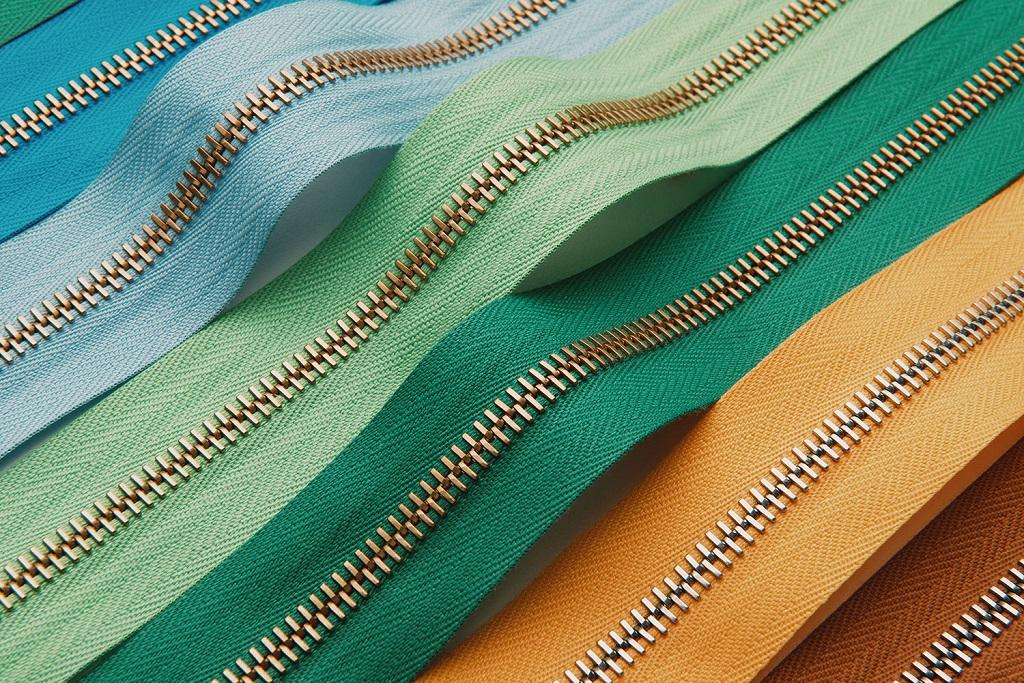
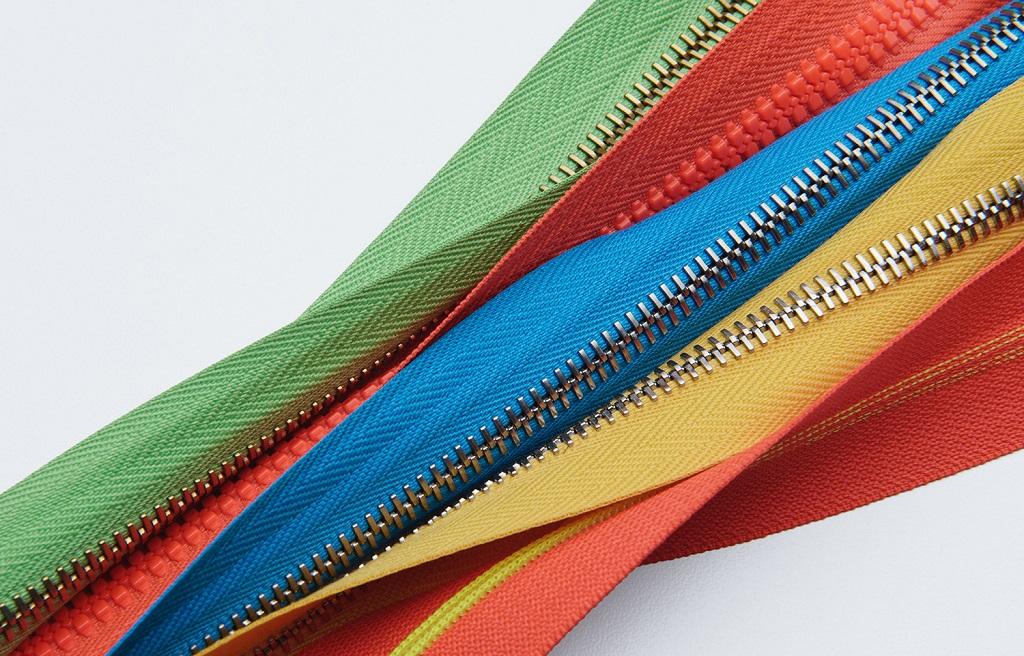
  • Recycled polyester becomes a production standard for zips' tapes: a new step in Riri Group’s green path.
  • Riri is the first company in the fashion accessories industry to complete its transition towards an exclusive use of recycled polyester for zips’ tapes.

To Riri, being ‘Responsible today for a sustainable tomorrow’ means looking ahead, toward a real effort in bringing sustainability in operational decisions, even if they mean more management issues and lead to changes out of the comfort zone which is the result of years of experiences and processes. Riri Group thus becomes the first manufacturing company in the fashion accessories industry to introduce the use of recycled polyester as production standard for its zip range. This achievement marks another essential one in the sustainability path that the Swiss-Italian Group has walked since the 90s. This change fits perfectly the Group’s green approach which sees innovation for the future as one of the main pillars of the corporate strategy, as well as the commitment to protecting natural resources and to improving the

  • Recycled polyester becomes a production standard for zips' tapes: a new step in Riri Group’s green path.
  • Riri is the first company in the fashion accessories industry to complete its transition towards an exclusive use of recycled polyester for zips’ tapes.

To Riri, being ‘Responsible today for a sustainable tomorrow’ means looking ahead, toward a real effort in bringing sustainability in operational decisions, even if they mean more management issues and lead to changes out of the comfort zone which is the result of years of experiences and processes. Riri Group thus becomes the first manufacturing company in the fashion accessories industry to introduce the use of recycled polyester as production standard for its zip range. This achievement marks another essential one in the sustainability path that the Swiss-Italian Group has walked since the 90s. This change fits perfectly the Group’s green approach which sees innovation for the future as one of the main pillars of the corporate strategy, as well as the commitment to protecting natural resources and to improving the
traceability and transparency of both materials and processes, in a framework that sees to rethink social and economic models. Riri’s slogan “excellence in details” can also be read as “sustainability in details” as it speaks to the company’s will to act putting sustainability first.

By employing recycled polyester as production standard for the zip range, the contribution to sustainability on a quantitative level will be significant:

• The company, in fact, will reduce emissions resulting from polyester purchase by 32%; thus, carbon footprint will be cut down by 3%, for zip production. As a result, 460,000 kg of
CO2 per year is saved, the same as 169 return flights from Geneve to New York.

• All the recycled polyester is GRS (Global Recycled Standard)-certified, highlighting Riri’s constant commitment to choosing suppliers that meet the industry’s international standards.

• The recycled polyester used in tapes for zips is made from recycled polyester fibers, both  pre- (20%) and post-consumer (80%).

• An important contribution is made to the goal of increasing the global use of recycled polyester, as stated by Textile Exchange, from 14% to 20% by 2030.

This choice shows once more the ability of the company to develop products that keep in mind the environment whilst preserving functionality, reliability and that visual taste that the world of fashion requires.

Indeed, Riri has introduced its first recycled polyester tape in 2013 and since then has been consistently increasing the use of GRS-certified recycled polyester that comes from recycled materials.

“We are proud of this step and the effect that it has on sustainability and the cultural change through which we approach the development and improvement of our products” states Renato Usoni, Riri Group’s CEO. “Our innovation is the result of a tireless research of low environmental impact materials, an approach that has been the foundation of our identity for many years, but that now is renewed once more to make another step toward the future”.

Baldwin’s podcast explores printing and industrial process automation trends (c) Baldwin
29.03.2021

Baldwin’s podcast explores printing and industrial process automation trends

Baldwin Technology Company Inc. has launched Unlocking Potential, a new podcast series that covers the latest trends, innovations and technologies in key industries—from packaging and converting, to security printing, textile production, film extrusion and more.

The first episode debuted February 1, and it shares the history and evolution of Baldwin, which recently marked 100 years of innovation. Episode 2 features a conversation with Baldwin experts about security printing advancements.

“We are excited to introduce this opportunity to share ideas, insights and educational content with customers, partners and associates around the world,” said Baldwin’s Chief Marketing and IoT Officer Steve Metcalf, who joined Chief Commercial Officer and longtime Baldwin team member Peter Hultberg on the inaugural episode. “In a time when traditional trade shows and conferences are being reimagined, podcasting provides a familiar platform for us to be conversational again.”

Baldwin Technology Company Inc. has launched Unlocking Potential, a new podcast series that covers the latest trends, innovations and technologies in key industries—from packaging and converting, to security printing, textile production, film extrusion and more.

The first episode debuted February 1, and it shares the history and evolution of Baldwin, which recently marked 100 years of innovation. Episode 2 features a conversation with Baldwin experts about security printing advancements.

“We are excited to introduce this opportunity to share ideas, insights and educational content with customers, partners and associates around the world,” said Baldwin’s Chief Marketing and IoT Officer Steve Metcalf, who joined Chief Commercial Officer and longtime Baldwin team member Peter Hultberg on the inaugural episode. “In a time when traditional trade shows and conferences are being reimagined, podcasting provides a familiar platform for us to be conversational again.”

Future episodes will delve into the latest in curing technology for specialized manufacturing applications, the transformation of cleaning processes and consumables for printing, and other topics, as markets and industries continue to evolve.

Source:

Barry-Wehmiller

29.03.2021

Flocus™ produces and enhances Kapok Fibers

Flocus™ offers a range of kapok textile materials such as fibers, yarns, textiles and nonwovens, which provide the textile industry with a naturally sustainable and regenerative alternative which has not been available before.

Kapok is a natural fiber, traditionally used by local population for fillings but with no large scale applications until Flocus™ founding. Beside kapok several interesting properties, there were some limits that had been inhibiting the possibility to use it at a larger scale and build a supply chain on textile products based on it: kapok fibers are short stapled ones (2-4 cm length), very light and empty inside: for this reason they incorporate air and made the spinning attempts unsuccessful.

Flocus™ pioneers sustainable and regenerative textile solutions based on kapok fiber, and it is creating a responsible supply chain for kapok.

With one of the most advanced technologies in the market, FLOCUS™ can spin the highest kapok percentage, offer yarns in the thinnest counts with the possibility of low minimum order quantity per blend.

Flocus™ offers a range of kapok textile materials such as fibers, yarns, textiles and nonwovens, which provide the textile industry with a naturally sustainable and regenerative alternative which has not been available before.

Kapok is a natural fiber, traditionally used by local population for fillings but with no large scale applications until Flocus™ founding. Beside kapok several interesting properties, there were some limits that had been inhibiting the possibility to use it at a larger scale and build a supply chain on textile products based on it: kapok fibers are short stapled ones (2-4 cm length), very light and empty inside: for this reason they incorporate air and made the spinning attempts unsuccessful.

Flocus™ pioneers sustainable and regenerative textile solutions based on kapok fiber, and it is creating a responsible supply chain for kapok.

With one of the most advanced technologies in the market, FLOCUS™ can spin the highest kapok percentage, offer yarns in the thinnest counts with the possibility of low minimum order quantity per blend.

Flocus™ Kapok offers products which can reduce the presence of animal and synthetic products in the market, utilizing a completely natural alternative without abandoning functionality.

The Flocus™ team works in partnership with companies who want to investigate the use of the eco-responsible fibers and is testing the wide range of applications of Flocus™ kapok stuffing, yarns, fabrics, nonwovens for thermo and sound insulation, waddings, foam replacement, medical, automotive and technical uses and others.

Source:

Flocus

27.03.2021

NCTO: Biden Administration awards Contracts for American-Made Face Masks

The Biden Administration has awarded two contracts to National Council of Textile Organizations (NCTO) members Parkdale Mills and Ferrara Manufacturing Inc., following through on the President’s pledge to procure millions of fully Made in America face masks for community health centers, food pantries and soup kitchens across the country.  A third contract is expected to be awarded to a small business early next week.

North Carolina headquartered Parkdale Mills, the nation’s largest cotton yarn spinner, has partnered with Ferrara Manufacturing, a tailored clothing company based in New York City’s garment center whose workforce is union represented by Workers United/SEIU, to manufacture over 17 million reusable masks. The government said it could purchase up to a maximum of 22.2 million masks under the two contracts announced today. The masks will be Berry compliant and thus 100% U.S.-made.

The Biden Administration has awarded two contracts to National Council of Textile Organizations (NCTO) members Parkdale Mills and Ferrara Manufacturing Inc., following through on the President’s pledge to procure millions of fully Made in America face masks for community health centers, food pantries and soup kitchens across the country.  A third contract is expected to be awarded to a small business early next week.

North Carolina headquartered Parkdale Mills, the nation’s largest cotton yarn spinner, has partnered with Ferrara Manufacturing, a tailored clothing company based in New York City’s garment center whose workforce is union represented by Workers United/SEIU, to manufacture over 17 million reusable masks. The government said it could purchase up to a maximum of 22.2 million masks under the two contracts announced today. The masks will be Berry compliant and thus 100% U.S.-made.

Ferrara Manufacturing and Parkdale Mills will contract with additional U.S. companies across the manufacturing supply chain, employing nearly 5,000 American workers as a result of these awards.  Parkdale will be utilizing yarn from their facilities in NC, VA, and GA and Ferrara will deploy their cut and sew operations in New York City.

The U.S. textile industry has produced over a billion lifesaving PPE and other medical products over the last year.  Since the spring of 2020, both Ferrara and Parkdale have retooled their production chains to help produce millions of masks and gowns to help workers on the frontlines. 

25.03.2021

Autoneum Holding AG Annual General Meeting

  • Waiver of dividend
  • Expansion of Board of Directors

The shareholders of Autoneum Holding Ltd approved all proposals of the Board of Directors at today’s Annual General Meeting and agreed to forgo dividend payments. Liane Hirner and Oliver Streuli were newly elected to the Board of Directors. Based on Art. 27 of the Covid-19 Ordinance 3, the Board of Directors of Autoneum Holding Ltd decided to hold the 2021 Annual General Meeting without physical attendance by the shareholders. For this reason, the Company had asked them in advance to exercise their rights exclusively via the Independent Proxy. He represented 63.5% of a total of 4 672 363 shares.

  • Waiver of dividend
  • Expansion of Board of Directors

The shareholders of Autoneum Holding Ltd approved all proposals of the Board of Directors at today’s Annual General Meeting and agreed to forgo dividend payments. Liane Hirner and Oliver Streuli were newly elected to the Board of Directors. Based on Art. 27 of the Covid-19 Ordinance 3, the Board of Directors of Autoneum Holding Ltd decided to hold the 2021 Annual General Meeting without physical attendance by the shareholders. For this reason, the Company had asked them in advance to exercise their rights exclusively via the Independent Proxy. He represented 63.5% of a total of 4 672 363 shares.

The shareholders approved the Annual Report, the Annual Financial Statements and the Consolidated Financial Statements 2020. In view of the net loss in the 2020 financial year, the Board of Directors proposed forgoing dividend payments, which was approved by a large majority of the shareholders. Hans-Peter Schwald, Chairman of the Board of Directors, said: “2020 was extremely challenging for the entire automobile industry and also for Autoneum. The pandemic-related drop in revenue has impacted profitability. Despite the net loss, Autoneum reached important financial improvements in 2020. We expect to return to profitability in 2021 and our aim to distribute at least 30% of the net profit attributable to Autoneum shareholders as dividends remains unchanged. The Board of Directors, the Group Executive Board and the Company as a whole are committed fully to ensuring that Autoneum continues to make significant operational and financial improvements.”

Chairman Hans-Peter Schwald and the other members of the Board of Directors, Rainer Schmückle, Norbert Indlekofer, Michael Pieper, This E. Schneider and Ferdinand Stutz were confirmed in office. Newly elected to the Board of Directors were Liane Hirner and Oliver Streuli.

With Liane Hirner and Oliver Streuli and the resignation of Peter Spuhler, who did not stand for reelection in order to be able to focus on managing Stadler Rail, the Board of Directors of Autoneum Holding Ltd has expanded from seven to eight members. Hans-Peter Schwald explained: “The expertise of Liane Hirner and Oliver Streuli in the areas of finance and corporate management is of great value to Autoneum. As the Board of Directors, we look forward to this enhancement to the Board and to working with both of them.”

Peter Spuhler has been an important driving force since the Company became independent, he played a major role in shaping Autoneum thanks to his entrepreneurial expertise and showed great commitment to the Company. The Board of Directors thanks him sincerely and wishes him continued success.

This E. Schneider, Hans-Peter Schwald and Ferdinand Stutz were re-elected to the Compensation Committee. Oliver Streuli was elected as a new member of this committee. In addition, the shareholders of Autoneum Holding Ltd granted discharge to all members of the Board of Directors and the Group Executive Board with a large majority.

The consultative vote on the 2020 remuneration report was approved by 83.4%. Due to the severe impact of the coronavirus pandemic on the Group’s business development, the members of the Board of Directors renounced half of their compensation for the 2020 financial year and, in order to  align their remuneration with shareholder interests, decided to receive it entirely in Autoneum shares. In addition, a waiver of salary amounting to 10% of the basic salary for a period of three months was agreed upon with the senior management as part of a reduction of personnel costs.

The proposals for the remuneration of the Board of Directors and the Group Executive Board for the 2022 financial year as well as the other proposals were also approved by a large majority.

Source:

Autoneum Management AG

ANDRITZ receives order for needlepunch production lines from Chongqing Double Elephant, China (c) ANDRITZ
25.03.2021

ANDRITZ receives order for needlepunch production lines from Chongqing Double Elephant, China

International technology Group ANDRITZ has received an order to supply four new needlepunch lines for nonwoven production from Chongqing Double Elephant Microfiber Material Co., Ltd., China. These lines are scheduled for installation and start-up in the fourth quarter of 2021.

The needlepunch lines by ANDRITZ are designed to process islands-in-the-sea fibers dedicated mainly to the production of high-quality synthetic leather products. Once completed, the lines will produce 30 million meters a year of microfiber nonwoven materials.

International technology Group ANDRITZ has received an order to supply four new needlepunch lines for nonwoven production from Chongqing Double Elephant Microfiber Material Co., Ltd., China. These lines are scheduled for installation and start-up in the fourth quarter of 2021.

The needlepunch lines by ANDRITZ are designed to process islands-in-the-sea fibers dedicated mainly to the production of high-quality synthetic leather products. Once completed, the lines will produce 30 million meters a year of microfiber nonwoven materials.

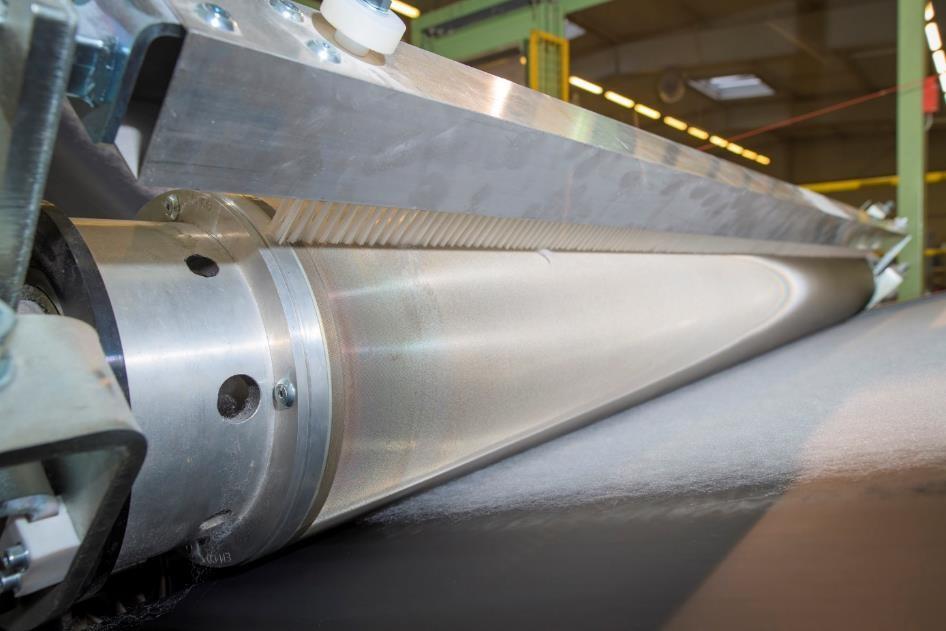
The production lines are equipped with an ANDRITZ carding machine and the newly developed Profile® crosslapper as well as the advanced-technology ProWid closed-loop system from ANDRITZ. The system can monitor the weight uniformity (CV%) of the entire product online and predict the weight distribution changes caused by the bonding process. In addition, the web weight can be reduced by controlled stretching, which solves the issue of fiber accumulation at the edges caused by traditional crosslapping methods. Both the weight and the uniformity of the product can be automatically adjusted via the closed-loop function as set on the ANDRITZ gauge.

Chongqing Double Elephant Microfiber Material Co., Ltd., wholly owned by listed Wuxi Double Elephant Microfiber Materials Co., Ltd., is located in the Changshou National Economic and Technological Development Zone of Chongqing City. The company is active in the research, development and manufacture of microfiber materials, polyurethane synthetic leather and polyurethane resin.

Source:

ANDRITZ AG

Kitlocker Implements Kornit Avalanche Poly Pro for Efficient, Versatile Sportswear Production on Demand (c) Kitlocker
Mike Kent
24.03.2021

Kitlocker Implements Kornit Avalanche Poly Pro for Efficient, Versatile Sportswear Production on Demand

The machines are quick and reliable, with very little downtime, which is massively important to me as a business owner.”

Kornit Digital (Nasdaq: KRNT), a worldwide market leader in digital textile printing technology, announced United Kingdom-based Kitlocker has implemented two Kornit Avalanche Poly Pro systems for efficient, retail-quality production of branded and customized apparel on demand.

The machines are quick and reliable, with very little downtime, which is massively important to me as a business owner.”

Kornit Digital (Nasdaq: KRNT), a worldwide market leader in digital textile printing technology, announced United Kingdom-based Kitlocker has implemented two Kornit Avalanche Poly Pro systems for efficient, retail-quality production of branded and customized apparel on demand.

Kitlocker operates within several sectors of the sports and leisurewear market, providing team gear for schools, football clubs, and other sporting organizations, managing e-commerce platforms on behalf of those organizations. Enabling their customers to embellish popular styles on demand, in any quantity, drove them to explore available technologies for speed and versatility, particularly regarding polyester apparel, a cornerstone of sportswear. Kornit’s Poly Pro system is the only single-step digital direct-to-garment (DTG) technology developed specifically for imprinting polyester and poly-blend materials, extending the company’s patented process for waste-free production with durability, precise graphic detail, and the broadest colour gamut to popular sports and athleisure apparel.

“The Kornit Avalanche Poly Pro allows for far superior quality of finish for embellishment compared to traditional print techniques,” says Mike Kent, Co-Owner of Kitlocker. “When we were shopping around for alternatives, it was obvious the sort of single pass, and its ability to print on polyester, was certainly market-leading—there was no alternative that could do that. The machines are quick and reliable, with very little downtime, which is massively important to me as a business owner.”

According to Kent, the technology has enabled Kitlocker to approach new markets that had always been off-limits previously, driving incremental business and building out new product ranges. The process lent itself to simple integration with their workflow and online design tools, empowering customers to visualize their own pieces and receive finished gear, with superior retail quality and precise logo colour matching, in mere days.

“The system allows us bigger print areas, more colours, and more elaborate designs, and our customers to uniquely embellish their garments on a wide range of products from different brands with lots of different kinds of creative outputs,” adds Kent.

“Our systems help brands like Kitlocker sync supply with demand, eliminating waste and making them more reactive to customer needs,” says Chris Govier, KDEU Managing Director. “Kornit Avalanche Poly Pro extends the efficiency, sustainability, quality, and logistical benefits of digitization to the booming sports and athleisure apparel market. Being able to give their customers the widest assortment of gear, customized in any quantity, on demand, is a winning game plan for Kitlocker.”

Source:

pr4u press contact

IFFT/Interior Lifestyle Living set for a highly anticipated return in October 2021 (c) Messe Frankfurt
IFFT/Interior Lifestyle Living 2019
24.03.2021

IFFT/Interior Lifestyle Living set for a highly anticipated return in October 2021

The dates are set: IFFT/Interior Lifestyle Living is welcoming exhibitor registration for its 2021 edition, to be held from 18 – 20 October 2021 in the South Halls of Tokyo Big Sight. The dedicated fair for interior design is once again set to attract not only retail buyers but also visitors from design and architecture offices, commercial facilities, and other contract businesses. The 2019 edition welcomed 352 exhibitors from 14 countries and regions as well as 16,016 visitors from 34 countries and regions, receiving much positive feedback for its increased focus on contract business.
 
IFFT/Interior Lifestyle Living 2019
Returning after a hiatus in 2020 due to the COVID-19 pandemic, IFFT/Interior Lifestyle Living will once again create opportunities for exhibitors to meet new clients and expand their businesses. Messe Frankfurt Japan Ltd is working to put all of the appropriate safety and hygiene measures in place to protect participants during the fair period, and prevent the spread of COVID-19.
 
New ETHICAL zone added to satisfy consumer demand

The dates are set: IFFT/Interior Lifestyle Living is welcoming exhibitor registration for its 2021 edition, to be held from 18 – 20 October 2021 in the South Halls of Tokyo Big Sight. The dedicated fair for interior design is once again set to attract not only retail buyers but also visitors from design and architecture offices, commercial facilities, and other contract businesses. The 2019 edition welcomed 352 exhibitors from 14 countries and regions as well as 16,016 visitors from 34 countries and regions, receiving much positive feedback for its increased focus on contract business.
 
IFFT/Interior Lifestyle Living 2019
Returning after a hiatus in 2020 due to the COVID-19 pandemic, IFFT/Interior Lifestyle Living will once again create opportunities for exhibitors to meet new clients and expand their businesses. Messe Frankfurt Japan Ltd is working to put all of the appropriate safety and hygiene measures in place to protect participants during the fair period, and prevent the spread of COVID-19.
 
New ETHICAL zone added to satisfy consumer demand
A newly introduced ETHICAL zone will help industry players explore the themes of sustainability and ecology, which are continuing to gain traction in the interior design market. The zone focuses on environmental protection, up-cycling, fair trade, products that support people with disabilities, organic products, local production for local consumption, and more. Furniture production from recycled forest materials will also be a focus of the zone, which will be promoted in the run up to the fair through sector-specific media channels. This will include dedicated promotional activities targeting ethically driven retailers and restaurants.
 
A variety of booth sizes to accommodate exhibitors’ needs
In response to requests from exhibitors who showcase smaller items, a new booth size has been added for 2021. Measuring 6.3 sqm (width 3m x depth 2.1m), the new booth option is one size smaller than the existing 9 sqm booth, adding more choice for exhibitors
 
Dedicated lifestyle themed zones
Proving popular amongst trade buyers during previous editions, ‘CREATIVE RESOURCE’ is a zone devoted to innovative interior materials, as well as parts and services for interior design and home remodelling. Products featured at the zone include wallpaper, floor coverings, paints and related materials. First introduced in 2012, the zone has grown in stature as the destination for the likes of manufacturers, architects, designers and developers to find inspiration.
 
The fair’s zoning encompasses a variety of different product categories and themes. This not only simplifies the sourcing process for trade buyers, but it also maximises business exposure for exhibitors. Day-to-day lifestyle products – both stylish and functional – will be displayed in the ‘HOME’, ‘ACCENT’ and ‘EVERYDAY’ zones with a focus on living spaces, accessories and household items respectively.
 
Moreover, catering to the world of convenience and home cuisine, an array of pragmatically-designed packaged food will be presented at 'FOODIST', while innovative dining items will be gathered at the ‘KITCHEN LIFE’ zone.
 
Highlighting high quality local craftsmanship, designs from Japanese artisanal artists with a modern touch will be located in the ‘JAPAN STYLE’ zone. The latest designs from highly acclaimed international brands will be displayed too, in the ‘MOVEMENT’ area, while work from up-and-coming young designers will appear at the ‘TALENTS’ and ‘NEXT’ zones.
 
About IFFT/Interior Lifestyle Living
IFFT/Interior Lifestyle Living is held annually in fall and is the sister fair of Interior Lifestyle Tokyo held in spring, which is based on Ambiente, Messe Frankfurt’s largest and most important international consumer goods fair, and Heimtextil, the biggest international home and contract textiles fair. With the synergetic effects of these leading global trade fairs in the high-end interior market, and with Messe Frankfurt’s global network, IFFT/Interior Lifestyle Living is a key platform for professionals, buyers, architects and those engaged in domestic and international contract business.

24.03.2021

NCTO: State of the U.S. Textile Industry Address

National Council of Textile Organizations (NCTO) Chairman David Roberts, who was re-elected for the 2020-2021 term, delivered the trade association’s State of the U.S. textile industry overview at NCTO’s 17th Annual Meeting on March 24.

Mr. Roberts’s speech outlined (1) the U.S. textile industry’s heroic efforts producing PPE in the face of a once-in-a-generation pandemic (2) U.S. textile supply chain, economic, trade data, and (3) NCTO’s 2020 policy priorities for domestic textile manufacturers.

A link of his remarks as prepared for delivery are included in this press statement along with a link to a data infographic prepared by NCTO illustrating the current economic status of the U.S. textile industry.

Mr. Roberts is CEO of Cap Yarns, Inc., a South Carolina specialty yarn manufacturer and a leader in developing unique yarns for the knitting and weaving industry.

National Council of Textile Organizations (NCTO) Chairman David Roberts, who was re-elected for the 2020-2021 term, delivered the trade association’s State of the U.S. textile industry overview at NCTO’s 17th Annual Meeting on March 24.

Mr. Roberts’s speech outlined (1) the U.S. textile industry’s heroic efforts producing PPE in the face of a once-in-a-generation pandemic (2) U.S. textile supply chain, economic, trade data, and (3) NCTO’s 2020 policy priorities for domestic textile manufacturers.

A link of his remarks as prepared for delivery are included in this press statement along with a link to a data infographic prepared by NCTO illustrating the current economic status of the U.S. textile industry.

Mr. Roberts is CEO of Cap Yarns, Inc., a South Carolina specialty yarn manufacturer and a leader in developing unique yarns for the knitting and weaving industry.

NCTO’s annual meeting was held virtually March 23-24.

24.03.2021

NCTO elects Chairman, Council Chairs and Board Members

The National Council of Textile Organizations (NCTO), representing the full spectrum of U.S. textiles from fiber through finished sewn products, held its officer elections for fiscal year 2021 today.

NCTO has re-elected David Roberts, CEO of Cap Yarns, as Chairman and David Poston, President of Palmetto Synthetics, as Vice Chairman.

In addition to the appointment of a new chairman and vice chairman, NCTO elected chairs for each of its four councils. NCTO is comprised of four councils to ensure a broad representation of the industry supply chain. Each council has an allotted number of members who are elected to the association’s Board of Directors, in addition to the Executive Committee.*

“This is a critical juncture for our industry, which answered the call of the nation to produce lifesaving personal protective equipment (PPE) for frontline workers battling the COVID-19 pandemic,” said NCTO President and CEO Kim. “We will continue to engage with all stakeholders to press for policies that support the industry overall, help onshore PPE production and create a permanent domestic supply chain.”


The National Council of Textile Organizations (NCTO), representing the full spectrum of U.S. textiles from fiber through finished sewn products, held its officer elections for fiscal year 2021 today.

NCTO has re-elected David Roberts, CEO of Cap Yarns, as Chairman and David Poston, President of Palmetto Synthetics, as Vice Chairman.

In addition to the appointment of a new chairman and vice chairman, NCTO elected chairs for each of its four councils. NCTO is comprised of four councils to ensure a broad representation of the industry supply chain. Each council has an allotted number of members who are elected to the association’s Board of Directors, in addition to the Executive Committee.*

“This is a critical juncture for our industry, which answered the call of the nation to produce lifesaving personal protective equipment (PPE) for frontline workers battling the COVID-19 pandemic,” said NCTO President and CEO Kim. “We will continue to engage with all stakeholders to press for policies that support the industry overall, help onshore PPE production and create a permanent domestic supply chain.”


*See attached document for more information.

Baldwin receives three FlexoCleanerBrush™ orders in 30 days (c) Baldwin Technology
Baldwin’s three new FlexoCleanerBrush installations are located in Bevaria (Germany), Michigan (US) and Florida (US). The Florida order was secured in partnership with local agent Technoflex in South Carolina (US).
23.03.2021

Baldwin receives three FlexoCleanerBrush™ orders in 30 days

  • Full-width automated cleaning system will be installed on high-graphics corrugated presses

Baldwin Technology Company Inc. has successfully landed three new FlexoCleanerBrush orders, with a total of 16 cleaning heads, from customers in the US and Germany. During the COVID-19 pandemic, Baldwin has delivered a total of 30 FlexoCleanerBrush cleaning heads, thanks to close collaboration between onsite team members, local agents, the company’s global sales organization, and support from its product and technology center in Germany. With the FlexoCleanerBrush system, an inline cleaning station installed within each print unit uses a brush that runs the full width of each printing plate. Paired with a precision spray application system, the FlexoCleanerBrush evenly distributes a mixture of detergent and water across the plate as it spins, gently cleaning its surface. The plates are then dried by the integrated air knife.

  • Full-width automated cleaning system will be installed on high-graphics corrugated presses

Baldwin Technology Company Inc. has successfully landed three new FlexoCleanerBrush orders, with a total of 16 cleaning heads, from customers in the US and Germany. During the COVID-19 pandemic, Baldwin has delivered a total of 30 FlexoCleanerBrush cleaning heads, thanks to close collaboration between onsite team members, local agents, the company’s global sales organization, and support from its product and technology center in Germany. With the FlexoCleanerBrush system, an inline cleaning station installed within each print unit uses a brush that runs the full width of each printing plate. Paired with a precision spray application system, the FlexoCleanerBrush evenly distributes a mixture of detergent and water across the plate as it spins, gently cleaning its surface. The plates are then dried by the integrated air knife.

“With two of the recent orders, the customers had already installed the FlexoCleanerBrush in other locations. One of them reported as much as a 30 percent production capacity increase, thanks to the  installation,” said Lee Simmonds, Regional Sales Manager at Baldwin. “Both customers have experienced insufficient results with their original traversing cloth cleaning systems, which will now be removed and replaced with the full-width, stand-alone, automated FlexoCleanerBrush technology from Baldwin.”

Improving sustainability is one of the key drivers for investments in the corrugated printing industry. The FlexoCleanerBrush dramatically cuts water waste by cleaning plates more efficiently. In a recent independent study that was conducted to validate the capacity of the automated system, the FlexoCleanerBrush could fully clean and dry all printing plates in less than four minutes and pick hickeys in seconds.

Besides offering efficient cleaning during runs and fast end-of-job cleaning, the FlexoCleanerBrush system also enables operators to remove dry plates from the machine without the potential risk of plates sticking together once they are placed back in the plateracking system. This helps to ensure increased board throughput, less downtime and a safer working environment by eliminating operators’ contact with nip points, moving parts and chemicals.

Source:

Baldwin Technology

(c) Dibella GmbH
22.03.2021

Dibella launches 2nd upcycling project: napkins become jeans

After starting the first "Dibella up" circular-flow concept in August 2020, thousands of high-quality bags have already been made from used hotel textiles. Now the company is presenting another upcycling project: As part of a feasibility study, organic Fairtrade napkins that could no longer be rented out by the company were turned into jeans.

The second "Dibella up" project promises successful recycling of used object textiles. Within the framework of a feasibility study, almost 5,000 discarded napkins were used for jeans production in Pakistan. The special feature of the process is the traceability of the raw materials through all processing stages.

The napkins made of pure organic Fairtrade cotton originated in India. There, the fibres were grown and harvested by micro-farmers of the Chetna cooperative and then processed into durable textiles by a certified company. From Dibella, the napkins went to Lamme Textile Management, where they went through the use process in laundry and catering for many years. All stages were traceable by means of a "Respect Code" with which each piece was marked.

After starting the first "Dibella up" circular-flow concept in August 2020, thousands of high-quality bags have already been made from used hotel textiles. Now the company is presenting another upcycling project: As part of a feasibility study, organic Fairtrade napkins that could no longer be rented out by the company were turned into jeans.

The second "Dibella up" project promises successful recycling of used object textiles. Within the framework of a feasibility study, almost 5,000 discarded napkins were used for jeans production in Pakistan. The special feature of the process is the traceability of the raw materials through all processing stages.

The napkins made of pure organic Fairtrade cotton originated in India. There, the fibres were grown and harvested by micro-farmers of the Chetna cooperative and then processed into durable textiles by a certified company. From Dibella, the napkins went to Lamme Textile Management, where they went through the use process in laundry and catering for many years. All stages were traceable by means of a "Respect Code" with which each piece was marked.

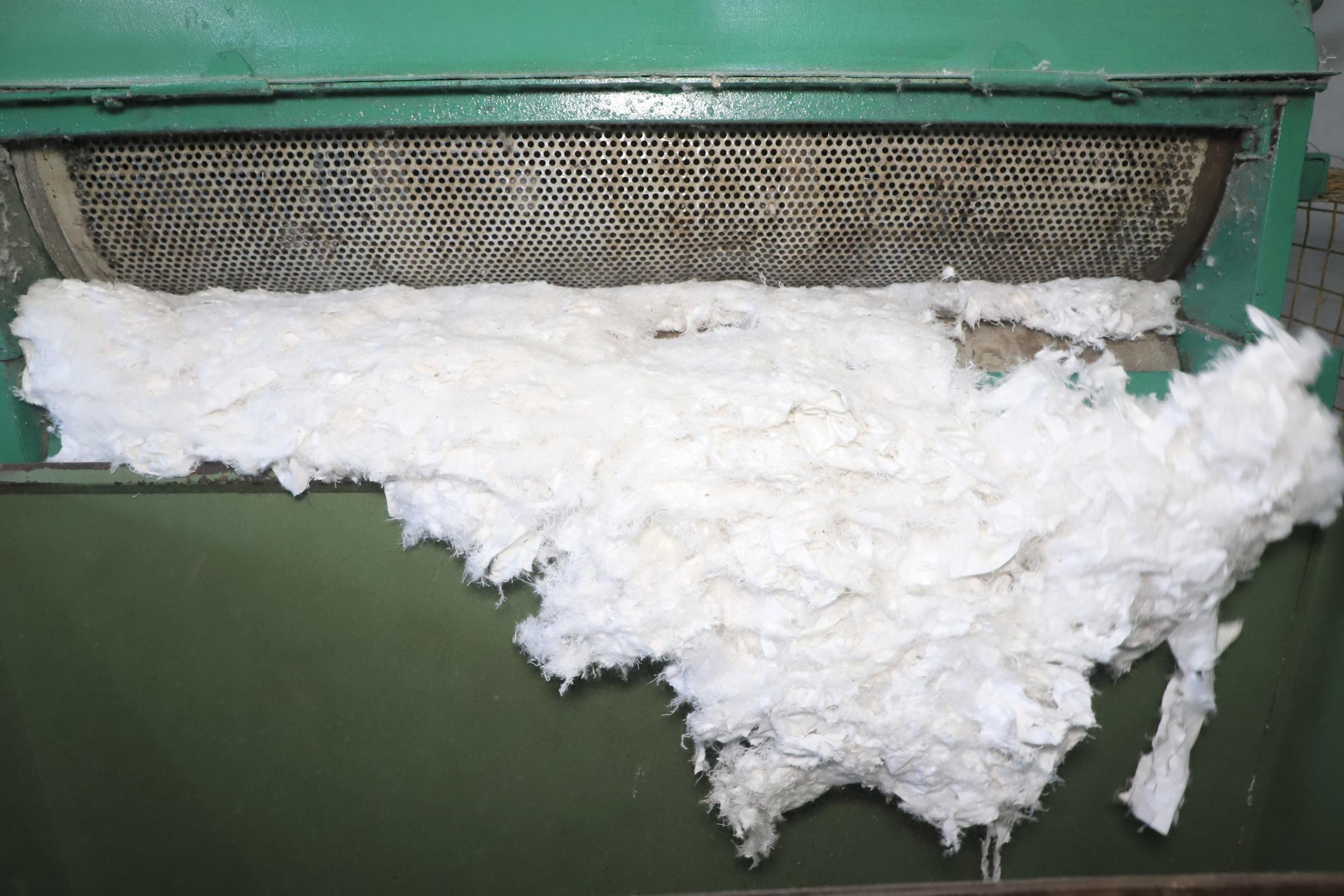
In the recycling project, the original supply chain was reversed: Dibella transported the organic Fairtrade napkins discarded by Lamme Textile Management to Pakistan. There, the goods were shredded and the organic Fairtrade cotton fibres recovered in a full-scale textile plant specialising in sustainability. In the next step, they were mixed with "fresh fibres", spun into yarns for denim production, woven, finished with sustainable processes, subjected to quality tests and then made up into jeans.

More information:
Dibella
Source:

Dibella GmbH

Archroma celebrates 3 years of working with aniline-free Indigo Heroes (c) Archroma
22.03.2021

Archroma celebrates 3 years of working with aniline-free Indigo Heroes

  • 18+ metric tons of aniline are estimated to have been removed from the denim supply chain in about 3 years(2).
  • That represents 300'000'000+ pairs of jeans free of aniline, with 18'000+ garment workers, and aquatic life, protected from its toxicity(2).

Archroma celebrates nearly 3 years of successfully converting the denim industry to aniline-free(1) pre-reduced liquid indigo.

Archroma launched its aniline-free(1) Denisol® Pure Indigo in May 2018(3).

  • 18+ metric tons of aniline are estimated to have been removed from the denim supply chain in about 3 years(2).
  • That represents 300'000'000+ pairs of jeans free of aniline, with 18'000+ garment workers, and aquatic life, protected from its toxicity(2).

Archroma celebrates nearly 3 years of successfully converting the denim industry to aniline-free(1) pre-reduced liquid indigo.

Archroma launched its aniline-free(1) Denisol® Pure Indigo in May 2018(3).

Aniline is a key ingredient to make the indigo molecule. Unfortunately, during this process some aniline impurities are carried through into the indigo dyestuff. When the indigo is dyed on the fabric, a lot of the aniline impurity is locked into the pigment in the fabric. The remainder of the aniline impurity, approximately 300 metric tons annually, is discharged during dyeing. This can be an issue as aniline is toxic to aquatic life. In addition, exposure levels to factory workers can be high. The new Denisol® Pure Indigo 30 liq was therefore developed as an aniline-free(1) indigo solution for designers, manufacturers and brand owners who long for authentic indigo inspiration.

Since the launch of Denisol® Pure Indigo, several denim manufacturers, such as front-runner Absolute Denim, as well as Advance Denim, Azgard 9, Kilim Group, Nuevo Mundo, Rantex, Shasha Denim and Tuong Long, have taken the matter in their hands and converted their production or dedicated lines to aniline-free denim to brands and retailers.

The innovation is also supported by denim partners such as Be Disobedient and The Denim Window.

Archroma evaluates that, based on the total quantity of Denisol® Pure Indigo sold until its introduction, its partners helped remove almost 18 metric tons of aniline from the denim supply chain. That represents an equivalent to about 300’000’000 pairs of jeans free of aniline and more than 18’000 garment workers protected from its toxicity(2).


(1) Below limits of detection according to industry standards (tested & proven).
(2) Based on 15 minutes of work to produce one pair of jeans, produced over 8-hour working days and 300 working weeks per year.
(3) For the launch press release, click here.

More information:
Archroma aniline-free Denim
Source:

EMG