From the Sector

from to
Reset
809 results
Photo Philip Wyers, Unsplash
18.12.2025

San Francisco Fire Department Adopts Non PFAS Turnout Gear

The San Francisco Fire Department (SFFD) has become the largest department in the United States to transition its entire fleet to non-PFAS turnout gear. The gear was purchased in part through a $2.35 million Assistance to Firefighters Grant (AFG) from FEMA and matching funds from the department, amid growing momentum around identifying PFAS alternatives in firefighting gear.

The department worked with textile innovator Milliken & Company and gear manufacturer Fire-Dex to fulfill the order, whose first shipment was delivered this month. The department plans to receive 1,100 sets of non-PFAS turnout gear, one set for every frontline suppression member, by December 31, 2025.

The San Francisco Fire Department (SFFD) has become the largest department in the United States to transition its entire fleet to non-PFAS turnout gear. The gear was purchased in part through a $2.35 million Assistance to Firefighters Grant (AFG) from FEMA and matching funds from the department, amid growing momentum around identifying PFAS alternatives in firefighting gear.

The department worked with textile innovator Milliken & Company and gear manufacturer Fire-Dex to fulfill the order, whose first shipment was delivered this month. The department plans to receive 1,100 sets of non-PFAS turnout gear, one set for every frontline suppression member, by December 31, 2025.

“As the San Francisco Fire Department continues to lead in innovation, we remain steadfast in our commitment to protecting the health and safety of our members. Firefighting is inherently dangerous, and our personnel deserve access to the most modern, protective, and safest turnout gear available. Transitioning to PFAS-free equipment is a critical step in advancing our mission: safeguarding the public by ensuring our firefighters remain healthy and able to serve at their highest capacity,” said SFFD Fire Chief Dean Crispen.

Chief Crispen added, “This distribution represents more than new gear, it reflects a strong, coordinated effort among the Fire Department, our elected leaders, SF Firefighters IAFF Local 798, and the SF Firefighters Cancer Prevention Foundation. Milliken and Fire-Dex rose to this challenge, demonstrating what is possible when partners are united by a shared purpose. This collaboration is what the residents and visitors of San Francisco expect and deserve. A protected workforce is the foundation of a protected community. By investing in the well-being of our firefighters, we strengthen the health, resilience, and safety of San Francisco as a whole.” 

The transition follows an ordinance passed in May 2024 making San Francisco the first city in the country to ban the use of PFAS chemicals in its firefighters’ turnout gear. With a June 30, 2026 deadline to make the switch, department officials worked efficiently to procure and test potential solutions, selecting the final gear well ahead of the deadline. 

The selected gear went through rigorous performance and safety testing, including a 90-day wear trial with 50 firefighters going through live fire training at the San Francisco Division of Training burn rooms. The gear is UL certified and meets the NFPA 1971-2018 and 1971-2025 standards. 

While non-fluorinated fabrics have existed for turnout gear outer shells and thermal liners, moisture barrier alternatives remained a key technical challenge. The introduction of Milliken Assure™ — North America’s first non-PFAS, non-halogenated flame-resistant moisture barrier — in October 2024 made it possible for Fire-Dex to provide SFFD with a solution that met all requirements. 

“A non-PFAS moisture barrier was the missing piece for departments wanting to move away from fluorinated chemicals,” said Marcio Manique, SVP and Managing Director of Milliken’s apparel business. “With Assure™, we refused to trade one hazard for another. It meets the strictest performance standards without adding weight or compromising breathability – giving firefighters exactly what they asked for.”

SFFD worked with MES Life Safety to order the garments from Fire-Dex and size each firefighter individually for their new equipment. Milliken and Fire-Dex have maintained a decade of strategic collaboration that delivers fire service innovation and advancement through U.S. research and manufacturing.

“Fire-Dex is honored to supply the San Francisco Fire Department with AeroFlex turnout gear featuring a non-fluorinated moisture barrier,” said Jeff Koledo, Fire-Dex Vice President of Sales. “We’re grateful to work alongside Milliken and MES in delivering this solution. Our goal has always been to provide fire departments across the country with options that meet their needs — and ultimately ensure they have the essential protection required to keep their communities safe.”

San Francisco encompasses 49 square miles and is the fourth largest city in the state of California. The SFFD is the 10th largest fire department in the United States, serving an estimated 1.5 million people. With 45 stations, firefighters respond to an average of 180,000 annual emergency calls. 

Source:

Milliken 

Messe Frankfurt puts Artificial Intelligence Centre Stage at its International Textile and Apparel Trade Fairs Mohammad Usman, Pixabay
18.12.2025

Messe Frankfurt puts Artificial Intelligence Centre Stage at its International Textile and Apparel Trade Fairs

Under the banner “Texpertise Focus AI”, Messe Frankfurt will place a strong emphasis on Artificial Intelligence (AI) across its international textile and apparel trade fairs from 2026 onwards, setting a future-shaping signal for the industry. The initiative highlights the responsible use of AI along the entire textile value chain, from fibre production to the point of sale. The programme will launch at Heimtextil in Frankfurt in January 2026.

Under the banner “Texpertise Focus AI”, Messe Frankfurt will place a strong emphasis on Artificial Intelligence (AI) across its international textile and apparel trade fairs from 2026 onwards, setting a future-shaping signal for the industry. The initiative highlights the responsible use of AI along the entire textile value chain, from fibre production to the point of sale. The programme will launch at Heimtextil in Frankfurt in January 2026.

The textile and apparel industry is undergoing significant transformation: artificial intelligence is reshaping workflows, enabling new business models and offering solutions for sustainability, efficient value chains and the sector’s skills shortage. Commercial market analyses estimate the global market for AI in the textile industry to reach around USD 21 billion by 2033, roughly ten times the 2023 figure. According to Eurostat, 13.5 percent of European industrial companies were already using AI in 2024, including many businesses in the textile sector. Under the communication umbrella “Texpertise Focus AI”, Messe Frankfurt will showcase exhibitor applications and content formats relating to artificial intelligence at its international textile and apparel events from 2026 onwards.
 
Artificial Intelligence as a Key Focus 
From 2026, Texpertise Focus AI will further enhance the visibility and accessibility of AI-related topics at Messe Frankfurt’s textile trade fairs. This includes curated content formats such as panel discussions, guided tours and live demonstrations featuring international industry experts. In addition, many exhibiting companies will present AI-related solutions.
 
The initiative will commence at Heimtextil from 13 to 16 January 2026 in Frankfurt am Main. AI will feature across numerous programme items, searchable online under “Texpertise Focus AI”. On Wednesday, 14 January at 3 p.m., internationally renowned thought leader in AI for design, Tim Fu, will join the Architonic Live Talk. Under the title “Woven intelligence: designing spaces in the era of AI”, Fu will discuss how artificial intelligence can support meaningful collaboration between architecture and interior design to create spaces that connect craft with computational technology. Messe Frankfurt will roll out the initiative across its textile trade fairs worldwide. Local characteristics and market-specific challenges will be integrated into the concept to ensure relevance.

Artificial Potential for the Value Chain, Sustainability and Workforce Development 
AI is transforming the textile value chain from fibre production to the point of sale and offers potential for greater efficiency, higher quality and improved resilience. In raw-material sourcing, AI systems support cultivation, harvesting and recycling through intelligent analytics and sorting technologies. In design and development, AI tools accelerate creative processes and simulate material properties, a concept reflected, for example, in the immersive installation “among all” by Patricia Urquiola at Heimtextil 2026. Production and logistics processes can also be optimised, waste reduced and supply chains made more transparent.
 
Artificial intelligence is also driving the twin transformation – the convergence of digitalisation and sustainability. Around 116 million tonnes of textile fibres are produced annually worldwide, yet only one percent of post-consumer textile waste is recycled[3]. With AI, companies can conserve resources and reduce waste. AI-based design and forecasting models help prevent overproduction, while life-cycle analyses enable environmentally conscious sourcing. Image-recognition systems sort used textiles, laying the foundation for a true circular economy. The entire spectrum of textile processing technologies will be showcased at Texprocess from 21 to 24 April 2026 in Frankfurt am Main.
 
In the workplace, AI is creating new job profiles and reshaping existing ones, in areas such as data analytics, digital design and process control. It also has the potential to ease labour shortages: according to the German Institute of Textile Technology (ITA) at RWTH Aachen University, up to 70 percent of standardised production tasks could be automated. AI can also support recruitment by enabling targeted identification and selection of qualified professionals.

Source:

Messe Frankfurt Exhibition GmbH

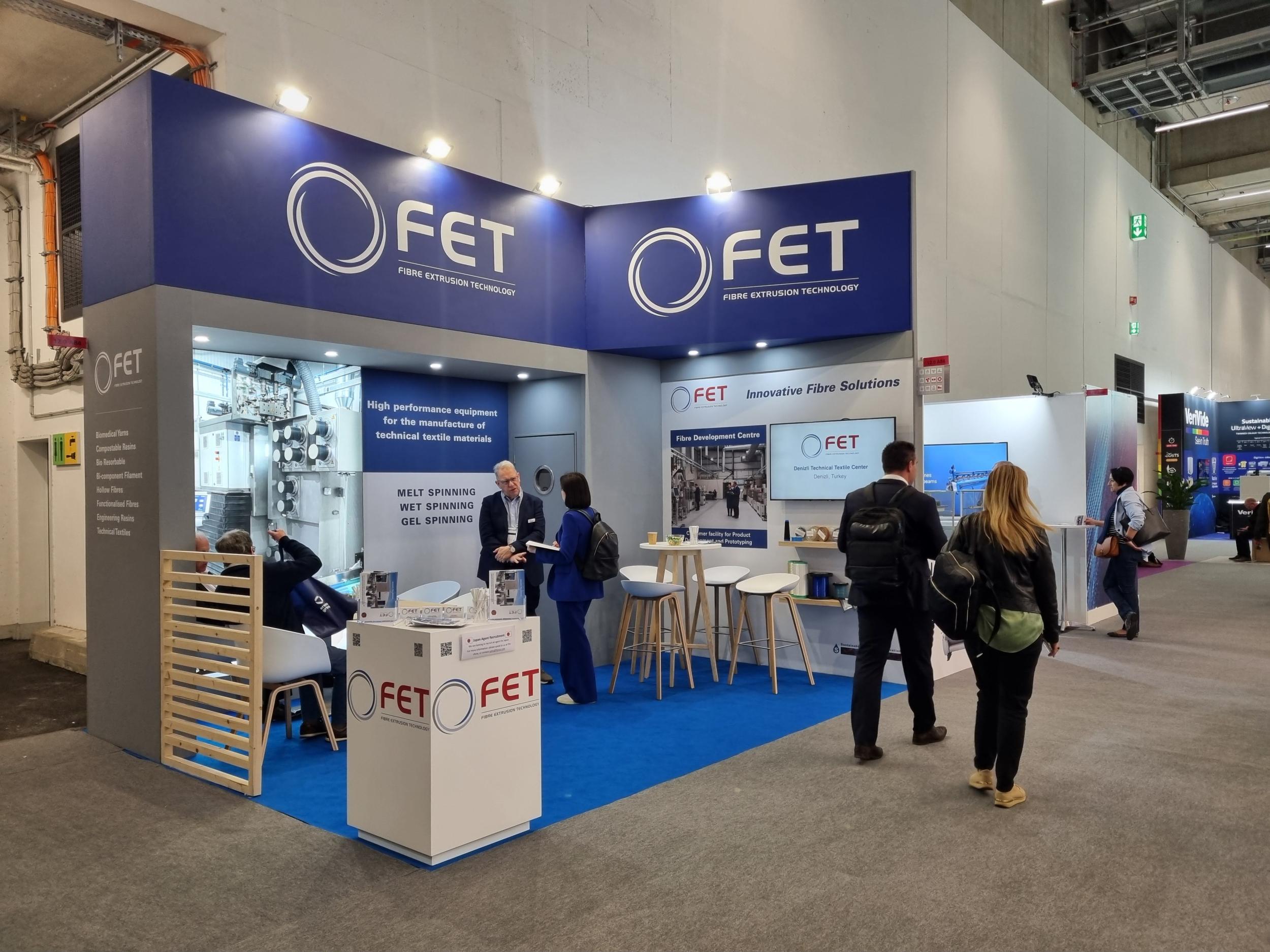
Compamed Stand Photo FET
Compamed Stand
17.12.2025

FET ends 2025 exhibition run with COMPAMED 2025

Fibre Extrusion Technology Ltd (FET) of Leeds, UK reported another successful exhibition at COMPAMED 2025 in Düsseldorf, following closely on the heels of ITMA ASIA in Singapore. This was the second time that FET had exhibited at this international trade fair for the medical technology supplier sector, a reflection of the company’s growing role in this sector. More than half of FET’s turnover is currently derived from the burgeoning medical market.

COMPAMED is aimed at suppliers of a wide range of high-quality medical technology components, services and production equipment for the medical industry. FET’s expanding role in the medical sector is therefore an ideal fit for this trade show.

Fibre Extrusion Technology Ltd (FET) of Leeds, UK reported another successful exhibition at COMPAMED 2025 in Düsseldorf, following closely on the heels of ITMA ASIA in Singapore. This was the second time that FET had exhibited at this international trade fair for the medical technology supplier sector, a reflection of the company’s growing role in this sector. More than half of FET’s turnover is currently derived from the burgeoning medical market.

COMPAMED is aimed at suppliers of a wide range of high-quality medical technology components, services and production equipment for the medical industry. FET’s expanding role in the medical sector is therefore an ideal fit for this trade show.

At the exhibition, FET launched its latest ground breaking technology with the FET-500 – Gel Spinning systems for Ultra High Molecular weight polymers such as UHMWPE, boasting significant savings in cost, footprint and environmental factors.  With vast flexibility whilst maintaining critical consistency, the FET-500 provides the ability to prove concepts and secure medical device IP. Key benefits include removing the harsh processing chemicals that historically have been used with gel spinning technology. FET’s patent-pending process technology has enabled the process to be compact and environmentally friendly compared to industrial alternatives. 

In 2026, FET will be exhibiting at two major trade shows to continue its global drive. This begins with Techtextil, Frankfurt in April, followed by COMPAMED 2026, Dusseldorf in November.

17.12.2025

ISPO joins the European Outdoor Conservation Association as a Sustaining Member

Raccoon Media Group, organisers of ISPO the world’s most influential trade event for the sporting goods, outdoor and winter sports industries, confirms its commitment to ensuring an enduring impact by joining the European Outdoor Conservation Association (EOCA) as a Sustaining Member and revealing more details of the newly established ISPO Impact Fund.

Recognising that sustainability is non-negotiable, these announcements underscore ISPO’s long-term dedication to environmental responsibility, industry stewardship and collaborative action across the global outdoor community.

Raccoon Media Group, organisers of ISPO the world’s most influential trade event for the sporting goods, outdoor and winter sports industries, confirms its commitment to ensuring an enduring impact by joining the European Outdoor Conservation Association (EOCA) as a Sustaining Member and revealing more details of the newly established ISPO Impact Fund.

Recognising that sustainability is non-negotiable, these announcements underscore ISPO’s long-term dedication to environmental responsibility, industry stewardship and collaborative action across the global outdoor community.

Tracy Bebbington, Managing Director, ISPO at Raccoon Media Group, said; “As ISPO enters a new era under new management and prepares for its next chapter in Amsterdam, it is essential that sustainability sits at the heart of everything we do. Joining EOCA and launching the ISPO Impact Fund reflect our belief in collective action and our responsibility to drive direct and meaningful change. We’re not just advocating for change; we are committed to making it happen. Not only that, we have appointed an external agency to closely analyse the carbon footprint of the event itself and we will make a solid commitment to being transparent about the footprint and, from day one, actively take steps to reduce it.”

“Respecting and safeguarding the natural environments in which we play “
ISPO is proud to announce its formal commitment as both a member and Sustaining Member of the European Outdoor Conservation Association (EOCA).  By becoming a Sustaining Member, ISPO will provide ongoing funding and strategic support to EOCA’s mission to conserve and restore wild places, support biodiversity, and enable outdoor participation that respects and safeguards nature. The partnership further aligns ISPO’s environmental values with those championed by brands, retailers and industry associations across the sector.

Dan Yates, Executive Director of EOCA, said: “We are delighted to welcome ISPO, and the newly expanded team at Raccoon Media Group, as a member, and importantly, a Sustaining Member of EOCA. Their commitment sends a powerful message: that major industry platforms must not only showcase innovation but actively support the landscapes and ecosystems that inspire it. ISPO’s involvement will allow us to reach more organisations, fund more conservation projects, and amplify the urgency of protecting the wild places the outdoor community depends on.”

The €1 million ISPO Impact Fund 
As part of their long-term commitment to supporting positive change, ISPO is investing one million euros into a new charitable organisation, the ISPO Impact Fund. The fund will support grassroots, charitable and non-profit initiatives that originate within the sports, outdoor and winter sports communities, or that have a direct and meaningful connection to these sectors.

The ISPO Impact Fund has been established as an independent organisation to ensure transparency, structure and the highest levels of governance expected of grant awarding bodies. The three founding trustees, Hannah Lewis, Finance Director at Raccoon Media Group, Andrew Denton, CEO at the Outdoor Industries Association, and Mark Held, founding Secretary General of the European Outdoor Group are responsible for shaping the ISPO Impact Fund to ensure high standards of fairness, transparency and responsibility.

The Impact Fund will focus on three core areas:

  • Nature Conservation & Environmental Stewardship - Supporting projects that protect biodiversity, restore natural environments, and reduce the environmental impact of sport and outdoor recreation.
  • Equitable Access & Participation - Enabling more people - regardless of gender, ethnicity, ability, income, or background to access and enjoy sport, winter sports and outdoor recreation. 
  • Fair, Ethical & Responsible Supply Chains - Investing in initiatives that improve the welfare of workers throughout the supply chain and strengthen the processes through which sport and outdoor products are made, marketed and sold.

An independent advisory panel of industry experts and community representatives is currently being recruited to oversee the allocation of the €1 million fund, assessing all applications, reviewing their potential impact, and awarding grants based on clear and transparent criteria.

The team are actively recruiting members of this panel and welcome applications from the Sports, Outdoor and Winter sports industries. To apply, please contact hello@isposportsbusinessevents.com

“Our advisory panel will help ensure that the funding is fairly and appropriately allocated across projects which get more people active, protect the places in which we play and ensure products are ethically created. From local community initiatives to huge global projects, we expect hundreds of applications. It’s important that these are assessed for their impact so that funds can be carefully allocated, and more importantly actually invested correctly to impact change on an individual level.” said Andrew Denton.

The application process for the ISPO Impact Fund will open online in Spring 2026, with the awarded grants being announced in November at ISPO 2026 at RAI Amsterdam. 

Outlast® Wins WTiN Innovate Textile Award with Aersulate® Grafik Outlast Technologies GmbH
16.12.2025

Outlast® Wins WTiN Innovate Textile Award with Aersulate®

Outlast Technologies GmbH has been awarded the WTiN Innovate Textile Award in the cate-gory Material Innovation for Aersulate®, its aerogel-infused insulation technology. The award honors outstanding achievements in advanced material development and textile innovation.

Aersulate® marks a significant advancement in thermal insulation. The technology integrates aerogel, whose highly porous structure efficiently traps air, delivering exceptional thermal per-formance at extremely low weight and minimal thickness. In Aersulate® wadding, aerogel ac-counts for approximately 50% of the material volume, enabling superior insulation without bulk.

Outlast Technologies GmbH has been awarded the WTiN Innovate Textile Award in the cate-gory Material Innovation for Aersulate®, its aerogel-infused insulation technology. The award honors outstanding achievements in advanced material development and textile innovation.

Aersulate® marks a significant advancement in thermal insulation. The technology integrates aerogel, whose highly porous structure efficiently traps air, delivering exceptional thermal per-formance at extremely low weight and minimal thickness. In Aersulate® wadding, aerogel ac-counts for approximately 50% of the material volume, enabling superior insulation without bulk.

Their minimal space requirements enable entirely new applications and make solutions possible that were previously unfeasible due to limited available space. At the same time, Aersulate® fabrics and waddings retain nearly all of their performance even under compression and humidi-ty. Unlike conventional insulation materials, they provide reliable thermal insulation and com-fort under demanding conditions. This makes Aersulate® a powerful solution for applications where consistent performance is essential, regardless of environment or use.

Reflecting the strategic relevance of the innovation, Outlast is positioning Aersulate® for broad market adoption. “We will deploy our Aersulate® fabrics and waddings across multiple high-value product segments - including bedding, safety equipment, footwear, and apparel. Our goal is clear: to establish Aersulate® as a scalable performance solution with broad market applicability wherever thermal management, comfort, and lightweight insulation make the difference,” said Martin Bentz, CEO of Outlast Technologies GmbH.

Reflecting on the award recognition, Bentz emphasized that working with aerogel represents one of the most demanding challenges in material innovation. Extremely lightweight yet highly frag-ile, aerogel is difficult to process, integrate, and stabilize within textile structures. Transforming this exceptional but complex material into scalable, durable fabrics and waddings requires deep material expertise, precision engineering, and sustained research efforts.

“Winning this award makes us genuinely proud. It is a strong recognition of our work and a clear confirmation that we are on the right path with innovative insulation solutions like Aersulate® - solutions that resonate with market needs and set new standards for performance,” Bentz add-ed.

Source:

Outlast Technologies GmbH

Pattern loom on which the fabrics were produced. Photo: DITF
15.12.2025

Auxetic fabrics: More safety and comfort for protective clothing

When everyday materials are pulled, they stretch or elongate in the direction of the pull and become narrower in cross-section. We can also observe this property in two-dimensional textiles. Auxetic structures behave differently here. They have the striking property of not changing under tensile stress or even increasing their width or thickness. These properties are advantageous, for example, in protective textiles or textile filter media. The DITF are researching auxetic fabrics for various applications.

When everyday materials are pulled, they stretch or elongate in the direction of the pull and become narrower in cross-section. We can also observe this property in two-dimensional textiles. Auxetic structures behave differently here. They have the striking property of not changing under tensile stress or even increasing their width or thickness. These properties are advantageous, for example, in protective textiles or textile filter media. The DITF are researching auxetic fabrics for various applications.

Previous research in the field of auxetic fabrics has focused on fiber composites. These structures are naturally very stiff. This makes them suitable for applications where the material only needs to be deformed once. Other research approaches have achieved auxetic properties at the yarn level that return to their original shape after tension. This negative transverse contraction can be quantified using Poisson's ratio, it assumes values from ±0 but also clearly negative values for auxetic structures. However, the effect is superimposed by other structural influences in the textile surface and is thus limited. For this reason, the DITF are researching a textile, flexible structure based directly on woven fabric that has reversible, auxetic properties.

To achieve these properties, special multi-layer fabrics have been developed that resemble the thickness structure of an hourglass in both the weft and warp directions. This geometry leads to a compression of the fabric under pressure, which is advantageous in protective clothing, for example. Impacts and other forces are significantly reduced. At the same time, the structure allows for excellent adaptation to different body shapes. Conversely, the fabric becomes wider or thicker under tensile stress. This can lead to a larger surface area or volume, as desired for filtration tasks.

The fabric structures developed at the DITF as part of the research project “Auxetic Weaving Structures” (1IF22730N) thus have an adjustable Poisson's ratio with negative values down to −2. The auxetic effect is not only effective once, but can also be reliably demonstrated under repeated stress.

Composites Composites Rebar, AZL Aachen GmbH
11.12.2025

Identifying Business Opportunities for Composites in Buildings & Infrastructure

The global buildings and infrastructure (B&I) market for composite materials accelerates toward a projected value of more than $21 billion in 2025. To identify further business potentials for the composite industry, AZL Aachen GmbH has announced a new inte rnational Joint Market and Technology Study: “Next Generation Composites in Buildings & Infrastructure – A 2026 Global Outlook on Growth, Sustainability, and Digitalization.”

Building on the success of AZL’s landmark Buildings & Infrastructure study – conducted in 2017 with 32 global companies – this new initiative will reassess established applications and quantify emerging opportunities across markets, materials, and manufact uring technologies. The addressed market segments comprise following, among others: residential/ non -residential buildings and city furniture, infrastructure for energy supply/ water supply/electricity and heat supply and storage as well as special constr uctions like airports, ports or train stations.

The global buildings and infrastructure (B&I) market for composite materials accelerates toward a projected value of more than $21 billion in 2025. To identify further business potentials for the composite industry, AZL Aachen GmbH has announced a new inte rnational Joint Market and Technology Study: “Next Generation Composites in Buildings & Infrastructure – A 2026 Global Outlook on Growth, Sustainability, and Digitalization.”

Building on the success of AZL’s landmark Buildings & Infrastructure study – conducted in 2017 with 32 global companies – this new initiative will reassess established applications and quantify emerging opportunities across markets, materials, and manufact uring technologies. The addressed market segments comprise following, among others: residential/ non -residential buildings and city furniture, infrastructure for energy supply/ water supply/electricity and heat supply and storage as well as special constr uctions like airports, ports or train stations.

Based on this preliminary work in which 438 attractive products/ applications/ technologies have been identified and analyzed, this new study will re -evaluate previously identified core applications using fresh 2025 market data, updated growth forecasts, and new competitive benchmarking. Furthermore, AZL will identify and quantify new growth potentials driven by sustainability (circular economy, LCA -driven mat erial choice, bio -composites), by digitalization (e.g., integration with BIM, sensor -equipped "smart" components) and by new applications (e.g., hydrogen infrastructure, modular data centers, etc.).

The 9 -month project will deliver a structured market segmentation, technology and value -chain mapping, application screenings, technology trees, fact sheets, comparative KPI matrices, and expert workshops – providing participants with a practical foundatio n for business development, investment strategy, and innovation planning. Results will be delivered in a comprehensive final report and presentation package. Additionally, the results from the former 2017 B&I study will also be made available in the new st udy together with the final report and will be used as a basis for discussion and reflection on the results in the course of the new market and technology study. 

Participation is open to material suppliers, processors, equipment manufacturers, engineering service providers, system integrators and construction companies across the entire value chain. The project kick -off meeting is on February 26th 2026 (online).

Call for Participants: Companies aiming to shape the future of composite solutions in buildings and infrastructure are invited to join the consortium.
For further information or to secure participation: Philipp Fröhlig, Head of Industrial Services Email: philipp.froehlig@azl-aachen-gmbh.de

Source:

AZL Aachen GmbH

Polartec® wins ISPO 2025 Award for its AirCore™ breathable weather protection Photo Polartec, Montura
10.12.2025

Polartec® wins ISPO 2025 Award for its AirCore™ breathable weather protection

Polartec, a Milliken & Company brand and the premium creator of innovative, more sustainable textile solutions, has been awarded the prestigious ISPO Award 2025 for Montura’s FW26 apparel featuring Polartec® AirCore™, the first truly air-permeable laminate engineered to keep users dry from the inside out.

Now in its fifteenth year, the globally respected ISPO Awards program honors the world’s most groundbreaking innovations across ten distinct categories, with winners selected by an international jury of esteemed industry experts. In addition to receiving the ISPO Award 2025, Polartec has also been named a Top 5 Winner in the Mixed category – a distinction that underscores the transformative potential of AirCore™. As the industry first non-PFAS proprietary hydrophobic polymer used to create a nanofiber membrane, AirCore™ stood out among hundreds of entries, reaffirming Polartec’s leadership in sustainable, high-performance weather-protection technologies.

Polartec, a Milliken & Company brand and the premium creator of innovative, more sustainable textile solutions, has been awarded the prestigious ISPO Award 2025 for Montura’s FW26 apparel featuring Polartec® AirCore™, the first truly air-permeable laminate engineered to keep users dry from the inside out.

Now in its fifteenth year, the globally respected ISPO Awards program honors the world’s most groundbreaking innovations across ten distinct categories, with winners selected by an international jury of esteemed industry experts. In addition to receiving the ISPO Award 2025, Polartec has also been named a Top 5 Winner in the Mixed category – a distinction that underscores the transformative potential of AirCore™. As the industry first non-PFAS proprietary hydrophobic polymer used to create a nanofiber membrane, AirCore™ stood out among hundreds of entries, reaffirming Polartec’s leadership in sustainable, high-performance weather-protection technologies.

Unlike conventional weather-protection solutions that trap heat and moisture to block the elements, Polartec® AirCore™ actively vents to keep users dry from the inside out, representing a true paradigm shift in breathable weather protection. AirCore™ delivers real air permeability (0.4–1.0 CFM), an MVTR above 25,000 g/m²/24 h, and full water repellency. Combined with exceptional stretch, reduced noise, and unmatched ventilation, AirCore™ is perfectly suited for high-output activities. Its selection as an ISPO Award 2025 winner marks a defining moment in the evolution of breathable, sustainable shell technologies.

The Ritmo PTC AirCore Hooded Anorak by Montura, available in FW26, marks the debut of Polartec® AirCore™ in the outdoor world. Engineered for performance-oriented outdoor athletes, mountaineers, trail runners, its wind and water-resistant breathable design is also ideal for ski touring and intense outdoor activities. The ultrasonically welded seams reduce bulk and chafing and ensure high flexibility, while 2-way stretch fleece inserts on the back, neck, sleeves, and hips improve flexibility and ventilation. Functional details include a fitted hood, multiple mesh pocket system, a half-length front zipper, chest pockets, and an elastic hem. Montura has also developed the Ritmo PTC AirCore pants for ski touring, which were designed as a fast and versatile alternative to alpine one-piece suits.

Source:

Akimbo Communications for Polartec

08.12.2025

Autoneum announces repayment of 1.125% fixed-rate bond at maturity

Autoneum today announced it repays in full its 1.125% fixed-rate bond due December 8, 2025, with a nominal value of CHF 100 million. The Swiss franc public bond was issued in 2017 and served, among other purposes, to finance the company’s medium-term growth.

Autoneum repaid the bond using existing credit lines on favorable terms. The repayment reflects a sustainable reduction of the company’s net debt over recent years, driven by significant free cash flow generation.

“With the repayment of this bond, we reaffirm our financial solidity and our clear commitment to further reducing debt in the future,” says Bernhard Wiehl, CFO Autoneum. “We thank our bond investors for their long-standing trust in Autoneum.”

Autoneum today announced it repays in full its 1.125% fixed-rate bond due December 8, 2025, with a nominal value of CHF 100 million. The Swiss franc public bond was issued in 2017 and served, among other purposes, to finance the company’s medium-term growth.

Autoneum repaid the bond using existing credit lines on favorable terms. The repayment reflects a sustainable reduction of the company’s net debt over recent years, driven by significant free cash flow generation.

“With the repayment of this bond, we reaffirm our financial solidity and our clear commitment to further reducing debt in the future,” says Bernhard Wiehl, CFO Autoneum. “We thank our bond investors for their long-standing trust in Autoneum.”

Source:

Autoneum Management AG

: Urgent clarification needed on scope of Textiles EPR for PPE and Medical Devices Graphic: Edana
08.12.2025

Urgent clarification needed on scope of Textiles EPR for PPE and Medical Devices

EDANA, the voice of nonwovens, alongside fellow industry associations CIRFS (European Man-Made Fibres Association), EURATEX (The European Apparel and Textile Confederation), ESF (European Safety Federation), and EuroCommerce (Retail & Wholesale), has issued a joint statement raising critical concerns regarding the transposition of Directive (EU) 2025/1892, the targeted revision of the Waste Framework Directive. 

As Member States begin implementing the Extended Producer Responsibility (EPR) for textiles, a lack of distinction within the Directive’s Annex IVc is causing confusion. Currently, the specified CN codes do not distinguish between standard apparel and essential Personal Protective Equipment (PPE) or Medical Devices (MD). 

The joint statement highlights that PPE and Medical Devices are engineered to protect users from hazardous environments, including chemical, biological, and radiological risks. Consequently, these garments often become contaminated and are classified as hazardous waste, requiring incineration—often with energy recovery—rather than recycling, to ensure safety. 

EDANA, the voice of nonwovens, alongside fellow industry associations CIRFS (European Man-Made Fibres Association), EURATEX (The European Apparel and Textile Confederation), ESF (European Safety Federation), and EuroCommerce (Retail & Wholesale), has issued a joint statement raising critical concerns regarding the transposition of Directive (EU) 2025/1892, the targeted revision of the Waste Framework Directive. 

As Member States begin implementing the Extended Producer Responsibility (EPR) for textiles, a lack of distinction within the Directive’s Annex IVc is causing confusion. Currently, the specified CN codes do not distinguish between standard apparel and essential Personal Protective Equipment (PPE) or Medical Devices (MD). 

The joint statement highlights that PPE and Medical Devices are engineered to protect users from hazardous environments, including chemical, biological, and radiological risks. Consequently, these garments often become contaminated and are classified as hazardous waste, requiring incineration—often with energy recovery—rather than recycling, to ensure safety. 

Including these products in standard textile EPR schemes poses significant risks: 

  • Cross-Contamination: Mixing hazardous PPE waste with household textiles threatens human health and environmental safety. 
  • Regulatory Conflict: Contaminated PPE disposal is already regulated under Articles 13, 17, 18, and 19 of the existing Waste Framework Directive. 
  • Low Circularity Potential: PPE constitutes less than 1% of textile waste, with 80-90% treated as hazardous. The environmental benefit of recycling the remaining fraction is negligible compared to the transport required to aggregate sufficient volumes. 

The statement also calls for guidance on safety shoes. Like other PPE, these items face contamination issues that limit recyclability. Furthermore, manufacturers cannot guarantee product warranties or conformity for reused safety footwear, and the fee scaling for heavy items (e.g., steel-toed boots) remains unclear. 

Recital 28 of the Directive already suggests that products posing safety or hygiene risks should be excluded from the EPR. However, this is being overlooked in national implementations, such as in Spain and the Netherlands. 

Therefore, the signatories urge the European Commission to issue clear guidance to Member States confirming that products complying with the PPE Regulation (2016/425) and the MD Regulation (2017/745) are outside the scope of the Textiles EPR.

Polybutylene succinate (PBS) film tape Photo Sächsisches Textilforschungsinstitut e.V. (STFI)
Polybutylene succinate (PBS) film tape
05.12.2025

Region of renewable raw materials: Central German Alliance for Bioplastics

The development of sustainable plastic solutions is rapidly gaining importance in light of global environmental pollution, dwindling fossil resources and ambitious climate protection targets. As part of the regional alliance RUBIO, which brings together 18 partners from central Germany and the Berlin-Brandenburg area, the bio-based and biodegradable plastic polybutylene succinate (PBS) was comprehensively investigated, starting with the raw material, through the manufacturing process, to industrial application. The aim was to evaluate the potential of PBS as an environmentally friendly alternative to polyethylene and to create the technological basis for new sustainable value chains. As a partner in the alliance, STFI was able to demonstrate that the bioplastic PBS is suitable for textile processing using the example of a net for straw bales. 

The development of sustainable plastic solutions is rapidly gaining importance in light of global environmental pollution, dwindling fossil resources and ambitious climate protection targets. As part of the regional alliance RUBIO, which brings together 18 partners from central Germany and the Berlin-Brandenburg area, the bio-based and biodegradable plastic polybutylene succinate (PBS) was comprehensively investigated, starting with the raw material, through the manufacturing process, to industrial application. The aim was to evaluate the potential of PBS as an environmentally friendly alternative to polyethylene and to create the technological basis for new sustainable value chains. As a partner in the alliance, STFI was able to demonstrate that the bioplastic PBS is suitable for textile processing using the example of a net for straw bales. 

The starting point: bioplastics sought as a substitute for PE
Increasing reports of macro and microplastics everywhere on earth, the finite nature of fossil re-sources, EU climate protection targets, and the call for CO2 reduction compel all stakeholders, especially the plastics industry, to act promptly. Bio-based and simultaneously biodegradable plastics ap-pear to be valuable raw materials for many applications, ranging from the packaging industry to the textile sector and agriculture. The aim of this project was comprehensive investigation of polybutylene succinate (PBS) from raw material to its industrial applicability. In order to qualify the biopolymer as a substitute for polyethylene (PE), its material properties were tested and evaluated with regard to their suitability for a wide range of applications.

The textile processing of the bioplastic PBS
During project work, STFI main task was to explore opportunities and limits of technological processing of PBS materials (resins, film, nonwoven fabric, ribbons) into textile end products. Investigations were carried out on processing behavior of resins to nonwoven fabrics, followed by cutting processes into narrow ribbons, as well as studies on cutting and stretching PBS films and resins into ribbons. Subsequently, these ribbons were used to produce surfaces on knitting and weaving ma-chines. As a result, nonwoven fabrics, ribbons, and textile structures are available, which will be further optimized in subsequent projects. It has been possible to develop a knitted straw bale net that meets the requirements regarding mechanical properties of DLG (German Agricultural Society) for novel bio-based plastics.

Success and outlook
The results include spunbonded fabrics, ribbons and textile structures. A knitted straw bale net has been successfully developed that meets the requirements of the DLG (German Agricultural Society) for innovative bio-based plastics in terms of mechanical properties. 

The focus for the future is on optimising textile production processes for the bioplastic PBS. The RUBIO2Value project was launched in December and will focus on applications such as injection-moulded reusable packaging, textiles and geotextiles, but also disposable packaging in upcoming studies by the consortium. At STFI, established textile processes are being converted to sustainable and renewable raw materials in order to use recycled or biodegradable materials for sustainable production.

Source:

Sächsisches Textilforschungsinstitut e.V. (STFI) 

01.12.2025

Autoneum: Acquisition of Chengdu Yiqi-Sihuan Automobile Interior Co., Ltd. completed

Autoneum has closed the acquisition of Chengdu Yiqi-Sihuan Automobile Interior Co., Ltd., a leading Chinese supplier of acoustic and thermal management solutions for the automotive industry. This strategic transaction marks a key step in Autoneum’s expansion in Asia and further strengthens its position in the world’s largest automotive market. 

Originally announced in May 2025 as the takeover of Chengdu FAW-Sihuan Group, the transaction includes all shares of Chengdu Yiqi-Sihuan. The company name was clarified during the process to better reflect the scope of the transaction. This takeover follows the recent integration of Jiangsu Huanyu Group. Together, these initiatives reinforce Autoneum’s commitment to its “Level Up” strategy and its goal to generate 20 percent of Group revenue in Asia over the medium term. 

Founded in 2011, Chengdu Yiqi-Sihuan operates four production facilities across China and em-ploys approximately 240 people. The company supplies major Chinese OEMs including FAW-VW, FAW-Audi, FAW-Toyota, and Geely. In 2024, it generated revenues of approximately CHF 27 mil-lion, with further growth expected in the coming years. 

Autoneum has closed the acquisition of Chengdu Yiqi-Sihuan Automobile Interior Co., Ltd., a leading Chinese supplier of acoustic and thermal management solutions for the automotive industry. This strategic transaction marks a key step in Autoneum’s expansion in Asia and further strengthens its position in the world’s largest automotive market. 

Originally announced in May 2025 as the takeover of Chengdu FAW-Sihuan Group, the transaction includes all shares of Chengdu Yiqi-Sihuan. The company name was clarified during the process to better reflect the scope of the transaction. This takeover follows the recent integration of Jiangsu Huanyu Group. Together, these initiatives reinforce Autoneum’s commitment to its “Level Up” strategy and its goal to generate 20 percent of Group revenue in Asia over the medium term. 

Founded in 2011, Chengdu Yiqi-Sihuan operates four production facilities across China and em-ploys approximately 240 people. The company supplies major Chinese OEMs including FAW-VW, FAW-Audi, FAW-Toyota, and Geely. In 2024, it generated revenues of approximately CHF 27 mil-lion, with further growth expected in the coming years. 

“This acquisition is another milestone in our Asia strategy,” said Eelco Spoelder, CEO Autoneum. “We aim to grow with Chinese OEMs not only in China but also globally. Expanding our local presence in China allows us to be closer to the local customers and accelerate innovation cycles—both of which are critical for sustainable growth.” 

Autoneum will continue to operate the entities of Chengdu Yiqi-Sihuan under their existing Chinese names, while fully integrating them into its Business Group Asia. This approach aligns with Autoneum’s strategic focus on sustainability, innovation, and customer-centric solutions—particularly in the dynamic Chinese market.

Source:

Autoneum Management AG

Dimpled metamaterial in hourglass pattern Photo Harvard John A. Paulson School of Engineering and Applied Sciences
Dimpled metamaterial in hourglass pattern
26.11.2025

New textile can adjust its aerodynamic properties

Imagine a road cyclist or downhill skier whose clothing adapts to their wind speed, allowing them to shave time just by pulling or stretching the fabric.

Such cutting-edge textiles are within reach, thanks to researchers at the Harvard John A. Paulson School of Engineering and Applied Sciences (SEAS). Led by SEAS mechanical engineering graduate student David Farrell, a study published in Advanced Materials describes a new type of textile that uses dimpling to adjust its aerodynamic properties while worn on the body. The research has potential to change not only high-speed sports, but also industries like aerospace, maritime, and civil engineering.

The research is a collaboration between the labs of Katia Bertoldi, the William and Ami Kuan Danoff Professor of Applied Mechanics, and Conor J. Walsh, the Paul A. Maeder Professor of Engineering and Applied Sciences.  

Imagine a road cyclist or downhill skier whose clothing adapts to their wind speed, allowing them to shave time just by pulling or stretching the fabric.

Such cutting-edge textiles are within reach, thanks to researchers at the Harvard John A. Paulson School of Engineering and Applied Sciences (SEAS). Led by SEAS mechanical engineering graduate student David Farrell, a study published in Advanced Materials describes a new type of textile that uses dimpling to adjust its aerodynamic properties while worn on the body. The research has potential to change not only high-speed sports, but also industries like aerospace, maritime, and civil engineering.

The research is a collaboration between the labs of Katia Bertoldi, the William and Ami Kuan Danoff Professor of Applied Mechanics, and Conor J. Walsh, the Paul A. Maeder Professor of Engineering and Applied Sciences.  

On-demand golf ball dimples
Farrell, whose research interests lie at the intersection of fluid dynamics and artificially engineered materials, or metamaterials, led the creation of a unique textile that forms dimples on its surface when stretched, even when tightly fitted around a person’s body. The fabrics utilize the same aerodynamic principles as a golf ball, whose dimpled surface causes a ball to fly further by using turbulence to reduce drag. Because the fabric is soft and elastic, it can move and stretch to change the size and shape of the dimples on demand.  

Adjusting dimple sizes can make the fabric perform better in certain wind speeds by reducing drag by up to 20%, according to the researchers’ experiments using a wind tunnel.

“By performing 3,000 simulations, we were able to explore thousands of dimpling patterns,” Farrell said. “We were able to tune how big the dimple is, as well as its form. When we put these patterns back in the wind tunnel, we find that certain patterns and dimples are optimized for specific wind-speed regions.”

Farrell and team used a laser cutter and heat press to create a dual-toned fabric made of a stiffer black woven material, similar to a backpack strap, and a gray softer knit that’s flexible and comfortable. Using a two-step manufacturing process, they cut patterns into the woven fabric and sealed it together with the knit layer to form a textile composite. Experimenting with multiple flat samples patterned in lattices like squares and hexagons, they systematically explored how different tessellations affect the mechanical response of each textile material.

Lattice pattern
The textile composite’s on-demand dimpling is the result of a lattice pattern that Bertoldi and others have previously explored for its unusual properties. Stretch a traditional textile onto the body, and it will smooth out and tighten. “Our textile composite breaks that rule,” Farrell explained. “The unique lattice pattern allows the textile to expand around the arm rather than clamp down.

“We’re using this unique property that [Bertoldi] and others have explored for the last 10 years in metamaterials, and we’re putting it into wearables in a way that no one’s really seen before,” Farrell said. 

The paper was co-authored by Connor M. McCann and Antonio Elia Forte. The research had federal support from the National Science Foundation under award No. DMR-2011754. The Harvard Office of Technology Development has safeguarded the innovations associated with this research and is exploring commercial opportunities.

Source:

Anne J. Manning, Harvard John A. Paulson School of Engineering and Applied Sciences

Reinforced with dimensionally stable HMLS yarn, tires remain dimensionally stable even under load and temperature. (c) Oerlikon Barmag
Reinforced with dimensionally stable HMLS yarn, tires remain dimensionally stable even under load and temperature.
20.11.2025

Demand for high-performance yarns on the rise

Barmag, a subsidiary of the Swiss Oerlikon Group, will commission three HMLS yarn systems with a total of 30 stations at renowned technical yarn manufacturers in China over the next three months.

China expands HMLS capacities
Among them are two HMLS producers who had previously purchased from competitors. "They were convinced by our process technology, which guarantees the economic production of HMLS yarns of the very best quality," says Sales Director Oliver Lemke, who, together with his colleagues on site, provides support to customers in the field of technical yarns. The sophisticated material obtains its special properties during the spinning process. High speeds in the production process guarantee a stable arrangement of the molecules within the polymer that forms the actual thread. The internal structure of the molecular chain, in turn, is decisive for the dimensional stability of the final yarn.

Barmag, a subsidiary of the Swiss Oerlikon Group, will commission three HMLS yarn systems with a total of 30 stations at renowned technical yarn manufacturers in China over the next three months.

China expands HMLS capacities
Among them are two HMLS producers who had previously purchased from competitors. "They were convinced by our process technology, which guarantees the economic production of HMLS yarns of the very best quality," says Sales Director Oliver Lemke, who, together with his colleagues on site, provides support to customers in the field of technical yarns. The sophisticated material obtains its special properties during the spinning process. High speeds in the production process guarantee a stable arrangement of the molecules within the polymer that forms the actual thread. The internal structure of the molecular chain, in turn, is decisive for the dimensional stability of the final yarn.

Growing demand for HMLS yarns
The industry expects demand for HMLS yarns to increase in the coming years. This is mainly due to the trend toward lighter tires. Whereas high-modulus polyester yarn (HMLS) was previously used mainly in high-speed tires, its properties now also allow the tire carcass of small vans to be converted from steel cord to polyester. HMLS yarn is extremely tear-resistant, yet highly elastic and temperature- and dimensionally stable.

Another factor is the steadily increasing number of vehicle registrations worldwide. In China in particular, the production of local car brands has increased rapidly in recent years, which explains the expansion of capacity in the country.

Scanning electron microscopy image (left) shows the surface of a porous asymmetric UF membrane created at Cornell by mixing chemically distinct block copolymer micelles. Machine-learning segmentation (right) identified patterns formed by different micelle types and chemistries, revealing how the approach could lead to UF membranes that sort by chemical affinity. Credit: Wiesner Group/Provided
Scanning electron microscopy image (left) shows the surface of a porous asymmetric UF membrane created at Cornell by mixing chemically distinct block copolymer micelles. Machine-learning segmentation (right) identified patterns formed by different micelle types and chemistries, revealing how the approach could lead to UF membranes that sort by chemical affinity.
20.11.2025

Machine learning teaches membranes to sort by chemical affinity

Ultrafiltration membranes used in pharmaceutical manufacturing and other industrial processes have long relied on separating molecules by size. Now, Cornell researchers have created porous materials that filter molecules by their chemical makeup.

Two molecules of identical size and weight but different chemistry, such as antibodies with distinct molecular structure, are difficult to separate using current ultrafiltration (UF) membrane technology. But in a study published Nov. 13 in Nature Communications, researchers find that blending chemically distinct block copolymer micelles – tiny self-assembling polymer spheres – could be applied to making membranes capable of filtering molecules by chemical affinity.

Scanning electron microscopy image (left) shows the surface of a porous asymmetric UF membrane created at Cornell by mixing chemically distinct block copolymer micelles. Machine-learning segmentation (right) identified patterns formed by different micelle types and chemistries, revealing how the approach could lead to UF membranes that sort by chemical affinity.

Ultrafiltration membranes used in pharmaceutical manufacturing and other industrial processes have long relied on separating molecules by size. Now, Cornell researchers have created porous materials that filter molecules by their chemical makeup.

Two molecules of identical size and weight but different chemistry, such as antibodies with distinct molecular structure, are difficult to separate using current ultrafiltration (UF) membrane technology. But in a study published Nov. 13 in Nature Communications, researchers find that blending chemically distinct block copolymer micelles – tiny self-assembling polymer spheres – could be applied to making membranes capable of filtering molecules by chemical affinity.

Scanning electron microscopy image (left) shows the surface of a porous asymmetric UF membrane created at Cornell by mixing chemically distinct block copolymer micelles. Machine-learning segmentation (right) identified patterns formed by different micelle types and chemistries, revealing how the approach could lead to UF membranes that sort by chemical affinity.

“This is the first real pathway to creating UF membranes with chemically diverse pore surfaces,” said Ulrich Wiesner, the Spencer T. Olin Professor of Materials Science and Engineering, and the study’s senior author. “In principle, post-fabrication processes may achieve this, but the cost would be prohibitive for industry to adopt it. This new approach could truly revolutionize ultrafiltration.”

Taking inspiration from nature – such as protein channels in cells that can distinguish between similar-sized metal ions using pore wall chemistry – lead author Lilly Tsaur, Ph.D. ’24, of the Wiesner group, explored how neutral and repulsive interactions among micelles influence their self-assembly within the top separation layer. By combining up to three distinct block copolymers, the team demonstrated how these competing interactions control where different chemistries appear in the pores of the film’s surface.

“While in principle this is a really simple idea, in practice, developing this experimentally is really difficult,” said Wiesner, also a professor in the Department of Design Tech. “In particular, identifying where the different micelle chemistries are located in the top separation layer is nontrivial.”

Using scanning electron microscopy, Tsaur imaged hundreds of samples to study how the different micelles arranged themselves. Because imaging could not easily identify the chemistries, she used machine learning to detect subtle differences in pore patterns to identify where each micelle type appeared.

Co-author Fernando A. Escobedo, the Samuel W. and M. Diane Bodman Professor of Chemical and Biomolecular Engineering (Cornell Engineering), ran molecular simulations to help reveal rules that govern how the micelles self-organize – a challenge due to the large number of micelles and their tendency to assemble into states relatively far from equilibrium.

“This necessitated the use of highly coarse-grained models and numerous calibrations to capture the time and length scales involved in the experimental process,” said Escobedo, who conducted the research with Luis Nieves-Rosado, Ph.D. ’25.

The study builds on the Wiesner group’s previous advances in block copolymer self-assembly that led to the founding of Terapore Technologies, a startup company led by Rachel Dorin, Ph.D. ’13, that uses the group’s scalable block copolymer process to make cost-effective UF membranes that separate viruses from biopharmaceuticals. The new research paves the way for companies to use the same manufacturing process to produce membranes that can perform affinity separations based on programming pore surface chemistry.

“Companies simply want to change the recipe, the ‘magic dust,’ that goes into the same process they’ve been using for decades in order to give membranes chemically diverse pore surfaces,” Wiesner said. “Our method has the potential to lead to a paradigm shift in UF-based operations, and to open a whole new avenue for how to use UF membranes.”

Beyond filtration, the research could lead to new materials with novel properties for applications such as smart coatings that respond to their environment and biosensors that detect specific molecules. Wiesner’s group is continuing the work and developing methods to probe deeper into the top separation layer of these materials to see how the chemical patterns extend below the surface.

The research was supported by the National Science Foundation and was enabled by the Cornell Materials Research Science and Engineering Center and the Cornell Nuclear Magnetic Resonance Facility.

Source:

Syl Kacapyr, associate director of marketing and communications for Cornell Engineering.

Trevira CS® at CSI Show Hamburg Graphic Trevira CS/Indorama Ventures
Trevira CS® at CSI Show Hamburg
20.11.2025

IMO-Tested Flame-Retardant Textiles: Trevira CS® at CSI Show Hamburg

Trevira CS, a leading brand of inherently flame-retardant textiles, is set to showcase its high-performance fabric solutions for the cruise ship industry at the CSI (Cruise Ship Interiors) Show in Hamburg on December 3rd and 4th. The booth's motto, "All aboard with Trevira CS," highlights the brand's commitment to safety and luxury in marine interiors. The exhibit will feature an array of some 27 IMO-tested Trevira CS fabrics specifically designed for cruise ship applications. 
 
Safety and Luxury Meet Rigorous Marine Standards 
As cruises worldwide continue to grow in popularity, the demand for luxurious and inviting textile designs which comply with uncompromising safety performance is increasing. Inherently flame retardant and easy to care for, Trevira CS fabrics comply with the strict FTP Code 2010 Resolution MSC.307(88), Annex 1, part 5, 7, 8, and 9 for various applications, such as wallcoverings, drapes and decorative fabrics, sunscreens, upholstery fabrics and bedding textiles.
 

Trevira CS, a leading brand of inherently flame-retardant textiles, is set to showcase its high-performance fabric solutions for the cruise ship industry at the CSI (Cruise Ship Interiors) Show in Hamburg on December 3rd and 4th. The booth's motto, "All aboard with Trevira CS," highlights the brand's commitment to safety and luxury in marine interiors. The exhibit will feature an array of some 27 IMO-tested Trevira CS fabrics specifically designed for cruise ship applications. 
 
Safety and Luxury Meet Rigorous Marine Standards 
As cruises worldwide continue to grow in popularity, the demand for luxurious and inviting textile designs which comply with uncompromising safety performance is increasing. Inherently flame retardant and easy to care for, Trevira CS fabrics comply with the strict FTP Code 2010 Resolution MSC.307(88), Annex 1, part 5, 7, 8, and 9 for various applications, such as wallcoverings, drapes and decorative fabrics, sunscreens, upholstery fabrics and bedding textiles.
 
The cruise shipping industry requires high-quality fabrics for both indoor and demanding outdoor environments. For exterior use, Trevira CS textiles offer superior performance in terms of resistance to light and weather. This is, for example, achieved through flame-retardant and UV stabilised polyester, available as staple fiber and filament yarn. Such modified filament yarns are available in nearly 30 different spun dyed colours. 
 
Recognizing the cruise industry's increasing focus on sustainability, Trevira CS also offers recycled options under the trademark Trevira CS eco. These fabrics contain at least 50% recycled materials (pre-consumer or post-consumer). All fibers and yarns used for the Trevira CS eco trademark are GRS (Global Recycled Standard) certified. 

“Our trademark testing makes sure that the Trevira CS articles are made of our original Trevira® flame retardant polyester and that the textiles thereof meet the fire safety requirements of the brand and are fit to pass those of the cruise industry too. Needless to say, that also the requirements of other industries like hospitality, healthcare, rail and aviation are respected and can be met by Trevira CS® as well,” says Petra Krücken, Indorama Ventures Fibers Global Trademark Service Manager. 

Photo Kraig Biocraft Laboratories
18.11.2025

Kraig Biocraft Laboratories to deliver spider silk yarns for elite-tier athletic application

Kraig Biocraft Laboratories, Inc., a leader in spider silk technology*, announced that it is fulfilling an order for spider silk from a globally recognized performance sports apparel brand as part of a confidential pilot development program.
 
This project will incorporate the company’s  next-generation recombinant spider silk into a cutting-edge application targeted at the highest tier of performance apparel. While specific project details remain protected, Kraig Labs can confirm that the program is designed for one of the most demanding and innovation-focused segments of the athletic market.
 
This customer's market leadership, engineering sophistication, and reputation for excellence in performance apparel made them the ideal choice for this initial pilot engagement. Their market leadership and commitment to innovation is the reason Kraig Labs selected to fulfill this request from among the numerous recent inbound inquiries it received.
 

Kraig Biocraft Laboratories, Inc., a leader in spider silk technology*, announced that it is fulfilling an order for spider silk from a globally recognized performance sports apparel brand as part of a confidential pilot development program.
 
This project will incorporate the company’s  next-generation recombinant spider silk into a cutting-edge application targeted at the highest tier of performance apparel. While specific project details remain protected, Kraig Labs can confirm that the program is designed for one of the most demanding and innovation-focused segments of the athletic market.
 
This customer's market leadership, engineering sophistication, and reputation for excellence in performance apparel made them the ideal choice for this initial pilot engagement. Their market leadership and commitment to innovation is the reason Kraig Labs selected to fulfill this request from among the numerous recent inbound inquiries it received.
 
The Company is now processing a portion of its recombinant spider silk inventory into yarns tailored to the precise specifications provided by the customer's development team. Delivery of these specialized materials is expected before the end of the first quarter.
 
As a focused pilot program, this order calls for a small, purpose-built quantity of spider silk designed explicitly for this highly specialized application. Even at this limited scale, the project provides a powerful platform for demonstrating the performance capabilities and commercial potential of the Company's specialized spider silk technology within a premier performance environment.
 
"This collaboration underscores the growing recognition of our material's potential in high-value, high-performance applications," said Kim Thompson, Kraig Labs’ Founder and CEO. "We are excited to support this project and a customer whose commitment to innovation aligns with our own. We look forward to showcasing what our spider silk can deliver at the elite level of apparel design and performance."

Source:

Kraig Biocraft Laboratories

14.11.2025

NCTO: Push for reinstatement of duty-free treatment for qualified textile and apparel goods

The National Council of Textile Organizations (NCTO), representing the full spectrum of U.S. textiles from fiber, yarn and fabrics to finished sewn products, applauded the administration’s announcement today of plans to reinstate duty-free treatment for qualified textile and apparel goods from Guatemala and El Salvador under the Dominican Republic-Central America-United States Free Trade Agreement (CAFTA-DR).

National Council of Textile Organizations President and CEO Kim Glas:
“NCTO and our industry leaders have long been pushing for the reinstatement of duty-free treatment for qualified textile and apparel goods for our CAFTA-DR partner countries. We welcome the administration’s announcements about restoring these benefits for Guatemala and El Salvador and continue to press for a resolution for the other trade partners including Honduras, the Dominican Republic and Costa Rica, while acknowledging that the administration is conducting an extensive review under Section 301 of Nicaragua and their human rights violations under a separate track.

The National Council of Textile Organizations (NCTO), representing the full spectrum of U.S. textiles from fiber, yarn and fabrics to finished sewn products, applauded the administration’s announcement today of plans to reinstate duty-free treatment for qualified textile and apparel goods from Guatemala and El Salvador under the Dominican Republic-Central America-United States Free Trade Agreement (CAFTA-DR).

National Council of Textile Organizations President and CEO Kim Glas:
“NCTO and our industry leaders have long been pushing for the reinstatement of duty-free treatment for qualified textile and apparel goods for our CAFTA-DR partner countries. We welcome the administration’s announcements about restoring these benefits for Guatemala and El Salvador and continue to press for a resolution for the other trade partners including Honduras, the Dominican Republic and Costa Rica, while acknowledging that the administration is conducting an extensive review under Section 301 of Nicaragua and their human rights violations under a separate track.

“We sincerely thank Rep. Richard Hudson (R-NC-09), Rep. David Rouzer (R-NC-07), and many members of the House Textile Caucus for their leadership and efforts in helping reinstate duty-free benefits for CAFTA-DR countries in support of the domestic textile chain.  Today was a first great step and we want to thank President Trump, U.S. Trade Representative Ambassador Jamieson Greer, and the administration for this important decision. 

“The CAFTA-DR region forms a vital co-production chain with the American textile supply chain, facilitating $11.3 billion in two-way trade in 2024 and supporting more than 470,000 U.S. workers in the domestic textile sector alone. However, since reciprocal tariffs were imposed on qualifying CAFTA-DR trade, U.S. textile and apparel imports from our free trade partner countries have declined 8 percent year to date in 2025 through July, while U.S. imports from top Asian suppliers have increased by double digits.

“The restoration of duty-free status for qualified goods from El Salvador and Guatemala is a critical key first step for our collective industries.  Restoring duty-free textile and apparel qualified goods from the CAFTA-DR region is important to bolster the U.S. textile supply chain can help bring some stability to this critical sector. The U.S. -Western Hemisphere supply chains stand as a bulwark to China and other Asian countries. We look forward to working with the Trump administration and lawmakers to find a resolution that will restore duty-free treatment for qualified trade for this vital region.”

Source:

National Council of Textile Organizations NCTO

Board elections at AVK – Industrial Association for Reinforced Plastics Graphik: AVK – Industrial Association for Reinforced Plastics
New board at AVK – Industrial Association for Reinforced Plastics
13.11.2025

Board elections at AVK – Industrial Association for Reinforced Plastics

The general meeting of AVK –Industrial Association for Reinforced Plastics has re-elected its executive board as part of its regular elections.

Gerhard Lettl (C. F. Maier) and Michael Polotzki (Menzolit) retired from the Executive Board. Both were honored for their many years of outstanding commitment to the work of the Executive Board, the management of various working groups and seminars and, in the case of Mr. Lettl, for his leadership of the AVK Innovation Award jury. As a special recognition, the AVK presented the new AVK Honorary Award for the first time, which honors the great personal commitment of both men.

Nicole Stöß (Polynt) and Ralph Breiltgens (Kunststoffverarbeitung Reich) were newly elected to the Executive Board.

At the constituent board meeting on the same day, the board positions were confirmed: 
Dr. Michael Effing (AMAC) remains Chairman of the Board, Dirk Punke (BÜFA) was con-firmed as Deputy Chairman. Prof. Jens Ridzewski (Applus+IMA) continues to hold the office of Treasurer.

The Executive Board will commence its new term of office on 1 January 2026 and remain in office for three years.

The general meeting of AVK –Industrial Association for Reinforced Plastics has re-elected its executive board as part of its regular elections.

Gerhard Lettl (C. F. Maier) and Michael Polotzki (Menzolit) retired from the Executive Board. Both were honored for their many years of outstanding commitment to the work of the Executive Board, the management of various working groups and seminars and, in the case of Mr. Lettl, for his leadership of the AVK Innovation Award jury. As a special recognition, the AVK presented the new AVK Honorary Award for the first time, which honors the great personal commitment of both men.

Nicole Stöß (Polynt) and Ralph Breiltgens (Kunststoffverarbeitung Reich) were newly elected to the Executive Board.

At the constituent board meeting on the same day, the board positions were confirmed: 
Dr. Michael Effing (AMAC) remains Chairman of the Board, Dirk Punke (BÜFA) was con-firmed as Deputy Chairman. Prof. Jens Ridzewski (Applus+IMA) continues to hold the office of Treasurer.

The Executive Board will commence its new term of office on 1 January 2026 and remain in office for three years.

“With the new management team, we are focusing on continuity and fresh impetus at the same time,” emphasises Dr Elmar Witten, Managing Director of AVK. “I would like to thank Mr. Lettl and Mr. Polotzki for their many years of service and look forward to continuing to work with the newly elected committee to actively shape the future of the composite ma-terials industry.”

Source:

AVK – Industrial Association for Reinforced Plastics

Techtextil India Photo Messe Frankfurt
13.11.2025

Techtextil India 2025 & Dornbirn Global Fiber Conference Asia

In line with India’s growing momentum to establish itself as a global textile manufacturing powerhouse, Techtextil India 2025, the country’s foremost B2B exhibition on technical textiles, nonwovens and composites, is set to return with an expansive and future-ready edition. Scheduled from November 19 to 21, 2025, at the Bombay Exhibition Centre, Goregaon, Mumbai, the 10th edition will feature over 215 exhibitors, including more than 100 first-time participants.

In line with India’s growing momentum to establish itself as a global textile manufacturing powerhouse, Techtextil India 2025, the country’s foremost B2B exhibition on technical textiles, nonwovens and composites, is set to return with an expansive and future-ready edition. Scheduled from November 19 to 21, 2025, at the Bombay Exhibition Centre, Goregaon, Mumbai, the 10th edition will feature over 215 exhibitors, including more than 100 first-time participants.

According to the Ministry of Textiles, India’s technical textiles exports stood at USD 2.92 billion in FY 2024–25, underscoring the sector/s growing global footprint. Packtech at 37.5% and Indutech at 28% emerged as the leading export categories, reflecting strong demand across industrial and packaging applications. With exports to the UK valued at USD 136 million, accounting for a 4.7% share, the data highlights India’s strengthening position in global value chains – setting the stage for platforms like Techtextil India that drive innovation, business and exchange of scientific knowledge for this high-growth segment. The expo will house 500+ products and 300+ brands with international participation from Belgium, Germany, Hong Kong, Italy, Japan, Sweden and the USA.

The integration of advanced manufacturing technologies, sustainability practices, focus on circularity and innovative fibers has become a necessity. Techtextil India 2025 plays a crucial role in driving this evolution by bringing together stakeholders across the value chain, fostering dialogue on policy and technology and accelerating industry-wide transformation. This year, the show takes a significant leap forward with its multi-functional approach, integrating new features under one roof — the Dornbirn Global Fiber Conference Asia, which will be held on 18th November 2025, the launch of Sporttech Pavilion, the feature of German Pavilion and a Techtextil India conference powered by Indian Technical Textile Association (ITTA). Together, these additions will enable participants to explore advanced applications of technical textiles across various sectors, including sports, automotive, defence, healthcare, construction, and sustainability.

India’s textile industry is undergoing a transformative shift driven by government reforms and industry-led innovation. Acknowledging the sector’s pivotal role in the national economy, the Ministry of Textiles has recently introduced significant amendments to the Production Linked Incentive (PLI) Scheme for Textiles, with a focus on revitalising the man-made fiber (MMF) and technical textiles segments. The revision aims to enhance ease of doing business, attract new investments and generate employment, while aligning with the government’s broader vision of ‘Make in India’ and ‘Atmanirbhar Bharat’.

These progressive measures underline the government’s commitment to fostering innovation, investment and employment generation within the sector — setting the stage for India to emerge as a global leader in high-performance textile manufacturing.

Commenting on the upcoming edition, Mr Raj Manek, Executive Director and Board Member, Messe Frankfurt Asia Holdings Ltd, stated: “The Indian textile industry is witnessing a remarkable transformation driven by government support, technological innovation and global demand for sustainable materials. Techtextil India 2025 will not only showcase the latest in technical textiles and nonwovens but also serve as a knowledge-driven hub connecting policy with practice. Our new initiatives – the Dornbirn Global Fiber Conference Asia, Sporttech Pavilion, German Pavilion and ITTA Technical Textiles Seminar – align perfectly with the nation’s textile growth mission, enabling participants to explore next-generation materials, solutions and business collaborations. We are proud to support India’s vision of becoming a global textile powerhouse.”

The Dornbirn Global Fiber Conference Asia, which is known for its focus on research-driven fiber innovation, will make its India debut, just a day before the expo on 18th November 2025, at Bombay Exhibition Centre, Mumbai, marking a perfect prelude for Techtextil India 2025. On 19th November 2025, the Techtextil Symposium will feature various knowledge sessions under themes like ‘Smart Solutions for Key Segments of Technical Textiles,’ organised by the Indian Technical Textile Association (ITTA). Focusing on innovations and practical applications in geotextiles, agrotextiles and industrial textiles, this will provide a platform to interact with leading experts. On Day 3, the conference organised by the Society of Plastics Engineers (SPE) India will explore ‘Creating Tomorrow’s Circular Supply Chains: Technology, Collaboration & Capital for Tech Textiles and Plastics.’

The show will present credible developments in the fabrics for sports and activewear (Sporttech) category, leading to a dedicated Sporttech Pavilion organised in partnership with Concept N Strategies. A dedicated conference titled – ‘India’s activewear revolution scaling without compromise: Building a 360-degree ecosystem for premium, high-quality active wear that competes globally’ will spotlight high-performance fabrics and materials revolutionising sportswear and outdoor applications. The show will also house a conference on recycling, ‘Creating tomorrow’s circular supply chains: Technology, collaboration and capital for textiles and plastics.'

Besides these key features, the expo has seen an expansion into Mobiltech, Buildtech and Oekotech segments. Through these categories, the exhibition aims to connect manufacturers, technology providers, investors and policymakers under one unified platform to share insights, explore business opportunities and discuss the future of advanced textile materials. The event’s focus on innovation, sustainability and collaboration complements the national agenda of achieving self-reliance and global competitiveness in textiles.

The show will have the presence of key domestic industry leaders, including Aditya Birla Yarns, Khosla Profil, Park Nonwoven, Pidilite, Reliance, Welspun, Sanathan Textiles, Sarex Chemicals, and Suntech Geo. Meanwhile, the international exhibitors include ACM, Inc., Autefa Solution Germany GmbH, Bettarini & Serafini SRL, Brückner Textile Technologies GmbH & Co. KG, Georg Sahm GmbH & Co. KG, Innovatec Microfiber Technology GmbH & Co. KG, Procotex, Pulcra Chemicals GmbH, R&M International Sales Corporation, Reifenhäuser Enka Tecnica GmbH, Ring Maschinenbau GmbH, STC Spinnzwirn GmbH, Textechno Herbert Stein, VEIT Hong Kong Limited and Zoltek.

As high-value, sustainable and globally competitive textile production is receiving renewed focus, the synergy between government initiatives and industry platforms such as Techtextil India 2025 will continue to strengthen India’s leadership in the global textile landscape. The show has become synonymous with India’s textile ambition — weaving together innovation, collaboration and opportunity to create a more resilient, future-ready industry.

The expo has garnered support from key industry bodies, including the Manmade & Technical Textiles Export Promotion Council (MATEXIL), Indian Technical Textile Association (ITTA), Department of Textiles (Government of Maharashtra), while the Dornbirn Global Fiber Conference has garnered support from the Government of Tamil Nadu as the Partner State.