From the Sector

Reset
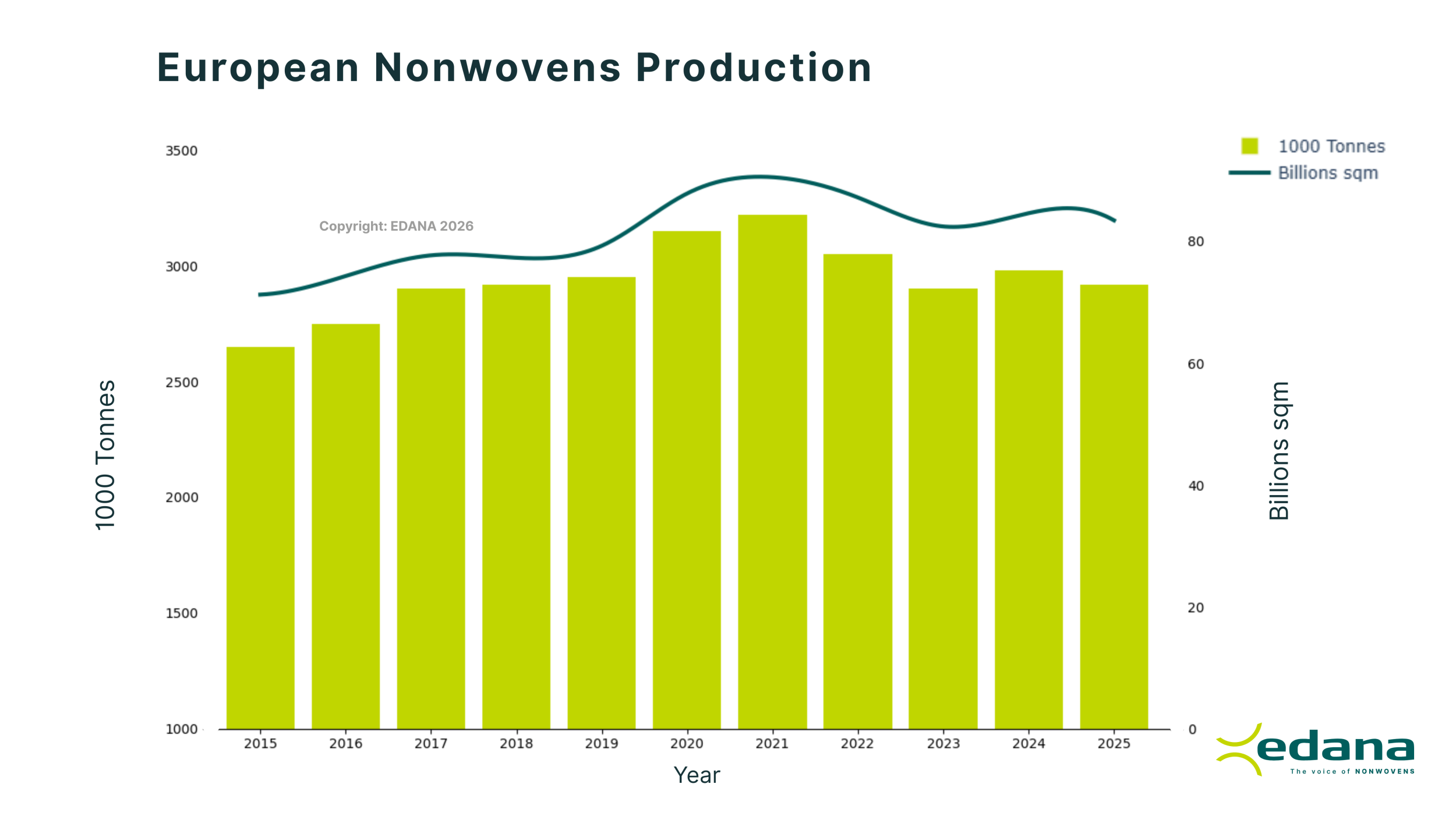
Europeans nonwovens production Graphic by Edana
07.04.2026

2025 Nonwoven Production in Greater Europe: European Industry Remains Strong

EDANA, the international association serving the nonwovens and related industries, released the European annual statistics for 2025, offering a comprehensive picture of the nonwovens industry in Greater Europe. This information shows an overview of the industry’s strength and resilience across the region. 

According to the figures collected and compiled by EDANA, overall nonwovens production in Europe declined by around 2.2% in 2025, reaching 2,919,000 tonnes. 

Jacques Prigneaux, EDANA’s Market Analysis and Economic Affairs Director, stated: “Despite the negative impact of several drivers affecting the nonwovens industry, the slowdown in demand across some key market segments, and an increasing competition from abroad, the European nonwovens industry has once again demonstrated its strength, resilience, flexibility and ability to innovate.” 

EDANA, the international association serving the nonwovens and related industries, released the European annual statistics for 2025, offering a comprehensive picture of the nonwovens industry in Greater Europe. This information shows an overview of the industry’s strength and resilience across the region. 

According to the figures collected and compiled by EDANA, overall nonwovens production in Europe declined by around 2.2% in 2025, reaching 2,919,000 tonnes. 

Jacques Prigneaux, EDANA’s Market Analysis and Economic Affairs Director, stated: “Despite the negative impact of several drivers affecting the nonwovens industry, the slowdown in demand across some key market segments, and an increasing competition from abroad, the European nonwovens industry has once again demonstrated its strength, resilience, flexibility and ability to innovate.” 

Diverging trends were observed across European countries and among the various nonwovens production processes. Total spunmelt output decreased by 3.3%, while drylaid technologies production remained nearly stable at -0.7%. Limited growths were recorded in hydroentanglement and needle-punched bonding processes, at +0.1% and +0.8%, respectively. 

The hygiene market—still the main end-use for nonwovens by volume—declined by 2.7% in 2025, following growth of 1.7% in 2024. This decrease was mainly driven by developments in the baby diaper market. 

Significant changes in tonnage for nonwovens in 2025 were also seen in sales of roll goods for personal care wipes (+0.9%), building and roofing (-6.8%), automotive interiors (-0.9%), and upholstery (-7.1%). However, these figures do not take into account specific grammage developments, which are available to EDANA members through surface area data. 

More information:
Edana Market report nonwovens
Source:

Edana 

The hycuTEC hydrocharging unit reduces the pressure drop of a typical FFP2 filter medium to less than a quarter, thereby achieving filtration efficiency of over 99.99%. Photo Neumag Nonwoven
The hycuTEC hydrocharging unit reduces the pressure drop of a typical FFP2 filter medium to less than a quarter, thereby achieving filtration efficiency of over 99.99%.
02.04.2026

Neumag Nonwoven at FILTECH 2026: Focus on Nonwovens for Filter Media

Under its Neumag brand, Barmag will present its technologies for the production of nonwovens for filter media at this year’s FILTECH. The main focus is on solutions for producing high-performance filter media at competitive costs. Here, Neumag excels in both the meltblown sector and with its spunbond solutions. 

Meltblown technology for the highest quality requirements 
Neumag’s meltblown technology enables the efficient and straightforward production of high - performance nonwovens for filtration, insulation, and sorption applications. A wide variety of polymers can be processed—from classic polyolefins such as PP and PE, through PET, PLA, PBT, and PA, to specialty plastics like PPS or TPU. All of these and other raw materials can be processed safely and reliably using the Neumag meltblown process. 

Under its Neumag brand, Barmag will present its technologies for the production of nonwovens for filter media at this year’s FILTECH. The main focus is on solutions for producing high-performance filter media at competitive costs. Here, Neumag excels in both the meltblown sector and with its spunbond solutions. 

Meltblown technology for the highest quality requirements 
Neumag’s meltblown technology enables the efficient and straightforward production of high - performance nonwovens for filtration, insulation, and sorption applications. A wide variety of polymers can be processed—from classic polyolefins such as PP and PE, through PET, PLA, PBT, and PA, to specialty plastics like PPS or TPU. All of these and other raw materials can be processed safely and reliably using the Neumag meltblown process. 

The hycuTEC hydrocharging technology, which was honored with the Edana Filtrex Innovation Award, enables the production of particularly high-performance electret filter media. This allows the pressure drop of a typical FFP2 filter medium to be reduced to less than a quarter. “Filtration efficiencies of over 99.99% are easily achievable with standard media weighing around 35 g/m² and a maximum pressure drop of 35 Pa,” explains Andreas Frisch, Regional Sales Director Nonwoven. “Furthermore, the additional drying step is eliminated in most applications—another advantage of this innovative technology,” he adds. 

Spunbond solutions for high-performance filter concepts 
Spunbond nonwovens are becoming increasingly important in filtration—both as carrier materials and as standalone filter media. By tailoring nonwoven structures specifically to the task at hand, customer - specific requirements can be precisely met. It is also possible to combine multiple functions within a single layer. 

In particular, the company’s long-standing expertise in bicomponent spinning processes opens up new possibilities in the design of innovative nonwoven structures. The Neumag Bico spunbond process allows for the combination of different fiber cross-sections as well as the simultaneous production of different fibers from one or more polymers on a single line. The spectrum ranges from classic core-sheath and side-by-side filaments to split fibers and so-called mixed fibers.

Danish partnership extends the lifespan of wool-nylon textiles Photo: Ben Kerckx, Pixabay
02.04.2026

Danish partnership extends the lifespan of wool-nylon textiles

Carpets and upholstery fabrics from ships and hotels have significant recycling potential that is not currently being fully utilised. A Danish partnership aims to change that.

Many offices, hotels, ships and other public spaces are fitted with carpets and upholstery fabrics made from wool-nylon blends. The combination of materials gives the products a very long lifespan, but complicates the recycling process when they are replaced. Manufacturers, researchers and knowledge partners have joined forces in the UnBlend partnership, which aims to make textiles easier to reuse and recycle.

Aiming to extend the lifespan of wool-nylon textiles
Tons of high-quality carpets and upholstery fabrics go up in smoke when offices, hotels, ships, libraries, theatres and other public spaces refurbish their interiors. In the EU alone, an estimated 1.6 million tonnes of carpets are disposed of every year, and the vast majority are incinerated or end up in landfill.

Carpets and upholstery fabrics from ships and hotels have significant recycling potential that is not currently being fully utilised. A Danish partnership aims to change that.

Many offices, hotels, ships and other public spaces are fitted with carpets and upholstery fabrics made from wool-nylon blends. The combination of materials gives the products a very long lifespan, but complicates the recycling process when they are replaced. Manufacturers, researchers and knowledge partners have joined forces in the UnBlend partnership, which aims to make textiles easier to reuse and recycle.

Aiming to extend the lifespan of wool-nylon textiles
Tons of high-quality carpets and upholstery fabrics go up in smoke when offices, hotels, ships, libraries, theatres and other public spaces refurbish their interiors. In the EU alone, an estimated 1.6 million tonnes of carpets are disposed of every year, and the vast majority are incinerated or end up in landfill.

The challenge with carpets and upholstery fabrics is that the textiles often consist of complex blended materials such as wool and nylon, which are currently difficult to recycle, even though the material quality is high. It’s a shame, says Business Manager Julie Brender Trads from Danish Technological Institute, who heads the UnBlend partnership:

– Wool-nylon blends are high-quality materials that are easily overlooked because they make up only a small part of the total textile stream. On the other hand, it is a large and uniform textile stream that can be collected when a hotel or ship changes its interior or undergoes renovation. A cruise ship can easily be covered with enough carpet to cover 5–10 football pitches. These large quantities are an advantage when the ambition is large-scale recycling.

From circular design to unique products
UnBlend takes a holistic approach to the challenge of wool-nylon blends. Rather than focusing solely on a single technical solution, the project partners are working in parallel on three tracks: better design, creative reuse and recycling technologies.

The design track explores how products can be constructed more intelligently, for example using fewer types of adhesive and more appropriate material combinations, facilitating later disassembly and recycling among other things. At the same time, the partners are experimenting with reusing and redesigning textile scraps into unique products. Finally, existing and new recycling technologies are being tested to find effective methods for separating wool and nylon, so that the two fibres can be recycled separately and returned to the cycle.

– If we succeed in separating wool and nylon effectively, we can ensure the continuous recycling of high-quality materials. By recycling materials in a closed loop, we can simultaneously reduce the environmental impact significantly compared to wool and nylon produced from new raw materials, says Jeppe Emil Mogensen, Design Director at the textile company Gabriel.

Interdisciplinary collaboration as a prerequisite
The UnBlend partnership was established by Danish Technological Institute, which has brought together textile manufacturers (Gabriel, Dansk Wilton, SheWorks), researchers and knowledge partners (DTU and Danish Technological Institute) and designers (Design School Kolding).

– For many years, we have been working in various ways on solutions within circularity and recycling, but there is a lack of commercial solutions for our type of material composition. That is why it is relevant for us to be part of UnBlend, which brings together many areas of expertise and enables new solutions, says Lone Ditmer, CEO at Dansk Wilton, a global manufacturer of carpets for the international hospitality industry.

About UnBlend
UnBlend is supported by just under DKK 11 million from TRACE and will run for two years. TRACE is a mission-driven research and innovation partnership working to create a circular economy for plastics and textiles by 2050.

Partners: Gabriel, SheWorks, Dansk Wilton, DTU, Design School Kolding and the Danish Technological Institute.

Wool-nylon blends are currently used in large quantities on cruise ships, in hotels, offices and public buildings, particularly in carpets and furniture upholstery. Yet tonnes of high-quality carpets and furniture textiles are sent for incineration or landfill when interiors are replaced.

Source:

Danish Technological Institute

Fibre Extrusion Technology Limited at Techtextil (c) Fibre Extrusion Technology Limited
02.04.2026

FET at Techtextil 2026

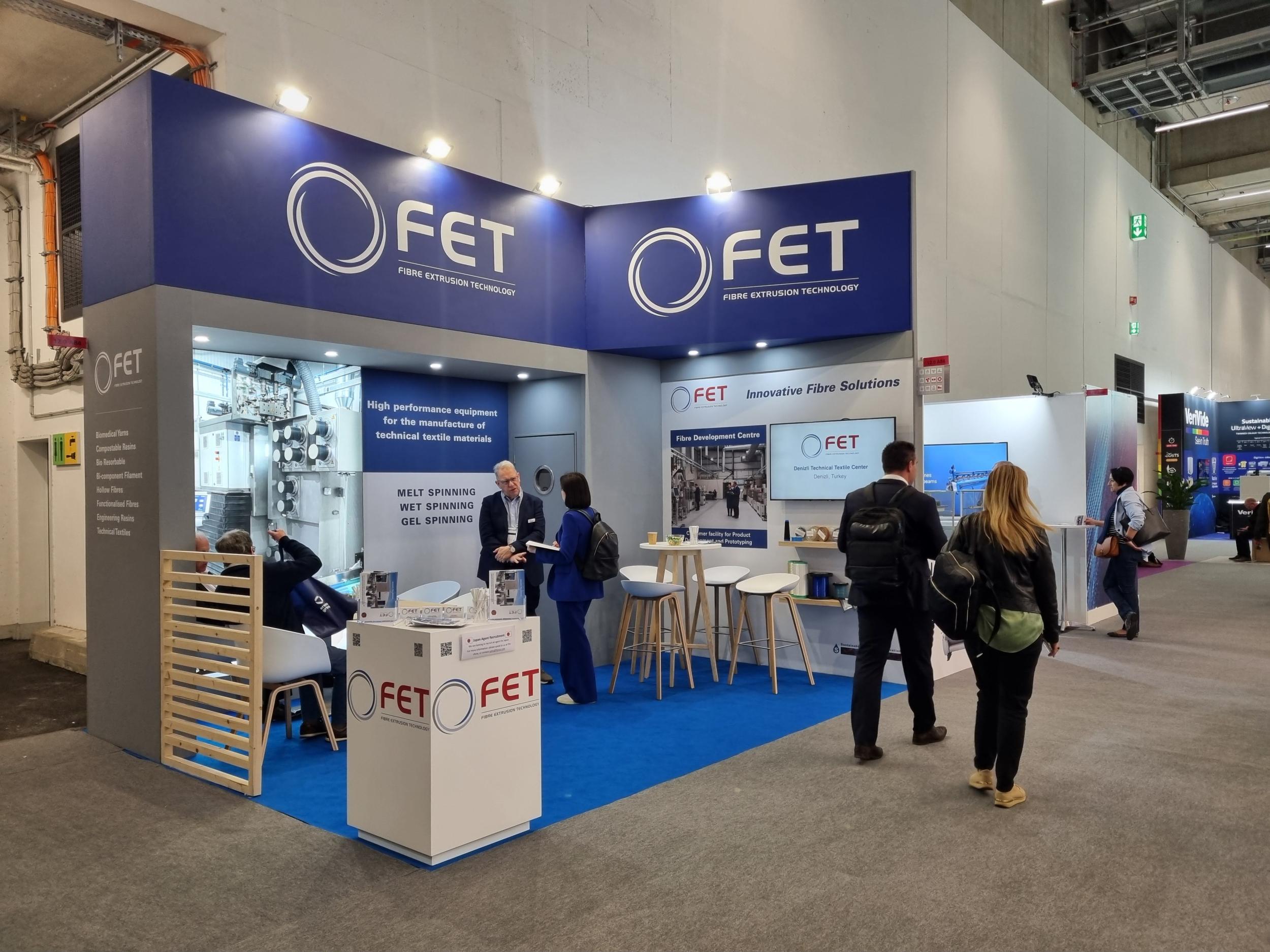
Fibre Extrusion Technology Limited (FET) will be exhibiting once again at Techtextil 2026 in Frankfurt, which runs from April 21 – 24. Techtextil attracts major international companies at the cutting edge of technology, which are seeking innovative solutions to technical challenges, so this event represents an ideal opportunity to demonstrate FET’s strength in helping customers achieve their goals.

FET is an acknowledged leader in laboratory and pilot melt spinning equipment for a vast range of applications. These include precursor materials used in high value technical textiles, sportswear, medical devices and specialised novel fibres from exotic and difficult to process polymers. 

Where melt spinning solutions are not suitable, FET provides a viable alternative with pilot and small scale production wet spinning systems. In addition, FET has also recently launched its FET-500 Series of gel spinning systems. These systems have the potential to revolutionise the research and development of UHMWPE fibres, with significant savings in cost, footprint and environmental factors.

Fibre Extrusion Technology Limited (FET) will be exhibiting once again at Techtextil 2026 in Frankfurt, which runs from April 21 – 24. Techtextil attracts major international companies at the cutting edge of technology, which are seeking innovative solutions to technical challenges, so this event represents an ideal opportunity to demonstrate FET’s strength in helping customers achieve their goals.

FET is an acknowledged leader in laboratory and pilot melt spinning equipment for a vast range of applications. These include precursor materials used in high value technical textiles, sportswear, medical devices and specialised novel fibres from exotic and difficult to process polymers. 

Where melt spinning solutions are not suitable, FET provides a viable alternative with pilot and small scale production wet spinning systems. In addition, FET has also recently launched its FET-500 Series of gel spinning systems. These systems have the potential to revolutionise the research and development of UHMWPE fibres, with significant savings in cost, footprint and environmental factors.

As part of the launch of the FET-500 series, FET’s Senior Scientist Dr Kristoffer Kortsen will be a speaker at the Techtextil Forum on Wednesday 22 April. All visitors are invited to come along and find out more about FET’s new process exploiting super-critical fluids. To date, FET has successfully processed over 130 different polymer types in multifilament, monofilament and nonwoven formats, collaborating with specialist companies worldwide to promote greater sustainability through innovative manufacturing processes.

FET’s Fibre Development Centre further enhances this service, allowing clients to trial their own products in an ideal environment. Resident equipment in the Fibre Development Centre reflects the wide range of fibre extrusion and other systems offered by FET to clients worldwide and will enable continued growth of the company through innovation.  

Managing Director Richard Slack and his technical team will be in attendance on the stand. Slack commented. “We have now exhibited at over 10 Techtextil exhibitions around the world and we again look forward to meeting customers face-to-face to discuss their fibre technology requirements.”

30.03.2026

Fashion for Good launched the Mass Balance Demonstrator project

Fashion for Good launched the Mass Balance Demonstrator project, a collaborative industry initiative to implement and scale the mass balance attribution (MBA) chain-of-custody model for biomass-attributed PET in textile applications. The project represents a concrete step toward accelerating brand-driven decarbonisation across the apparel value chain.

While the portfolio of both preferred existing and next-generation materials offers opportunities for decarbonising the apparel industry, biosynthetics currently represent only a small fraction in material projections for 2030. The reality is that the dedicated commercial scale infrastructure required for biosynthetic materials is not yet fully developed, keeping production volumes prohibitively low and costs too high for widespread industry transition, despite their validated technical performance.

Fashion for Good launched the Mass Balance Demonstrator project, a collaborative industry initiative to implement and scale the mass balance attribution (MBA) chain-of-custody model for biomass-attributed PET in textile applications. The project represents a concrete step toward accelerating brand-driven decarbonisation across the apparel value chain.

While the portfolio of both preferred existing and next-generation materials offers opportunities for decarbonising the apparel industry, biosynthetics currently represent only a small fraction in material projections for 2030. The reality is that the dedicated commercial scale infrastructure required for biosynthetic materials is not yet fully developed, keeping production volumes prohibitively low and costs too high for widespread industry transition, despite their validated technical performance.

Borrowed from industries such as renewable energy and sustainable wood and paper, the mass balance attribution is a chain-of-custody model which allows renewable and fossil-based feedstocks to be physically mixed. It tracks how much renewable input entered the system and proportionally allocates that amount to the outputs, verified through audits and certification bodies. 

HOW DOES MASS BALANCE ATTRIBUTION (MBA) WORK
A chemical manufacturer introduces renewable feedstocks (such as agricultural residues or used cooking oil) into a production system that also processes fossil-based feedstocks. These feedstocks move through the same infrastructure and chemical processes, and by the time they become resin, they are chemically indistinguishable. The amount of renewable feedstock entering the system is carefully measured and recorded through a verified accounting system, creating a record of renewable input while accounting for process losses and conversion factors.

That accounted input is then allocated to specific products using mass balance principles. If 30% of the feedstock entering the system is renewable, a corresponding share of the output can carry a renewable attribution. In this project, this will be the biomass-attributed polyester (PET) but it could also be used for other fibres such as nylon. This does not necessarily mean each product physically contains renewable content; rather, the claim reflects the share of renewable input assigned to that product. Crucially, the system is strictly controlled: producers cannot allocate more renewable attribution than the amount of renewable feedstock entering the system, and once attributed, those certified attributes cannot be counted again elsewhere.

“We are at a point where the industry wants to move and adopt biosynthetics, but the production frameworks and commercial infrastructure haven’t caught up. The Mass Balance Demonstrator project is about closing that gap: building the impact and commercial evidence, the blueprint, and the feedback loops that will allow the MBA model to scale with integrity.” Katrin Ley, Managing Director at Fashion for Good. 

THE GOALS OF THE PROJECT
The Mass Balance Demonstrator project, an initiative led by Fashion for Good, brings together BESTSELLER, Beyond Yoga (Levi Strauss & Co.), ON, Paradise Textiles, Environmental Resources Management (ERM), Indorama Ventures, ISCC, UPM Biochemicals, and Textile Exchange. The consortium is designed not only to demonstrate what is possible today, but to generate insights that the wider industry can build on now and in the future.

“Polyester is our second biggest fiber by volume in BESTSELLER, which means we are continuously investigating improvements in this category. By taking part in this project we as a company are building experience within mass balance attribution and bio-attributed polyester. Hopefully, as we collaborate with other great partners, this can initiate pathways that can support scaling of renewable feedstocks (or inputs) going forward.” Anders Schorling Overgård, Material Research Lead at BESTSELLER

At its core, the project adopts and implements the mass balance attribution chain-of-custody model to enable the production of biomass-attributed PET for textile applications, demonstrating that existing manufacturing systems can integrate renewable feedstocks today. The project is structured around four interconnected objectives:

  • Producing biomass-attributed materials: the project will physically produce biomass-attributed resin and yarns, generating real-world output that matches performance parity.
  • Quantifying the climate impact: a comprehensive cradle-to-grave greenhouse gas (GHG) emissions model will be developed for the produced materials, delivering science-based insights into their decarbonisation potential and overall environmental footprint.
  • Developing a blueprint for industry scale-up: the project will deliver a practical roadmap for scaling biomass-attributed PET in the apparel sector, identifying key supply chain actors, assessing lifecycle accounting approaches for different chain-of-custody models, and evaluating the techno-economic feasibility of market deployment.
  • Informing climate frameworks and industry standards: insights from the project will be shared with climate initiatives and standard-setting bodies to help credible guidance on mass balance attribution.
30.03.2026

The LYCRA Company: Restructuring Support Agreement

The LYCRA Company,  a global leader in developing fiber and technology solutions for the apparel and personal care industries, announced that it has entered into a restructuring support agreement (“RSA”) with the overwhelming majority of its creditors to eliminate approximately $1.2 billion of long-term debt and establish a sustainable capital structure that will recapitalize the Company and position it for long-term financial stability and growth.

The RSA has overwhelming support from holders of the Company’s senior secured term loan, 16.000% Senior Secured Notes, and 7.500% Senior Secured Notes, who have agreed to vote in favor of a prepackaged plan of reorganization (the “Prepackaged Plan”). To implement the Prepackaged Plan, the Company and certain of its affiliates, have filed a voluntary prepackaged Chapter 11 case in the U.S. Bankruptcy Court for the Southern District of Texas.

The LYCRA Company,  a global leader in developing fiber and technology solutions for the apparel and personal care industries, announced that it has entered into a restructuring support agreement (“RSA”) with the overwhelming majority of its creditors to eliminate approximately $1.2 billion of long-term debt and establish a sustainable capital structure that will recapitalize the Company and position it for long-term financial stability and growth.

The RSA has overwhelming support from holders of the Company’s senior secured term loan, 16.000% Senior Secured Notes, and 7.500% Senior Secured Notes, who have agreed to vote in favor of a prepackaged plan of reorganization (the “Prepackaged Plan”). To implement the Prepackaged Plan, the Company and certain of its affiliates, have filed a voluntary prepackaged Chapter 11 case in the U.S. Bankruptcy Court for the Southern District of Texas.

The Prepackaged Plan reflects a consensual agreement reached over the course of several months of productive discussions with the Company’s key financial creditors. Given the near unanimous support of its stakeholders, the Company expects to complete its financial restructuring expeditiously and emerge from the Chapter 11 process within 45 days.

“The LYCRA Company’s products have long been a symbol of quality, delivering benefits like lasting comfort, fit, and performance across a wide variety of apparel and personal care applications,” said Gary Smith, Chief Executive Officer of The LYCRA Company. “Today marks a significant milestone for The LYCRA Company as we are taking decisive action to meaningfully reduce our debt and strengthen our financial foundation. By taking this step, we will continue serving our customers, supporting our partners, and providing the high-quality products on which they rely. I want to thank our team members for their ongoing dedication and our loyal customers and partners for their continued support throughout the process.”

The Company is seeking customary "first day" relief that will enable it to operate in the ordinary course of business throughout the restructuring process. As part of these first day motions, the Company will seek approval to continue to pay all valid amounts owed to vendors and suppliers in full in the ordinary course of business. To support these ordinary course operations, the Company has obtained commitments for $75 million in debtor-in-possession financing (“DIP Financing”) and more than $75 million in exit financing, which is poised to refinance the DIP Financing, providing the Company with capital upon completion of the Chapter 11 process.


Source:

The LYCRA Company

NC X card in operation on a T SUPREMA needle punch line at a customer site – proven performance in real production conditions Foto Trützschler Gruppe
27.03.2026

Nonwovens and fiber processing solutions: Trützschler at Techtextil 2026

From April 21 to 24, 2026, the Trützschler Group will present its future‑ready solutions at Techtextil in Frankfurt, Germany. Trützschler Nonwovens will showcase its latest developments for efficient nonwovens production, including comprehensive service and consulting solutions. Highlights include the fully upgraded X‑Series nonwoven cards suitable for spunlace, needle‑punching and air‑through bonding (ATB) processes, as well as the T‑ONE digital working environment enhanced with new features. Trützschler Card Clothing will complement the presentation with a new card wire designed with a specially engineered surface for high‑performance nonwoven applications. Visitors can also take a closer look at Trützschler’s complete solution for the recycling of textile waste, TRUECYCLED. 

From April 21 to 24, 2026, the Trützschler Group will present its future‑ready solutions at Techtextil in Frankfurt, Germany. Trützschler Nonwovens will showcase its latest developments for efficient nonwovens production, including comprehensive service and consulting solutions. Highlights include the fully upgraded X‑Series nonwoven cards suitable for spunlace, needle‑punching and air‑through bonding (ATB) processes, as well as the T‑ONE digital working environment enhanced with new features. Trützschler Card Clothing will complement the presentation with a new card wire designed with a specially engineered surface for high‑performance nonwoven applications. Visitors can also take a closer look at Trützschler’s complete solution for the recycling of textile waste, TRUECYCLED. 

Trützschler Nonwovens
The T-SUPREMA needle punching line has proven its performance in the market, with lines successfully operating at two customer sites since early this year. It demonstrates the exceptional versatility of needle-punched nonwovens, covering basis weights from below 50 gsm to above 2,000 gsm. New streamlined configurations featuring the compact NC-Xe card further reduce the footprint while ensuring high process stability and consistent product quality.

Beyond complete line solutions, Trützschler Nonwovens will showcase upgrades to its single machine portfolio, including the X-Series nonwovens cards (the high-speed card NCT-X, the versatile NC-X and the compact NC-Xe), the MPD high-performance dryer and the new compact AquaJet-X. These developments are designed to combine compact machine concepts with high operational reliability and outstanding performance.

At Techtextil 2026, Trützschler Nonwovens will also highlight its advanced ATB technology for hygiene applications. The process enables the reliable processing of ultra fine fibers down to 0.4 dtex, producing exceptionally soft nonwovens that meet the highest requirements for softness and performance in baby diaper applications.

T‑ONE, Trützschler Nonwovens’ digital working environment, serves as a powerful digital backbone for any nonwoven line. New enhancements include an energy management function for real‑time monitoring of electricity and gas consumption and CO₂ footprint calculation per time unit, roll or order, as well as camera‑based anomaly detection that identifies fiber migration and accumulations at an early stage. This helps to prevent unplanned downtime while improving process stability and production transparency.

With tailored modernization and development solutions, Trützschler Nonwovens supports manufacturers in optimizing existing installations and translating new product ideas into stable, industrial scale production. Application-specific consulting enables higher efficiency, increased output and longer service life – without compromising quality.

Trützschler Card Clothing (TCC): Next‑generation card clothing for demanding nonwovens applications
Visitors can experience top nonwovens performance with our high-efficiency card clothing. Our TCC experts will present our latest innovation: a new wire with special surface designed for Hygiene, Spunlace and ATB applications. It ensures cleaner operation, less contamination and reduced downtime - delivering maximum productivity for your line. More details will be revealed at the exhibition – don’t miss this opportunity to see it first hand. 

Trützschler Spinning: TRUECYCLED – the complete solution for textile recycling    
Visitors can also learn more about TRUECYCLED, Trützschler’s complete solution for the recycling of textile waste. It covers the complete process: from cutting and tearing textile waste to carding and drawing secondary fibers. Based on Trützschler’s technological recommendations and a Trützschler machinery line-up, it ensures the best possible quality of the end product. 

Source:

Trützschler Gruppe

INDA Announces Legislative Champion and Industry Advocate Awards (c) INDA
27.03.2026

INDA Announces Legislative Champion and Industry Advocate Awards

INDA, the Association of the Nonwoven Fabrics Industry, announced the winners of its inaugural Legislative Champion and Industry Advocate of the Year Awards, recognizing policymakers and industry members for their support of the nonwovens industry’s advocacy agenda.

Legislative champion award winners were Senator Jeff Merkley (D-OR) and Congresswoman Lisa McClain (R-MI), recognized for their support of the WIPPES Act, which would enact national Do Not Flush labeling standards for non-flushable wipes. Senator Merkley accepted his award in person at INDA’s third annual Washington D.C. Fly-In and Advocacy Summit, held in conjunction with ISSA, the Worldwide Cleaning Association’s Clean Advocacy Summit.

Senator Merkley was able to share the news with the group that the WIPPES Act, S. 1092, had been passed by the United States Senate the day prior with unanimous consent.

Industry Advocate of the Year awards were given to Martyn Davis, President of Sellars Nonwovens, and Sam Nebel, co-founder of Goodwipes, in recognition for their support of the nonwoven industry and INDA’s wipes advocacy.

INDA, the Association of the Nonwoven Fabrics Industry, announced the winners of its inaugural Legislative Champion and Industry Advocate of the Year Awards, recognizing policymakers and industry members for their support of the nonwovens industry’s advocacy agenda.

Legislative champion award winners were Senator Jeff Merkley (D-OR) and Congresswoman Lisa McClain (R-MI), recognized for their support of the WIPPES Act, which would enact national Do Not Flush labeling standards for non-flushable wipes. Senator Merkley accepted his award in person at INDA’s third annual Washington D.C. Fly-In and Advocacy Summit, held in conjunction with ISSA, the Worldwide Cleaning Association’s Clean Advocacy Summit.

Senator Merkley was able to share the news with the group that the WIPPES Act, S. 1092, had been passed by the United States Senate the day prior with unanimous consent.

Industry Advocate of the Year awards were given to Martyn Davis, President of Sellars Nonwovens, and Sam Nebel, co-founder of Goodwipes, in recognition for their support of the nonwoven industry and INDA’s wipes advocacy.

“INDA would like to extend a heartfelt thanks and congratulations to all awardees,” noted INDA government affairs director Wes Fisher, “It was a great moment for Senator Merkley to join us in person to share the news of the Senate passage of the WIPPES Act, he and Representative McClain have been instrumental in moving this key legislation. Additionally, we would like to thank and recognize Sam and Martyn for their steadfast support of the nonwovens industry’s advocacy agenda.”

Source:

INDA 

INDA Applauds the U.S. Senate for Passage of the WIPPES Act (S. 1092) Graphic by INDA
25.03.2026

INDA Applauds the U.S. Senate for Passage of the WIPPES Act (S. 1092)

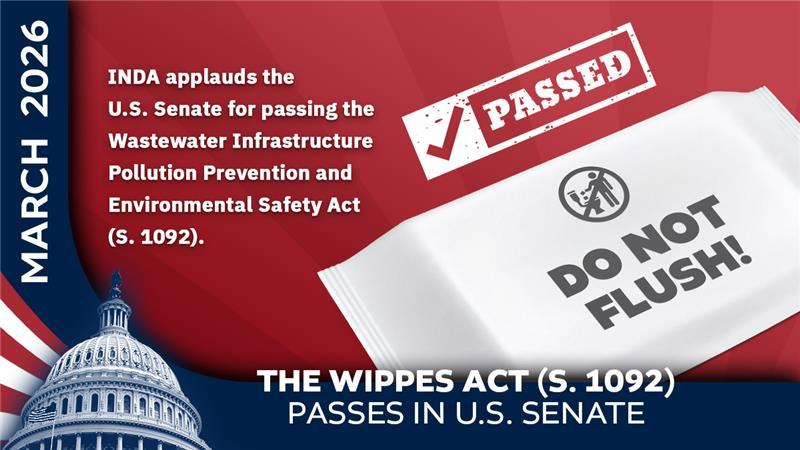
INDA, the Association of the Nonwoven Fabrics Industry, applauds the U.S. Senate for passing the Wastewater Infrastructure Pollution Prevention and Environmental Safety (WIPPES) Act (S. 1092). The WIPPES Act, which creates national standards for “Do Not Flush” labeling for non-flushable wipes, cleared the Senate floor on March 22, 2026. The House version of the bill, H.R. 2269, previously passed the U.S. House on a voice vote in June 2025. The Senate version will now move back to the House for consideration.

This bipartisan legislation is intended to address the growing problem of sewer system clogs caused by improper disposal of consumer wipes that are not intended to be disposed of in toilets. This federal solution is the result of a years-long industry collaboration with wastewater operators, which has resulted in the passage of similar legislation in seven states. The WIPPES Act will create a national standard based on existing state laws to ensure non-flushable wipes will carry prominent “Do Not Flush” labeling on packaging.

INDA, the Association of the Nonwoven Fabrics Industry, applauds the U.S. Senate for passing the Wastewater Infrastructure Pollution Prevention and Environmental Safety (WIPPES) Act (S. 1092). The WIPPES Act, which creates national standards for “Do Not Flush” labeling for non-flushable wipes, cleared the Senate floor on March 22, 2026. The House version of the bill, H.R. 2269, previously passed the U.S. House on a voice vote in June 2025. The Senate version will now move back to the House for consideration.

This bipartisan legislation is intended to address the growing problem of sewer system clogs caused by improper disposal of consumer wipes that are not intended to be disposed of in toilets. This federal solution is the result of a years-long industry collaboration with wastewater operators, which has resulted in the passage of similar legislation in seven states. The WIPPES Act will create a national standard based on existing state laws to ensure non-flushable wipes will carry prominent “Do Not Flush” labeling on packaging.

“INDA has championed this legislation for the past several years, and we are encouraged to see it pass out of the Senate. With the House having passed its version of the bill last year, we now have more momentum behind this legislation than ever. We extend our thanks to the bill sponsors, our industry and wastewater partners, and INDA members as we take another step forward to make “Do Not Flush” labeling nationwide,” said Wes Fisher, Director of Government Affairs.

The WIPPES Act lead sponsors in the Senate are Senator Jeff Merkley (D-OR) and Senator Susan Collins (R-ME), and the companion bill was introduced in the House by Representative Lisa McClain (R-MI) and Representative Kevin Mullin (D-CA).


More information:
INDA WIPPES Act Do Not Flush
Source:

INDA 

James Coogan Photo Hexcel Corporation
James Coogan
24.03.2026

Hexcel: New Chief Financial Officer

Hexcel Corporation announced that James (Jamie) Coogan has been appointed Executive Vice President and Chief Financial Officer effective May 1, 2026. He will report to Tom Gentile, Hexcel Chairman, CEO and President. Coogan succeeds Mike Lenz who has been serving as interim Chief Financial Officer.  Lenz will remain for a period of time when Coogan joins the company as a Senior Advisor to assist with the transition.

“Jamie brings the experience and the financial leadership that will help Hexcel build on our momentum as we enter a period of growth with rising commercial aircraft production rates and an expanding defense and space market,” said Tom Gentile, Chairman, CEO and President, Hexcel Corporation. “His experience in aerospace and defense companies and broader industrial manufacturing organizations will enable him to make a meaningful impact quickly on Hexcel’s strategic priorities.”

Hexcel Corporation announced that James (Jamie) Coogan has been appointed Executive Vice President and Chief Financial Officer effective May 1, 2026. He will report to Tom Gentile, Hexcel Chairman, CEO and President. Coogan succeeds Mike Lenz who has been serving as interim Chief Financial Officer.  Lenz will remain for a period of time when Coogan joins the company as a Senior Advisor to assist with the transition.

“Jamie brings the experience and the financial leadership that will help Hexcel build on our momentum as we enter a period of growth with rising commercial aircraft production rates and an expanding defense and space market,” said Tom Gentile, Chairman, CEO and President, Hexcel Corporation. “His experience in aerospace and defense companies and broader industrial manufacturing organizations will enable him to make a meaningful impact quickly on Hexcel’s strategic priorities.”

Coogan most recently served as Executive Vice President and Chief Financial Officer at Axcelis Technologies, a supplier in the semiconductor industry, having joined the company in September 2023. Previously he served as Senior Vice President, Chief Financial Officer at Kaman Corporation (formerly traded on the NYSE under the symbol KAMN). During his 15 years at Kaman, he held various management positions including Vice President, Investor Relations and Corporate Development, Assistant Vice President, External Reporting and SEC Compliance, and Director, External Reporting and SEC Compliance.

Coogan has more than 20 years of finance, accounting and investor relations experience across multiple industries, including aerospace and defense. After starting his career at PwC, he held several financial management roles at Ann Taylor Stores Corporation and Mohegan Tribal Gaming Authority before joining Kaman. 

Coogan holds an MBA from the Yale School of Management, an M.S. in Accounting and a B.S. in Business Administration, Accounting from the University of Connecticut.

Source:

Hexcel Corporation

Kraig Biocraft Laboratories Photo: Kraig Biocraft Laboratories
24.03.2026

Kraig Biocraft Laboratories Increases R&D Capacity

Kraig Biocraft Laboratories, Inc., a leader in spider silk technology, announced a significant expansion of its research and development capacity designed to keep pace with rapid progress of its advanced materials initiative, Project Atlas.

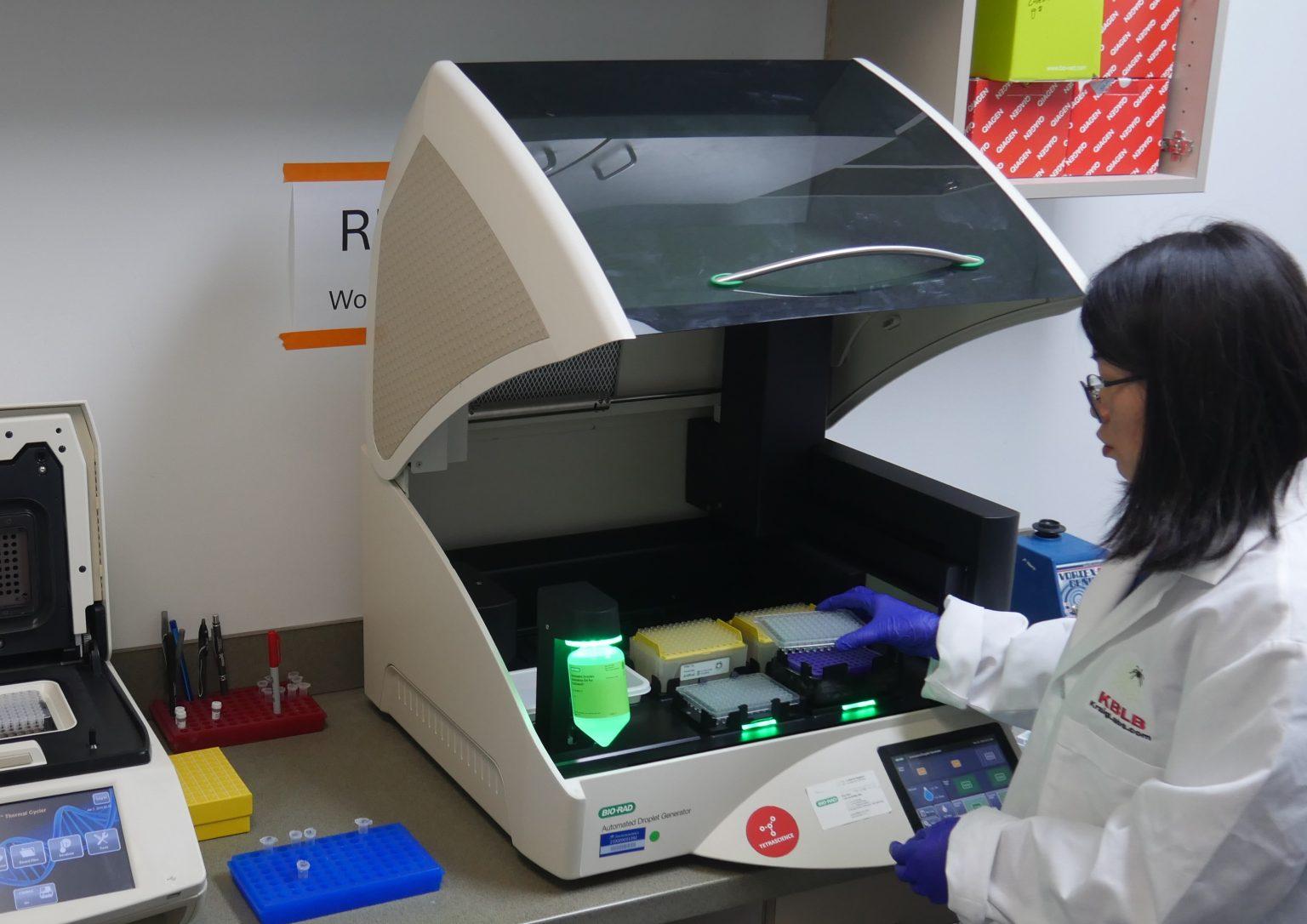
The Company has expanded its laboratory capabilities, onboarding new scientific personnel and the deployment of new advanced equipment. These improvements have roughly tripled screening throughput, allowing the R&D team to keep up with the rapid development of new transgenics.

Kraig Labs implemented these upgrades in direct response to the rapid technical progress made under Project Atlas. Atlas is the Company’s next-generation recombinant spider silk program focused on creating advanced biomaterials with potential industrial and defense applications.

Kraig Biocraft Laboratories, Inc., a leader in spider silk technology, announced a significant expansion of its research and development capacity designed to keep pace with rapid progress of its advanced materials initiative, Project Atlas.

The Company has expanded its laboratory capabilities, onboarding new scientific personnel and the deployment of new advanced equipment. These improvements have roughly tripled screening throughput, allowing the R&D team to keep up with the rapid development of new transgenics.

Kraig Labs implemented these upgrades in direct response to the rapid technical progress made under Project Atlas. Atlas is the Company’s next-generation recombinant spider silk program focused on creating advanced biomaterials with potential industrial and defense applications.

The recently commissioned equipment streamlines the screening of newly created transgenic lines and the analysis of their resulting spider silk expression levels. Project Atlas is now generating significant numbers of transgenics and potential candidates for new production materials. This expanded screening capacity was needed to keep pace with the rate of new transgenic creation, which is now at the highest levels in the Company’s history. By automating portions of the testing workflow, Kraig Labs can now rapidly process and evaluate significantly more samples, quickly identifying new, exciting transgenics.

In addition to the increased screening capacity, Kraig Labs also strengthened its analytical testing capabilities. These tools provide deeper insight into the expression levels and functional impact of each engineered transgenic line. This enhanced visibility allows the research team to identify the most promising genetic designs and prioritize them for advancement into the Company’s production pipeline.

“With the pace of discovery we are seeing in Project Atlas, it became clear that we needed to expand our screening and analysis capacity to keep up with the speed of innovation,” said Kim Thompson, Founder and CEO of Kraig Labs. “This investment in staff and technology further strengthens our position as a leader in advanced biomaterials. We believe we have a wide lead on our competitors, and it is the goal of this investment to expand that lead further.”

Dr. Zhang, the Company’s Chief Scientist, emphasized the impact these upgrades will have on the research pipeline.

“Project Atlas involves the creation and evaluation of numerous complex genetic constructs designed to work together to produce highly specialized silk proteins,” said Dr. Zhang. “The expansion of our testing infrastructure dramatically increases our testing capacity to match the increased pace of transgenic creation. We can now analyze many more transgenic lines in parallel and better quantify how each genetic insert is performing. This level of screening power is essential for isolating the highest-performing lines and rapidly advancing them into production.”

By significantly increasing screening capacity and analytical insight, Kraig Labs expects to shorten development timelines and improve its ability to identify breakthrough material candidates.

Source:

Kraig Biocraft Laboratories

Dr. David Meyer Photo via Charles Barker Corporate Communications GmbH
Dr. David Meyer
24.03.2026

ERWO Holding AG and Hoftex Group AG: New CFO

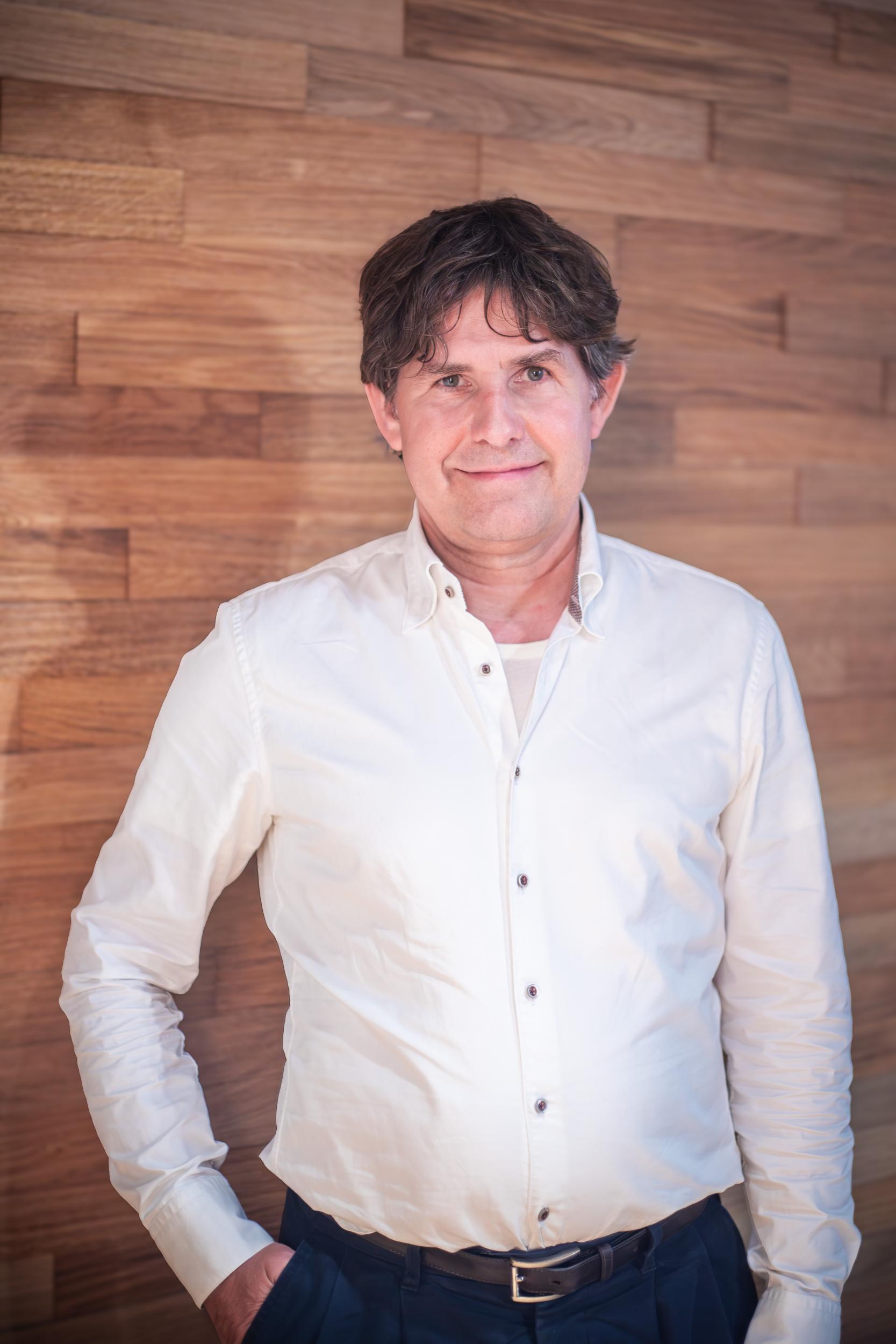
ERWO Holding AG (“ERWO Holding”), holding company of the Südwolle Group, a leading manufacturer of worsted yarns, as well as main shareholder of Hoftex Group AG (“Hoftex Group”), a group of medium-sized companies in the textile industry, have announced the appointment of a new member to their Management Board: With effect from 1 April 2026, Dr David Meyer will become CFO on the Management Board of both companies. This position has recently been vacant, with the finance division being managed on an interim basis by CEO Manuela Spörl.

ERWO Holding AG (“ERWO Holding”), holding company of the Südwolle Group, a leading manufacturer of worsted yarns, as well as main shareholder of Hoftex Group AG (“Hoftex Group”), a group of medium-sized companies in the textile industry, have announced the appointment of a new member to their Management Board: With effect from 1 April 2026, Dr David Meyer will become CFO on the Management Board of both companies. This position has recently been vacant, with the finance division being managed on an interim basis by CEO Manuela Spörl.

Dr David Meyer brings many years of industry experience to his role as CFO, having worked in both capital markets and a family-run SME environment. As a proven finance expert, David has a comprehensive knowledge across the entire spectrum of the finance department, ranging from accounting and controlling through the structuring of financing and M&A to IT transformation projects and investor relations. He comes from Hamberger Industriewerke (Stephanskirchen near Rosenheim), where, in addition to his role as CFO, he most recently also served as Head of Human Resources. Prior to that, he worked for over 12 years as CFO at Steico SE (Feldkirchen near Munich), a producer of timber building materials and wood fibre insulation listed on the OTC market. Dr Meyer holds a PhD in Industrial Engineering (University of Kaiserslautern).

Source:

Charles Barker Corporate Communications GmbH

(c) Outlast Technologies GmbH
19.03.2026

Outlast: Cooling Technology for Cotton and Viscose

Outlast Technologies has expanded its fresh2SKIN® cooling technology to cellulose-based fibers such as cotton and viscose, enabling brands to combine natural materials with a re-freshing cooling effect and long-lasting thermal comfort.

The latest development allows fresh2SKIN® to be applied while maintaining an exceptionally natural and soft handfeel. The finish is virtually imperceptible on the textile, preserving the smooth, flexible character that consumers expect from cotton and viscose fabrics.

What consumers experience instead is the benefit: an immediate, pleasantly cool sensation when the fabric touches the skin. Unlike many textile technologies that remain invisible to the con-sumer, fresh2SKIN® provides a cooling experience that can be felt immediately, for example when trying on a T-shirt equipped with the technology.

Outlast Technologies has expanded its fresh2SKIN® cooling technology to cellulose-based fibers such as cotton and viscose, enabling brands to combine natural materials with a re-freshing cooling effect and long-lasting thermal comfort.

The latest development allows fresh2SKIN® to be applied while maintaining an exceptionally natural and soft handfeel. The finish is virtually imperceptible on the textile, preserving the smooth, flexible character that consumers expect from cotton and viscose fabrics.

What consumers experience instead is the benefit: an immediate, pleasantly cool sensation when the fabric touches the skin. Unlike many textile technologies that remain invisible to the con-sumer, fresh2SKIN® provides a cooling experience that can be felt immediately, for example when trying on a T-shirt equipped with the technology.

fresh2SKIN® combines instant freshness with lasting comfort. While the textile delivers an im-mediate cooling sensation upon skin contact, integrated microcapsules containing natural wax help absorb excess body heat and release it again when temperatures drop. This supports a more balanced microclimate and can help reduce sweating during the day or night.

“Achieving this exceptionally natural handfeel on cellulose-based fibers such as cotton or viscose was a key objective for our development team,” says Volker Schuster, Head of Research & De-velopment at Outlast Technologies. “Our goal was to integrate the fresh2SKIN® functionality without compromising the authentic character of these materials. The result are textiles that feel completely natural while delivering an immediately noticeable cooling effect.”

The development opens new opportunities for next-to-skin applications, including T-shirts, un-derwear, activewear, sleepwear, and bedding textiles.

Source:

Outlast Technologies GmbH

In experiments, MIT engineers demonstrate a fiber, made from a common polymer material, changes its ability to handle heat as it is stretched. Credit: Courtesy of the researchers
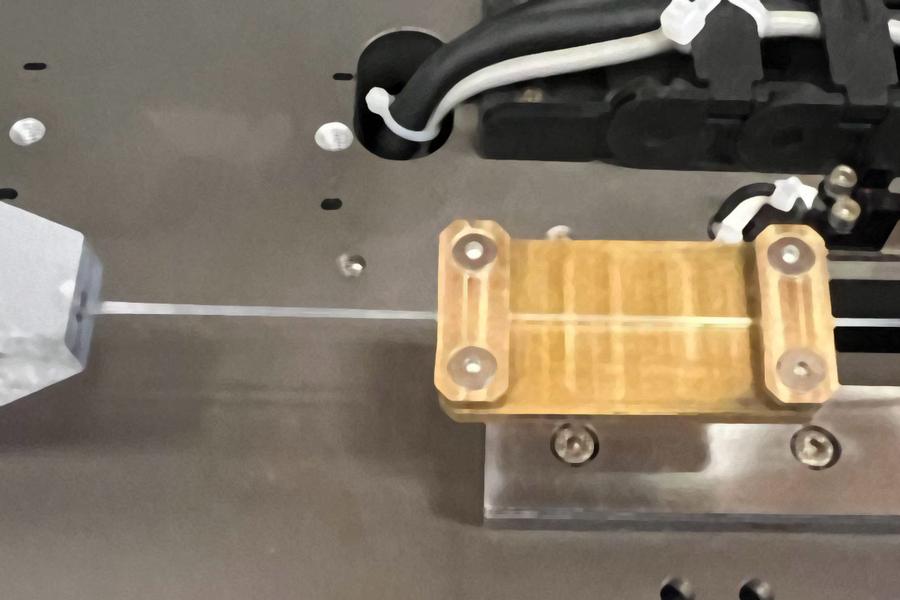
In experiments, MIT engineers demonstrate a fiber, made from a common polymer material, changes its ability to handle heat as it is stretched.
18.03.2026

A quick stretch switches this polymer’s capacity to transport heat

Most materials have an inherent capacity to handle heat. Plastic, for instance, is typically a poor thermal conductor, whereas materials like marble move heat more efficiently. If you were to place one hand on a marble countertop and the other on a plastic cutting board, the marble would conduct more heat away from your hand, creating a colder sensation compared to the plastic.

Typically, a material’s thermal conductivity cannot be changed without re-manufacturing it. But MIT engineers have now found that a relatively common material can switch its thermal conductivity. Simply stretching the material quickly dials up its heat conductance, from a baseline similar to that of plastic to a higher capacity closer to that of marble. When the material springs back to its unstretched form, it returns to its plastic-like properties.

Most materials have an inherent capacity to handle heat. Plastic, for instance, is typically a poor thermal conductor, whereas materials like marble move heat more efficiently. If you were to place one hand on a marble countertop and the other on a plastic cutting board, the marble would conduct more heat away from your hand, creating a colder sensation compared to the plastic.

Typically, a material’s thermal conductivity cannot be changed without re-manufacturing it. But MIT engineers have now found that a relatively common material can switch its thermal conductivity. Simply stretching the material quickly dials up its heat conductance, from a baseline similar to that of plastic to a higher capacity closer to that of marble. When the material springs back to its unstretched form, it returns to its plastic-like properties.

The thermally reversible material is an olefin block copolymer — a soft and flexible polymer that is used in a wide range of commercial products. The team found that when the material is quickly stretched, its ability to conduct heat more than doubles. This transition occurs within just 0.22 seconds, which is the fastest thermal switching that has been observed in any material.

This material could be used to engineer systems that adapt to changing temperatures in real time. For instance, switchable fibers could be woven into apparel that normally retains heat. When stretched, the fabric would instantly conduct heat away from a person’s body to cool them down. Similar fibers can be built into laptops and infrastructure to keep devices and buildings from overheating. The researchers are working on further optimizing the polymer and on engineering new materials with similar properties.

“We need cheap and abundant materials that can quickly adapt to environmental temperature changes,” says Svetlana Boriskina, principal research scientist in MIT’s Department of Mechanical Engineering. “Now that we’ve seen this thermal switching, this changes the direction where we can look for and build new adaptive materials.”

Boriskina and her colleagues have published their results in a study appearing today in the journal Advanced Materials. The study’s co-authors include Duo Xu, Buxuan Li, You Lyu, and Vivian Santamaria-Garcia of MIT, and Yuan Zhu of Southern University of Science and Technology in Shenzhen, China.

Elastic chains
The key to the new phenomenon is that when the material is stretched, its microscopic structures align in ways that suddenly allow heat to travel through easily, increasing the material’s thermal conductivity. In its unstretched state, the same microstructures are tangled and bunched, effectively blocking heat’s path.

As it happens, Boriskina and her colleagues didn’t set out to find a heat-switching material. They were initially looking for more sustainable alternatives to spandex, which is a synthetic fabric made from petroleum-based plastics that is traditionally difficult to recycle. As a potential replacement, the team was investigating fibers made from a different polymer known as polyethylene.

“Once we started working with the material, we realized it had other properties that were more interesting than the fact that it was elastic,” Boriskina says. “What makes polyethylene unique is it has this backbone of carbon atoms arranged along a simple chain. And carbon is a very good conductor of heat.”

The microstructure of most polymer materials, including polyethylene, contains many carbon chains. However, these chains exist in a messy, spaghetti-like tangle known as an amorphous phase. Despite the fact that carbon is a good heat conductor, the disordered arrangement of chains typically impedes heat flow. Polyethylene and most other polymers, therefore, generally have low thermal conductivity.

In previous work, MIT Professor Gang Chen and his collaborators found ways to untangle the mess of carbon chains and push polyethylene to shift from a disordered amorphous state to a more aligned, crystalline phase. This transition effectively straightened the carbon chains, providing clear highways for heat to flow through and increasing the material’s thermal conductivity. In those experiments however, the switch was permanent; once the material’s phase changed, it could not be reversed.

As Boriskina’s team explored polyethylene, they also considered other closely related materials, including olefin block copolymer (OBC). OBC is predominantly an amorphous material, made from highly tangled chains of carbon and hydrogen atoms. Scientists had therefore assumed that OBC would exhibit low thermal conductivity. If its conductance could be increased, it would likely be permanent, similar to polyethylene.

But when the team carried out experiments to test the elasticity of OBC, they found something quite different.

“As we stretched and released the material, we realized that its thermal conductivity was really high when it was stretched and lower when it was relaxed, over thousands of cycles,” says study co-author and MIT graduate student Duo Xu. “This switch was reversible, while the material stayed mostly amorphous. That was unexpected.”

A stretchy mess
The team then took a closer look at OBC, and how it might be changing as it was stretched. The researchers used a combination of X-ray and Raman spectroscopy to observe the material’s microscopic structure as they stretched and relaxed it repeatedly. They observed that, in its unstretched state, the material consists mainly of amorphous tangles of carbon chains, with just a few islands of ordered, crystalline domains scattered here and there. When stretched, the crystalline domains seemed to align and the amorphous tangles straightened out, similar to what Gang Chen observed in polyethylene.

However, rather than transitioning entirely into a crystalline phase, the straightened tangles stayed in their amorphous state. In this way, the team found that the tangles were able to switch back and forth, from straightened to bunched and back again, as the material was stretched and relaxed repeatedly.

“Our material is always in a mostly amorphous state; it never crystallizes under strain,” Xu notes. “So it leaves you this opportunity to go back and forth in thermal conductivity a thousand times. It’s very reversible.”

The team also found that this thermal switching happens extremely fast: The material’s thermal conductivity more than doubled within just 0.22 seconds of being stretched.

“The resulting difference in heat dissipation through this material is comparable to a tactile difference between touching a plastic cutting board versus a marble countertop,” Boriskina says.

She and her colleagues are now taking the results of their experiments and working them into models to see how they can tweak a material’s amorphous structure, to trigger an even bigger change when stretched.

“Our fibers can quickly react to dissipate heat, for electronics, fabrics, and building infrastructure.” Boriskina says. “If we could make further improvements to switch their thermal conductivity from that of plastic to that closer to diamond, it would have a huge industrial and societal impact.”

This research was supported, in part, by the U.S. Department of Energy, the Office of Naval Research Global via Tec de Monterrey, MIT Evergreen Graduate Innovation Fellowship, MathWorks MechE Graduate Fellowship, and the MIT-SUSTech Centers for Mechanical Engineering Research and Education, and carried out, in part, with the use of MIT.nano and ISN facilities.