From the Sector

Reset
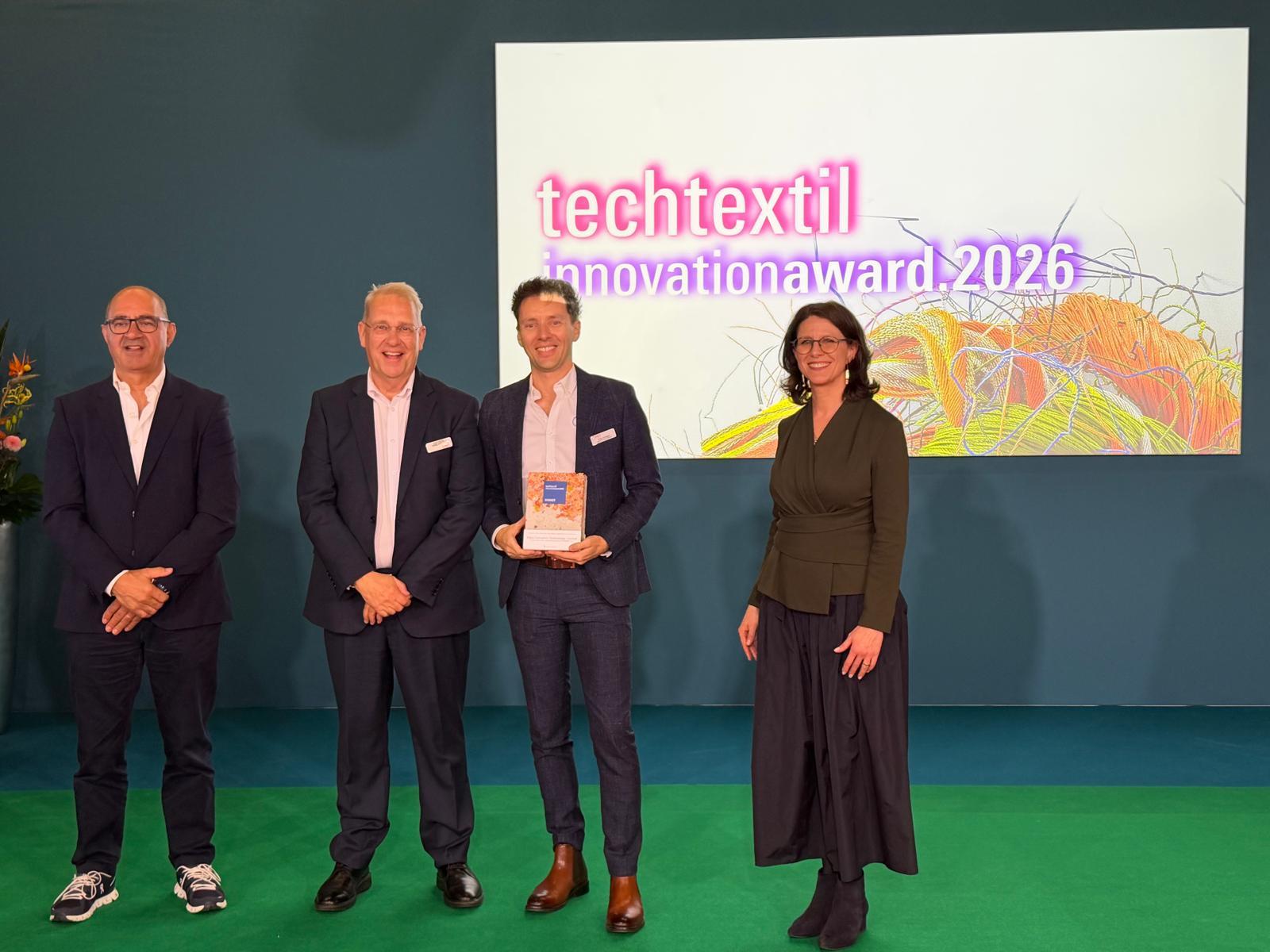
FET’s Managing Director Richard Slack and Senior Scientist Kristoffer Kortsen (centre) receive the Innovation Award Photo FET
FET’s Managing Director Richard Slack and Senior Scientist Kristoffer Kortsen (centre) receive the Innovation Award
08.05.2026

FET’s gel spinning system wins Techtextil Innovation Award

FET has received the Techtextil Innovation Award 2026 in the New Production Technology category. The Techtextil Innovation Award honours outstanding ideas in textile technology, sustainability, AI and the creation of technical textiles, selected by an international jury of experts. Ranging from new materials to new production technologies, this award recognises progressive ideas that are driving forces for numerous industries, such as automotive, medical and construction.

The new FET-500 Series now allows rapid, small-scale gel spinning of UHMWPE without the use of the toxic solvents typically associated with the process. This game-changing equipment will finally unlock R&D and new product development in UHMWPE yarns, which was previously blocked by the large-scale nature of UHMWPE yarn production, enabling significant savings in cost, footprint and environmental factors.

“We are proud that the Techtextil Innovation Award recognises our intensive work. It shows that we are at the forefront of technological developments supporting the textiles of tomorrow.” - Richard Slack, Managing Director.

FET has received the Techtextil Innovation Award 2026 in the New Production Technology category. The Techtextil Innovation Award honours outstanding ideas in textile technology, sustainability, AI and the creation of technical textiles, selected by an international jury of experts. Ranging from new materials to new production technologies, this award recognises progressive ideas that are driving forces for numerous industries, such as automotive, medical and construction.

The new FET-500 Series now allows rapid, small-scale gel spinning of UHMWPE without the use of the toxic solvents typically associated with the process. This game-changing equipment will finally unlock R&D and new product development in UHMWPE yarns, which was previously blocked by the large-scale nature of UHMWPE yarn production, enabling significant savings in cost, footprint and environmental factors.

“We are proud that the Techtextil Innovation Award recognises our intensive work. It shows that we are at the forefront of technological developments supporting the textiles of tomorrow.” - Richard Slack, Managing Director.

This reinforces FET’s success in processing over 130 different polymer types in multifilament, monofilament and nonwoven formats, collaborating with specialist companies worldwide to promote greater sustainability through innovative manufacturing processes.

Source:

FET

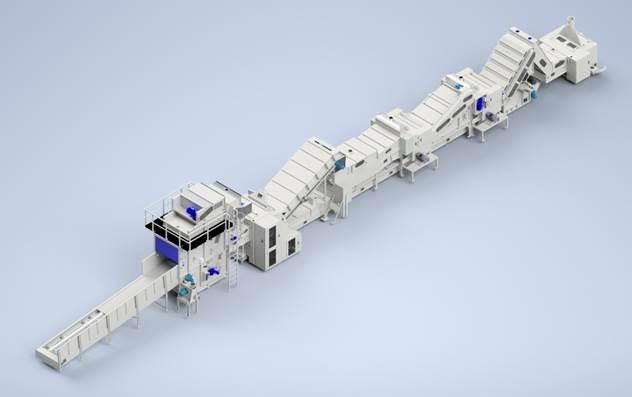
Exemplary Hemp Straw Processing Plant (c) Temafa Maschinenfabrik GmbH
Exemplary Hemp Straw Processing Plant
08.05.2026

Temafa Maschinenfabrik GmbH supplies a complete decortication plant for processing hemp straw

Temafa Maschinenfabrik GmbH, a leading supplier of machinery and plants for fibre processing, has successfully secured an order to supply a complete plant for processing hemp straw to Hanffaser Geiseltal eG, based in Mücheln.

With this project, Hanffaser Geiseltal eG is implementing its first industrial plant for processing hemp straw into hemp fibres. The plant will be delivered, installed and commissioned in the course of the year.

The plant, designed and manufactured by Temafa, is specifically engineered for the efficient processing of hemp straw. The aim is to produce high-quality fibre products, which are primarily used in the building materials industry, for example in sustainable insulation materials and other ecological applications.

With this investment, Hanffaser Geiseltal eG is strengthening its position in the field of sustainable raw materials and sending a clear signal regarding the increasing industrialisation of hemp processing in Germany.

Temafa Maschinenfabrik GmbH, a leading supplier of machinery and plants for fibre processing, has successfully secured an order to supply a complete plant for processing hemp straw to Hanffaser Geiseltal eG, based in Mücheln.

With this project, Hanffaser Geiseltal eG is implementing its first industrial plant for processing hemp straw into hemp fibres. The plant will be delivered, installed and commissioned in the course of the year.

The plant, designed and manufactured by Temafa, is specifically engineered for the efficient processing of hemp straw. The aim is to produce high-quality fibre products, which are primarily used in the building materials industry, for example in sustainable insulation materials and other ecological applications.

With this investment, Hanffaser Geiseltal eG is strengthening its position in the field of sustainable raw materials and sending a clear signal regarding the increasing industrialisation of hemp processing in Germany.

“We are delighted to be supporting Hanffaser Geiseltal eG as it enters the field of industrial hemp fibre processing,” says Dr Jörg Morgner, Managing Director at Temafa Maschinenfabrik GmbH. “This project underscores the growing importance of natural fibres as sustainable raw materials and our expertise in developing bespoke plant solutions.”

Source:

Temafa Maschinenfabrik GmbH

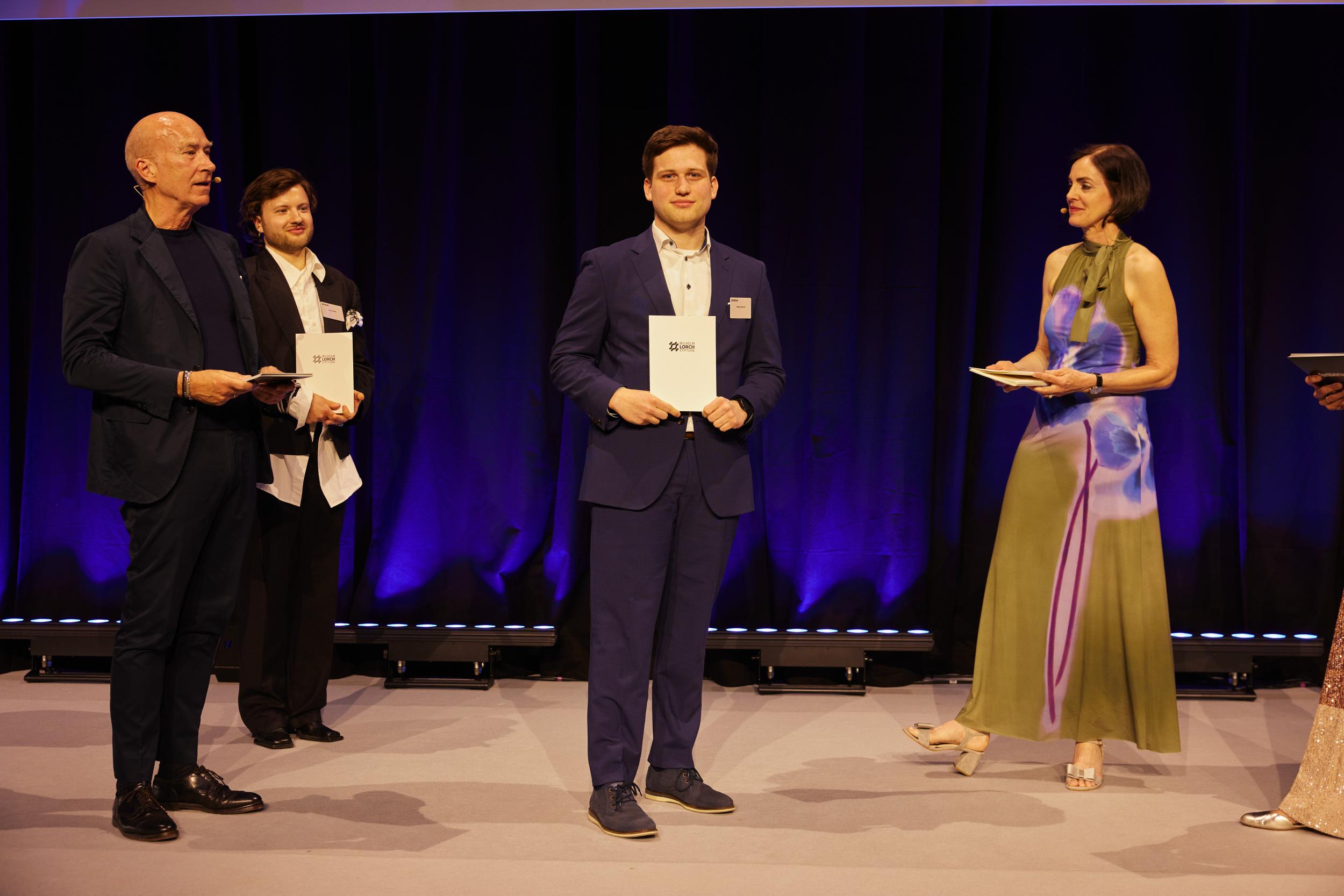
Award winner Tobias Dickmeiß with his certificate © Katharina Dubno
Award winner Tobias Dickmeiß with his certificate
08.05.2026

Elastic yarns to become more recyclable and environmentally friendly in future

On 29 April 2026, ITA student Tobias Dickmeiß was awarded a sponsorship prize by the Wilhelm Lorch-Stiftung for his innovative approach, to replacing conventional elastane with elastic yarns made from thermoplastic copolyester elastomers (TPC). Thanks to their thermoplastic nature and compatibility with typical polyesters used in the textile industry, elastic TPC yarns offer improved recyclability. Furthermore, the use of the melt-spinning process in yarn production eliminates the need for solvents that are harmful to the environment and human health.

Elastic textiles have become an integral part of our everyday lives, as they ensure comfort, a good fit and freedom of movement. At the same time, the increasing use of traditional elastic yarns, known as elastanes, significantly complicates textile recycling. Even small amounts of elastane can impair thermomechanical recycling processes and prevent a closed recycling loop.

On 29 April 2026, ITA student Tobias Dickmeiß was awarded a sponsorship prize by the Wilhelm Lorch-Stiftung for his innovative approach, to replacing conventional elastane with elastic yarns made from thermoplastic copolyester elastomers (TPC). Thanks to their thermoplastic nature and compatibility with typical polyesters used in the textile industry, elastic TPC yarns offer improved recyclability. Furthermore, the use of the melt-spinning process in yarn production eliminates the need for solvents that are harmful to the environment and human health.

Elastic textiles have become an integral part of our everyday lives, as they ensure comfort, a good fit and freedom of movement. At the same time, the increasing use of traditional elastic yarns, known as elastanes, significantly complicates textile recycling. Even small amounts of elastane can impair thermomechanical recycling processes and prevent a closed recycling loop.

As part of his bachelor’s thesis, Tobias Dickmeiß carried out extensive empirical process studies on a pilot-scale melt-spinning line. By systematically analysing the influence of various process parameters on yarn properties, he succeeded in specifically improving the properties of the resulting TPC yarns. The findings of his bachelor’s thesis thus provide a promising basis for the further development of recyclable elastic yarns and textiles.

Tobias Dickmeiß was granted a sponsorship prize of EUR 5,000 for specific further training in recognition of his outstanding bachelor’s thesis, ‘Development of a melt spinning process for elastic yarns made from thermoplastic copolyester elastomers at pilot scale’.

During his bachelor’s thesis, hr was supervised by ITA PhD student Ricarda Wissel.

Source:
Institut für Textiltechnik der RWTH Aachen University
04.05.2026

Market Study on Thermoplastic Composites

The European Alliance for Thermoplastic Composites (EATC) has published a comprehensive study on the market, applications and prospects for thermoplastic composites. 

Thermoplastic fibre-reinforced plastics – also known as thermoplastic composites – are becoming increasingly important across a wide range of industries. From the automotive industry and aerospace to construction and sports and leisure products, they offer a compelling combination of high strength, low weight and good recycling prospects. As such, they are regarded as a key material for sustainable and high-performance lightweight construction solutions. 

Against this backdrop, the European Alliance for Thermoplastic Composites (EATC) has commissioned and provided technical support for a new market study on the European market for thermoplastic composites. The aim of the study is to provide a systematic overview of the current situation, developments and future opportunities within this dynamic materials segment. 

The European Alliance for Thermoplastic Composites (EATC) has published a comprehensive study on the market, applications and prospects for thermoplastic composites. 

Thermoplastic fibre-reinforced plastics – also known as thermoplastic composites – are becoming increasingly important across a wide range of industries. From the automotive industry and aerospace to construction and sports and leisure products, they offer a compelling combination of high strength, low weight and good recycling prospects. As such, they are regarded as a key material for sustainable and high-performance lightweight construction solutions. 

Against this backdrop, the European Alliance for Thermoplastic Composites (EATC) has commissioned and provided technical support for a new market study on the European market for thermoplastic composites. The aim of the study is to provide a systematic overview of the current situation, developments and future opportunities within this dynamic materials segment. 

Focus on market structure, applications and growth drivers 
The study analyses the fundamental material properties of thermoplastic composites and highlights the advantages of using them over alternative materials. It also identifies differences between various material classes and outlines the historical development of their industrial applications. 

Particular emphasis is placed on analysing the current size of the European market and the application areas that dominate today. In addition, the study identifies future market potential based on relevant macroeconomic factors. 

In focus: LFT, GMT und CFRTP 
The focus is in particular on LFT (long fibre-reinforced thermoplastics), GMT (glass mat reinforced thermoplastics) and CFRTP (continuous fibre-reinforced thermoplastics). These material groups play a central role in modern structural components with high mechanical requirements. They combine the advantages of thermoplastic matrices – such as short cycle times, efficient processing and new manufacturing possibilities – with the performance of reinforcing fibres. 

A strategic material for European industry 
The findings of the study highlight the growing strategic importance of thermoplastic composites for Europe as an industrial hub. Particularly at a time when demands for resource efficiency, CO₂ reduction and the circular economy are on the rise, thermoplastic composites offer great potential for innovative product solutions. 

Now available
The study is now available in PDF format from AVK upon advance payment. EATC and AVK members can purchase the study for EUR 149,- (plus VAT); for non members, the study is available for EUR 349,- (plus VAT).

Kraig Biocraft Laboratories Source: Kraig Biocraft Laboratories
04.05.2026

Kraig Launches April/May Production Cycle Following Record Spider Silk Output

Kraig Biocraft Laboratories, Inc., a world leader in spider silk technology, announced that it has officially launched its next production cycle following the Company's recent record-setting production run.
 
Earlier this month, the Company announced the successful production of nearly 1.8 metric tons of recombinant spider silk cocoons. 1.8 metric tons was the largest production run in the Company's history. Today, Kraig Labs confirmed that its follow-on production cycle is underway. Consistent with the Company's aggressive commercialization strategy, this cycle is expected to show a substantial increase over the previous cycle.
 
This next production expansion represents another major step in the Company's carefully structured plan to rapidly scale output toward its long-term objective of producing more than 10 metric tons of recombinant spider silk cocoons in a single month.
 

Kraig Biocraft Laboratories, Inc., a world leader in spider silk technology, announced that it has officially launched its next production cycle following the Company's recent record-setting production run.
 
Earlier this month, the Company announced the successful production of nearly 1.8 metric tons of recombinant spider silk cocoons. 1.8 metric tons was the largest production run in the Company's history. Today, Kraig Labs confirmed that its follow-on production cycle is underway. Consistent with the Company's aggressive commercialization strategy, this cycle is expected to show a substantial increase over the previous cycle.
 
This next production expansion represents another major step in the Company's carefully structured plan to rapidly scale output toward its long-term objective of producing more than 10 metric tons of recombinant spider silk cocoons in a single month.
 
"Our team continues to execute exactly as planned," said Kim Thompson, Founder and CEO of Kraig Labs. "Each production cycle is delivering larger output, improved operational efficiency, and, with our quality control backstops working as designed, greater confidence in our ability to scale. We are systematically building toward our goal of exceeding 10 metric tons of production in a single month. Our team is hitting every mark as we scale output at a rapid pace."
 
During senior management's recent trip to the Company's production operations in Southeast Asia, leadership worked directly with the production team to review current production infrastructure, staffing levels, and operational readiness to support this next phase of expansion.
 
That review included evaluating existing facilities, workforce requirements, and identifying additional opportunities to expand the Company's operational footprint to support increasing production demands. The Company has already identified opportunities for additional facility expansion and expects to provide further updates as new facilities are brought online.
 
"Our recent operational review confirmed that our production team is prepared for this next level of scale," added Thompson. "We continue to invest in the infrastructure, personnel, and production capacity required to meet the growing demand we anticipate for recombinant spider silk."
 
The Company believes that expanding production capacity in parallel with downstream silk processing capabilities remains critical as it moves toward full commercialization of its recombinant spider silk technologies for technical textiles, luxury wear, performance apparel, and other high-performance material markets.


The Company leadership in biomaterials was recently spotlighted on the cover of the March 2026 issue of National Geographic, highlighting the growing importance and predominance of our work in scaling spider silk production.

Source:

Kraig Biocraft Laboratories, Inc.

Maximilian Peter to take charge of the Polymers division on May 1, 2026 Source: WACKER
Maximilian Peter
01.05.2026

Wacker: Polymers division under new leadership

  • Maximilian Peter to take charge of the Polymers division on May 1, 2026 
  • Effective the same date, the previous head of the division, Peter Summo, to take charge of Sales & Distribution 

On May 1, 2026, Maximilian Peter will take over as head of WACKER’s Polymers division. Holding a doctorate in chemical engineering, he has been with WACKER since 2012. After working in process development, he took charge of Corporate Development and was most recently responsible for Human Resources. 

Maximilian Peter succeeds Peter Summo, who headed the Polymers division for ten years. Effective May 1, 2026, Summo will take charge of Sales & Distribution. A graduate in business administration, he began his career at specialty chemicals manufacturer Akzo Nobel before joining WACKER in 1995. Since then, he has held various management positions within the company. 

  • Maximilian Peter to take charge of the Polymers division on May 1, 2026 
  • Effective the same date, the previous head of the division, Peter Summo, to take charge of Sales & Distribution 

On May 1, 2026, Maximilian Peter will take over as head of WACKER’s Polymers division. Holding a doctorate in chemical engineering, he has been with WACKER since 2012. After working in process development, he took charge of Corporate Development and was most recently responsible for Human Resources. 

Maximilian Peter succeeds Peter Summo, who headed the Polymers division for ten years. Effective May 1, 2026, Summo will take charge of Sales & Distribution. A graduate in business administration, he began his career at specialty chemicals manufacturer Akzo Nobel before joining WACKER in 1995. Since then, he has held various management positions within the company. 

“With Maximilian Peter and Peter Summo, we are filling two key positions at WACKER with experienced colleagues who have already played a decisive role in using their expertise to shape the company,” said Christian Hartel, WACKER’s CEO, in connection with the changeover. “As head of the Polymers division, Maximilian Peter will continue to drive forward its regional expansion. Peter Summo will continue to forge ahead with WACKER’s market and customer focus and promote sales excellence throughout the company. I wish them both every success in their new roles and look forward to our continued collaboration going forward,” he added. 

Source:

Wacker Chemie AG

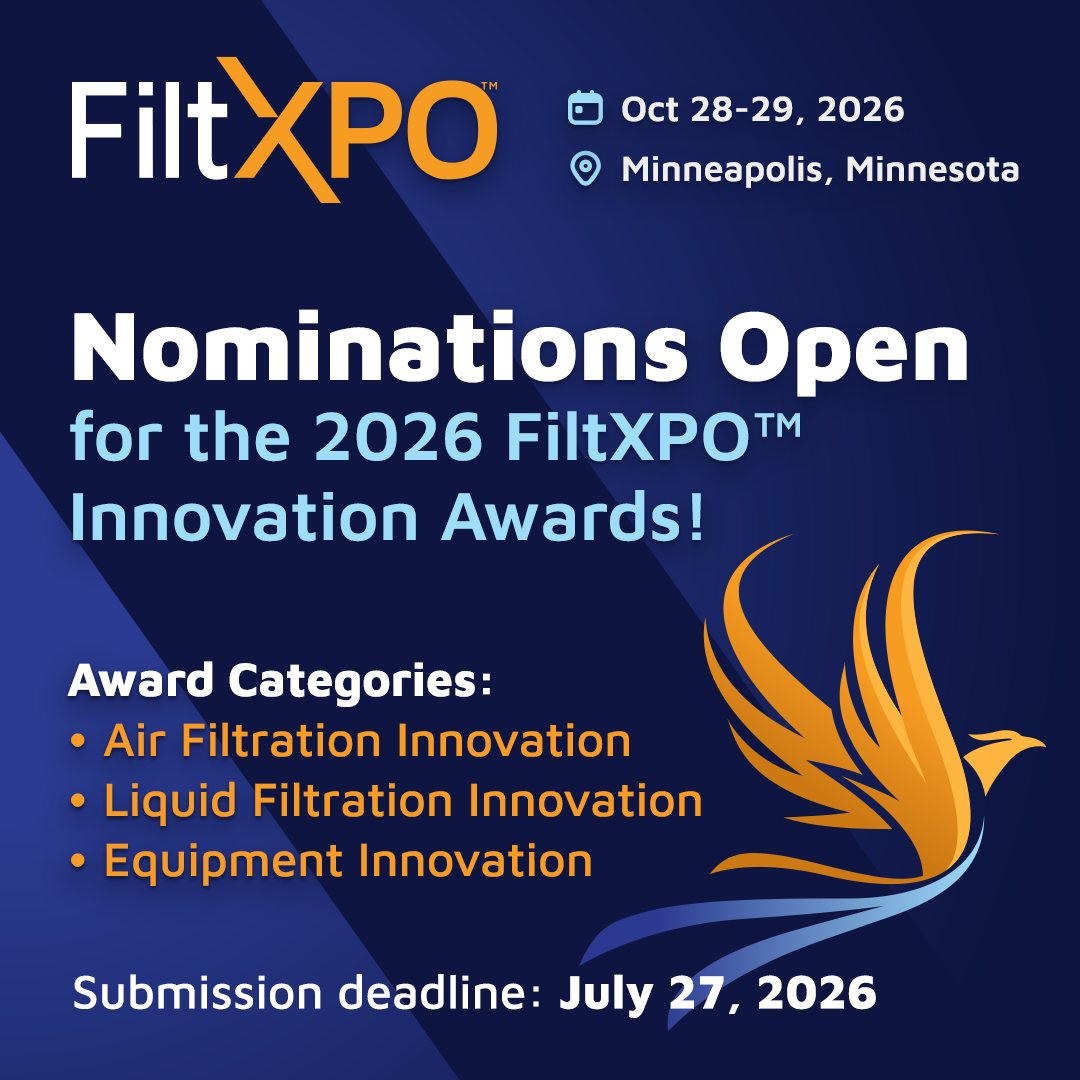
INDA Opens Nominations for the 2026 FiltXPO™ Innovation Awards (c) INDA
INDA Opens Nominations for the 2026 FiltXPO™ Innovation Awards
27.04.2026

INDA Opens Nominations for the 2026 FiltXPO™ Innovation Awards

INDA, the Association of the Nonwoven Fabrics Industry, in collaboration with International Filtration News, has officially opened nominations for the 2026 FiltXPO™ Innovation Awards. Filtration professionals are invited to submit their most innovative products—or those of their customers—for industry-wide recognition.

The FiltXPO Innovation Awards celebrate excellence in filtration by honoring products and technologies introduced since FiltXPO 2023. Submissions are now being accepted across three categories.

Award Categories:

  • Air Filtration Innovation
  • Liquid Filtration Innovation
  • Equipment Innovation

All nominations must be submitted by July 27, 2026. Finalists will be selected by INDA’s Technical Advisory Board, with the top three entries in each category advancing to the final round. Winners will be determined through industry voting hosted on the International Filtration News website.

INDA, the Association of the Nonwoven Fabrics Industry, in collaboration with International Filtration News, has officially opened nominations for the 2026 FiltXPO™ Innovation Awards. Filtration professionals are invited to submit their most innovative products—or those of their customers—for industry-wide recognition.

The FiltXPO Innovation Awards celebrate excellence in filtration by honoring products and technologies introduced since FiltXPO 2023. Submissions are now being accepted across three categories.

Award Categories:

  • Air Filtration Innovation
  • Liquid Filtration Innovation
  • Equipment Innovation

All nominations must be submitted by July 27, 2026. Finalists will be selected by INDA’s Technical Advisory Board, with the top three entries in each category advancing to the final round. Winners will be determined through industry voting hosted on the International Filtration News website.

Award recipients will be announced live at FiltXPO 2026, taking place October 28–29, 2026, at the Minneapolis Convention Center in Minneapolis, Minnesota.
For full award criteria and eligibility requirements, visit: https://www.inda.org/awards/filtexpo-innovation-award.html

To submit a nomination, visit: https://www.filtnews.com/filtxpo-awards/

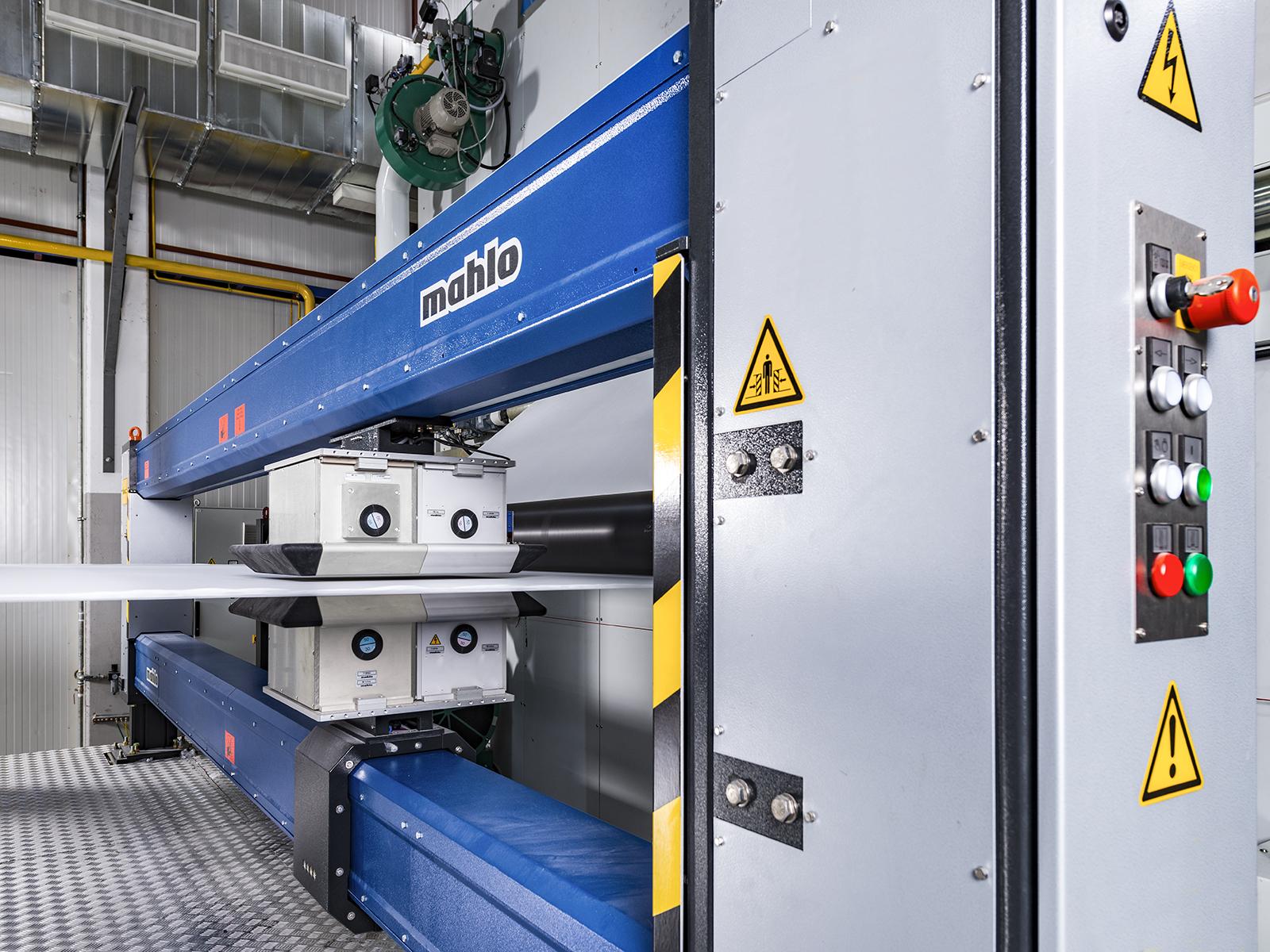
Web Gauging with Qualiscan QMS (c) Mahlo GmbH & Co. KG
Web Gauging with Qualiscan QMS
27.04.2026

Mahlo: Smart Quality Control for Technical Textiles

In the end, what matters is the result: a filter that performs reliably, a membrane that remains stable in storm conditions, a composite material with precisely defined properties. But the path to achieving this is demanding. In the production of technical textiles, numerous parameters interact – and even the smallest deviations can have major consequences. 

This very challenge shaped this year’s Techtextil. Many of the exhibiting companies face the daily task of producing complex materials while maintaining consistently high quality standards. It requires a finely tuned interplay of fibers, coatings, temperature, moisture, and tension. Whether it is protective textiles, technical filters, or carbon applications: precision is not an option, but a prerequisite. And monitoring these parameters is the key to success. 

In the end, what matters is the result: a filter that performs reliably, a membrane that remains stable in storm conditions, a composite material with precisely defined properties. But the path to achieving this is demanding. In the production of technical textiles, numerous parameters interact – and even the smallest deviations can have major consequences. 

This very challenge shaped this year’s Techtextil. Many of the exhibiting companies face the daily task of producing complex materials while maintaining consistently high quality standards. It requires a finely tuned interplay of fibers, coatings, temperature, moisture, and tension. Whether it is protective textiles, technical filters, or carbon applications: precision is not an option, but a prerequisite. And monitoring these parameters is the key to success. 

Perfect Alignment for Woven Fabrics  
Companies such as Frenzelit, Freudenberg, Friedola, Getzner, Juta, Sattler, Swisstulle, and Toray demonstrated at the trade fair just how diverse the applications of classic woven fabrics can be. At the same time, it became clear that even the slightest distortion errors can lead to functional failure and therefore waste. Mahlo’s Orthopac systems ensure that fabrics remain perfectly aligned throughout these processes – continuously, reliably, and often unnoticed in the background. 

Consistent Quality in Nonwovens 
Nonwovens are no less complex. Manufacturers such as Alkegen (Gutsche), Dyneema, Filz Fulda, Freudenberg, Johns Manville, Lenzing, Norafin, Polyvlies, Pont Aurell, Tenowo, and TWE represent materials with a wide range of properties used in hygiene products, vehicles, filters, and medical applications. 

What matters most here is one thing above all: basis weight. Even minor deviations can determine whether a product meets the required specifications or not. With Qualiscan QMS, this crucial parameter is monitored continuously – and adjusted immediately when necessary. This ensures consistent quality, even at high production speeds. 

Coatings Under Full Control 
Another key topic at Techtextil was coatings. Multi-layer materials, complex constructions, and precisely defined properties are what characterize modern technical textiles. But the more complex a material becomes, the more sensitive it is to fluctuations in the process. 

This is where Mahlo sensors provide decisive insights: they detect early on when coatings become too thick or too thin, enabling immediate corrective action. Errors do not only become visible at the end – they are prevented from being produced in the first place. 

Moisture and Temperature: Invisible but Essential 
The same applies to moisture. It is invisible, but crucial for many processes. Whether in nonwovens, felts, or drying processes, precise control saves energy, stabilizes operations, and ensures product quality. IR and microwave sensors provide the necessary real-time data.
For sensitive materials such as prepregs or thermally stabilized fabrics, temperature control becomes essential. Systems such as Optipac and Ecopac ensure that materials are processed exactly within the required temperature ranges. 

Source:

Mahlo GmbH & Co. KG

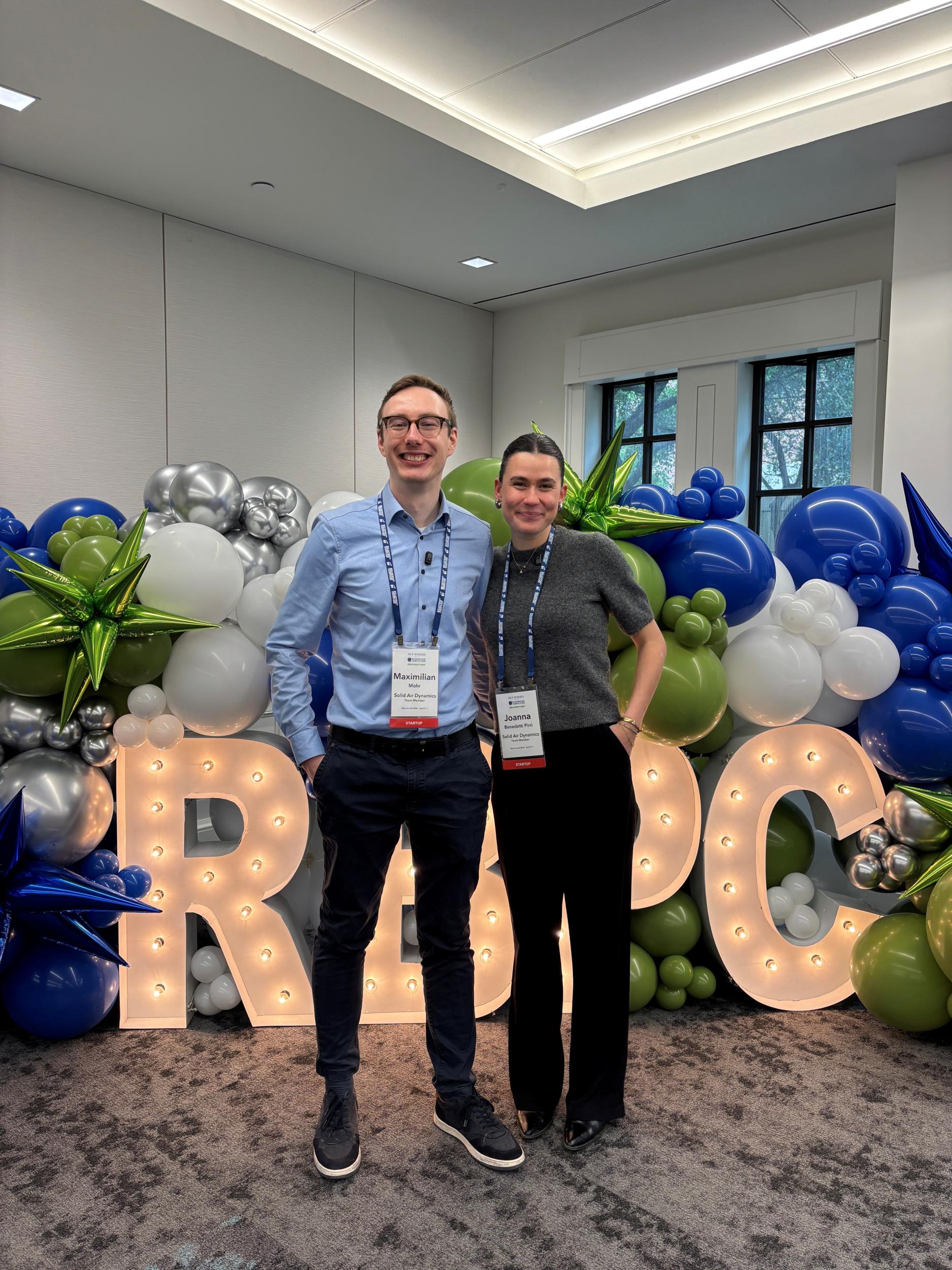
© Joanna Benedetti Pirri
27.04.2026

ITA spin-off Solid Air (SA) Dynamics reaches the semi-finals of the Rice Business Plan Competition

The ITA spin-off SA Dynamics has been nominated for the semi-finals of this year’s Rice Business Plan Competition (RBPC), one of the world’s most prestigious start-up competitions, held at Rice University in Houston, Texas.

Out of 550 applications from around the world, only 42 teams were accepted to take part in the competition. SA Dynamics impressed the judges with its technology and business model, reaching the semi-finals as one of the top 15 teams.

The RBPC also offered SA Dynamics the opportunity to engage closely with leading international coaches and investors. The insights gained and networks established will strengthen the company’s future development in the long term.

“Making it into the top 15 out of 550 applications and 42 teams at the RBPC is a testament to everything we work towards every day. We are incredibly proud of our team and grateful for every conversation, every challenge and every new connection we made in Houston.”— SA Dynamics Team

The ITA spin-off SA Dynamics has been nominated for the semi-finals of this year’s Rice Business Plan Competition (RBPC), one of the world’s most prestigious start-up competitions, held at Rice University in Houston, Texas.

Out of 550 applications from around the world, only 42 teams were accepted to take part in the competition. SA Dynamics impressed the judges with its technology and business model, reaching the semi-finals as one of the top 15 teams.

The RBPC also offered SA Dynamics the opportunity to engage closely with leading international coaches and investors. The insights gained and networks established will strengthen the company’s future development in the long term.

“Making it into the top 15 out of 550 applications and 42 teams at the RBPC is a testament to everything we work towards every day. We are incredibly proud of our team and grateful for every conversation, every challenge and every new connection we made in Houston.”— SA Dynamics Team

“We warmly congratulate SA Dynamics on its outstanding achievement,” emphasises Professor Dr Thomas Gries, Director of ITA. “This excellent result impressively underscores the high quality of our research and teaching at the ITA. We look forward to continuing to support SA Dynamics on its journey.”

Solid Air Dynamics develops bio-based and recyclable high-performance fibres for aerogel-based thermal insulation, thereby driving the transition towards more powerful and sustainable materials, and was the winner of the KUER business plan competition.NRW 2023, won the Techtextil Innovation Award 2024 and runner-up in the RWTH Innovation Award in 2026.

Source:

ITA – Institut für Textiltechnik of RWTH Aachen University

COBRA® Filter Photo: (c) BB Engineering GmbH
COBRA® Filter
22.04.2026

Plastics Recycling Show Europe 2026: Efficient Recycling of textile PET

At the upcoming Plastics Recycling Show Europe in Amsterdam on May 5–6, BB Engineering will present its portfolio of PET recy-cling technologies. The German machinery manufacturer will once again focus on textile recycling and melt filtration.

Versatile Portfolio with a Focus on Textiles
The company’s product portfolio includes components and sys-tems for the production of films and synthetic fibers, as well as for PET recycling. With extruders, various filters, and complete spin-ning and recycling plants, the company possesses extensive ex-pertise in plastics processing and can offer comprehensive PET recycling solutions from a single source. Based on its experience in the synthetic fiber industry, BB Engineering places a special fo-cus on textile recycling (PET). BB Engineering will highlight its VacuFil® and COBRA® systems at PRSE.

VacuFil® Visco+ - PET LSP recycling 
The VacuFil® PET recycling plant combines gentle large-area fil-tration with precise IV adjustment, thereby ensuring consistently outstanding rPET melt quality. 

At the upcoming Plastics Recycling Show Europe in Amsterdam on May 5–6, BB Engineering will present its portfolio of PET recy-cling technologies. The German machinery manufacturer will once again focus on textile recycling and melt filtration.

Versatile Portfolio with a Focus on Textiles
The company’s product portfolio includes components and sys-tems for the production of films and synthetic fibers, as well as for PET recycling. With extruders, various filters, and complete spin-ning and recycling plants, the company possesses extensive ex-pertise in plastics processing and can offer comprehensive PET recycling solutions from a single source. Based on its experience in the synthetic fiber industry, BB Engineering places a special fo-cus on textile recycling (PET). BB Engineering will highlight its VacuFil® and COBRA® systems at PRSE.

VacuFil® Visco+ - PET LSP recycling 
The VacuFil® PET recycling plant combines gentle large-area fil-tration with precise IV adjustment, thereby ensuring consistently outstanding rPET melt quality. 

From bottle-to-bottle to 100% fiber-to-fiber: Thanks to its modular design, VacuFil® can be exactly tailored to individual requirements. A wide variety of PET feedstocks — such as flakes, textile waste, fiber waste, or start-up lumps — are processed reliably, while the IV is specifically adjusted to the desired end product.

At the heart of the system is the patented Visco+ component. Us-ing liquid-state polycondensation, it reliably removes volatile con-taminants and delivers an exceptionally homogeneous melt with a viscosity of ±0.01 dl/g — up to 50% faster than comparable LSP systems. Depending on the throughput, a viscosity increase of up to 30% can be achieved. 

Continuous process monitoring via an online viscometer ensures a stable and reproducible output. VacuFil® has a capacity of 150 to 4,000 kg/h.

COBRA® sets new standards in melt filtration
With the development of its latest melt filter COBRA® BB Engi-neering has created a clear solution to the growing demands of the recycling industry. The goal: to reliably handle even high levels of contamination, simplify filter changes and cleaning, and at the same time significantly reduce operating costs. 

The result is a high-performance system that combines continuous large-area filtration with automated, chemical-free intermediate cleaning. Two filter cartridges with automatic switching ensure stable, safe, and uninterrupted operation — even at high contami-nation levels where conventional candle filters or screen changers reach their limits.

A key advantage lies in the integrated cleaning system: it signifi-cantly extends the service life of the filter media while simultane-ously reducing operational effort, melt losses, and energy con-sumption — all without the use of chemicals. This not only en-hances process reliability but also sustainably lowers operating costs.

Thanks to its high flexibility, COBRA® is suitable for both coarse and fine filtration. In addition to its use in PET recycling, the sys-tem also offers great potential for increasing efficiency in other ap-plications, such as plastic spinning, and can be easily retrofitted there.

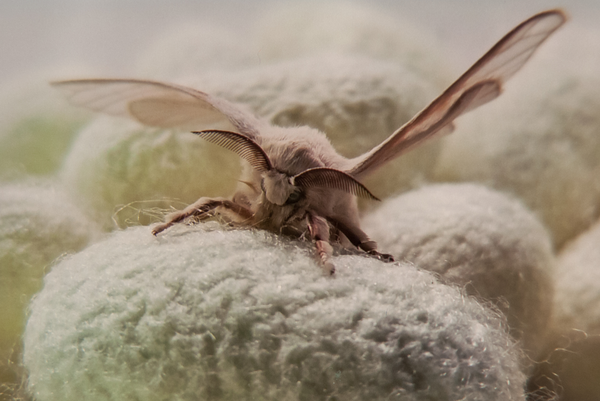
Small-Portion-of-Recombiant-Spider-Silk-Cocoon-Harvest-March-2026 Photo Kraig Biocraft Laboratories
Small Portion of Recombiant Spider Silk.Cocoon Harvest
20.04.2026

Kraig Biocraft Laboratories begins Processing 1.8 Metric Tons of Recombinant Spider Silk Cocoons

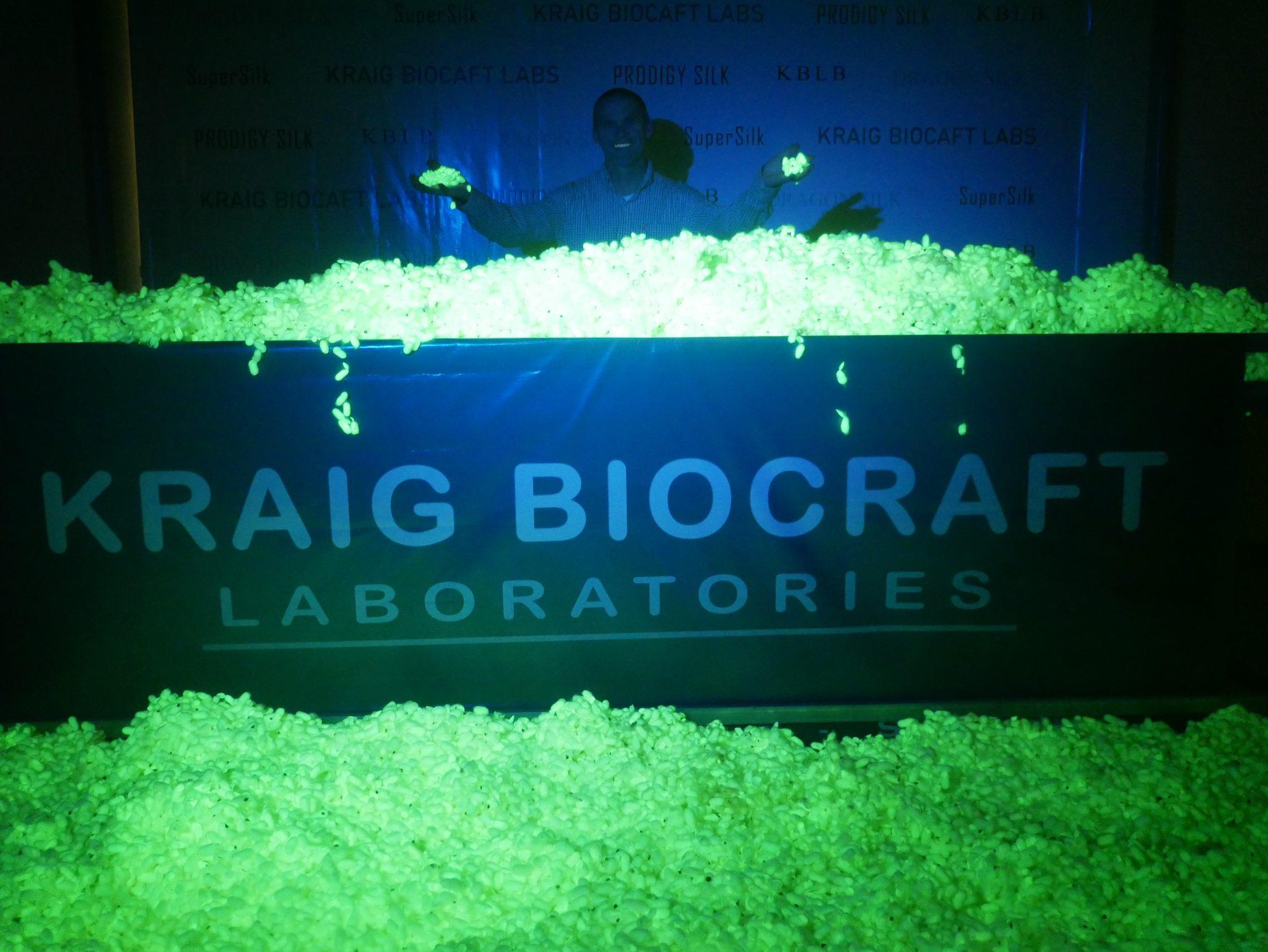
Kraig Biocraft Laboratories, Inc., a world leader in spider silk technology, announced that it has begun processing nearly 1.8 metric tons of recombinant spider silk cocoons into finished reeled silk.

In early April, the Company announced that it had exceeded 1.3 metric tons of cocoon production in March, setting a new production record. Since that announcement, Kraig Labs is now confirming that it produced an additional half ton of cocoons (approximately) that were not included in the in the March report. This brings the Company’s total available cocoon inventory to nearly 1.8 metric tons. The attached image represents less than 4% of the total cocoon production.

Kraig Labs has now initiated the reeling process, converting this inventory into finished reeled silk. This work is currently underway at one of the Company’s production partners and is expected to be completed by the end of the month.

Upon completion of this processing phase, Kraig Labs expects to hold the largest inventory of recombinant spider silk in its history. To the Company’s knowledge, this volume also represents the largest single supply of recombinant spider silk ever to exist.

Kraig Biocraft Laboratories, Inc., a world leader in spider silk technology, announced that it has begun processing nearly 1.8 metric tons of recombinant spider silk cocoons into finished reeled silk.

In early April, the Company announced that it had exceeded 1.3 metric tons of cocoon production in March, setting a new production record. Since that announcement, Kraig Labs is now confirming that it produced an additional half ton of cocoons (approximately) that were not included in the in the March report. This brings the Company’s total available cocoon inventory to nearly 1.8 metric tons. The attached image represents less than 4% of the total cocoon production.

Kraig Labs has now initiated the reeling process, converting this inventory into finished reeled silk. This work is currently underway at one of the Company’s production partners and is expected to be completed by the end of the month.

Upon completion of this processing phase, Kraig Labs expects to hold the largest inventory of recombinant spider silk in its history. To the Company’s knowledge, this volume also represents the largest single supply of recombinant spider silk ever to exist.

The finished reeled silk will shortly be available for processing, including twisting into yarns and integration into textile and technical material applications. Kraig Labs plans to make these materials available to targeted markets, including luxury fashion, performance textiles, and industrial applications.

Senior management is currently in Asia overseeing these operations. During this visit, leadership is working directly with production staff to monitor the reeling process, evaluate facility performance, and coordinate with supply chain partners. Management is also advancing the implementation of the Company’s aggressive scale-up strategy. This plan is designed to continue rapidly increasing production output in the months ahead.

“The execution we are seeing across our operations is tracking exactly as we expected,” said Kim Thompson, Founder and CEO of Kraig Labs. “That is a direct result of the considerable groundwork our team has completed over the last three years to put our production infrastructure in place and fine tune our processes in the field. What we are seeing now is preparation translating into consistent, scalable output.”

The Company leadership in biomaterials was recently spotlighted on the cover of the March 2026 issue of National Geographic, highlighting the growing importance and predominance of our work in scaling spider silk production.

Source:

Kraig Biocraft Laboratories 

(c) Association of the Nonwoven Fabrics Industry
15.04.2026

INDA 2026 Supply Report: Resilient Growth and Sustainability in North American Nonwovens Industry

INDA, the Association of the Nonwoven Fabrics Industry, today released its 13th annual North American Nonwovens Supply Report, offering a comprehensive look at the industry’s performance, challenges, and strategic evolution. The report reveals a complex landscape shaped by global trade uncertainty, including tariffs and geopolitical tensions, which are expected to influence industry growth and performance in the coming years. Production output slowed again in 2025, reflecting a cautious, “wait-and-see” environment across the sector.

Despite these headwinds, the industry demonstrates resilience. Key trends include moderated production levels paired with cautious optimism, as companies adapt to shifting market conditions. Sustainability and environmental stewardship remain central priorities, driving innovation and long-term strategic investments.

INDA, the Association of the Nonwoven Fabrics Industry, today released its 13th annual North American Nonwovens Supply Report, offering a comprehensive look at the industry’s performance, challenges, and strategic evolution. The report reveals a complex landscape shaped by global trade uncertainty, including tariffs and geopolitical tensions, which are expected to influence industry growth and performance in the coming years. Production output slowed again in 2025, reflecting a cautious, “wait-and-see” environment across the sector.

Despite these headwinds, the industry demonstrates resilience. Key trends include moderated production levels paired with cautious optimism, as companies adapt to shifting market conditions. Sustainability and environmental stewardship remain central priorities, driving innovation and long-term strategic investments.

Report Based on Extensive Producer Input
Developed through extensive research, including producer surveys and in-depth interviews with industry leaders, the 2026 report offers a comprehensive view of the nonwovens landscape, spanning composites, roll goods, and finished products. This report provides an in-depth analysis of capacity, production, operating rates, and regional trade across North America, including the United States, Canada, and Mexico.

“As part of INDA’s role as the industry’s trusted data source, this report delivers valuable insights for benchmarking, strategic planning, and decision-making,” said Tony Fragnito, INDA President and CEO. “This year’s findings highlight a resilient industry that continues to expand capacity through ongoing investments across all regions and sectors. We are also seeing a clear shift toward sustainable, durable products, alongside continued innovation to meet evolving demand across North America.”

The full report is provided at no cost to participating producers. INDA members receive the report’s Executive Summary on a complimentary basis as part of their membership. Data from the Supply Report also informs INDA’s biennial Global Nonwoven Markets Demand Report, most recently published in November 2024.

“INDA remains committed to enhancing the quality and depth of our industry data and insights,” said Mark Snider, Chief Market and Industry Analyst. “Strong participation from suppliers is essential to that mission. As global supply chain pressures intensify, this report examines the key dynamics shaping the market and influencing future direction.”

Source:

Association of the Nonwoven Fabrics Industry