Research publications

3 results
28.01.2026

Real-time monitoring system for textile membranes

Fabrics Sensor Technology Technical Textiles Smart Textiles Tests

Abstract

In the IGF project 01IF22600N, a real-time, fiber sensor-based monitoring system for textile membranes was developed at the ITM of TU Dresden. Textile membrane structures are used in numerous technical applications, but methods for continuous, full-area condition monitoring have been lacking until now. The project goal was to implement an integrated sensor system that detects the global stress state of the membrane and thus provides indications of overloads and damage. To this end, suitable thread-like sensor materials were identified, sensor structures were integrated into the membrane using embroidery and weaving techniques, and robust contacting and coating strategies were developed. Based on experimental data and FEM simulations, an AI-based regression model was developed that determines load positions in real time with an accuracy of ±3 mm and load amounts with ±0.6 N, and uses this information to derive the full-surface stress state. The results show that the mechanical performance of the membrane is largely maintained despite sensor integration and that textile structures can be effectively expanded into intelligent, self-monitoring support structures.

Report

Introduction

Textile membrane structures have established themselves as lightweight, flexible, and yet high-performance components in numerous technical applications, such as architectural roof and facade systems, mobile and stationary protective structures, and maritime environments. However, their load-bearing capacity and fatigue strength depend crucially on static and dynamic stresses, as local overloads and undetected damage can lead to sudden structural failure in extreme cases. In practice, inspections have so far been based predominantly on visual checks and selective measurements, which do not allow for continuous condition monitoring or comprehensive evaluation of membrane behavior and are therefore of limited value for predictive maintenance. Against this background, the IGF project 01IF22600N aims to transform textile membranes into intelligent, sensor-functionalized structures that record their own stress and damage status in real time. To this end, a textile sensor structure [1] is integrated into the membrane structure [2, 3] and its measured values are evaluated in combination with simulation results [4, 5] using AI-based algorithms [6].

Objective

The central goal of the project was to create a fiber sensor-based monitoring system that determines the full-surface stress distribution of textile membranes and can thus provide indications of fatigue and structural damage. To this end, thread-like sensor materials were examined for their elongation properties and suitability for use in combination with the membrane. Using the preferred variants, weaving patterns for fabrics with integrated sensor and energy supply structures were developed and manufactured. These patterns were mechanically characterized while simultaneously recording the sensor measurements. At the same time, the global strain distribution was simulated for the test scenarios. Based on this data, algorithms were developed that calculate the global strain distribution from the sensor measurements and output it in real time, e.g., as a heat map. The developed system was successfully implemented and integrated into a functional demonstrator.

Results

Thread-shaped sensor materials

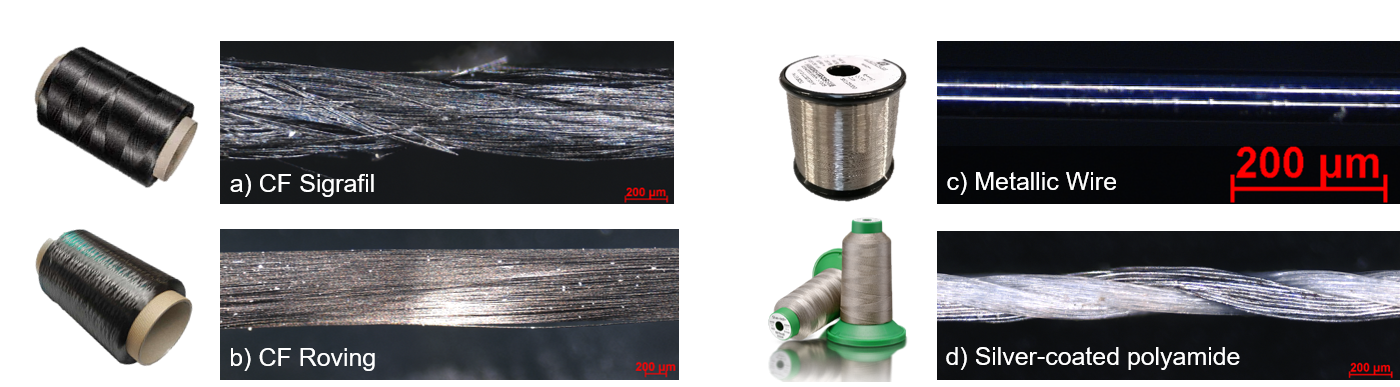
Silver-coated polyamide yarns, pseudoelastic shape memory alloys (SMA), and precision resistance alloys were selected as promising options in the search for a suitable thread sensor material. The behavior of the electrical resistance under tension, the temperature stability, and the suitability for subsequent textile integration into the membrane composite were investigated. Cyclic tensile tests up to 10 % strain were chosen as the characterization method and were repeated at various temperatures between -20 °C and 70 °C. As a result of these investigations, SMAs proved unsuitable due to their high temperature dependence and strongly non-linear resistance behavior. Both precision resistance alloys (Isaohm® / Isabellenhütte) and silver-coated polyamide yarns (SilverTech+® 150 / Amann & Söhne GmbH & Co. KG) appeared to be fundamentally suitable and were taken into account in the following tests, with precision resistance alloys being identified as the preferred option due to their lower temperature dependence and linear sensor behavior. A fine wire (LitzWire / Rudolf Pack GmbH & Co. KG) was selected for the implementation of the electrical contact network due to its good textile processability and low basic electrical resistance (<< 1 Ω/m).

Development and production of functional samples

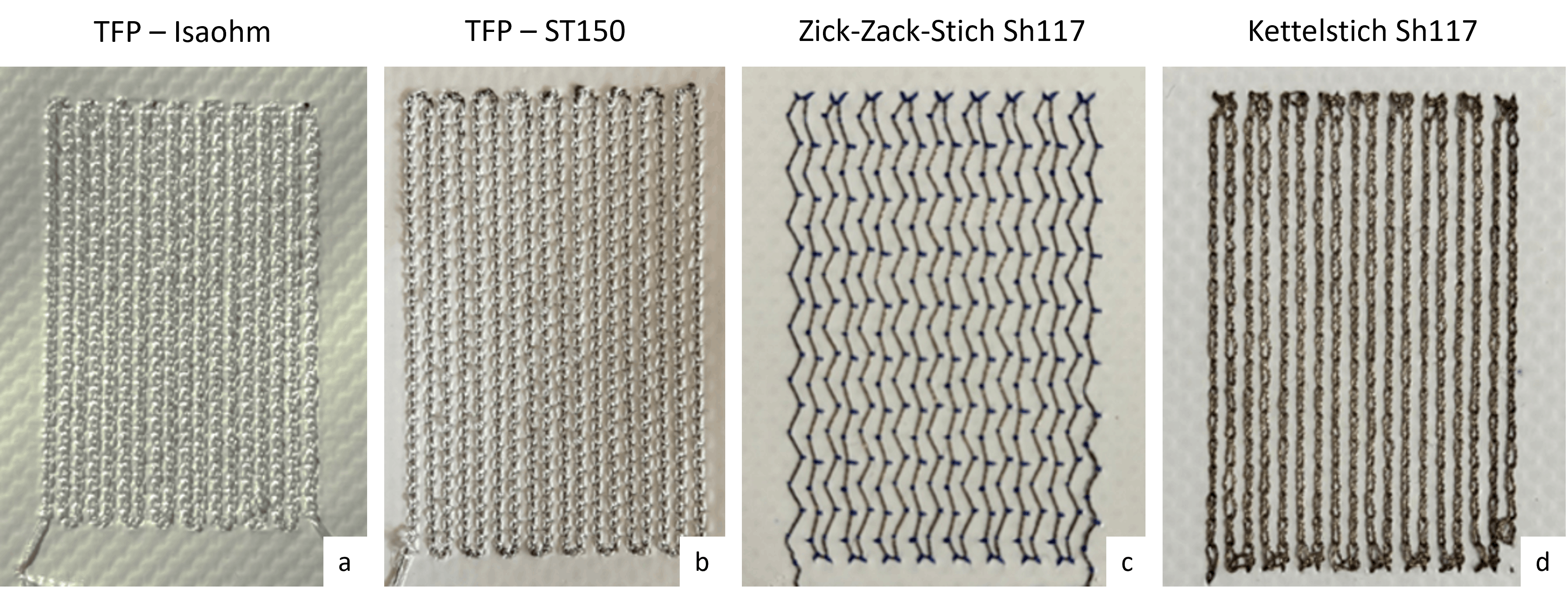
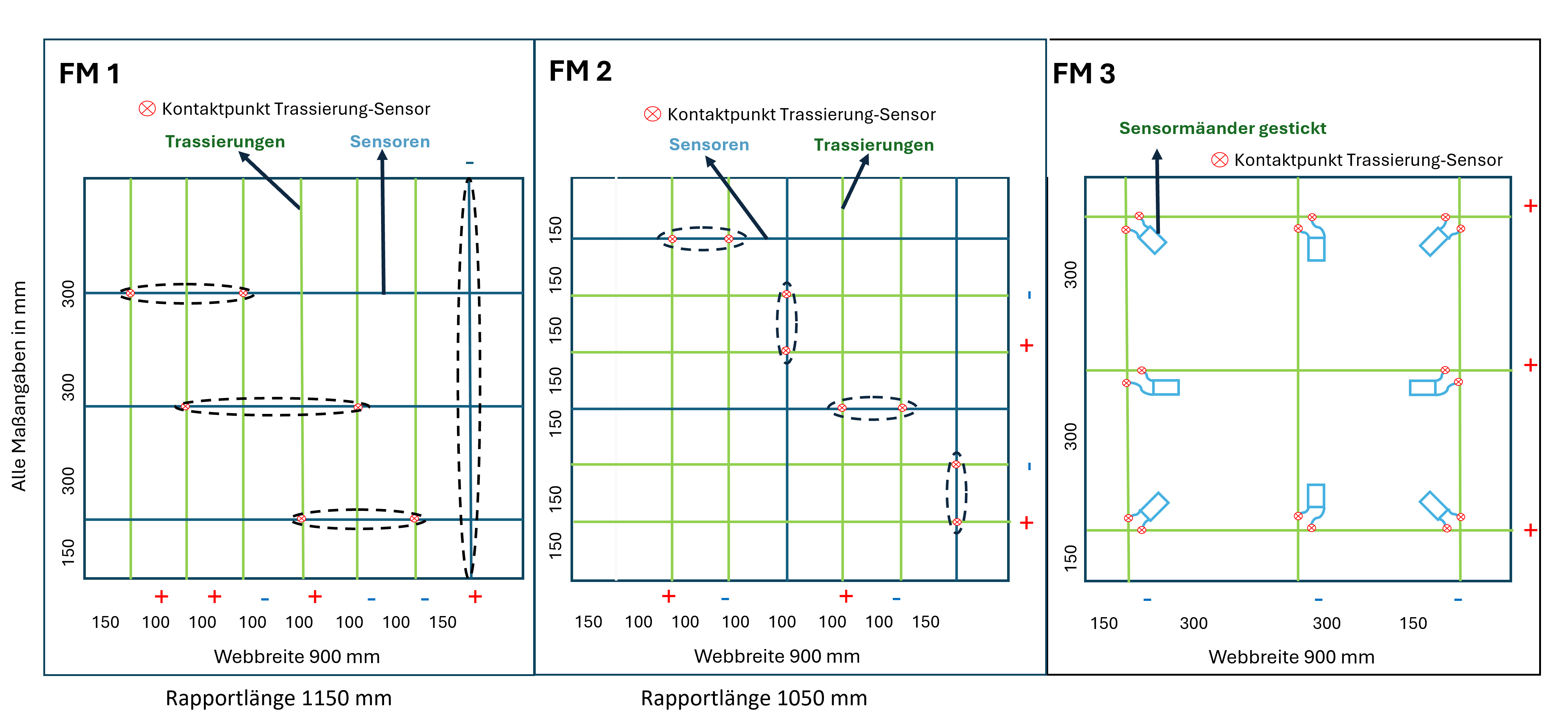
Two approaches were pursued for the development of a functional sample. On the one hand, samples were produced using embroidery technology and the TFP process; on the other hand, the thread-like sensor and the textile feed line were already integrated into the semi-finished textile product during the weaving process. For the embroidered samples, a commercially available membrane (HEYtex tentorium 900) was used. Both the silver-coated polyamide yarn and the precision resistance alloy were applied in patches using the tailored fiber placement (TFP) process (Figure 1) in order to increase the sensor length and thus improve measurement accuracy. In addition, the sensor patches were applied in different orientations in order to detect stretching in different directions. At the same time, the silver-coated polyamide yarn Shieldex® 117, which is more robust in textile processing than SilverTech+® 150, was embroidered using regular zigzag and chain stitches without auxiliary thread.

For the woven patterns, a grid with weft and warp threads made of feedline and sensor material was designed, which was combined with the polyester base fabric in terms of pattern (Figure 2). This made it possible to create arrangements with sensors in the warp and weft directions, which later allowed the calculation of tensile stress in different directions. A total of three patterns were created, which differed in terms of the length and position of the sensors. The third variant was a hybrid that combined a woven supply network with sensor patches that were embroidered on afterwards. Two types of intersection points, with and without electrical contact, were created in the conductive structures and implemented using binding techniques. The samples were produced on a gripper loom with center transfer (Lindauer Dornier P1).

A key development step was the creation of practical contacting strategies for the sensor network. Conventional soldering methods caused damage to the textile base material due to high process temperatures, while alternative conductive adhesives initially exhibited excessive contact resistance in the kΩ range. However, by using an epoxy-silver conductive adhesive (8330S) with defined curing (160°C, 90 s, light pressure), stable, low-resistance contacts could be achieved both within the fabric and at the edges of the goods; in combination with crimp contacts, a mechanically robust and electrically reliable connection to external measurement technology was achieved.

Coating of the textile semi-finished product with integrated sensor structure

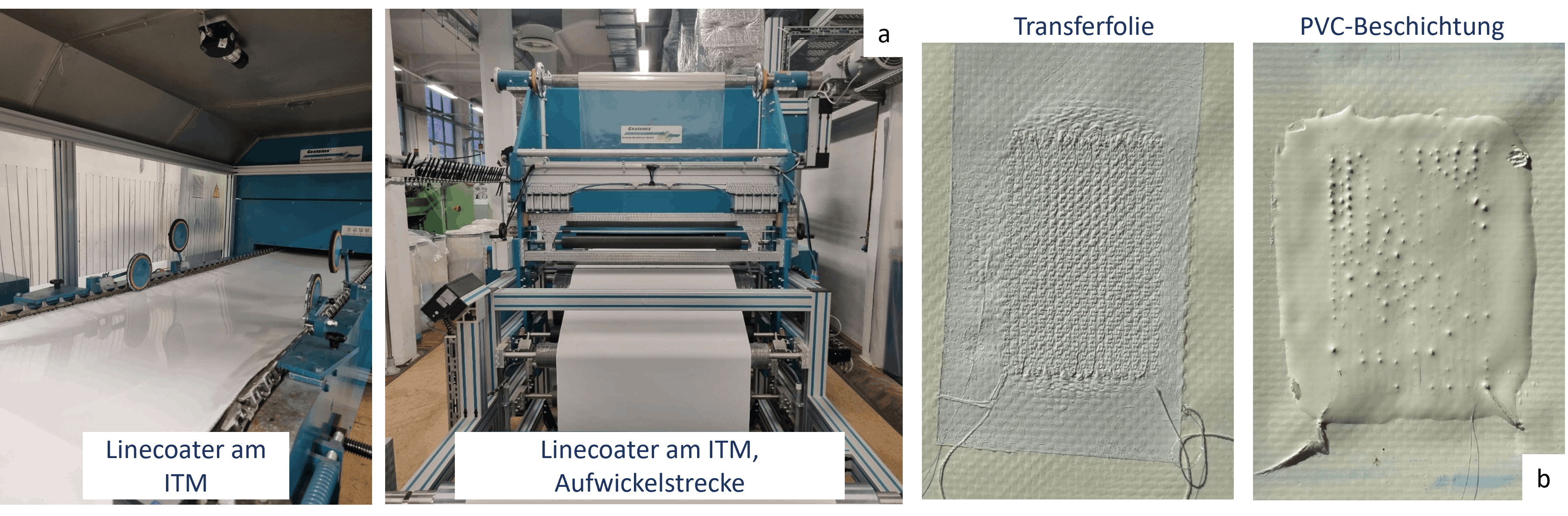
The functionalized fabrics were then coated with a PVC paste (plus 5% bonding agent) provided by the industry partner using a LineCoater from COATEMA (Figure 3). It was found that both integrally woven (0.2 mm) and embroidered sensor and supply structures (0.7 mm) could be integrated into the membrane with a low application thickness, so that the basic mechanical properties of the membrane were only minimally altered, while complete coverage and electrical insulation of the sensor technology was achieved. Additional tests with transfer foils and directly applied PVC adhesive layers showed that manual or semi-manual coating strategies are also suitable for local or subsequent functionalization, especially for smaller membrane areas.

Characterization of the membrane with integrated sensor technology

The manufactured samples were first tested in uniaxial tensile tests. In addition to the basic mechanical properties, the electromechanical properties were also determined. Particular attention was paid to the influence of the integrated sensor technology on structural integrity. Tests were carried out in both the weft and warp directions. With a maximum force of 3810 N at 23.2 % elongation in the weft direction and 4100 N at 24.9 % elongation in the warp direction, the manufactured samples were at a similar level to the commercial product from Heytex (weft: 3780 N at 25.8 %; warp: 3920 N at 20.6 %). Accordingly, it was not expected that the mechanical performance would be affected by the integration of the sensor network.

Development of algorithms for full-surface strain state detection

Based on biaxial tensile tests of the commercial membrane, FE models were created for the full-surface simulation of stress conditions. In addition to providing a database for algorithm development, this also supported the selection of suitable sensor layouts. The modeling was based on shell elements with an anisotropic material model. Based on the calibrated material model, simulations were performed with randomly varied load positions and magnitudes, which formed part of the database for algorithm development.

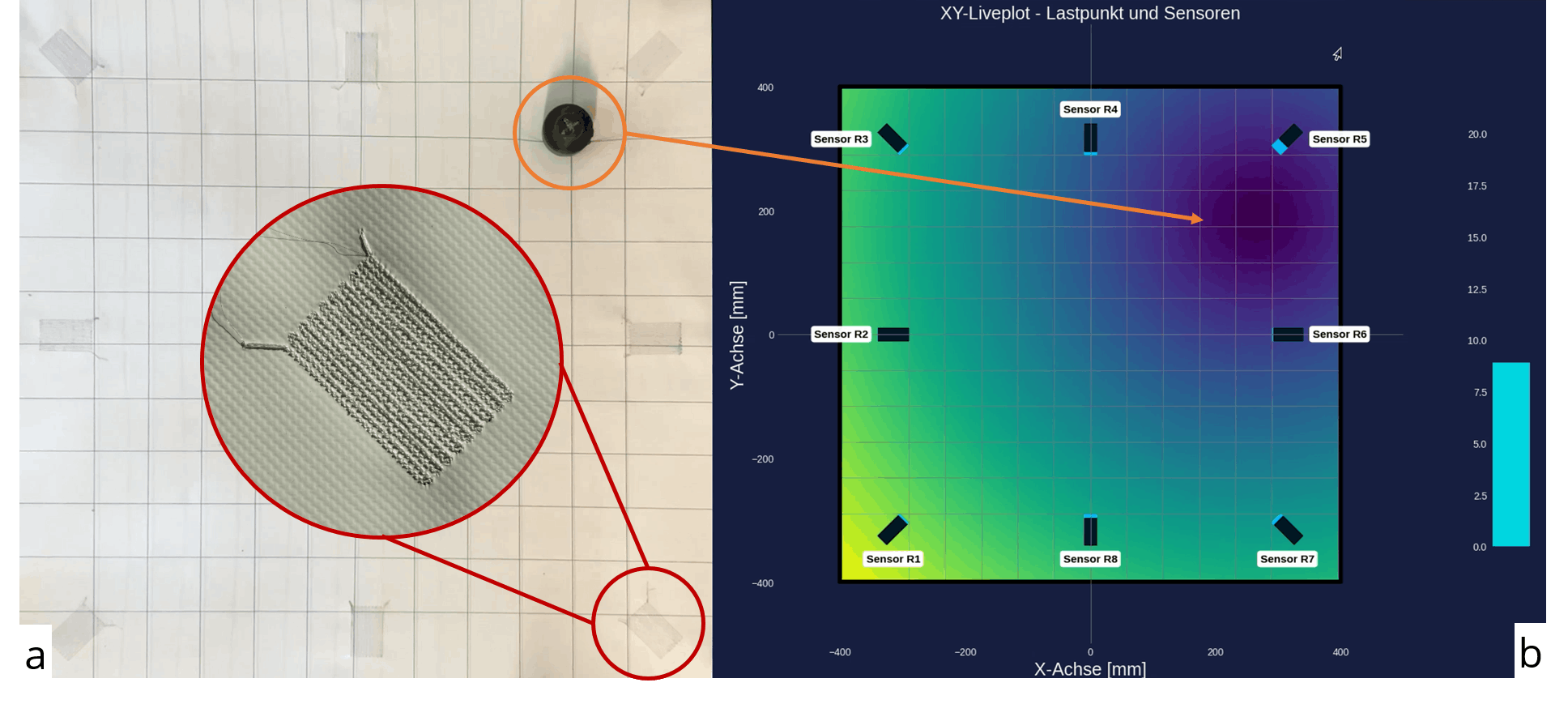
The AI model underlying the algorithms was based on a regressive model. To this end, the previously simulated load cases were applied to the demonstrator. The resulting sensor measurements were used to train the model. The model was then evaluated using the parameters mean absolute error (MAE), root mean squared error (RMSE), and coefficient of determination (R²). For the functional demonstrator, which consisted of a square, flat membrane, high accuracy was demonstrated for position determination in the single-digit mm range. The amount of load was also determined precisely with a coefficient of determination of 0.9604. The system achieves ± 3 mm spatial resolution and ± 0.6 N force accuracy for demonstrator loads < 50 N and is scalable up to kN load ranges. Based on the determined values for the position and magnitude of a load application, the corresponding full-area stress state was determined using multi-stage k-nearest neighbor models. The resulting model showed a high regression quality with a deviation of less than 5% from the FEM reference. In addition, the model proved to be very stable in general and allowed the desired real-time determination of the stress distribution. For the functional demonstrator, the results of the model were visualized in real time on a display unit next to the membrane (Figure 4), so that the effect of applied loads was immediately apparent to the user.

Conclusion

In summary, the IGF MeMo project shows that PVC-coated PES membranes can be further developed into intelligent, real-time capable support structures by combining suitable sensor materials, textile integration strategies, and robust contacting and coating processes. The experimental results prove that the mechanical performance of the membrane is largely retained despite the integration of the sensor technology and that the functional requirements – in particular with regard to the measuring range, temperature stability, and long-term behavior of the selected sensor materials – are met. The project developed an AI-based regression approach that determines load positions and amounts in real time from textile-integrated sensor signals and derives full-surface stress states from them without requiring numerical simulations during operation. The approach is characterized by high robustness against sensor-related scatter and low requirements for computing power and training data. The underlying methodology is fundamentally transferable to other large-area, deformable structures with integrated sensor technology, for example in textile architecture, lightweight construction, or membrane- and composite-based structural systems, e.g., in the maritime sector.

At the same time, the investigations clearly show that the type of integration and contacting has a significant influence on the quality of the sensor signals: Inline-contacted, integrally woven sensors are technologically sophisticated and currently still limited in terms of signal stability, while embroidered sensor networks with clearly defined, easily accessible contact points deliver significantly more robust and easier-to-evaluate signals. Thus, the work not only provides a complete technical toolkit, but also a clear preference for further system development towards embroidered, hybrid membrane solutions.

In the field of mechanical and electromechanical characterization, it seems sensible to expand biaxial testing programs on functionalized membranes. This would allow for an even closer link between experimental and numerical data and extend the validation of the material and damage descriptions used in the FEM models to the sensor membrane system as a whole. At the same time, the algorithms for load localization and stress reconstruction based on the data available to date can be expanded to include additional load collectives, more complex boundary conditions, and additional failure patterns, so that the monitoring system will continue to operate reliably in the long term, even in highly variable application scenarios.

On this basis, manufacturing and retrofitting concepts can be developed with a view to implementing intelligent, self-monitoring membrane structures in various industries - from construction and protective and safety applications to the maritime sector.

Acknowledgement

The IGF project 01IF22600N of the research association Forschungskuratorium Textil e.V., Reinhardtstr. 12-14, 10117 Berlin, was funded by the German Federal Ministry for Economic Affairs and Energy via the German Aerospace Center (DLR) as part of the program for the promotion of Industrial Collective Research (IGF) based on a resolution of the German Bundestag.

The authors would like to thank the aforementioned institutions for providing the financial resources. The research report and further information are available from the Institute of Textile Machinery and High Performance Material Technology at TU Dresden.

References

[1]   J. Mersch, C. A. G. Cuaran, A. Vasilev, A. Nocke, C. Cherif, and G. Gerlach, "Stretchable and Compliant Textile Strain Sensors," IEEE Sensors J., vol. 21, no. 22, pp. 25632–25640, 2021, doi: 10.1109/JSEN.2021.3115973.

[2]   K. Bremer, F. Weigand, Y. Zheng, L. S. Alwis, R. Helbig, and B. Roth, "Structural Health Monitoring Using Textile Reinforcement Structures with Integrated Optical Fiber Sensors," Sensors (Basel, Switzerland), vol. 17, no. 2, 2017, doi: 10.3390/s17020345.

[3]   E. Haentzsche, R. Mueller, T. Ruder, A. Nocke, and C. Cherif, "Integrative Manufacturing of Textile-Based Sensors for Spatially Resolved Structural Health Monitoring Tasks of Large-Scaled Composite Components," MSF, 825-826, pp. 571–578, 2015, doi: 10.4028/www.scientific.net/MSF.825-826.571.

[4]   T. D. Dinh et al., "A study of tension fabric membrane structures under in-plane loading: Nonlinear finite element analysis and validation," Composite Structures, vol. 128, pp. 10–20, 2015, doi: 10.1016/j.compstruct.2015.03.055.

[5]   T. D. Dinh, A. Rezaei, L. de Laet, M. Mollaert, D. van Hemelrijck, and W. van Paepegem, "A new elasto-plastic material model for coated fabric," Engineering Structures, vol. 71, pp. 222–233, 2014, doi: 10.1016/j.engstruct.2014.04.027.

[6]   J. Vitola, F. Pozo, D. A. Tibaduiza, and M. Anaya, "A Sensor Data Fusion System Based on k-Nearest Neighbor Pattern Classification for Structural Health Monitoring Applications," Sensors (Basel, Switzerland), vol. 17, no. 2, 2017, doi: 10.3390/s17020417.


Authors: Karl Kopelmann Anna Happel Florian Schmidt Tobias Lang Hung Le Xuan Chokri Cherif

Technische Universität Dresden

Fakultät Maschinenwesen

Institut für Textilmaschinen und Textile Hochleistungswerkstofftechnik (ITM)

01062 Dresden


https://tu-dresden.de/ing/maschinenwesen/itm

More entries from TU Dresden, Institut für Textilmaschinen und Textile Hochleistungswerkstofftechnik ITM

05.02.2025

Integral flachgestrickte Drucksensoren für smart Textiles

Knittings Sensor Technology Smart Textiles Tests

Abstract

Im IGF-Projekt 21990 BR1 wurde das „Textiles Smart-Skin-3D-System (S3D)“ entwickelt – ein innovatives, flachgestricktes Sensorsystem, das Druck- und Näherungsmessungen nahtlos in textile Produkte integriert. Ziel war es, flexible und robuste Sensorik bereits im Herstellungsprozess einzubetten und so die Komplexität sowie potenzielle Schwachstellen herkömmlicher Mehrkomponentensysteme zu vermeiden. Hierzu wurden komplexe 3D-gestrickte Strukturen realisiert, die leitfähige Sensorgarne und gezielt eingearbeitete dielektrische Materialien wie silikonbasierte Inserts nutzen, um kapazitive Messprinzipien anzuwenden.

Die Optimierung von Garnauswahl und Strickparametern ermöglichte eine präzise Erfassung von Druckkräften und Annäherungen. Als Demonstrator wurde ein vollständig integrierter Sensorhandschuh mit 13 Sensorflächen entwickelt, der Greif- und Haltekräfte misst. Zyklische elektromechanische Prüfungen bestätigten ein stabiles Sensorverhalten. Insbesondere zeigte die Variante mit einem 1 mm starken Dielektrikum optimale Übertragungscharakteristika, geringe Hysterese und eine Sensordrift im akzeptablen Rahmen. Zusätzlich erbrachte ein textilbasierter Näherungssensor zuverlässige Messwerte für Abstände bis zu 120 mm.

Die Ergebnisse belegen das Potenzial flachgestrickter Sensoren als integraler Bestandteil smarter, tragbarer Textilien – mit Anwendungsmöglichkeiten in Telerehabilitation, Medizintechnik, Arbeitsschutz und weiteren Digitalisierungsbereichen.

Summary

In the IGF project 21990 BR1, the “Textiles Smart-Skin-3D-System (S3D)” was developed – an innovative, flat-knit sensor system that seamlessly integrates pressure and proximity measurements into textile products. The aim was to embed flexible and robust sensor technology into the manufacturing process, thereby avoiding the complexity and potential weaknesses of conventional multi-component systems. To achieve this, complex 3D-knit structures were created using conductive sensor yarns and strategically incorporated dielectric materials, such as silicone-based inserts, to implement a capacitive sensing approach.

Optimizing yarn selection and knitting parameters enabled the precise detection of pressure forces and proximity. A demonstrator in the form of a fully integrated sensor glove with 13 sensing areas was developed, capable of measuring gripping and holding forces. Cyclic electromechanical tests confirmed stable sensor performance. In particular, the variant with a 1 mm thick dielectric exhibited optimal transfer characteristics, low hysteresis, and acceptable sensor drift. Additionally, the textile-based proximity sensor reliably measured distances of up to 120 mm.

The results demonstrate the potential of flat-knit sensors as an integral component of smart, wearable textiles with applications in telerehabilitation, medical technology, occupational safety, and other digitalization sectors.

Report

Einleitung

Vor dem Hintergrund globaler Megatrends wie der Digitalisierung in der Medizin bestehen für die Textilindustrie große Chancen, vom erwarteten weiteren Wachstum von am Körper tragbaren, flexibel einsetzbaren und computergestützten Systemen zu profitieren. Zu dieser neuen Geräteklasse, den sogenannten Wearables, gehören Textilien, die über die klassischen Funktionen von Bekleidung oder beispielsweise Bandagen hinaus mit elektronischen Zusatzfunktionen ausgestattet sind. Da Textilien häufig die Schnittstelle zwischen dem Menschen und seiner Umwelt darstellen, sind sie prädestiniert, auch bei der Digitalisierung menschlicher Wahrnehmungen und Fähigkeiten (z. B. Bewegungen, Haptik etc.) und umgekehrt der Rückkopplung von der virtuellen in die analoge Welt eine entscheidende Brückenfunktion zu übernehmen und so als künstliche Haut (bzw. Smart Skin) bestehende optische und akustische Schnittstellen zu ergänzen.

Ein Bereich in dem smarte Textilien einen großen Zugewinn nützlicher Informationen bereitstellen, ist die Medizin und Rehabilitationstechnik. Vor dem Hintergrund einer alternden Bevölkerung und damit einhergehend einer hohen Belastung medizinischer Versorger, die unter gleichzeitigem Personalmangel leiden, ist nicht immer ein ausreichendes Angebot in erreichbarer Nähe realisierbar. Vor allem im Bereich der medizinischen Folgebehandlungen für Physiotherapie einhergehend mit langen Transportwegen oder fehlender Transportfähigkeit des Patienten kann dies zu Heilungsverlangsam oder sogar -verhinderung führen. Eine Unterstützung von Patienten durch einen medizinischen Laien (Familienangehörige, Bekannte etc.) mit einem geringfügigen Lernaufwand soll durch den in diesem Projekt entwickelten Handschuh ermöglicht werden. Dieser ermöglicht die Überwachung von Greif- und Haltebewegungen sowie Feedback zur Korrektur. In der Telerehabilitation gibt es keine vergleichbaren Systeme, die autonom ohne Experteneinsatz arbeiten [1, 2]. Das Projekt fokussierte auf die Entwicklung multifunktionaler Druck-/ Näherungssensorik durch flachstricktechnische Verfahren. Diese ermöglichen die kostengünstige Integration in Funktionsbekleidung, aber auch in Roboterkomponenten.

Zielsetzung und Lösungsweg

Das Ziel des IGF-Forschungsprojekts war die Entwicklung, Charakterisierung und Erprobung textilbasierter Drucksensoren, die mittels Flachstricktechnik in einen Handschuh integriert werden sollten um die aufgebrachte Kraft auf den Fingergliedern und dem Handballen zu überwachen. Es wurden flächenbasierte, gestrickte Sensorkonzepte mit einem kapazitiven Messprinzip verfolgt. Die entwickelten Sensoren wurden mittels zyklischer elektromechanischer Druckprüfungen untersucht und eine Vorzugsvariante der Sensoren zur Integration in einem Funktionsdemonstrator ermittelt. Weiterhin wurden kapazitive Näherungssensoren entwickelt und evaluiert.

Ergebnisse

Entwicklung der gestrickten Drucksensoren

Für die Entwicklung der Sensoren wurde die Umsetzung eines kapazitiven Drucksensors mithilfe von Flachstricktechnik verfolgt. Die Vorteile kapazitiver Sensoren gegenüber resistiver Sensoren liegen in ihrer Unempfindlichkeit gegenüber Temperatur [3], was in einer körpernahen Anwendung von Vorteil ist. Der einfachste Aufbau eines Kondensators ist der Plattenkondensator. In diesem Aufbau sind zwei parallele Platten durch ein Dielektrikum getrennt. Durch das Aufbringen einer Druckkraft F auf diese Platten und damit ein Zusammendrücken des Dielektrikums mit der Dielektrizitätskonstante  ε ändert sich der Plattenabstand d und somit die Kapazität C wie in Abbildung 1 gezeigt. Hier wird deutlich, dass die Kapazitätsänderung ∆C indirekt proportional zur Änderung des Plattenabstands ∆d, die wiederum abhängig ist von der induzierten Kraft, dem E-Modul E und den geometrischen Maßen des Plattenkondensators mit b = Breite und l = Länge.

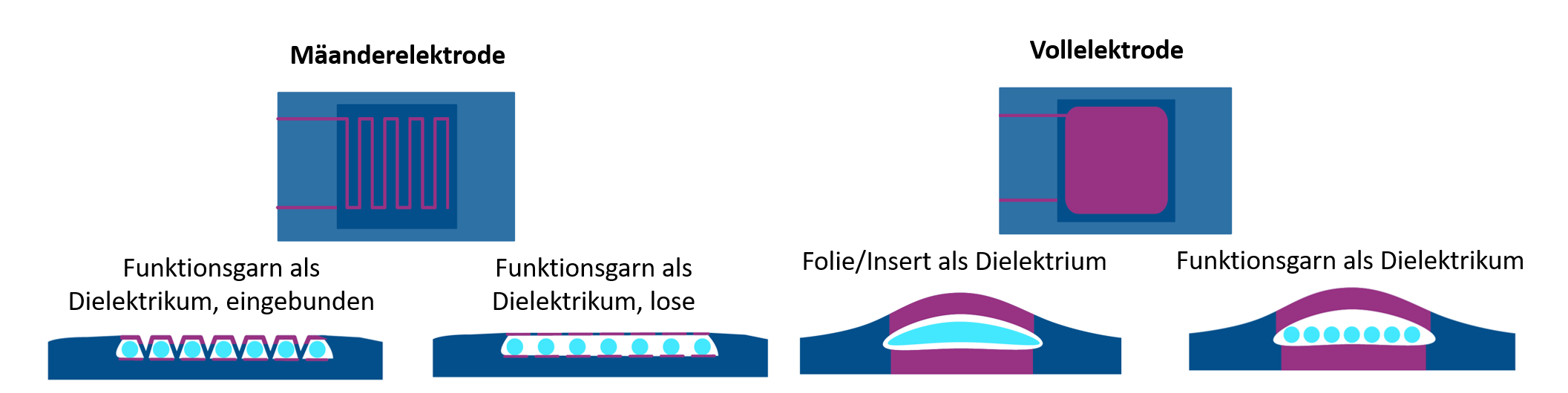
Für den Aufbau der gestrickten kapazitiven Sensoren wurden verschiedene Konzepte erstellt, die in Abbildung 2 dargestellt sind. Anhand einer systematischen Variantenbewertung nach ergonomischen, stricktechnischen, sensortechnischen Anforderungen und praktischer Versuchstests wurde eine Sensorvariante mit einem Insert als Dielektrikum und einer vollflächigen Elektrode aus leitfähigem Garn als Vorzugsvariante gewählt und zu einer Handschuhfinger gleichenden Doppelschlauchstruktur erweitert.

Zur Auswahl des Elektrodengarns wurden Vorversuche durchgeführt um die stricktechnische Eignung der teilweise anspruchsvoll zu verarbeitenden Garne auf Stahl- und Silberbasis zu bewerten. Hierbei wurden Garne von Statex (Shieldex® 235 f 36dtex Z130), Amann (Steel-tech® 100 tex 93, Silver-tech+® 150 tex 22) und Bekaert (Bekinox® VN 14.1.9.100Z) genutzt. In diesen Vorversuchen erwies sich Silver-tech+® 150 als Vorzugsvariante, da es sehr gut mit dem umgebenden Basismaterial aus Umwindegarn (Tencel CV Nm40 mit PA6.6 78/78f23/1) fertigungstechnisch kompatibel war.

Herstellung der Sensoren

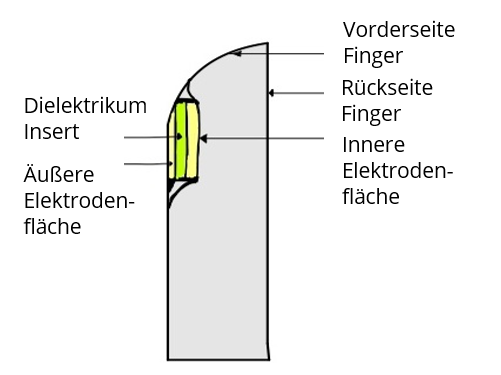
Ziel des Projekts war die Herstellung eines Sensorhandschuhs mittels Flachstricktechnik, eine Strickmethode, die die Möglichkeit bietet Fully Fashioned Artikel in einem Arbeitsschritt herzustellen, wodurch komplizierte gestrickte Flächen endkonturnah hergestellt werden können. Um ein höchstmöglich automatisiert herstellbares Produkt zu entwickeln wurde der Drucksensor mit einem Fokus auf Vermeidung nachfolgender Konfektionierungsschritte entwickelt. Daher wurde der Drucksensor als eine Doppelschlauchstruktur konzeptioniert. Diese wird durch zwei Elemente geformt: Zum einen durch die Tasche des Sensors, zum anderen durch einen Fingerling, der eine Tragbarkeit des Sensors ermöglicht. In Abbildung 3 ist der Aufbau schematisch dargestellt. Im Sensorbereich ergibt sich daher ein dreilagiges Doppelschlauch-gestrick. Das umfasst die äußere sowie innere Elektrode und die Rückseite des Fingers. Das Dielektrikum wird durch ein Insert, welches während des Strickprozesses eingelegt wird, gebildet. Diese Variante des Konzeptes ermöglicht eine weitestgehend automatisierte Fertigung des Handschuhs an der Flachstrickmaschine ohne nachgelagerte Konfektionsschritte. Für die Einbringung des Dielektrikums ist eine Unterbrechung des Strickprozesses erforderlich.

Validierung der Sensoren

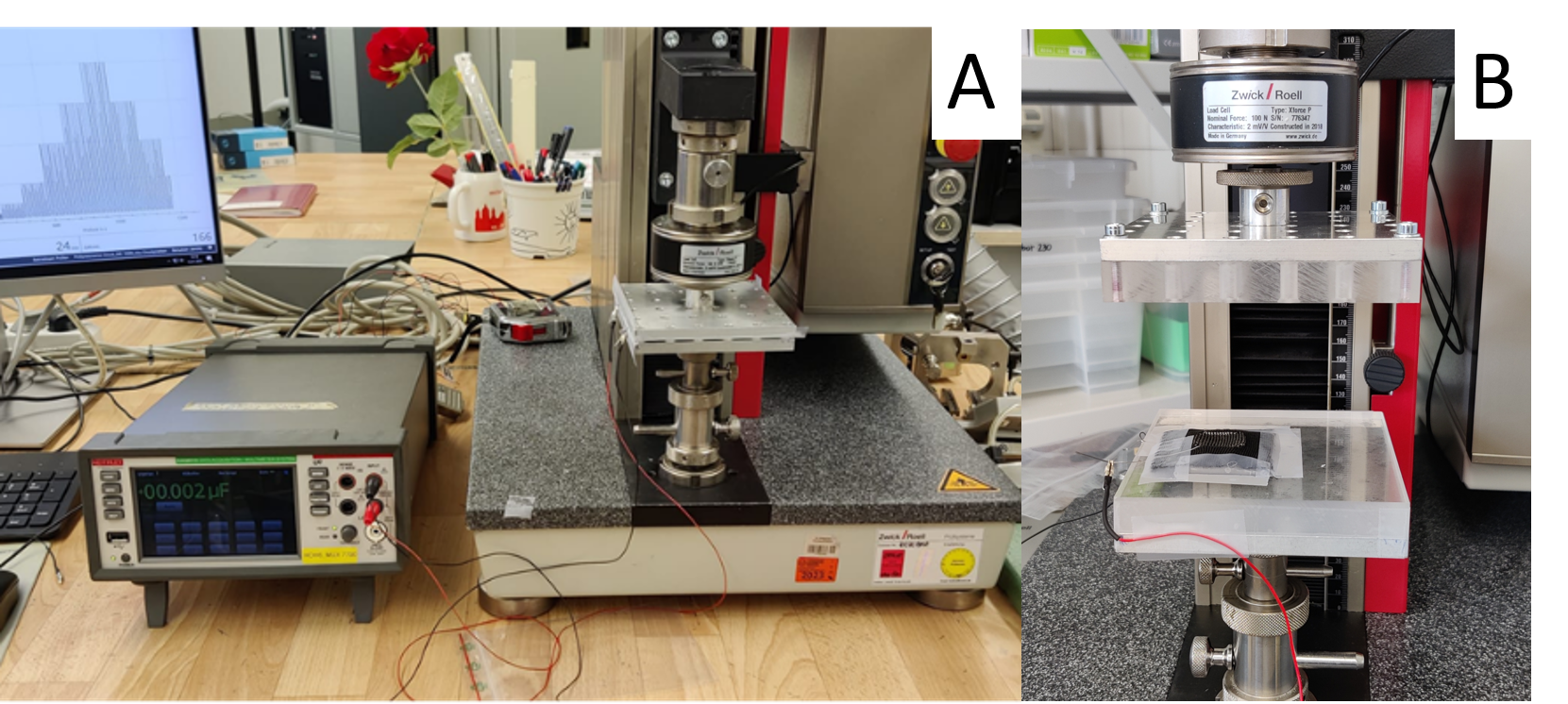
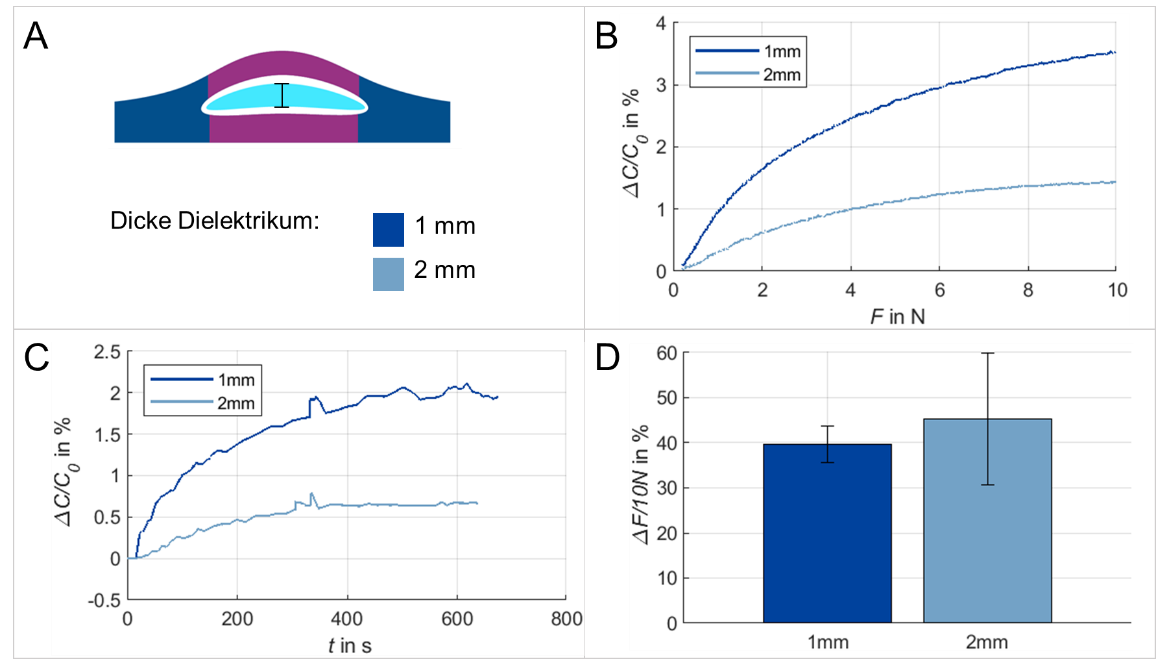
Die gestrickten kapazitiven Sensoren wurden auf ihre Eignung als Drucksensor in zyklischen elektromechanischen Messungen überprüft. Der Versuchsaufbau mit Mess- und Versuchsgeräten sowie der Prüfablauf sind in Abbildung 4 dokumentiert. Um den Einfluss des Dielektrikums zu untersuchen, wurden Sensoren mit einem 2 mm und einem 1 mm starken silikonbasierten Dielektrikum hergestellt. Aus den ermittelten Daten wurden das Übertragungsverhalten (als Zusammenhang zwischen Kompressionskraft und Sensorsignal), die Sensordrift (als Signalwerte bei Entlastung der Sensoren) und die Hysterese (als maximale Differenz zwischen Be- und Entlastungskurve über den Messbereich) berechnet (siehe Abbildung 5).

Es zeigte sich, dass beide Varianten ein stabiles Sensorverhalten aufweisen, wobei die Sensorvariante mit einem 1 mm starken Dielektrikum bessere Ergebnisse im Übertragungsverhalten und in Hysterese zeigte. Die Sensordrift lag hier etwas höher, lag aber bei beiden Varianten unter 5 % und damit in einem, für praktische Anwendungen dieser Technologie, akzeptablen Bereich. Dieser Versuch zeigte, dass das Dielektrikum einen entscheidenden Einfluss auf das Sensorverhalten hat und dieses durch die relativ kleine Anpassung des Insertmaterials für verschiedene Messbereiche und -sensitivitäten angepasst werden kann. Weitere Ausführungen, Ergebnisse und Diskussionen können aus der Publikation in [4] entnommen werden.

Näherungssensor

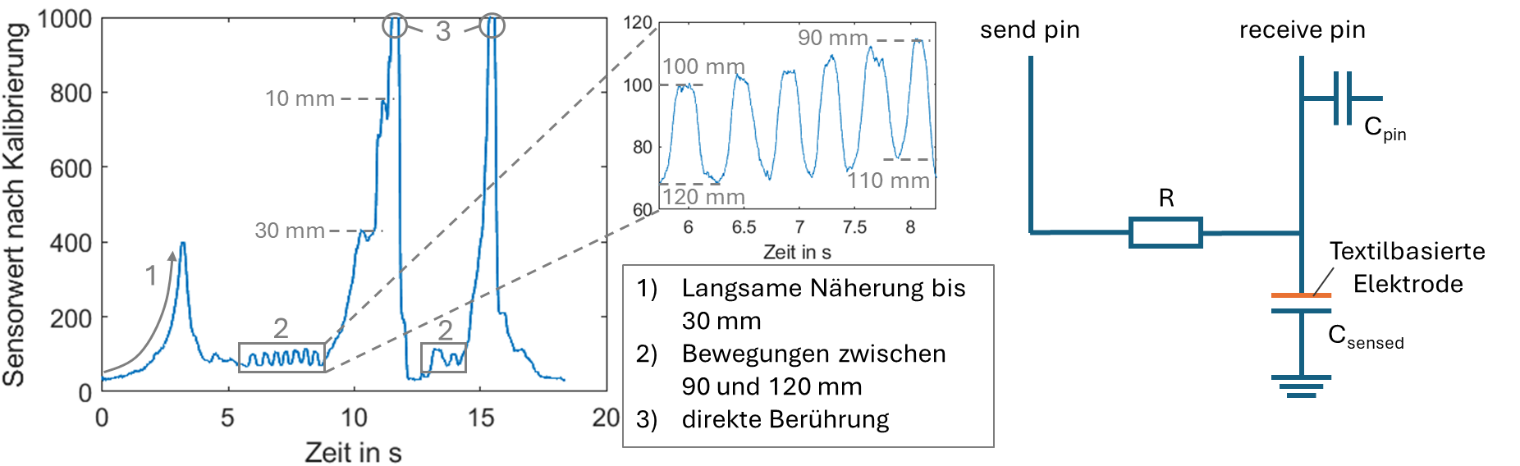
Das Konzept für die textile Näherungssensorik wurde mit einer einzelnen textilen gestrickten Elektrode und einem Arduino Uno umgesetzt. Für die Versuchsdurchführung wurde eine menschliche Hand als zu erfassendes Objekt an den Sensor geführt und der Abstand zwischen Hand und Sensor gemessen. In Abbildung 6 sind das Sensorsignal und korrelierte Abstände der Hand dazu gezeigt, sowie das Schaltbild dargestellt. Hierbei konnten Abstände von bis zu 120 mm zur Hand noch erfasst werden mit einer guten Signalstabilität, sodass hier eine Quantifizierung des Abstands denkbar ist.

Demonstrator

Die Vorzugsvariante für den Druck- und Näherungssensor wurde übertragen auf einen vollständig gestrickten und integral gefertigten Handschuh mit 13 Sensoren, wobei 2 Sensorflächen für Daumen, 3 Sensorflächen für Zeige- und Mittelfinger und 5 Sensorflächen auf der Handfläche für die Erfassung von Kräften realisiert wurden. Der finale Funktionsdemonstrator ist in Abbildung 7 gezeigt. Die elektrischen Zuleitungen wurden für diesen FD manuell realisiert. Eine sensorische Funktionalisierung des Ringfingers und des kleinen Fingers war durch die begrenzte Anzahl an Fadenführern innerhalb der Strickmaschine nicht möglich (max. 13 Sensorflächen). Die Signale der einzelnen Sensoren wurden mittels eines RaspberryPi 5 und einer dafür entwickelten Software ausgewertet. In verschiedenen Greiftests wurden die Sensoren validiert. Bei allen funktionsfähigen Sensoren konnte ein verlässlicher Anstieg des Signals bei Kompression erfasst werden.

Zusammenfassung und Ausblick

Die Verwendung textiltechnischer Lösungen zur Überwachung des menschlichen Körpers und der auf ihn wirkenden Lasten ist ein vielversprechendes Forschungsfeld, das Anwendungen in der Physiotherapie, im Arbeitsschutz und in der Digitalisierung von Arbeitsprozessen ermöglicht. Im Rahmen dieses Projekts lag der Fokus auf der Entwicklung und Integration von Druck- und Näherungssensoren in textile Strukturen. Dabei wurden innovative textilbasierte Ansätze verfolgt, insbesondere die Herstellung vollständig textilintegrierter Sensoren im Fully-Fashioned-Verfahren. Im Gegensatz zu herkömmlichen Systemen, die oft aus vielen Einzelkomponenten bestehen und dadurch Schwachstellen aufweisen, bieten textilbasierte Sensorsysteme eine höhere Kompatibilität mit textilen Basissystemen und eine höhere Flexibilität. Die in dieser Arbeit entwickelten Sensoren sind vielseitig einsetzbar und können in zahlreiche textile Strukturen, und vor allem gestrickter Strukturen, diverser Form und Größe übertragen werden.

Unter Beachtung industrienaher Anforderungen, die zusammen mit den am Projekt beteiligten Industriepartnern festgelegt wurden, wurden verschiedene Konzepte für Druck- und Näherungssensoren für einen Sensorhandschuh unter Nutzung von Flachstricktechnik entwickelt. Die bevorzugte Lösung für gestrickte Druck- und Näherungssensoren basiert auf einem Doppelschlauchgestrick, das einen flexiblen Plattenkondensator darstellt. Diese Sensoren bestehen aus Elektroden aus leitfähigem Garn und einem weichen Material, beispielsweise Silikon, das als Dielektrikum dient. Dadurch, dass das Material für das Dielektrikum flexibel gewählt werden kann, sind Messbereich und -verhalten auch für andere Anwendungen mit diesem Konzept einfach zu variieren. Für die Druckmessung wurde das Ansprechverhalten der entwickelten Sensoren eingehend getestet, und ihre Stabilität analysiert und ein funktionsgerechtes Messverhalten der Sensoren im Messbereich 0 bis 10 N festgestellt.

Die Vorzugsvariante der Sensoren wurde in einem Funktionsdemonstrator mit 13 Sensorflächen umgesetzt. Dies sollte in weiteren Arbeiten um 6 weitere Sensorflächen für die einzelnen Fingergelenke von Ring- und kleinem Finger ergänzt werden. Die Anzahl der Sensorflächen war in diesem Projekt durch die Anzahl der verfügbaren Fadenführer begrenzt. Weiterhin sollte das Einlegen des dielektrischen Inserts stärker automatisiert werden um die Zeit, die benötigt wird um die Drucksensorhandschuhe zu stricken, reduziert wird.

Danksagung

Das IGF-Vorhaben 21990 BR der Forschungsvereinigung Forschungskuratorium Textil e.V., Reinhardtstr. 12-14, 10117 Berlin wurde über die AiF im Rahmen des Programms zur Förderung der industriellen Gemeinschaftsforschung und -entwicklung (IGF) vom Bundesministerium für Wirtschaft und Klimaschutz aufgrund eines Beschlusses des Deutschen Bundestages gefördert.

Die Autoren danken den genannten Institutionen für die Bereitstellung der finanziellen Mittel. Der Forschungsbericht und weiterführende Informationen sind am Institut für Textilmaschinen und Textile Hochleistungswerkstofftechnik der TU Dresden erhältlich.


Literatur


[1]   K. Ettle et al., "Telepräsenzroboter für die Pflege und Unterstützung von Schlaganfallpatientinnen und -patienten (TePUS) im Regierungsbezirk Oberpfalz: DeinHaus 4.0," Regensburg, Jun. 2020. Accessed: Nov. 30 2020.

[2]   K. Berkenkamp, "Telerehabilitation in der Schlaganfallversorgung – Einflussfaktoren auf Adoption und Akzeptanz von klinisch tätigen Ärzten und Therapeuten," 2020.

[3]   J. Mersch, C. A. G. Cuaran, A. Vasilev, A. Nocke, C. Cherif, and G. Gerlach, "Stretchable and Compliant Textile Strain Sensors," IEEE Sensors J., vol. 21, no. 22, pp. 25632–25640, 2021, doi: 10.1109/JSEN.2021.3115973.

[4]   S. Fischer, C. Böhmer, S. Nasrin, C. Sachse, C. Cherif. Flat-Knitted Double-Tube Structure Capacitive Pressure Sensors Integrated into Fingertips of Fully Fashioned Glove Intended for Therapeutic Use. Sensors 2024, 24, 7500. https://doi.org/10.3390/s24237500


Authors: Carola Bömer

Technische Universität Dresden
Fakultät Maschinenwesen
Institut für Textilmaschinen und Textile Hochleistungswerkstofftechnik (ITM)
01062 Dresden

https://tu-dresden.de/mw/itm

More entries from TU Dresden, Institut für Textilmaschinen und Textile Hochleistungswerkstofftechnik ITM

18.10.2022

In-situ structural monitoring of fibre-reinforced plastic composites under compressive loading

Yarns Composites Sensor Technology Sustainability Technical Textiles Tests

Abstract

Continuous structural monitoring of FRP components, especially in complex, changing load scenarios, represents an efficient solution approach to detect potentially occurring fatigue or damage at an early stage. Especially in FRP components, textile-based sensors are an economical solution for continuous in-situ structure monitoring, due to their high structural compatibility and direct textile integration during textile production.       

The textile-based sensor concept developed in this research project was electromechanically characterised at the yarn and composite scale and was further processed in multiaxial warp-knitting to manufacture functionalised fabrics. The sensor functionality in CFRP specimen was tested in tensile, pressure and bending tests. Finally, a CFRP profile demonstrator was used to test and prove the practical feasibility and functionality. These "smart composites" not only enable continuous in-situ structural monitoring of FRP components under tensile, bending and, especially, compressive stress, but can also be used to detect cracking and delamination processes. This allows both the understanding of the material behaviour to be improved and taken into account for future designs, as well as necessary measures to be initiated to ensure the functionality of the overall system.

Report

Introduction

Fibre-reinforced composite structures are currently used in the fields of mechanical engineering, aircraft construction and automotive engineering, among others, due to their excellent mechanical properties combined with a high lightweight construction potential [1]. In the construction sector, high-performance textiles are increasingly being used as a substitute for steel reinforcement in textile reinforced concrete [2], due to their mechanical and chemical properties and the resulting resource-saving, filigree, lightweight construction potential. The long-term stable functionality and safety of fibre-reinforced composite structures is urgently required due to their frequent use in safety-critical components and structures. A promising practice-oriented approach is the continuous structural monitoring in order to quantify the (residual) load-bearing capacity and to initiate any necessary measures to ensure functional capability. A particularly economical and structurally compatible solution are textile-based sensors that are integrated during the manufacture of the textile reinforcement and used to detect complex load scenarios as well as cracking and delamination processes at the composite scale. [3 – 6]

Due to their operating principle, textile-based strain sensors are mainly used for monitoring composite structures subjected to tensile stress. In order to be able to derive reliable statements about structural changes and critical overload conditions even in complex overlapping stress scenarios (e.g. tensile and compressive stresses), textile-based pressure sensitive sensor systems for continuous in-situ structural monitoring for FRP were developed in IGF project 21169 BR.

Objective and solution

The aim of the IGF research project was the development, characterisation and testing of textile-based pressure sensitive sensor systems and their textile-technical integration in multi-axial warp knitting for the production of sensor-functionalised textile reinforcements for use in FRP. The requirements for the textile sensors were derived simulation-based by analysing a functional demonstrator. The textile sensors were specifically designed to detect structural deformations induced by tensile, bending and especially compressive stresses. Therefore, the approach of increasing the pressure sensitivity of textile sensors by pre-tension was investigated. The sensor behaviour was extensively analysed in electromechanical investigations at fibre and composite scale and tested on the functional demonstrator.

Acknowledgement

The IGF project 21169 BR of the Research Association Forschungskuratorium Textil e.V., Reinhardtstr. 12-14, 10117 Berlin was funded by the Federal Ministry of Economics and Climate Protection via the AiF within the framework of the programme for the promotion of joint industrial research and development (IGF) on the basis of a resolution of the German Bundestag.

The authors would like to thank the above-mentioned institutions for providing the financial resources. The research report and further information are available from the Institute of Textile Machinery and High Performance Textile Materials Technology at TU Dresden.

Authors: Le Xuan, Hung; Seidel, André; Hahn, Lars; Nocke, Andreas; Cherif, Chokri

Technische Universität Dresden
Fakultät Maschinenwesen
Institut für Textilmaschinen und Textile Hochleistungswerkstofftechnik (ITM)
01062 Dresden
More entries from TU Dresden, Institut für Textilmaschinen und Textile Hochleistungswerkstofftechnik ITM