
Research publications

4 results
02.03.2026

Development of a Weaving Technology for the integral manufacturing oft thick-walled nodal structures for media transport

Fabrics Composites

Abstract

In the IGF project 01IF22946N, a novel weaving technology was developed for the integral manufacturing of thick-walled, fiber-reinforced composite pipe joints (T- and Y-geometries) for media transportation.

The objective was to realize load-path-optimized pipe joints featuring a homogeneous wall structure and a continuous inner cavity. The core innovation is a modular, retrofittable auxiliary system for processing reversing warp yarns on shuttle weaving machines. This system enables, for the first time, the controlled redirection of defined warp yarn groups and thereby ensures the integral production of woven, pipe joints with flow capability.

Based on macro- and mesoscopic finite element simulations, load-path-oriented fiber orientations in the high-stress branch region were identified and translated into complex multilayer weave patterns. The developed process chain comprises CAD-based geometric design, 2D flattening and weave pattern development, fabrication of a 2.5D woven preform, its transformation into the three-dimensional geometry, and subsequent consolidation using the RTM process. Validation was carried out through several prototypes and a demonstrator. The results demonstrate that the integral weaving-based approach enables a constant wall thickness while eliminating the material overdimensioning in the branching region that is typically required in filament-wound solutions. Consequently, the technology provides a material-efficient, reproducible, and economically scalable route for manufacturing load resistant FRP pipe joints for media transport with significant application potential in industrial piping systems.

Report

Within the IGF project 01IF22946N (“Durchströmbare Rohrknoten”), the ITM conducted the complex structural and weave pattern development of a woven thick-walled T- and Y-shaped pipe joint for media transport based on the application of reversing warp yarns.

Introduction

Pipeline systems constitute essential functional components in numerous industrial applications, particularly in chemical plant engineering, mechanical and automotive engineering, as well as in energy and environmental technologies. In addition to straight pipe sections, branches in the form of T- and Y-shaped pipe joints represent safety-critical components whose structural integrity decisively determines the operational reliability of the overall system. Especially in pressure-loaded media lines, complex three-dimensional stress states arise in the transition zone between the main pipe and the branch, imposing stringent requirements on both material and structural design. While established manufacturing processes such as filament winding and centrifugal casting are available for straight fiber-reinforced composite (FRC) pipes, no integral and industrially scalable solutions currently exist for highly load-bearing, fiber-reinforced polymer (FRP) pipe joints for media transport. Fiber-reinforced polymers (FRP) offer significant potential for pipeline systems due to their low weight, high specific strength, and corrosion resistance.

Metallic pipe joints are typically manufactured by welding and are associated with high mass, susceptibility to corrosion, and mandatory inspections of weld seams. Although filament-wound composite solutions enable a higher pressure resistance, the fiber orientation in the branching region is not aligned with the principal load paths, resulting in structural overdimensioning and increased material consumption. Consequently, textile-based approaches with load-path-oriented structural design are particularly promising. In particular, the weaving technology developed at ITM enables the realization of structurally complex pipe joints through sophisticated weave architectures. However, the previously developed woven 3D node elements are, due to weave and technological constraints, internally separated and therefore unsuitable for media-conveying pipeline systems [1, 2]. This results in a fundamental conflict between integral textile manufacturing and the required flow capability of the components. Against this background, there was a substantial need for research aimed at developing a novel weaving technology incorporating a dedicated warp yarn reversal module, enabling for the first time the integral production of flow-through FRP pipe joints with load-path-optimized fiber architecture.

Objectives

The objective of the project was the development of a simulation-based process chain for the integral manufacturing of woven pipe joints for media transport up to the consolidated composite component for internally pressurized FRP pipeline systems. First, a structural-mechanical design was carried out based on macro- and mesoscopic finite element models. The aim was to determine the principal stress directions in the joint region and to derive a load-path-oriented fiber architecture, particularly within the branching zone. Based on the simulated, load-adapted fiber orientations, the complete and highly complex weave architectures of the three-dimensional pipe joints were developed.

A key technological innovation was the development and implementation of a modular add-on system for warp yarn reversal on Jacquard weaving machines. This system enables, for the first time, the controlled deflection of selected warp yarns at the fabric edge and thereby establishes the prerequisite for forming an open, flow-through branching region while simultaneously realizing a load-path-optimized reinforcement structure. Only through the implementation of the warp yarn reversal module, fiber trajectories can be aligned with the principal stress directions without structurally separating the internal cavity between the main pipe and the branch. Material overdimensioning in the branching region, that is typical of filament-wound pipe joints, was completely eliminated using this approach. Validation was carried out using three functional prototypes and a three-dimensional FRP demonstrator in the form of T- and Y-shaped pipe joints. The developed FRP pipe joints were successfully manufactured and demonstrated.

Results

Process chain for the manufacturing of woven FRP pipe joints

Integrally woven three-dimensional FRP pipe joints are based on tubular multilayer fabrics produced on a shuttle weaving machine equipped with at least four shuttles. A prerequisite for forming a tubular structure is a circumferential weft yarn insertion, i.e., a closed fabric edge, enabling a seamless pipe wall configuration. This structural feature can only be realized using shuttle weaving technology. The primary challenge in manufacturing pipe joints lies in combining a tubular structure with a branching geometry that features a continuous wall structure while maintaining an open internal cavity.

The pipe joint is initially produced in a two-dimensional state as a 2.5D woven structure. The transformation into the three-dimensional geometry is subsequently achieved by the targeted and automated removal of excess lengths of floating warp yarn within the fabric, causing the textile structure to deploy into the intended three-dimensional shape.

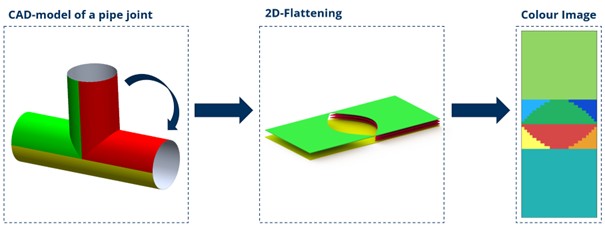
The complete manufacturing process (Figure 1) of an integrally woven pipe joint begins with the definition of the target geometry, including diameter, wall thickness, pipe lengths, and branching angle. Based on these parameters, a CAD model of the final geometry is created. The surfaces defined in the model are then flattened into the plane, taking into account the required layer architecture, in order to generate a colour-coded image from the developed surfaces.

Subsequently, an individual weave pattern is developed for each coloured area within this colour image. These partial weave patterns are combined into an overall weave pattern using weave design software (EAT DesignScope Victor). The corresponding machine control data are generated and transferred to the weaving machine. In the subsequent weaving process, the 2.5D preform is manufactured integrally according to the developed weave architecture. After completion of the weaving process, the textile preform is automatically shaped into the previously defined three-dimensional pipe joint geometry.

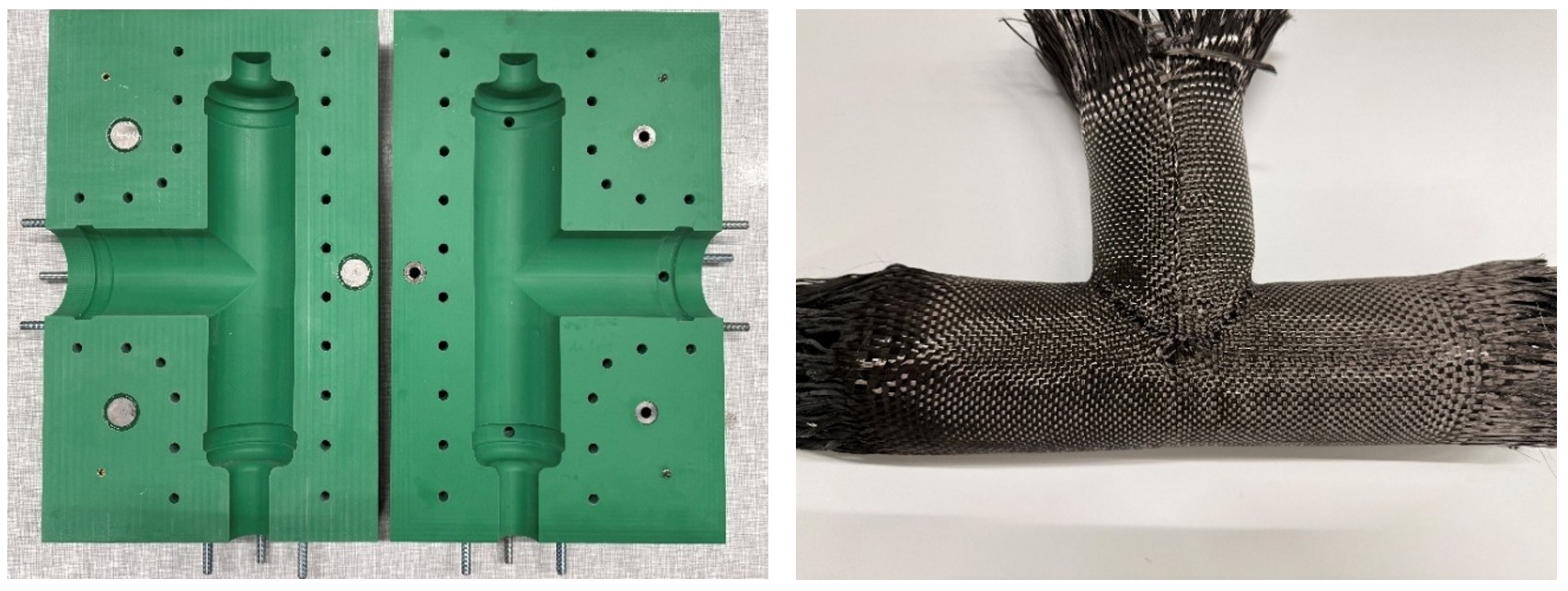
The final FRP component is produced by consolidating the preform using a resin transfer molding (RTM) process with a tool adapted to the outer diameter of the pipe joint. After demolding, the manufacturing process is completed by final trimming of the component.

Simulation-based design of pipe joints for media transport

The development of pipe joints for media transport requires a load-path-oriented design of the warp yarn systems. A boundary condition of the simulation was the arrangement of warp and weft yarn systems in such a way that no structural separation of the internal cavity between the main pipe and the branch occurs, thereby ensuring the flow capability of the pipe joint.

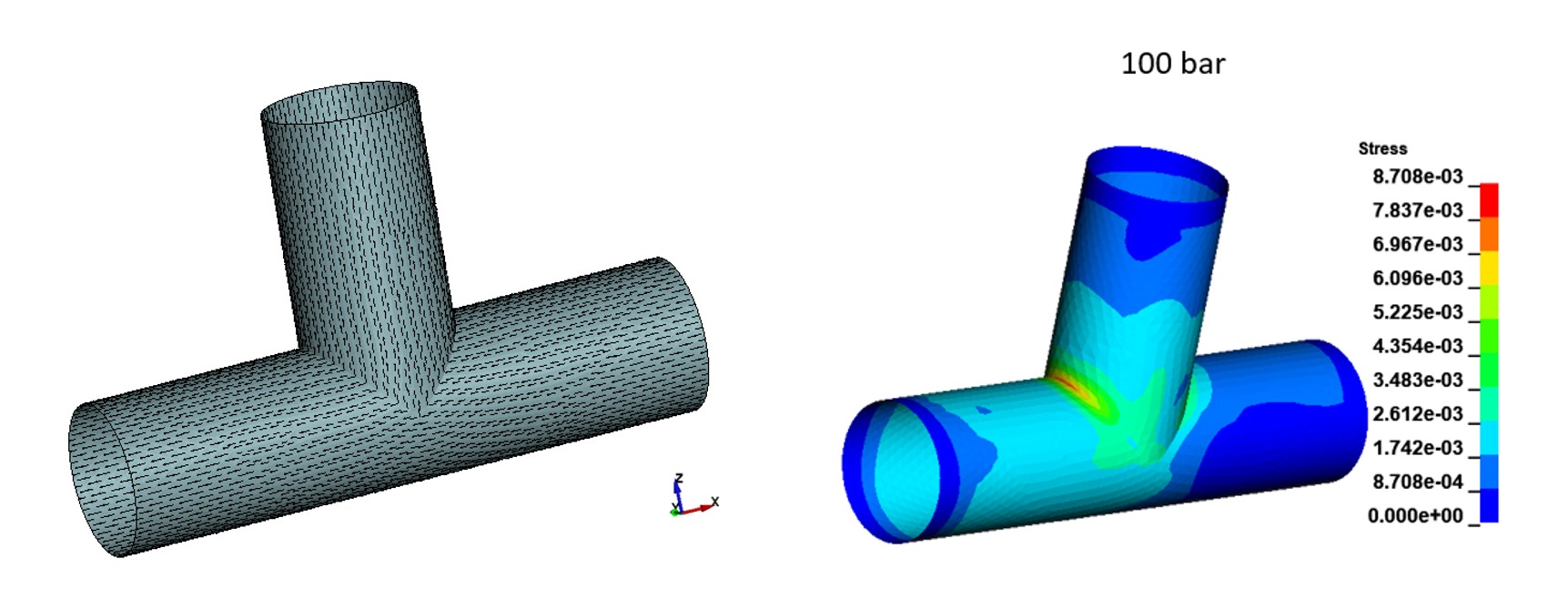
To this end, the stress distribution within the pipe joint geometry under internal pressure loading was first determined numerically. The highest stresses occur in the transition zone between the main pipe and the branch (Figure 2). This region therefore represents the governing design zone for the fiber architecture.

Based on the calculated stress distribution, a load-path-oriented architecture of the warp yarns was defined in order to fully exploit the tensile properties of the warp yarn material. This optimized warp yarn architecture forms the basis for the subsequent weave development of the pipe joints for media transport.

Development of Prototypes

The development of the weave architecture for an integrally woven pipe joint begins with a three-dimensional CAD model of the joint geometry. The simulated warp yarn systems and their trajectories are color-coded in Figure 3 (left).

Subsequently, the surfaces of the model are flattened into the plane and merged into a color-coded image. Each colored area represents a structurally induced modification within the woven architecture.

For each color-coded area, individual weave patterns are developed and subsequently combined into a unified weave pattern of an integrally woven pipe joint for media transport using the software EAT DesignScope Victor. This integration is achieved through the coordinated control of the shuttles, the fabric take-up system, and the assignment of heddles.

Development of a Warp Yarn Reversal Module

The developed weave patterns were transferred to the shuttle weaving machine “Mageba SL RTEC1200/1” and manufactured using four shuttles. In order to realize the load-path-oriented warp yarn trajectories, an additional module for processing reversing warp yarns is required. This module was designed as a CAD model, taking into account the available installation space in the take-up area of the weaving machine, and subsequently integrated into the machine. The module can be implemented cost-effectively and is adaptable and retrofittable to other weaving machines.

The functional principle for processing reversing warp yarns is based on joining two predefined warp yarns prior to the start of fabric production, thereby forming a loop. The connection point is displaced from the weaving zone toward the creel to make sure it does not become part of the woven pipe joint to be produced. This procedure is repeated until all warp yarns designated for reversal in the two fabric layers are present as loops.

To apply a warp yarn tension comparable to that of the continuously running warp yarns, the loops are integrated into the fabric take-up system by means of the module. The warp yarn tensions of both yarn types were recorded and analyzed using a warp tension measuring device. Both the controlled fixation of the warp yarn loops and their integration into the fabric take-up system represent central functions of the developed warp yarn reversal module.

Application of the module and manufacturing of the prototypes

After the formation of the warp yarn loops, the textile preform is manufactured. In the first section of the pipe joint, the loop-forming warp yarns initially remain fully floating. Following the production of the oval branching region, these warp yarns are integrated into the structure in a regular manner.

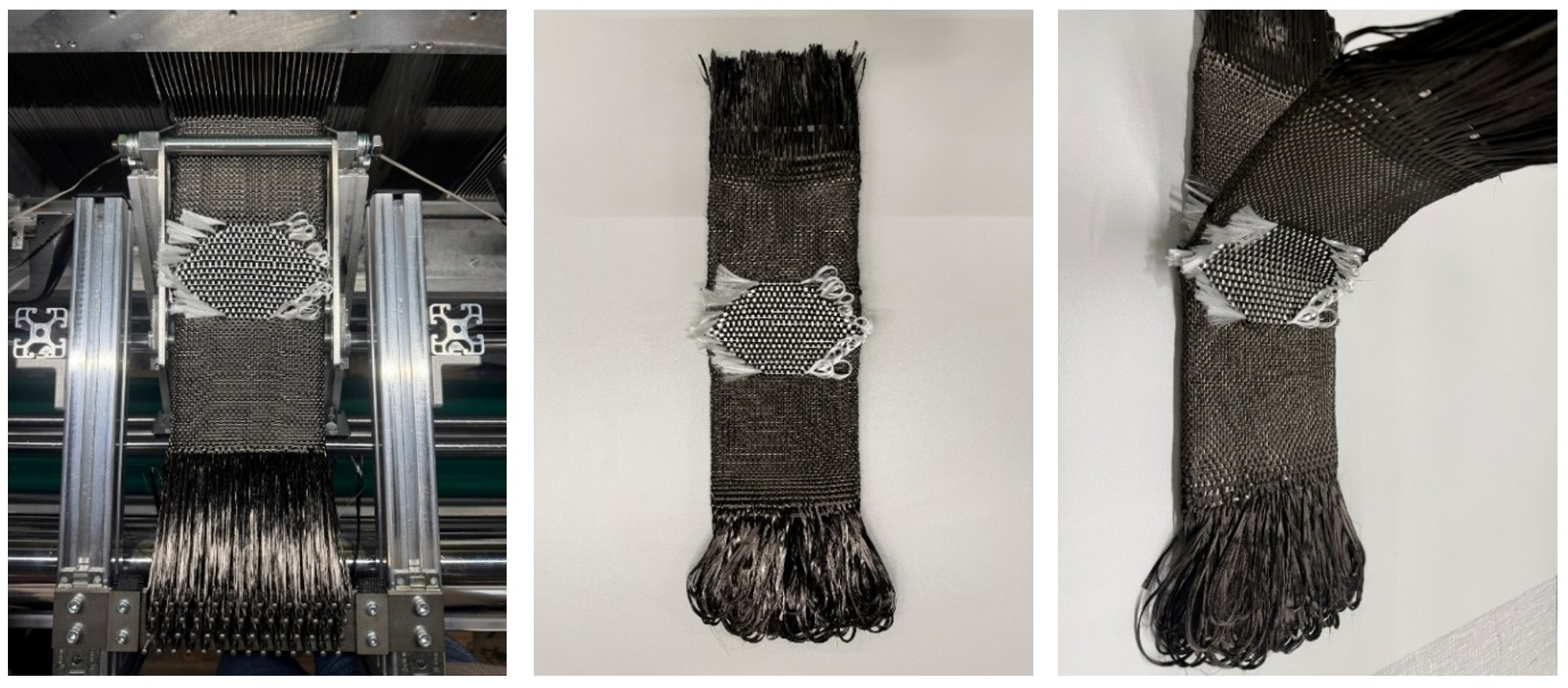
From the oval region onward, the use of four shuttles becomes necessary in order to realize the superimposed tubular fabric layers in the second section of the pipe joint. Within the oval region, one shuttle inserts a separate weft yarn that supports the formation of the oval fabric edge. The manufactured textile preform is shown in Figure 4.

For the reproducible production of this highly complex weave architecture, uniform weft insertion is essential. In particular, during the fabrication of the oval region, the weft yarns must reverse within the fabric structure rather than being inserted across the full fabric width, as is typical in conventional weft insertion. The precision of this process step significantly influences both the quality of the three-dimensional pipe joint geometry and the quality of matrix infiltration during consolidation. The textile preforms were successfully manufactured (Figure 4).

3D-shaping and consolidation of the woven prototypes

To transform the 2.5D preform into the three-dimensional structure, a dedicated 3D-shaping process developed specifically for pipe joints with flow capability is applied. A shape-defining internal core is inserted into the tubular structure, defining the target contour during the shaping process. The 3D-shaping is achieved by the targeted elimination of the excess warp yarn lengths introduced during the geometric flattening process. These excess lengths are withdrawn from the structure at the cut edge of the woven structure. A process-specific sequence to eliminate the floating warp yarns must be strictly followed in order to prevent material damage and to reproducibly achieve a precise warp yarn alignment after the shaping process. An automation concept for this shaping technology was developed.

Since the warp yarn loops in the first section of the fabric remain floating up to the edge of the oval region, the corresponding warp yarn excess lengths can be withdrawn. As a result, this warp yarn system is integrated into only one half of the woven structure within the pipe joint. After the preform has been shaped into its three-dimensional configuration, consolidation is carried out. An RTM tool specifically adapted to the contour of the flow-through pipe joint was designed and manufactured (Figure 5). The result after consolidation is a fully consolidated T-joint for media transport with high surface quality and reproducible geometric accuracy.

The material overdimensioning in the branching region typical of filament-wound FRP pipe junctions was completely eliminated through the integral, fabric-based manufacturing approach employing reversing warp yarns.

Summary and Outlook

FRP pipe joints can, for the first time, be manufactured both integrally woven and flow-capable by means of an add-on module for existing shuttle weaving machines. The textile preform is produced in a single-stage weaving process. Following a 3D-shaping procedure specifically developed for the novel yarn architectures, the 2.5D preform can be consolidated into a load-bearing lightweight FRP pipe branch using established RTM processes.

The weave patterns developed, along with the underlying design methodology, can be made available to SMEs for industrial implementation. The geometry of the pipe joint (diameter, wall thickness, pipe lengths, and branching angle) can be individually adapted with minimal modification effort. In addition to T-joints, Y-shaped pipe joints can also be manufactured using the newly developed methodology and weave system, enabling application-specific realization of different topologies.

The results achieved within this project form the foundation for a scalable and load-path-optimized manufacturing technology for FRP pipe joints for media transport.


Acknowledgement

 The IGF project 01IF22946N of the research association Forschungskuratorium Textil e.V., Wallstraße 58/59, 10179 Berlin, was funded by the German Federal Ministry for Economic Affairs and Energy via the German Aerospace Center (DLR) as part of the program for the promotion of Industrial Collective Research (IGF) based on a resolution of the German Bundestag.

The authors would like to thank the aforementioned institutions for providing the financial resources. The research report and further information are available from the Institute of Textile Machinery and High Performance Material Technology at TU Dresden.


References


[1]      Matthias Hübner; Monireh Fazeli; Thomas Gereke; Chokri Cherif: Geometrical design and forming analysis of three-dimensional woven node structures. Textile Research Journal 88(2018)2, S. 213-224

[2]      Schegner, P.; Fazeli, M.; Sennewald, C.; Hoffmann, G.; Cherif, C.: Technology Development for Direct Weaving of Complex 3D Nodal Structures. Applied Composite Materials 26(2019)1, S. 423-432


Authors: Anna Happel Thị Anh Mỹ Huỳnh Cornelia Sennewald Chokri Cherif

https://tu-dresden.de/ing/maschinenwesen/itm

Technische Universität Dresden

Fakultät Maschinenwesen

Institut für Textilmaschinen und Textile Hochleistungswerkstofftechnik (ITM)

01062 Dresden

More entries from TU Dresden, Institut für Textilmaschinen und Textile Hochleistungswerkstofftechnik ITM

28.01.2026

Real-time monitoring system for textile membranes

Fabrics Sensor Technology Technical Textiles Smart Textiles Tests

Abstract

In the IGF project 01IF22600N, a real-time, fiber sensor-based monitoring system for textile membranes was developed at the ITM of TU Dresden. Textile membrane structures are used in numerous technical applications, but methods for continuous, full-area condition monitoring have been lacking until now. The project goal was to implement an integrated sensor system that detects the global stress state of the membrane and thus provides indications of overloads and damage. To this end, suitable thread-like sensor materials were identified, sensor structures were integrated into the membrane using embroidery and weaving techniques, and robust contacting and coating strategies were developed. Based on experimental data and FEM simulations, an AI-based regression model was developed that determines load positions in real time with an accuracy of ±3 mm and load amounts with ±0.6 N, and uses this information to derive the full-surface stress state. The results show that the mechanical performance of the membrane is largely maintained despite sensor integration and that textile structures can be effectively expanded into intelligent, self-monitoring support structures.

Report

Introduction

Textile membrane structures have established themselves as lightweight, flexible, and yet high-performance components in numerous technical applications, such as architectural roof and facade systems, mobile and stationary protective structures, and maritime environments. However, their load-bearing capacity and fatigue strength depend crucially on static and dynamic stresses, as local overloads and undetected damage can lead to sudden structural failure in extreme cases. In practice, inspections have so far been based predominantly on visual checks and selective measurements, which do not allow for continuous condition monitoring or comprehensive evaluation of membrane behavior and are therefore of limited value for predictive maintenance. Against this background, the IGF project 01IF22600N aims to transform textile membranes into intelligent, sensor-functionalized structures that record their own stress and damage status in real time. To this end, a textile sensor structure [1] is integrated into the membrane structure [2, 3] and its measured values are evaluated in combination with simulation results [4, 5] using AI-based algorithms [6].

Objective

The central goal of the project was to create a fiber sensor-based monitoring system that determines the full-surface stress distribution of textile membranes and can thus provide indications of fatigue and structural damage. To this end, thread-like sensor materials were examined for their elongation properties and suitability for use in combination with the membrane. Using the preferred variants, weaving patterns for fabrics with integrated sensor and energy supply structures were developed and manufactured. These patterns were mechanically characterized while simultaneously recording the sensor measurements. At the same time, the global strain distribution was simulated for the test scenarios. Based on this data, algorithms were developed that calculate the global strain distribution from the sensor measurements and output it in real time, e.g., as a heat map. The developed system was successfully implemented and integrated into a functional demonstrator.

Results

Thread-shaped sensor materials

Silver-coated polyamide yarns, pseudoelastic shape memory alloys (SMA), and precision resistance alloys were selected as promising options in the search for a suitable thread sensor material. The behavior of the electrical resistance under tension, the temperature stability, and the suitability for subsequent textile integration into the membrane composite were investigated. Cyclic tensile tests up to 10 % strain were chosen as the characterization method and were repeated at various temperatures between -20 °C and 70 °C. As a result of these investigations, SMAs proved unsuitable due to their high temperature dependence and strongly non-linear resistance behavior. Both precision resistance alloys (Isaohm® / Isabellenhütte) and silver-coated polyamide yarns (SilverTech+® 150 / Amann & Söhne GmbH & Co. KG) appeared to be fundamentally suitable and were taken into account in the following tests, with precision resistance alloys being identified as the preferred option due to their lower temperature dependence and linear sensor behavior. A fine wire (LitzWire / Rudolf Pack GmbH & Co. KG) was selected for the implementation of the electrical contact network due to its good textile processability and low basic electrical resistance (<< 1 Ω/m).

Development and production of functional samples

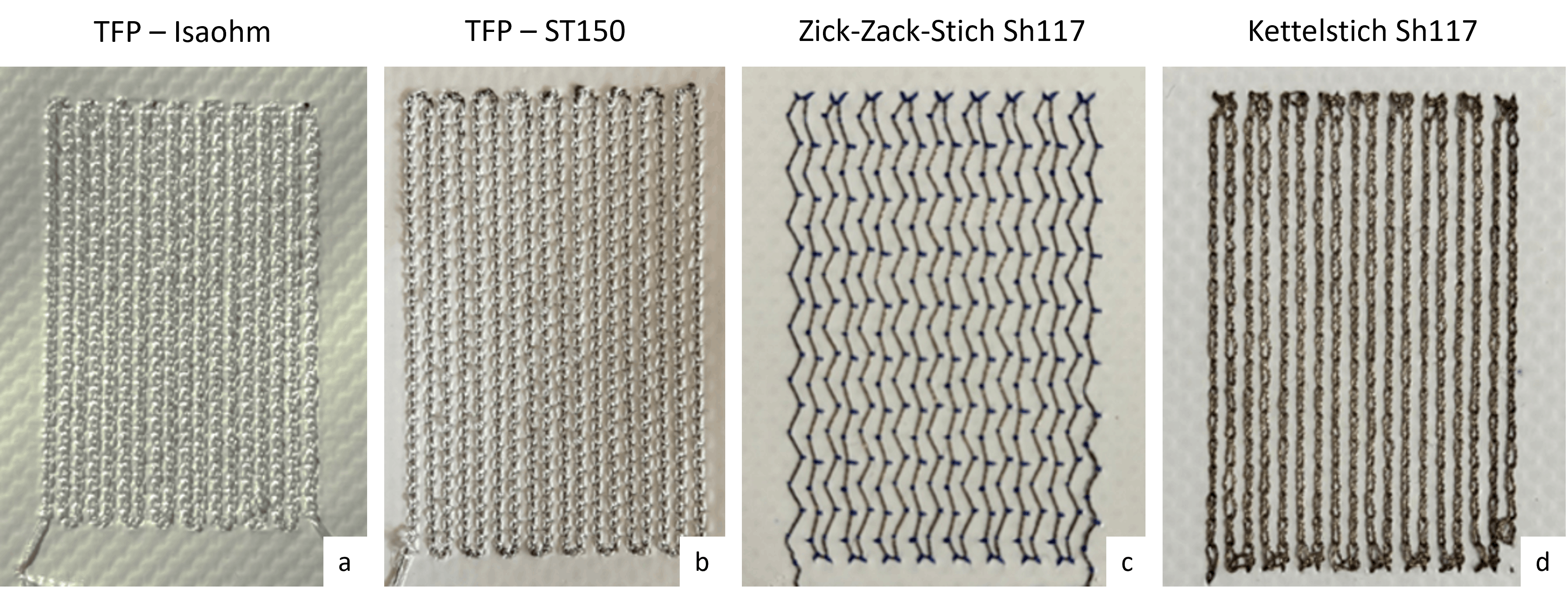
Two approaches were pursued for the development of a functional sample. On the one hand, samples were produced using embroidery technology and the TFP process; on the other hand, the thread-like sensor and the textile feed line were already integrated into the semi-finished textile product during the weaving process. For the embroidered samples, a commercially available membrane (HEYtex tentorium 900) was used. Both the silver-coated polyamide yarn and the precision resistance alloy were applied in patches using the tailored fiber placement (TFP) process (Figure 1) in order to increase the sensor length and thus improve measurement accuracy. In addition, the sensor patches were applied in different orientations in order to detect stretching in different directions. At the same time, the silver-coated polyamide yarn Shieldex® 117, which is more robust in textile processing than SilverTech+® 150, was embroidered using regular zigzag and chain stitches without auxiliary thread.

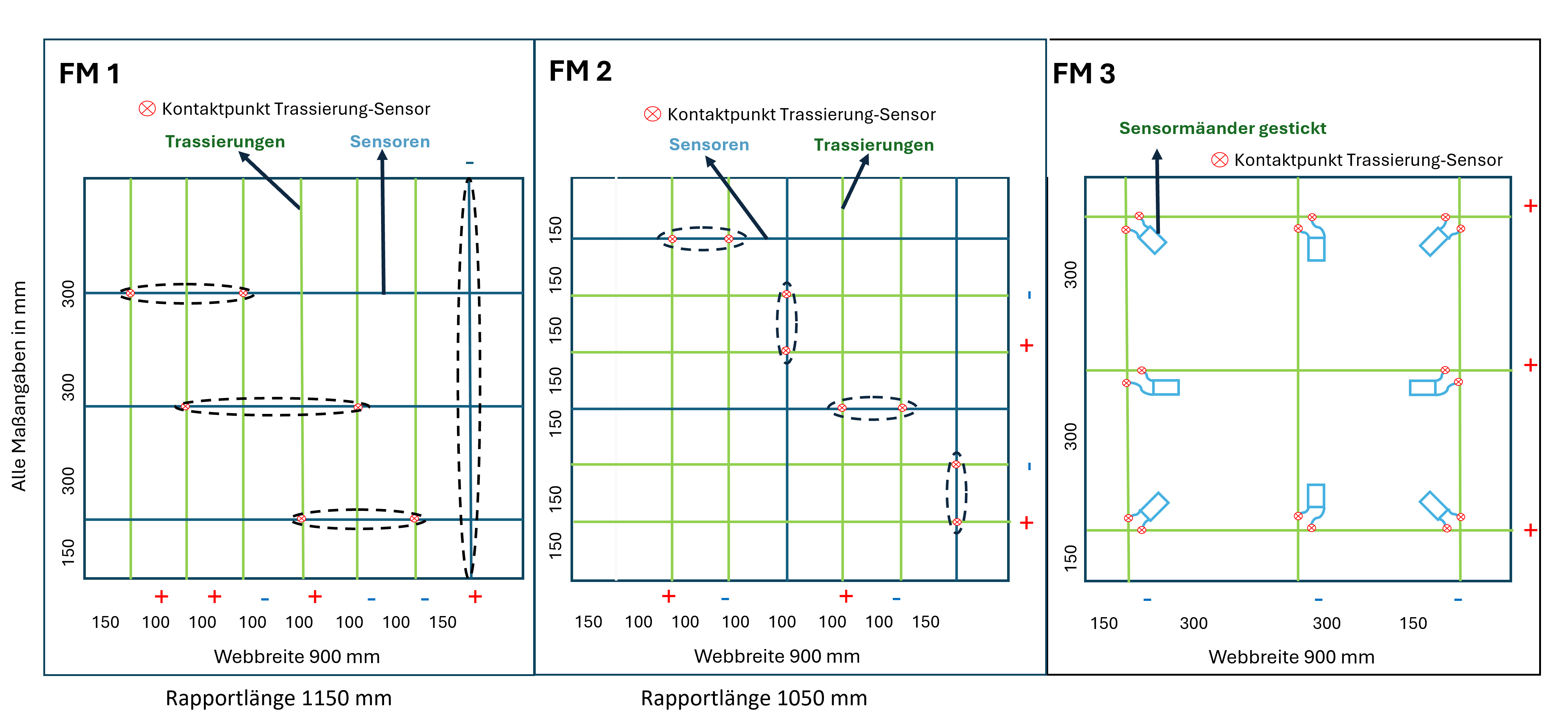
For the woven patterns, a grid with weft and warp threads made of feedline and sensor material was designed, which was combined with the polyester base fabric in terms of pattern (Figure 2). This made it possible to create arrangements with sensors in the warp and weft directions, which later allowed the calculation of tensile stress in different directions. A total of three patterns were created, which differed in terms of the length and position of the sensors. The third variant was a hybrid that combined a woven supply network with sensor patches that were embroidered on afterwards. Two types of intersection points, with and without electrical contact, were created in the conductive structures and implemented using binding techniques. The samples were produced on a gripper loom with center transfer (Lindauer Dornier P1).

A key development step was the creation of practical contacting strategies for the sensor network. Conventional soldering methods caused damage to the textile base material due to high process temperatures, while alternative conductive adhesives initially exhibited excessive contact resistance in the kΩ range. However, by using an epoxy-silver conductive adhesive (8330S) with defined curing (160°C, 90 s, light pressure), stable, low-resistance contacts could be achieved both within the fabric and at the edges of the goods; in combination with crimp contacts, a mechanically robust and electrically reliable connection to external measurement technology was achieved.

Coating of the textile semi-finished product with integrated sensor structure

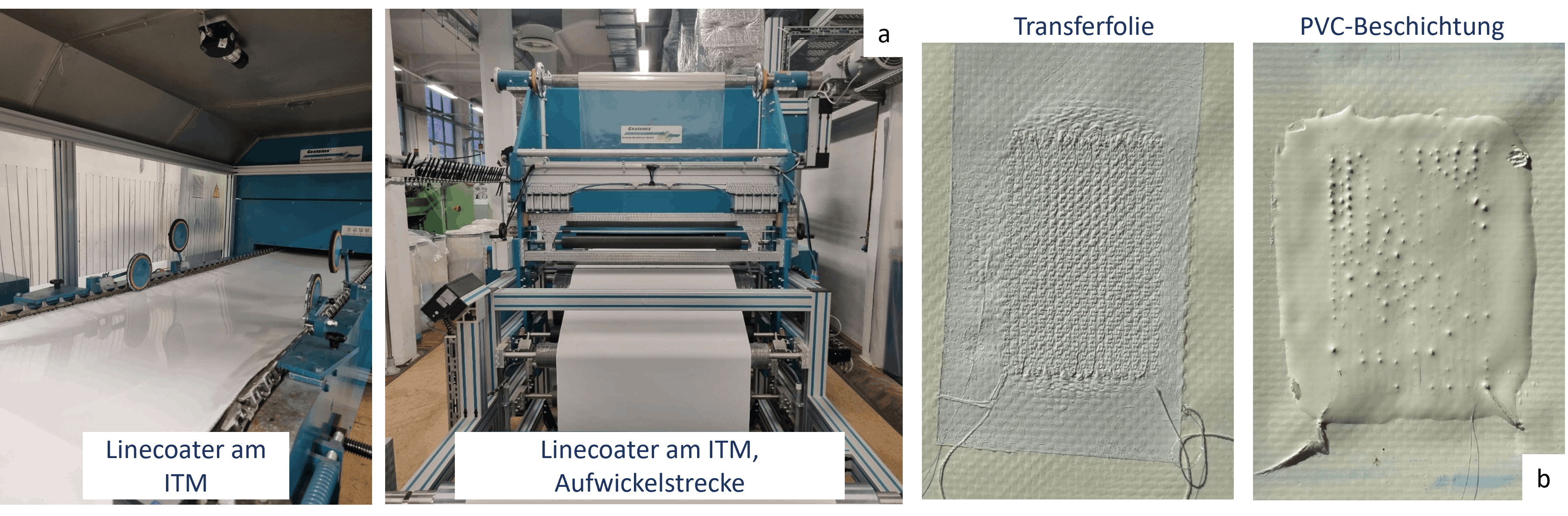
The functionalized fabrics were then coated with a PVC paste (plus 5% bonding agent) provided by the industry partner using a LineCoater from COATEMA (Figure 3). It was found that both integrally woven (0.2 mm) and embroidered sensor and supply structures (0.7 mm) could be integrated into the membrane with a low application thickness, so that the basic mechanical properties of the membrane were only minimally altered, while complete coverage and electrical insulation of the sensor technology was achieved. Additional tests with transfer foils and directly applied PVC adhesive layers showed that manual or semi-manual coating strategies are also suitable for local or subsequent functionalization, especially for smaller membrane areas.

Characterization of the membrane with integrated sensor technology

The manufactured samples were first tested in uniaxial tensile tests. In addition to the basic mechanical properties, the electromechanical properties were also determined. Particular attention was paid to the influence of the integrated sensor technology on structural integrity. Tests were carried out in both the weft and warp directions. With a maximum force of 3810 N at 23.2 % elongation in the weft direction and 4100 N at 24.9 % elongation in the warp direction, the manufactured samples were at a similar level to the commercial product from Heytex (weft: 3780 N at 25.8 %; warp: 3920 N at 20.6 %). Accordingly, it was not expected that the mechanical performance would be affected by the integration of the sensor network.

Development of algorithms for full-surface strain state detection

Based on biaxial tensile tests of the commercial membrane, FE models were created for the full-surface simulation of stress conditions. In addition to providing a database for algorithm development, this also supported the selection of suitable sensor layouts. The modeling was based on shell elements with an anisotropic material model. Based on the calibrated material model, simulations were performed with randomly varied load positions and magnitudes, which formed part of the database for algorithm development.

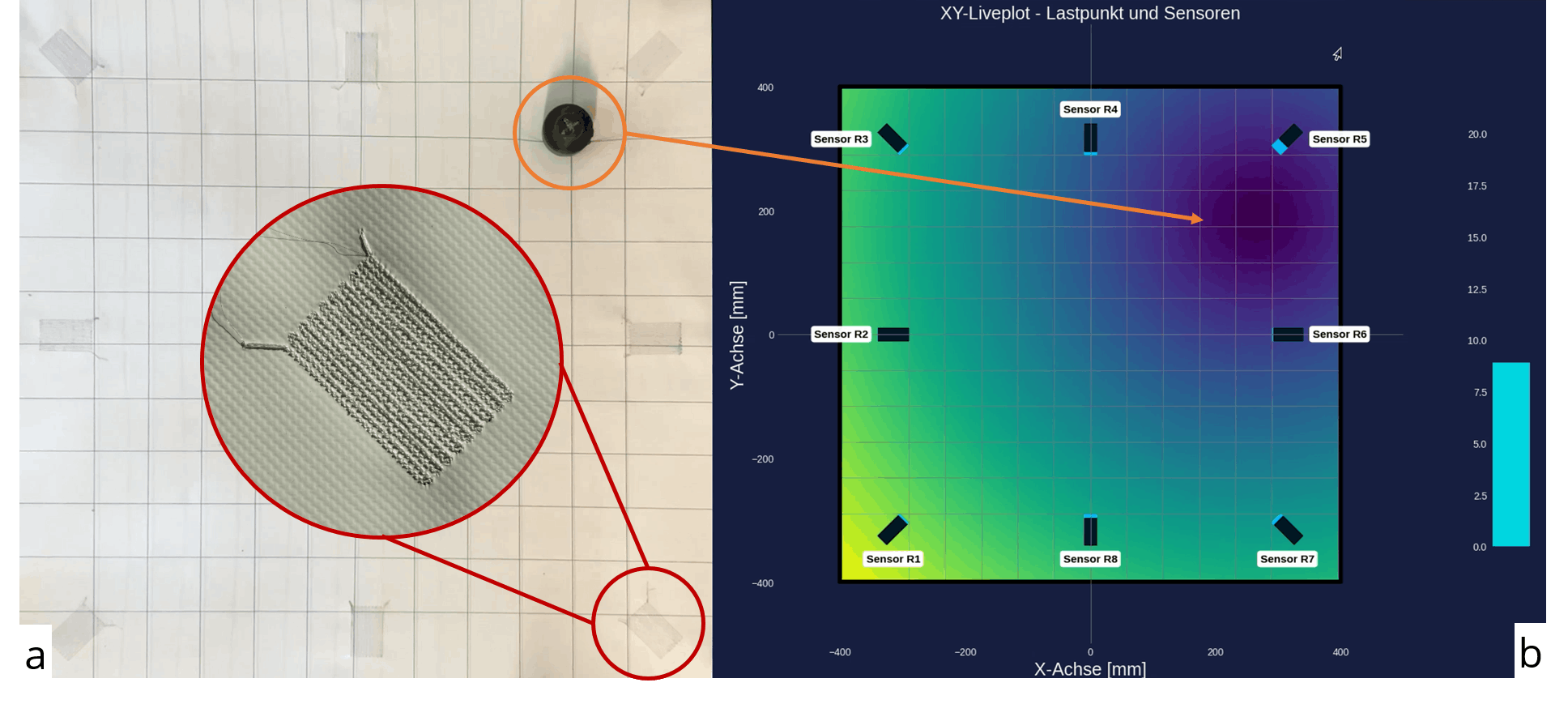
The AI model underlying the algorithms was based on a regressive model. To this end, the previously simulated load cases were applied to the demonstrator. The resulting sensor measurements were used to train the model. The model was then evaluated using the parameters mean absolute error (MAE), root mean squared error (RMSE), and coefficient of determination (R²). For the functional demonstrator, which consisted of a square, flat membrane, high accuracy was demonstrated for position determination in the single-digit mm range. The amount of load was also determined precisely with a coefficient of determination of 0.9604. The system achieves ± 3 mm spatial resolution and ± 0.6 N force accuracy for demonstrator loads < 50 N and is scalable up to kN load ranges. Based on the determined values for the position and magnitude of a load application, the corresponding full-area stress state was determined using multi-stage k-nearest neighbor models. The resulting model showed a high regression quality with a deviation of less than 5% from the FEM reference. In addition, the model proved to be very stable in general and allowed the desired real-time determination of the stress distribution. For the functional demonstrator, the results of the model were visualized in real time on a display unit next to the membrane (Figure 4), so that the effect of applied loads was immediately apparent to the user.

Conclusion

In summary, the IGF MeMo project shows that PVC-coated PES membranes can be further developed into intelligent, real-time capable support structures by combining suitable sensor materials, textile integration strategies, and robust contacting and coating processes. The experimental results prove that the mechanical performance of the membrane is largely retained despite the integration of the sensor technology and that the functional requirements – in particular with regard to the measuring range, temperature stability, and long-term behavior of the selected sensor materials – are met. The project developed an AI-based regression approach that determines load positions and amounts in real time from textile-integrated sensor signals and derives full-surface stress states from them without requiring numerical simulations during operation. The approach is characterized by high robustness against sensor-related scatter and low requirements for computing power and training data. The underlying methodology is fundamentally transferable to other large-area, deformable structures with integrated sensor technology, for example in textile architecture, lightweight construction, or membrane- and composite-based structural systems, e.g., in the maritime sector.

At the same time, the investigations clearly show that the type of integration and contacting has a significant influence on the quality of the sensor signals: Inline-contacted, integrally woven sensors are technologically sophisticated and currently still limited in terms of signal stability, while embroidered sensor networks with clearly defined, easily accessible contact points deliver significantly more robust and easier-to-evaluate signals. Thus, the work not only provides a complete technical toolkit, but also a clear preference for further system development towards embroidered, hybrid membrane solutions.

In the field of mechanical and electromechanical characterization, it seems sensible to expand biaxial testing programs on functionalized membranes. This would allow for an even closer link between experimental and numerical data and extend the validation of the material and damage descriptions used in the FEM models to the sensor membrane system as a whole. At the same time, the algorithms for load localization and stress reconstruction based on the data available to date can be expanded to include additional load collectives, more complex boundary conditions, and additional failure patterns, so that the monitoring system will continue to operate reliably in the long term, even in highly variable application scenarios.

On this basis, manufacturing and retrofitting concepts can be developed with a view to implementing intelligent, self-monitoring membrane structures in various industries - from construction and protective and safety applications to the maritime sector.

Acknowledgement

The IGF project 01IF22600N of the research association Forschungskuratorium Textil e.V., Reinhardtstr. 12-14, 10117 Berlin, was funded by the German Federal Ministry for Economic Affairs and Energy via the German Aerospace Center (DLR) as part of the program for the promotion of Industrial Collective Research (IGF) based on a resolution of the German Bundestag.

The authors would like to thank the aforementioned institutions for providing the financial resources. The research report and further information are available from the Institute of Textile Machinery and High Performance Material Technology at TU Dresden.

References

[1]   J. Mersch, C. A. G. Cuaran, A. Vasilev, A. Nocke, C. Cherif, and G. Gerlach, "Stretchable and Compliant Textile Strain Sensors," IEEE Sensors J., vol. 21, no. 22, pp. 25632–25640, 2021, doi: 10.1109/JSEN.2021.3115973.

[2]   K. Bremer, F. Weigand, Y. Zheng, L. S. Alwis, R. Helbig, and B. Roth, "Structural Health Monitoring Using Textile Reinforcement Structures with Integrated Optical Fiber Sensors," Sensors (Basel, Switzerland), vol. 17, no. 2, 2017, doi: 10.3390/s17020345.

[3]   E. Haentzsche, R. Mueller, T. Ruder, A. Nocke, and C. Cherif, "Integrative Manufacturing of Textile-Based Sensors for Spatially Resolved Structural Health Monitoring Tasks of Large-Scaled Composite Components," MSF, 825-826, pp. 571–578, 2015, doi: 10.4028/www.scientific.net/MSF.825-826.571.

[4]   T. D. Dinh et al., "A study of tension fabric membrane structures under in-plane loading: Nonlinear finite element analysis and validation," Composite Structures, vol. 128, pp. 10–20, 2015, doi: 10.1016/j.compstruct.2015.03.055.

[5]   T. D. Dinh, A. Rezaei, L. de Laet, M. Mollaert, D. van Hemelrijck, and W. van Paepegem, "A new elasto-plastic material model for coated fabric," Engineering Structures, vol. 71, pp. 222–233, 2014, doi: 10.1016/j.engstruct.2014.04.027.

[6]   J. Vitola, F. Pozo, D. A. Tibaduiza, and M. Anaya, "A Sensor Data Fusion System Based on k-Nearest Neighbor Pattern Classification for Structural Health Monitoring Applications," Sensors (Basel, Switzerland), vol. 17, no. 2, 2017, doi: 10.3390/s17020417.


Authors: Karl Kopelmann Anna Happel Florian Schmidt Tobias Lang Hung Le Xuan Chokri Cherif

Technische Universität Dresden

Fakultät Maschinenwesen

Institut für Textilmaschinen und Textile Hochleistungswerkstofftechnik (ITM)

01062 Dresden


https://tu-dresden.de/ing/maschinenwesen/itm

More entries from TU Dresden, Institut für Textilmaschinen und Textile Hochleistungswerkstofftechnik ITM

06.03.2023

Technology Development for the Sustainable Production of High-purity Chitosan Filament Yarns with High Performance and Functionality (Chion)

Raw materials Fibres Yarns Sustainability

Abstract

In the IGF project 21168 BR ‘Chion’, a technology for the manufacturing of chitosan multifilament yarns from ionic liquids was developed, enabling the tailoring of the yarn properties regarding their performance and functionality in all process stages. The material costs, the field of application and the functionalities achievable by the multifilament yarns are defined by the raw material selection. By using ionic liquids, it was possible for the first time to process lower-cost chitosans in various qualities and degree of deacetylation < 90%, previously unavailable with conventional spinning processes. From the achieved and extensively evaluated project results, required process parameters for the successful transfer of the elaborated fundamentals to a pilot scale as well as the process development for the spinning of chitosan multifilament yarns with high performance and strengths up to 28 cN/tex on a pilot solvent wet spinning plant were derived and implemented. To demonstrate the textile processability of the multifilament yarns, textile demonstrators were successfully fabricated for the first time in conventional textile weaving, knitting or braiding processes on standard industrial textile machines.

Report

Introduction and Objective

In the 21st century, society's high level of interest in using products that are manufactured in a sustainable way and minimize environmental impact grows constantly. In this context, the textile and fiber industry has the opportunity to accelerate the development of organic products from renewable raw materials, such as chitin and chitosan, in order to respond to the social, national and international demand for organic products.

The biopolymer chitin and its derivative chitosan are versatile and well-known materials used in (bio-)medicine and pharmacy. However, they are rarely available as a pure textile product. Chitin is the second abundant biopolymer after cellulose with 1.5-105 t/a [1]. The semi-crystalline structure and stable network of molecular bonds limit the solubility of chitin significantly. Therefore, chitin derivative chitosan is being primarily addressed by research and material development. The chitosan class of materials demonstrates excellent biological and antibacterial properties as well as cell colonizability and biodegradability [2, 3]. In the last few years, considerable research efforts have been made to develop efficient chitosan products; nevertheless, the availability of pure chitosan multifilament yarns with long-term stability is currently extremely limited [4]. Likewise, a robust, scalable process for manufacturing of high-performance chitosan filament yarns is urgently needed, as current products are severely limited in terms of mechanical properties. Due to the natural provenance and variability of raw material properties, such as degree of deacetylation (DD), molecular weight (Mw), etc. There are still major challenges in producing of chitosan multifilament yarns using the acid- and alkali-dominated manufacturing processes established so far.

The aim of the IGF research project ‘Chion’ (21168 BR) was therefore to develop a robust wet-spinning process based on ionic solvents for manufacturing of multifilament yarns from 100 % chitosan with high performance and functionality.

Obtained Results

By using ionic liquids (IL), lower cost chitosans with lower Mw and DD < 90% became accessible to the wet-spinning process for the first time. A high content of acetamide groups in chitosan with low DD (< 90%) leads to the increase of intermolecular interactions, which resulted in improved mechanical performance with tensile strengths up to 28 cN/tex and proper textile processing of chitosan multifilament yarns. The extensive research of chitosan-IL-systems with different chitosan proveniences, Mw and DD 60 – 90% with imidazol-based IL was initially carried out on a laboratory scale for monofilaments. Based on the results, important process parameters and promising chitosan-IL combinations were obtained and the developed process was successfully transferred to the multifilament scale. A structural-mechanical adjustment of the properties of the chitosan multifilament yarns was a fundamental object of the research work: Each development step was systematically monitored by material and process characterizations and analyses. Further investigations included the solubility of chitosan in IL, viscosity studies, fiber morphology and geometry, chemical and physical material properties, crystallinity and degradation behavior, as well as on the influence of controlled fiber drawing during the spinning process according the adjustment of the textile-physical properties. By integrating acid- and temperature-sensitive agents into the spinning dope, the functionality of the chitosan multifilament yarns was demonstrated. As a result of the precise tailoring of the molecular fiber properties and the developed spinning process parameters, a robust, scalable wet-spinning process is now available for manufacturing of pure chitosan multifilament yarns in pilot scale. Finally, the textile processability of the chitosan multifilament yarns was investigated and demonstrated by knitting, weaving and braiding processes.

Investigation of the solubility of chitosan in IL and spinning dope preparation

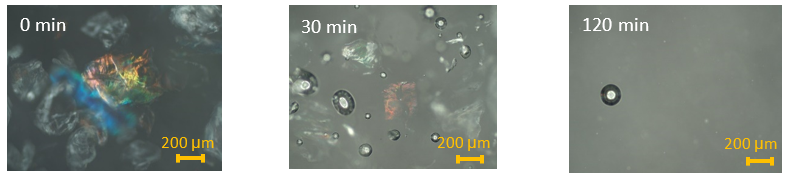
Initially, the dissolving ability of IL for chitosan was investigated and evaluated. Through systematic experiments, 19 commercially available chitosan materials of different qualities (e.g. medical grade chitosan, industrial grade chitosan, etc.), provenance (e.g. shrimps, crabs, fungal-based chitosan), degree of DD (60 – 90%) and Mw were characterized and their solubility evaluated in promising imidazole-based ILs. It was demonstrated that especially short-chain ILs in combination with acetate anions possess excellent solubility for all investigated chitosans (Figure 1). From the results of the dissolution tests, promising chitosan-IL combinations were defined for further process development steps.

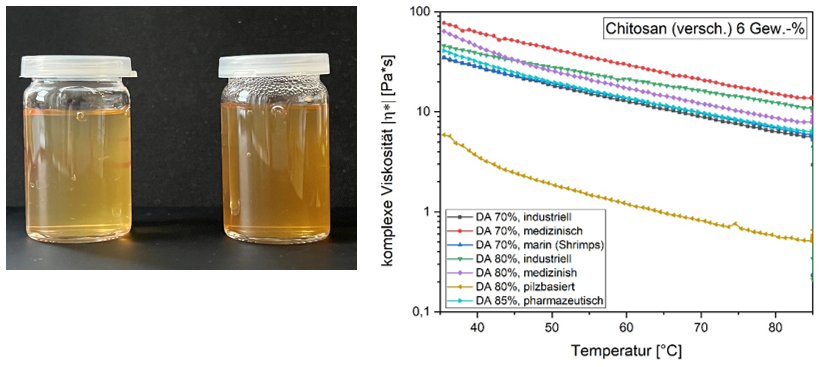
The preparation of the chitosan-IL spinning dopes (Figure 2, left) was carried out using thermal processing in solids concentrations of up to 8 wt.-% and was monitored and evaluated by rheological investigations as a function of the temperature and shear rate (Figure 2, right). To investigate the stability, processability and spinnability of the homogeneous chitosan-IL-solutions, the spinning dopes were processed into monofilaments on a laboratory scale. In particular, fiber formation was analyzed as a function of the chitosan raw materials and process parameters, such as solid content, temperature, diffusion rate and residence time in the coagulation medium. The obtained results demonstrated, that all investigated chitosan-IL-combinations can be processed into pure chitosan fibers. Therefore, it was successfully proved that ILs are a suitable and promising solvent for the manufacturing of chitosan multifilament yarns.

Wet-spinning of the chitosan multifilament yarns

In the following step, the basic methods developed on the laboratory scale were successfully transferred to a wet-spinning process on a pilot scale. The chitosan multifilament yarns were spun on the wet-spinning plant (Fourné Maschinenbau GmbH) of the ITM. The pilot spinning plant is specially designed for R&D process developments and enables, in particular, test trials with 2 – 60 liters of spinning dope.

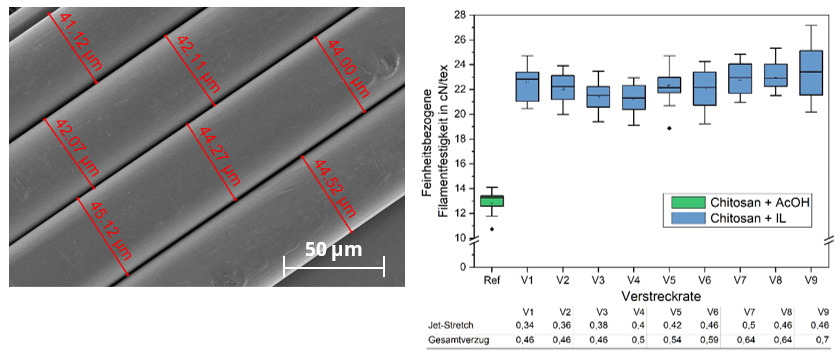
For the spinning trials, chitosan-IL spinning dope was first filtered and degassed under specific temperature and pressure conditions. Different spinneret geometries were used for multifilament spinning, including 78 holes of 90 μm (90 µm/78f) and 24 holes of 160 μm (160 µm/12f), respectively. The prepared tempered spinning dope was extruded into a coagulation bath with deionized water as medium. Overall yarn counts of about 50 – 65 tex and filament diameters of about 30 – 50 µm were achieved depending on the spinneret geometry. In order to achieve tailored functionalities, such as high mechanical strength and crystallinity as well as improved molecular orientation, the influence of fiber drawing during the spinning process was systematically investigated. The produced yarns were analyzed for their mechanical and textile-physical properties and compared with conventionally produced acetic acid (AcOH) based chitosan yarns. The DD of the raw material has an important role in this context: a high content of acetamide groups in chitosan with low DD (< 90%) leads to an increase in intermolecular interactions, resulting in improved mechanical properties. The results obtained demonstrate a high functionality as well as significantly improved mechanical properties of the IL spun chitosan multifilament yarns compared to the conventional chitosan fibers (DD 90%) (Figure 3, right). By means of elaborated drawing parameters, tailor-made textile-physical properties, such as elasticity or tensile strength, can be adjusted according to defined requirements.

Textile processing of the chitosan multifilament yarns

During the final phase of the project, the textile processing of the chitosan multifilament yarns from IL into knitted and woven patterns and braids was successfully implemented (Figure 4). The technical processing of conventional chitosan yarns on textile machines has always been a challenge due to insufficient mechanical strength and knot tearing forces. Trouble-free processing in weaving, knitting or braiding processes without special yarn pretreatment or machine adaptations could not be realized so far using conventional chitosan multifilament yarns. In contrast, the chitosan multifilament yarn produced by IL offers sufficient mechanical stability and flexibility to be processed into knitted, woven or braided structures in conventional textile processes on standard industrial production machines. Additional yarn functionalization, such as sizing, further improves the processability of the material and the quality of the finished product.

Acknowledgement

The IGF project 21168 BR of the Research Association Forschungskuratorium Textil e.V. was funded by the Federal Ministry of Economics and Climate Protection via the AiF within the framework of the program for the promotion of joint industrial research (IGF) on the basis of a resolution of the German Bundestag. We would like to thank the above-mentioned institutions for providing the financial resources. Furthermore, we want to thank the member of the ‘Projektbegleitender Ausschuss’ (project accompanying committee) for their support during the project.

The complete publication is available as download.

Authors: Kuznik, Irina; Kruppke, Iris; Cherif, Chokri

Technische Universität Dresden
Fakultät Maschinenwesen
Institut für Textilmaschinen und Textile Hochleistungswerkstofftechnik (ITM)
01062 Dresden
https://tu-dresden.de/mw/itm

chitosan multifilament yarns

More entries from TU Dresden, Institut für Textilmaschinen und Textile Hochleistungswerkstofftechnik ITM

05.09.2022

Development of near-net-shape woven, curved profile preforms

Technical Textiles

Abstract

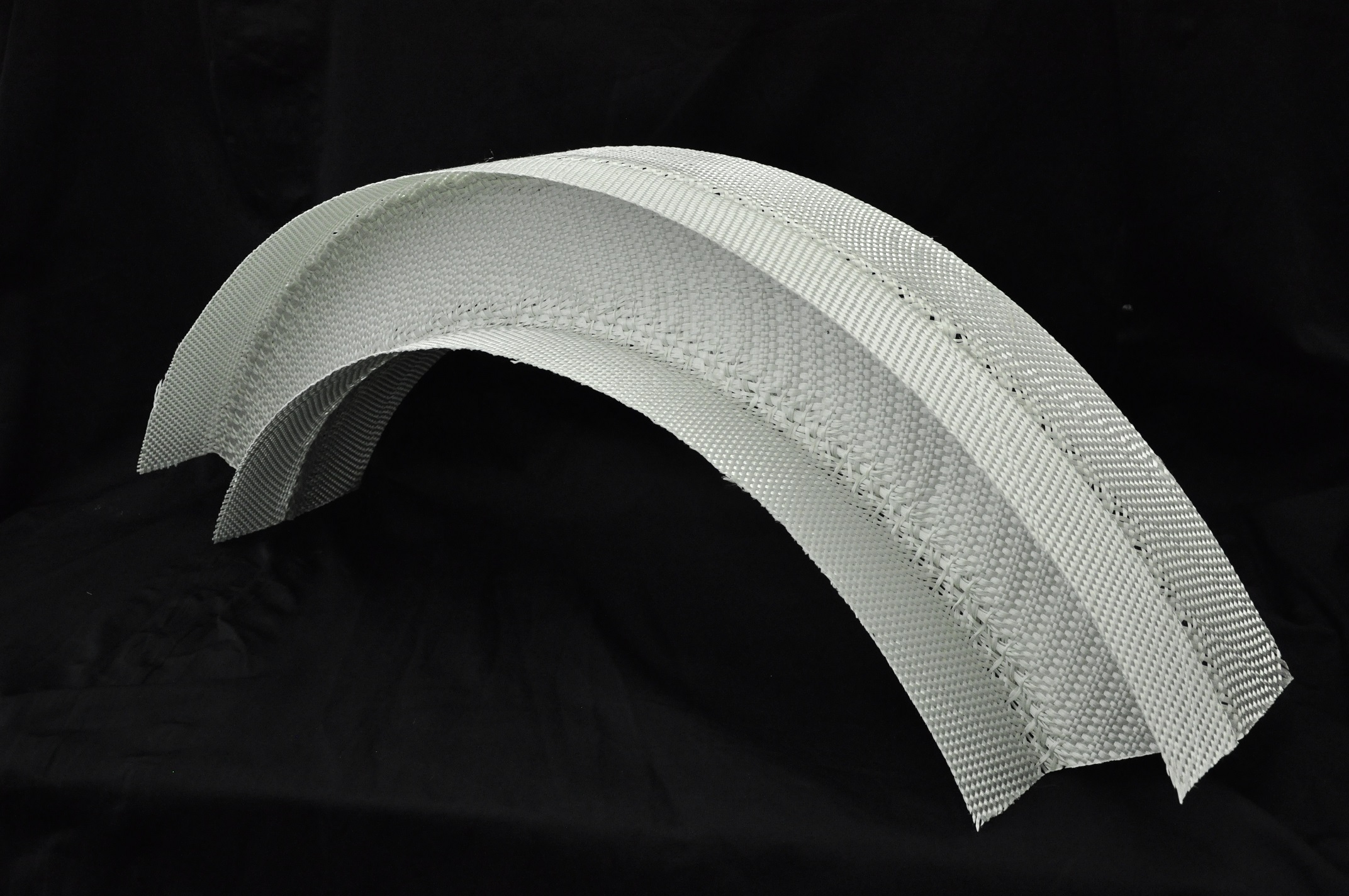
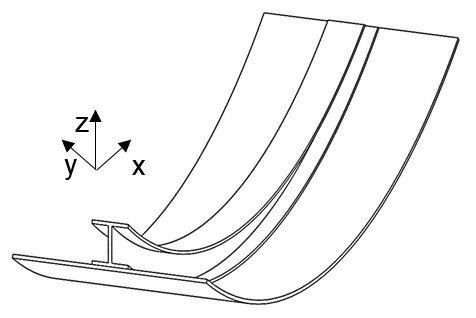
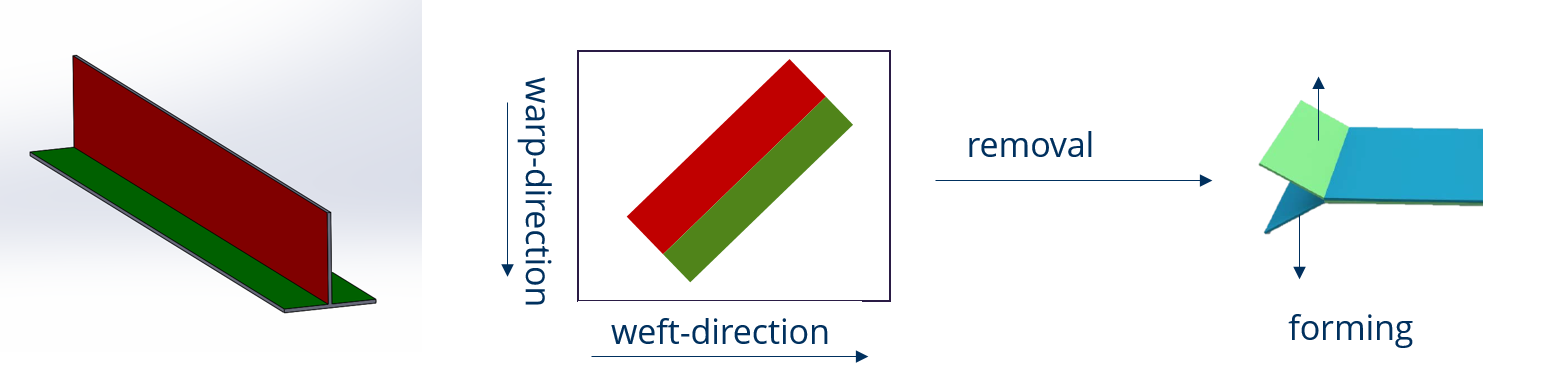
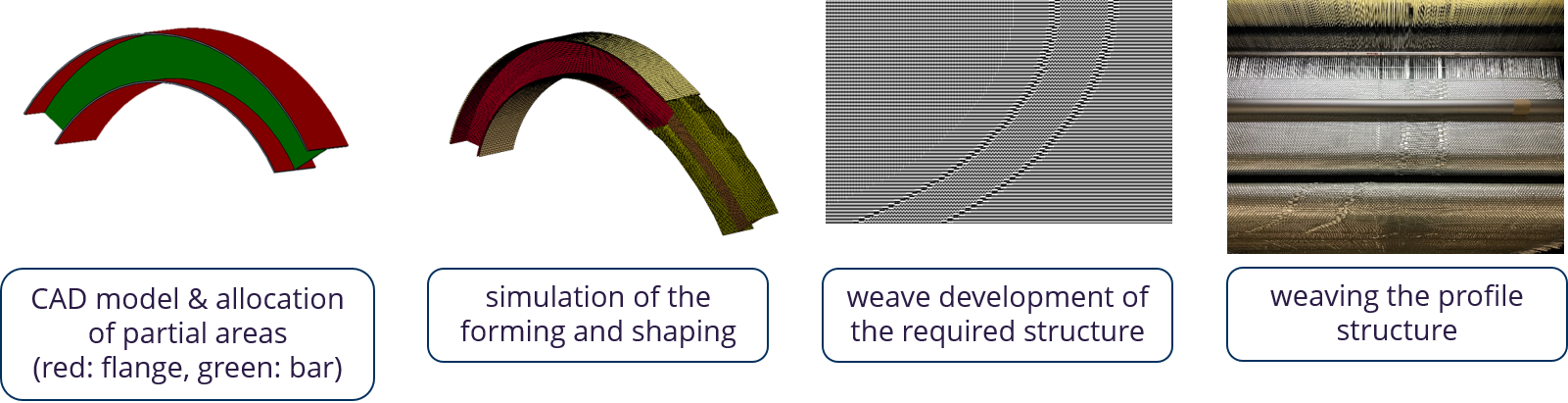
At the ITM, the simulation-supported development and weaving implementation of integrally manufactured curved profile preforms with requirement-oriented cross-sectional changes along the profile length for the reinforcement of shell-shaped FRP components was carried out in the IGF project 20903 BR (Curved Profile Preforms).

Report

At the ITM, the simulation-supported development and weaving implementation of integrally manufactured curved profile preforms with requirement-oriented cross-sectional changes along the profile length for the reinforcement of shell-shaped FRP components was carried out in the IGF project 20903 BR (Curved Profile Preforms).

Authors: Nuss, Dominik Huỳnh, Thị Anh Mỹ Gereke, Thomas Hoffmann, Gerald Cherif, Chokri

Technische Universität Dresden
Fakultät Maschinenwesen
Institut für Textilmaschinen und Textile Hochleistungswerkstofftechnik (ITM)
01062 Dresden
https://tu-dresden.de/mw/itm

More entries from TU Dresden, Institut für Textilmaschinen und Textile Hochleistungswerkstofftechnik ITM