From the Sector

Reset
VEGANCELIO Photo AIMPLAS
VEGANCELIO
10.04.2026

VEGANCELIO: Transforming organic waste into vegan leather and cosmetic microcapsules

Organic waste accounts for around 50% of municipal waste in Spain. Current treatment methods, such as composting or biogas production, do not generate products with sufficient economic value to offset management costs. In response to this environmental and economic challenge, VEGANCELIO has emerged—a project led by AIMPLAS, the Plastics Technology Centre—which proposes a solution aligned with the circular economy and the bioeconomy.

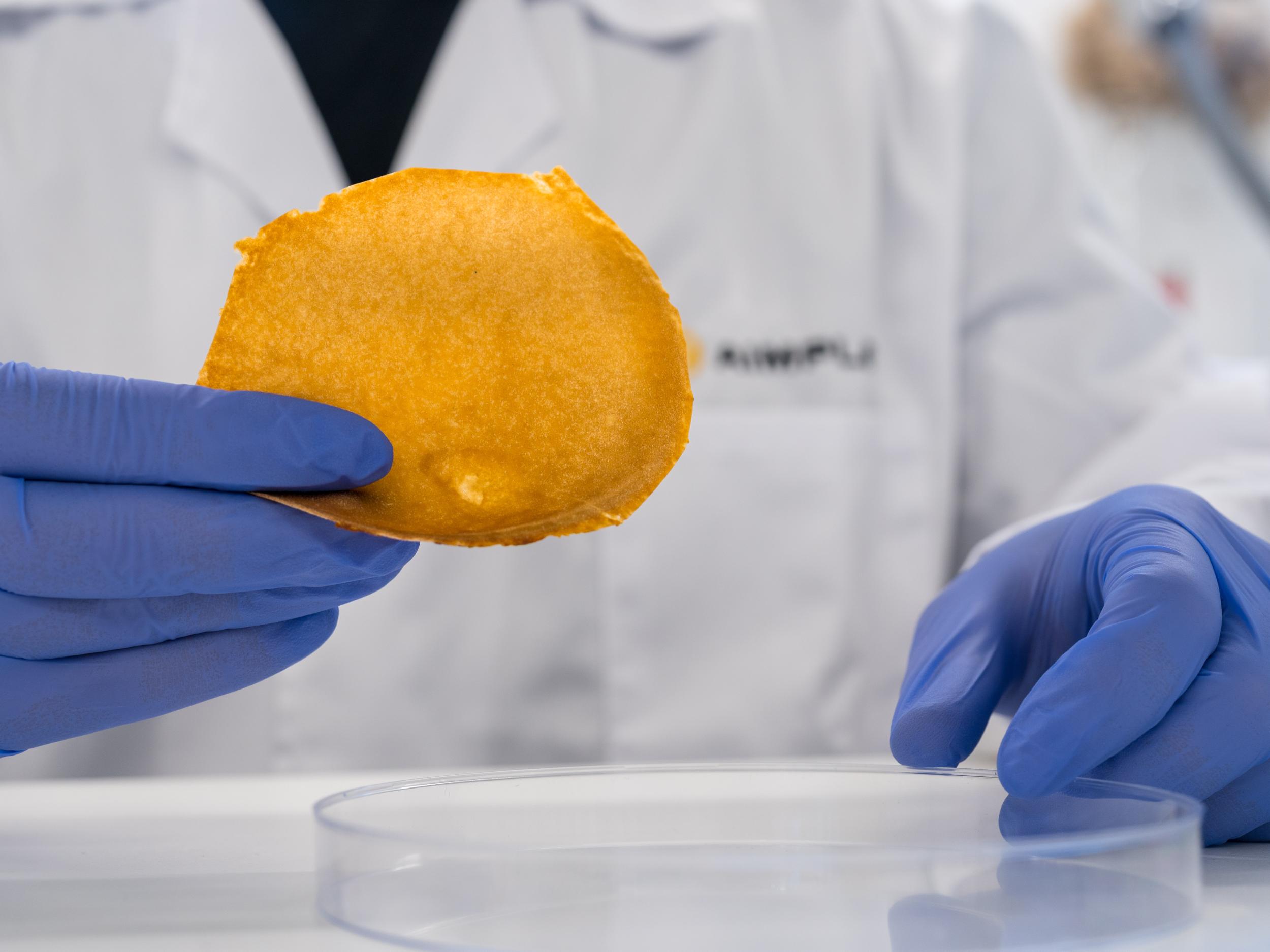
The project, funded by the Valencian Institute of Competitiveness and Innovation (IVACE+i) with ERDF funds, aims to develop advanced technologies to recover value from organic waste by converting it into two key products: vegan leather made from fungal mycelium, intended for the textile sector, and chitosan microcapsules with cosmetic applications, capable of encapsulating active ingredients with antioxidant effects and controlled release.

Organic waste accounts for around 50% of municipal waste in Spain. Current treatment methods, such as composting or biogas production, do not generate products with sufficient economic value to offset management costs. In response to this environmental and economic challenge, VEGANCELIO has emerged—a project led by AIMPLAS, the Plastics Technology Centre—which proposes a solution aligned with the circular economy and the bioeconomy.

The project, funded by the Valencian Institute of Competitiveness and Innovation (IVACE+i) with ERDF funds, aims to develop advanced technologies to recover value from organic waste by converting it into two key products: vegan leather made from fungal mycelium, intended for the textile sector, and chitosan microcapsules with cosmetic applications, capable of encapsulating active ingredients with antioxidant effects and controlled release.

VEGANCELIO is structured around a comprehensive technological approach that includes the production of fungal mycelium from organic waste, the sustainable extraction of chitosan from fungal biomass using chemical and enzymatic methods, the manufacture of vegan leather by optimising plasticisers and processes such as extrusion, and the development of chitosan and hybrid microcapsules for dermocosmetic applications. Furthermore, the project envisages knowledge transfer to the plastics, textile and cosmetics sectors in the Valencian Community, with the potential to replicate the model in other industries and for other types of waste with a similar composition.

The project involves collaboration with Tejidos Royo S.L., which specialises in the manufacture of textile materials, and DERMOPARTNERS S.L., an expert in the formulation of dermocosmetic products. Both companies provide valuable industrial and market insights, actively participating in the definition of technical parameters, specialist advice and the validation of the materials developed. Their involvement ensures the practical and commercial viability of the processes, strengthening the potential for the real-world application of the project’s results.

“The products developed in VEGANCELIO respond to a real market demand, which allows the applied technologies to be made profitable. The project represents an opportunity for companies implementing these results to position themselves as leaders in sustainability and innovation,” explains Pablo Ferrero, lead researcher in Biotechnology at AIMPLAS.

VEGANCELIO’s comprehensive approach not only contributes to the reduction of organic waste and greenhouse gas emissions but also promotes the production of materials free from harmful substances, fostering sustainable, profitable and scalable processes. The project reduces reliance on imported raw materials and positions the Valencian Community as a leader in sustainable innovation.

VEGANCELIO joins other initiatives led by AIMPLAS that promote waste recovery and the development of sustainable materials, consolidating its role as a driver of innovation.

More information:
AIMPLAS Vegan vegan leather
Source:

AIMPLAS 

(c) Archroma
01.04.2026

Archroma: Sustainable denim innovations at Kingpins Amsterdam

Archroma, a global leader in specialty chemicals, will present a portfolio of six sustainable denim innovations at Kingpins Amsterdam from April 15-16, 2026. Under the theme “Creating Possibilities in Denim”, the showcase reflects Archroma’s commitment to giving brands and mills solutions that are as commercially compelling as they are environmentally responsible.

“Denim leaders are strongly motivated to reduce environmental impact, but cannot afford to sacrifice market appeal or production efficiency,” Julio Perales, Technical & Product Segment Manager Denim, Archroma, said. “At Archroma, we continuously challenge conventions, with an R&D philosophy that accepts nothing less than eliminating hazardous chemicals and processes while simultaneously improving performance and reducing resource use. That’s how we have built such a broad portfolio of game-changing solutions.”

At Kingpins Amsterdam, visitors can explore:

CLEANER DYESTUFFS
Archroma denim dyes address the most persistent challenges in indigo and sulfur dyeing – from hazardous impurities to resource-intensive synthesis processes.

Archroma, a global leader in specialty chemicals, will present a portfolio of six sustainable denim innovations at Kingpins Amsterdam from April 15-16, 2026. Under the theme “Creating Possibilities in Denim”, the showcase reflects Archroma’s commitment to giving brands and mills solutions that are as commercially compelling as they are environmentally responsible.

“Denim leaders are strongly motivated to reduce environmental impact, but cannot afford to sacrifice market appeal or production efficiency,” Julio Perales, Technical & Product Segment Manager Denim, Archroma, said. “At Archroma, we continuously challenge conventions, with an R&D philosophy that accepts nothing less than eliminating hazardous chemicals and processes while simultaneously improving performance and reducing resource use. That’s how we have built such a broad portfolio of game-changing solutions.”

At Kingpins Amsterdam, visitors can explore:

CLEANER DYESTUFFS
Archroma denim dyes address the most persistent challenges in indigo and sulfur dyeing – from hazardous impurities to resource-intensive synthesis processes.

  • DENISOL® PURE INDIGO: The industry’s first synthetic aniline-free* indigo makes it possible to produce authentic indigo-dyed denim that complies with major eco-standards, reduces pollution risk and creates denim that can be more sustainably recycled.
  • DIRESUL® EVOLUTION BLACK: Archroma's cleanest sulfur black dyestuff ever – and the winner of the 2023 Just Style Excellence Award for Innovation in Dyes – delivers an overall lifecycle impact reduction of 57%** versus standard Sulfur Black 1, with no ammonia, no sodium salts waste, no liquid effluents and 73% less water in synthesis.
  • DIRESUL® RDT: With a comprehensive bluesign®-approved sulfur dye palette spanning blues, blacks, navies, khakis and fashion colors, DIRESUL® RDT supports topping, bottoming and self-shade applications across the full range of denim styles.

CIRCULAR COLORANTS
Archroma's biosynthetic dye ranges replace petroleum-based raw materials with upcycled waste streams, turning circular economy principles into commercially deployable color solutions.

  • EARTHCOLORS®: A patented range of biosynthetic dyes derived from non-edible agricultural and herbal waste (such as leaves and nutshells), EarthColors® helps reduce the negative impact on water footprint, natural resources and climate change.
  • FIBERCOLORS®: Synthesized with a minimum of 50% wool waste raw material, FiberColor® solves a problem for sheep farmers while advancing sustainability for brands.

UPSTREAM DYEING INNOVATION
Winner of the ITMF 2025 Sustainability & Innovation Award, DENIM HALO is a yarn pretreatment and dyeing process that enables superficial ring-dyeing at the denim mill. This allows downstream garment laundries to achieve popular high-contrast distressed effects by laser or washdown – avoiding the hazardous potassium permanganate sprays, hand scraping and harsh bleaching these looks have traditionally required.

“Impact assessments using Archroma’s One Way Impact Calculator show substantial environmental benefits for DENIM HALO versus standard processes,” Julio explained. “But even better, DENIM HALO doesn’t require mills to choose between sustainability and business performance. It’s designed to work within existing mill workflows, so there’s no need to modify standard dye recipes or set up. And it actually improves fabric performance by reducing yarn shrinkage and boosting garment tensile strength.”

Source:

Archroma 

30.03.2026

Fashion for Good launched the Mass Balance Demonstrator project

Fashion for Good launched the Mass Balance Demonstrator project, a collaborative industry initiative to implement and scale the mass balance attribution (MBA) chain-of-custody model for biomass-attributed PET in textile applications. The project represents a concrete step toward accelerating brand-driven decarbonisation across the apparel value chain.

While the portfolio of both preferred existing and next-generation materials offers opportunities for decarbonising the apparel industry, biosynthetics currently represent only a small fraction in material projections for 2030. The reality is that the dedicated commercial scale infrastructure required for biosynthetic materials is not yet fully developed, keeping production volumes prohibitively low and costs too high for widespread industry transition, despite their validated technical performance.

Fashion for Good launched the Mass Balance Demonstrator project, a collaborative industry initiative to implement and scale the mass balance attribution (MBA) chain-of-custody model for biomass-attributed PET in textile applications. The project represents a concrete step toward accelerating brand-driven decarbonisation across the apparel value chain.

While the portfolio of both preferred existing and next-generation materials offers opportunities for decarbonising the apparel industry, biosynthetics currently represent only a small fraction in material projections for 2030. The reality is that the dedicated commercial scale infrastructure required for biosynthetic materials is not yet fully developed, keeping production volumes prohibitively low and costs too high for widespread industry transition, despite their validated technical performance.

Borrowed from industries such as renewable energy and sustainable wood and paper, the mass balance attribution is a chain-of-custody model which allows renewable and fossil-based feedstocks to be physically mixed. It tracks how much renewable input entered the system and proportionally allocates that amount to the outputs, verified through audits and certification bodies. 

HOW DOES MASS BALANCE ATTRIBUTION (MBA) WORK
A chemical manufacturer introduces renewable feedstocks (such as agricultural residues or used cooking oil) into a production system that also processes fossil-based feedstocks. These feedstocks move through the same infrastructure and chemical processes, and by the time they become resin, they are chemically indistinguishable. The amount of renewable feedstock entering the system is carefully measured and recorded through a verified accounting system, creating a record of renewable input while accounting for process losses and conversion factors.

That accounted input is then allocated to specific products using mass balance principles. If 30% of the feedstock entering the system is renewable, a corresponding share of the output can carry a renewable attribution. In this project, this will be the biomass-attributed polyester (PET) but it could also be used for other fibres such as nylon. This does not necessarily mean each product physically contains renewable content; rather, the claim reflects the share of renewable input assigned to that product. Crucially, the system is strictly controlled: producers cannot allocate more renewable attribution than the amount of renewable feedstock entering the system, and once attributed, those certified attributes cannot be counted again elsewhere.

“We are at a point where the industry wants to move and adopt biosynthetics, but the production frameworks and commercial infrastructure haven’t caught up. The Mass Balance Demonstrator project is about closing that gap: building the impact and commercial evidence, the blueprint, and the feedback loops that will allow the MBA model to scale with integrity.” Katrin Ley, Managing Director at Fashion for Good. 

THE GOALS OF THE PROJECT
The Mass Balance Demonstrator project, an initiative led by Fashion for Good, brings together BESTSELLER, Beyond Yoga (Levi Strauss & Co.), ON, Paradise Textiles, Environmental Resources Management (ERM), Indorama Ventures, ISCC, UPM Biochemicals, and Textile Exchange. The consortium is designed not only to demonstrate what is possible today, but to generate insights that the wider industry can build on now and in the future.

“Polyester is our second biggest fiber by volume in BESTSELLER, which means we are continuously investigating improvements in this category. By taking part in this project we as a company are building experience within mass balance attribution and bio-attributed polyester. Hopefully, as we collaborate with other great partners, this can initiate pathways that can support scaling of renewable feedstocks (or inputs) going forward.” Anders Schorling Overgård, Material Research Lead at BESTSELLER

At its core, the project adopts and implements the mass balance attribution chain-of-custody model to enable the production of biomass-attributed PET for textile applications, demonstrating that existing manufacturing systems can integrate renewable feedstocks today. The project is structured around four interconnected objectives:

  • Producing biomass-attributed materials: the project will physically produce biomass-attributed resin and yarns, generating real-world output that matches performance parity.
  • Quantifying the climate impact: a comprehensive cradle-to-grave greenhouse gas (GHG) emissions model will be developed for the produced materials, delivering science-based insights into their decarbonisation potential and overall environmental footprint.
  • Developing a blueprint for industry scale-up: the project will deliver a practical roadmap for scaling biomass-attributed PET in the apparel sector, identifying key supply chain actors, assessing lifecycle accounting approaches for different chain-of-custody models, and evaluating the techno-economic feasibility of market deployment.
  • Informing climate frameworks and industry standards: insights from the project will be shared with climate initiatives and standard-setting bodies to help credible guidance on mass balance attribution.
SNUGGLE joins Sedex in commitment to social and environmental sustainability Photo Snuggle Ltd
27.03.2026

SNUGGLE joins Sedex in commitment to social and environmental sustainability

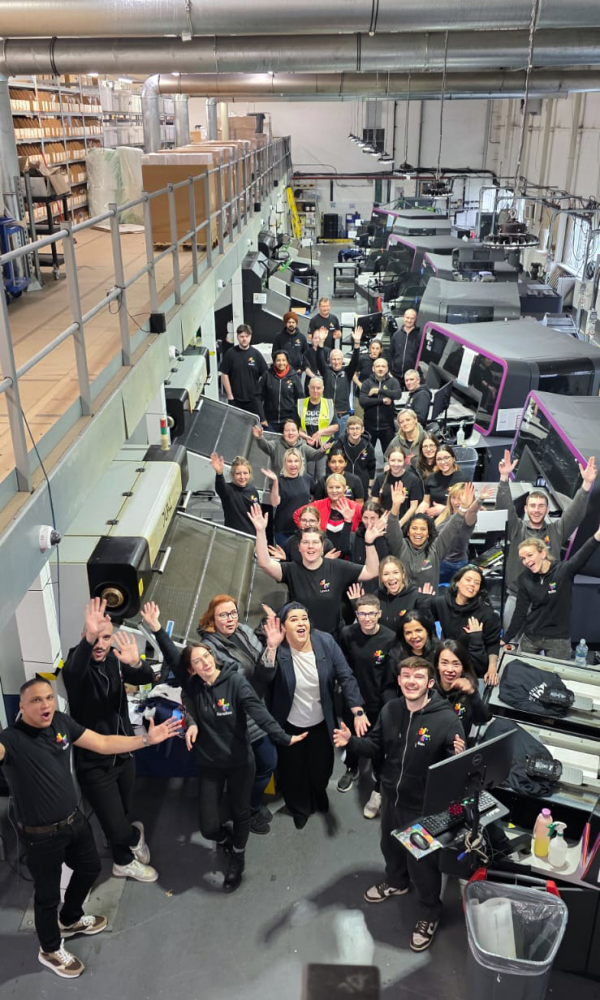
SNUGGLE LTD became a Sedex member in February 2024 and recently undertook their first independent SMETA audit, joining a world-leading organisation in their latest commitment to supply chain sustainability. Sedex is a global technology company that specialises in data, insights and professional services to empower supply chain sustainability.
 
SNUGGLE LTD is dedicated to being a responsible business, managing their operations and supply chain in a way that safeguards workers, communities and the environment. Serving the apparel, textile and fashion industry, the company helps brands move at the speed of trend while reducing waste, risk and unnecessary inventory. Its digital garment decoration and agile production model enables rapid customization, short runs and scalable fulfillment with premium quality at every stage.
 
Sedex’s technology and services help companies such as SNUGGLE LTD to source more sustainably. The platform and solutions provided empower businesses with the practical tools, data analysis and insights needed to drive more socially and environmentally responsible practices in their both own operations and with suppliers.
 

SNUGGLE LTD became a Sedex member in February 2024 and recently undertook their first independent SMETA audit, joining a world-leading organisation in their latest commitment to supply chain sustainability. Sedex is a global technology company that specialises in data, insights and professional services to empower supply chain sustainability.
 
SNUGGLE LTD is dedicated to being a responsible business, managing their operations and supply chain in a way that safeguards workers, communities and the environment. Serving the apparel, textile and fashion industry, the company helps brands move at the speed of trend while reducing waste, risk and unnecessary inventory. Its digital garment decoration and agile production model enables rapid customization, short runs and scalable fulfillment with premium quality at every stage.
 
Sedex’s technology and services help companies such as SNUGGLE LTD to source more sustainably. The platform and solutions provided empower businesses with the practical tools, data analysis and insights needed to drive more socially and environmentally responsible practices in their both own operations and with suppliers.
 
SNUGGLE LTD will use Sedex technology and data tools to map the supply chain in more detail, keep live risk assessment audits and better understand of continuous working conditions which drive positive impacts for employees and our customers.

More information:
Snuggle Ltd Sedex data tools
Source:

Snuggle Ltd

A model walks the runway at the 42nd Cornell Fashion Collective Spring Runway Show. Devin Flores/Cornell University
27.03.2026

Memory becomes muse in annual runway show

Nostalgia was king at the 42nd annual Cornell Fashion Collective (CFC) Spring Runway Show, complete with a crown.

Collections at the March 21 show in Barton Hall paid homage to well-loved storybooks and designers’ childhood memories and cultural backgrounds. A total of 42 students showed their work, including nine seniors who designed full collections.

“Nostalgia is my favorite feeling,” said Madison Feely ’26, a fashion design management major in the College of Human Ecology (CHE), who referenced childhood classics including “Where the Wild Things Are” (with an illustrated sweater and crocheted crown), “Little Women,” “The Very Hungry Caterpillar” in her collection, “Homebody.” “My designs celebrate a well-lived and well-loved childhood, honoring the authors and illustrators who allow me to relive it each time I open their books.”

For the past two years, Feely has been the student assistant for the Shima Seiki knitting machine, gaining experience with knit programming and knitwear design. She paired the machine knit pieces with labor-intensive crochet and hand-pieced quilting techniques. She also made matching earrings out of Shrinky Dink paper.

Nostalgia was king at the 42nd annual Cornell Fashion Collective (CFC) Spring Runway Show, complete with a crown.

Collections at the March 21 show in Barton Hall paid homage to well-loved storybooks and designers’ childhood memories and cultural backgrounds. A total of 42 students showed their work, including nine seniors who designed full collections.

“Nostalgia is my favorite feeling,” said Madison Feely ’26, a fashion design management major in the College of Human Ecology (CHE), who referenced childhood classics including “Where the Wild Things Are” (with an illustrated sweater and crocheted crown), “Little Women,” “The Very Hungry Caterpillar” in her collection, “Homebody.” “My designs celebrate a well-lived and well-loved childhood, honoring the authors and illustrators who allow me to relive it each time I open their books.”

For the past two years, Feely has been the student assistant for the Shima Seiki knitting machine, gaining experience with knit programming and knitwear design. She paired the machine knit pieces with labor-intensive crochet and hand-pieced quilting techniques. She also made matching earrings out of Shrinky Dink paper.

Meanwhile Ana Mocklar ’26, an information science major in the Cornell Ann S. Bowers College of Computing and Information Science, took a page from Moe Willems’ series of pigeon books for “Don’t Let the Pigeon Design a Collection,” with eight whimsical looks each representing a city mishap, based on a trip to New York City. “The Puddle Pigeon” featured beads that portrayed rain falling off an umbrella skirt; “The Cat Attack Pigeon” had large slashes shown by red pleats on the jacket and pants; and “The Takeout Bag Pigeon,” had red lettering with the words “Thank you!” and “Have a Nice Day!” across the shoulders.

CHE fashion design major Lucy Jones ’26 reflected her experience growing up in Los Angeles in her collection, “Crosseyed and Painless.” T-shirts emblazoned with the words “Cable TV” and “Around Six PM” were juxtaposed with plaid shorts and minidresses.

Other collections took root in memories from across the globe. In “<Neighborhood>”, CHE fashion design major Andy (Seungjoo) Kim ’26 imagined what traditional Korean neighborhoods would look like if they had persisted today. “Mare,” by Julia Schanen ’26, a mathematics major in the College of Arts and Sciences, evoked her Romanian heritage, using natural fabrics like silk, leather and wool. The wool came from small farms in Ithaca and Michigan, and she sourced the silks from various locations, including a class trip to India and Sri Lanka in January. She purchased all the leather wholesale, because it was deemed too damaged to sell at retail, and used many upcycled and salvaged antique remnants. 

“I’m always so inspired by the past and incorporated antique trims and accessories into my collection,” she said. Every look required handwork, and the materials were delicate and required handling with a lot of care.

Kylie Gillen ’26, a fashion design major in CHE, blended her experience and cultural heritage to create her collection, which sought to preserve traditional Japanese practices through contemporary forms, materials and perspectives. Patterns resembling traditional woodblock prints graced long flowing trains. 

“Permanence is not about resisting change but about allowing tradition to evolve and stay meaningful in modern life,” she said. 

Source:

By Robin Roger College of Human Ecology

CHIC Shanghai Photo via JANDALI MODE.MEDIEN.MESSEN
24.03.2026

CHIC Shanghai 2026: 160,000+ visitors and clear signals of market transformation

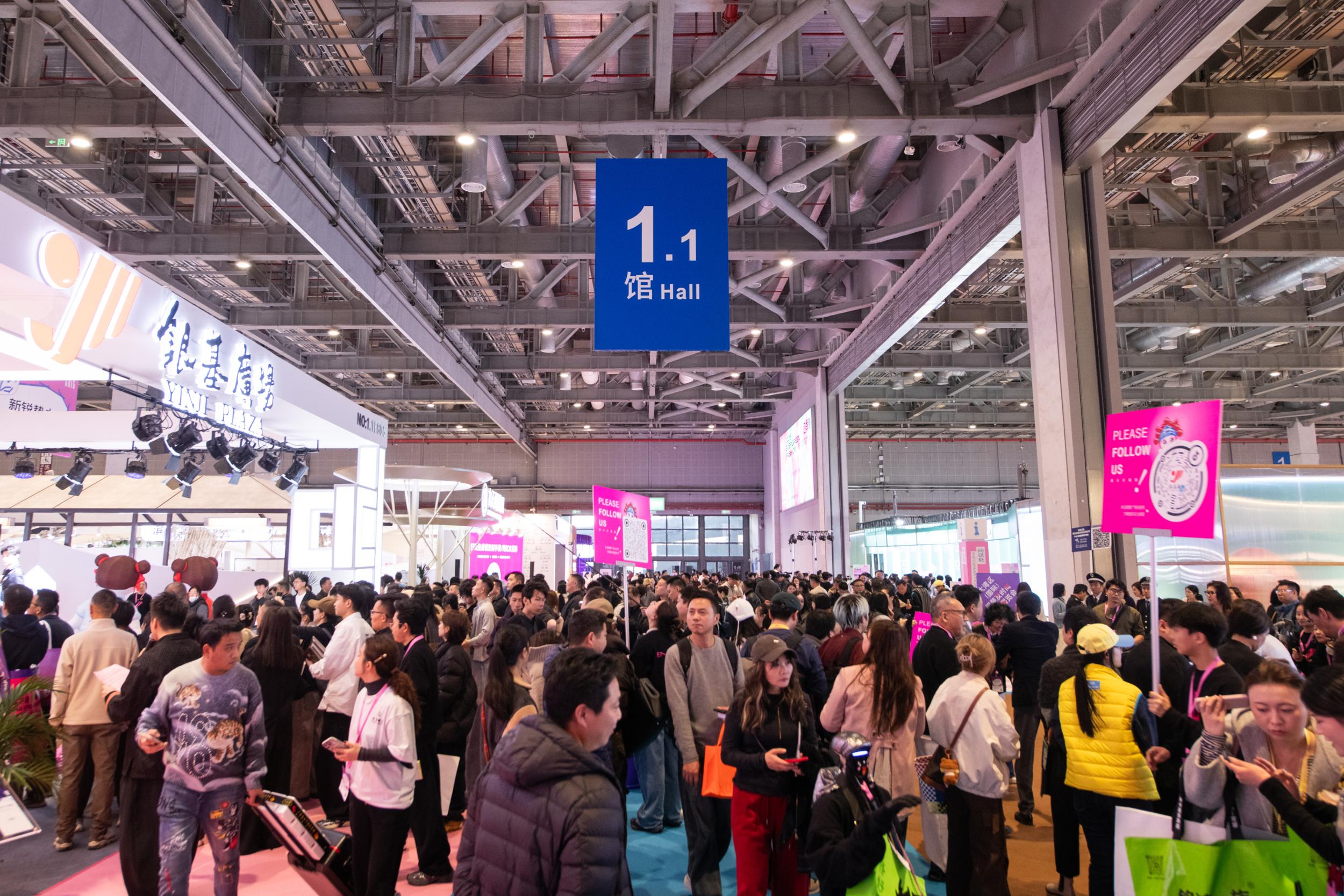
CHIC Spring 2026 (March 11–13, Shanghai) has successfully concluded, reaffirming its position as Asia’s leading fashion and lifestyle trade fair. Across 117,200 sqm, 1,291 exhibitors with 1,335 brands from eight countries and regions met more than 160,000 trade visitors at the National Exhibition & Convention Center in Shanghai  – highlighting the event’s role as a key international business platform.

Under the guiding theme “In Search of Spring,” CHIC reflected an industry in transition, shaped by structural change, new growth markets and evolving consumer demands. With 12 clearly structured segments covering the entire textile value chain, over 130 invited buyer groups from leading platforms such as JD.com, Douyin and Little Red Book, and more than 100 industry events, the fair offered targeted sourcing, high-level networking and strategic dialogue.

CHIC Spring 2026 (March 11–13, Shanghai) has successfully concluded, reaffirming its position as Asia’s leading fashion and lifestyle trade fair. Across 117,200 sqm, 1,291 exhibitors with 1,335 brands from eight countries and regions met more than 160,000 trade visitors at the National Exhibition & Convention Center in Shanghai  – highlighting the event’s role as a key international business platform.

Under the guiding theme “In Search of Spring,” CHIC reflected an industry in transition, shaped by structural change, new growth markets and evolving consumer demands. With 12 clearly structured segments covering the entire textile value chain, over 130 invited buyer groups from leading platforms such as JD.com, Douyin and Little Red Book, and more than 100 industry events, the fair offered targeted sourcing, high-level networking and strategic dialogue.

Key trends included the growing importance of sportswear, outdoor and lifestyle segments, the rise of culturally influenced design concepts and a continued shift towards quality, efficiency and brand identity. International participation is gradually returning, with 45 brands from eight countries and regions on site, among them Italy with 12 brands. 

More information:
CHIC Shanghai Shanghai
Source:

JANDALI MODE.MEDIEN.MESSEN

(c) Outlast Technologies GmbH
19.03.2026

Outlast: Cooling Technology for Cotton and Viscose

Outlast Technologies has expanded its fresh2SKIN® cooling technology to cellulose-based fibers such as cotton and viscose, enabling brands to combine natural materials with a re-freshing cooling effect and long-lasting thermal comfort.

The latest development allows fresh2SKIN® to be applied while maintaining an exceptionally natural and soft handfeel. The finish is virtually imperceptible on the textile, preserving the smooth, flexible character that consumers expect from cotton and viscose fabrics.

What consumers experience instead is the benefit: an immediate, pleasantly cool sensation when the fabric touches the skin. Unlike many textile technologies that remain invisible to the con-sumer, fresh2SKIN® provides a cooling experience that can be felt immediately, for example when trying on a T-shirt equipped with the technology.

Outlast Technologies has expanded its fresh2SKIN® cooling technology to cellulose-based fibers such as cotton and viscose, enabling brands to combine natural materials with a re-freshing cooling effect and long-lasting thermal comfort.

The latest development allows fresh2SKIN® to be applied while maintaining an exceptionally natural and soft handfeel. The finish is virtually imperceptible on the textile, preserving the smooth, flexible character that consumers expect from cotton and viscose fabrics.

What consumers experience instead is the benefit: an immediate, pleasantly cool sensation when the fabric touches the skin. Unlike many textile technologies that remain invisible to the con-sumer, fresh2SKIN® provides a cooling experience that can be felt immediately, for example when trying on a T-shirt equipped with the technology.

fresh2SKIN® combines instant freshness with lasting comfort. While the textile delivers an im-mediate cooling sensation upon skin contact, integrated microcapsules containing natural wax help absorb excess body heat and release it again when temperatures drop. This supports a more balanced microclimate and can help reduce sweating during the day or night.

“Achieving this exceptionally natural handfeel on cellulose-based fibers such as cotton or viscose was a key objective for our development team,” says Volker Schuster, Head of Research & De-velopment at Outlast Technologies. “Our goal was to integrate the fresh2SKIN® functionality without compromising the authentic character of these materials. The result are textiles that feel completely natural while delivering an immediately noticeable cooling effect.”

The development opens new opportunities for next-to-skin applications, including T-shirts, un-derwear, activewear, sleepwear, and bedding textiles.

Source:

Outlast Technologies GmbH

Image: SHIMA SEIKI MFG., LTD.
18.03.2026

SHIMA SEIKI: Partnership with CLO Virtual Fashion

Leading computerized flat knitting innovator SHIMA SEIKI MFG., LTD. of Wakayama, Japan is partnering with digital garment solutions provider CLO Virtual Fashion of Seoul, South Korea for the integration of technology in garment design and simulation. 
 
Through this partnership, by integrating SHIMA SEIKI’s APEXFiz® 3D design software with CLO’s advanced 3D garment simulation technology, a new workflow that combines the strengths of both companies is enabled—from knitwear planning and design to high-quality product simulation, animation and various other content usage, as well as seamless linkage to the manufacturing process. 
 
Until now, importing material data created in APEXFiz® into CLO consisted of manually loading numerous material layers along with settings and adjustments. In the upcoming versions scheduled for release, APEXFiz® will feature a dedicated export function for CLO, while CLO will enable one-click import functionality with the APEXFiz® Integration Plugin. This enhancement will provide users employing both products with a significantly smoother and more efficient environment. 
 

Leading computerized flat knitting innovator SHIMA SEIKI MFG., LTD. of Wakayama, Japan is partnering with digital garment solutions provider CLO Virtual Fashion of Seoul, South Korea for the integration of technology in garment design and simulation. 
 
Through this partnership, by integrating SHIMA SEIKI’s APEXFiz® 3D design software with CLO’s advanced 3D garment simulation technology, a new workflow that combines the strengths of both companies is enabled—from knitwear planning and design to high-quality product simulation, animation and various other content usage, as well as seamless linkage to the manufacturing process. 
 
Until now, importing material data created in APEXFiz® into CLO consisted of manually loading numerous material layers along with settings and adjustments. In the upcoming versions scheduled for release, APEXFiz® will feature a dedicated export function for CLO, while CLO will enable one-click import functionality with the APEXFiz® Integration Plugin. This enhancement will provide users employing both products with a significantly smoother and more efficient environment. 
 
By expanding creative capability while eliminating traditional barriers between design and production, the collaboration allows users to move from digital concept to knitted output with unprecedented efficiency. Users can now generate accurate, high-quality knit imagery that can take advantage of CLO’s strength in animated production, metaverse applications and even game usage, and furthermore design with the confidence that these digital creations can then be translated into real-world production. 
 
Software integration is set for April, supported by the V-09C update from SHIMA SEIKI in March and the CLO 2026.0 release for enterprise users in April.