
From the Sector

Reset
104 results
16.09.2026

EURATEX warns of a missing sense of urgency on Europe’s industrial competitiveness

EURATEX, the European Apparel and Textile Confederation, welcomes today’s State of the Union Address by European Commission President, Ursula von der Leyen, and in particular her recognition of Europe’s need to rebalance unfair trade, cut red tape, and strengthen its industrial and strategic autonomy. 

EURATEX now calls on the Commission and Member States to translate these commitments into concrete action for the textile and apparel value chain.

At the same time, we regret that industrial competitiveness received comparatively limited attention in an otherwise wide-ranging address. EURATEX urges the Commission to match today’s political commitments with an equal sense of urgency on industrial competitiveness, and to place manufacturing sectors, such as textiles, more firmly at the centre of its agenda in the months ahead.

EURATEX, the European Apparel and Textile Confederation, welcomes today’s State of the Union Address by European Commission President, Ursula von der Leyen, and in particular her recognition of Europe’s need to rebalance unfair trade, cut red tape, and strengthen its industrial and strategic autonomy. 

EURATEX now calls on the Commission and Member States to translate these commitments into concrete action for the textile and apparel value chain.

At the same time, we regret that industrial competitiveness received comparatively limited attention in an otherwise wide-ranging address. EURATEX urges the Commission to match today’s political commitments with an equal sense of urgency on industrial competitiveness, and to place manufacturing sectors, such as textiles, more firmly at the centre of its agenda in the months ahead.

"Europe cannot build a strong defence, lead the green and digital transitions, or protect its social model on a weakening industrial base. Competitiveness is not just one chapter of the European project – it is the foundation all the others are built on; when we get that right, everything else becomes possible.”, states Dirk Vantyghem, Director General EURATEX.

On trade, EURATEX shares the President’s assessment that the EU’s growing trade deficit with China – now standing at €1 billion a day – has reached a tipping point. The textile and apparel sector has been on the front line of this “second China shock” for years, and we advocate the Commission to move swiftly from dialogue to concrete trade-defence measures, including stronger customs enforcement and imports monitoring for textile products.

EURATEX also welcomes the pledge to cut administrative burden and forge a “pact against gold-plating” with Member States. Textile companies, the vast majority SMEs, are disproportionately affected by overlapping and often diverging national implementation of EU rules, and genuine simplification would meaningfully improve their competitiveness.

Looking ahead to the next Multiannual Financial Framework (MFF), EURATEX stresses the need of dedicated support for the textile industry, reflecting its role as a strategic manufacturing sector for Europe's green, digital, and defence transitions, and ensuring the sector is not left without targeted instruments as EU funding priorities are reshaped.

EURATEX commends the President’s announcement of a new “European Instrument for Strategic Enablers” to strengthen European defence capabilities. Technical and defence-related textiles – from protective equipment and ballistic materials to smart textiles for soldier systems – are an integral part of Europe’s defence industrial base, and we stand ready to ensure the sector is fully recognised in this effort.

On international partnerships, we note with interest the President’s proposal to deepen the EU-Canada relationship through an “Alliance for the Future”. EURATEX has recently signed Memoranda of Understanding with its Canadian counterparts, the Canadian Textiles Industry Association (CTIA) and the Canadian Apparel Federation (CAF), and is well-placed to build on this cooperation as EU-Canada industrial ties are strengthened.

Finally, EURATEX supports the announcement of a new Mediterranean Youth Skills and Jobs initiative. We are already active in this domain through our role in the Pact for Skills, and have ongoing engagement across the Mediterranean region. Therefore, we are ready to contribute with our expertise to ensure the initiative delivers meaningful opportunities for young people in the textile and apparel value chain.

Source:

European Apparel and Textile Confederation EURATEX

Photo EMPA
11.09.2026

Airborne microfibres enter soil and water

Researchers from Empa, Eawag and Agroscope have produced the first systematic estimate of how much microplastic is deposited from the atmosphere across Switzerland. For areas below 2,000 metres, the study estimates annual deposition of about 219 tonnes, including roughly 78 tonnes on agricultural land and around ten tonnes directly into water bodies.

The official release identifies loose fibres from functional clothing among the sources that can enter the environment, alongside PET bottles and other plastic products. Sampling was conducted for a full year at five locations, with particles between 20 and 215 micrometres analysed using imaging infrared microspectroscopy. PET, polyethylene and polypropylene were the most frequently detected polymers.

For textiles, the findings matter because they add atmospheric transport to the better-known discussion around fibre release through washing. The work provides a new evidence base for assessing material emissions and mitigation priorities, while the researchers stress that long-term environmental and health effects remain under investigation.


Researchers from Empa, Eawag and Agroscope have produced the first systematic estimate of how much microplastic is deposited from the atmosphere across Switzerland. For areas below 2,000 metres, the study estimates annual deposition of about 219 tonnes, including roughly 78 tonnes on agricultural land and around ten tonnes directly into water bodies.

The official release identifies loose fibres from functional clothing among the sources that can enter the environment, alongside PET bottles and other plastic products. Sampling was conducted for a full year at five locations, with particles between 20 and 215 micrometres analysed using imaging infrared microspectroscopy. PET, polyethylene and polypropylene were the most frequently detected polymers.

For textiles, the findings matter because they add atmospheric transport to the better-known discussion around fibre release through washing. The work provides a new evidence base for assessing material emissions and mitigation priorities, while the researchers stress that long-term environmental and health effects remain under investigation.


Source:

Empa / Eawag / Agroscope; publiziert über die Schweizer Bundesbehörden

KeyVisual bluesign technologies ag
11.09.2026

bluepass prepares for EmpCo

bluesign has set out how its bluepass certification scheme is intended to meet the EU Empowering Consumers for the Green Transition Directive, which becomes enforceable on 27 September 2026. The rules tighten the conditions for environmental and social claims and for certification schemes behind consumer-facing sustainability labels.

According to bluesign, bluepass separates standard setting, assessment and product certification. Consumer-facing products are certified by an independent conformity-assessment body accredited to ISO/IEC 17065. The system also includes publicly available requirements, annual surveillance with product testing, equal access conditions and structured stakeholder consultation.

For existing System Partners, bluesign says current certifications remain valid. Existing bluesign PRODUCT and APPROVED labels do not need to be withdrawn immediately; the move to bluepass can take place with the next label-production cycle. The key compliance point remains that legal responsibility for a claim rests with the company placing the product on the EU market.

bluesign has set out how its bluepass certification scheme is intended to meet the EU Empowering Consumers for the Green Transition Directive, which becomes enforceable on 27 September 2026. The rules tighten the conditions for environmental and social claims and for certification schemes behind consumer-facing sustainability labels.

According to bluesign, bluepass separates standard setting, assessment and product certification. Consumer-facing products are certified by an independent conformity-assessment body accredited to ISO/IEC 17065. The system also includes publicly available requirements, annual surveillance with product testing, equal access conditions and structured stakeholder consultation.

For existing System Partners, bluesign says current certifications remain valid. Existing bluesign PRODUCT and APPROVED labels do not need to be withdrawn immediately; the move to bluepass can take place with the next label-production cycle. The key compliance point remains that legal responsibility for a claim rests with the company placing the product on the EU market.

Source:

bluesign technologies ag

10.09.2026

Textile Exchange raises the bar on materials

Textile Exchange has published new guidance setting out the next requirements for brands and retailers in its Action Cohort. From 2027, participating companies will be required to report material sourcing volumes through the Materials Benchmark and set measurable targets for the share of materials sourced through standards, certification or other programs that verify preferred production practices.

The targets should cover relevant key materials accounting for at least 80% of a company’s material portfolio. Textile Exchange identifies common intervention areas including pesticide and fertilizer reduction, deforestation and conversion, animal welfare, recycled feedstocks with a focus on textile inputs, and human-rights due diligence.

Aggregate cohort results will be made public, while more detailed results will be shared with participating brands. The framework therefore tightens the connection between voluntary membership, quantitative materials data and verifiable sourcing objectives, increasing the need for brands and suppliers to document material strategies with comparable evidence.

Textile Exchange has published new guidance setting out the next requirements for brands and retailers in its Action Cohort. From 2027, participating companies will be required to report material sourcing volumes through the Materials Benchmark and set measurable targets for the share of materials sourced through standards, certification or other programs that verify preferred production practices.

The targets should cover relevant key materials accounting for at least 80% of a company’s material portfolio. Textile Exchange identifies common intervention areas including pesticide and fertilizer reduction, deforestation and conversion, animal welfare, recycled feedstocks with a focus on textile inputs, and human-rights due diligence.

Aggregate cohort results will be made public, while more detailed results will be shared with participating brands. The framework therefore tightens the connection between voluntary membership, quantitative materials data and verifiable sourcing objectives, increasing the need for brands and suppliers to document material strategies with comparable evidence.

07.09.2026

EURATEX calls for €10 EU handling fee on low-value e-commerce imports

The European Apparel and Textile Confederation (EURATEX) is calling for an EU handling fee of around €10 on low-value e-commerce consignments entering the European market. The association argues that the fee should contribute to the costs of customs controls, market surveillance and product-safety enforcement associated with the rapidly growing volume of direct-to-consumer imports.

Low-value e-commerce imports into the European Union have increased sharply in recent years. According to the European Commission, around 5.9 billion low-value e-commerce items entered the EU in 2025, up 26% from 2024. The growth of direct shipments from non-EU online retailers and marketplaces has increased the workload for customs and market-surveillance authorities and intensified the debate about compliance with European product, safety and customs requirements.

The European Apparel and Textile Confederation (EURATEX) is calling for an EU handling fee of around €10 on low-value e-commerce consignments entering the European market. The association argues that the fee should contribute to the costs of customs controls, market surveillance and product-safety enforcement associated with the rapidly growing volume of direct-to-consumer imports.

Low-value e-commerce imports into the European Union have increased sharply in recent years. According to the European Commission, around 5.9 billion low-value e-commerce items entered the EU in 2025, up 26% from 2024. The growth of direct shipments from non-EU online retailers and marketplaces has increased the workload for customs and market-surveillance authorities and intensified the debate about compliance with European product, safety and customs requirements.

Since 1 July 2026, the EU has applied a temporary customs duty of €3 to low-value consignments of up to €150. The measure replaced the previous customs-duty exemption for such imports and is intended as a transitional arrangement until the new EU Customs Data Hub becomes operational. It is separate from the EU-wide handling fee for small e-commerce consignments provided for under the broader reform of the EU customs framework.

Following the latest agreement on the customs reform, the handling fee is to be introduced by 1 November 2026. Its level will be determined by the European Commission before the member states begin applying it.

Against this background, EURATEX used Première Vision in Paris to argue that the handling fee should be set at a level that more closely reflects the actual enforcement costs associated with the large number of individual consignments entering the Single Market.

The association proposes a benchmark of around €10 per parcel. According to EURATEX, the amount should ultimately be based on a detailed assessment of the costs incurred by customs authorities, market-surveillance bodies and other public authorities involved in checking imported goods.

Processing large numbers of small consignments requires customs declarations to be assessed, risks to be analysed and compliance requirements to be checked. Market-surveillance authorities are also responsible for identifying unsafe or non-compliant products and enforcing EU product-safety rules.

EURATEX therefore argues that the handling fee should primarily be viewed as an enforcement instrument rather than simply as a trade or taxation measure. Revenues generated by the fee should, in the association's view, be linked to additional resources for customs controls, market surveillance, product-safety enforcement and risk-analysis systems.

The proposed €10 level is a EURATEX position and has not been adopted by the European Union. The European Commission is responsible for determining the actual amount of the forthcoming EU handling fee.

The customs reform also changes the responsibilities of companies involved in distance selling to EU consumers. Online platforms and sellers covered by the new rules are to be treated as importers for customs purposes and will therefore assume greater responsibility for customs formalities and duty payments rather than leaving these obligations with individual consumers.

EURATEX considers stronger platform responsibility an important element in addressing non-compliant imports but also points to the risk of alternative logistics structures being used to circumvent controls. More intensive checks on individual direct-to-consumer parcels should not, according to the association, result in goods simply being channelled through bulk imports, EU warehouses or fulfilment centres instead.

Effective enforcement would therefore need to cover different logistics models and provide customs and market-surveillance authorities with sufficiently detailed information on both business-to-consumer and business-to-business flows.

The European textile and clothing industry comprises nearly 200,000 companies in the EU-27 and employs around 1.2 million people. The sector generates annual turnover of approximately €166 billion. Most companies are small and medium-sized enterprises.

For EURATEX, the debate about low-value imports is consequently also a question of competitive conditions. The association is calling for companies selling products to European consumers, irrespective of their country of establishment or distribution model, to be identifiable and subject to comparable customs, product-safety and market-surveillance requirements.


Source:

European Apparel and Textile Confederation EURATEX

07.09.2026

CENTRESTAGE reports record attendance with more than 12,000 trade buyers

The eleventh edition of Hong Kong fashion event CENTRESTAGE closed with a new attendance record. According to the Hong Kong Trade Development Council, the four-day fair attracted more than 12,000 trade buyers from 93 countries and regions. Buyer numbers from Vietnam, Russia, the United States and Malaysia showed notable growth, providing a current indicator of Hong Kong’s reach as a fashion and sourcing platform.

The attendance figures also need to be read in the context of the event format. CENTRESTAGE formed part of Hong Kong Fashion Fest and combined design presentations, brand showcases, runway programmes and commercial meetings. Other lifestyle events ran concurrently. CENTRESTAGE and Salon de Time were also opened to the public free of charge, together recording more than 20,000 public attendances.

The eleventh edition of Hong Kong fashion event CENTRESTAGE closed with a new attendance record. According to the Hong Kong Trade Development Council, the four-day fair attracted more than 12,000 trade buyers from 93 countries and regions. Buyer numbers from Vietnam, Russia, the United States and Malaysia showed notable growth, providing a current indicator of Hong Kong’s reach as a fashion and sourcing platform.

The attendance figures also need to be read in the context of the event format. CENTRESTAGE formed part of Hong Kong Fashion Fest and combined design presentations, brand showcases, runway programmes and commercial meetings. Other lifestyle events ran concurrently. CENTRESTAGE and Salon de Time were also opened to the public free of charge, together recording more than 20,000 public attendances.

For manufacturers, brands and sourcing teams, the buyer composition is more informative than the public visitor count. Buyers from 93 markets point to a broad international sourcing base. Growth from Vietnam and Malaysia also reflects Southeast Asia’s increasing importance as a consumer, production and sourcing region. Higher buyer numbers from the US are noteworthy against the backdrop of changing trade and sourcing configurations.

The figures are organiser data and should therefore be treated as event metrics rather than independent market statistics. Even so, they are useful for industry monitoring. They suggest that physical B2B platforms continue to matter alongside digital sourcing tools when brands, designers, suppliers and international buyers need to establish new relationships and reassess regional production networks.

Source:

Hong Kong Trade Development Council

Graphic (c) Discover e-Solutions (DeSL)
07.09.2026

DeSL generates Digital Product Passports directly

DeSL has launched a Digital Product Passport solution built directly on product, material, supplier, quality and certification data managed in Product Lifecycle Management. The approach addresses a central challenge in emerging DPP requirements: companies need to combine information from multiple functions while retaining evidence of where data came from, how it was approved and whether supporting documentation remains valid.

Rather than creating a separate static passport record, DeSL generates the DPP from the current approved information held in PLM. Published information therefore remains connected to its underlying product and supplier records, version history and approvals. This can become particularly important when material composition, suppliers, certifications or quality information change during the product lifecycle.

DeSL has launched a Digital Product Passport solution built directly on product, material, supplier, quality and certification data managed in Product Lifecycle Management. The approach addresses a central challenge in emerging DPP requirements: companies need to combine information from multiple functions while retaining evidence of where data came from, how it was approved and whether supporting documentation remains valid.

Rather than creating a separate static passport record, DeSL generates the DPP from the current approved information held in PLM. Published information therefore remains connected to its underlying product and supplier records, version history and approvals. This can become particularly important when material composition, suppliers, certifications or quality information change during the product lifecycle.

The platform can combine product specifications, materials, supplier information, declarations, inspections and certifications. DeSL’s AI document intelligence is intended to analyse supporting documents, identify required information and expiry dates, and compare documentation with information maintained in PLM. Passports can be generated at the appropriate product level and delivered via QR codes, portals, retail systems and open APIs. Different audiences can receive different information while still drawing from the same governed product record.

For fashion and textile companies, the important shift is conceptual: DPP compliance becomes a master-data and governance challenge rather than simply a publishing task. The software announcement does not prove automatic compliance with every future regulatory requirement. It does, however, demonstrate a credible architecture in which product passports are generated from the same data used for product development, quality, supplier management and compliance.

Source:

Discover e-Solutions (DeSL)

01.09.2026

MELANGE project moves colour design upstream in interior-textile production

The new Horizon Europe project MELANGE aims to reorganise how colour is designed and applied in interior textiles. Rather than treating coloration mainly as a finishing-stage operation, the project moves colour decisions upstream and explores fibre-stage technologies including spin, dope and solution dyeing, as well as the use of pre-coloured recycled fibres. The rationale is that conventional coloration consumes substantial water, energy and chemicals, while the pursuit of near-perfect uniformity can drive additional trials and material losses.

The new Horizon Europe project MELANGE aims to reorganise how colour is designed and applied in interior textiles. Rather than treating coloration mainly as a finishing-stage operation, the project moves colour decisions upstream and explores fibre-stage technologies including spin, dope and solution dyeing, as well as the use of pre-coloured recycled fibres. The rationale is that conventional coloration consumes substantial water, energy and chemicals, while the pursuit of near-perfect uniformity can drive additional trials and material losses.

MELANGE brings together nine partners from seven European countries under the leadership of Aalto University, with Textile ETP responsible for dissemination and stakeholder engagement. The project proposes treating variation as a design feature rather than automatically as a defect. It draws inspiration from Prato’s practice of blending pre-coloured recycled fibres by shade to avoid re-dyeing. According to the project communication, the approach aims to reduce water and chemical use by up to 50% compared with conventional finishing-stage processes. Business models, B2B marketing, standards and policy are also part of the work.

Source:

Textile ETP / MELANGE consortium

01.09.2026

bluesign links textile-mill water management to input-stream chemistry

bluesign argues that water management in textile wet processing starts with the chemicals and raw materials entering the process. Its core point is that water in dyeing and finishing is not simply a resource but a carrier for chemistry. What enters the process therefore affects water demand, wastewater load, air emissions, workplace exposure and potential residues in the finished textile.

The input-stream-management approach intervenes before wastewater treatment. By selecting appropriate chemical products and controlling the process, substances of concern should ideally be prevented from entering the system in the first place. For mills, the point is operationally important because investment in water and effluent treatment alone does not address the source of many impacts. The article provides useful context as chemical restrictions, water scarcity and supply-chain transparency requirements become more demanding.

bluesign argues that water management in textile wet processing starts with the chemicals and raw materials entering the process. Its core point is that water in dyeing and finishing is not simply a resource but a carrier for chemistry. What enters the process therefore affects water demand, wastewater load, air emissions, workplace exposure and potential residues in the finished textile.

The input-stream-management approach intervenes before wastewater treatment. By selecting appropriate chemical products and controlling the process, substances of concern should ideally be prevented from entering the system in the first place. For mills, the point is operationally important because investment in water and effluent treatment alone does not address the source of many impacts. The article provides useful context as chemical restrictions, water scarcity and supply-chain transparency requirements become more demanding.

31.08.2026

Circ and Shenghong move textile-recycled polyester into commercial filament yarn production


US textile-to-textile recycler Circ has entered into a partnership with Shenghong Chemical Fiber New Material for the commercial production of polyester filament yarn using Circ’s recycled material. Shenghong will purchase Circ PET chip and manufacture recycled-content filament yarn at commercial scale. For Circ, the agreement expands access to one of China’s major fibre producers and creates an additional route to market for polyester recovered from textile waste. For brands and mills, the key point is that textile-to-textile feedstock is moving closer to established high-volume yarn manufacturing structures. The partnership also underlines that scaling chemical recycling depends not only on polymer recovery but on robust downstream relationships with fibre and yarn producers.


US textile-to-textile recycler Circ has entered into a partnership with Shenghong Chemical Fiber New Material for the commercial production of polyester filament yarn using Circ’s recycled material. Shenghong will purchase Circ PET chip and manufacture recycled-content filament yarn at commercial scale. For Circ, the agreement expands access to one of China’s major fibre producers and creates an additional route to market for polyester recovered from textile waste. For brands and mills, the key point is that textile-to-textile feedstock is moving closer to established high-volume yarn manufacturing structures. The partnership also underlines that scaling chemical recycling depends not only on polymer recovery but on robust downstream relationships with fibre and yarn producers.

31.08.2026

Better Cotton and Avalo use AI to accelerate climate-resilient cotton breeding

The Better Cotton Initiative (BCI) has partnered with agricultural technology company Avalo to accelerate the breeding of more climate-resilient cotton. Avalo uses an AI-enabled platform to identify genetic traits relevant to locally adapted plants that require less water and fertiliser. According to BCI, the approach can shorten the time needed to develop new varieties, an increasingly important factor as heat, water scarcity and shifting rainfall patterns affect cotton-growing regions. Avalo has already worked with BCI to enrol a significant number of new producers for the 2026 season and has tested a digital platform for collecting and reporting programme data. The partnership therefore connects plant breeding, digital data management and the requirements of an international cotton standard.

The Better Cotton Initiative (BCI) has partnered with agricultural technology company Avalo to accelerate the breeding of more climate-resilient cotton. Avalo uses an AI-enabled platform to identify genetic traits relevant to locally adapted plants that require less water and fertiliser. According to BCI, the approach can shorten the time needed to develop new varieties, an increasingly important factor as heat, water scarcity and shifting rainfall patterns affect cotton-growing regions. Avalo has already worked with BCI to enrol a significant number of new producers for the 2026 season and has tested a digital platform for collecting and reporting programme data. The partnership therefore connects plant breeding, digital data management and the requirements of an international cotton standard.

Source:

Better Cotton Initiative

11.08.2026

Fashion Trends 2026: Between minimalism and maximalism

From premium basics to fringes and sequins, right through to the return of capri pants and 90s-style denim: all the trends and price trends in the United States & Europe, according to data from Retviews by Lectra.

  • Premium basics take center stage in Spring/Summer 2026 
  • The 90s effect: capri pants (+62%) and flip-flops (+73%) lead the return to minimalism  However, maximalism persists: sequins (+40%) and fringe (+34%) are becoming increasingly widespread  
  • Rising prices and premiumization strategies, with a new balance between value and aspiration 

As the summer season unfolds, the fashion industry is confirming a structural transformation that is already underway: the definitive shift towards ‘premiumization’. But what will be the key garments, the dominant trends, and how are prices evolving? 

From premium basics to fringes and sequins, right through to the return of capri pants and 90s-style denim: all the trends and price trends in the United States & Europe, according to data from Retviews by Lectra.

  • Premium basics take center stage in Spring/Summer 2026 
  • The 90s effect: capri pants (+62%) and flip-flops (+73%) lead the return to minimalism  However, maximalism persists: sequins (+40%) and fringe (+34%) are becoming increasingly widespread  
  • Rising prices and premiumization strategies, with a new balance between value and aspiration 

As the summer season unfolds, the fashion industry is confirming a structural transformation that is already underway: the definitive shift towards ‘premiumization’. But what will be the key garments, the dominant trends, and how are prices evolving? 

Lectra – a leading provider of industrial technology solutions for the fashion market, has analyzed data from Retviews, its AI-powered solution specializing in competitive intelligence and automated benchmarking, to identify the latest fashion trends and how brands are adapting their strategies and pricing to navigate an increasingly complex landscape. 

“In a market characterized by more discerning consumers and growing competitive pressure, the real shift is the move from volume to value,” said Ketty Pillet, Lectra’s VP of Marketing, Americas. “Today, the fashion industry finds itself competing with spending on other experiences, from travel to dining, and this requires brands to strengthen their cultural and perceived value. At the same time, persistent cost pressures and differences between markets, such as between the United States and Europe, require increasingly targeted pricing and sourcing strategies. Thanks to Retviews’ insights, it is possible to interpret these dynamics and make more informed, growth-oriented decisions.” 
 
From T-shirts to sequins: the clash between minimalism and maximalism returns in the Spring/Summer (SS) 2026 collection 
While demand for essential, timeless pieces is on the rise, there is also a strong desire for self-expression. 

Retviews data shows that premium basics dominate the product ranges: T-shirts have seen a 41% increase (22% in the United States), whilst denim has risen by 47%. Shirts (up 13%) and outerwear (up 17%) remain must-haves, in line with a growing focus on versatility and durability. 

At the same time, however, maximalism is also making a comeback, bringing a touch of glamour to everyday wear. For this Spring/Summer season, sequins are up by 40% and fringe by 34%, a sign of an aesthetic that responds to the need for escapism and individuality, further fueled by the boom in resale and vintage fashion. 

1990s minimalism is dominating the season, driven by a renewed interest in streamlined, sophisticated dressing. The trend has been further fueled by the resurgence of style icon Carolyn Bessette-Kennedy, following the release of the Love Story series. According to Retviews data, certain iconic items are enjoying a real resurgence, with capri pants (+62%), flip-flops (+73%) and stripes (+8%). 

Denim remains a must-have (+21% in product ranges), but its silhouettes are evolving: low-rise styles (+22%) and bootcut styles (+15%) are on the rise, whilst flares (+94%) and cargo jeans (+108%) are experiencing a real boom. In contrast, the popularity of baggy jeans is on the decline (-5%). 

Furthermore, there is also a strong functional element. The utility style, ranging from technical jackets to cargo pants (+8%) – is gaining ground in collections, reflecting a growing fusion of fashion, comfort and lifestyle. This trend can be attributed to the rise of the wellness culture and sports communities, which are increasingly influencing the language of everyday clothing. 

Color: between expressiveness and wearability 
For the SS 2026 collections, there is a strong trend, particularly in the mid-range segment, towards color palettes that are both expressive and versatile. According to Retviews data, orange stands out as one of the season’s fastest-growing shades (+150% year-on-year), driven by its influence on the catwalks of brands such as Chanel, Valentino, Dior, Prada and Loewe. Cherry red is also consolidating its presence (+50%), establishing itself as a livelier evolution of the burgundy seen in the previous season. 

At the same time, more versatile shades are emerging and continue to drive commercial performance. Blue has seen a 23% increase, boosted both by moments of high cultural visibility and by the prominence of denim and high-quality basics. Brown (+75%) remains one of the dominant colors, whilst the blue-brown combination has established itself as one of the season’s signature pairings, reflecting a broader trend towards understated, sophisticated and easy-to-wear palettes. 

Pricing trends: the new balance between premiumization and perceived value 
The Spring/Summer season confirms a trend that is now well established: the mass and mid-market segments are increasingly behaving like the luxury sector. Retviews data highlights double-digit price rises for players such as Zara and Gap, reflecting a gradual shift towards premiumization in the product range. This trend is reinforced by the intensification of collaborations with high-profile designers, from John Galliano for Zara to Zac Posen for Gap, right through to Stella McCartney’s return with H&M, which boost the creative credibility of mass-market brands and justify further price rises. This is a ‘high-low’ model, in which an aspirational approach coexists with affordability, giving rise to long-term premiumization strategies. 

2026 marks the triumph of conscious spending: people are buying less, but better, prioritizing quality, durability and versatility. This is reflected in the growth of premium basics, the rise in average prices (outerwear +9% in the EU, +17% in the US; shirts +4% in the EU, +9% in the US) and in the renewed momentum of denim, with ranges expanding significantly in the EU (+50% year-on-year) and prices rising (+7% in the EU, +1% in the US), a sign of the premiumization of essential garments. In this context, ‘value’ takes center stage: according to recent PWC data, 74% of consumers are willing to pay more for sustainable and traceable products. 

Overall, a definitive shift is becoming apparent: mass-market and mid-market collections are now structurally more expensive than they were two years ago, not as a result of temporary fluctuations, but due to a strategic repositioning. In this context, a brand’s success will depend on its ability to interpret the concept of value in a credible way, translating it into desirable, durable products that meet the expectations of an increasingly discerning consumer. 

Mr.Aloke Lohia Photo: (c) Indorama Ventures Public Company Limited
11.08.2026

Indorama Ventures: Strong first-half 2026 earnings

Indorama Ventures Public Company Limited (IVL), a global sustainable chemical producer, reported significantly stronger first-half 2026 earnings, reflecting favorable market conditions together with continued progress in strengthening the Company’s operating fundamentals. 

For the first half of 2026, the Company reported revenue of THB 245.3 billion, up 4% year-on-year, and EBITDA of THB 29.7 billion, up 61%. Second-quarter EBITDA was particularly strong, with all four business segments delivering year-on-year improvement. Operating cash flow after maintenance capital expenditure increased 78% to THB 25.9 billion. Strong cash generation supported further deleveraging, with Net Debt-to-Equity improving to 1.56x, reaching the Company's Capital Markets Day target for 2026 ahead of schedule. 

Indorama Ventures Public Company Limited (IVL), a global sustainable chemical producer, reported significantly stronger first-half 2026 earnings, reflecting favorable market conditions together with continued progress in strengthening the Company’s operating fundamentals. 

For the first half of 2026, the Company reported revenue of THB 245.3 billion, up 4% year-on-year, and EBITDA of THB 29.7 billion, up 61%. Second-quarter EBITDA was particularly strong, with all four business segments delivering year-on-year improvement. Operating cash flow after maintenance capital expenditure increased 78% to THB 25.9 billion. Strong cash generation supported further deleveraging, with Net Debt-to-Equity improving to 1.56x, reaching the Company's Capital Markets Day target for 2026 ahead of schedule. 

Management’s continued execution of IVL 2.0 self-help actions, including Sales & Operations Execution (S&OE), inventory discipline and working capital management, also supported stronger cash conversion, with inventory turnover improving to 5.0x in the second quarter from 4.7x at the end of 2025. Operating rates were prudently managed to align production with inventory targets and protect margin quality in a period of volatile pricing. 

Looking ahead, Indorama Ventures expects some of the exceptionally strong second-quarter market tailwinds to normalize. The Company’s priorities for the remainder of 2026 are to deliver sustainable earnings under normalized spreads, convert those earnings into free cash flow, reduce absolute net debt, and improve returns on capital. 

Mr. Aloke Lohia, Group CEO of Indorama Ventures, said, “Our first-half performance reflects both supportive market conditions and the progress we are making through the self-help actions we have taken to strengthen Indorama Ventures. Markets will normalize, so the more important test is whether we can convert the advantages of the platform we have built over three decades - our scale, integration, global footprint, local-for-local operating model and customer positions, into more consistent earnings, stronger cash generation and higher returns through the cycle. 
We are beginning to see that translation in our performance. Greater discipline in how we manage our operations, inventory and working capital is improving cash generation, while our portfolio actions are strengthening the quality of the business and improving returns on capital. Together, these actions are building a more agile and financially resilient Indorama Ventures. 
We remain confident in our 2026 expectations and 2028 ambitions. Our focus is to continue executing on what we can control, strengthen our balance sheet and improve returns, while retaining the flexibility to capture growth opportunities as markets evolve.” 

The earnings improvement was led by Combined PET, supported by favorable market conditions and the benefits of Indorama Ventures’ integrated global platform and local-for-local operating model. Indovida continued its growth momentum, supported by its market-leading packaging position, customer intimacy and organic growth initiatives. Indovinya delivered strong performance across both High Value Applications and Essentials, supported by commercial excellence initiatives. Fibers improved sequentially in the second quarter supported by stable Hygiene demand and transformation efforts, despite continued weakness in Lifestyle and Mobility end markets.

Source:

Indorama Ventures Public Company Limited

28.07.2026

Groz-Beckert at CINTE Techtextil 2026, Shanghai

From September 1 to 3, 2026, Groz-Beckert will present its latest innovations and solutions across the product areas of Nonwovens and Knitting at CINTE Techtextil China.

Nonwovens 
In the Nonwovens product area, Groz-Beckert will present its latest innovations. One of the highlights is the advanced Litespeed™ felting needle designed to significantly reduce insertion and removal times, thereby simplifying handling and increasing operational efficiency. Furthermore, the newly developed CB-Barb felting needle will be part of the showcase. 

For the Nonwovens Carding segment, Groz-Beckert will introduce its specialized Mounting Service. The portfolio is complemented by the innovative SiroLock™ plus wires from the Groz-Beckert InLine card clothing family. These products are designed to deliver high levels of precision, performance and reliability throughout the carding process. 

From September 1 to 3, 2026, Groz-Beckert will present its latest innovations and solutions across the product areas of Nonwovens and Knitting at CINTE Techtextil China.

Nonwovens 
In the Nonwovens product area, Groz-Beckert will present its latest innovations. One of the highlights is the advanced Litespeed™ felting needle designed to significantly reduce insertion and removal times, thereby simplifying handling and increasing operational efficiency. Furthermore, the newly developed CB-Barb felting needle will be part of the showcase. 

For the Nonwovens Carding segment, Groz-Beckert will introduce its specialized Mounting Service. The portfolio is complemented by the innovative SiroLock™ plus wires from the Groz-Beckert InLine card clothing family. These products are designed to deliver high levels of precision, performance and reliability throughout the carding process. 

Knitting 
In the Knitting product area, Groz-Beckert will present its expanded product portfolio for the warp knitting industry. The extended range of modules offers high levels of precision, stability and efficiency during the loop formation process. 

With its comprehensive product portfolio, Groz-Beckert provides customers with integrated and precisely coordinated solutions from a single source. This approach simplifies procurement and production processes, reduces coordination effort and ensures that all components are optimally matched for reliable machine performance.

Source:

Groz-Beckert

Networking Day 2026 © Institut für Textiltechnik (ITA) der RWTH Aachen University
28.07.2026

Networking Day 2026: Industry Stakeholders Unite Around Textile Recycling

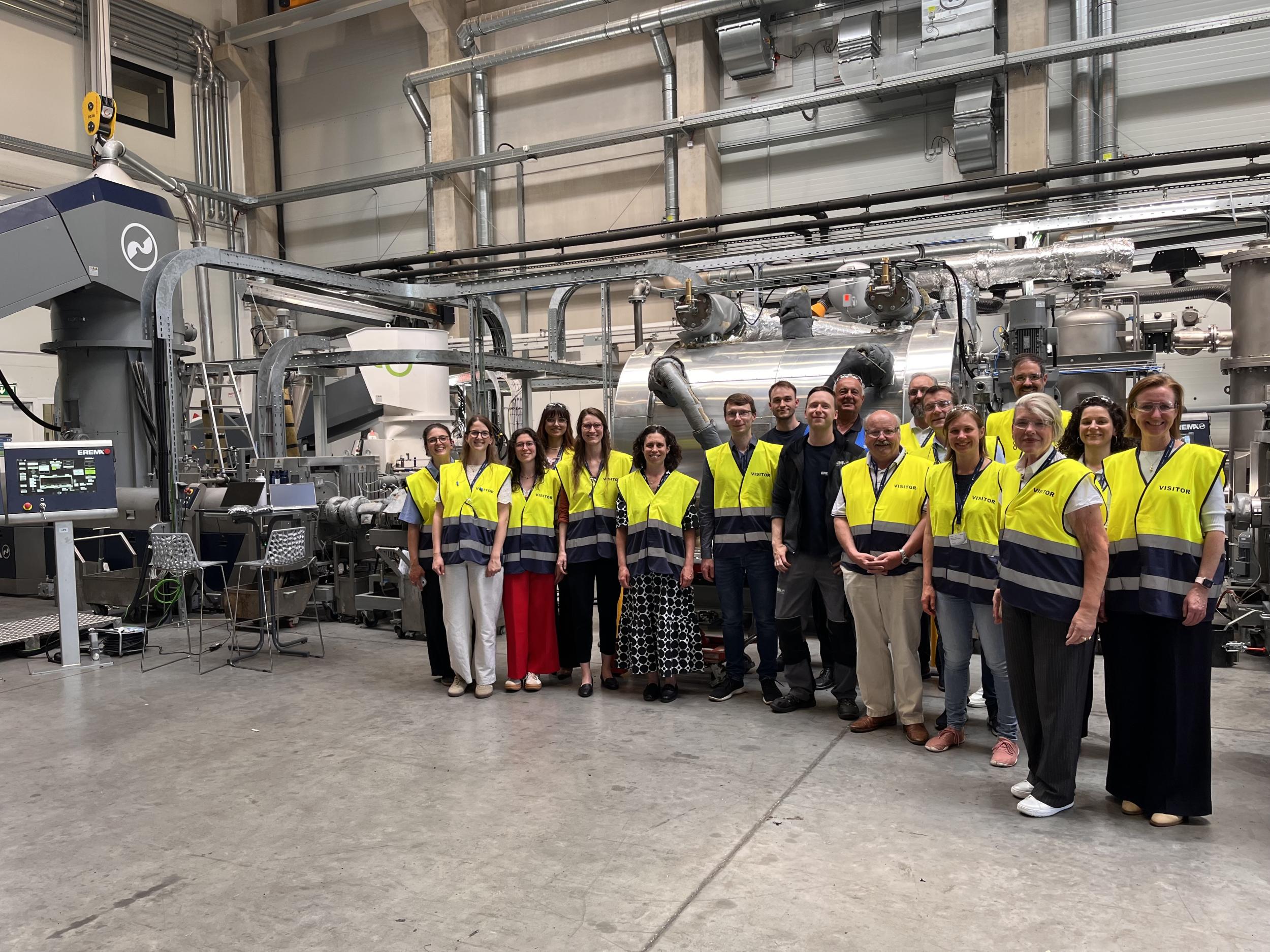
In 2026, the Industry Research Group (IRG) Polymer Recycling once again brought together some of the key stakeholders in textile recycling for its annual Networking Day. This year, the event took place at EREMA’s premises in Ansfelden, Austria. It brought together key players from across the textile recycling value chain for a day of structured exchange and in-depth discussions.

The conversations covered a broad range of topics relevant to the sector, including technological developments, current market dynamics, and the evolving political and regulatory landscape. Speakers from Zschimmer & Schwarz, Volkswagen Group Innovation, STRÄHLE+HESS, and the Technical University of Leoben provided substantive input across these areas. The interesting discussions were also possible thanks to our IRG partners: Bekaert, EREMA, Barmag, Stadler Anlagenbau, Technip Energies, Fibrant, BASF and Remondis.

The IRG extends its sincere thanks to EREMA for hosting the event and providing access to their technical centre, which added a valuable practical dimension to the day's programme.

In 2026, the Industry Research Group (IRG) Polymer Recycling once again brought together some of the key stakeholders in textile recycling for its annual Networking Day. This year, the event took place at EREMA’s premises in Ansfelden, Austria. It brought together key players from across the textile recycling value chain for a day of structured exchange and in-depth discussions.

The conversations covered a broad range of topics relevant to the sector, including technological developments, current market dynamics, and the evolving political and regulatory landscape. Speakers from Zschimmer & Schwarz, Volkswagen Group Innovation, STRÄHLE+HESS, and the Technical University of Leoben provided substantive input across these areas. The interesting discussions were also possible thanks to our IRG partners: Bekaert, EREMA, Barmag, Stadler Anlagenbau, Technip Energies, Fibrant, BASF and Remondis.

The IRG extends its sincere thanks to EREMA for hosting the event and providing access to their technical centre, which added a valuable practical dimension to the day's programme.

The next IRG Full-Term Meeting is scheduled for autumn 2026. The Networking Day will return in 2027.

The IRG Polymer Recycling is a continuously running cooperation project between companies interested in the research field of textile recycling and the ITA Group. The aim is to systematically address technological, economic and strategic issues regarding textile recycling and create a strong network to tackle the challenges. 

Source:

ITA – Institut für Textiltechnik of RWTH Aachen University

Dublin Photo by Sean Griffin, Pixabay
15.07.2026

Irish government publishes Delivery Plan for textiles EPR scheme

The Irish government has published its draft Delivery Plan for its national textiles Extended Producer Responsibility (EPR) scheme – subject to a stakeholder consultation.  

The draft plan outlines the actions required for the effective design and go-live of a national textiles Extended Producer Responsibility (EPR) scheme, including the establishment of an entirely new Producer Responsibility Organisation (PRO) in Ireland, required by April 2028.

Commenting, Aimee Campanella, Development Director – Textiles EPR at leading international circularity specialists Reconomy, said: “It is great to see the Irish Government making progress towards establishing a national textiles Extended Producer Responsibility (EPR) scheme.”

“The proposed April 2028 go-live date gives textile producers time to prepare, but businesses should be using this period to understand what the new scheme will mean for their operations and how they can put the right systems in place.

The Irish government has published its draft Delivery Plan for its national textiles Extended Producer Responsibility (EPR) scheme – subject to a stakeholder consultation.  

The draft plan outlines the actions required for the effective design and go-live of a national textiles Extended Producer Responsibility (EPR) scheme, including the establishment of an entirely new Producer Responsibility Organisation (PRO) in Ireland, required by April 2028.

Commenting, Aimee Campanella, Development Director – Textiles EPR at leading international circularity specialists Reconomy, said: “It is great to see the Irish Government making progress towards establishing a national textiles Extended Producer Responsibility (EPR) scheme.”

“The proposed April 2028 go-live date gives textile producers time to prepare, but businesses should be using this period to understand what the new scheme will mean for their operations and how they can put the right systems in place.

“Moving towards greater producer responsibility will require better visibility across supply chains, stronger data management and a clearer understanding of how textiles flow through the economy. For businesses, preparing early will not only support compliance but also unlock wider commercial benefits, helping them identify efficiencies, reduce costs and make more informed decisions around design, sourcing and end-of-life management.

“The establishment of a Producer Responsibility Organisation (PRO) will be central to delivering an effective scheme, but getting the framework right will be critical. It’s important that it strikes the right balance – creating the incentives needed to drive greater reuse, repair and recycling, while recognising the operational and cost implications for producers. 

“If designed effectively, Ireland’s textiles EPR scheme will provide the foundations for a more circular textiles economy, keeping materials in use for longer, reducing waste and creating new opportunities to recover valuable resources.”


Sustainability Report Photo: (c) Carrington Textiles
15.07.2026

Carrington Textiles publishes third Sustainability Report

At Carrington Textiles, we are pleased to announce the publication of the third Sustainability Report from the RTS Textiles Group, showcasing another year of progress towards more responsible manufacturing across our global operations.

The report reflects continued investment in technologies and initiatives that improve environmental performance while supporting long-term business resilience. From renewable energy and water stewardship to circular economy projects and product innovation, sustainability remains embedded in how we operate across the Group.

Among this year's highlights is the completion of a new wastewater treatment plant in Pakistan, significantly strengthening water treatment capacity at CTi ahead of becoming operational later this year. The site has also expanded its circular economy initiatives through the reuse of biomass and coal ash in brick manufacturing and projects that support local biodiversity.

At Carrington Textiles, we are pleased to announce the publication of the third Sustainability Report from the RTS Textiles Group, showcasing another year of progress towards more responsible manufacturing across our global operations.

The report reflects continued investment in technologies and initiatives that improve environmental performance while supporting long-term business resilience. From renewable energy and water stewardship to circular economy projects and product innovation, sustainability remains embedded in how we operate across the Group.

Among this year's highlights is the completion of a new wastewater treatment plant in Pakistan, significantly strengthening water treatment capacity at CTi ahead of becoming operational later this year. The site has also expanded its circular economy initiatives through the reuse of biomass and coal ash in brick manufacturing and projects that support local biodiversity.

At MGC in Portugal, investment in renewable energy and energy efficiency has continued, with solar generation capacity increasing to 8.3 MW and further projects underway to reduce natural gas consumption and carbon emissions. At Pincroft in the UK, continued progress has been made through Combined Heat and Power (CHP), the ongoing development of its Carbon Roadmap and wider decarbonisation initiatives.

The report also highlights how the RTS Textiles Group continues to expand the use of innovative fibres and technologies that combine comfort, protection and performance with a reduced environmental impact, supporting customers in achieving their own sustainability objectives.

John Vareldzis, CEO of RTS Textiles Group, said: "Building on the foundations established in previous years, this report highlights our progress and reaffirms our commitment to responsible manufacturing, innovation and transparency across our global operations."

13.07.2026

AkzoNobel’s Russian subsidiaries placed under temporary external administration

AkzoNobel has taken note of a presidential decree signed by the President of Russia placing the company’s Russian subsidiaries under temporary external administration as of July 13.
 
Under temporary external administration, operational oversight is transferred to a designated external entity, while underlying ownership remains unchanged. AkzoNobel is currently reviewing the decree and assessing its implications. Russia represents less than 2% of AkzoNobel’s revenue and is not material to the company’s overall financial performance.
 
The company remains committed to supporting its employees and safeguarding its interests as shareholder of AkzoNobel’s Russian subsidiaries.
 
Following the EU sanctions introduced in 2022, AkzoNobel discontinued a significant part of its activities in Russia. The remaining operations have since been fully localized and ringfenced, operating independently without financial support from Akzo Nobel N.V.


AkzoNobel has taken note of a presidential decree signed by the President of Russia placing the company’s Russian subsidiaries under temporary external administration as of July 13.
 
Under temporary external administration, operational oversight is transferred to a designated external entity, while underlying ownership remains unchanged. AkzoNobel is currently reviewing the decree and assessing its implications. Russia represents less than 2% of AkzoNobel’s revenue and is not material to the company’s overall financial performance.
 
The company remains committed to supporting its employees and safeguarding its interests as shareholder of AkzoNobel’s Russian subsidiaries.
 
Following the EU sanctions introduced in 2022, AkzoNobel discontinued a significant part of its activities in Russia. The remaining operations have since been fully localized and ringfenced, operating independently without financial support from Akzo Nobel N.V.


More information:
Akzo Nobel N.V. Russia
Source:

Akzo Nobel N.V.

Kick-off meeting in Denkendorf. Photo: DITF
Kick-off meeting in Denkendorf.
12.07.2026

ALADIN: Circular and demand-driven textile production in Europe

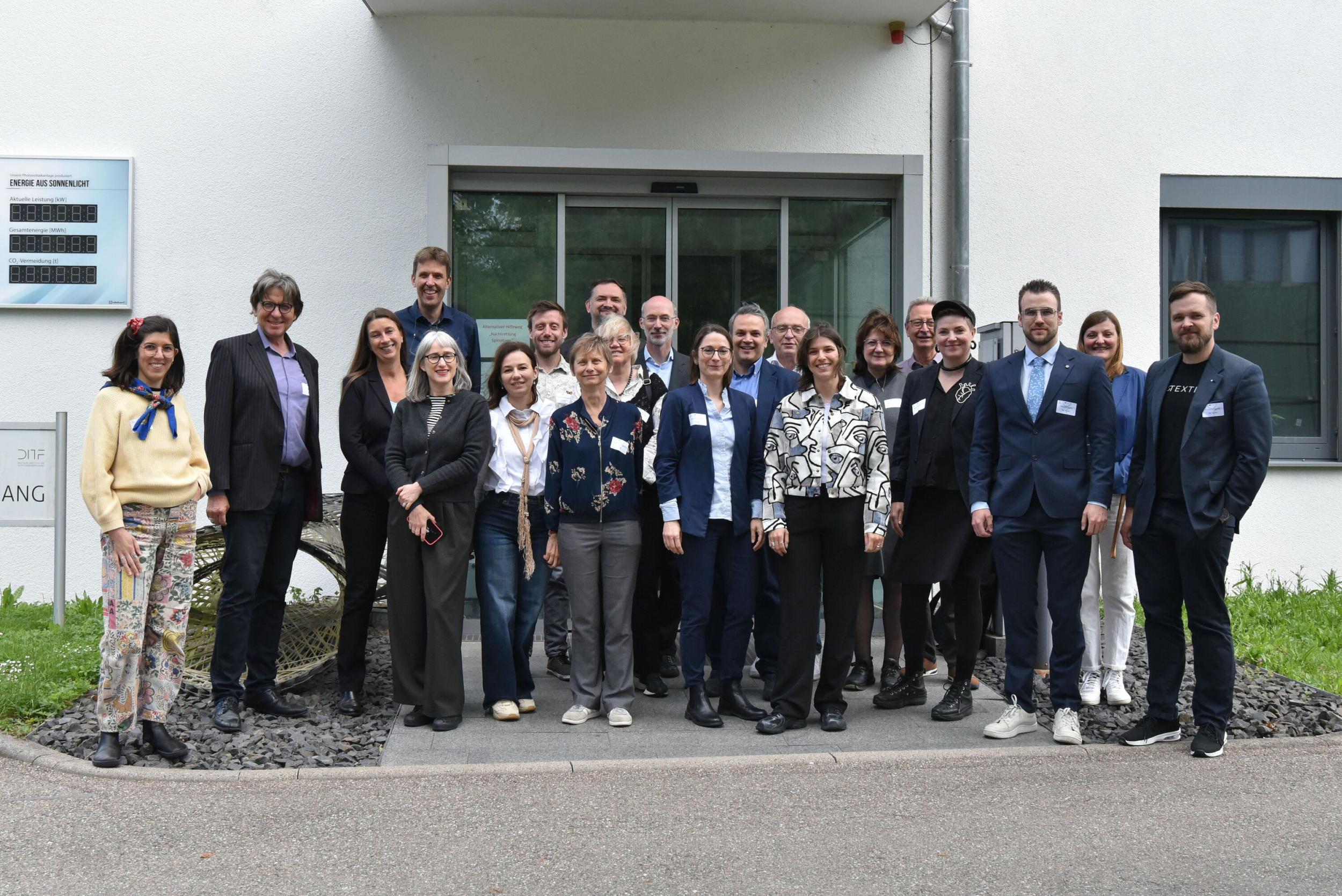
Textile production can be organized sustainably by utilizing short supply chains and preventing overproduction. This can already be achieved today by intelligently connecting and efficiently utilizing existing infrastructure. At the same time, production becomes circular when innovative technologies and materials are used that enable high-quality recycling. The ALADIN research project, launched in May 2026 and co-funded with five million euros under the EU Horizon Europe program, is creating the conditions for this.

Under the coordination of the German Institutes of Textile and Fiber Research Denkendorf (DITF), ten European project partners are developing and integrating platforms, technologies, and viable business models for circular textile production over four years. ALADIN stands for Advanced LocAl and Digital Innovation Network for Circular Garments and aims to establish viable business models for circular textile production.

The concept is based on four pillars:

Textile production can be organized sustainably by utilizing short supply chains and preventing overproduction. This can already be achieved today by intelligently connecting and efficiently utilizing existing infrastructure. At the same time, production becomes circular when innovative technologies and materials are used that enable high-quality recycling. The ALADIN research project, launched in May 2026 and co-funded with five million euros under the EU Horizon Europe program, is creating the conditions for this.

Under the coordination of the German Institutes of Textile and Fiber Research Denkendorf (DITF), ten European project partners are developing and integrating platforms, technologies, and viable business models for circular textile production over four years. ALADIN stands for Advanced LocAl and Digital Innovation Network for Circular Garments and aims to establish viable business models for circular textile production.

The concept is based on four pillars:

  • A digital platform for services provided by small and medium-sized enterprises (SMEs)
  • Regional cooperation to promote local production
  • Technologies for recycling strategies
  • Local and renewable raw materials

The project partners come from six different countries (Germany, Romania, Belgium, France, Czechia, Italy) and bring a wide range of expertise to the table, for example in the areas of design, embroidery, printing, digitalization, recycling, AI, and microfactory production.

This diverse range of experiences enables a high-performance digital infrastructure for B2B and B2B2C relationships. The partners will develop innovative technologies such as a Digital Product Passport module, or an AI-supported ecodesign assistant and apparel textiles including ring-spun recycled cotton yarns, while ensuring a broad transfer of project results to make a lasting impact. This will result in a network that jointly utilizes the infrastructure - from design and production to customer service and recycling.

To validate the approach, three specific use cases are being implemented: a semi-automated T-shirt, a smart parka, and a circular, versatile blazer dress. These products use sustainable materials such as bio-based fibers and recycled textiles, which are processed in a way that makes them easier to recycle at the end of their life cycle. Production takes place locally in microfactories, and the products are custom-made according to customer specifications.

In addition, small and medium-sized enterprises (SMEs), startups and further stakeholders will be actively involved in two Open Calls. Innovations within the ecosystem are also promoted, for example in the areas of automation, production technologies, and digital services.

In the long term, the project aims to establish a Europe-wide network of microfactories, create new jobs, and significantly increase the use of sustainable materials. At the same time, the project intends to reduce waste and strengthen regional value creation.

To this end, ALADIN brings together industry, customers, policymakers, and academia - to promote sustainable, circular textile production. In this way, ALADIN will also serve as a model for similar networks, thereby multiplying the positive effects on the market and the environment.

This project has received funding from the European Union’s Horizon Europe research and innovation programme under grant agreement No 101294463. Views and opinions expressed are however those of the author(s) only and do not necessarily reflect those of the European Union or the European Health and Digital Executive Agency (HADEA). Neither the European Union nor the granting authority can be held responsible for them.

Source:

Deutsche Institute für Textil- und Faserforschung Denkendorf DITF

12.07.2026

NCTO Mourns the Passing of Sen. Lindsey Graham

The National Council of Textile Organizations (NCTO), spanning the entire spectrum of U.S. textiles from fiber to finished sewn products, issued a statement mourning the passing of Senator Lindsey Graham (R-SC) and expressing sincere condolences to his family, staff, and the people of South Carolina.

The National Council of Textile Organizations (NCTO), spanning the entire spectrum of U.S. textiles from fiber to finished sewn products, issued a statement mourning the passing of Senator Lindsey Graham (R-SC) and expressing sincere condolences to his family, staff, and the people of South Carolina.

“The U.S. textile industry is deeply saddened to learn of the passing of South Carolina Senator Lindsey Graham, a dear friend and tireless advocate for our industry and workforce. To say this is a profound loss is an understatement. He was a personal friend to so many in our industry – walked through our plants, engaged with our workers – and never forgot where he came from. He was dubbed by many in Congress as the ‘textile Senator’ and he wore that label so very proudly and he earned every bit of it.  Just last week, he pushed to try to advance two amendments to ensure that U.S. government uniforms are fully made in America. His advocacy on behalf of U.S. manufacturing and workers was a top priority, simply because it was a core belief of his. We want to extend our profound condolences to Senator Graham’s family and his incredible staff – who were his family – and to all those who knew and loved him. He will be greatly missed.”

Source:

National Council of Textile Organizations