From the Sector

from to
Reset
(c) Shima Seiki

31.08.2022

SHIMA SEIKI to Exhibit at CAITME 2022

Leading computerized knitting machine manufacturer SHIMA SEIKI MFG., LTD. of Wakayama, Japan, together with its Turkish sales representative TETAS A.S., will participate in the CAITME 2022 Central Asian International Textile Machinery Exhibition in Tashkent, Uzbekistan next month.

This is the first time SHIMA SEIKI products are shown at the exhibition. Uzbekistan has been keen to convert its industry from raw material supplier to garment exporter, and therefore its market offers new opportunities for development and implementation of new technology.

Leading computerized knitting machine manufacturer SHIMA SEIKI MFG., LTD. of Wakayama, Japan, together with its Turkish sales representative TETAS A.S., will participate in the CAITME 2022 Central Asian International Textile Machinery Exhibition in Tashkent, Uzbekistan next month.

This is the first time SHIMA SEIKI products are shown at the exhibition. Uzbekistan has been keen to convert its industry from raw material supplier to garment exporter, and therefore its market offers new opportunities for development and implementation of new technology.

To that end, SHIMA SEIKI will exhibit its WHOLEGARMENT® knitting technology that can knit an entire garment and requires no post-process sewing. On display will be the MACH2VS WHOLEGARMENT® knitting machine. The flexible and versatile MACH2VS is capable of knitting a range of production styles. As a conventional shaping machine, it is capable of all-needle knitting in its available range of 8 to 18 gauge, while WHOLEGARMENT® knitwear can be produced in half-gauge fabrics. The range of usable yarn and material has increased as well, thanks to i-DSCS+DTC® as standard equipment. The R2CARRIAGE® system that yields quicker carriage returns for greater efficiency, now features a lighter carriage for even higher productivity. MACH2VS is even capable of gaugeless knitting whereby a number of different gauges can be knit into a single garment.

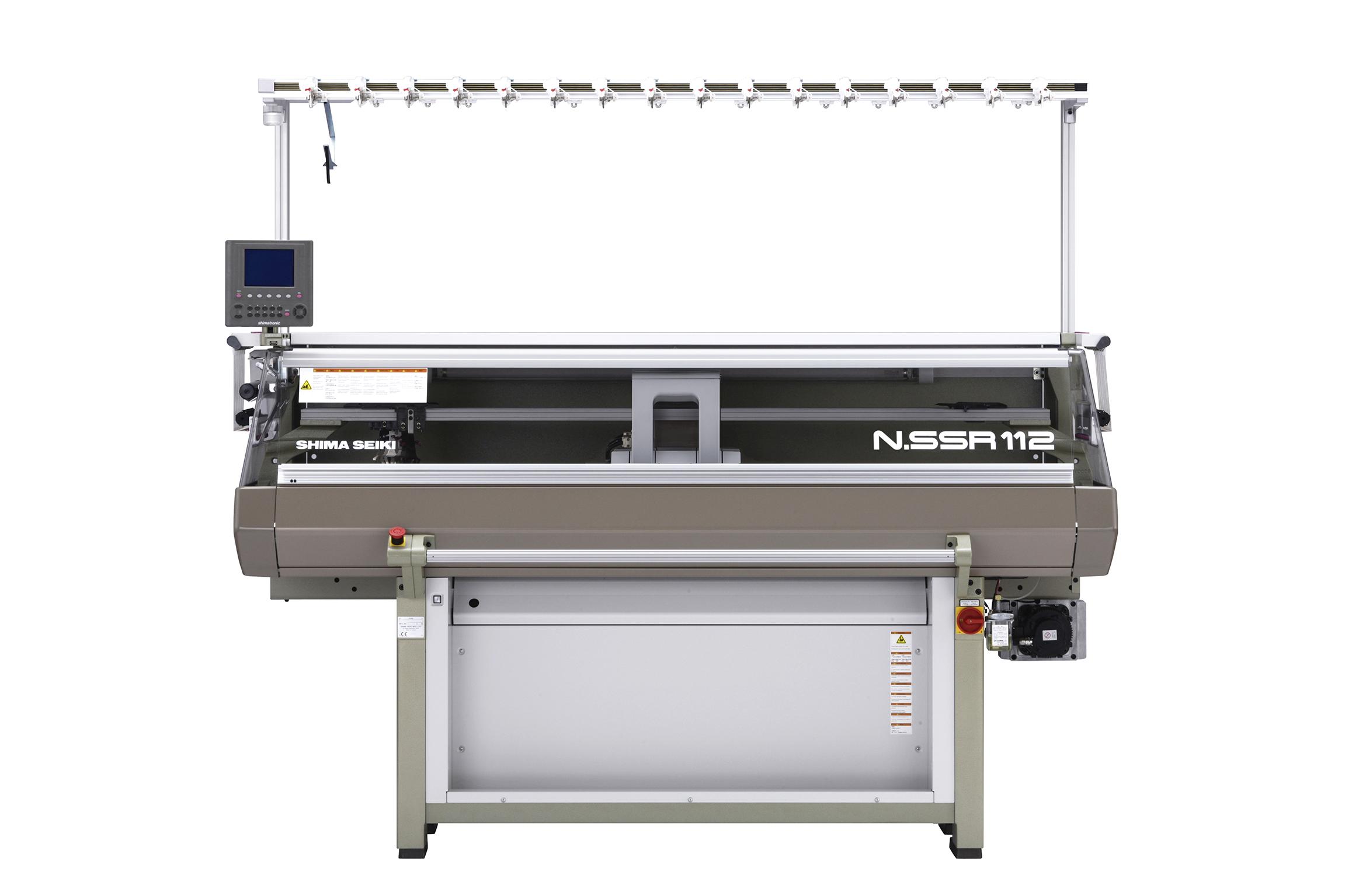
Meanwhile the N.SSR112 computerized flat knitting machine offers leading technology in an economical yet reliable package. Featuring industry-leading innovations such as the R2CARRIAGE®, spring-type moveable sinker, DSCS® Digital Stitch Control System, stitch presser and takedown comb, Made-in-Japan quality, reliability, productivity, user-friendliness and cost-performance combine to satisfy the high expectations of the world's fashion industry.

Demonstrations will be performed on SHIMA SEIKI's SDS®-ONE APEX4 design system. At the core of the company’s "Total Fashion System" concept, SDS®-ONE APEX4 provides comprehensive support throughout the production supply chain, integrating production into one smooth and efficient workflow from yarn development, product planning and design, to production and even sales promotion. Especially effective is the way SDS®-ONE APEX4 improves on the design evaluation process with its ultra-realistic simulation capability, whereby virtual samples replace physical sampling, consequently reducing time, cost and material that otherwise go to waste. Digital prototyping using virtual samples on SDS®-ONE APEX4 help to digitally transform the fashion supply chain for realizing sustainable manufacturing

31.08.2022

DNFI Award 2022 – Deadline 9 Sept

As every year, in 2022 the Discover Natural Fibers Initiative (DNFI) called on individuals, universities, textile researchers and companies to submit their products, projects, processes and ideas in the field of Natural Fibres from the following categories:

  • Innovative products, components or applications
  • Innovative processes and procedures
  • Innovative research and science

The DNFI Innovation in Natural Fibres Award aims to promote the development of new products/components and applications using natural fibres as well as new processes for manufacturing of environmental friendly products. Universities, institutes, industry and individuals working in the area of scientific research are invited to participate. “Sustainability” should be just one important aspect of each submission considered by the judges.

The DNFI Innovation in Natural Fibres Award aims to recognise the innovations as well as the people and institutions responsible for them with the goal of raising public awareness of the achievements of the natural fibre sector as a whole.

As every year, in 2022 the Discover Natural Fibers Initiative (DNFI) called on individuals, universities, textile researchers and companies to submit their products, projects, processes and ideas in the field of Natural Fibres from the following categories:

  • Innovative products, components or applications
  • Innovative processes and procedures
  • Innovative research and science

The DNFI Innovation in Natural Fibres Award aims to promote the development of new products/components and applications using natural fibres as well as new processes for manufacturing of environmental friendly products. Universities, institutes, industry and individuals working in the area of scientific research are invited to participate. “Sustainability” should be just one important aspect of each submission considered by the judges.

The DNFI Innovation in Natural Fibres Award aims to recognise the innovations as well as the people and institutions responsible for them with the goal of raising public awareness of the achievements of the natural fibre sector as a whole.

Get the details online.

More information:
DNFI DNFI award
Source:

European Industry and Research Exchange on Technical Textiles

26.08.2022

EURATEX: Future of the European textile & clothing industry is at stake

  • European Textile Industry calls for immediate action to tackle the energy crisis;

The European textile & fashion in Europe, represented by EURATEX, calls for a single European strategy to tackle this energy crisis. To safeguard the future of the industry, a revision of the electricity price mechanism is necessary and an EU wide cap on gas prices at 80€/MWh. Special company support needs to be granted to avoid bankruptcy and relocation of textile production outside Europe.

Gas and electricity prices have reached unprecedented levels in Europe. Due to severe global competition in the market that characterizes the European textile & clothing industry, these cost increases are impossible to pass on to customers. This has already led to capacity reductions and production stops. Closures and the shift of production outside Europe are being forecasted should the current situation persist, leading to further de-industrialization of our continent and increased dependency on external suppliers.

  • European Textile Industry calls for immediate action to tackle the energy crisis;

The European textile & fashion in Europe, represented by EURATEX, calls for a single European strategy to tackle this energy crisis. To safeguard the future of the industry, a revision of the electricity price mechanism is necessary and an EU wide cap on gas prices at 80€/MWh. Special company support needs to be granted to avoid bankruptcy and relocation of textile production outside Europe.

Gas and electricity prices have reached unprecedented levels in Europe. Due to severe global competition in the market that characterizes the European textile & clothing industry, these cost increases are impossible to pass on to customers. This has already led to capacity reductions and production stops. Closures and the shift of production outside Europe are being forecasted should the current situation persist, leading to further de-industrialization of our continent and increased dependency on external suppliers.

Specific segments of the textile industry are particularly vulnerable. The man-made fibres (MMF), synthetic and cellulose-based fibres, industry for instance is an energy intensive sector and a major consumer of natural gas in the manufacturing of its fibres. The disappearance of European fibre products would have immediate consequences for the textile industry and for society at large. The activities of textile dyeing and finishing are also relatively intensive in energy. These activities are essential in the textile value chain in order to give the textile products and garments added value through colour and special functionalities (e.g. for medical applications).

The European textile industry calls for an EU-wide cap on gas prices at €80/Mwh, and a revision of the price mechanism for the electricity market, to reduce the huge price gaps with our foreign competitors.

Governments should ensure that critical industries, such textiles and all its segments, are able to ensure gas and electricity contracts towards the end of the year at an affordable price. Stable and predictable energy supply is of the utmost importance. Gas restrictions and rationing must only be used as a last resort. No mandatory consumption cuts should be foreseen.

In addition to these measures under discussion, currently a proliferation of contradictory, uncoordinated national initiatives to tackle the energy crisis is observed. This has led to a de facto fragmentation of the Single Market, resulting in a chaotic policy and regulatory environment that adds a further strain on our supply chain, which is fully integrated at European level. Measures that guarantee a level playing field in the EU are utmost important.

EURATEX President Alberto Paccanelli explained: “Given the current situation, a scenario where entire segments of the textiles industry will disappear can no longer be excluded. This would lead to the loss of thousands of companies and tens of thousands of European jobs and would further aggravate the dependency of Europe to foreign sources of essential goods. This applies specifically to SMEs who need temporary support measures (e.g. state aids, tax relieves, energy price cap) to survive the current crisis and to prepare for the green transition in the longer run.”

More information:
Euratex energy supplies crisis
Source:

Euratex

(c) Freudenberg
25.08.2022

Freudenberg at Fachpack 2022

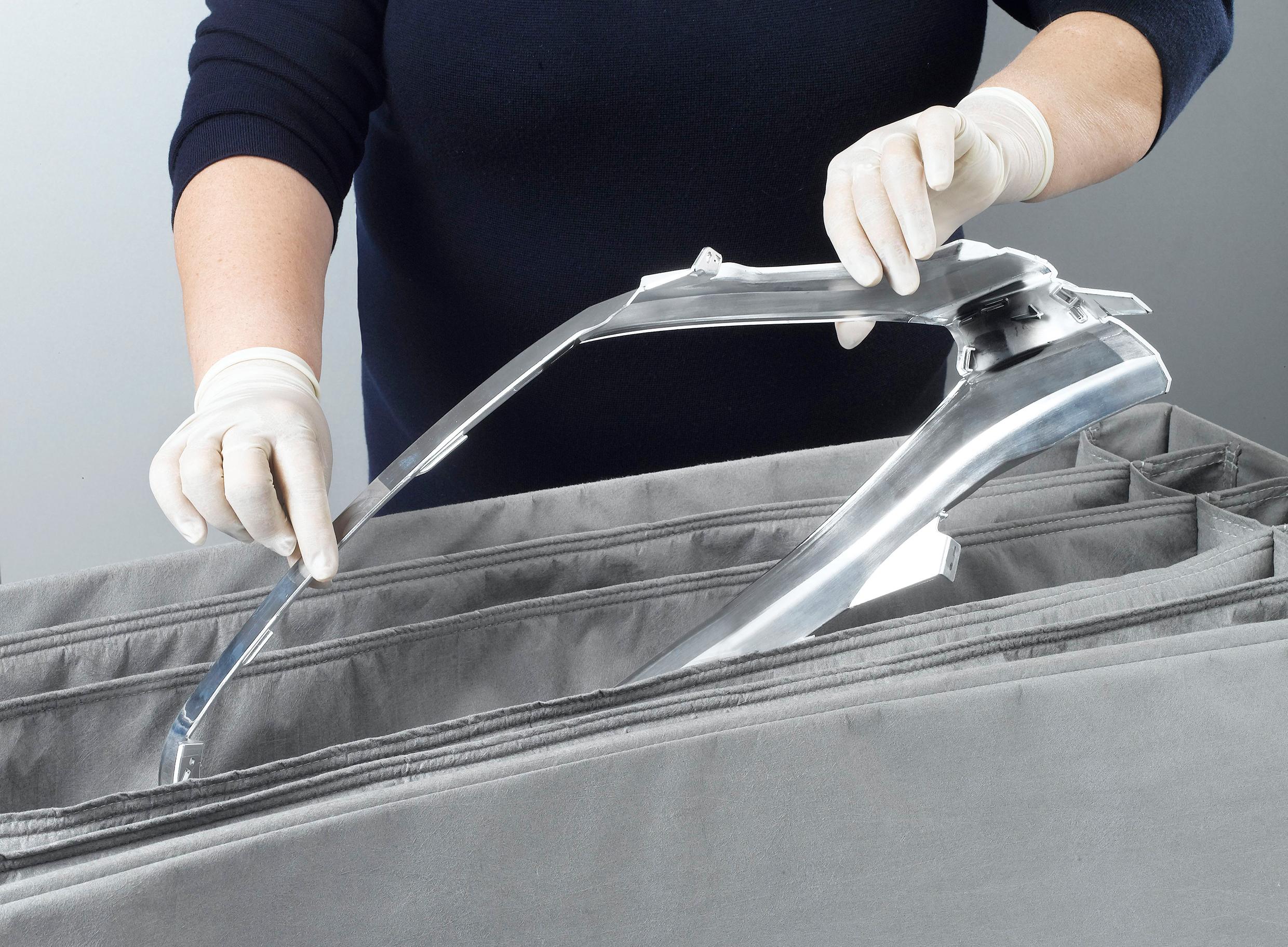
Freudenberg Performance Materials (Freudenberg) is presenting its sustainable Evolon® product range for reusable technical packaging for highly-sensitive parts at Fachpack 2022 in Nuremberg, Germany from September 27-29. The microfilament textiles offer improved surface protection for molded plastic parts, painted parts and so-called class A parts, thus providing customers with significant savings potential.

Evolon® RE is the most sustainable product in the portfolio. It contains the highest percentage of recycled PET and has a smaller carbon footprint. The new Ultra Force range from Evolon® offers extremely high mechanical strength and eliminates the need for PVC in the transportation and protection of large, heavy parts. Freudenberg has developed the ESD range (electro-static discharge range) for the packaging of sensitive electronic components: it offers permanent electro-static discharging and its surface resistivity can be customized.

Freudenberg Performance Materials (Freudenberg) is presenting its sustainable Evolon® product range for reusable technical packaging for highly-sensitive parts at Fachpack 2022 in Nuremberg, Germany from September 27-29. The microfilament textiles offer improved surface protection for molded plastic parts, painted parts and so-called class A parts, thus providing customers with significant savings potential.

Evolon® RE is the most sustainable product in the portfolio. It contains the highest percentage of recycled PET and has a smaller carbon footprint. The new Ultra Force range from Evolon® offers extremely high mechanical strength and eliminates the need for PVC in the transportation and protection of large, heavy parts. Freudenberg has developed the ESD range (electro-static discharge range) for the packaging of sensitive electronic components: it offers permanent electro-static discharging and its surface resistivity can be customized.

Source:

Freudenberg Performance Materials Holding SE & Co. KG

AkzoNobel
25.08.2022

AkzoNobel gives Jodhpur a transformational dose of the blues

India’s world famous Blue City, Jodhpur, has been repainted and refreshed by AkzoNobel as part of a major “Let’s Colour” project involving 250 homes.

More than 5,600 liters of Dulux paint has been used to revitalize the iconic area of Rajasthan, which is known the world over as a leading tourist destination. As well as painting exterior walls in a distinctive shade of vibrant blue, the roofs of more than 100 houses have been coated with Dulux Weathershield Protect, which can help to reduce temperatures by up to 5˚C.

In addition, 20 colorful murals have been created along the ancient streets leading up to Mehrangarh Fort, which towers over the city. All the work, which took around four months to complete, was carried out by AkzoNobel Paint Academy painters, local artists and residents, and AkzoNobel volunteers, who combined their creative talents.

India’s world famous Blue City, Jodhpur, has been repainted and refreshed by AkzoNobel as part of a major “Let’s Colour” project involving 250 homes.

More than 5,600 liters of Dulux paint has been used to revitalize the iconic area of Rajasthan, which is known the world over as a leading tourist destination. As well as painting exterior walls in a distinctive shade of vibrant blue, the roofs of more than 100 houses have been coated with Dulux Weathershield Protect, which can help to reduce temperatures by up to 5˚C.

In addition, 20 colorful murals have been created along the ancient streets leading up to Mehrangarh Fort, which towers over the city. All the work, which took around four months to complete, was carried out by AkzoNobel Paint Academy painters, local artists and residents, and AkzoNobel volunteers, who combined their creative talents.

The color blue has been an integral part of Jodhpur’s identity for centuries. And reigniting the city’s timeless appeal – making it more liveable and enjoyable – was key to the whole project. So in addition to painting more than 250,000 square feet of walls, community walkways and staircases have also been given a rainbow makeover using Dulux FloorPlus paint.   

AkzoNobel’s global “Let's Colour” initiative was launched in 2009. To date, more than 2,300 projects have taken place, with over 1.3 million liters of paint being donated all over the world.

More information:
AkzoNobel color solutions painting
Source:

AkzoNobel

25.08.2022

Indorama Ventures committed to Science Based Targets initiative

Indorama Ventures Public Company Limited (IVL), a global sustainable chemical company, announced its commitment to science-based targets by the Science Based Targets initiative (SBTi) to help drive its ambitious sustainability programs. The company will also participate in the SBTi Expert Advisory Group for the chemicals industry.

SBTi is a collaboration between CDP, the United Nations Global Compact, the World Resources Institute, and the World Wide Fund for Nature to help businesses set emissions reduction targets based on the most recent climate science. IVL has committed to science-based targets under its purpose of “Reimagining chemistry together to create a better world” which aims to reduce global warming in line with the 1.5°C Paris Climate Agreement.

Indorama Ventures Public Company Limited (IVL), a global sustainable chemical company, announced its commitment to science-based targets by the Science Based Targets initiative (SBTi) to help drive its ambitious sustainability programs. The company will also participate in the SBTi Expert Advisory Group for the chemicals industry.

SBTi is a collaboration between CDP, the United Nations Global Compact, the World Resources Institute, and the World Wide Fund for Nature to help businesses set emissions reduction targets based on the most recent climate science. IVL has committed to science-based targets under its purpose of “Reimagining chemistry together to create a better world” which aims to reduce global warming in line with the 1.5°C Paris Climate Agreement.

Under its Vision 2030 ambition, Indorama Ventures aims to build on its global industry leadership in sustainability, including by reducing GHG intensity by 30% and increasing renewable electricity consumption to 25%. Green projects are helping the company to achieve its operational efficiency targets, increase its use of renewable energy (especially renewable electricity – both onsite generation and offsite procurement through power purchase agreements), implement new decarbonization technologies including carbon capture, introduce bio-feedstock to its petrochemical value chain, and expand its PET recycling capability.

To meet its targets, IVL recognizes the importance of collaboration between the public and private sectors to decarbonize its operations through a variety of strategies. The established targets help its customers and suppliers to achieve their own sustainability goals, particularly their science-based targets.

Yash Lohia, Chairman of ESG Council at Indorama Ventures, said, "We are pleased to make our sustainability commitment more practical and measurable through science-based targets. We are dedicated to finding new technologies that can transform our operations and products towards net-zero. The efforts are not only for our sustainable business but also to support our customers and suppliers to achieve their own sustainability goals."

Source:

IVL

25.08.2022

PICANOL GROUP: Strong first HY22, but …

In comparison to HY 21 revenue went up by 26% to 1,707.3 million EUR, the profit reached 123.9 million EUR (+6%).

Machines & Technologies revenue increased by +10%. The revenue of Agro increased by +46%, Bio-valorization revenue increased by +27%, the revenue of Industrial Solutions increased by +21%, and the revenue of T-Power increased by 4%. This revenue increase could be mainly realized thanks to higher sales prices, implemented to compensate the increase of raw material, energy and transportation costs in most segments.

In comparison to HY 21 revenue went up by 26% to 1,707.3 million EUR, the profit reached 123.9 million EUR (+6%).

Machines & Technologies revenue increased by +10%. The revenue of Agro increased by +46%, Bio-valorization revenue increased by +27%, the revenue of Industrial Solutions increased by +21%, and the revenue of T-Power increased by 4%. This revenue increase could be mainly realized thanks to higher sales prices, implemented to compensate the increase of raw material, energy and transportation costs in most segments.

In the first half of 2022, revenue increased by +10% for the segment Machines & Technologies. This increase in revenue took place both in weaving machines (Picanol) and other industrial activities (Proferro, PsiControl). Picanol launched the OmniPlus-i TC Connect weaving machine into the Machines & Technologies segment in early 2022. This model, which was specifically made for weaving tire cord, has been upgraded with the latest airjet technology and equipped with the features of the new generation Connect weaving machines. However, HY22 Adjusted EBITDA decreased by 64% compared to last year due to the negative impact of rising raw material prices, transportation costs and costs of late deliveries, which could not be translated into higher selling prices, partly due to the large order book.

The group anticipates a continued high level of uncertainty in the second half of 2022, as well as in 2023, due to the current conflict in Eastern Europe, the difficult supply chain circumstances, and other challenges following the coronavirus pandemic. The development of customer demand and sales margin could therefore come under pressure. However, based on currently available information, Picanol Group expects that the 2022 Adjusted EBITDA will be higher than the 2021 Adjusted EBITDA (430.3 million EUR). This revised outlook for the 2022 financial year reflects the strong first half of the year, while the result for the second half is expected to be in line with the same period in the previous year.

More information:
Picanol Group
Source:

Picanol Group

(c) adidas AG
25.08.2022

adidas: Y-3 Presents Fall/Winter 2022 Chapter 4

Y-3 returns to present the closing chapter of its Fall/Winter 2022 collection. Representing the final iteration of the brand’s “20 Years: Recoded” thematic narrative, Chapter 4 boldly celebrates one of the label’s most revered and lasting motifs – exotic prints – as adidas and Yohji Yamamoto fearlessly reimagine historic looks and textures for a new era.

Subversively exploring the year-long theme of collective memory, the latest chapter draws on Yohji Yamamoto’s inherently rebellious spirit. With Y-3 shifting its creative focus to a distinctly textural concept – Memories of Exotics – the German sportswear brand and the Japanese visionary recall a legacy of animal prints and iconography, distorting iconic signifiers through a slew of all-over print graphics.  

The seasonal offering is highlighted by a selection of pieces that juxtapose leopard prints and fabrics with muted palettes, functional details, and dynamic sporting silhouettes. Curated as a daring blend of past and future, the collection clashes the brand’s heritage with its progressive vision for tomorrow.

Y-3 returns to present the closing chapter of its Fall/Winter 2022 collection. Representing the final iteration of the brand’s “20 Years: Recoded” thematic narrative, Chapter 4 boldly celebrates one of the label’s most revered and lasting motifs – exotic prints – as adidas and Yohji Yamamoto fearlessly reimagine historic looks and textures for a new era.

Subversively exploring the year-long theme of collective memory, the latest chapter draws on Yohji Yamamoto’s inherently rebellious spirit. With Y-3 shifting its creative focus to a distinctly textural concept – Memories of Exotics – the German sportswear brand and the Japanese visionary recall a legacy of animal prints and iconography, distorting iconic signifiers through a slew of all-over print graphics.  

The seasonal offering is highlighted by a selection of pieces that juxtapose leopard prints and fabrics with muted palettes, functional details, and dynamic sporting silhouettes. Curated as a daring blend of past and future, the collection clashes the brand’s heritage with its progressive vision for tomorrow.

Accompanying the launch of Fall/Winter 2022 Chapter 4 is a visual campaign that oscillates between mystery, intrigue, and sporting dynamism. Shot by Heji Shin with creative direction from Jamie Reid and styling from Robbie Spencer, the visuals channel a visceral, rather than understated, interpretation of Y-3’s past, present, and future.

More information:
adidas Y-3 clothing
Source:

adidas AG

(c) INDA
23.08.2022

INDA Announces the 2022 RISE® Innovation Award Finalists

  • Innovations in Recycling and Sustainability: Sustainable Diaper Components, Natural Fibers, and Kitty Litter from Recycled Nappies

INDA, the Association of the Nonwoven Fabrics Industry, announced the three finalists that will present their innovative material science solutions as they compete for the prestigious RISE® Innovation Award during the 12th edition of the Research, Innovation & Science for Engineered Fabrics Conference (RISE®) to be held in person September 27-28, 2022 at North Carolina State University.  The award recognizes novel innovations within and on the periphery of the nonwovens industry that creatively use next-level science and engineering principles to solve material challenges and expand the usage of nonwovens and engineered fabrics.

  • Innovations in Recycling and Sustainability: Sustainable Diaper Components, Natural Fibers, and Kitty Litter from Recycled Nappies

INDA, the Association of the Nonwoven Fabrics Industry, announced the three finalists that will present their innovative material science solutions as they compete for the prestigious RISE® Innovation Award during the 12th edition of the Research, Innovation & Science for Engineered Fabrics Conference (RISE®) to be held in person September 27-28, 2022 at North Carolina State University.  The award recognizes novel innovations within and on the periphery of the nonwovens industry that creatively use next-level science and engineering principles to solve material challenges and expand the usage of nonwovens and engineered fabrics.

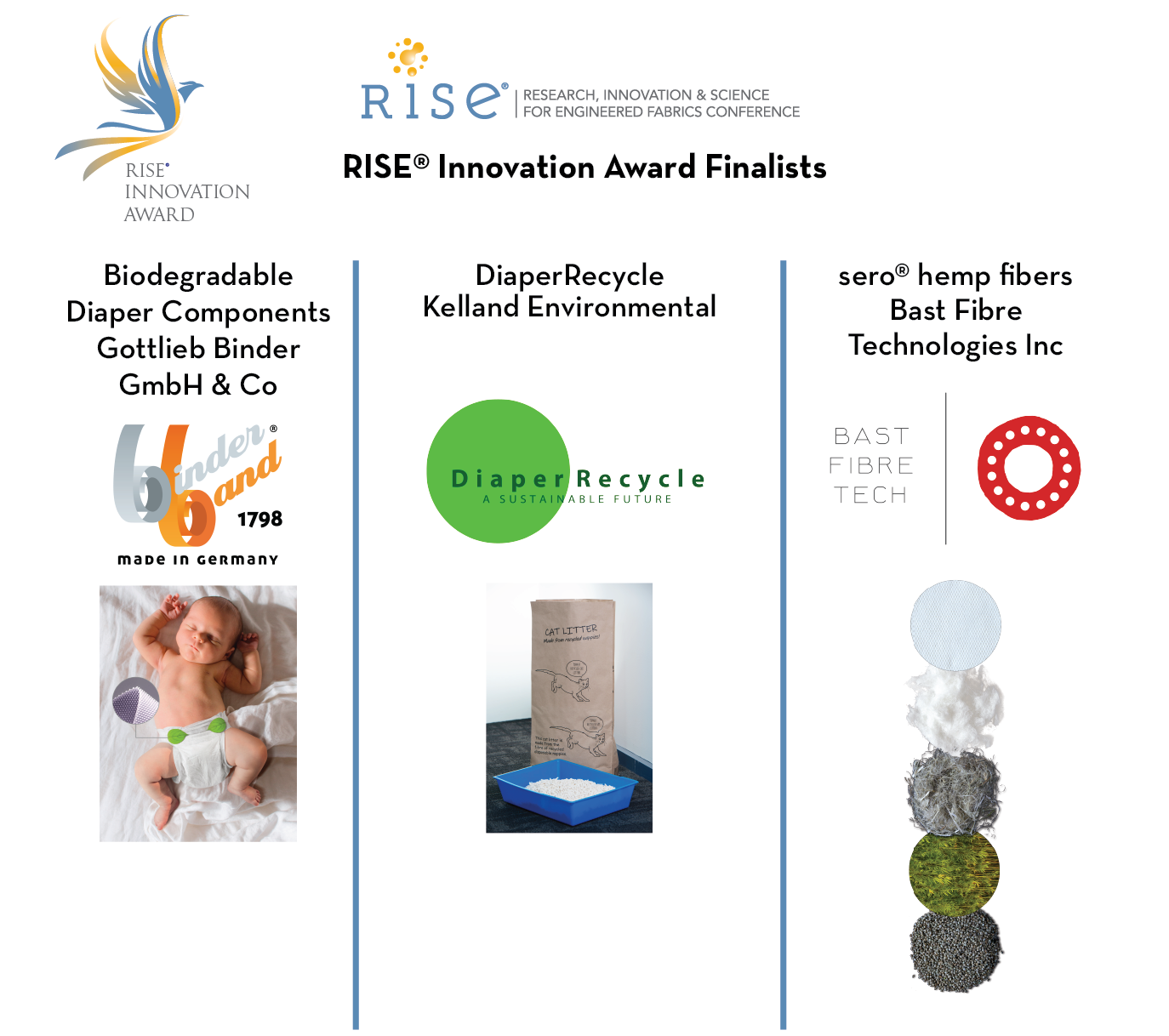
Finalists for the 2022 RISE® Innovation Award:
Cat Litter Made from Recycled Nappies – DiaperRecycle
DiaperRecycle has developed technology to recycle used diapers into cat litter. The aim of the company is to make an environmental impact and decrease the climate changing emissions of diaper waste. They’re diverting used diapers (used in households and businesses such as elder care) from landfill, separating the plastic and fiber and making cat litter. The plastic is prepared for recycling by plastics recyclers. The cat litter product is made by DiaperRecycle from the super absorbent fiber of diapers; it’s highly absorbent and flushable.

Biodegradable Diaper Components – Gottlieb Binder GmbH & Co. KG
Together, Avgol and Binder take on the challenge of disposable absorbent articles for the good of future generations and came up with sustainable diaper components. The technologies used are based on biotransformation technology, which makes it possible to achieve more sustainable products by supporting recycling and providing an alternative route for non-recyclable/fugitive waste management.

sero® hemp fibers – Bast Fibre Technologies, Inc.
Bast Fibre Technologies’ sero® hemp fibers offer the nonwoven industry an all-natural substitute for plastic fibers. From dedicated European- and US-based production facilities, BFT transforms raw bast fibers into premium natural fibers for applications ranging from single-use and durable wipes to industrial applications. Suitable for minority or majority blends, sero® hemp combines easily with standard nonwoven fibers to produce fabrics that meet the industry requirements for strength, uniformity, and processing efficiency.

RISE® conference attendees, technology scouts and product developers in the nonwoven/engineered fabrics industry seeking new developments to advance their businesses, will electronically vote for the recipient of the 2022 RISE® Innovation Award. The winner will be announced Wed., Sept. 28th.

Technical experts on INDA’s Technical Advisory Board selected three finalists from among 12 nominations.  The 22-member board of technical professionals is represented by companies such as Absorbent Hygiene Insights LLC, Attindas Hygiene Partners, Berry Global, Cotton Incorporated, Crown Abbey, LLC, The DAK Group, Fi-Tech, Inc. Freudenberg Performance Materials, Glatfelter Sontara Old Hickory, Inc., Lenzing Fibers, Inc., Natureworks LLC, Nice-Pak Products, Inc./PDI, Nonwovens by Design, Norafin (Americas) Inc., The Nonwovens Institute at North Carolina State University, Poccia Consulting, LLC, The Procter & Gamble Company, RKW North America, Inc., Rockline Industries, Smith, Johnson & Associates, Suominen Corporation, and Texas Tech University.

“The RISE Conference recognizes and promotes innovation across the nonwoven and engineered material industry. Technology leaders will share invaluable information on innovative new approaches and concepts to resolve material science challenges. For any technical leader, technology scout or new product innovator, RISE is an event not to be missed,” said Tony Fragnito, INDA’s President.

The conference program will cover relevant and timely topics including: Creating a Circular Industry, Advancements in Sustainable Inputs in PLA, Developments in Natural Fibers I and II, Sustainable Inputs in Fibers and Biofibers, Sustainable Inputs from Waste Products, and Economic Insights and Market Intelligence.

More information:
INDA RISE®
Source:

INDA

Beaulieu International Group
23.08.2022

BIG at EuroGeo7 with geotextile fibres & woven fabrics

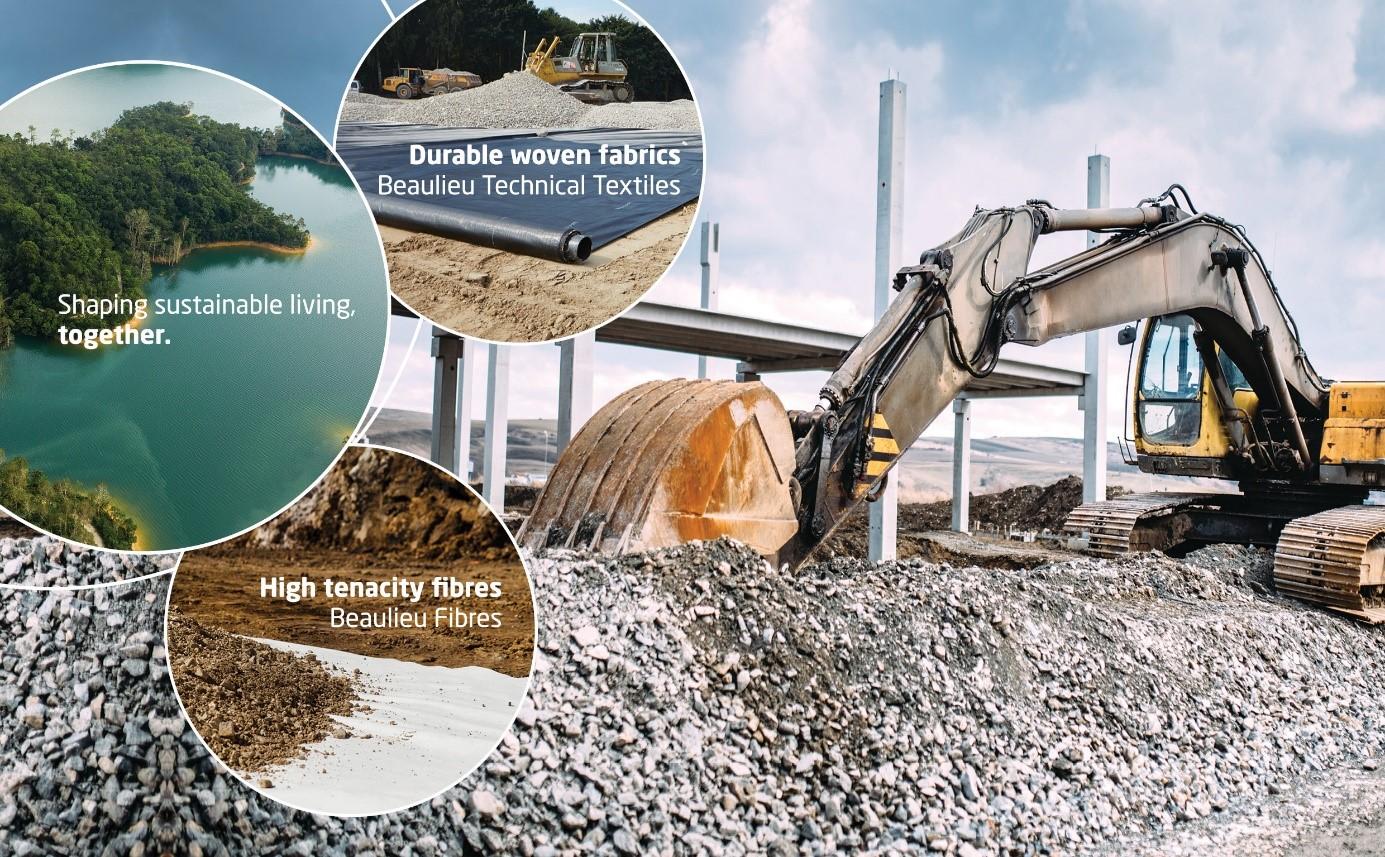
Beaulieu International Group invites EuroGeo7 attendees to discover geotextile solutions promoting greater sustainability for future civil engineering projects. Specialists from Beaulieu Fibres International (BFI) and Beaulieu Technical Textiles (BTT) will present high-performance geosynthetics through high tenacity fibres for lightweight, nonwoven geotextiles, and a range of high durability woven geotextile solutions with an environmentally beneficial impact.

Beaulieu International Group invites EuroGeo7 attendees to discover geotextile solutions promoting greater sustainability for future civil engineering projects. Specialists from Beaulieu Fibres International (BFI) and Beaulieu Technical Textiles (BTT) will present high-performance geosynthetics through high tenacity fibres for lightweight, nonwoven geotextiles, and a range of high durability woven geotextile solutions with an environmentally beneficial impact.

“We are delighted to sponsor EuroGeo7 and to be finally on-site, following a two-year postponement of the event. EuroGeo7 is bringing the geotextile community together to further promote and develop geosynthetics in a fast changing global economy striving for growth while reducing its carbon footprint along the supply chain, " comment from Jefrem Jennard, Sales Director Fibres, and Roy Kerckhove, Sales Director Technical Textiles. “Geotextiles provide highly versatile, durable and natural resource-saving alternatives in large infrastructure works, and offer durable protection in erosion control and waste/water management projects. We are continuously developing our fibres and finished engineering textiles with proven sustainability-enhancing benefits to progress product development and customer sustainability goals on fossil carbon reduction, while taking concrete steps to reduce our own environmental footprint.”
 
Sustainability improvement is key to the long-term strategy of Beaulieu International Group, and it is committed to supporting the geotextile industry by targeting and accelerating change and communicating the sustainable performance of its products. The UN Sustainable Development Goals are integrated into its business and are the foundations of the new Route 2030 Sustainability Roadmap.


For manufacturers of nonwoven geotextiles, BFI’s high-tenacity HT8 staple fibres enable customers to achieve nonwovens with high mechanical performance at reduced fibre weight. The HT8 high tenacity fibres are designed in a way that customers can meet the industry durability standards for a longer service lifetime, supporting more sustainable design and resource reduction over time. BTT’s woven geotextiles are amongst the most sustainable in the industry and provide a wide range of functions, including separation, filtration, reinforcement and erosion control.

BFI and BTT have conducted lifecycle assessments to calculate their activities' carbon footprint and solutions and have received external recognition for their ongoing sustainability efforts. For example, in 2022, BFI was awarded a Silver EcoVadis sustainability rating, and BFI and BTT are proud recipients of the Voka Charter for Sustainable Entrepreneurship 2022.

Source:

Beaulieu International Group

23.08.2022

Lenzing: Transition to green electricity in Indonesia

  • Gradual transformation of production capacities to LENZING™ ECOVERO™ and VEOCEL™ branded specialty viscose

The Lenzing Group, provider of wood-based specialty fibers, is expanding its global clean electricity portfolio and transitioning its production site in Purwakarta to green electricity. The Indonesian subsidiary PT. South Pacific Viscose (SPV) has been using electricity generated solely from renewable sources since July this year, which will reduce its specific carbon emissions by 75,000 tonnes annually.

In 2019, Lenzing became the first fiber producer to set a target of halving its carbon emissions by 2030 and becoming climate neutral by 2050. This carbon reduction target has been recognized by the Science Based Targets Initiative. In Purwakarta, Lenzing is currently investing in the reduction of carbon emissions, as well as air and water emissions. Thanks to its EUR 100 million investment in this area, Lenzing is gradually transitioning its existing capacities for standard viscose to LENZING™ ECOVERO™ and VEOCEL™ branded specialty viscose.

  • Gradual transformation of production capacities to LENZING™ ECOVERO™ and VEOCEL™ branded specialty viscose

The Lenzing Group, provider of wood-based specialty fibers, is expanding its global clean electricity portfolio and transitioning its production site in Purwakarta to green electricity. The Indonesian subsidiary PT. South Pacific Viscose (SPV) has been using electricity generated solely from renewable sources since July this year, which will reduce its specific carbon emissions by 75,000 tonnes annually.

In 2019, Lenzing became the first fiber producer to set a target of halving its carbon emissions by 2030 and becoming climate neutral by 2050. This carbon reduction target has been recognized by the Science Based Targets Initiative. In Purwakarta, Lenzing is currently investing in the reduction of carbon emissions, as well as air and water emissions. Thanks to its EUR 100 million investment in this area, Lenzing is gradually transitioning its existing capacities for standard viscose to LENZING™ ECOVERO™ and VEOCEL™ branded specialty viscose.

“Demand for our wood-based, biodegradable specialty fibers is constantly rising. We see enormous growth potential, especially in Asia. The switch to green, renewable electricity marks a huge step forward in converting our Indonesian site into a specialty fiber supplier. This makes us better positioned to meet the growing demand for sustainably produced fibers,” comments Robert van de Kerkhof, Chief Commercial Officer for Fiber at Lenzing.


The company aims to generate more than 75 percent of its fiber revenue from the wood-based, biodegradable specialty fibers business under the TENCEL™, LENZING™ ECOVERO™ and VEOCEL™ brands by 2024. With the launch of the lyocell plant in Thailand in March 2022 and the investments in existing production sites in Indonesia and China, the share of specialty fibers in Lenzing’s fiber revenue is set to exceed the 75 percent target by a significant margin as early as 2023.

Source:

Lenzing AG

23.08.2022

imm cologne’s new story: Spring Edition in June 2023, no trade fair in January

For 2023, imm cologne is adapting its concept. The trade fair has been given a new schedule, which will see the international Interior Business Event host a new, one-off spring edition in 2023. The dates have been chosen in close consultation with its market partners.

“Today the imm cologne advisory board gave the concept proposed by Koelnmesse for the imm spring edition in June 2023 the green light unanimously. Our thanks go to the advisory board and in particular to the German industry, the retail sector and the purchasing associations for their support. This concept will ensure that imm cologne can take place again after a two-year break. The industry has given its backing to a strong interior design trade fair in Germany, the biggest market in Europe,” says Gerald Böse, Chief Executive Officer of Koelnmesse. “I firmly believe in face-to-face exchanges. In my view, they are immensely important for the industry’s development, especially in challenging times. The sector needs an in-person platform in Germany, an event with international appeal and a strong communication reach like imm cologne,” he adds.

For 2023, imm cologne is adapting its concept. The trade fair has been given a new schedule, which will see the international Interior Business Event host a new, one-off spring edition in 2023. The dates have been chosen in close consultation with its market partners.

“Today the imm cologne advisory board gave the concept proposed by Koelnmesse for the imm spring edition in June 2023 the green light unanimously. Our thanks go to the advisory board and in particular to the German industry, the retail sector and the purchasing associations for their support. This concept will ensure that imm cologne can take place again after a two-year break. The industry has given its backing to a strong interior design trade fair in Germany, the biggest market in Europe,” says Gerald Böse, Chief Executive Officer of Koelnmesse. “I firmly believe in face-to-face exchanges. In my view, they are immensely important for the industry’s development, especially in challenging times. The sector needs an in-person platform in Germany, an event with international appeal and a strong communication reach like imm cologne,” he adds.

imm cologne’s new story will take shape in two steps
The imm cologne team presented its vision for a new concept at the start of June 2022. The new story for imm cologne will unfold in two steps. The first step will be the imm spring edition from 4 to 7 June 2023. “The spring edition is synonymous with a new beginning. imm cologne wants to use it to motivate and to show how it is experimenting with new ideas and leaving well-trodden paths behind,” explains Oliver Frese, Chief Operating Officer of Koelnmesse. “What’s more, the event in June gives our partners planning certainty.”

Four-day with a trade audience focus
The cornerstones of the new concept are clear: The imm spring edition will take place over four days, running from Sunday to Wednesday, and will be geared towards trade visitors. End consumers will be able to visit the trade fair by invitation, giving the spring event a clear business focus. “It’s also our goal to create new participation formats in the market,” says Matthias Pollmann, Vice President Trade Fair Management at Koelnmesse. The kitchen segment will also be included in the imm 2023 spring edition. At the same time, the plan is to incorporate the city more closely into the spring edition as an event location.

Vision 2024+: imm cologne as the forum for future issues facing the industry
The second step will then follow in the summer of 2023. In close consultation with the industry and the associations involved in the event, the future dates for imm cologne and LivingKitchen will be set. The future vision for imm cologne conceives the interior event as more than just a key business platform. As a catalyst for the sector’s development, it addresses both industry and external issues of relevance to the imm cologne community.

More information:
imm cologne
Source:

Koelnmesse GmbH

(c) Freudenberg Performance Materials
23.08.2022

Freudenberg at Lineapelle with sustainable materials for leather goods

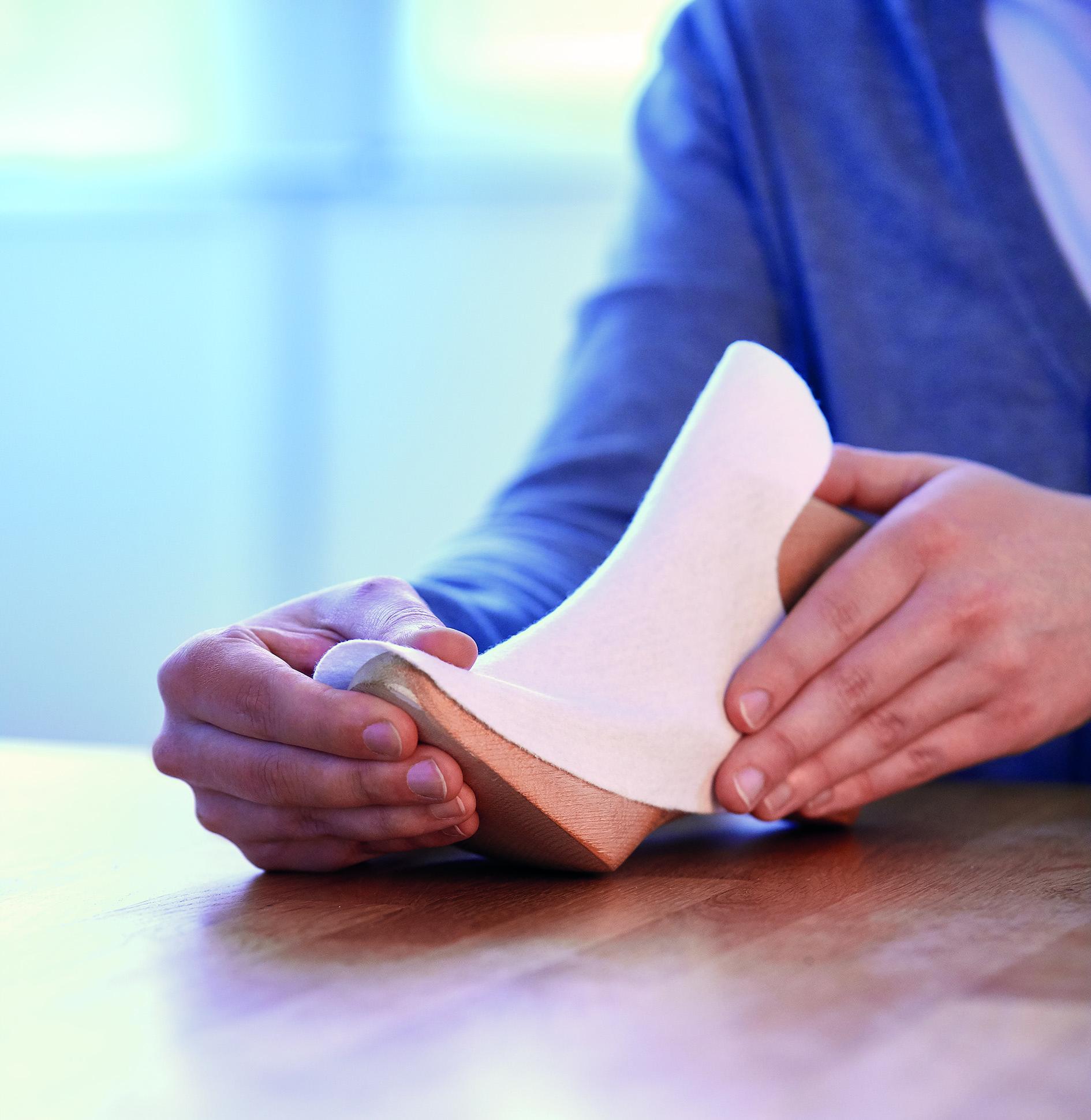
Freudenberg Performance Materials (Freudenberg) will be presenting Evolon® eco-friendly microfiber reinforcement material for leather goods that is manufactured in Europe with no solvent and no chemical binder at the Lineapelle international trade show for the leather industry. Another sustainability highlight is binder-free strobel material made from 100% recycled PET for the shoe industry. The company will also be showing a nonwoven crimping material that meets the increasing demands of manufacturers and consumers alike in the footwear market.

Evolon® contains 80% recycled PET. It is produced at Freudenberg’s facility in Colmar, France, where the manufacturing process is highly sustainable: it is certified to STeP by OEKO-TEX® and fully complies with the DETOX TO ZERO by OEKO-TEX® criteria. In addition, shorter transport routes help to secure supply chains for players in the European leather goods industry.

Freudenberg Performance Materials (Freudenberg) will be presenting Evolon® eco-friendly microfiber reinforcement material for leather goods that is manufactured in Europe with no solvent and no chemical binder at the Lineapelle international trade show for the leather industry. Another sustainability highlight is binder-free strobel material made from 100% recycled PET for the shoe industry. The company will also be showing a nonwoven crimping material that meets the increasing demands of manufacturers and consumers alike in the footwear market.

Evolon® contains 80% recycled PET. It is produced at Freudenberg’s facility in Colmar, France, where the manufacturing process is highly sustainable: it is certified to STeP by OEKO-TEX® and fully complies with the DETOX TO ZERO by OEKO-TEX® criteria. In addition, shorter transport routes help to secure supply chains for players in the European leather goods industry.

The binder-free strobel material is made from 100% recycled PET. It is GRS-certified for reliable traceability. The GRS certification recognizes the share of recycled materials in the strobel material. This allows customers to calculate the total amount of recycled material in shoes. Moreover, the mono-component material itself is fully recyclable. In terms of performance, the material is lightweight and also demonstrates a high tensile strength.

Made from nonwoven fabric, the innovative crimping material optimally combines high permanent moldability and shape retention with flexibility and suppleness. This crimping material enables manufacturers to reduce their production costs, while consumers benefit from increased comfort. Compared to conventional knitted fabric-based crimping materials, the nonwoven crimping material offers multi-directional stretching properties, improved fitting, greater design freedom and reduced weight.

Source:

Freudenberg Performance Materials

(c) Textile Exchange
23.08.2022

The Ryan Young Climate+ Awards: Applications open by August 31

The second annual Ryan Young Climate+ Awards will take place this November 2022 at the annual Textile Exchange conference. Nominations are open until August 31, 2022.

The late Ryan Young, Textile Exchange COO from 2017-2020, is the inspiration behind Textile Exchange’s Climate+ Strategy, which is for the organization to serve as “a driving force for urgent climate action,” with a goal of 45% reduced CO2 emissions from textile fiber and material production by 2030. Ryan’s bold and courageous spirit defined what Textile Exchange and its members must do to tackle the climate crisis.

In honor of Ryan and his vision, TE will again be awarding Ryan Young Climate+ Awards to outstanding individuals and teams who show a clear commitment to the Climate+ vision along with other leadership traits.

Winners will be announced at the 2022 Textile Exchange Conference which will take place virtually and in person in Colorado Springs, U.S. from November 14-18, 2022.

The second annual Ryan Young Climate+ Awards will take place this November 2022 at the annual Textile Exchange conference. Nominations are open until August 31, 2022.

The late Ryan Young, Textile Exchange COO from 2017-2020, is the inspiration behind Textile Exchange’s Climate+ Strategy, which is for the organization to serve as “a driving force for urgent climate action,” with a goal of 45% reduced CO2 emissions from textile fiber and material production by 2030. Ryan’s bold and courageous spirit defined what Textile Exchange and its members must do to tackle the climate crisis.

In honor of Ryan and his vision, TE will again be awarding Ryan Young Climate+ Awards to outstanding individuals and teams who show a clear commitment to the Climate+ vision along with other leadership traits.

Winners will be announced at the 2022 Textile Exchange Conference which will take place virtually and in person in Colorado Springs, U.S. from November 14-18, 2022.

The 2022 award categories and criteriaare listed below:
Nominees may be brands, retailers, farmers and/or ranchers, and raw material suppliers.
Winners will receive one free full-access pass to attend the Conference (travel not included).

Three Ryan Young Climate+ Award Categories:

  1. Overall leadership – individual
  2. Overall leadership – team
  3. Rising star – individual with less than 5 years of industry experience

Award recipients will meet the following criteria:

  • Commitment to Climate+ – involved in accelerating Climate+ action in the apparel, textile, and footwear industry.
  • Collaboration – reflective of Ryan’s vision and determination to collaboratively move the industry forward.
  • Impact – driving innovative, scalable, transparent programs with measurable impact reduction and/or beneficial impacts on climate, water, soil health, and/or biodiversity at the raw materials level. Achievements/solutions are backed by trusted data and/or reporting.
  • Leadership and Inspiration – clearly demonstrating leadership and vision for industry climate solutions over the past year and beyond
Source:

Textile Exchange

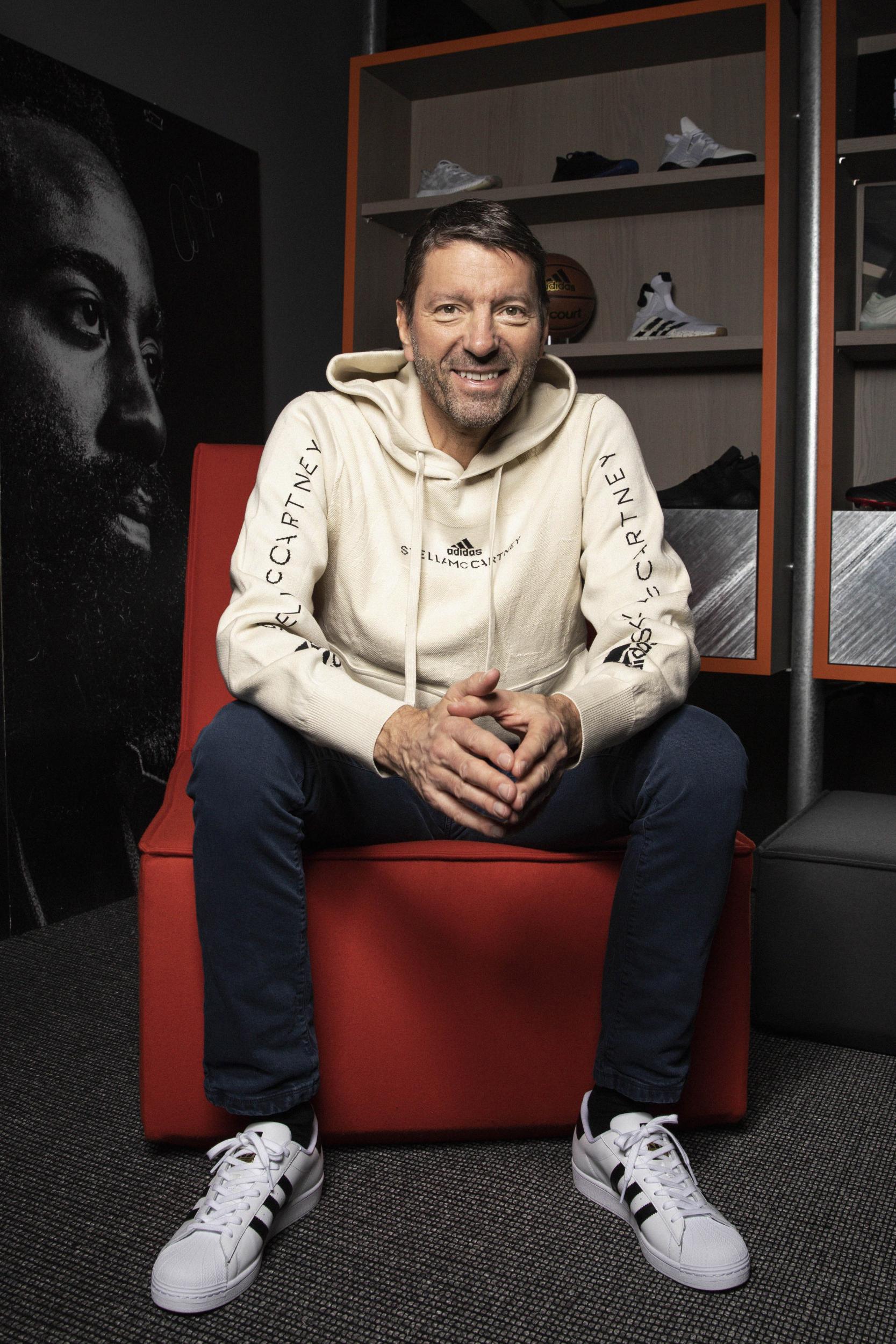
Kasper Rorsted, CEO adidas AG Photo: adidas AG
Kasper Rorsted, CEO adidas AG
22.08.2022

adidas AG initiates CEO transition

  • Kasper Rorsted will hand over CEO position during the course of 2023

adidas AG’s Supervisory Board announces today that it has initiated a CEO transition. Kasper Rorsted, CEO of adidas, and the Supervisory Board have mutually agreed upon that Kasper Rorsted will hand over the CEO position during the course of 2023. The search for a succession has started. Kasper Rorsted will remain CEO until a successor has been appointed. Jointly with the Supervisory Board and the Management Board he will ensure a smooth transition at the helm of the company.

  • Kasper Rorsted will hand over CEO position during the course of 2023

adidas AG’s Supervisory Board announces today that it has initiated a CEO transition. Kasper Rorsted, CEO of adidas, and the Supervisory Board have mutually agreed upon that Kasper Rorsted will hand over the CEO position during the course of 2023. The search for a succession has started. Kasper Rorsted will remain CEO until a successor has been appointed. Jointly with the Supervisory Board and the Management Board he will ensure a smooth transition at the helm of the company.

More information:
adidas AG
Source:

adidas AG

22.08.2022

NCTO: U.S. Educational Institutions partner with Honduran University to educate Students for Textile Jobs

North Carolina educational institutions are joining forces with an Honduran university to educate and train thousands of students for the next generation textile workforce to meet a rising tide of nearshoring and onshoring in Honduras, Central America and the United States.

The U.S. Department of State issued a statement of public support for the MOU and the unique collaboration between the U.S. and Honduran institutions.

North Carolina educational institutions are joining forces with an Honduran university to educate and train thousands of students for the next generation textile workforce to meet a rising tide of nearshoring and onshoring in Honduras, Central America and the United States.

The U.S. Department of State issued a statement of public support for the MOU and the unique collaboration between the U.S. and Honduran institutions.

The initiative will launch a series of educational workforce development programs, ranging from training and certificate programs to undergraduate and graduate degrees, in textile-related areas of study.
 
The partnership comes at a defining moment for the U.S., Honduras and Central America, which are seeing historical levels of investment in textile and apparel production stemming from a global supply chain crisis that has driven a significant shift in sourcing out of Asia to the U.S. and the region. Nearly $1 billion of historic textile and apparel investment is anticipated in the U.S. and Central America this year alone. And this partnership also creates an educational pathway to economic opportunity in Honduras and the region that not only creates a skilled and resilient workforce but can also help to address the root causes of irregular migration.

Current growth projections indicate a need for more than 10,000 new skilled workers in the textile industry in Honduras alone over the next five years.

The U.S. and this region are inextricably linked through a textile and apparel co-production chain under the U.S.-Central America-Dominican Republic Free Trade Agreement (CAFTA-DR) that has generated $12.6 billion in annual two-way trade in the sector and supports 1 million workers in the U.S. and the region.
 
North Carolina plays a central role in this co-production chain. It is the second largest state for textile employment nationally with over 36,000 workers, and the state’s $2.7 billion in textile-related exports leads the nation. The Northern Triangle, including Honduras, is a major export destination for U.S. yarns and fabrics that come back as finished items under the U.S.-CAFTA-DR trade agreement.

Fashion Revolution
19.08.2022

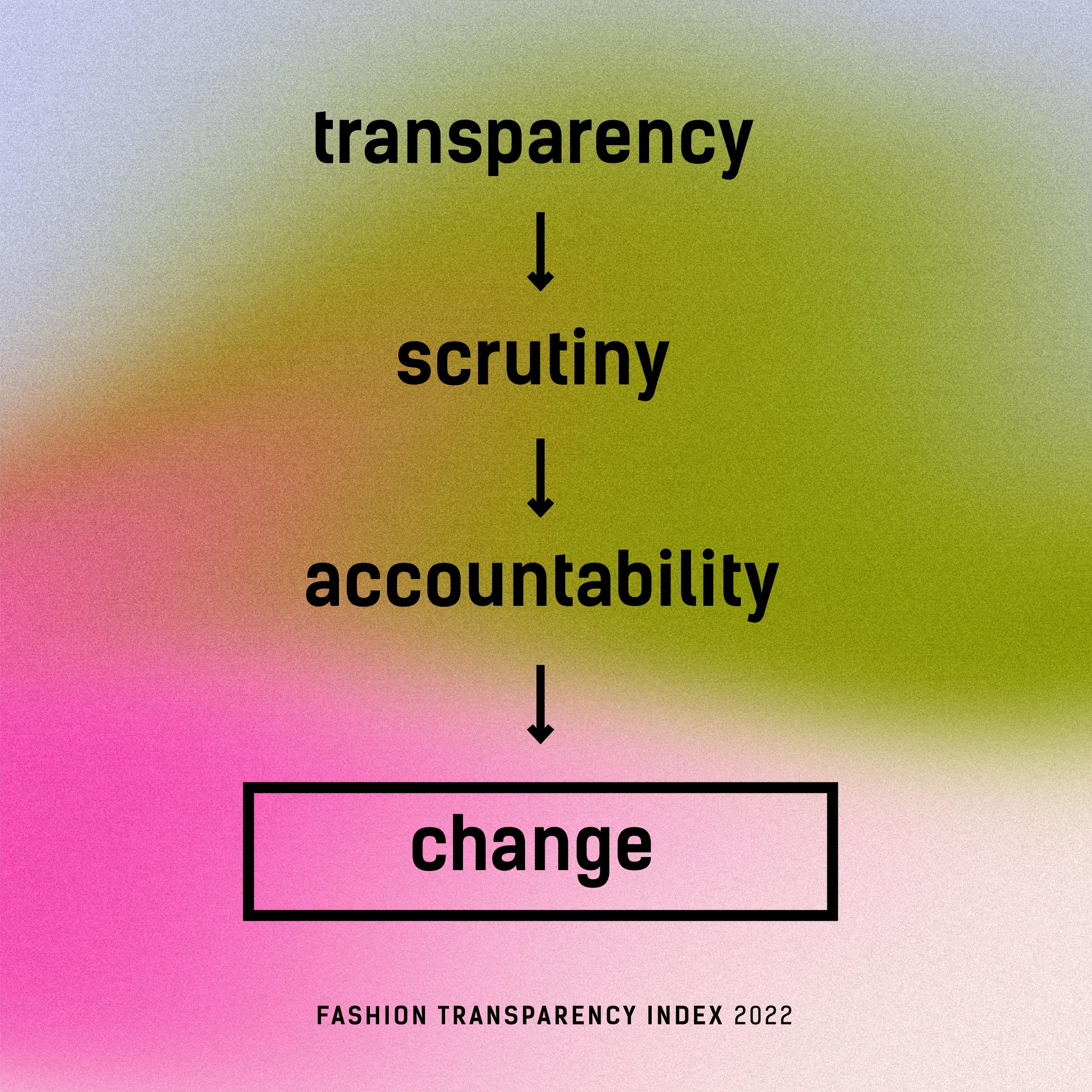
Results of the FASHION TRANSPARENCY INDEX 2022

The world’s largest fashion brands and retailers must increase transparency to tackle the climate crisis and social inequality, according to the latest Fashion Transparency Index.

The seventh edition of the Fashion Transparency Index ranks 250 of the world’s largest fashion brands and retailers based on their public disclosure of human rights and environmental policies, practices, and impacts, across their operations and supply chains.

  • Brands achieved an average score of just 24%, with nearly a third of brands scoring less than 10%
  • The majority of brands (85%) do not disclose their annual production volumes despite mounting evidence of clothing waste around the world
  • Most major brands and retailers (96%) do not publish the number of workers in their supply chain paid a living wage

The Index reveals insights into the most pressing issues facing the fashion industry, like:

The world’s largest fashion brands and retailers must increase transparency to tackle the climate crisis and social inequality, according to the latest Fashion Transparency Index.

The seventh edition of the Fashion Transparency Index ranks 250 of the world’s largest fashion brands and retailers based on their public disclosure of human rights and environmental policies, practices, and impacts, across their operations and supply chains.

  • Brands achieved an average score of just 24%, with nearly a third of brands scoring less than 10%
  • The majority of brands (85%) do not disclose their annual production volumes despite mounting evidence of clothing waste around the world
  • Most major brands and retailers (96%) do not publish the number of workers in their supply chain paid a living wage

The Index reveals insights into the most pressing issues facing the fashion industry, like:

  • As new and proposed legislation focuses on greenwashing claims, almost half of major brands (45%) publish targets on sustainable materials yet only 37% provide information on what constitutes a sustainable material.
  • Only 24% of major brands disclose how they minimise the impacts of microfibres despite textiles being the largest source of microplastics in the ocean.
  • The vast majority of major brands and retailers (94%) do not disclose the number of workers in their supply chains who are paying recruitment fees. This paints an unclear picture of the risks of forced labour as workers may be getting into crippling debt to accept jobs paying poverty wages.
  • While many brands use their channels to talk about social justice, they need to go beyond lip service. Just 8% of brands publish their actions on racial and ethnic equality in their supply chains.

Despite these results, Fashion Revolution is encouraged by increasing supply chain transparency among many major brands, primarily with first-tier manufacturers where the final stage of production occurs, e.g. cutting, sewing, finishing and packing. Nine brands have disclosed their first-tier manufacturers for the first time this year. It is encouraging to see significant progress across market segments including luxury, sportswear, footwear and accessories and across different geographies.

Fashion Revolution’s co-founder and Global Operations Director Carry Somers says: “In 2016, only 5 out of 40 major brands (12.5%) disclosed their suppliers. Seven years later, 121 out of 250 major brands (48%) disclose their suppliers. This clearly demonstrates how the Index incentivises transparency but it also shows that brands really are listening to the millions of people around the world who keep asking them #WhoMadeMyClothes? Our power is in our persistence.”

More key findings from the Fashion Transparency Index 2022:

Progress on transparency in the global fashion industry is still too slow among 250 of the world’s largest fashion brands and retailers, with brands achieving an overall average score of just 24%, up 1% from last year
For another year, the initiative has seen major brands and retailers publicly disclose the most information about their policies, commitments and processes on human rights and environmental topics and significantly less about the results, outcomes and impacts of their efforts.

Most (85%) major brands still do not disclose their annual production volumes despite mounting evidence of overproduction and clothing waste
Thousands of tonnes of clothing waste are found globally. However, brands have disclosed more information about the circular solutions they are developing (28%) than on the actual volumes of pre- (10%) and post-production waste they produce (8%). Brands have sat by as waste importing countries foot the bill, resulting in serious human rights and environmental implications.

Just 11% of brands publish a responsible purchasing code of conduct indicating that most are still reluctant to disclose how their purchasing practices could be affecting suppliers and workers
Greater transparency on how brands interact with their suppliers ought to be a first step towards eliminating harmful practices and promoting fair purchasing practices. The poor performance on transparency in this vital area is a missed opportunity for brands to demonstrate they are serious about addressing the root causes of harmful working conditions, including the instances where they themselves are the key driver.

Despite the urgency of the climate crisis, less than a third of major brands disclose a decarbonisation target covering their entire supply chain which is verified by the Science-Based Targets Initiative
Many brands and retailers rely heavily on garment producing countries that are vulnerable to the impacts of the climate crisis, yet our research shows that only 29% of major brands and retailers publish a decarbonisation target covering their operations and supply chain which is verified by the Science Based Targets Initiative.

Only 11% of brands publish their supplier wastewater test results, despite the textile industry being a leading contributor to water pollution
The fashion industry is a major contributor to water pollution and one of the most water intensive industries on the planet. Only 11% of major brands publish their wastewater test result, and only 25% of brands disclose the process of conducting water-related risk assessments in their supply chain. Transparency on wastewater test results is key to ensuring that brands are held accountable for their potentially devastating impacts on local biodiversity, garment workers and their communities.

Most major brands and retailers (96%) do not publish the number of workers in their supply chain paid a living wage nor do they disclose if they isolate labour costs
Insufficient progress is being made by most brands towards ensuring that the workers in their supply chain are paid enough to cover their basic needs and put aside some discretionary income. Just 27% of brands disclose their approach to achieving living wages for supply chain workers and 96% do not publish the number of workers in their supply chain paid a living wage. In response, we have joined forces with allies across civil society to launch Good Clothes, Fair Pay. The campaign demands groundbreaking living wage legislation across the garment, textile and footwear sector.


Source:

Fashion Revolution

Ryan Ragan, new Director of Membership and Industry Relations at INDA Photo: INDA. Ryan Ragan, new Director of Membership and Industry Relations
18.08.2022

INDA: Ryan Ragan New Director of Membership and Industry Relations

INDA, the Association of the Nonwoven Fabrics Industry, has named experienced operations and development officer Ryan Ragan as its new Director of Membership and Industry Relations to retain and grow memberships and enhance member values. He brings 20 years of experience from various bio-medical and healthcare organizations.

For the past four years he worked in domestic and international business development at the Accreditation Commission for Health Care, (ACHC).
He began his career the U. S. Marines before transitioning to business after being discharged. Ragan also helped the Central Jersey Blood Center achieve record-setting growth in his first two years as its Chief Operating Officer. In another role, he trained management candidates at Grifols to take over and run both existing and start up biomedical facilities.

As Business Development Manager for ACHC, he helped develop and launch pharmaceutical and home health programs in Italy and Saudi Arabia.  Ragan’s team also oversaw relationships with state and national associations.

INDA, the Association of the Nonwoven Fabrics Industry, has named experienced operations and development officer Ryan Ragan as its new Director of Membership and Industry Relations to retain and grow memberships and enhance member values. He brings 20 years of experience from various bio-medical and healthcare organizations.

For the past four years he worked in domestic and international business development at the Accreditation Commission for Health Care, (ACHC).
He began his career the U. S. Marines before transitioning to business after being discharged. Ragan also helped the Central Jersey Blood Center achieve record-setting growth in his first two years as its Chief Operating Officer. In another role, he trained management candidates at Grifols to take over and run both existing and start up biomedical facilities.

As Business Development Manager for ACHC, he helped develop and launch pharmaceutical and home health programs in Italy and Saudi Arabia.  Ragan’s team also oversaw relationships with state and national associations.

At INDA, he will work with members to help identify opportunities and work internally to determine how INDA can be a resource for solutions.  He will strive to add additional value to INDA members through education and new service lines.

Ragan holds a bachelor’s degree in Business, from the University of Phoenix.


More information:
INDA
Source:

INDA

(c) adidas AG
18.08.2022

adidas Originals and Sean Wotherspoon team up with Hot Wheels

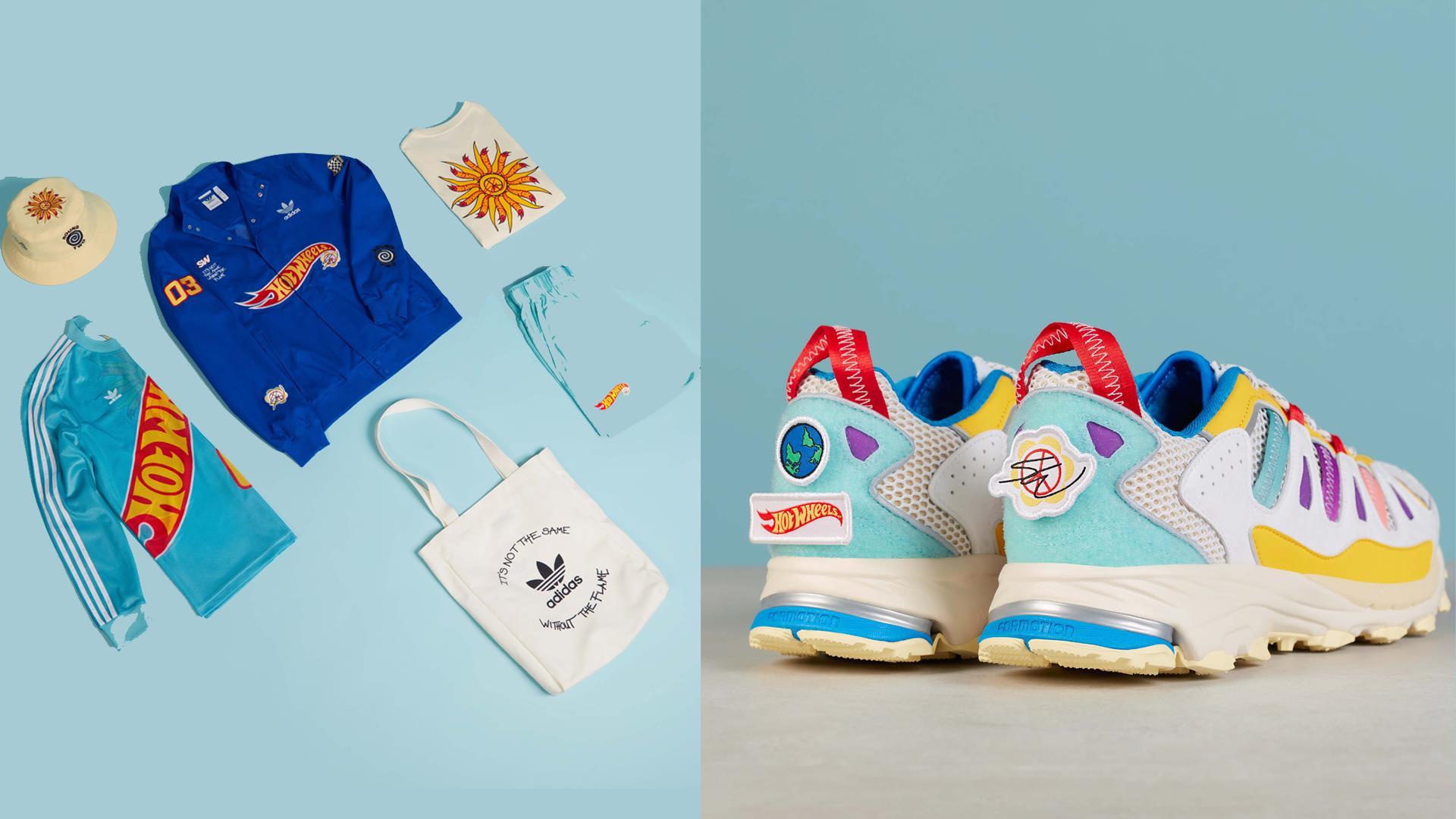
The Los Angeles-based designer Sean Wotherspoon returns with another release, this time combine his love for all forms of automotive memorabilia by bringing Hot Wheels into the frame to create a race inspired collection of apparel and footwear, brought to life with a series of bold graphics.

The apparel collection features a race jacket, long sleeve mesh t-shirt, cotton tee, trail shorts, a bucket hat and reversible tote bag. While the footwear release is comprised of an updated Superturf Adventure shoe with detachable patches and a take on adidas’ classic slider, the Adilette.

The Los Angeles-based designer Sean Wotherspoon returns with another release, this time combine his love for all forms of automotive memorabilia by bringing Hot Wheels into the frame to create a race inspired collection of apparel and footwear, brought to life with a series of bold graphics.

The apparel collection features a race jacket, long sleeve mesh t-shirt, cotton tee, trail shorts, a bucket hat and reversible tote bag. While the footwear release is comprised of an updated Superturf Adventure shoe with detachable patches and a take on adidas’ classic slider, the Adilette.

Source:

adidas AG

(c) Shima Seiki
17.08.2022

SHIMA SEIKI to Exhibit at Preview in SEOUL

Flat knitting solutions provider SHIMA SEIKI MFG., LTD., Japan, together with its Korean subsidiary SHIMA SEIKI KOREA INC., will participate in the Preview in SEOUL exhibition in Seoul, Korea this month.

Taking advantage of new regulations at the show which allow for the display of textile equipment at the venue this year, SHIMA SEIKI will be showing its latest combination of WHOLEGARMENT® knitting technology that allows a garment to be produced in its entirety without the need for linking or sewing afterward, and SDS®-ONE APEX series design software yields revolutionary game-changing flexibility and efficiency, not to mention sustainability.

Flat knitting solutions provider SHIMA SEIKI MFG., LTD., Japan, together with its Korean subsidiary SHIMA SEIKI KOREA INC., will participate in the Preview in SEOUL exhibition in Seoul, Korea this month.

Taking advantage of new regulations at the show which allow for the display of textile equipment at the venue this year, SHIMA SEIKI will be showing its latest combination of WHOLEGARMENT® knitting technology that allows a garment to be produced in its entirety without the need for linking or sewing afterward, and SDS®-ONE APEX series design software yields revolutionary game-changing flexibility and efficiency, not to mention sustainability.

Shown for the first time in Korea, whose flat knitting market has a strong following for WHOLEGARMENT® knitwear, is the SWG-XR next-generation WHOLEGARMENT® knitting machine. The SWG- name pays homage to the original SWG-X model of 1997, sharing with it the same 4-needlebed configuration featuring the company's own SlideNeedle™. Add to this a renewed spring-type moveable sinker system, a compact and lightweight carriage featuring 4 systems as well as auto yarn carriers. All contribute up to 25% higher efficiency, higher quality and increased product variety for supporting knits for all seasons. SWG-XR sets new standards for the next generation of waste-free, sustainable WHOLEGARMENT® knitting.

APEXFiz™ is subscription-based design software that maintains the proven functions that have made SHIMA SEIKI’s SDS®-ONE APEX series design systems so popular with fashion designers. Installed on personal computers, those strengths are now enhanced with the added versatility to adapt to different work styles and business environments including teleworking and telecommuting. APEXFiz™ software supports the creative side of fashion from planning and design to colorway evaluation, realistic fabric simulation and 3D virtual sampling. Virtual samples are a digitized version of sample making that are accurate enough to be used effectively as prototypes, replacing physical sampling and consequently reducing time, cost and material that otherwise go to waste. APEXFiz™ thereby helps to realize sustainability and digitally transform the fashion supply chain.

More information:
Shima Seiki
Source:

Shima Seiki