
Home
Highlights
Jobs
Companies and Headhunters are looking for ...
N E U: Sales Manager / Account Manager (m/w/d) - Technische Textilien
N E U: Geschäftsführer / General Manager (w/m/d) - Technische Textilien
Leitung Entwicklung Flachstrick (m / w / d)
Leitung Gewebeentwicklung (m/w/d) - Technische Textilien
Bekleidungstechniker (m/w/d) Nähtechnik / Konfektionstechnik
Nähmaschinen - Techniker (m/w/d)
Qualitätsmanager (m/w/d) - Belgien
Director of Innovation & Processes (m/f/d) - Belgium
Cross-functional Quality Manager (m/f/d) - Belgium
Leiter Innovation und Prozessmanagement (m/w/d) - Belgien

News
Companies and Markets
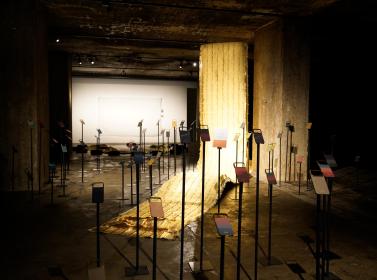
Home-Maxxing shapes Heimtextil Trends 27/28
Heimtextil Trends 27/28 place the tension between optimization and respite at the center of the coming interior-textile season. Under the theme “Home-Maxxing – The Performance of Everyday Living,” Heimtextil and Milan design platform Alcova explore how technology, functionality and sensory material qualities are reshaping homes, hospitality, workplaces and healthcare environments.
Textiles are framed explicitly as functional components: they can regulate light, absorb sound or filter air. At the same time, tactility, durability and understandable construction are gaining importance. The three directions, Staged Competence, Inside, Out and Hyper Presence, range from visibly engineered performance and exposed connections to natural fibers and surfaces whose physical qualities take priority.
The trends will be presented in the Trend Space at Heimtextil from 12 to 15 January 2027. For home and contract-textile suppliers, the key message is that technical performance is no longer expected to disappear into the background; it increasingly becomes part of the visual and material language of a product.
IIT Delhi and Indian Air Force launch AI research for parachutes and safety equipment
The Indian Institute of Technology Delhi (IIT Delhi) and the Indian Air Force (IAF) are combining research expertise in technical textiles. According to IIT Delhi’s Department of Textile and Fibre Engineering, the cooperation will focus on AI-powered research for parachutes and other safety equipment.
The initiative brings together textile material and structural expertise with data-driven methods. In parachute systems, material ageing, fabric construction, seams and joining technologies, as well as behaviour under dynamic loads, are safety-critical. AI models can support faster evaluation of testing data, condition classification and data-based development or maintenance decisions.
For the technical-textile industry, the cooperation is particularly relevant because it demonstrates how established textile testing and engineering can be combined with digital models. Beyond military use, the approach may also be relevant to rescue systems, personal protective equipment and other highly loaded textile structures.
PITAKA turns aramid fibre into a deliberately irregular woven surface
PITAKA has introduced a new weaving technique for aramid fibre at a brand event in Berlin. The company is best known for thin smartphone cases and accessories made with aramid. Its new “Trace Form” technique is intended to avoid a completely uniform programmed surface: selected fibres are allowed to drift from their prescribed path so that texture emerges from controlled irregularity.
The first application is the “Wind Over Wheat Trace Form Edition”, with a surface intended to evoke wind moving across a wheat field and offered in three finishes. PITAKA presents the method as an interaction between industrial precision, material response and human judgement. For textile and material developers, the notable point is that a high-performance fibre normally valued for strength and low weight is being used as the visible aesthetic element of the product itself.
bluesign links textile-mill water management to input-stream chemistry
bluesign argues that water management in textile wet processing starts with the chemicals and raw materials entering the process. Its core point is that water in dyeing and finishing is not simply a resource but a carrier for chemistry. What enters the process therefore affects water demand, wastewater load, air emissions, workplace exposure and potential residues in the finished textile.
The input-stream-management approach intervenes before wastewater treatment. By selecting appropriate chemical products and controlling the process, substances of concern should ideally be prevented from entering the system in the first place. For mills, the point is operationally important because investment in water and effluent treatment alone does not address the source of many impacts. The article provides useful context as chemical restrictions, water scarcity and supply-chain transparency requirements become more demanding.
Circ and Shenghong move textile-recycled polyester into commercial filament yarn production
US textile-to-textile recycler Circ has entered into a partnership with Shenghong Chemical Fiber New Material for the commercial production of polyester filament yarn using Circ’s recycled material. Shenghong will purchase Circ PET chip and manufacture recycled-content filament yarn at commercial scale. For Circ, the agreement expands access to one of China’s major fibre producers and creates an additional route to market for polyester recovered from textile waste. For brands and mills, the key point is that textile-to-textile feedstock is moving closer to established high-volume yarn manufacturing structures. The partnership also underlines that scaling chemical recycling depends not only on polymer recovery but on robust downstream relationships with fibre and yarn producers.
Better Cotton and Avalo use AI to accelerate climate-resilient cotton breeding
The Better Cotton Initiative (BCI) has partnered with agricultural technology company Avalo to accelerate the breeding of more climate-resilient cotton. Avalo uses an AI-enabled platform to identify genetic traits relevant to locally adapted plants that require less water and fertiliser. According to BCI, the approach can shorten the time needed to develop new varieties, an increasingly important factor as heat, water scarcity and shifting rainfall patterns affect cotton-growing regions. Avalo has already worked with BCI to enrol a significant number of new producers for the 2026 season and has tested a digital platform for collecting and reporting programme data. The partnership therefore connects plant breeding, digital data management and the requirements of an international cotton standard.
Cinte Techtextil China 2026 to open next week
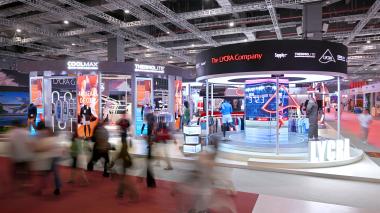
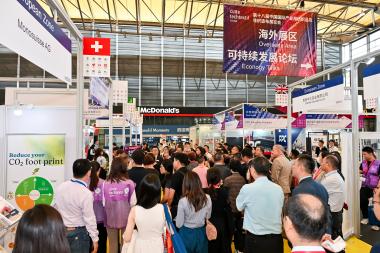
As Asia’s premier platform catering to the evolving needs in technical textiles and nonwovens, Cinte Techtextil China will open next week at the Shanghai New International Expo Centre, gathering over 300 exhibitors from 15 countries and regions. Across Halls W3 to W5, this edition will create chances for fast-growing sectors and emerging trends – such as Mobiltech, Medtech & Protech, Indutech and more. The curated zones, pavilions, and fringe programme are designed to better connect exhibitors with targeted buyers from across China, Asia-Pacific, and further afield. Meanwhile, the Association Village will gather international industry associations to foster even more global collaboration.
As a hub for global innovation, the fair will feature a strong contingent of international industry leaders in Hall W5’s Overseas Zone, including Andritz (China) Ltd, Groz-Beckert (Germany), A.Celli SPA (Italy), and Dilo (Germany), while others such as Picanol NV (Belgium) will showcase in Hall W4.
NC State joins $160 million initiative for biobased fibre materials
NC State University is a core partner in the BRIDGES Engine initiative backed by the US National Science Foundation, with up to $160 million available over ten years. A central focus is the development of miscanthus and switchgrass as feedstocks for biobased products.
The plant fibres are intended for applications including automotive, construction and packaging. NC State will contribute techno-economic assessment, sustainability analysis and processing expertise to convert agricultural feedstocks into fibre materials suitable for industrial use.
For technical textiles, the initiative is particularly relevant because it goes beyond laboratory-scale material development and aims to build supply chains, processing capacity and regional markets in parallel.
Valmet and Metsä scale 3D fibre forming to commercial production
Metsä Group has selected Valmet to supply what the companies describe as the world’s first commercial-scale production line for Valmet’s 3D Fiber technology. The line will be installed in Äänekoski and is scheduled to start up in 2028, with a nominal capacity of more than 100 million three-dimensional fibre products per year.
The process converts cellulose fibres directly into lightweight yet rigid end products. Valmet combines fibre processing, forming, automation and final packing in an integrated production chain. The technology has been co-developed with Metsä Spring since 2020 and was initially validated in a demonstration plant.
Although packaging is the primary target market, the development is relevant to the textile and fibre sector because it demonstrates how fibre-based structures and forming technologies are moving into three-dimensional industrial applications.
Dyneema SK80 targets significantly longer service life for mooring lines
Avient is introducing Dyneema SK80, a new HMPE fibre grade for mooring lines and offshore applications. According to the company, the fibre was engineered at polymer level to deliver at least twice the durability and fatigue resistance of Dyneema SK78 in demanding mooring applications.
The technological emphasis is therefore less on headline tensile strength than on service life under cyclic loading. In mooring systems, repeated load cycles, abrasion, bending stress and environmental exposure are major failure drivers. Improved fatigue resistance can therefore have a direct effect on maintenance intervals, operational safety and lifecycle costs.
The new fibre will be presented at SMM in Hamburg in early September. For Textination, the development is relevant because high-performance fibres are increasingly being positioned not only through weight and strength advantages, but through durability, reliability and the total cost of technical textile systems.
Business
Study - Asia
Technical University Darmstadt conducts study
"India and China as procurement markets". A comparative study for the German textile industry
Textination members can request the results of the study under the keyword China-India by mail: news@textination.de.
Study - Austria
Bank Austria presents study on textile and clothing industry
In May 2017 the bank presented its industry report on the Austrian textile and clothing industry.
You can find the download link for the study in our newsline from 18 July 2017.
Good
to Know
TexCampus
TexCampus – the
knowledge database for
research publications
R & D is a decisive competitive factor.
Find out as early as possible what the research landscape is working on.
Find information quickly and specifically in our online database.
Benefit from the time advantage: final reports, scientific-technical documentations and editorial contributions on research projects available 24/7.
Stay informed about innovations in your sector.
Feel free to contact us by email, if you are interested in becoming a part of TexCampus.
Downcheck
Welcome to DownCheck
Bundled knowledge around the topic "feathers & down".
Regardless of whether you need tips on purchase or care of bedding or have questions about materials and origin or brands and licenses, you can find here answers to your questions.
And should you ever have further inquiries, we look forward to your mail to daunencheck@textination.de.
Tenders
Get your weekly update of European tenders
You are welcome to subscribe to our tender service:
- Textiles
- Clothing
- Textile service
Apply to our mailing service and order your test mail free of charge.

Sustainability