
From the Sector

Reset
12.10.2026

Nike, Patagonia and other brands join new Microfiber Action Alliance

The Nature Conservancy has launched the Microfiber Action Alliance, bringing together Nike, Patagonia, Under Armour, lululemon, Cotopaxi, REI Co-op and other companies to accelerate practical measures against microfiber pollution.

The initiative is designed to complement existing scientific work by The Microfibre Consortium. Participating companies will apply and refine interventions within their own supply chains, generate evidence on what works and share implementation lessons with the wider industry. TNC emphasises prevention because both synthetic and treated natural fibers can contribute to microfiber pollution and released particles are difficult to remove from the environment.

Potential interventions include changes in material selection and textile construction, manufacturing-process improvements and filtration. The Alliance therefore shifts attention from measuring fiber fragmentation alone to integrating low-shedding design and manufacturing decisions into operational practice.

09.10.2026

GRAPHERGIA turns graphene-coated polyester into self-charging textile architectures

Two GRAPHERGIA research teams received poster awards at Graphene Week 2026 for work on energy harvesting, sensing and storage. One project uses graphene-based triboelectric nanogenerators in aerospace composite structures to convert mechanical movement into electrical signals for real-time monitoring.

The second development is directly textile-based. Researchers at FORTH/ICE-HT use a laser-assisted process to convert graphene-oxide-coated polyester textiles into conductive architectures.
Continuous conductive tracks serve as current collectors or electrodes for triboelectric nanogenerators, while laser-patterned interdigitated structures form micro-flexible supercapacitor electrodes.

The objective is to couple energy generation and storage in one self-charging textile platform that can support IoT integration. The work therefore moves beyond attaching electronics to fabric: the textile itself becomes part of the electrical architecture.
The project is funded under Horizon Europe and brings together partners including Adamant Composites and FORTH/ICE-HT.


Source:

GRAPHERGIA Horizon Europe project / Adamant Composites / FORTH-ICE/HT

UNIFI, Inc.
09.10.2026

UNIFI combines spun-yarn hand with filament performance and adds fluorine-free water resistance

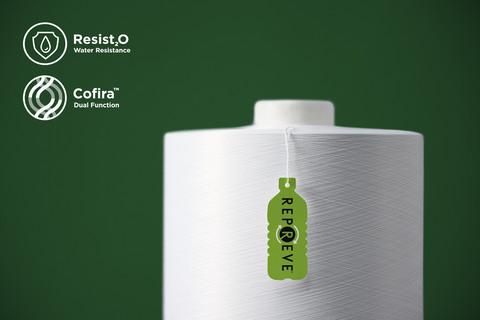
UNIFI has introduced Cofira™, a yarn platform designed to combine the visual and tactile character of spun yarns with filament-yarn functionality. The construction can incorporate other UNIFI technologies and is offered in virgin and REPREVE polyester, including REPREVE Takeback. 

Recycled options can be traced through FiberPrint and are linked to U-TRUST, GRS and SCS certification claims. The company is also expanding its water-resistant portfolio with Resist2O™ Pro. Rather than relying on a conventional topical durable-water-repellent finish, the technology is engineered for different forms of fabric construction and is described as fluorine-free and PFOA-free below 5 ppb.

UNIFI positions the two developments for apparel, furnishings, gear, accessories and industrial applications. Both will be presented in October at Performance Days in Munich and Functional Fabric Fair in Portland, giving the technologies immediate exposure to performance-material developers.


© Recover Textile Systems, S.L.
09.10.2026

Recover™One blends recycled cotton and polyester without downstream overdyeing

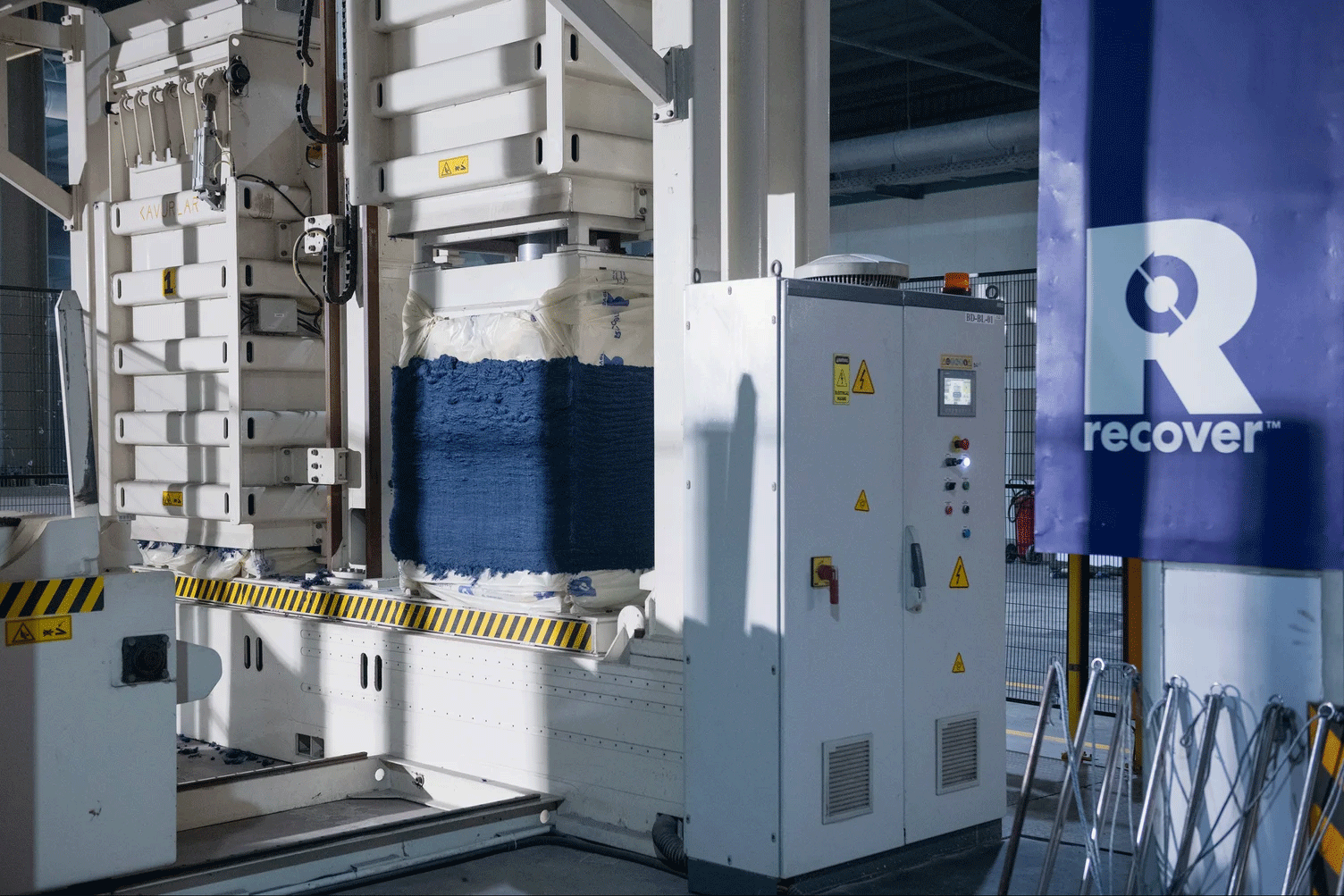
Recover has launched Recover™One, a range of ready-to-spin blends made entirely from recycled cotton and recycled polyester. Cotton-to-polyester ratios can be adjusted for different applications, and the material can be supplied as fiber blends or as fabric through Recover’s supply-chain partners.

The technical point is color management. Recover combines the original colors of textile-waste feedstocks with color-matched, dope-dyed recycled polyester through an intimate blending process.
The company says this creates consistent solid, heather and mélange options without a downstream overdyeing stage, reducing processing time and avoiding an additional wet-finishing step.

Applications cited include single jersey, French terry and fleece. Recover also refers to previously verified life-cycle assessments for its recycled cotton, but the new development is the system-level combination of recycled inputs, predefined color and spinning-ready consistency rather than recycled cotton alone.

Source:

 Recover Textile Systems, S.L.

09.10.2026

Circ and Huafon plan 200-tonne-per-day first phase for textile recycling in China

Circ and Huafon are partnering on a multi-phase textile-to-textile recycling site within Huafon’s industrial footprint in China. 
The plant will use Circ’s process for polycotton waste and recover both major material streams: recycled PTA and MEG for polyester production and recycled cellulosic pulp for new textiles.

Phase one is designed to process approximately 200 metric tonnes of textile waste per day, with additional capacity planned. Huafon will invest in the project and contribute engineering, procurement, logistics and commercial capabilities, while Circ brings its recycling technology and a network of brands, manufacturing partners and downstream customers.

Textination has previously covered Circ partnerships in China, including recycled polyester filament production with Shenghong. This project represents a distinct new development.
It concerns construction of recycling capacity itself rather than downstream yarn conversion. Circ is simultaneously developing its first industrial-scale facility in France.

09.10.2026

Textile Exchange puts numbers on textile-to-textile recycling capacity for the first time

Editorial relevance: Very high – establishes a global baseline for available spinnable textile-to-textile recycled fiber and quantifies the gap between waste availability and usable output.

Textile Exchange has published a first global methodology for estimating textile-to-textile recycled fiber availability for apparel and home textiles. Developed with Fashion for Good, Reverse Resources and TEXroad, the framework combines available waste volumes with collection, sorting, processing and technology constraints to estimate how much material can actually become spinnable fiber.

The analysis projects recyclable textile feedstocks to increase from roughly 10 million tonnes in 2025 to around 15 million tonnes by 2030. Yet the quantity of recycled spinnable fiber is estimated at only 1–1.5 million tonnes in 2025, rising to approximately 3–5 million tonnes by 2030.

The scope covers post-industrial and post-consumer textiles and both mechanical and chemical recycling of cotton, polyester, nylon, manmade cellulosics, wool and and blends.
Textile Exchange stresses that the figures are directional: data quality remains uneven, and future editions are intended to incorporate more primary data from recyclers and suppliers.