From the Sector

Reset
TRAPIS Textile Printing Photo Mimaki Europe
TRAPIS Textile Printing
17.12.2025

Mimaki: TRAPIS Textile Printing at Heimtextil 2026

Mimaki Europe, a leading provider of industrial inkjet printers and cutting plotters will return to Heimtextil with a renewed focus on material versatility and simplified textile production. At the tradeshow, the company will present TRAPIS, its innovative pigment transfer printing system that enables manufacturers to print on a wide range of fabrics using a single ink set – ranging from natural fibres to blended and synthetic fabrics. Designed for easy, compact and cost-efficient operation, TRAPIS removes traditional barriers to digital textile printing, while also offering the added benefit of drastically reduced water use compared to conventional processes.

Mimaki Europe, a leading provider of industrial inkjet printers and cutting plotters will return to Heimtextil with a renewed focus on material versatility and simplified textile production. At the tradeshow, the company will present TRAPIS, its innovative pigment transfer printing system that enables manufacturers to print on a wide range of fabrics using a single ink set – ranging from natural fibres to blended and synthetic fabrics. Designed for easy, compact and cost-efficient operation, TRAPIS removes traditional barriers to digital textile printing, while also offering the added benefit of drastically reduced water use compared to conventional processes.

“Opening up opportunities, without the constraints of material restrictions and overly complex workflows, will give manufacturers that much needed operational freedom,” says Arjen Evertse, Director Sales at Mimaki Europe. “With TRAPIS, users can print on a wide variety of fabrics using a single ink set, something that traditional processes simply cannot offer. And because TRAPIS requires no pre-treatment, no washing and minimal infrastructure, it becomes an accessible solution for companies of any size. The fact that it also uses significantly less water is a valuable bonus, but its greatest impact lies in how easily it enables short-run, customised and localised printing on virtually any textile.”

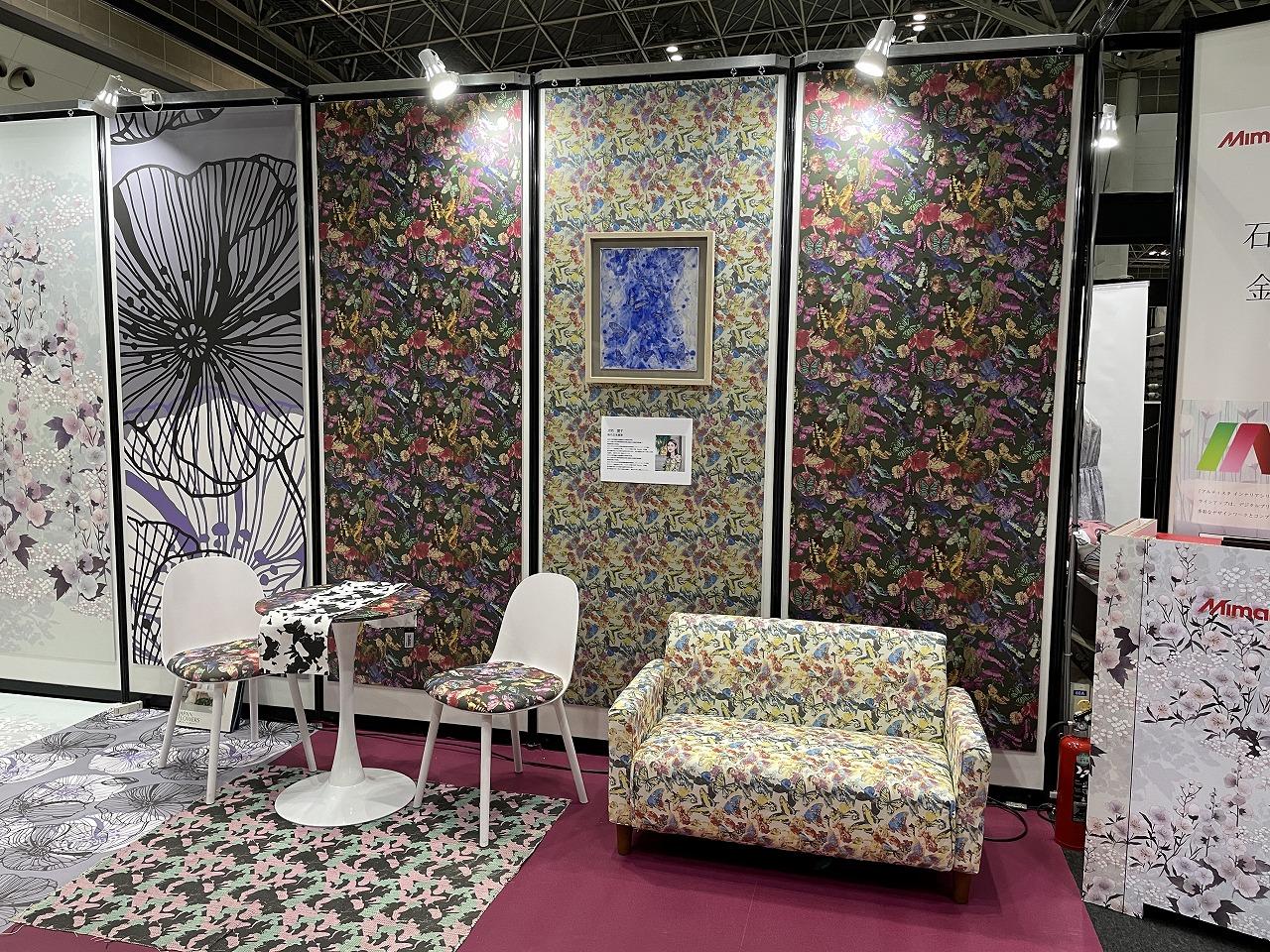
Heimtextil visitors will experience first-hand TRAPIS’ ground-breaking yet simple two-step pigment transfer printing process on Mimaki’s booth – comprising of a Mimaki TS330-1600 with built-in heater, TP410 inks and a high-pressure calender. TRAPIS is uniquely positioned with its ability to print on a wide variety of fabrics, including cotton, viscose, polyester, blends and synthetics, unlike sublimation printing, which is limited to polyester-based textiles. Additionally, its compact footprint makes it ideal for small studios and businesses looking to introduce on-demand or short-run textile services, while reducing maintenance requirements and overall running costs.

The streamlined TRAPIS workflow also offers a sustainable solution to users, reducing water consumption by up to 90% (saving approximately 14.5 litres per square metre). The TRAPIS pigment inks are ZDHC MRSL Level 3 compliant and bluesign® APPROVED, ensuring both environmental and user safety.

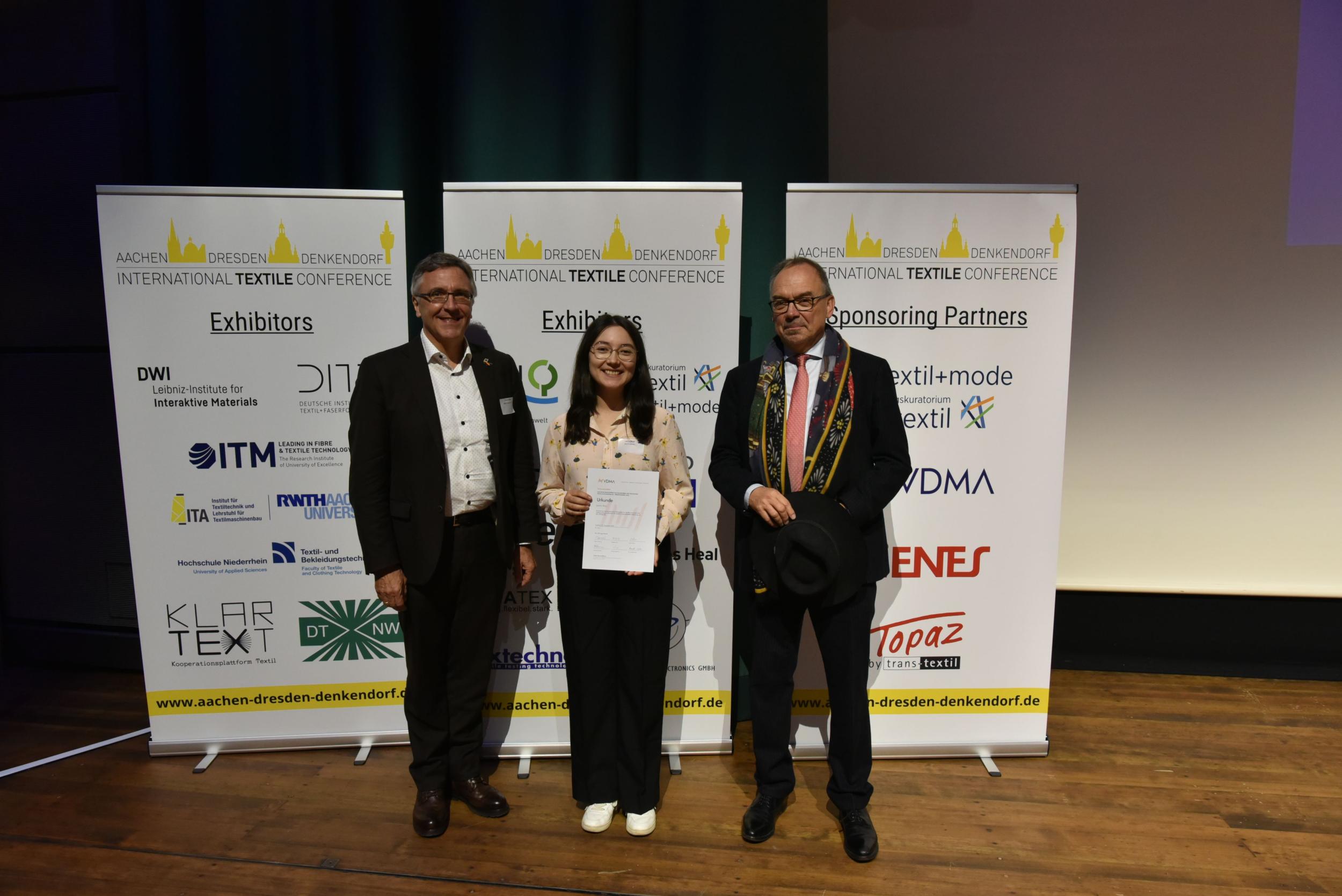
ITA Institute Director Professor Dr Thomas Gries, Janne Warnecke, and Peter D. Dornier (from left to right) (c) DITF
ITA Institute Director Professor Dr Thomas Gries, Janne Warnecke, and Peter D. Dornier (from left to right)
05.12.2025

Walter Reiners Foundation: Promotion and Sustainability Prizes awarded

ITA Master's student Janne Warnecke investigated tension differences over the fabric width in the weaving process and thereby contributed to quality assurance; ITA Bachelor's student Jasmin Roos found a basis for the development of recyclable yarns and textiles. For these developments, they were awarded the Walter Reiners Foundation's Promotion and Sustainability Prizes on 27 November. Peter D. Dornier, Chairman of the Walter Reiners Foundation, presented the awards at the Aachen-Dresden-Denkendorf International Textile Conference (ADD-ITC) in Aachen, Germany.

Thermoplastic elastomers as a recyclable alternative to elastane
The increasing importance of a circular economy for conserving resources and minimising negative environmental impacts requires innovative recycling concepts for textiles. The increasing use of elastane poses a particular challenge in textile recycling. Even small amounts of elastane cause difficulties in established recycling technologies such as thermomechanical recycling, for example by clogging filter media or decomposing into potentially toxic degradation products.

ITA Master's student Janne Warnecke investigated tension differences over the fabric width in the weaving process and thereby contributed to quality assurance; ITA Bachelor's student Jasmin Roos found a basis for the development of recyclable yarns and textiles. For these developments, they were awarded the Walter Reiners Foundation's Promotion and Sustainability Prizes on 27 November. Peter D. Dornier, Chairman of the Walter Reiners Foundation, presented the awards at the Aachen-Dresden-Denkendorf International Textile Conference (ADD-ITC) in Aachen, Germany.

Thermoplastic elastomers as a recyclable alternative to elastane
The increasing importance of a circular economy for conserving resources and minimising negative environmental impacts requires innovative recycling concepts for textiles. The increasing use of elastane poses a particular challenge in textile recycling. Even small amounts of elastane cause difficulties in established recycling technologies such as thermomechanical recycling, for example by clogging filter media or decomposing into potentially toxic degradation products.

Jasmin Roos won the Sustainability Award for her bachelor's thesis on the topic: ‘Potential of thermoplastic elastomers for thermomechanical textile recycling as an alternative to elastane: Experimental evaluation of PET/TPC blends’ with prize money of €3,000.

In her thesis, Jasmin Roos, supervised by ITA scientist Ricarda Wissel, took an in-depth look at the development of sustainable solutions for recycling elastic textiles. The innovative approach aims to replace conventional, non-recyclable elastane with melt-spun yarns made from thermoplastic copolyester elastomers (TPC). This can not only improve recyclability, but also contribute to reducing environmental impact, as harmful solvents can be dispensed with in yarn production.

The main objective of her work was to evaluate the suitability of blends of TPC and polyethylene terephthalate (PET) for joint thermomechanical recycling. Blend and melt spinning tests were carried out on a laboratory and pilot scale at the ITA facilities. Jasmin Roos succeeded in producing blends of different proportions of PET and TPC, based on typical elastane proportions in textiles, and successfully processing them into yarns on a melt spinning line – a crucial aspect for closed-loop recycling. The results of her bachelor's thesis thus form a promising basis for the development of recyclable elastic yarns and textiles.

Archroma & Fibre52®: Distribution partnership Graphic Archroma
05.12.2025

Archroma & Fibre52®: Distribution partnership

Archroma becomes the exclusive global distributor of Fibre52®’s patented chemistry—advancing a new standard in sustainable processing. Combined with Archroma’s AVITERA® SE dyes, the partnership delivers the industry’s most resource-efficient bleach-and-dye systems.
 
Archroma, a leading global specialty chemicals company committed to sustainable innovation, and Innovo Fiber LLC, owner of the patented Fibre52® system, announced an exclusive global distribution partnership to expand the reach of Fibre52®’s proven low-temperature, bleaching technology with innovative dyeing application to textile mills and brands worldwide.

When combined with Archroma’s AVITERA® SE reactive dye range, the collaboration brings forward a comprehensive system that reduces resource use across pretreatment and dyeing, setting a new benchmark for sustainable cotton and cotton/polyester production. Together, the technologies enable mills to reduce water use and CO₂ emissions by up to 50%, helping brands accelerate their progress toward carbon-reduction and sustainability targets.

Archroma becomes the exclusive global distributor of Fibre52®’s patented chemistry—advancing a new standard in sustainable processing. Combined with Archroma’s AVITERA® SE dyes, the partnership delivers the industry’s most resource-efficient bleach-and-dye systems.
 
Archroma, a leading global specialty chemicals company committed to sustainable innovation, and Innovo Fiber LLC, owner of the patented Fibre52® system, announced an exclusive global distribution partnership to expand the reach of Fibre52®’s proven low-temperature, bleaching technology with innovative dyeing application to textile mills and brands worldwide.

When combined with Archroma’s AVITERA® SE reactive dye range, the collaboration brings forward a comprehensive system that reduces resource use across pretreatment and dyeing, setting a new benchmark for sustainable cotton and cotton/polyester production. Together, the technologies enable mills to reduce water use and CO₂ emissions by up to 50%, helping brands accelerate their progress toward carbon-reduction and sustainability targets.

Under the agreement, Archroma will integrate Fibre52® into its global sales and technical network, expanding access to the ZDHC MRSL v3.1 and OEKO-TEX®-approved system for mills adopting high-performance, sustainable processing.

Revolutionizing Cotton and Cellulose Processing
Fibre52®’s breakthrough technology replaces harsh, high-temperature caustic bleaching with a gentle, low-temperature system that preserves the cotton fiber’s natural wax layer. The result is stronger, softer, more durable fabrics that reduce process weight loss by 2–4%, lower energy and water use, and deliver cost-neutral conversion—while minimizing the need for added softeners through the cotton’s naturally enhanced hand feel.

Already adopted by partner mills across multiple regions, the process delivers consistent results across all shades—including whites—and performs exceptionally on cotton/polyester blends, reducing time and water requirements. Combined with Archroma’s AVITERA® SE dyes, it enhances dye uptake, color depth, and overall resource efficiency—a next-generation solution for sustainable textile processing.

Engineered for versatility across modern bleaching and dyeing platforms, Fibre52® offers mills a single, low-impact system adaptable to a wide range of fabric constructions and process methods. Designed for cotton and effective with cotton/polyester, manmade cellulosics, and cotton-rich blends, the system also supports greater use of recycled cotton, advancing circular textile production.

By combining Archroma’s global reach and technical expertise with Fibre52®’s patented innovation, the partnership will accelerate the industry’s shift to a comprehensive bleach-and-dye system, unlocking new efficiencies and environmental benefits at scale. Together, Archroma and Fibre52® are setting a new benchmark for sustainable, high-performance cotton and blended fabric processing.

Executive Perspectives
“Our goal has always been to make sustainable cotton processing the global standard,” said Laura Thornquist, President of Innovo Fiber LLC, owner of Fibre52®. “Through our partnership with Archroma, we can now deliver that vision at scale—combining Fibre52®’s neutral-pH, caustic-free technology with Archroma’s AVITERA® SE dyes to create a complete, low-impact bleach-and-dye system. This is how the industry moves forward: practical innovation that improves performance, protects fibers, and dramatically reduces environmental impact.”

“This partnership is a strategic milestone that brings together Innovo Fiber’s groundbreaking technology and Archroma’s sustainability innovation. Together we are empowering the textile industry to achieve new levels of efficiency and environmental sustainability. This is a game-changer for the industry and we are excited to lead the charge,” said Dhirendra Gautam, VP Commercial, Archroma. “With Fibre52®, we now deliver a unique, industry-first solution, for cotton and its blends, as part of Archroma’s SUPER SYSTEMS+ portfolio.”

® Trademarks of Archroma registered in many countries.
Fibre52® is a registered trademark of Fibre52 (Innovo Fiber LLC).