From the Sector

Reset
12.03.2026

VIATT 2026: Expanding role in ASEAN textile sourcing

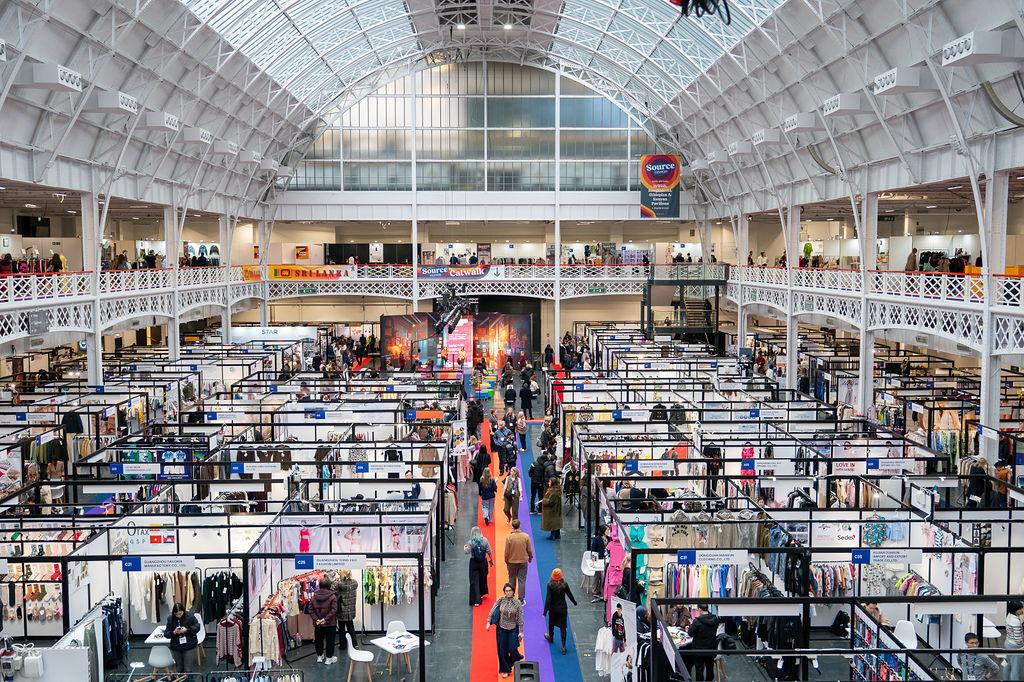
At its third edition, the Vietnam International Trade Fair for Apparel, Textiles, and Textile Technologies (VIATT) reinforced its role as a key sourcing and business platform for ASEAN’s textile industry. The three-day fair welcomed over 17,000 visits from 54 countries and regions, and featured over 460 exhibitors from 21 countries and regions across 18,000 sqm. The 2026 edition was marked by the introduction of new international pavilions and zones, broadening the fair’s sourcing scope across new geographies and product categories. The fringe programme, headlined by the debut Trend Forum, further distinguished VIATT as the region’s most integrated textile trade platform – uniquely spanning the entire value chain.
 

At its third edition, the Vietnam International Trade Fair for Apparel, Textiles, and Textile Technologies (VIATT) reinforced its role as a key sourcing and business platform for ASEAN’s textile industry. The three-day fair welcomed over 17,000 visits from 54 countries and regions, and featured over 460 exhibitors from 21 countries and regions across 18,000 sqm. The 2026 edition was marked by the introduction of new international pavilions and zones, broadening the fair’s sourcing scope across new geographies and product categories. The fringe programme, headlined by the debut Trend Forum, further distinguished VIATT as the region’s most integrated textile trade platform – uniquely spanning the entire value chain.
 
A focal point within the returning European Zone – which also spotlighted leading exhibitors from Italy, Switzerland, Türkiye, and the UK – the German Pavilion offered buyers direct access to a comprehensive range of well-engineered products and solutions, with a strong emphasis on quality, compliance, and time-proven manufacturing excellence. Complementing this, the inaugural Türkiye Zone made its debut at the fair, further broadening the European sourcing landscape and introducing a new dimension of textile expertise to VIATT’s growing international offering.

Drawn by VIATT’s diverse and extensive offerings, 10 buyer delegations from eight countries and regions sourced at the fair, whilst VIP buyers from renowned brands including Adidas, An Phuoc, Gap, H&M, Ivy Moda, Lululemon, Muji, Nitori, Osprey, Perry Ellis, and many more, also met with exhibitors to further promote business exchange.
 
Beyond the show floor, VIATT 2026 offered an expanded fringe programme designed to share trends, insights, and strategies with global industry players, bringing international perspectives to educate and inspire the local and regional markets. Key events included the inaugural Trend Forum, the Vietnam Textile & Garment Industry Development Strategy Summit (VTGIS), and the Textile Industry Exchange, alongside a series of seminars, panel discussions, workshops, and three captivating fashion shows that blended local and international perspectives.
 
Speakers’ insights
“Southeast Asia is no longer just a manufacturing alternative – it is becoming a strategic innovation hub. By integrating fashion, home textiles, and technology into one conversation, the fringe programme reflects how the industry operates today, as innovation increasingly happens between categories. Through talks, forums, and curated spaces, the Trend Forum allows trend content to go beyond visual inspiration, helping exhibitors and visitors move from trend-following to trend understanding.”
Mr Kai Chow, Lead Curator, VIATT Trend Forum and Creative Director of MUSEATIVE

“The fashion show helps us a great deal because we are not yet known in this country, and what we are looking for is a distributor or licensee who would be interested in distributing our brand here. We see Vietnam as a market with huge potential, and it is obviously the best place to be. Having started our distribution in Korea last year, Vietnam would be our second country in Asia, and the development of our brand throughout the region is exactly what we are working towards.”
Mr Hervé Coulombel, President and CEO of Royal Mer, France

“Digital transformation is no longer optional. Especially for 3D design, AI-assisted development and virtual collaboration are now becoming a standard tool to reduce waste, shorten lead time, and improve global communication. We encourage companies to adopt those these workflows early, so they will get a competitive advantage in cost, speed, and sustainability, and we wanted to give our audience a clearer picture of how AI can integrate into their production. They were really interested as it can help them reduce costs and build up the necessary strategic tools for sustainable growth.”
Ms Kathy Pham, Associate, Business Development, CLO, Vietnam
 
The Vietnam International Trade Fair for Apparel, Textiles and Textile Technologies (VIATT) is organised by Messe Frankfurt (HK) Ltd and the Vietnam Trade Promotion Agency (VIETRADE). 

(c) Institut für Textiltechnik (ITA) der RWTH Aachen University
26.02.2026

ITA: Pellet press enables thermomechanical textile recycling

Since the end of 2025, the technical centre of the Institut für Textiltechnik (ITA) of RWTH Aachen University has been equipped with a pellet press from the manufacturer Amandus Kahl GmbH & Co. KG, Reinbek, Germany. This press can efficiently compact shredded synthetic textiles at a throughput of up to 25 kg/h and process them into pellets with a diameter of 4 mm.

The produced pellets are characterised by a homogeneous geometry, defined bulk density and suitable flowability. This enables reliable dosing and continuous feeding into an extruder. In this way, the process-related prerequisite for thermomechanical textile recycling on a pilot scale at the ITA is established.

Current research at the institute includes the thermomechanical recycling of cleaning textiles made from polylactide (PLA). The pellet press was procured as part of the RePLAy research project. The Federal Ministry of Research, Technology and Space is funding the project as part of the BIOTEXFUTURE innovation space. 

Since the end of 2025, the technical centre of the Institut für Textiltechnik (ITA) of RWTH Aachen University has been equipped with a pellet press from the manufacturer Amandus Kahl GmbH & Co. KG, Reinbek, Germany. This press can efficiently compact shredded synthetic textiles at a throughput of up to 25 kg/h and process them into pellets with a diameter of 4 mm.

The produced pellets are characterised by a homogeneous geometry, defined bulk density and suitable flowability. This enables reliable dosing and continuous feeding into an extruder. In this way, the process-related prerequisite for thermomechanical textile recycling on a pilot scale at the ITA is established.

Current research at the institute includes the thermomechanical recycling of cleaning textiles made from polylactide (PLA). The pellet press was procured as part of the RePLAy research project. The Federal Ministry of Research, Technology and Space is funding the project as part of the BIOTEXFUTURE innovation space. 

Graphic by EDANA
26.02.2026

EDANA warns of consequences of misclassification of PET spunbond imports

EDANA would like to remind its members and industry stakeholders of the legal requirement to comply with the EU rules on customs classification when importing non-wovens from third countries outside the EU. In this regard, it was recently discovered that there appears to be a high level of customs misclassification occurring in the nonwoven’s industry. This could have dangerous and costly consequences for importers. 

Following repeated requests by its members, EDANA worked closely with the European Union and the World Customs Organisation to introduce in 2024 specific customs codes CN code 5603 14 20 and 5603 9420 in order to better monitor imports of certain PET spunbond and staple fibre products. Based on market intelligence, EDANA knows that third country imports of the respective products were in the range of 15,000 to 30,000 MT in 2024 and 2025. However, actual import volumes recorded under the specifically created CN codes were significantly lower. 

EDANA would like to remind its members and industry stakeholders of the legal requirement to comply with the EU rules on customs classification when importing non-wovens from third countries outside the EU. In this regard, it was recently discovered that there appears to be a high level of customs misclassification occurring in the nonwoven’s industry. This could have dangerous and costly consequences for importers. 

Following repeated requests by its members, EDANA worked closely with the European Union and the World Customs Organisation to introduce in 2024 specific customs codes CN code 5603 14 20 and 5603 9420 in order to better monitor imports of certain PET spunbond and staple fibre products. Based on market intelligence, EDANA knows that third country imports of the respective products were in the range of 15,000 to 30,000 MT in 2024 and 2025. However, actual import volumes recorded under the specifically created CN codes were significantly lower. 

“There is a clear mismatch between import volumes observed in the market and what is reported under the correct customs codes. Often, importers continue to use outdated customs codes as a matter of habit not paying due attention to changes of the Combined Nomenclature”, says Jacques Prigneaux from EDANA. “However, this is problematic, especially where certain products are subject to investigations by the EU authorities.” 

EDANA has therefore actively commenced an outreach initiative to raise awareness among its members. They have also contacted the European Commission and the national customs authorities of the EU member states to ask the authorities to enhance import checks. 

Incorrect customs classification not only makes EDANA’s work more difficult to monitor import flows and protect the interests of its members. It can also have severe negative legal consequences for importers. Customs authorities penalize misclassifications with additional duties, administrative fines and even criminal penalties. “To avoid such unpleasant surprises, we recommend that all members and their supply chain regularly review and update their customs classification databases and also instruct their customs agents accordingly” adds Mr Prigneaux. 

Awareness and compliance are in particular important where imports are under enhanced customs control (such as in the framework of import registration during an anti-dumping investigation) or subject to special trade or regulatory regimes (such as duty-free or reduced duty imports from countries with which the EU has special trade arrangements). 

A list of preferential trade regimes can be found on the website of the European Commission (here) and the Access2Markets webpage contains product-specific information for imports of goods into the EU (here). Also, presently, certain PET spunbond from China is subject to an EU anti-dumping investigation and imports were made subject to registration in December 2025 (see here for further information). The exact definition of the product subject to the investigation is: ‘non-woven needle-punched sheets of polyester filaments, whether or not reinforced by glass fibres, weighing more than 70 g/m², of a thickness exceeding 0.5 mm but not exceeding 1.8 mm, impregnated with one or more binders, containing less than 30% of glass fibres by weight, not coated or covered’. All imports of these products must be classified under TARIC code 5603 1390 70, CN code 5603 14 20 or TARIC code 5603 1480 70.

Source:

EDANA

24.02.2026

VIATT 2026: Connecting the ASEAN textile sector - sustainability, trends and technology

Opening this week Thursday, the Vietnam International Trade Fair for Apparel, Textiles, and Textile Technologies (VIATT) is set to welcome visitors from ASEAN’s dynamic textile market and beyond. From 26 to 28 February, VIATT 2026 – the fair’s third editions – will reinforce its strategic proposition with an integrated showcase of the three core sectors of the entire textile value chain. Beyond new sourcing opportunities in Apparel Fabrics & Fashion, Home & Contract Textiles, and Technical Textiles & Technologies, the fair will present an expanded fringe programme. Highlights include the inaugural Trend Forum, alongside an industry summit, local and international fashion shows, interactive workshops, and expert seminars. 

Opening this week Thursday, the Vietnam International Trade Fair for Apparel, Textiles, and Textile Technologies (VIATT) is set to welcome visitors from ASEAN’s dynamic textile market and beyond. From 26 to 28 February, VIATT 2026 – the fair’s third editions – will reinforce its strategic proposition with an integrated showcase of the three core sectors of the entire textile value chain. Beyond new sourcing opportunities in Apparel Fabrics & Fashion, Home & Contract Textiles, and Technical Textiles & Technologies, the fair will present an expanded fringe programme. Highlights include the inaugural Trend Forum, alongside an industry summit, local and international fashion shows, interactive workshops, and expert seminars. 

“As VIATT continues to grow and attract broader international participation, at this edition we are pleased to introduce the inaugural German Pavilion and Türkiye Zone, the Textile Chemicals and Dyes Zone, as well as the Trend Forum, a unified vision exploring all three sub-sectors,” said Ms Wilmet Shea, General Manager of Messe Frankfurt (HK) Ltd. “These additions highlight our commitment to enhancing the fair from multiple perspectives, as we explore new opportunities in diverse yet overlapping textile sectors, while reinforcing VIATT’s dedication to design, sustainability, innovation, and international collaboration – key elements that distinguish this platform as one of ASEAN’s premier industry hubs.”

Covering 18,000 sqm in Halls A and B, VIATT 2026 will host nearly 460 exhibitors from 21 countries and regions. The fair will feature an impressive lineup of international participants, including the returning pavilions from China, India, Taiwan, and the debut of the German Pavilion. The show floor will also include the European Zone, Japan Zone, Vietnam Zone, and the new Türkiye Zone. Econogy Hub will also return, alongside the Garment Display Zone and the Trend Forum, showcasing integrated LIFESTYLE TRENDS across the apparel, home, and technical sectors – a first for a textile trade fair.

In anticipation, visitors from across Asia-Pacific and beyond are preparing to source in Ho Chi Minh City. These include nine buyer delegations from six countries / regions, including Australia, India, Laos, Malaysia, Myanmar, Thailand, and Vietnam. To enhance the sourcing experience, the fair’s Global Exhibitor Search feature will enable buyers to connect efficiently with potential suppliers.

Fringe programme to reinforce connections across the textile spectrum
The fair’s range of fringe events include the inaugural VIATT Trend Forum, Vietnam Textile & Garment Industry Development Strategy Summit (VGTIS), and Textile Industry Exchange. Other featured events include various seminars and workshops designed to provide valuable insights into industry trends and innovations: 

  • Sustainable by Design: The Green Thread (Design & Trends): in this session, the Asia International Hemp Association, Bio-Smart Group, and TOUCHABLE will focus on the transformation of hemp fibre into a premium, eco-friendly material for fashion and home textiles. It addresses technological advancements and sustainability benefits that have facilitated hemp to enter high-value markets, emphasising its role in promoting circular design and reducing environmental impact. 
  • Fashioning a Circular Textile Economy Through Industry Collaboration (Econogy Talks): panellists from Covation Biomaterials, the Hong Kong Research Institute of Textiles and Apparel (HKRITA), RMIT University Vietnam, the UK Fashion and Textile Association (UKFT), and XAVAN will focus on circularity and the importance of solutions such as sustainable manufacturing, circular business models, recycling infrastructure, novel technologies, and more.
  • Vietnam Sourcing Forum: Insights for Suppliers and Buyers (Market Information & Business Strategies): in collaboration with MoveToAsia, this panel discussion provides expert insights for exhibitors and buyers relating to sourcing in Vietnam. It addresses key considerations for overseas stakeholders, including common misconceptions, pain points, and pitfalls faced by first-time buyers, and explores manufacturing operations, sales channels, and Vietnam’s role as a garment manufacturing hub. 
  • Redefining AI’s Role in Automated Textile Material Inspection (Technology & Solutions): in this seminar, AiDLab examines how AI is transforming material inspection within the textile industry. Traditional methods often rely on human checks, leading to inefficiencies. The discussion will focus on the advantages of AI, including enhanced accuracy and real-time inspection in fast-paced production environments. Challenges in adopting AI will also be addressed, along with essential considerations for companies preparing for implementation.

In addition, VIATT 2026 will feature three captivating fashion shows that blend local and international trends: the Local Booming Designer – Phan Dang Hoang will present a collection that fuses Vietnam’s rich cultural heritage with modern aesthetics. The Sustainable, Zero-Waste Fashion Show – KHAAR features a luxury brand that combines heritage craftsmanship with innovation, using circular materials and digital design for sustainable fashion. The third show, the Essence of French Fashion, will feature esteemed brands Royal Mer, a heritage knitwear house known for its timeless sea-inspired garments designed for durability across generations, and Fantaisie Militaire, which draws from military styles to emphasise functionality, timelessness, and the value of ‘Made in France’. Fairgoers can also look forward to the Upcycled Jewellery Workshop, a hands-on experience for participants to transform discarded textiles into unique, handcrafted accessories.

The Vietnam International Trade Fair for Apparel, Textiles and Textile Technologies (VIATT) is organised by Messe Frankfurt (HK) Ltd and the Vietnam Trade Promotion Agency (VIETRADE). VIATT 2026 will be held from 26 – 28 February 2026.

Bacterial cellulose film produced by Sumatrix. Photo: Source: Sumatrix Biotech (CC BY-NC 4.0)
Bacterial cellulose film produced by Sumatrix.
24.02.2026

Fabricating vegan and circular leather alternatives from bio-tech derived cellulose

Fabulose is an EU funded project coordinated by the German Institutes of Textile and Fiber Research (DITF). Its consortium consists of leading research institutes, biotech innovators, and industry stakeholders who aim to create high-performance, biobased and recyclable leather-like fabrics, using efficient biotech production routes for bacterial cellulose, cyanophycin and bacterial pigments

Current leather alternatives are either made from petrol-based plastics and non-recyclable, or they are (partly) biobased, but difficult to scale up and recycle. The project, supported by the Circular Bio-based Europe Joint Undertaking (CBE JU), is investigating how animal-based materials can be replaced by environmentally friendly alternatives in industries such as automotive, fashion, and upholstered furniture.

Fabulose is an EU funded project coordinated by the German Institutes of Textile and Fiber Research (DITF). Its consortium consists of leading research institutes, biotech innovators, and industry stakeholders who aim to create high-performance, biobased and recyclable leather-like fabrics, using efficient biotech production routes for bacterial cellulose, cyanophycin and bacterial pigments

Current leather alternatives are either made from petrol-based plastics and non-recyclable, or they are (partly) biobased, but difficult to scale up and recycle. The project, supported by the Circular Bio-based Europe Joint Undertaking (CBE JU), is investigating how animal-based materials can be replaced by environmentally friendly alternatives in industries such as automotive, fashion, and upholstered furniture.

Fabulose uses advanced fermentation techniques, utilizes waste streams as feedstocks, and optimizes processes with the assistace of AI. This enables the environmentally-friendly and efficient production of bacterial cellulose, cyanophycin and pigments. These bio-based materials are combined in a coating formulation that replicates the durability and aesthetics of traditional leather. DITF’s HighPerCell® technology allows for re-spinning of bacterial cellulose to filaments to create recycled textile backings that offer high tensile strength without toxic agents. Instead of processing individual batches, the technology also allows to implement a roll-to-roll production process, thereby simplifying future scale-up to cost-effective mass production.

In addition, market requirements have been collected to select optimal material characteristics, while eco-design and Safe-by-design principles help to assess potential risks and ensure alignment with the safety and sustainability objectives. A digital twin framework will include key process parameters for optimisation and monitoring of material performances.

Summary of the key project innovations:

  • Using fermentation products to enable fast and cost-effective production of raw materials
  • Grow micro-organisms on waste feedstocks and CO2 to reduce production costs and environmental impact
  • Re-spinning bacterial cellulose to filaments to create recyclable, consistent and high-quality fabrics
  • Enabling production of cyanophycin to create durable coatings and finishing
  • Implementing roll-to-roll production process to simplify future scale-up

Project partners
The Fabulose project has a duration of 3,5 years and a budget of ca. 3,5 M euro.

The consortium includes 10 partners from 6 European countries, spanning the entire value chain, from research to real-world applications:

German Institutes of Textile and Fiber Research Denkendorf (DITF) (Germany), Next Technology Tecnotessile Societa Nazionale (Italy), University of Maribor (Slovenia), Sumatrix Biotech (Turkey), VTL GmbH (Austria), Novis GmbH (Germany), Melina Bucher (Germany), Benecke-Kaliko GmbH (Germany), Konrad Hornschuch GmbH (Germany), University of Aveiro (Portugal), and Steinbeis 2i GmbH (Germany).

Kraig Biocraft Laboratories Photo Kraig Biocraft Laboratories
17.02.2026

Kraig Activates First Wave of 2026 Production Program

Kraig Biocraft Laboratories, Inc., a global leader in spider silk technology*, announced that its 2026 production plan has officially moved from strategy to execution.
 
The Company has now moved bio-material to incubation, getting a jumpstart on its March production plan and formally initiating its multi-ton spider silk scale-up initiative.
 
This milestone follows Kraig’s recently announced 2026 production schedule. This aggressive plan is set to achieve sustained monthly production of recombinant spider silk cocoons at unprecedented commercial volumes. With the release of the first wave of production materials now complete, Kraig Labs has activated its expanded manufacturing pipeline and commenced field-level implementation.
 
"This is the moment where planning becomes production," said Kim Thompson, Kraig Labs CEO and Founder. "Our 2026 roadmap was built around disciplined expansion, operational efficiency, and multi-ton output. Today, that roadmap is in motion. Bio-materials have recently been moved to incubation in preparation for the March production run."
 

Kraig Biocraft Laboratories, Inc., a global leader in spider silk technology*, announced that its 2026 production plan has officially moved from strategy to execution.
 
The Company has now moved bio-material to incubation, getting a jumpstart on its March production plan and formally initiating its multi-ton spider silk scale-up initiative.
 
This milestone follows Kraig’s recently announced 2026 production schedule. This aggressive plan is set to achieve sustained monthly production of recombinant spider silk cocoons at unprecedented commercial volumes. With the release of the first wave of production materials now complete, Kraig Labs has activated its expanded manufacturing pipeline and commenced field-level implementation.
 
"This is the moment where planning becomes production," said Kim Thompson, Kraig Labs CEO and Founder. "Our 2026 roadmap was built around disciplined expansion, operational efficiency, and multi-ton output. Today, that roadmap is in motion. Bio-materials have recently been moved to incubation in preparation for the March production run."
 
The March production run represents the first major deployment under the Company's 2026 plan. The initiative is designed to drive consistent output at levels never before seen, while reinforcing quality control, supply chain stability, and downstream processing capacity.
 
By initiating this production cycle, Kraig Labs is delivering on its commitment, creating the world's first reliable, repeatable, and scalable commercial spider silk manufacturing. The Company's vertically integrated model enables rapid deployment of materials, controlled expansion of silkworm rearing operations, and alignment with future customer demand.
 
"Our focus is clear," Thompson continued. "Execution. Volume. Commercialization. Every production cycle strengthens our position as the global leader in recombinant spider silk."
 
Kraig Labs expects this March run to set the pace for subsequent production cycles throughout 2026, forming the foundation for sustained monthly metric-ton-level spider silk production.

Source:

Kraig Biocraft Laboratories