

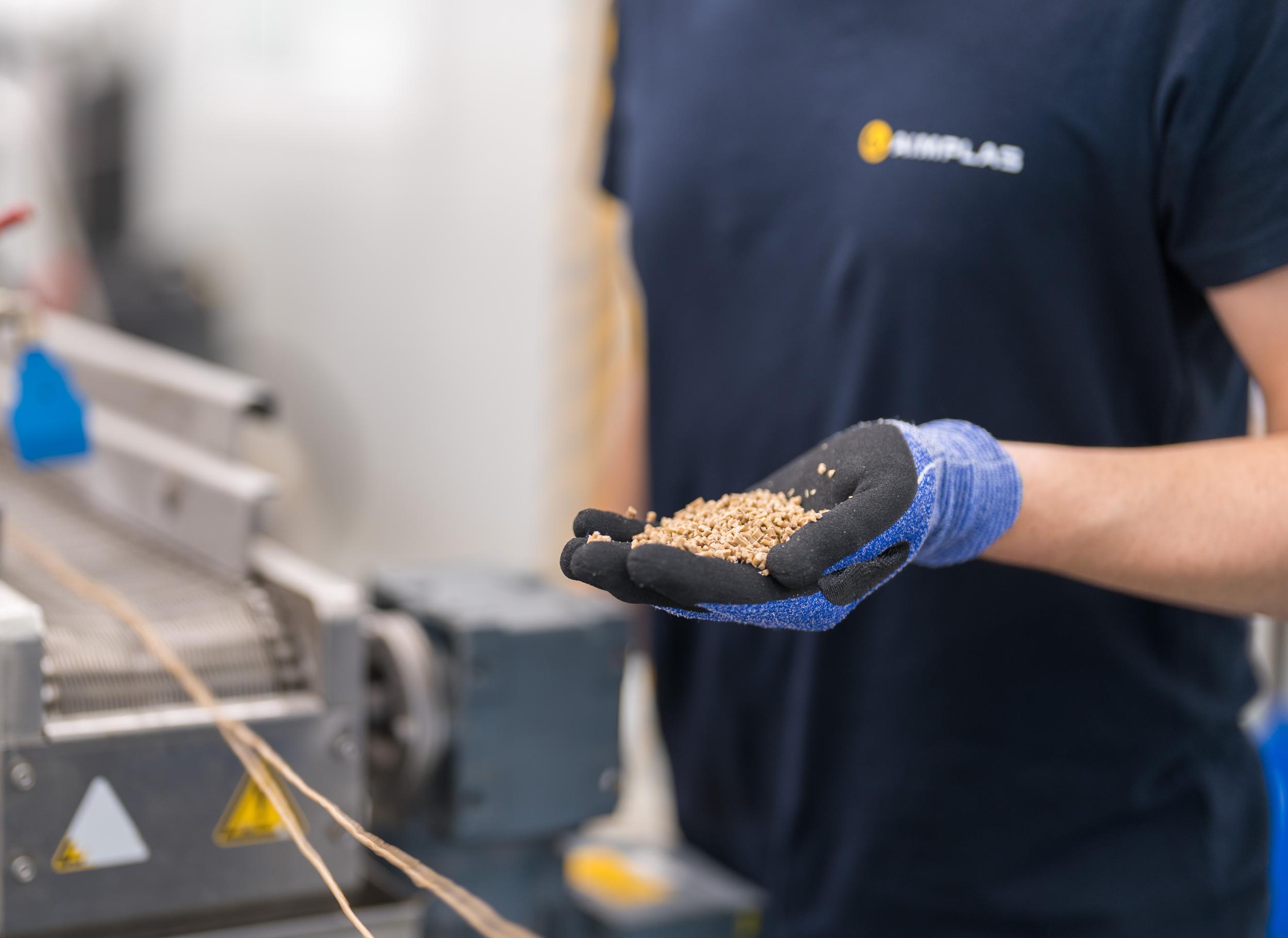


IMPLICIT: New Pathways for Recycling Auxiliary Composite Manufacturing Waste
The project valorises single-use auxiliary waste such as vacuum bags, films and technical fabrics for applications in the automotive, technical textile and urban furniture sectors.
The companies Solteco, Birziplastik, Faperin and Industrias Alegre, together with the technology centres AIMPLAS, Eurecat, Tecnalia and Leartiker, are participating in this research initiative funded by CDTI and the European Regional Development Fund (ERDF).
The composite materials industry has experienced significant growth in sectors such as aerospace, railway, naval and renewable energy, thanks to its ability to provide lightweight, strong and durable solutions. However, these processes generate substantial amounts of plastic waste, especially single-use auxiliary materials such as vacuum bags, release films and absorbent fabrics. These materials are essential to ensure the quality of manufacturing processes, but after use they usually end up in landfill or are incinerated due to the difficulty of recycling them.
The IMPLICIT project addresses this challenge through the development of multimodal recycling strategies that combine mechanical, physical and chemical technologies to recover these materials with the highest possible purity and enable their industrial reuse. The aim is to generate new recycled raw materials that can be used in high value-added applications, such as automotive components, technical textiles and urban furniture elements.
Funded by the Spanish Ministry of Science, Innovation and Universities through the Centre for the Development of Industrial Technology and Innovation (CDTI), with the support of European Union European Regional Development Fund (ERDF) funding, IMPLICIT proposes a paradigm shift by transforming this waste into new resources, in line with European circular economy goals.
The initiative brings together a consortium of eight entities representing different links in the plastics value chain. Participating companies include Solteco (project leader), Birziplastik, Faperin and Industrias Alegre, together with the technology centres AIMPLAS (technical leader), Eurecat, Tecnalia and Leartiker. In addition, the project has been promoted thanks to AEMAC, the Spanish Composite Materials Association, and Airbus, which collaborates as a strategic partner by providing real waste generated from aerospace manufacturing processes.
Pau Manclús, Chemical Recycling Researcher at AIMPLAS, stated that “IMPLICIT represents a decisive step towards sustainability in the composites industry by addressing the recycling of auxiliary materials, which have historically been excluded from valorisation strategies. Thanks to collaboration between companies, technology centres and industry associations, the project demonstrates that it is possible to transform complex waste into useful resources, closing the life cycle of these materials and helping to reduce the environmental impact of key industrial sectors.”
This collaboration makes it possible to tackle the challenge from a comprehensive perspective, from waste collection and treatment to the validation of new products in real applications, thus addressing one of the industry’s main environmental challenges: the management of difficult-to-recycle waste.
Industrial Validation and New Market Opportunities
One of the project’s key pillars is the validation of recycled materials through real industrial demonstrators. In this regard, the recovered materials will be transformed into new products such as technical automotive parts, profiles for urban furniture and multifilaments for technical textiles.
Furthermore, the project envisages the creation of new business opportunities linked to advanced recycling and sustainable manufacturing, thereby helping to strengthen industrial competitiveness.
From a technical perspective, IMPLICIT develops a multimodal recycling approach for materials mainly manufactured with thermoplastic polymers such as PA, PET, PE and PP. This approach integrates mechanical recycling processes (shredding, separation and extrusion), physical recycling based on selective dissolution, and chemical recycling technologies such as solvolysis to remove thermoset resins and recover high-value monomers and oligomers.
The project also addresses key challenges such as waste heterogeneity and resin contamination through advanced decontamination, compounding and additive formulation processes aimed at improving the mechanical properties of recycled materials and ensuring their industrial viability.
Life Cycle Assessment (LCA) and Life Cycle Costing (LCC) analyses will make it possible to evaluate the environmental, economic and functional impact of the developed solutions, facilitating decision-making based on sustainability criteria.
IMPLICIT, reference number CPP2023-010867, is funded by the Spanish Ministry of Science, Innovation and Universities through the Centre for the Development of Industrial Technology and Innovation (CDTI), as well as by the European Regional Development Fund (ERDF), under the 2024 public-private collaboration projects programme.
AIMPLAS composite materials project European Union Spain IMPLICIT life cycle assessment
AIMPLAS