
From the Sector

from to
Reset
Großer Preis des Mittelstandes für PERLON® (c) PERLON®
Jakob Jonsson (CCO)
22.09.2021

Großer Preis des Mittelstandes for PERLON®

  • In 2021 Pedex GmbH in Affolterbach was nominated for the ‘Großen Preis des Mittelstandes’ (a business award for small and medium sized companies).

The ‘Großen Preis des Mittelstandes‘ award has been the single most popular business award in Germany since 1994. This award isn’t just about numbers, jobs or innovation but the business as a whole. Every November, the Oskar-Patzelt-foundation invites nominations of medium-sized companies for the competition from communities, associations, organisations and companies. The nomination can be for medium-sized companies from the industrial, commercial, service and trade sectors.

The businesses are evaluated according to 5 competition criteria:

  • In 2021 Pedex GmbH in Affolterbach was nominated for the ‘Großen Preis des Mittelstandes’ (a business award for small and medium sized companies).

The ‘Großen Preis des Mittelstandes‘ award has been the single most popular business award in Germany since 1994. This award isn’t just about numbers, jobs or innovation but the business as a whole. Every November, the Oskar-Patzelt-foundation invites nominations of medium-sized companies for the competition from communities, associations, organisations and companies. The nomination can be for medium-sized companies from the industrial, commercial, service and trade sectors.

The businesses are evaluated according to 5 competition criteria:

  • Overall development of the business
  • Creation and safeguarding of jobs and apprenticeships
  • Modernisation and innovation
  • Involvement in the region
  • Service and customer focus, marketing

The winner and the finalists are decided by twelve regional juries and a final jury. In each competition region there can be three prize winners selected from five finalists. The official announcement was made on 18th September 2021 at a Gala evening in Würzburg. Jakob Jonsson (CCO) received the prize on behalf of Pedex GmbH, a prize winner for Hesse. Pedex GmbH is looking forward to the announcement of the national winner which is taking place in Dresden on 30th October 2021.

Source:

Perlon GmbH

(c) ROICA™ by Asahi Kasei
20.09.2021

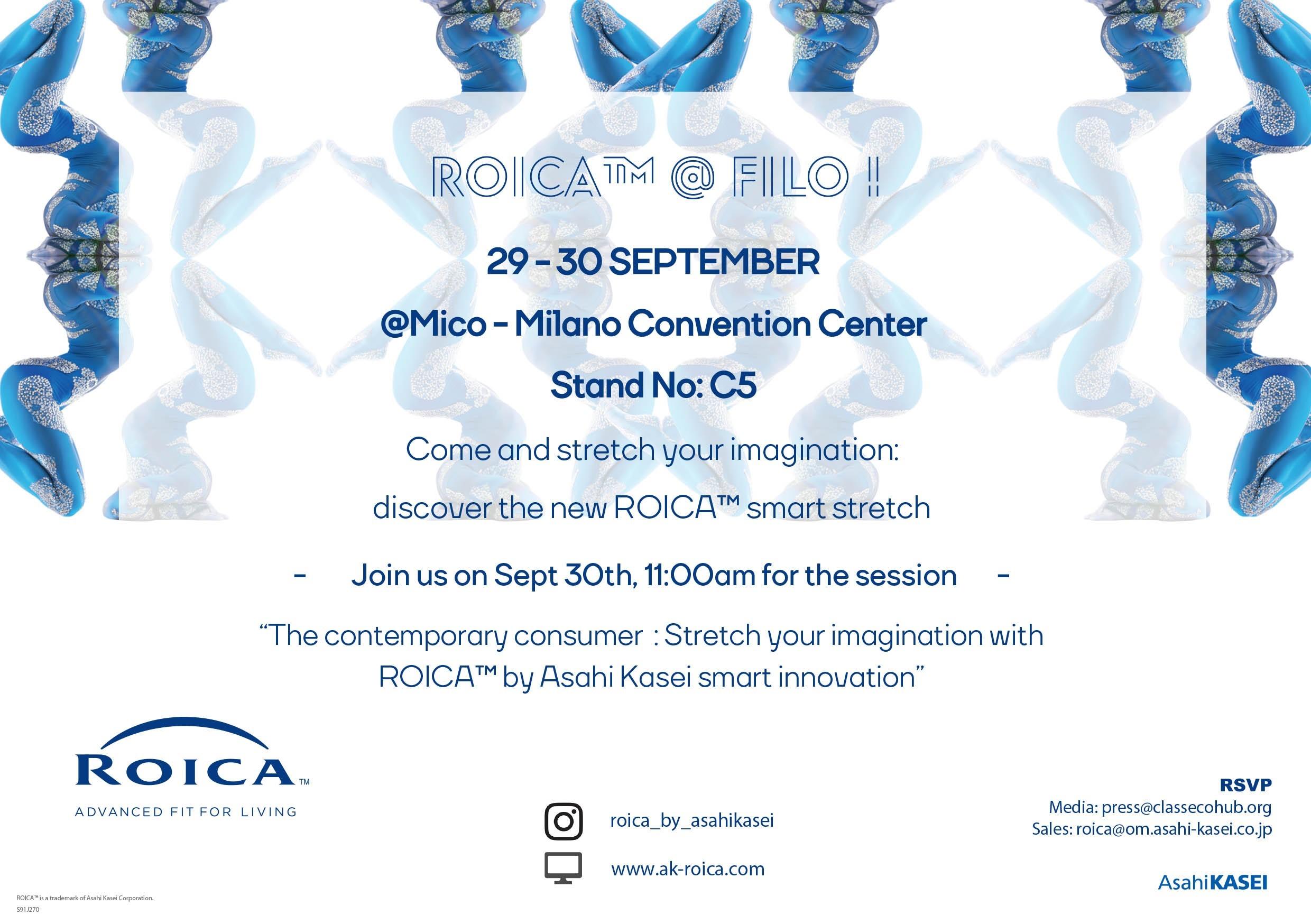
Bemberg™ and ROICA™ by Asahi Kasei will showcase at Filo

ROICA™ by Asahi Kasei, specialized in sustainable premium stretch fibers, and Bemberg™, a fiber made from the smart-tech transformation of cotton linters pre-consumer materials and converted through a traceable and transparent closed loop process, have been invited to showcase at Filo, the international fair of orthogonal weaving yarns for clothing and furnishings, circular knitwear and technical textiles from the 29-30th of September.

ROICA™ will show its main innovations and four key pieces of the modern and sustainable contemporary wardrobe able to enhance the versatility of the fibers, applied to fashion, sportswear, legwear and underwear.
The brand will also be the protagonist of “The contemporary consumer: Stretch your imagination with ROICA™ by Asahi Kasei smart innovation” speech on September 30th, 11am, organized by the fair to tell its sustainable story.

ROICA™ by Asahi Kasei, specialized in sustainable premium stretch fibers, and Bemberg™, a fiber made from the smart-tech transformation of cotton linters pre-consumer materials and converted through a traceable and transparent closed loop process, have been invited to showcase at Filo, the international fair of orthogonal weaving yarns for clothing and furnishings, circular knitwear and technical textiles from the 29-30th of September.

ROICA™ will show its main innovations and four key pieces of the modern and sustainable contemporary wardrobe able to enhance the versatility of the fibers, applied to fashion, sportswear, legwear and underwear.
The brand will also be the protagonist of “The contemporary consumer: Stretch your imagination with ROICA™ by Asahi Kasei smart innovation” speech on September 30th, 11am, organized by the fair to tell its sustainable story.

Bemberg™ will be at Filo showing some selected fabric innovation, and three responsible-driven designers representing different and complementary part of contemporary consumer wardrobe: ZEROBARRACENTO, Maurizio Miri and WAXEWUL.
Bemberg™ will be also involved in two speeches – entitled “Il viaggio di Bemberg™ by Asahi Kasei verso una moda contemporanea, premium e responsabile” - organized by the fair (Sept. 29th and 30th at 4pm), where it will share its story made of creation, production and process, as well as product performance, aspects related to sustainability and circular economy approach.

Source:

Asahi Kasei / GB Network / C.L.A.S.S.

LOVE HERO uses Kornit Digital for sustainable Fashion (c) Kornit Digital Europe GmbH / LOVE HERO
17.09.2021

LOVE HERO uses Kornit Digital for sustainable Fashion

Kornit Digital announced that the London-based LOVE HERO fashion label uses Kornit’s sustainable, digitized, on-demand production capabilities to deliver its complete line of nature-themed apparel.

All fabrics are traceable and certified via their blockchain platform, Retraced, to minimize their eco footprint. Cut-and-sew operations take place in Portugal.

LOVE HERO is currently engaged with Kornit on the mechanics of imprinting silk, biodegradable nylon, and other diverse materials. One such application involves two-sided fabrics—nylon on top, with cotton on the reverse.

“Kornit is committed to becoming the operating system for sustainable fashion fulfillment, on demand,” says Chris Govier, KDEU Managing Director. “With visionary creators like Joshua and LOVE HERO ready to test the bounds of our design and color capabilities, and our growing network of digitized producers ready to make those visions tangible with speed, economy, and quality from all corners of the globe, we’re changing the public percetion of what digital can do—meeting the global sustainability imperative, without demanding compromise from any actor in that value chain.”

Kornit Digital announced that the London-based LOVE HERO fashion label uses Kornit’s sustainable, digitized, on-demand production capabilities to deliver its complete line of nature-themed apparel.

All fabrics are traceable and certified via their blockchain platform, Retraced, to minimize their eco footprint. Cut-and-sew operations take place in Portugal.

LOVE HERO is currently engaged with Kornit on the mechanics of imprinting silk, biodegradable nylon, and other diverse materials. One such application involves two-sided fabrics—nylon on top, with cotton on the reverse.

“Kornit is committed to becoming the operating system for sustainable fashion fulfillment, on demand,” says Chris Govier, KDEU Managing Director. “With visionary creators like Joshua and LOVE HERO ready to test the bounds of our design and color capabilities, and our growing network of digitized producers ready to make those visions tangible with speed, economy, and quality from all corners of the globe, we’re changing the public percetion of what digital can do—meeting the global sustainability imperative, without demanding compromise from any actor in that value chain.”

Source:

Kornit Digital Europe GmbH / pr4u

Techtextil India. Messe Frankfurt
16.09.2021

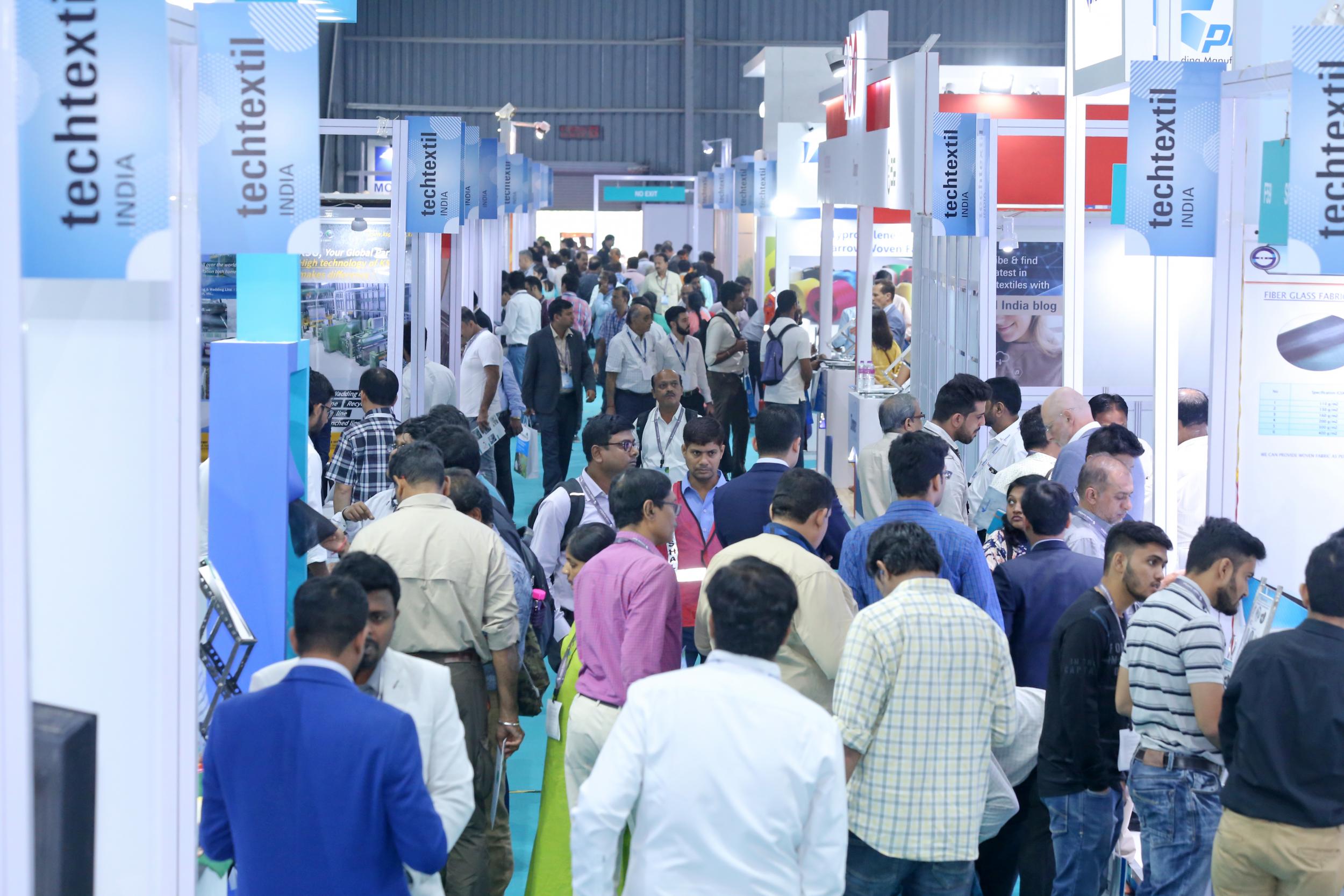
TN Government signs up for Techtextil India 2021

  • Pushing technical textile investments into the State

In a bid to strengthen indigenous production through the state and attract investors, the nodal agency for investment promotion and facilitation for the Government of Tamil Nadu – Guidance has signed up for Techtextil India 2021 – the leading International Trade Fair for Technical Textiles and Nonwovens. The TN Government will be promoting technical textile policies through both physical and virtual segments of the hybrid fair, enabling investors to set up integrated facilities. Leading technical textile players from Tamil Nadu and across the nation confirm participation for the three-day business event.
 
As one of the first major business events in India for the technical textile sector since the pandemic, Techtextil India 2021 will reunite the industry to present a strong showcase of technical textile technologies crucial for the development of India across industries such as healthcare, agriculture, construction, infrastructure, sports, apparel etc. The first hybrid edition will take place from 25 – 27 November 2021 at the Bombay Exhibition Centre in Mumbai.
 

  • Pushing technical textile investments into the State

In a bid to strengthen indigenous production through the state and attract investors, the nodal agency for investment promotion and facilitation for the Government of Tamil Nadu – Guidance has signed up for Techtextil India 2021 – the leading International Trade Fair for Technical Textiles and Nonwovens. The TN Government will be promoting technical textile policies through both physical and virtual segments of the hybrid fair, enabling investors to set up integrated facilities. Leading technical textile players from Tamil Nadu and across the nation confirm participation for the three-day business event.
 
As one of the first major business events in India for the technical textile sector since the pandemic, Techtextil India 2021 will reunite the industry to present a strong showcase of technical textile technologies crucial for the development of India across industries such as healthcare, agriculture, construction, infrastructure, sports, apparel etc. The first hybrid edition will take place from 25 – 27 November 2021 at the Bombay Exhibition Centre in Mumbai.
 
Announcing a close co-operation with Messe Frankfurt India for the 2021 edition, the Government of Tamil Nadu further shared that it will be promoting textile policies and highlighting investment prospects at the trade fair in a bid to attract companies and investors to the state. Ms  Pooja Kulkarni IAS MD & CEO, Guidance Tamil Nadu said: “While there are several inherent advantages for the growth of technical textiles in Tamil Nadu specifically, many raw materials used in the production of sanitary products, artificial ligaments, seat belt webbings, airbags are still heavily imported. In this context, the Techtextil India Forum can help us reduce import dependency and bring investments in R&D, manufacturing, innovation by partnering with global technical textiles companies.

More information:
Techtextil India
Source:

Messe Frankfurt Hongkong

16.09.2021

Tufropes is partnering with Truetzschler Nonwovens and Voith for pentamerous technology

Indian Tufropes is partnering with Truetzschler Nonwovens and Voith to install its unique pentamerous technology. The company’s first nonwovens production line will be capable to produce 5 different eco-friendly, hydroentangled products.

Truetzschler Nonwovens and Voith are thrilled to be the technology partner for Tufropes’ (patent pending) unique nonwoven line based on pentamerous technology. The new installation relies heavily on Truetzschler/Voith core components for wet-laying, carding and hydroentangling. Proprietary refinements will allow Tufropes to produce any possible hydroentangled nonwoven material, including bio-degradable, natural fibre, eco-friendly high-performance nonwovens. Globally this would be a first industrial-scale pentamerous technology-based nonwoven project. Based in Gujarat, India, the line is expected to be commissioned next year.

Indian Tufropes is partnering with Truetzschler Nonwovens and Voith to install its unique pentamerous technology. The company’s first nonwovens production line will be capable to produce 5 different eco-friendly, hydroentangled products.

Truetzschler Nonwovens and Voith are thrilled to be the technology partner for Tufropes’ (patent pending) unique nonwoven line based on pentamerous technology. The new installation relies heavily on Truetzschler/Voith core components for wet-laying, carding and hydroentangling. Proprietary refinements will allow Tufropes to produce any possible hydroentangled nonwoven material, including bio-degradable, natural fibre, eco-friendly high-performance nonwovens. Globally this would be a first industrial-scale pentamerous technology-based nonwoven project. Based in Gujarat, India, the line is expected to be commissioned next year.

Source:

Truetzschler Nonwovens & Man Made Fibers GmbH

16.09.2021

Finavia: Antibacterial Coating Solution at Airport

Airport company Finavia will start using Finnish technology company Nanoksi Finland Oy’s coating solution at Helsinki Airport. The coating can be used to remove viruses and bacteria from airport surfaces and furniture.

“We are continuously keeping track of new methods and products to ensure a high level of hygiene at the airport. This nanotechnology-based coating, which is sprayed on contact surfaces and furniture, makes it easier to keep surfaces clean. The coating destroys pathogens with the help of light and air,” says Sami Kiiskinen, Finavia’s Vice President, Airport Development for Helsinki Airport.

The coating is sprayed on targets such as check-in counters, machines, departure gates and toilet facilities. The coating lasts for a long time, even though the furniture is wiped several times a day.

Airport company Finavia will start using Finnish technology company Nanoksi Finland Oy’s coating solution at Helsinki Airport. The coating can be used to remove viruses and bacteria from airport surfaces and furniture.

“We are continuously keeping track of new methods and products to ensure a high level of hygiene at the airport. This nanotechnology-based coating, which is sprayed on contact surfaces and furniture, makes it easier to keep surfaces clean. The coating destroys pathogens with the help of light and air,” says Sami Kiiskinen, Finavia’s Vice President, Airport Development for Helsinki Airport.

The coating is sprayed on targets such as check-in counters, machines, departure gates and toilet facilities. The coating lasts for a long time, even though the furniture is wiped several times a day.

The effectiveness of the Fotonit® photocatalytic coating developed by Finnish nanotechnology company Nanoksi Finland Oy has been confirmed by research at the University of Tampere. Photocatalysis can destroy 98% of pathogens such as influenza viruses in two hours. The coating has been awarded the Key Flag Symbol as an indication of its high domestic content.

Duarte will release its SS22 collection at WHITE Milano (c) C.L.A.S.S.
16.09.2021

Duarte will release its SS22 collection at WHITE Milano

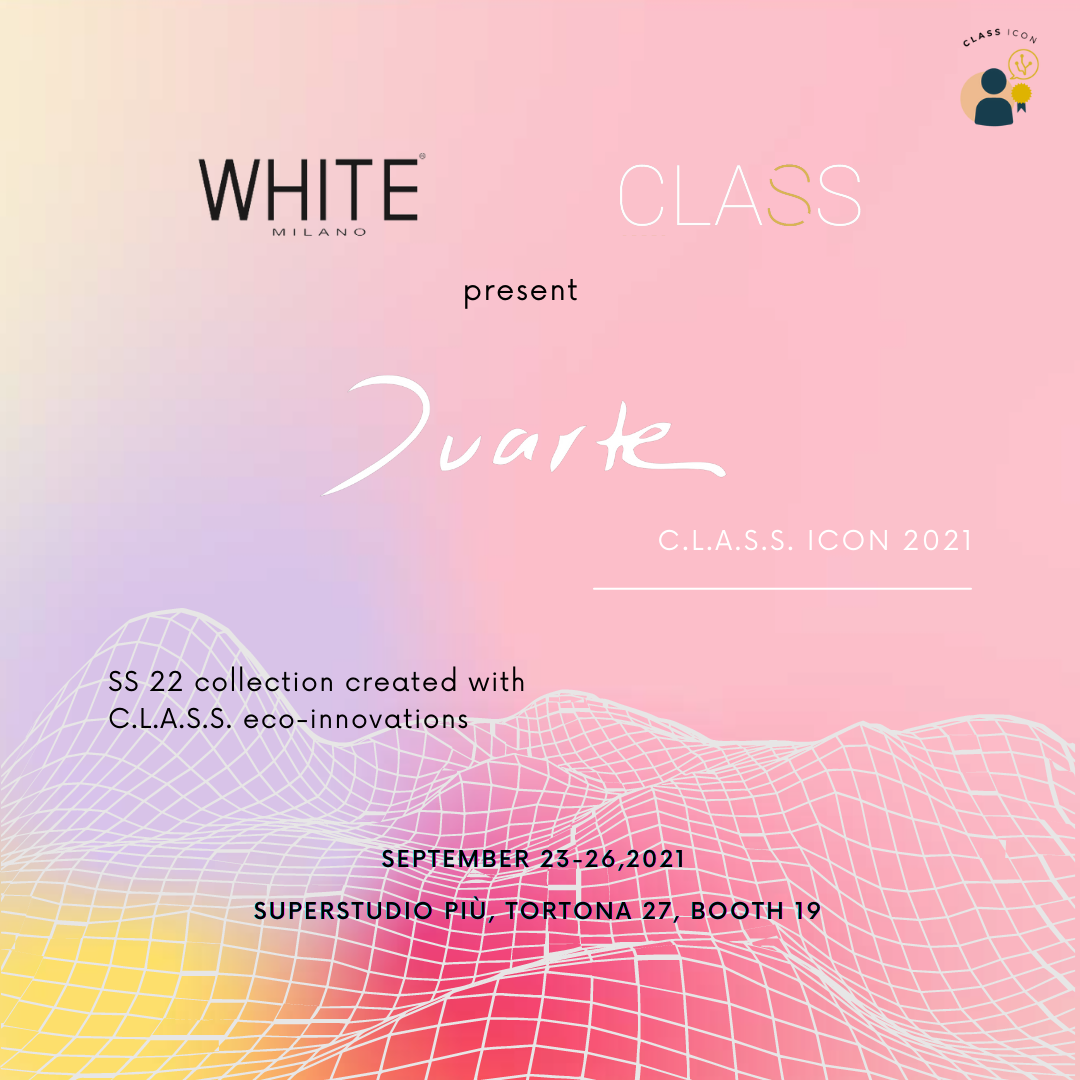
After being rewarded with the 2021 C.L.A.S.S. Icon Award, Portuguese brand Duarte is ready to present its Spring/Summer 2022 collection developed in collaboration with C.L.A.S.S. ecohub. The streetwear designer Ana Duarte has worked in close contact with the Milanese hub in order to create a 40 pieces collection where the approach to materials, suppliers, new business models and communication could include and support a holistic view of the sustainable values aligned with style, performances, look and touch and Duarte identity.

The inspiration behind this collection is the superhero Tadao – Ana Duarte’s dog – which is the World Keeper fighting against the environmental issues mankind has generated.

After being rewarded with the 2021 C.L.A.S.S. Icon Award, Portuguese brand Duarte is ready to present its Spring/Summer 2022 collection developed in collaboration with C.L.A.S.S. ecohub. The streetwear designer Ana Duarte has worked in close contact with the Milanese hub in order to create a 40 pieces collection where the approach to materials, suppliers, new business models and communication could include and support a holistic view of the sustainable values aligned with style, performances, look and touch and Duarte identity.

The inspiration behind this collection is the superhero Tadao – Ana Duarte’s dog – which is the World Keeper fighting against the environmental issues mankind has generated.

With the support of WHITE and its WSM (WHITE Sustainable Milano), Duarte’s creations will be featured online on the digital space of WSM-WHITE website, as well as being shown in a dedicated physical booth on September during Milan Fashion Week. The collection will also be presented on its new brand page on Renoon, an online platform devoted to Responsible Shopping. In addition, Duarte will be supported by IDEE Brand Platform in the development of commercial activities for the SS22 collection.

15.09.2021

Kelheim Fibres Innovative Viscose Specialities at INDEX20

Not only since 2021 has sustainability been a topic high on society’s agenda. And yet the importance of sustainability for consumers and companies has once again increased sharply as a result of the Corona pandemic, as numerous studies confirm. Then why is it often so difficult to implement this conviction in everyday life? One of the biggest obstacles to sustainable consumer behaviour is the lack of availability of alternatives.

In addition to changing consumer demands, the EU Commission's recent decision on the single-use plastics directive is also prompting many nonwovens manufacturers to look at alternative solutions. Kelheim Fibres is exhibiting at this year's INDEX in Geneva and online with bio-based fibers that offer an alternative to synthetic materials in a wide range of applications. The Bavarians have decades of experience in the nonwovens and hygiene sectors and work on individual customer-specific innovations.

Not only since 2021 has sustainability been a topic high on society’s agenda. And yet the importance of sustainability for consumers and companies has once again increased sharply as a result of the Corona pandemic, as numerous studies confirm. Then why is it often so difficult to implement this conviction in everyday life? One of the biggest obstacles to sustainable consumer behaviour is the lack of availability of alternatives.

In addition to changing consumer demands, the EU Commission's recent decision on the single-use plastics directive is also prompting many nonwovens manufacturers to look at alternative solutions. Kelheim Fibres is exhibiting at this year's INDEX in Geneva and online with bio-based fibers that offer an alternative to synthetic materials in a wide range of applications. The Bavarians have decades of experience in the nonwovens and hygiene sectors and work on individual customer-specific innovations.

"We want to make it easy for consumers to choose an environmentally friendly option. That’s the case when bio-based solutions offer the same performance as synthetic products," said Matthew North, Commercial Director at Kelheim Fibres." Our fibre technology allows us to create just that: unlike natural fibres, which are available already in fibre form and can only be treated on the surface, we can engineer the properties of our fibres they need for specific applications by specifically intervening in the production process. That way we combine nature - our fibres are made of wood pulp - with performance."

Kelheim's special fibres are made of wood pulp from sustainably managed sources, are produced in Kelheim in an environmentally friendly way and are fully biodegradable at the end of their product life. Kelheim Fibres is the first viscose fibre manufacturer in the world with an EMAS validated Environmental Management System and was awarded a dark green/light green shirt in the most recent Canopy HotButton-Ranking.

More information:
Kelheim Fibres viscose fibers
Source:

Kelheim Fibres GmbH

(c) Notus Composites. Notus NE7 low temperature curing prepreg
15.09.2021

Notus Composites Launches New Low Temperature Curing NE7 Epoxy Prepreg

Notus Composites (UAE), the award-winning producer of epoxy prepreg materials, announces the latest addition to its high-performance epoxy range with the launch of its new NE7 low temperature curing prepreg system. The Notus NE7 formulation allows composite manufacturers to cure components at temperatures as low as 70˚C, reducing energy consumption and enabling more cost-effective tooling options.

Notus Composites has developed the new NE7 prepreg systems for applications across the Marine, Architecture, Industrial and Wind Energy sectors, with the novel low temperature curing chemistry delivery significant cost benefits. Existing prepreg manufacturers can now use more cost-effective composite tooling, with new prepreg users able to switch easily from existing infusion or wet laminating processes without creating expensive new high temperature tooling.

Notus Composites (UAE), the award-winning producer of epoxy prepreg materials, announces the latest addition to its high-performance epoxy range with the launch of its new NE7 low temperature curing prepreg system. The Notus NE7 formulation allows composite manufacturers to cure components at temperatures as low as 70˚C, reducing energy consumption and enabling more cost-effective tooling options.

Notus Composites has developed the new NE7 prepreg systems for applications across the Marine, Architecture, Industrial and Wind Energy sectors, with the novel low temperature curing chemistry delivery significant cost benefits. Existing prepreg manufacturers can now use more cost-effective composite tooling, with new prepreg users able to switch easily from existing infusion or wet laminating processes without creating expensive new high temperature tooling.

NE7 prepregs can be cured at temperatures as low as 70˚C, with the standard cure cycle being 12 hours at 70˚C, matching the typical cycle time for an infused part with a component Tg of 85˚C. NE7 materials have a good outlife of 30 days at 20˚C and are available in all prepreg and Notus single sided N1-Preg formats with unidirectional, multiaxial, and woven reinforcements. NE7 can also be supplied as a resin film.

Notus has recently supplied NE7 low temperature prepregs to Dubai based Aeolos Composites for the production of their new Aeolos P30 racing yacht. The P30 is a futuristic new craft created by top German sailor and designer, Hans Genthe, with a super light carbon fibre construction and large sail area that promises spectacular on the water performance for a thirty foot yacht. Notus delivered a range NE7 prepregs for the build, including woven, multiaxial, and unidirectional carbon fibre reinforcements as well as adhesive films for core bonding.

More information:
Notus prepreg material
Source:

Notus Composites.

Starlinger recoSTAR universal 165 H-VAC iV+ (c) Starlinger & Co Gesellschaft m.b.H.
15.09.2021

Recycled polyester filament yarn made in Turkey

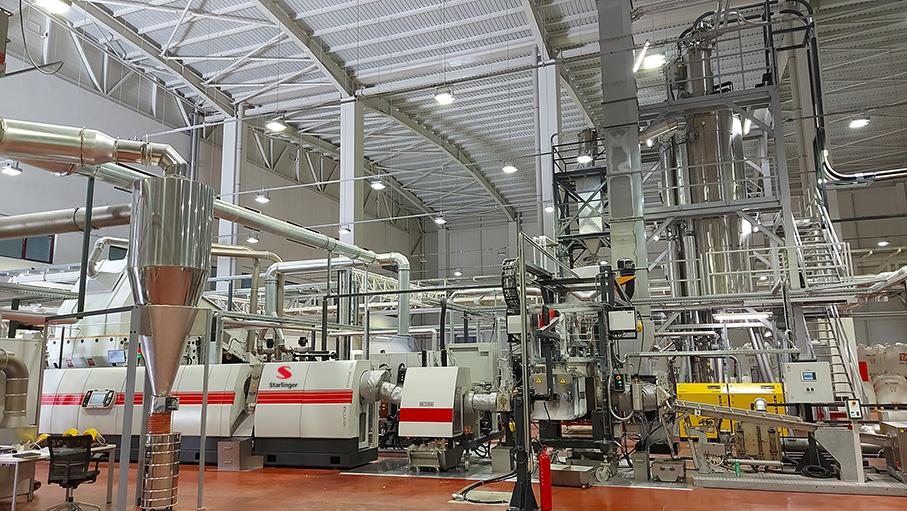
Korteks, one of the world’s biggest yarn producers based in Bursa, Turkey, has started the production of recycled polyester filament yarn in its production facility using a Starlinger recycling line.

With the new recycling facility, which comprises a total closed area of 17,000 m² and has a monthly production capacity of 600 tons, Korteks was able to reduce the production waste at its virgin PES yarn site to zero.

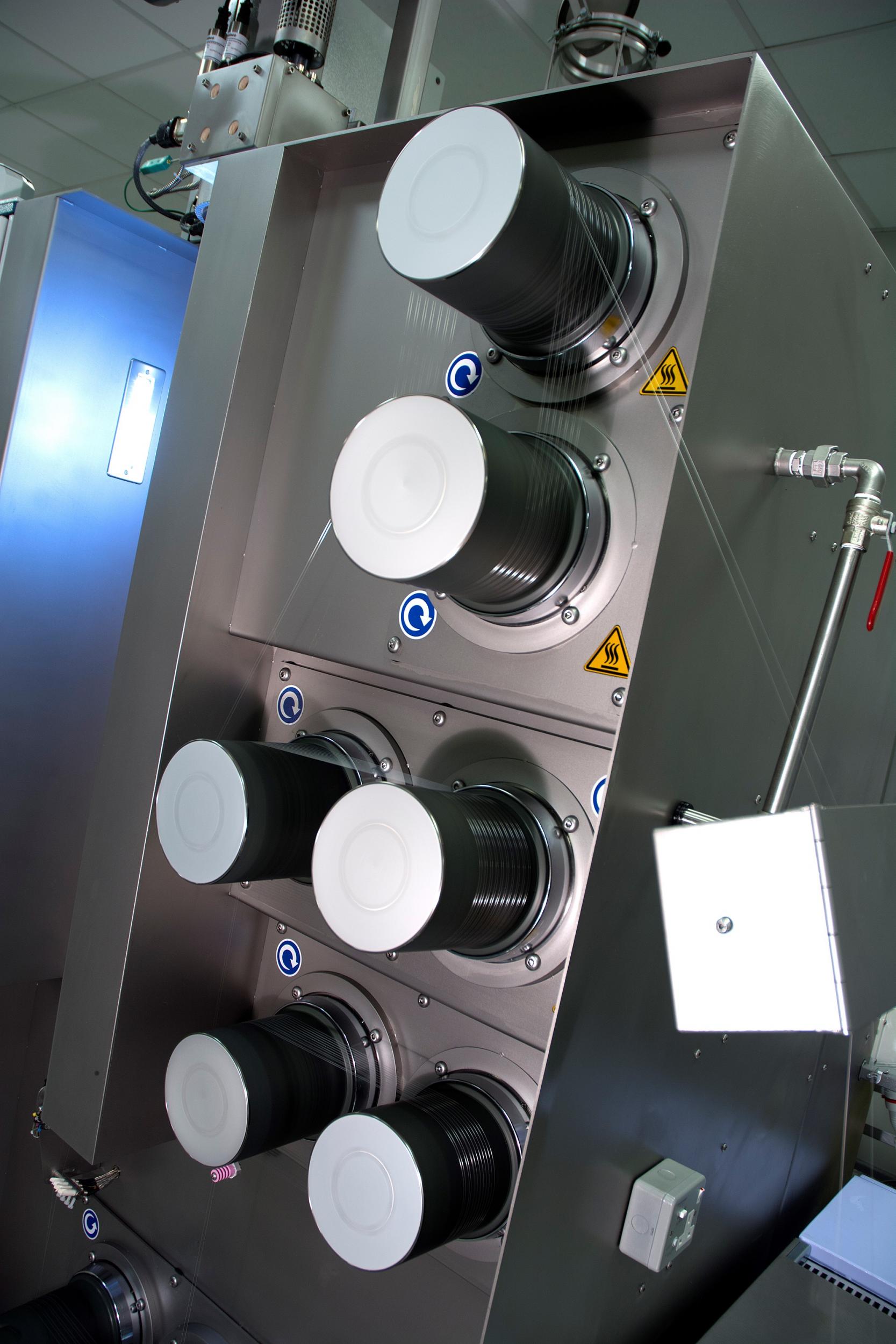
The Starlinger recoSTAR universal 165 H-VAC iV+, which is part of Korteks’ 10 million dollars investment in a new polymer recycling facility, took up operation in May 2021. It has a production capacity of 7,200 tons per year and currently processes clean in-house polyester fibers from production scrap together with washed post-consumer PET flakes at a ratio of 50/50. Korteks uses the polyester regranulate at a share of 100 % for its new polyester filament yarn line it is going to market under the name “TAÇ Reborn”. With this investment, the company has made an important step towards establishing a circular economy in the Turkish textile industry.

Korteks, one of the world’s biggest yarn producers based in Bursa, Turkey, has started the production of recycled polyester filament yarn in its production facility using a Starlinger recycling line.

With the new recycling facility, which comprises a total closed area of 17,000 m² and has a monthly production capacity of 600 tons, Korteks was able to reduce the production waste at its virgin PES yarn site to zero.

The Starlinger recoSTAR universal 165 H-VAC iV+, which is part of Korteks’ 10 million dollars investment in a new polymer recycling facility, took up operation in May 2021. It has a production capacity of 7,200 tons per year and currently processes clean in-house polyester fibers from production scrap together with washed post-consumer PET flakes at a ratio of 50/50. Korteks uses the polyester regranulate at a share of 100 % for its new polyester filament yarn line it is going to market under the name “TAÇ Reborn”. With this investment, the company has made an important step towards establishing a circular economy in the Turkish textile industry.

The Starlinger recycling line is the first of its kind in Turkey and is equipped with special components for filament yarn recycling. A RSC (Rapid Sleeve Changer) candle filter developed by Starlinger ensures finest melt filtration down to 15 μm. It has been specially designed for polyester recycling and reaches an output of 1000 kg/h. For continuous operation the filter elements are changed “on the fly” without interrupting production, which significantly limits melt loss.

The viscoSTAR SSP unit at the end of the recycling process guarantees consistent IV increase according to the first-in-first-out principle. This makes sure that the produced regranulate has the ideal properties required for filament yarn production. The technical configuration of the line does not only allow the processing of a polyester fiber/PET flake mix as input materials, but also 100 % polyester filament scrap or 100 % PET bottle flakes.

Korteks expects the recycling market in general to grow as there is increased acceptance for recycled products in the society, and predicts the need for recycling solutions also for other synthetic and natural fibers.

Source:

Starlinger & Co Gesellschaft m.b.H.

15.09.2021

EURATEX Vision on the EU Strategy for Sustainable Textiles

EURATEX published their vision on the EU Strategy on Sustainable Textiles, reflecting the views of the European textiles and apparel industry. The goal is to promote a competitive and sustainable industry. to do so, wanting to be a global leader on sustainable textiles, the efficiency of the industry must be increase as well as the global market share.

The enclosed document presents 15 action points on how to achieve these targets.

EURATEX published their vision on the EU Strategy on Sustainable Textiles, reflecting the views of the European textiles and apparel industry. The goal is to promote a competitive and sustainable industry. to do so, wanting to be a global leader on sustainable textiles, the efficiency of the industry must be increase as well as the global market share.

The enclosed document presents 15 action points on how to achieve these targets.

More information:
Euratex Sustainability
Source:

Euratex

15.09.2021

DNFI Award Jury 2021 started its work

The Discover Natural Fibres Initiative (DNFI) will announce the winner of the Innovation in Natural Fibre Research Award soon. The aim of the award is to raise awareness of the achievements of the natural fibers sector by recognizing innovative and progressive work by people and institutions at the level of production and use of natural fibers. The closing date for applications was September 10.

Interest in the award was high again in 2021, indicating that research in fields involving natural fibres is robust. The applications that were received reveal a fascinating array of projects, new topics, and both private and public sector funding for natural fibre research.

There are seven finalists, and final judging is underway. The winner of the 2021 Award will be announced in early October.

The Discover Natural Fibres Initiative (DNFI) will announce the winner of the Innovation in Natural Fibre Research Award soon. The aim of the award is to raise awareness of the achievements of the natural fibers sector by recognizing innovative and progressive work by people and institutions at the level of production and use of natural fibers. The closing date for applications was September 10.

Interest in the award was high again in 2021, indicating that research in fields involving natural fibres is robust. The applications that were received reveal a fascinating array of projects, new topics, and both private and public sector funding for natural fibre research.

There are seven finalists, and final judging is underway. The winner of the 2021 Award will be announced in early October.

The seven finalists for the 2021 Award fall into several broad categories, including traceability and the measurement of environmental impacts of natural fibres, the use of natural fibres in manufacturing biodegradable composites, and new or expanded uses for natural fibre materials. Researchers and institutions located in Australia, India, Republic of Korea, and Switzerland are among the finalists for the 2021 award.

More information:
DNFI DNFI award
Source:

DNFI

(c) FET
FET meltspinning system for biomedical applications
15.09.2021

FET: Further Gains in the Biomedical sector

Fibre Extrusion Technology of Leeds, UK has delivered nine meltspinning systems to clients in the biomedical sector since the onset of the Covid-19 pandemic, with a similar number currently on order for 2021/22. This way FET could confirm the position as an acknowledged world leader in meltspinning equipment for the production of precursor materials used in medical devices and as a default supplier for absorbable suture production systems, with orders virtually doubling year on year.

Recent installations include a multi-functional system that can produce both multifilament and monofilament pre-cursor fibres, but nonwoven systems have been particularly prominent, driven by the burgeoning demand for FFP3 masks, gowns and other medical products required during the pandemic. These have been sold to medical device manufacturing companies across the globe, including the Far East, USA and Europe. Research organisations have also invested in FET systems for biomedical applications, the most recent being the University of Leeds in a laboratory scale Spunbond system.

Fibre Extrusion Technology of Leeds, UK has delivered nine meltspinning systems to clients in the biomedical sector since the onset of the Covid-19 pandemic, with a similar number currently on order for 2021/22. This way FET could confirm the position as an acknowledged world leader in meltspinning equipment for the production of precursor materials used in medical devices and as a default supplier for absorbable suture production systems, with orders virtually doubling year on year.

Recent installations include a multi-functional system that can produce both multifilament and monofilament pre-cursor fibres, but nonwoven systems have been particularly prominent, driven by the burgeoning demand for FFP3 masks, gowns and other medical products required during the pandemic. These have been sold to medical device manufacturing companies across the globe, including the Far East, USA and Europe. Research organisations have also invested in FET systems for biomedical applications, the most recent being the University of Leeds in a laboratory scale Spunbond system.

The FET in-house Process Development Laboratory and ongoing collaboration with biomaterial polymer suppliers has helped to optimise the biomedical melt spinning technology. The Laboratory is at the disposal of customers for all aspects of confidential testing and evaluation. To further increase this competitive edge, FET will be opening a new Process Development Laboratory and Visitor Centre in early 2022.

More information:
meltspinning FET
Source:

Projectmarketing for FET

Bemberg™ by Asahi Kasei at Filo to unveil its smart DNA story that meet contemporary consumer needs (c) Bemberg™
Waxewul proposal using Bemberg™.
15.09.2021

Bemberg™ by Asahi Kasei at Filo to unveil its smart DNA story that meet contemporary consumer needs

  • FILO, 29th-30th September 2021, booth C5

Bemberg™ by Asahi Kasei has been invited to showcase at Filo fair, the international exhibition of orthogonal weaving yarns for clothing and furnishings, circular knitwear and technical textiles, in a new special area, a dedicated open space reserved to sustainable fibers that will allow visitors to discover all their production cycle and performances, in full relax and transparency.

Bemberg™, an exceptional fiber made from the smart-tech transformation of cotton linters pre-consumer materials and converted through a traceable and transparent closed loop process, will brings to Filo its history, experience, know-how and market partnerships to prove its versatility and design-driven look and touch Last but not least we are talking about a true circular economy-oriented ingredient, with certified sustainable performance: Bemberg™ is biodegradable and compostable material as verified by the INNOVHUB 3rd party test and it has GRS (Global Reycled Standard) certification from Textile Exchange proving recycling authenticity.

  • FILO, 29th-30th September 2021, booth C5

Bemberg™ by Asahi Kasei has been invited to showcase at Filo fair, the international exhibition of orthogonal weaving yarns for clothing and furnishings, circular knitwear and technical textiles, in a new special area, a dedicated open space reserved to sustainable fibers that will allow visitors to discover all their production cycle and performances, in full relax and transparency.

Bemberg™, an exceptional fiber made from the smart-tech transformation of cotton linters pre-consumer materials and converted through a traceable and transparent closed loop process, will brings to Filo its history, experience, know-how and market partnerships to prove its versatility and design-driven look and touch Last but not least we are talking about a true circular economy-oriented ingredient, with certified sustainable performance: Bemberg™ is biodegradable and compostable material as verified by the INNOVHUB 3rd party test and it has GRS (Global Reycled Standard) certification from Textile Exchange proving recycling authenticity.

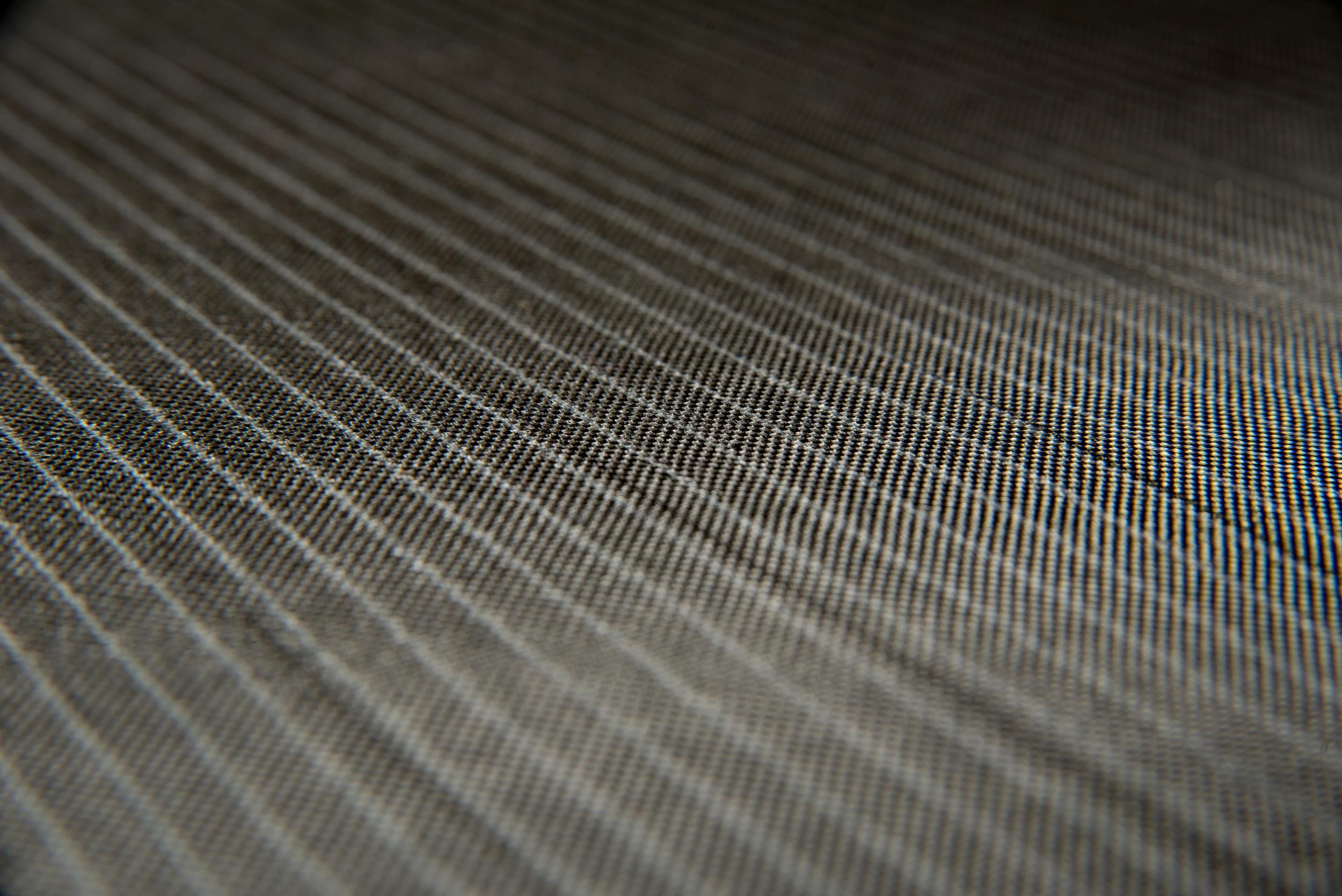
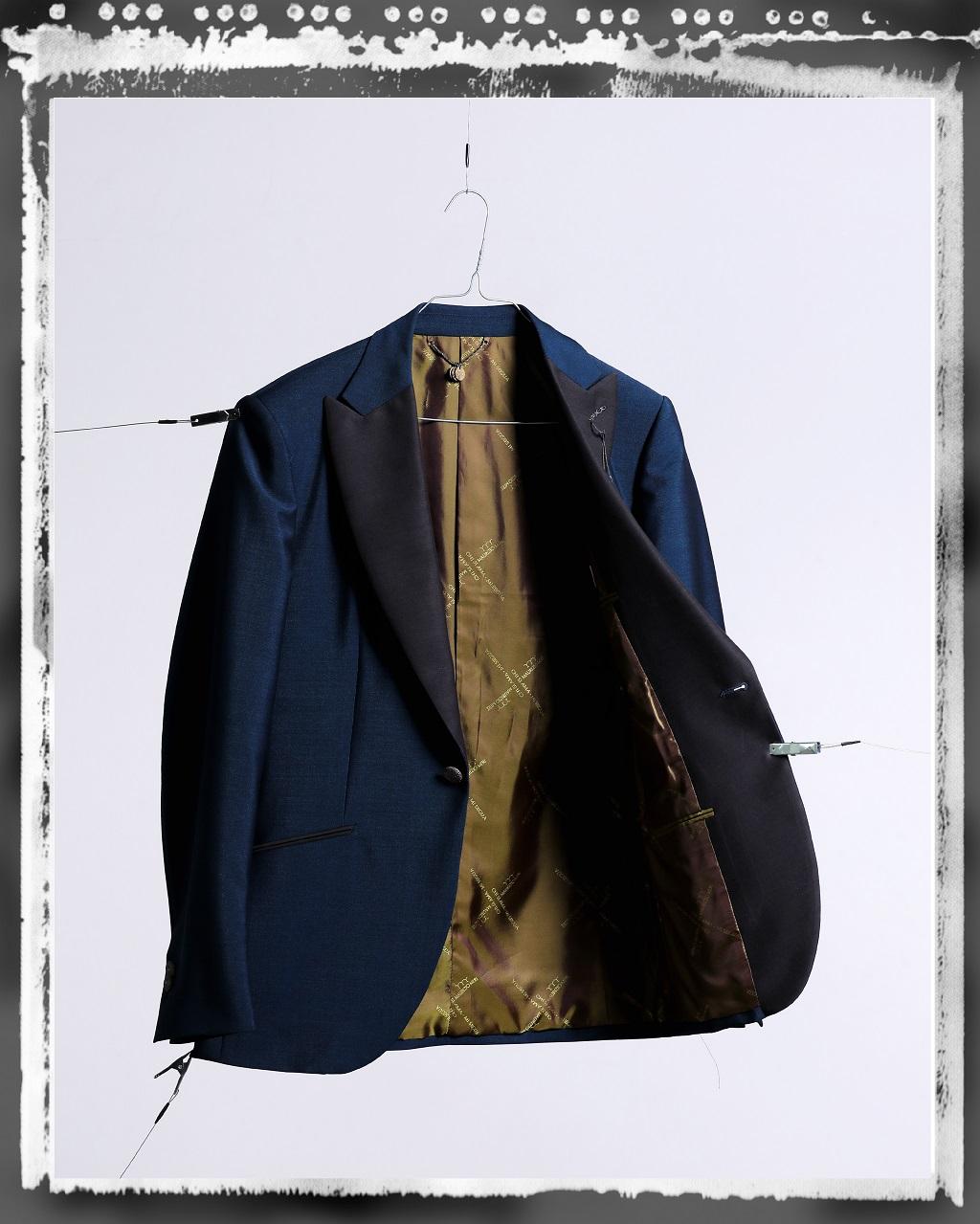
Bemberg™ application history starts with high-quality suit lining, but today we can find it in many other applications such as fashion couture, outerwear, innerwear, bedding, and sportswear where its amazing unique touch and quality is offering a distinctive performance.

And to prove all of this, Bemberg™ will be at Filo showing some selected fabric innovation, and three responsible-driven designers representing different and complementary part of contemporary consumer wardrobe: ZEROBARRACENTO, Maurizio Miri and WAXEWUL - who have all chosen Bemberg™ fiber to create special collections. Three different ways to see and represent how sustainability and style – even if completely different ones – together can be highly successful, performing and interesting to the new consumer.

ZEROBARRACENTO, a gender-neutral emerging outerwear brand focusing on zero-waste product development, selects Bemberg™ for two fundamental reasons: firstly, from a stylistic point of view for its extreme versatility: in the various collections we have adopted it to create Kimonos, padded jackets, wrap dresses as well as for the interiors of our garments, which are intended to be soft embraces for total physical and mental comfort. The second but no less important reason is that this fibre has circular values in line with their zero-waste commitment.

The concept of the brand "Maurizio Miri" has a strong personality and a clear intent: to create a product that stimulates the wearer towards beauty. A garment should not simply be worn, but it has also to create a perfect symbiosis with the person wearing it and generate an exchange of positive energies. The purpose is to make the individual feel in perfect harmony with their own image. With this aim in mind, the designer selects extremely precious Bemberg™ linings for their sophisticated tailor jackets. 

Finally, WAXEWUL, a brand of sartorial clothing and artisan accessories with an urban-afro soul that has environmental and social sustainability as its basic ethics. WAXEWUL will bring to Filo its brand-new product, the J_Hood Bag: a doubleface jacket with a comfortably removable hood that can be transformed into a finely hidden doubleface bag. An exclusive, innovative and sustainable garment with minimal impact on the environment made of BemBAZIN™ - a new generation of bazin created, patented and produced by Brunello which is composed by the high-tech and responsible fibers of Bemberg™ - on one side and of wax on the other, traceable and certified, guaranteeing a reduction in waste (two jackets in one) and a long-life cycle.

15.09.2021

REACH4Textiles: Better market surveillance for textile products

The REACH4texiles project just kicked off. Funded by the European Commission, it aims at exploring solutions for fair and effective market surveillance on textile products.

Every year, about 28 billion of garments circulate across Europe, 80% of which are imported from outside the EU and its jurisdiction.
 
Inevitably, such huge volumes pose enormous challenges for market surveillance authorities which are called to ensure that uncompliant dangerous products are kept away from the EU citizens.

The European Union has the world most comprehensive chemical legislation which is set to protect consumers, the environment and, theoretically, even the competitiveness  of the business.

Such EU chemical legislation evolves constantly, increasing scope and ambition. New restrictions impact authorities and sectors like the European textile value chain and generate new costs for all actors.

Evidence suggests that such advanced regulatory framework is not completed with an equally advanced or effective EU-wide control system capable of ensuring compliance, especially in the case of imported products.

The REACH4texiles project just kicked off. Funded by the European Commission, it aims at exploring solutions for fair and effective market surveillance on textile products.

Every year, about 28 billion of garments circulate across Europe, 80% of which are imported from outside the EU and its jurisdiction.
 
Inevitably, such huge volumes pose enormous challenges for market surveillance authorities which are called to ensure that uncompliant dangerous products are kept away from the EU citizens.

The European Union has the world most comprehensive chemical legislation which is set to protect consumers, the environment and, theoretically, even the competitiveness  of the business.

Such EU chemical legislation evolves constantly, increasing scope and ambition. New restrictions impact authorities and sectors like the European textile value chain and generate new costs for all actors.

Evidence suggests that such advanced regulatory framework is not completed with an equally advanced or effective EU-wide control system capable of ensuring compliance, especially in the case of imported products.

The REACH4texiles project aims at exploring solutions for fair and effective market surveillance on textile products; it pools together the key actors to address three objectives:

  • Keep non-compliant products away from the single market.
  • Increase skills and knowledge.
  • Support a Network addressing chemicals in textiles and applying the EU regulation 2019/1020

The 2 years project will share best practices, identify efficient approaches against non-compliant products, offer training and support for a more effective surveillance and for level playing field.

The project welcomes collaboration with concerned authorities across the EU Member States.

Details:

A well-functioning EU market surveillance system is an essential prerequisite to protect citizen, the environment and competitiveness of responsible business. When it comes to textiles, the broad range of products, the large set of REACH subjected chemicals used in textiles as well as industrial strategies like fast fashion make this a challenging task.

Challenges may include lack of resources, difficulties in identifying higher risk products, cost and management of chemical tests, lack of test methods and knowledge of best practices. These challenges are yet likely to increase with the upcoming REACH restrictions and the growth of e-commerce.

Because of this, products that do not comply with REACH regulations encounter today little or no barriers to enter the market. This creates not only a health risk for Europeans but also undermines the competitivity of responsible businesses that take all necessary measures to comply with these regulations.

Addressing the challenges requires more knowledge at market surveillance and stronger collaboration between these authorities, the textile and clothing industry and testing laboratories. More knowledge about the identification of risk baring textile products and REACH chemicals likely to be used in these products, suitable test methods and strategies such as fast screening on REACH chemicals, trustworthiness of labels, etc can increase the effectiveness of market surveillance considerably.

The REACH4Textiles first objective (keep non-compliant products away from the EU Market) will be pursued by increasing knowledge on market surveillance functioning by and working on a risk-based approach to identify products at higher risk.

The second objective supports a network to address the specificities of chemicals in textiles with market surveillance authorities and involving other relevant stakeholders. The third objective focuses on sharing knowledge with market surveillance actors on textile products and suitable test methodologies.

Supported by the European Commission DG Growth, the project team is coordinated by the Belgian test and research center Centexbel and include the European Textiles and Apparel industry confederation, EURATEX, the German national textile and fashion association Textile und Mode, t+m, the Italian association Tessile e Salute. Several other European industry associations and national authorities are welcomed to become involved through the project activities.   

More information:
Euratex market surveillance Import
Source:

Euratex

14.09.2021

Kornit Digital: 2020 Impact and Environmental, Social, and Governance Report released

Kornit Digital Ltd., a worldwide market leader in digital textile production technologies, released its 2020 Impact and Environmental, Social, and Governance (“ESG”) Report. This inaugural report affirms Kornit’s commitment to achieving specific ESG goals. This includes the way Kornit conducts business, creates meaningful impact in local communities, and achieves environmental sustainability, in addition to how Kornit will continue to build a diverse and inclusive company culture, foster employee growth and development, and empower fair and safe labor practices globally.
 

Kornit Digital Ltd., a worldwide market leader in digital textile production technologies, released its 2020 Impact and Environmental, Social, and Governance (“ESG”) Report. This inaugural report affirms Kornit’s commitment to achieving specific ESG goals. This includes the way Kornit conducts business, creates meaningful impact in local communities, and achieves environmental sustainability, in addition to how Kornit will continue to build a diverse and inclusive company culture, foster employee growth and development, and empower fair and safe labor practices globally.
 
In addition to enabling eco-friendly production processes with technology and consumables that use less water, reduce waste, and minimize the carbon footprint, Kornit technology solutions enable sustainable production on demand, which eliminates overproduction of apparel and other textile goods. A 2021 Life Cycle Assessment conducted on two flagship products, the Kornit Atlas MAX and Kornit Presto S, demonstrated that relative to traditional analog processes, Kornit’s digital production systems used up to 95% less water and 94% less energy, and produced up to 83% less greenhouse gas (GHG) emissions for the Presto S system and up to 93% less water and 66% less energy, and produced up to 82% less greenhouse gas (GHG) emissions for the Atlas MAX system.


Based on this study, in addition to past sustainability performance results and strategic projections for business growth and market expansion, by 2026 Kornit Digital’s sustainable on-demand solutions are expected to enable the production of approximately 2.5 billion apparel items in a responsible manner to deliver:

  • Zero overproduction: By moving the industry to on-demand manufacturing, Kornit will help eliminate the estimated 1.1 billion apparel items overproduced using traditional production methods, based on an industry average of 30% overproduction. This is about 1 apparel item for each and every person living in Europe and North America – saved.
  • Zero water waste: In addition to eliminating overstocks, Kornit-enabled production on demand will support saving an estimated 4.3 trillion liters (1.1 trillion gallons) of water. This is the estimated amount of drinking water needed for the entire U.S. population for 11 years.
  • Reduced CO2 emissions: By enabling sustainable on-demand production, consuming less energy, and generating less waste, Kornit will prevent an estimated 17.2 billion kilograms (37.9 billion pounds) of greenhouse gas emissions, compared to traditional manufacturing methods. This is equivalent to the estimated amount of carbon dioxide emitted from circumnavigating the entire planet with a car nearly 2,400 times.

Furthermore, the report outlines Kornit’s commitment to achieving KPIs that address waste, chemicals, GHG emissions, energy, product development, employee training, diversity and inclusion, and the company’s supply chain.

Source:

pr4u

14.09.2021

JEC Forum DACH - Conference schedule

  • JEC Forum DACH: a primising agenda highlighting composites innovatioon in the region

September 7, 2021 - JEC Forum DACH's primary goal is to promote the region DACH area's dynamic composites ecosystem through a promising program that includes conferences, startup competition, and awards. The first edition of the JEC DACH Forum, unique in its format and content, will occur in the Forum of Messe Frankfurt from November 23 to 24, 2021.

For two days, the JEC Forum DACH program will offer the opportunity to exchange and learn about the current and future developments of Composites in the DACH region through a rich program of conferences, the JEC Composites Startup Booster, and the JEC-AVK Awards. JEC Forum DACH will include pre-arranged Business Meetings between sponsors and attendees as well as sponsors' workshops. Advance registration is required to attend this forum that expects to gather 500 participants.

Conferences, keynotes and market overview

  • JEC Forum DACH: a primising agenda highlighting composites innovatioon in the region

September 7, 2021 - JEC Forum DACH's primary goal is to promote the region DACH area's dynamic composites ecosystem through a promising program that includes conferences, startup competition, and awards. The first edition of the JEC DACH Forum, unique in its format and content, will occur in the Forum of Messe Frankfurt from November 23 to 24, 2021.

For two days, the JEC Forum DACH program will offer the opportunity to exchange and learn about the current and future developments of Composites in the DACH region through a rich program of conferences, the JEC Composites Startup Booster, and the JEC-AVK Awards. JEC Forum DACH will include pre-arranged Business Meetings between sponsors and attendees as well as sponsors' workshops. Advance registration is required to attend this forum that expects to gather 500 participants.

Conferences, keynotes and market overview

JEC Forum DACH will feature cutting-edge live conferences with exclusive keynotes organized by the AVK.
The composites industry provides a significant impetus, e.g. in its process technologies for hybrid structures or integrated manufacturing and modern mobility or new materials in the booming construction sector. There's been an increasing number of marketable ideas for recycling and sustainability solutions. Furthermore, an exclusive report on current market developments in the European composites market will be delivered.

JEC Forum DACH will also feature a fulfilling conference program with experts from the industry giving insights on the latest developments in high-performance composite technologies and applications.

Each day of the forum will be broken down as-is:
•    Two keynote speeches led by one or two high profile experts
•    Conferences/technical presentations
•    Workshops and Business Meetings

Please find the program of the conference attached.

Source:

AVK - Industrievereinigung Verstärkte Kunststoffe e. V.

09.09.2021

Texcare International will not take place in 2021

  • Leading suppliers of textile-care technology cancel their participation

Leading suppliers of laundry and dry-cleaning technology have used the free cancellation deadline offered by Messe Frankfurt against the background of the pandemic and cancelled their participation in Texcare International 2021 shortly before expiry. In view of this the Advisory Council of the world’s leading textile-care fair have voted to cancel Texcare International for this year because its success can no longer be guaranteed.

  • Leading suppliers of textile-care technology cancel their participation

Leading suppliers of laundry and dry-cleaning technology have used the free cancellation deadline offered by Messe Frankfurt against the background of the pandemic and cancelled their participation in Texcare International 2021 shortly before expiry. In view of this the Advisory Council of the world’s leading textile-care fair have voted to cancel Texcare International for this year because its success can no longer be guaranteed.

In view of the corona crisis earlier this year, Messe Frankfurt offered exhibitors of Texcare International the right to cancel their participation free of charge until 3 September 2021. As the months passed, the overall outlook became increasingly positive and, by the beginning of August, around 200 companies – including the important and big manufacturers from all parts of the textile-care sector – had registered to exhibit at Texcare International in Frankfurt am Main from 27 November to 1 December 2021. Factors contributing to this included the growing pace of vaccination around the world, the categorisation of trade fairs as business events and the officially approved protection and hygiene concept of Messe Frankfurt. Nevertheless, the mood changed shortly before the cancellation deadline as leading companies decided to withdraw from the event because of uncertainties regarding the future development of the pandemic.

Kerstin Horaczek, Vice President Technology Shows at Messe Frankfurt, took stock after the deadline: “Together with our partners, we worked untiringly to stage the Texcare International for the textile-care sector in the autumn. However, a leading international trade fair with a significantly reduced spectrum on show would not do justice to participants’ expectations of the fair as the most important meeting place and innovation hub for the sector. Therefore, we have decided to accept the vote of the Advisory Council and cancel Texcare International 2021. We are extremely sorry about this. At the same time, we are grateful for the on-going, high level of commitment demonstrated by the sector for their most important trade fair.”
Source:

Messe Frankfurt Exhibition GmbH

Rieter CAMPUS – Foundation Stone Laid (c) Rieter
Rieter Campus Winterthur
09.09.2021

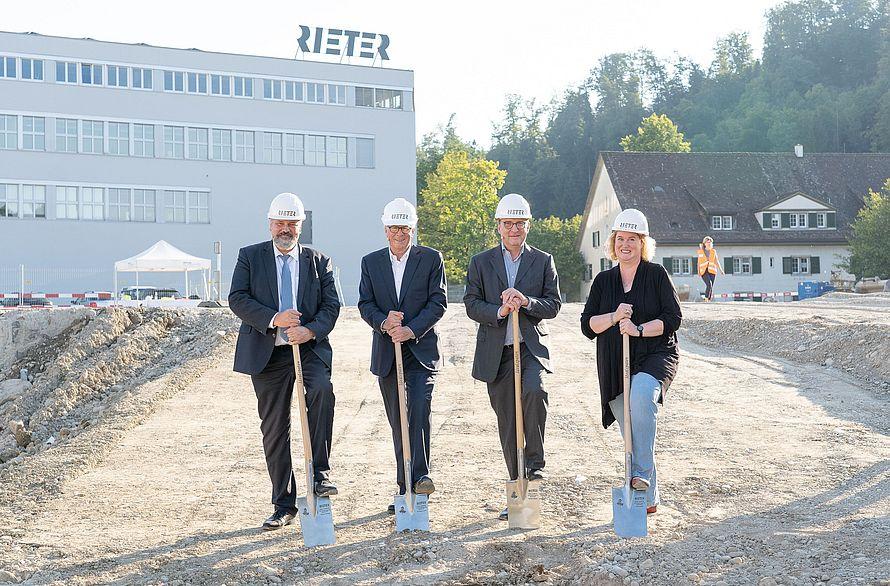
Rieter CAMPUS – Foundation Stone Laid

  • Rieter CAMPUS strengthens innovation strategy and technology leadership position
  • Customer and technology center and administration building ready for occupancy in 2024
  • Commitment to the Winterthur site and to Switzerland as a business location

On September 8, 2021, the foundation stone was laid for the Rieter CAMPUS on the western part of the Rieter site at the Winterthur location, which includes a customer and technology center as well as an administration building. The Rieter CAMPUS will make an important contribution to the implementation of the innovation strategy and to the enhancement of the company’s technology leadership position. At the same time, the investment of around CHF 80 million is a commitment to the Winterthur site and to Switzerland as a business location. 

  • Rieter CAMPUS strengthens innovation strategy and technology leadership position
  • Customer and technology center and administration building ready for occupancy in 2024
  • Commitment to the Winterthur site and to Switzerland as a business location

On September 8, 2021, the foundation stone was laid for the Rieter CAMPUS on the western part of the Rieter site at the Winterthur location, which includes a customer and technology center as well as an administration building. The Rieter CAMPUS will make an important contribution to the implementation of the innovation strategy and to the enhancement of the company’s technology leadership position. At the same time, the investment of around CHF 80 million is a commitment to the Winterthur site and to Switzerland as a business location. 

With a floor area of over 30 000 m2, the Rieter CAMPUS offers space for around   700 ultra-modern workplaces. For this purpose, Rieter and a specialist in office architecture have developed a contemporary space concept for the “Open Space Office” that is tailored to the needs of the company, divided into meeting rooms, focus rooms and some individual offices. The underground car park provides   88 parking spaces, and a further 12 outdoor parking spaces are being created   in front of the technology center.  “In the course of its 225-year company history, Rieter has helped shape the city of Winterthur. The foundation for the future as a leading technology company is now being created with the new CAMPUS. In this way, Rieter is giving a clear indication   of its commitment to the Winterthur site and to Switzerland as a business location”, commented Bernhard Jucker, Chairman of the Board of Directors of Rieter Holding AG.

Innovation is an important part of Rieter’s strategy and crucial for the company’s success. For this reason, Rieter invests more than CHF 50 million annually in research and development. Thanks to this commitment, Rieter is making a   decisive contribution to the further development of systems for sustainable yarn production and their digitization. The Rieter CAMPUS will provide an attractive working environment that promotes creativity and innovation.  The new CAMPUS is a showcase project in terms of economic feasibility, energy efficiency and sustainability. Rieter relies on renewable energy for construction. This includes heat generation via geothermal probes and a photovoltaic system on around 1 300 m2 of roof area. “In this way, the entrepreneurial focus on sustainable and energy-efficient solutions for yarn production is reflected in the overall concept of the CAMPUS,” emphasized Rieter CEO Norbert Klapper.  The move into the new building is planned for 2024.

Source:

Rieter Management AG

08.09.2021

Indorama Mobility Group: General price increase effective October 1st 2021

The Indorama Mobility Group, a manufacturer of industrial fibers, cords and fabrics, - like other companies - is confronted with significant inflation since the beginning of the year. The global economy has gradually recovered in 2021 from the impact of the COVID-19 pandemic, but is still experiencing very volatile market conditions: The global freight remains unreliable and expensive, cost for energy and global commodities is increasing, and the increasing focus on sustainability and environmental impact is driving compliance cost upward in most part of the world.

In detail:

The Indorama Mobility Group, a manufacturer of industrial fibers, cords and fabrics, - like other companies - is confronted with significant inflation since the beginning of the year. The global economy has gradually recovered in 2021 from the impact of the COVID-19 pandemic, but is still experiencing very volatile market conditions: The global freight remains unreliable and expensive, cost for energy and global commodities is increasing, and the increasing focus on sustainability and environmental impact is driving compliance cost upward in most part of the world.

In detail:

  • Utilities: gas price has tripled in the past few months in Europe (from a level of 15 EUR/MWh in Q4’20 to 45 EUR/MWh recently), while increasing by 50% in USA
  • CO2 emissions and compliance cost: prices for CO2 certificates in Europe have almost doubled, approaching 60 EUR/ton from 30 EUR/ton at the end of last year, while regulations continue to expand the need for CO2 compensation
  • Chemicals and additives (spinfinish, dip chemicals, coating & laminating chemicals): cost have increased by 5%
  • Packaging: prices for standard packaging materials have increased by more than 30%
  • Logistic: despite our local manufacturing footprint which is not fully affected by global freight issues, the regional logistic costs are also increasing up to 20% (road transport)

Despite constant efforts to optimise the cost structure through comprehensive initiatives to improve operations, cost increases have now reached a level, the group said, that can no longer be offset and must be passed on to the market. This is a necessary step to be able to continue supplying high-quality products and services of the broad product portfolio, it said.

More information:
Indorama Mobility Group
Source:

Indorama Mobility Group