From the Sector

Reset
Nobeoka facility Photo Asahi Kasei
Nobeoka facility
08.01.2026

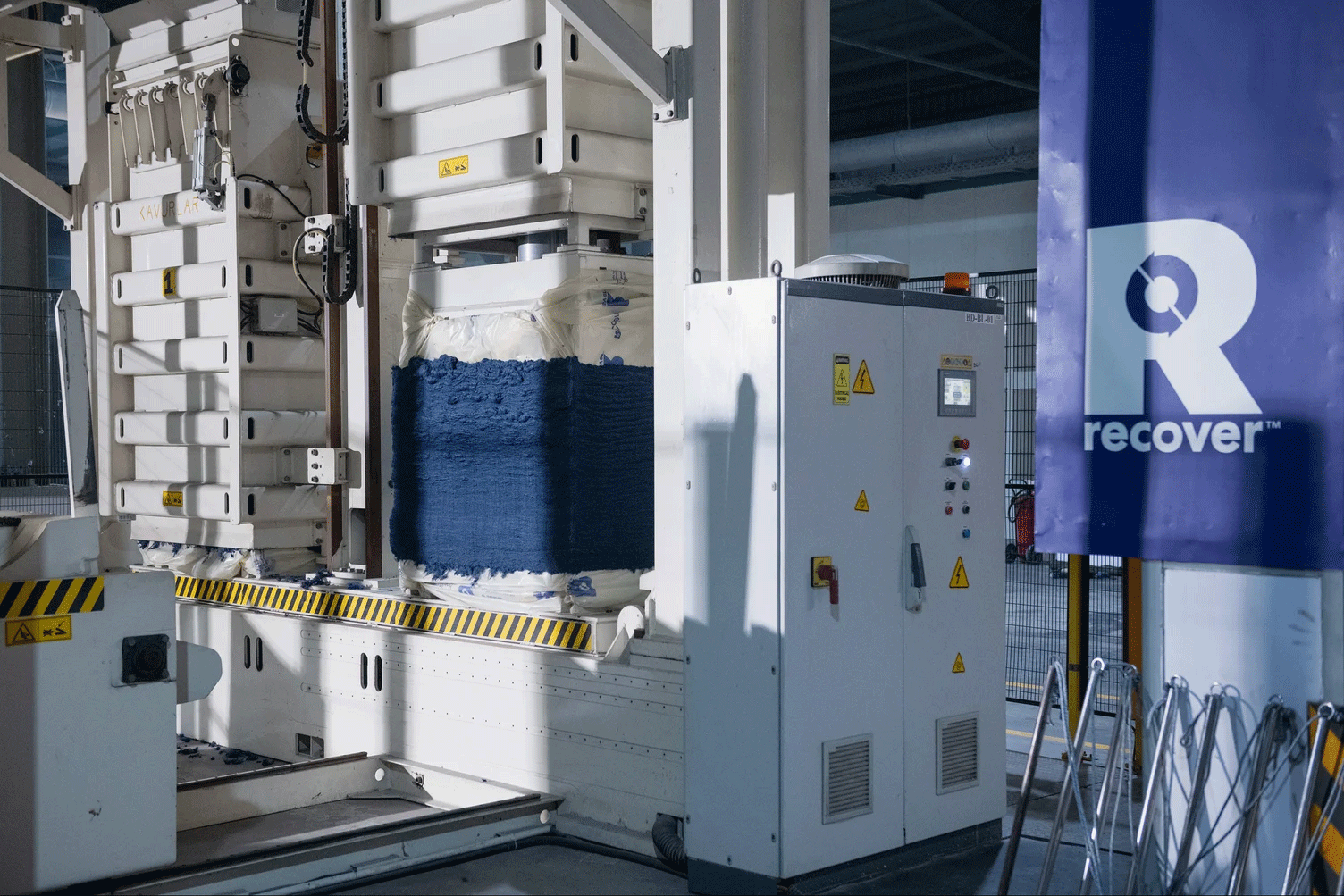
Asahi Kasei’s Restarts Bemberg™ Production in Restored Sections of the Nobeoka Facility

Beginning January 2026, the production at Asahi Kasei’s Nobeoka facility – Bemberg™’s only production site – will gradually resume, marking a new chapter following the partial shutdown caused by the April 2022 incident. 

This progress is the result of significant investments and continuous work to reinforce safety measures, restore full operational capacity, and establish long term stability. As production progressively increases, Asahi Kasei renews its initiatives to support the market with reliability, efficiency, and confidence. 

“We would like to express our sincere gratitude to our customers, partners, and employees for their patience and continued trust throughout this period,” stated Kaoru Hashimoto (Bemberg™ Senior General Manager). “Restoring production is a crucial milestone, and together with our stakeholders we remain committed to contributing to the development of a responsible and future-oriented business.”

Beginning January 2026, the production at Asahi Kasei’s Nobeoka facility – Bemberg™’s only production site – will gradually resume, marking a new chapter following the partial shutdown caused by the April 2022 incident. 

This progress is the result of significant investments and continuous work to reinforce safety measures, restore full operational capacity, and establish long term stability. As production progressively increases, Asahi Kasei renews its initiatives to support the market with reliability, efficiency, and confidence. 

“We would like to express our sincere gratitude to our customers, partners, and employees for their patience and continued trust throughout this period,” stated Kaoru Hashimoto (Bemberg™ Senior General Manager). “Restoring production is a crucial milestone, and together with our stakeholders we remain committed to contributing to the development of a responsible and future-oriented business.”

Source:

Asahi Kasei

Source Fashion July 2025 (c) Source Fashion
Source Fashion July 2025
08.01.2026

Source Fashion: Global Sourcing, Strong UK Manufacturing and a Forward-Looking Industry Agenda

Source Fashion, opens next week at Olympia London, bringing together the global fashion sourcing community for three days of responsible manufacturing, insight and collaboration. Running from 13-15 January 2026, the show will welcome audited manufacturers from across key sourcing regions worldwide, alongside buyers, brands and sourcing professionals looking to build more transparent, resilient and commercially viable supply chains.

Leading fashion retailers and brands including ASOS, Frasers Group, Next, TFG Brands, Wimbledon, JD Sports, Pickett, Gigi & Olive, Primark,  All Saints, Marks & Spencer, John Lewis, French Connection,  Charles Tyrwitt, Anthropologie, Monsoon, Karen Millen, Agent Provocateur, The Padel Foundation, Friends Like These, Universal Music Group, Hawes and Curtis and Moss Bros are among those registered to attend, underlining Source Fashion’s role as a key meeting point for both established and emerging fashion businesses.

Source Fashion, opens next week at Olympia London, bringing together the global fashion sourcing community for three days of responsible manufacturing, insight and collaboration. Running from 13-15 January 2026, the show will welcome audited manufacturers from across key sourcing regions worldwide, alongside buyers, brands and sourcing professionals looking to build more transparent, resilient and commercially viable supply chains.

Leading fashion retailers and brands including ASOS, Frasers Group, Next, TFG Brands, Wimbledon, JD Sports, Pickett, Gigi & Olive, Primark,  All Saints, Marks & Spencer, John Lewis, French Connection,  Charles Tyrwitt, Anthropologie, Monsoon, Karen Millen, Agent Provocateur, The Padel Foundation, Friends Like These, Universal Music Group, Hawes and Curtis and Moss Bros are among those registered to attend, underlining Source Fashion’s role as a key meeting point for both established and emerging fashion businesses.

Source Fashion will bring together over 250 audited manufacturers from more than 20 key sourcing regions worldwide, creating a unique platform for buyers, brands and sourcing professionals to connect directly with responsible producers. From apparel and textiles to trims, components and manufacturing solutions, the show offers a comprehensive view of the global supply chain, underpinned by transparency, innovation and commercial viability.

Spotlight on British manufacturing
New for this edition, Source Fashion is reinforcing its long-term commitment to UK manufacturing through the launch of a bursary-backed British Pavilion, designed to champion British Manufacturing and craft to increase their visibility to a global buying audience. Participants include, Apparel Tasker, LLUK, Fashion Enter, Courntney and Co, The Natural Fibre Company. Also supported are a range of Leicester Manufacturers under the ATMF banner.  The initiative provides selected UK manufacturers with funded exhibition space and dedicated marketing support, helping to remove barriers to participation and ensure British manufacturing is strongly represented on the international sourcing stage. 

The scheme forms part of Source Fashion’s wider mission to support a more balanced and resilient sourcing ecosystem, one that values heritage skills, local capability and long-term supplier relationships alongside global reach. Suzanne Ellingham, Event Director Source Fashion commented, “British manufacturing has an essential role to play in the future of responsible fashion, and it’s something we’re committed to championing at Source Fashion. From heritage skills to agile, small-batch production, UK manufacturers offer qualities that buyers are increasingly seeking transparency, flexibility and deep technical expertise. By ensuring British producers are visible, supported and connected to global buyers, we’re helping strengthen a more resilient and balanced sourcing ecosystem.”

Alongside the British Pavilion, UK manufacturing will have a strong presence across the wider show floor. British exhibitors confirmed to attend include Absolute Apparel, Amplebox Ltd, Araha London Ltd, Dee Kay Knitwear, Folks Trading Ltd, FreAura Ltd, Grade House Ltd, Modern Star Silk, Redress and Samshek Fashion Ltd. Together, their presence reflects growing buyer demand for local, traceable and agile production, and underlines the continued relevance of UK manufacturing within a global sourcing strategy.

Insight, inspiration and industry dialogue
Beyond sourcing, Source Fashion delivers a comprehensive programme of insight, inspiration and live learning across multiple stages. The show’s content agenda spans debates, panels and fireside chats tackling the most pressing challenges facing the fashion industry today, from supply chain accountability and circular business models to commercial resilience, regulation and the future of manufacturing. Designed to move conversations beyond theory, the programme equips fashion businesses with practical insight and tools to support smarter decision-making in an increasingly complex sourcing landscape.

Adding a powerful visual and experiential layer, the Source Catwalk brings responsible fashion to life through curated showcases featuring sustainably produced and circular collections, demonstrating how creativity, trend and responsibility can coexist on the shop floor.

New for this season, Fashion Deconstructed offers a hands-on, behind-the-scenes look at how fashion is made. Through live demonstrations, workshops and maker-led sessions, the area shines a spotlight on skills, craftsmanship and production processes, from repair and upcycling to weaving and material innovation, responding to growing demand from buyers for greater transparency, material knowledge and production understanding.

Suzanne Ellingham said, “As the industry prepares to come together next week, what’s most exciting is the sense of intent behind this edition of Source Fashion. Buyers and manufacturers aren’t just looking to connect, they’re looking to collaborate, learn and make better decisions for the future. From global sourcing to UK manufacturing, from insight on our stages to hands-on learning through Fashion Deconstructed, this show is about giving the industry the confidence, clarity and partnerships it needs to move forward responsibly.”

Source Fashion opens at Olympia London on 13 January and runs until 15 January. Fashion buyers, brands, designers and sourcing professionals are invited to register now and be part of the conversations, connections and partnerships shaping the future of responsible fashion sourcing.

Source:

Source Fashion

Winter Night Impressions ©INNATEX
Winter Night Impressions
08.01.2026

INNATEX 57: Brands, formats & issues related to the sustainable market

Albeit sustainable fashion cannot escape the general economic malaise, INNATEX at Messecenter Hofheim Rhein-Main demonstrates that the industry continues to work on viable strategies. The fully booked 57th edition of the international trade show for sustainable textiles focuses its supporting program on current discussions within the industry: public relevance and sales of green fashion.

The INNATEX order platform brings the industry’s challenges and possible solutions to center stage in its supporting programme, offering new formats, the premiere of Evolution Stage as well as topics that participants within sustainable fashion must address. Exhibitors include established brands such as Recolution, Dawn Denim, Vaude, Mela, Rotholz, Two Thirds, Reiff und Moea, as well as first-time exhibitors.

Albeit sustainable fashion cannot escape the general economic malaise, INNATEX at Messecenter Hofheim Rhein-Main demonstrates that the industry continues to work on viable strategies. The fully booked 57th edition of the international trade show for sustainable textiles focuses its supporting program on current discussions within the industry: public relevance and sales of green fashion.

The INNATEX order platform brings the industry’s challenges and possible solutions to center stage in its supporting programme, offering new formats, the premiere of Evolution Stage as well as topics that participants within sustainable fashion must address. Exhibitors include established brands such as Recolution, Dawn Denim, Vaude, Mela, Rotholz, Two Thirds, Reiff und Moea, as well as first-time exhibitors.

“Our trade floor is again booked up, many brands claim crowded appointment schedules – but uncertainty remains.” notes Alexander Hitzel, project manager for INNATEX. “No one knows how the market will develop. But there is one thing we can influence, namely ensuring that INNATEX offers maximum benefit, combining trade recommendations, innovation impulses, tools and space for honest discussion and dialogue“.

INNATEX Evolution Stage: Participating Brands
‘Evolution Stage – Shaping Tomorrow’s Fashion’ brings together brands that combine design, quality and future relevance, presenting them in a concept store setting. Conceived and curated by designer Jonathan Radetz, this format represents economic feasibility, applied synergies and a sales-boosting product range design at the point of sale. Chosen for this premiere are the labels Maatroom, Vidar Sport, Jungle Folk, ZAMT, Halt.Clothing, DeLin and Makesomebodyhappy.

Information and retail recommendations for an industry in turmoil
The further supporting programme picks up on issues and questions which market participants must address to remain fit for the future. These range from AI-supported strategies in the retail fashion trade to long-term developments in design and product conception to the importance of product longevity and brand building to support purchase decisions.

Stefan Moll Photo: Mahlo GmbH & Co. KG
Stefan Moll
08.01.2026

Stefan Moll new CEO at Mahlo GmbH + Co. KG

Starting January 1, 2026, Stefan Moll will take over the management of Mahlo GmbH + Co. KG, a global leading provider of measurement and control technology for web-shaped materials. The current CEO, Rainer Mestermann, will leave the company after 14 years as part of a planned succession arrangement.

“Stefan Moll is an excellent choice as the new CEO for our traditional company,” says Mahlo owner Ralph Greenwood-Mahlo. “We look forward to his expertise, fresh ideas, and perspectives.”

Starting January 1, 2026, Stefan Moll will take over the management of Mahlo GmbH + Co. KG, a global leading provider of measurement and control technology for web-shaped materials. The current CEO, Rainer Mestermann, will leave the company after 14 years as part of a planned succession arrangement.

“Stefan Moll is an excellent choice as the new CEO for our traditional company,” says Mahlo owner Ralph Greenwood-Mahlo. “We look forward to his expertise, fresh ideas, and perspectives.”

Moll brings extensive experience in managing global machinery and plant engineering companies. In addition to international corporations, the new CEO is also familiar with the structures and characteristics of larger medium-sized family businesses. “Family businesses think long-term, act sustainably, and place great value on close, trusting cooperation,” explains the new CEO regarding his decision to join Mahlo. Most recently, he served as Technical Managing Director at the Kiefel Group, a system supplier for leading plastic, thermoforming, and welding technologies based in Freilassing, where he was responsible for technical innovations, the digital strategy, and one of the globally operating divisions.

Focus on Innovation and Strategic Development
The graduate engineer describes himself as an innovation enthusiast and driver—qualities that are particularly valuable during the current transformation phase. “We are currently in a decisive phase of strategic alignment,” says Moll. He defines his goals as “making Mahlo a profitable and future-proof company and inspiring employees, customers, and owners with the right strategy.” Stefan Moll succeeds Rainer Mestermann, who led the machinery manufacturer for nearly 15 years.

Source:

Mahlo GmbH & Co. KG

The eFK EvoSmart’s new EvoHeater technology with patented heater design guarantees the highest yarn quality with up to 45% energy savings, which has a direct impact on operating costs. Photo: Oerlikon Barmag
The eFK EvoSmart’s new EvoHeater technology with patented heater design guarantees the highest yarn quality with up to 45% energy savings, which has a direct impact on operating costs.
08.01.2026

Barmag's new texturing machine impresses yarn manufacturers

Since its premiere at ITMA Asia + CITME 2025, the eFK EvoSmart texturing machine has achieved impressive market success. The innovative technology is winning over yarn manufacturers worldwide who are committed to energy-efficient and economical production processes. A total of 84 machines has already been sold – including in China, Turkey, and Indonesia.
 
eFK EvoSmart: New standards in efficiency and productivity
"Energy efficiency and top quality are key factors for successful yarn production," explains Dr. Wolfgang Ernst, Head of Sales at Barmag. "With the eFK EvoSmart, we are setting new standards in this area: intelligent technologies and significantly reduced maintenance requirements enable our customers to achieve future-proof production that takes quality and cost-effectiveness to a new level," he continues.

Since its premiere at ITMA Asia + CITME 2025, the eFK EvoSmart texturing machine has achieved impressive market success. The innovative technology is winning over yarn manufacturers worldwide who are committed to energy-efficient and economical production processes. A total of 84 machines has already been sold – including in China, Turkey, and Indonesia.
 
eFK EvoSmart: New standards in efficiency and productivity
"Energy efficiency and top quality are key factors for successful yarn production," explains Dr. Wolfgang Ernst, Head of Sales at Barmag. "With the eFK EvoSmart, we are setting new standards in this area: intelligent technologies and significantly reduced maintenance requirements enable our customers to achieve future-proof production that takes quality and cost-effectiveness to a new level," he continues.

The market response to the eFK EvoSmart clearly shows great interest of yarn producers in energy-optimized and maintenance-friendly solutions. The combination of the innovative EvoHeater heating technology and the single-inverter-controlled Smart Godets is impressive: it enables a significant reduction in energy consumption – with potential savings of 25% per kilogram of yarn.

With its EvoHeater design, which simplifies the previously time-consuming task of heater cleaning and, despite the heater being closed, makes handling much easier for operating personnel and doubles maintenance intervals, the eFK EvoSmart sets new standards. The result: up to 50% less maintenance, higher plant availability, and increased productivity in weaving, knitting, or finishing.

"With the eFK EvoSmart, we offer our customers a solution that sustainably reduces their operating costs while meeting future efficiency requirements with consistently high yarn quality," summarizes Wolfgang Ernst.

Source:

Oerlikon Textile GmbH & Co. KG

drip by drip project Photo drip by drip / Eco Age
drip by drip project
06.01.2026

From fashion to water access: a model for community impact

Globally, 2.2 billion people still lack access to safe drinking water, while the fashion industry remains one of the most water-intensive sectors, with a single pair of jeans requiring around 9,000 litres of water across cotton cultivation, dyeing and finishing. Against this backdrop, drip by drip, the non-profit organisation tackling the water crisis caused by textile production, today announces that it has brought in Eco Age to support the next phase of its work: elevating water justice within the global fashion conversation and accelerating progress towards its goal of providing one million people with access to clean water.

Founded in 2018, drip by drip works at the intersection of water, textiles and social impact. Through industry education, community water projects and grassroots engagement, the organisation addresses the man-made water crisis created by textile production, focusing on practical solutions that improve health, resilience and livelihoods in textile-producing regions.

Globally, 2.2 billion people still lack access to safe drinking water, while the fashion industry remains one of the most water-intensive sectors, with a single pair of jeans requiring around 9,000 litres of water across cotton cultivation, dyeing and finishing. Against this backdrop, drip by drip, the non-profit organisation tackling the water crisis caused by textile production, today announces that it has brought in Eco Age to support the next phase of its work: elevating water justice within the global fashion conversation and accelerating progress towards its goal of providing one million people with access to clean water.

Founded in 2018, drip by drip works at the intersection of water, textiles and social impact. Through industry education, community water projects and grassroots engagement, the organisation addresses the man-made water crisis created by textile production, focusing on practical solutions that improve health, resilience and livelihoods in textile-producing regions.

As part of this collaboration, drip by drip has appointed Eco Age as its strategic marketing, PR and communications agency. Eco Age will support drip by drip in connecting its on-the-ground impact with global industry platforms, helping ensure water justice is supported throughout the whole ecosystem, from brands and suppliers to standards bodies and media, as both urgent and solvable.

Since their founding, drip by drip has implemented 114 community water projects across Bangladesh, Pakistan, India and Ethiopia, impacting more than 280,000 people in the Global South. Water justice has direct and measurable consequences for communities in these regions, where fashion supply chains place sustained pressure on local water systems. By strengthening how this work is communicated and shared, the collaboration aims to mobilise broader industry engagement around existing solutions rather than abstract commitments.

“Our ambition is clear: to reach one million people with access to clean water,” said Amira Jehia, Executive Director of drip by drip. “To do that, the work needs to travel further. Eco Age understands how to bring deep issues into the mainstream fashion conversation without losing integrity or impact.”

Eco Age’s work sits at the intersection of sustainability strategy, storytelling and industry convening. Its experience working across fashion supply chains and media ecosystems enables initiatives like drip by drip to reach the audiences capable of accelerating change.

“We’re proud to support drip by drip with the experience and industry reach needed to help their impact scale,” said John Higginson, CEO of Eco Age. “drip by drip is already delivering results. Our role is to help ensure their impact is understood, shared and supported across the fashion ecosystem, so it can reach the people and communities it is intended to serve.”
Together, drip by drip and Eco Age will work to ensure water justice becomes an integral, practical and achievable part of fashion sustainability discussions, translating awareness into action and outcomes for communities.

Source:

drip by drip / Eco Age

Cygnet Texkimp’s ART rapid tape-deposition system is employed in the production of components for supercar such as the McLaren W1. Photo BTMA by AWOL Media
Cygnet Texkimp’s ART rapid tape-deposition system is employed in the production of components for supercar such as the McLaren W1.
06.01.2026

BTMA: Innovation in technical textiles, digitalisation and testing

Members of the British Textile Machinery Association (BTMA) can look back on 2025 as a year marked by notable technological advances and continued progress in global trade, despite an uncertain and volatile market.

“Our members have been very active over the past 12 months and this has resulted in new technologies for the production of technical fibres and fabrics, the introduction of AI and machine learning into process control systems and significant advances in materials testing,” says BTMA CEO Jason Kent. “There’s real excitement about what can be achieved in 2026 as we look ahead to upcoming exhibitions such as JEC Composites in Paris in March and Techtextil in Frankfurt in April.”

Composites momentum
Cygnet Texkimp, for example, has been nominated for a 2026 JEC Innovation Award for its collaboration with McLaren Automotive on the ART rapid tape-deposition system. Capable of depositing dry fibre tapes at up to 2.5 metres per second with exceptional precision, ART reduces scrap, shortens cycle times and delivers structural improvements already being realised across McLaren’s composite-intensive vehicle platforms.

Members of the British Textile Machinery Association (BTMA) can look back on 2025 as a year marked by notable technological advances and continued progress in global trade, despite an uncertain and volatile market.

“Our members have been very active over the past 12 months and this has resulted in new technologies for the production of technical fibres and fabrics, the introduction of AI and machine learning into process control systems and significant advances in materials testing,” says BTMA CEO Jason Kent. “There’s real excitement about what can be achieved in 2026 as we look ahead to upcoming exhibitions such as JEC Composites in Paris in March and Techtextil in Frankfurt in April.”

Composites momentum
Cygnet Texkimp, for example, has been nominated for a 2026 JEC Innovation Award for its collaboration with McLaren Automotive on the ART rapid tape-deposition system. Capable of depositing dry fibre tapes at up to 2.5 metres per second with exceptional precision, ART reduces scrap, shortens cycle times and delivers structural improvements already being realised across McLaren’s composite-intensive vehicle platforms.

Cygnet is the world’s largest independent manufacturer of prepreg production machinery, alongside a broad portfolio of handling and converting systems for the composites industry. 

In addition, the company is licensed to design and build the DEECOM® composite recycling system developed by fellow BTMA member Longworth Sustainable Recycling Technologies. DEECOM® is a zero-emission, low-carbon pressolysis solution that uses pressure and steam to reclaim fibres and resin polymers from production waste and end-of-life composites.

Other BTMA members supporting the composites sector include Emerson & Renwick, which applies deep expertise in print, forming, vacuum and coating technologies to carbon fibre processing, while Airbond is a pioneer in pneumatic yarn splicing for high-value carbon and aramid fibres. Slack & Parr meanwhile supplies high-accuracy gear metering pumps across the manmade fibre market, where they process a wide range of polymers and fibres with uniformity and consistency.

Gel spinning
Further resource savings in high-end fibre processing have been realised by Fibre Extrusion Technology through the introduction of a new process for manufacturing ultra-high molecular weight polyethylene (UHMWPE). The company’s patented solvent extraction system exploits supercritical carbon dioxide. 

“Current UHMWPE systems are huge in scale and extremely complex,” says FET R&D Manager Jonny Hunter. “That makes the supply chain inflexible and limits new product development. These disadvantages have been addressed in our new FET-500 series lab and small-scale gel spinning system.”

Quality assurance
Alongside materials innovation, BTMA members are also reshaping quality assurance via digitalisation and data-driven manufacturing. Shelton Vision has significantly advanced automated fabric inspection with the latest generation of its WebSpector system. Using patent-pending image processing techniques, WebSpector now enables reliable real-time defect detection on complex patterned fabrics, including those subject to distortion, shear or stretch during processing.

Building on its leadership in plain fabric inspection, the Shelton system now adapts to intricate designs such as camouflage and delivers clean, stable images that allow full fault detection at high running speeds. While automotive interiors and one-piece woven airbags remain key applications, WebSpector systems are increasingly being supplied to producers of performance wear, fashion, denim, outdoor upholstery, mattress ticking, window dressings and even carbon fibre composites.

Continuous colour
A comparable shift from intermittent checks to continuous monitoring is taking place in colour management through the work of C-Tex. Traditionally reliant on periodic swatches, mills can now apply laboratory-level colour measurement directly in production. 

“What we are doing is taking a lab capability and putting it into production,” says Managing Director Rob Ricketts. Working with Shelton, C-Tex has combined inline defect detection with continuous colour variation analysis, enabling both parameters to be assessed simultaneously.

Importantly, this data is now shared across supply chains. When fabrics reach garment, automotive or furniture manufacturers, downstream users know exactly what they are receiving and whether it meets their requirements. 

“This visibility is a big breakthrough,” says Ricketts. “It’s well established in automotive, but now it’s coming to textiles too.”

Intuitive testing
Advanced testing remains another cornerstone of BTMA innovation. James Heal has long supplied advanced textile testing systems and its latest Performance Testing collection focuses on speed, simplicity and intuitive operation for parameters such as airflow and water resiliency. Water repellency testing has similarly been improved with the TruRain system which dramatically reduces wastewater and energy consumption.

During 2025, the company also introduced the new Martindale Motion.
The new nine-station instrument with individual lifting heads now offers the flexibility to run each station independently for carrying out different textile tests simultaneously. Once set up, the Martindale Motion can be left running with the sample holders automatically lifting at the required evaluation points, freeing up the operator’s time to do other work without the need to return until the abrasion or pilling test is fully completed, including overnight.

Colour accuracy is addressed by the VeriVide DigiEye system which provides non-contact colour measurement and digital imaging, enabling objective data capture and rapid sharing across organisations. Recent developments include 100% LED illumination, integrated dust filtration, software-controlled lighting geometry and automated image capture, improving both precision and efficiency.

Tactility challenge
The tactile sensation experienced when touching and manipulating fabric is meanwhile a critical aspect of textile evaluation, but to date has been very subjective. One of the biggest challenges faced by designers and manufacturers is in describing and sharing information about fabric aesthetics before manufacturing, or without the costly and time-consuming process of transporting physical samples.

These limitations are being overcome with the new Sentire fabric handle tester from Roaches International.

“No two people will describe how a fabric feels in the same way and the lack of a common language to describe fabric tactility poses communication challenges across the complex global fashion and textile supply chain,” says Roaches International MD Sean O’Neill. “The Sentire has been developed to allow our customers to objectively measure qualities such as softness, smoothness, drape and stiffness and market response during 2025 has been extremely positive.”

Convergence
Bringing these developments together, Jason Kent sees a clear strategic direction emerging. 

“Across the BTMA we’re seeing a convergence of advanced machinery, intelligent software and rigorous testing,” he says. “Our members are responding to today’s challenges around efficiency, sustainability and quality, while laying the foundations for a more transparent, data-driven and resilient textile manufacturing sector. Despite market uncertainty, there is genuine confidence about what lies ahead for British textile machinery and its global customers.”

DyStar Reception Library (c) DyStar Singapore Pte Ltd
DyStar Reception Library
05.01.2026

DyStar now fully owned by Zhejiang Longsheng Group

DyStar, a leading specialty chemical company with a heritage of more than a century in product development and innovation, formally announced that DyStar is now under the full ownership of Zhejiang Longsheng Group, following the conclusive resolution of its shareholders’ dispute. This milestone shall mark a new chapter of stability, governance clarity, and long-term growth for the Group.

DyStar, a leading specialty chemical company with a heritage of more than a century in product development and innovation, formally announced that DyStar is now under the full ownership of Zhejiang Longsheng Group, following the conclusive resolution of its shareholders’ dispute. This milestone shall mark a new chapter of stability, governance clarity, and long-term growth for the Group.

The resolution was achieved through a series of agreements: the Share Buy-Back Agreement dated December 12, 2025, the Framework Agreement dated December 12, 2025, and the Amended and Restated Share Purchase Agreement dated December 13, 2025, which amended the original Share Purchase Agreement dated May 29, 2025.
 
Under the Share Buy-Back Agreement, a total consideration of USD 688,879,511.69 was paid to acquire the 37.5% shareholding previously owned by KIRI Industries. Of this amount, DyStar contributed USD 426,519,921.56, while Zhejiang Longsheng Group Co., Ltd.’s wholly owned subsidiary, Sende International Capital Limited, contributed USD 262,359,590.13.
 
On December 30, 2025, the transaction was confirmed by the court-appointed receivers, Deloitte & Touche Financial Advisory Services Pte Ltd, with completion and closing effected on the same day.
 
Following completion, all litigation between the Zhejiang Longsheng and KIRI Industries relating to DyStar’s shareholding has been concluded. The two directors appointed by KIRI have resigned from the DyStar Board of Directors, further consolidating governance and control. DyStar is now 100% wholly owned subsidiary of Zhejiang Longsheng Group Co., Ltd.
 
Mr Ruan Weixiang, Chairman, Board of Directors, DyStar Group said, “We are delighted with the successful conclusion of this transaction as it is consistent with Longsheng’s strategic objective of becoming a world class provider of specialty chemical production services. I am confident DyStar’s consolidated profits will be further strengthened as we remain united and work together for a better tomorrow.”
 
Mr. Xu Yalin, Managing Director and President of DyStar Group commented, “The complete resolution of the shareholders’ dispute marks a pivotal milestone for DyStar. With full ownership and unified governance under the leadership of Zhejiang Longsheng Group, DyStar is well positioned to strengthen its global operations, accelerate innovation, and deliver sustainable value for all stakeholders.”

Source:

DyStar Singapore Pte Ltd

© Alcova/Messe Frankfurt
05.01.2026

Heimtextil 2026: Artificial Intelligence in focus

Artificial intelligence (AI) rapidly transforms the textile industry – from creation and production to pricing, distribution and communication. But how can AI be applied successfully, and where does it add value? Heimtextil addresses these questions from 13 to 16 January 2026: The programme dedicated to the key future field AI wants to strengthen the global industry and open up new business opportunities as well as practical applications for design, retail, industry, architecture, interior design and contract furnishing. Highlights include the progressive Heimtextil Trends 26/27 by Alcova, the design installation by Patricia Urquiola and the live talk with AI pioneer Tim Fu. 

AI accelerates creative processes and reshapes working methods along the entire textile value chain – from design concepts and material visualisations to data migration and everyday workflows, to the implementation of new products and concepts. Heimtextil 2026 makes these developments tangible and brings together experts who demonstrate how AI is used in practice and what potential it offers the industry.

Artificial intelligence (AI) rapidly transforms the textile industry – from creation and production to pricing, distribution and communication. But how can AI be applied successfully, and where does it add value? Heimtextil addresses these questions from 13 to 16 January 2026: The programme dedicated to the key future field AI wants to strengthen the global industry and open up new business opportunities as well as practical applications for design, retail, industry, architecture, interior design and contract furnishing. Highlights include the progressive Heimtextil Trends 26/27 by Alcova, the design installation by Patricia Urquiola and the live talk with AI pioneer Tim Fu. 

AI accelerates creative processes and reshapes working methods along the entire textile value chain – from design concepts and material visualisations to data migration and everyday workflows, to the implementation of new products and concepts. Heimtextil 2026 makes these developments tangible and brings together experts who demonstrate how AI is used in practice and what potential it offers the industry.

AI from stage to practice
The central knowledge hub is the Texpertise Stage in Hall 6.0. This is where Heimtextil brings together a forward-looking, business-relevant content programme and translates technological innovation into practical insights for the industry. One of the highlights is the live talk with Tim Fu: the London-based architect and AI pioneer discusses interior design in the age of AI with Simon Keane-Cowell, Editor-in-Chief of Architonic. On the first day of the fair, Anja Bisgaard Gaede (Founder, Spott trends & business aps) talks about workflows, data integration and the textile future shaped by AI. Elisabeth Ramm (Atelier Brückner) shares insights into AI and materials in exhibition design. Using tangible examples, Martin Auerbach (Association of German Home Textiles Manufacturers) explains how AI is used in everyday work and how companies can integrate it profitably into their daily workflows. Sleep expert Markus Kamps moderates dedicated sessions on the megatrend of sleep and technology, featuring numerous guest speakers. At the Talk Spot in Hall 12.0, Architonic hosts a discussion with exhibitor Oriental Weavers on carpets between craftsmanship and global production.

Heimtextil Trends 26/27: AI impulses for design, retail and industry
How can AI-driven design processes be combined with traditional textile craftsmanship? The Heimtextil Trends 26/27 provide answers and orientation for the coming season under the motto “Craft is a verb”. In the Trend Arena in Hall 6.1, the design platform Alcova presents six stylistic directions that explore how high-tech and craftsmanship interact. This interplay becomes visible in a vibrant colour palette, where “glitches”, unexpected digital disruptions, and radical synthetic accents deliberately break through the natural colour spectrum. Daily talks and guided tours with experts translate the trend themes into concrete business insights.

„among-all“: AI-generated design experience by Patricia Urquiola 
What happens when we ourselves become part of AI-based creation? Patricia Urquiola explores this question in her installation “among-all” (Hall 3.0). The designer combines futuristic textile elements, sustainable materials and new AI technologies. “among-all” showcases how textiles can function as transformative and intelligent materials and actively involves visitors in the spatial staging. In a live talk on 14 January 2026, the design icon discusses her visionary approach on the Texpertise Stage. Daily guided tours bring the interior design of tomorrow to life.

AI as creative partner for the contract business
With Interior.Architecture.Hospitality, Heimtextil offers decision-makers from interior design, architecture, hospitality and the contract business a customised programme. At the dedicated Talk Spot in Hall 3.1, Mauro Brigham (Founder ncbham) discusses why design is never static. Helen Häkli (Freelance Architect, bdia) shows how AI is used as a creative partner in interior design. Further specialised lectures, including contributions from Corinna Kretschmar-Joehnk (JOI-Design) and Robin Hepp (Kids Studio), complement the extensive hospitality programme.

New opportunities for craftsmanship and interior decoration
What AI can deliver in concrete terms for interior decoration and the crafts sector is demonstrated by AI expert Alexander Ligowski on the DecoTeam Stage in Hall 3.0. Using selected examples, he provides hands-on insights into AI-supported interior design – ranging from room and colour concepts to sales support, text generation for social media and the optimisation of quotations.

New Talents Area: perspectives of the next design generation 
How is the next generation of designers engaging with AI technology? In 2026, Heimtextil offers fresh insights with the debut of the New Talents Area in Hall 6.1. The curated exhibition presents emerging design talents from around the world and enables direct exchange with international newcomers.

Source:

Messe Frankfurt

Nonwovens Redefining Historic Monument Roof Restoration Image: INDEX
04.01.2026

Nonwovens Redefining Historic Monument Roof Restoration

A quiet revolution in church restoration
Across Europe’s historic skylines, the silhouettes of medieval towers and Baroque spires have stood for centuries, but the fabric that keeps them watertight has rarely lasted more than a generation or two. Today, architects and conservationists face the delicate task of renewing these protective layers without altering the appearance or breathability of ancient structures. In this context, nonwoven fabrics have quietly become one of the most transformative materials in restoration behind the scenes of heritage roofs.

A quiet revolution in church restoration
Across Europe’s historic skylines, the silhouettes of medieval towers and Baroque spires have stood for centuries, but the fabric that keeps them watertight has rarely lasted more than a generation or two. Today, architects and conservationists face the delicate task of renewing these protective layers without altering the appearance or breathability of ancient structures. In this context, nonwoven fabrics have quietly become one of the most transformative materials in restoration behind the scenes of heritage roofs.

Traditional roofing on churches was never designed as a sealed envelope. Slate, tile and lead coverings were laid over open rafters or timber boards, relying on ventilation and sheer mass to manage moisture. When such buildings are re-roofed under contemporary conservation standards, contractors must reconcile modern performance expectations – airtightness, resistance to driving rain, and compliance with safety regulations – with the need to preserve original construction logic. This is where engineered nonwovens, with their combination of vapour permeability and water resistance, provide an elegant solution.

Invisible defence
A nonwoven underlay acts as a secondary shield beneath the outer covering, shedding any wind-driven rain that penetrates between slates while still allowing moisture from within to diffuse outwards. Its fibrous matrix creates a microscopic labyrinth of pores that block liquid water but remain open to water vapour, so that timber structures can continue to breathe much as they always have. The result is an invisible line of defence that does not interfere with the historic envelope’s ability to regulate humidity naturally.

In practical terms, the benefits are more than theoretical. Many heritage sites must remain open during works or lie exposed for long periods while leadwork and masonry are repaired. A strong, lightweight nonwoven can be laid in a day over newly stripped sections, immediately restoring weather protection and allowing carpenters and masons to proceed without interruption. On complex church roofs – often steeply pitched, ornamented with dormers and difficult to scaffold – this ability to secure a weathertight covering has proved invaluable. It reduces the need for daily tarpaulin handling, cuts labour costs and limits the risk of water ingress that might damage ancient ceilings or murals below.

Microporosity
The conservation world has traditionally been wary of modern membranes, and rightly so. Earlier generations of bituminous or plasticised underlays created sealed cavities that trapped condensation, leading to timber decay and corrosion. Nonwovens differ in that they rely on microporous structures rather than applied coatings for their performance. Because they are made from mechanically bonded fibres rather than laminated films, they remain vapour-open by design. In the language of building physics, they have “low vapour resistance yet high water holdout” – two qualities rarely achieved together in earlier materials.

Their structural behaviour also suits the irregular geometry of historic carpentry. Whereas stiff plastic sheets can tear over uneven boarding or sharp ridges, nonwovens drape naturally around contours and resist puncture. They are also quiet under wind load, which is an overlooked comfort factor when a centuries-old tower stands in a residential quarter, and they age more gracefully than brittle films. In a craft context, this flexibility matters as much as technical data – restorers appreciate a material that behaves predictably under hand tools, that can be cut cleanly and that adheres reliably with standard tapes or battens.

Economy of disturbance
From a sustainability perspective, nonwovens also align with the ethos of minimal intervention. They are light to transport, require little energy to manufacture and can often be installed without altering existing timberwork. Because they extend the lifespan of expensive outer coverings, they reduce the frequency of disruptive roof replacements and in long-term stewardship terms, that economy of disturbance is as important as any embodied carbon metric.

Projects across Europe illustrate how seamlessly nonwovens have entered the conservation vocabulary. In medieval churches where roof spaces are inaccessible, their use has allowed designers to maintain the unventilated build-ups of the original fabric while still meeting moisture-control criteria. In Baroque structures with intricate domes, their thin profile helps maintain sightlines at eaves and cornices without introducing visible ventilation slots. Even in smaller rural chapels, they provide an insurance layer beneath reused or weathered slates, reducing the risk of localised leaks that might otherwise threaten timber vaulting or plaster ceilings.

Another virtue, often underestimated, lies in their role during construction sequencing. Because nonwovens can serve as both temporary and permanent weather protection, they simplify project logistics. Once laid, they remain in place through the entire build, so there is no wasted material or duplicated effort. In many restorations, this flexibility has shortened programme durations and reduced the environmental impact associated with single-use coverings.

Detailing
Nonwovens also lend themselves to hybrid detailing. In some restorations, they are combined with traditional sarking boards and lime-based insulation systems, maintaining a breathable overall assembly. In others, they form part of modern warm-roof solutions under lead or copper sheeting, where their stability under heat and UV exposure becomes a key advantage. Their neutrality makes them compatible with almost any heritage-appropriate finish.

A challenge lies not in proving the performance of nonwovens but in ensuring they are specified sensitively. Every church roof tells a different story – some rely on massive oak frames that demand free airflow, others contain fragile painted timbers or medieval tiles that call for careful moisture control. 

A responsible designer must therefore balance the convenience of modern materials with a deep understanding of how historic buildings breathe and move. 

When chosen wisely, a nonwoven underlay can protect centuries of craftsmanship without ever announcing its presence.

More information:
INDEX Restoration Buildtech roof
Source:

INDEX

Concept design view of the Palm Jebel Ali trunk development © Dubai Media Office
30.12.2025

Engineered Nonwovens in Palm Jebel Ali Construction

Nonwovens and the 9th Wonder of the World
Palm Jebel Ali – an ambitious artificial archipelago off Dubai’s Jebel Ali coast – is making a high-profile return after years of dormancy, which is good news for the construction industry and for the manufacturers of geotextiles and other engineered nonwovens who will be involved.

Initially launched in 2002, the project was to be a palm-shaped island even larger than its famed sibling, Palm Jumeirah (billed as ‘The 8th Wonder of the World’), but suffered delays and suspension following the global financial crisis of 2008. 

After remaining largely on hold for over a decade, it was formally relaunched in 2023, with construction resuming in 2024 under a revised master plan targeting completion around 2028. 

The renewed vision for Palm Jebel Ali is bolder and more sustainable. At about 13.4 square metres, the island is now designed to be more than twice the size of Palm Jumeirah, adding nearly 100 kilometres of new coastline to Dubai’s map. It includes multiple fronds, interconnected islands, luxury residential units, hotel and resort zones, marinas and extensive waterfront amenities. 

Nonwovens and the 9th Wonder of the World
Palm Jebel Ali – an ambitious artificial archipelago off Dubai’s Jebel Ali coast – is making a high-profile return after years of dormancy, which is good news for the construction industry and for the manufacturers of geotextiles and other engineered nonwovens who will be involved.

Initially launched in 2002, the project was to be a palm-shaped island even larger than its famed sibling, Palm Jumeirah (billed as ‘The 8th Wonder of the World’), but suffered delays and suspension following the global financial crisis of 2008. 

After remaining largely on hold for over a decade, it was formally relaunched in 2023, with construction resuming in 2024 under a revised master plan targeting completion around 2028. 

The renewed vision for Palm Jebel Ali is bolder and more sustainable. At about 13.4 square metres, the island is now designed to be more than twice the size of Palm Jumeirah, adding nearly 100 kilometres of new coastline to Dubai’s map. It includes multiple fronds, interconnected islands, luxury residential units, hotel and resort zones, marinas and extensive waterfront amenities. 

A key aim is to blend high-end living with smarter infrastructure, environmental consciousness and modern urban planning, marking a step beyond the purely spectacle-driven island developments of the past. 

Palm Jumeirah
Completed around 2006/07, Palm Jumeirah required massive engineering works to transform marine seabed into a stable platform for residential, hotel and infrastructure development. Underlying that ambition was a need to manage soil, water and structural stability in a highly demanding environment of waves, tides and fine and sometimes mobile sediments. 

One company heavily involved in this work was INDEX™26 exhibitor Fibertex, as the supplier of engineered fabrics for several of Palm Jumeirah’s containment, separation, drainage and stabilisation functions.

For the breakwater protecting Palm Jumeirah’s outer edge, a specific nonwoven grade was used as a stabilising geotextile. In effect, this fabric was laid between structural rock layers or between rock and sand zones to prevent migration of fine particles, filter subsurface flows, and preserve the intended layering.

In a marine rock-fill breakwater, designers traditionally achieve filtration with graded stone filters alone. That approach is robust but demands precise gradation and thicker sections. A high-strength, puncture-resistant nonwoven delivers the same filter/separator function in a thinner interface, while accommodating differential settlement and allowing free water flow to relieve pore pressures. 

The breakwater itself is substantial – the Palm’s protective seawall runs around 12 kilometres in length and roughly 200 metres wide, forming a barrier that must resist wave and storm action while preventing seabed scour and internal erosion. 

The geotextile layer thus acts as a demarcation/interface between rock armour and the inner sand and gravel fill materials in order to maintain the mechanical integrity of the breakwater and reduce mixing of layers under hydraulic stress. 

The involvement of Fibertex in the project, however, went further various grades of the company’s nonwoven geotextiles were specified for the reclaimed island’s internal infrastructure, including the roads on each frond as well as drainage systems and landscaping.

Landmarks
Nonwoven geotextiles have become one of the most influential yet least recognised technologies shaping the construction of modern landmarks. Through careful control of fibre type, density and bonding method, engineers have created materials that can filter, separate, drain and reinforce in ways once unimaginable. They are now used wherever earth meets infrastructure – between layers of aggregate, behind retaining walls, beneath pavements, along riverbanks and below rail beds. Their dual nature is significant – they are strong enough to withstand immense stresses, yet porous enough to allow water to flow freely.

The idea of using textiles in soil is not new and even the Romans stabilised roads with layers of organic fibre, but nonwoven geotextiles have made it possible to apply the same principle on a scale suited to 21st Century construction. These materials first came to prominence in the 1970s and 1980s when engineers sought reliable separation layers for highways and embankments. Since then, they have quietly found their way into some of the world’s most recognisable civil works.

Runways and tunnels
In the runways of airports, for example, carefully layered structures of base course and treated subgrade lie below the concrete surface. Between these, a nonwoven layer acts as a bond breaker and separator, preventing the upward movement of fine particles and relieving stresses that could cause cracking at the surface. 

This small intervention can extend the runway’s life by decades and reduce the frequency of costly closures. At such sites, the stakes are high – aircraft weighing hundreds of tons depend on uniform support and impeccable drainage and the nonwoven layer ensures both.

In tunnels and underground rail networks, nonwovens perform a different yet equally critical function. Behind the waterproofing membranes that line the excavation, they serve as protective cushions, allowing the flexible membranes to accommodate ground movement without puncture. They channel seepage water into drainage systems, keeping the tunnel interior dry and safe. The great subterranean arteries of modern cities – their metros, deep stations and cut-and-cover highways – are lined with these unseen fabrics. When commuters move effortlessly through stations that might once have dripped with moisture, they are benefitting from the quiet performance of a nonwoven layer only a few millimetres thick.

Erosion control
In dam and reservoir construction, nonwoven geotextiles meanwhile provide filtration and erosion control in zones where fine soils meet coarse drainage aggregates. Their role here is to hold back the soil while allowing water to pass, preventing the formation of internal erosion channels that can threaten stability. Some of the most ambitious water projects in the world have relied on them to safeguard the transition between impervious cores and drainage layers. Decades after installation, many continue to perform flawlessly – illustrating their durability under constant load and hydraulic pressure.

Coastal and river protection projects, too, have embraced nonwovens. Beneath rock armour, breakwaters or sand-filled tubes, they stabilise the subsoil and prevent scour by wave action. When severe storms strike, these layers can be the difference between an intact shoreline and a collapsed embankment. In ports and estuaries where space is limited, nonwovens have enabled the construction of vertical quay walls and reclaimed land by controlling the migration of fines and maintaining hydraulic balance. They are the quiet custodians of modern coastlines, extending the life of structures that face the full force of nature. 

Quiet strength
When Palm Jebel Ali rises from the Gulf, it will stand as a further reminder that the most visionary feats of engineering depend not only on grand designs but also on the quiet strength of the materials beneath them. 

Nonwoven geotextiles, though unseen, remain key tools of such progress and in playing their part in shaping the 9th Wonder of the World, will once again reaffirm their place at the foundation of modern civilisation’s most ambitious landscapes.


21.12.2025

Suominen: Restricted share unit plan for key employees

The Board of Directors of Suominen Corporation has resolved to establish a new share-based incentive plan for selected key employees of the group. The purpose of the plan is to align the interests of the company’s shareholders and key employees to increase the company’s value in the long-term, to commit key employees to the company and to offer them a competitive incentive plan based on receiving the company’s shares.

The plan is intended to be used as a tool in situations seen necessary by the Board of Directors, for example ensuring retention of key talents to the company, attracting a new talent or other specific situations determined by the Board of Directors.

The Board of Directors may allocate rewards from the Restricted Share Unit Plan 2026—2028 during financial years 2026—2028. The value of the rewards to be paid on the basis of the plan corresponds to a maximum total of 200,000 shares of Suominen, including also the proportion to be paid in cash. The target group of the plan consists of key employees selected by the Board, including members of the Leadership Team and the CEO.

The Board of Directors of Suominen Corporation has resolved to establish a new share-based incentive plan for selected key employees of the group. The purpose of the plan is to align the interests of the company’s shareholders and key employees to increase the company’s value in the long-term, to commit key employees to the company and to offer them a competitive incentive plan based on receiving the company’s shares.

The plan is intended to be used as a tool in situations seen necessary by the Board of Directors, for example ensuring retention of key talents to the company, attracting a new talent or other specific situations determined by the Board of Directors.

The Board of Directors may allocate rewards from the Restricted Share Unit Plan 2026—2028 during financial years 2026—2028. The value of the rewards to be paid on the basis of the plan corresponds to a maximum total of 200,000 shares of Suominen, including also the proportion to be paid in cash. The target group of the plan consists of key employees selected by the Board, including members of the Leadership Team and the CEO.

The rewards will be paid by the end of May 2029, but in any event minimum twelve (12) months after the determination of the reward opportunity. The reward is based on a valid employment or director contract and on the continuity of the employment or service.

The reward will be paid partly in Suominen’s shares and partly in cash. The cash proportion of the reward is intended to cover taxes and statutory social security contributions arising from the reward to the key employee. As a rule, no reward will be paid if the key employee’s employment or director contract terminates before the reward payment. The Board may impose a share holding obligation on the shares delivered as reward.

Source:

Suominen Corporation

Photo Philip Wyers, Unsplash
18.12.2025

San Francisco Fire Department Adopts Non PFAS Turnout Gear

The San Francisco Fire Department (SFFD) has become the largest department in the United States to transition its entire fleet to non-PFAS turnout gear. The gear was purchased in part through a $2.35 million Assistance to Firefighters Grant (AFG) from FEMA and matching funds from the department, amid growing momentum around identifying PFAS alternatives in firefighting gear.

The department worked with textile innovator Milliken & Company and gear manufacturer Fire-Dex to fulfill the order, whose first shipment was delivered this month. The department plans to receive 1,100 sets of non-PFAS turnout gear, one set for every frontline suppression member, by December 31, 2025.

The San Francisco Fire Department (SFFD) has become the largest department in the United States to transition its entire fleet to non-PFAS turnout gear. The gear was purchased in part through a $2.35 million Assistance to Firefighters Grant (AFG) from FEMA and matching funds from the department, amid growing momentum around identifying PFAS alternatives in firefighting gear.

The department worked with textile innovator Milliken & Company and gear manufacturer Fire-Dex to fulfill the order, whose first shipment was delivered this month. The department plans to receive 1,100 sets of non-PFAS turnout gear, one set for every frontline suppression member, by December 31, 2025.

“As the San Francisco Fire Department continues to lead in innovation, we remain steadfast in our commitment to protecting the health and safety of our members. Firefighting is inherently dangerous, and our personnel deserve access to the most modern, protective, and safest turnout gear available. Transitioning to PFAS-free equipment is a critical step in advancing our mission: safeguarding the public by ensuring our firefighters remain healthy and able to serve at their highest capacity,” said SFFD Fire Chief Dean Crispen.

Chief Crispen added, “This distribution represents more than new gear, it reflects a strong, coordinated effort among the Fire Department, our elected leaders, SF Firefighters IAFF Local 798, and the SF Firefighters Cancer Prevention Foundation. Milliken and Fire-Dex rose to this challenge, demonstrating what is possible when partners are united by a shared purpose. This collaboration is what the residents and visitors of San Francisco expect and deserve. A protected workforce is the foundation of a protected community. By investing in the well-being of our firefighters, we strengthen the health, resilience, and safety of San Francisco as a whole.” 

The transition follows an ordinance passed in May 2024 making San Francisco the first city in the country to ban the use of PFAS chemicals in its firefighters’ turnout gear. With a June 30, 2026 deadline to make the switch, department officials worked efficiently to procure and test potential solutions, selecting the final gear well ahead of the deadline. 

The selected gear went through rigorous performance and safety testing, including a 90-day wear trial with 50 firefighters going through live fire training at the San Francisco Division of Training burn rooms. The gear is UL certified and meets the NFPA 1971-2018 and 1971-2025 standards. 

While non-fluorinated fabrics have existed for turnout gear outer shells and thermal liners, moisture barrier alternatives remained a key technical challenge. The introduction of Milliken Assure™ — North America’s first non-PFAS, non-halogenated flame-resistant moisture barrier — in October 2024 made it possible for Fire-Dex to provide SFFD with a solution that met all requirements. 

“A non-PFAS moisture barrier was the missing piece for departments wanting to move away from fluorinated chemicals,” said Marcio Manique, SVP and Managing Director of Milliken’s apparel business. “With Assure™, we refused to trade one hazard for another. It meets the strictest performance standards without adding weight or compromising breathability – giving firefighters exactly what they asked for.”

SFFD worked with MES Life Safety to order the garments from Fire-Dex and size each firefighter individually for their new equipment. Milliken and Fire-Dex have maintained a decade of strategic collaboration that delivers fire service innovation and advancement through U.S. research and manufacturing.

“Fire-Dex is honored to supply the San Francisco Fire Department with AeroFlex turnout gear featuring a non-fluorinated moisture barrier,” said Jeff Koledo, Fire-Dex Vice President of Sales. “We’re grateful to work alongside Milliken and MES in delivering this solution. Our goal has always been to provide fire departments across the country with options that meet their needs — and ultimately ensure they have the essential protection required to keep their communities safe.”

San Francisco encompasses 49 square miles and is the fourth largest city in the state of California. The SFFD is the 10th largest fire department in the United States, serving an estimated 1.5 million people. With 45 stations, firefighters respond to an average of 180,000 annual emergency calls. 

Source:

Milliken 

CHT Group recognized as champion by adidas Image CHT Group
18.12.2025

CHT Group recognized as champion by adidas

For the third time in a row, the CHT Group has been recognized as champion of the adiFORMULATOR AWARD by adidas.

Dr. Annegret Vester, Chief Sustainability Officer, states: "We are very pleased that the CHT Group has been recognized as a leading company by adidas. With our partnership with adidas we reinforce our pro-active and long-term commitment to continuous improvement in both products and processes. This is a vital component of the CHT sustainability strategy, aligned with the UN Sustainable Development Goals.”

Nittima Kulmanoros, Brand & Retail Management, adds: “We are convinced that our success story will inspire our customers, brand partners, and other partners in the textile industry to set new standards. Our CHT B&R and regional teams are ready to share their expertise and support globally. At CHT, we are looking forward to this exciting journey together with you."

For the third time in a row, the CHT Group has been recognized as champion of the adiFORMULATOR AWARD by adidas.

Dr. Annegret Vester, Chief Sustainability Officer, states: "We are very pleased that the CHT Group has been recognized as a leading company by adidas. With our partnership with adidas we reinforce our pro-active and long-term commitment to continuous improvement in both products and processes. This is a vital component of the CHT sustainability strategy, aligned with the UN Sustainable Development Goals.”

Nittima Kulmanoros, Brand & Retail Management, adds: “We are convinced that our success story will inspire our customers, brand partners, and other partners in the textile industry to set new standards. Our CHT B&R and regional teams are ready to share their expertise and support globally. At CHT, we are looking forward to this exciting journey together with you."

Sustainability through innovation
With innovative processes such as PIGMENTURA by CHT and the “Best Solution” concept BeSo® EFFECTIVE, CHT supports textile manufacturers in reducing costs and resources while making a positive contribution to climate protection. The increased use of renewable and recycled materials – for example, in products such as ARRISTAN rAIR – actively promotes the circular economy.

CHT Group reaffirms its commitment to sustainable chemical solutions and product stewardship
The CHT Group is sending a clear signal for sustainability and responsibility in the textile industry. With a comprehensive approach to product stewardship, the company takes responsibility for their products and ingredients respectively throughout their entire life cycle. The aim is to ensure human safety and minimize environmental risks.

Comprehensive product stewardship is the basis for successful sustainability certifications:

  • ZDHC certification: More than 2,200 products certified at Level 3.
  • Chem-MAP®: ZDHC Approved V3.1 Certifier (Level 1, 2 & 3).
  • bluesign® technologies ag: CHT is a Global System Partner.
  • SCTI membership: As a founding member of Sustainable Chemistry for the Textile Industry, CHT has been supporting transformative changes in the textile value chain since 2020.
Source:

CHT Group

Compamed Stand Photo FET
Compamed Stand
17.12.2025

FET ends 2025 exhibition run with COMPAMED 2025

Fibre Extrusion Technology Ltd (FET) of Leeds, UK reported another successful exhibition at COMPAMED 2025 in Düsseldorf, following closely on the heels of ITMA ASIA in Singapore. This was the second time that FET had exhibited at this international trade fair for the medical technology supplier sector, a reflection of the company’s growing role in this sector. More than half of FET’s turnover is currently derived from the burgeoning medical market.

COMPAMED is aimed at suppliers of a wide range of high-quality medical technology components, services and production equipment for the medical industry. FET’s expanding role in the medical sector is therefore an ideal fit for this trade show.

Fibre Extrusion Technology Ltd (FET) of Leeds, UK reported another successful exhibition at COMPAMED 2025 in Düsseldorf, following closely on the heels of ITMA ASIA in Singapore. This was the second time that FET had exhibited at this international trade fair for the medical technology supplier sector, a reflection of the company’s growing role in this sector. More than half of FET’s turnover is currently derived from the burgeoning medical market.

COMPAMED is aimed at suppliers of a wide range of high-quality medical technology components, services and production equipment for the medical industry. FET’s expanding role in the medical sector is therefore an ideal fit for this trade show.

At the exhibition, FET launched its latest ground breaking technology with the FET-500 – Gel Spinning systems for Ultra High Molecular weight polymers such as UHMWPE, boasting significant savings in cost, footprint and environmental factors.  With vast flexibility whilst maintaining critical consistency, the FET-500 provides the ability to prove concepts and secure medical device IP. Key benefits include removing the harsh processing chemicals that historically have been used with gel spinning technology. FET’s patent-pending process technology has enabled the process to be compact and environmentally friendly compared to industrial alternatives. 

In 2026, FET will be exhibiting at two major trade shows to continue its global drive. This begins with Techtextil, Frankfurt in April, followed by COMPAMED 2026, Dusseldorf in November.

TRAPIS Textile Printing Photo Mimaki Europe
TRAPIS Textile Printing
17.12.2025

Mimaki: TRAPIS Textile Printing at Heimtextil 2026

Mimaki Europe, a leading provider of industrial inkjet printers and cutting plotters will return to Heimtextil with a renewed focus on material versatility and simplified textile production. At the tradeshow, the company will present TRAPIS, its innovative pigment transfer printing system that enables manufacturers to print on a wide range of fabrics using a single ink set – ranging from natural fibres to blended and synthetic fabrics. Designed for easy, compact and cost-efficient operation, TRAPIS removes traditional barriers to digital textile printing, while also offering the added benefit of drastically reduced water use compared to conventional processes.

Mimaki Europe, a leading provider of industrial inkjet printers and cutting plotters will return to Heimtextil with a renewed focus on material versatility and simplified textile production. At the tradeshow, the company will present TRAPIS, its innovative pigment transfer printing system that enables manufacturers to print on a wide range of fabrics using a single ink set – ranging from natural fibres to blended and synthetic fabrics. Designed for easy, compact and cost-efficient operation, TRAPIS removes traditional barriers to digital textile printing, while also offering the added benefit of drastically reduced water use compared to conventional processes.

“Opening up opportunities, without the constraints of material restrictions and overly complex workflows, will give manufacturers that much needed operational freedom,” says Arjen Evertse, Director Sales at Mimaki Europe. “With TRAPIS, users can print on a wide variety of fabrics using a single ink set, something that traditional processes simply cannot offer. And because TRAPIS requires no pre-treatment, no washing and minimal infrastructure, it becomes an accessible solution for companies of any size. The fact that it also uses significantly less water is a valuable bonus, but its greatest impact lies in how easily it enables short-run, customised and localised printing on virtually any textile.”

Heimtextil visitors will experience first-hand TRAPIS’ ground-breaking yet simple two-step pigment transfer printing process on Mimaki’s booth – comprising of a Mimaki TS330-1600 with built-in heater, TP410 inks and a high-pressure calender. TRAPIS is uniquely positioned with its ability to print on a wide variety of fabrics, including cotton, viscose, polyester, blends and synthetics, unlike sublimation printing, which is limited to polyester-based textiles. Additionally, its compact footprint makes it ideal for small studios and businesses looking to introduce on-demand or short-run textile services, while reducing maintenance requirements and overall running costs.

The streamlined TRAPIS workflow also offers a sustainable solution to users, reducing water consumption by up to 90% (saving approximately 14.5 litres per square metre). The TRAPIS pigment inks are ZDHC MRSL Level 3 compliant and bluesign® APPROVED, ensuring both environmental and user safety.

EDANA Sustainability & Policy Forum 2025 Photo EDANA
EDANA Sustainability & Policy Forum 2025
17.12.2025

EDANA: Uniting the industry and EU policymakers to navigate the future of nonwovens

Against a backdrop of rapidly evolving environmental legislation, the EDANA Sustainability & Policy Forum 2025 concluded the past week in Brussels, marking a step forward in the dialogue between the nonwovens industry and European policymakers. Held from 9-10 December at the historic Residence Palace, the two-day event successfully brought together business leaders, sustainability experts, and EU officials to address the dual challenges of circularity and industrial competitiveness. 

Designed to foster strategic alignment, the Forum moved beyond standard information-sharing to encourage deep, cross-sector debate. With the European regulatory landscape shifting—spanning chemicals, product design, waste, and climate due diligence—the event provided a timely platform for the industry to move from reactive responses to collective reflection. 

The Forum’s primary objective was to facilitate high-level exchange free from day-to-day regulatory pressures. 

Against a backdrop of rapidly evolving environmental legislation, the EDANA Sustainability & Policy Forum 2025 concluded the past week in Brussels, marking a step forward in the dialogue between the nonwovens industry and European policymakers. Held from 9-10 December at the historic Residence Palace, the two-day event successfully brought together business leaders, sustainability experts, and EU officials to address the dual challenges of circularity and industrial competitiveness. 

Designed to foster strategic alignment, the Forum moved beyond standard information-sharing to encourage deep, cross-sector debate. With the European regulatory landscape shifting—spanning chemicals, product design, waste, and climate due diligence—the event provided a timely platform for the industry to move from reactive responses to collective reflection. 

The Forum’s primary objective was to facilitate high-level exchange free from day-to-day regulatory pressures. 

“From EDANA’s side, the primary goal of the Sustainability & Policy Forum is to create a dedicated space where industry, policymakers, experts and stakeholders can step back from day-to-day regulatory pressure and engage in more strategic, forward-looking discussions,” said Murat Dogru, General Manager of EDANA. “The level of participation, the diversity of viewpoints and the quality of exchanges — particularly around regulation, circularity and the evolving policy landscape during our dedicated advocacy workshops — confirmed the relevance of the Forum as a platform for constructive debate and co-development”. 

The Forum opened with a powerful keynote address by Sandrine Dixson-Declève, Co-Founder & Chair of the Systems Transformation Hub. Addressing the theme "Social & Environmental Tipping Points," she challenged attendees to unpack the reality of today's geopolitical situation and identified the "elephants in the room" regarding current sustainability strategies. Her presentation underscored the urgent need to "hack humanity and values back into our policy and economic activities" to navigate the systemic challenges of the 21st century. 

Following the keynote, the conversation turned to the practicalities of business leadership under regulatory pressure. Ulrika Kolsrud, President & CEO of Essity, led a pivotal session on "Sustainability priorities in the age of simplification and competitiveness". Joined by Murat Dogru, Kolsrud explored how the European industry can maintain its ambitious sustainability goals while simplifying regulations to foster investment and innovation. The session highlighted that while sustainability expectations are rising globally, legislation must remain proportionate to ensure the continued competitiveness of essential European industries. 

The programme featured intensive sessions tackling the industry's operational challenges, featuring a diverse roster of experts: 

Moving beyond compliance was a key theme. Krishna Manda (Lenzing) and Anna-Stina Reuter (Sphera) discussed how sustainability reporting can drive business value and resilience. They were joined by Pia Hildén (Suominen), who encouraged companies to use the CSRD as a strategic tool rather than a mere obligation, and Ralf Weis (Freudenberg Performance Materials), who highlighted the importance of providing clear, relevant data to customers in the durable nonwovens market. 

A panel featuring Lutz Walter (Textile ETP), Mireille Kong - Van Rekum (Indorama Ventures), and Christian-Yves Crépet (PETCORE Europe) debated the intersection of textiles and nonwovens. Their consensus was clear: circularity in Europe cannot be achieved in silos and requires shared infrastructure and aligned policy frameworks. 

The afternoon sessions explored specific technical frontiers. Dominic Byrne (Plastics Europe) and Thorsten Bies (Schlegel und Partner) examined the future of chemical recycling policy and technology. Meanwhile, Tatiana Dias, PhD (DuPont), addressed the healthcare sector, advocating for the legal recognition of mass balance methodologies to unlock circularity in medical packaging 

Day 1 concluded with an exclusive networking dinner at the prestigious Musée BELvue. Surrounded by Belgium’s rich history and elegant architecture, participants utilized the evening to unwind and connect, reinforcing the relationships that are vital for cross-industry collaboration.

The second day shifted focus directly to advocacy and policy implementation. Hugo Maria Schally, a former EU official, provided an insider’s perspective on the "EU Toolbox," explaining how product policies are drafted within DG ENV and how the industry can engage effectively without compromising safety or performance. 

A highlight of the event was the interactive EU Advocacy Workshop. Attendees split into smaller groups to dissect EDANA’s current policy files, fostering an open exchange on issues ranging from the Waste Framework Directive to the Single-Use Plastics Directive. 

One participant noted the value of this hands-on approach: 
"The advocacy workshop was an eye-opener. Instead of just listening to updates, we were able to actively debate the implications of the legislation with peers. It clarified exactly where the industry needs to present a united front to be heard in Brussels." 

In a move to bridge the gap between legislation and industry, the Forum concluded with a visit to the European Commission at the Conference Centre Albert Borschette. Participants engaged directly with Commission representatives, including Vincenzo Gente (DG Environment) on the Waste Framework Directive and Ewa Malz (DG Environment) on environmental policy simplification. 

Reflecting on the visit, another attendee shared: 
"Walking into the Commission and hearing directly from the people drafting the Green Deal policies was invaluable. It demystified the process and showed us that there is a genuine willingness to listen to technical realities if we present them with credible data." 

The EDANA Sustainability & Policy Forum 2025 has set a clear trajectory for the coming year. As the industry faces the release of new legislative packages from the Commission, EDANA remains committed to helping members anticipate developments and align on credible, science-based approaches to climate and circularity.

Borealis Partners with BlueAlp to Advance Chemical Recycling Photo Borealis Group
16.12.2025

Borealis Partners with BlueAlp to Advance Chemical Recycling

  • Borealis has entered a strategic partnership with BlueAlp, a chemical recycling technology leader based in Eindhoven, the Netherlands
  • Under the agreement, Borealis will transfer its majority stake in Renasci to BlueAlp, and acquire a direct 10% stake in BlueAlp to support its future growth and scale-up
  • The strategic move reflects Borealis’ evolving engagement in the chemical recycling value chain
  • Operating chemical recycling assets is for BlueAlp a logical next step that accelerates technology innovation and strengthens the licensing proposition 

December 16, 2025, Borealis announced a strategic partnership with BlueAlp, a leading chemical recycling technology company headquartered in Eindhoven, the Netherlands. The partnership will see Borealis transfer its majority share in Renasci, a chemical recycling company based in Ostend, Belgium, to BlueAlp, while acquiring a 10% share in BlueAlp to support its future growth and scale-up.
 

  • Borealis has entered a strategic partnership with BlueAlp, a chemical recycling technology leader based in Eindhoven, the Netherlands
  • Under the agreement, Borealis will transfer its majority stake in Renasci to BlueAlp, and acquire a direct 10% stake in BlueAlp to support its future growth and scale-up
  • The strategic move reflects Borealis’ evolving engagement in the chemical recycling value chain
  • Operating chemical recycling assets is for BlueAlp a logical next step that accelerates technology innovation and strengthens the licensing proposition 

December 16, 2025, Borealis announced a strategic partnership with BlueAlp, a leading chemical recycling technology company headquartered in Eindhoven, the Netherlands. The partnership will see Borealis transfer its majority share in Renasci, a chemical recycling company based in Ostend, Belgium, to BlueAlp, while acquiring a 10% share in BlueAlp to support its future growth and scale-up.
 
Renasci licensed BlueAlp’s technology to create a 20 kt p.a. scale-up plant, which BlueAlp engineered, constructed, and has supported throughout its operation in recent years. Moving from supporting operations to directly operating the asset is a logical next step in BlueAlp’s growth. This will accelerate technology innovation, establish a robust platform for producing high-quality circular feedstock, and further strengthen BlueAlp’s licensing proposition.
 
Since entering into Renasci, Borealis has led the development to become one of the few operating chemical recycling plants in Europe. Following the agreement, BlueAlp will lead the next phase of development and further advancement of Renasci, while Borealis continues to develop customer solutions based on chemically-recycled feedstock.“Borealis’ direct support comes at a pivotal moment in the chemical recycling industry, where rapid expansion of capacity is needed to achieve recycled content targets. Their market experience and materials expertise will support our growth and position us well to turn more plastic waste into high-quality circular feedstock,” says Valentijn de Neve, BlueAlp CEO.
 
This collaboration helps Borealis and BlueAlp’s customers and partners across the value chain to prepare for the EU’s upcoming Packaging and Packaging Waste Regulation (PPWR) in 2030, which is expected to increase demand for recycled materials suitable for contact-sensitive applications like food and cosmetics packaging, such as those based on chemically recycled feedstock.
 
”The deepening of the partnership with BlueAlp, combining assets and technology, will accelerate progress in chemical recycling for the industry,” says Stefan Doboczky, Borealis CEO. “It will allow Borealis to accelerate serving our customer base with an ever-broadening range of polymers based on chemically recycled feedstock. This transaction is fully in line with Borealis We4Customers Strategy, helping customers to deliver on their sustainability ambitions, whilst strengthening the innovation and operational focus of the group.”
 
The financial details of the transaction are not being disclosed.


Source:

Borealis Group

Outlast® Wins WTiN Innovate Textile Award with Aersulate® Grafik Outlast Technologies GmbH
16.12.2025

Outlast® Wins WTiN Innovate Textile Award with Aersulate®

Outlast Technologies GmbH has been awarded the WTiN Innovate Textile Award in the cate-gory Material Innovation for Aersulate®, its aerogel-infused insulation technology. The award honors outstanding achievements in advanced material development and textile innovation.

Aersulate® marks a significant advancement in thermal insulation. The technology integrates aerogel, whose highly porous structure efficiently traps air, delivering exceptional thermal per-formance at extremely low weight and minimal thickness. In Aersulate® wadding, aerogel ac-counts for approximately 50% of the material volume, enabling superior insulation without bulk.

Outlast Technologies GmbH has been awarded the WTiN Innovate Textile Award in the cate-gory Material Innovation for Aersulate®, its aerogel-infused insulation technology. The award honors outstanding achievements in advanced material development and textile innovation.

Aersulate® marks a significant advancement in thermal insulation. The technology integrates aerogel, whose highly porous structure efficiently traps air, delivering exceptional thermal per-formance at extremely low weight and minimal thickness. In Aersulate® wadding, aerogel ac-counts for approximately 50% of the material volume, enabling superior insulation without bulk.

Their minimal space requirements enable entirely new applications and make solutions possible that were previously unfeasible due to limited available space. At the same time, Aersulate® fabrics and waddings retain nearly all of their performance even under compression and humidi-ty. Unlike conventional insulation materials, they provide reliable thermal insulation and com-fort under demanding conditions. This makes Aersulate® a powerful solution for applications where consistent performance is essential, regardless of environment or use.

Reflecting the strategic relevance of the innovation, Outlast is positioning Aersulate® for broad market adoption. “We will deploy our Aersulate® fabrics and waddings across multiple high-value product segments - including bedding, safety equipment, footwear, and apparel. Our goal is clear: to establish Aersulate® as a scalable performance solution with broad market applicability wherever thermal management, comfort, and lightweight insulation make the difference,” said Martin Bentz, CEO of Outlast Technologies GmbH.

Reflecting on the award recognition, Bentz emphasized that working with aerogel represents one of the most demanding challenges in material innovation. Extremely lightweight yet highly frag-ile, aerogel is difficult to process, integrate, and stabilize within textile structures. Transforming this exceptional but complex material into scalable, durable fabrics and waddings requires deep material expertise, precision engineering, and sustained research efforts.

“Winning this award makes us genuinely proud. It is a strong recognition of our work and a clear confirmation that we are on the right path with innovative insulation solutions like Aersulate® - solutions that resonate with market needs and set new standards for performance,” Bentz add-ed.

Source:

Outlast Technologies GmbH

German Sustainability Award for sustainable dyeing process PIGMENTURA Foto CHT Gruppe
German Sustainability Award for sustainable dyeing process PIGMENTURA
15.12.2025

German Sustainability Award for sustainable dyeing process PIGMENTURA

On Thursday, December 4, 2025, the German Sustainability Award was presented in Düsseldorf in the Products category. The award has been presented since 2008 for exemplary sustainability achievements in business, local government, and research. With five competitions, more than 800 applicants, and approximately 2,000 guests at the closing event, it is the largest award of its kind in Europe.

On Thursday, December 4, 2025, the German Sustainability Award was presented in Düsseldorf in the Products category. The award has been presented since 2008 for exemplary sustainability achievements in business, local government, and research. With five competitions, more than 800 applicants, and approximately 2,000 guests at the closing event, it is the largest award of its kind in Europe.

This year, the expert jury of the German Sustainability Award in the Products category honored those products that make particularly effective contributions to sustainable transformation in one of the five transformation fields (climate, resources, nature, society, and value chain). The focus was not only on technological innovations, but above all on the demonstrable impact of a product: To what extent did it contribute to conserving resources, reducing emissions, closing cycles, strengthening social responsibility, or establishing sustainable consumption and production patterns? In addition, the jury considered aspects such as innovative strength, scalability, role model function, and long-term impact across the entire life cycle of a product. In a two-stage process, it identified those solutions that, beyond their actual function, have a positive impact on the economy and society and set new standards for sustainable products.

The sustainable dyeing process PIGMENTURA from the CHT Group was honored in the Products category. Our COO Dr. Lorenza Sartorelli accepted the sustainability award for PIGMENTURA in Düsseldorf from Gregor Steinbrenner, the host of the award ceremony on December 4. 

With PIGMENTURA, the CHT Group has developed a dyeing process that significantly improves resource efficiency in the textile value chain. The use of the pad-dry process achieves greater efficiency compared to conventional dyeing processes. At the same time, energy consumption, CO₂ emissions, salt requirements, and the use of rinse water are reduced, and wastewater treatment is significantly reduced. This leads to savings in clean drinking water and makes an important contribution to the transformation of one of the most resource-intensive industries.

The jury particularly praised the efficiency gains and the associated savings potential, which not only benefit individual companies but can also have a large-scale impact along international supply chains. Such advances are highly relevant for the textile and fashion industry. With this award, the jury highlighted an innovation that impressively demonstrates how the further development of proven processes can lead to substantial progress in resource conservation and environmental protection in textile production.