
From the Sector

Reset
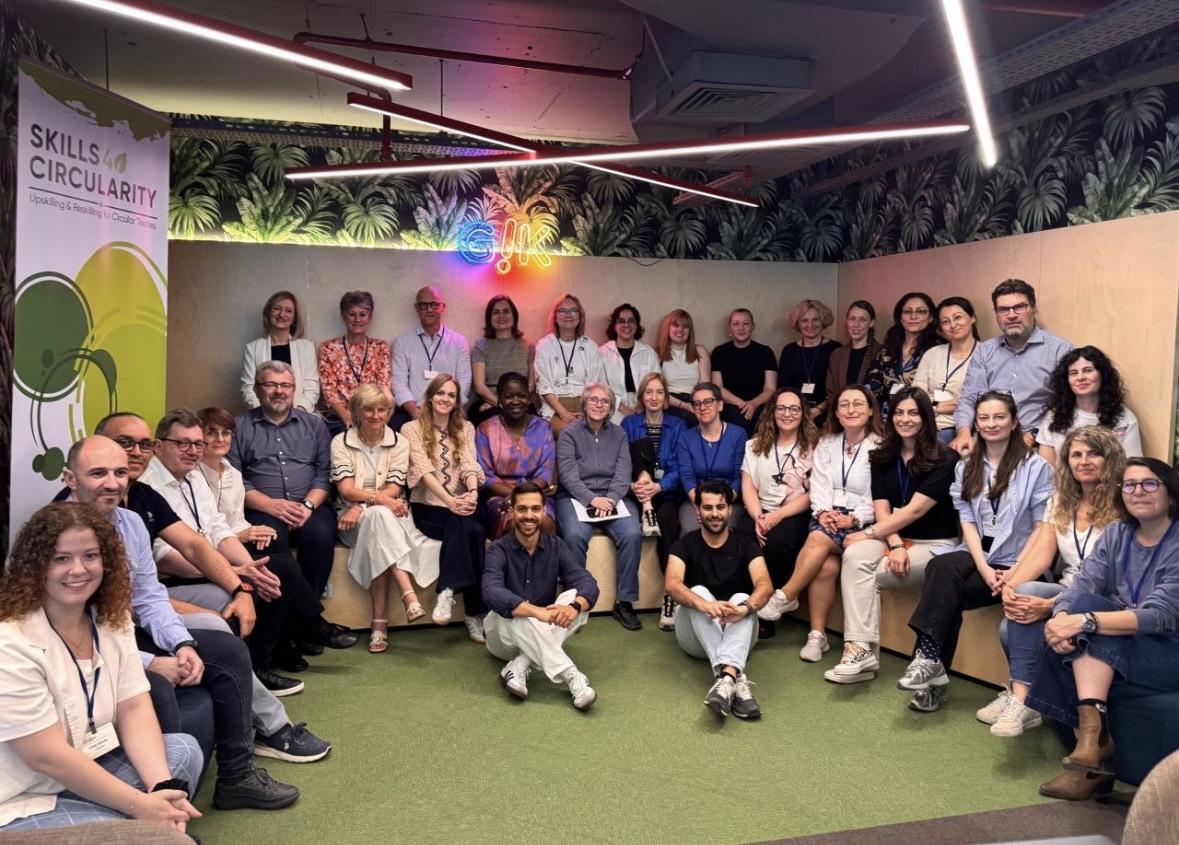
EDANA Sustainability & Policy Forum 2025 Photo EDANA
EDANA Sustainability & Policy Forum 2025
17.12.2025

EDANA: Uniting the industry and EU policymakers to navigate the future of nonwovens

Against a backdrop of rapidly evolving environmental legislation, the EDANA Sustainability & Policy Forum 2025 concluded the past week in Brussels, marking a step forward in the dialogue between the nonwovens industry and European policymakers. Held from 9-10 December at the historic Residence Palace, the two-day event successfully brought together business leaders, sustainability experts, and EU officials to address the dual challenges of circularity and industrial competitiveness. 

Designed to foster strategic alignment, the Forum moved beyond standard information-sharing to encourage deep, cross-sector debate. With the European regulatory landscape shifting—spanning chemicals, product design, waste, and climate due diligence—the event provided a timely platform for the industry to move from reactive responses to collective reflection. 

The Forum’s primary objective was to facilitate high-level exchange free from day-to-day regulatory pressures. 

Against a backdrop of rapidly evolving environmental legislation, the EDANA Sustainability & Policy Forum 2025 concluded the past week in Brussels, marking a step forward in the dialogue between the nonwovens industry and European policymakers. Held from 9-10 December at the historic Residence Palace, the two-day event successfully brought together business leaders, sustainability experts, and EU officials to address the dual challenges of circularity and industrial competitiveness. 

Designed to foster strategic alignment, the Forum moved beyond standard information-sharing to encourage deep, cross-sector debate. With the European regulatory landscape shifting—spanning chemicals, product design, waste, and climate due diligence—the event provided a timely platform for the industry to move from reactive responses to collective reflection. 

The Forum’s primary objective was to facilitate high-level exchange free from day-to-day regulatory pressures. 

“From EDANA’s side, the primary goal of the Sustainability & Policy Forum is to create a dedicated space where industry, policymakers, experts and stakeholders can step back from day-to-day regulatory pressure and engage in more strategic, forward-looking discussions,” said Murat Dogru, General Manager of EDANA. “The level of participation, the diversity of viewpoints and the quality of exchanges — particularly around regulation, circularity and the evolving policy landscape during our dedicated advocacy workshops — confirmed the relevance of the Forum as a platform for constructive debate and co-development”. 

The Forum opened with a powerful keynote address by Sandrine Dixson-Declève, Co-Founder & Chair of the Systems Transformation Hub. Addressing the theme "Social & Environmental Tipping Points," she challenged attendees to unpack the reality of today's geopolitical situation and identified the "elephants in the room" regarding current sustainability strategies. Her presentation underscored the urgent need to "hack humanity and values back into our policy and economic activities" to navigate the systemic challenges of the 21st century. 

Following the keynote, the conversation turned to the practicalities of business leadership under regulatory pressure. Ulrika Kolsrud, President & CEO of Essity, led a pivotal session on "Sustainability priorities in the age of simplification and competitiveness". Joined by Murat Dogru, Kolsrud explored how the European industry can maintain its ambitious sustainability goals while simplifying regulations to foster investment and innovation. The session highlighted that while sustainability expectations are rising globally, legislation must remain proportionate to ensure the continued competitiveness of essential European industries. 

The programme featured intensive sessions tackling the industry's operational challenges, featuring a diverse roster of experts: 

Moving beyond compliance was a key theme. Krishna Manda (Lenzing) and Anna-Stina Reuter (Sphera) discussed how sustainability reporting can drive business value and resilience. They were joined by Pia Hildén (Suominen), who encouraged companies to use the CSRD as a strategic tool rather than a mere obligation, and Ralf Weis (Freudenberg Performance Materials), who highlighted the importance of providing clear, relevant data to customers in the durable nonwovens market. 

A panel featuring Lutz Walter (Textile ETP), Mireille Kong - Van Rekum (Indorama Ventures), and Christian-Yves Crépet (PETCORE Europe) debated the intersection of textiles and nonwovens. Their consensus was clear: circularity in Europe cannot be achieved in silos and requires shared infrastructure and aligned policy frameworks. 

The afternoon sessions explored specific technical frontiers. Dominic Byrne (Plastics Europe) and Thorsten Bies (Schlegel und Partner) examined the future of chemical recycling policy and technology. Meanwhile, Tatiana Dias, PhD (DuPont), addressed the healthcare sector, advocating for the legal recognition of mass balance methodologies to unlock circularity in medical packaging 

Day 1 concluded with an exclusive networking dinner at the prestigious Musée BELvue. Surrounded by Belgium’s rich history and elegant architecture, participants utilized the evening to unwind and connect, reinforcing the relationships that are vital for cross-industry collaboration.

The second day shifted focus directly to advocacy and policy implementation. Hugo Maria Schally, a former EU official, provided an insider’s perspective on the "EU Toolbox," explaining how product policies are drafted within DG ENV and how the industry can engage effectively without compromising safety or performance. 

A highlight of the event was the interactive EU Advocacy Workshop. Attendees split into smaller groups to dissect EDANA’s current policy files, fostering an open exchange on issues ranging from the Waste Framework Directive to the Single-Use Plastics Directive. 

One participant noted the value of this hands-on approach: 
"The advocacy workshop was an eye-opener. Instead of just listening to updates, we were able to actively debate the implications of the legislation with peers. It clarified exactly where the industry needs to present a united front to be heard in Brussels." 

In a move to bridge the gap between legislation and industry, the Forum concluded with a visit to the European Commission at the Conference Centre Albert Borschette. Participants engaged directly with Commission representatives, including Vincenzo Gente (DG Environment) on the Waste Framework Directive and Ewa Malz (DG Environment) on environmental policy simplification. 

Reflecting on the visit, another attendee shared: 
"Walking into the Commission and hearing directly from the people drafting the Green Deal policies was invaluable. It demystified the process and showed us that there is a genuine willingness to listen to technical realities if we present them with credible data." 

The EDANA Sustainability & Policy Forum 2025 has set a clear trajectory for the coming year. As the industry faces the release of new legislative packages from the Commission, EDANA remains committed to helping members anticipate developments and align on credible, science-based approaches to climate and circularity.

Businesses Urge EU: Allow Sale of Legacy Stock to Avoid Unnecessary Waste Graphic Edana
16.12.2025

Businesses Urge EU: Allow Sale of Legacy Stock to Avoid Unnecessary Waste

Businesses urge European Commission to allow continued sale of products already lawfully placed on the market before the Empowering Consumers Directive’s application to avoid unnecessary waste and costs 

EDANA, the voice of nonwovens, alongside a coalition of leading European business associations, has issued a joint statement urging the European Commission to introduce a "grandfathering clause" to the Empowering Consumers for the Green Transition (ECGT) Directive. The coalition warns that without transitional provisions for products already lawfully placed on the market, the new rules could inadvertently lead to massive waste and economic disruption. 

While the signatories fully support the Directive’s objective to combat greenwashing and provide accurate sustainability information, they are deeply concerned by the current interpretation of the rules. According to a recent Commission FAQ, any environmental claim must comply with the new Directive by September 2026, regardless of when the product was manufactured or stocked. 

Key Concerns: 

Businesses urge European Commission to allow continued sale of products already lawfully placed on the market before the Empowering Consumers Directive’s application to avoid unnecessary waste and costs 

EDANA, the voice of nonwovens, alongside a coalition of leading European business associations, has issued a joint statement urging the European Commission to introduce a "grandfathering clause" to the Empowering Consumers for the Green Transition (ECGT) Directive. The coalition warns that without transitional provisions for products already lawfully placed on the market, the new rules could inadvertently lead to massive waste and economic disruption. 

While the signatories fully support the Directive’s objective to combat greenwashing and provide accurate sustainability information, they are deeply concerned by the current interpretation of the rules. According to a recent Commission FAQ, any environmental claim must comply with the new Directive by September 2026, regardless of when the product was manufactured or stocked. 

Key Concerns: 

  • Retroactive Application: The current interpretation forces immediate compliance for existing stock, contradicting EU principles of legal certainty and non-retroactivity. 
  • Environmental Impact: Millions of goods lawfully placed on the market risk being withdrawn, leading to the destruction of perfectly functional products—directly contradicting the EU’s own Ecodesign and sustainability goals. 
  • Economic Burden: Corrective measures, such as stickering or repackaging, are logistically challenging and could cost individual companies from a few hundred thousand to millions of euros. 

The Call to Action: To avoid these outcomes while still supporting the Directive's goals, the industry urges the Commission to introduce a "grandfathering" clause allowing products lawfully placed on the market before the application date to be sold through, and to develop a coordinated action plan to manage legacy stock effectively.

About the Coalition: The joint statement is co-signed by EDANA (The voice of nonwovens) alongside a broad coalition of industry representatives including AIM (European Brands Association), A.I.S.E., APPLiA (Home Appliance Europe), BusinessEurope, Cosmetics Europe, Ecommerce Europe, EuroChambres, EuroCommerce, EUROPEN, the Federation of the European Sporting Goods Industry (FESI), FoodDrinkEurope, Independent Retail Europe, OPTA Europe, SMEunited, Toy Industries of Europe, and the World Federation of Advertisers (WFA).

Cover (c) INDA
11.12.2025

INDA Releases New North American Nonwovens Industry Demand & Forecast Report

INDA, the Association of the Nonwoven Fabrics Industry, has released the North American Nonwovens Industry Demand & Forecast, 2024–2029, the thirteenth edition of its authoritative market intelligence series. The report provides detailed demand data from 2019–2024 and forecasts through 2029, incorporating the most recent tariff changes enacted by the current administration and their expected impacts on nonwoven market dynamics.

Redesigned to better support strategic planning and investment decisions, the report offers a reliable, accurate view of demand across all North American nonwoven end-use markets. Forecasts are built from robust analyses of key market drivers and trends, presenting the industry’s growth potential in dollar value, units, and volume (square meters and tonnage).

“This report provides insights on nonwoven demand across the short-life and long-life market segments,” said Tony Fragnito, President & CEO of INDA. “The intelligence included here is critical for business leaders responsible for asset management, operational planning, and long-term strategy.”

INDA, the Association of the Nonwoven Fabrics Industry, has released the North American Nonwovens Industry Demand & Forecast, 2024–2029, the thirteenth edition of its authoritative market intelligence series. The report provides detailed demand data from 2019–2024 and forecasts through 2029, incorporating the most recent tariff changes enacted by the current administration and their expected impacts on nonwoven market dynamics.

Redesigned to better support strategic planning and investment decisions, the report offers a reliable, accurate view of demand across all North American nonwoven end-use markets. Forecasts are built from robust analyses of key market drivers and trends, presenting the industry’s growth potential in dollar value, units, and volume (square meters and tonnage).

“This report provides insights on nonwoven demand across the short-life and long-life market segments,” said Tony Fragnito, President & CEO of INDA. “The intelligence included here is critical for business leaders responsible for asset management, operational planning, and long-term strategy.”

“The nonwovens industry is constantly evolving and innovating, and the innovation trend continues with new and more sustainable products being developed,” said Mark Snider, INDA’s Chief Market & Research Analyst. “This report will help guide both current participants and new investors as they navigate emerging opportunities.”

Key components of the report include:

  • Economic and population drivers shaping market growth in the U.S., Mexico, and Canada over the next five years
  • Demand analysis for Disposable, Filtration, Wipes, Medical, and other applications
  • Long-life durable sectors including Transportation, Building & Construction, Furnishings, Geotextiles & Agro Textiles, and Apparel
  • Key demand model drivers and historical market disruptors, including the COVID-19 pandemic
  • A summary of historical patterns and future trends influencing the nonwovens sector

The new Demand & Forecast report complements INDA’s North American Nonwoven Supply Report (released May 2025), which provides capacity, production, and trade flow data. Together, the Supply and Demand reports offer a complete view of the market—past, present, and future—and serve as essential tools for business leaders seeking a comprehensive understanding of industry performance and trajectory.

: Urgent clarification needed on scope of Textiles EPR for PPE and Medical Devices Graphic: Edana
08.12.2025

Urgent clarification needed on scope of Textiles EPR for PPE and Medical Devices

EDANA, the voice of nonwovens, alongside fellow industry associations CIRFS (European Man-Made Fibres Association), EURATEX (The European Apparel and Textile Confederation), ESF (European Safety Federation), and EuroCommerce (Retail & Wholesale), has issued a joint statement raising critical concerns regarding the transposition of Directive (EU) 2025/1892, the targeted revision of the Waste Framework Directive. 

As Member States begin implementing the Extended Producer Responsibility (EPR) for textiles, a lack of distinction within the Directive’s Annex IVc is causing confusion. Currently, the specified CN codes do not distinguish between standard apparel and essential Personal Protective Equipment (PPE) or Medical Devices (MD). 

The joint statement highlights that PPE and Medical Devices are engineered to protect users from hazardous environments, including chemical, biological, and radiological risks. Consequently, these garments often become contaminated and are classified as hazardous waste, requiring incineration—often with energy recovery—rather than recycling, to ensure safety. 

EDANA, the voice of nonwovens, alongside fellow industry associations CIRFS (European Man-Made Fibres Association), EURATEX (The European Apparel and Textile Confederation), ESF (European Safety Federation), and EuroCommerce (Retail & Wholesale), has issued a joint statement raising critical concerns regarding the transposition of Directive (EU) 2025/1892, the targeted revision of the Waste Framework Directive. 

As Member States begin implementing the Extended Producer Responsibility (EPR) for textiles, a lack of distinction within the Directive’s Annex IVc is causing confusion. Currently, the specified CN codes do not distinguish between standard apparel and essential Personal Protective Equipment (PPE) or Medical Devices (MD). 

The joint statement highlights that PPE and Medical Devices are engineered to protect users from hazardous environments, including chemical, biological, and radiological risks. Consequently, these garments often become contaminated and are classified as hazardous waste, requiring incineration—often with energy recovery—rather than recycling, to ensure safety. 

Including these products in standard textile EPR schemes poses significant risks: 

  • Cross-Contamination: Mixing hazardous PPE waste with household textiles threatens human health and environmental safety. 
  • Regulatory Conflict: Contaminated PPE disposal is already regulated under Articles 13, 17, 18, and 19 of the existing Waste Framework Directive. 
  • Low Circularity Potential: PPE constitutes less than 1% of textile waste, with 80-90% treated as hazardous. The environmental benefit of recycling the remaining fraction is negligible compared to the transport required to aggregate sufficient volumes. 

The statement also calls for guidance on safety shoes. Like other PPE, these items face contamination issues that limit recyclability. Furthermore, manufacturers cannot guarantee product warranties or conformity for reused safety footwear, and the fee scaling for heavy items (e.g., steel-toed boots) remains unclear. 

Recital 28 of the Directive already suggests that products posing safety or hygiene risks should be excluded from the EPR. However, this is being overlooked in national implementations, such as in Spain and the Netherlands. 

Therefore, the signatories urge the European Commission to issue clear guidance to Member States confirming that products complying with the PPE Regulation (2016/425) and the MD Regulation (2017/745) are outside the scope of the Textiles EPR.

Rachael Davis Photo INDA
Rachael Davis
08.12.2025

New Publisher - Chief Content Officer for INDA Media

INDA, the Association of the Nonwoven Fabrics Industry, announces the hiring of Rachael Davis as the new Publisher / Chief Content Officer for INDA Media, effective January 5, 2026. Davis will provide strategic leadership for the International Fiber Journal and International Filtration News, guiding the publications into their next phase of growth, engagement, and industry impact.

Davis brings a strong blend of technical expertise, editorial leadership, and deep knowledge of the fibers, textiles, and nonwovens sectors. Before joining INDA, she served as Executive Editor for Textile World, Textile World Asia, and Textiles Panamericanos within the Textile Industries Media Group, LLC. A graduate of the Georgia Institute of Technology, she holds a Bachelors of Applied Science in Polymer and Textile Chemistry and began her career working directly in the textile industry before transitioning into publishing. Over the past two and a half decades, she has advanced through a variety of editorial roles, earning a reputation for clarity, accuracy, and thoughtful industry reporting.

INDA, the Association of the Nonwoven Fabrics Industry, announces the hiring of Rachael Davis as the new Publisher / Chief Content Officer for INDA Media, effective January 5, 2026. Davis will provide strategic leadership for the International Fiber Journal and International Filtration News, guiding the publications into their next phase of growth, engagement, and industry impact.

Davis brings a strong blend of technical expertise, editorial leadership, and deep knowledge of the fibers, textiles, and nonwovens sectors. Before joining INDA, she served as Executive Editor for Textile World, Textile World Asia, and Textiles Panamericanos within the Textile Industries Media Group, LLC. A graduate of the Georgia Institute of Technology, she holds a Bachelors of Applied Science in Polymer and Textile Chemistry and began her career working directly in the textile industry before transitioning into publishing. Over the past two and a half decades, she has advanced through a variety of editorial roles, earning a reputation for clarity, accuracy, and thoughtful industry reporting.

“We are thrilled to welcome Rachael to INDA,” said Tony Fragnito, INDA President & CEO. “Her combination of technical understanding, editorial excellence, and industry insight makes her the ideal leader to guide INDA Media’s publications into their next chapter. As INDA expands its global collaboration as a founding member of GNA, and the industry continues to innovate and evolve, Rachael’s vision and experience will help us build on the strong publishing foundation already in place.”

Davis shared her enthusiasm for the opportunity: “I am very excited to take this next step in my career, and I am honored to join INDA and lead two publications that play such an important role in connecting and informing the global nonwovens and filtration communities. I will miss my colleagues at Textile World, but I’m excited to leverage my experience and help grow these INDA titles, deepen their technical and market coverage, and serve readers who rely on trusted, authoritative content.”

“Rachael has a broad range of textile knowledge and editorial skill and has been a significant member of the TIMG / Textile World team. Not only has Rachael written great stories about the US textile industry, but also has assisted TIMG to adapt to the many changes in print and electronic business media over the past 25 years. Everyone at TIMG and Textile World wishes her success and fulfilment in her new role — and I know INDA will offer numerous opportunities for Rachael to fully utilize her many talents,” said Jim Borneman, Editor in Chief, Owner, Textile Industries Media Group, LLC.

INDA extends its sincere appreciation to Caryn Smith, Principal at Driven by Design, whose leadership as Publisher / Chief Content Officer has strengthened the design, structure, and content of INDA Media’s publications. INDA thanks her for her leadership and commitment to affecting a smooth transition.  The association wishes her, and her firm, continued success. 

Source:

INDA

Hygienix™ 2025: Absorbent Hygiene Innovation, Sustainability, and Collaboration Graphic INDA
01.12.2025

Hygienix™ 2025: Absorbent Hygiene Innovation, Sustainability, and Collaboration

Hygienix™ 2025 brought together hundreds of industry leaders to explore advancements in the absorbent hygiene and personal care markets during the 11th annual Hygienix™ event, held November 17-20 in Orlando, Florida. INDA, the Association of the Nonwoven Fabrics Industry, announced Confitex Technology as the winner of the 2025 Hygienix™ Innovation Award™ for its groundbreaking Washable Nonwoven Sanitary Pads, recognizing exceptional innovation in absorbent hygiene materials, products, or technologies.

2025 Hygienix Innovation Award winner:
Confitex Technology – Washable Nonwoven Sanitary Pads
Making single-use reusable: As regulators, retailers and consumers move toward a greener future, a new category of washable AHPs is creating opportunities for the nonwoven industry. Confitex Technology has created and patented world’s first washable nonwoven sanitary pads designed for sustainability and scalability without the need for SAPs. Confitex Technology is leading Innovator and Private Label supplier. Their purpose is to transform the lives of millions and reduce the Earth’s landfill by creating the ultimate reusable AHPs.

Hygienix™ 2025 brought together hundreds of industry leaders to explore advancements in the absorbent hygiene and personal care markets during the 11th annual Hygienix™ event, held November 17-20 in Orlando, Florida. INDA, the Association of the Nonwoven Fabrics Industry, announced Confitex Technology as the winner of the 2025 Hygienix™ Innovation Award™ for its groundbreaking Washable Nonwoven Sanitary Pads, recognizing exceptional innovation in absorbent hygiene materials, products, or technologies.

2025 Hygienix Innovation Award winner:
Confitex Technology – Washable Nonwoven Sanitary Pads
Making single-use reusable: As regulators, retailers and consumers move toward a greener future, a new category of washable AHPs is creating opportunities for the nonwoven industry. Confitex Technology has created and patented world’s first washable nonwoven sanitary pads designed for sustainability and scalability without the need for SAPs. Confitex Technology is leading Innovator and Private Label supplier. Their purpose is to transform the lives of millions and reduce the Earth’s landfill by creating the ultimate reusable AHPs.

Finalists Dukane – Curved Leg Elastic (CLE) and ZymoChem – BAYSE™ were also recognized for their significant contributions to advancing performance, sustainability, and consumer well-being in absorbent hygiene.

“The innovations presented this year demonstrate remarkable creativity and a clear focus on improving lives while advancing environmental stewardship,” said Tony Fragnito, INDA President & CEO. “The level of collaboration and innovation seen at Hygienix continues to raise the bar for our industry.”

Networking and Collaboration Across the Hygiene Value Chain
The 2025 Hygienix™ Conference fostered meaningful connections through multiple networking formats, including:

  • Women in Nonwovens (WiN) Luncheon – Encouraging mentorship, leadership, and collaboration among women in the industry.
  • Lightning Talks – High-energy, five-minute presentations from exhibiting companies.
  • Evening Receptions & Exhibits – Showcasing breakthrough technologies and supplier capabilities across absorbent hygiene.
  • Lunch Around with Olivia Ahn, MD, Co-Founder, Planera – Sharing her start-up journey and sustainability vision.
  • Welcome Reception – An informal kickoff Monday evening connecting industry peers and innovators.

Program Content: Insights Driving the Future of Absorbent Hygiene
The conference featured a comprehensive technical program and three Pre-Conference Workshops on absorption systems, menstrual care innovation, and baby and infant care market dynamics.

Throughout the week, attendees explored presentations and panel discussions on:

  • Circularity and sustainable materials, including bio-based fibers, PFAS-free chemistries, and flushable packaging.
  • Regulatory, testing, and consumer trends shaping product design and market growth.
  • New applications such as pet care, eczema-friendly testing, and private label innovation.

Speakers represented a global cross-section of the value chain, including Absorbent Hygiene Insights, BAHP, Cycleology, Euromonitor International, Kuraray Europe, Lenzing AG, ProVerde Environmental, SmartSolve, Soane Materials, Trützschler Nonwovens, Woolchemy NZ, and many others.

Industry Momentum and Strong Attendance
This year’s event was well-received by all attendees, drawing global participation from brand owners, converters, material and equipment suppliers, and entrepreneurs committed to advancing performance and sustainability in absorbent hygiene.