From the Sector

Reset
(c) Indorama Ventures
26.10.2026

Indorama Ventures: First Advocacy Transparency Report

Indorama Ventures Public Company Limited, a global sustainable chemical company, has published the 2025 edition of its Advocacy Transparency Report, a first-of-its-kind standalone corporate reporting initiative, independently assured by Bureau Veritas. 

Building on its inaugural 2024 publication, the report reflects Indorama Ventures’ commitment to subjecting its public policy engagement on waste management, recycling performance, recycled content, and circular economy accountability to independent external scrutiny. It also contributes to a wider discussion about what credible corporate advocacy transparency should look like. 

Corporate engagement in public policy is receiving increasing attention from investors, policymakers, customers, and civil society, while sustainability indices and assessments are placing greater emphasis on transparency around policy influence. However, approaches to defining, measuring, and reporting corporate advocacy, and to independently assuring those disclosures, remain fragmented and continue to vary across jurisdictions and markets. 

Given this gap in standardization, Indorama Ventures prepared the report with reference to its Principles for Responsible Advocacy, GRI 415: Public Policy and relevant criteria under the S&P Global Corporate Sustainability Assessment. Bureau Veritas, a global leader in Testing, Inspection and Certification (TIC), conducted a limited assurance engagement in accordance with the International Standard on Assurance Engagements, ISAE 3000 (Revised), covering the information specified in its assurance statement. 

The report provides visibility into Indorama Ventures’ public policy engagement, including its direct engagement with policymakers and regulators and its participation in industry associations and multi-stakeholder platforms. It also outlines the company’s advocacy governance processes and explains how Indorama Ventures reviews its participation in industry associations. 

In 2025, the company engaged on issues including the UN negotiations toward a global treaty on plastic pollution, alongside policy engagement across Europe, the United States, Latin America, and Thailand. 

Mr. Colm Jordan, Global Head of Advocacy at Indorama Ventures, said: “The conversation around transparency in corporate advocacy is evolving quickly. Industry has an important role to play in contributing constructively to public policy, and that comes with a responsibility to be open about how and where companies engage. 

Publishing a standalone report and subjecting our disclosures to independent assurance supports accountability and gives customers, investors, policymakers, and other stakeholders greater confidence in the information covered by the assurance engagement. At the same time, we recognize that advocacy transparency remains an emerging area of corporate governance, without a single, globally accepted approach. Independent assurance is an important step, but there is still work to be done to establish more consistent and comparable expectations across industries and geographies. We hope this report can contribute constructively to that wider discussion.” 

Mr. Ken Smith, Vice President of Global Transition Services at Bureau Veritas, said: “We are pleased to continue as a trusted assurance partner to Indorama Ventures for its Advocacy Transparency Report. Applying independent assurance to corporate advocacy reporting brings an objective perspective to the information disclosed within a defined scope, supporting confidence in its transparency and credibility. We value the opportunity to contribute our assurance expertise to this forward-looking initiative and to support Indorama Ventures’ continued commitment to transparent and accountable disclosure.” 

Indorama Ventures and Bureau Veritas believe that greater consistency and comparability in advocacy reporting can help stakeholders better understand how companies engage in public policy and assess whether their advocacy activities align with their stated commitments. Through Indorama Ventures’ commitment to transparent disclosure and Bureau Veritas’s independent assurance, both organizations seek to contribute to informed dialogue on the development of more credible and consistent advocacy transparency practices globally.

Source:

Indorama Ventures

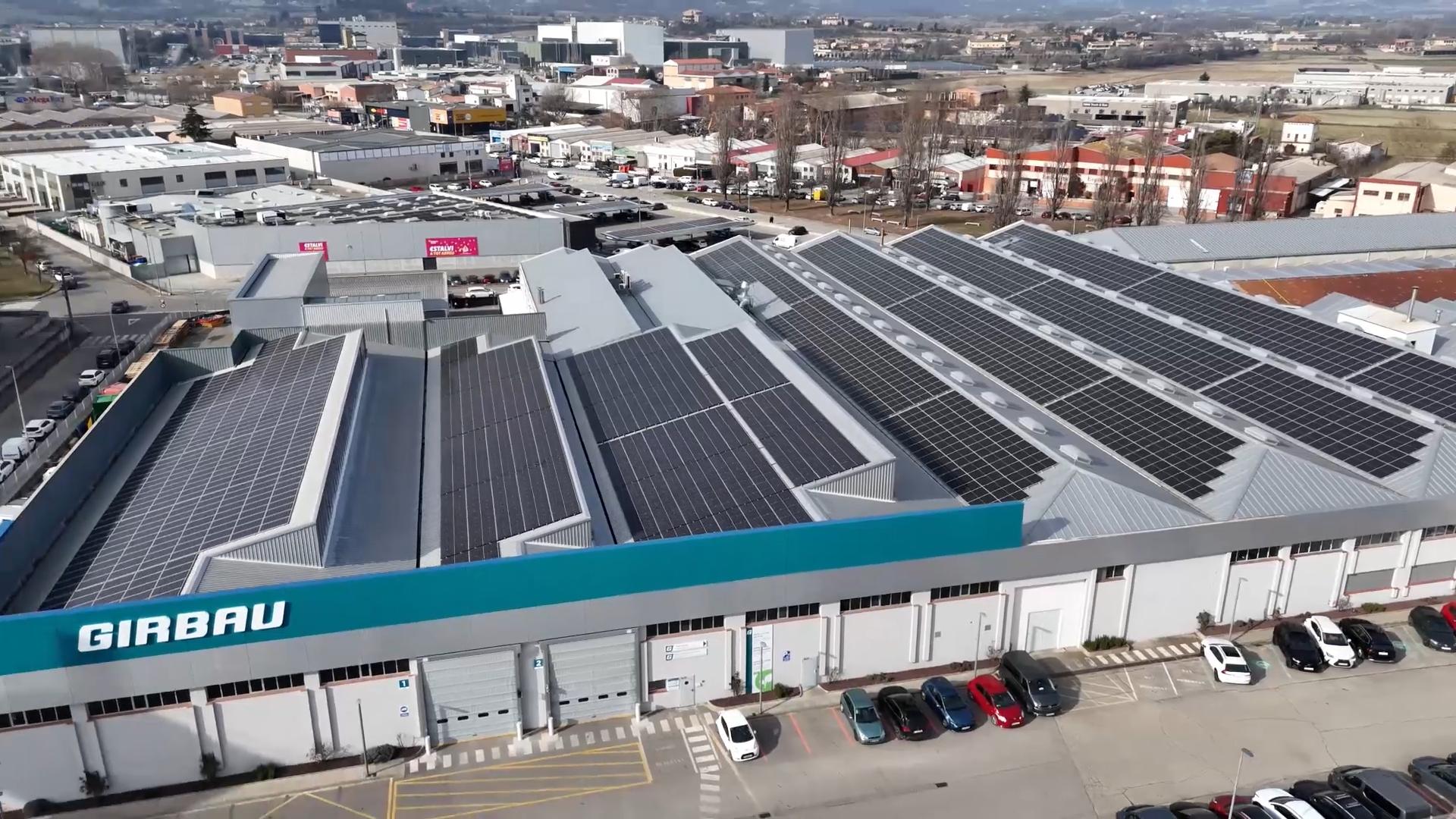
Photo (c) Girbau
21.10.2026

Girbau acquires German company Fintec

Girbau has signed an agreement to acquire 100% of FINTEC Textilpflegesysteme GmbH, a German company specialising in the development and manufacture of textile finishing, folding, sorting and internal transport systems. The acquisition will take effect on 1 January 2027.

The transaction is part of Girbau’s growth strategy and will expand its range of complete solutions for industrial laundries. Fintec’s technology, systems and expertise will increase the share of proprietary products in industrial projects and improve integration between the different stages of the laundry process. Girbau also aims to further strengthen its service to end customers with an offering that combines proximity and excellence.

“Fintec represents a major leap forward in our value proposition, vertically integrating the design, manufacture and marketing of garment solutions” says Martí Giralt, CEO of Girbau.

Girbau and Fintec have worked together for more than 20 years, and the German company’s solutions were already part of Girbau’s industrial portfolio. The transaction takes this relationship a step further and strengthens the technological and service capabilities that both companies offer the market.

Fintec will continue to operate as usual with the same team of professionals, while gaining greater capacity for growth as part of Girbau.

“This transaction enables us to ensure the continuity of the expertise and solutions developed by Fintec, while opening a new chapter with greater industrial capacity and international reach” says Claudia Pollauf, Managing Director of Fintec.

With this acquisition, Girbau reinforces its growth plan and its ability to support laundries comprehensively in their projects, with more proprietary technology and a more complete end-to-end offering.

Source:

Girbau 

YarnProof Photo (C) UNIFI
YarnProof
15.10.2026

YarnProof embeds origin checks in polyester yarn

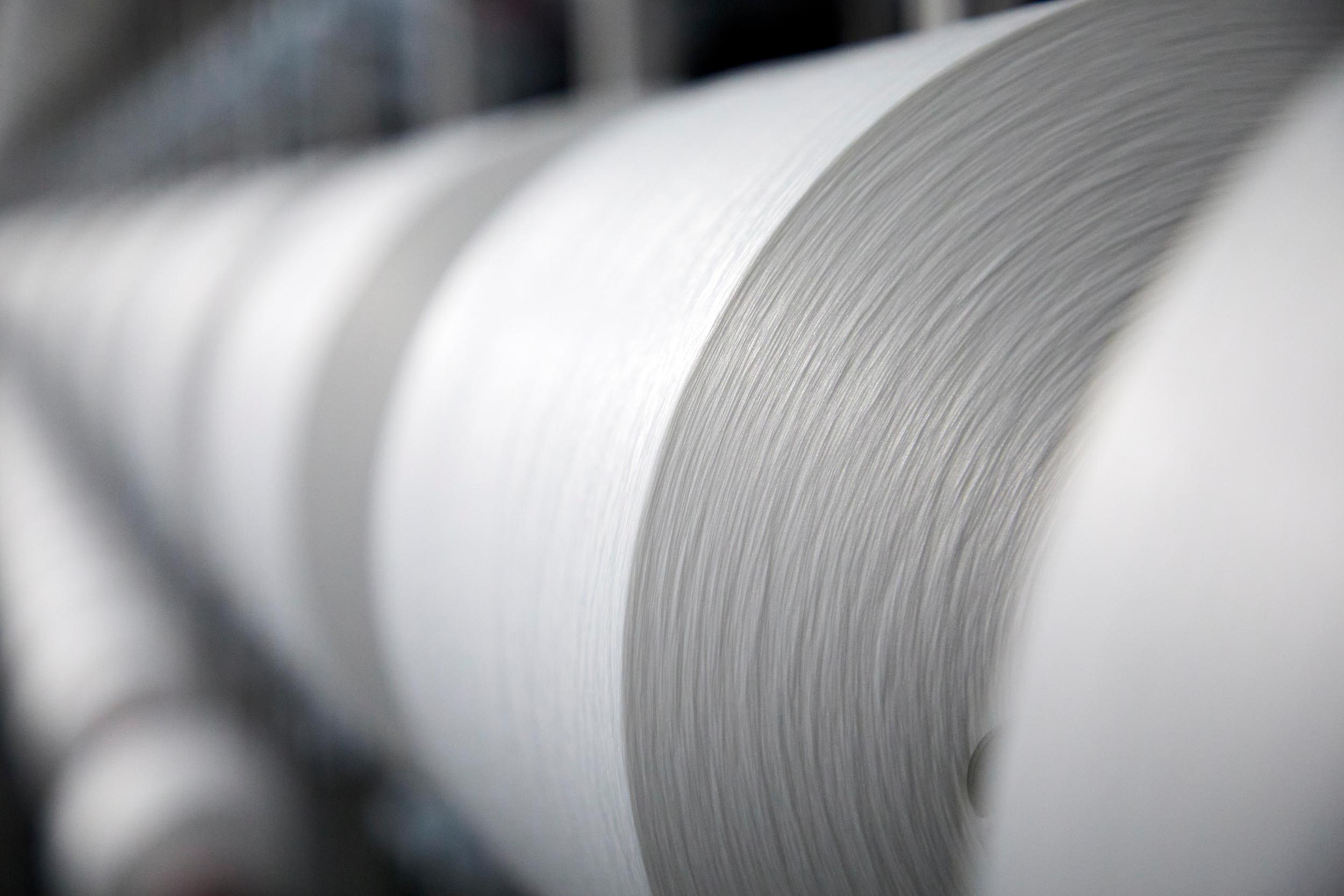
A group of polyester filament manufacturers in North and Central America has launched YarnProof, a system designed to provide physical evidence of yarn origin throughout the textile supply chain. Led by Unifi and using FibreTrace technology, the initiative embeds a persistent, invisible marker in polyester filament during extrusion. A handheld scanner can subsequently detect the marker in yarn, fabric or finished goods.

The system is intended to complement rather than replace commercial documents, audits and certificates. Each verification step can link the marked material to sourcing and production records, creating an additional check on origin claims. The manufacturers are targeting the yarn-forward rules that determine eligibility for preferential treatment under the USMCA and CAFTA-DR trade agreements.

The participating manufacturers named by Unifi include Aquafil O’Mara, CS America, CS Central America, Nan Ya Plastics Corporation America, Premiere Fibers, Sans Americas, Skytex México, Tecnología Textil Avanzada, Textufil, Unifi Manufacturing and United Textiles of America. Under Armour and the National Council of Textile Organizations have publicly supported the initiative.

Physical marking could help brands distinguish verified regional production from materials whose paperwork cannot be substantiated downstream. It does not, by itself, establish that a customs authority has accepted a shipment as meeting all preferential-origin requirements. Those determinations still depend on the applicable legal rules and supporting evidence.

The project illustrates a shift from traceability systems based solely on documentation toward approaches in which material identity can be checked at multiple production stages. Its commercial impact will depend on implementation across mills, brands and independent verification processes.

09.10.2026

Textile Exchange puts numbers on textile-to-textile recycling capacity for the first time

Editorial relevance: Very high – establishes a global baseline for available spinnable textile-to-textile recycled fiber and quantifies the gap between waste availability and usable output.

Textile Exchange has published a first global methodology for estimating textile-to-textile recycled fiber availability for apparel and home textiles. Developed with Fashion for Good, Reverse Resources and TEXroad, the framework combines available waste volumes with collection, sorting, processing and technology constraints to estimate how much material can actually become spinnable fiber.

The analysis projects recyclable textile feedstocks to increase from roughly 10 million tonnes in 2025 to around 15 million tonnes by 2030. Yet the quantity of recycled spinnable fiber is estimated at only 1–1.5 million tonnes in 2025, rising to approximately 3–5 million tonnes by 2030.

The scope covers post-industrial and post-consumer textiles and both mechanical and chemical recycling of cotton, polyester, nylon, manmade cellulosics, wool and and blends.
Textile Exchange stresses that the figures are directional: data quality remains uneven, and future editions are intended to incorporate more primary data from recyclers and suppliers.