From the Sector

Reset
Today's modern vehicles contain an average of 30 to 35 kilograms of technical yarns, most of which are used for safety-related components such as airbags and seat belts.  Photo Barmag
Today's modern vehicles contain an average of 30 to 35 kilograms of technical yarns, most of which are used for safety-related components such as airbags and seat belts.
19.02.2026

High-performance yarns for tomorrow's mobility

At this year's Techtextil in Frankfurt (April 21–24), Barmag will be presenting comprehensive solutions for the production of industrial filament yarns at the VDMA joint stand. The focus will be on applications that ensure greater safety, durability, and efficiency in automotive engineering.

High-performance filament yarns for maximum vehicle safety
Today's modern vehicles contain an average of 30 to 35 kilograms of industrial yarns – most of which are used for safety-related components such as airbags and seat belts. Polyamide and, increasingly, polyester filament yarns are predominantly used for airbag applications. Barmag offers particularly energy-efficient and productive technologies for this purpose, enabling stable processes and consistently high yarn quality. “Our solutions meet all the demanding standards for airbag yarns worldwide – throughout the entire service life of a vehicle, regardless of climate or operating conditions,” emphasizes Dr. Jen Supra, Technology Manager for Industrial Yarns at Barmag.

At this year's Techtextil in Frankfurt (April 21–24), Barmag will be presenting comprehensive solutions for the production of industrial filament yarns at the VDMA joint stand. The focus will be on applications that ensure greater safety, durability, and efficiency in automotive engineering.

High-performance filament yarns for maximum vehicle safety
Today's modern vehicles contain an average of 30 to 35 kilograms of industrial yarns – most of which are used for safety-related components such as airbags and seat belts. Polyamide and, increasingly, polyester filament yarns are predominantly used for airbag applications. Barmag offers particularly energy-efficient and productive technologies for this purpose, enabling stable processes and consistently high yarn quality. “Our solutions meet all the demanding standards for airbag yarns worldwide – throughout the entire service life of a vehicle, regardless of climate or operating conditions,” emphasizes Dr. Jen Supra, Technology Manager for Industrial Yarns at Barmag.

Seat belts: Precision in the high-tenacity yarn process
Seat belts also rely on the performance of industrial filament yarns. A single belt consists of around 300 HT filament yarns, whose high-strength individual filaments can absorb enormous tensile forces of over 3 tons – and at the same time must stretch in a controlled manner in an emergency. Barmag's patented Single Filament Layer technology enables a gentle, high-precision process for the production of hightenacity (HT) yarns for maximum safety.

Industrial yarns for stable roads – geotextiles in the substructure
Industrial yarns also prove their performance outside the vehicle, for example in road construction. Geotextiles – such as geogrids under asphalt – require yarns with extremely high titers of up to 24,000 denier. Barmag systems efficiently produce three filament yarns with 6,000 denier each, which can be combined cost-effectively to achieve a higher titer.
Complementing this, the Barmag product brand Neumag supplies spunbond technologies for geotextiles made of polyester or polypropylene, which impress with their high production capacities and low energy consumption.

Neumag's PP inline technology exceeds the market standard for geotextile applications
In staple fiber production, Barmag is setting new standards for geotextile applications with the Neumag PP inline concept. The improved technology is suitable for strengths higher than 6 cN/dtex with high residual elongation. The fibers thus significantly exceed the parameters previously established in this area of application. The first production plant equipped with the new spinning concept recently went into operation at a well-known staple fiber producer in Asia.

Part of the concept is the EvoDuct air ducting system introduced last year, which ensures more efficient air flow distribution, reduces energy consumption, and improves fiber homogeneity. The optimized EvE-2 monomer and hot air suction system, another Neumag development, minimizes turbulence while
increasing spinning performance.

Reju announces French site for regeneration hub Photo Reju
19.02.2026

Reju announces French site for regeneration hub

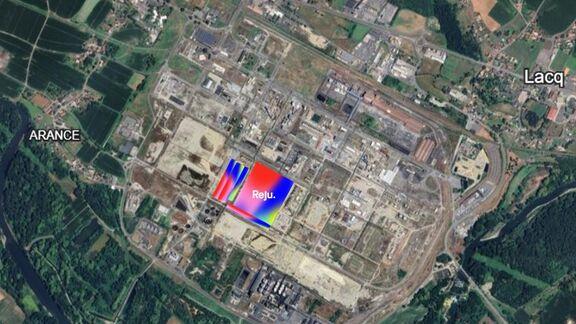
Reju, the textile-to-textile regeneration company based in France, announces the site selection for an industrial sized Regeneration Hub, in Lacq, in the Pyrénées-Atlantiques, on the Induslacq platform. Reju, a Technip Energies owned company, is deepening its roots in France through the development of this new Regeneration Hub. 

Every year, 121 million tonnes of textiles are discarded, yet only 1% are recycled into new garments. The vast majority end up in landfills or are incinerated, creating a severe environmental challenge for the world. Reju is tackling this global issue by developing solutions to regenerate textile waste into new materials. 

Reju, the textile-to-textile regeneration company based in France, announces the site selection for an industrial sized Regeneration Hub, in Lacq, in the Pyrénées-Atlantiques, on the Induslacq platform. Reju, a Technip Energies owned company, is deepening its roots in France through the development of this new Regeneration Hub. 

Every year, 121 million tonnes of textiles are discarded, yet only 1% are recycled into new garments. The vast majority end up in landfills or are incinerated, creating a severe environmental challenge for the world. Reju is tackling this global issue by developing solutions to regenerate textile waste into new materials. 

This Regeneration Hub will strengthen France’s leadership in circular, low carbon industrial innovation. Backed by Technip Energies’ global engineering expertise, Reju will bring cutting edge textile to textile regeneration technology to French industry. The plant will utilize Reju’s proprietary depolymerization technology to take post-consumer textiles from national waste streams as feedstock and to transform them into rBHET, a regenerated raw material for making new polyester from textile waste, that will then be repolymerized into Reju PET. 

The project is subject to final investment decision by the board of Technip Energies, the parent company of Reju. 

This project will help structure a new local industry, contributing to decarbonization. It would generate 80 direct jobs and more than 300 indirect jobs. “This French Regeneration Hub builds on our strategy to industrialize a circular post-consumer textile-to-textile model,” said Patrik Frisk, CEO of Reju. “By leveraging France’s ambitious circular-economy agenda and advancing our technology to new markets, we are reinforcing our mission to transform textile waste into valuable, circular resources.” 

Through its French Hub, Reju aims to build a scalable circular infrastructure in France and Europe, enabling textile-to-textile traceability and closing the loop on fiber use. The project aligns with Reju’s established operations, including Regeneration Hub Zero in Frankfurt, the announced site selection in Chemelot, Sittard-Geleen the Netherlands and the recently announced United States Hub to be located in Eastman Business Park, in Rochester, New York. 

The Regeneration Hub will be located on the Induslacq platform, owned by TotalEnergies. 

Owned by Technip Energies, Reju utilizes proprietary technology developed in conjunction with IBM Research to recover, regenerate and recirculate textile waste, starting with polyester. 
Reju actively participates in the work of several bodies and organizations such as ReHubs, Petcore and Evolen. This will create a circular ecosystem, developing a textile-to-textile sector in France in line with European requirements and based on traceability.

More information:
Reju regeneration hub France
Source:

Reju 

Hightex Photo (c) Hightex
19.02.2026

HIGHTEX 2026: Technical Textiles and Nonwovens

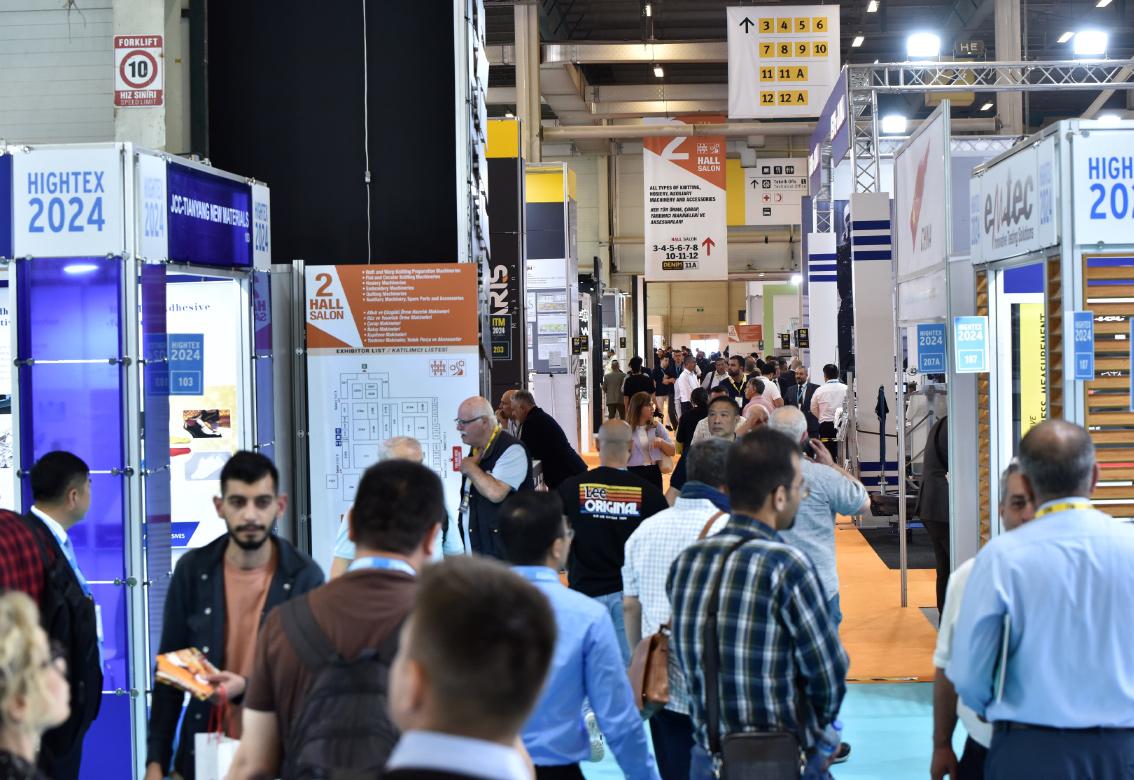
HIGHTEX 2026 International Technical Textiles and Nonwoven Exhibition is preparing to open its doors at Tüyap Fair and Congress Center between 9–13 June 2026. Bringing together leading manufacturers and technology providers in the field of technical textiles and nonwoven technologies in Istanbul, the exhibition will assume the character of an international hub where the strategic future of the industry is discussed.

While topics such as sustainable production models, digitalization, high-performance materials and smart manufacturing systems will form the main agenda of HIGHTEX 2026, a strong showcase will be presented for companies aiming to make a difference in the global competitive environment.

HIGHTEX 2026 International Technical Textiles and Nonwoven Exhibition is preparing to open its doors at Tüyap Fair and Congress Center between 9–13 June 2026. Bringing together leading manufacturers and technology providers in the field of technical textiles and nonwoven technologies in Istanbul, the exhibition will assume the character of an international hub where the strategic future of the industry is discussed.

While topics such as sustainable production models, digitalization, high-performance materials and smart manufacturing systems will form the main agenda of HIGHTEX 2026, a strong showcase will be presented for companies aiming to make a difference in the global competitive environment.

Organized in cooperation with Teknik Fuarcılık and Tüyap, and held concurrently with the ITM International Textile Machinery Exhibition, HIGHTEX holds the distinction of being Türkiye’s and the region’s first and only specialized exhibition in the field of technical textiles and nonwovens. Organized since 2005, the event has, over more than 20 years, personally witnessed the technological evolution experienced by the industry and has become one of the most important platforms where innovative solutions are introduced to the global market. Thanks to being held simultaneously with ITM, textile machinery, production technologies and the technical textiles ecosystem will come together under the same roof, offering visitors an integrated exhibition experience.

The Indispensable Element of Strategic Industries: Technical Textiles
Today, technical textiles have a wide range of applications extending from automotive to defense industry, from medical applications to infrastructure projects, and from agriculture to the energy sector. Distinguished from conventional textile products thanks to their superior properties such as high strength, lightness, durability, heat and chemical resistance, these materials directly affect the performance criteria of strategic industries. The solutions to be exhibited at HIGHTEX 2026 will reveal not only product-based innovations but also the transformation in production processes. A broad exhibitor profile, ranging from raw material producers to machinery manufacturers, from software developers to end-product manufacturers, will represent the entire value chain of the sector.

This comprehensive structure transforms the exhibition into not only a display area but also a strategic platform in terms of information sharing, business development and investment planning. While professional visitors will have the opportunity to examine new technologies on-site and establish direct contact with manufacturers, participating companies will gain the opportunity to enter new markets and strengthen their brand positioning.

A New Era in Nonwoven Technologies
Nonwoven production technologies have achieved a significant leap in recent years in terms of both capacity and quality. Based on the principle of bonding fibers through mechanical, thermal or chemical methods without weaving or knitting, this production model is rapidly expanding on a global scale due to the flexibility, speed and cost advantage it offers. Nonwoven solutions have become indispensable especially in hygiene products, medical consumables, filtration systems and automotive interior trim applications.

The next-generation nonwoven lines to be exhibited at HIGHTEX 2026 will contribute to sustainability targets with criteria such as lower energy consumption, optimized raw material usage and high production speed. Solutions for recyclable and biodegradable raw materials will also be among the prominent topics of the exhibition. These developments demonstrate that the nonwoven sector simultaneously carries growth potential along with environmental responsibility.

Artificial Intelligence and Industry 4.0 Integration Comes to the Fore
Digital transformation has become one of the fundamental elements of competitive advantage in technical textile and nonwoven production. The Industry 4.0 integrated systems to be exhibited at HIGHTEX 2026 will enable real-time monitoring of production processes, performance optimization through data analytics, and the minimization of error rates. Thanks to artificial intelligence-supported quality control systems, defects that may occur on production lines will be detected instantly, thereby reducing cost losses.

Automation solutions will increase production speed and standardization while minimizing human error; at the same time, smart infrastructures that provide savings in energy and resource usage will strengthen the understanding of sustainable production. These technologies will offer companies not only operational efficiency but also the opportunity for strong positioning in the global market.

Fabrics of the Future: Smart Textiles
Smart textiles developed at the intersection of textiles and advanced technology stand out as one of the most dynamic and fastest-growing fields of the sector. Nanotechnology applications, conductive fibers, sensor-integrated fabric structures and materials capable of responding to environmental conditions offer a wide range of applications from health monitoring to defense uses, from sports technologies to industrial safety. These innovations transform textiles from being a passive material into a structure capable of generating data and interacting. At HIGHTEX 2026, geotextiles, medical and hygienic textiles, high-performance composite structures for aviation and automotive, and technical solutions specific to the agriculture and food sectors will also be exhibited together. Thus, the exhibition will present a holistic panorama of innovative materials responding to the needs of different industries.

New Collaborations and Global Trade Opportunities
HIGHTEX 2026 will not only provide participating companies with the opportunity to exhibit their products but will also create a strong business development platform that will expand international trade networks. Bilateral business meetings and sectoral contacts to be held throughout the exhibition will prepare the ground for generating concrete commercial outcomes ranging from machinery sales to technology transfers, from joint production agreements to new investment decisions. For sector representatives coming from a wide geography extending from America to Asia, from Europe to Africa, Istanbul will become a global meeting point in the field of technical textiles and nonwovens. HIGHTEX 2026 will continue to position itself at the center of information sharing, strategic vision and technological transformation, maintaining its role as an international reference platform guiding the sector.

19.02.2026

INVISTA: Nancy Kowalski New President and CEO

Nancy Kowalski has been named new president and CEO of INVISTA, a Koch company, effective March 1, 2026. In this role, she’ll be responsible for continuing to adapt and improve business models across INVISTA, a global manufacturer of chemical intermediates, polymers and fibers used in parts for the automotive industry, medical equipment, airbags, food packaging and clothing.

Nancy has 22 years of expertise across INVISTA in a variety of its business lines and its global supply chain. She joined INVISTA as a director of corporate reporting in 2004 and went on to hold leadership roles in treasury, global finance and global supply chain.

She was most recently executive vice president for INVISTA’s global nylon business, with operations in China, Europe, and the United States, leading its overall profit and loss management and overseeing Nylon Sales and Marketing, the strategic management of feedstock procurement and purchasing processes for the company.

Nancy Kowalski has been named new president and CEO of INVISTA, a Koch company, effective March 1, 2026. In this role, she’ll be responsible for continuing to adapt and improve business models across INVISTA, a global manufacturer of chemical intermediates, polymers and fibers used in parts for the automotive industry, medical equipment, airbags, food packaging and clothing.

Nancy has 22 years of expertise across INVISTA in a variety of its business lines and its global supply chain. She joined INVISTA as a director of corporate reporting in 2004 and went on to hold leadership roles in treasury, global finance and global supply chain.

She was most recently executive vice president for INVISTA’s global nylon business, with operations in China, Europe, and the United States, leading its overall profit and loss management and overseeing Nylon Sales and Marketing, the strategic management of feedstock procurement and purchasing processes for the company.

After more than 30 years of service to Koch, Brook Vickery, president and CEO of INVISTA, has announced his retirement, effective March 1, 2026. Brook joined Koch in 1991 as an instrument engineer for Flint Hills Resources. He joined INVISTA as its global operations leader in 2023 and then became president and CEO in January 2025.

Brook has been fundamental in helping transform Koch’s operational models both at Flint Hills and INVISTA. His ability to build culture, apply Principle Based Management™, and deliver results and operational reliability will continue to create long-term value.

More information:
Invista CEO
Source:

Invista

Photo Istanbul Fashion Connection
18.02.2026

IFCO: Global Meeting Point of Fashion for the 9th Time

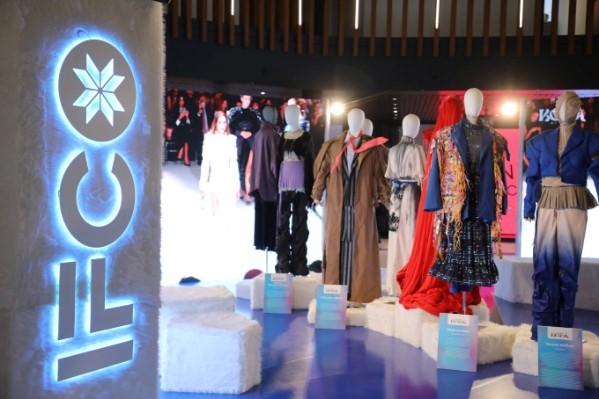
IFCO – Istanbul Fashion Connection, convened the global fashion industry in Istanbul again at its ninth edition.

Bringing Türkiye’s design vision together with its strong manufacturing power onto the global fashion stage, IFCO hosted over 450 exhibitors across 6 halls and welcomed 29,746 professional visitors from 134 countries in Istanbul.

With international buying delegations, strong brand participation, and a highly qualified visitor profile, IFCO once again proved its position as one of the most strategic B2B meeting points in the global fashion calendar.

From womenswear, menswear and kidswear to eveningwear and designer collections extending across denim, activewear, lingerie, hosiery, leather, footwear and accessories  IFCO presented a fully integrated and business-focused sourcing platform for global buyers

Enhanced by fashion shows, curated trend areas, seminars and expert talks, the exhibition delivered forward-looking insights on trend forecasting, digital transformation, sustainability and emerging market opportunities, creating a dynamic content experience alongside strong commercial engagement.

IFCO – Istanbul Fashion Connection, convened the global fashion industry in Istanbul again at its ninth edition.

Bringing Türkiye’s design vision together with its strong manufacturing power onto the global fashion stage, IFCO hosted over 450 exhibitors across 6 halls and welcomed 29,746 professional visitors from 134 countries in Istanbul.

With international buying delegations, strong brand participation, and a highly qualified visitor profile, IFCO once again proved its position as one of the most strategic B2B meeting points in the global fashion calendar.

From womenswear, menswear and kidswear to eveningwear and designer collections extending across denim, activewear, lingerie, hosiery, leather, footwear and accessories  IFCO presented a fully integrated and business-focused sourcing platform for global buyers

Enhanced by fashion shows, curated trend areas, seminars and expert talks, the exhibition delivered forward-looking insights on trend forecasting, digital transformation, sustainability and emerging market opportunities, creating a dynamic content experience alongside strong commercial engagement.

Source:

Istanbul Fashion Connection 

Federal procurement of American-made mission critical clothing, textiles and gear Deniece Platt, Pixabay (AI generated)
18.02.2026

Federal procurement of American-made mission critical clothing, textiles and gear

The National Council of Textile Organizations (NCTO), representing the full spectrum of U.S. textiles from fiber, yarn and fabrics to finished sewn products, applauded the launch of the House Berry Amendment Caucus. 

Statement from National Council of Textile Organizations (NCTO) President and CEO Kim Glas

“On behalf of the U.S textile industry, NCTO sincerely thanks Rep. Pat Harrigan (R-NC) and Rep. Don Davis (D-NC) for their leadership in co-chairing the new bipartisan House Berry Amendment Caucus, aimed at strengthening national security and the U.S. defense industrial supply chain through the federal procurement of American-made mission critical clothing, textiles and gear. 

“NCTO strongly supports this new caucus to promote and expand the Berry Amendment, a law requiring the Department of War (DOW) to buy textile and clothing products made with virtually 100% U.S. content and labor to support our U.S. warm industrial base. 

The National Council of Textile Organizations (NCTO), representing the full spectrum of U.S. textiles from fiber, yarn and fabrics to finished sewn products, applauded the launch of the House Berry Amendment Caucus. 

Statement from National Council of Textile Organizations (NCTO) President and CEO Kim Glas

“On behalf of the U.S textile industry, NCTO sincerely thanks Rep. Pat Harrigan (R-NC) and Rep. Don Davis (D-NC) for their leadership in co-chairing the new bipartisan House Berry Amendment Caucus, aimed at strengthening national security and the U.S. defense industrial supply chain through the federal procurement of American-made mission critical clothing, textiles and gear. 

“NCTO strongly supports this new caucus to promote and expand the Berry Amendment, a law requiring the Department of War (DOW) to buy textile and clothing products made with virtually 100% U.S. content and labor to support our U.S. warm industrial base. 

“The U.S. textile industry provides $1.8 billion of high-tech and functional components for vital uniforms and equipment for our armed forces each year. The Department of War estimates that over 8,000 different textile items are purchased for use by the U.S. military—and over 30,000 line items when individual sizes are considered.

“It is vital to America’s national security that the U.S. military maintain the ability to source high-quality, innovative textile materials, apparel, and personal equipment from a vibrant U.S. textile industrial base and key to this goal is defending and strengthening the Berry Amendment.

“We look forward to working with the new caucus’ leadership and our industry partners to focus congressional efforts on preserving the Berry Amendment and expanding opportunities for U.S. textile manufacturers, safeguarding domestic supply chains, and ensuring our troops continue to receive innovative, high-quality American-made products.”

Jeanologia urges industry to accelerate PP Spray phase-out Graphic Jeanologia
17.02.2026

Jeanologia urges industry to accelerate PP Spray phase-out

Since 2015, Jeanologia has set the standard with laser, Light Bright and G2 Ozone technologies, achieving authentic vintage effects in denim without chemical spraying.

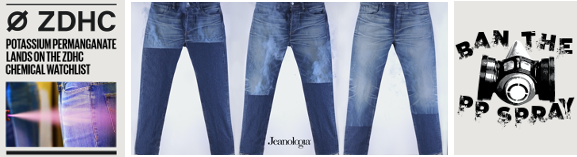
Potassium permanganate has officially entered the Chemical Watchlist of the ZDHC Foundation, signaling increased scrutiny and potential phase-out of one of the most hazardous chemicals still used in denim finishing. The inclusion confirms an industry shift that Jeanologia anticipated more than a decade ago.

For years, Jeanologia has called for the elimination of PP spray, warning about its impact on worker health, operational safety and the environment. Now, the industry is formally acknowledging what has been evident on factory floors worldwide.

PP spray is commonly used to create localized vintage effects in denim, but it exposes operators to chemical micro-particles and presents serious occupational risks. Despite growing awareness and available alternatives, this practice continues to be used in parts of the industry. According to Jeanologia, millions of workers globally are still affected by this process.

Since 2015, Jeanologia has set the standard with laser, Light Bright and G2 Ozone technologies, achieving authentic vintage effects in denim without chemical spraying.

Potassium permanganate has officially entered the Chemical Watchlist of the ZDHC Foundation, signaling increased scrutiny and potential phase-out of one of the most hazardous chemicals still used in denim finishing. The inclusion confirms an industry shift that Jeanologia anticipated more than a decade ago.

For years, Jeanologia has called for the elimination of PP spray, warning about its impact on worker health, operational safety and the environment. Now, the industry is formally acknowledging what has been evident on factory floors worldwide.

PP spray is commonly used to create localized vintage effects in denim, but it exposes operators to chemical micro-particles and presents serious occupational risks. Despite growing awareness and available alternatives, this practice continues to be used in parts of the industry. According to Jeanologia, millions of workers globally are still affected by this process.

Jeanologia eliminated the need for PP spray in 2015, becoming the first technology provider to offer a scalable industrial alternative through laser-based finishing. Today, the company replaces PP spray through its laser technology with Light Bright tool and combined with G2 Ozone technology, delivering authentic vintage effects without chemical spraying. The solution offers full digital control, safer working conditions and reliable industrial performance.

This approach is reinforced by Jeanologia’s Environmental Impact Measuring (EIM) platform. In its Innovations and Challenges in Denim Finishing 2024 Report, EIM identifies potassium permanganate as one of the remaining high-risk processes in garment finishing and highlights the urgent need for safer technologies, reinforcing laser-based solutions as a low-impact alternative.

Over the past decade, Jeanologia has progressively replaced the most hazardous denim finishing processes with eco-efficient technologies, becoming the first company to eliminate sandblasting and to advance alternatives to stone washing, manual scraping and PP spray. Today, its laser and G2 Ozone technologies are implemented worldwide, enabling denim brands to achieve the same aesthetic results while improving worker safety, reducing chemical use and lowering water consumption, with measurable impact across global production.

As transparency requirements, ESG reporting frameworks and chemical management standards continue to evolve, early adoption of safer technologies is increasingly becoming a competitive advantage. Jeanologia calls on brands, laundries and manufacturers to accelerate the transition toward chemical-free finishing. The technology exists.

Kraig Biocraft Laboratories Photo Kraig Biocraft Laboratories
17.02.2026

Kraig Activates First Wave of 2026 Production Program

Kraig Biocraft Laboratories, Inc., a global leader in spider silk technology*, announced that its 2026 production plan has officially moved from strategy to execution.
 
The Company has now moved bio-material to incubation, getting a jumpstart on its March production plan and formally initiating its multi-ton spider silk scale-up initiative.
 
This milestone follows Kraig’s recently announced 2026 production schedule. This aggressive plan is set to achieve sustained monthly production of recombinant spider silk cocoons at unprecedented commercial volumes. With the release of the first wave of production materials now complete, Kraig Labs has activated its expanded manufacturing pipeline and commenced field-level implementation.
 
"This is the moment where planning becomes production," said Kim Thompson, Kraig Labs CEO and Founder. "Our 2026 roadmap was built around disciplined expansion, operational efficiency, and multi-ton output. Today, that roadmap is in motion. Bio-materials have recently been moved to incubation in preparation for the March production run."
 

Kraig Biocraft Laboratories, Inc., a global leader in spider silk technology*, announced that its 2026 production plan has officially moved from strategy to execution.
 
The Company has now moved bio-material to incubation, getting a jumpstart on its March production plan and formally initiating its multi-ton spider silk scale-up initiative.
 
This milestone follows Kraig’s recently announced 2026 production schedule. This aggressive plan is set to achieve sustained monthly production of recombinant spider silk cocoons at unprecedented commercial volumes. With the release of the first wave of production materials now complete, Kraig Labs has activated its expanded manufacturing pipeline and commenced field-level implementation.
 
"This is the moment where planning becomes production," said Kim Thompson, Kraig Labs CEO and Founder. "Our 2026 roadmap was built around disciplined expansion, operational efficiency, and multi-ton output. Today, that roadmap is in motion. Bio-materials have recently been moved to incubation in preparation for the March production run."
 
The March production run represents the first major deployment under the Company's 2026 plan. The initiative is designed to drive consistent output at levels never before seen, while reinforcing quality control, supply chain stability, and downstream processing capacity.
 
By initiating this production cycle, Kraig Labs is delivering on its commitment, creating the world's first reliable, repeatable, and scalable commercial spider silk manufacturing. The Company's vertically integrated model enables rapid deployment of materials, controlled expansion of silkworm rearing operations, and alignment with future customer demand.
 
"Our focus is clear," Thompson continued. "Execution. Volume. Commercialization. Every production cycle strengthens our position as the global leader in recombinant spider silk."
 
Kraig Labs expects this March run to set the pace for subsequent production cycles throughout 2026, forming the foundation for sustained monthly metric-ton-level spider silk production.

Source:

Kraig Biocraft Laboratories