From the Sector

Reset
(c) Klopman International Srl
17.04.2026

Textile innovation engineered for protection, performance and comfort showcased at Techtextil

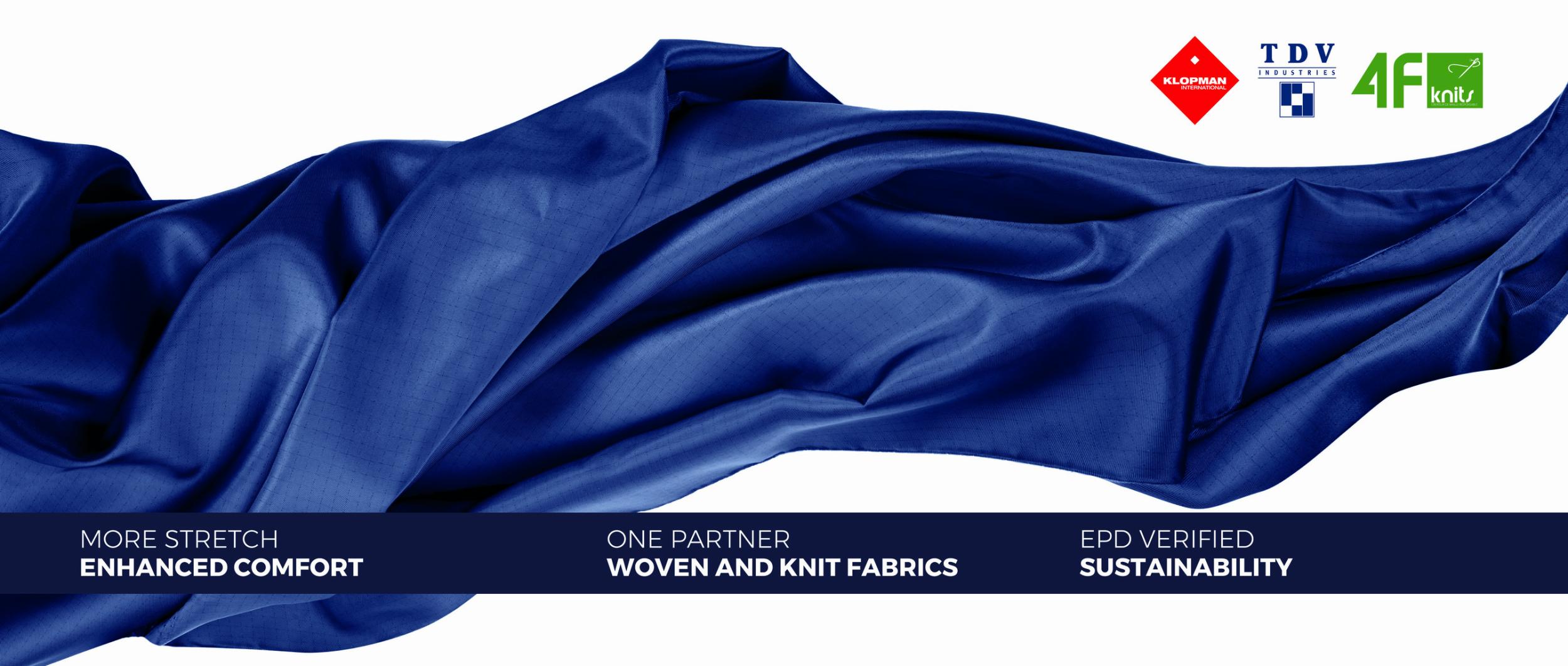
Klopman, TDV Industries and 4F Knits: three brands delivering best-in-class woven and knit textile solutions for workwear, protectivewear and military applications. At Techtextil 2026 in Frankfurt (21– 24 April), the Group will showcase a new generation of protective and performance textile fabrics, combining advanced fibre technologies, certified safety and enhanced wearer comfort to meet the evolving demands of a high-performance-driven market. 
 
At the exhibition, the Group will introduce an optimised and highly advanced range of flame-retardant fabric solutions, covering both woven and knit technologies and designed to address the highest standards of heat and flame protection across professional end-uses. 

Klopman, TDV Industries and 4F Knits: three brands delivering best-in-class woven and knit textile solutions for workwear, protectivewear and military applications. At Techtextil 2026 in Frankfurt (21– 24 April), the Group will showcase a new generation of protective and performance textile fabrics, combining advanced fibre technologies, certified safety and enhanced wearer comfort to meet the evolving demands of a high-performance-driven market. 
 
At the exhibition, the Group will introduce an optimised and highly advanced range of flame-retardant fabric solutions, covering both woven and knit technologies and designed to address the highest standards of heat and flame protection across professional end-uses. 

The woven fabric portfolio, engineered with advanced fibre blends combining aramid and modacrylic fibres, delivers permanent flame protection and outstanding mechanical resistance, maintaining performance after more than 50 industrial wash cycles. Iconic ranges such as K-Flame PRO and K-Flame XTRA are complemented by K-Flame PRO Flex and Securit Flex fabrics featuring XLANCE® fibre, offering over 20% elongation for enhanced stretch and freedom of movement without compromising safety. 

In parallel, the Group’s inherent flame-retardant knit fabric portfolio — including piqué, jersey, fleece and polar fleece — is designed to ensure permanent thermal and flame protection while optimising comfort, breathability and durability. Available in versatile constructions such as jersey, providing softness and flexibility, piqué delivering structure and long-lasting performance, fleece providing warmth, breathability and excellent comfort, and polar fleece offering warmth, quick moisture management and a soft and voluminous hand feel. These solutions extend inherent FR protection to a wide range of garment applications. 

Inherent FR fabrics are fully certified for multi-risk protection, covering heat and flame exposure, welding risks, electrostatic discharge and molten metal splash. The integration of sustainable fibres such as VISCOSE FR further reinforces the Group’s commitment to responsible innovation. 

A standout innovation within the range is the new MEGAFLEX R-PES, marking the next generation of treated flame-retardant stretch and Greenwear™ fabrics. Developed with a recycled polyester blend and a PFAS-free Hydrogreen water-repellent finish, MEGAFLEX R-PES reflects the Group’s continued focus on sustainable textiles. 

By bringing together the complementary expertise of Klopman, TDV Industries and 4F Knits, the Group represents a reliable and long-term partner for customers worldwide. The shared portfolio combines technical excellence, regulatory compliance and continuous innovation. 
 
“Innovation in protective fabrics means translating technology into real protection for people at work.” says Amaury Sartorius, Group Commercial Director & Klopman Managing Director “At Techtextil, we showcase our PPE solutions built on advanced textile engineering, certified performance and strong application expertise, reinforcing our role as a trusted partner in high-performance protection.” 
 
With its presence at Techtextil 2026, the Group reaffirms its promise to the market: beyond fabrics, delivering solutions that protect, perform and endure. 

(c) Rudolf Group
17.04.2026

RUDOLF at Techtextil with innovative, functional solutions

Since its founding in 1922, RUDOLF, a leading international company in the fields of textile auxiliaries, textile care, and construction chemicals, the company has evolved into a globally recognized technology partner. As a pioneer of forward-looking textile solutions, RUDOLF will present its latest innovations at Techtextil 2026 in Frankfurt.

Functional performance for demanding applications
The focus of the trade show is innovative finishing solutions tailored to technical and functional textiles. FERAN® SRC was specifically developed for textiles made from cellulose fibers. This functional soilrelease finish creates a long-lasting protective layer on cellulose fibers and their blends. This significantly simplifies the removal of oil, grease, and pigment-based stains. Textiles stay clean longer and retain their quality, even after numerous wash cycles. FERAN® SRC also improves comfort by keeping the surface permanently hydrophilic without negatively affecting the fabric‘s texture.

Since its founding in 1922, RUDOLF, a leading international company in the fields of textile auxiliaries, textile care, and construction chemicals, the company has evolved into a globally recognized technology partner. As a pioneer of forward-looking textile solutions, RUDOLF will present its latest innovations at Techtextil 2026 in Frankfurt.

Functional performance for demanding applications
The focus of the trade show is innovative finishing solutions tailored to technical and functional textiles. FERAN® SRC was specifically developed for textiles made from cellulose fibers. This functional soilrelease finish creates a long-lasting protective layer on cellulose fibers and their blends. This significantly simplifies the removal of oil, grease, and pigment-based stains. Textiles stay clean longer and retain their quality, even after numerous wash cycles. FERAN® SRC also improves comfort by keeping the surface permanently hydrophilic without negatively affecting the fabric‘s texture.

Another highlight is RUCO-THERM® PCM BIO MFT: a modern, bio-based finish that enhances the thermal performance of textiles. This solution contributes to effective climate regulation and enables textile designs in which performance and responsible material selection go hand in hand. With this product, RUDOLF is responding to the growing demand for sustainable and functional high-performance textiles.

By integrating RUCO-BAC® ROX, RUDOLF is strategically expanding its portfolio to include a cuttingedge solution for functionalizing textiles. RUCO-BAC® ROX was developed in collaboration with Heraeus Precious Metals. RUCO-BAC® ROX differs fundamentally from conventional biocidal mechanisms, especially traditional silver-based technologies.

The technology is based on a catalytic reaction in which oxygen is converted into reactive oxygen species in the presence of atmospheric moisture. These species effectively combat odor-causing and other microorganisms and also exert an oxidative effect on odor-causing residues on the textile surface. Since the mechanism of action is based on a cyclic redox system, RUCO-BAC® ROX is not consumed but continuously regenerated, enabling long-lasting and sustainable functionality.
  
RUDOLF is expanding its product portfolio with RUCO®-LUB BMN. This is a biodegradable alternative to conventional sewability finishes. This multifunctional solution improves the surface smoothness of woven and knitted fabrics, reduces friction during sewing, and enables damage-free processing without causing broken stitches or runs. At the same time, RUCO®-LUB BMN gives textiles a soft, smooth hand, helps maintain tear strength, and contributes to a longer service life by reducing wear.

Source:

Rudolf Group

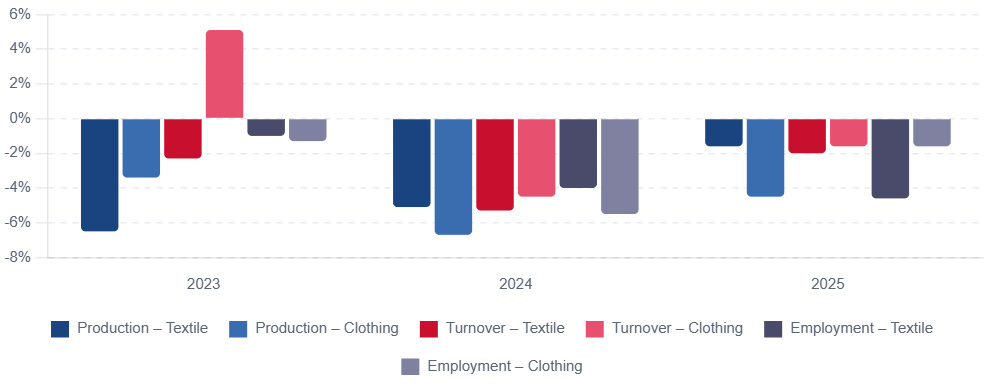
Annual change in key indicators (%) — 2023–2025 Source: EURATEX Economic Update 2026. Textile & Clothing sectors.
16.04.2026

Europe is losing its textile industry

Every week, textile factories close across Europe. Behind each closure: jobs lost, communities affected, strategic capabilities gone.

EURATEX has released its latest Economic Update on the performance of the European textile and apparel industry in 2025. For the third consecutive year, the sector recorded negative results across all key indicators — production, turnover and employment — confirming a continued erosion of competitiveness across Europe.

The causes are clear: structurally high energy costs, weak consumer demand, growing import pressure from Asia, unfair competition from online platforms, and an increasingly heavy regulatory burden on European producers.

Every week, textile factories close across Europe. Behind each closure: jobs lost, communities affected, strategic capabilities gone.

EURATEX has released its latest Economic Update on the performance of the European textile and apparel industry in 2025. For the third consecutive year, the sector recorded negative results across all key indicators — production, turnover and employment — confirming a continued erosion of competitiveness across Europe.

The causes are clear: structurally high energy costs, weak consumer demand, growing import pressure from Asia, unfair competition from online platforms, and an increasingly heavy regulatory burden on European producers.

The EU is preparing several policy responses — the Industrial Accelerator Act, reform of the Union Customs Code, the Energy Union. However, many companies cannot wait. Europe needs immediate action to reduce energy costs, simplify regulation, strengthen market surveillance and restore a genuine level playing field. 
Textiles is a strategic industrial ecosystem for Europe. Beyond fashion — clothing, footwear and home textiles that define European identity and craftsmanship — it supplies critical value chains: healthcare, defence, mobility, construction and agriculture, while supporting circularity through reuse and recycling. This is not a sector Europe can afford to lose. EURATEX calls on the European Commission and Member States to take concrete action before the end of 2026.

“If Europe is serious about maintaining its manufacturing base, it must act faster and more decisively. Every week, textile companies are closing. Production moves elsewhere, dependency increases, and the carbon footprint grows. That is the opposite of what Europe wants to achieve.” Mario Jorge Machado — President, EURATEX

Source:

European Apparel and Textile Confederation EURATEX

Tacnera® from Freudenberg solves the adhesion-trauma problem. © Freudenberg Performance Materials
Tacnera® from Freudenberg
16.04.2026

New wound care: Freudenberg resolves dilemma between adhesive strength and skin protection

With Tacnera®, Freudenberg Performance Materials (Freudenberg) is presenting a new technology for silicone foam dressings used in advanced wound care. Unlike classic silicone adhesive layers, Tacnera® is a highly-developed, intelligently-engineered system that combines polyurethane foam, a proprietary coating technology and gentle silicone gel. Tacnera® therefore solves a key problem for premium foam dressings: the dilemma between reliable adhesion and the risk of skim trauma during dressing changes. This gives brand manufacturers, distributors and regional suppliers of advanced wound care products a clear competitive advantage in the premium segment. The globally active nonwovens manufacturer will be welcoming visitors to Stand D42 at EWMA in Bremen from May 6 – 8.

Foam dressings with particularly gentle silicones often do not adhere firmly enough, while stronger silicones increase the risk of skin trauma and tissue damage. This “adhesion-trauma dilemma” reduces both patient comfort and clinical confidence, and limits market differentiation options in the premium segment. Tacnera® resolves this dilemma.

With Tacnera®, Freudenberg Performance Materials (Freudenberg) is presenting a new technology for silicone foam dressings used in advanced wound care. Unlike classic silicone adhesive layers, Tacnera® is a highly-developed, intelligently-engineered system that combines polyurethane foam, a proprietary coating technology and gentle silicone gel. Tacnera® therefore solves a key problem for premium foam dressings: the dilemma between reliable adhesion and the risk of skim trauma during dressing changes. This gives brand manufacturers, distributors and regional suppliers of advanced wound care products a clear competitive advantage in the premium segment. The globally active nonwovens manufacturer will be welcoming visitors to Stand D42 at EWMA in Bremen from May 6 – 8.

Foam dressings with particularly gentle silicones often do not adhere firmly enough, while stronger silicones increase the risk of skin trauma and tissue damage. This “adhesion-trauma dilemma” reduces both patient comfort and clinical confidence, and limits market differentiation options in the premium segment. Tacnera® resolves this dilemma.

Two silicones in a single wound dressing: adhesion exactly where it is needed
Foam dressings based on Tacnera® technology enable a combination of two silicones with different properties in a single foam dressing. While one type of silicone coating ensures strong edge adhesion for reliable fixation, a second, particularly gentle coating in the ultra-soft island zone protects sensitive skin structures and newly-formed tissue. This is achieved by a precisely-engineered foam and a wave-patterned coating designed to specifically improve contouring, flexibility and exudate management. 

User-friendly and reliable
The result is a foam dressing that reliably stays in place even when used on wounds in hard-to-heal locations, while also ensuring gentle and painless removal. The dressing delivers a consistent performance, thereby supporting both the quality of care and the confidence of users and patients. The technology therefore generates new opportunities for brand manufacturers, distributors and regional suppliers to position themselves in the advanced wound care premium segment. 

“Foam dressings based on the innovative Tacnera® technology have a fundamentally new, systemic approach: they combine secure fixation, gentle removal, reliable functioning and commercial viability in a single product,” commented Dr. Oliver Heneric, SVP Division Healthcare at Freudenberg Performance Materials.

Faster to market: economic benefits for customers 
In addition to the functional advantages, customers also enjoy clear economic benefits: engineering high-performance silicone-based foam dressings usually entails long development times, specialized know-how and a high technical risk. Tacnera®-based foam dressings are a production-ready, high-performance and ready-to-sell solution, so customers can enter the market faster and reduce development costs. Marketing authorization in Europe is expected in summer 2026.

Source:

Freudenberg Performance Materials

16.04.2026

VDMA members at Techtextil: Smart technologies for technical textiles

At Techtextil 2026 in Frankfurt, the members of VDMA Textile Machinery underline their key role as global technology leaders for technical textiles and textile processing. With a strong presence of more than 50 members they will highlight how engineering excellence, innovation strength and sustainability expertise from Germany and Europe are shaping the future of the textile industry. Seven companies will be present at the VDMA group stand in the centre of hall 12.0. 

At Techtextil 2026 in Frankfurt, the members of VDMA Textile Machinery underline their key role as global technology leaders for technical textiles and textile processing. With a strong presence of more than 50 members they will highlight how engineering excellence, innovation strength and sustainability expertise from Germany and Europe are shaping the future of the textile industry. Seven companies will be present at the VDMA group stand in the centre of hall 12.0. 

VDMA member companies are internationally recognised for their high performance production technologies, enabling advanced technical textiles for a wide range of applications – from mobility, construction and filtration to medical and protective textiles. At Techtextil 2026, they present solutions that combine maximum productivity, precise process control and resource efficiency, meeting the rising demands of global markets.
 
A key focus is digitalisation and automation. Smart machines, data-driven process optimisation and integrated system solutions enable textile producers worldwide to increase efficiency, ensure consistent quality and remain competitive in a challenging economic environment. These technologies are essential for transforming textile manufacturing into a more resilient and future-proof industry.
 
Sustainability is another central pillar of textile machinery innovation. Equipment and systems from VDMA members support energy-efficient production, lower emissions and the responsible use of raw materials. In addition, the machinery manufacturers are pioneers in textile recycling and circular economy solutions, providing the technological foundation for closing material loops and complying with increasingly strict environmental regulations worldwide.
 
The strong presence of VDMA member companies at Techtextil 2026 reflects the significance of Germany and Europe as a competence centre for textile machinery engineering. Acting as partners to textile producers around the globe, the machine manufacturers combine decades of mechanical engineering know-how with advanced digital solutions and application-specific expertise.

“We are looking forward to Techtextil 2026, as it serves as an important platform for international dialogue, business development and technological exchange.” says Dr. Harald Weber, Managing Director of VDMA Textile Machinery.

At its group stand (hall 12.0, C55/56), VDMA will be hosting several events for member companies and trade fair visitors:

Panel discussion: Technical textiles – quo vadis? 
Moderated by Dr Harald Weber (VDMA), Lutz Walter (Textile ETP), Hagen Lotzmann (Karl Mayer) and Prof. Dr Holger Erth (Textilausrüstung Pfand) will discuss current trends, challenges and requirements for technical textiles, new fields of application, further developments, sustainability and recycling, as well as the implications for manufacturing technology. Date: Tuesday, 21 April, 3 pm. (Language: English).

Walter Reiners-Foundation Awards Ceremony
The 60th anniversary of VDMA’s Walter Reiners-Foundation marks sixty years of commitment to the next generation of engineers – and VDMA will celebrate this at Techtextil! 
During the event, VDMA will look back on this history through the careers of Foundation award winners from different decades. Afterwards, visitors will have the chance to meet the 2026 award winners and learn about their work. A total of five graduates will be presented with awards for their bachelor and master theses by the foundation’s chairman, Peter D. Dornier. Date: Thursday, 23 April, 4 pm. (Language: German).

Delegations from India
At Techtextil, several delegations from the key market of India will be welcomed at the VDMA stand. 

Source:

VDMA e. V. Textile Machinery 

16.04.2026

Rieter Annual General Meeting 2026: All motions proposed by the Board of Directors adopted

On April 16, 2026, 342 shareholders, who represent 64.0% of the share capital, attended the 135th Annual General Meeting of Rieter Holding Ltd. They approved all proposals of the Board of Directors. 

Annual Report, Financial Statements, Consolidated Financial Statements and Remuneration Report 
The shareholders approved the Annual Report, Financial and Consolidated Financial Statements for 2025. They also granted discharge to the members of the Board of Directors and those of the Group Executive Committee for their activities in the year under review. 
In a consultative vote, the shareholders also approved the 2025 Report on Non-Financial Matters. 

Waiver of dividend distribution 
The shareholders followed the proposal of the Board of Directors to waive the distribution of a dividend. 

Amendments to the Articles of Association 
The proposed amendments to the Articles of Association of Rieter Holding Ltd. were also approved. 

On April 16, 2026, 342 shareholders, who represent 64.0% of the share capital, attended the 135th Annual General Meeting of Rieter Holding Ltd. They approved all proposals of the Board of Directors. 

Annual Report, Financial Statements, Consolidated Financial Statements and Remuneration Report 
The shareholders approved the Annual Report, Financial and Consolidated Financial Statements for 2025. They also granted discharge to the members of the Board of Directors and those of the Group Executive Committee for their activities in the year under review. 
In a consultative vote, the shareholders also approved the 2025 Report on Non-Financial Matters. 

Waiver of dividend distribution 
The shareholders followed the proposal of the Board of Directors to waive the distribution of a dividend. 

Amendments to the Articles of Association 
The proposed amendments to the Articles of Association of Rieter Holding Ltd. were also approved. 

Remuneration of the members of the Board of Directors and the Group Executive Committee 
In a consultative vote, the shareholders approved the Remuneration Report 2025. 
They also approved the total maximum compensation of the Board of Directors until the next Annual General Meeting in 2027. In addition, they approved the total amount of the maximum fixed remuneration of the Group Executive Committee for the 2027 financial year and the variable remuneration for the 2025 financial year.

Election to Board of Directors 
The members of the Board of Directors who were standing for re-election – Peter Spuhler, Roger Baillod, Carl Illi, Sarah Kreienbühl, Daniel Grieder, Thomas Oetterli and Jennifer Maag – were confirmed for a further one-year term of office. 

Thomas Oetterli, Chairman of the Board, was also re-elected for a one-year term of office. 
The members of the Remuneration Committee – Sarah Kreienbühl, Daniel Grieder and Roger Baillod – were also re-elected for a one-year term of office. 

Election of KPMG as statutory auditors 
The shareholders also adopted the proposal of the Board of Directors to re-elect KPMG AG, Zurich (Switzerland), as statutory auditors for the financial year beginning January 1, 2026.

Agrotextiles (c) Institut für Textiltechnik der RWTH Aachen University
15.04.2026

ITA @ Techtextil 2026: Smart textiles - sustainable, eco-friendly and AI-powered

Sports shoes made from algae, leggings made from mushrooms, filtering (diesel) oil from water, 4D textiles, recyclable, sustainable and featuring AI – this is what the ITA Group is presenting at three individual stands run by ITA Aachen, ITA Augsburg gGmbH and ITA Technologietransfer GmbH on the joint stand of Elmatex in hall 12.0 D05.

ITA Aachen embraces the concept of sustainability and, through its exhibits, presents solutions to specific contemporary challenges:

Sports shoes made from algae, leggings made from mushrooms, filtering (diesel) oil from water, 4D textiles, recyclable, sustainable and featuring AI – this is what the ITA Group is presenting at three individual stands run by ITA Aachen, ITA Augsburg gGmbH and ITA Technologietransfer GmbH on the joint stand of Elmatex in hall 12.0 D05.

ITA Aachen embraces the concept of sustainability and, through its exhibits, presents solutions to specific contemporary challenges:

  1. 4D-printed textiles
    4D textiles are textile structures capable of selectively altering their shape or function over time. The ‘fourth dimension’ refers to their response to external stimuli such as temperature, humidity, light or electrical impulses. These are typically based on active materials such as shape-memory polymers, shape-memory alloys or hygroscopic fibres, which are integrated into textile structures. Their role lies in the development of adaptive, functional systems: from climate-regulating clothing and textile-based actuators in soft robotics to self-deploying or medical applications. 4D textiles transform textiles from passive flat structures into responsive, intelligent systems.
  2. AlgaeTex sports shoe
    Algae have immense potential as a bio-based raw material to replace petroleum in synthetic textiles: they grow rapidly and can absorb carbon dioxide more efficiently than other bio-based raw materials derived from land plants. Furthermore, their cultivation requires less land – including land unsuitable for other crops – and avoids the use of pesticides. The use of algae as a renewable resource for the production of biopolymers and textiles circumvents the challenges of competing with low fuel prices by creating higher-value applications. In this way, the German textile industry can act as a catalyst for the shift away from fossil fuels towards a bioeconomy in which algae represent an important source of biomass.

    The AlgaeTex project demonstrates that the production of thermoplastic biopolymers from algae for textile applications is technically feasible. These novel biopolymers are melt-spun and processed into high-quality textiles that are of significance to the sporting goods industry, such as knitted shoe uppers or T-shirts. 
  3. Visionary Agrotextiles
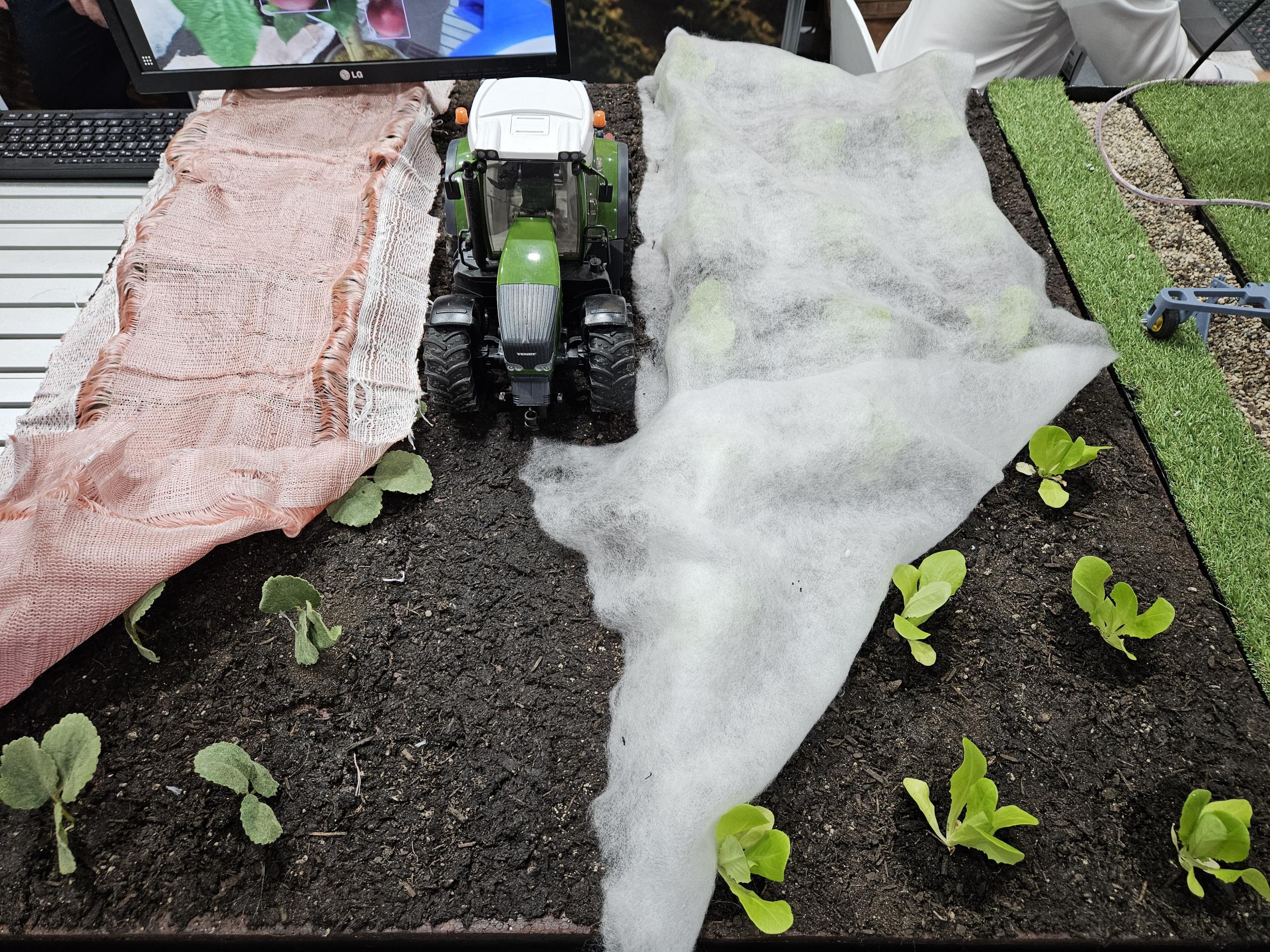
    Agrotextiles are of particular importance for specialised crops such as strawberries, lettuce and kohlrabi, as they have a significant influence on growing conditions. For instance, they can raise soil temperature, channel water to the plants and protect seedlings from external influences, particularly during early growth stages. Agrotextiles consist almost exclusively of petrochemically produced polymers that are not biodegradable. This demonstrator therefore showcases a carded fleece made from biodegradable polymers, which is used to bring forward the harvest in strawberry fields. In the same crop but serving a different purpose, a monofilament net is on display; its deep red colour and a coating of ultra-fine silicate particles serve to protect the plants from invasive insect species.
  4. Bionic Oil Adsorber
    On various biological surfaces, oil is adsorbed from the water’s surface and transported along floating leaves.
    ITA postdoctoral researcher Dr Leonie Beek has transferred this effect to a technical textile using her Bionic Oil Adsorber (BOA), which, at maturity level 4, can remove up to 4 litres of diesel per hour from the water.

    The BOA differs from technical solutions in that the oil-water separation takes place without external energy and without toxic substances. The work on the BOA has been recognised with the Bionics Award – only in German available - and the Paul Schlack Prize.
  5. BioPEtex – A PE-based, solution-dyed and sustainable T-shirt made from organic raw materials
    In the multi-billion-pound fibre market, fossil-based polyesters (PES) dominate the clothing sector, accounting for 52% of the market. Unfortunately, PET, the most commonly used PES, cannot be produced on an industrial scale as 100% bio-based material, unlike polyethylene (PE). Bio-based PE (bioPE), a drop-in polymer derived from fermented starches or sugars, has properties identical to those of fossil-based PE and is easily recyclable. It is also more cost-effective than other biopolymers used in fibres and can be processed at lower temperatures, which saves energy. Solution-dyed bioPE offers significant environmental benefits: it consumes 50% less energy and water than conventional dyeing processes and emits 60% less CO2.

    Life cycle assessments (LCA) predict that PE could significantly reduce the textile industry’s ecological footprint, with solution-dyed bio-PE further enhancing this reduction. Furthermore, PE textiles are IR-transparent and thus provide passive cooling for the body.

    Despite these advantages, PE is not yet used in the clothing industry. Preliminary research findings from the ITA suggest that PE can be processed into spun, dyed filaments and knitted fabrics with promising textures. The T-shirt on display is spun and dyed and features an elastic surface made from bio-based raw materials. A bio-based elastic finish enhances the T-shirt, which is made from a single source and is thermomechanically recyclable. Contact: Mathias.Ortega@ita.rwth-aachen.de
  6. FungalFibers – Leggings
    Against a backdrop of limited resources such as oil, water and arable land, as well as increasing environmental degradation and potential for conflict, there is significant social and commercial interest in providing competitive, socially and environmentally sustainable alternative raw materials for the textile industry. The aim of this project is to develop a completely new process chain for the production of bio-based, vegan textiles from chitosan fibres (filament and staple fibre yarns).

    Chitosan is chemically closely related to chitin, the second most abundant substance in nature after cellulose. It occurs naturally in a variety of sources: in insects, crab and shellfish shells, and as a structural component of the cell walls of all fungi. Chitin can therefore be obtained from by-products of crab meat production, insect protein or fungal biomass waste from industrial processes. Chitosan, in turn, can be easily produced from chitin through deacetylation. Contact: Leonie.Beek@ita.rwth-aachen.de.

    ITA Group will be presenting the latest developments in sustainable textile products and production processes at Techtextil 2026, taking place from 21 to 24 April 2026 in Frankfurt am Main. The exhibits from ITA Augsburg gGmbH and ITA Technologietransfer GmbH will be on display at the Elmatex joint stand in Hall 12.0, Booth D05.

ITA Group will showcase various approaches to mechanical and thermo-mechanical recycling, addressing potential applications in the textile, materials and automotive industries. ITA Augsburg gGmbH, which specialises in mechanical textile recycling, will present innovations in the fields of composites, mechanical textile recycling and artificial intelligence in production. These include sound and thermal insulation panels from the “IsoTex” project, a towel from the “EcoYarn” recycling project, and the “ColoSens” demonstrator, an AI-based solution for automated colour recognition of fibres in the recycling process.

ITA Technologietransfer GmbH demonstrates thermo-mechanical recycling using numerous examples within the Fabric2Fabric cycle. Using a 3D-printed car seat demonstrator as an example, the recyclable filament yarns are incorporated into a seat cover.

In addition, ITA Technologietransfer GmbH is showcasing its patented ‘Textile Anchor’ concept, an innovative anchoring system designed to protect and secure structures in geotechnical environments such as mountains, in the ground and underwater, as well as for use in building construction. The textile anchor offers an ultra-lightweight solution with high flexibility and optimal adaptability, and is manufactured from extremely durable or biodegradable and sustainable textiles.

At ITA Group’s ‘shared booth’, ITA Technologietransfer GmbH will be providing information on innovations from various industrial partners:

  • technofibres s.a. from Luxembourg offers solution-dyed PET and sustainable trPET filament yarns with a wide range of matting levels, filament cross-sections and packaging options for bespoke solutions, even in the smallest batch sizes, making it unique in Europe.
  • Idemitsu Kosan Co., Ltd. from Japan offers Xarec™, a syndiotactic polystyrene (SPS) fibre for use in fabrics and nonwovens. The advantages of this semi-crystalline high-performance material, which acquires its syndiotactic structure through the polymerisation of polystyrene and a metallocene catalyst, are demonstrated in nonwoven samples for the filtration sector in comparison with conventional materials.
  • The Swedish company Luma Wire Tech AB is an innovative specialist in fine wires, with expertise in advanced plating. Each wire, ranging from 4 to 300 microns and produced from tungsten, molybdenum, or other advanced materials, is tailored to meet each customer’s specific needs— available either uncoated or with high-performance coatings of gold, silver, palladium, or other.
Source:

Institut für Textiltechnik der RWTH Aachen University

(c) Association of the Nonwoven Fabrics Industry
15.04.2026

INDA 2026 Supply Report: Resilient Growth and Sustainability in North American Nonwovens Industry

INDA, the Association of the Nonwoven Fabrics Industry, today released its 13th annual North American Nonwovens Supply Report, offering a comprehensive look at the industry’s performance, challenges, and strategic evolution. The report reveals a complex landscape shaped by global trade uncertainty, including tariffs and geopolitical tensions, which are expected to influence industry growth and performance in the coming years. Production output slowed again in 2025, reflecting a cautious, “wait-and-see” environment across the sector.

Despite these headwinds, the industry demonstrates resilience. Key trends include moderated production levels paired with cautious optimism, as companies adapt to shifting market conditions. Sustainability and environmental stewardship remain central priorities, driving innovation and long-term strategic investments.

INDA, the Association of the Nonwoven Fabrics Industry, today released its 13th annual North American Nonwovens Supply Report, offering a comprehensive look at the industry’s performance, challenges, and strategic evolution. The report reveals a complex landscape shaped by global trade uncertainty, including tariffs and geopolitical tensions, which are expected to influence industry growth and performance in the coming years. Production output slowed again in 2025, reflecting a cautious, “wait-and-see” environment across the sector.

Despite these headwinds, the industry demonstrates resilience. Key trends include moderated production levels paired with cautious optimism, as companies adapt to shifting market conditions. Sustainability and environmental stewardship remain central priorities, driving innovation and long-term strategic investments.

Report Based on Extensive Producer Input
Developed through extensive research, including producer surveys and in-depth interviews with industry leaders, the 2026 report offers a comprehensive view of the nonwovens landscape, spanning composites, roll goods, and finished products. This report provides an in-depth analysis of capacity, production, operating rates, and regional trade across North America, including the United States, Canada, and Mexico.

“As part of INDA’s role as the industry’s trusted data source, this report delivers valuable insights for benchmarking, strategic planning, and decision-making,” said Tony Fragnito, INDA President and CEO. “This year’s findings highlight a resilient industry that continues to expand capacity through ongoing investments across all regions and sectors. We are also seeing a clear shift toward sustainable, durable products, alongside continued innovation to meet evolving demand across North America.”

The full report is provided at no cost to participating producers. INDA members receive the report’s Executive Summary on a complimentary basis as part of their membership. Data from the Supply Report also informs INDA’s biennial Global Nonwoven Markets Demand Report, most recently published in November 2024.

“INDA remains committed to enhancing the quality and depth of our industry data and insights,” said Mark Snider, Chief Market and Industry Analyst. “Strong participation from suppliers is essential to that mission. As global supply chain pressures intensify, this report examines the key dynamics shaping the market and influencing future direction.”

Source:

Association of the Nonwoven Fabrics Industry

VEGANCELIO Photo AIMPLAS
VEGANCELIO
10.04.2026

VEGANCELIO: Transforming organic waste into vegan leather and cosmetic microcapsules

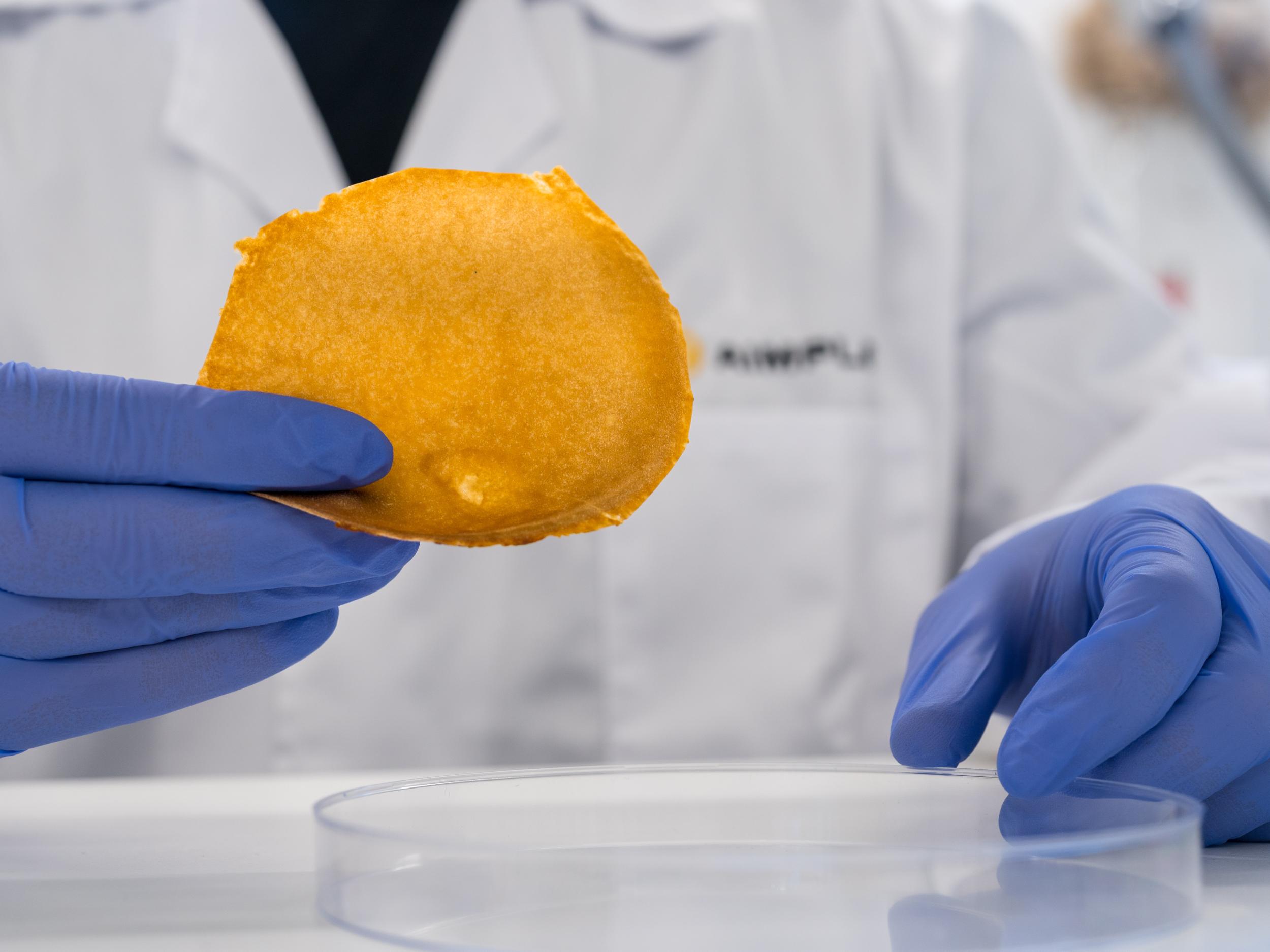
Organic waste accounts for around 50% of municipal waste in Spain. Current treatment methods, such as composting or biogas production, do not generate products with sufficient economic value to offset management costs. In response to this environmental and economic challenge, VEGANCELIO has emerged—a project led by AIMPLAS, the Plastics Technology Centre—which proposes a solution aligned with the circular economy and the bioeconomy.

The project, funded by the Valencian Institute of Competitiveness and Innovation (IVACE+i) with ERDF funds, aims to develop advanced technologies to recover value from organic waste by converting it into two key products: vegan leather made from fungal mycelium, intended for the textile sector, and chitosan microcapsules with cosmetic applications, capable of encapsulating active ingredients with antioxidant effects and controlled release.

Organic waste accounts for around 50% of municipal waste in Spain. Current treatment methods, such as composting or biogas production, do not generate products with sufficient economic value to offset management costs. In response to this environmental and economic challenge, VEGANCELIO has emerged—a project led by AIMPLAS, the Plastics Technology Centre—which proposes a solution aligned with the circular economy and the bioeconomy.

The project, funded by the Valencian Institute of Competitiveness and Innovation (IVACE+i) with ERDF funds, aims to develop advanced technologies to recover value from organic waste by converting it into two key products: vegan leather made from fungal mycelium, intended for the textile sector, and chitosan microcapsules with cosmetic applications, capable of encapsulating active ingredients with antioxidant effects and controlled release.

VEGANCELIO is structured around a comprehensive technological approach that includes the production of fungal mycelium from organic waste, the sustainable extraction of chitosan from fungal biomass using chemical and enzymatic methods, the manufacture of vegan leather by optimising plasticisers and processes such as extrusion, and the development of chitosan and hybrid microcapsules for dermocosmetic applications. Furthermore, the project envisages knowledge transfer to the plastics, textile and cosmetics sectors in the Valencian Community, with the potential to replicate the model in other industries and for other types of waste with a similar composition.

The project involves collaboration with Tejidos Royo S.L., which specialises in the manufacture of textile materials, and DERMOPARTNERS S.L., an expert in the formulation of dermocosmetic products. Both companies provide valuable industrial and market insights, actively participating in the definition of technical parameters, specialist advice and the validation of the materials developed. Their involvement ensures the practical and commercial viability of the processes, strengthening the potential for the real-world application of the project’s results.

“The products developed in VEGANCELIO respond to a real market demand, which allows the applied technologies to be made profitable. The project represents an opportunity for companies implementing these results to position themselves as leaders in sustainability and innovation,” explains Pablo Ferrero, lead researcher in Biotechnology at AIMPLAS.

VEGANCELIO’s comprehensive approach not only contributes to the reduction of organic waste and greenhouse gas emissions but also promotes the production of materials free from harmful substances, fostering sustainable, profitable and scalable processes. The project reduces reliance on imported raw materials and positions the Valencian Community as a leader in sustainable innovation.

VEGANCELIO joins other initiatives led by AIMPLAS that promote waste recovery and the development of sustainable materials, consolidating its role as a driver of innovation.

More information:
AIMPLAS Vegan vegan leather
Source:

AIMPLAS