From the Sector

Reset
149 results
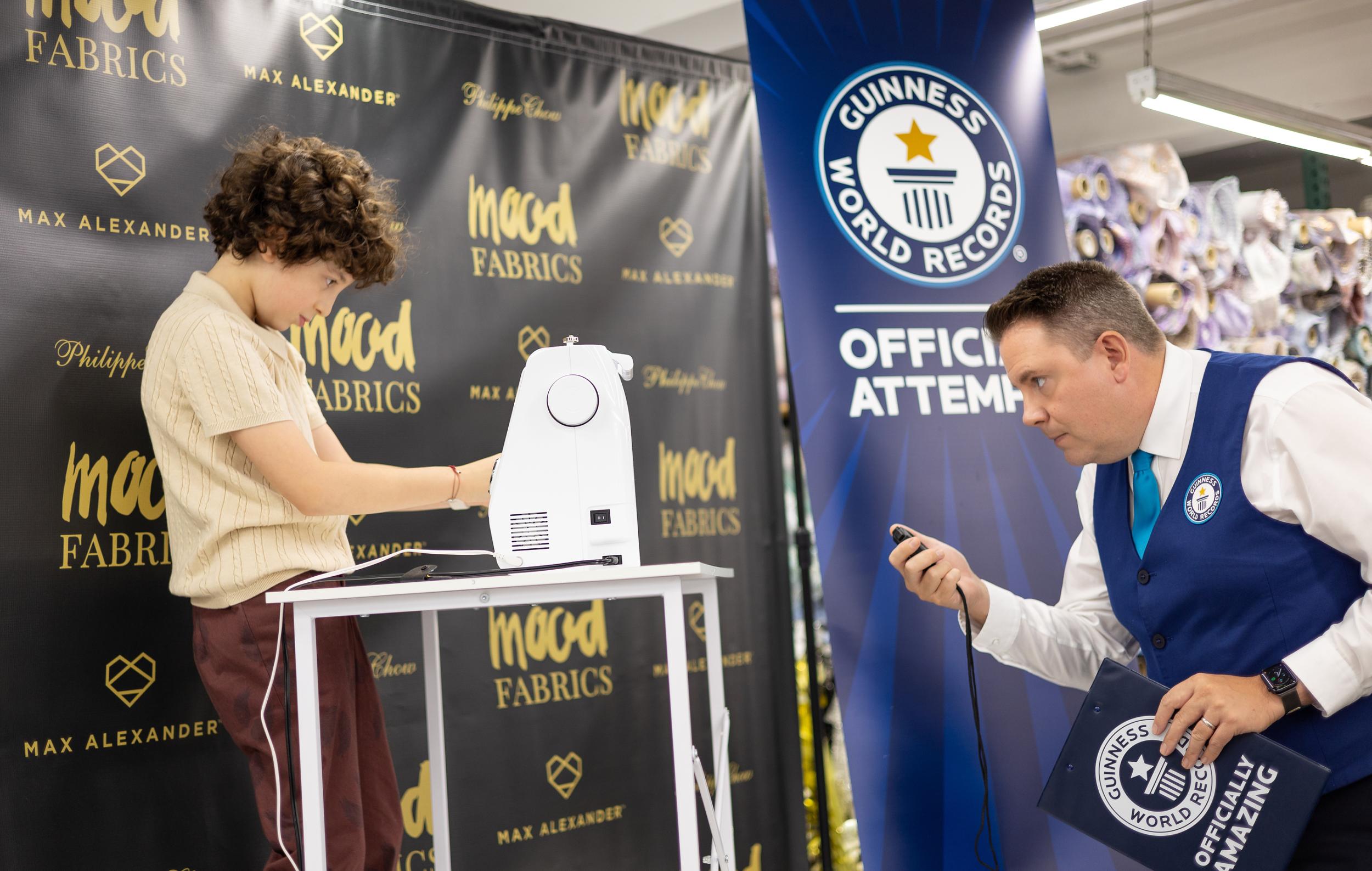
Under the close watch of a Guinness World Records adjudicator, 10-year-old designer Max Alexander competes during his launch event at Mood Fabrics NYC on September 14, 2026. Photo via Mood Fabrics
Under the close watch of a Guinness World Records adjudicator, 10-year-old designer Max Alexander competes during his launch event at Mood Fabrics NYC on September 14, 2026.
18.09.2026

Mood Fabrics launches 15-piece fabric line with Max Alexander

Mood Fabrics has launched a 15-fabric collection with ten-year-old designer Max Alexander. The Mood × Max Alexander line debuted in New York on 14 September and is being sold online and through Mood's U.S. retail locations.

The company lists BCI cotton, EcoVero viscose, European flax linen and recycled-polyester faux fur among the materials. The range combines prints and textured fashion fabrics with several fibre choices already associated with established sourcing or recycling programmes.

Alexander selected and annotated the fabrics. The collaboration therefore starts at material choice, leaving the collection open to further garment design and making rather than presenting a fixed apparel capsule.

Mood Fabrics has launched a 15-fabric collection with ten-year-old designer Max Alexander. The Mood × Max Alexander line debuted in New York on 14 September and is being sold online and through Mood's U.S. retail locations.

The company lists BCI cotton, EcoVero viscose, European flax linen and recycled-polyester faux fur among the materials. The range combines prints and textured fashion fabrics with several fibre choices already associated with established sourcing or recycling programmes.

Alexander selected and annotated the fabrics. The collaboration therefore starts at material choice, leaving the collection open to further garment design and making rather than presenting a fixed apparel capsule.

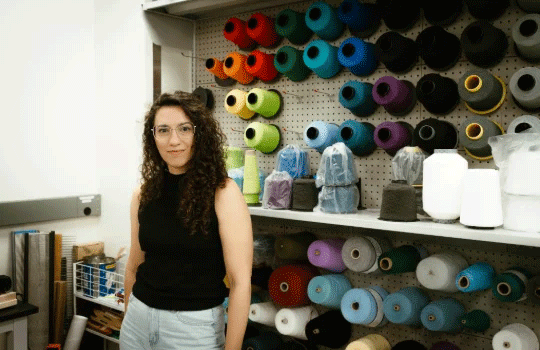
Vanessa Sanchez in ihrem Labor Foto (c) Rice University
18.09.2026

When the knit becomes the robot

Rice University mechanical engineer Vanessa Sanchez is developing knitted structures in which sensing, movement and mechanical behaviour are programmed into the textile rather than attached as separate components. Her project, “Programmable 3D-Knitted Soft Robotic Textiles for Human-Centered Mobility,” has received a Toyota Programmable System Innovation Fellowship.

Rice points to applications including vehicle seats that reshape around occupants, garments that assist walking and soft safety systems capable of responding to impending impacts.

The work uses knitting as a manufacturing architecture. By varying yarns, stitch geometry and local structural behaviour, the textile can be designed to produce functions that conventional soft-robotic systems may achieve with separate sensors, actuators or rigid elements.

Three-dimensional knitting is particularly important because form can be created during manufacture rather than assembled from multiple flat components. That approach could reduce seams and interfaces while retaining the softness and conformity expected from textiles.

Rice University mechanical engineer Vanessa Sanchez is developing knitted structures in which sensing, movement and mechanical behaviour are programmed into the textile rather than attached as separate components. Her project, “Programmable 3D-Knitted Soft Robotic Textiles for Human-Centered Mobility,” has received a Toyota Programmable System Innovation Fellowship.

Rice points to applications including vehicle seats that reshape around occupants, garments that assist walking and soft safety systems capable of responding to impending impacts.

The work uses knitting as a manufacturing architecture. By varying yarns, stitch geometry and local structural behaviour, the textile can be designed to produce functions that conventional soft-robotic systems may achieve with separate sensors, actuators or rigid elements.

Three-dimensional knitting is particularly important because form can be created during manufacture rather than assembled from multiple flat components. That approach could reduce seams and interfaces while retaining the softness and conformity expected from textiles.

Sanchez will use the fellowship to develop the programmable structures further and explore mobility-oriented applications.

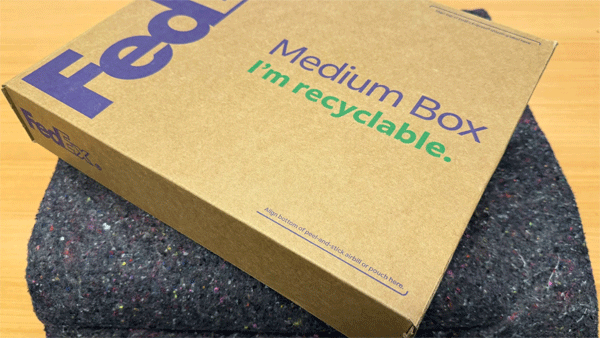
Photo FedEx
16.09.2026

Old uniforms become 6,250 blankets

FedEx has allocated 4,230 kilograms of retired uniforms to the 11th edition of its Brazilian uniform-recycling programme. The material has been converted into about 5,000 blankets for people and 1,250 smaller blankets for animals cared for by NGOs.

Since 2015, the programme has redirected 93,000 uniform items, equivalent to around 30 tonnes of textile material, into more than 37,000 blankets.

The long operating history is the notable part of the project. Corporate-wear take-back only becomes a credible circular model when collection, sorting and processing remain organised over multiple replacement cycles. Here, a controlled internal textile stream is converted into a defined second product rather than sent into an unspecified disposal route.

FedEx has allocated 4,230 kilograms of retired uniforms to the 11th edition of its Brazilian uniform-recycling programme. The material has been converted into about 5,000 blankets for people and 1,250 smaller blankets for animals cared for by NGOs.

Since 2015, the programme has redirected 93,000 uniform items, equivalent to around 30 tonnes of textile material, into more than 37,000 blankets.

The long operating history is the notable part of the project. Corporate-wear take-back only becomes a credible circular model when collection, sorting and processing remain organised over multiple replacement cycles. Here, a controlled internal textile stream is converted into a defined second product rather than sent into an unspecified disposal route.

Source:

Federal Express Corporation

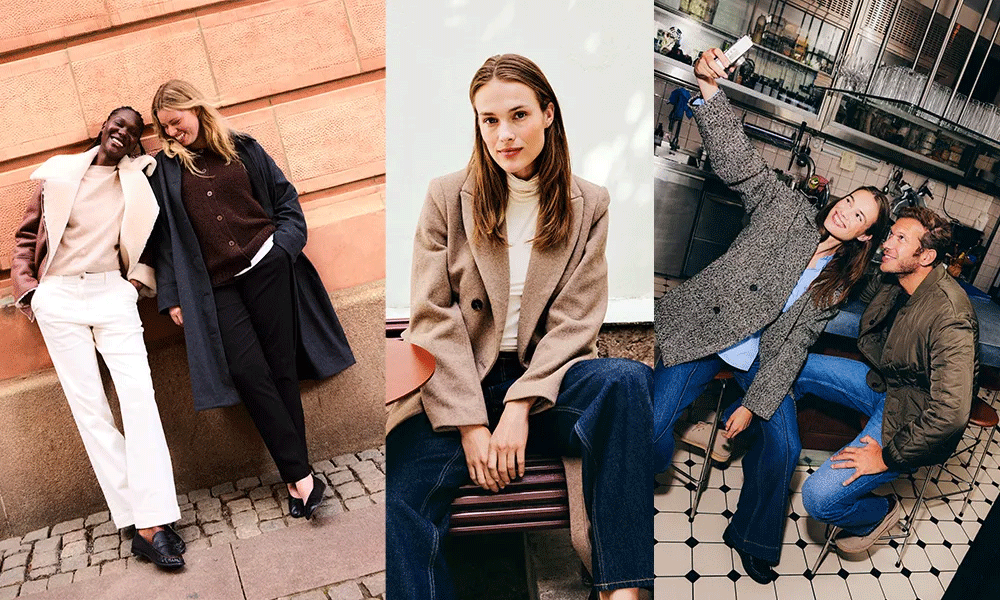
Photo (c) Kappahl Group
15.09.2026

Kappahl backs a longer-lasting wardrobe

Kappahl is launching its Autumn 2026 campaign across all markets on 16 September. Built around the existing “We Are Family” platform, the campaign presents a wardrobe of pieces intended to be easy to combine and relevant beyond short trend cycles.

The assortment spans womenswear, XLNT and menswear, with knitwear, denim, tailoring, lace and outerwear. The coat has a specific heritage role, linking the current collection to the company’s origins in Gothenburg in 1953, when founder Per-Olof Ahl opened a store focused on coats.

Kappahl is launching its Autumn 2026 campaign across all markets on 16 September. Built around the existing “We Are Family” platform, the campaign presents a wardrobe of pieces intended to be easy to combine and relevant beyond short trend cycles.

The assortment spans womenswear, XLNT and menswear, with knitwear, denim, tailoring, lace and outerwear. The coat has a specific heritage role, linking the current collection to the company’s origins in Gothenburg in 1953, when founder Per-Olof Ahl opened a store focused on coats.

Source:

Kappahl Group

Heidi O’Neill (c) lululemon athletica inc.
14.09.2026

Heidi O’Neill starts lululemon reset

Heidi O’Neill has taken over as chief executive of lululemon. In her first employee message, published in the company newsroom, she places product, brand clarity and operational execution at the centre of the next phase.

O’Neill says her initial weeks will focus on listening to teams, partners, guests and communities before translating ideas into changes. She identifies a need to re-establish the brand’s core and to create more innovative and distinctive product that gives consumers a stronger reason to choose lululemon. She also points to improving operations and how the company connects with its communities.

The appointment matters beyond corporate governance. O’Neill spent more than 25 years at Nike, including leadership across product, design, merchandising, brand and global marketplace operations. At lululemon, that experience meets a business whose differentiation depends heavily on fabric development, fit, functional apparel and a tightly integrated direct-retail model.

Heidi O’Neill has taken over as chief executive of lululemon. In her first employee message, published in the company newsroom, she places product, brand clarity and operational execution at the centre of the next phase.

O’Neill says her initial weeks will focus on listening to teams, partners, guests and communities before translating ideas into changes. She identifies a need to re-establish the brand’s core and to create more innovative and distinctive product that gives consumers a stronger reason to choose lululemon. She also points to improving operations and how the company connects with its communities.

The appointment matters beyond corporate governance. O’Neill spent more than 25 years at Nike, including leadership across product, design, merchandising, brand and global marketplace operations. At lululemon, that experience meets a business whose differentiation depends heavily on fabric development, fit, functional apparel and a tightly integrated direct-retail model.

Source:

lululemon athletica inc.

KeyVisual s.Oliver
11.09.2026

s.Oliver brings the 90s back

Editorial relevance: Medium – a current brand-positioning and retail story supported by a product capsule.
s.Oliver has launched a new hero campaign, “Casual Since Forever,” featuring Heidi Klum meeting a younger version of herself from the 1990s. The concept uses the time shift to reinforce the brand’s positioning around enduring casual style.

The campaign is accompanied by a limited-edition vintage capsule that reinterprets 1990s references through casual basics and vintage-inspired designs. The pieces are being sold online and in selected s.Oliver stores, turning the campaign narrative into an immediate product and retail activation.

Established fashion brands increasingly use archive aesthetics and cultural nostalgia not only for communication but as a direct product-development and traffic-driving mechanism.

Editorial relevance: Medium – a current brand-positioning and retail story supported by a product capsule.
s.Oliver has launched a new hero campaign, “Casual Since Forever,” featuring Heidi Klum meeting a younger version of herself from the 1990s. The concept uses the time shift to reinforce the brand’s positioning around enduring casual style.

The campaign is accompanied by a limited-edition vintage capsule that reinterprets 1990s references through casual basics and vintage-inspired designs. The pieces are being sold online and in selected s.Oliver stores, turning the campaign narrative into an immediate product and retail activation.

Established fashion brands increasingly use archive aesthetics and cultural nostalgia not only for communication but as a direct product-development and traffic-driving mechanism.

ELIE SAAB joins H&M Photo H&M
11.09.2026

ELIE SAAB joins H&M

H&M has named ELIE SAAB as its next designer collaborator. The collection will bring the Beirut-founded couture house’s codes into a mass-market collaboration covering womenswear, menswear, accessories and footwear.

The range is set to include embellished gowns, shimmering separates and tailored pieces, with details such as lace, gradient sequins and monograms. The project extends H&M’s long-running collaboration model, in which luxury and designer brands are translated into limited retail collections with broad consumer reach.

The collection launches in selected stores and online on 22 October 2026. For the fashion and retail market, the partnership is a further example of how high-fashion brand equity, scarcity and cross-price-segment collaboration are used to create traffic and global media visibility.


H&M has named ELIE SAAB as its next designer collaborator. The collection will bring the Beirut-founded couture house’s codes into a mass-market collaboration covering womenswear, menswear, accessories and footwear.

The range is set to include embellished gowns, shimmering separates and tailored pieces, with details such as lace, gradient sequins and monograms. The project extends H&M’s long-running collaboration model, in which luxury and designer brands are translated into limited retail collections with broad consumer reach.

The collection launches in selected stores and online on 22 October 2026. For the fashion and retail market, the partnership is a further example of how high-fashion brand equity, scarcity and cross-price-segment collaboration are used to create traffic and global media visibility.


11.09.2026

Recycled polyester heads to New York

Indorama Ventures is supplying fabrics woven with deja™ recycled polyester yarn to Thai label KH Editions. Two looks and accessories from the ten-look Spring/Summer 2027 collection will be shown in New York on 15 September during New York Fashion Week.

The collaboration builds on Indorama Ventures’ RECO programme, launched in 2011 and expanded into RECO Collective in 2023. The initiative combines recycled materials and industry support with emerging designers, aiming to demonstrate that circular inputs can meet the quality and aesthetic requirements of internationally presented fashion.

For the wider value chain, the project is a useful example of material innovation being connected to design, brand building and market access rather than remaining a stand-alone recycling story. Commercial scaling will ultimately depend on consistent quality, available volumes and the ability of recycled yarns to work within established fabric and garment production.

Indorama Ventures is supplying fabrics woven with deja™ recycled polyester yarn to Thai label KH Editions. Two looks and accessories from the ten-look Spring/Summer 2027 collection will be shown in New York on 15 September during New York Fashion Week.

The collaboration builds on Indorama Ventures’ RECO programme, launched in 2011 and expanded into RECO Collective in 2023. The initiative combines recycled materials and industry support with emerging designers, aiming to demonstrate that circular inputs can meet the quality and aesthetic requirements of internationally presented fashion.

For the wider value chain, the project is a useful example of material innovation being connected to design, brand building and market access rather than remaining a stand-alone recycling story. Commercial scaling will ultimately depend on consistent quality, available volumes and the ability of recycled yarns to work within established fabric and garment production.

Source:

Indorama Ventures Public Company Limited


Photo: BASF
11.09.2026

BASF targets circular footwear

BASF will use SIMAC 2026 in Milan to present polyurethane and thermoplastic-polyurethane concepts spanning the footwear life cycle. The portfolio includes Elastopan SpringPURe for thermoformed midsoles together with Elastollan and Infinergy solutions.

Working with Gusbi, BASF has developed an automated heat-press process for lightweight midsoles designed to combine low density, design freedom and durable comfort with almost waste-free processing. With DESMA, the company is also showing a closed-loop concept that combines PU and TPU and links mechanical and chemical recycling. Three concept shoes illustrate separation and recycling routes.

The company is also introducing Infinergy Revolution, an energy-efficient heat-press processing route for expanded TPU. The approach is intended to enable lighter components, new surface designs and improved recyclability. 

BASF will use SIMAC 2026 in Milan to present polyurethane and thermoplastic-polyurethane concepts spanning the footwear life cycle. The portfolio includes Elastopan SpringPURe for thermoformed midsoles together with Elastollan and Infinergy solutions.

Working with Gusbi, BASF has developed an automated heat-press process for lightweight midsoles designed to combine low density, design freedom and durable comfort with almost waste-free processing. With DESMA, the company is also showing a closed-loop concept that combines PU and TPU and links mechanical and chemical recycling. Three concept shoes illustrate separation and recycling routes.

The company is also introducing Infinergy Revolution, an energy-efficient heat-press processing route for expanded TPU. The approach is intended to enable lighter components, new surface designs and improved recyclability. 

Credit: Design Zentrum Hamburg
10.09.2026

Hamburg Textile Week puts future fabrics on show

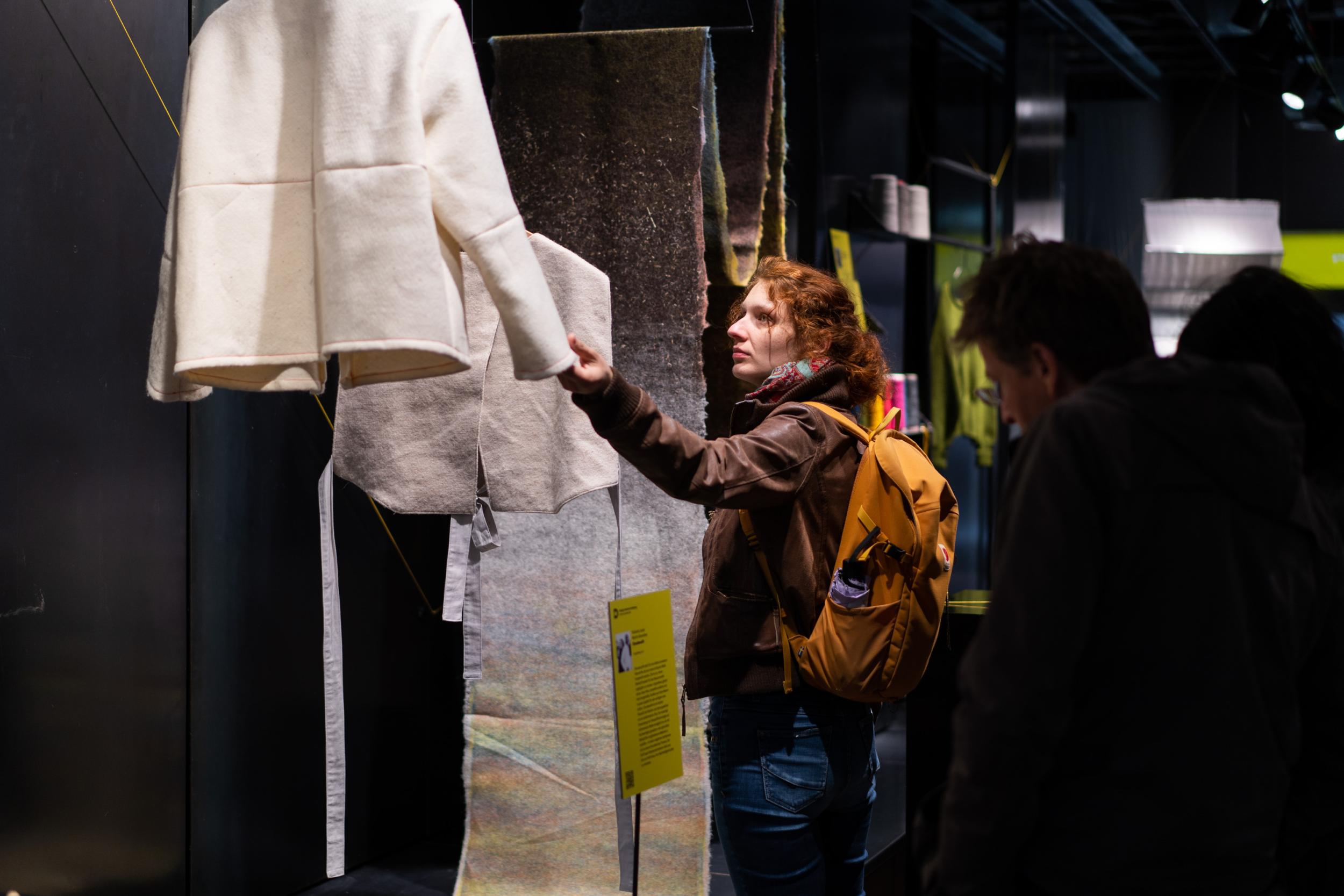
Hamburg Textile Week will present 14 projects from Germany, the Netherlands and Sweden from 1 to 11 October 2026 under the theme “Stoffe mit Zukunft” – Fabrics with a Future. The program focuses on new materials, processes and technologies, including textile energy systems, bio-based materials and interactive fabrics.

Projects range from SkySails kites that generate electricity from high-altitude wind and revoltech’s hemp-residue-based LOVR material to “Talking Textiles,” which translates touch into sound in real time. A Stühmer|Scholz exoskeleton uses textile components as the interface between body and technology. Other exhibits include a curtain woven with thin-film solar cells and work on bio-based dyeing.

Design Zentrum Hamburg is joined by the FABRIC – Future Fashion Lab for talks and workshops, with HAW Hamburg, AMD Akademie Mode & Design, Made auf Veddel and Greenpeace also participating. The format brings research, design, production and circular-design questions into one city-wide textile program.

Hamburg Textile Week will present 14 projects from Germany, the Netherlands and Sweden from 1 to 11 October 2026 under the theme “Stoffe mit Zukunft” – Fabrics with a Future. The program focuses on new materials, processes and technologies, including textile energy systems, bio-based materials and interactive fabrics.

Projects range from SkySails kites that generate electricity from high-altitude wind and revoltech’s hemp-residue-based LOVR material to “Talking Textiles,” which translates touch into sound in real time. A Stühmer|Scholz exoskeleton uses textile components as the interface between body and technology. Other exhibits include a curtain woven with thin-film solar cells and work on bio-based dyeing.

Design Zentrum Hamburg is joined by the FABRIC – Future Fashion Lab for talks and workshops, with HAW Hamburg, AMD Akademie Mode & Design, Made auf Veddel and Greenpeace also participating. The format brings research, design, production and circular-design questions into one city-wide textile program.

Source:

Design Zentrum Hamburg / Hamburg Kreativ Gesellschaft

(c) De Montfort University (DMU)
08.09.2026

Smart textiles: flexible supercapacitors could power sensors directly in sportswear

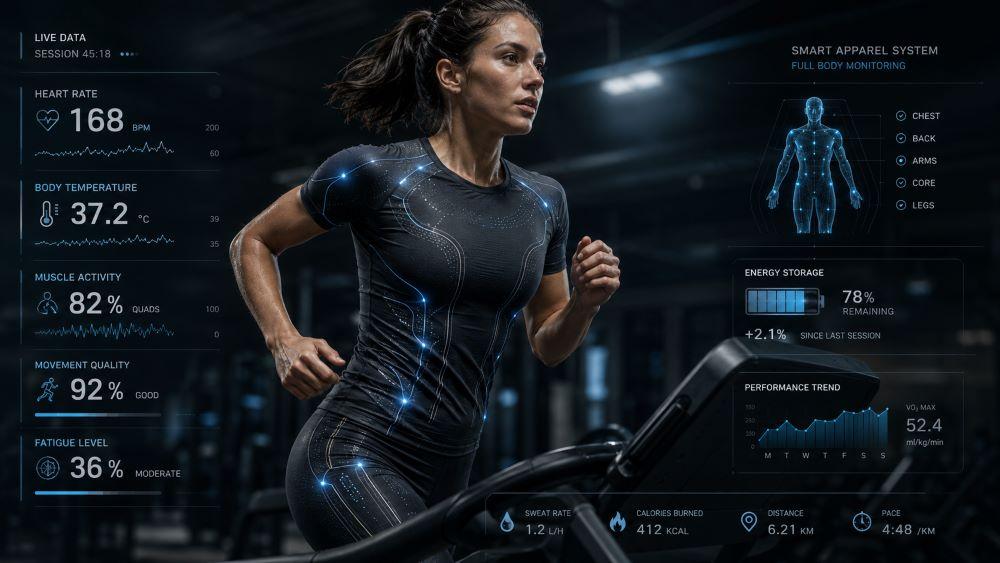
An international research team involving De Montfort University Leicester is examining how flexible supercapacitors could be integrated into sports clothing. The concept goes beyond adding another sensor to a garment. Instead, the textile would become part of the energy architecture: it could store electricity and supply distributed sensors embedded across the garment. Combined with technologies that harvest energy from body movement or heat, running tops, cycling kit or gym wear could eventually generate and store part of the power needed for continuous monitoring.

The researchers identify knitted structures and conductive yarns as particularly promising because they can combine electrical functionality with stretch, flexibility and breathability. Carbon-based electrode materials such as graphene and carbon nanotubes are also considered because of their energy-storage potential and mechanical flexibility. Compared with conventional batteries, supercapacitors can charge and discharge very rapidly, while potentially being made light and flexible enough for body-worn applications.

An international research team involving De Montfort University Leicester is examining how flexible supercapacitors could be integrated into sports clothing. The concept goes beyond adding another sensor to a garment. Instead, the textile would become part of the energy architecture: it could store electricity and supply distributed sensors embedded across the garment. Combined with technologies that harvest energy from body movement or heat, running tops, cycling kit or gym wear could eventually generate and store part of the power needed for continuous monitoring.

The researchers identify knitted structures and conductive yarns as particularly promising because they can combine electrical functionality with stretch, flexibility and breathability. Carbon-based electrode materials such as graphene and carbon nanotubes are also considered because of their energy-storage potential and mechanical flexibility. Compared with conventional batteries, supercapacitors can charge and discharge very rapidly, while potentially being made light and flexible enough for body-worn applications.

The potential use case extends beyond sport. A sensor-rich garment could monitor heart rate, body temperature, muscle activity, movement and fatigue at several points on the body rather than relying on a single wrist-mounted device. In healthcare, similar garments could support continuous monitoring and provide clinicians with information collected from different body regions. The textile would therefore shift from being a passive carrier to acting as a distributed sensing and energy platform.

Crucially, the DMU source does not present a finished smart garment. The underlying paper sets out a technological framework that brings together developments in electronics, materials science, manufacturing and flexible textiles. Considerable barriers remain. Electronic fabrics would have to tolerate sweat, repeated stretching and bending and regular laundering without losing performance. They must also remain comfortable and breathable, and eventually be manufactured at a cost and scale compatible with mainstream clothing.

Circularity is another design requirement. The study discusses recyclable or biodegradable materials, greener manufacturing and garment architectures that allow electronic components to be recovered at end of life rather than creating another stream of electronic waste. The next step is therefore practical development and funding, not commercial launch. That distinction is important: the work is a credible roadmap for e-textile integration, but its industrial maturity still has to be demonstrated.

08.09.2026

DSC launches MORPH materials platform

Dahsheng Company has introduced MORPH, a materials platform that combines foams, textiles, films and functional layers into application-specific engineered systems. Brands can select surface materials, foam cores, colours, density, thickness, perforation and additional functional layers. The platform can be supplied as moulded components, sheet materials or fully integrated material systems, with footwear and sports applications a clear focus.

At the core are DSC’s DREAMCELL open-cell and DURAPONTEX closed-cell foam technologies. The company says more than 100 fabric and colour options are available for the top layer. Depending on the construction, the system can combine comfort, low weight, durability, breathability and impact protection. The emphasis therefore shifts from a single foam or textile to a coordinated multilayer material architecture.

Dahsheng Company has introduced MORPH, a materials platform that combines foams, textiles, films and functional layers into application-specific engineered systems. Brands can select surface materials, foam cores, colours, density, thickness, perforation and additional functional layers. The platform can be supplied as moulded components, sheet materials or fully integrated material systems, with footwear and sports applications a clear focus.

At the core are DSC’s DREAMCELL open-cell and DURAPONTEX closed-cell foam technologies. The company says more than 100 fabric and colour options are available for the top layer. Depending on the construction, the system can combine comfort, low weight, durability, breathability and impact protection. The emphasis therefore shifts from a single foam or textile to a coordinated multilayer material architecture.

For textile developers, the interface between softgoods and foam engineering is the most relevant aspect. Face fabrics, synthetic surfaces, films, foam and backing layers can be engineered together for the end use. That can streamline material development for brands, but it also raises questions around adhesion, long-term durability, recyclability and the end-of-life handling of heterogeneous multilayer constructions.

DSC does not publish standardised performance values, comparative test data or recycling routes for MORPH in the announcement. Performance and environmental claims should therefore be treated as manufacturer statements at this stage. MORPH integrates textile and polymer functional layers within a single materials-development platform.

Source:

Dahsheng Company / DSC

07.09.2026

CENTRESTAGE reports record attendance with more than 12,000 trade buyers

The eleventh edition of Hong Kong fashion event CENTRESTAGE closed with a new attendance record. According to the Hong Kong Trade Development Council, the four-day fair attracted more than 12,000 trade buyers from 93 countries and regions. Buyer numbers from Vietnam, Russia, the United States and Malaysia showed notable growth, providing a current indicator of Hong Kong’s reach as a fashion and sourcing platform.

The attendance figures also need to be read in the context of the event format. CENTRESTAGE formed part of Hong Kong Fashion Fest and combined design presentations, brand showcases, runway programmes and commercial meetings. Other lifestyle events ran concurrently. CENTRESTAGE and Salon de Time were also opened to the public free of charge, together recording more than 20,000 public attendances.

The eleventh edition of Hong Kong fashion event CENTRESTAGE closed with a new attendance record. According to the Hong Kong Trade Development Council, the four-day fair attracted more than 12,000 trade buyers from 93 countries and regions. Buyer numbers from Vietnam, Russia, the United States and Malaysia showed notable growth, providing a current indicator of Hong Kong’s reach as a fashion and sourcing platform.

The attendance figures also need to be read in the context of the event format. CENTRESTAGE formed part of Hong Kong Fashion Fest and combined design presentations, brand showcases, runway programmes and commercial meetings. Other lifestyle events ran concurrently. CENTRESTAGE and Salon de Time were also opened to the public free of charge, together recording more than 20,000 public attendances.

For manufacturers, brands and sourcing teams, the buyer composition is more informative than the public visitor count. Buyers from 93 markets point to a broad international sourcing base. Growth from Vietnam and Malaysia also reflects Southeast Asia’s increasing importance as a consumer, production and sourcing region. Higher buyer numbers from the US are noteworthy against the backdrop of changing trade and sourcing configurations.

The figures are organiser data and should therefore be treated as event metrics rather than independent market statistics. Even so, they are useful for industry monitoring. They suggest that physical B2B platforms continue to matter alongside digital sourcing tools when brands, designers, suppliers and international buyers need to establish new relationships and reassess regional production networks.

Source:

Hong Kong Trade Development Council

Graphic (c) Discover e-Solutions (DeSL)
07.09.2026

DeSL generates Digital Product Passports directly

DeSL has launched a Digital Product Passport solution built directly on product, material, supplier, quality and certification data managed in Product Lifecycle Management. The approach addresses a central challenge in emerging DPP requirements: companies need to combine information from multiple functions while retaining evidence of where data came from, how it was approved and whether supporting documentation remains valid.

Rather than creating a separate static passport record, DeSL generates the DPP from the current approved information held in PLM. Published information therefore remains connected to its underlying product and supplier records, version history and approvals. This can become particularly important when material composition, suppliers, certifications or quality information change during the product lifecycle.

DeSL has launched a Digital Product Passport solution built directly on product, material, supplier, quality and certification data managed in Product Lifecycle Management. The approach addresses a central challenge in emerging DPP requirements: companies need to combine information from multiple functions while retaining evidence of where data came from, how it was approved and whether supporting documentation remains valid.

Rather than creating a separate static passport record, DeSL generates the DPP from the current approved information held in PLM. Published information therefore remains connected to its underlying product and supplier records, version history and approvals. This can become particularly important when material composition, suppliers, certifications or quality information change during the product lifecycle.

The platform can combine product specifications, materials, supplier information, declarations, inspections and certifications. DeSL’s AI document intelligence is intended to analyse supporting documents, identify required information and expiry dates, and compare documentation with information maintained in PLM. Passports can be generated at the appropriate product level and delivered via QR codes, portals, retail systems and open APIs. Different audiences can receive different information while still drawing from the same governed product record.

For fashion and textile companies, the important shift is conceptual: DPP compliance becomes a master-data and governance challenge rather than simply a publishing task. The software announcement does not prove automatic compliance with every future regulatory requirement. It does, however, demonstrate a credible architecture in which product passports are generated from the same data used for product development, quality, supplier management and compliance.

Source:

Discover e-Solutions (DeSL)

The LYCRA Company Reimagines the Trade Show Experience at Intertextile Photo via Lycra
31.08.2026

LYCRA: New fibre technologies for performance, stretch and renewable content

The LYCRA Company is presenting several fibre technologies in commercial apparel applications at Intertextile Shanghai. COOLMAX CloakFX for woven fabrics is designed to mask the appearance of sweat, improve wet and dry opacity and provide moisture management; the company says the fibre is made from 100% recycled PET and certified to the Global Recycled Standard. LYCRA FiT400 is being shown for knits and wovens, combining non-spandex mechanical stretch with cooling functionality. RENEWABLE LYCRA fibre contains 70% renewable content derived in part from field corn grown in the US Midwest. The technologies are presented in a 356-square-metre co-creation district with Asian textile partners, illustrating how ingredient-brand technologies are translated into workwear, denim, performance and everyday apparel.

The LYCRA Company is presenting several fibre technologies in commercial apparel applications at Intertextile Shanghai. COOLMAX CloakFX for woven fabrics is designed to mask the appearance of sweat, improve wet and dry opacity and provide moisture management; the company says the fibre is made from 100% recycled PET and certified to the Global Recycled Standard. LYCRA FiT400 is being shown for knits and wovens, combining non-spandex mechanical stretch with cooling functionality. RENEWABLE LYCRA fibre contains 70% renewable content derived in part from field corn grown in the US Midwest. The technologies are presented in a 356-square-metre co-creation district with Asian textile partners, illustrating how ingredient-brand technologies are translated into workwear, denim, performance and everyday apparel.

(c) Eastman Naia™
18.08.2026

Naia™ from Eastman: First appearance at Apparel Sourcing Show Guatemala

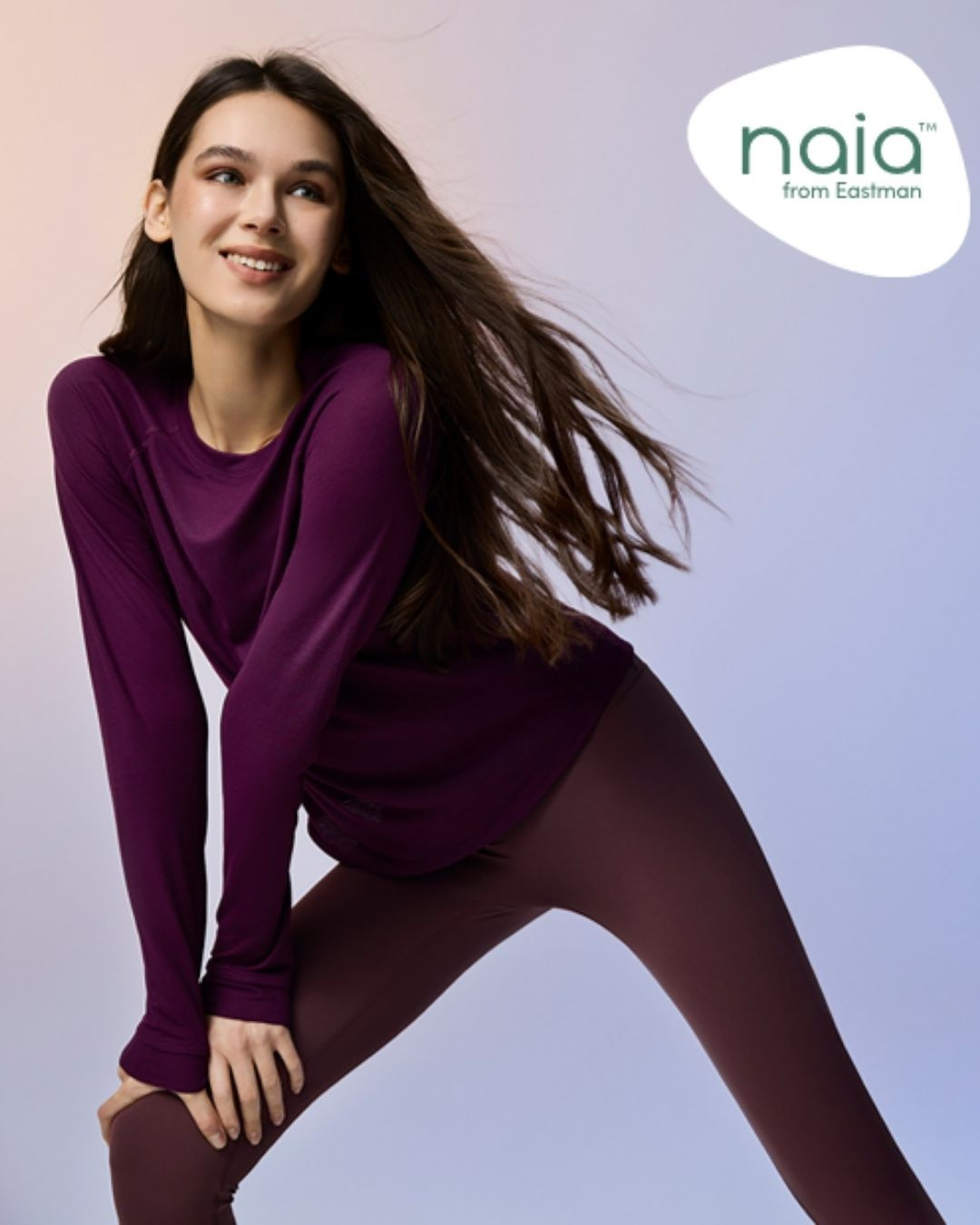
At Booth 50, Eastman will present U.S.-produced Naia™ staple fibers and filament yarns for casualwear and activewear, supporting closer collaboration across the regional value chain.

As brands and retailers explore more diversified and responsive sourcing networks, the Naia™ from Eastman brand is strengthening its engagement with the textile and apparel value chain across the western hemisphere. From August 18 to 20, the company will participate for the first time in Apparel Sourcing Show Guatemala, a regional meeting point for apparel sourcing, manufacturing and nearshoring.

Produced in the United States, Naia™ offers regional manufacturers, brands and sourcing teams a cellulosic fiber option within the western hemisphere, creating opportunities for direct dialogue and new collaborations across the regional textile and apparel supply chain.

At Booth 50, Eastman will present U.S.-produced Naia™ staple fibers and filament yarns for casualwear and activewear, supporting closer collaboration across the regional value chain.

As brands and retailers explore more diversified and responsive sourcing networks, the Naia™ from Eastman brand is strengthening its engagement with the textile and apparel value chain across the western hemisphere. From August 18 to 20, the company will participate for the first time in Apparel Sourcing Show Guatemala, a regional meeting point for apparel sourcing, manufacturing and nearshoring.

Produced in the United States, Naia™ offers regional manufacturers, brands and sourcing teams a cellulosic fiber option within the western hemisphere, creating opportunities for direct dialogue and new collaborations across the regional textile and apparel supply chain.

At Booth 50, Eastman will showcase both Naia™ staple fiber and filament yarn offerings for casualwear and activewear. A key focus of the presentation will be Naia™ On The Move, an application designed for active, everyday wear and built around Naia™ Renew staple fiber, made with 40% GRS-certified recycled materials* and 60% sustainably sourced wood pulp. The application demonstrates how Naia™ fiber blends can deliver next-to-skin comfort, breathability and a soft hand feel, together with moisture management and quick-dry performance. 

Developed to help garments stay fresh and comfortable throughout the day, Naia™ On The Move highlights the versatility needed for urban lifestyles, where changing temperatures, humidity and active routines call for adaptable apparel solutions. 

“The western hemisphere is becoming an increasingly important part of the sourcing conversation,” said Chad Doub, Global Segment Market Manager, Casual Wear and Home at Eastman. “Our participation in Guatemala gives us the opportunity to build new relationships and explore how Naia™ staple fibers and filament yarns can support innovative fabric developments for casualwear and activewear. We believe Naia™ On The Move, our application designed for this segment, is particularly well suited to the needs of the region and of the brands sourcing here, where versatility, comfort and performance are increasingly important.”

The Apparel Sourcing Show brings together businesses operating across the textile and apparel supply chain, including textiles, machinery, accessories, services and manufacturing. Eastman’s participation also builds on its engagement with the Americas Apparel Producers’ Network.

Following the 2026 pro:Americas Annual Conference in May, the Guatemala show represents another step in the company’s efforts to connect with businesses developing more integrated supply chains across the region.

11.08.2026

Fashion Trends 2026: Between minimalism and maximalism

From premium basics to fringes and sequins, right through to the return of capri pants and 90s-style denim: all the trends and price trends in the United States & Europe, according to data from Retviews by Lectra.

  • Premium basics take center stage in Spring/Summer 2026 
  • The 90s effect: capri pants (+62%) and flip-flops (+73%) lead the return to minimalism  However, maximalism persists: sequins (+40%) and fringe (+34%) are becoming increasingly widespread  
  • Rising prices and premiumization strategies, with a new balance between value and aspiration 

As the summer season unfolds, the fashion industry is confirming a structural transformation that is already underway: the definitive shift towards ‘premiumization’. But what will be the key garments, the dominant trends, and how are prices evolving? 

From premium basics to fringes and sequins, right through to the return of capri pants and 90s-style denim: all the trends and price trends in the United States & Europe, according to data from Retviews by Lectra.

  • Premium basics take center stage in Spring/Summer 2026 
  • The 90s effect: capri pants (+62%) and flip-flops (+73%) lead the return to minimalism  However, maximalism persists: sequins (+40%) and fringe (+34%) are becoming increasingly widespread  
  • Rising prices and premiumization strategies, with a new balance between value and aspiration 

As the summer season unfolds, the fashion industry is confirming a structural transformation that is already underway: the definitive shift towards ‘premiumization’. But what will be the key garments, the dominant trends, and how are prices evolving? 

Lectra – a leading provider of industrial technology solutions for the fashion market, has analyzed data from Retviews, its AI-powered solution specializing in competitive intelligence and automated benchmarking, to identify the latest fashion trends and how brands are adapting their strategies and pricing to navigate an increasingly complex landscape. 

“In a market characterized by more discerning consumers and growing competitive pressure, the real shift is the move from volume to value,” said Ketty Pillet, Lectra’s VP of Marketing, Americas. “Today, the fashion industry finds itself competing with spending on other experiences, from travel to dining, and this requires brands to strengthen their cultural and perceived value. At the same time, persistent cost pressures and differences between markets, such as between the United States and Europe, require increasingly targeted pricing and sourcing strategies. Thanks to Retviews’ insights, it is possible to interpret these dynamics and make more informed, growth-oriented decisions.” 
 
From T-shirts to sequins: the clash between minimalism and maximalism returns in the Spring/Summer (SS) 2026 collection 
While demand for essential, timeless pieces is on the rise, there is also a strong desire for self-expression. 

Retviews data shows that premium basics dominate the product ranges: T-shirts have seen a 41% increase (22% in the United States), whilst denim has risen by 47%. Shirts (up 13%) and outerwear (up 17%) remain must-haves, in line with a growing focus on versatility and durability. 

At the same time, however, maximalism is also making a comeback, bringing a touch of glamour to everyday wear. For this Spring/Summer season, sequins are up by 40% and fringe by 34%, a sign of an aesthetic that responds to the need for escapism and individuality, further fueled by the boom in resale and vintage fashion. 

1990s minimalism is dominating the season, driven by a renewed interest in streamlined, sophisticated dressing. The trend has been further fueled by the resurgence of style icon Carolyn Bessette-Kennedy, following the release of the Love Story series. According to Retviews data, certain iconic items are enjoying a real resurgence, with capri pants (+62%), flip-flops (+73%) and stripes (+8%). 

Denim remains a must-have (+21% in product ranges), but its silhouettes are evolving: low-rise styles (+22%) and bootcut styles (+15%) are on the rise, whilst flares (+94%) and cargo jeans (+108%) are experiencing a real boom. In contrast, the popularity of baggy jeans is on the decline (-5%). 

Furthermore, there is also a strong functional element. The utility style, ranging from technical jackets to cargo pants (+8%) – is gaining ground in collections, reflecting a growing fusion of fashion, comfort and lifestyle. This trend can be attributed to the rise of the wellness culture and sports communities, which are increasingly influencing the language of everyday clothing. 

Color: between expressiveness and wearability 
For the SS 2026 collections, there is a strong trend, particularly in the mid-range segment, towards color palettes that are both expressive and versatile. According to Retviews data, orange stands out as one of the season’s fastest-growing shades (+150% year-on-year), driven by its influence on the catwalks of brands such as Chanel, Valentino, Dior, Prada and Loewe. Cherry red is also consolidating its presence (+50%), establishing itself as a livelier evolution of the burgundy seen in the previous season. 

At the same time, more versatile shades are emerging and continue to drive commercial performance. Blue has seen a 23% increase, boosted both by moments of high cultural visibility and by the prominence of denim and high-quality basics. Brown (+75%) remains one of the dominant colors, whilst the blue-brown combination has established itself as one of the season’s signature pairings, reflecting a broader trend towards understated, sophisticated and easy-to-wear palettes. 

Pricing trends: the new balance between premiumization and perceived value 
The Spring/Summer season confirms a trend that is now well established: the mass and mid-market segments are increasingly behaving like the luxury sector. Retviews data highlights double-digit price rises for players such as Zara and Gap, reflecting a gradual shift towards premiumization in the product range. This trend is reinforced by the intensification of collaborations with high-profile designers, from John Galliano for Zara to Zac Posen for Gap, right through to Stella McCartney’s return with H&M, which boost the creative credibility of mass-market brands and justify further price rises. This is a ‘high-low’ model, in which an aspirational approach coexists with affordability, giving rise to long-term premiumization strategies. 

2026 marks the triumph of conscious spending: people are buying less, but better, prioritizing quality, durability and versatility. This is reflected in the growth of premium basics, the rise in average prices (outerwear +9% in the EU, +17% in the US; shirts +4% in the EU, +9% in the US) and in the renewed momentum of denim, with ranges expanding significantly in the EU (+50% year-on-year) and prices rising (+7% in the EU, +1% in the US), a sign of the premiumization of essential garments. In this context, ‘value’ takes center stage: according to recent PWC data, 74% of consumers are willing to pay more for sustainable and traceable products. 

Overall, a definitive shift is becoming apparent: mass-market and mid-market collections are now structurally more expensive than they were two years ago, not as a result of temporary fluctuations, but due to a strategic repositioning. In this context, a brand’s success will depend on its ability to interpret the concept of value in a credible way, translating it into desirable, durable products that meet the expectations of an increasingly discerning consumer. 

Fashion for Good Launches New Project Photo by Fashion for Good
10.08.2026

Moving Beyond PFAS: Fashion for Good Launches New Project

Fashion for Good announced the launch of Project DW(O)R-X, a collaborative initiative designed to benchmark PFAS alternative durable water- and oil-repellent (DW(O)R) chemistries. Responding to growing market demand for alternatives to PFAS based finishes, the project aims to generate reliable, comparable data that can support informed sourcing decisions and the assessment of emerging chemistries.

Historically, durable water- and oil-repellent (DW(O)R) finishes have been used to help materials stay dry, clean and durable over time. Some formulations have contained per- and polyfluoroalkyl substances (PFAS), a group of chemicals characterised by their high persistence. As a result, PFAS can remain in the environment for extended periods, bioaccumulate in humans and ecosystems, and have been associated with adverse health effects when exposure exceeds established thresholds. 

Fashion for Good announced the launch of Project DW(O)R-X, a collaborative initiative designed to benchmark PFAS alternative durable water- and oil-repellent (DW(O)R) chemistries. Responding to growing market demand for alternatives to PFAS based finishes, the project aims to generate reliable, comparable data that can support informed sourcing decisions and the assessment of emerging chemistries.

Historically, durable water- and oil-repellent (DW(O)R) finishes have been used to help materials stay dry, clean and durable over time. Some formulations have contained per- and polyfluoroalkyl substances (PFAS), a group of chemicals characterised by their high persistence. As a result, PFAS can remain in the environment for extended periods, bioaccumulate in humans and ecosystems, and have been associated with adverse health effects when exposure exceeds established thresholds. 

Despite the momentum towards PFAS-based alternatives, several challenges remain. First, many currently available alternatives do not match the oil repellency and long-term durability of PFAS-based finishes. Second, there is currently no unified approach to assessing performance, and existing protocols do not always reflect real-world use, making meaningful comparisons between solutions difficult. Third, current benchmarks no longer reflect the capabilities of today’s PFAS alternative solutions; updated benchmarks are needed to identify leading solutions and understand performance gaps, to help inform R&D and scale-up efforts. Finally, as the industry works to identify suitable alternatives, it is essential to carefully assess their environmental and health impacts to minimise the risk of regrettable substitution, where one problematic substance  is replaced by another without sufficient understanding.

To address these core challenges, Project DW(O)R-X will benchmark nine PFAS alternative solutions, ranging from early-stage innovations to established chemistries, across three dimensions: performance, environmental impact, and cost. To support this, project partners have developed a performance framework designed to better reflect real-world use by incorporating multi-condition testing and custom stains relevant to sportswear and outerwear, including soil, sunscreen, and sweat. 

This approach will enable the group to test a performance framework built on combining various standardised methods. The insights generated can help establish a common reference point for the industry: brands and mills can use it to inform internal decision-making, while chemical companies can rely on it to substantiate performance claims.

The project brings together an exciting group of industry stakeholders, including leading brands adidas and C&A, manufacturing partners Shahi Exports, Paradise Textiles, Positive Materials and Wujiang Fuhua Fabric Co., alongside technology providers Archroma, Daikin Chemicals Europe, Dow, Dryfiber, Jintex, Lamoral Coatings, Pulcra Chemicals, Rudolf, and vandeyk.tech. Performance testing will be conducted by SGS. 

“The challenge for the whole industry isn’t just phasing out PFAS: it’s ensuring we don’t replace it with something equally concerning that we understand less well. Right now, brands and mills are navigating this transition without updated benchmarks to compare these alternatives. Project DW(O)R-X gives them the data they need: performance testing that reflects real-world use, comprehensive impact assessment, and a better understanding of cost structures. This is how we enable informed decisions and genuine progress toward safer chemistry at scale.” Katrin Ley, Managing Director at Fashion for Good.
 
“We have not allowed the intentional use of PFAS in our products for many years. However, phasing out PFAS across the sector requires coordinated action across the value chain. A responsible transition depends on shared changes in manufacturing practices, supported by accessible and reliable alternatives that are understood and available at scale. Project DW(O)RX provides a rigorous benchmarking framework to evaluate alternatives across performance, environmental impact and cost. By collaborating with other brands and partners, we are contributing to a shared knowledge base that supports progress towards safer chemistry, while maintaining the quality and durability our customers expect.” C&A External Affairs

Source:

Fashion for Good

(c) Capture Island
10.08.2026

SUPREME WOMEN&MEN: Düsseldorf reaffirms position as a fashion destination

Fully booked schedules, focused conversations and an in-dustry clearly embracing face-to-face exchange once again: the latest edition of SUPREME WOMEN&MEN Düsseldorf, held from 24 to 27 July 2026, demonstrated the importance of focused order platforms, particularly in a challenging market environment. 

International collections, established agencies and new exhibitors came together at KWS 117–119, connecting with buyers and retail partners from across the DACH region. Yet the four days were about more than placing orders for the upcoming season. They were about new ideas, shared plans and, above all, the question of how brands and retailers can successfully shape the market going forward. 

Fully booked schedules, focused conversations and an in-dustry clearly embracing face-to-face exchange once again: the latest edition of SUPREME WOMEN&MEN Düsseldorf, held from 24 to 27 July 2026, demonstrated the importance of focused order platforms, particularly in a challenging market environment. 

International collections, established agencies and new exhibitors came together at KWS 117–119, connecting with buyers and retail partners from across the DACH region. Yet the four days were about more than placing orders for the upcoming season. They were about new ideas, shared plans and, above all, the question of how brands and retailers can successfully shape the market going forward. 

Fashion had a strong presence throughout the city, extending well beyond the showrooms. From 22 to 29 July, the Düsseldorf Fashion Days brought together the city’s order business, showrooms and wider fashion activities, while the DFD Festival at Corneliusplatz brought fashion directly to Königsallee with runway shows and a programme designed to engage the city and its visitors. SUPREME WOMEN&MEN was part of this collective momentum, contributing its own distinct strengths: a curated setting, an efficient environment and close connections be-tween brands, agencies and retailers.

Source:

THE SUPREME GROUP

(c) Circ
28.07.2026

Circ Launches First Denim Collection with H&M

Circ announced that the first men's denim collection featuring TENCEL™ | Circ® with REFIBRA™ technology is now available at H&M, marking the commercial delivery of this unique pilot project first announced in October 2025. Featuring two styles available across the UK, Scandinavia, Central Europe, Eastern Europe, South Europe, Turkey, North America, Mexico, Canada, and the Middle East, the launch brings TENCEL™ | Circ® with REFIBRA™ technology into H&M's standard men's denim assortment for the first time.

The collection explores a fully integrated supply chain approach from textile waste to pulp to shelf, bringing together Circ’s textile-to-textile recycling technology, Lenzing’s fiber production expertise, AGI Denim’s manufacturing capabilities, and H&M’s global retail platform. Each garment contains TENCEL™ Limited Edition Lyocell fibers produced with 30% Circ® pulp recycled from textile waste.

Circ announced that the first men's denim collection featuring TENCEL™ | Circ® with REFIBRA™ technology is now available at H&M, marking the commercial delivery of this unique pilot project first announced in October 2025. Featuring two styles available across the UK, Scandinavia, Central Europe, Eastern Europe, South Europe, Turkey, North America, Mexico, Canada, and the Middle East, the launch brings TENCEL™ | Circ® with REFIBRA™ technology into H&M's standard men's denim assortment for the first time.

The collection explores a fully integrated supply chain approach from textile waste to pulp to shelf, bringing together Circ’s textile-to-textile recycling technology, Lenzing’s fiber production expertise, AGI Denim’s manufacturing capabilities, and H&M’s global retail platform. Each garment contains TENCEL™ Limited Edition Lyocell fibers produced with 30% Circ® pulp recycled from textile waste.

"This launch is proof that recycled textile fiber is ready for mass-market supply chains," said Peter Majeranowski, CEO of Circ. "Seeing TENCEL™ | Circ® with REFIBRA™ technology in H&M's standard men's denim assortment is a milestone the industry has been working toward. It validates that next-generation recycled materials can move through existing supply chains at the quality that global retail demands."

“This collaboration highlights that by bringing together players of all steps across the textile supply chain will result in circular garments available to consumers. We are proud to work with pioneers like Circ to showcase innovation on a pilot production level, making fibers available for commercial garments. We continue to keep our commitment to exploring collaborations with innovators, bringing new TENCEL™ fibers on the market via pilot-scale productions.” explains Caroline Ledl, Senior Director Product Operations at Lenzing Group.

The two-style collection, available in both light and dark wash denim, is the result of a collaboration between Circ and Lenzing to integrate advanced textile recycling into fiber production, demonstrating a path to scale up. Circ's recycling technology separates blended textile waste, including cotton-polyester garments that have historically been unable to be recycled, into two material streams: dissolving pulp and polyester monomers. The resulting Circ pulp is fed into Lenzing's lyocell production process alongside wood from certified or controlled sources, yielding a fiber that carries both the TENCEL™ brand and the REFIBRA™ technology designation, Lenzing's framework for incorporating pre- and post-consumer textile waste into new fiber.

Thiscollaborative project between a legacy sustainable fiber producer and a next-generation textile-to-textile recycler — with H&M as the retail partner bringing it to shelf — reflects a model that advocates have long argued is the most viable path to scaling circular textiles: incumbent infrastructure and emerging technology working in concert, rather than in parallel.

Source:

Circ