From the Sector

Reset
120 results
Vanessa Sanchez in ihrem Labor Foto (c) Rice University
18.09.2026

When the knit becomes the robot

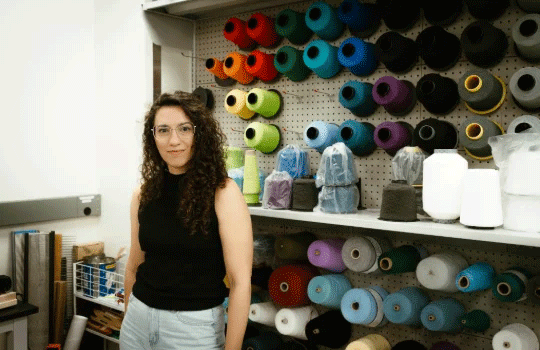
Rice University mechanical engineer Vanessa Sanchez is developing knitted structures in which sensing, movement and mechanical behaviour are programmed into the textile rather than attached as separate components. Her project, “Programmable 3D-Knitted Soft Robotic Textiles for Human-Centered Mobility,” has received a Toyota Programmable System Innovation Fellowship.

Rice points to applications including vehicle seats that reshape around occupants, garments that assist walking and soft safety systems capable of responding to impending impacts.

The work uses knitting as a manufacturing architecture. By varying yarns, stitch geometry and local structural behaviour, the textile can be designed to produce functions that conventional soft-robotic systems may achieve with separate sensors, actuators or rigid elements.

Three-dimensional knitting is particularly important because form can be created during manufacture rather than assembled from multiple flat components. That approach could reduce seams and interfaces while retaining the softness and conformity expected from textiles.

Rice University mechanical engineer Vanessa Sanchez is developing knitted structures in which sensing, movement and mechanical behaviour are programmed into the textile rather than attached as separate components. Her project, “Programmable 3D-Knitted Soft Robotic Textiles for Human-Centered Mobility,” has received a Toyota Programmable System Innovation Fellowship.
Rice points to applications including vehicle seats that reshape around occupants, garments that assist walking and soft safety systems capable of responding to impending impacts.

The work uses knitting as a manufacturing architecture. By varying yarns, stitch geometry and local structural behaviour, the textile can be designed to produce functions that conventional soft-robotic systems may achieve with separate sensors, actuators or rigid elements.

Three-dimensional knitting is particularly important because form can be created during manufacture rather than assembled from multiple flat components. That approach could reduce seams and interfaces while retaining the softness and conformity expected from textiles.

Sanchez will use the fellowship to develop the programmable structures further and explore mobility-oriented applications.

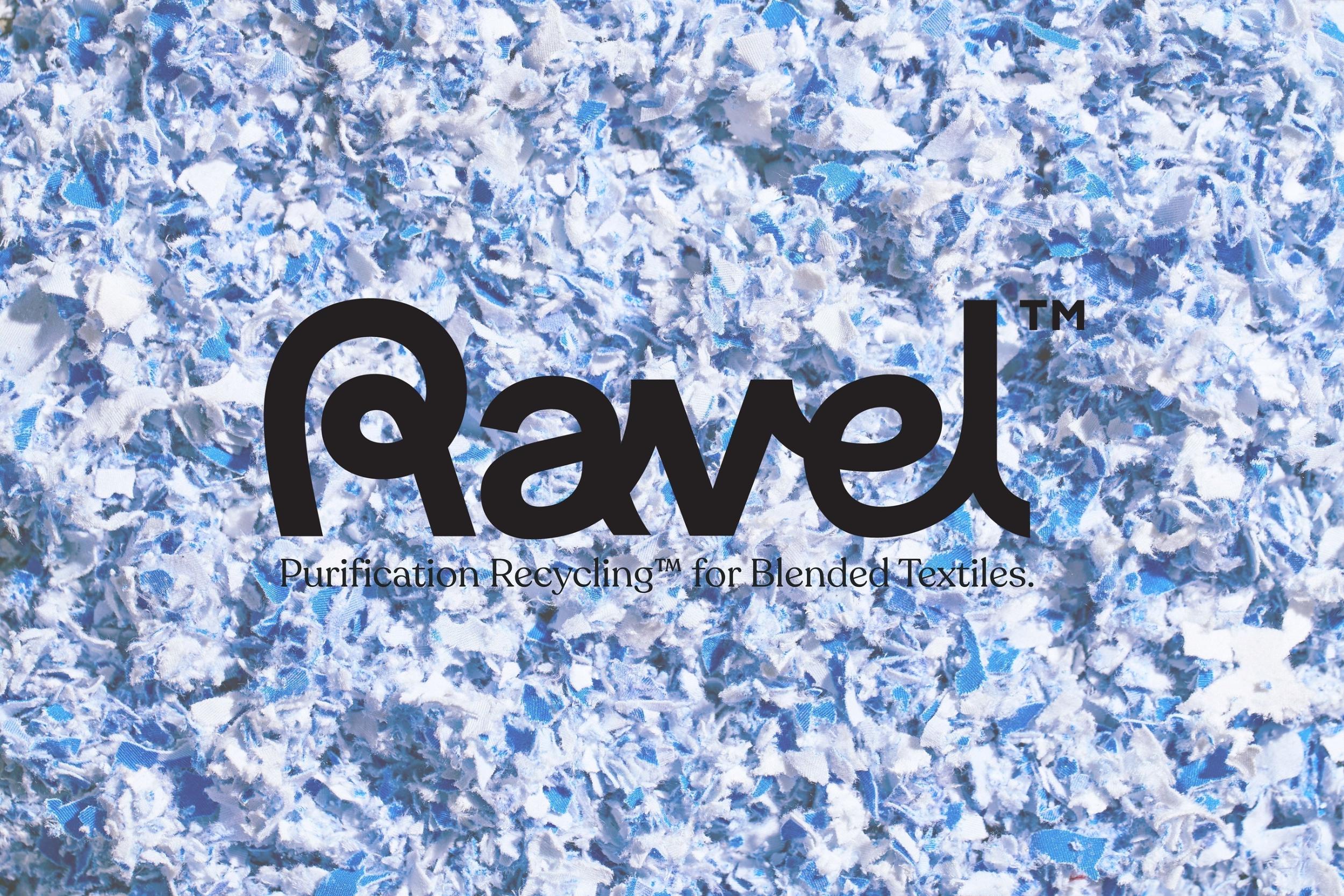
Ravel - shredded polyester/elastane material ready for processing (c) Ravel
18.09.2026

Ravel raises $8.2m to scale blended-textile recycling

Ravel has closed an oversubscribed $8.2 million seed round led by One Small Planet, with participation from AP Ventures, Overlay Capital, Lichen Ventures and existing investors. The funding is intended to move the Seattle-based recycling company from pilot operation towards commercial readiness.

Its Purification Recycling process is aimed at one of apparel recycling's persistent problems: stretch blends. Elastane is widely used in activewear, denim, underwear and other garments, yet even relatively small percentages can interfere with established recycling routes.

Rather than treating the whole textile as a single feedstock, Ravel is developing a separation and purification route for polyester/elastane blends. The company says recovered material can be converted into recycled plastic pellets for renewed use as a raw material.

The next phase will test more than chemistry. Commercial viability depends on throughput, feedstock variability, separation efficiency, energy and chemical inputs, and the quality of the recovered fractions. Ravel plans to validate the process at production scale with textile partners.

Ravel has closed an oversubscribed $8.2 million seed round led by One Small Planet, with participation from AP Ventures, Overlay Capital, Lichen Ventures and existing investors. The funding is intended to move the Seattle-based recycling company from pilot operation towards commercial readiness.

Its Purification Recycling process is aimed at one of apparel recycling's persistent problems: stretch blends. Elastane is widely used in activewear, denim, underwear and other garments, yet even relatively small percentages can interfere with established recycling routes.

Rather than treating the whole textile as a single feedstock, Ravel is developing a separation and purification route for polyester/elastane blends. The company says recovered material can be converted into recycled plastic pellets for renewed use as a raw material.

The next phase will test more than chemistry. Commercial viability depends on throughput, feedstock variability, separation efficiency, energy and chemical inputs, and the quality of the recovered fractions. Ravel plans to validate the process at production scale with textile partners.

The financing adds capacity at a point where recyclers are increasingly trying to tackle blends that mechanical systems cannot readily return to fibre.

(c) Archroma / Lameirinho
16.09.2026

Dye, fix and soften in one step

Archroma and Portuguese home-textile manufacturer Lameirinho have moved the InOneGO continuous dyeing process into commercial production. Lameirinho's first bed-linen collection made with the technology is now available worldwide.

InOneGO combines coloration, fixation and softening in a single pad-dry application. It was developed for woven cellulosic textiles including denim, fashion fabrics and home textiles, and works with Archroma sulfur-dye systems including DIRESUL RDT, EarthColors and FiberColors.

Archroma's ONE WAY Impact Calculator indicates reductions of up to 81% in process time, 97% in water consumption, 65% in energy use and 75% in CO2 emissions when a defined InOneGO/DIRESUL RDT scenario is compared with conventional cold pad-batch reactive dyeing plus pigment top-dye finishing. These are supplier calculations for a specified benchmark, not universal mill values.

The process runs on stenter and Thermosol lines. That makes the industrial proposition particularly relevant: mills may be able to remove several wet and dry processing stages without replacing the core line architecture.


Archroma and Portuguese home-textile manufacturer Lameirinho have moved the InOneGO continuous dyeing process into commercial production. Lameirinho's first bed-linen collection made with the technology is now available worldwide.

InOneGO combines coloration, fixation and softening in a single pad-dry application. It was developed for woven cellulosic textiles including denim, fashion fabrics and home textiles, and works with Archroma sulfur-dye systems including DIRESUL RDT, EarthColors and FiberColors.

Archroma's ONE WAY Impact Calculator indicates reductions of up to 81% in process time, 97% in water consumption, 65% in energy use and 75% in CO2 emissions when a defined InOneGO/DIRESUL RDT scenario is compared with conventional cold pad-batch reactive dyeing plus pigment top-dye finishing. These are supplier calculations for a specified benchmark, not universal mill values.

The process runs on stenter and Thermosol lines. That makes the industrial proposition particularly relevant: mills may be able to remove several wet and dry processing stages without replacing the core line architecture.


Source:

Archroma / Lameirinho

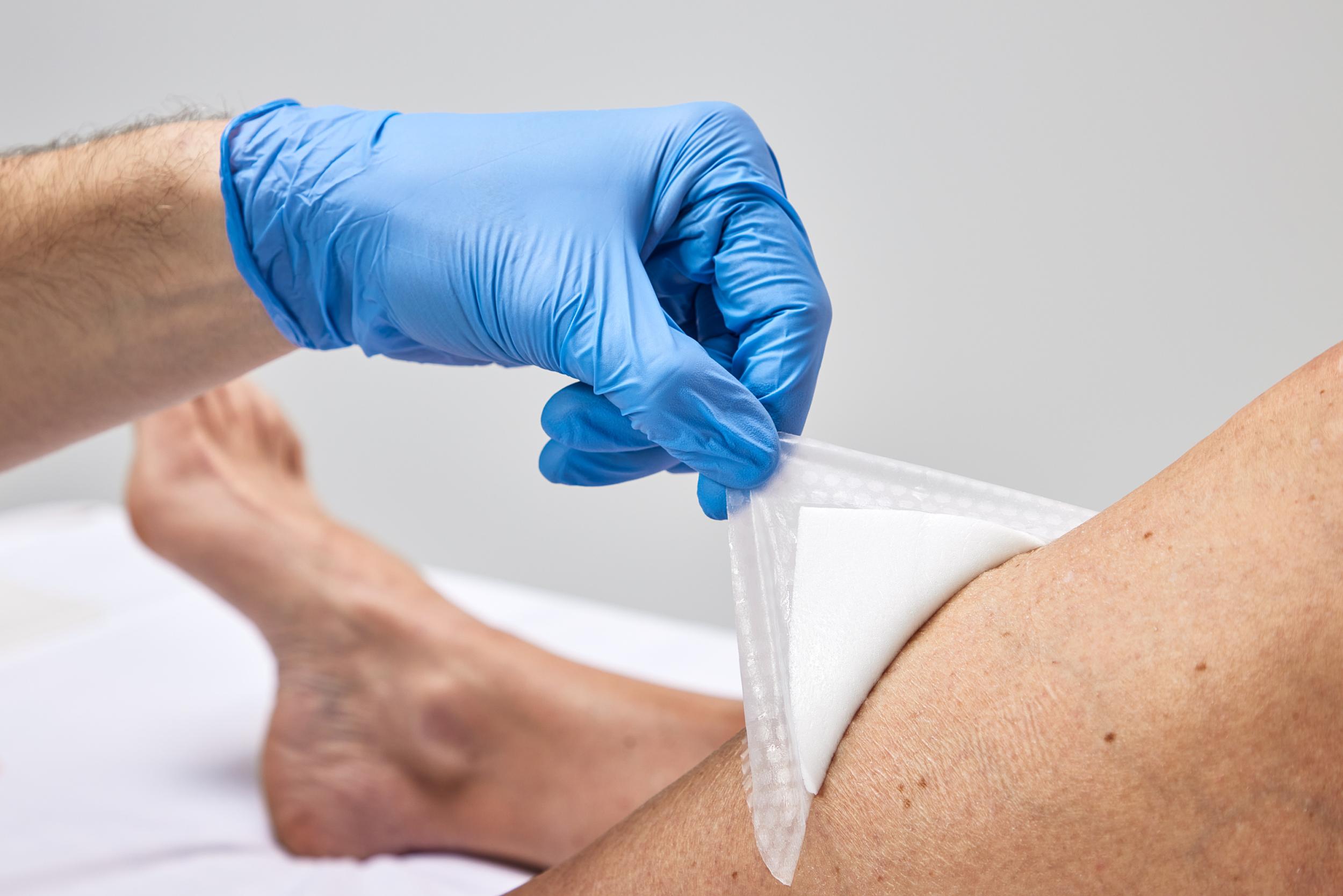
Tacnera: Freudenberg’s innovative technology for silicone-coated secondary foam dressings. © Freudenberg Performance Materials
Tacnera: Freudenberg’s innovative technology for silicone-coated secondary foam dressings.
14.09.2026

Wound care becomes more textile-integrated

Freudenberg Performance Materials and Foshan United Medical Technologies (UMT) will make their first joint appearance at the WUWHS congress in Kuala Lumpur since Freudenberg acquired the Chinese wound-care specialist at the end of July. The combined platform stretches from fibre and nonwoven technologies to finished advanced wound-care solutions.

UMT’s primary dressings include alginate, carboxymethylcellulose (CMC) and chitosan technologies. Alginate variants include silver-containing options for antimicrobial protection, while CMC is used for moisture management and gel formation. Chitosan brings haemostatic and bacteriostatic properties. UMT is also presenting a non-invasive wound-closure system.

Freudenberg Performance Materials and Foshan United Medical Technologies (UMT) will make their first joint appearance at the WUWHS congress in Kuala Lumpur since Freudenberg acquired the Chinese wound-care specialist at the end of July. The combined platform stretches from fibre and nonwoven technologies to finished advanced wound-care solutions.

UMT’s primary dressings include alginate, carboxymethylcellulose (CMC) and chitosan technologies. Alginate variants include silver-containing options for antimicrobial protection, while CMC is used for moisture management and gel formation. Chitosan brings haemostatic and bacteriostatic properties. UMT is also presenting a non-invasive wound-closure system.

Freudenberg complements these primary-care products with Tacnera®, its patented silicone-coated foam-dressing technology. A dual-silicone construction combines secure edge adhesion with a gentler wound-contact layer, while a wave-pattern coating is designed to improve flexibility and exudate management. The wider industrial story is vertical integration: UMT’s capabilities run from fibre production and functionalisation through nonwovens, packaging, sterilisation and regulatory approval.

Source:

Freudenberg Performance Materials Holding GmbH

Photo Richard Harnisch, IÖW
11.09.2026

Lusatia builds a regional fibre economy

A new German research project is exploring how Lusatia can build a regional natural-fibre economy as the former lignite region undergoes structural transformation. Over three years, IÖW and Zittau/Görlitz University of Applied Sciences will examine value chains based on flax, industrial hemp, fibre nettle, miscanthus and residues such as straw and municipal leaves.

The focus is explicitly on industrial applications rather than conventional apparel textiles. Potential outlets include natural-fibre-reinforced plastics, specialty papers, lightweight panels, composites, automotive components and new packaging materials. A regionally resolved material-flow model will map feedstock availability, processing routes, land-use conflicts and possible bottlenecks.

The project treats raw-material availability and industrialisation as one system. Workshops with farmers, processors, manufacturers, municipalities and economic-development actors are intended to produce practical transformation pathways for a circular bioeconomy.


A new German research project is exploring how Lusatia can build a regional natural-fibre economy as the former lignite region undergoes structural transformation. Over three years, IÖW and Zittau/Görlitz University of Applied Sciences will examine value chains based on flax, industrial hemp, fibre nettle, miscanthus and residues such as straw and municipal leaves.

The focus is explicitly on industrial applications rather than conventional apparel textiles. Potential outlets include natural-fibre-reinforced plastics, specialty papers, lightweight panels, composites, automotive components and new packaging materials. A regionally resolved material-flow model will map feedstock availability, processing routes, land-use conflicts and possible bottlenecks.

The project treats raw-material availability and industrialisation as one system. Workshops with farmers, processors, manufacturers, municipalities and economic-development actors are intended to produce practical transformation pathways for a circular bioeconomy.


Source:

Institut für ökologische Wirtschaftsforschung (IÖW) / Hochschule Zittau/Görlitz

Photo EMPA
11.09.2026

Airborne microfibres enter soil and water

Researchers from Empa, Eawag and Agroscope have produced the first systematic estimate of how much microplastic is deposited from the atmosphere across Switzerland. For areas below 2,000 metres, the study estimates annual deposition of about 219 tonnes, including roughly 78 tonnes on agricultural land and around ten tonnes directly into water bodies.

The official release identifies loose fibres from functional clothing among the sources that can enter the environment, alongside PET bottles and other plastic products. Sampling was conducted for a full year at five locations, with particles between 20 and 215 micrometres analysed using imaging infrared microspectroscopy. PET, polyethylene and polypropylene were the most frequently detected polymers.

For textiles, the findings matter because they add atmospheric transport to the better-known discussion around fibre release through washing. The work provides a new evidence base for assessing material emissions and mitigation priorities, while the researchers stress that long-term environmental and health effects remain under investigation.


Researchers from Empa, Eawag and Agroscope have produced the first systematic estimate of how much microplastic is deposited from the atmosphere across Switzerland. For areas below 2,000 metres, the study estimates annual deposition of about 219 tonnes, including roughly 78 tonnes on agricultural land and around ten tonnes directly into water bodies.

The official release identifies loose fibres from functional clothing among the sources that can enter the environment, alongside PET bottles and other plastic products. Sampling was conducted for a full year at five locations, with particles between 20 and 215 micrometres analysed using imaging infrared microspectroscopy. PET, polyethylene and polypropylene were the most frequently detected polymers.

For textiles, the findings matter because they add atmospheric transport to the better-known discussion around fibre release through washing. The work provides a new evidence base for assessing material emissions and mitigation priorities, while the researchers stress that long-term environmental and health effects remain under investigation.


Source:

Empa / Eawag / Agroscope; publiziert über die Schweizer Bundesbehörden

11.09.2026

Wool turns sunlight into clean water

Cornell University researchers have demonstrated that polydopamine-dyed wool can serve as a low-cost, renewable material for solar-driven water purification. The approach uses interfacial solar vapor generation, concentrating solar heat at the water surface while a textile structure transports water and converts it into vapor.

The strongest configuration used ultrablack wool positioned vertically and illuminated from both sides. It produced 2.43 kilograms of water per square metre of fabric per hour, while polydopamine-only wool achieved 2.21 kilograms. Both rates were nearly twice those reported for conventional horizontal two-dimensional evaporation systems. The material also operated continuously for ten hours without salt accumulation.

Performance depends on fibre choice, dye chemistry, surface structure and textile geometry acting together. Salt levels in the collected water were below the World Health Organization drinking-water threshold. Future work will test rainwater and wastewater and improve water-collection designs.


Cornell University researchers have demonstrated that polydopamine-dyed wool can serve as a low-cost, renewable material for solar-driven water purification. The approach uses interfacial solar vapor generation, concentrating solar heat at the water surface while a textile structure transports water and converts it into vapor.

The strongest configuration used ultrablack wool positioned vertically and illuminated from both sides. It produced 2.43 kilograms of water per square metre of fabric per hour, while polydopamine-only wool achieved 2.21 kilograms. Both rates were nearly twice those reported for conventional horizontal two-dimensional evaporation systems. The material also operated continuously for ten hours without salt accumulation.

Performance depends on fibre choice, dye chemistry, surface structure and textile geometry acting together. Salt levels in the collected water were below the World Health Organization drinking-water threshold. Future work will test rainwater and wastewater and improve water-collection designs.


Source:

Cornell University / Cornell Chronicle

Credit: Design Zentrum Hamburg
10.09.2026

Hamburg Textile Week puts future fabrics on show

Hamburg Textile Week will present 14 projects from Germany, the Netherlands and Sweden from 1 to 11 October 2026 under the theme “Stoffe mit Zukunft” – Fabrics with a Future. The program focuses on new materials, processes and technologies, including textile energy systems, bio-based materials and interactive fabrics.

Projects range from SkySails kites that generate electricity from high-altitude wind and revoltech’s hemp-residue-based LOVR material to “Talking Textiles,” which translates touch into sound in real time. A Stühmer|Scholz exoskeleton uses textile components as the interface between body and technology. Other exhibits include a curtain woven with thin-film solar cells and work on bio-based dyeing.

Design Zentrum Hamburg is joined by the FABRIC – Future Fashion Lab for talks and workshops, with HAW Hamburg, AMD Akademie Mode & Design, Made auf Veddel and Greenpeace also participating. The format brings research, design, production and circular-design questions into one city-wide textile program.

Hamburg Textile Week will present 14 projects from Germany, the Netherlands and Sweden from 1 to 11 October 2026 under the theme “Stoffe mit Zukunft” – Fabrics with a Future. The program focuses on new materials, processes and technologies, including textile energy systems, bio-based materials and interactive fabrics.

Projects range from SkySails kites that generate electricity from high-altitude wind and revoltech’s hemp-residue-based LOVR material to “Talking Textiles,” which translates touch into sound in real time. A Stühmer|Scholz exoskeleton uses textile components as the interface between body and technology. Other exhibits include a curtain woven with thin-film solar cells and work on bio-based dyeing.

Design Zentrum Hamburg is joined by the FABRIC – Future Fashion Lab for talks and workshops, with HAW Hamburg, AMD Akademie Mode & Design, Made auf Veddel and Greenpeace also participating. The format brings research, design, production and circular-design questions into one city-wide textile program.

Source:

Design Zentrum Hamburg / Hamburg Kreativ Gesellschaft

(c) De Montfort University (DMU)
08.09.2026

Smart textiles: flexible supercapacitors could power sensors directly in sportswear

An international research team involving De Montfort University Leicester is examining how flexible supercapacitors could be integrated into sports clothing. The concept goes beyond adding another sensor to a garment. Instead, the textile would become part of the energy architecture: it could store electricity and supply distributed sensors embedded across the garment. Combined with technologies that harvest energy from body movement or heat, running tops, cycling kit or gym wear could eventually generate and store part of the power needed for continuous monitoring.

The researchers identify knitted structures and conductive yarns as particularly promising because they can combine electrical functionality with stretch, flexibility and breathability. Carbon-based electrode materials such as graphene and carbon nanotubes are also considered because of their energy-storage potential and mechanical flexibility. Compared with conventional batteries, supercapacitors can charge and discharge very rapidly, while potentially being made light and flexible enough for body-worn applications.

An international research team involving De Montfort University Leicester is examining how flexible supercapacitors could be integrated into sports clothing. The concept goes beyond adding another sensor to a garment. Instead, the textile would become part of the energy architecture: it could store electricity and supply distributed sensors embedded across the garment. Combined with technologies that harvest energy from body movement or heat, running tops, cycling kit or gym wear could eventually generate and store part of the power needed for continuous monitoring.

The researchers identify knitted structures and conductive yarns as particularly promising because they can combine electrical functionality with stretch, flexibility and breathability. Carbon-based electrode materials such as graphene and carbon nanotubes are also considered because of their energy-storage potential and mechanical flexibility. Compared with conventional batteries, supercapacitors can charge and discharge very rapidly, while potentially being made light and flexible enough for body-worn applications.

The potential use case extends beyond sport. A sensor-rich garment could monitor heart rate, body temperature, muscle activity, movement and fatigue at several points on the body rather than relying on a single wrist-mounted device. In healthcare, similar garments could support continuous monitoring and provide clinicians with information collected from different body regions. The textile would therefore shift from being a passive carrier to acting as a distributed sensing and energy platform.

Crucially, the DMU source does not present a finished smart garment. The underlying paper sets out a technological framework that brings together developments in electronics, materials science, manufacturing and flexible textiles. Considerable barriers remain. Electronic fabrics would have to tolerate sweat, repeated stretching and bending and regular laundering without losing performance. They must also remain comfortable and breathable, and eventually be manufactured at a cost and scale compatible with mainstream clothing.

Circularity is another design requirement. The study discusses recyclable or biodegradable materials, greener manufacturing and garment architectures that allow electronic components to be recovered at end of life rather than creating another stream of electronic waste. The next step is therefore practical development and funding, not commercial launch. That distinction is important: the work is a credible roadmap for e-textile integration, but its industrial maturity still has to be demonstrated.

08.09.2026

DSC launches MORPH materials platform

Dahsheng Company has introduced MORPH, a materials platform that combines foams, textiles, films and functional layers into application-specific engineered systems. Brands can select surface materials, foam cores, colours, density, thickness, perforation and additional functional layers. The platform can be supplied as moulded components, sheet materials or fully integrated material systems, with footwear and sports applications a clear focus.

At the core are DSC’s DREAMCELL open-cell and DURAPONTEX closed-cell foam technologies. The company says more than 100 fabric and colour options are available for the top layer. Depending on the construction, the system can combine comfort, low weight, durability, breathability and impact protection. The emphasis therefore shifts from a single foam or textile to a coordinated multilayer material architecture.

Dahsheng Company has introduced MORPH, a materials platform that combines foams, textiles, films and functional layers into application-specific engineered systems. Brands can select surface materials, foam cores, colours, density, thickness, perforation and additional functional layers. The platform can be supplied as moulded components, sheet materials or fully integrated material systems, with footwear and sports applications a clear focus.

At the core are DSC’s DREAMCELL open-cell and DURAPONTEX closed-cell foam technologies. The company says more than 100 fabric and colour options are available for the top layer. Depending on the construction, the system can combine comfort, low weight, durability, breathability and impact protection. The emphasis therefore shifts from a single foam or textile to a coordinated multilayer material architecture.

For textile developers, the interface between softgoods and foam engineering is the most relevant aspect. Face fabrics, synthetic surfaces, films, foam and backing layers can be engineered together for the end use. That can streamline material development for brands, but it also raises questions around adhesion, long-term durability, recyclability and the end-of-life handling of heterogeneous multilayer constructions.

DSC does not publish standardised performance values, comparative test data or recycling routes for MORPH in the announcement. Performance and environmental claims should therefore be treated as manufacturer statements at this stage. MORPH integrates textile and polymer functional layers within a single materials-development platform.

Source:

Dahsheng Company / DSC

Image by Sallman Hayat, Pixabay
08.09.2026

IIT Delhi and Indian Air Force launch AI research for parachutes and safety equipment

The Indian Institute of Technology Delhi (IIT Delhi) and the Indian Air Force (IAF) are combining research expertise in technical textiles. According to IIT Delhi’s Department of Textile and Fibre Engineering, the cooperation will focus on AI-powered research for parachutes and other safety equipment.

The initiative brings together textile material and structural expertise with data-driven methods. In parachute systems, material ageing, fabric construction, seams and joining technologies, as well as behaviour under dynamic loads, are safety-critical. AI models can support faster evaluation of testing data, condition classification and data-based development or maintenance decisions.

For the technical-textile industry, the cooperation is particularly relevant because it demonstrates how established textile testing and engineering can be combined with digital models. Beyond military use, the approach may also be relevant to rescue systems, personal protective equipment and other highly loaded textile structures.

The Indian Institute of Technology Delhi (IIT Delhi) and the Indian Air Force (IAF) are combining research expertise in technical textiles. According to IIT Delhi’s Department of Textile and Fibre Engineering, the cooperation will focus on AI-powered research for parachutes and other safety equipment.

The initiative brings together textile material and structural expertise with data-driven methods. In parachute systems, material ageing, fabric construction, seams and joining technologies, as well as behaviour under dynamic loads, are safety-critical. AI models can support faster evaluation of testing data, condition classification and data-based development or maintenance decisions.

For the technical-textile industry, the cooperation is particularly relevant because it demonstrates how established textile testing and engineering can be combined with digital models. Beyond military use, the approach may also be relevant to rescue systems, personal protective equipment and other highly loaded textile structures.

Source:

Indian Institute of Technology Delhi (IIT Delhi), Department of Textile and Fibre Engineering

PITAKA's Brand Event in Berlin: 'Signals in the Wind' Photo (c) PITAKA
PITAKA's Brand Event in Berlin: 'Signals in the Wind'
07.09.2026

PITAKA turns aramid fibre into a deliberately irregular woven surface

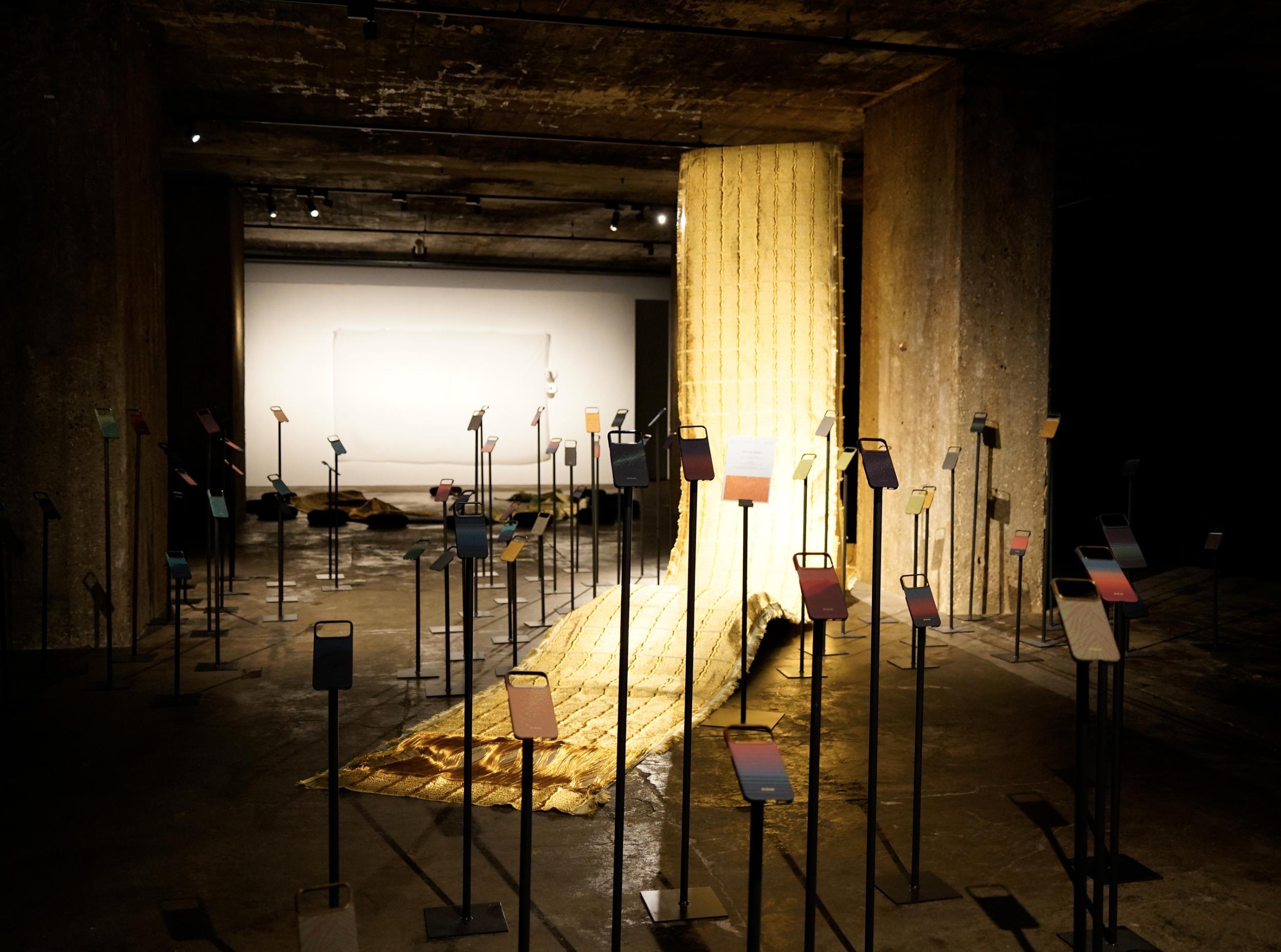
PITAKA has introduced a new weaving technique for aramid fibre at a brand event in Berlin. The company is best known for thin smartphone cases and accessories made with aramid. Its new “Trace Form” technique is intended to avoid a completely uniform programmed surface: selected fibres are allowed to drift from their prescribed path so that texture emerges from controlled irregularity.

The first application is the “Wind Over Wheat Trace Form Edition”, with a surface intended to evoke wind moving across a wheat field and offered in three finishes. PITAKA presents the method as an interaction between industrial precision, material response and human judgement. For textile and material developers, the notable point is that a high-performance fibre normally valued for strength and low weight is being used as the visible aesthetic element of the product itself.

PITAKA has introduced a new weaving technique for aramid fibre at a brand event in Berlin. The company is best known for thin smartphone cases and accessories made with aramid. Its new “Trace Form” technique is intended to avoid a completely uniform programmed surface: selected fibres are allowed to drift from their prescribed path so that texture emerges from controlled irregularity.

The first application is the “Wind Over Wheat Trace Form Edition”, with a surface intended to evoke wind moving across a wheat field and offered in three finishes. PITAKA presents the method as an interaction between industrial precision, material response and human judgement. For textile and material developers, the notable point is that a high-performance fibre normally valued for strength and low weight is being used as the visible aesthetic element of the product itself.

The release leaves important technical questions unanswered. It provides no fibre fineness, weave parameters, mechanical data or quantified performance difference versus earlier aramid constructions. It would therefore be misleading to describe the launch as a new performance class. What can be stated is that PITAKA is translating a deliberately variable woven structure into a commercial aramid product and broadening the interface between technical fibres, composite structures and lifestyle design.

The limited Trace Form edition is scheduled to launch on 17 September. For textile-industry coverage, the relevant angle is not the consumer-electronics accessory itself but the material strategy: technical fibres can acquire additional value through construction, surface appearance and tactile expression beyond their conventional performance role.

More information:
PITAKA aramid
Source:

PITAKA  

Cinte Techtextil China Photo: Messe Frankfurt
28.08.2026

Cinte Techtextil China 2026 to open next week

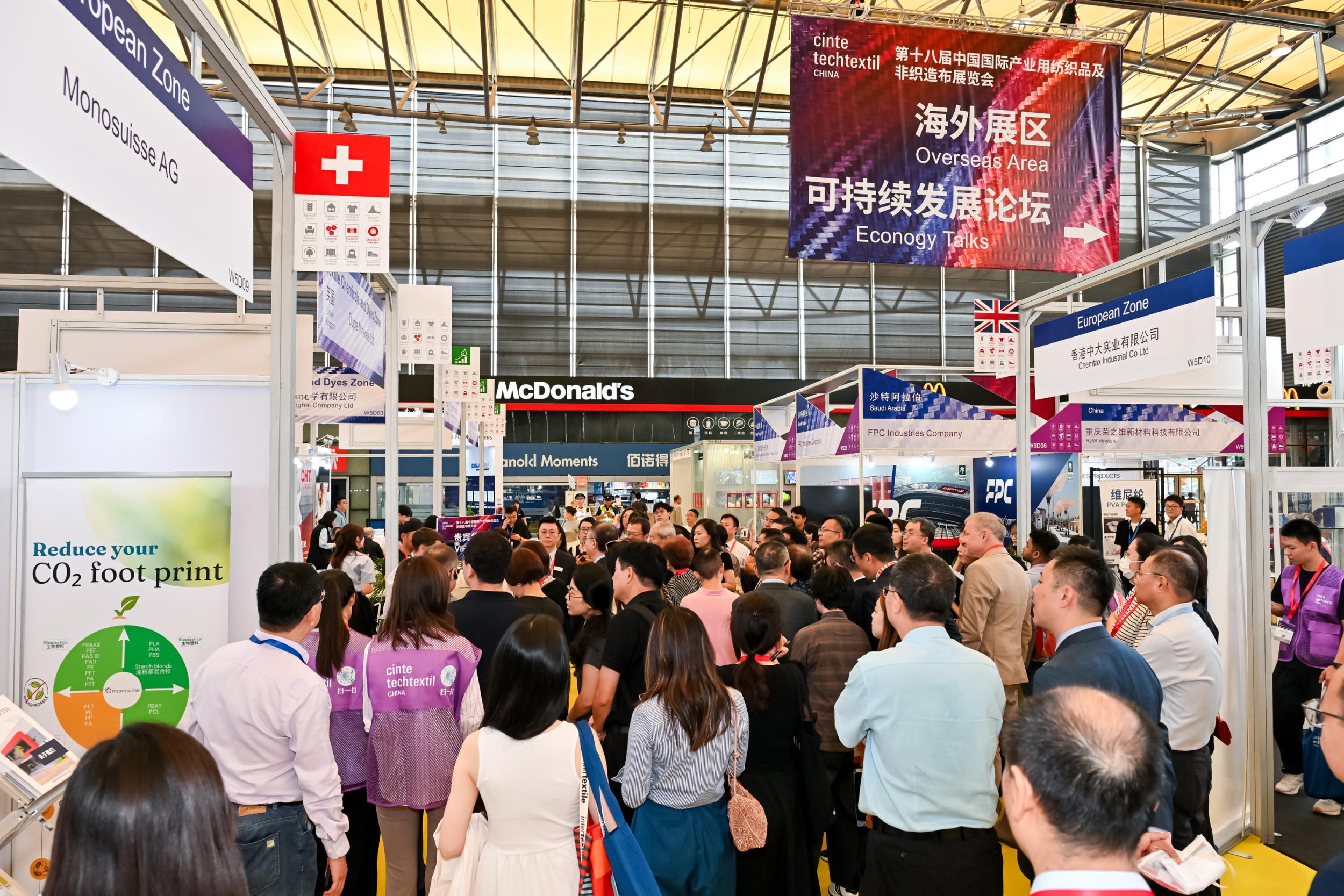
As Asia’s premier platform catering to the evolving needs in technical textiles and nonwovens, Cinte Techtextil China will open next week at the Shanghai New International Expo Centre, gathering over 300 exhibitors from 15 countries and regions. Across Halls W3 to W5, this edition will create chances for fast-growing sectors and emerging trends – such as Mobiltech, Medtech & Protech, Indutech and more. The curated zones, pavilions, and fringe programme are designed to better connect exhibitors with targeted buyers from across China, Asia-Pacific, and further afield. Meanwhile, the Association Village will gather international industry associations to foster even more global collaboration.

As a hub for global innovation, the fair will feature a strong contingent of international industry leaders in Hall W5’s Overseas Zone, including Andritz (China) Ltd, Groz-Beckert (Germany), A.Celli SPA (Italy), and Dilo (Germany), while others such as Picanol NV (Belgium) will showcase in Hall W4.

As Asia’s premier platform catering to the evolving needs in technical textiles and nonwovens, Cinte Techtextil China will open next week at the Shanghai New International Expo Centre, gathering over 300 exhibitors from 15 countries and regions. Across Halls W3 to W5, this edition will create chances for fast-growing sectors and emerging trends – such as Mobiltech, Medtech & Protech, Indutech and more. The curated zones, pavilions, and fringe programme are designed to better connect exhibitors with targeted buyers from across China, Asia-Pacific, and further afield. Meanwhile, the Association Village will gather international industry associations to foster even more global collaboration.

As a hub for global innovation, the fair will feature a strong contingent of international industry leaders in Hall W5’s Overseas Zone, including Andritz (China) Ltd, Groz-Beckert (Germany), A.Celli SPA (Italy), and Dilo (Germany), while others such as Picanol NV (Belgium) will showcase in Hall W4.

The sought-after European and German Zones will also be in Hall W5, featuring high-performance solutions from such markets. Key suppliers in the European Zone will include Monosuisse Group (Switzerland) and Comerio Ercole S.p.A (Italy), while the German Zone will include IBENA Textilwerke GmbH and Mahlo GmbH + Co KG. Nearby, the Textile Chemicals and Dyes Zone will return to offer advanced solutions for diverse technical applications.

A key highlight of Hall W5 is the Association Village, designed to showcase expertise, foster international trade networks and collaboration, as well as present the latest trends that shape the industry’s future. Key organisations anchoring this feature include the Asia International Hemp Federation (AIHF) (Thailand), UK Fashion and Textile Association (UKFT), Government of Tamil Nadu India, and Nonwoven Federation of India (NWFI).

Targeted solutions displayed across high-demand application areas
With the technical textiles and nonwovens markets evolving, exhibitors are presenting advances engineered for critical application areas across the show floor:

  • Mobiltech: highlighted suppliers include JR Ltd (Korea) and Eastex Industrial Science & Technology (China). Also on the domestic side, Tiandingfeng Holdings Co Ltd will showcase high-strength PET filament needle-punched nonwovens. The Mobiltech Zone, set to feature other key exhibitors, will also be in Hall W4.
  • Medtech: featuring first-time exhibitor NIPPON Paper Industries Co Ltd (Japan) with its Cu-TOP product – a functional material derived from wood pulp combined with copper technology. The Reifenhauser Group from Germany will also be in Hall W5, with Reifenhauser Reicofil presenting full nonwoven production lines, and Reifenhauser Enka Tecnica the service components that aid their longevity. Joining the lineup, Yixiang Health Technology Co Ltd and Zhejiang Kingsafe Hygiene Materials Technology Co Ltd will both showcase medical and hygiene nonwovens.
  • Protech: key Protech exhibitors include a new exhibitor Tepar Tekstil San Ve Tic A S (Turkiye), and Dawnsens New Materials (Xiamen) Co Ltd (China), both showcasing advanced safety materials.
  • Indutech: IMAE Industries Ltd (Japan) will make its debut at the fair. The company specialises in thermal insulation fibre products and supplies fine ceramics for heavy industry, automotive, iron and steel, chemical, power generation and more.

Other first-time international brands will include Care Holdings Pte Ltd (Singapore) and Texbond Nonwovens (India); while China’s innovation will be spotlighted with domestic pavilions in Hall W3 featuring medical and hygiene textiles and in Hall W4 featuring filtration and separation textiles. Exhibitors are set to be greeted by a wide range of industry visitors.

Before the fair, overseas visitor pre-registrations have risen notably compared to the same period last year. These include 139 VIP buyers from 27 countries and regions, such as Hyundai Motor Company and Sejong Healthcare (Korea), Meditec Japan Co Ltd (Japan), ALSICO (Belgium), Focus Industries Limited (Hong Kong), Freudenberg Performance Materials Service GmbH and MöllerWerke GmbH (Germany), seeking high-demand solutions across Mobiltech, Medtech and Protech, Indutech, and more. In addition, seven international buyer delegations, from industry hubs across Asia-Pacific and beyond, will add to the fair’s global business appeal.

Fringe events explore innovation, emerging markets, and automotive trends in Halls W4 and W5 

  • Panel Discussion (Day 1 morning) (W5 E20): the discussion topic, Industrial Hemp Fibre – Building the Future of Sustainable Materials, will take Thailand as a successful example to explore the use of advanced hemp fibre materials through cross-sector innovation and international investment. Complemented by the AIHF display area (W5 B20), featuring the evolution of raw hemp stalks into modern bioplastics, composites, mobility components, lifestyle products and other engineered applications.
  • 2026 Nonwovens Industry High-Quality Development Conference (Day 1 afternoon) (W4 D38): under the theme ‘Redefine the growth paradigm’, Ms Guimei Li, President of China Nonwovens & Industrial Textiles Association, will show China’s nonwovens development during the 15th Five-Year Plan. Guest speaker Mr Anshumali Jain, Vice President of the Nonwoven Federation of India, will discuss the situation and opportunities of India’s industrial ecosystem, while Mr Tony Fragnito, President of the Association of the Nonwoven Fabrics Industry, will explore the state of the US market.
  • Automotive textile panel (Day 2 afternoon) (W5 E20): titled “Defining the Future Cabin: Multi-functional Evolution of Nonwoven Materials in Automotive”, the panel will include automotive end users, Tier-1 automotive interior suppliers, and upstream nonwoven technology providers. The Mobiltech Display Area (W4 F25) will complement the panel, with exhibits from Groz-Beckert, AIHF, Care Holdings Pte Ltd, Swisstulle (Qingdao) Co Ltd, and more.

Other key events include a presentation on sustainability by UKFT and the Sustainability Tour by Mr Karl Borgschulze, Managing Director of Consulting Service Intl Ltd (both on Day 2 morning) (W5 E20); other guided tours led by industry experts (covering medical, protective, automotive, and tents & coverings); Technology Innovation and Product Development for Future Technical Textiles; Deeyeo Flushable Wipes Scientific Consensus Release and Industry High-Quality Development Dialogue; and a display zone dedicated to Industrial Textiles in the 15th Five-Year Plan.

The fair’s product categories cover 12 application areas, which comprehensively span a full range of potential uses in modern technical textiles and nonwovens. These categories also cover the entire industry, from upstream technology and raw materials providers to finished fabrics, chemicals and other solutions. This scope of product groups and application areas ensures that the fair is an effective business platform for the entire industry.

28.08.2026

NC State joins $160 million initiative for biobased fibre materials

NC State University is a core partner in the BRIDGES Engine initiative backed by the US National Science Foundation, with up to $160 million available over ten years. A central focus is the development of miscanthus and switchgrass as feedstocks for biobased products.

The plant fibres are intended for applications including automotive, construction and packaging. NC State will contribute techno-economic assessment, sustainability analysis and processing expertise to convert agricultural feedstocks into fibre materials suitable for industrial use.

For technical textiles, the initiative is particularly relevant because it goes beyond laboratory-scale material development and aims to build supply chains, processing capacity and regional markets in parallel.

NC State University is a core partner in the BRIDGES Engine initiative backed by the US National Science Foundation, with up to $160 million available over ten years. A central focus is the development of miscanthus and switchgrass as feedstocks for biobased products.

The plant fibres are intended for applications including automotive, construction and packaging. NC State will contribute techno-economic assessment, sustainability analysis and processing expertise to convert agricultural feedstocks into fibre materials suitable for industrial use.

For technical textiles, the initiative is particularly relevant because it goes beyond laboratory-scale material development and aims to build supply chains, processing capacity and regional markets in parallel.

Source:

NC State University

Dyneema SK80 fiber Photo (c) Avient Corporation
Dyneema SK80 fiber
28.08.2026

Dyneema SK80 targets significantly longer service life for mooring lines

Avient is introducing Dyneema SK80, a new HMPE fibre grade for mooring lines and offshore applications. According to the company, the fibre was engineered at polymer level to deliver at least twice the durability and fatigue resistance of Dyneema SK78 in demanding mooring applications.

The technological emphasis is therefore less on headline tensile strength than on service life under cyclic loading. In mooring systems, repeated load cycles, abrasion, bending stress and environmental exposure are major failure drivers. Improved fatigue resistance can therefore have a direct effect on maintenance intervals, operational safety and lifecycle costs.

The new fibre will be presented at SMM in Hamburg in early September. For Textination, the development is relevant because high-performance fibres are increasingly being positioned not only through weight and strength advantages, but through durability, reliability and the total cost of technical textile systems.

Avient is introducing Dyneema SK80, a new HMPE fibre grade for mooring lines and offshore applications. According to the company, the fibre was engineered at polymer level to deliver at least twice the durability and fatigue resistance of Dyneema SK78 in demanding mooring applications.

The technological emphasis is therefore less on headline tensile strength than on service life under cyclic loading. In mooring systems, repeated load cycles, abrasion, bending stress and environmental exposure are major failure drivers. Improved fatigue resistance can therefore have a direct effect on maintenance intervals, operational safety and lifecycle costs.

The new fibre will be presented at SMM in Hamburg in early September. For Textination, the development is relevant because high-performance fibres are increasingly being positioned not only through weight and strength advantages, but through durability, reliability and the total cost of technical textile systems.

Fashion for Good Launches New Project Photo by Fashion for Good
10.08.2026

Moving Beyond PFAS: Fashion for Good Launches New Project

Fashion for Good announced the launch of Project DW(O)R-X, a collaborative initiative designed to benchmark PFAS alternative durable water- and oil-repellent (DW(O)R) chemistries. Responding to growing market demand for alternatives to PFAS based finishes, the project aims to generate reliable, comparable data that can support informed sourcing decisions and the assessment of emerging chemistries.

Historically, durable water- and oil-repellent (DW(O)R) finishes have been used to help materials stay dry, clean and durable over time. Some formulations have contained per- and polyfluoroalkyl substances (PFAS), a group of chemicals characterised by their high persistence. As a result, PFAS can remain in the environment for extended periods, bioaccumulate in humans and ecosystems, and have been associated with adverse health effects when exposure exceeds established thresholds. 

Fashion for Good announced the launch of Project DW(O)R-X, a collaborative initiative designed to benchmark PFAS alternative durable water- and oil-repellent (DW(O)R) chemistries. Responding to growing market demand for alternatives to PFAS based finishes, the project aims to generate reliable, comparable data that can support informed sourcing decisions and the assessment of emerging chemistries.

Historically, durable water- and oil-repellent (DW(O)R) finishes have been used to help materials stay dry, clean and durable over time. Some formulations have contained per- and polyfluoroalkyl substances (PFAS), a group of chemicals characterised by their high persistence. As a result, PFAS can remain in the environment for extended periods, bioaccumulate in humans and ecosystems, and have been associated with adverse health effects when exposure exceeds established thresholds. 

Despite the momentum towards PFAS-based alternatives, several challenges remain. First, many currently available alternatives do not match the oil repellency and long-term durability of PFAS-based finishes. Second, there is currently no unified approach to assessing performance, and existing protocols do not always reflect real-world use, making meaningful comparisons between solutions difficult. Third, current benchmarks no longer reflect the capabilities of today’s PFAS alternative solutions; updated benchmarks are needed to identify leading solutions and understand performance gaps, to help inform R&D and scale-up efforts. Finally, as the industry works to identify suitable alternatives, it is essential to carefully assess their environmental and health impacts to minimise the risk of regrettable substitution, where one problematic substance  is replaced by another without sufficient understanding.

To address these core challenges, Project DW(O)R-X will benchmark nine PFAS alternative solutions, ranging from early-stage innovations to established chemistries, across three dimensions: performance, environmental impact, and cost. To support this, project partners have developed a performance framework designed to better reflect real-world use by incorporating multi-condition testing and custom stains relevant to sportswear and outerwear, including soil, sunscreen, and sweat. 

This approach will enable the group to test a performance framework built on combining various standardised methods. The insights generated can help establish a common reference point for the industry: brands and mills can use it to inform internal decision-making, while chemical companies can rely on it to substantiate performance claims.

The project brings together an exciting group of industry stakeholders, including leading brands adidas and C&A, manufacturing partners Shahi Exports, Paradise Textiles, Positive Materials and Wujiang Fuhua Fabric Co., alongside technology providers Archroma, Daikin Chemicals Europe, Dow, Dryfiber, Jintex, Lamoral Coatings, Pulcra Chemicals, Rudolf, and vandeyk.tech. Performance testing will be conducted by SGS. 

“The challenge for the whole industry isn’t just phasing out PFAS: it’s ensuring we don’t replace it with something equally concerning that we understand less well. Right now, brands and mills are navigating this transition without updated benchmarks to compare these alternatives. Project DW(O)R-X gives them the data they need: performance testing that reflects real-world use, comprehensive impact assessment, and a better understanding of cost structures. This is how we enable informed decisions and genuine progress toward safer chemistry at scale.” Katrin Ley, Managing Director at Fashion for Good.
 
“We have not allowed the intentional use of PFAS in our products for many years. However, phasing out PFAS across the sector requires coordinated action across the value chain. A responsible transition depends on shared changes in manufacturing practices, supported by accessible and reliable alternatives that are understood and available at scale. Project DW(O)RX provides a rigorous benchmarking framework to evaluate alternatives across performance, environmental impact and cost. By collaborating with other brands and partners, we are contributing to a shared knowledge base that supports progress towards safer chemistry, while maintaining the quality and durability our customers expect.” C&A External Affairs

Source:

Fashion for Good

With UMT, Freudenberg Performance Materials becomes a full-service provider of advanced wound care. © Freudenberg Performance Materials
03.08.2026

Freudenberg Performance Materials acquires Foshan United Medical

Effective July 31, 2026, Freudenberg Performance Materials (Freudenberg), a leading global manufacturer of technical textiles, has acquired Foshan United Medical Ltd. (UMT). The sellers are UMT founder Dr Xiaodong Wang and a private Chinese founding partner. UMT is a leading full-service supplier of advanced wound care products. The company with headquarters and state-of-the-art production facilities in Foshan, China, has a workforce of some 200. The parties have agreed not to disclose the purchase price.

“Freudenberg Performance Materials and Foshan United Medical are a perfect strategic match. Going forward, the merger will enable us to offer a unique portfolio of technologies and products as an innovative full-service supplier in the market for advanced wound care”, Dr. Andreas Raps, CEO of Freudenberg Performance Materials, commented. Dr. Xiadong Wang, CEO and founder of UMT, underscored: “The innovative strength and high level of customer orientation characteristic of both our companies make for an ideal fit, they are the cornerstone for expanding our success.” 

Effective July 31, 2026, Freudenberg Performance Materials (Freudenberg), a leading global manufacturer of technical textiles, has acquired Foshan United Medical Ltd. (UMT). The sellers are UMT founder Dr Xiaodong Wang and a private Chinese founding partner. UMT is a leading full-service supplier of advanced wound care products. The company with headquarters and state-of-the-art production facilities in Foshan, China, has a workforce of some 200. The parties have agreed not to disclose the purchase price.

“Freudenberg Performance Materials and Foshan United Medical are a perfect strategic match. Going forward, the merger will enable us to offer a unique portfolio of technologies and products as an innovative full-service supplier in the market for advanced wound care”, Dr. Andreas Raps, CEO of Freudenberg Performance Materials, commented. Dr. Xiadong Wang, CEO and founder of UMT, underscored: “The innovative strength and high level of customer orientation characteristic of both our companies make for an ideal fit, they are the cornerstone for expanding our success.” 

Technologies and regulatory know-how
UMT has state-of-the-art technologies at its disposal. Core competencies range from fiber manufacturing or functionalization to nonwoven production and final packaging, sterilization and marketing authorization. 

UMT’s regulatory know-how, successful international first approvals for products as well as patents granted in China, Europe and the USA are another key element for expanding the healthcare business of Freudenberg Performance Materials. 

Individual solutions for customers
With the UMT takeover, Freudenberg Performance Materials can cover all important steps in the value chain in-house, and thus offer one of the broadest technology platforms in the market for advanced wound care. In future, the company will provide a wide range of solutions for different applications: dressings made of polyurethane foam, with silicone coatings or antimicrobial agents such as silver. Alginate-based absorbent fiber solutions, chitosan- and CMC-based wound dressings supplement the portfolio. The broad technological foundation unlocks comprehensive options for individual adaptation and enables tailormade solutions for customers all over the world.

Source:

Freudenberg Performance Materials 

03.08.2026

SGL Carbon & X-energy: Capacity expansion for Nuclear-Grade Graphite

SGL Carbon and X-energy announced a binding agreement to double SGL’s production capacity for medium-grain isotropic graphite (“NBG-18”), a specialized material central to X-energy’s Xe-100 high-temperature gas-cooled reactor. X-energy and SGL Carbon’s agreement would expand the supply chain for a critical long-lead material, supporting execution of X-energy’s commercial pipeline.

Under the agreement, X-energy will invest up to $8 million in milestone-based payments to support new facilities and equipment upgrades at SGL’s site in Chedde, France, enabling the facility to produce graphite billets for up to eight new Xe-100 reactors per year. SGL Carbon has concurrently agreed to expand U.S. capacity for machining of billets into graphite blocks, helping to ensure greater supply chain continuity for a safety-critical material. Full execution would double European manufacturing capacity for NBG-18 by 2030, with additional capacity investments under consideration across multiple regions to further debottleneck initial billet production.

SGL Carbon and X-energy announced a binding agreement to double SGL’s production capacity for medium-grain isotropic graphite (“NBG-18”), a specialized material central to X-energy’s Xe-100 high-temperature gas-cooled reactor. X-energy and SGL Carbon’s agreement would expand the supply chain for a critical long-lead material, supporting execution of X-energy’s commercial pipeline.

Under the agreement, X-energy will invest up to $8 million in milestone-based payments to support new facilities and equipment upgrades at SGL’s site in Chedde, France, enabling the facility to produce graphite billets for up to eight new Xe-100 reactors per year. SGL Carbon has concurrently agreed to expand U.S. capacity for machining of billets into graphite blocks, helping to ensure greater supply chain continuity for a safety-critical material. Full execution would double European manufacturing capacity for NBG-18 by 2030, with additional capacity investments under consideration across multiple regions to further debottleneck initial billet production.

The expansion builds on a 10-year Supplier Framework Agreement established in January 2026, which included an initial three-year award valued at over $100 million for X-energy’s first commercial projects. The first NBG-18 graphite blocks produced under this award at SGL’s site in Chedde have since been shipped to SGL sites in the United States, for machining into components. This follows a successful prototyping campaign which began earlier this year, consisting of non-nuclear testing and validation at X-energy’s Technology and Advancement Center in Frederick, Maryland (USA) in advance of final production.

“Commercializing new nuclear at scale rests first and foremost on our ability to significantly expand the new nuclear supply chain, a challenge that extends beyond any one company, supplier, or nation,” said J. Clay Sell, CEO of X-energy. “We look forward to driving this work forward with SGL, and to engaging with potential partners who share our bold vision for a robust, resilient, U.S. and allied nuclear supply chain.”

“By jointly expanding our production capacity for nuclear-grade graphite, we are reinforcing the importance of our partnership and ensuring reliable supply to X-energy. For SGL Carbon, this agreement is a strategically important step that strengthens our position in the highly specialized growth market for nuclear-grade graphite, underscores the importance of our graphite expertise for safety-critical applications, and opens up attractive opportunities for further growth,” said Andreas Klein, CEO of SGL Carbon.

NBG-18 is a nuclear-grade graphite central to the Xe-100 design, functioning as a neutron moderator, and a structural component of the pebble-bed core. The material was first developed for South Africa's Pebble Bed Modular Reactor program, and later the U.S. Department of Energy's (“DOE”) Next Generation Nuclear Plant project, two direct predecessors to X-energy’s Xe-100. Through these, X-energy’s and SGL Carbon’s own initiatives, NBG-18 has undergone extensive qualification work for commercial nuclear operation, gathering operational data that helps to validate the material’s performance over decades of high-temperature operation.

Initial NBG-18 production is intended to support X-energy’s first commercial deployment of the Xe-100 reactor, a proposed four-unit plant in partnership with Dow Chemical Company under the Advanced Reactor Demonstration Program of the United States Department of Energy (DOE), with additional capacity secured for follow-on projects to support manufacturing readiness for safety-critical, long-lead materials. SGL Carbon’s and X-energy’s partnership is part of a growing, diversified portfolio of experienced suppliers supporting Xe-100 deployment, as well as the continued development of a global industrial supply chain.

Source:

SGL Carbon SE

Circular woven filter sleeves from vombaur Photo: (c) vombaur
Circular woven filter sleeves
30.07.2026

Premium vombaur filter sleeves: An efficiency booster for solid-liquid filtration

Developing a successful new solution usually requires more than one company. After all, innovative products typically incorporate specialised components manufactured by trusted suppliers. This is also true of a patented filtration system developed by a vombaur customer.

Developing a successful new solution usually requires more than one company. After all, innovative products typically incorporate specialised components manufactured by trusted suppliers. This is also true of a patented filtration system developed by a vombaur customer.

Robust filter sleeves for a highly efficient filtration system
The fully automated solid-liquid filtration system uses compressed air as its driving force. Thanks to the unique geometry of its filter candles, it achieves exceptionally efficient filter cake discharge.
To ensure the outstanding performance and virtually maintenance-free operation of the system, the manufacturer requires robust, durable filter sleeves. These sleeves must reliably withstand the enormous forces generated within the system, particularly the sudden loads occurring during backflushing. vombaur filter sleeves meet these demanding textile requirements. The circular woven filter sleeves are manufactured without seams or welded joints, making them exceptionally robust. This makes the Wuppertal-based textile specialist, part of the Textation Group, the ideal partner for this innovative filtration system.

Seamless sleeves for 100% filter area utilisation
Whether for precoat filtration or cake filtration, whether in the food or fibre industry: the yarns and mesh specifications of the filter sleeves are individually defined with precision for every project.
As a result, circular woven vombaur filter sleeves deliver precise, reliable and long-lasting filtration performance. Their seamless construction also ensures consistently uniform filtration characteristics across the entire sleeve. Material thickness and flow behaviour remain identical at every point, guaranteeing the specified filtration performance over the full filter surface. An additional efficiency advantage: while longitudinally welded or stitched filter sleeves can lose up to ten per cent of their effective filtration area, the high-tech filter sleeves from vombaur utilise 100% of the available filter surface. Their seamless design also simplifies installation, providing additional benefits during both system assembly and maintenance.

Partnership for maximum quality and process reliability
Combined with vombaur filter sleeves, the highly efficient filtration system delivers stable throughput throughout every stage of the filtration process – even at extremely fine filtration ratings of up to 1 μm and with solids contents of up to 10%. "The intelligent filter candle design combined with our circular woven filter sleeves is a genuine efficiency booster for solid-liquid filtration. Our success is also based on the fact that we see ourselves as development partners. We tailor our products precisely to the specific requirements of each individual production system while consistently focusing on quality, process efficiency and durability," says Maren Zurek, Sales Manager at vombaur.
"We are simply the perfect fit. Together, we enable manufacturers in the food industry, the fibre industry and many other sectors to operate their filtration systems virtually maintenance-free over many years. At this level, that is truly something new."

Source:

vombaur 

Functional tape from JUMBO-Textil Photo: (c) JUMBO-Textil
20.07.2026

Functional tape from JUMBO-Textil in use at ALEA

“You can’t see it or hear it – and that’s exactly why it’s ideal for this application,” says Stefan Wallner, Automotive Sales Manager at JUMBO-Textil. The Textation Group subsidiary specializing in technical narrow textiles is an expert in elastics and produces, among other things, components for automotive suppliers, such as rebound strap, release strap, and tensioning braids. Many of these products remain hidden from view. Built-in into the seat or behind a trim panel, they reliably fulfill their function: tensioning, holding, adjusting, fixing ... The textile components work behind the scenes – lightweight, quiet, and durable.

Invisible High-Performer
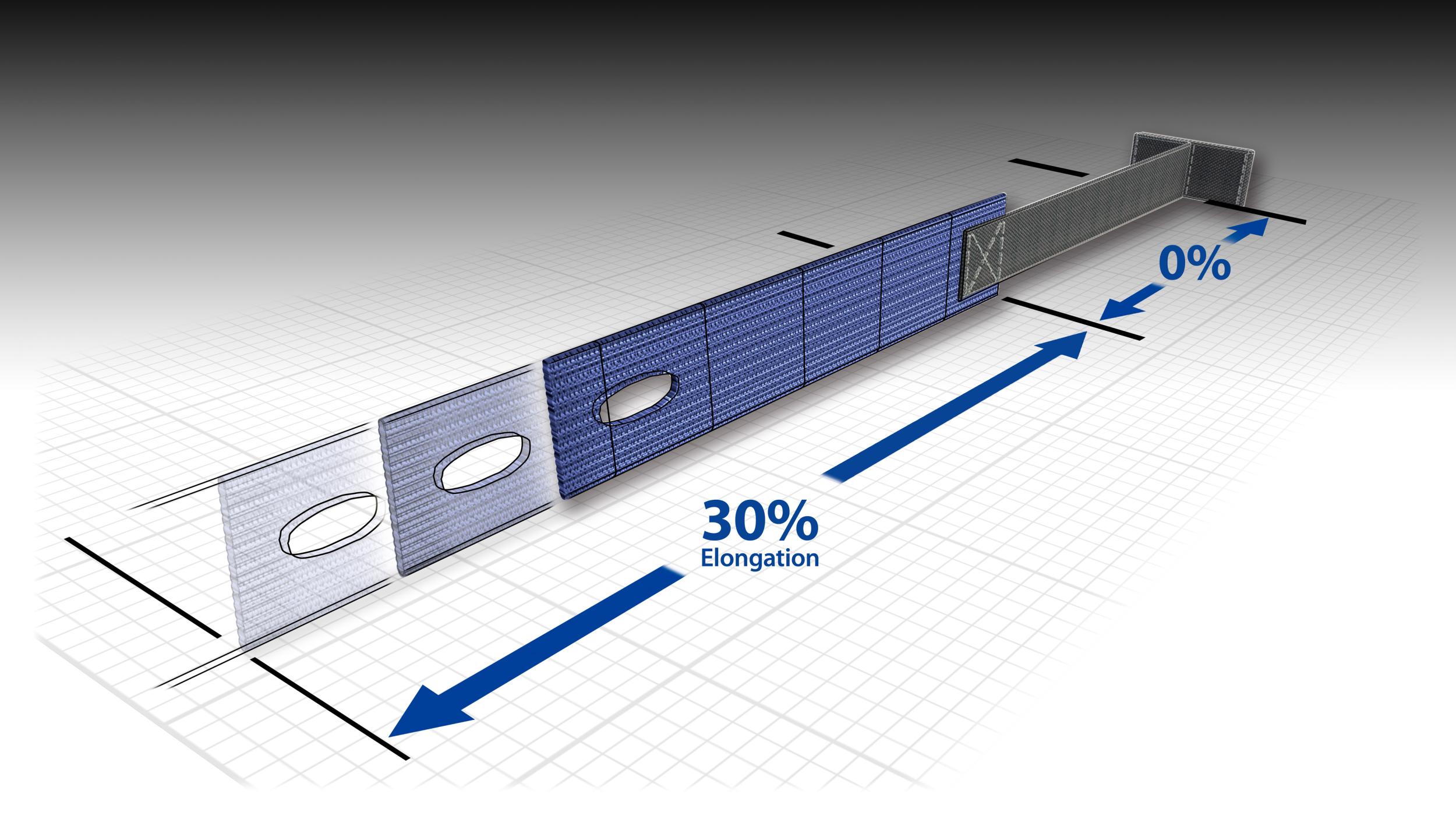
One of these “invisible high-performers” is a cleverly designed functional tape. The combination of an elastic and a non-elastic woven tape serves as a flap fastener for a card pocket in the seatback. The force-elongation behavior can be precisely controlled by specifying the dimensions and materials of the elastic tape. The non-elastic tape ensures stability at the rubbing points and silent operation.

“You can’t see it or hear it – and that’s exactly why it’s ideal for this application,” says Stefan Wallner, Automotive Sales Manager at JUMBO-Textil. The Textation Group subsidiary specializing in technical narrow textiles is an expert in elastics and produces, among other things, components for automotive suppliers, such as rebound strap, release strap, and tensioning braids. Many of these products remain hidden from view. Built-in into the seat or behind a trim panel, they reliably fulfill their function: tensioning, holding, adjusting, fixing ... The textile components work behind the scenes – lightweight, quiet, and durable.

Invisible High-Performer
One of these “invisible high-performers” is a cleverly designed functional tape. The combination of an elastic and a non-elastic woven tape serves as a flap fastener for a card pocket in the seatback. The force-elongation behavior can be precisely controlled by specifying the dimensions and materials of the elastic tape. The non-elastic tape ensures stability at the rubbing points and silent operation.

The flap is held in place by two such combination tapes, which are installed in a crisscross pattern in the seatback. The non-elastic tapes are threaded through a slit in the flap and folded and sewn on the other side so that they are securely anchored behind the slit. The elastic tapes are hooked into precisely defined holes in the seatback. The holes are cut out using laser cutting. Thanks to the sealed hole edges, they are stable and durable. This complex component goes unnoticed by vehicle passengers. Only for the brief moment when they open the flap, one to two centimeters of the non-elastic woven tape flash into view from the side.

Close cooperation, precise specifications
Auto Leder Atelier GmbH, or ALEA for short, uses this high-quality functional tape from JUMBO-Textil. The specialist in interior finishing – from lamination to leather upholstery – manufactures high-quality interior components in series production for car manufacturers and Tier 1 suppliers in the luxury and premium segments, including leather seats and trim for some of the world’s most renowned car brands." Strength-elongation behaviour, flame retardancy, surface properties … – no parameter must deviate from the final sample. The textiles must deliver the performance for which they are designed, right down to the very last fibre. “As a solutions provider, we supply narrow textiles that are precisely tailored to the respective requirements – from environmental conditions to the installation situation – and deliver exactly what the customers need in each case. For ALEA’s functional tape, we have developed a special variant with two different tape widths and produced samples with the exact project-specific properties,” explains Wallner. “A detailed understanding of the customer’s project is essential for this.”
    
Regular on-site discussions
ALEA also attaches great importance to the partnership. “As well as their impeccable appearance, feel and sound, our leather products offer maximum functionality. Every detail counts, whether visible or hidden,” emphasises Mario Haufe, COO of ALEA. “Our partner, JUMBO-Textil, supplies highly functional, ready-to-fit components for our products. That is why we work with the company based in North Rhine-Westphalia. And experience shows that this result also depends on good collaboration with the supplier. Only those who understand us, our expectations, our production conditions and the component’s installation requirements can supply us with components that fit perfectly into the product and our processes.”

JUMBO-Textil was on site at ALEA when the project began. The development team in Sprockhövel therefore knows exactly how the colleagues in Hofstetten work and what they need. All the specifications for the specialised functional tape were precisely defined jointly. JUMBO-Textil then developed several possible solutions, from which the ALEA team was able to choose the perfect option. “As a result, even the prototype for the first installation trial was quite close to the final solution,” explains Haufe. “This was once again an excellent example of collaboration that benefits everyone: us, the car manufacturer and, ultimately, all those travelling in the vehicle who stow their tablet – or whatever else they have with them – safely in the seatback flap.”

  • Combination of elastic and non-elastic materials
  • Available in various widths
  • Available in customer-specific colours
  • Holes created by laser cutting or interlaced during the braiding process
  • Ready to use: pre-assembled, e.g. with a sewn-on flat plastic profile
  • With sewable plastic
  • Elastic material: natural rubber
  • Flame-retardant finishing
Source:

JUMBO-Textil