From the Sector

Reset
BB Engineering Texturizing Line Photo BB Engineering GmbH
BB Engineering Texturizing Line
05.03.2026

Development of bio-based polyethylene fibers for textile applications

In the German research project bioPEtex, BB Engineering (BBE) is working with other partners to develop textiles made from 100% bio-based polyethylene (PE). The aim is to make use of this polymer, which has hardly been used in the chemical fiber industry to date. BBE is contributing its spinning and texturizing expertise and developing the texturing process on an industrial scale. The first promising results are already available – opening up new opportunities for sustainable and economically attractive applications in the textile industry.

For years, the global chemical fiber market has been dominated by PET, a technically mature, versatile, and cost-effective polymer for textile applications. However, despite its advantages in terms of processability, strength, and economic availability, PET has come under criticism: its dependence on fossil raw materials, high CO2 emissions along the value chain, and challenges in recycling PET products are drawing the attention of researchers and industry to alternative materials that are both economical and sustainable.

In the German research project bioPEtex, BB Engineering (BBE) is working with other partners to develop textiles made from 100% bio-based polyethylene (PE). The aim is to make use of this polymer, which has hardly been used in the chemical fiber industry to date. BBE is contributing its spinning and texturizing expertise and developing the texturing process on an industrial scale. The first promising results are already available – opening up new opportunities for sustainable and economically attractive applications in the textile industry.

For years, the global chemical fiber market has been dominated by PET, a technically mature, versatile, and cost-effective polymer for textile applications. However, despite its advantages in terms of processability, strength, and economic availability, PET has come under criticism: its dependence on fossil raw materials, high CO2 emissions along the value chain, and challenges in recycling PET products are drawing the attention of researchers and industry to alternative materials that are both economical and sustainable.

Biopolymers are an important keyword in this context. However, PET cannot be produced on an industrial scale in a 100% bio-based manner. Clothing made from 100% other biopolymers only exists in studies, as it is too expensive for the mass market. In this context, the German research project bioPEtex is investigating a polymer that, due to its properties, has previously been considered unsuitable for chemical fiber production: polyethylene (PE). This is because bio-based PE is inexpensive to procure and environmentally friendly. However, it has not yet been developed for use in the textile industry.

BB Engineering (BBE) is one of the industrial partners working with RWTH Aachen University to implement the project funded by the German Federal Ministry of Research, Technology, and Space. The aim of the project is to develop textiles made from 100% bio-based polyethylene that are both environmentally friendly and economically viable. BBE is a supplier of spinning, texturizing, and recycling equipment as well as extrusion and filtration technology, and supplies customers all over the world. BBE therefore has extensive expertise in the manufacture of synthetic fibers and their return to the recycling cycle. The company is contributing this long-standing expertise to the bioPEtex project. On the one hand, BBE is providing consulting support for the development of the spinning process. On the other hand, BBE is responsible for the crucial process step of texturizing, which has a significant influence on the subsequent textile performance of the developed fibers. 

“With our participation in the bioPEtex project, we don’t just want to contribute to the development of sustainable solutions, we also want to focus on the economic benefits for our customers,” explains Dr. Klaus Schäfer, Managing Director of BBE. “Bio-PE textiles offer companies the opportunity to reduce their production costs while tapping into new market segments.”

PE and its role in the chemical fiber industry
PE is one of the most commonly produced polymers worldwide. Particularly durable, hydrophobic, lightweight, and chemically stable, it is used not only in its main area of application, the packaging industry, but also in various other areas such as building materials and consumer goods. However, PE has so far played hardly any role in textile fiber production. From a technical point of view, this is mainly due to processing challenges. PE crystallizes at low temperatures and therefore offers a narrow temperature window for spinning and texturing. In addition, the low polarity of PE makes it difficult to dye.

Today, PE is used exclusively as a functional component in composites, geosynthetics, or special high-performance fibers (e.g., UHMWPE)—but hardly ever in traditional clothing or home textile segments. Yet the material structure also offers properties that are highly attractive for certain textile applications:

  • very low density resulting in extremely lightweight fibers,
  • excellent chemical resistance,
  • very good dimensional stability and abrasion resistance,
  • potentially good recyclability due to clear polymer structure,
  • water-repellent and quick-drying with a cool feel.

The issue of difficult dyeability could be resolved by spinning dyeing. 

As a result, PE could become relevant for applications where lightweight construction, hydrophobicity, robust performance, and recyclability are required—for example, in sports textiles, outdoor products, technical textiles, or hygienic disposable products. 

Bio-based PE – Economic and ecological potential for the textile industry
Unlike PET, bio-based PE is chemically identical to its fossil-based counterpart: both materials are completely identical in terms of structure and properties. The only difference lies in the origin of the monomers used. Bio-based PE is usually produced from fermented sugar (e.g. from sugar cane) or starch (e.g. from corn). 

Compared to fossil-based PE, it has a significantly better carbon footprint and opens up the possibility of a completely bio-based textile recycling cycle without any loss of quality. Since the low melting point reduces the energy required for processing and (bio)PE is widely available globally, energy and material costs are potentially lower. The textile industry can benefit here from the established raw material flows of the packaging and plastics industries. In addition, the introduction of PE fibers enables the development of new, highly specialized product segments and opens up additional differentiation opportunities for manufacturers through sustainable material alternatives. 

BB Engineering develops PE texturizing process
However, before PE can be used on an industrial scale as a material for the chemical fiber industry, it must first be systematically researched and tested. The bio-PEtex project is currently working on this. Within the consortium, BBE is responsible for developing and adapting the texturizing processes. This step is crucial, as it is the texturing that defines the subsequent haptic, functional, and mechanical properties of a fiber. The challenge lies in modifying PE under the novel process conditions in such a way that it becomes compatible with established textile applications. 

Overall, the project comprises several innovative steps:

  1. Material development: Development and production of spinnable bio-PE compounds by TECNARO containing bio-based color pigments.
  2. Prozess optimization: Melt spinning and false twist texturing processes, which are being scaled up for industrial use at the Institute for Textile Technology at RWTH Aachen University and at BBE.
  3. Textile production: The partner FALKE is conducting initial knitting trials to validate the yarn in the form of demonstrator T-shirts.

The results so far show promising progress: the bio-PE yarns have suitable mechanical properties and are comfortable to wear with a cooling effect, which is desirable in sportswear, for example. At the same time, a design-for-recycling approach is being pursued in order to efficiently recycle the textiles at the end of their life cycle. A particular milestone in the project is the successful production of a first white t-shirt — a first step toward testing marketability. Further development steps and optimizations are of course still necessary here. 

“We are very positive about the results so far. They show that PE has real potential in textile value creation and can offer significant economic and ecological advantages for the industry in specific applications. We are delighted to be involved in this pioneering project. It is our aim to provide our customers with sustainable and profitable innovations,” says Dr. Klaus Schäfer. 

Bacterial cellulose film produced by Sumatrix. Photo: Source: Sumatrix Biotech (CC BY-NC 4.0)
Bacterial cellulose film produced by Sumatrix.
24.02.2026

Fabricating vegan and circular leather alternatives from bio-tech derived cellulose

Fabulose is an EU funded project coordinated by the German Institutes of Textile and Fiber Research (DITF). Its consortium consists of leading research institutes, biotech innovators, and industry stakeholders who aim to create high-performance, biobased and recyclable leather-like fabrics, using efficient biotech production routes for bacterial cellulose, cyanophycin and bacterial pigments

Current leather alternatives are either made from petrol-based plastics and non-recyclable, or they are (partly) biobased, but difficult to scale up and recycle. The project, supported by the Circular Bio-based Europe Joint Undertaking (CBE JU), is investigating how animal-based materials can be replaced by environmentally friendly alternatives in industries such as automotive, fashion, and upholstered furniture.

Fabulose is an EU funded project coordinated by the German Institutes of Textile and Fiber Research (DITF). Its consortium consists of leading research institutes, biotech innovators, and industry stakeholders who aim to create high-performance, biobased and recyclable leather-like fabrics, using efficient biotech production routes for bacterial cellulose, cyanophycin and bacterial pigments

Current leather alternatives are either made from petrol-based plastics and non-recyclable, or they are (partly) biobased, but difficult to scale up and recycle. The project, supported by the Circular Bio-based Europe Joint Undertaking (CBE JU), is investigating how animal-based materials can be replaced by environmentally friendly alternatives in industries such as automotive, fashion, and upholstered furniture.

Fabulose uses advanced fermentation techniques, utilizes waste streams as feedstocks, and optimizes processes with the assistace of AI. This enables the environmentally-friendly and efficient production of bacterial cellulose, cyanophycin and pigments. These bio-based materials are combined in a coating formulation that replicates the durability and aesthetics of traditional leather. DITF’s HighPerCell® technology allows for re-spinning of bacterial cellulose to filaments to create recycled textile backings that offer high tensile strength without toxic agents. Instead of processing individual batches, the technology also allows to implement a roll-to-roll production process, thereby simplifying future scale-up to cost-effective mass production.

In addition, market requirements have been collected to select optimal material characteristics, while eco-design and Safe-by-design principles help to assess potential risks and ensure alignment with the safety and sustainability objectives. A digital twin framework will include key process parameters for optimisation and monitoring of material performances.

Summary of the key project innovations:

  • Using fermentation products to enable fast and cost-effective production of raw materials
  • Grow micro-organisms on waste feedstocks and CO2 to reduce production costs and environmental impact
  • Re-spinning bacterial cellulose to filaments to create recyclable, consistent and high-quality fabrics
  • Enabling production of cyanophycin to create durable coatings and finishing
  • Implementing roll-to-roll production process to simplify future scale-up

Project partners
The Fabulose project has a duration of 3,5 years and a budget of ca. 3,5 M euro.

The consortium includes 10 partners from 6 European countries, spanning the entire value chain, from research to real-world applications:

German Institutes of Textile and Fiber Research Denkendorf (DITF) (Germany), Next Technology Tecnotessile Societa Nazionale (Italy), University of Maribor (Slovenia), Sumatrix Biotech (Turkey), VTL GmbH (Austria), Novis GmbH (Germany), Melina Bucher (Germany), Benecke-Kaliko GmbH (Germany), Konrad Hornschuch GmbH (Germany), University of Aveiro (Portugal), and Steinbeis 2i GmbH (Germany).

VIATT 2026 announces inaugural lifestyle Trend Forum (c) Messe Frankfurt (HK) Ltd
06.02.2026

VIATT 2026 announces inaugural lifestyle Trend Forum

“The launch of VIATT's inaugural Trend Forum marks an important new step for this fair,” stated Ms Wilmet Shea, General Manager of Messe Frankfurt (HK) Ltd. “Leveraging Messe Frankfurt’s nearly three decades of leadership in coordinating apparel and home textiles trend forecasting – a track record of consistently setting industry benchmarks – we are now extending this unparalleled expertise to enlighten the entire textile value chain. Utilising the expertise of our top-level trend curators, this holistic approach is designed to deliver unparalleled insights, foster robust innovation, and empower businesses to anticipate and shape consumer preferences with greater precision and relevance.”
 
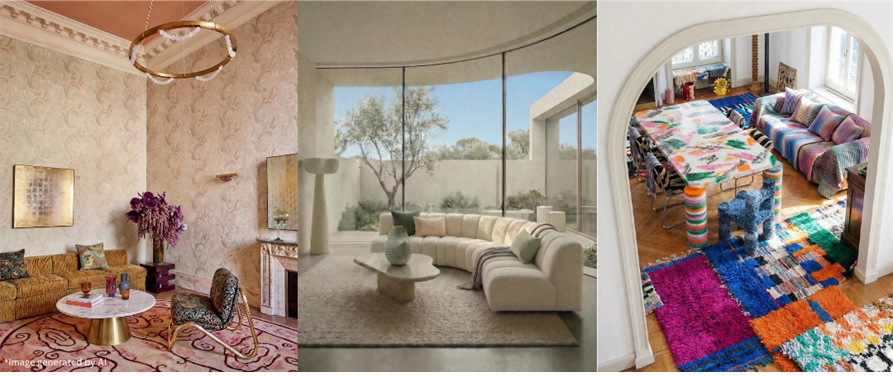
Acting as a unified set of principles that flows seamlessly across sectors, the LIFESTYLE TRENDS shape fashion choices, home interior design, and interactions with technical products and interfaces.
 

“The launch of VIATT's inaugural Trend Forum marks an important new step for this fair,” stated Ms Wilmet Shea, General Manager of Messe Frankfurt (HK) Ltd. “Leveraging Messe Frankfurt’s nearly three decades of leadership in coordinating apparel and home textiles trend forecasting – a track record of consistently setting industry benchmarks – we are now extending this unparalleled expertise to enlighten the entire textile value chain. Utilising the expertise of our top-level trend curators, this holistic approach is designed to deliver unparalleled insights, foster robust innovation, and empower businesses to anticipate and shape consumer preferences with greater precision and relevance.”
 
Acting as a unified set of principles that flows seamlessly across sectors, the LIFESTYLE TRENDS shape fashion choices, home interior design, and interactions with technical products and interfaces.
 
Mr Kai Chow, Lead Curator, VIATT Trend Forum and Creative Director of MUSEATIVE, explained the unique approach: “Rather than treating fashion, home, and technology as separate worlds, the Trend Forum presents lifestyle trends as a shared design language – one that shapes what we wear, how we live, and how we engage with the products around us. Instead of presenting trends in isolation, it demonstrates how a single mindset can influence products, spaces, and technologies simultaneously. Because these themes are rooted in human behaviour, they naturally scale across sectors – creating one coherent language that connects what we wear, how we live, and the materials and technologies that support everyday life.”
 
In this vibrant tapestry for S/S 2027, ARTISANSHIP is set to elevate style into a rarefied realm of artistry, with NeIlyRodi™ Agency bringing the four distinct themes to life:
 
TO WORK
This theme slows the rhythm of the city and transforms metropolitan living into an oasis of calm. In fashion, garments take the shape of fluid tailoring, softly draped dresses, and minimal separates. Interiors echo this sentiment, with cushions, throws, and drapery that create restorative sanctuaries within dense cityscapes.
 
It is expressed through a colour palette of soft, natural hues, accented by slate blue and black. Fabrics are notably soft, tactile, and sustainable. Design direction emphasises minimalist botanicals, tonal motifs, and organic lines. Applications span tailored separates, light outerwear, and city-chic loungewear in fashion; cushions and drapery for the home; and aesthetically innovative, wellness-tracking technical textiles.
 
TO RELAX 
Celebrating the season’s carefree spirit, this theme encapsulates the romance of leisure, expressed through light, airy, and deliberately imperfect fabrics. This mood is liberated by a jubilant blend of airy pastels and sun-soaked brights, including mint, aqua, and teal for freshness, a soft touch of blush and pink, and optimistic pops of vivid yellow and orange.
 
Fabrics include linen, cotton voile, chambray, and organic blends. Design direction highlights hand-drawn botanicals, romantic florals, nautical strips, and country checks. Applications include airy curtains and casual throws for the home; relaxed fashion pieces; and tech innovations focusing on functional performance, wellness tracking, and circular materials.
 
TO HAVE FUN
This theme presents an unapologetically dramatic counterpoint, unfolding a world of grandeur, decoration, and glamour. Terracotta, sage, and lavender establish a grounded base, while golden ochre, crimson, cobalt, and royal purple electrify the narrative with jewel-like vibrancy, balanced by the mysterious depth of deep teal and midnight blue. 
 
Luxurious fabrics and textures include ornate brocade, jacquard, beading and jewel. Design direction features baroque florals, ornate geometrics, and embellished surfaces. Applications span statement bedding and dramatic drapery for interiors; evening gowns and statement accessories in fashion; and textural, 3D-printed, and light-emitting textiles in tech.
 
TO CREATE
Being the most personal and expressive of the S/S 2027 narratives, this theme champions individuality and cultural storytelling. It blends earthy-warm colours with bold vibrancy, where terracotta reds, golden yellows, and forest greens echo artisanal roots, while teal and indigo provide modern contrast.
 
Fabrics and textures are notably natural and textural, encompassing hemp, bamboo blends, patchwork, and circular/recycled textiles. Design direction draws from cultural motifs, alongside painterly abstracts and hand-painted details. Applications range from fashion-forward layered streetwear and boho ensembles; to bold rugs and artistic throws for the home; to AI and digital design integration, protective textiles, and real-time data integration in tech.
 
Overall, trends will be an important aspect of the fair’s fringe programme. Mr Kai Chow will present the VIATT Lifestyle Trends Spring/Summer 2027 Seminar, along with two Trend Forum Introduction Tours taking place on 26 and 27 February in Hall B. The first tour will occur right after the seminar on Day 1 – ideal for fairgoers seeking more in-depth analysis.
 
In addition, the Thai Industrial Hemp Trade Association (TiHTA) will return to the fair to host a seminar focused on design and trends. The association aims to captivate global buyers with fashion designs that leverage organic raw materials and promote sustainable fashion made from hemp fibres. 
 
Meanwhile, Style Republik, Vietnam’s fashion media dedicated to championing and empowering the country’s fashion talents, will also lead a panel discussion on upcoming local fashion trends.
 
The Vietnam International Trade Fair for Apparel, Textiles and Textile Technologies (VIATT) is organised by Messe Frankfurt (HK) Ltd and the Vietnam Trade Promotion Agency (VIETRADE). VIATT 2026 will be held from 26 – 28 February 2026.

More information:
VIATT Trends Trend Forum Vietnam
Source:

Messe Frankfurt (HK) Ltd