From the Sector

Reset
The hycuTEC hydrocharging unit reduces the pressure drop of a typical FFP2 filter medium to less than a quarter, thereby achieving filtration efficiency of over 99.99%. Photo Neumag Nonwoven
The hycuTEC hydrocharging unit reduces the pressure drop of a typical FFP2 filter medium to less than a quarter, thereby achieving filtration efficiency of over 99.99%.
02.04.2026

Neumag Nonwoven at FILTECH 2026: Focus on Nonwovens for Filter Media

Under its Neumag brand, Barmag will present its technologies for the production of nonwovens for filter media at this year’s FILTECH. The main focus is on solutions for producing high-performance filter media at competitive costs. Here, Neumag excels in both the meltblown sector and with its spunbond solutions. 

Meltblown technology for the highest quality requirements 
Neumag’s meltblown technology enables the efficient and straightforward production of high - performance nonwovens for filtration, insulation, and sorption applications. A wide variety of polymers can be processed—from classic polyolefins such as PP and PE, through PET, PLA, PBT, and PA, to specialty plastics like PPS or TPU. All of these and other raw materials can be processed safely and reliably using the Neumag meltblown process. 

Under its Neumag brand, Barmag will present its technologies for the production of nonwovens for filter media at this year’s FILTECH. The main focus is on solutions for producing high-performance filter media at competitive costs. Here, Neumag excels in both the meltblown sector and with its spunbond solutions. 

Meltblown technology for the highest quality requirements 
Neumag’s meltblown technology enables the efficient and straightforward production of high - performance nonwovens for filtration, insulation, and sorption applications. A wide variety of polymers can be processed—from classic polyolefins such as PP and PE, through PET, PLA, PBT, and PA, to specialty plastics like PPS or TPU. All of these and other raw materials can be processed safely and reliably using the Neumag meltblown process. 

The hycuTEC hydrocharging technology, which was honored with the Edana Filtrex Innovation Award, enables the production of particularly high-performance electret filter media. This allows the pressure drop of a typical FFP2 filter medium to be reduced to less than a quarter. “Filtration efficiencies of over 99.99% are easily achievable with standard media weighing around 35 g/m² and a maximum pressure drop of 35 Pa,” explains Andreas Frisch, Regional Sales Director Nonwoven. “Furthermore, the additional drying step is eliminated in most applications—another advantage of this innovative technology,” he adds. 

Spunbond solutions for high-performance filter concepts 
Spunbond nonwovens are becoming increasingly important in filtration—both as carrier materials and as standalone filter media. By tailoring nonwoven structures specifically to the task at hand, customer - specific requirements can be precisely met. It is also possible to combine multiple functions within a single layer. 

In particular, the company’s long-standing expertise in bicomponent spinning processes opens up new possibilities in the design of innovative nonwoven structures. The Neumag Bico spunbond process allows for the combination of different fiber cross-sections as well as the simultaneous production of different fibers from one or more polymers on a single line. The spectrum ranges from classic core-sheath and side-by-side filaments to split fibers and so-called mixed fibers.

Danish partnership extends the lifespan of wool-nylon textiles Photo: Ben Kerckx, Pixabay
02.04.2026

Danish partnership extends the lifespan of wool-nylon textiles

Carpets and upholstery fabrics from ships and hotels have significant recycling potential that is not currently being fully utilised. A Danish partnership aims to change that.

Many offices, hotels, ships and other public spaces are fitted with carpets and upholstery fabrics made from wool-nylon blends. The combination of materials gives the products a very long lifespan, but complicates the recycling process when they are replaced. Manufacturers, researchers and knowledge partners have joined forces in the UnBlend partnership, which aims to make textiles easier to reuse and recycle.

Aiming to extend the lifespan of wool-nylon textiles
Tons of high-quality carpets and upholstery fabrics go up in smoke when offices, hotels, ships, libraries, theatres and other public spaces refurbish their interiors. In the EU alone, an estimated 1.6 million tonnes of carpets are disposed of every year, and the vast majority are incinerated or end up in landfill.

Carpets and upholstery fabrics from ships and hotels have significant recycling potential that is not currently being fully utilised. A Danish partnership aims to change that.

Many offices, hotels, ships and other public spaces are fitted with carpets and upholstery fabrics made from wool-nylon blends. The combination of materials gives the products a very long lifespan, but complicates the recycling process when they are replaced. Manufacturers, researchers and knowledge partners have joined forces in the UnBlend partnership, which aims to make textiles easier to reuse and recycle.

Aiming to extend the lifespan of wool-nylon textiles
Tons of high-quality carpets and upholstery fabrics go up in smoke when offices, hotels, ships, libraries, theatres and other public spaces refurbish their interiors. In the EU alone, an estimated 1.6 million tonnes of carpets are disposed of every year, and the vast majority are incinerated or end up in landfill.

The challenge with carpets and upholstery fabrics is that the textiles often consist of complex blended materials such as wool and nylon, which are currently difficult to recycle, even though the material quality is high. It’s a shame, says Business Manager Julie Brender Trads from Danish Technological Institute, who heads the UnBlend partnership:

– Wool-nylon blends are high-quality materials that are easily overlooked because they make up only a small part of the total textile stream. On the other hand, it is a large and uniform textile stream that can be collected when a hotel or ship changes its interior or undergoes renovation. A cruise ship can easily be covered with enough carpet to cover 5–10 football pitches. These large quantities are an advantage when the ambition is large-scale recycling.

From circular design to unique products
UnBlend takes a holistic approach to the challenge of wool-nylon blends. Rather than focusing solely on a single technical solution, the project partners are working in parallel on three tracks: better design, creative reuse and recycling technologies.

The design track explores how products can be constructed more intelligently, for example using fewer types of adhesive and more appropriate material combinations, facilitating later disassembly and recycling among other things. At the same time, the partners are experimenting with reusing and redesigning textile scraps into unique products. Finally, existing and new recycling technologies are being tested to find effective methods for separating wool and nylon, so that the two fibres can be recycled separately and returned to the cycle.

– If we succeed in separating wool and nylon effectively, we can ensure the continuous recycling of high-quality materials. By recycling materials in a closed loop, we can simultaneously reduce the environmental impact significantly compared to wool and nylon produced from new raw materials, says Jeppe Emil Mogensen, Design Director at the textile company Gabriel.

Interdisciplinary collaboration as a prerequisite
The UnBlend partnership was established by Danish Technological Institute, which has brought together textile manufacturers (Gabriel, Dansk Wilton, SheWorks), researchers and knowledge partners (DTU and Danish Technological Institute) and designers (Design School Kolding).

– For many years, we have been working in various ways on solutions within circularity and recycling, but there is a lack of commercial solutions for our type of material composition. That is why it is relevant for us to be part of UnBlend, which brings together many areas of expertise and enables new solutions, says Lone Ditmer, CEO at Dansk Wilton, a global manufacturer of carpets for the international hospitality industry.

About UnBlend
UnBlend is supported by just under DKK 11 million from TRACE and will run for two years. TRACE is a mission-driven research and innovation partnership working to create a circular economy for plastics and textiles by 2050.

Partners: Gabriel, SheWorks, Dansk Wilton, DTU, Design School Kolding and the Danish Technological Institute.

Wool-nylon blends are currently used in large quantities on cruise ships, in hotels, offices and public buildings, particularly in carpets and furniture upholstery. Yet tonnes of high-quality carpets and furniture textiles are sent for incineration or landfill when interiors are replaced.

Source:

Danish Technological Institute

Fibre Extrusion Technology Limited at Techtextil (c) Fibre Extrusion Technology Limited
02.04.2026

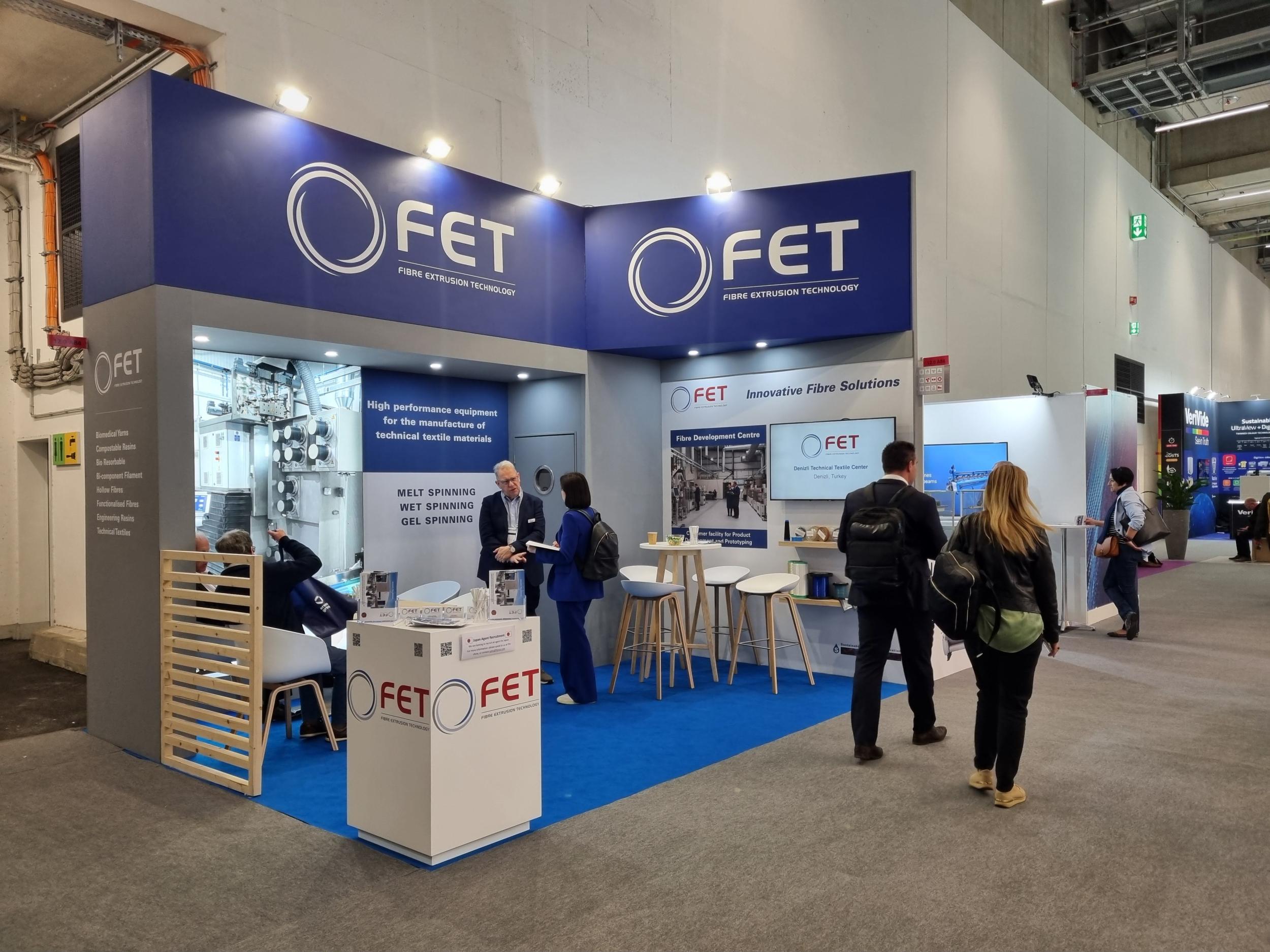
FET at Techtextil 2026

Fibre Extrusion Technology Limited (FET) will be exhibiting once again at Techtextil 2026 in Frankfurt, which runs from April 21 – 24. Techtextil attracts major international companies at the cutting edge of technology, which are seeking innovative solutions to technical challenges, so this event represents an ideal opportunity to demonstrate FET’s strength in helping customers achieve their goals.

FET is an acknowledged leader in laboratory and pilot melt spinning equipment for a vast range of applications. These include precursor materials used in high value technical textiles, sportswear, medical devices and specialised novel fibres from exotic and difficult to process polymers. 

Where melt spinning solutions are not suitable, FET provides a viable alternative with pilot and small scale production wet spinning systems. In addition, FET has also recently launched its FET-500 Series of gel spinning systems. These systems have the potential to revolutionise the research and development of UHMWPE fibres, with significant savings in cost, footprint and environmental factors.

Fibre Extrusion Technology Limited (FET) will be exhibiting once again at Techtextil 2026 in Frankfurt, which runs from April 21 – 24. Techtextil attracts major international companies at the cutting edge of technology, which are seeking innovative solutions to technical challenges, so this event represents an ideal opportunity to demonstrate FET’s strength in helping customers achieve their goals.

FET is an acknowledged leader in laboratory and pilot melt spinning equipment for a vast range of applications. These include precursor materials used in high value technical textiles, sportswear, medical devices and specialised novel fibres from exotic and difficult to process polymers. 

Where melt spinning solutions are not suitable, FET provides a viable alternative with pilot and small scale production wet spinning systems. In addition, FET has also recently launched its FET-500 Series of gel spinning systems. These systems have the potential to revolutionise the research and development of UHMWPE fibres, with significant savings in cost, footprint and environmental factors.

As part of the launch of the FET-500 series, FET’s Senior Scientist Dr Kristoffer Kortsen will be a speaker at the Techtextil Forum on Wednesday 22 April. All visitors are invited to come along and find out more about FET’s new process exploiting super-critical fluids. To date, FET has successfully processed over 130 different polymer types in multifilament, monofilament and nonwoven formats, collaborating with specialist companies worldwide to promote greater sustainability through innovative manufacturing processes.

FET’s Fibre Development Centre further enhances this service, allowing clients to trial their own products in an ideal environment. Resident equipment in the Fibre Development Centre reflects the wide range of fibre extrusion and other systems offered by FET to clients worldwide and will enable continued growth of the company through innovation.  

Managing Director Richard Slack and his technical team will be in attendance on the stand. Slack commented. “We have now exhibited at over 10 Techtextil exhibitions around the world and we again look forward to meeting customers face-to-face to discuss their fibre technology requirements.”

Photo EasyCut
01.04.2026

EasyCut Pro Now Compatible with Siser, LOKLiK and Roland GX Vinyl Cutters

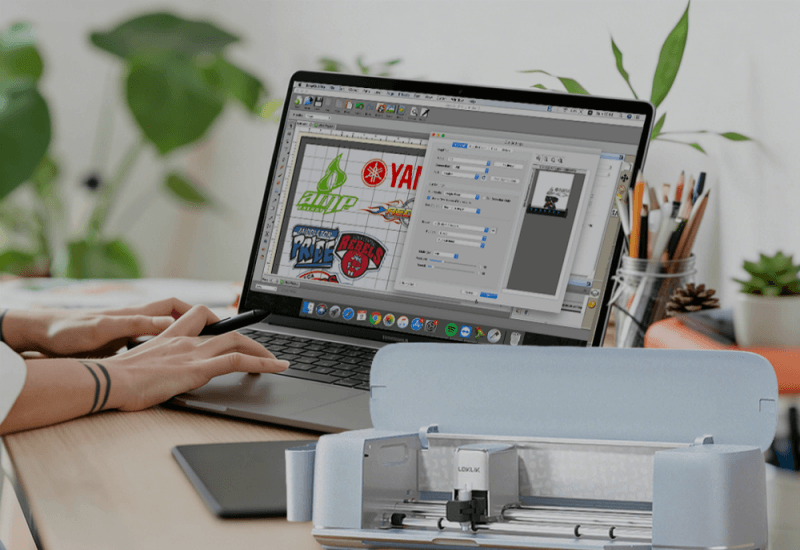
EasyCut, a leader in professional sign‑making and specialty graphics software, announces a key upgrade to its flagship EasyCut Pro solution. The latest version has completed full compatibility testing and officially supports Siser Juliet, Siser Romeo, LOKLiK iCraft, and Roland CAMM‑1 Pro GX Series vinyl cutters, delivering a smooth, integrated workflow for users of these popular cutting plotter devices.

EasyCut Pro serves as an all‑in‑one platform for drawing, designing, printing, print‑and‑cut production, and direct‑to‑vinyl output. The update fine‑tunes the software to fully leverage the performance of each supported cutter and media type, boosting cutting precision, print quality, and overall production efficiency. It also includes a full set of bug fixes, new functional features, and detailed usability improvements to streamline daily creative and manufacturing workflows.

EasyCut, a leader in professional sign‑making and specialty graphics software, announces a key upgrade to its flagship EasyCut Pro solution. The latest version has completed full compatibility testing and officially supports Siser Juliet, Siser Romeo, LOKLiK iCraft, and Roland CAMM‑1 Pro GX Series vinyl cutters, delivering a smooth, integrated workflow for users of these popular cutting plotter devices.

EasyCut Pro serves as an all‑in‑one platform for drawing, designing, printing, print‑and‑cut production, and direct‑to‑vinyl output. The update fine‑tunes the software to fully leverage the performance of each supported cutter and media type, boosting cutting precision, print quality, and overall production efficiency. It also includes a full set of bug fixes, new functional features, and detailed usability improvements to streamline daily creative and manufacturing workflows.

More information:
EasyCut Studio Software sign-making
Source:

EasyCut

(c) Archroma
01.04.2026

Archroma: Sustainable denim innovations at Kingpins Amsterdam

Archroma, a global leader in specialty chemicals, will present a portfolio of six sustainable denim innovations at Kingpins Amsterdam from April 15-16, 2026. Under the theme “Creating Possibilities in Denim”, the showcase reflects Archroma’s commitment to giving brands and mills solutions that are as commercially compelling as they are environmentally responsible.

“Denim leaders are strongly motivated to reduce environmental impact, but cannot afford to sacrifice market appeal or production efficiency,” Julio Perales, Technical & Product Segment Manager Denim, Archroma, said. “At Archroma, we continuously challenge conventions, with an R&D philosophy that accepts nothing less than eliminating hazardous chemicals and processes while simultaneously improving performance and reducing resource use. That’s how we have built such a broad portfolio of game-changing solutions.”

At Kingpins Amsterdam, visitors can explore:

CLEANER DYESTUFFS
Archroma denim dyes address the most persistent challenges in indigo and sulfur dyeing – from hazardous impurities to resource-intensive synthesis processes.

Archroma, a global leader in specialty chemicals, will present a portfolio of six sustainable denim innovations at Kingpins Amsterdam from April 15-16, 2026. Under the theme “Creating Possibilities in Denim”, the showcase reflects Archroma’s commitment to giving brands and mills solutions that are as commercially compelling as they are environmentally responsible.

“Denim leaders are strongly motivated to reduce environmental impact, but cannot afford to sacrifice market appeal or production efficiency,” Julio Perales, Technical & Product Segment Manager Denim, Archroma, said. “At Archroma, we continuously challenge conventions, with an R&D philosophy that accepts nothing less than eliminating hazardous chemicals and processes while simultaneously improving performance and reducing resource use. That’s how we have built such a broad portfolio of game-changing solutions.”

At Kingpins Amsterdam, visitors can explore:

CLEANER DYESTUFFS
Archroma denim dyes address the most persistent challenges in indigo and sulfur dyeing – from hazardous impurities to resource-intensive synthesis processes.

  • DENISOL® PURE INDIGO: The industry’s first synthetic aniline-free* indigo makes it possible to produce authentic indigo-dyed denim that complies with major eco-standards, reduces pollution risk and creates denim that can be more sustainably recycled.
  • DIRESUL® EVOLUTION BLACK: Archroma's cleanest sulfur black dyestuff ever – and the winner of the 2023 Just Style Excellence Award for Innovation in Dyes – delivers an overall lifecycle impact reduction of 57%** versus standard Sulfur Black 1, with no ammonia, no sodium salts waste, no liquid effluents and 73% less water in synthesis.
  • DIRESUL® RDT: With a comprehensive bluesign®-approved sulfur dye palette spanning blues, blacks, navies, khakis and fashion colors, DIRESUL® RDT supports topping, bottoming and self-shade applications across the full range of denim styles.

CIRCULAR COLORANTS
Archroma's biosynthetic dye ranges replace petroleum-based raw materials with upcycled waste streams, turning circular economy principles into commercially deployable color solutions.

  • EARTHCOLORS®: A patented range of biosynthetic dyes derived from non-edible agricultural and herbal waste (such as leaves and nutshells), EarthColors® helps reduce the negative impact on water footprint, natural resources and climate change.
  • FIBERCOLORS®: Synthesized with a minimum of 50% wool waste raw material, FiberColor® solves a problem for sheep farmers while advancing sustainability for brands.

UPSTREAM DYEING INNOVATION
Winner of the ITMF 2025 Sustainability & Innovation Award, DENIM HALO is a yarn pretreatment and dyeing process that enables superficial ring-dyeing at the denim mill. This allows downstream garment laundries to achieve popular high-contrast distressed effects by laser or washdown – avoiding the hazardous potassium permanganate sprays, hand scraping and harsh bleaching these looks have traditionally required.

“Impact assessments using Archroma’s One Way Impact Calculator show substantial environmental benefits for DENIM HALO versus standard processes,” Julio explained. “But even better, DENIM HALO doesn’t require mills to choose between sustainability and business performance. It’s designed to work within existing mill workflows, so there’s no need to modify standard dye recipes or set up. And it actually improves fabric performance by reducing yarn shrinkage and boosting garment tensile strength.”

Source:

Archroma