From the Sector

Reset
(c) Institut für Textiltechnik (ITA) der RWTH Aachen University
26.02.2026

ITA: Pellet press enables thermomechanical textile recycling

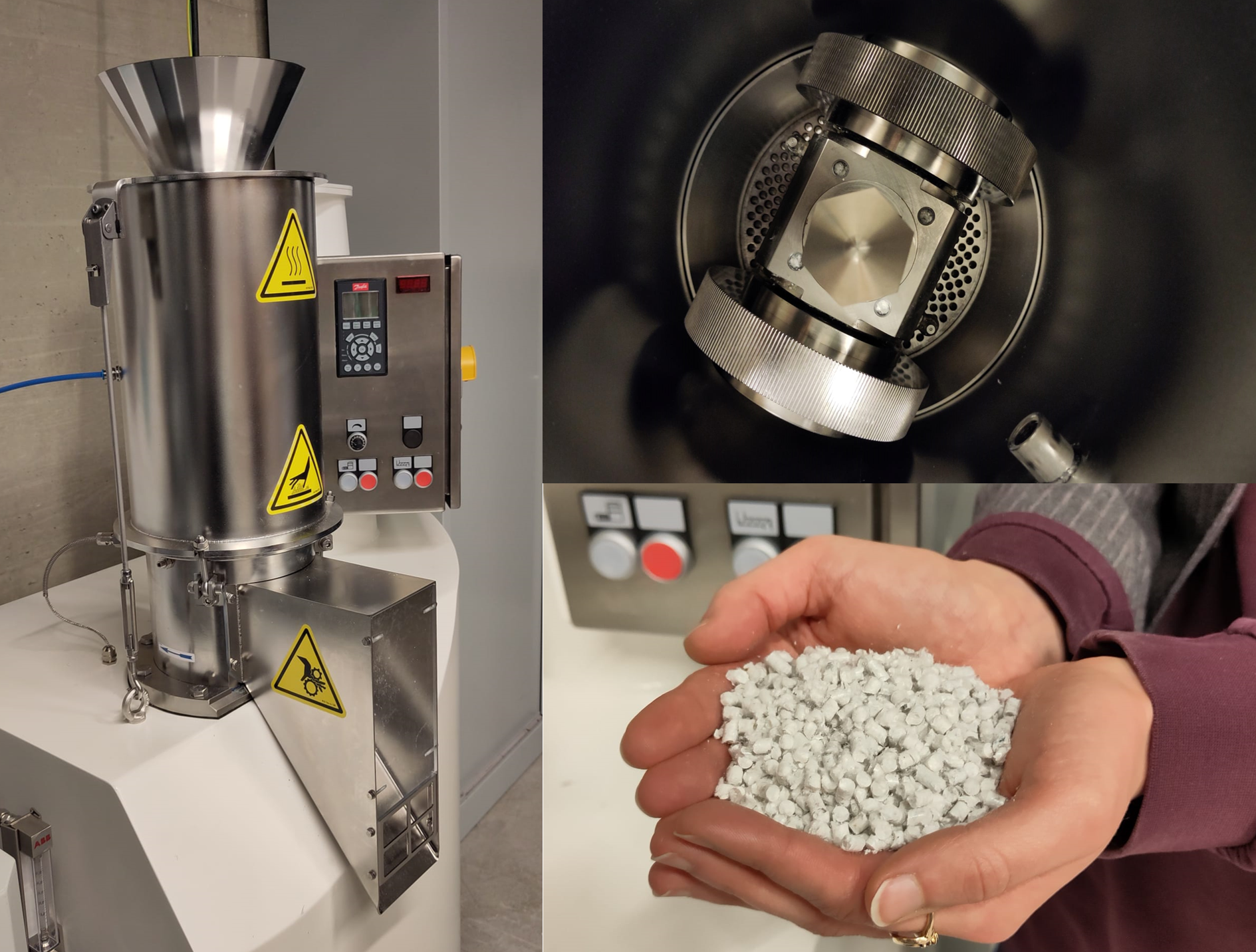
Since the end of 2025, the technical centre of the Institut für Textiltechnik (ITA) of RWTH Aachen University has been equipped with a pellet press from the manufacturer Amandus Kahl GmbH & Co. KG, Reinbek, Germany. This press can efficiently compact shredded synthetic textiles at a throughput of up to 25 kg/h and process them into pellets with a diameter of 4 mm.

The produced pellets are characterised by a homogeneous geometry, defined bulk density and suitable flowability. This enables reliable dosing and continuous feeding into an extruder. In this way, the process-related prerequisite for thermomechanical textile recycling on a pilot scale at the ITA is established.

Current research at the institute includes the thermomechanical recycling of cleaning textiles made from polylactide (PLA). The pellet press was procured as part of the RePLAy research project. The Federal Ministry of Research, Technology and Space is funding the project as part of the BIOTEXFUTURE innovation space. 

Since the end of 2025, the technical centre of the Institut für Textiltechnik (ITA) of RWTH Aachen University has been equipped with a pellet press from the manufacturer Amandus Kahl GmbH & Co. KG, Reinbek, Germany. This press can efficiently compact shredded synthetic textiles at a throughput of up to 25 kg/h and process them into pellets with a diameter of 4 mm.

The produced pellets are characterised by a homogeneous geometry, defined bulk density and suitable flowability. This enables reliable dosing and continuous feeding into an extruder. In this way, the process-related prerequisite for thermomechanical textile recycling on a pilot scale at the ITA is established.

Current research at the institute includes the thermomechanical recycling of cleaning textiles made from polylactide (PLA). The pellet press was procured as part of the RePLAy research project. The Federal Ministry of Research, Technology and Space is funding the project as part of the BIOTEXFUTURE innovation space. 

Graphic by EDANA
26.02.2026

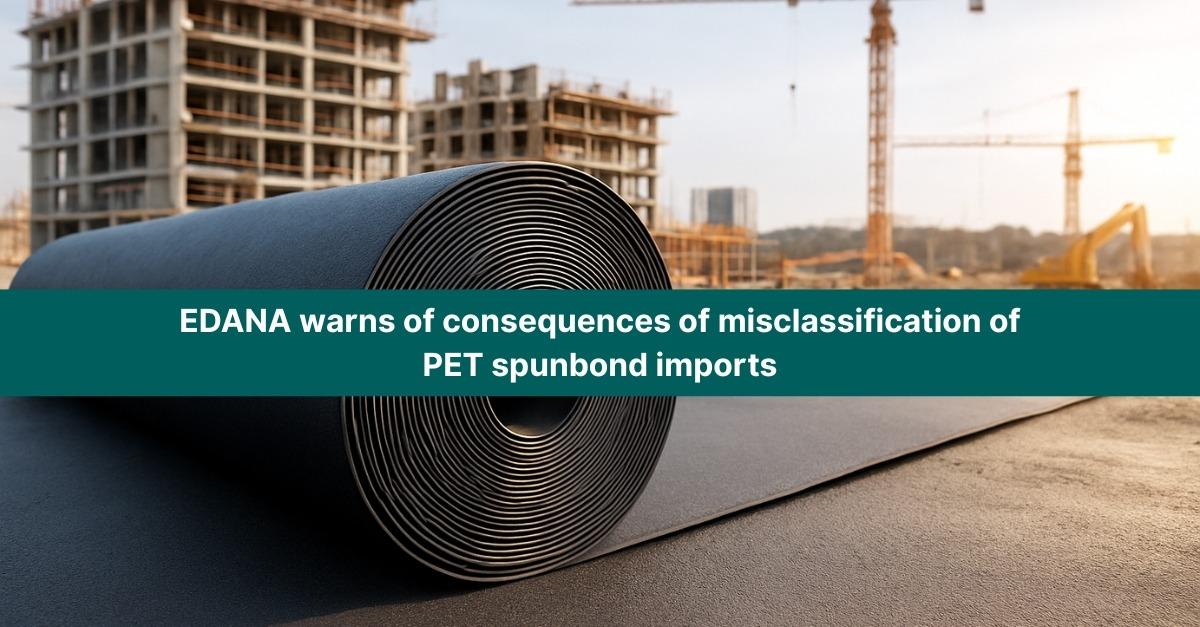
EDANA warns of consequences of misclassification of PET spunbond imports

EDANA would like to remind its members and industry stakeholders of the legal requirement to comply with the EU rules on customs classification when importing non-wovens from third countries outside the EU. In this regard, it was recently discovered that there appears to be a high level of customs misclassification occurring in the nonwoven’s industry. This could have dangerous and costly consequences for importers. 

Following repeated requests by its members, EDANA worked closely with the European Union and the World Customs Organisation to introduce in 2024 specific customs codes CN code 5603 14 20 and 5603 9420 in order to better monitor imports of certain PET spunbond and staple fibre products. Based on market intelligence, EDANA knows that third country imports of the respective products were in the range of 15,000 to 30,000 MT in 2024 and 2025. However, actual import volumes recorded under the specifically created CN codes were significantly lower. 

EDANA would like to remind its members and industry stakeholders of the legal requirement to comply with the EU rules on customs classification when importing non-wovens from third countries outside the EU. In this regard, it was recently discovered that there appears to be a high level of customs misclassification occurring in the nonwoven’s industry. This could have dangerous and costly consequences for importers. 

Following repeated requests by its members, EDANA worked closely with the European Union and the World Customs Organisation to introduce in 2024 specific customs codes CN code 5603 14 20 and 5603 9420 in order to better monitor imports of certain PET spunbond and staple fibre products. Based on market intelligence, EDANA knows that third country imports of the respective products were in the range of 15,000 to 30,000 MT in 2024 and 2025. However, actual import volumes recorded under the specifically created CN codes were significantly lower. 

“There is a clear mismatch between import volumes observed in the market and what is reported under the correct customs codes. Often, importers continue to use outdated customs codes as a matter of habit not paying due attention to changes of the Combined Nomenclature”, says Jacques Prigneaux from EDANA. “However, this is problematic, especially where certain products are subject to investigations by the EU authorities.” 

EDANA has therefore actively commenced an outreach initiative to raise awareness among its members. They have also contacted the European Commission and the national customs authorities of the EU member states to ask the authorities to enhance import checks. 

Incorrect customs classification not only makes EDANA’s work more difficult to monitor import flows and protect the interests of its members. It can also have severe negative legal consequences for importers. Customs authorities penalize misclassifications with additional duties, administrative fines and even criminal penalties. “To avoid such unpleasant surprises, we recommend that all members and their supply chain regularly review and update their customs classification databases and also instruct their customs agents accordingly” adds Mr Prigneaux. 

Awareness and compliance are in particular important where imports are under enhanced customs control (such as in the framework of import registration during an anti-dumping investigation) or subject to special trade or regulatory regimes (such as duty-free or reduced duty imports from countries with which the EU has special trade arrangements). 

A list of preferential trade regimes can be found on the website of the European Commission (here) and the Access2Markets webpage contains product-specific information for imports of goods into the EU (here). Also, presently, certain PET spunbond from China is subject to an EU anti-dumping investigation and imports were made subject to registration in December 2025 (see here for further information). The exact definition of the product subject to the investigation is: ‘non-woven needle-punched sheets of polyester filaments, whether or not reinforced by glass fibres, weighing more than 70 g/m², of a thickness exceeding 0.5 mm but not exceeding 1.8 mm, impregnated with one or more binders, containing less than 30% of glass fibres by weight, not coated or covered’. All imports of these products must be classified under TARIC code 5603 1390 70, CN code 5603 14 20 or TARIC code 5603 1480 70.

Source:

EDANA

24.02.2026

VIATT 2026: Connecting the ASEAN textile sector - sustainability, trends and technology

Opening this week Thursday, the Vietnam International Trade Fair for Apparel, Textiles, and Textile Technologies (VIATT) is set to welcome visitors from ASEAN’s dynamic textile market and beyond. From 26 to 28 February, VIATT 2026 – the fair’s third editions – will reinforce its strategic proposition with an integrated showcase of the three core sectors of the entire textile value chain. Beyond new sourcing opportunities in Apparel Fabrics & Fashion, Home & Contract Textiles, and Technical Textiles & Technologies, the fair will present an expanded fringe programme. Highlights include the inaugural Trend Forum, alongside an industry summit, local and international fashion shows, interactive workshops, and expert seminars. 

Opening this week Thursday, the Vietnam International Trade Fair for Apparel, Textiles, and Textile Technologies (VIATT) is set to welcome visitors from ASEAN’s dynamic textile market and beyond. From 26 to 28 February, VIATT 2026 – the fair’s third editions – will reinforce its strategic proposition with an integrated showcase of the three core sectors of the entire textile value chain. Beyond new sourcing opportunities in Apparel Fabrics & Fashion, Home & Contract Textiles, and Technical Textiles & Technologies, the fair will present an expanded fringe programme. Highlights include the inaugural Trend Forum, alongside an industry summit, local and international fashion shows, interactive workshops, and expert seminars. 

“As VIATT continues to grow and attract broader international participation, at this edition we are pleased to introduce the inaugural German Pavilion and Türkiye Zone, the Textile Chemicals and Dyes Zone, as well as the Trend Forum, a unified vision exploring all three sub-sectors,” said Ms Wilmet Shea, General Manager of Messe Frankfurt (HK) Ltd. “These additions highlight our commitment to enhancing the fair from multiple perspectives, as we explore new opportunities in diverse yet overlapping textile sectors, while reinforcing VIATT’s dedication to design, sustainability, innovation, and international collaboration – key elements that distinguish this platform as one of ASEAN’s premier industry hubs.”

Covering 18,000 sqm in Halls A and B, VIATT 2026 will host nearly 460 exhibitors from 21 countries and regions. The fair will feature an impressive lineup of international participants, including the returning pavilions from China, India, Taiwan, and the debut of the German Pavilion. The show floor will also include the European Zone, Japan Zone, Vietnam Zone, and the new Türkiye Zone. Econogy Hub will also return, alongside the Garment Display Zone and the Trend Forum, showcasing integrated LIFESTYLE TRENDS across the apparel, home, and technical sectors – a first for a textile trade fair.

In anticipation, visitors from across Asia-Pacific and beyond are preparing to source in Ho Chi Minh City. These include nine buyer delegations from six countries / regions, including Australia, India, Laos, Malaysia, Myanmar, Thailand, and Vietnam. To enhance the sourcing experience, the fair’s Global Exhibitor Search feature will enable buyers to connect efficiently with potential suppliers.

Fringe programme to reinforce connections across the textile spectrum
The fair’s range of fringe events include the inaugural VIATT Trend Forum, Vietnam Textile & Garment Industry Development Strategy Summit (VGTIS), and Textile Industry Exchange. Other featured events include various seminars and workshops designed to provide valuable insights into industry trends and innovations: 

  • Sustainable by Design: The Green Thread (Design & Trends): in this session, the Asia International Hemp Association, Bio-Smart Group, and TOUCHABLE will focus on the transformation of hemp fibre into a premium, eco-friendly material for fashion and home textiles. It addresses technological advancements and sustainability benefits that have facilitated hemp to enter high-value markets, emphasising its role in promoting circular design and reducing environmental impact. 
  • Fashioning a Circular Textile Economy Through Industry Collaboration (Econogy Talks): panellists from Covation Biomaterials, the Hong Kong Research Institute of Textiles and Apparel (HKRITA), RMIT University Vietnam, the UK Fashion and Textile Association (UKFT), and XAVAN will focus on circularity and the importance of solutions such as sustainable manufacturing, circular business models, recycling infrastructure, novel technologies, and more.
  • Vietnam Sourcing Forum: Insights for Suppliers and Buyers (Market Information & Business Strategies): in collaboration with MoveToAsia, this panel discussion provides expert insights for exhibitors and buyers relating to sourcing in Vietnam. It addresses key considerations for overseas stakeholders, including common misconceptions, pain points, and pitfalls faced by first-time buyers, and explores manufacturing operations, sales channels, and Vietnam’s role as a garment manufacturing hub. 
  • Redefining AI’s Role in Automated Textile Material Inspection (Technology & Solutions): in this seminar, AiDLab examines how AI is transforming material inspection within the textile industry. Traditional methods often rely on human checks, leading to inefficiencies. The discussion will focus on the advantages of AI, including enhanced accuracy and real-time inspection in fast-paced production environments. Challenges in adopting AI will also be addressed, along with essential considerations for companies preparing for implementation.

In addition, VIATT 2026 will feature three captivating fashion shows that blend local and international trends: the Local Booming Designer – Phan Dang Hoang will present a collection that fuses Vietnam’s rich cultural heritage with modern aesthetics. The Sustainable, Zero-Waste Fashion Show – KHAAR features a luxury brand that combines heritage craftsmanship with innovation, using circular materials and digital design for sustainable fashion. The third show, the Essence of French Fashion, will feature esteemed brands Royal Mer, a heritage knitwear house known for its timeless sea-inspired garments designed for durability across generations, and Fantaisie Militaire, which draws from military styles to emphasise functionality, timelessness, and the value of ‘Made in France’. Fairgoers can also look forward to the Upcycled Jewellery Workshop, a hands-on experience for participants to transform discarded textiles into unique, handcrafted accessories.

The Vietnam International Trade Fair for Apparel, Textiles and Textile Technologies (VIATT) is organised by Messe Frankfurt (HK) Ltd and the Vietnam Trade Promotion Agency (VIETRADE). VIATT 2026 will be held from 26 – 28 February 2026.

Bacterial cellulose film produced by Sumatrix. Photo: Source: Sumatrix Biotech (CC BY-NC 4.0)
Bacterial cellulose film produced by Sumatrix.
24.02.2026

Fabricating vegan and circular leather alternatives from bio-tech derived cellulose

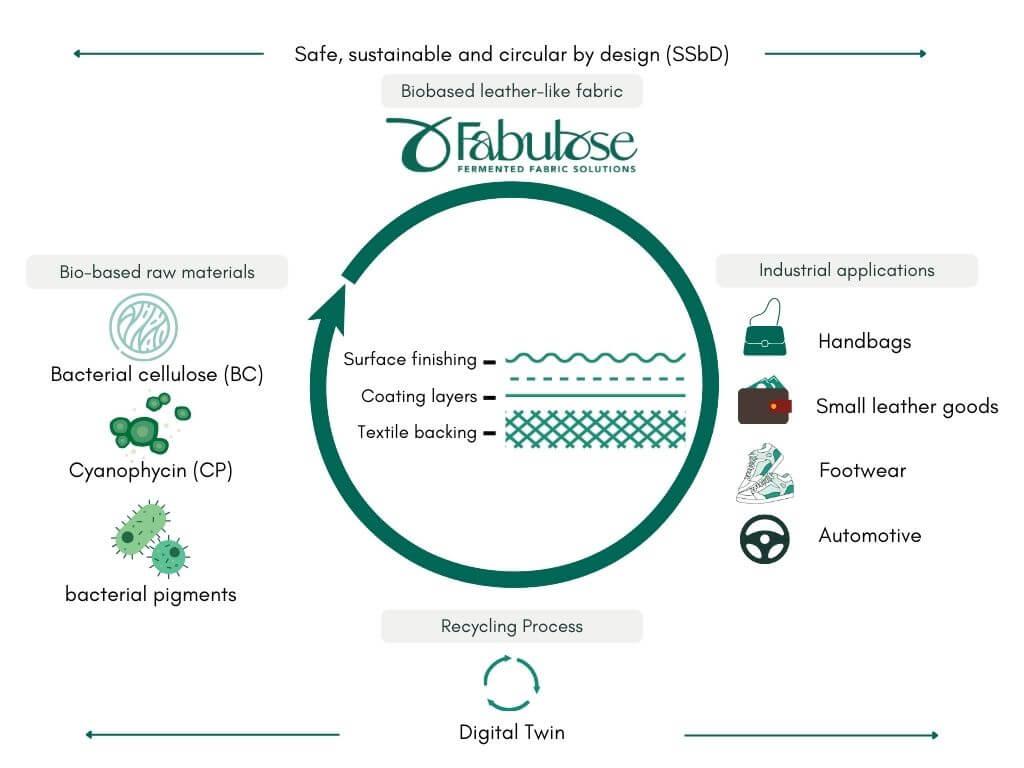
Fabulose is an EU funded project coordinated by the German Institutes of Textile and Fiber Research (DITF). Its consortium consists of leading research institutes, biotech innovators, and industry stakeholders who aim to create high-performance, biobased and recyclable leather-like fabrics, using efficient biotech production routes for bacterial cellulose, cyanophycin and bacterial pigments

Current leather alternatives are either made from petrol-based plastics and non-recyclable, or they are (partly) biobased, but difficult to scale up and recycle. The project, supported by the Circular Bio-based Europe Joint Undertaking (CBE JU), is investigating how animal-based materials can be replaced by environmentally friendly alternatives in industries such as automotive, fashion, and upholstered furniture.

Fabulose is an EU funded project coordinated by the German Institutes of Textile and Fiber Research (DITF). Its consortium consists of leading research institutes, biotech innovators, and industry stakeholders who aim to create high-performance, biobased and recyclable leather-like fabrics, using efficient biotech production routes for bacterial cellulose, cyanophycin and bacterial pigments

Current leather alternatives are either made from petrol-based plastics and non-recyclable, or they are (partly) biobased, but difficult to scale up and recycle. The project, supported by the Circular Bio-based Europe Joint Undertaking (CBE JU), is investigating how animal-based materials can be replaced by environmentally friendly alternatives in industries such as automotive, fashion, and upholstered furniture.

Fabulose uses advanced fermentation techniques, utilizes waste streams as feedstocks, and optimizes processes with the assistace of AI. This enables the environmentally-friendly and efficient production of bacterial cellulose, cyanophycin and pigments. These bio-based materials are combined in a coating formulation that replicates the durability and aesthetics of traditional leather. DITF’s HighPerCell® technology allows for re-spinning of bacterial cellulose to filaments to create recycled textile backings that offer high tensile strength without toxic agents. Instead of processing individual batches, the technology also allows to implement a roll-to-roll production process, thereby simplifying future scale-up to cost-effective mass production.

In addition, market requirements have been collected to select optimal material characteristics, while eco-design and Safe-by-design principles help to assess potential risks and ensure alignment with the safety and sustainability objectives. A digital twin framework will include key process parameters for optimisation and monitoring of material performances.

Summary of the key project innovations:

  • Using fermentation products to enable fast and cost-effective production of raw materials
  • Grow micro-organisms on waste feedstocks and CO2 to reduce production costs and environmental impact
  • Re-spinning bacterial cellulose to filaments to create recyclable, consistent and high-quality fabrics
  • Enabling production of cyanophycin to create durable coatings and finishing
  • Implementing roll-to-roll production process to simplify future scale-up

Project partners
The Fabulose project has a duration of 3,5 years and a budget of ca. 3,5 M euro.

The consortium includes 10 partners from 6 European countries, spanning the entire value chain, from research to real-world applications:

German Institutes of Textile and Fiber Research Denkendorf (DITF) (Germany), Next Technology Tecnotessile Societa Nazionale (Italy), University of Maribor (Slovenia), Sumatrix Biotech (Turkey), VTL GmbH (Austria), Novis GmbH (Germany), Melina Bucher (Germany), Benecke-Kaliko GmbH (Germany), Konrad Hornschuch GmbH (Germany), University of Aveiro (Portugal), and Steinbeis 2i GmbH (Germany).

Kraig Biocraft Laboratories Photo Kraig Biocraft Laboratories
17.02.2026

Kraig Activates First Wave of 2026 Production Program

Kraig Biocraft Laboratories, Inc., a global leader in spider silk technology*, announced that its 2026 production plan has officially moved from strategy to execution.
 
The Company has now moved bio-material to incubation, getting a jumpstart on its March production plan and formally initiating its multi-ton spider silk scale-up initiative.
 
This milestone follows Kraig’s recently announced 2026 production schedule. This aggressive plan is set to achieve sustained monthly production of recombinant spider silk cocoons at unprecedented commercial volumes. With the release of the first wave of production materials now complete, Kraig Labs has activated its expanded manufacturing pipeline and commenced field-level implementation.
 
"This is the moment where planning becomes production," said Kim Thompson, Kraig Labs CEO and Founder. "Our 2026 roadmap was built around disciplined expansion, operational efficiency, and multi-ton output. Today, that roadmap is in motion. Bio-materials have recently been moved to incubation in preparation for the March production run."
 

Kraig Biocraft Laboratories, Inc., a global leader in spider silk technology*, announced that its 2026 production plan has officially moved from strategy to execution.
 
The Company has now moved bio-material to incubation, getting a jumpstart on its March production plan and formally initiating its multi-ton spider silk scale-up initiative.
 
This milestone follows Kraig’s recently announced 2026 production schedule. This aggressive plan is set to achieve sustained monthly production of recombinant spider silk cocoons at unprecedented commercial volumes. With the release of the first wave of production materials now complete, Kraig Labs has activated its expanded manufacturing pipeline and commenced field-level implementation.
 
"This is the moment where planning becomes production," said Kim Thompson, Kraig Labs CEO and Founder. "Our 2026 roadmap was built around disciplined expansion, operational efficiency, and multi-ton output. Today, that roadmap is in motion. Bio-materials have recently been moved to incubation in preparation for the March production run."
 
The March production run represents the first major deployment under the Company's 2026 plan. The initiative is designed to drive consistent output at levels never before seen, while reinforcing quality control, supply chain stability, and downstream processing capacity.
 
By initiating this production cycle, Kraig Labs is delivering on its commitment, creating the world's first reliable, repeatable, and scalable commercial spider silk manufacturing. The Company's vertically integrated model enables rapid deployment of materials, controlled expansion of silkworm rearing operations, and alignment with future customer demand.
 
"Our focus is clear," Thompson continued. "Execution. Volume. Commercialization. Every production cycle strengthens our position as the global leader in recombinant spider silk."
 
Kraig Labs expects this March run to set the pace for subsequent production cycles throughout 2026, forming the foundation for sustained monthly metric-ton-level spider silk production.

Source:

Kraig Biocraft Laboratories

12.02.2026

Rieter: Price increase for products and systems from March

Response to higher material costs worldwide: Global political and economic developments have been leading to rising raw material and energy costs for some time. The textile machinery industry is also affected by this trend. Rieter machines and components consist to a large extent of steel, copper, aluminum and electronics. These materials in particular have seen higher demand and higher prices in recent months.

Rieter has not yet passed on the additional costs to its customers. Since the price trend is proving to be long-term, the company will adjust its prices from March 2026.

Response to higher material costs worldwide: Global political and economic developments have been leading to rising raw material and energy costs for some time. The textile machinery industry is also affected by this trend. Rieter machines and components consist to a large extent of steel, copper, aluminum and electronics. These materials in particular have seen higher demand and higher prices in recent months.

Rieter has not yet passed on the additional costs to its customers. Since the price trend is proving to be long-term, the company will adjust its prices from March 2026.

More information:
Rieter AG Rieter price increases
Source:

Rieter AG

12.02.2026

Pay Equity in Türkiye’s Fashion Manufacturing Sector?

Global Fashion Agenda (GFA) has published a new insights paper, Unpacking Pay Equity in Fashion: Türkiye, examining the drivers of gender pay disparities in one of Europe’s most important fashion sourcing hubs. Launched during a closed-door industry roundtable at the OECD Forum on Due Diligence in the Garment and Footwear Sector in Paris, the insights paper explores how structural factors, including occupational segregation, care responsibilities, and limited data visibility, continue to shape pay outcomes for women in Türkiye’s textile and apparel sector, while highlighting opportunities for coordinated action across policy makers, brands, other buyers, and suppliers.

Global Fashion Agenda (GFA) has published a new insights paper, Unpacking Pay Equity in Fashion: Türkiye, examining the drivers of gender pay disparities in one of Europe’s most important fashion sourcing hubs. Launched during a closed-door industry roundtable at the OECD Forum on Due Diligence in the Garment and Footwear Sector in Paris, the insights paper explores how structural factors, including occupational segregation, care responsibilities, and limited data visibility, continue to shape pay outcomes for women in Türkiye’s textile and apparel sector, while highlighting opportunities for coordinated action across policy makers, brands, other buyers, and suppliers.

The insights paper draws on a facility-level survey of 43 Turkish textile and apparel manufacturers, interviews with trade unions and worker associations, and input from social sustainability experts including the Social & Labor Convergence Program (SLCP), the Fair Labor Association (FLA), and the Anker Research Institute (ARI). The findings offer a nuanced picture of pay equity in a sector that employs nearly one million formally registered workers and contributes approximately 7.8% of Türkiye’s national GDP.

Key Findings:
Unpacking Pay Equity in Fashion: Türkiye highlights several key insights into pay equity within the Turkish fashion manufacturing industry:

  • Türkiye’s gender pay gap is estimated at between 15.6% and 17.4%. The EU average is around 12%. The insights paper cautions, however, that headline pay gap figures alone can mask deeper structural inequalities within the sector.
  • Gender pay disparities are driven largely by structural factors rather than unequal pay for the same work, including occupational segregation, differences in career progression opportunities, cultural norms, access to training, and the distribution of care responsibilities.
  • Women remain concentrated in lower-paid production, sewing and quality control roles, while men are more prevalent in higher-paid technical and supervisory positions – a key driver of persistent pay inequalities.
  • The insights paper finds that limited measurement and disclosure of gender-disaggregated wage data continues to hinder companies’ ability to identify where inequality sits – and therefore to address it effectively.
  • Ongoing economic pressures, including inflation and rising production costs, have placed sustained strain on the sector. Despite this, many manufacturers are making concerted efforts to maintain formal employment, comply with labour laws and protect jobs, demonstrating resilience in challenging conditions.

Closing gender pay gaps is not only a social imperative but a business one. Improving pay equity can strengthen workforce morale, retention and long-term resilience, while supporting alignment with evolving EU regulatory and buyer expectations. As EU pay transparency and due diligence requirements increasingly affect global supply chains, brands sourcing from Türkiye require greater visibility into wage practices across their supply chains.

Federica Marchionni, CEO of Global Fashion Agenda, says: “Pay equity is fundamental to build a fair and resilient fashion industry. This research shows that gender pay gaps in Türkiye’s fashion manufacturing sector are real, but they are also addressable. As progress depends on coordinated actions – from policymakers strengthening enabling frameworks, to brands adopting responsible purchasing practices, and suppliers embedding transparent, gender-responsive wage systems that reflect the realities of women’s working lives – GFA will continue to accelerate impact by mobilising the industry toward a more resilient future.”

The insights paper outlines practical recommendations for policymakers, brands, other buyers and suppliers. These include expanding access to childcare and parental support, strengthening formal employment and oversight of subcontracting, improving gender-disaggregated pay reporting, adopting responsible purchasing practices, and investing in women’s skills development and leadership pathways. Collectively, these actions can strengthen Türkiye’s manufacturing base, enhance women’s economic participation, and advance the fashion industry towards a net-positive future in which pay equity is a lived reality.

Source:

Global Fashion Agenda

12.02.2026

NCTO: “Block the Secure Revenue Clearance Channel Act”

National Council of Textile Organizations (NCTO) President and CEO Kim Glas sent a letter House leaders urging them to oppose and block the Secure Revenue Clearance Channel Act, a bill that would essentially reopen a dangerous trade loophole and ultimately harm U.S. textile manufacturers.

“Last year through bipartisan action, Congress voted overwhelmingly to end de minimis after identifying the substantial harms it perpetrated,” Glas states in the letter to Speaker of the House Mike Johnson (D-LA) and Minority Leader Hakeem Jeffries (D-NY). “The House China Select Committee determined in 2023 that Chinese e-commerce platforms were flooding the U.S. with billions of dollars’ worth of goods but had paid $0 in import duties, while American companies comparatively spent millions. Additionally, these platforms were found lacking in due diligence mechanisms to verify that products were not tainted by forced labor in China.”

National Council of Textile Organizations (NCTO) President and CEO Kim Glas sent a letter House leaders urging them to oppose and block the Secure Revenue Clearance Channel Act, a bill that would essentially reopen a dangerous trade loophole and ultimately harm U.S. textile manufacturers.

“Last year through bipartisan action, Congress voted overwhelmingly to end de minimis after identifying the substantial harms it perpetrated,” Glas states in the letter to Speaker of the House Mike Johnson (D-LA) and Minority Leader Hakeem Jeffries (D-NY). “The House China Select Committee determined in 2023 that Chinese e-commerce platforms were flooding the U.S. with billions of dollars’ worth of goods but had paid $0 in import duties, while American companies comparatively spent millions. Additionally, these platforms were found lacking in due diligence mechanisms to verify that products were not tainted by forced labor in China.”

Last year, Congress passed bipartisan legislation codifying the end of de minimis, effective July 2027. The Trump administration also took action to close de minimis to all commercial shipments globally through executive order, which took effect at the end of August 2025.

“As a result, the volume of small package deliveries has dramatically decreased, duty collections are up, and American consumers and workers are better off,” the letter states.

“Despite clear action from Congress and the administration on the negative impact of express shipment programs for ‘small value’ packages at U.S. ports, some still want to provide duty relief to foreign importers while requiring less information on packages valued at up to $600 — making enforcement impossible and rewarding offshore producers,” the letter continues. “De minimis was labeled ‘China’s backdoor to the U.S.,’ facilitated by an environment where goods were cleared on manifest, packages were not properly inspected or levied duties, and the risk posed was extremely high. The Secure Revenue Clearance Channel Act would recreate many of these same problems, with China being the biggest winner.”

Source:

NCTO

11.02.2026

U.S. Textile Industry Applauds Legislation Aimed at Ending Harmful Customs Rule

The National Council of Textile Organizations (NCTO), which represents the full U.S. textile supply chain from fiber and yarn to fabrics and finished sewn products, lauds a bill introduced today aimed at ending the U.S. Customs & Border Protection’s (CBP) “first sale” rule.

National Council of Textile Organizations President and CEO Kim Glas
“NCTO and the U.S. textile industry strongly support the Last Sale Valuation Act, a bill that would eliminate a harmful CBP rule that significantly lowers duties paid by importers on textile and apparel goods and disadvantages U.S. textile manufacturers in favor of countries that often employ predatory trade practices and fail to provide reciprocal market access.

“We sincerely thank Sens. Bill Cassidy (R-LA) and Sheldon Whitehouse (D-RI) for their leadership on this bill. Closing this loophole will help level the playing field, bolster the U.S. textile industry, and spur more onshoring and investment here and in our Western Hemisphere.”

The National Council of Textile Organizations (NCTO), which represents the full U.S. textile supply chain from fiber and yarn to fabrics and finished sewn products, lauds a bill introduced today aimed at ending the U.S. Customs & Border Protection’s (CBP) “first sale” rule.

National Council of Textile Organizations President and CEO Kim Glas
“NCTO and the U.S. textile industry strongly support the Last Sale Valuation Act, a bill that would eliminate a harmful CBP rule that significantly lowers duties paid by importers on textile and apparel goods and disadvantages U.S. textile manufacturers in favor of countries that often employ predatory trade practices and fail to provide reciprocal market access.

“We sincerely thank Sens. Bill Cassidy (R-LA) and Sheldon Whitehouse (D-RI) for their leadership on this bill. Closing this loophole will help level the playing field, bolster the U.S. textile industry, and spur more onshoring and investment here and in our Western Hemisphere.”

Source:

National Council of Textile Organizations

European Industry Summit 2026 Photo via Euratex
11.02.2026

"Deliver emergency measures as Europe’s competitiveness crisis deepens"

EURATEX, representing the European textile and fashion industry, joins the Antwerp Declaration Community’s call on EU Heads of State and Government to adopt emergency measures that restore industrial competitiveness and deliver tangible results for Europe’s manufacturing base in 2026.

The call was made at the European Industry Summit, which brought together over 500 business leaders, 30 factory workers, and European Commission President Ursula von der Leyen, under the auspices of Belgian Prime Minister Bart De Wever. Senior EU leaders including German Chancellor Friedrich Merz, French President Emmanuel Macron, Dutch Prime Minister Dick Schoof, Austrian Chancellor Christian Stocker, as well as Executive Vice-Presidents Teresa Ribera and Stéphane Séjourné, and Commissioner Wopke Hoekstra, also joined the discussions — underscoring the growing political urgency of Europe’s industrial competitiveness crisis.

The European Industry Summit urged a coordinated package focused on:

EURATEX, representing the European textile and fashion industry, joins the Antwerp Declaration Community’s call on EU Heads of State and Government to adopt emergency measures that restore industrial competitiveness and deliver tangible results for Europe’s manufacturing base in 2026.

The call was made at the European Industry Summit, which brought together over 500 business leaders, 30 factory workers, and European Commission President Ursula von der Leyen, under the auspices of Belgian Prime Minister Bart De Wever. Senior EU leaders including German Chancellor Friedrich Merz, French President Emmanuel Macron, Dutch Prime Minister Dick Schoof, Austrian Chancellor Christian Stocker, as well as Executive Vice-Presidents Teresa Ribera and Stéphane Séjourné, and Commissioner Wopke Hoekstra, also joined the discussions — underscoring the growing political urgency of Europe’s industrial competitiveness crisis.

The European Industry Summit urged a coordinated package focused on:

  • Reducing energy and carbon costs to restore competitiveness; 
  • Ensuring fair competition through strong trade instruments and enforcement; 
  • Boosting demand for EU-made products, including via public procurement and transparency tools that empower buyers. 

With 200,000 companies and 1.3 million workers, Europe’s textile and fashion ecosystem produces not only apparel, but also technical textiles for medical, automotive and defence applications. Yet the sector is facing mounting pressure from high energy costs and millions of non-compliant, low-quality products entering the EU market via online platforms, undermining responsible manufacturers and accelerating closures across Member States. 

During his speech, EURATEX President Mario Jorge Machado underlined that Europe must move from announcements to delivery — with measures that directly strengthen demand for sustainable, high-quality products made in Europe, while ensuring imported products comply with EU rules. 

“Europe must regain confidence and pride in what it produces, and stimulate demand for high-quality and sustainable textiles made in Europe. This requires three concrete actions: public procurement that goes beyond price and reflects origin, sustainability and security for strategic textiles; increased transparency, feasible for SMEs; and effective market surveillance to stop non-compliant imports from dominating the market” affirmed the President.

11.02.2026

OCSiAl Strengthens Board with Former Goldman Sachs Partner

Luxembourg-based OCSiAl, the global leader in industrial synthesis of graphene nanotubes, announces the appointment of Antigone Loudiadis as a director.
 
An investment entity owned by Ms. Loudiadis made a substantial investment in OCSiAl at the end of 2025. This investment followed an investment earlier that year by a Luxembourg “club” of investors.
 
Ms. Loudiadis founded and led Rothesay Life, one of the UK’s leading pension insurers. Prior to the establishment of Rothesay Life, Ms. Loudiadis was a partner at Goldman Sachs International and cohead of its European Investment Banking Division. Over the course of her 30-year career as a senior financial executive, she led complex structured and M&A transactions and managed senior relationships with governments and multinational institutions.
 
“I am very excited to be joining OCSiAl,” said Ms. Loudiadis. “It’s cutting-edge deep tech that takes established industries—like tires and coatings—to a new level. But it also goes hand in hand with the next step in the development of EVs, data centers, AI, robotics and aerospace.”
 

Luxembourg-based OCSiAl, the global leader in industrial synthesis of graphene nanotubes, announces the appointment of Antigone Loudiadis as a director.
 
An investment entity owned by Ms. Loudiadis made a substantial investment in OCSiAl at the end of 2025. This investment followed an investment earlier that year by a Luxembourg “club” of investors.
 
Ms. Loudiadis founded and led Rothesay Life, one of the UK’s leading pension insurers. Prior to the establishment of Rothesay Life, Ms. Loudiadis was a partner at Goldman Sachs International and cohead of its European Investment Banking Division. Over the course of her 30-year career as a senior financial executive, she led complex structured and M&A transactions and managed senior relationships with governments and multinational institutions.
 
“I am very excited to be joining OCSiAl,” said Ms. Loudiadis. “It’s cutting-edge deep tech that takes established industries—like tires and coatings—to a new level. But it also goes hand in hand with the next step in the development of EVs, data centers, AI, robotics and aerospace.”
 
“I am delighted to have Addy on the board. She brings a rare combination of deep capital markets expertise and firsthand experience in building and governing large, capital-intensive businesses,” said Peter Cuneo, Chairman of the OCSiAl Board. “As OCSiAl accelerates its industrial scale-up and prepares for significantly larger long-term investments, her perspective will be invaluable in shaping our capital strategy, strengthening governance, and engaging with a broader base of global investors.”
 
As advanced materials increasingly take on strategic importance alongside energy and capital, OCSiAl’s current phase of industrial scale-up places the company at the center of this shift.

Source:

OCSiAl Global

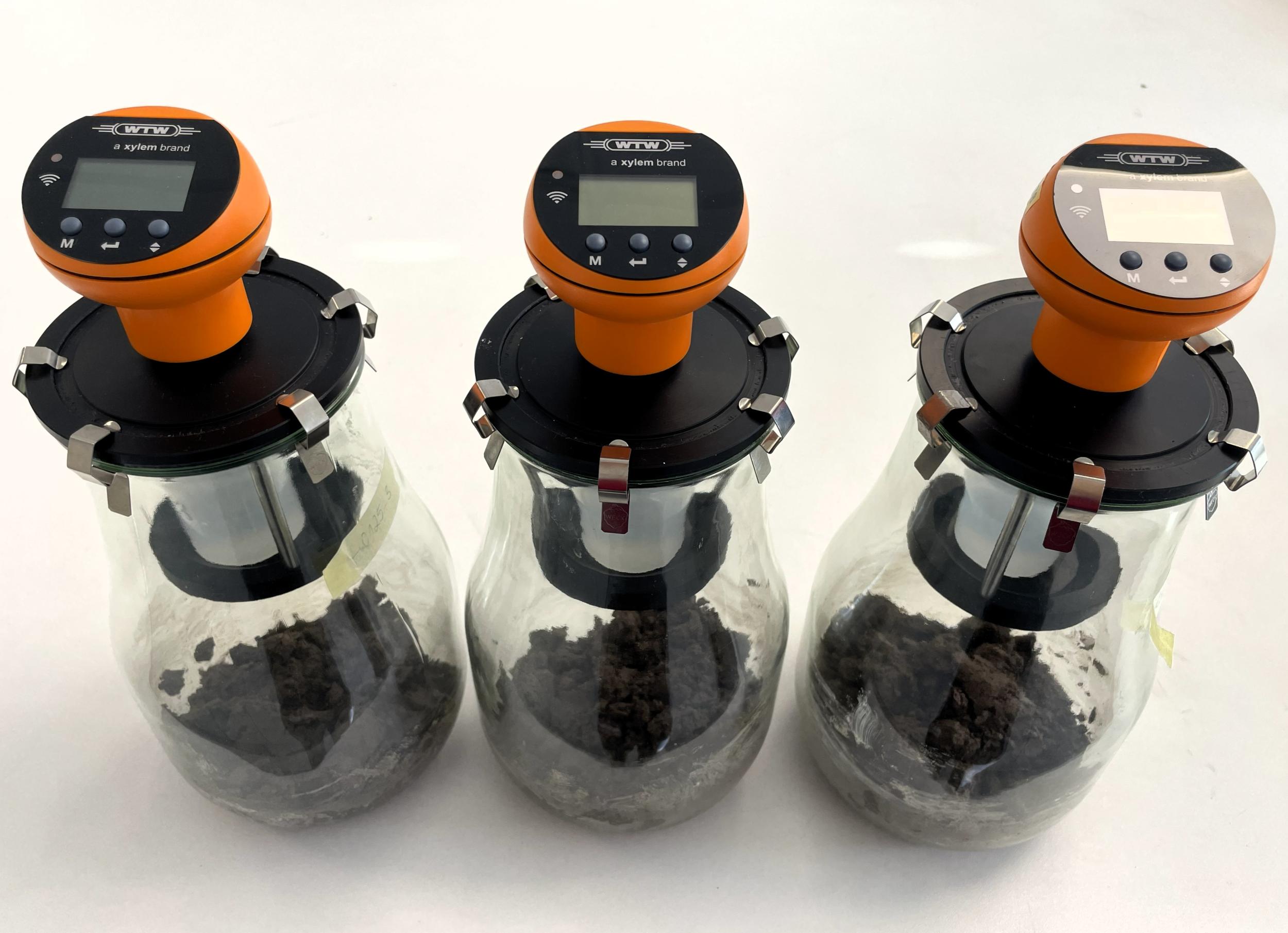
The respirometer system measures how much oxygen soil microorganisms consume during material degradation, allowing the rate and extent of biological breakdown to be determined. Foto (c) Hohenstein
The respirometer system measures how much oxygen soil microorganisms consume during material degradation, allowing the rate and extent of biological breakdown to be determined.
11.02.2026

New DIN SPEC assesses environmental impact of textile fragments in soil

Textile products made from synthetic fibres, finished fabrics or dyed materials release fibre fragments into the environment at every stage of their life cycle. With the new DIN SPEC 19296, Hohenstein has developed a standardised testing method to analyse how these fragments behave in soil under natural conditions. Until now, little was known about their environmental behaviour or potential ecological effects once released.

Holistic testing approach
DIN SPEC 19296 focuses on textile products and the fragments released through use, abrasion or disposal. Tests are conducted in standardised soil under defined climatic conditions over a period of up to 180 days.

Textile products made from synthetic fibres, finished fabrics or dyed materials release fibre fragments into the environment at every stage of their life cycle. With the new DIN SPEC 19296, Hohenstein has developed a standardised testing method to analyse how these fragments behave in soil under natural conditions. Until now, little was known about their environmental behaviour or potential ecological effects once released.

Holistic testing approach
DIN SPEC 19296 focuses on textile products and the fragments released through use, abrasion or disposal. Tests are conducted in standardised soil under defined climatic conditions over a period of up to 180 days.

The method combines several parameters: a respirometer system measures the oxygen consumption of microorganisms during degradation, enabling the biodegradability of textile fragments to be quantified. Plant growth tests using cress seeds assess potential effects on vegetation after degradation. In addition, earthworms are used as sensitive bioindicators to evaluate possible toxic effects. Survival rates and changes in body mass indicate whether degraded fragments or residues have a negative impact on soil organisms.
This integrated approach not only determines whether materials are biodegradable, but also whether their fragments could harm plants or soil organisms. 

Practical relevance and added value
“Textile fibres and fragments are released into the environment not only during washing, but also during everyday wear,” says Juliane Alberts, Project Manager at Hohenstein. “DIN SPEC 19296 allows us, for the first time, to assess under realistic conditions how different textile fragments behave in soil. It makes an invisible issue visible and supports the development of more sustainable textile products.”
The new DIN SPEC enables companies to compare textile products in terms of their potential environmental impact resulting from fibre release. It also provides a scientific basis for evaluating environmental claims such as “compostable”.

Jointly developed – publicly available
DIN SPEC 19296 was developed by Hohenstein in cooperation with industry partners and is publicly available. The results can help to better assess the actual environmental impacts of textile fiber loss, derive appropriate mitigation measures, and develop materials with lower environmentally harmful fiber shedding for the textile industry.

Source:

Hohenstein 

11.02.2026

One in five hazardous mixtures not reported to poison centres

ECHA Forum’s pilot enforcement project found that 19 % of the checked hazardous mixtures were not notified to poison centres.

Inspectors in 18 EU/EEA countries checked nearly 1 597 mixtures to verify whether industry complies with the obligation to notify hazardous mixtures to national poison centres. This is regulated under the EU’s Classification, Labelling and Packaging (CLP) Regulation. These notifications are crucial for poison centres to provide an adequate medical response in case of exposure to hazardous mixtures. Of all checked mixtures, 19 % were not notified to the authorities. 

Chris Van den hole, the Working Group Chair of this pilot project said: 
“Missing notifications of the necessary information to the poison centres undermine the effectiveness of emergency response. Therefore, inspectors take these findings very seriously and initiated numerous enforcement actions to bring companies to compliance.
“To improve the situation, we have listed recommendations for market actors, authorities and consumers in our report.”

ECHA Forum’s pilot enforcement project found that 19 % of the checked hazardous mixtures were not notified to poison centres.

Inspectors in 18 EU/EEA countries checked nearly 1 597 mixtures to verify whether industry complies with the obligation to notify hazardous mixtures to national poison centres. This is regulated under the EU’s Classification, Labelling and Packaging (CLP) Regulation. These notifications are crucial for poison centres to provide an adequate medical response in case of exposure to hazardous mixtures. Of all checked mixtures, 19 % were not notified to the authorities. 

Chris Van den hole, the Working Group Chair of this pilot project said: 
“Missing notifications of the necessary information to the poison centres undermine the effectiveness of emergency response. Therefore, inspectors take these findings very seriously and initiated numerous enforcement actions to bring companies to compliance.
“To improve the situation, we have listed recommendations for market actors, authorities and consumers in our report.”

The pilot project also aimed to raise the duty holders’ awareness of their legal obligations, for example, to place the Unique Formula Identifier (UFI) on the label of their products. The 16-digit, alphanumerical UFI code is a vital tool used by the poison centres to rapidly identify a mixture following an accidental poisoning. In 15 % of inspected mixtures, the required UFI was missing from the product label. 

Enforcement actions
Where non-compliance was detected, written advice was the most common enforcement measure applied by inspectors, followed by verbal advice, administrative orders, fines, and even criminal complaints. A number of cases were still under follow-up phase at time of reporting.

Background
According to the CLP Regulation, companies placing hazardous mixtures on the market are obliged to provide information about the composition of those mixtures to the appointed bodies. These bodies make this information available to poison centres so that they can give advice to the citizens or medical personnel in the event of an emergency. The duty to notify applies to mixtures that are classified for human health or physical hazards. For example, mixtures that are corrosive to skin, can cause eye damage or those that are explosive.

The names of companies that placed the controlled mixtures on the market and the products’ brand names were not reported for this project. The main purpose of the project was to harmonise and strengthen the national enforcement at the EU level.

Source:

European Chemicals Agency

FITA, ABIT, EURATEX: Monitoring Mercosur-European Union Partnership Agreement Photo EURATEX
05.02.2026

FITA, ABIT, EURATEX: Monitoring Mercosur-European Union Partnership Agreement

The Argentine Textile Industry Federation (FITA), the Brazilian Textile and Apparel Industry Association (ABIT), and the European Apparel and Textile Confederation (EURATEX) continue to monitor the process of internalizing the Mercosur-European Union Partnership Agreement. This agreement is essential for the competitiveness of our industries, on both sides of the Atlantic. 

The entities remain confident that, despite the submission of the agreement to the Court of Justice of the European Union, the vision of the agreement's strategic role for both sides of the Atlantic will prevail.

For the textile industry, the agreement confirms the commitment to economic integration and predictable rules, as well as signalling support for multilateralism in a challenging global scenario. 

FITA, ABIT, and EURATEX reaffirm their commitment to actively contribute to this implementation process of the agreement, as well as to undertake other inter-regional and international projection actions that consolidate both blocs as relevant actors in the global economy.

The Argentine Textile Industry Federation (FITA), the Brazilian Textile and Apparel Industry Association (ABIT), and the European Apparel and Textile Confederation (EURATEX) continue to monitor the process of internalizing the Mercosur-European Union Partnership Agreement. This agreement is essential for the competitiveness of our industries, on both sides of the Atlantic. 

The entities remain confident that, despite the submission of the agreement to the Court of Justice of the European Union, the vision of the agreement's strategic role for both sides of the Atlantic will prevail.

For the textile industry, the agreement confirms the commitment to economic integration and predictable rules, as well as signalling support for multilateralism in a challenging global scenario. 

FITA, ABIT, and EURATEX reaffirm their commitment to actively contribute to this implementation process of the agreement, as well as to undertake other inter-regional and international projection actions that consolidate both blocs as relevant actors in the global economy.

The EU textiles and apparel industry includes ca. 200,000 companies and 1.2 million dedicated workers, generating a turnover of nearly €170 billion. 

The Mercosur countries also have a significant textile and clothing industry. In Brazil, this industry has 25,700 companies with 1.3 million employees and a turnover of USD 40.9 billion. In Argentina, the textile and clothing industry comprises 4,000 companies and employs 540,000 workers along the value chain.

The Mercosur-European Union Partnership Agreement offers the textile and apparel industry opportunities related to market access, technological cooperation, investment, strengthening of environmental standards for countries in both economic blocs.

Funding approved: Textile Factory 7.0 to be built in Mönchengladbach © Institut für Textiltechnik (ITA) der RWTH Aachen University
03.02.2026

Funding approved: Textile Factory 7.0 to be built in Mönchengladbach

Textile Factory 7.0 – the vision of a networked, emission-free industrial park of the future for the city of Mönchengladbach is becoming reality. The Federal Ministry of Research, Technology and Space (BMFTR) has approved funding for the project.

The aim of the project is to establish a technology and development centre in Mönchengladbach and thus develop an industrial park of the future. Instead of considering individual technologies in isolation, Textile Factory 7.0 combines energy efficiency, AI/robotics and biotechnology in a single functional textile real-world laboratory under the close cooperation of industry and research.

The project will make a decisive contribution to sustainably increasing the attractiveness and productivity of regional textile production: the T7 Factory will create new jobs and strengthen innovative textile research at the location.

Textile Factory 7.0 – the vision of a networked, emission-free industrial park of the future for the city of Mönchengladbach is becoming reality. The Federal Ministry of Research, Technology and Space (BMFTR) has approved funding for the project.

The aim of the project is to establish a technology and development centre in Mönchengladbach and thus develop an industrial park of the future. Instead of considering individual technologies in isolation, Textile Factory 7.0 combines energy efficiency, AI/robotics and biotechnology in a single functional textile real-world laboratory under the close cooperation of industry and research.

The project will make a decisive contribution to sustainably increasing the attractiveness and productivity of regional textile production: the T7 Factory will create new jobs and strengthen innovative textile research at the location.

The kick-off will take place as a networking event on 19 March 2026. Industry players will then work on common issues relating to the future topics of the T7 Factory: on-demand manufacturing, microfactory engineering, digital textiles and biosphere. The ITA's technical experts will be available as contact persons for the topics of microfactory engineering and digital textiles. If you are interested in cooperation or insights into the progress of the project, you can register here.

The project partners are the ITA – Institute of Textile Technology at RWTH Aachen University, the Research Institute for Textiles and Clothing at the Niederrhein University of Applied Sciences, the Association of the North-West German Textile and Clothing Industry, the Association of the Rhenish Textile and Clothing Industry, the Textile Academy NRW and Wirtschaftsförderung Mönchengladbach GmbH.

Source:

ITA – Institut für TextilInstitut für Textiltechnik (ITA) der RWTH Aachen Universitytechnik of RWTH Aachen University
02.02.2026

Reciprocal trade agreement between the United States and Guatemala

The National Council of Textile Organizations (NCTO), which represents the full U.S. textile supply chain from fiber and yarn to fabrics and finished sewn products, welcomed the announcement of a reciprocal trade agreement between the United States and Guatemala.

National Council of Textile Organizations President and CEO Kim Glas:
“The reciprocal trade agreement with Guatemala marks an important step toward strengthening the U.S. textile supply chain. We commend the administration for taking decisive action to remove reciprocal tariffs and provide preferential treatment to qualifying textile and apparel products from Guatemala under the Dominican Republic-Central America-United States Free Trade Agreement (CAFTA-DR).

“NCTO and the broader U.S. textile industry are grateful to President Trump, U.S. Trade Representative Ambassador Jamieson Greer, and the administration for concluding this agreement with Guatemala, following on the heels of the recently announced agreement with El Salvador.

The National Council of Textile Organizations (NCTO), which represents the full U.S. textile supply chain from fiber and yarn to fabrics and finished sewn products, welcomed the announcement of a reciprocal trade agreement between the United States and Guatemala.

National Council of Textile Organizations President and CEO Kim Glas:
“The reciprocal trade agreement with Guatemala marks an important step toward strengthening the U.S. textile supply chain. We commend the administration for taking decisive action to remove reciprocal tariffs and provide preferential treatment to qualifying textile and apparel products from Guatemala under the Dominican Republic-Central America-United States Free Trade Agreement (CAFTA-DR).

“NCTO and the broader U.S. textile industry are grateful to President Trump, U.S. Trade Representative Ambassador Jamieson Greer, and the administration for concluding this agreement with Guatemala, following on the heels of the recently announced agreement with El Salvador.

“Guatemala is a key partner in the CAFTA-DR region, with $2 billion in two-way textile and apparel trade. Together, the region operates as an integrated co-production platform that is essential to the U.S. textile supply chain. In 2024, this production network generated $11.3 billion in two-way trade and supported more than 470,000 American jobs in the domestic textile industry alone.

“The U.S.–Western Hemisphere textile and apparel supply chain remains a critical strategic alternative to China and other Asian producers. We look forward to continued collaboration with the Trump administration to further solidify this vital regional partnership and appreciate this important announcement.”

Source:

National Council of Textile Organizations 

Image: Vitaly Kobzun, Pixabay
02.02.2026

Lenzing AG: Majority owner of TreeToTextile AB, accelerating industrialization of new fibers

The Lenzing Group is taking another strategic milestone by acquiring a controlling majority in the Swedish innovation company TreeToTextile AB. This step strengthens Lenzing’s position as a leading provider of sustainable, wood based specialty fibers and expands its innovation pipeline with a highly scalable, patent protected technology platform. The transaction is executed through the issuance of new shares. 

TreeToTextile represents the next major technological leap in cellulosic fiber production – following the development of viscose in the early 20th century and Lenzing’s own Lyocell technology in the 1990s. The process offers a significantly improved sustainability profile, attractive cost advantages, and broad applicability across textile and nonwoven markets. With the majority acquisition, Lenzing underscores its commitment to consistently advancing its premiumization strategy and further expanding its leadership position in the global specialty fiber market. 

The Lenzing Group is taking another strategic milestone by acquiring a controlling majority in the Swedish innovation company TreeToTextile AB. This step strengthens Lenzing’s position as a leading provider of sustainable, wood based specialty fibers and expands its innovation pipeline with a highly scalable, patent protected technology platform. The transaction is executed through the issuance of new shares. 

TreeToTextile represents the next major technological leap in cellulosic fiber production – following the development of viscose in the early 20th century and Lenzing’s own Lyocell technology in the 1990s. The process offers a significantly improved sustainability profile, attractive cost advantages, and broad applicability across textile and nonwoven markets. With the majority acquisition, Lenzing underscores its commitment to consistently advancing its premiumization strategy and further expanding its leadership position in the global specialty fiber market. 

“TreeToTextile is among the world’s most advanced next generation fiber technologies and represents the most promising development on the market. Since our initial investment in 2025, the collaboration between the innovative TreeToTextile team and Lenzing’s fiber experts has enabled significant technological progress. We are fully committed to the joint scale up and commercialization. H&M Group, Inter IKEA Group, and Stora Enso, will continue to support this path as minority shareholders, contributing valuable market and consumer perspectives,” says Georg Kasperkovitz, COO of Lenzing Group. LSCS Invest also reaffirms its confidence in the joint technology platform through its long standing commitment since the foundation of the company and continued role as a shareholder. 

“Innovation at industrial scale requires time, expertise, and strong partnerships. Lenzing Group’s increased ownership is a clear endorsement of our technology and our ambition to become a major player in the global fiber market,” says Dr. Roxana Barbieru, CEO of TreeToTextile. 

The transaction enables an accelerated scaling of the new technology. Lenzing plans a significant increase in production output at the existing demonstration plant in Nymölla, Sweden, as well as the preparation of the first industrial scale facility. In addition, the company expects operational synergies from an even closer collaboration.