
From the Sector

Reset
© Recover Textile Systems, S.L.
09.10.2026

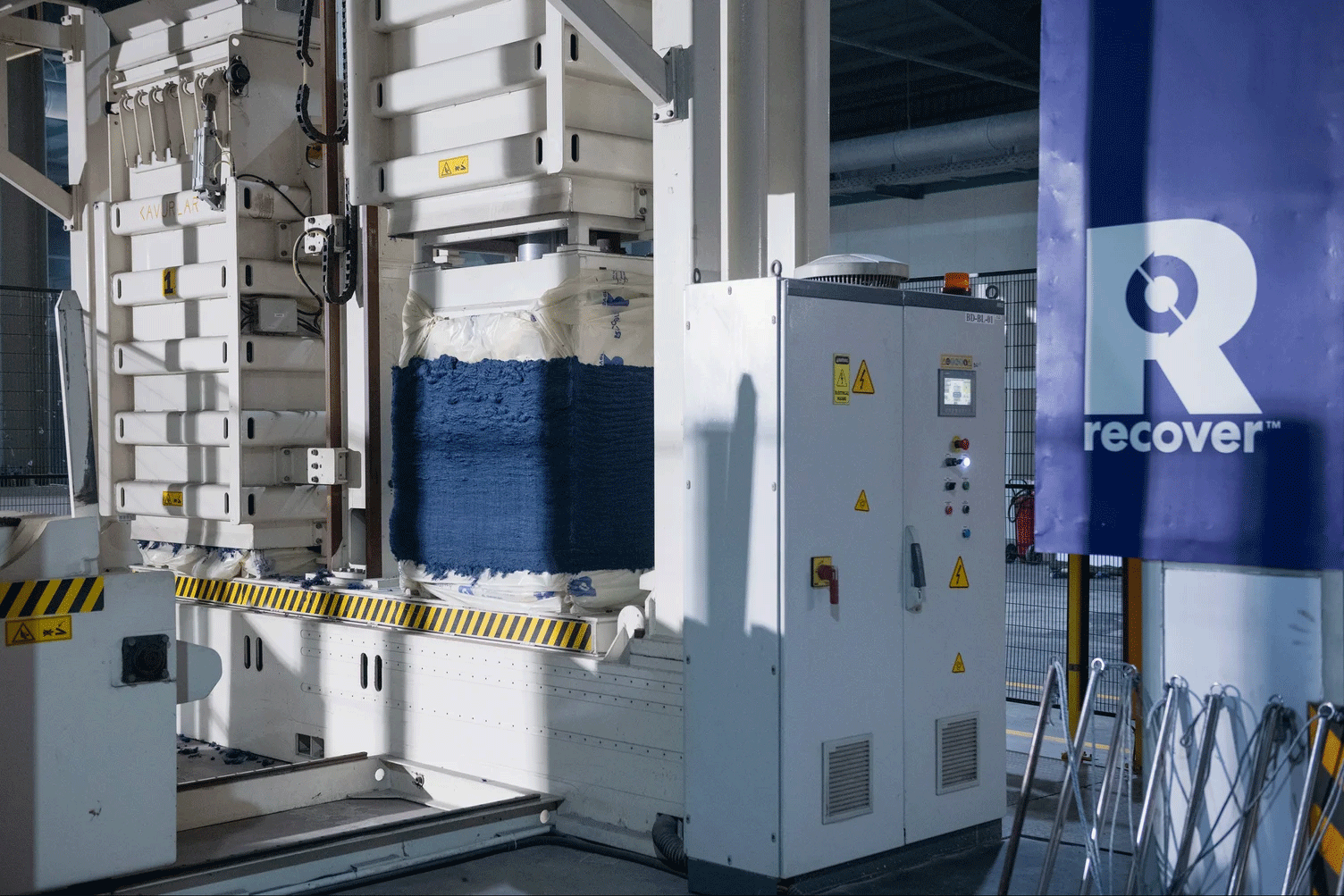
Recover™One blends recycled cotton and polyester without downstream overdyeing

Recover has launched Recover™One, a range of ready-to-spin blends made entirely from recycled cotton and recycled polyester. Cotton-to-polyester ratios can be adjusted for different applications, and the material can be supplied as fiber blends or as fabric through Recover’s supply-chain partners.

The technical point is color management. Recover combines the original colors of textile-waste feedstocks with color-matched, dope-dyed recycled polyester through an intimate blending process.
The company says this creates consistent solid, heather and mélange options without a downstream overdyeing stage, reducing processing time and avoiding an additional wet-finishing step.

Applications cited include single jersey, French terry and fleece. Recover also refers to previously verified life-cycle assessments for its recycled cotton, but the new development is the system-level combination of recycled inputs, predefined color and spinning-ready consistency rather than recycled cotton alone.

Source:

 Recover Textile Systems, S.L.

09.10.2026

Circ and Huafon plan 200-tonne-per-day first phase for textile recycling in China

Circ and Huafon are partnering on a multi-phase textile-to-textile recycling site within Huafon’s industrial footprint in China. 
The plant will use Circ’s process for polycotton waste and recover both major material streams: recycled PTA and MEG for polyester production and recycled cellulosic pulp for new textiles.

Phase one is designed to process approximately 200 metric tonnes of textile waste per day, with additional capacity planned. Huafon will invest in the project and contribute engineering, procurement, logistics and commercial capabilities, while Circ brings its recycling technology and a network of brands, manufacturing partners and downstream customers.

Textination has previously covered Circ partnerships in China, including recycled polyester filament production with Shenghong. This project represents a distinct new development.
It concerns construction of recycling capacity itself rather than downstream yarn conversion. Circ is simultaneously developing its first industrial-scale facility in France.

09.10.2026

Textile Exchange puts numbers on textile-to-textile recycling capacity for the first time

Editorial relevance: Very high – establishes a global baseline for available spinnable textile-to-textile recycled fiber and quantifies the gap between waste availability and usable output.

Textile Exchange has published a first global methodology for estimating textile-to-textile recycled fiber availability for apparel and home textiles. Developed with Fashion for Good, Reverse Resources and TEXroad, the framework combines available waste volumes with collection, sorting, processing and technology constraints to estimate how much material can actually become spinnable fiber.

The analysis projects recyclable textile feedstocks to increase from roughly 10 million tonnes in 2025 to around 15 million tonnes by 2030. Yet the quantity of recycled spinnable fiber is estimated at only 1–1.5 million tonnes in 2025, rising to approximately 3–5 million tonnes by 2030.

The scope covers post-industrial and post-consumer textiles and both mechanical and chemical recycling of cotton, polyester, nylon, manmade cellulosics, wool and and blends.
Textile Exchange stresses that the figures are directional: data quality remains uneven, and future editions are intended to incorporate more primary data from recyclers and suppliers.