From the Sector

Reset
KeyVisual s.Oliver
11.09.2026

s.Oliver brings the 90s back

Editorial relevance: Medium – a current brand-positioning and retail story supported by a product capsule.
s.Oliver has launched a new hero campaign, “Casual Since Forever,” featuring Heidi Klum meeting a younger version of herself from the 1990s. The concept uses the time shift to reinforce the brand’s positioning around enduring casual style.

The campaign is accompanied by a limited-edition vintage capsule that reinterprets 1990s references through casual basics and vintage-inspired designs. The pieces are being sold online and in selected s.Oliver stores, turning the campaign narrative into an immediate product and retail activation.

The editorial relevance lies in the combination of heritage storytelling and merchandising. Established fashion brands increasingly use archive aesthetics and cultural nostalgia not only for communication but as a direct product-development and traffic-driving mechanism.

Editorial relevance: Medium – a current brand-positioning and retail story supported by a product capsule.
s.Oliver has launched a new hero campaign, “Casual Since Forever,” featuring Heidi Klum meeting a younger version of herself from the 1990s. The concept uses the time shift to reinforce the brand’s positioning around enduring casual style.

The campaign is accompanied by a limited-edition vintage capsule that reinterprets 1990s references through casual basics and vintage-inspired designs. The pieces are being sold online and in selected s.Oliver stores, turning the campaign narrative into an immediate product and retail activation.

The editorial relevance lies in the combination of heritage storytelling and merchandising. Established fashion brands increasingly use archive aesthetics and cultural nostalgia not only for communication but as a direct product-development and traffic-driving mechanism.

ELIE SAAB joins H&M Photo H&M
11.09.2026

ELIE SAAB joins H&M

H&M has named ELIE SAAB as its next designer collaborator. The collection will bring the Beirut-founded couture house’s codes into a mass-market collaboration covering womenswear, menswear, accessories and footwear.

The range is set to include embellished gowns, shimmering separates and tailored pieces, with details such as lace, gradient sequins and monograms. The project extends H&M’s long-running collaboration model, in which luxury and designer brands are translated into limited retail collections with broad consumer reach.

The collection launches in selected stores and online on 22 October 2026. For the fashion and retail market, the partnership is a further example of how high-fashion brand equity, scarcity and cross-price-segment collaboration are used to create traffic and global media visibility.


H&M has named ELIE SAAB as its next designer collaborator. The collection will bring the Beirut-founded couture house’s codes into a mass-market collaboration covering womenswear, menswear, accessories and footwear.

The range is set to include embellished gowns, shimmering separates and tailored pieces, with details such as lace, gradient sequins and monograms. The project extends H&M’s long-running collaboration model, in which luxury and designer brands are translated into limited retail collections with broad consumer reach.

The collection launches in selected stores and online on 22 October 2026. For the fashion and retail market, the partnership is a further example of how high-fashion brand equity, scarcity and cross-price-segment collaboration are used to create traffic and global media visibility.


Photo Richard Harnisch, IÖW
11.09.2026

Lusatia builds a regional fibre economy

A new German research project is exploring how Lusatia can build a regional natural-fibre economy as the former lignite region undergoes structural transformation. Over three years, IÖW and Zittau/Görlitz University of Applied Sciences will examine value chains based on flax, industrial hemp, fibre nettle, miscanthus and residues such as straw and municipal leaves.

The focus is explicitly on industrial applications rather than conventional apparel textiles. Potential outlets include natural-fibre-reinforced plastics, specialty papers, lightweight panels, composites, automotive components and new packaging materials. A regionally resolved material-flow model will map feedstock availability, processing routes, land-use conflicts and possible bottlenecks.

The project is relevant to technical textiles and composites because it treats raw-material availability and industrialisation as one system. Workshops with farmers, processors, manufacturers, municipalities and economic-development actors are intended to produce practical transformation pathways for a circular bioeconomy.


A new German research project is exploring how Lusatia can build a regional natural-fibre economy as the former lignite region undergoes structural transformation. Over three years, IÖW and Zittau/Görlitz University of Applied Sciences will examine value chains based on flax, industrial hemp, fibre nettle, miscanthus and residues such as straw and municipal leaves.

The focus is explicitly on industrial applications rather than conventional apparel textiles. Potential outlets include natural-fibre-reinforced plastics, specialty papers, lightweight panels, composites, automotive components and new packaging materials. A regionally resolved material-flow model will map feedstock availability, processing routes, land-use conflicts and possible bottlenecks.

The project is relevant to technical textiles and composites because it treats raw-material availability and industrialisation as one system. Workshops with farmers, processors, manufacturers, municipalities and economic-development actors are intended to produce practical transformation pathways for a circular bioeconomy.


Source:

Institut für ökologische Wirtschaftsforschung (IÖW) / Hochschule Zittau/Görlitz

Photo EMPA
11.09.2026

Airborne microfibres enter soil and water

Researchers from Empa, Eawag and Agroscope have produced the first systematic estimate of how much microplastic is deposited from the atmosphere across Switzerland. For areas below 2,000 metres, the study estimates annual deposition of about 219 tonnes, including roughly 78 tonnes on agricultural land and around ten tonnes directly into water bodies.

The official release identifies loose fibres from functional clothing among the sources that can enter the environment, alongside PET bottles and other plastic products. Sampling was conducted for a full year at five locations, with particles between 20 and 215 micrometres analysed using imaging infrared microspectroscopy. PET, polyethylene and polypropylene were the most frequently detected polymers.

For textiles, the findings matter because they add atmospheric transport to the better-known discussion around fibre release through washing. The work provides a new evidence base for assessing material emissions and mitigation priorities, while the researchers stress that long-term environmental and health effects remain under investigation.


Researchers from Empa, Eawag and Agroscope have produced the first systematic estimate of how much microplastic is deposited from the atmosphere across Switzerland. For areas below 2,000 metres, the study estimates annual deposition of about 219 tonnes, including roughly 78 tonnes on agricultural land and around ten tonnes directly into water bodies.

The official release identifies loose fibres from functional clothing among the sources that can enter the environment, alongside PET bottles and other plastic products. Sampling was conducted for a full year at five locations, with particles between 20 and 215 micrometres analysed using imaging infrared microspectroscopy. PET, polyethylene and polypropylene were the most frequently detected polymers.

For textiles, the findings matter because they add atmospheric transport to the better-known discussion around fibre release through washing. The work provides a new evidence base for assessing material emissions and mitigation priorities, while the researchers stress that long-term environmental and health effects remain under investigation.


Source:

Empa / Eawag / Agroscope; publiziert über die Schweizer Bundesbehörden

11.09.2026

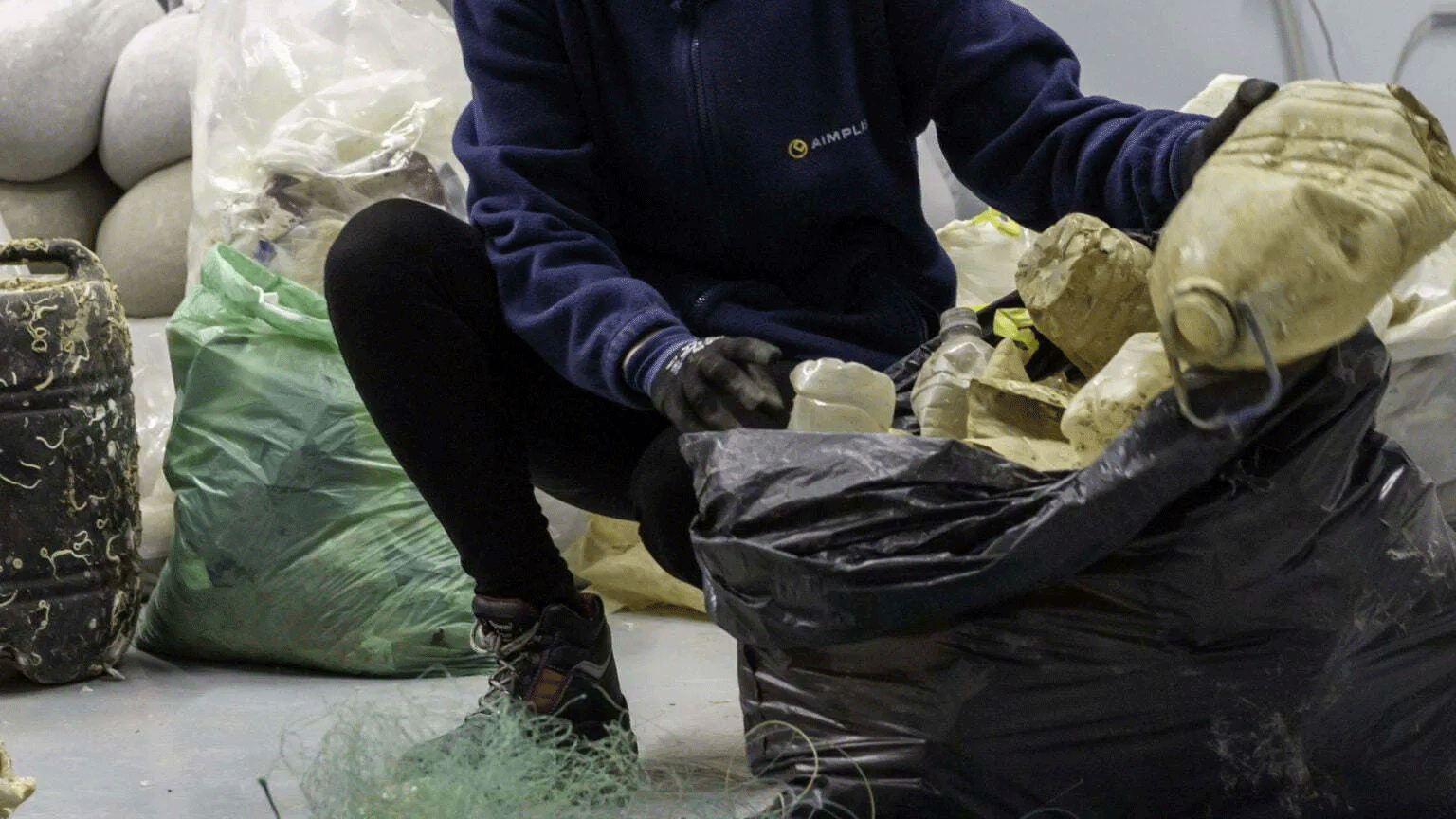
Recycled polyester heads to New York

Indorama Ventures is supplying fabrics woven with deja™ recycled polyester yarn to Thai label KH Editions. Two looks and accessories from the ten-look Spring/Summer 2027 collection will be shown in New York on 15 September during New York Fashion Week.

The collaboration builds on Indorama Ventures’ RECO programme, launched in 2011 and expanded into RECO Collective in 2023. The initiative combines recycled materials and industry support with emerging designers, aiming to demonstrate that circular inputs can meet the quality and aesthetic requirements of internationally presented fashion.

For the wider value chain, the project is a useful example of material innovation being connected to design, brand building and market access rather than remaining a stand-alone recycling story. Commercial scaling will ultimately depend on consistent quality, available volumes and the ability of recycled yarns to work within established fabric and garment production.

Indorama Ventures is supplying fabrics woven with deja™ recycled polyester yarn to Thai label KH Editions. Two looks and accessories from the ten-look Spring/Summer 2027 collection will be shown in New York on 15 September during New York Fashion Week.

The collaboration builds on Indorama Ventures’ RECO programme, launched in 2011 and expanded into RECO Collective in 2023. The initiative combines recycled materials and industry support with emerging designers, aiming to demonstrate that circular inputs can meet the quality and aesthetic requirements of internationally presented fashion.

For the wider value chain, the project is a useful example of material innovation being connected to design, brand building and market access rather than remaining a stand-alone recycling story. Commercial scaling will ultimately depend on consistent quality, available volumes and the ability of recycled yarns to work within established fabric and garment production.

Source:

Indorama Ventures Public Company Limited


Photo: BASF
11.09.2026

BASF targets circular footwear

BASF will use SIMAC 2026 in Milan to present polyurethane and thermoplastic-polyurethane concepts spanning the footwear life cycle. The portfolio includes Elastopan SpringPURe for thermoformed midsoles together with Elastollan and Infinergy solutions.

Working with Gusbi, BASF has developed an automated heat-press process for lightweight midsoles designed to combine low density, design freedom and durable comfort with almost waste-free processing. With DESMA, the company is also showing a closed-loop concept that combines PU and TPU and links mechanical and chemical recycling. Three concept shoes illustrate separation and recycling routes.

The company is also introducing Infinergy Revolution, an energy-efficient heat-press processing route for expanded TPU. The approach is intended to enable lighter components, new surface designs and improved recyclability. The broader signal is that footwear development is increasingly bringing performance, disassembly, material recovery and processing energy into the same engineering discussion.

BASF will use SIMAC 2026 in Milan to present polyurethane and thermoplastic-polyurethane concepts spanning the footwear life cycle. The portfolio includes Elastopan SpringPURe for thermoformed midsoles together with Elastollan and Infinergy solutions.

Working with Gusbi, BASF has developed an automated heat-press process for lightweight midsoles designed to combine low density, design freedom and durable comfort with almost waste-free processing. With DESMA, the company is also showing a closed-loop concept that combines PU and TPU and links mechanical and chemical recycling. Three concept shoes illustrate separation and recycling routes.

The company is also introducing Infinergy Revolution, an energy-efficient heat-press processing route for expanded TPU. The approach is intended to enable lighter components, new surface designs and improved recyclability. The broader signal is that footwear development is increasingly bringing performance, disassembly, material recovery and processing energy into the same engineering discussion.

KeyVisual bluesign technologies ag
11.09.2026

bluepass prepares for EmpCo

bluesign has set out how its bluepass certification scheme is intended to meet the EU Empowering Consumers for the Green Transition Directive, which becomes enforceable on 27 September 2026. The rules tighten the conditions for environmental and social claims and for certification schemes behind consumer-facing sustainability labels.

According to bluesign, bluepass separates standard setting, assessment and product certification. Consumer-facing products are certified by an independent conformity-assessment body accredited to ISO/IEC 17065. The system also includes publicly available requirements, annual surveillance with product testing, equal access conditions and structured stakeholder consultation.

For existing System Partners, bluesign says current certifications remain valid. Existing bluesign PRODUCT and APPROVED labels do not need to be withdrawn immediately; the move to bluepass can take place with the next label-production cycle. The key compliance point remains that legal responsibility for a claim rests with the company placing the product on the EU market.

bluesign has set out how its bluepass certification scheme is intended to meet the EU Empowering Consumers for the Green Transition Directive, which becomes enforceable on 27 September 2026. The rules tighten the conditions for environmental and social claims and for certification schemes behind consumer-facing sustainability labels.

According to bluesign, bluepass separates standard setting, assessment and product certification. Consumer-facing products are certified by an independent conformity-assessment body accredited to ISO/IEC 17065. The system also includes publicly available requirements, annual surveillance with product testing, equal access conditions and structured stakeholder consultation.

For existing System Partners, bluesign says current certifications remain valid. Existing bluesign PRODUCT and APPROVED labels do not need to be withdrawn immediately; the move to bluepass can take place with the next label-production cycle. The key compliance point remains that legal responsibility for a claim rests with the company placing the product on the EU market.

Source:

bluesign technologies ag

11.09.2026

Wool turns sunlight into clean water

Editorial relevance: Very high – a measurable functional-textile application combining natural fibre and surface engineering.
Cornell University researchers have demonstrated that polydopamine-dyed wool can serve as a low-cost, renewable material for solar-driven water purification. The approach uses interfacial solar vapor generation, concentrating solar heat at the water surface while a textile structure transports water and converts it into vapor.

The strongest configuration used ultrablack wool positioned vertically and illuminated from both sides. It produced 2.43 kilograms of water per square metre of fabric per hour, while polydopamine-only wool achieved 2.21 kilograms. Both rates were nearly twice those reported for conventional horizontal two-dimensional evaporation systems. The material also operated continuously for ten hours without salt accumulation.

Editorial relevance: Very high – a measurable functional-textile application combining natural fibre and surface engineering.
Cornell University researchers have demonstrated that polydopamine-dyed wool can serve as a low-cost, renewable material for solar-driven water purification. The approach uses interfacial solar vapor generation, concentrating solar heat at the water surface while a textile structure transports water and converts it into vapor.

The strongest configuration used ultrablack wool positioned vertically and illuminated from both sides. It produced 2.43 kilograms of water per square metre of fabric per hour, while polydopamine-only wool achieved 2.21 kilograms. Both rates were nearly twice those reported for conventional horizontal two-dimensional evaporation systems. The material also operated continuously for ten hours without salt accumulation.

The work is relevant to technical textiles because performance depends on fibre choice, dye chemistry, surface structure and textile geometry acting together. Salt levels in the collected water were below the World Health Organization drinking-water threshold. Future work will test rainwater and wastewater and improve water-collection designs.


Source:

Cornell University / Cornell Chronicle

Credit: Design Zentrum Hamburg
10.09.2026

Hamburg Textile Week puts future fabrics on show

Hamburg Textile Week will present 14 projects from Germany, the Netherlands and Sweden from 1 to 11 October 2026 under the theme “Stoffe mit Zukunft” – Fabrics with a Future. The program focuses on new materials, processes and technologies, including textile energy systems, bio-based materials and interactive fabrics.

Projects range from SkySails kites that generate electricity from high-altitude wind and revoltech’s hemp-residue-based LOVR material to “Talking Textiles,” which translates touch into sound in real time. A Stühmer|Scholz exoskeleton uses textile components as the interface between body and technology. Other exhibits include a curtain woven with thin-film solar cells and work on bio-based dyeing.

Design Zentrum Hamburg is joined by the FABRIC – Future Fashion Lab for talks and workshops, with HAW Hamburg, AMD Akademie Mode & Design, Made auf Veddel and Greenpeace also participating. The format brings research, design, production and circular-design questions into one city-wide textile program.

Hamburg Textile Week will present 14 projects from Germany, the Netherlands and Sweden from 1 to 11 October 2026 under the theme “Stoffe mit Zukunft” – Fabrics with a Future. The program focuses on new materials, processes and technologies, including textile energy systems, bio-based materials and interactive fabrics.

Projects range from SkySails kites that generate electricity from high-altitude wind and revoltech’s hemp-residue-based LOVR material to “Talking Textiles,” which translates touch into sound in real time. A Stühmer|Scholz exoskeleton uses textile components as the interface between body and technology. Other exhibits include a curtain woven with thin-film solar cells and work on bio-based dyeing.

Design Zentrum Hamburg is joined by the FABRIC – Future Fashion Lab for talks and workshops, with HAW Hamburg, AMD Akademie Mode & Design, Made auf Veddel and Greenpeace also participating. The format brings research, design, production and circular-design questions into one city-wide textile program.

Source:

Design Zentrum Hamburg / Hamburg Kreativ Gesellschaft

10.09.2026

Textile Exchange raises the bar on materials

Textile Exchange has published new guidance setting out the next requirements for brands and retailers in its Action Cohort. From 2027, participating companies will be required to report material sourcing volumes through the Materials Benchmark and set measurable targets for the share of materials sourced through standards, certification or other programs that verify preferred production practices.

The targets should cover relevant key materials accounting for at least 80% of a company’s material portfolio. Textile Exchange identifies common intervention areas including pesticide and fertilizer reduction, deforestation and conversion, animal welfare, recycled feedstocks with a focus on textile inputs, and human-rights due diligence.

Aggregate cohort results will be made public, while more detailed results will be shared with participating brands. The framework therefore tightens the connection between voluntary membership, quantitative materials data and verifiable sourcing objectives, increasing the need for brands and suppliers to document material strategies with comparable evidence.

Textile Exchange has published new guidance setting out the next requirements for brands and retailers in its Action Cohort. From 2027, participating companies will be required to report material sourcing volumes through the Materials Benchmark and set measurable targets for the share of materials sourced through standards, certification or other programs that verify preferred production practices.

The targets should cover relevant key materials accounting for at least 80% of a company’s material portfolio. Textile Exchange identifies common intervention areas including pesticide and fertilizer reduction, deforestation and conversion, animal welfare, recycled feedstocks with a focus on textile inputs, and human-rights due diligence.

Aggregate cohort results will be made public, while more detailed results will be shared with participating brands. The framework therefore tightens the connection between voluntary membership, quantitative materials data and verifiable sourcing objectives, increasing the need for brands and suppliers to document material strategies with comparable evidence.

Wooden Couchcover, Buro Belén. Photography: Belén, Guus Schoth.
Wooden Couchcover, Buro Belén.
10.09.2026

Home-Maxxing shapes Heimtextil Trends 27/28

Heimtextil Trends 27/28 place the tension between optimization and respite at the center of the coming interior-textile season. Under the theme “Home-Maxxing – The Performance of Everyday Living,” Heimtextil and Milan design platform Alcova explore how technology, functionality and sensory material qualities are reshaping homes, hospitality, workplaces and healthcare environments.

Textiles are framed explicitly as functional components: they can regulate light, absorb sound or filter air. At the same time, tactility, durability and understandable construction are gaining importance. The three directions, Staged Competence, Inside, Out and Hyper Presence, range from visibly engineered performance and exposed connections to natural fibers and surfaces whose physical qualities take priority.

The trends will be presented in the Trend Space at Heimtextil from 12 to 15 January 2027. For home and contract-textile suppliers, the key message is that technical performance is no longer expected to disappear into the background; it increasingly becomes part of the visual and material language of a product.


Heimtextil Trends 27/28 place the tension between optimization and respite at the center of the coming interior-textile season. Under the theme “Home-Maxxing – The Performance of Everyday Living,” Heimtextil and Milan design platform Alcova explore how technology, functionality and sensory material qualities are reshaping homes, hospitality, workplaces and healthcare environments.

Textiles are framed explicitly as functional components: they can regulate light, absorb sound or filter air. At the same time, tactility, durability and understandable construction are gaining importance. The three directions, Staged Competence, Inside, Out and Hyper Presence, range from visibly engineered performance and exposed connections to natural fibers and surfaces whose physical qualities take priority.

The trends will be presented in the Trend Space at Heimtextil from 12 to 15 January 2027. For home and contract-textile suppliers, the key message is that technical performance is no longer expected to disappear into the background; it increasingly becomes part of the visual and material language of a product.


A matrix for recycled-fiber quality Graphic: (c) Uster Technologies AG
10.09.2026

A matrix for recycled-fiber quality

Uster Technologies has introduced a structured matrix for assessing mechanically recycled fibers. The approach is intended to help spinners deal with the wider variability of recycled feedstocks and relate measured fiber properties more directly to processing decisions and intended end uses.

Mechanically recycled cotton typically shows greater variation than virgin material because fiber length is reduced and input streams differ in origin and processing history. A consistent assessment framework can therefore support bale management, blending decisions and the adjustment of spinning parameters. Uster positions the Recycled Fiber Matrix as a practical bridge between increasing recycled-content targets and reliable quality control.

This matters for circularity at industrial scale. More recycling capacity alone does not guarantee usable yarn feedstock; recycled fibers also need to enter established production systems with predictable performance. Testing and data interpretation are becoming part of the infrastructure required to move textile-to-textile recycling from availability to repeatable production.

Uster Technologies has introduced a structured matrix for assessing mechanically recycled fibers. The approach is intended to help spinners deal with the wider variability of recycled feedstocks and relate measured fiber properties more directly to processing decisions and intended end uses.

Mechanically recycled cotton typically shows greater variation than virgin material because fiber length is reduced and input streams differ in origin and processing history. A consistent assessment framework can therefore support bale management, blending decisions and the adjustment of spinning parameters. Uster positions the Recycled Fiber Matrix as a practical bridge between increasing recycled-content targets and reliable quality control.

This matters for circularity at industrial scale. More recycling capacity alone does not guarantee usable yarn feedstock; recycled fibers also need to enter established production systems with predictable performance. Testing and data interpretation are becoming part of the infrastructure required to move textile-to-textile recycling from availability to repeatable production.

(c) De Montfort University (DMU)
08.09.2026

Smart textiles: flexible supercapacitors could power sensors directly in sportswear

An international research team involving De Montfort University Leicester is examining how flexible supercapacitors could be integrated into sports clothing. The concept goes beyond adding another sensor to a garment. Instead, the textile would become part of the energy architecture: it could store electricity and supply distributed sensors embedded across the garment. Combined with technologies that harvest energy from body movement or heat, running tops, cycling kit or gym wear could eventually generate and store part of the power needed for continuous monitoring.

The researchers identify knitted structures and conductive yarns as particularly promising because they can combine electrical functionality with stretch, flexibility and breathability. Carbon-based electrode materials such as graphene and carbon nanotubes are also considered because of their energy-storage potential and mechanical flexibility. Compared with conventional batteries, supercapacitors can charge and discharge very rapidly, while potentially being made light and flexible enough for body-worn applications.

An international research team involving De Montfort University Leicester is examining how flexible supercapacitors could be integrated into sports clothing. The concept goes beyond adding another sensor to a garment. Instead, the textile would become part of the energy architecture: it could store electricity and supply distributed sensors embedded across the garment. Combined with technologies that harvest energy from body movement or heat, running tops, cycling kit or gym wear could eventually generate and store part of the power needed for continuous monitoring.

The researchers identify knitted structures and conductive yarns as particularly promising because they can combine electrical functionality with stretch, flexibility and breathability. Carbon-based electrode materials such as graphene and carbon nanotubes are also considered because of their energy-storage potential and mechanical flexibility. Compared with conventional batteries, supercapacitors can charge and discharge very rapidly, while potentially being made light and flexible enough for body-worn applications.

The potential use case extends beyond sport. A sensor-rich garment could monitor heart rate, body temperature, muscle activity, movement and fatigue at several points on the body rather than relying on a single wrist-mounted device. In healthcare, similar garments could support continuous monitoring and provide clinicians with information collected from different body regions. The textile would therefore shift from being a passive carrier to acting as a distributed sensing and energy platform.

Crucially, the DMU source does not present a finished smart garment. The underlying paper sets out a technological framework that brings together developments in electronics, materials science, manufacturing and flexible textiles. Considerable barriers remain. Electronic fabrics would have to tolerate sweat, repeated stretching and bending and regular laundering without losing performance. They must also remain comfortable and breathable, and eventually be manufactured at a cost and scale compatible with mainstream clothing.

Circularity is another design requirement. The study discusses recyclable or biodegradable materials, greener manufacturing and garment architectures that allow electronic components to be recovered at end of life rather than creating another stream of electronic waste. The next step is therefore practical development and funding, not commercial launch. That distinction is important: the work is a credible roadmap for e-textile integration, but its industrial maturity still has to be demonstrated.

08.09.2026

DSC launches MORPH materials platform

Dahsheng Company has introduced MORPH, a materials platform that combines foams, textiles, films and functional layers into application-specific engineered systems. Brands can select surface materials, foam cores, colours, density, thickness, perforation and additional functional layers. The platform can be supplied as moulded components, sheet materials or fully integrated material systems, with footwear and sports applications a clear focus.

At the core are DSC’s DREAMCELL open-cell and DURAPONTEX closed-cell foam technologies. The company says more than 100 fabric and colour options are available for the top layer. Depending on the construction, the system can combine comfort, low weight, durability, breathability and impact protection. The emphasis therefore shifts from a single foam or textile to a coordinated multilayer material architecture.

Dahsheng Company has introduced MORPH, a materials platform that combines foams, textiles, films and functional layers into application-specific engineered systems. Brands can select surface materials, foam cores, colours, density, thickness, perforation and additional functional layers. The platform can be supplied as moulded components, sheet materials or fully integrated material systems, with footwear and sports applications a clear focus.

At the core are DSC’s DREAMCELL open-cell and DURAPONTEX closed-cell foam technologies. The company says more than 100 fabric and colour options are available for the top layer. Depending on the construction, the system can combine comfort, low weight, durability, breathability and impact protection. The emphasis therefore shifts from a single foam or textile to a coordinated multilayer material architecture.

For textile developers, the interface between softgoods and foam engineering is the most relevant aspect. Face fabrics, synthetic surfaces, films, foam and backing layers can be engineered together for the end use. That can streamline material development for brands, but it also raises questions around adhesion, long-term durability, recyclability and the end-of-life handling of heterogeneous multilayer constructions.

DSC does not publish standardised performance values, comparative test data or recycling routes for MORPH in the announcement. Performance and environmental claims should therefore be treated as manufacturer statements at this stage. The editorial significance lies in the platform approach and the deeper integration of textile and polymer functional layers within one materials-development process.

Source:

Dahsheng Company / DSC

Image by Sallman Hayat, Pixabay
08.09.2026

IIT Delhi and Indian Air Force launch AI research for parachutes and safety equipment

The Indian Institute of Technology Delhi (IIT Delhi) and the Indian Air Force (IAF) are combining research expertise in technical textiles. According to IIT Delhi’s Department of Textile and Fibre Engineering, the cooperation will focus on AI-powered research for parachutes and other safety equipment.

The initiative brings together textile material and structural expertise with data-driven methods. In parachute systems, material ageing, fabric construction, seams and joining technologies, as well as behaviour under dynamic loads, are safety-critical. AI models can support faster evaluation of testing data, condition classification and data-based development or maintenance decisions.

For the technical-textile industry, the cooperation is particularly relevant because it demonstrates how established textile testing and engineering can be combined with digital models. Beyond military use, the approach may also be relevant to rescue systems, personal protective equipment and other highly loaded textile structures.

The Indian Institute of Technology Delhi (IIT Delhi) and the Indian Air Force (IAF) are combining research expertise in technical textiles. According to IIT Delhi’s Department of Textile and Fibre Engineering, the cooperation will focus on AI-powered research for parachutes and other safety equipment.

The initiative brings together textile material and structural expertise with data-driven methods. In parachute systems, material ageing, fabric construction, seams and joining technologies, as well as behaviour under dynamic loads, are safety-critical. AI models can support faster evaluation of testing data, condition classification and data-based development or maintenance decisions.

For the technical-textile industry, the cooperation is particularly relevant because it demonstrates how established textile testing and engineering can be combined with digital models. Beyond military use, the approach may also be relevant to rescue systems, personal protective equipment and other highly loaded textile structures.

Source:

Indian Institute of Technology Delhi (IIT Delhi), Department of Textile and Fibre Engineering

07.09.2026

EURATEX calls for €10 EU handling fee on low-value e-commerce imports

The European Apparel and Textile Confederation (EURATEX) is calling for an EU handling fee of around €10 on low-value e-commerce consignments entering the European market. The association argues that the fee should contribute to the costs of customs controls, market surveillance and product-safety enforcement associated with the rapidly growing volume of direct-to-consumer imports.

Low-value e-commerce imports into the European Union have increased sharply in recent years. According to the European Commission, around 5.9 billion low-value e-commerce items entered the EU in 2025, up 26% from 2024. The growth of direct shipments from non-EU online retailers and marketplaces has increased the workload for customs and market-surveillance authorities and intensified the debate about compliance with European product, safety and customs requirements.

The European Apparel and Textile Confederation (EURATEX) is calling for an EU handling fee of around €10 on low-value e-commerce consignments entering the European market. The association argues that the fee should contribute to the costs of customs controls, market surveillance and product-safety enforcement associated with the rapidly growing volume of direct-to-consumer imports.

Low-value e-commerce imports into the European Union have increased sharply in recent years. According to the European Commission, around 5.9 billion low-value e-commerce items entered the EU in 2025, up 26% from 2024. The growth of direct shipments from non-EU online retailers and marketplaces has increased the workload for customs and market-surveillance authorities and intensified the debate about compliance with European product, safety and customs requirements.

Since 1 July 2026, the EU has applied a temporary customs duty of €3 to low-value consignments of up to €150. The measure replaced the previous customs-duty exemption for such imports and is intended as a transitional arrangement until the new EU Customs Data Hub becomes operational. It is separate from the EU-wide handling fee for small e-commerce consignments provided for under the broader reform of the EU customs framework.

Following the latest agreement on the customs reform, the handling fee is to be introduced by 1 November 2026. Its level will be determined by the European Commission before the member states begin applying it.

Against this background, EURATEX used Première Vision in Paris to argue that the handling fee should be set at a level that more closely reflects the actual enforcement costs associated with the large number of individual consignments entering the Single Market.

The association proposes a benchmark of around €10 per parcel. According to EURATEX, the amount should ultimately be based on a detailed assessment of the costs incurred by customs authorities, market-surveillance bodies and other public authorities involved in checking imported goods.

Processing large numbers of small consignments requires customs declarations to be assessed, risks to be analysed and compliance requirements to be checked. Market-surveillance authorities are also responsible for identifying unsafe or non-compliant products and enforcing EU product-safety rules.

EURATEX therefore argues that the handling fee should primarily be viewed as an enforcement instrument rather than simply as a trade or taxation measure. Revenues generated by the fee should, in the association's view, be linked to additional resources for customs controls, market surveillance, product-safety enforcement and risk-analysis systems.

The proposed €10 level is a EURATEX position and has not been adopted by the European Union. The European Commission is responsible for determining the actual amount of the forthcoming EU handling fee.

The customs reform also changes the responsibilities of companies involved in distance selling to EU consumers. Online platforms and sellers covered by the new rules are to be treated as importers for customs purposes and will therefore assume greater responsibility for customs formalities and duty payments rather than leaving these obligations with individual consumers.

EURATEX considers stronger platform responsibility an important element in addressing non-compliant imports but also points to the risk of alternative logistics structures being used to circumvent controls. More intensive checks on individual direct-to-consumer parcels should not, according to the association, result in goods simply being channelled through bulk imports, EU warehouses or fulfilment centres instead.

Effective enforcement would therefore need to cover different logistics models and provide customs and market-surveillance authorities with sufficiently detailed information on both business-to-consumer and business-to-business flows.

The European textile and clothing industry comprises nearly 200,000 companies in the EU-27 and employs around 1.2 million people. The sector generates annual turnover of approximately €166 billion. Most companies are small and medium-sized enterprises.

For EURATEX, the debate about low-value imports is consequently also a question of competitive conditions. The association is calling for companies selling products to European consumers, irrespective of their country of establishment or distribution model, to be identifiable and subject to comparable customs, product-safety and market-surveillance requirements.


Source:

European Apparel and Textile Confederation EURATEX

PITAKA's Brand Event in Berlin: 'Signals in the Wind' Photo (c) PITAKA
PITAKA's Brand Event in Berlin: 'Signals in the Wind'
07.09.2026

PITAKA turns aramid fibre into a deliberately irregular woven surface

PITAKA has introduced a new weaving technique for aramid fibre at a brand event in Berlin. The company is best known for thin smartphone cases and accessories made with aramid. Its new “Trace Form” technique is intended to avoid a completely uniform programmed surface: selected fibres are allowed to drift from their prescribed path so that texture emerges from controlled irregularity.

The first application is the “Wind Over Wheat Trace Form Edition”, with a surface intended to evoke wind moving across a wheat field and offered in three finishes. PITAKA presents the method as an interaction between industrial precision, material response and human judgement. For textile and material developers, the notable point is that a high-performance fibre normally valued for strength and low weight is being used as the visible aesthetic element of the product itself.

PITAKA has introduced a new weaving technique for aramid fibre at a brand event in Berlin. The company is best known for thin smartphone cases and accessories made with aramid. Its new “Trace Form” technique is intended to avoid a completely uniform programmed surface: selected fibres are allowed to drift from their prescribed path so that texture emerges from controlled irregularity.

The first application is the “Wind Over Wheat Trace Form Edition”, with a surface intended to evoke wind moving across a wheat field and offered in three finishes. PITAKA presents the method as an interaction between industrial precision, material response and human judgement. For textile and material developers, the notable point is that a high-performance fibre normally valued for strength and low weight is being used as the visible aesthetic element of the product itself.

The release leaves important technical questions unanswered. It provides no fibre fineness, weave parameters, mechanical data or quantified performance difference versus earlier aramid constructions. It would therefore be misleading to describe the launch as a new performance class. What can be stated is that PITAKA is translating a deliberately variable woven structure into a commercial aramid product and broadening the interface between technical fibres, composite structures and lifestyle design.

The limited Trace Form edition is scheduled to launch on 17 September. For textile-industry coverage, the relevant angle is not the consumer-electronics accessory itself but the material strategy: technical fibres can acquire additional value through construction, surface appearance and tactile expression beyond their conventional performance role.

More information:
PITAKA aramid
Source:

PITAKA  

07.09.2026

CENTRESTAGE reports record attendance with more than 12,000 trade buyers

The eleventh edition of Hong Kong fashion event CENTRESTAGE closed with a new attendance record. According to the Hong Kong Trade Development Council, the four-day fair attracted more than 12,000 trade buyers from 93 countries and regions. Buyer numbers from Vietnam, Russia, the United States and Malaysia showed notable growth, providing a current indicator of Hong Kong’s reach as a fashion and sourcing platform.

The attendance figures also need to be read in the context of the event format. CENTRESTAGE formed part of Hong Kong Fashion Fest and combined design presentations, brand showcases, runway programmes and commercial meetings. Other lifestyle events ran concurrently. CENTRESTAGE and Salon de Time were also opened to the public free of charge, together recording more than 20,000 public attendances.

The eleventh edition of Hong Kong fashion event CENTRESTAGE closed with a new attendance record. According to the Hong Kong Trade Development Council, the four-day fair attracted more than 12,000 trade buyers from 93 countries and regions. Buyer numbers from Vietnam, Russia, the United States and Malaysia showed notable growth, providing a current indicator of Hong Kong’s reach as a fashion and sourcing platform.

The attendance figures also need to be read in the context of the event format. CENTRESTAGE formed part of Hong Kong Fashion Fest and combined design presentations, brand showcases, runway programmes and commercial meetings. Other lifestyle events ran concurrently. CENTRESTAGE and Salon de Time were also opened to the public free of charge, together recording more than 20,000 public attendances.

For manufacturers, brands and sourcing teams, the buyer composition is more informative than the public visitor count. Buyers from 93 markets point to a broad international sourcing base. Growth from Vietnam and Malaysia also reflects Southeast Asia’s increasing importance as a consumer, production and sourcing region. Higher buyer numbers from the US are noteworthy against the backdrop of changing trade and sourcing configurations.

The figures are organiser data and should therefore be treated as event metrics rather than independent market statistics. Even so, they are useful for industry monitoring. They suggest that physical B2B platforms continue to matter alongside digital sourcing tools when brands, designers, suppliers and international buyers need to establish new relationships and reassess regional production networks.

Source:

Hong Kong Trade Development Council

Graphic (c) Discover e-Solutions (DeSL)
07.09.2026

DeSL generates Digital Product Passports directly

DeSL has launched a Digital Product Passport solution built directly on product, material, supplier, quality and certification data managed in Product Lifecycle Management. The approach addresses a central challenge in emerging DPP requirements: companies need to combine information from multiple functions while retaining evidence of where data came from, how it was approved and whether supporting documentation remains valid.

Rather than creating a separate static passport record, DeSL generates the DPP from the current approved information held in PLM. Published information therefore remains connected to its underlying product and supplier records, version history and approvals. This can become particularly important when material composition, suppliers, certifications or quality information change during the product lifecycle.

DeSL has launched a Digital Product Passport solution built directly on product, material, supplier, quality and certification data managed in Product Lifecycle Management. The approach addresses a central challenge in emerging DPP requirements: companies need to combine information from multiple functions while retaining evidence of where data came from, how it was approved and whether supporting documentation remains valid.

Rather than creating a separate static passport record, DeSL generates the DPP from the current approved information held in PLM. Published information therefore remains connected to its underlying product and supplier records, version history and approvals. This can become particularly important when material composition, suppliers, certifications or quality information change during the product lifecycle.

The platform can combine product specifications, materials, supplier information, declarations, inspections and certifications. DeSL’s AI document intelligence is intended to analyse supporting documents, identify required information and expiry dates, and compare documentation with information maintained in PLM. Passports can be generated at the appropriate product level and delivered via QR codes, portals, retail systems and open APIs. Different audiences can receive different information while still drawing from the same governed product record.

For fashion and textile companies, the important shift is conceptual: DPP compliance becomes a master-data and governance challenge rather than simply a publishing task. The software announcement does not prove automatic compliance with every future regulatory requirement. It does, however, demonstrate a credible architecture in which product passports are generated from the same data used for product development, quality, supplier management and compliance.

Source:

Discover e-Solutions (DeSL)

01.09.2026

MELANGE project moves colour design upstream in interior-textile production

The new Horizon Europe project MELANGE aims to reorganise how colour is designed and applied in interior textiles. Rather than treating coloration mainly as a finishing-stage operation, the project moves colour decisions upstream and explores fibre-stage technologies including spin, dope and solution dyeing, as well as the use of pre-coloured recycled fibres. The rationale is that conventional coloration consumes substantial water, energy and chemicals, while the pursuit of near-perfect uniformity can drive additional trials and material losses.

The new Horizon Europe project MELANGE aims to reorganise how colour is designed and applied in interior textiles. Rather than treating coloration mainly as a finishing-stage operation, the project moves colour decisions upstream and explores fibre-stage technologies including spin, dope and solution dyeing, as well as the use of pre-coloured recycled fibres. The rationale is that conventional coloration consumes substantial water, energy and chemicals, while the pursuit of near-perfect uniformity can drive additional trials and material losses.

MELANGE brings together nine partners from seven European countries under the leadership of Aalto University, with Textile ETP responsible for dissemination and stakeholder engagement. The project proposes treating variation as a design feature rather than automatically as a defect. It draws inspiration from Prato’s practice of blending pre-coloured recycled fibres by shade to avoid re-dyeing. According to the project communication, the approach aims to reduce water and chemical use by up to 50% compared with conventional finishing-stage processes. Business models, B2B marketing, standards and policy are also part of the work.

Source:

Textile ETP / MELANGE consortium