From the Sector

from to
Reset
3460 results
Fibre Extrusion Technology Photo Fibre Extrusion Technology
30.07.2025

Fibre Extrusion Technology at three major trade shows in 2025

Fibre Extrusion Technology Ltd (FET) of Leeds, UK will be exhibiting at three major trade shows in Asia and Europe over the next 3 months.

This sequence begins in early September at Cinte Techtextil China, the leading trade fair for technical textile and nonwoven products in Asia. FET will be taking a 30sq. metre stand in conjunction with its agent and partner, Chemtax in Hall W5.

This will be followed by ITMA ASIA in Singapore, aimed at the textile and garment industry in South and Southeast Asia and the Middle East. This exhibition takes place at the end of October and FET can be found at Hall H4.

This trio of events is rounded off at COMPAMED 2025 between 17-20 November in Dusseldorf, Germany. This exhibition is widely recognised as a major international trade fair for the medical technology supplier sector. FET’s will be exhibiting in Hall 08B.

Fibre Extrusion Technology Ltd (FET) of Leeds, UK will be exhibiting at three major trade shows in Asia and Europe over the next 3 months.

This sequence begins in early September at Cinte Techtextil China, the leading trade fair for technical textile and nonwoven products in Asia. FET will be taking a 30sq. metre stand in conjunction with its agent and partner, Chemtax in Hall W5.

This will be followed by ITMA ASIA in Singapore, aimed at the textile and garment industry in South and Southeast Asia and the Middle East. This exhibition takes place at the end of October and FET can be found at Hall H4.

This trio of events is rounded off at COMPAMED 2025 between 17-20 November in Dusseldorf, Germany. This exhibition is widely recognised as a major international trade fair for the medical technology supplier sector. FET’s will be exhibiting in Hall 08B.

“This is a very hectic period for FET,” commented FET’s Managing Director Richard Slack. “However, these exhibitions provide a great opportunity for smaller specialist companies like FET to raise our profile on the international stage and reflects our growing influence in the fields of technical textiles, medical device innovation and many other sectors.”

FET designs, develops and manufactures extrusion equipment for a wide range of high value textile material applications worldwide and the diversity of these three exhibitions illustrates FET’s scope in the industry.

29.07.2025

Intertextile Shanghai Home Textiles – Autumn Edition 2025 fringe programme

Going beyond the comprehensive showcase of the home furnishing sector, Asia’s leading home textile fair’s fringe programme will continue to be an integral part of the three-day event, but featuring a distinct and more sector-driven redesign. Ranging from forums and seminars to panel discussions and product launches, the focus will centre on four key themes: NextGen, Palette, Connector, and Go-Green. From 20 – 22 August 2025 at the National Exhibition and Convention Center in Shanghai, the fair is set to promote collaboration and innovation among diverse industry experts, drive sustainable development, and engage attendees through interactive sessions for practical application.

The refreshed fringe programme’s four focal themes will explore various aspects of the industry, highlighting new perspectives and insights that will shape the future of home textiles. 

Going beyond the comprehensive showcase of the home furnishing sector, Asia’s leading home textile fair’s fringe programme will continue to be an integral part of the three-day event, but featuring a distinct and more sector-driven redesign. Ranging from forums and seminars to panel discussions and product launches, the focus will centre on four key themes: NextGen, Palette, Connector, and Go-Green. From 20 – 22 August 2025 at the National Exhibition and Convention Center in Shanghai, the fair is set to promote collaboration and innovation among diverse industry experts, drive sustainable development, and engage attendees through interactive sessions for practical application.

The refreshed fringe programme’s four focal themes will explore various aspects of the industry, highlighting new perspectives and insights that will shape the future of home textiles. 

NextGen: the future of interior textiles
Circular textile advocate Ms Anja Bisgaard Gaede will lead discussions in the Future & Textile Zone, where participants can discover future-focused materials, AI-powered design tools, and engaging interactions. Four attractions within this zone include:

  • Future of Textiles: curated selection of 20+ sustainable, regenerative, circular, or bio-based textiles – spanning from bioengineering to waste-derived materials for interiors.
  • Try It Yourself: attendees can enjoy hands-on previews of home textile products brought by Ms Anja Bisgaard Gaede. 
  • AI Demos: AI innovators will share how to boost efficiency by auto-generating patterns, optimising fabric production, and cutting time and costs.
  • Textile Hunt: participants can join the Textile Hunt game to uncover the future of textiles in the zone and win prizes.

Palette: emphasising creativity and trendsetting in home textiles
Through seminars and guided tours, both Western and Eastern designers will share their extensive industry experience. Attendees can engage closely with international design masters, gaining insights into textile applications and effective selection of home textile products. Notable professionals include Ms Camilla Rudnicki, a renowned Danish interior designer focused on creating joy and warmth in homes through unique interior solutions, and Mr Akiyuki Sasaki, a Japanese designer known for simple yet meaningful designs that enhance daily life, incorporating cultural elements from Japan and beyond.

Connector: fostering business growth and closer cooperation across the industry
This theme aims to strengthen global partnerships through strategic insights from industry leaders in Colombia, Uzbekistan, and Vietnam. Key speakers include Mr Juan Fernando Loaiza (Economic & Business Model Researcher in Fashion of Inexmoda, Colombia), Mr Shokhrukh Kayumov (Founder & CEO of TextileFinds.com, Uzbekistan) and Ms Vivie Wei (Country Director of Dezan Shira & Associates, Vietnam) respectively, who will equip investors, manufacturers and business partners with critical market knowledge and practical guidance for successfully engaging with the home textiles sector. 

Additionally, the Home Textiles x Interior Decoration: Summit on Industry Reshaping and Advancement will unite leaders from home textile brands, interior design experts, and institutions to discuss industry upgrade prospects, offering visitors insights into category innovation, opportunities in aging-adaptation renovations and Gen Z consumer demands, while guest speakers will also share practical expertise to help industry players gain a competitive edge in the evolving market.

Go-Green: the sector’s latest sustainability trends
A panel discussion featuring sustainability experts will explore diverse aspects of sustainability in home textiles. Professor Yuen from the Hong Kong Polytechnic University will lead the discussion on business models, industry trends and branding. Forums will also be held to provide in-depth presentations by key exhibitors, including Patternsfrom Agency (Finland), who will present Greening the Home Textile Industry: Drivers and Manufacturer Strategies, and Fu-tex (Hong Kong) Co Limited will discuss Physical Weaving: Leading the Total Blackout Innovation.

Other events include Designer's Style: the 31st Intertextile Home Textile Design Carnival and Designer’s Pick Award Ceremony, and From Cross-Boundary to Boundless: The 11th Home Furniture & Textile Top Business Matching, and 2026 / 27 China Home Textile Trend Area. 

Intertextile Shanghai Home Textiles – Autumn Edition is organised by Messe Frankfurt (HK) Ltd; the Sub-Council of Textile Industry, CCPIT; and the China Home Textile Association (CHTA).

24.07.2025

Bluesign: 25 Years as a Global Leader in Sustainable Textile Innovation

2025 marks a pivotal milestone for bluesign, the global authority in sustainable chemical and environmental management for the textile and fashion industry, as it celebrates 25 years of advancing cleaner, safer, and more responsible manufacturing practices across the global supply chain.

Since 2000, the Swiss-founded company has led the global charge towards a more sustainable future, developing a science-based, input stream management system to eliminate harmful substances at the source of textile production. Now spanning 900+ system partners across the globe, bluesign continues to deliver measurable reduction in environmental impact at an unprecedented scale. The company sets the global benchmark for responsible production with stringent criteria for chemical use, environmental performance, and resource efficiency, and  serves as a one-stop resource for navigating ESG and upcoming legislation  (CSDDD, CSR, ESPR, DPP etc), helping partners stay ahead of global compliance standards while embedding verified sustainability into every stage of production.

2025 marks a pivotal milestone for bluesign, the global authority in sustainable chemical and environmental management for the textile and fashion industry, as it celebrates 25 years of advancing cleaner, safer, and more responsible manufacturing practices across the global supply chain.

Since 2000, the Swiss-founded company has led the global charge towards a more sustainable future, developing a science-based, input stream management system to eliminate harmful substances at the source of textile production. Now spanning 900+ system partners across the globe, bluesign continues to deliver measurable reduction in environmental impact at an unprecedented scale. The company sets the global benchmark for responsible production with stringent criteria for chemical use, environmental performance, and resource efficiency, and  serves as a one-stop resource for navigating ESG and upcoming legislation  (CSDDD, CSR, ESPR, DPP etc), helping partners stay ahead of global compliance standards while embedding verified sustainability into every stage of production.

From its inception, bluesign’s mission has remained clear: remove harmful chemicals from textile production from the beginning, and hence ensure safer working conditions, reduced harm on the environment, and deliver safer products for consumers. Over 25 years, this mission has only strengthened, evolving to meet global challenges like PFAS elimination, decarbonization, and circularity, while driving continuous improvement across the industry.

Measurable Impact at Scale
The bluesign System enables its partners to make verified, measurable progress toward sustainability goals:

  • Safer chemistry and materials: Over 28,000 chemical products and 70,000 textile materials carry the bluesign APPROVED status, signaling compliance with the strictest industry criteria and elimination of hazardous substances including CMRs and PFAS.
  • Environmental Performance: Since 2019, bluesign System Partner manufacturers have collectively achieved the following improvements in environmental footprint:
  • Global Reach: The bluesign network now includes over 900 System Partners across the world, including chemical suppliers, textile mills, manufacturers, and brands.
  • Worker & Consumer Safety: The bluesign System ensures safe conditions for workers and non-toxic products for consumers, built on a foundation of transparency and accountability.

bluesign’s unique value lies in its holistic system, which tracks and verifies impact at every stage—from chemical inputs to final product. The independent, science-based verification process goes beyond traditional certification to ensure ongoing compliance and continuous sustainability improvements, building trust with stakeholders and empowering the industry to move forward responsibly.

Looking Ahead: The Next 25 Years
As the industry faces new challenges, including circularity and legislative shifts, bluesign continues advancing solutions that protect workers, consumers, and the environment, and remains committed to innovation and global impact.

As the industry faces new challenges, including due diligence, extended producer responsibility, and digital product passports, legislative shifts under the EU Green Deal, and rising expectations around circularity, bluesign remains committed to innovation and impact.

“bluesign was born out of a bold idea, that sustainability could be embedded into the DNA of product creation,” said Daniel Rüfenacht, CEO of bluesign technologies. “Twenty-five years later, we’re proud to be a beacon of trust, innovation, and responsibility, and to partner with industry leaders worldwide in building a more sustainable future together.”

More information:
bluesign bluesign® Anniversary
Source:

bluesign technologies ag 

24.07.2025

Girbau: Genius washers with connectivity features

Girbau, a leader in comprehensive textile care solutions, has launched a new upgrade to its Genius washer range, introducing a new level of connectivity-enabled features. These enhancements allow laundry businesses to access new functionalities, gain greater control and improve efficiency - seamlessly and continuously. 

Through remote updates, users automatically receive new functionalities that improve machine performance - without requiring any technical assistance, system downtime, or additional effort: continuous improvement, made simple.

Among the new capabilities is Genius Wash, an intelligent system that adjusts water and chemical use based on the load type, volume and program. This enables savings of up to 80% in resource consumption, while maintaining consistent wash quality and supporting more sustainable operations.

The upgrade also allows remote customization of wash programs and screen interfaces across multiple units. Daily data reporting by machine and program is now included as standard, without requiring extra systems or integrations - empowering laundry professionals with better decision-making tools.

Girbau, a leader in comprehensive textile care solutions, has launched a new upgrade to its Genius washer range, introducing a new level of connectivity-enabled features. These enhancements allow laundry businesses to access new functionalities, gain greater control and improve efficiency - seamlessly and continuously. 

Through remote updates, users automatically receive new functionalities that improve machine performance - without requiring any technical assistance, system downtime, or additional effort: continuous improvement, made simple.

Among the new capabilities is Genius Wash, an intelligent system that adjusts water and chemical use based on the load type, volume and program. This enables savings of up to 80% in resource consumption, while maintaining consistent wash quality and supporting more sustainable operations.

The upgrade also allows remote customization of wash programs and screen interfaces across multiple units. Daily data reporting by machine and program is now included as standard, without requiring extra systems or integrations - empowering laundry professionals with better decision-making tools.

Source:

Girbau 

© INNATEX Scope Marketing
23.07.2025

Green Fashion in the midst of a fundamental transformation

Sustainability requires more than good intentions – as the 56th INNATEX in Hofheim-Wallau, near Frankfurt am Main, illustrated. Between 19 and 21 July 2025, over 200 Green Fashion brands gathered at the international trade fair for sustainable textiles to present collections for Spring/Summer 2026. On the Sunday in particular the atmosphere surrounding ordering was satisfyingly positive, especially in view of the general challenges in the market. 

“While fast fashion is growing, public interest in sustainable fashion has fallen. This is affecting not only retailers like us but the entire supply chain,” says Laura Ott, Buyer at Marlowe green fashion and marketing committee member of the International Association of the Natural Textile Industry (IVN). “We are all entrepreneurs facing similar challenges but our areas of focus and experience vary. Not least, this is a resource that is commercially valuable.” 

Sustainability requires more than good intentions – as the 56th INNATEX in Hofheim-Wallau, near Frankfurt am Main, illustrated. Between 19 and 21 July 2025, over 200 Green Fashion brands gathered at the international trade fair for sustainable textiles to present collections for Spring/Summer 2026. On the Sunday in particular the atmosphere surrounding ordering was satisfyingly positive, especially in view of the general challenges in the market. 

“While fast fashion is growing, public interest in sustainable fashion has fallen. This is affecting not only retailers like us but the entire supply chain,” says Laura Ott, Buyer at Marlowe green fashion and marketing committee member of the International Association of the Natural Textile Industry (IVN). “We are all entrepreneurs facing similar challenges but our areas of focus and experience vary. Not least, this is a resource that is commercially valuable.” 

Reframing long-familiar concepts 
Many fashion brands rely on alternative materials that combine a number of benefits. Sloppy Tunas, for example, has collaborated in the development of its own high-tech textile, made in part from collected ocean plastic. The label from Barcelona uses it to make lightweight, quick-drying swim shorts and closes the cycle itself: Worn shorts are taken back and recycled together with offcuts from production to make new yarn and fabric. 

The call for innovation and functionality is so loud that well-established textiles which are by their very nature sustainable could slip into the background. Businesses are responding by reintroducing the classic fabrics. Clothing from Berlin-based label Moefe consists of 100% organic cotton. A special knitting technique helps the material keep its shape and makes it stable in shape and stretchy – even without elastic. Mor Khadi, on the other hand, is turning traditional Indian handcraft into modern streetwear. The special qualities of the Khadi fabric give the clothing breathable and thermo-regulating properties. 
 
Legal changes call for adaptability 
“The sector is in the midst of a fundamental transformation, caught between Sheinification, the shift to the political right, generation change, digitalisation and increasing pricesensitivity,” says Nina Lorenzen, co-founder of Fashion Changers and a member of the Expert Council Sustainability of the trade journal ‘Textilwirtschaft’. “Companies will remain relevant by being prepared to rethink their business – by turning shopping into an experience, for instance, or reshaping fashion into a statement and a form of protest.” 

Dealing with both the latest and pre-existing statutory requirements represents another challenge. By September 2026, the EU member states must transpose the EmpCo Directive (Empowering Consumers for the Green Transition), which came into force in 2024, into national law. Among other things, it regulates how companies may communicate sustainability. Another example affects the processing of leather. The EU is now imposing restrictions on a substance also used for ecological tanning. This will compel manufacturers to change their processes. 

“We see a huge need for discussion,” concludes Alexander Hitzel, Project Manager of INNATEX. “Demands on Green Fashion are getting more complex and more dynamic. There is no one simple solution for everyone involved and for all sets of problems. What matters now is that businesses can find precise answers to their specific questions. Platforms that generate ideas and promote cooperation are more important than ever.” 

On August 17 and 18, the INNATEX showroom in Bern (Switzerland) will be hosting some 40 brands at the end of the order season. 

Source:

INNATEX

Under GLP, Hohenstein Medical primarily offers tests on the biocompatibility of medical devices, such as chemical screenings and biological in-vitro tests, as well as tests on microbial load and microbial barrier. (c) Hohenstein
Under GLP, Hohenstein Medical primarily offers tests on the biocompatibility of medical devices, such as chemical screenings and biological in-vitro tests, as well as tests on microbial load and microbial barrier.
23.07.2025

Hohenstein: GLP Certification for Medical Device Testing

Since the middle of July, the testing service provider Hohenstein has been certified to conduct medical device testing in accordance with the internationally recognised Good Laboratory Practice (GLP) standard. This certification comprehensively covers chemical, physical and biological safety testing of medical devices. The standard focuses on the organisational procedures and documentation of non-clinical health and environmental safety studies and their framework conditions. GLP ensures that all necessary requirements regarding quality assurance, documentation and safety are met. This applies to the organisation and personnel as well as facilities, test and reference items, study reports and archiving.

Under GLP, Hohenstein Medical primarily conducts biocompatibility testing for medical devices. This includes chemical screenings and biological in-vitro tests, as well as microbiological tests such as bioburden and barrier effectiveness. 

Since the middle of July, the testing service provider Hohenstein has been certified to conduct medical device testing in accordance with the internationally recognised Good Laboratory Practice (GLP) standard. This certification comprehensively covers chemical, physical and biological safety testing of medical devices. The standard focuses on the organisational procedures and documentation of non-clinical health and environmental safety studies and their framework conditions. GLP ensures that all necessary requirements regarding quality assurance, documentation and safety are met. This applies to the organisation and personnel as well as facilities, test and reference items, study reports and archiving.

Under GLP, Hohenstein Medical primarily conducts biocompatibility testing for medical devices. This includes chemical screenings and biological in-vitro tests, as well as microbiological tests such as bioburden and barrier effectiveness. 

A Key Milestone
"We are pleased that in addition to our existing ISO 17025 accreditation, we now meet all the criteria for GLP certification. This international standard is a key milestone for our medical device testing portfolio," says Dr Timo Hammer, CEO of Hohenstein. "It enables global comparability and acceptance of our test results for our customers. In some countries – for example, the United States – GLP testing is even a regulatory requirement."

At Hohenstein, GLP-relevant data is primarily stored digitally. In addition, a state-of-the-art, climate-controlled paper archive has been constructed at the company headquarters in Boennigheim.

Sound-absorbing walls and ceiling in the acoustics lab at the DITF. Photo: (c) Deutsche Institute für Textil- und Faserforschung Denkendorf
Sound-absorbing walls and ceiling in the acoustics lab at the DITF.
23.07.2025

New measurement methods for soundproofing textiles

Noise pollution can cause stress and damage our health. Whether in restaurants, open-plan offices, or schools, we are confronted with loud background noise in our everyday lives. Sound-absorbing materials are used to reduce noise. The German Institutes of Textile and Fiber Research Denkendorf (DITF) are developing a comprehensive system for measuring and predicting the acoustic properties of a wide variety of textiles. This research enables the development of a wide range of sound-absorbing or acoustically effective materials.

Currently, in addition to foams, nonwovens are mostly used as sound absorbers. However, these are relatively thick and not very stretchy. Textile fabrics such as woven or knitted materials are more elastic and flexible and are able to reduce noise more specifically in certain frequency ranges. This allows them to be individually adapted to existing or expected noise problems. However, these textile fabrics have rarely been used in acoustics to date.

Noise pollution can cause stress and damage our health. Whether in restaurants, open-plan offices, or schools, we are confronted with loud background noise in our everyday lives. Sound-absorbing materials are used to reduce noise. The German Institutes of Textile and Fiber Research Denkendorf (DITF) are developing a comprehensive system for measuring and predicting the acoustic properties of a wide variety of textiles. This research enables the development of a wide range of sound-absorbing or acoustically effective materials.

Currently, in addition to foams, nonwovens are mostly used as sound absorbers. However, these are relatively thick and not very stretchy. Textile fabrics such as woven or knitted materials are more elastic and flexible and are able to reduce noise more specifically in certain frequency ranges. This allows them to be individually adapted to existing or expected noise problems. However, these textile fabrics have rarely been used in acoustics to date.

In order to exploit this potential, research and development are encountering a problem: the measurement methods and simulation models used for nonwovens are not readily applicable to other types of textiles. Nonwovens consist of loosely arranged, interconnected fibers; they have what is known as a random fiber arrangement. In woven and knitted fabrics, on the other hand, the fiber arrangement has a recurring, non-random pattern. The different fiber arrangements result in significant differences in material properties. Due to a lack of alternatives, manufacturers of acoustic textiles still have to use these limited methods for their product development.

This is where the MetAkusTex research project comes in. Dr. Elena Shabalina, Head of the Technology Center E-Textiles & Acoustics at the DITF, explains: "In acoustics research, there is limited knowledge about the potential and diversity of textiles. As a textile research institute, we want to ensure that a wide range of textile structures, including 3D textiles, find their way into the world of acoustics. We are laying the necessary foundations for this." The DITF are developing new acoustic measurement and prediction methods that can be used to evaluate how different textiles interact with sound, whether they absorb, reflect, or scatter it. With the help of mathematical models, textile materials can be tested, adapted, and optimized for their acoustic effect as early as the design phase.

The project results will help companies make their product development processes more efficient and to design materials in a more targeted manner, for example, to make them sustainable. This will shorten time to market.

In addition to the development of new measurement methods, the acoustics laboratory at the DITF is being expanded. The measuring room with sound-absorbing walls and a sound-reflecting floor (semi-anechoic chamber) will be equipped with a modern data acquisition system. In addition to software, this includes various measuring microphones, loudspeakers, and a turntable to measure the sound quality of loudspeakers from different directions. The new acoustics laboratory will be used for research at the institute and will also be made available to industry for testing.
 
The MetAkusTex research project was funded by the Baden-Württemberg Ministry of Economic Affairs, Labor, and Tourism as part of the Invest BW - Praxissprints program.

Source:

Deutsche Institute für Textil- und Faserforschung Denkendorf 

Holistic interior desig Photo Messe Frankfurt
Holistic interior desig
22.07.2025

Holistic interior design at Heimtextil 2026

From decorative and furniture fabrics to wallpaper, flooring and carpets, to mattresses, bed linen and table linen – Heimtextil brings together a diverse product range for holistic interior design from 13 to 16 January 2026. Interior designers and buyers from the hospitality and retail sectors find the latest textile and non-textile material innovations under one roof. Leading brands and promising newcomers have already announced their participation. 

From decorative and furniture fabrics to wallpaper, flooring and carpets, to mattresses, bed linen and table linen – Heimtextil brings together a diverse product range for holistic interior design from 13 to 16 January 2026. Interior designers and buyers from the hospitality and retail sectors find the latest textile and non-textile material innovations under one roof. Leading brands and promising newcomers have already announced their participation. 

Textile interior design solutions include wallpaper, sun protection systems, furniture fabrics, flooring, bed and table linen, mattresses, bathroom and decorative textiles, and much more. Interior designers, architects, retail and hospitality buyers are looking for the full range.
"The international market has changed. Architects, interior designers and buyers are looking for a complete range of products in one place. With the broad offering at Heimtextil and the addition of non-textile floor coverings, we are providing exactly that. We offer a range spanning from functional furniture fabrics to wallpaper, flooring and finished products. The new hall layout ensures an even more structured visitor experience," says Bettina Bär, Director Heimtextil, Messe Frankfurt.

Interior design concepts
Hall 3.0 brings together wallpaper, carpets, curtains and sun protection systems to present interior design concepts clearly structured for professionals. Key players include Forest Group (Netherlands), Höpke (Germany), Ifi Aebe (Greece), Linder (France), Marburger Tapetenfabrik (Germany), Paulig Teppichweberei (Germany), Sarlas (Greece), Tanriverdi (Turkey), The Wallfashion House (Belgium) and York Wallcoverings (USA), presenting their latest collections. In addition, the DecoTeam and its members showcase holistic, inspiring interior design concepts with joint brand presentations – complemented by the Design Lounge powered by DecoTeam. A new installation by Patricia Urquiola also brings integrated interior design to life at the highest design level.

The largest offering in furniture and decorative fabrics
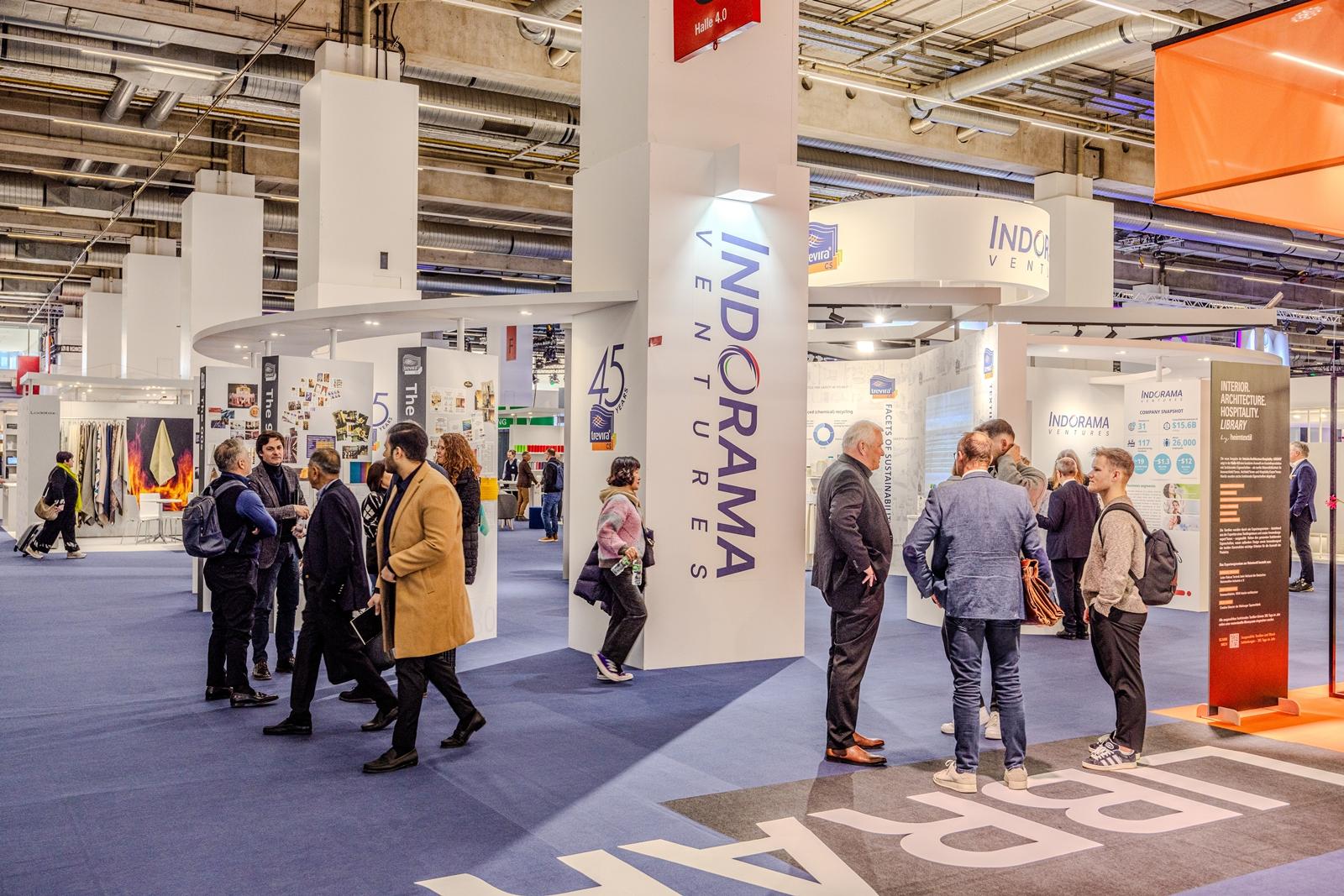
Whether outdoor fabrics, imitation leather or fibres and yarns for contract business – functionality and design are the focus and continue to evolve year after year. In Halls 3.1 and 4.1, international exhibitors present the world's largest offering of weavers for furniture and decorative fabrics. One focus in Hall 3.1 is on contract fabrics, leather and imitation leather, and fibres and yarns for furniture and decorative fabrics. Indorama Ventures Fibers Germany, Manifattura Filtes, Novartiplast and Martinelli Ginetto from Italy are among the many suppliers showcasing their latest products here. Hall 4.1 brings together high-quality decorative, furniture and contract fabrics. Among the many manufacturers exhibiting here are Edmund Bell (Great Britain), Manuel Revert (Spain), Vanelli Tekstil (Turkey) and Vescom Velvets BV (Netherlands).

Carpets & Rugs grows and expands to include flooring
Heimtextil’s carpet segment continues to grow. Halls 11.0, 11.1 and 12.0 focus on hand- and machine-woven carpets, unique pieces and doormats. For the first time, non-textile floorings extend the range with the new Flooring & Equipment product segment. Heimtextil thus brings together holistic textile and non-textile interior design in one place. Contract furnishers and buyers benefit from a broad selection of complementary offerings with one visit. Registered exhibitors include Heritage Overseas (India), Oriental Weavers Carpets Factory (Egypt), Ragolle Rugs (Belgium) and Universal XXI (Spain). Floor coverings are included in the portfolios of Chene de L'est (France), Welspun UK and Zipse (Germany), among others.

Functional finished products for hospitality
Anyone looking for finished products for contract furnishing and hospitality find what they need in Halls 5.0, 5.1, 6.0 and 6.1 within the Bed, Bath & Living segment. Here, exhibitors present bed linen, bathroom textiles, table linen, blankets and home accessories. The strong and international range of brands and private labels offers high quality, short delivery times and flexible order quantities. Participants include Formesse (Germany), Hermann Biederlack (Germany), Lameirinho - Indústria Textil (Portugal), Marzotto Lab (Italy), Mundotextil - Industrias Texteis (Portugal), Veritas Tekstil (Turkey) and many others. Bedding, duvets, pillows, and mattresses are featured in the Smart Bedding section in Hall 4.0. Badenia Bettcomfort (Germany), Boyteks Tekstil (Turkey), f.a.n. Frankenstolz Schlafkomfort H. Neumeyer (Germany), Hefel Textil (Austria), OBB Oberbadische Bettfedernfabrik (Germany), Proneem (France) and many other exhibitors present state-of-the-art sleep solutions there.

Production Mahlo GmbH + Co. KG (c) Christian Wagner
18.07.2025

80 Years Mahlo GmbH + Co. KG: From Workshop to Global Market Leader

80 years of experience, innovation, and family spirit – this year, mechanical engineering company Mahlo GmbH + Co. KG from Saal an der Donau is celebrating a very special anniversary. Since its founding in 1945, Mahlo has evolved from a small pioneering workshop into a globally sought-after specialist in measurement and control technology.

It all started with the radio. By building radio receivers, Dr. Heinz Mahlo began his entrepreneurial success story shortly after the end of World War II with the founding of the "Dr. Heinz Mahlo Electromechanical Workshops" in Saal an der Donau. The visionary engineer soon recognized the potential of the textile industry and developed the first measurement systems for fabrics. A major breakthrough came in 1958 with the patent for the first automatic weft straightener – a technological milestone that still forms the basis for modern straightening machines today.

80 years of experience, innovation, and family spirit – this year, mechanical engineering company Mahlo GmbH + Co. KG from Saal an der Donau is celebrating a very special anniversary. Since its founding in 1945, Mahlo has evolved from a small pioneering workshop into a globally sought-after specialist in measurement and control technology.

It all started with the radio. By building radio receivers, Dr. Heinz Mahlo began his entrepreneurial success story shortly after the end of World War II with the founding of the "Dr. Heinz Mahlo Electromechanical Workshops" in Saal an der Donau. The visionary engineer soon recognized the potential of the textile industry and developed the first measurement systems for fabrics. A major breakthrough came in 1958 with the patent for the first automatic weft straightener – a technological milestone that still forms the basis for modern straightening machines today.

This initial success laid the foundation for the company’s continuous development. In the decades that followed, Mahlo opened up new markets, expanded its product portfolio to applications in the nonwoven, paper, and plastics industries, and built an international sales and service network. Step by step, subsidiaries were established in the USA, Italy, Belgium, and China, along with global service partnerships to ensure close customer support on site.

Technology for Textiles, Nonwovens, Paper, and More 
"As the global market leader in textile straightening technology, we continue to build on the ideas and entrepreneurial foresight of Dr. Heinz Mahlo – and have developed the broadest portfolio of straightening systems in various configurations on the market," summarizes CEO Rainer Mestermann. He has been leading the company since 2011 and has helped Mahlo successfully expand beyond the textile sector. "In the late 2000s, we established a second pillar in the field of web measurement technology with our quality measurement system Qualiscan QMS – also to become less dependent on typical market fluctuations in the textile industry." The new product line was so successful that in 2018, a new production hall was built specifically for this area. And in true Mahlo fashion, the bar was set high – today the company is considered the provider with the most comprehensive portfolio of in-house developed sensors.

Strong Through Change – Thanks to Strong Roots
But even a solid flagship like Mahlo is not immune to turbulent developments in the global market. “With an export share of around 80 percent, we are naturally closely tied to the global economy,” says Mestermann. Current geopolitical crises are dampening the demand for capital goods. Ultimately, the demand for Mahlo technology is closely linked to the consumption of high-quality products – such as in the clothing or packaging industries. “And it’s precisely this quality we stand for – and our systems ensure it is reliably achieved.”

Still, the managing director remains optimistic that Mahlo will weather these rough waters as well: “Keeping a company successful in the market over eight decades is only possible with a spirit of innovation, reliability, and the dedication of many smart minds. I am proud of our team and grateful for the trust of our customers around the world.”

Innovation Hub in Saal an der Donau
One of the key pillars is the motivated and skilled team at the Saal headquarters. All systems are developed and built there – in line with the company’s guiding principle that explicitly emphasizes its commitment to Germany as a development and production location. To secure the necessary skilled workforce – known to be in short supply in Germany – Mahlo strongly promotes young talent as one of the largest training companies in the Kelheim area. “That was already very important to my grandfather,” emphasizes Ralph Greenwood-Mahlo, grandson of the company founder and, together with his wife Aura, owner of the company. Both continue to lead Mahlo in the spirit of Dr. Heinz Mahlo: “We want to preserve the company culture that has grown over time while also providing momentum for new developments. It’s important to us to allow room for fresh ideas while offering continuity.”

A Family with Responsibility – Then and Now
For the Greenwood-Mahlo family, running a family business means thinking in generations, not in quarterly numbers. This also means making sustainable decisions. “By firmly integrating resource-saving behavior into our company practices, we can not only protect the environment but also ensure our company’s long-term success.” Mahlo’s systems also contribute to this – helping manufacturers save raw materials, make processes more efficient, and minimize waste.

According to Ralph Greenwood-Mahlo, this reflects a lived responsibility towards employees, customers, the region, and future generations: “Dr. Heinz Mahlo was a pioneer who had the courage to tackle technical challenges while always striving to find the best solution for his customers. This spirit of innovation still shapes Mahlo today – and we see it as our duty to carry this legacy forward without losing touch with reality. Innovation with responsibility – that was his core idea, and it’s ours too.”

Manchester Fashion Week Chanel debuted its 202424 Metiers D'Art Show in Manchester Photo Manchester Fashion Week
18.07.2025

Manchester Fashion Week returns

  • Manchester Fashion Week returns in September 2025 after decade-long absence 
  • Rooted in the textile heritage of the city but rebooted by technological advancements and innovation to make fashion future-proof
  • Industry-led platform to champion sustainable practices to make fashion conscious and circular

After a decade-long hiatus, Manchester Fashion Week returns this Autumn with a bold blueprint for the future of fashion. 

The revival comes at a pivotal moment when the city’s £12bn fashion industry faces unprecedented challenges around sustainability, technology and cultural relevance. 

The announcement is another endorsement of Manchester fast becoming the culture capital of Britain, with the BRIT Awards to be hosted there next year – the first time outside of London in its 48-year history.

Manchester Fashion Week, running from September 9th to 11th, will unite emerging designers and established brands on a platform that bridges Manchester's industrial heritage with cutting-edge innovation. 

  • Manchester Fashion Week returns in September 2025 after decade-long absence 
  • Rooted in the textile heritage of the city but rebooted by technological advancements and innovation to make fashion future-proof
  • Industry-led platform to champion sustainable practices to make fashion conscious and circular

After a decade-long hiatus, Manchester Fashion Week returns this Autumn with a bold blueprint for the future of fashion. 

The revival comes at a pivotal moment when the city’s £12bn fashion industry faces unprecedented challenges around sustainability, technology and cultural relevance. 

The announcement is another endorsement of Manchester fast becoming the culture capital of Britain, with the BRIT Awards to be hosted there next year – the first time outside of London in its 48-year history.

Manchester Fashion Week, running from September 9th to 11th, will unite emerging designers and established brands on a platform that bridges Manchester's industrial heritage with cutting-edge innovation. 

The event traces a path from historic Mancunian mills to contemporary catwalks, honouring textile traditions while accelerating toward fashion's future.

The event will be spearheaded by some of the industry’s renowned thought-leaders, including Carry Somers, Founder of global movement Fashion Revolution and Safia Minney, MBE, award-winning social entrepreneur and founder of People Tree, a pioneer of sustainable and fairtrade fashion.

The main event for Manchester Fashion Week will be centred around the vibrant St. John’s area, with its official hub set in the newly refurbished Campfield - one of the city’s most exciting cultural venues.

Manchester Fashion Week will serve as a platform for honest dialogue, visionary thinking, and radical collaboration, activating spaces across the city and inviting brands, creators, and communities to participate. 

The inaugural pilot will be industry-led, with public experiences and cultural events lighting up Manchester throughout September.

Source:

Manchester Fashion Week

Kraig Biocraft Laboratories Photo Kraig Biocraft Laboratories
18.07.2025

Kraig Biocraft Laboratories: Expanding Spider Silk via Strategic Government Collaboration

Kraig Biocraft Laboratories, Inc., a leader in spider silk technology, announced the finalizing of a significant three-year collaborative agreement with a key government agency in Southeast Asia to expand the scale and security of its recombinant spider silk manufacturing platform.
 
This agreement, expected to be signed before the end of July, marks the culmination of years of relationship-building and demonstrated performance by Kraig Labs and its proprietary spider silk technologies. The agreement is designed to accelerate the Company's growth by providing access to previously unavailable rearing facilities, supporting infrastructure, and technical resources.
 
Under the terms of this collaboration, Kraig Labs will work closely with government specialists to optimize and expand spider silk production. The collaboration will unlock new production capacity, enabling Kraig Labs to significantly scale its hybridized silkworm operations.
 

Kraig Biocraft Laboratories, Inc., a leader in spider silk technology, announced the finalizing of a significant three-year collaborative agreement with a key government agency in Southeast Asia to expand the scale and security of its recombinant spider silk manufacturing platform.
 
This agreement, expected to be signed before the end of July, marks the culmination of years of relationship-building and demonstrated performance by Kraig Labs and its proprietary spider silk technologies. The agreement is designed to accelerate the Company's growth by providing access to previously unavailable rearing facilities, supporting infrastructure, and technical resources.
 
Under the terms of this collaboration, Kraig Labs will work closely with government specialists to optimize and expand spider silk production. The collaboration will unlock new production capacity, enabling Kraig Labs to significantly scale its hybridized silkworm operations.
 
Importantly, this agreement also includes provisions for the creation of parallel rearing operations, a key component in the Company’s long-term roadmap to mitigate production risk and eliminate single points of failure. By distributing parent strain and egg production across multiple independent facilities, Kraig Labs is further securing its supply chain and increasing throughput capacity to meet future demand.
 
Work under this agreement is anticipated to begin in August. This collaboration will serve as a foundational element of the Company’s expanding global spider silk manufacturing strategy, highlighting the growing confidence in the Company's pioneering biomaterials.


18.07.2025

Global exhibitors across sub-sectors confirmed for Cinte Techtextil China 2025

With 12 exhibiting countries and regions so far confirmed, Cinte Techtextil China is poised to present a dynamic industry platform, bridging the gap between Asian and Western markets. From 3 to 5 September in Shanghai, the fair will feature a full spectrum of technical textiles and nonwovens for 12 application areas, with a key highlight being 2025’s debut product category and zone – the Textile Chemicals and Dyes Zone. Meanwhile, domestic and international exhibitors with automotive applications can be found across the fairground, with the segment drawing strong interest globally. Also featuring a range of innovators in the reputable European and German Zones, the fair’s International Hall (W5) will offer valuable expertise and opportunities to trade visitors from China, Asia and beyond.

With 12 exhibiting countries and regions so far confirmed, Cinte Techtextil China is poised to present a dynamic industry platform, bridging the gap between Asian and Western markets. From 3 to 5 September in Shanghai, the fair will feature a full spectrum of technical textiles and nonwovens for 12 application areas, with a key highlight being 2025’s debut product category and zone – the Textile Chemicals and Dyes Zone. Meanwhile, domestic and international exhibitors with automotive applications can be found across the fairground, with the segment drawing strong interest globally. Also featuring a range of innovators in the reputable European and German Zones, the fair’s International Hall (W5) will offer valuable expertise and opportunities to trade visitors from China, Asia and beyond.

A strong combination of global exhibitors has already confirmed their participation this year, coming from Belgium, China, Germany, Hong Kong, India, Italy, Malaysia, Saudi Arabia, Switzerland, the UK, the US, and Vietnam. With the additional textile chemicals and dyes product category launched at the fair, new business avenues have been opened for renowned companies such as CHT Germany GmbH (Germany), Michelman Inc (USA), and more, who will convene at the debut Textile Chemicals and Dyes Zone. The new category is suitable for a range of textile applications, such as for sports & leisure, safety & protection, industrial protection, construction and more.

European and German Zones to showcase continent’s industry excellence
With Europe’s production of technical textiles and nonwovens largely returning to pre-pandemic levels, the vast Asian market represented at Cinte Techtextil China has attracted leading companies to showcase their quality, high-tech products in the European and German Zones.

In addition to well-known returning brands, such as EMS-GRILTECH, Graf + Cie, Monosuisse, and Swisstulle from Switzerland, and Fibre Extrusion Technology from the UK, several new exhibitors are set to make their mark in the European Zone. 

Across the hall, the German Zone will also welcome a strong array of members, including Autefa Solutions, Mahlo, Reifenhauser Heinsberg, and many more, such as Brueckner Textile Technologies, Lindauer DORNIER or Wetekam Group (new).

Highlighted exhibitors featuring automotive textile solutions
Harnessing market demand, Cinte Techtextil China will feature a raft of global Mobiltech exhibitors, including Eastex Industrial Science And Technology and Oriental Industries from China, Picanol from Belgium, Rowa Group from Germany, and more.

The fair’s product categories cover 12 application areas, which comprehensively span a full range of potential uses in modern technical textiles and nonwovens. These categories also cover the entire industry, from upstream technology and raw materials providers to finished fabrics, chemicals and other solutions. This scope of product groups and application areas ensures that the fair is an effective business platform for the entire industry.

Cinte Techtextil China will be held from 3 – 5 September 2025.
The fair is organised by Messe Frankfurt (HK) Ltd; the Sub-Council of Textile Industry, CCPIT; and the China Nonwovens & Industrial Textiles Association (CNITA).

Source:

Messe Frankfurt (HK) Ltd

Evolon® sustainable protective packaging © Freudenberg Performance Materials
Evolon® sustainable protective packaging
17.07.2025

Freudenberg: Protective packaging solutions for automotive OEMs at Fachpack 2025

Freudenberg Performance Materials (Freudenberg) will showcase packaging materials combining high performance protection, CO2 emission reduction and waste prevention at Fachpack 2025 in Nuremberg, Germany, from September 23-25. Evolon® packaging solutions offered by Freudenberg are particularly suited for packaging automotive components with sensitive surfaces. 

Evolon® packaging materials provide superior surface protection for a wide range of automotive parts, including molded plastics and painted elements. The high-end textiles make an important contribution to the quality goals of OEMs and tier suppliers by preventing damage to transported parts and lowering rejection rates.

Freudenberg Performance Materials (Freudenberg) will showcase packaging materials combining high performance protection, CO2 emission reduction and waste prevention at Fachpack 2025 in Nuremberg, Germany, from September 23-25. Evolon® packaging solutions offered by Freudenberg are particularly suited for packaging automotive components with sensitive surfaces. 

Evolon® packaging materials provide superior surface protection for a wide range of automotive parts, including molded plastics and painted elements. The high-end textiles make an important contribution to the quality goals of OEMs and tier suppliers by preventing damage to transported parts and lowering rejection rates.

Recycled content and low CO2 footprint
Evolon® textiles have a small carbon footprint because their manufacturing process uses low-CO2 energy, and the fabrics are lightweight and reusable. Furthermore, Evolon® packaging materials are made of up to 85% recycled content. “By replacing virgin raw materials with recycled content, we’ve been able to cut the carbon footprint of our fabric production by 35%. We are actively exploring the possibility of manufacturing Evolon® using 100% recycled content to drive CO₂ emissions down even further,” explains Jean-François Kerhault, Director Global Sales & Marketing General Industry at Freudenberg Performance Materials. 

Although Evolon® fabrics are lightweight – from 80gsm to 300gsm – they nevertheless still provide the high mechanical strength properties required for automotive packaging applications. This conserves raw materials and reduces the weight of transported loads. In particular, the new Evolon® Ultra Force is approximately 50% lighter than PVC-based materials with similar high mechanical strength, while containing a minimum 50% recycled content and no PVC.

Waste prevention
Evolon® materials play an important role in decreasing waste when it comes to transporting automotive parts. Above all, the high-end materials provide superior surface performance which directly reduces scrap of transported parts. 
In addition, packaging waste is also prevented because Evolon® technical packaging textiles are designed for reusable packaging containers. Single-use packaging is avoided. Moreover, Evolon® packaging material lasts for the entire production cycle of a car model.

Source:

Freudenberg Performance Materials

Mimaki - Textile Applications Photo Mimaki Europe B.V.
17.07.2025

Mimaki at Texworld Paris with textile printing solution TRAPIS

Mimaki Europe, a leading manufacturer of inkjet printing and cutting technologies, announces its participation in Texworld Paris, taking place from 15th-17th September at Parc des Expositions de Paris-Le Bourget (Halls 2-4). The company will demonstrate TRAPIS (Transfer Pigment System) alongside real-life customer use cases at its booth (Hall 3, Stand O204). Situated within Avantex Paris, part of Texworld Paris, this dedicated area highlights companies committed to reducing pollution and promoting circularity in the textile and fashion industry, so to create the fashion of the future. 
    
Launched last year, Mimaki’s TRAPIS solution offers printers a simple two-step process, consisting of an inkjet printer and a high-pressure calender. Significantly reducing wastewater by approximately 90% compared to conventional digital dyeing methods and cutting carbon emissions by up to 92%, TRAPIS allows manufacturers, designers or retailers to create vibrant textiles easily and sustainably. Ideal for on-demand printing for fashion and interior décor applications, it can print on a wide range of fabrics, including natural and synthetic fibres.

Mimaki Europe, a leading manufacturer of inkjet printing and cutting technologies, announces its participation in Texworld Paris, taking place from 15th-17th September at Parc des Expositions de Paris-Le Bourget (Halls 2-4). The company will demonstrate TRAPIS (Transfer Pigment System) alongside real-life customer use cases at its booth (Hall 3, Stand O204). Situated within Avantex Paris, part of Texworld Paris, this dedicated area highlights companies committed to reducing pollution and promoting circularity in the textile and fashion industry, so to create the fashion of the future. 
    
Launched last year, Mimaki’s TRAPIS solution offers printers a simple two-step process, consisting of an inkjet printer and a high-pressure calender. Significantly reducing wastewater by approximately 90% compared to conventional digital dyeing methods and cutting carbon emissions by up to 92%, TRAPIS allows manufacturers, designers or retailers to create vibrant textiles easily and sustainably. Ideal for on-demand printing for fashion and interior décor applications, it can print on a wide range of fabrics, including natural and synthetic fibres.

Ahead of Texworld Paris, Mimaki will also showcase TRAPIS at Texworld New York (22nd to 24th July), giving US-based textile professionals the opportunity to experience this innovative and sustainable printing technology firsthand. 

17.07.2025

Syensqo: Two New Board Members

New Directors Bring Industry, Innovation and Leadership Experience to Advance Syensqo’s Evolution to a Specialty Chemicals Company.
 
SYENSQO SA announced the appointment of Dr. Cynthia Arnold and Augusto Di Donfrancesco as new members of its Board of Directors, effective July 17, 2025. 
They replace Matti Lievonen and Nadine Leslie who are stepping down from the Board to pursue other opportunities.
 
Dr. Cynthia Arnold brings more than 30 years of global leadership experience in technology and innovation within the materials and chemicals sectors. She previously served as Chief Technology Officer at Valspar Corporation and held senior roles at Sun Chemical, Eastman Chemical and General Electric. With extensive public company board experience, Dr. Arnold currently serves as an independent director on the boards of Cabot Corporation, Milliken & Company and Fluence Energy. She holds a PhD in Materials Science and Engineering from Virginia Polytechnic Institute and an MBA from the University of California,Berkeley.
 

New Directors Bring Industry, Innovation and Leadership Experience to Advance Syensqo’s Evolution to a Specialty Chemicals Company.
 
SYENSQO SA announced the appointment of Dr. Cynthia Arnold and Augusto Di Donfrancesco as new members of its Board of Directors, effective July 17, 2025. 
They replace Matti Lievonen and Nadine Leslie who are stepping down from the Board to pursue other opportunities.
 
Dr. Cynthia Arnold brings more than 30 years of global leadership experience in technology and innovation within the materials and chemicals sectors. She previously served as Chief Technology Officer at Valspar Corporation and held senior roles at Sun Chemical, Eastman Chemical and General Electric. With extensive public company board experience, Dr. Arnold currently serves as an independent director on the boards of Cabot Corporation, Milliken & Company and Fluence Energy. She holds a PhD in Materials Science and Engineering from Virginia Polytechnic Institute and an MBA from the University of California,Berkeley.
 
Augusto Di Donfrancesco held key leadership roles in research & innovation, operations and transformation during a more than 35-year career at Solvay. As President of Solvay’s Specialty Polymers Global Business Unit, he led a period of significant organic growth, doubling net sales through customer-centric innovation. He was also a member of the Solvay Executive Leadership Team where he led group-wide strategic programs. Mr. Di Donfrancesco’s deep sector knowledge and track record in operational excellence and capital allocation will further reinforce Syensqo’s ongoing growth and transformation objectives. Mr. Di Donfrancesco holds a bachelor’s degree in chemical engineering from Pisa University. 
 
Rosemary Thorne, Chair of the Board of Directors, said, “On behalf of the Board, I would like to express our gratitude to Matti and Nadine for their contributions to the Board during Syensqo’s formative period as an independent public company. As part of our Board succession planning, we are focused on maintaining the right mix of skills and expertise and are thrilled to welcome Cynthia and Augusto, who are proven leaders of the highest caliber and are poised to contribute their significant leadership, technology, innovation and operational experience to the Board. We look forward to benefiting from their respective knowledge and insights as we continue to focus on delivering shareholder value.”
 
“We are delighted to welcome Cynthia and Augusto to our Board,” said Dr. Ilham Kadri, Chief Executive Officer of Syensqo. “Their perspectives will be invaluable as we continue to prioritize innovation and operational excellence to capitalize on the meaningful long-term growth and value creation opportunities ahead. I look forward to working with them.” 
 
Dr. Arnold said, “Syensqo’s commitment to scientific excellence and sustainability resonates deeply with me. I am excited to contribute to the Board’s work to advance innovation and operational performance, and to help shape the Company’s continued success in a rapidly evolving global landscape.” 

 
“I am honored to join Syensqo’s Board during this important period in the Company’s evolution to a Specialty Chemicals Company” said Mr. Di Donfrancesco. “Having spent my career driving transformation, innovation and growth within the specialty chemicals sector, I look forward to working with my fellow directors and the management team to help accelerate growth and unleash Syensqo’s potential.”

Source:

Syensqo

cocoons spider silk Photo: Kraig Biocraft Laboratories
16.07.2025

Kraig Biocraft: Second Production Facility to deliver Spider Silk to European-based global Luxury Market

New architecture lays foundation for higher output, continuous batch production, and prepares company for spider silk delivery to european-based global luxury market leader.

Kraig Biocraft Laboratories, a global leader in spider silk technology, announced the addition of a second parallel production facility, three new advanced spider silk strains, and the immediate launch of a new diapausing system for production. This marks three critical advancements in the Company’s high-performance spider silk manufacturing and commercialization to significantly increase production yields and spun silk quality.

Kraig Labs completed the development of three new spider silk strains, which are now in the field. These strains, developed over the last year, were designed to complement the Company’s existing BAM-1 hybrid by improving hybrid vigor and increasing silk yield. One of these stains was designed as a replacement for an existing BAM-1 parent lines. Two of these strains were bred to produce silkworms suitable for controlled diapause.

New architecture lays foundation for higher output, continuous batch production, and prepares company for spider silk delivery to european-based global luxury market leader.

Kraig Biocraft Laboratories, a global leader in spider silk technology, announced the addition of a second parallel production facility, three new advanced spider silk strains, and the immediate launch of a new diapausing system for production. This marks three critical advancements in the Company’s high-performance spider silk manufacturing and commercialization to significantly increase production yields and spun silk quality.

Kraig Labs completed the development of three new spider silk strains, which are now in the field. These strains, developed over the last year, were designed to complement the Company’s existing BAM-1 hybrid by improving hybrid vigor and increasing silk yield. One of these stains was designed as a replacement for an existing BAM-1 parent lines. Two of these strains were bred to produce silkworms suitable for controlled diapause.

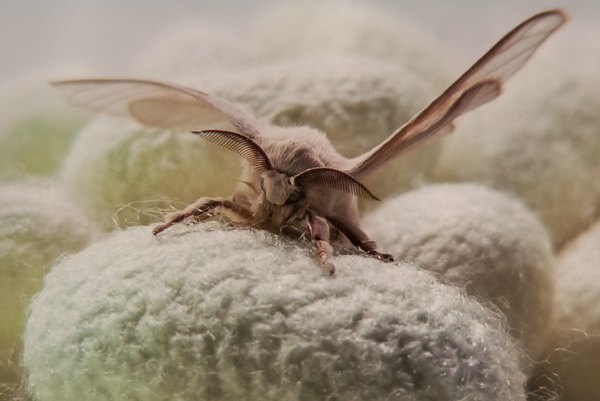
Diapause refers to the silkworm’s natural wintering period, a process which can be replicated with a 90-day cold treatment of the silkworm eggs. Diapausing silkworm strains are the gold standard for producing premium silk. One of the Company’s key initial target customers is a widely-renowned producer of the world’s finest fabrics and garments, crafted from the highest-quality fibers. Kraig Labs is committed to meeting those standards with its spider silk and the shift to diapausing egg production, along with the addition of a second facility, are key drivers in achieving that goal and increasing production.

Thus far, the Company’s production center has operated under a batch production model, bypassing diapause and limiting production to 8 or 9 batches per year. The shift to parallel facilities and the diapausing of eggs (artificial wintering utilizing cold storage treatment) will enable nearly continuous production. These two facilities will operate in tandem to feed that production. While egg production from one facility enters cold storage, the second facility will prepare the next rearing cycle, ensuring a continuous flow of eggs to supply production operations. This new collaborative production system will dramatically expand production capacity far beyond what any single facility could produce independently.

As Kraig Labs rolls out these significant improvements to its operations, the company is undertaking a production transition period, which includes a 90-day cold treatment cycle for the new diapausing hybrid eggs. This wintering process is widely recognized for yielding stronger, finer silk and significantly larger cocoons than non-diapausing silk. Over the next several months, operational emphasis will shift away from finished silk production and focus on expanding parent line populations and generating the next round of hybrid eggs that Kraig Labs plans to begin releasing in the fourth quarter.

“Deploying two separate rearing centers for our parent lines is a key part of our strategy to build a reliable and scalable supply chain that can address the demand for spider silk and support year-round production,” said Kim Thompson, Founder and CEO of Kraig Labs. “This plan, which is the brainchild of our chief sericulture expert, Dr. Kumar, will provide the throughput necessary to support large-scale commercial production and a buffer against potential disruption.”

In parallel with these advancements in production operations, Kraig Labs announced it has completed the latest batch of BAM-1 finished spider silk. With this newest batch of finished silk complete, the company has now accumulated approximately one-third of the total spider silk required to fulfill a material request from a globally renowned European fashion house.

“This latest batch brings us another step closer to delivering premium spider silk materials to one of the most recognized names in fashion. The shift to a diapausing hybrid system reflects our long-term vision to deliver the highest quality spider silk at commercial scale,” said Rice. “By making this investment in time, infrastructure, and production strategy, we are positioning ourselves to meet the demand we see forming.”

Source:

Kraig Biocraft Laboratories

16.07.2025

AZL Aachen: Thermoplastic Composites

With its latest Joint Partner Project titled “Thermoplastic Pressure Vessel Production – Benchmarking of Design-for-Manufacturing Strategies to Optimize Material Efficiency and Cost,” AZL Aachen GmbH invites companies from across the pressure vessel and composite value chains to collaborate on the next step in sustainable high-pressure storage solutions.

Unlocking the Full Potential of Thermoplastic Composites
Thermoplastic composites are widely recognized for their potential to reduce processing times, offer alternative recycling routes, and improve design flexibility. Yet, when traditional thermoset vessel designs are simply transferred to thermoplastic manufacturing, cost and efficiency often fall short of competitiveness. The aim of this project is to rethink vessel design and production holistically – aligning thermoplastic material properties with optimized design- and manufacturing strategies to unlock their full economic and technological potential.

With its latest Joint Partner Project titled “Thermoplastic Pressure Vessel Production – Benchmarking of Design-for-Manufacturing Strategies to Optimize Material Efficiency and Cost,” AZL Aachen GmbH invites companies from across the pressure vessel and composite value chains to collaborate on the next step in sustainable high-pressure storage solutions.

Unlocking the Full Potential of Thermoplastic Composites
Thermoplastic composites are widely recognized for their potential to reduce processing times, offer alternative recycling routes, and improve design flexibility. Yet, when traditional thermoset vessel designs are simply transferred to thermoplastic manufacturing, cost and efficiency often fall short of competitiveness. The aim of this project is to rethink vessel design and production holistically – aligning thermoplastic material properties with optimized design- and manufacturing strategies to unlock their full economic and technological potential.

Collaborative Engineering for Scalable Solutions
Conducted as a Joint Partner Project, the initiative brings together companies with shared interests to co-finance and co-shape the project. The AZL Engineering Team will analyse current technologies, develop new design concepts for hydrogen and CNG vessels, and benchmark the resulting configurations in terms of weight, cost, recyclability and production KPIs. The consortium of participating companies will get access to simulation results, concept layouts, and comparative evaluations based on a unified framework.

Experience and Exchange Built In
The JPP format provides a platform not only for technical development, but also for strategic networking. Each partner can contribute input, benefit from consolidated expertise, and gain early access to the results. With more than a decade of experience managing such initiatives, AZL ensures a structured and result-driven collaboration.
The project will start on July 16th, 2025. All participants are invited to engage in an interactive Kick-off Meeting to define key priorities and present their internal perspectives. 

Source:

AZL Aachen GmbH

eVent Fabrics: New Website Photo eVent Fabrics
16.07.2025

eVent Fabrics: New Website

With increasing demand for sustainably-minded performance laminates for apparel and footwear, eVent®️ Fabrics, a global leader in breathable waterproof, weatherproof, and windproof fabric technologies, introduces the new www.eventfabrics.com. 

The new website delivers several upgrades over the previous one, including simplified navigation, cohesive brand storytelling, and improved messaging around eVent’s increasing focus on more sustainable, circular, high-performance laminates.  

“As we continue to position ourselves as leaders in PFAS-free performance laminates and our brand messaging evolves to support our overall brand mission, this new website will better represent our brand to our core audiences,” said Chad Kelly, President of eVent Fabrics. “As demand grows, this new site will help brands, product developers, and customers better understand who we are as a brand and what we offer in PFAS-free laminates, allowing everyone along the value chain to make more informed buying decisions.”

With increasing demand for sustainably-minded performance laminates for apparel and footwear, eVent®️ Fabrics, a global leader in breathable waterproof, weatherproof, and windproof fabric technologies, introduces the new www.eventfabrics.com. 

The new website delivers several upgrades over the previous one, including simplified navigation, cohesive brand storytelling, and improved messaging around eVent’s increasing focus on more sustainable, circular, high-performance laminates.  

“As we continue to position ourselves as leaders in PFAS-free performance laminates and our brand messaging evolves to support our overall brand mission, this new website will better represent our brand to our core audiences,” said Chad Kelly, President of eVent Fabrics. “As demand grows, this new site will help brands, product developers, and customers better understand who we are as a brand and what we offer in PFAS-free laminates, allowing everyone along the value chain to make more informed buying decisions.”

Faced with more stringent sustainability regulations and growing consumer demand, eVent’s increasing focus on delivering PFAS-free and circular performance laminates to a global market is driving awareness, interest, and sales. The new website is designed to better highlight the eVent’s evolving brand story and support discovery of sustainably-minded performance technology.

As eVent’s PFAS-free laminate offering continues to gain traction, the new site better supports brand direction, growth, and messaging. Improved navigation helps site visitors more easily identify and learn about the breathable waterproof, weatherproof, and windproof laminates that address their performance and sustainability goals. In addition, the new site will serve as the hub for the overall eVent brand evolution, helping to better tell the brand’s unique story. 

Source:

eVent Fabrics

15.07.2025

LVMH pilots new traceability system as Loro Piana is linked to labour exploitation

In light of the recent court cases involving two of LVMH’s subsidiaries, where workers in the supply chain had allegedly been exploited, LVMH is reassessing its supply chains across all subsidiaries. 
 
Luxury conglomerate LVMH is piloting traceability technology across its brands as Loro Piano became the second of its subsidiaries to be placed under court administration this week. 
 
The luxury market has been hit by a series of scandals, from labour exploitation to fake viral stories about luxury goods being made in China alongside fake goods. 
 
The Court of Milan found that Loro Piana, which makes expensive cashmere clothing, subcontracted its production through two front firms that had no actual manufacturing capacity to Chinese-owned workshops in Italy, which the court said exploited workers. 
 
Loro Piana Spa will undergo court monitoring for a year, according to the 26-page ruling released this week, which stems from investigations into the world of subcontracting for luxury goods in Italy that started in 2023. 
 

In light of the recent court cases involving two of LVMH’s subsidiaries, where workers in the supply chain had allegedly been exploited, LVMH is reassessing its supply chains across all subsidiaries. 
 
Luxury conglomerate LVMH is piloting traceability technology across its brands as Loro Piano became the second of its subsidiaries to be placed under court administration this week. 
 
The luxury market has been hit by a series of scandals, from labour exploitation to fake viral stories about luxury goods being made in China alongside fake goods. 
 
The Court of Milan found that Loro Piana, which makes expensive cashmere clothing, subcontracted its production through two front firms that had no actual manufacturing capacity to Chinese-owned workshops in Italy, which the court said exploited workers. 
 
Loro Piana Spa will undergo court monitoring for a year, according to the 26-page ruling released this week, which stems from investigations into the world of subcontracting for luxury goods in Italy that started in 2023. 
 
Units of fashion brands Valentino, LVMH's second largest brand Dior, Italy's Armani, and Italian handbag company Alviero Martini have also been placed under administration recently. 
 
LVMH, the world's biggest luxury group, acquired 80% of Loro Piana in July 2013, with the Italian family that founded the company retaining 20%, according to the court ruling. 
 
Loro Piana declined to comment to Reuters. LVMH was not immediately available for comment. 
In June, Loro Piana appointed Frederic Arnault, a son of LVMH chairman and Chief Executive Bernard Arnault, as its CEO. 
 
In their statement, Italian police concluded they had closed two Chinese-owned factories, the third being a ‘paper’ company with no production capacity, and imposed a joint fine of over 240,000 euros. 
 
One of the workers at the factories allegedly told police he had been hospitalised for over a month after being beaten for asking for his Chinese bosses for unpaid wages. 
 
The Milan court in its ruling on Loro Piana also appointed an external administrator to verify that the company meets all the judges' demands on control of its supply chain, according to documents seen by Reuters. 
 
The administration will be lifted earlier if the unit brings its practices into line with legal requirements, as was the case with Dior, Armani and Alviero Martini. 
 
LVMH reassured its shareholders in its latest AGM in April that it had used traceability platform TextileGenesis to look into tracking a sample 31,000 products across key brands including Louis Vuitton, Loro Piana, Dior and Bulgari.  
 
The system documents anything from the origin of cashmere used in Loro Piana scarves to the material sourcing for Louis Vuitton handbags. 
 
"Traceability and transparency are the fundamental principles that guarantee the excellence of our products," Antoine Arnault, chairman of Loro Piana and head of communications and image at LVMH, told shareholders at the company's annual general meeting in April. 
 
TextileGenesis founder Amit Gautam confirmed that demand for traceability solutions has surged since another subsidiary of LMVH owned Dior was placed under court administration last year for unethical supply chain practices. 
 
"Brands are realising that consumers now expect verification, not just storytelling," he said. "The luxury sector can no longer assume trust based on brand heritage alone."

14.07.2025

Ontex: Lower-carbon bio-based absorbent material in diapers

Ontex Group NV, a leading international developer and producer of personal care solutions, is advancing its sustainability journey with the introduction of bio-based superabsorbent polymers (bioSAP) in its diapers, with an initial rollout in selected Moltex Pure and Nature products. This new material will gradually and incrementally replace virgin fossil-based plastic SAP in the core absorbent component, helping lower the carbon footprint of the product while maintaining performance. 

SAP (superabsorbent polymer) is essential to diaper performance yet is traditionally made from fossil-based plastic. It is also one of the most carbon-intensive components in hygiene products. The bioSAP now being introduced has a 15% to 25% lower carbon footprint than conventional SAP, with a promising outlook as the technology continues to evolve. By embracing innovations like bioSAP, Ontex is advancing its long-term goal of reducing environmental impact through sustainable solutions. 

Ontex Group NV, a leading international developer and producer of personal care solutions, is advancing its sustainability journey with the introduction of bio-based superabsorbent polymers (bioSAP) in its diapers, with an initial rollout in selected Moltex Pure and Nature products. This new material will gradually and incrementally replace virgin fossil-based plastic SAP in the core absorbent component, helping lower the carbon footprint of the product while maintaining performance. 

SAP (superabsorbent polymer) is essential to diaper performance yet is traditionally made from fossil-based plastic. It is also one of the most carbon-intensive components in hygiene products. The bioSAP now being introduced has a 15% to 25% lower carbon footprint than conventional SAP, with a promising outlook as the technology continues to evolve. By embracing innovations like bioSAP, Ontex is advancing its long-term goal of reducing environmental impact through sustainable solutions. 

Reducing impact through smarter material choices 
Ontex’s Scope 3 greenhouse gas emissions are largely driven by raw materials, which account for approximately 80% of the total footprint across sourcing, production, and end-of-life waste treatment. Materials such as SAP and plastic nonwovens represent about half of these emissions. 

The shift to bioSAP is a strategic move towards achieving Ontex’s SBTi-validated target to reduce Scope 3 emissions by 25% by 2030. While it is initially rolled out to selected products under the Moltex Pure and Nature brand, Ontex’s baby diaper brand available in retailers and online across Europe, the development also lays the groundwork for broader application. This includes future products and offerings for retail partners. 

BioSAP: a step forward, with an eye on circularity 
The conventional SAP available in the market is currently not recyclable or industrially compostable. However, Ontex views biodegradable SAP as a key enabler for multiple circular solutions in the future. The company continues to monitor innovation in this area closely, while remaining realistic about current limitations.

Source:

Ontex Group NV