From the Sector

from to
Reset
1370 results
(c) IFCO
10.03.2023

Successful third edition of Istanbul Fashion Connection

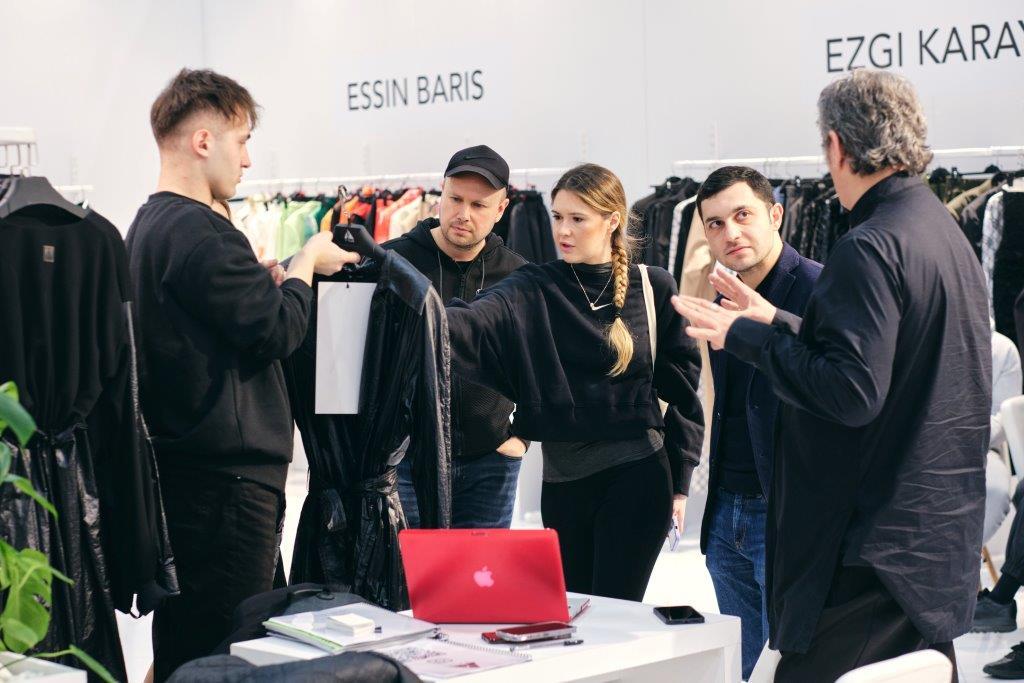
The third edition of IFCO Istanbul Fashion Connection took place from 8 to 11 February 2023. At the largest IFCO to date, 588 exhibitors in a total of 9 halls at the Istanbul Expo Center met more than 10,000 international trade visitors from 134 countries such as Brazil, Canada, Chile, Colombia, Germany, Malaysia, Mexico, Nigeria, Panama, Saudi Arabia, South Africa, South Korea, Thailand, UK, United Arab Emirates. 45% of the visitors were from 134 countries and 55% of visitors were domestic. The largest group of foreign visitors came from Asia (33%), Middle East (33%), Europe (19%) and Africa (13%).

Divided into clear cut exhibition segments on a total of 100,000 sqm of exhibition space brands and manufacturers showed the latest collections from the areas of womenswear, menswear, kidswear, denim, sportswear, evening and weddingwear, lingerie, hosiery, leather & furs.

The third edition of IFCO Istanbul Fashion Connection took place from 8 to 11 February 2023. At the largest IFCO to date, 588 exhibitors in a total of 9 halls at the Istanbul Expo Center met more than 10,000 international trade visitors from 134 countries such as Brazil, Canada, Chile, Colombia, Germany, Malaysia, Mexico, Nigeria, Panama, Saudi Arabia, South Africa, South Korea, Thailand, UK, United Arab Emirates. 45% of the visitors were from 134 countries and 55% of visitors were domestic. The largest group of foreign visitors came from Asia (33%), Middle East (33%), Europe (19%) and Africa (13%).

Divided into clear cut exhibition segments on a total of 100,000 sqm of exhibition space brands and manufacturers showed the latest collections from the areas of womenswear, menswear, kidswear, denim, sportswear, evening and weddingwear, lingerie, hosiery, leather & furs.

In the new high-quality designer area The CORE İSTANBUL, internationally renowned designers from Istanbul Fashion Week presented their exciting and creative designs.
“The Core is the premier platform that connects local fashion designers with the international fashion market. Our mission is to showcase the work of Istanbul´s talented designers who are dedicated to creating unique and innovative fashion designs while embracing conscious and sustainable practices.”, says Günes Güner, curator of The Core.

Even more design power was on display at the KOZA Design Competition for young fashion creators. IMA Istanbul Moda Akademisi was responsible for the design of the IMA LAB trend zone at IFCO. In the creative space, the trends and themes of the coming season were taken up and presented in a visually elaborate way. Euphoric Recall encompasses colourful, playful 70's vibes, Metasphere describes the return of glitter and metallic with a futuristic touch. The New Gen area featured pieces by up-and-coming designers of the next generation.

In two separate halls, LinExpo gave an overview of lingerie and hosiery. As a part of IFCO 145 manufacturers presented themselves here.

A large selection of high-quality bridal and evening dresses and suits were shown in the FashionIST area.

In the IFCO Sourcing area, especially designed for production, trade visitors networked directly with international production companies such as Bozkurt, Bilce Tekstil, Gelişim, Karar, Cemsel, Bozpa, Demezoğlu, Zevigas and more.

The next IFCO is scheduled from August 9 to 11, 2023.

Source:

IFCO

10.03.2023

ANDRITZ: Record figures for 2022

echnology Group ANDRITZ achieved in 2022 the best figures in its history for order intake, revenue, and operating result ( EBITA). ANDRITZ started the new business year with a record order backlog of around ten billion EUR. Together with strict cost and project management and the successful turnaround in the Metals business area with the German Schuler Group, that order backlog will form the basis for further growth and profitability increases in 2023. Subject to the approval by the Annual General Meeting, shareholders will benefit from the excellent business development with a significant dividend increase to 2.10 EUR (previous year: 1.65 EUR) per share.

The results of the business year 2022 in detail:

echnology Group ANDRITZ achieved in 2022 the best figures in its history for order intake, revenue, and operating result ( EBITA). ANDRITZ started the new business year with a record order backlog of around ten billion EUR. Together with strict cost and project management and the successful turnaround in the Metals business area with the German Schuler Group, that order backlog will form the basis for further growth and profitability increases in 2023. Subject to the approval by the Annual General Meeting, shareholders will benefit from the excellent business development with a significant dividend increase to 2.10 EUR (previous year: 1.65 EUR) per share.

The results of the business year 2022 in detail:

  • The order intake of 9,263.4 MEUR reached a record level and was thus significantly higher than the figure for the previous year (+17.6% compared to 2021: 7,879.7 MEUR). All four business areas contributed to the increase.
  • The order backlog as of the end of 2022 amounted to 9,976.5 MEUR and was thus significantly higher than the value for the previous year (+22.2% compared to 2021: 8,165.8 MEUR).
  • The revenue saw very favorable development during the 2022 business year and reached a new record level of 7,542.9 MEUR (+16.7% compared to 2021: 6,463.0 MEUR). All four business areas contributed to the increase in revenue.
  • The operating result (EBITA) increased slightly more than revenue and reached 648.5 MEUR, also a record level (+18.7% compared to 2021: 546.5 MEUR). All four business areas contributed to the increase in earnings. Profitability (EBITA margin) increased to 8.6% (2021: 8.5%).
  • The net income (including non-controlling interests) increased significantly compared to the previous year, amounting to 402.6 MEUR (+25.1% compared to 2021: 321.7 MEUR)

ANDRITZ expects to continue its profitable course of growth in the business year 2023 and anticipates an increase in both revenue and earnings compared to 2022.

More information:
Andritz financial year 2022
Source:

ANDRITZ AG

08.03.2023

adidas announces changes to its Executive Board

The Supervisory Board of adidas AG has extended the appointment of Harm Ohlmeyer as Chief Financial Officer of the company by another three years until the beginning of 2028. Harm Ohlmeyer has been member of the Executive Board of adidas AG since March 2017 and the company’s CFO since May 2017.

At the same time, the Supervisory Board appointed Arthur Hoeld as Executive Board member, responsible for Global Sales, as of April 1, 2023. Hoeld has been with adidas for 25 years, most recently as Managing Director of the company’s EMEA region since 2018. He will succeed Roland Auschel, who has decided to step down from his role, pass on the baton and leave the company after 33 years with adidas, including ten years as an Executive Board member.    

The Supervisory Board of adidas AG has extended the appointment of Harm Ohlmeyer as Chief Financial Officer of the company by another three years until the beginning of 2028. Harm Ohlmeyer has been member of the Executive Board of adidas AG since March 2017 and the company’s CFO since May 2017.

At the same time, the Supervisory Board appointed Arthur Hoeld as Executive Board member, responsible for Global Sales, as of April 1, 2023. Hoeld has been with adidas for 25 years, most recently as Managing Director of the company’s EMEA region since 2018. He will succeed Roland Auschel, who has decided to step down from his role, pass on the baton and leave the company after 33 years with adidas, including ten years as an Executive Board member.    

Furthermore, Brian Grevy, Executive Board member of adidas AG, responsible for Global Brands, has informed adidas AG’s Supervisory Board that he will step down from the Executive Board and leave the company. In mutual agreement with Brian Grevy, the Supervisory Board approved the termination of his appointment as an Executive Board member as of March 31, 2023. adidas CEO Bjørn Gulden will assume responsibility for Global Brands. In this role, Gulden will lead adidas product and marketing activities, which will enable the required fast decision-making across all business units and departments.

Thomas Rabe thanked Brian Grevy for his many important contributions during his years of service with the company. Grevy initially joined adidas in 1998 and held leadership positions of increasing responsibility for adidas on a local, regional and global level before leaving the company in 2016. At the beginning of 2020, Brian Grevy returned to adidas as the company’s Executive Board member for Global Brands.

As of April 1, 2023, the company’s new Executive Board will consist of Bjørn Gulden (Chief Executive Officer and Global Brands), Arthur Hoeld (Global Sales), Harm Ohlmeyer (Chief Financial Officer), Amanda Rajkumar (Global Human Resources, People and Culture) and Martin Shankland (Global Operations).

More information:
adidas executive board
Source:

adidas AG

02.03.2023

Recycling Atelier Augsburg and Kelheim Fibres cooperate

Kelheim Fibres, a leading manufacturer of viscose speciality fibres, has joined Recycling Atelier Augsburg. Recycling Atelier Augsburg is a unique centre for research and development in the field of textile recycling. It is located at the Institut für Textiltechnik Augsburg an affiliated institute of Augsburg University of Applied Sciences. The two institutions founded the Recycling Atelier in June 2022 together with twelve partners from the German textile industry.

In the Recycling Atelier, the focus is on the triad of technical and ecological sense as well as economic benefit. In this way, the partners of the Recycling Atelier are standing up against fast fashion, outsourced corporate responsibility and a general decline in raw material quality, which often fuels downcycling - the low-quality reuse - of materials.

Kelheim Fibres, a leading manufacturer of viscose speciality fibres, has joined Recycling Atelier Augsburg. Recycling Atelier Augsburg is a unique centre for research and development in the field of textile recycling. It is located at the Institut für Textiltechnik Augsburg an affiliated institute of Augsburg University of Applied Sciences. The two institutions founded the Recycling Atelier in June 2022 together with twelve partners from the German textile industry.

In the Recycling Atelier, the focus is on the triad of technical and ecological sense as well as economic benefit. In this way, the partners of the Recycling Atelier are standing up against fast fashion, outsourced corporate responsibility and a general decline in raw material quality, which often fuels downcycling - the low-quality reuse - of materials.

As a model factory, the Recycling Atelier Augsburg combines the most important processes of textile recycling and offers holistic and comprehensive research along the value chain," explains Georg Stegschuster, head of the Recycling Atelier Augsburg. The scientists research on all process steps of textile recycling: from material analysis to sorting, preparation and textile processing to sustainable product design. Comprehensive data collection and the use of artificial intelligence as well as innovative materials play a central role.

Kelheim Fibres is a producer of high-quality viscose fibres, which consist of cellulose, the main component of the renewable raw material wood, and are used worldwide for products in areas such as hygiene, textiles, and technical applications.

"In New Business Development as well as Fibre and Application Development, we follow the Open Innovation concept - the cooperation with the Recycling Atelier offers us an ideal platform for this. Here we work with partners to advance sustainability and performance," explains Maik Thiel, project manager at Kelheim Fibres.

Recycled cotton fibres are often very short or of uneven length, which makes further processing of 100 % recycled material a challenge. Adding speciality fibres from Kelheim Fibres should enable the production of high-quality new products, such as nonwovens. In the future, the fibres provided by Kelheim Fibres will also be made from recycled pulp.

Source:

Kelheim Fibres GmbH

Texaid
02.03.2023

New project “Transform Textile Waste into Feedstock”

Textile waste is a problem in Europe. Out of 7-7.5 million tonnes of textiles discarded every year, 30-35 % are collected separately – and of that quantity, 15-20 % are sorted by medium and larger sorting facilities within the EU. After sorting, 60 % still qualify as wearable clothes, however after a second or third collection-loop, all of the textiles become non-wearable sooner or later. Therefore, fibre-to-fibre recycling is becoming increasingly important to preserve the valuable resources.
 
The textile recycling value chain is not yet mature, but we are on the verge of a turning point, as different fibre-recycling technologies are deployed on a large scale. If successful, the textile recycling industry could reach a recycling rate of 18 to 26 percent of gross textile waste in 2030. This would create economic, social and environmental value that could total 3.5 to 4.5 billion euros in 2030.

Textile waste is a problem in Europe. Out of 7-7.5 million tonnes of textiles discarded every year, 30-35 % are collected separately – and of that quantity, 15-20 % are sorted by medium and larger sorting facilities within the EU. After sorting, 60 % still qualify as wearable clothes, however after a second or third collection-loop, all of the textiles become non-wearable sooner or later. Therefore, fibre-to-fibre recycling is becoming increasingly important to preserve the valuable resources.
 
The textile recycling value chain is not yet mature, but we are on the verge of a turning point, as different fibre-recycling technologies are deployed on a large scale. If successful, the textile recycling industry could reach a recycling rate of 18 to 26 percent of gross textile waste in 2030. This would create economic, social and environmental value that could total 3.5 to 4.5 billion euros in 2030.

Today, there is a sorting gap to achieve a circular economy for textiles in Europe. To feed this new circular value chain, a significant sorting-capacity increase is needed with 150 to 250 sorting and recycling facilities nearby, as the McKinsey-study “turning waste into value” assessed.

There is also a technology and capacity gap in sorting for reuse and recycling to ensure that high quality raw materials from non-wearable textile waste can be made available on a large scale. This is why the “Transform Textile Waste into Feedstock” project was initiated by TEXAID, within the ReHubs initiative together with well-known stakeholders of the textile value chain.

The major outcome of this project will be a sorting-factory blueprint fulfilling the requirements to the future needs of fibre-to-fibre recycling, enabling the future of more sustainable textiles by using recycled fibres. TEXAID, who is leading the project, is committed to build and operate scalable sorting facilities across Europe, the first with a capacity of 50,000 tonnes by the end of 2024.

Companies like Concordia, CuRe Technology, Decathlon, Inditex, Indorama Ventures, L’Atelier des Matières, Lenzing, Marchi & Fildi, PurFi, Södra, Worn Again and others are taking part in the project to jointly evaluate technologies and the business case for scaled sorting for reuse and recycling. ITA Academy GmbH (in cooperation with RWTH Aachen) together with CETIA has been commissioned for the assessment of technologies. The outcome will be an innovative sorting system 4.0, building on cross-functional technologies with digitalization and automation are at the heart.

02.03.2023

Hohenstein expands testing portfolio beyond textiles

  • Acquisition of QAT Services Limited laboratory in Hong Kong

On 01.03.2023 Hohenstein takes over the DAkkS accredited QAT Services Limited laboratory.  With this acquisition, the internationally recognized testing service provider is integrating the hardgoods knowledge of QATS employees into the Hohenstein portfolio.  As a result, Hohenstein will provide full-service capabilities for Greater China and beyond.

"The expansion is a strategically important step for Hohenstein,” emphasizes Prof. Mecheels, owner and CEO of Hohenstein.  "We are expanding our testing spectrum beyond the textile industry, in which we have been an established service provider for decades – and thus ensure both safe products and secure jobs."  From now on, Hohenstein will also be testing food contact material, furniture, toys and much more.  Hohenstein China Managing Director Christopher Au is also convinced: "With this step, Hohenstein is setting an important focus and strengthening its position for international customers."


  • Acquisition of QAT Services Limited laboratory in Hong Kong

On 01.03.2023 Hohenstein takes over the DAkkS accredited QAT Services Limited laboratory.  With this acquisition, the internationally recognized testing service provider is integrating the hardgoods knowledge of QATS employees into the Hohenstein portfolio.  As a result, Hohenstein will provide full-service capabilities for Greater China and beyond.

"The expansion is a strategically important step for Hohenstein,” emphasizes Prof. Mecheels, owner and CEO of Hohenstein.  "We are expanding our testing spectrum beyond the textile industry, in which we have been an established service provider for decades – and thus ensure both safe products and secure jobs."  From now on, Hohenstein will also be testing food contact material, furniture, toys and much more.  Hohenstein China Managing Director Christopher Au is also convinced: "With this step, Hohenstein is setting an important focus and strengthening its position for international customers."


More information:
Textilinstitut Hohenstein
Source:

Hohenstein Laboratories GmbH & Co. KG

Oerlikon
01.03.2023

Riri joins Oerlikon Group - Acquisition Completed

  • Oerlikon takes leadership position in luxury metalware

Oerlikon has successfully closed the acquisition of Riri, following the signing of the agreement announced on December 16, 2022.

Riri is a provider of coated metal accessories for the luxury fashion industry. This deal is the strategic next step to complement Oerlikon’s acquisition of Coeurdor in 2021. It expands Oerlikon’s foothold in the luxury market and together creates a leading platform in luxury metalware. As the demand for PVD coatings grows, Oerlikon’s PVD technologies that provide environmentally friendly solutions will accelerate the shift of the luxury goods industry to greener PVD technology.

Renato Usoni, CEO of Riri, will lead the newly formed luxury business unit of Oerlikon as President Oerlikon Luxury. Riri will operate as a separate business within the Surface Solutions division. Its zippers and buttons will continue to use the Riri and Cobrax brands on individual products. Oerlikon will consolidate Riri as of March 1, 2023.

  • Oerlikon takes leadership position in luxury metalware

Oerlikon has successfully closed the acquisition of Riri, following the signing of the agreement announced on December 16, 2022.

Riri is a provider of coated metal accessories for the luxury fashion industry. This deal is the strategic next step to complement Oerlikon’s acquisition of Coeurdor in 2021. It expands Oerlikon’s foothold in the luxury market and together creates a leading platform in luxury metalware. As the demand for PVD coatings grows, Oerlikon’s PVD technologies that provide environmentally friendly solutions will accelerate the shift of the luxury goods industry to greener PVD technology.

Renato Usoni, CEO of Riri, will lead the newly formed luxury business unit of Oerlikon as President Oerlikon Luxury. Riri will operate as a separate business within the Surface Solutions division. Its zippers and buttons will continue to use the Riri and Cobrax brands on individual products. Oerlikon will consolidate Riri as of March 1, 2023.

Source:

OC Oerlikon Management AG

(c) AkzoNobel
01.03.2023

AkzoNobel publishes 2022 annual report

AkzoNobel has published its digital Report 2022, which gives details of the company’s ongoing transformation during a challenging year of persistent worldwide uncertainty.

The Report 2022 website includes coverage of AkzoNobel’s financial results and key business developments, while the company’s progress on its sustainability ambitions is highlighted throughout.

The online report offers a wide range of interactive content and infographics. Visitors can also make use of various tools to compare key data and download tables.

Meanwhile, the Sustainability statements – traditionally one of the most visited sections – has been revamped and is themed around the key areas of climate change, circularity, and health and well-being. Several case studies also feature prominently.

AkzoNobel has published its digital Report 2022, which gives details of the company’s ongoing transformation during a challenging year of persistent worldwide uncertainty.

The Report 2022 website includes coverage of AkzoNobel’s financial results and key business developments, while the company’s progress on its sustainability ambitions is highlighted throughout.

The online report offers a wide range of interactive content and infographics. Visitors can also make use of various tools to compare key data and download tables.

Meanwhile, the Sustainability statements – traditionally one of the most visited sections – has been revamped and is themed around the key areas of climate change, circularity, and health and well-being. Several case studies also feature prominently.

More information:
AkzoNobel Annual Report digital
Source:

AkzoNobel

01.03.2023

Archroma completes acquisition of Huntsman Textile Effects

Archroma announced the closing of the acquisition of the Textile Effects business from Huntsman Corporation (“Huntsman Textile Effects”).

When the Huntsman Textile Effects acquisition was first announced in August 2022, Archroma Group Chief Executive Officer (CEO) Heike van de Kerkhof called the transaction a “merger of equals”. Indeed, the global business of Huntsman Textile Effects comprises approximately 2,300 employees in 33 countries and 10 production sites globally which, when combined with Archroma, means the company will have more than 5,000 employees in total, in 42 countries and 35 production sites.

In addition to the closing of the Textile Effects acquisition, Archroma announced that it has updated its overall business into two operating divisions for growth, each focused on a separate end market.

Archroma announced the closing of the acquisition of the Textile Effects business from Huntsman Corporation (“Huntsman Textile Effects”).

When the Huntsman Textile Effects acquisition was first announced in August 2022, Archroma Group Chief Executive Officer (CEO) Heike van de Kerkhof called the transaction a “merger of equals”. Indeed, the global business of Huntsman Textile Effects comprises approximately 2,300 employees in 33 countries and 10 production sites globally which, when combined with Archroma, means the company will have more than 5,000 employees in total, in 42 countries and 35 production sites.

In addition to the closing of the Textile Effects acquisition, Archroma announced that it has updated its overall business into two operating divisions for growth, each focused on a separate end market.

The Textile Effects business acquired from Huntsman will be integrated with the Brand & Performance Textile Specialties business of Archroma into one new division named Archroma Textile Effects. The new division will be led by Rohit Aggarwal, former President of Huntsman Textile Effects, who is appointed as Divisional President & CEO of the Archroma Textile Effects division, as well as President Asia.

The Packaging & Paper Specialties and Coatings, Adhesives & Sealants businesses of Archroma have been recently combined into one new division named Archroma Paper, Packaging & Coatings, under the leadership of Sameer Singla, Divisional President & CEO of the Archroma Paper, Packaging & Coatings division, as well as President Americas and Europe, Middle East & Africa.

This new structure will ensure that both divisions obtain the resources and focus needed to continue providing Archroma’s customers and business partners with the superior experience and solutions they have come to expect.

In particular, Archroma is committed to supporting global megatrends and societal shifts such as circular fashion, plastic-to-paper replacement, and water-based paints and coatings, with the innovations and solutions needed to do so.

Source:

Archroma

23.02.2023

Milliken and Company commits to eliminating PFAS

Milliken’s Textile Business plans to eliminate all PFAS-containing materials from its portfolio by December 31, 2022.
The company announced a commitment to eliminate all per- and polyfluoroalkyl substances, commonly referred to as PFAS, from the company’s textile finishes and fibers portfolio.

“Sustainability is a core value of our company, and we are and have always been on a quest for continuous improvement,” shares Halsey Cook, president and CEO for Milliken & Company. “As part of our sustainability journey, we are committed to finding innovative and meaningful solutions to reduce our environmental impact. While we do not always begin our journey with perfect information, we strive to make adjustments as new information comes to light.”

“As a values-driven company, we’re always evaluating the needs and demands of the markets we serve. Our promise to our customers is to engineer the highest-quality protective and performance textiles, and our purpose is to positively impact the world for generations,” said Chad McAllister, executive vice president, Milliken & Company, and president, Milliken’s Textile Business.

Milliken’s Textile Business plans to eliminate all PFAS-containing materials from its portfolio by December 31, 2022.
The company announced a commitment to eliminate all per- and polyfluoroalkyl substances, commonly referred to as PFAS, from the company’s textile finishes and fibers portfolio.

“Sustainability is a core value of our company, and we are and have always been on a quest for continuous improvement,” shares Halsey Cook, president and CEO for Milliken & Company. “As part of our sustainability journey, we are committed to finding innovative and meaningful solutions to reduce our environmental impact. While we do not always begin our journey with perfect information, we strive to make adjustments as new information comes to light.”

“As a values-driven company, we’re always evaluating the needs and demands of the markets we serve. Our promise to our customers is to engineer the highest-quality protective and performance textiles, and our purpose is to positively impact the world for generations,” said Chad McAllister, executive vice president, Milliken & Company, and president, Milliken’s Textile Business.

More information:
PFAS Milliken
Source:

Milliken and Company

23.02.2023

New online tool maps PFAS hotspots in businesses ahead of EU ban

The EU's plans to ban PFAS (per- and polyfluoroalkyl substances) chemicals will have an immense impact on companies globally. Perhaps even more than expected, as many manufacturers are unaware that they may have PFAS chemicals in their product line. A new online tool, launched today by NGO ChemSec, will help to solve this problem.

Just a couple of weeks after the big PFAS restriction proposal in the EU was published, ChemSec launches the PFAS Guide, which helps companies investigate the use of persistent chemicals within their businesses. The main feature of the PFAS Guide is the searchable database uncovering different PFAS uses and functions. The online tool also provides guidance on different aspects of the phase-out process from regulation and investigation all the way to testing and supply chain communication.

The EU's plans to ban PFAS (per- and polyfluoroalkyl substances) chemicals will have an immense impact on companies globally. Perhaps even more than expected, as many manufacturers are unaware that they may have PFAS chemicals in their product line. A new online tool, launched today by NGO ChemSec, will help to solve this problem.

Just a couple of weeks after the big PFAS restriction proposal in the EU was published, ChemSec launches the PFAS Guide, which helps companies investigate the use of persistent chemicals within their businesses. The main feature of the PFAS Guide is the searchable database uncovering different PFAS uses and functions. The online tool also provides guidance on different aspects of the phase-out process from regulation and investigation all the way to testing and supply chain communication.

“We’ve been working to support companies in chemical substitution for a long time, and the last few years we’ve gathered a group of companies working specifically on the PFAS issue. The discussions with them made it clear to us that a main challenge is understanding if and where in your business you may have PFAS”, says Dr. Anna Lennquist, Project Leader for the PFAS Guide.

PFAS are a source of growing concern
It has been estimated that 95 percent of all manufactured goods rely on some form of industrial chemical process. A large share of the chemicals used in these processes have been linked to adverse impacts on human health and the environment. PFAS are a clear example of this problem. PFAS have been manufactured and used in products such as make-up, non-stick pans, water- and greaseproof textiles, food-packaging materials, and firefighting foam since the 1950s and are still used in a wide variety of products around the world today.

But they are also substances of growing concern due to their problematic properties. Per- and polyfluorinated alkyl substances (PFAS) are a group of several thousand man-made chemicals that accumulate in the environment and cause health impacts for generations. They are, for example, linked to cancer, lung disease, diabetes, reproductive abnormalities and learning difficulties. Since PFAS do not degrade, these “forever chemicals” are now so widespread that is safe to say that every single human being on the planet have detectable levels of these toxic chemicals in their blood.

A couple of weeks ago, a big proposal to restrict PFAS in the EU was published. The five EU Member States behind the proposal submitted a broad restriction proposal that clearly shows the need for the industry to put all resources into phasing out all PFAS substances.

More information:
PFAS ChemSec chemicals
Source:

ChemSec

22.02.2023

Rieter: First information on the financial year 2022

  • Sales of CHF 890.3 million in second half-year 2022
  • EBIT margin of around 2% expected for full year 2022
  • Order intake of CHF 1 157.3 million in 2022; order backlog of around CHF 1 540 million as of December 31, 2022
  • Preparations for ITMA 2023 on schedule
  • Implementation of action plan to increase sales and profitability ongoing
  • Rieter site sales process on schedule

For Rieter, in addition to the geopolitical uncertainties, the 2022 financial year was characterized by three main challenges:
Due to the rapid rise in inflation, the exceptionally high order backlog of around CHF 1 840 million at the beginning of 2022 was processed at significantly higher costs. It was only possible to offset these higher costs in part by means of price increases and other remedial measures.

In order to safeguard deliveries, it was necessary to compensate for serious material bottlenecks, particularly in electronic components, which resulted in considerable additional development expenditure.

  • Sales of CHF 890.3 million in second half-year 2022
  • EBIT margin of around 2% expected for full year 2022
  • Order intake of CHF 1 157.3 million in 2022; order backlog of around CHF 1 540 million as of December 31, 2022
  • Preparations for ITMA 2023 on schedule
  • Implementation of action plan to increase sales and profitability ongoing
  • Rieter site sales process on schedule

For Rieter, in addition to the geopolitical uncertainties, the 2022 financial year was characterized by three main challenges:
Due to the rapid rise in inflation, the exceptionally high order backlog of around CHF 1 840 million at the beginning of 2022 was processed at significantly higher costs. It was only possible to offset these higher costs in part by means of price increases and other remedial measures.

In order to safeguard deliveries, it was necessary to compensate for serious material bottlenecks, particularly in electronic components, which resulted in considerable additional development expenditure.

Major expenses were also incurred in connection with the acquired businesses (Accotex, Temco and Winder).

Sales
The realization of sales from the exceptionally high order backlog developed better than expected. With sales of CHF 1 510.9 million, Rieter achieved an increase of 56% compared with the previous year (2021: CHF 969.2 million). In the second half of 2022, especially in the fourth quarter, the measures introduced to address material bottlenecks had a positive impact. Consequently, sales increased to CHF 890.3 million compared with the first six months (first half-year 2022: CHF 620.6 million).

EBIT margin
The trend in the EBIT margin was strongly influenced by substantial cost increases, which could only be offset in part through price increases and other remedial measures. In addition, to compensate for material shortages, expenses were incurred in connection with the development of alternative solutions and the acquired businesses.

Rieter succeeded in improving profitability compared with the first half of 2022 due to the higher sales volume and offsetting measures to compensate for increased costs, and expects a positive EBIT margin of around 2% for the full year 2022 (2021: 4.9%).

Order intake
In line with expectations, the order intake of CHF 1 157.3 million in 2022 was below the record year of 2021 (CHF 2 225.7 million). The market situation is characterized by investment restraint due to geopolitical uncertainties, higher financing costs and consumer reticence in important markets.

Order backlog
The company had an order backlog of around CHF 1 540 million at the end of 2022, which thus extends well into 2023 and 2024. In 2022, Rieter recorded order cancellations of less than 10% of the order backlog of CHF 1 840 million at the beginning of the year.

Preparations for ITMA 2023 on schedule
Rieter has continued to boost its innovative capability and, in order to further extend its technology leadership, will present new innovative solutions at ITMA 2023 in Milan.

Action plan to increase sales and profitability
Implementation of the action plan to increase sales and profitability is ongoing. With regard to the profitability of the order backlog, which remains high, the implemented price increases in combination with a favorable trend in costs, particularly in logistics, are having an impact. In addition, progress was made in eliminating material bottlenecks and reducing expenses for the three acquired businesses.

Rieter site sales process
The sales process for the remaining land at the Rieter site in Winterthur (Switzerland) is proceeding according to plan. In total, around 75 000 m2 of land will be sold. The Rieter CAMPUS is not part of this transaction.

Results press conference 2023
Rieter will provide further details on the 2022 financial year and an outlook for the 2023 financial year on March 9, 2023.

More information:
Rieter financial year 2022
Source:

Rieter Holding AG

(c) Euratex
RegioGreenTex - Kickoff meeting
21.02.2023

New European initiative for SMEs: Transform textile waste into value

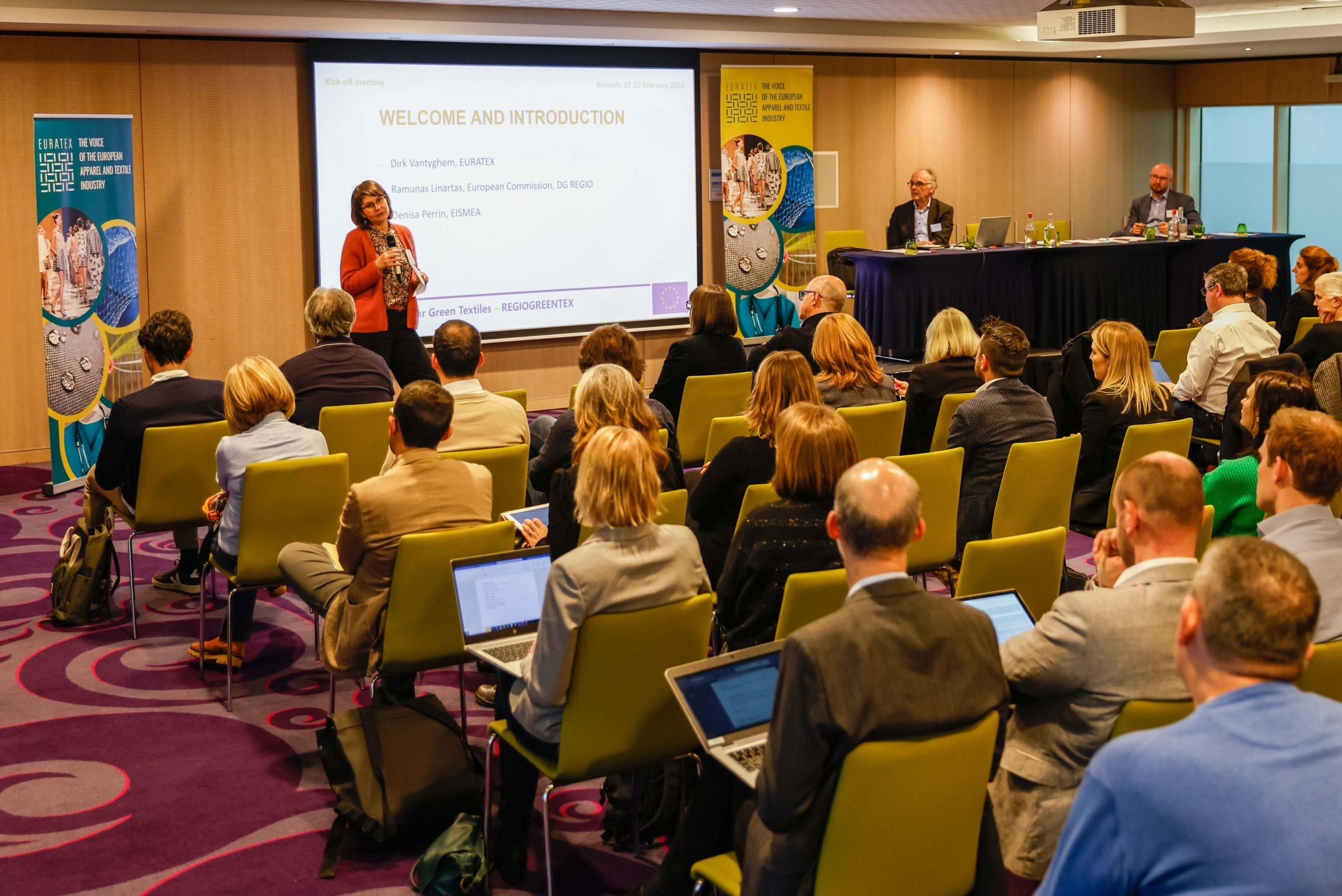
43 partners of the RegioGreenTex project met in Brussels to kick start a three-year project that should change the way we manage textile recycling.

Regions for Green Textiles – known as RegioGreenTex – is a quadruple-helix partnership initiative aiming at mapping and reducing the difficulties, which currently exist in the implementation of a circular economy model within the textile ecosystem across the EU.

RegioGreenTex will  support tangible solutions at SME level, where textile waste becomes a value. The project will contribute to maintain and develop jobs in the EU textile sector, reshoring the production in Europe and making the EU textile value chain more competitive and resilient. It will contribute to the EU Green Deal objectives of reducing carbon footprint, energy and water consumption.

More information:
Euratex SMEs textile waste EISMEA
Source:

Euratex

(c) Global Fashion Agenda
17.02.2023

Global Fashion Summit: Copenhagen Edition 2023 takes place in June

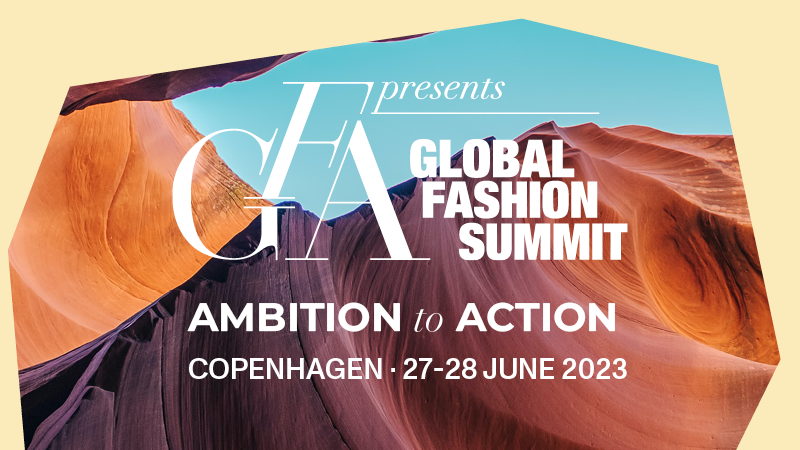
Global Fashion Summit, a leading international forum for sustainability in fashion, will convene core stakeholders across the fashion ecosystem and parallel industries to drive tangible action on social and environmental sustainability. The Summit is presented by Global Fashion Agenda (GFA). GFA is a non-profit organisation that is accelerating the transition to a net positive fashion industry, under the patronage of HRH The Crown Princess of Denmark. Global Fashion Summit: Copenhagen Edition 2023 will take place on 27-28 June in Copenhagen, Denmark.

The theme of Global Fashion Summit: Copenhagen Edition 2023 is ‘Ambition to Action’. Under this premise, the Summit will present content experiences focused on tangible impact.

Global Fashion Summit, a leading international forum for sustainability in fashion, will convene core stakeholders across the fashion ecosystem and parallel industries to drive tangible action on social and environmental sustainability. The Summit is presented by Global Fashion Agenda (GFA). GFA is a non-profit organisation that is accelerating the transition to a net positive fashion industry, under the patronage of HRH The Crown Princess of Denmark. Global Fashion Summit: Copenhagen Edition 2023 will take place on 27-28 June in Copenhagen, Denmark.

The theme of Global Fashion Summit: Copenhagen Edition 2023 is ‘Ambition to Action’. Under this premise, the Summit will present content experiences focused on tangible impact.

The theme will underly all elements of the Summit and Main Stage speakers will showcase inspiring thought leadership for accelerated change by exploring a matrix of interconnected topics. The 2023 Copenhagen Edition will build on more than a decade’s worth of Summit guidance and outcomes by dedicating even more focus towards action-oriented workshops and case studies. Through these formats, the forum will demonstrate tangible learnings and concrete recommendations that can help drive implementation.
 
The forum will also host strategic roundtable meetings with the aim to mobilise industry leaders to build alliances with solution providers, policy makers, investors and other industry stakeholders and implement immediate solutions. Such alliances can set in motion progress towards a net positive industry. With upcoming policy expected to influence the fashion industry even further this year, the Summit will shed light on the ongoing pieces of legislation currently under discussion both within the EU and worldwide.

This year’s Global Fashion Summit: Copenhagen Edition is supported by Principal Sponsor, Maersk. A globally renowned leader in logistics that aims to deliver a more connected, agile and sustainable future for global logistics. Maersk will support the Summit's agenda to accelerate industry transformation by highlighting how logistics can help the fashion and lifestyle industry in reaching their sustainability goals.

Additionally, the Innovation Forum will present a curated exhibition of other leading sustainable solutions. Summit attendees can meet with exhibitors covering the entire value chain – from innovative materials to end-of-use solutions. Innovation Forum Matchmaking will enable small and large fashion businesses to advance their sustainability journey, by providing the unique opportunity to be matched with relevant solution providers. 

(c) Freudenberg Performance Materials
17.02.2023

Freudenberg: Packaging textile for automotive and industrial parts

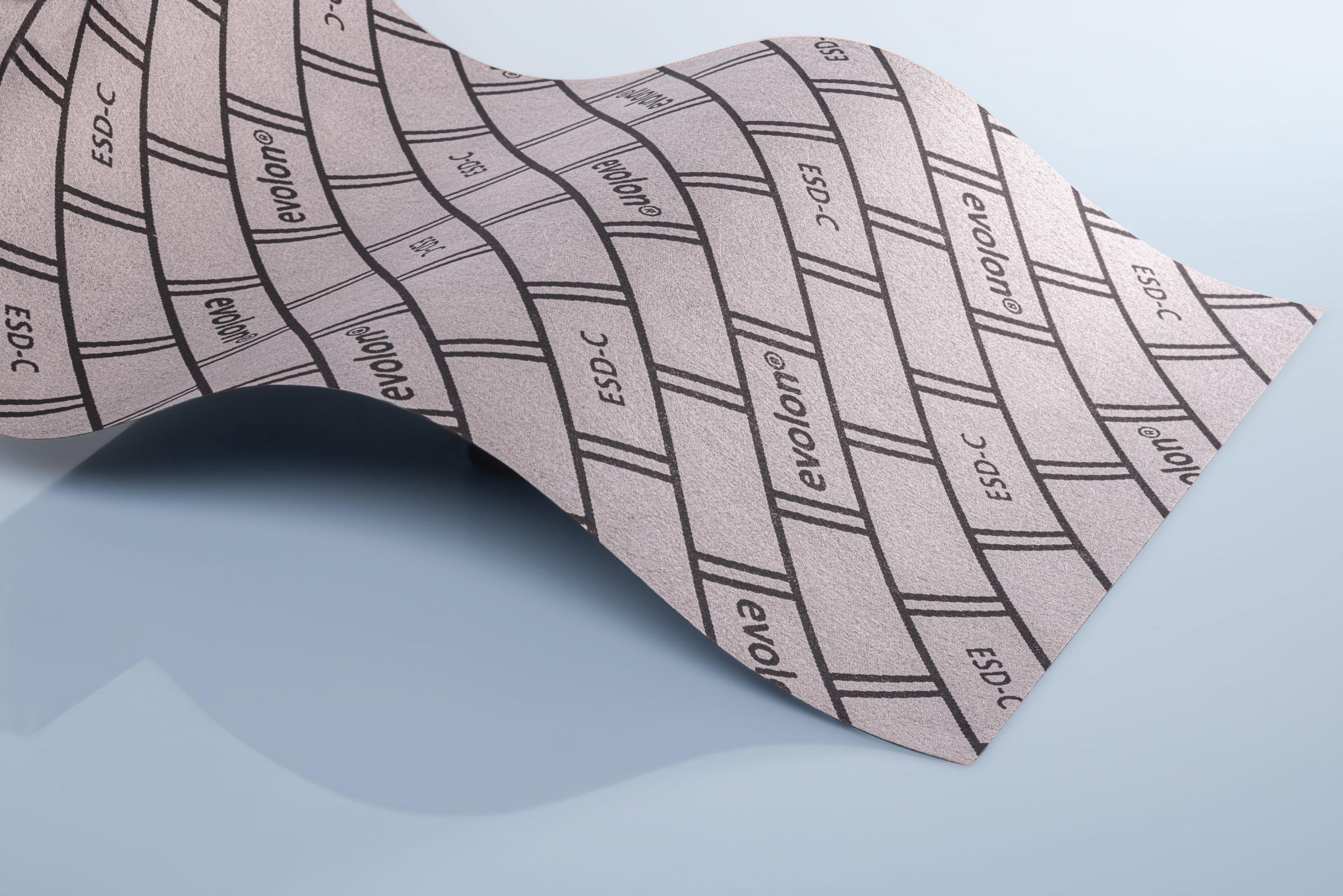
Freudenberg Performance Materials (Freudenberg) is widening its product range of technical packaging textiles. Evolon® ESD protects automotive and industrial parts with electronic components from electrostatic discharge. This includes trim lines, dashboards, mirrors, steering wheels, etc.

The ESD (ElectroStatic Discharge) feature of the new Evolon® technical packing textile provides permanent electrostatic discharging protection and the fabric’s surface resistivity can be customized. This eliminates ESD damage to electronic components during transport because electrostatic charging due to movement and friction is safely prevented. As this kind of damage cannot be detected with the naked eye, Evolon® ESD helps to avoid failures which can occur after the final product is assembled and released. Manufacturers benefit from fewer complaints and warranty costs, as well as better end customer satisfaction.

Freudenberg Performance Materials (Freudenberg) is widening its product range of technical packaging textiles. Evolon® ESD protects automotive and industrial parts with electronic components from electrostatic discharge. This includes trim lines, dashboards, mirrors, steering wheels, etc.

The ESD (ElectroStatic Discharge) feature of the new Evolon® technical packing textile provides permanent electrostatic discharging protection and the fabric’s surface resistivity can be customized. This eliminates ESD damage to electronic components during transport because electrostatic charging due to movement and friction is safely prevented. As this kind of damage cannot be detected with the naked eye, Evolon® ESD helps to avoid failures which can occur after the final product is assembled and released. Manufacturers benefit from fewer complaints and warranty costs, as well as better end customer satisfaction.

Further protection feature
Unlike conventional ESD packaging solutions, Evolon® ESD also protects parts surfaces by avoiding micro-scratches or lint contamination. By using Evolon® reusable packaging to transport parts with highly-sensitive surfaces, customers reduce the number of damaged parts and the reject rate.

Additional benefits
Evolon® microfilament textiles are also extremely strong and are available in different weights to meet a wide range of requirements – from lightweight to heavy-duty. They can be used to pack and transport very heavy parts without damage. In addition, Evolon® fabrics are durable, and contain up to 85% recycled PET.

Source:

Freudenberg Performance Materials

(c) Archroma
16.02.2023

Archroma closing acquisition of Huntsman Textile Effects on 28 February 2023

Archroma, a manufacturer of sustainable specialty chemicals and solutions for industries such as textiles, packaging & paper, paints and coatings, announced that it has secured all regulatory approvals required to complete the acquisition of the Textile Effects business from Huntsman Corporation (“Huntsman Textile Effects”).

Both parties expect the transaction, which was first announced on 09 August 2022, to close on 28 February 2023.

Archroma is a portfolio company of US-based private investment firm SK Capital Partners. Since its formation in 2013, Archroma acquired and successfully integrated the global textile chemicals businesses of BASF as well as BASF’s stilbene-based OBA business for paper applications, and M. Dohmen, a specialist in coloration for automotive textiles.

Archroma, a manufacturer of sustainable specialty chemicals and solutions for industries such as textiles, packaging & paper, paints and coatings, announced that it has secured all regulatory approvals required to complete the acquisition of the Textile Effects business from Huntsman Corporation (“Huntsman Textile Effects”).

Both parties expect the transaction, which was first announced on 09 August 2022, to close on 28 February 2023.

Archroma is a portfolio company of US-based private investment firm SK Capital Partners. Since its formation in 2013, Archroma acquired and successfully integrated the global textile chemicals businesses of BASF as well as BASF’s stilbene-based OBA business for paper applications, and M. Dohmen, a specialist in coloration for automotive textiles.

Heike van de Kerkhof, Archroma Group Chief Executive Officer (CEO), commented: “We are very excited to see this acquisition nearing completion. I am deeply grateful to the project teams of Archroma and Huntsman who are preparing for a smooth transition for our employees and partners. After closing, we will be able to bring together our expert teams and highly complementary product portfolios to offer our customers and brand partners the high performance they expect, whilst respecting natural resources and the planet.”

Source:

Archroma

10.02.2023

Lectra: Annual financial results of 2022

  • Revenues: 521.9 million euros (+35%)
  • EBITDA before non-recurring items: 98.4 million euros (+51%)
  • Net income: 43.8 million euros (+55%)
  • Free cash flow before non-recurring items: 43.7 million euros
  • Dividend*: €0.48 per share (+33%)

Lectra’s Board of Directors, chaired by Daniel Harari, reviewed the consolidated financial statements for the fiscal year 2022. Audit procedures have been performed by the Statutory Auditors. The certification report will be issued at the end of the Board of Director’s meeting of February 23, 2023.

To facilitate the analysis of the Group’s results, the financial statements are compared to those published in 2021 and to the 2021 pro forma financial statement (“2021 Pro forma”), prepared by integrating the three acquisitions made in 2021 – Gerber Technology (“Gerber”), Neteven, and Gemini CAD Systems (“Gemini”) – as if they had been consolidated from January 1, 2021, whereas they have been consolidated since June 1, July 28 and September 27, 2021 respectively.

  • Revenues: 521.9 million euros (+35%)
  • EBITDA before non-recurring items: 98.4 million euros (+51%)
  • Net income: 43.8 million euros (+55%)
  • Free cash flow before non-recurring items: 43.7 million euros
  • Dividend*: €0.48 per share (+33%)

Lectra’s Board of Directors, chaired by Daniel Harari, reviewed the consolidated financial statements for the fiscal year 2022. Audit procedures have been performed by the Statutory Auditors. The certification report will be issued at the end of the Board of Director’s meeting of February 23, 2023.

To facilitate the analysis of the Group’s results, the financial statements are compared to those published in 2021 and to the 2021 pro forma financial statement (“2021 Pro forma”), prepared by integrating the three acquisitions made in 2021 – Gerber Technology (“Gerber”), Neteven, and Gemini CAD Systems (“Gemini”) – as if they had been consolidated from January 1, 2021, whereas they have been consolidated since June 1, July 28 and September 27, 2021 respectively.

See attached document for full report.

Source:

Lectra

(c) Löffler
The EC300-S collarette cutter
10.02.2023

TMAS: Svegea installs Collarette Cutter at Löffler

Svegea of Sweden – a member of TMAS, the Swedish Textile Machinery Association – has recently installed an EC300-S collarette cutter for the high speed production of tubular apparel components as well as an FA350 automatic roll slitter at the plant of Löffler, in Ried im Innkreis, Austria.

The EC 300-S collarette cutter is equipped with the computer-controlled True-Drive II and high pre-feed device, which is used by garment manufacturers around the world for the production of tubular apparel components such as cuff and neck tapes and other seam reinforcements. It operates at speeds of up to 20,000 metres per hour. The integrated, fully automatic FA350 roll slitter FA500 roll slitter is equipped with three separately adjustable settings enabling three different band widths to be cut within the same cutting cycle. Automatic tube sewing units are provided for sewn tubes in optional rolled or flat folded forms, depending on customer preference.

Svegea of Sweden – a member of TMAS, the Swedish Textile Machinery Association – has recently installed an EC300-S collarette cutter for the high speed production of tubular apparel components as well as an FA350 automatic roll slitter at the plant of Löffler, in Ried im Innkreis, Austria.

The EC 300-S collarette cutter is equipped with the computer-controlled True-Drive II and high pre-feed device, which is used by garment manufacturers around the world for the production of tubular apparel components such as cuff and neck tapes and other seam reinforcements. It operates at speeds of up to 20,000 metres per hour. The integrated, fully automatic FA350 roll slitter FA500 roll slitter is equipped with three separately adjustable settings enabling three different band widths to be cut within the same cutting cycle. Automatic tube sewing units are provided for sewn tubes in optional rolled or flat folded forms, depending on customer preference.

Sports and knitwear specialist Löffler is celebrating its 50th anniversary in 2023. Its plant in Ried houses 25 circular knitting machines and three seamless knitting machines with an annual output of around 905,000 square metres of fabric, and in addition to product development, design, cutting and some sewing are all carried out in-house.

Löffler is known for its transtex under garments, which ushered in the two-layer principle of structures combining hydrophobic polypropylene and other fibres like cotton, Modal, Tencel or merino wool.

Before transtex, endurance athletes usually wore pure cotton underwear next to their skin, which became wet over time and cooled the body down. Löffler’s two-layer fabric prevented this, since the polypropylene does not absorb moisture and instead wicks it to the outside, where it can evaporate to keep the skin dry.

Innovation has been ongoing ever since, and in December, Löffler received an ISPO Award 2022 for transtex Retr’x – its latest functional underwear made from recycled polypropylene from textile waste and a combination of recycled and GOTS-certified organic cotton. Transtex Retr’x is neither dyed or bleached and is Standard 100 by Oeko-Tex as well as Made In Green by Oeko-Tex approved.

In addition to its own branded products, the plant makes sports garments for sister company Fischer, which is also based in Ried, and is at the same time involved in significant government tender projects, including the supply of polo shirts for the Austrian Red Cross and for the German and Austrian police forces. Combined, Löffler and Fischer employ approximately 700 people in the region of Upper Austria.

Source:

TMAS by AWOL Media

10.02.2023

adidas: Top- and bottom-line outlook for 2023

adidas published its financial guidance for 2023. While the company continues to review future options for the utilization of its Yeezy inventory, this guidance already accounts for the significant adverse impact from not selling the existing stock. This would lower revenues by around € 1.2 billion and operating profit by around € 500 million this year. Against this background, adidas expects currency-neutral sales to decline at a high-single-digit rate in 2023. The company’s underlying operating profit is projected to be around the break-even level.

Should the company irrevocably decide not to repurpose any of the existing Yeezy product going forward, this would result in the write-off of the existing Yeezy inventory and would lower the company’s operating profit by an additional € 500 million this year. In addition, adidas expects one-off costs of up to € 200 million in 2023. These costs are part of a strategic review the company is currently conducting aimed at reigniting profitable growth as of 2024.

If all these effects were to materialize, the company would expect to report an operating loss of € 700 million in 2023.

adidas published its financial guidance for 2023. While the company continues to review future options for the utilization of its Yeezy inventory, this guidance already accounts for the significant adverse impact from not selling the existing stock. This would lower revenues by around € 1.2 billion and operating profit by around € 500 million this year. Against this background, adidas expects currency-neutral sales to decline at a high-single-digit rate in 2023. The company’s underlying operating profit is projected to be around the break-even level.

Should the company irrevocably decide not to repurpose any of the existing Yeezy product going forward, this would result in the write-off of the existing Yeezy inventory and would lower the company’s operating profit by an additional € 500 million this year. In addition, adidas expects one-off costs of up to € 200 million in 2023. These costs are part of a strategic review the company is currently conducting aimed at reigniting profitable growth as of 2024.

If all these effects were to materialize, the company would expect to report an operating loss of € 700 million in 2023.

In 2022, based on preliminary unaudited numbers, adidas revenues increased 1% in currencyneutral terms. In reported terms, sales were up 6% to € 22,511 million during the 12-months period (2021: € 21,234 million). The company’s gross margin reached a level of 47.3% (2021: 50.7%) in 2022. adidas generated an operating profit of € 669 million last year (2021: € 1,986 million), reflecting an operating margin of 3.0% (2021: 9.4%). Net income from continuing operations was € 254 million in 2022 (2021: € 1,492 million).

Source:

adidas AG

08.02.2023

ECHA publishes PFAS restriction proposal

The details of the proposed restriction of around 10 000 per- and polyfluoroalkyl substances (PFASs) are now available on ECHA’s website. ECHA’s scientific committees will now start evaluating the proposal in terms of the risks to people and the environment, and the impacts on society.

The proposal was prepared by authorities in Denmark, Germany, the Netherlands, Norway and Sweden and submitted to ECHA on 13 January 2023. It aims to reduce PFAS emissions into the environment and make products and processes safer for people.

All PFASs in the scope of the proposal are very persistent in the environment. If their releases are not minimised, people, plants and animals will be increasingly exposed, and without a restriction, such levels will be reached that have negative effects on people’s health and the environment. The authorities estimate that around 4.4 million tonnes of PFASs would end up in the environment over the next 30 years unless action is taken.

The details of the proposed restriction of around 10 000 per- and polyfluoroalkyl substances (PFASs) are now available on ECHA’s website. ECHA’s scientific committees will now start evaluating the proposal in terms of the risks to people and the environment, and the impacts on society.

The proposal was prepared by authorities in Denmark, Germany, the Netherlands, Norway and Sweden and submitted to ECHA on 13 January 2023. It aims to reduce PFAS emissions into the environment and make products and processes safer for people.

All PFASs in the scope of the proposal are very persistent in the environment. If their releases are not minimised, people, plants and animals will be increasingly exposed, and without a restriction, such levels will be reached that have negative effects on people’s health and the environment. The authorities estimate that around 4.4 million tonnes of PFASs would end up in the environment over the next 30 years unless action is taken.

Peter van der Zandt, ECHA’s Director for Risk Assessment said: “This landmark proposal by the five authorities supports the ambitions of the EU’s Chemicals Strategy and the Zero Pollution action plan. Now, our scientific committees will start their evaluation and opinion forming. While the evaluation of such a broad proposal with thousands of substances, and many uses, will be challenging, we are ready.”

Next steps
ECHA’s scientific committees for Risk Assessment (RAC) and for Socio-Economic Analysis (SEAC) will check that the proposal meets the legal requirements of REACH in their meetings in March 2023. If it does, the committees will begin their scientific evaluation of the proposal. A six-month consultation is planned to start on 22 March 2023.

RAC will form an opinion on whether the proposed restriction is appropriate in reducing the risks to people’s health and the environment, while SEAC’s opinion will be on the socio-economic impacts, i.e. benefits and costs to society, associated with the proposal. Both committees form their opinions based on the information in the restriction proposal and the comments received during consultations. The committees also consider advice from the Enforcement Forum on the enforceability of the proposed restriction. Once the opinions are adopted, they will be sent to the European Commission who, together with the EU Member States, will then decide on the potential restriction.

An online information session will be organised on 5 April 2023 to explain the restriction process and to help those interested in participating in the consultation.

More information:
ECHA PFAS polyfluoroalkyl
Source:

European Chemicals Agency